
Scheffler Immo E. Mitochondria
Подождите немного. Документ загружается.

4.1 THE MITOCHONDRIAL GENOME
4.1.1 Introduction
The discovery of DNA in a compartment other than the eukaryotic nucleus
was truly a discovery with far - reaching possibilities and consequences. It not
only shed new light on theories concerned with the origin of this organelle,
and ultimately provided overwhelming support in favor of the endosymbiont
hypothesis (see Chapter 2 ), but also opened totally new vistas in the study of
the biogenesis of mitochondria. At once the possibility was recognized that
this subcellular structure was likely to contain genetic information required
for its own assembly, and an immediate follow - up question was: How much?
The earliest estimates came from studies with the electron microscope, after
procedures were refi ned to isolate mtDNA molecules cleanly and in suffi cient
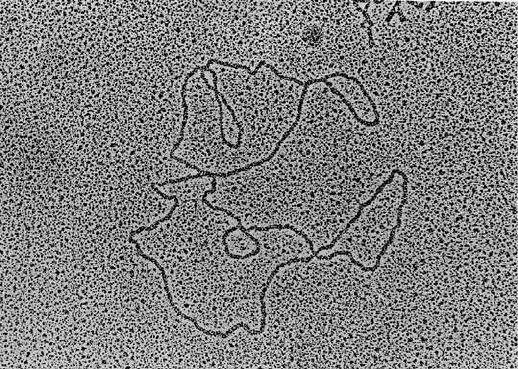
quantities (Figure 4.1 ) (1 – 4) ).
MtDNA molecules derived from diverse multicellular animals (metazoans)
were found to be circular structures, and occasionally catenated dimers or
higher oligomers, with contour lengths corresponding to ∼ 16,000 nucleotides.
It was obvious that only a limited number of genes could be present. During
the past three decades, hundreds of mitochondrial genomes from animals,
plants, and fungi have been characterized genetically and even sequenced. A
few milestones deserve special mention. The fi rst complete mitochondrial
genome to be sequenced from any organism was that of humans (5) , and soon
thereafter the bovine sequence was completed (6) . Other than the genomes
of bacteriophages and animal viruses, these were the fi rst biologically well -
defi ned and distinct DNA molecules (one might even say chromosomes) to
Figure 4.1 Mitochondrial DNA from an oocyte of Xenopus laevis . (Original photo-
graph of I. Dawid; from The Cell , by D. W. Fawcett, 1981, W. B. Saunders Co.)
THE MITOCHONDRIAL GENOME 61
62 BIOGENESIS OF MITOCHONDRIA
become known in their entirety. With the technology of the day, it was a major
achievement (see also reference 6a ). In contrast, the fi rst complete mitochon-
drial genome from a plant ( Marchantia polymorpha , liverwort) was not pub-
lished until 1992 (7, 8) , and an even larger sequence from Arabidopsis thaliana
(mustard) appeared several years later (9) . The latter was the fi rst complete
sequence from a fl owering plant. The animal mtDNA was “ only ” 16,569 nucle-
otides long, while the plant mtDNAs contained 186,608 and 366,924 nucleo-
tides, respectively, more than 20 times as many in the fl owering plant compared
to vertebrates. As will be illustrated in the following sections, sizes of mtDNAs
vary considerably between metazoa, plants, and fungi, yet this difference is not
necessarily paralleled by a proportionate difference in the number of genes
retained by these genomes. The examples chosen will illustrate and support a
number of generalizations, but at the same time they are selected to impress
the reader with the tremendous variations found in different organisms.
Clearly, one would like to understand the biological signifi cance of any
observed differences. One point of view is that the transfer of genes from the
proto - mitochondria to the nucleus has progressed to different extents in dif-
ferent organisms purely by chance, and that further transfer of genes will occur
in the future. Does the observation of a limited number of genes in mitochon-
dria represent a snapshot in evolutionary time, or is it possible to interpret this
fi nding in terms of structure and function? In metazoans the selection appears
to have forced the reduction of the mt genome to its absolute minimum in
terms of nucleotides — that is, the highest possible density of genes per unit
length. It is not absolutely clear whether this represents a limit to the genes
which can be transferred to the nucleus. At one time it was possible to argue
that rRNAs and tRNAs for translation must be transcribed from genes inside
the mitochondria, because the highly charged polynucleotides were not
expected to be able to be imported across two membranes. However, in the
meantime the import of tRNAs has been observed in plant mitochondria, in
protozoa, and in yeasts. The proteins encoded by vertebrate mtDNA are very
hydrophobic, prompting arguments that they also could not be imported from
the cytosol. Such a rationalization fails to explain why many integral mem-
brane proteins with multiple transmembrane domains (e.g., of complex II,
many transporters) are imported from the cytosol in most organisms. In plants
and fungi there is similar solid evidence that a very extensive reduction in the
number of genes has occurred, but at the same time many other sequences
mostly of no functional signifi cance have been acquired, either by transfer and
scavenging from other sources, or by some poorly understood mechanism of
amplifi cation of intergenic sequences, or by multiplication of transposon -
related elements. It is particularly noteworthy that many non - metazoan mt
genes have introns, and some of these introns contain ORFs.
When intergenic sequences are ignored, it becomes clear that the genetic
information in the mitochondrial genome is remarkably similar in a majority
of organisms. This could be because the loss of genes from the original symbi-
ont was essentially complete before extensive branching of the phylogenetic
tree occurred, or, alternatively, that this limited number was achieved inde-
pendently, leaving only those genes inside the mitochondria whose products
could not be imported at all. As mentioned above, this argument is no longer
sustainable for the tRNAs. At the same time, modern molecular genetic tech-
niques have made it possible to knock out mitochondrial genes and comple-
ment them with appropriately engineered versions in the nucleus (codon
usage, import signals, see below) (10) . Such experiments argue against the
absolute necessity of retaining certain genes in the mitochondria.
While the majority of organisms examined have been found to have circular
mtDNAs, an occasional claim of discovery of linear mitochondrial DNAs was
made. Initially dismissed as artifact, or as a very rare exception to the circular
genomes expected from a prokaryotic ancestor, the number of such examples
has grown over the past few decades. Diverse organisms from among the
ciliata (e.g., Paramecium aurelia ), the algae ( Chlamydomonas reinhadtii ), the
fungi ( Candida, Pichia , and Williopsis species), and oomycetes are represented
in a recent review of this subject (11) . An even more radical view gaining
acceptance is that at least in plants and fungi (including Saccharomyces cere-
visiae ) the major form of mtDNA in vivo is linear (11) . The physical size of
these linear mtDNAs is in the 30 - to 60 - kb range. Several criteria have been
defi ned by investigators to distinguish true linear mtDNAs from linear conca-
tomeric molecules arising from rolling circle mechanisms of DNA replication
and other mechanisms. The most intriguing characteristic is a homogeneous
terminal structure functionally analogous to telomeres. However, mitochon-
drial telomeres from diverse organisms do not share consensus sequences or
sequence motifs indicative of a uniform solution to the problem of replicating
5′ ends.
It has been argued that the existence of linear mtDNA does indicate an
independent evolutionary origin, since even closely related fungi may have
either linear or circular mtDNAs. Rather, the linear form may have arisen by
accident and become stabilized by the fortuitous existence of a replication
machinery capable of dealing with linear ends (11) .
The number of mitochondrial genomes sequenced as of September 2006
exceeds several hundred from different species. In the following, the salient
characteristics of the mtDNAs of several important representatives of meta-
zoans, plants, fungi, and protozoa will be described to impress the reader with
the diversity of size, gene content, organization, and, ultimately, replication and
gene expression. A more exhaustive coverage of different organisms is beyond
the scope of this book, and the reader is referred to the appropriate databases
on the Internet.
4.1.2 The Mitochondrial Genome in Metazoans
The size range of mtDNAs found in multicellular animals is relatively narrow
(∼ 16.5 kb), with some exceptions varying from 14 kb in the nematode, Cae-
norhabditis elegans (12) , to 42 kb in the scallop, Placeopecten megallanicus
THE MITOCHONDRIAL GENOME 63

64 BIOGENESIS OF MITOCHONDRIA
TABLE 4.1 Representative Sequenced Metazoan Mitochondrial Genomes
Class Organism Genome Size (kb)
Nematoda
Ascaris suum
14284
Caenorhabditis elegans
13794
Meloidogyne javanica
20500
Insecta
Drosophila yacuba
16019
Anopheles quadrimaculatus
15455
Anopheles gambia
15363
Apis mellifera
Crustacea
Artemia franciscana
15770
Echinodermata
Stronylocentrotus purpuratus
15650
Paracentrotus lividus
15700
Asterina pectinifera
16260
Arbacia lixula
15722
Cnidaria
Metridium senile
17443
Amphibia
Xenopus laevis
17443
Aves
Gallus domesticus
16775
Osteichthyes
Crossostoma lacustre
16558
Ciprinus carpio
16364
Mammalia
Bos taurus
16338
Mus musculus
16303
Rattus norvegicus
16298
Balaenoptera physalus
16398
Balaenoptera musculus
16402
Phoca vitulina
16826
Halichoerus grypus
16797
Equus caballus
16660
Didelphis virginiana
17084
Homo sapiens
16569
Metazoan mtDNA Database (MmtDB; Attimonelli, M., University of Bari, Italy; see reference 16 .
(13) , and all are single, circular DNAs. A curious exception is the mitochon-
drial genome of the cnidarian Hydra attenuata which consists of two unique,
linear DNA molecules of 8 kb (13a) . The exceptionally large scallop mtDNA
may represent an extreme; it has not been sequenced, and may even consist
of a duplication. Complete sequences are now available from various mammals,
chicken ( Gallus domesticus ), toads ( Xenopus laevis ), sea urchin ( Strongylocen-
trotus purpuratus ), fruit fl y ( Drosophila Yakuba ), nematode ( Caenorhabditis
elegans ), and the sea anemone ( Metridium senile ). This list is not exhaustive,
but it is striking that deviations in length from the published human sequence
(16,569 kb) are generally less than 1 kb (see Table 4.1 ). A metazoan mtDNA
database is being maintained by Dr. M. Attimonelli at the University of
Bari, Italy (see references 14 and 15 ). Updates on variations in human mito-
chondrial genomes can be found on the Internet ( http://www.mitomap.org )
(16) .
When the human mtDNA sequence was fi rst published in 1981, not all
genes were immediately identifi able, but a complete characterization of the
remaining URFs (unidentifi ed reading frames) was achieved in 1986 (17, 18) .
All the other metazoan mtDNAs were subsequently found to contain the same
genes with very few exceptions. On the other hand, the order of the genes is
not always the same, suggesting that some rearrangements have occurred.
Metazoan mtDNAs encode two ribosomal RNAs (s - rRNA, l - rRNA), 22
tRNAs (with exceptions), and 13 peptides which become constituents (ND1 – 6,
ND4L) of complex I (NADH - coenzyme Q oxidoreductase), complex III (cyt
b), cytochrome oxidase (COI, COII, COIII of complex IV), and ATP synthase
or complex V (ATPase 6, 8). The structure and function of these complexes in
electron transport and oxidative phosphorylation will be covered in detail in
another chapter. It is relevant to describe here that each complex consists of
multiple peptides, and among those one can distinguish peptides deeply embed-
ded in the membrane (integral membrane proteins, IMPs) and distinguish
others that are fi rmly associated with domains of the IMPs extending into the
mitochondrial matrix. The IMPs contain a large proportion of very hydropho-
bic amino acids, and many have multiple membrane - spanning segments based
on hydropathy plots. It is often argued that such very hydrophobic peptides
cannot be imported into the mitochondria, and thus their genes have been
retained inside the mitochondrial matrix. Following or even during translation
in the matrix, the peptides can be directly inserted into the inner membrane.
With the set of 13 peptides identifi ed in many diverse species, the identifi ca-
tion of open reading frames in new mtDNA sequences from additional organ-
isms can be accomplished relatively easily from sequence alignments and
hydropathy profi les. It should be noted, however, that DNA sequences for
individual peptides from different organisms, even closely related species such
as mammals, have diverged quite signifi cantly to the point where probes from
one species cannot generally be used to detect DNA or transcripts from
another. The extraordinarily high rate of base changes in vertebrate mtDNA
will be the subject of a separate discussion (Chapter 7 ). And even though most
metazoan mtDNAs encode 13 peptides, the size of the corresponding reading
frame can vary considerably. For example, the ND6 peptide in mouse has 172
amino acids, while the same peptide in C. elegans has 145. The ATPase6
peptide has 226 residues in the mouse and only 199 in C. elegans . Other
peptides — for example, the cyt b peptide of complex III, or the peptides of
cytochrome oxidase — exhibit less length variation from species to species. A
more extensive compilation of such data can be found in the review by
Wolstenholme (4) .
The genetic information on the mt genome in metazoans is highly com-
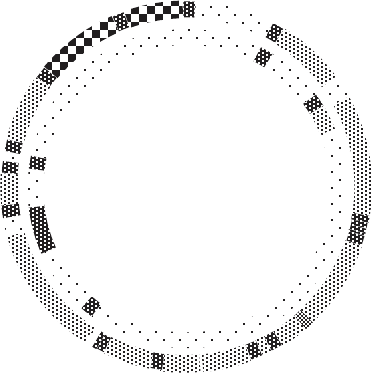
pacted on the circular mtDNA. The human mtDNA will serve as an example
(Figure 4.2 ) to illustrate some of the general principles of organization of
genes, but it should be stressed that there is variability, and some particularly
striking exceptions will be noted to alert the reader of the deviations that can
be expected in other organisms.
THE MITOCHONDRIAL GENOME 65
66 BIOGENESIS OF MITOCHONDRIA
Most, but not all, open reading frames for the peptides and the rRNA genes
are separated by one or more tRNA genes — with few, if any, extra nucleotides
in between. Small - rRNA and large - rRNA genes are separated by a single
tRNA in vertebrates and Drosophila , but by multiple tRNA genes in other
invertebrates. It is interesting to be reminded that the dispersion of tRNA
genes around the mt genome was already discovered prior to the arrival of
cloning techniques. By covalently labeling 4S RNA (tRNA) or rRNA with
ferritin and hybridizing such “ probes ” to mtDNA, it was possible to map in
1976 the adjacent 16S and 12S rRNA genes and 19 tRNA genes distributed
around the circular DNA (19) . The transcription of the genome occurs in both
directions, and hence open reading frames can be on either strand, although
they are usually quite unevenly distributed between the heavy and light strands
of mtDNA. (The distinction is based on an asymmetrical distribution of bases,
giving rise to a difference in density on alkaline CsCl gradients.) Transcription,
as will be discussed in more detail elsewhere, yields polycistronic RNA mole-
cules. When the interspersed tRNAs are spliced out, individual mRNAs or
rRNAs result. The mRNAs have extremely short or nonexisting 5 ′ and 3 ′
untranslated regions, and in some instances the fi rst A from the polyadenyl-
Figure 4.2 Schematic representation of the human mitochondrial genome map. The
outer circle represents the heavy strand, encoding most of the peptides, the two rRNAs,
and a large number of the tRNAs. ND1 – ND6 genes encode peptides of complex I;
COX genes encode peptides of complex IV.
Phe
Val
Leu
Ile
f-Met
Tr p
Asp
Lys
Gly
Arg
Leu
Ser
His
Thr
large rRNA
small rRNA
ND1
ND2
cytochrome b
ND5
ND4
ND3
COX1
COX2
COX3
ND4L
Pro
Glu
ND6
Ser
Gln
Ala
Asn
Cys
Tyr
ATPase6
ATPase8
ation step completes the terminal stop codon. Special problems are created
for the initiation of translation, which will be elaborated in a later section. In
HeLa cell and other vertebrate mitochondria the ATPase8 and ATPase6 and
also the ND4L and ND4 reading frames overlap by a few nucleotides without
a separating tRNA. The mature mRNA is bicistronic, and translation initiation
must occur internally. A detailed consideration of mechanisms will be deferred,
but in the current context these observations emphasize the extreme economy
of packaging genetic information into a small genome. A discussion of plant
and fungal mtDNA will present a distinct contrast.
There is one region in metazoan mtDNAs which deserves special mention
here. Flanked by two tRNA genes (tRNA
pro
and tRNA
phe
in vertebrates), a
noncoding region of variable length has been found. It is 1122 nt long in
humans, 879 nt long in the mouse, and even larger in Xenopus leavis . Its
sequence and function will be discussed in more detail under the appropriate
headings. Here it suffi ces to state that this noncoding region contains a replica-
tion origin and the promoter regions for transcription in opposite directions.
For these reasons it is being referred to as the “ control region. ” In spite of the
functional identity, the control region is not very well conserved between
species, and it is polymorphic even within a single species such as humans. That
is to say, there are short, functionally signifi cant and conserved segments
within the control region, while the remainder of the sequence is variable.
There are exceptions to the gene content and organization described for
metazoans so far. They will not be catalogued exhaustively here, but a few
examples will be presented to alert the reader to the possibilities that might
be encountered with as - yet - unknown mt genomes. The genes for the rRNAs
are generally encoded by the same DNA strand, separated by one or more
tRNAs, but in the sea star they are encoded in opposite strands. This possibility
should be considered when the analysis of a new mtDNA sequence fails to
reveal one of the two rRNAs arranged in tandem. The creation of such a novel
arrangement clearly requires an inversion of a portion of the mtDNA mole-
cule. Other inversions and rearrangements must be responsible for the fact
that the gene content is generally conserved in metazoans, while the gene
order is conserved in fi sh, amphibians, and mammals, but not in birds, and even
less so in invertebrates. Since processing of the polycistronic transcripts yields
individual tRNAs, mRNAs, and rRNAs, the gene order may not be a matter
of concern. Gene order is, however, of interest to the evolutionary biologists
in their attempts to trace lineages over time.
As examples of variations in structural genes, one can mention the follow-
ing. In nematodes the ATPase8 gene is missing. The ND3 and ND4L subunits
of mitochondrial complex I are nucleus - encoded in Chlamydomonas rein-
hardtii (20) . In the sea anemone Metridium senile the COI and the ND5 genes
contain a group I intron, and one of these (the COI intron) has an open
reading frame potentially capable of encoding either an RNA splicase or an
endonuclease. The ND1 and ND3 genes are contained within the intron of the
ND5 gene.
THE MITOCHONDRIAL GENOME 67
68 BIOGENESIS OF MITOCHONDRIA
Most surprisingly, the sea anemone mtDNA has only two tRNA genes, for
tryptophan and formyl - methionine. Since protein synthesis would obviously
be impossible with only those two tRNAs, one has to confront the problem of
how to import tRNAs into these mitochondria. Clearly, the import of such
highly charged polynucleotides across two mitochondrial membranes presents
a special challenge.
4.1.3 The Mitochondrial Genome in Plants
The mitochondrial genome in higher plants has many characteristics that prob-
ably make it one of the most interesting genomes to the molecular biologist.
It has a potentially large coding capacity, is constantly reorganized by recom-
bination, has captured genes encoded in the nucleus in other organisms, suffers
mutations that can affect growth and sterility, and yields transcripts that have
to be edited, or trans - spliced, and yet it lacks a subset of tRNAs that have to
be imported from the cytoplasm. As can be expected, not all of these aspects
are found all the time, and the functional/biological consequences of mito-
chondrial gene variations will be discussed at a later time.
It was mentioned earlier in this chapter that the fi rst complete plant mtDNAs
to be completely sequenced were those from Marchantia polymorpha (7) and
Arabidopsis thaliana (9) . Suffi cient information is therefore available now to
permit several generalizations (see references 8 , 21 , and 22 for critical reviews
and exhaustive listings of primary references). The majority of data were
derived from fl owering plants (Angiospermophyta), only one of ten phyla
within the plant kingdom. For this still narrow representation of plants, the
following statements can be made:
1. The mitochondrial genome is much larger than that in metazoans, ranging
from 200 to 2400 kb. It can be noted that 2400 kb is within the range of some
prokaryotic genomes. Original estimates were based on renaturation kinetics
(C
0
t curve analysis), while others were based on summation of restriction frag-
ments. Examinations by the electron microscope were inconclusive: Hetero-
disperse linear and circular molecules were seen, and the possibility of breakage
could not be discounted. Similarly, pulsed fi eld electrophoresis of either whole
or digested molecules gave results that were either confusing or inconsistent
with data derived by other approaches. Large circular DNA molecules are
known to remain trapped in the well of the gel. Another possible source of
confusion is the presence of small linear and circular DNA molecules in the
mitochondria of several plant species which appear to be mitochondrial plas-
mids that can replicate autonomously and have open reading frames. One such
plasmid, in all maize lines examined, carries the only functional tRNA
trp
gene
(23) . A consensus view from restriction mapping and other approaches (cosmid
walking) is that the mitochondrial genome can be described as a large “ master
circle ” containing all the mapped sequences. Actual structures found are
derived from this master circle by mechanisms described next.
2. The arrangement of genes on these large genomes is extremely variable,
even between closely related genera. This fl uidity is evidenced by altered
restriction maps and by absence of conserved linkages between genes. As an
explanation for this observation, it has been proposed that plant mitochondria
have an active recombination system (24, 25) ; and in order to account for the
structural rearrangements resulting from homologous recombination, the
presence and participation of repeated sequences in both direct or inverted
orientation has been noted. Repeats of the order of 1 – 10 kb have been found
in the majority of plant mtDNAs, and a role for a larger number of small
repeats in the larger mt genomes has been proposed to make recombination
responsible for the scrambling of plant mtDNA sequences (8, 26, 27) .
In considering plausible models, one has to remember that these genomes
are circular, that the repeats may be direct or inverted, and that the distance
between the repeats is also variable. A simple “ master ” circle with two direct
repeats at some distance from each other will yield two subgenomic circles if
recombination is intramolecular; and if recombination is relatively active, one
expects to fi nd a dynamic equilibrium between the master circle and the two
subgenomic circles, a situation that has been observed in plants such as Bras-
sica sp ., which have the smallest mtDNAs. Clearly, recombination between the
master circle and one of the subgenomic circles can give rise to larger circles
with duplications. If multiple small direct and inverted repeats are present, the
possibilities are too numerous to count. A more stringent defi nition of “ recom-
bination repeats ” has been proposed by Stern and Palmer (28) . In the simplest
case, such repeats occur in two copies relative to other sequences in the
genome, but a probe directed against the repeats may detect four distinct
restriction fragments, refl ecting four different genomic environments for the
repeat which result from recombinational events. If more repeats are present,
more such genomic environments are predicted and have in fact been found
in petunia line 3704 and maize CMS - T (21) .
On the other hand, not all repeats found are found in multiple environ-
ments; that is, there are repeats that appear not to have been involved in
recombination. It should be emphasized that the postulated recombination has
not been formally demonstrated, but the consistency of observations makes
recombination the mechanism of choice for restructuring these genomes. Spe-
cifi cally, it is not yet clear whether recombination is an active process at the
present, responsible for the polymorphisms detected by restriction mapping,
or for the different cosmid clones in a library. An alternative explanation is
that recombination occurred in the evolutionary past, but the molecules gener-
ated then are replicated and continuously maintained in the mtDNA popula-
tion of a given species. Evidence in favor of an active recombination system
may be found from observations made in the production of somatic cell
hybrids by protoplast fusion and the subsequent generation of a hybrid plant.
In a few cases, the protoplast parents had distinct mt genomes based on restric-
tion analysis, and hybrid plants were found to be homoplasmic (have a geneti-
cally stable mt genome) with recombinant mtDNA molecules (21) . Curiously,
THE MITOCHONDRIAL GENOME 69
70 BIOGENESIS OF MITOCHONDRIA
recombination between mt genomes in somatic cell hybrids occurred at loci
that were not normally considered to be recombination substrates (21, 29) . A
further discussion of mitochondrial inheritance in sexual reproduction and in
mammalian somatic cell hybrids will be found in Chapter 7 .
Another point worth noting is that in several cases, known genes fl ank or
even extend into the recombination repeat. This allows genes to occur in more
than one genomic context — that is, to have potentially more than a single
promoter. Whether this has any biological and hence selective function remains
to be seen. Among the genes found to be associated with repeats in some
plants are various rrn genes, the atp6 gene, and the coxII gene, but no evidence
for the presence of recombinase genes within such repeats has been found.
Recombination repeats, and hence recombination involving repeats, are not
essential, since at least one plant mt genome ( Brassica hirta ) has been found
to be devoid of repeats. At the same time, recombination involving sites that
are not repeats have been observed, both during tissue culture (see above)
and in plants cultivated normally. In nature, such recombination events are
rare, and they give rise to recombinant DNA molecules present at very low
abundance relative to the majority mtDNA. Rare mtDNA molecules found
at these substoichiometric levels have been termed “ sublimons. ”
3. A third characteristic distinguishing the mitochondrial genes of higher
plants from those of animals is that sequence divergence is strikingly slow. The
plant mitochondrial genome is the most slowly evolving cellular genome so
far characterized (8, 30) . Thus, while large chunks of plant mtDNA have been
moved around in multiple ways during evolution, sequences of individual
genes have remained remarkably constant. The implication is that either
mtDNA replication is exceptionally error - free or that plant mitochondria have
a very effi cient mismatch repair system .
In view of the widespread use of Arabidopsis thaliana as the model plant
species to study plant molecular genetics and development, an analysis of the
mt genome of this plant will serve here to illustrate and support generaliza-
tions; and again, prominent or instructive exceptions will be noted at the end
of this section.
With 366,924 basepairs the Arabidopsis thaliana mt genome is at a medium
position in the range found for plants. In light of its size, the gene content is
of obvious interest. Because of previous results with related studies in plants,
it was not a total surprise to fi nd only 57 genes on this genome, including three
rRNA genes, 22 tRNA genes, and the “ standard ” set of genes for the mito-
chondrial respiratory chain complexes. For someone exclusively focused on
animal mtDNAs up to now, it will be news that plant mtDNAs generally
contain genes for ribosomal proteins, along with a 5S rRNA gene in addition
to the rRNA genes for the small and large ribosomal subunits. A relatively
unique set of genes found only in the mustard and the liverwort so far are fi ve
genes encoding proteins required for cytochrome c biogenesis (ccb). Three