
Seybold J.S. Introduction to RF Propagation
Подождите немного. Документ загружается.

7. Use the Hata–Okumura model to determine the expected path loss for a
1-km path in a large city for a 1-GHz system. The receive (mobile) antenna
is at 7-m height and the transmit antenna is at 35-m height. You may want
to compute the free-space loss for the same geometry to provide a sanity
check for your answer.
8. Use the extended COST 231–Hata model to determine the maximum cell
radius for a 1.8-GHz system in a medium-sized city (C = 0 dB) if h
t
= 75m
and h
r
= 3 m. Assume that the allowable path loss is 130 dB.
9. Use the Lee model to determine the maximum cell radius for a 900-MHz
system in a suburban area. Assume that h
r
= 7m and h
t
= 50m and that the
allowable path loss is 125 dB.You may assume that the mobile antenna gain
is at the reference value (0 dBd) and the transmitter antenna gain is also at
the reference value of 6 dBd.
162 NEAR-EARTH PROPAGATION MODELS

163
Introduction to RF Propagation, by John S. Seybold
Copyright © 2005 by John Wiley & Sons, Inc.
CHAPTER 8
Fading and Multipath Characterization
8.1 INTRODUCTION
In this chapter, fading due to shadowing, blockage, and multipath is discussed.
In most contexts, the term fading is applied to signal loss that changes fairly
slowly relative to the signal bandwidth and the term scintillation is used to
describe rapid variations in signal strength. These terms are usually applied to
atmospheric phenomena, however. When modeling a terrestrial mobile radio
channel, the principal effects are usually due to terrain and terrain features
(including urban features). In this context, it is customary to talk about fading
in terms of large-scale or small-scale fading rather than scintillation. Small-
scale fading is further characterized as fast or slow and as spectrally flat or
frequency-selective.
Fading is roughly grouped into two categories: large-scale and small-scale
fading. Large-scale fading is sometimes called slow fading or shadowing,
although the term slow fading has a more precise definition in the context of
small-scale fading. Large-scale fading is often characterized by a log-normal
probability density function (pdf) and is attributed to shadowing, and the
resulting diffraction and/or multipath. Changes in large-scale fading are asso-
ciated with significant changes in the transmitter/receiver geometry, such as
when changing location while driving.
Small-scale fading is associated with very small changes in the transmit-
ter/receiver geometry, on the order of a wavelength. Small-scale fading may
be either fast or slow and is due to changes in multipath geometry and/or
Doppler shift from changes in velocity or the channel. Thus the changes can
occur quickly and frequently. Small-scale fading is generally characterized by
a Rayleigh or Rician probability density function and is due almost exclusively
to multipath.
The multipath discussed in this chapter is due to terrain features and does
not include atmospheric multipath, which was treated in Chapter 6. In addi-
tion to increasing path loss (fading), multipath may also degrade signal quality.
The effects may be temporal or spectral. Temporal effects occur as the delay
from the different paths causes a (time) smeared version of the signal to be
received, which is called delay spread. Spectral effects occur as changes in the
geometry or environment cause Doppler (spectral) shift, which smears the
signal spectrum. This effect is called Doppler spread.
In most environments, the path loss is sufficiently variable that it must be
characterized statistically. This is particularly true for mobile communications
where either or both terminals may be moving (changing the relative
geometry) and where both are using wide-angle or omnidirection antennas.
Multipath models vary depending upon the type of environment and the
frequencies involved. While detailed databases of most urban areas are avail-
able, statistical modeling based on empirical data (oftentimes fitted to specific
empirical data) is still the method of choice. One exception is the planning of
fixed line-of-sight (LOS) links, which can be facilitated by geometric multi-
path computations using urban databases.
The analysis/prediction of channel path loss in a terrestrial mobile envi-
ronment is broken into three parts:
•
First, determine the median (or sometimes mean) path loss based on a
model appropriate for the local environment using a model such as the
Hata or Lee models, free-space loss, or ground-bounce propagation.
•
Second, the large-scale variation of the path loss based on terrain varia-
tions and displacement of either the transmitter or receiver is determined.
This is referred to as shadowing and is usually modeled by a log-normal
probability density function.
•
Third, the short-term variations about the median due to changes in the
multipath and/or Doppler profile of the channel are characterized. This is
called small-scale fading and may be characterized as fast or slow and
time-dispersive or frequency-dispersive.
Before looking at the details of large- and small-scale fading, the impact of
ground-bounce multipath and diffraction are addressed.
8.2 GROUND-BOUNCE MULTIPATH
Most terrestrial communication systems do not operate in a free-space envi-
ronment, but rather must account for the effect of the earth’s surface on the
propagation path. There are two key effects: ground reflection and path block-
age and/or diffraction when part of the path is beyond line of sight.This section
covers the effect of a reflective earth on a near-earth propagation path. When
the propagation path is near the earth’s surface and parallel to it, severe fading
can occur if the ground is sufficiently reflective.
Consider a point-to-point communications link operating in close proxim-
ity to the earth’s surface as shown in Figure 8.1. For this analysis, a flat, smooth,
164 FADING AND MULTIPATH CHARACTERIZATION
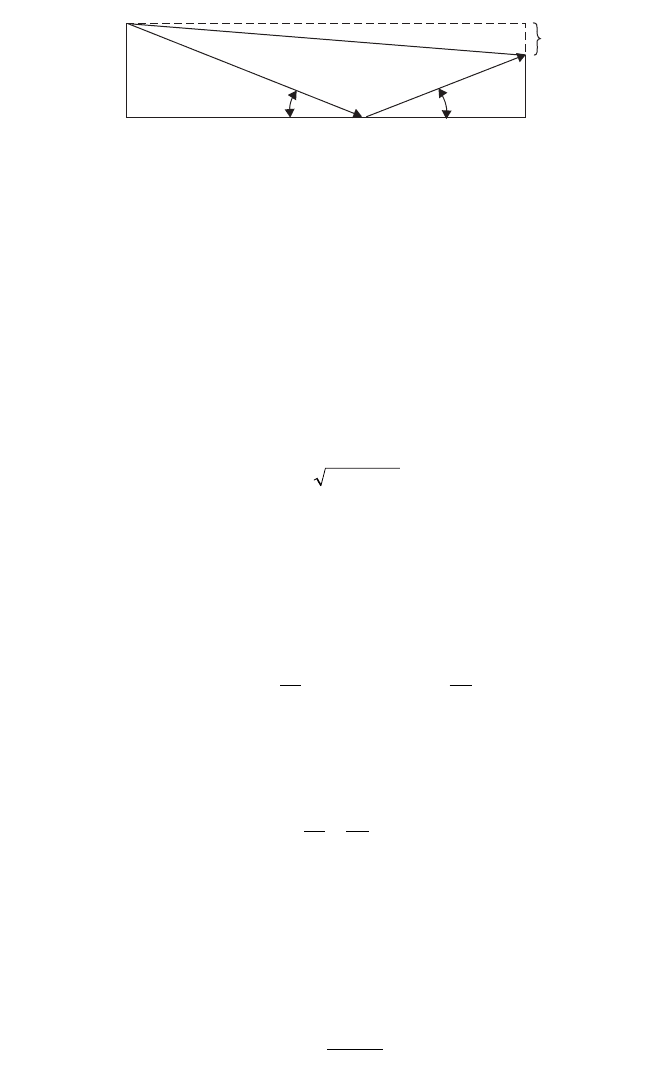
and reflective ground surface is assumed. Thus there will be “specular” ground
reflection from a “flat earth.” Specular reflection occurs if and only if the angle
of incidence equals the angle of departure at the reflection point (i.e., f
1
=f
2
).
Referring to Figure 8.1, the following observations can be made:
The slant range is
and
(8.1)
Expressions for the reflection angles are as follows:
From these expressions and the fact that the two angles are equal, it is clear
that
Next, using (8.1), the following equation can be written:
Solving this equation for d
1
yields
d
dh
hh
t
rt
1
=
+
dh d d h
rt11
=-
()
h
d
h
d
tr
12
=
ff
1
1
1
2
1
2
=
Ê
Ë
ˆ
¯
=
Ê
Ë
ˆ
¯
--
tan , tan
h
d
h
d
tr
dd d=+
12
ddh
s
=+
22
D
ff
12
=
GROUND-BOUNCE MULTIPATH 165
d
d
s
d
2
s
2
h
t
d
1
s
1
f
1
f
2
(
)
h
r
Dh
Figure 8.1 Link geometry for ground-bounce reflection.
Replacing d
1
by d - d
2
in this equation and solving for d
2
, provides the fol-
lowing equations for d
2
.
(8.2)
Thus the specular reflection point between the two antennas can be deter-
mined by knowing the heights of the antennas. The following equations follow
from the specular geometry:
(8.3)
(8.4)
And also from the geometry, the slant range is found to be
(8.5)
The received signal can be found by taking the vector sum of the direct and
reflected wave at the receive antenna. The magnitude and phase of the
reflected signal are determined by the path-length difference (primarily phase
since the distances are nearly equal) and the reflection coefficient of the
ground. The reflection coefficient, often denoted by r, is a complex parameter
that modifies both the magnitude and phase of the reflected wave.
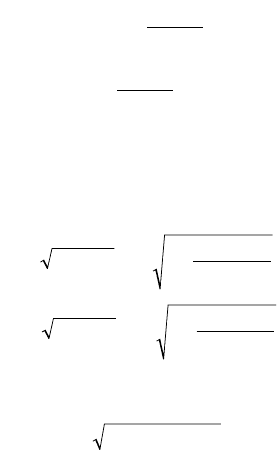
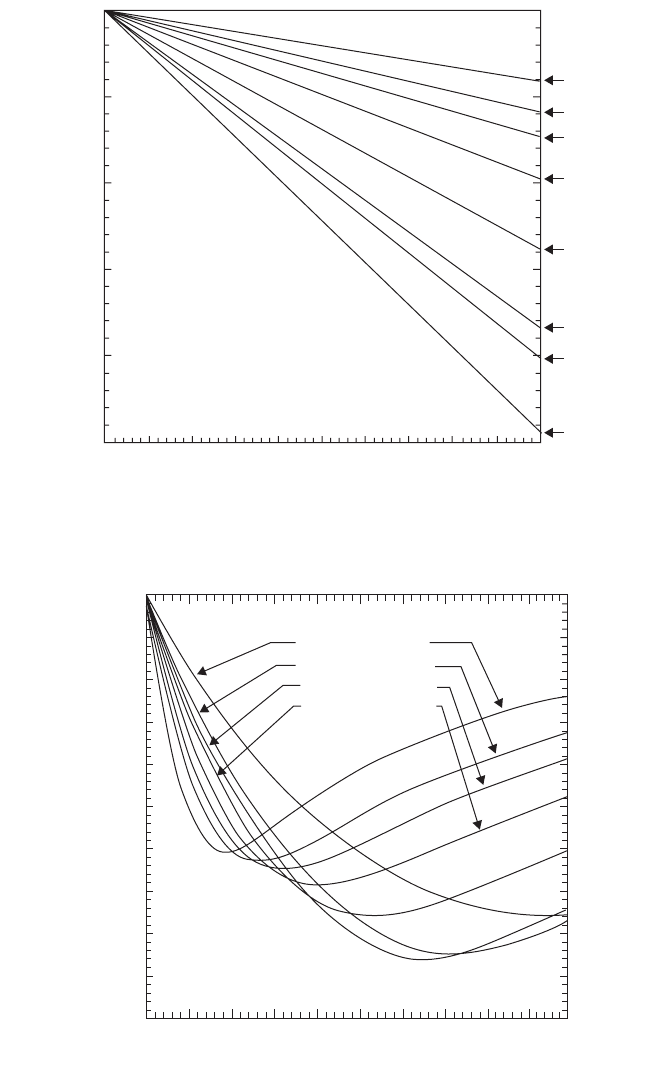
The curves in Figure 8.2 and Figure 8.3 [1] indicate that for a smooth, reflec-
tive surface, the magnitude of the reflection coefficient is approximately one,
regardless of the polarization and frequency, if the grazing angle is small.
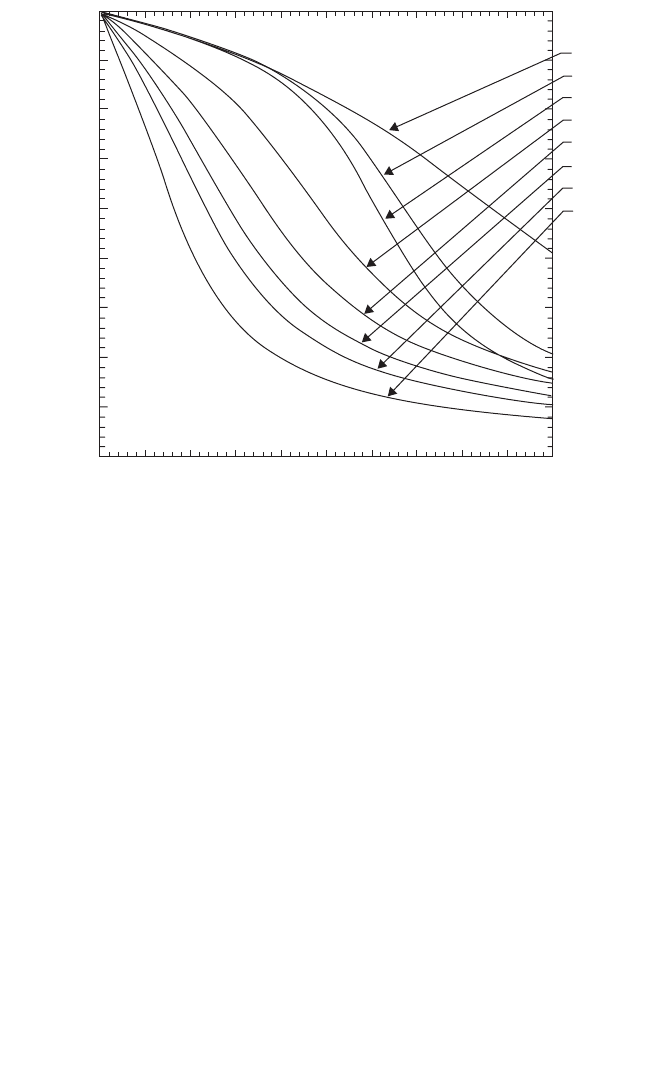
Figure 8.4 shows that the phase angle of the reflection coefficient is near 180
degrees for vertical polarization. Not shown in the figures is the phase angle
for horizontal polarization, which is virtually 180 degrees regardless of the fre-
quency and grazing angle.Thus for the ground-bounce case the reflection coef-
ficient is well-approximated by r=-1 as long as the surface is smooth and
conductive and the angle of incidence is small.
The relative phase of the reflected signal when it reaches the receiver must
be computed since the relative phase determines how the direct and reflected
signals will combine. The reflection coefficient of the ground depends upon
four factors:
•
Angle of incidence (assumed to be very small)
•
Ground material properties (flat, smooth, and conductive)
ddhh
str
=+-
()
2
2
sdhh
d
hh
rr
rt
22
22
2
2
1=+= +
+
()
sdhh
d
hh
tt
rt
11
22
2
2
1=+= +
+
()
dd
dh
hh
d
dh
hh
t
rt
r
rt
2
2
=-
+
=
+
166 FADING AND MULTIPATH CHARACTERIZATION
1.0
0.99
0.98
0.97
0.96
0.95
01234 56 78910
GRAZING ANGLE, DEGREES
100 MHZ
200 MHZ
300 MHZ
500 MHZ
1 GHZ
3 GHZ
10 GHZ
30 GHZ
REFLECTION COEFFICIENT
Figure 8.2 Reflection coefficient magnitude versus grazing angle for seawater using
horizontal polarization. (Figure 6.7 from Ref. 1, courtesy of Munro Publishing
Company.)
30 GHZ 100 MHZ
10 GHZ 200 MHZ
3
GHZ 300 MHZ
1 GHZ 500 MHZ
1
0.9
0.8
0.7
0.6
0.5
0.4
0.3
0.2
0.1
0
01 2 3456 7 8910
GRAZING ANGLE, DEGREES
REFLECTION COEFFICIENT
Figure 8.3 Reflection coefficient magnitude versus grazing angle for seawater using
vertical polarization. (Figure 6.8 from Ref. 1, courtesy of Munro Publishing Company.)
•
Frequency
•
Polarization (if the grazing angle is small enough, the polarization does
not affect the reflection)
Since the grazing angle is assumed to be small, the reflection undergoes a 180-
degree phase shift at the point of reflection regardless of polarization. The
small grazing angle also means that |r| ~ 1.
For geometries where d
s
>> h
t
and d
s
>> h
r
(i.e., f is very small), the follow-
ing approximation can be made:
Thus the path loss (free-space loss) is approximately the same for the direct
and reflected paths. In this case, if the waves are exactly in phase, there will be
a 6-dB increase in the received signal (twice the amplitude implies four time
the power). If the waves are exactly 180 degrees out of phase, the signal will
cancel completely and no signal will be received.
The E field at the receiver can be expressed as
E =+
-
EEe
dd
j
r
qD
ssd
s12
+ ~
168 FADING AND MULTIPATH CHARACTERIZATION
180
160
140
120
100
80
60
40
20
0
01 2 345678910
30 GHZ
10 GHZ
3 GHZ
1 GHZ
500 MHZ
300 MHZ
200 MHZ
100 MHZ
PHASE ANGLE, DEGREES
GRAZING ANGLE, DEGREES
Figure 8.4 Reflection coefficient phase angle versus grazing angle for seawater using
vertical polarization. (Figure 6.9 from Ref. 1, courtesy of Munro Publishing Company.)
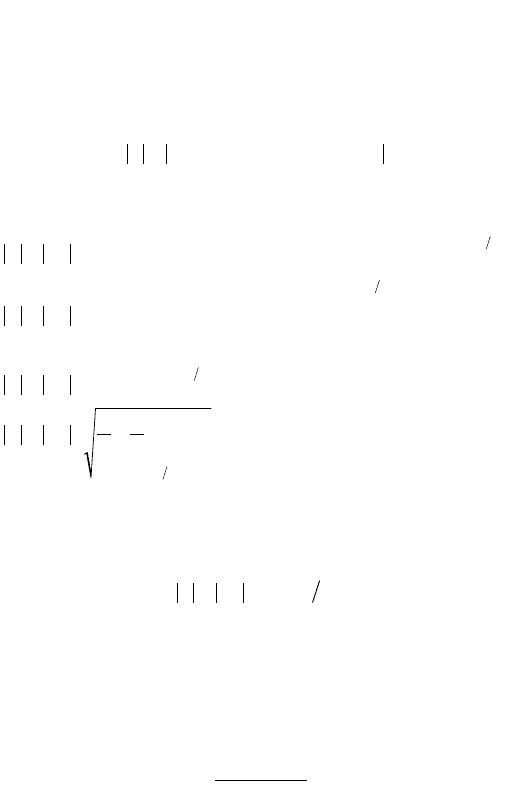
where
E is the electric field at the receiver
E
d
is the electric field due to the direct wave at the receiver
Dq is the phase difference between the direct and reflected wave fronts due
to the path-length difference
For the small grazing angle case, r=-1 and
The magnitude of the E field can be expressed as
The expression for the magnitude of E can be expanded as follows:
Thus over a flat, reflective surface, the magnitude of E field at the receiver can
be accurately expressed as
(8.6)
where Dq is the phase difference due to path-length difference and E
d
is the
E field due to the direct return only.
The phase difference between the direct and the reflected wave (due to
path-length difference) is
(8.7)
From (8.3) and (8.4) it is clear that
Dq
l
p=
+-ssd
s12
2
E =
()
E
d
22sin Dq
E =-
()
()
E
d
2
1
2
1
2
2
cos
sin
D
D
q
q
1244344
E =-
()
[]
E
d
22
12
cos Dq
E =-
()
+
()
+
()
È
Î
Í
Í
˘
˚
˙
˙
E
d
12
22
1
12
cos cos sinDDDqqq
12444 3444
E =-
()
+
()
[]
◊-
()
-
()
[]
{}
Ej j
d
11
12
cos sin cos sinDD DDqq qq
E =-
()
+
()
[]
Ej
d
1 cos sinDDqq
E
E
=-
=-
()
-
-
EEe
Ee
dd
j
d
j
D
D
q
q
1
GROUND-BOUNCE MULTIPATH 169
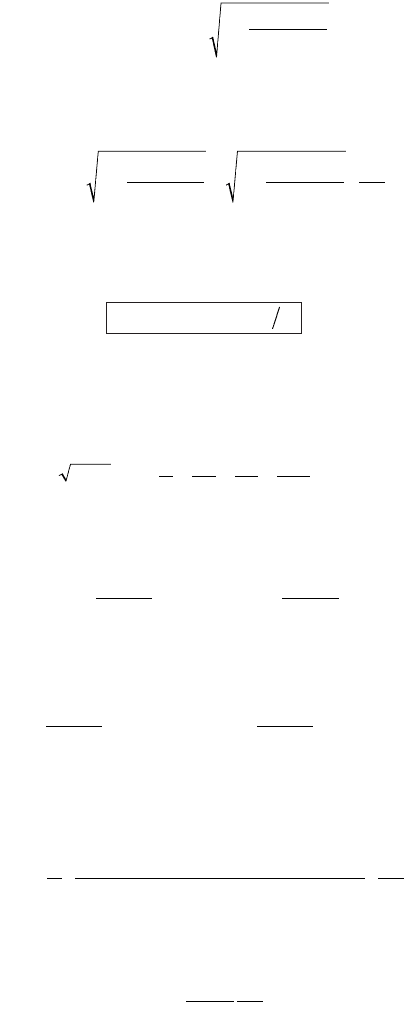
Substituting this result and (8.5) into (8.7) yields the exact expression for the
phase difference:
(8.8)
which can be used in (8.6) to generate an expression for the exact path loss in
the presence of multipath as a function of the free-space loss:
(8.9)
An alternate expression for Dq can be derived by using the binomial
expansion for the square roots. Recall that the binomial expansion is given
by
Using
in the binomial expansion, it is clear that if d >> h
r
and d >> h
t
, then
Thus using only the first two terms of the binomial expansion will be a good
approximation. Making the designated substitutions in (8.7), yields
which simplifies to
(8.10)
Using this result for Dq in (8.6) yields
Dq
p
l
@
22hh
d
rt
Dq
p
l
@
++
()
-- +
()
Ê
Ë
Á
ˆ
¯
˜
d h hh h h hh h
d
r rtt r rtt
2
222
2222
2
hh
d
hh
d
rt rt
+
Ê
Ë
ˆ
¯
È
Î
Í
˘
˚
˙
ª
-
Ê
Ë
ˆ
¯
È
Î
Í
˘
˚
˙
ª
2
2
2
2
00and
x
hh
d
x
hh
d
rt rt
=
+
Ê
Ë
ˆ
¯
=
-
Ê
Ë
ˆ
¯
22
and
11
2 8 16 128
23 4
+=+-+- +x
xx x x
...
LL
mp fsl
=
()
42
2
sin Dq
Dq
p
l
=+
+
()
-+
-
()
Ê
Ë
Á
ˆ
¯
˜
d
hh
d
hh
d
rt tr
11
2
2
2
2
2
ss hh
d
hh
tr
rt
12
2
2
1+= +
()
+
+
()
170 FADING AND MULTIPATH CHARACTERIZATION

(8.11)
which indicates that the received power is proportional to the magnitude
squared of the E field:
Therefore, the received signal power will be
(8.12)
where h is the characteritic impedance of free space. But, from the free-space
loss equation, the magnitude squared of the direct path E field at the receiver,
E
d
, is given by
So
For this analysis, it was assumed that d >> h
t
and d >> h
r
; if it is also true that
dl>>h
t
h
r
, then the following approximation may be made:
and
which results in the following (approximate) expression for the path loss on a
near-earth propagation path over a flat, smooth conducting surface:
(8.13)
This equation indicates that as dl gets large compared to the heights, h
t
and
h
r
, the received power drops off as d
4
rather than d
2
when there is a strong
LGG
hh
d
mp T R
tr
@
()
2
4
P
PGG
d
hh
d
r
TT R tr
@
()
Ê
Ë
ˆ
¯
4
4
2
2
2
2
l
p
p
l
sin
2
2
22p
l
p
l
hh
d
hh
d
tr tr
Ê
Ë
ˆ
¯
@
Ê
Ë
ˆ
¯
P
PGG
d
hh
d
r
TT R tr
=
()
Ê
Ë
ˆ
¯
4
4
2
2
2
2
l
p
p
l
sin
E
PGG
d
d
TT R
2
2
2
4
=
()
h
l
p
P
Ehh
d
r
dtr
=
Ê
Ë
ˆ
¯
4
2
2
2
h
p
l
sin
P
r
µ E
2
E =
Ê
Ë
ˆ
¯
E
hh
d
d
tr
2
2
sin
p
l
GROUND-BOUNCE MULTIPATH 171