
Seybold J.S. Introduction to RF Propagation
Подождите немного. Документ загружается.


Step 8: Find the effective path length through rain.
(11.44)
Step 9: The attenuation exceeded 0.01% of the time is then given by
(11.45)
Step 10: To find the attenuation for other percentages between 0.001 and 10%,
the same adjustment procedure is used as step 10 of the ITU model.
(11.46)
where
(11.47a)
(11.47b)
Otherwise,
(11.47c)
In their joint paper, Dissanayake et al. [14] also presented a combined
effects model that provides a means modeling all of the link impairments
together. The model is based on fitting empirical data and addresses the
interdependence between the various link impairments. 䊐
Rather than providing the substantial link margins that are required at
millimeter-wave frequencies, another approach to mitigating the impact of
rain fades is path diversity, where two antennas and transceiver pairs, sepa-
rated by a few kilometers or more, are used to perform communications. This
is valuable for hardware redundancy (increased reliability), limiting the effect
of rain fades and mitigating the effects of ionospheric and tropospheric fades
and multipath. This technique exploits the localized nature of very heavy
rainfall. At frequencies and availabilities where the fade margins are large,
using path diversity may be more cost effective than designing in the required
margin.
bf=- - ∞
()
+-
()
0 005 36 1 8 4 25. . . sin q
If andp and<<∞>∞
=- - ∞
()
13625
0 005 36
%,
.
fq
bf
If or ifp ≥≥∞=1360%,fb
AA
p
p
pAp
=
Ê
Ë
ˆ
¯
-+
()
-
()
--
()()()
001
0 655 0 033 0 045 1
001
001
.
. . ln . ln sin
.
.
bq
AL
Re001.
=g dB
LLrv
er
=
001.
km
272 SATELLITE COMMUNICATIONS
11.8 ANTENNA CONSIDERATIONS
Antenna gain is a function of the aperture size and the design beamwidth. For
point-to-point GEO transponders, narrow-beam high-gain antennas may be
used to provide increased gain, thereby requiring less transmit power.This has
the added benefit of reducing the susceptibility to interference (spatial filter-
ing), but the antennas then require careful pointing. Broad coverage GEO
satellites such as Direct TV will use a broad-beam antenna for area coverage.
For non-GEO satellites, wider beamwidths are used to increased coverage
area at the expense of reduced gain. This approach eases the tracking and
pointing requirements. MEO and LEO systems may use tracking dish anten-
nas on the ground, but others use broad-beam antennas. GPS satellites actually
use a shaped beam to equalize signal strength across the entire coverage area.
Direct TV does a similar thing to adjust for the longer path length to northern
customers. GPS receivers use a hemispherical antenna pattern to enable it to
see all satellites that are above the horizon at a given time.
In addition to the attenuation caused by rain, numerous experiments [3, 16,
17] have shown that water accumulation on the radome or on the reflector
and feed lens of the ground-based antenna can be a significant source of signal
loss. The amount of loss depends on several factors, including radome or lens
material, frequency, orientation, and temperature. Even a low-loss radome can
become lossy when wet. The amount of attenuation depends on whether the
water is in droplets or as a sheet of water. Radomes and feed lenses that do
not have hydrophobic coatings can actually absorb water into the surface,
producing attenuation. Icing of a radome can also be a significant source of
attenuation, particularly when the ice is melting and forms a water layer on
each side of the ice sheet.
The ACTS experimental results for wetting of the antenna feed and reflec-
tor indicate losses between 1 and 6 dB, with the greater losses being at the
higher frequency (27GHz) and higher rain rates [17]. The impact of water on
the feed lens is greater than that of the water on the reflector according to
Ref. 16, whereas Ref. 3 concluded that water on the reflector is the largest con-
tributor.The feeds were covered by plastic lenses, not unlike the material from
which regular radomes are made. Crane [17] indicates that the loss due to a
wet feed was very low initially due to the hydrophobic coating of the lens, but
after a few months the loss became substantial when the lens got wet.
It is also interesting that significant wet antenna attenuation was observed
in the ACTS experiment during a heavy fog, with no rain [17]. In general, the
heavier rain will have the heavier radome or antenna losses because of the
water sheeting across the protective surfaces.
The safest approach to modeling this effect at the frequency of interest is
to perform an experiment on a clear day with different misting rates. This can
be performed at the desired frequency and orientation. For the most robust
results, an aged (weathered) feed lens or radome should be used to account
for the hydroscopic property of weathered plastic.
ANTENNA CONSIDERATIONS 273
11.9 NOISE TEMPERATURE
Most terrestrial communication systems have noise figures in the 4- to 10-dB
range due to internally generated noise and assume an input noise temperature
(antenna temperature) of T
0
= 290K.This makes sense since the noise temper-
ature of the surrounding environment is nominally 290 K, so having an ex-
tremely low noise receiver is of limited value, as will be seen in the next section.
Antenna noise is due to any noise sources, including absorptive/resistive losses
that are in the field of view of the antenna. Ground-based satellite receivers, on
the other hand, look skyward, seeing a relatively low noise temperature and can
therefore take advantage of receivers with lower noise figures.
For sophisticated satellite systems, external noise is often the limiting factor
on performance. The satellite transmit power is extremely limited, however,
so the ground-based receiver is usually required to be very sensitive or to have
a very high gain antenna. Since the ground-based receiver is looking skyward,
it is subject to atmospheric, ionospheric, and galactic noise as well as to the
internal receiver noise floor. The receiver on the satellite is not required to be
as sensitive since, in general, the transmit power from earth is not as limited.
The noise floor of the satellite-based receiver is limited by the earth back-
ground (T = 290 K) and is also subject to noise from the atmosphere.
The antenna noise temperature is set by the noise that the antenna “sees”
or receives. Rain and the earth are generally taken to have T = 290 K. For
extreme conditions, the value of 323 K is sometimes used, which is 50°C. Sky
noise is a function of frequency and of elevation angle due to atmospheric
absorption. The net antenna temperature is a function of sky noise tempera-
ture (due to galactic noise and atmospheric loss) and ground temperature as
well as of the antenna gain, antenna beamwidth (unit solid angle), and loss
within the antenna. To accurately compute the antenna temperature, the
analyst must integrate the product of the antenna gain and the apparent tem-
peratures of the sky, earth, and sun or moon over the entire sphere of recep-
tion. This requires complete knowledge of the antenna radiation pattern and
the temperature of the surrounding earth. The antenna temperature can be
approximated by [18]
(11.48)
where
aG G
aG
ap
G
A
sky sky g g
g
g
ss
r
SKY AZ EL
1
2
2
2
3
1
4
4
1
4
=+
()
=-
()
=
p
p
p
qq
WW
W
W
W
r
r
~
TaT aTaT
a sky g sum
=++
123
274 SATELLITE COMMUNICATIONS
r is the (voltage) reflection factor of the ground.
T
s
is the apparent sun temperature (36,500 K).
p is the polarization loss factor for solar radiation since solar radiation is
unpolarized (0.5).
The W terms are the unit solid angles for the sky, earth, and sun.
The G terms are the average gains over the unit solid angles given by the
respective W values.
A
r
is the rain attenuation (if present).
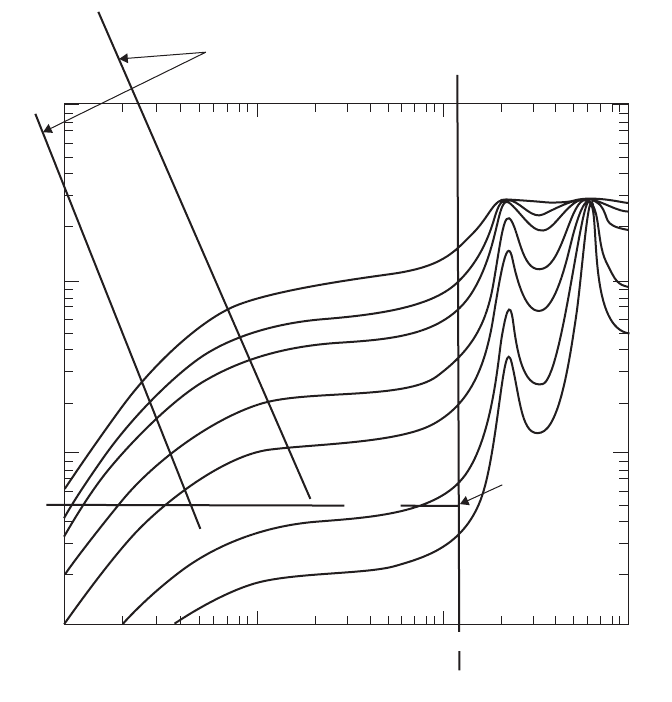
Figure 11.8 is a plot of sky temperature versus frequency. As expected, the
lower elevation angles that pass through more of the atmosphere show the
higher temperatures.
NOISE TEMPERATURE 275
1000
100
10
Sky noise temperature (K)
5K
1
100 1000
Frequency (MHz)
100,000
12.5 GHz
q = 90°
q = 52°
q = 30°
q = 10°
q = 5°
q = 2°
q = 1°
q = 0°
Galactic noise
(max-min)
0°-2°
5°
10°
30°
90°
10,000
Figure 11.8 Sky noise temperature versus frequency for different elevation angles.
(Figure 71.3 from Ref. 18, courtesy of CRC Press.)

While the relationship between equivalent noise temperature and the noise
figure was established in Chapter 3, the noise figure is not generally used for
satellite work. This is for two reasons. First, the definition of noise figure
assumes an input temperature of 290 K for the source. In the case of satellite
systems, the antenna temperature may not be 290 and thus it does not have a
standard temperature input. The other reason is that satellite systems typically
use very high quality front-end components, which would imply noise figures
very close to 1 (0 dB). The effective noise temperature is the additional tem-
perature over the standard noise temperature. For satellite systems, a system
temperature is used instead, which represents the total temperature of the
system, so that the system noise power spectral density is given by
(11.49)
where k is Boltzmann’s constant.
An important parameter in the characterization of satellite receivers is the
ratio of the antenna gain to the system noise temperature, G/T. This ratio is
sometimes called the sensitivity or the system figure of merit. The use of this
parameter emphasizes the fact that increasing the receive antenna gain or
decreasing the system noise temperature will improve receiver performance.
11.9.1 The Hot-Pad Formula
An attenuator in the signal path increases the effective noise input tempera-
ture according to the hot-pad formula [19]
(11.50)
where
T
N
is the resulting temperature at the antenna input (attenuator output)
T
in
is the nonattenuated noise temperature at the input (T
SKY
)
T is the temperature of the attenuator, usually: T
0
= 290K, sometimes
323 K is used for warm climates and extreme conditions
The validity of the hot-pad formula can be heuristically demonstrated as
follows. Consider a perfect antenna pointing toward the sky. If the frequency is
10 GHz and the elevation angle is 10 degrees, then T
sky
~ 15 K, which becomes
T
in
in the hot-pad formula. Now consider the effect of additional attenuation,
perhaps tree foliage. If there is no attenuation, then L = 1 and the new sky
temperature should still be equal to T
sky
. If the attenuation were infinite, then
the antenna would simply see thermal noise and the new sky temperature
would be T
0
, which the hot-pad formula indicates. For other cases where the
loss is finite, the resulting sky temperature will fall between 15K and 290 K,
TTLTL
Nin
=+-
()()
1
NkT
sys0
=
276 SATELLITE COMMUNICATIONS

depending upon the actual value of the loss. For a 10-dB attenuation, the new
T
sky
becomes 262.5 K, whereas for 1-dB attenuation, T
sky
is 71.6 K.
By applying the hot-pad formula, it is apparent that the effect of a loss in
front of the receiver LNA can be both a signal reduction and an increase in
the noise level. The hot-pad formula can be applied to any passive attenua-
tion that is present between the noise source and the receiver. In the case of
rain attenuation, the loss is not strictly between the atmospheric noise and the
receiver; however, the hot-pad formula is still often used for this application.
Example 11.5. Consider a system with an antenna temperature of 20 K, an
antenna gain of 30 dB, and a maximum expected rain fade of 6dB. If the
receiver front end has an effective noise temperature of 50 K, what is the
overall system noise temperature in the clear and during a rain fade?
The clear-air system noise temperature is simply
During a rain fade, the hot-pad formula must be applied to determine the
adjusted noise temperature.
where T
in
is T
a
, L is 4 (6 dB), and T is the temperature of the fade, in this case
rain (T
0
= 290 K). Thus, T
N
= 222.5 K and T
sys
= 272.5 K.
The noise in the system increases by 272.5/70, or 5.9 dB, due to the absorp-
tive loss of the rain. At the same time, the signal decreases by L or 6dB, so
the total reduction in SNR is 9.9 dB! The system figure of merit is
The above analysis can be repeated for the case where the receiver tempera-
ture is 300 K instead of 50 K. The antenna gain is adjusted to keep the clear-
air SNR the same (i.e., maintain the same clear-air G/T, thus the antenna gain
is higher).
The clear-air system noise temperature is simply
During a rain fade, the hot-pad formula is applied;
TTLTL
Nin
=+-
()()
1
TTT
sys a e
=+=320 K
G =
()
1000 320 70 36 6,.or dB
GT= 1000 70 14 3,.or dB
TTLTL
Nin
=+-
()()
1
TTT
sys a e
=+=70 K
NOISE TEMPERATURE 277

where T
in
is T
a
, L is 4 (6 dB) and T is the temperature of the fade, in this case
rain (T
0
= 290 K). Thus, T
N
= 222.5 K and T
sys
= 522.5 K. So the noise in the
system increases by 522.5/320, or 2.1 dB. The signal still decreases by L or
6 dB, and the total reduction in SNR is 8.1 dB. The system figure of merit is
or still 11.5 dB. This shows that in some cases, trading noise temperature for
antenna gain is worthwhile. Put another way, if there are significant absorp-
tive losses in the link, resources are best used to increase antenna gain rather
than reducing the system noise temperature below ambient.
The application of the hot-pad formula to rain or other atmospheric effects
actually applies only to the sky-noise temperature and not the total antenna
temperature. The portion of the antenna temperature that is due to blackbody
radiation from the earth will not be affected by the rain attenuation in the
same way (although the earth may be cooled by the rain at the same time), so
in systems where the antenna temperature exceeds the sky-noise temperature
significantly, the application of the hot-pad formula must be re-worked to only
modify the sky noise and then add the other contributions to antenna tem-
perature afterwards.
11.9.2 Noise Due to Rains
The effect of rain attenuation will be to reduce the signal and to cause an
increase in the received noise level. Since the rain is not actually between the
atmospheric noise and the antenna (they are intermingled), the hot-pad
formula is not the most precise way to account for the temperature increase.
Instead, a rain temperature can be computed and added to the system tem-
perature. The rain temperature is given by [20]
(11.51)
where T
m
is the mean path temperature. The mean path temperature can be
estimated from
(11.52)
where T
s
is the surface temperature of the surrounding area. Generally, simply
using a value of T
m
= 273 K provides good results.
Example 11.6. Consider the system from Example 11.5, with an antenna tem-
perature of 20 K, an antenna gain of 30dB, and a maximum expected rain fade
of 6 dB. If the receiver front end has an effective noise temperature of 50K,
what is the overall system noise temperature in the clear and during a rain
fade?
TT
ms
=-112 50.K
TT
rm
AdB
r
=-
Ê
Ë
Á
ˆ
¯
˜
-
()
110
10
K
GT=
()
1000 320 70 320
278 SATELLITE COMMUNICATIONS

The clear-air system noise temperature is simply
During a rain fade, the rain temperature must be added to the sky or antenna
temperature to determine the adjusted noise temperature.
where T
m
is taken to be 273 and A
r
is 6 dB. Thus, T
r
= 204.4 K and T
sys_rain
becomes 274.4 K.
The noise in the system increases by 274.4/70, or 5.9 dB due to the absorp-
tive loss of the rain. At the same time, the signal decreases by A
r
or 6 dB, so
the total reduction in SNR is again 11.9 dB. So, for this example, the result is
virtually identical (particularly when expressed in dB) to applying the hot-pad
formula with a rain temperature of 290 K. 䊐
11.9.3 Sun Outages
The sun represents a very high temperature noise source, which subtends
approximately 0.5 degrees. When the sun passes through the main beam of a
high-gain antenna connected to a low-noise receiver, the effect on the received
signal can be dramatic. This should be apparent from the preceding expres-
sion for the antenna temperature. If sufficient margin is not available, com-
munications will be temporarily lost. This is called a sun outage (or sun transit
outage) and occasionally occurs on satellite feeds. The phenomenon is readily
predictable, and remedies include using alternate satellite paths (diversity),
using very large link margins, or tolerating the brief outages. Some communi-
cation satellite operating companies provide online calculators to predict sun
outages given the latitude and longitude of the planned ground station.
The solar noise level is approximately -183 dBW/Hz (compared to
-204 dBW/Hz for thermal noise). The solar noise must be integrated over the
antenna gain pattern. If the beam width of the antenna is less than 0.5 degrees,
it is possible for the sun to fill the entire field of view, resulting in a noise floor
of -183 dBW/Hz (T ~ 36,500 K). This represents a 21-dB increase in the noise
level.
11.10 SUMMARY
In this chapter the different types of satellite and satellite orbits are briefly
examined, followed by determination of the slant range to the satellite. Next,
the impairments to satellite communication link were discussed. Computation
of free-space loss to a satellite hinges on proper computation of the distance
TT
rm
AdB
r
=-
Ê
Ë
Á
ˆ
¯
˜
-
()
110
10
K
TTT
sys a e
=+=70 K
SUMMARY 279
to the satellite, which is a function of the satellite location and the ground
station location. The elevation angle is also determined from the relative
geometry and is used in computation of atmospheric and rain attenuation.
Atmospheric attenuation is a function of the local climate, the ground station
elevation, and, as mentioned, the elevation angle to the satellite. Some of these
are similar to terrestrial communications, and some, like ionospheric scintilla-
tion, are unique to satellite communication.
Ionospheric effects include scintillation, Faradary rotation, time delay, and
time dispersion. The effects are reduced above 1GHz and virtually nonexist-
ent above 10 GHz. As frequencies increase, the effect of rain on a satellite
communication link becomes significant. The usual approach to addressing
rain loss is a probabilistic method, where an availability is specified and the
required fade margin to achieve that availability is determined and incorpo-
rated into the link budget, just as it is for terrestrial links. In this chapter, appli-
cation of both the ITU model and the Crane global model to satellite links is
discussed.
The subject of water on a ground station antenna or radome was also dis-
cussed. Losses from wet feeds, reflectors, and/or radomes can range from 1 to
6 dB, but definitive results are not widely available. In addition to the inter-
nally generated thermal noise in the receiver, sensitive satellite receivers must
also account for external noise or so-called antenna noise. The sources may be
galactic or due to resistive losses in the RF path, including radome losses, rain,
atmospheric attenuation, and others. The effect of such external noise can be
devastating if not planned for.The hot-pad formula provides the means of pre-
dicting the impact of such external noise sources. The chapter concludes with
a brief discussion of sun-transit outages, which can temporarily blind a ground-
based satellite receiver when the sun passes through the field of view of the
receive antenna.
REFERENCES
1. ITU Recommendations, Propagation data and prediction methods required for the
design of Earth-space telecommunication systems, ITU-R P.618-7, 2001.
2. T. Pratt, C. Bostian, and J. Allnutt, Satellite Communications, 2nd ed., Wiley,
Hoboken, NJ, 2003, p. 19.
3. R. K.Crane, X.Wang, D. B.Westenhaver, and W. J.Vogel,ACTS Propagation Exper-
iment: Experiment Design, Calibration, and Data Preparation and Archival,
Special Issue on Ka-Band Propagation Effects on Earth-Satellite Links, Proceed-
ings of the IEEE, Vol. 85, No. 6, June 1997, pp. 863–878.
4. T. Pratt, C. Bostian, and J. Allnutt, Satellite Communications, 2nd ed., Wiley,
Hoboken, NJ, 2003, pp. 32–34.
5. M. I. Skolnik, Introduction to Radar Systems, 3rd ed., McGraw-Hill, New York,
2001, p. 500.
6. ITU Recommendations, Attenuation by atmospheric gasses, ITU-R P.676-5,
Geneva, 2001.
280
SATELLITE COMMUNICATIONS
7. ITU Recommendations, Characteristics of precipitation for propagation modeling,
ITU-R PN.837-1, Geneva, 1994.
8. ITU Recommendations, Rain height model for prediction methods, ITU-R
P.839-3, Geneva, 2001.
9. ITU Recommendations, Rain height model for prediction methods, ITU-R
P.839-1, Geneva, 1997.
10. R. K. Crane, Prediction of attenuation by rain, IEEE Transactions on Communi-
cations, Vol. 28, No. 9, September, 1980, pp. 1717–1733.
11. R. K. Crane, Electromagnetic Wave Propagation Through Rain, Wiley, Hoboken,
NJ, 1996, pp. 110–119.
12. R. K. Crane, Electromagnetic Wave Propagation Through Rain, Wiley, Hoboken,
NJ, 1996, p. 150.
13. R. K. Crane, Electromagnetic Wave Propagation Through Rain, Wiley, Hoboken,
NJ, 1996, p. 149.
14. A. W. Dissanayake, J. E. Allnut, and F. Haidara, A prediction model that combines
rain attenuation and other propagation impairments along earth-satellite paths,
IEEE Transactions on Antennas and Propagation, Vol. 45, No. 10, October 1997,
pp. 1546–1558.
15. L. J. Ippolito, Propagation Effects Handbook for Satellite System Design, 5th ed.,
Stanford Telecom, Pasadena, CA, 1999, pp. 2–86.
16. R. J. Acosta, Special Effects: Antenna Wetting, Short Distance Diversity and
Depolarization, Online Journal of Space Communication, Issue No. 2, Fall 2002.
17. R. K. Crane, Analysis of the effects of water on the ACTS propagation terminal
antenna, special issue on Ka-band propagation effects on earth-satellite links,
Proceedings of the IEEE, Vol. 85, No. 6, June 1997, pp. 954–965.
18. J. D. Gibson, The Communications Handbook, CRC Press, Boca Raton, FL, 1997,
pp. 970–972.
19. J. D. Gibson, The Communications Handbook, CRC Press, Boca Raton, FL, 1997,
p. 968.
20. L. J. Ippolito, Propagation Effects Handbook for Satellite System Design, 5th ed.,
Stanford Telecom, Pasadena, CA, 1999, pp. 2–168.
EXERCISES
1. Consider a 12-GHz, geostationary satellite located at 105 degrees west
longitude. If an earth station is located at 80 degrees west longitude and
35 degrees north latitude, determine the following;
(a) The central angle to the satellite
(b) The elevation angle to the satellite
(c) The free-space loss to the satellite
2. The Direct TV DBS transponders are located at approximately 101 degrees
west longitude in geostationary orbit. Using your latitude and longitude,
determine the elevation angle to the satellite(s) and estimate the azimuth
angle.
EXERCISES 281