
Seybold J.S. Introduction to RF Propagation
Подождите немного. Документ загружается.

3. Consider a 15-GHz satellite link. If the ground station is located in Denver,
CO while the satellite is located in geosynchronous orbit at 98 degrees west
longitude, determine the following;
(a) The central angle
(b) The elevation angle to the satellite
(c) The slant range to the satellite and the free-space loss
(d) The expected atmospheric attenuation
(e) The depth of a 99.995% fade using the elevation angle found in part b
and assuming that the polarization is vertical. State which rain model
you use.
4. Consider a 30-GHz satellite link operating from Atlanta, GA at 28 degrees
of elevation, using circular polarization.
(a) Determine the depth of a 99.999% rain fade using the Crane global
model.
(b) Find the additional signal-to-noise ratio degradation due to the noise
from the rain loss.
(c) Determine the expected atmospheric attenuation.
(d) Find the amount of noise floor degradation (noise increase) due to the
atmospheric loss if the antenna temperature is 50 K.
5. Repeat parts a and b of problem 4 using the DAH model.
282 SATELLITE COMMUNICATIONS

283
Introduction to RF Propagation, by John S. Seybold
Copyright © 2005 by John Wiley & Sons, Inc.
CHAPTER 12
RF Safety
12.1 INTRODUCTION
Few subjects in electrical engineering evoke as much controversy as the debate
over safe levels of exposure to electromagnetic energy. There is considerable
misunderstanding about the known effects of electromagnetic energy on
humans, and public perception can be an important factor in system deploy-
ment. While there is still much to be learned about the effects of prolonged
exposure to low-power-density electromagnetic waves, sufficient empirical
data on moderate power density levels exist to set reasonably safe exposure
limits that balance cost and risk [1]. A set of conservative standards has been
developed by the Institute of Electrical and Electronics Engineers (IEEE).
The development of the FCC limits that are used in the United States was
heavily influenced by these standards. The FCC limits and their guidelines for
computations are discussed in this chapter.
Systems used in Europe and many parts of Asia are required to meet the
European Telecommunications Standards Institute (ETSI) standards rather
than FCC standards. Information about the ETSI standards can be found on
their web site, www.etsi.org. The ETSI guidelines [2] use a volume of Health
Physics and relevant CENELEC, IEC, and ITU standards or recommenda-
tions for the specific exposure levels.
Any system that is designed to radiate RF energy should be analyzed and/or
tested to verify that the RF exposure of the user and the public is within safe
limits. Unsafe levels can be reached due to high transmitter power, high
antenna gain, close proximity to the transmitting antenna, or any combination
thereof. RF safety is a significant concern for many commercial communica-
tion systems due to higher power densities sometimes involved and the poten-
tial for public exposure. For consumer products, various potential uses and
misuses must be considered when performing an RF safety analysis.
The following terms are used in this chapter:
ANSI American National Standards Institute
CENELEC European Committee for Electrotechnical Stan-
dardization
EPA U.S. Environmental Protection Agency
FCC U.S. Federal Communications Commission
IEC International Electrotechnical Commission
MPE Maximum permissible exposure
NCRP National Council on Radiation Protection and
Measurement
SAR Specific absorption rate
IEEE Institute of Electrical and Electronic Engineers
Controlled environment Where energy levels are known and everyone is
aware of the presence of RF
Uncontrolled Where energy levels are not known or where
environment people may not be aware of the presence of RF
Ionizing radiation Radiation of sufficient energy to strip electrons
from molecules, X rays, gamma rays, and so on.
Non-ionizing radiation Generally applies to electromagnetic waves
between RF and light
The American National Standards Institute (ANSI) [3] has adopted the IEEE
human safety standards for exposure to electromagnetic radiation.These stan-
dards apply to non-ionizing radiation and are set to keep exposure well below
thermal-hazard levels. The actual standards are available from the IEEE stan-
dards group, ANSI [3], and other sources.The FCC uses a hybrid of these stan-
dards and the results of a report by the National Council on Radiation
Protection and Measurements (NCRP) [4]. Due to the geometric spreading of
electromagnetic waves as they radiate from a source, the strongest fields and
highest exposure levels occur in close proximity to the transmitting antenna.
When highly directional antennas are used, the safe distance will be a func-
tion of the angular location relative to the beam direction, with the sidelobes
and backlobes requiring less distance. There is also a potential shock hazard
(including possible arcing) at the antenna surface, which cannot be ignored.
For the purpose of safety analysis, the standard defines two types of exposure
called controlled and uncontrolled exposure, which will be discussed shortly.
The ANSI/IEEE (and FCC) standards are based on large amounts of sci-
entific data, represent a relatively broad consensus, and are conservative, but
they are not absolutes. At the time of this writing, adherence to these stan-
dards represents good engineering practice in the United States. The steady
improvement of digital modulation methods may well reduce the applications
of these standards as lower power devices replace today’s technology. Ongoing
research may also provide more insight into the effects of electromagnetic
radiation on the human body and lead to changes in the standards. Studies to
date have failed to provide a conclusive link between athermal effects due to
mobile phone use and cancer development or promotion [5].
284 RF SAFETY
While there was a heightened concern in the early to mid-1990s as cell
phone use grew, that the radiation from cell phone handsets in close proxim-
ity to the head was responsible for some cases of brain cancer, the sheer
number of mobile phone users guarantees that some victims of cancer will be
using phones. Other sources of electromagnetic radiation in the home actually
provide greater exposure and are also believed to pose minimal risk. In the
ELF range, the magnetic fields from appliances such as hair driers, waterbed
heaters, and electric blankets are likely to pose a greater risk than electro-
magnetic fields at higher frequencies, due to the intensity of the fields and the
close proximity of their operation. Even so, the risk is minimal and a policy of
“prudent avoidance” (avoiding exposure when the cost or inconvenience of
doing so is minimal) is all that is recommended at this time [6].
The FCC emphasizes that these safety limits are exposure limits and not
emission limits [1] and that the exposure limits only apply to “locations that
are accessible to workers or members of the public.” Emissions are regulated
separately based on application and licensing. The station operator is respon-
sible for maintaining a safe environment for the public and for workers. The
FCC requires station RF safety evaluations, with exemptions for certain
low-power applications. Guidelines are provided for estimating field intensity
based on antenna geometry and transmit power. These guidelines are rela-
tively easy to apply and tend to overestimate the field intensity. If the guide-
lines indicate a concern, then a more detailed analysis or testing should be
performed. That is, the guidelines provide a quick and dirty analysis that is
conservative. If the station does not meet the safety standards based on these
calculations, a more detailed (precise) analysis should be performed before
altering the station design.
12.2 BIOLOGICAL EFFECTS OF RF EXPOSURE
As indicated earlier, RF radiation is non-ionizing radiation. This is due to the
fact that the photonic energy at radio frequencies is insufficient to cause ion-
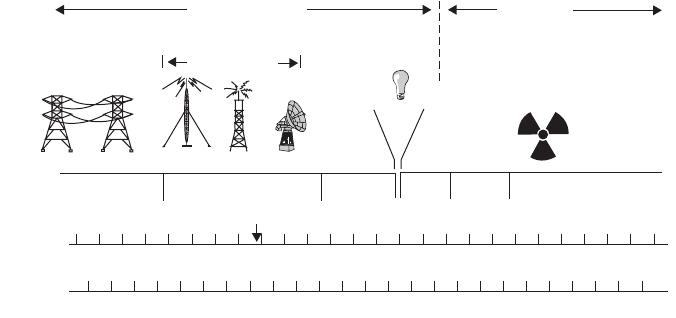
ization [7]. Figure 12.1 shows the electromagnetic spectrum and indicates the
delineation of ionizing radiation. For non-ionizing radiation, tissue heating
(thermal effect) is the only verified mechanism for tissue damage. Non-thermal
or athermal cell damage and mutation is attributed only to ionizing radiation
and has not been associated with non-ionizing radiation. Other possible ather-
mal biological effects of non-ionizing radiation have been postulated, but
remain unproven. In OET-56 [8] the authors provide an assessment of the state
of research on electromagnetic wave exposure:
At relatively low levels of exposure to RF radiation, i.e., field intensities lower
than those that would produce significant and measurable heating, the evidence
for production of harmful biological effects is ambiguous and unproven. Such
effects have sometimes been referred to as “non-thermal” effects. Several years
BIOLOGICAL EFFECTS OF RF EXPOSURE 285
ago publications began appearing in the scientific literature, largely overseas,
reporting the observation of a wide range of low-level biological effects.
However, in many of these cases further experimental research was unable to
reproduce these effects. Furthermore, there has been no determination that such
effects might indicate a human health hazard, particularly with regard to long-
term exposure.
One of the potential effects of electromagnetic wave exposure that is often
discussed is cancer. Here again the authors of OET-56 [8] provide some
insight.
Some studies have also examined the possibility of a link between RF and
microwave exposure and cancer. Results to date have been inconclusive. While
some experimental data have suggested a possible link between exposure and
tumor formation in animals exposed under certain specific conditions, the results
have not been independently replicated. In fact, other studies have failed to find
evidence for a causal link to cancer or any related condition. Further research is
underway in several laboratories to help resolve this question.
The authors of OET-56 [8] also indicate that research is continuing and is being
monitored.
In general, while the possibility of “non-thermal” biological effects may exist,
whether or not such effects might indicate a human health hazard is not presently
known. Further research is needed to determine the generality of such effects
and their possible relevance, if any, to human health. In the meantime, standards-
setting organizations and government agencies continue to monitor the latest
experimental findings to confirm their validity and determine whether alterations
in safety limits are needed in order to protect human health.
It is important to appreciate the distinction between a biological effect and a
biological hazard. A small amount of localized tissue heating is a measurable
286 RF SAFETY
Frequency
(Hertz)
Energy (eV)
10
10
2
10
3
10
4
10
5
10
6
10
7
10
8
10
9
10
10
10
11
1010.1
10
2
10
-2
10
-3
10
-4
10
-5
10
-6
10
-7
10
-8
10
-9
10
-10
10
-11
10
-12
10
-13
10
3
10
4
10
5
10
6
10
7
10
8
10
9
10
10
10
11
10
12
10
13
10
14
10
15
10
16
10
17
10
18
10
19
10
20
10
21
10
22
10
23
10
24
10
25
10
26
Power Lines
Radio and
Television
Microwaves
Cellular Radio
Infra-red
Visible
Light
Ultra-
violet
X-rays
Gamma Rays
Radiofrequencies
NON-IONIZING IONIZING
Figure 12.1 Ionizing and non-ionizing radiation as a function of frequency. (Figure 2,
page 3 of Ref. 8, courtesy of the FCC.)
effect, but may not be a hazard. The frequency of the electromagnetic wave
and the part of the body exposed are important considerations. The two areas
of the body that are most vulnerable to damage from tissue heating are the
eyes and the testes as they lack adequate means (blood flow) to rapidly dis-
sipate heat. So while tissue heating is an effect, above a certain level it can
become a hazard.
Since tissue heating is the focus, in addition to the electromagnetic field
intensity, the duty cycle of the electromagnetic emissions is incorporated into
exposure calculations. The result is an averaged power density over time and
body surface. Thus the spatial distribution of the time-averaged power density
is the unknown that must be determined for a safety analysis.
12.3 FCC GUIDELINES
The current FCC exposure guidelines [1] were adopted in 1996. The guidelines
are based on specific absorption rate (SAR) and use a time-averaged whole-body
exposure SAR of 4W/kg and include safety margins [9]. The FCC guidelines
include “quick and dirty,” conservative field calculations to assess compliance
with the exposure limits [1]. For the most up-to-date information, visit the FCC
Office of Engineering and Technology web site at http://www.fcc.gov/oet/rfsafety.
If the FCC computations do not indicate compliance, other, more detailed
analysis methods may be used to assess compliance.
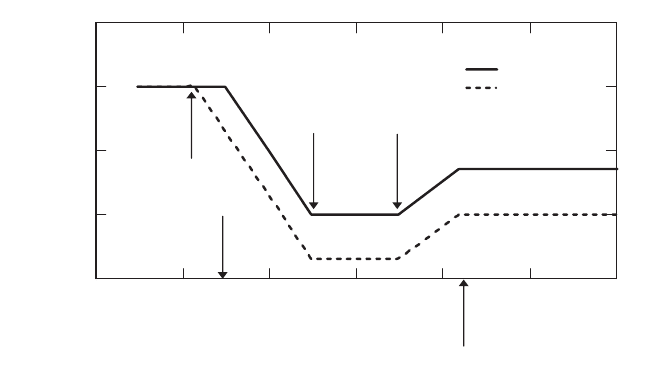
Figure 12.2 is a plot of the FCC maximum permissible exposure (MPE)
limits in mW/cm
2
versus frequency in MHz. Both the power density and
FCC GUIDELINES 287
0.1 1 10 100 1
.
10
3
1
.
10
4
1
.
10
5
0.1
1
10
100
1
.
10
3
Controlled
Uncontrolled
FCC MPE Limits
Frequency (MHz)
mW/sq-cm
30 MHz
3 GHz
1.34 MHz
3 MH
z
300 MHz
Figure 12.2 FCC limits for maximum permissible exposure (plane-wave equivalent
power density).

frequency scales are logarithmic. The lower limits between 30 and 300 MHz
reflect the frequency range where the human body most readily absorbs RF
energy based on its resonance. Table 12.1 shows the defining expressions for
the MPE for controlled exposure, while Table 12.2 shows the expressions for
uncontrolled exposure.
In a controlled environment, also called occupational/controlled environ-
ment, persons must be aware of the potential for exposure and be able to exer-
cise control over their exposure [1]. The required awareness can be achieved
by posting warning signs and by providing training programs. The controlled
exposure limits apply to the workplace and to amateur radio operators and
their immediate families. Examples include workers at transmitter facilities,
cellular tower repair and installation workers, and workers at RF test and
development facilities.
The exposure limits for uncontrolled environments apply in situations where
persons may not be aware of their exposure. They also apply in situations
where persons are aware of their exposure but cannot do anything to limit it.
Examples include nearby cellular towers, wireless office networks, and living
or working next door to a radio station (including an amateur radio station).
Note that these are examples of applications where the uncontrolled exposure
limits apply and are not necessarily hazardous environments.
288 RF SAFETY
TABLE 12.1 FCC Maximum Permissible Exposure Limits for Controlled
Environment
Frequency E Field H Field Power Density Averaging Time
(MHz) (V/m) (A/m) S (mW/cm
2
)|E|
2
,|H|
2
, or S (min)
0.3–3.0 614 1.63 100
a
6
3.0–30 1,842/f 4.89/f (900/f
2
)
a
6
30–300 61.4 0.163 1.0 6
300–1,500 — — f/300 6
1,500–100,000 — — 5 6
a
Plane-wave equivalent power density, f is frequency in MHz.
TABLE 12.2 FCC Maximum Permissible Exposure Limits for Uncontrolled
Environment
Frequency E Field H Field Power Density Averaging Time
(MHz) (V/m) (A/m) S (mW/cm
2
)|E|
2
,|H|
2
, or S (min)
0.3–1.34 614 1.63 100
a
30
1.34–30 824/f 2.19/f (180/f
2
)
a
30
30–300 27.5 0.073 0.2 30
300–1,500 — — f/1,500 30
1,500–100,000 — — 1 30
a
Plane-wave equivalent power density, f is frequency in MHz.

Absorption of RF energy is frequency-dependent based on resonance. The
(adult) human body absorbs the maximum amount of RF energy at 35 MHz
if grounded and 70 MHz if insulated. Parts of the body may resonate at dif-
ferent frequencies and have different sensitivities. Maximum whole-body
absorption occurs when the long axis of the body is parallel to the E field and
is 4/10 of a wavelength [10] (2/10 if grounded since body then acts as a mono-
pole). The frequency of maximum absorption then depends upon the size of
the individual, position (arms raised up, squatting down, etc.), and whether or
not the individual is grounded.
The maximum permissible exposure (MPE) is defined based on average
power level.Thus the signal power (peak envelope power, PEP), transmit duty
factor (for push-to-talk or PTT systems), and exposure duration must all be
factored in to a computation of exposure. The averaging time is 6 minutes for
controlled exposure and 30 minutes for uncontrolled exposure. If the expo-
sure time cannot be controlled, continuous exposure must be assumed. There
is also a requirement that the peak power exposure be limited so that an arbi-
trarily short pulse is not allowed to become arbitrarily powerful. This is
addressed by reducing the MPE averaged over any 100 ms by a factor of five
for pulses shorter than 100 ms [3].
The MPE limits given in Table 12.1 and Table 12.2 provide electric field,
magnetic field, and power densities at frequencies at or below 300 MHz.Above
300 MHz, only power density is specified. When E and H field limits are given,
they must each be met. If both E and H field limits are met, then the power
density limit will also be met. The FCC computations all assume that the E
and H fields are orthogonal (they are not in the near-field), which may not
give accurate power density estimates in the near-field of the transmitting
antenna.
Maxwell’s equations indicate that an electromagnetic wave will have an E
field and an H field that are perpendicular to each other and to the direction
of propagation (in the far-field). Thus
yields the power density vector in the direction of propagation. This is a far-
field or plane wave computation. The quantity Z is called the Poynting vector.
Some definitions of the Poynting vector include division by the characteristic
impedance so that the units are in power per square meter rather than volt-
amps per square meter. It is also noteworthy that some texts use peak values
for E and H, while others use rms values. The use of rms values is fairly stan-
dard for safety analysis and is used in this text. It is always important to be
aware of the context when using equations for analysis however. If peak values
are used, then the equation must also contain a factor of
1
/
2
so that the result-
ing vector is in watts (or normalized watts). Given either E or H (in the
antenna far-field where they are orthogonal), the magnitude of the other can
be computed if the characteristic impedance of the medium is known. For free
space (air)
ZEH=¥
FCC GUIDELINES 289

The characteristic impedance is defined by
(12.1)
where m and e are the permeability and permittivity of the medium, respec-
tively. The strength of an electric field is expressed in units of volts/meter or
equivalent.The strength of a magnetic field is expressed in units of amps/meter
or equivalent. In general, electric and magnetic field strengths are given in rms
rather than peak values (by convention). Thus the power density can be deter-
mined by |E|
2
/h or |H|
2
h (analogous to Ohm’s Law). Power density is expressed
in units of watts/m
2
, mW/cm
2
, mW/cm
2
, or equivalent.
Electromagnetic theory indicates that field strength will decrease with dis-
tance. In the far-field, a 1/d
2
proportionality will apply. In the near-field regions,
there can exist areas where the power density is approximately constant with
distance (for a short distance) or drops off as 1/d. Thus as indicated earlier,
the fields of interest from a safety standpoint will occur in the vicinity of the
transmitting antenna. The purpose of the safety analysis is to determine the
region where the RF field strength is low enough that the MPE limits are not
exceeded.
12.4 ANTENNA CONSIDERATIONS
For an FCC evaluation, the antenna field of view is divided into four regions,
whose definitions differ slightly from those presented in Chapter 3:
The reactive near-field region is generally taken to be within one-half
wavelength of the antenna surface. Accurate measurement of the fields
in this region is difficult due to coupling between the probe and the
antenna.
The near-field region is
(12.2)
where
d is the distance from the center of radiation of the antenna
D is the largest linear dimension of the antenna
l is the wavelength
The transition region is defined as
(12.3)
DdD
22
406ll<<.
ll24
2
<<dD
h
me
=
h=377 W
290 RF SAFETY
The far-field region is defined as
(12.4)
where again D is the largest linear dimension of the antenna.* In the far-field,
E, H and Z are all mutually orthogonal and the free space loss equation
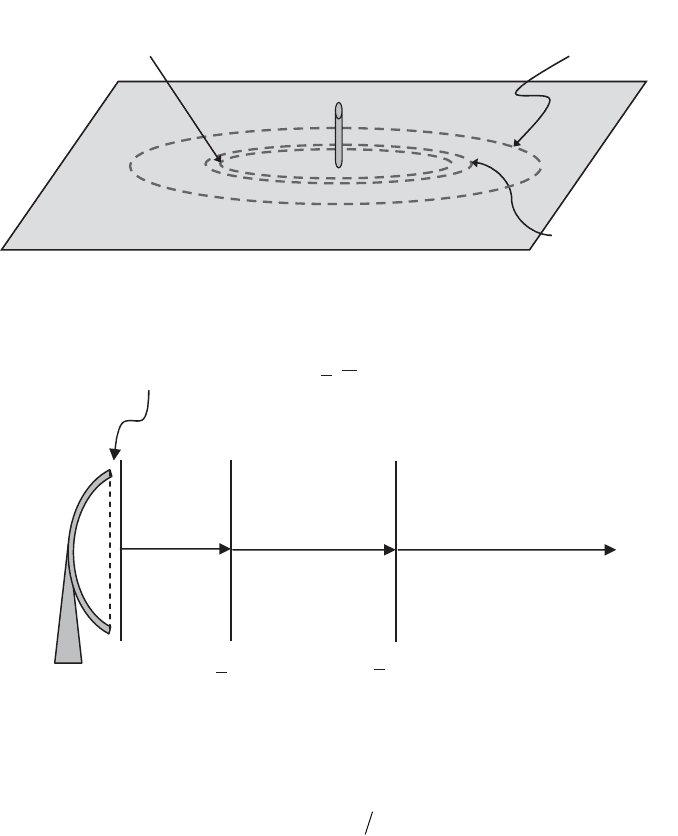
applies. Figure 12.3 is a conceptual diagram of how the radiation region would
appear around a quarter-wave vertical antenna. Figure 12.4 shows the bound-
aries for a directional (aperture) antenna and includes the boundary defini-
tions. For antennas with dimensions on the order of a wavelength (such as a
dD> 06
2
. l
ANTENNA CONSIDERATIONS 291
Reactive Near-
Field Boundary
Near-Field to
Transition Boundary
Ground Plane
Transition or Near-
Field to Far-Field
Boundary
Quarter-wave
monopole antenna
Figure 12.3 Omnidirectional antenna field boundaries for RF safety analysis.
Near-Field
Reactive Near-Field
d
d
2
nf
< D
2
/4
l
l
<
Far-Field
Region
Transition
Region
d
ff
> 0.6D
2
/
l
Figure 12.4 Directional antenna field boundaries for RF safety analysis.
* This is often taken as d < 2D/l [12]. Since it is not an abrupt boundary, the use of either equa-
tion is acceptable for most applications.