
Tsoulos George (ред.) MIMO System Technology for Wireless Communications
Подождите немного. Документ загружается.

114 MIMO System Technology for Wireless Communications
(OFDM), simplifies equalization in channels with significant multipath inter-
ference thus enabling larger bandwidth channels. Multiuser processing
allows space, time, and frequency resources to be distributed among multiple
users to improve network performance and system capacity.
The capacity, quality, and complexity obtained from these new technolo-
gies are substantially improved when information about the channel state is
available at the transmitter. For example, equipped with channel state infor-
mation, the transmitter can customize the transmitted waveforms to provide
higher link capacity and throughput, improve system capacity by more
efficiently sharing the channel with multiple users, increase range by exploit-
ing diversity due to spatial and frequency selectivity, and simplify multiuser
receivers through known interference cancellation.
Research often assumes that channel state information is known perfectly
at the transmitter. In most systems, however, the only opportunity for the
transmitter to learn about the channel is through a low rate feedback control
channel. This is difficult because
1. the feedback rate is fixed and is generally small to reduce system
overhead,
2. there are several channel parameters (proportional to the product of
the number of channel taps, number of antennas, and number of
users) to send each feedback interval, and
3. frequent feedback is needed since the wireless channel is changing
over time due to mobility of the transmitter, receiver, or scatterers
(characterized by the coherence time).
The implication of these three points is that channel state information must
be highly compressed. This motivates the study of feedback techniques as
a means for practically informing the transmitter about the channel state.
This chapter provides an overview of feedback techniques for MIMO com-
munication channels. We emphasize instantaneous feedback, i.e., those meth-
ods that attempt to inform the transmitter about the instantaneous channel
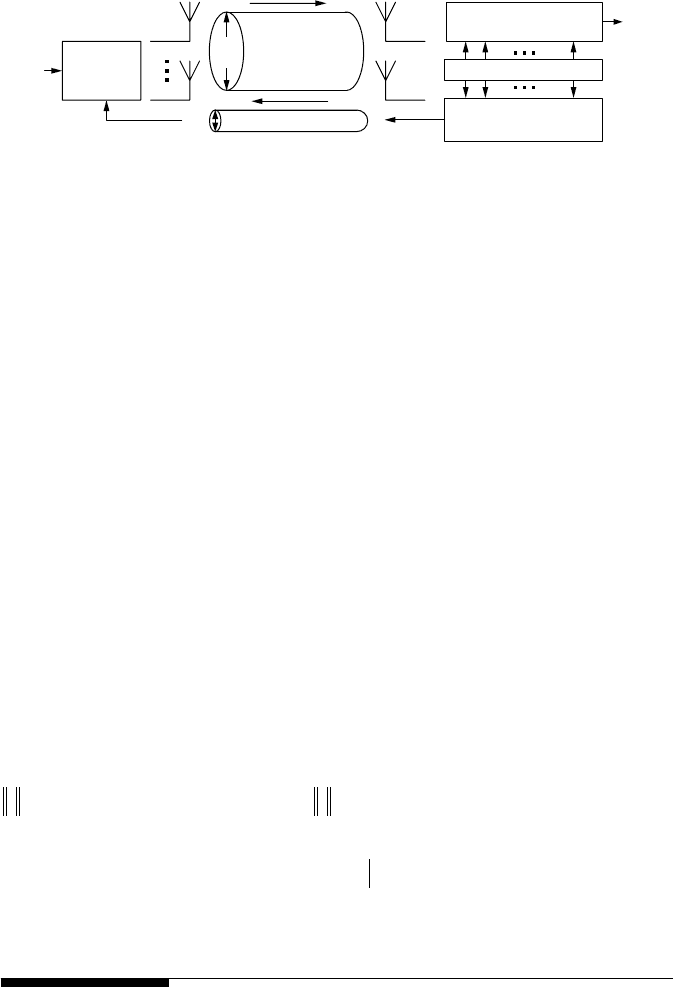
state. Our approach and presentation are based on the framework illustrated
in Figure 5.1. The key idea is to treat the (estimated) channel coefficients as
a source and then to apply specially developed source coding algorithms to
quantize and compress the channel coefficients. This is not traditional source
coding, wherein the object is to reconstruct the source, because the perfor-
mance metrics in a communication system are system parameters such as
SNR, bit-error-rate, throughput, and capacity. The objective of the quantizer
in Figure 5.1 is to compress (typically with a lossy algorithm) channel state
information such that performance is maximized under some assumptions
about the spatial formatting, e.g., space–time block coding or spatial multi-
plexing. We will present a vector quantization framework for quantizing
wireless channels that includes identifying the characteristics of the channel
that must be quantized and deriving source codes based on communication-
theoretic measures of distortion.
4190_book.fm Page 114 Tuesday, February 21, 2006 9:14 AM
Feedback Techniques for MIMO Channels
115
This chapter is organized as follows. First we motivate the problem of
channel quantization and then review related work in Section 5.2. We intro-
duce the notion of limited feedback MIMO communication in Section 5.3.
We discuss two approaches to limiting feedback: direct channel quantization
and quantized signal adaptation. The latter only quantizes features of the
channel that are necessary to adjust the transmitted signal. In Section 5.4 we
describe various algorithms for quantized signal adaptation for narrowband
channels. Under some assumptions about the channel statistics we develop
designs for codebooks suitable for beamforming and precoding in MIMO
systems. We examine their performance in some practical correlated channels
in Section 5.5. In Section 5.6 we study the extension to broadband MIMO-
OFDM channels. We discuss per-tone quantization and interpolation for
exploiting the correlation of adjacent subcarriers. The emphasis is on beam-
forming, though we discuss extensions to more general precoding. A detailed
bibliography is included in the References section.
We use the following notation throughout this chapter. We use I
k
to denote
the k
×
k
identity matrix, E
y
[·] to denote expectation with respect to y
, * to denote
matrix conjugate transposition, argmax to denote a function that returns a
single global maximizer, Q
j
{A
} to denote the j
th largest singular value of A
,
to denote the matrix two-norm, to denote the matrix Frobenius norm,
(A
)
k
to denote the k
th column of A
, 0
to denote a matrix of all zeros,
L
(M
t
, M
)
to denote the set of M
t
×
M
matrices with maximum singular value less than
or equal to one (i.e.,
L
(M
t
, M
) = and to denote
the set of M
t
×
M
matrices with orthonormal columns.
5.2 Prior Work and Motivation
Single-user wireless links can be classified as narrowband or broadband
channels on the basis of channel memory [88]. In this section, we review
FIGURE 5.1
This figure illustrates a communication link with a feedback control channel. The receiver uses
an estimate of the channel both to demodulate the data and to generate quantized channel state
information. This information is sent to the transmitter using the feedback control channel. The
transmitter, in turn, uses this information to customize the transmitted signal for the channel.
The rate of the feedback channel R
is typically much smaller than the rate of the data pipe C
since a large control channel penalizes the overall efficiency of the system.
Spatial
formatter
Bits
Demodulate
Estimate channel
Channel state
Information quantizer
Data pipe
Control pipe
Bits
R
C
2
F
{{}})FFf,
×
MM
t
Q
1
1
U()MM
t
,
4190_book.fm Page 115 Tuesday, February 21, 2006 9:14 AM
116 MIMO System Technology for Wireless Communications
relevant literature in both these areas, with an emphasis on MIMO systems.
Feedback issues have been considered in IEEE 802.16 fixed wireless systems
[1], third generation cellular [33], and the next generation wireless local area
network standard IEEE 802.11n [84].
To motivate the problem we consider a narrowband M
t
transmit and M
r
receive antenna MIMO system (we consider broadband extensions in Section
5.6). At baseband the channel can be represented by an random
matrix H
. This yields a channel input/output relationship at the k
th trans-
mission of
(5.1)
where is an transmit matrix, is an receive matrix, and
N
k
is an additive white Gaussian noise matrix. The variable T
simply
denotes the number of temporal transmissions in the space–time signal.
Space–time signal design can be partitioned into two cases: open-loop and
closed-loop MIMO. In an open-loop MIMO system, is designed indepen-
dently
of the channel conditions. Open-loop MIMO includes the popular
spatial multiplexing or Bell Labs Space–Time (BLAST) system [20], orthog-
onal space–time block codes [4,90], space–time trellis codes [36,45,50,91],
more recent space–time codes [11,14,15,35], as well as codes proposed by
one of the authors [24,27,28]. Alternatively, closed-loop MIMO signals are
designed as a function
of the channel conditions. Closed-loop algorithms
benefit from their channel adaptive nature by providing improved error rate,
better spectral efficiency, and simplified decoding [6,70].
A transmit technique of interest in closed-loop MIMO is linear precoding
of an open-loop signal. Linear precoding works by constructing X
k
= FS
k
where S
k
is formed from one of the aforementioned open-loop algorithms
and F
is a linear precoding matrix determined based on H
. A common
application of precoding for MIMO systems is to reduce the error rate,
improve the throughput, or decrease the complexity of a space–time code
designed without channel information. Initial work on precoding for spatial
multiplexing was done by Scaglione et al. [81], Sampath et al. [77], Zhou
et al. [106], and Heath et al. [29]. Jöngren et al. pioneered precoding for
space–time block codes in [40] before more recent work on this subject
[3,23,46,101,103,106,107]. The precoding matrix can be derived from the chan-
nel (see, e.g., [39,75,81]) or the channel statistics (see, e.g., [2,21,34,68,77,97,
104,106,107]). In general the precoding method depends on the type of
receiver used. A special case of linear precoding is transmit beamforming,
where is an M
t
dimensional beamforming vector, and is a com-
plex number taken from a digital constellation. Various forms of f
have been
explored over the years, beginning with antenna selection in [86,100] to more
general forms in [13,14,51,95], where f
is restricted to be a unit vector and
our work in [53], where f
is restricted to have unit gain entries.
One problem with most of the current work in closed-loop MIMO com-
munications is the assumption that complete channel state information is
MM
rt
×
YHXN
kkk
=+
X
k
MT
t
×
Y
k
MT
r
×
MT
r
×
X
k
Ff=
S
kk
s=
4190_book.fm Page 116 Tuesday, February 21, 2006 9:14 AM
Feedback Techniques for MIMO Channels
117
available at the transmitter. Sometimes this can be inferred from channel
reciprocity (in time division duplexing (TDD) systems), but in frequency
division duplexing (FDD) systems reciprocity will not be present. Besides,
TDD systems require careful calibration of the RF devices for exploiting
channel reciprocity; this calibration may require additional RF units and
typically must be repeated frequently during operation. Thus closed-loop
communication in FDD systems, and sometimes in TDD systems as well,
requires investigating channel quantization and limited feedback.
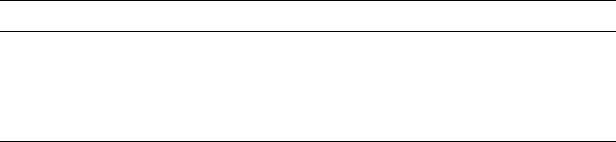
The challenge of direct channel quantization [37–39, 46] is the large number
of parameters. To illustrate, Table 5.1 provides the number of parameters for
different kinds of transmit processing. Notice that more sophisticated forms
of precoding require more feedback. Quantization of instantaneous channel
state information is the alternative to direct channel quantization. Initial work
in this area stems from the channel quantization work of Narula et al. [69]
and the work by Heath and Paulraj on beamforming phase quantization [26]
and antenna selection [22,29]. This kind of technique was then extended by
Love et al. [53,63], Mukkavilli et al. [66,67] Santipach et al. [79,80], and Zhou
et al. in [108]. Love et al. and Mukkavilli et al. independently found that the
problem of feedback design for beamforming relates to the applied mathe-
matics problem of Grassmannian line packing [10,87]. The codebook vectors
are thought of as lines and are designed using subspace coding techniques.
An overview of work in limited feedback MIMO can be found in [63b].
In broadband wireless links the feedback problem becomes more acute
because of the additional channel parameters. The baseband input-output
relationship of a broadband MIMO wireless link can be written as
(5.2)
where is the received vector at time n
, is the transmitted signal
vector at time n
, is noise, and is a multitap channel impulse. In
TABLE 5.1
Example of the Gross Feedback Requirements per User with M
t
Transmit
Antennas, M
r
Receive Antennas, for a Narrowband and N
Tone MIMO System
Scheme Feedback # Params # Params for OFDM
Simple power control Total received power 1 N
Beamforming Beamforming vector 2M
t
2NM
t
Eigenmode Eigenvectors & values 2M
t
M
r
2NM
t
M
r
Precoding Precoding matrix 2M
t
M
r
2NM
t
M
r
Full channel Channel matrix 2M
t
M
r
2NM
t
M
r
Note:
Feedback requirements for precoding are reduced when there is a special struc-
ture such as orthogonal columns.
yHsv() ()( ) ()nlnln
l
L
= +
=
¨
0
y()n s()n
v()n {()}H l
l
L
=0
4190_book.fm Page 117 Tuesday, February 21, 2006 9:14 AM
118 MIMO System Technology for Wireless Communications
general the impulse response is time-varying though often assumed time-
invariant over a transmission burst. The convolution in Equation 5.2 implies
that successive symbols interfere with one another creating intersymbol
interference. To mitigate this self-interference, two different approaches are
to use receive/transmit equalization or orthogonal frequency division multi-
plexing (OFDM).
Receive equalization techniques are well known in the communications
literature [71] and are used in some form in most wireless systems. The
transmit counterpart of receive equalization is conventionally known as
Tomlinson-Harashima (TH) precoding [64,92] (see also [16] and the refer-
ences therein). TH precoding has received less attention in wireless applica-
tions due to the requirement of precise knowledge of the impulse response
at the transmitter. Fischer et al. have examined TH precoding for MIMO
systems with low rate feedback channels [17] using the statistics of the
channel. A general investigation, however, has not been made of the effect
of feedback on TH precoding.
OFDM is a digital modulation technique where a wideband channel is
divided into multiple narrowband channels [31]. Due to interest in OFDM
for IEEE 802.11n [84], IEEE 802.16 [1], and fourth generation applications
[78], we will address only limited feedback communication in broadband
channels with OFDM equalization.
MIMO-OFDM systems make use of the benefits of OFDM modulation to
simplify equalization in frequency selective channels. Thanks to OFDM, the
equivalent system model is converted from the convolution in Equation 5.2
to a set of N
(the number of subcarriers) flat fading channels. We comment
more about the system model in Section 5.6. In MIMO-OFDM systems, which
combine the capacity benefits of MIMO communication with the simple
equalization of OFDM, feedback can be used to improve capacity, as dem-
onstrated by Raleigh and Cioffi in early work on the subject [72]. Perfor-
mance can also be improved with partial channel information, e.g., the work
by Xia et al. who derived an adaptive beamformer for MIMO-OFDM based
on imperfect channel state estimates [102]. Since MIMO-OFDM results in a
set of narrowband matrix channels, our quantized beamforming and pre-
coding strategies show great promise for MIMO-OFDM.
A simple application of narrowband quantized precoding to MIMO-
OFDM can result in substantial feedback, in proportion to the number of
subcarriers. Recently Choi and Heath recognized that the correlation
between adjacent subcarriers can be used to reduce the amount of feedback
[8,9]. Specifically, they proposed a technique where the precoders for only a
fraction of the subcarriers were quantized and a special subspace interpola-
tor was used for the other subcarriers. Work by Mondal and Heath bypassed
the interpolation stage and instead used a clustering approach to find the
best precoder for a cluster of subcarriers [65]. Quantized precoding for
MIMO-OFDM has recently been adopted in the IEEE 802.16 standard; further
developments are ongoing.
4190_book.fm Page 118 Tuesday, February 21, 2006 9:14 AM

Feedback Techniques for MIMO Channels
119
5.3 Limited Feedback MIMO
Due to the substantial performance gains that can be obtained when a MIMO
signal is adapted to the channel, the design of limited feedback MIMO systems
is an important theoretical and practical problem. The following subsections
give an overview of the general ideas behind limited feedback MIMO systems.
5.3.1 System Description
A limited feedback system leverages cooperation between the transmitter
and receiver. Consider for illustration purposes the narrowband MIMO com-
munication system in Equation 5.1.
In a coherent MIMO system, the receiver
has an estimate of the forwardlink channel matrix H
that is used for decod-
ing. The receiver uses its knowledge of H
to design feedback information to
send to the transmitter. The transmitter then uses this feedback to adapt the
transmitted signal to the channel.
The design of feedback can be partitioned into two main techniques: direct
quantization of the channel and indirect quantization of the channel through
signal adaptation. In general, either method can be successfully employed.
We will show, however, that direct channel quantization lacks the perfor-
mance of more specialized feedback methods. The reason is that it is often
better to design limited feedback adaptation algorithms than to adapt to the
quantized channel.
5.3.2 Channel Quantization
Motivated by the large body of VQ work over the last forty years, one
approach to limited feedback is to employ channel quantization. The matrix
channel quantization problem is reformulated as a VQ problem by stacking
the columns of the channel matrix H
into an M
r
× M
t
dimensional complex
vector. The problem is then to quantize this high dimensional vector, which
can be successfully done using a VQ algorithm.
In a vector quantizer, a real or complex valued vector is mapped into one
of a finite number of vector realizations, known as a codebook. The codebook
is chosen to minimize the average distortion with respect to the source
distribution. The Lloyd algorithm or other numerical techniques are typically
used to solve for the codebook. The mapping function is a measure of
distortion between the unquantized input and the quantized output. The
most common example is the mean squared error (MSE), i.e., choose Q(x)
such that the expected value of is minimized. There is, however,
one key difference between VQ discussed in the compression literature and
channel VQ. In the channel VQ case, the distortion function (or mapping) is
typically a non-Euclidean distance measure. With VQ, the distortion is typically
xx Q()
2
4190_book.fm Page 119 Tuesday, February 21, 2006 9:14 AM
120 MIMO System Technology for Wireless Communications
a 2-norm like the aforementioned MSE. In channel VQ, however, other
distortion functions might be used, such as 2 – 2 冨¤x, Q(x)´冨. The reason is
that communication systems are often invariant to certain aspects of the
channel — a property that can be used to reduce the number of degrees of
freedom and, thus, the amount of feedback required. One simple example
of invariance is closed-loop beamforming. The performance of beamforming
is invariant to the channel being multiplied by e
j/
for any phase offset /.
Narula et al. first used this invariance in [69] for application to closed-loop
beamforming. Note that the MSE is not invariant to phase distortion while
the second distance mentioned above is, in fact, phase invariant. This invari-
ance was used to reduce the number of feedback parameters.
Direct channel quantization technique does not bind the transmitter to any
specific space–time signaling technique. In theory, this gives the transmitter
flexibility to choose among different space–time signaling techniques such
as beamforming, spatial multiplexing, or space–time coding. Previous work
has shown that channel quantization can be employed for multiple-input
single-output (MISO) beamforming [12,69] and MIMO precoded orthogonal
space–time block coding [39].
5.3.3 Quantized Signal Adaptation
Narula et al.’s work motivated a new approach to limited feedback design.
The algorithm in [69] was technically not only quantizing a MISO vector
channel, but also quantizing the optimal beamforming vector. This different way
of looking at the problem motivates a different approach to limited feedback.
The receiver only needs to send back the portion of the channel structure needed for
signal design.
For a fixed transmission technique, performance gains can be achieved by
concentrating on improving the transmitter’s knowledge of the quantized
information needed to adapt the transmitted signal to current channel con-
ditions. In particular, research has concentrated on modifying the precoded
space–time block coding model described by Equation 5.1 to allow for quan-
tized signal adaptation. The general approach is to use the fact that precoders
are only a function of the channel’s right singular vectors, thus yielding a
dramatic reduction in the dimensionality of the quantization problem.
Recall that a precoded system transmits where F adapts the
space–time block code matrix to the current channel conditions. Thus, the
transmitter does not need to know the complete channel matrix H but only
F. The lack of transmit channel knowledge can then be overcome by design-
ing F at the receiver and sending F back to the transmitter using a small
number of feedback bits (denoted by B). Practically, the receiver will use a
selection function f (where mapping to a codebook
(5.3)
XFS
kk
=
S
k
FH= f ())
F =,,…,{}FF F
12 N
4190_book.fm Page 120 Tuesday, February 21, 2006 9:14 AM

Feedback Techniques for MIMO Channels 121
of possible precoding matrices where Because the codebook has 2
B
elements, the chosen matrix F can be conveyed from the receiver to trans-
mitter using a B bit pattern. This codebook-based approach has been used
to study limited feedback beamforming [48,63,67], precoded orthogonal
space–time block codes [46,47,57], precoded spatial multiplexing
[58,62,73,74,76], and transmit covariance optimization [7,49].
The problem of quantized signal adaptation is similar to channel VQ.
Solving the problem requires identifying an objective function and a code-
book. The major difference is that the channel is not quantized directly, rather
some function of the channel is quantized. Second, the objective is typically
not to minimize distortion, rather it is to maximize performance. For exam-
ple, we may choose the F such that the SNR (as a function of the channel)
is maximized, rather than choosing F to best approximate the unquantized
solution. This is possible since system performance is a function of the chosen
precoder; the distortion does not directly play a role but indirectly affects
system performance.
5.4 Quantized Signal Adaptation Algorithms
The analysis and design of limited feedback precoders is highly dependent
on the type of underlying open-loop system. We will address the design for
beamforming, precoded orthogonal space–time block coding, and precoded
spatial multiplexing.
5.4.1 Beamforming Example and Summary of Approach
To illustrate the use of quantized signal adaptation consider an M
t
transmit
antenna by M
r
receive antenna narrowband MIMO wireless system perform-
ing transmit beamforming with an optimal maximum likelihood (ML)
receiver. With beamforming a single transmit stream is weighted by a beam-
forming vector determined by the channel H. The baseband input-output
relationship for this system after combining can be written as
(5.4)
where is the narrowband channel response, f is an M
t
dimen-
sional beamforming vector, s is a complex number taken from a transmit
constellation, n is a noise term, and 㥋·㥋
2
is the vector two-norm. Note that the
temporal dependence of the symbol has been abstracted out. Transmit beam-
forming achieves a strong resilience to fading by adapting the vector f to
the current channel conditions. Given a symbol s to be transmitted, the ith
N
B
=.2
ysn=+Hf
2
H MM
rt
×
4190_book.fm Page 121 Tuesday, February 21, 2006 9:14 AM

122 MIMO System Technology for Wireless Communications
entry of the vector is then transmitted on the ith transmit antenna. We
will assume that E
[冨s冨
2
] = J
s
and that n is distributed according to CN(0, N
0
).
Note that the average transmit power conditioned on a beamformer is given
by Therefore, we will restrict to have unit norm.
Because the vector is a function of current channel conditions, some
knowledge of is necessary at the transmitter. We propose to take a code-
book-based approach to use a limited number of feedback bits to convey
channel state information. The solution proposed in [61,63] is to restrict f to
be a member of a codebook F = {f
1
, f
2
, …, f
N
}. This codebook is designed
off-line, known to both the transmitter and receiver, and fixed for all time.
There are two main challenges, given this kind of feedback architecture. First,
a method must be determined for choosing a beamforming vector from the
codebook F to send back. The chosen vector is conveyed to the transmitter
using bits of feedback. Second, we must determine how to con-
struct the codebook F.
In a beamforming system, maximizing the average receive SNR corre-
sponds to simultaneously minimizing the probability of error and maximiz-
ing the channel capacity. Therefore, the receiver, which has knowledge of H
from training, chooses one of the vectors in F to maximize the receive SNR.
Assuming optimal maximum ratio combining, the post-combining average
SNR is given by
Therefore, the receiver can choose the transmit beamforming vector by
performing a brute force search over the N vectors in the codebook F to solve
We can address the codebook design issue by defining a distortion and
solving for a codebook that minimizes the distortion. Consider the distortion
(5.5)
defined by taking an expectation of the beamforming gain loss (i.e., the
difference between the beamforming gain obtained by using the optimal
unquantized vector and the beamforming gain obtained using the code-
book F ) with respect to the channel. This distortion can be bounded as [63]
(5.6)
fs
2
2
f J
s
. f
f
H
log
2
N
¬
¼
½
out
s
N
SNR
= Hf
2
2
0
J
fHf
f
=
argmax
F
2
2
DE
opt
() maxF
F
=
¬
®
¼
¾
½
½
Hf Hf
f
2
2
2
f
opt
DE E() maxF
F
f
©
«
ª
¹
»
º
¬
®
¼
¾
½
¬
®
¼
¾
½
½
Hvf
f
2
2
2
1
4190_book.fm Page 122 Tuesday, February 21, 2006 9:14 AM
Feedback Techniques for MIMO Channels 123
(5.7)
where v is the dominant right singular vector of H and
(5.8)
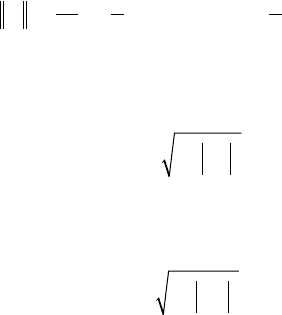
Differentiating the bound in Equation 5.7 shows that I should be maxi-
mized. Note that
is a subspace distance. Thus we should think of the codebook as a finite set
of subspaces rather than a finite set of vectors. The set of M-dimensional
subspaces in is known as the Grassmann manifold
From the theory of Grassmannian manifolds [5], the design of the code-
book F was found to relate to Grassmannian line packing. Grassmannian line
packing is an exciting area of coding theory where finite sets of subspaces
are designed such that the minimum distance between any pair of subspaces
is as large as possible. These kinds of codes can be designed using techniques
from the theory of non-coherent code design [32], numerical techniques [10],
alternating projection algorithms [93], and algebraic techniques [87].
Figure 5.2 shows the symbol error rate performance of a four transmit and
five receive antenna beamforming system transmitting 16-QAM. Optimal
maximum ratio combining is used at the receiver. Signal adaptive beam-
forming using a 6-bit codebook designed with the criterion in [63] outper-
forms 40-bit (2 bits per complex entry) channel quantization by
approximately 1 dB. Limited feedback signal adaptive beamforming also
performs within 0.7 dB of full transmit channel knowledge, unquantized
beamforming.
The reason for the dramatic performance gains with the limited feedback
signal adaptive approach over channel quantization is because the quanti-
zation problem focuses strictly on the singular vector structure of the channel.
The 40-bit channel quantization has such large quantization error that the
fragile eigen-structure of the channel is often mangled at the transmitter. The
lack of reliable eigen-structure information at the transmitter causes a loss
in performance for the beamformer.
5.4.2 Precoded Orthogonal Space–Time Block Codes
As other chapters have shown, orthogonal space–time block coding (OST-
BCing) is an effective technique to combat the effects of fading with multiple
f
©
«
ª
¹
»
º
+
¬
®
¼
¾
½
½
EN N
MM
tt
H
2
2
2
21 21
42
1
II
() ()
II
2
©
«
ª
¹
»
º
©
«
ª
ª
¹
»
º
º
©
«
ª
ª
¹
»
º
º
I =
f < f
min
*
11
2
1
kN
kl
ff
d()ff ff
12 12
2
1,=
M
t
G()MM
t
,.
4190_book.fm Page 123 Tuesday, February 21, 2006 9:14 AM