
Tsoulos George (ред.) MIMO System Technology for Wireless Communications
Подождите немного. Документ загружается.


The Editor
George Tsoulos graduated from the National Technical University of Athens,
Department of Electrical and Computer Engineering, Greece, in 1992 and
earned his Ph.D. from the University of Bristol, U.K., in 1997.
From 1994 until 1999 Dr. Tsoulos was a research associate and then a
research fellow at the University of Bristol, working in the area of smart
antennas for wireless communications. From 1999 until 2002 he was with
the Global Technology Group of the PA Consulting Group, in Cambridge,
U.K., where he worked for a range of leading companies across the world
in the design and analysis of advanced wireless communication systems. In
2003 he joined the Institute of Communication and Computer Systems of
the National Technical University of Athens (NTUA), in the context of the
EC-funded research program, ENTER.
Dr. Tsoulos currently teaches at the University of Peloponnese, Department
of Telecommunication Sciences and Technology, and the Greek Open Uni-
versity. He is also involved in smart antenna and MIMO research activities
with the Department of Information Transmission Systems and Materials
Technology at NTUA, and the Department of Informatics & Telecommuni-
cations, National & Kapodistrian University of Athens.
4190_C000.fm Page xi Thursday, February 23, 2006 12:01 PM

Contributors
G.E. Athanasiadou Department of Telecommunication Sciences and
Technology, University of Peloponnese, Greece
Ernst Bonek Technische Universität Wien, Vienna, Austria
David Browne University of California, Los Angeles, California
Bedri Artug Cetiner Morehead State University, Space Science Center,
Morehead, Kentucky
Babak Daneshrad University of California, Los Angeles, California
Mike Fitz University of California, Los Angeles, California
Andreas Forck Fraunhofer Institut for Telecommunications, Heinrich-
Hertz-Institute, Berlin, Germany
Ajay Gumalla San Diego Research Center, San Diego, California
Jyri Hämäläinen Nokia Networks, Oulu, Finland
Thomas Haustein Fraunhofer Institute for Telecommunications, Heinrich-
Hertz-Institute, Berlin, Germany
Robert W. Heath, Jr. The University of Texas at Austin, Austin, Texas
Christoph Juchems Institut für Angewandte Funksystemtechnik GmbH,
Braunschweig, Germany
Volker Jungnickel Fraunhofer Institute for Telecommunications, Heinrich-
Hertz-Institute, Berlin, Germany
Dimitra Kaklamani School of Electrical and Computer Engineering,
National Technical University of Athens, Athens, Greece
Markku Kuusela Nokia Research Center, Nokia Group, Finland
Stephan Lang University of California, Los Angeles, California
Harry Lee San Diego Research Center, San Diego, California
David J. Love School of Electrical and Computer Engineering, Purdue
University, West Lafayette, Indiana
4190_C000.fm Page xiii Thursday, February 23, 2006 12:01 PM
Sergey Loyka School of Information Technology and Engineering (SITE),
University of Ottawa, Ottawa, Canada
Christoph Mecklenbräuker ftw. Forschungszentrum Telekommunikation
Wien, Vienna, Austria
Neelesh B. Mehta Mitsubishi Electric Research Labs, Cambridge,
Massachusetts
Andreas F. Molisch Mitsubishi Electric Research Labs, Cambridge,
Massachusetts and Department of Electroscience, Lund University,
Lund, Sweden
Juan Mosig Swiss Federal Institute of Technology, Lausanne, Switzerland
Thomas Neubauer Symena, Vienna, Austria
Christian Oberli Department of Electrical Engineering, Pontificia
Universidad Católica de Chile, Santiago, Chile
Kari Pajukoski Nokia Networks, Oulu, Finland
Christian B. Peel Brigham Young University, Provo, Utah
Alexander D. Poularikas University of Alabama, Huntsville, Alabama
Raghu Rao Xilinx Inc., San Jose, California
Quentin H. Spencer Distribution Control Systems, Inc., Hazelwood,
Missouri
Thomas Svantesson ArrayComm, Inc., San Jose, California
A. Lee Swindlehurst Brigham Young University, Provo, Utah
Esa Tiirola Nokia Networks, Oulu, Finland
George Tsoulos Department of Telecommunication Sciences and
Technology, University of Peloponnese, Greece
Jon W. Wallace Brigham Young University, Provo, Utah
Antonis D. Valkanas Intracom S.A., Athens, Greece
Risto Wichman Helsinki University of Technology, Finland
Dimitra Zarbouti School of Electrical and Computer Engineering,
National Technical University of Athens, Athens, Georgia
Weijun Zhu University of California, Los Angeles, California
Wolfgang Zirwas Siemens AG, Munich, Germany
4190_C000.fm Page xiv Thursday, February 23, 2006 12:01 PM

Contents
1 Spatio-Temporal Propagation Modeling ...................................... 1
G.E. Athanasiadou
2 Theory and Practice of MIMO Wireless Communication
Systems........................................................................................... 29
Dimitra Zarbouti, George Tsoulos, and Dimitra Kaklamani
3 Information Theory and Electromagnetism:
Are They Related? ........................................................................ 57
Sergey Loyka and Juan Mosig
4 Introduction to Space–Time Coding........................................... 89
Antonis D. Valkanas and Alexander D. Poularikas
5
Feedback Techniques for MIMO Channels............................. 113
David J. Love and Robert W. Heath, Jr.
6 Antenna Selection in MIMO Systems...................................... 147
Neelesh B. Mehta and Andreas F. Molisch
7
Performance of Multi-User Spatial Multiplexing with
Measured Channel Data............................................................. 175
Quentin H. Spencer, Jon W. Wallace, Christian B. Peel, Thomas
Svantesson, A. Lee Swindlehurst, Harry Lee, and Ajay Gumalla
8 Multiuser MIMO for UTRA FDD............................................. 207
Jyri Hämäläinen, Risto Wichman, Markku Kuusela, Esa Tiirola,
and Kari Pajukoski
9 Multifunctional Reconfigurable Microelectromechanical
Systems Integrated Antennas for Multiple Input Multiple
Output Systems........................................................................... 249
Bedri Artug Cetiner
10 Multi-Antenna Testbeds for Wireless Communications........ 273
Raghu Rao, Christian Oberli, Stephan Lang, David Browne,
Weijun Zhu, Mike Fitz, and Babak Daneshrad
4190_C000.fm Page xv Thursday, February 23, 2006 12:01 PM
11 Gigabit Mobile Communications Using Real-Time
MIMO-OFDM Signal Processing.............................................. 315
Volker Jungnickel, Andreas Forck, Thomas Haustein,
Christoph Juchems, and Wolfgang Zirwas
12 Network Planning and Deployment Issues
for MIMO Systems ..................................................................... 353
Thomas Neubauer, Ernst Bonek, and Christoph Mecklenbräuker
Index ..................................................................................................... 371
4190_C000.fm Page xvi Thursday, February 23, 2006 12:01 PM

1
1
Spatio-Temporal Propagation Modeling
G.E. Athanasiadou
CONTENTS
1.1 Introduction....................................................................................................2
1.2 Directional Channel Modeling ....................................................................2
1.2.1 Ring of Scatterers ..............................................................................4
1.2.2 Discrete Uniform Distribution Model ...........................................4
1.2.3 Geometrically Based Single-Bounce (GBSB) Statistical
Channel Models.................................................................................5
1.2.3.1 Geometrically Based Circular Model
(Macrocell Model)...............................................................5
1.2.3.2 Geometrically Based Elliptical Model
(Microcell Model)................................................................6
1.2.3.3 Elliptical Subregions Model..............................................7
1.2.3.4 Elliptical Model with Dense Discrete Scatterers ...........7
1.2.4 Gaussian Wide Sense Stationary Uncorrelated Scattering
(GWSSUS)...........................................................................................7
1.2.5 A Stochastic Spatio-Temporal Propagation Model (SSTPM).....8
1.2.6 Extended Saleh-Valenzuela Model...............................................10
1.2.7 Gaussian Scatter Density Model...................................................10
1.2.8 Gaussian AoA — Laplacian Power Azimuth Spectrum........... 11
1.2.9 Semi-Elliptical Geometrical Model............................................... 11
1.2.10 Lognormal Distribution of Local Angular Spread (AS),
Delay Spread (DS), and Shadow Fading (Macrocells).............. 11
1.3 MIMO Propagation Modeling...................................................................12
1.3.1 Deterministic Propagation Modeling with Ray Tracing...........13
1.3.2 Stochastic Propagation Modeling.................................................17
1.3.2.1 The 3GPP MIMO Channel Model..................................18
References...............................................................................................................23
4190_book.fm Page 1 Tuesday, February 21, 2006 9:14 AM

2 MIMO System Technology for Wireless Communications
1.1 Introduction
The evolution of wireless communications from analog to digital led to the
enhancement of early propagation models, which provided information
about power, in order to also consider time delay information. Further con-
sideration of the space domain either with space diversity or smart antennas
or, nowadays, MIMO systems has also pushed the evolution of propagation
modeling toward more complex spatio-temporal considerations.
In this context, there is a plethora of radiowave propagation models, each
developed and used for different applications. The right choice is critical for
specific analyzes and depends on system and operational parameters such
as the environment, speed, accuracy, cost and ease of use. Generally, expe-
rience has shown that for scenarios and parameters that are not very site
specific, sufficient accuracy can be achieved at reasonable simulation speeds,
with stochastic models. On the other hand, for more site-specific scenarios,
more complex ray-tracing models that employ geographical databases are
required to provide reasonable accuracy, but at the cost of increased run
times.
This chapter starts with models that were developed in an attempt to
describe propagation characteristics for space diversity and smart antenna
applications. Then models developed to provide the necessary channel infor-
mation for MIMO applications are discussed. Obviously, measurement
campaigns played a key role in the development of these models, and hence,
important results from such activities are reported for both cases.
Several references are cited throughout this chapter, but there are some
good sources of information that the reader will find particularly useful,
such as [1–5].
1.2 Directional Channel Modeling
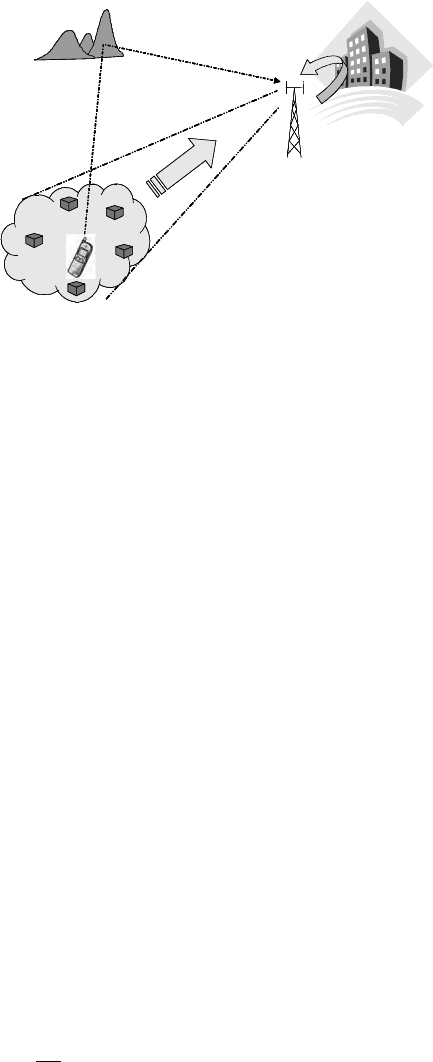
Figure 1.1 shows that there are three different sources of scattering that affect
signal propagation between the base station and the mobile:
1. Scatterers around the mobile station (MS): Similar height or higher
than the mobile, hence, the received signal at the mobile usually
arrives with wide angular spread.
2. Scatterers around the base station (BS): Generally, the energy arrives
at the BS from identifiable clusters, which correspond to different
propagation mechanisms (e.g., single reflections from high objects or
from rooftop diffractions or street-guided propagation with multiple
reflections from the building walls, etc.). For different operational
4190_book.fm Page 2 Tuesday, February 21, 2006 9:14 AM
Spatio-Temporal Propagation Modeling
3
scenarios there are different characteristics, e.g., in macrocells (BS at
the same level or above the surrounding scatterers),
multipath is
contained within a relatively small angular spread with relatively
low delay spread. In microcells (BS below rooftops), the angular
spread is larger than in the macrocell case.
3. Multipath from remote scatterers is another possibility, e.g., in rural
operational scenarios. It is usually contained within a very small
angular spread but contributes large delay spread.
From Figure 1.1 we can see that each signal from the k
th
user experiences
a different multipath environment, described by the amplitude (F
i,k
), phase
(^
i,k
), time delay (Y
i,k
), Doppler shift, and Angle-of-Arrival (AoA) components
(time varying). A convenient way to characterize the radio channel is through
its channel impulse response, which when modified to consider the AoA of
the multipath components for an antenna array, produces the vector channel
impulse response:
where a
(O
i,k
, V
i,k
) is the complex array response vector of the receive antenna
elements (x
m
, y
m
, z
m
) for the i
th
multipath direction (O
i,k
, V
i,k
)
and operating
frequency f
:
FIGURE 1.1
Scattering sources for radiowave propagation modeling.
ha(, ) exp ,
,,,,,
tjt
ik ik ik ik ik
YF ^OVIY=
()( )
()
ii
K
=
¨
1
a OV
U
Q
ik ik
m
mx
,,
,
()cos
()
=
1
2
1exp(j OOV OV V
ik ik m ik ik m ik
yz
,, ,, ,
sin sin sin cos++
()
¬
®
¼
¾
½
4190_book.fm Page 3 Tuesday, February 21, 2006 9:14 AM