
Battarbee R.W., Binney H.A. (Eds.) Natural Climate Variability and Global Warming: A Holocene Perspective
Подождите немного. Документ загружается.

..
20
|
H. John B. Birks
..
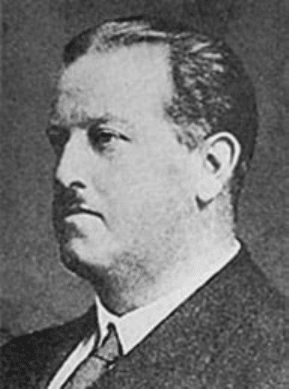
using pollen analysis as a dating technique and as a paleoclimatic tool (Fries 1950;
Lundqvist 1965; Manten 1967a,b). In 1916 von Post proposed that in contrast to
megafossils and macrofossils in peat, pollen could give a continuous record of vege-
tational and hence climatic change. He demonstrated strong pollen-stratigraphic
similarities within southern and central Sweden and strong pollen-stratigraphic
differences between the two regions (Manten 1967b; von Post 1967). He later
proposed (von Post 1946) the concept of regional parallelism, namely that the
same overriding climate change will be reflected in different ways by different
taxa in different geographic and climatic regions. Based on the concept of regional
parallelism, pollen analysis was used prior to about 1960 as a means of “determin-
ing geologic time” (von Post 1946) by assuming that different pollen zones (e.g.
Jessen’s zones I–IX, Godwin’s zones I–VIII) in an area were synchronous. Pollen
analysis provided the major means of dating botanic, zoologic, and archaeolo-
gic material in relation to the regional pollen zonation. Attempts were naturally
made to correlate the pollen zonation schemes with the Blytt–Sernander climate
periods (Iversen 1973; Fægri 1981; Mangerud 1982). Pollen stratigraphy soon
became the only approach used to detect past climate changes and to identify
the Blytt–Sernander periods. These periods almost became synonyms for pollen
zones.
In a series of publications based on pollen-stratigraphic investigations in south-
ern and central Sweden, von Post (e.g. 1920, 1924, 1933) emphasized climate as
the principal cause of the inferred vegetation changes and interpreted the pollen
record in a straightforward way and proposed that summer temperatures
in the mid-Holocene were about 2°C higher than present-day. Even by 1933,
von Post emphasized the need for a synthesis of paleoclimatic records and
for improved chronologies. He wrote (von Post 1933, p. 58 – translated from
Swedish)
Figure 2.9 Lennart von Post (1884–1951), a Swedish
geologist who developed the technique of Quaternary pollen
analysis as a tool for dating and for reconstructing past
climate. Picture from (http://en.wikipedia.org/wiki/
Lennart_von_Post (accessed 30 October 2006).)
9781405159050_4_002.qxd 6/3/08 3:52 PM Page 20
Holocene climate research
|
21
..
“At some future date, as and when the time proves ripe, the variety of time-scales
for the history of climate development might be fashioned into a unified whole.
The system so finalized, naturally enough, should not only comprise a succession of
periods. It ought to be based, firmly and squarely, on a time-scale of years, centuries,
and millennia.”
In the 1920s–1940s, many investigators made pollen-analytic studies in Europe,
North America, South America, New Zealand, and China. Although these studies
are, by modern standards, rather rudimentary, they lay the foundation for von
Post’s (1946) major synthesis on “The Prospect for Pollen Analysis in the Study
of Earth’s Climatic History”, along the ideas he suggested in 1933. This global
synthesis was the lecture von Post delivered when he was awarded the Vega Medal
from the Swedish Anthropological and Geographic Society in 1944.
In this far-ranging and forward-looking paper, von Post emphasized that pollen
analysis is “the most complete and most realistic register of climatic fluctuations
throughout the past which we now have at our disposal”. He proposed, based on
pollen diagrams from Europe, New Zealand, Tierra del Fuego, North America,
Hawaii, and China, that there is a consistent three-fold division of Holocene pollen
stratigraphies. The first he interpreted as a period of increasing warmth, the second
as a period of culminating warmth, and the third as a period of decreasing warmth.
He characterized the dominant elements of the middle period as mediocratic, and
of the earlier and later periods as protocratic and terminocratic, respectively. Von
Post attempted to show that similar patterns of changing warmth had affected not
only many parts of Europe, but many widely spaced regions on Earth. In this
synthesis, von Post asked “now is it conceivable that anything other than climatic
change could have brought about this general and, within certain regions, funda-
mental transformation of the forest distribution of our part of the world?” Besides
discussing these broad-scale climatic trends, von Post also considered “minor
paleoclimatic fluctuations” and suggested that the reader must be “wondering
about these ‘ripples’ ”. He presented a Holocene pollen diagram from a bog near
Stockholm and examined fluctuations in tree pollen concentrations (pollen per
gram of peat) and the Betula (birch) pollen percentage curve. Using an early form
of smoothing and spectral decomposition, von Post identified two long-term
trends and three cycles with period lengths of 1700, 800–900, and 200–400 years
within the birch pollen curve. The chronology was very crude and was based on
peat-stratigraphic changes and the assumed ages of Granlund’s peat recurrence
surfaces.
Although von Post (1946) does not openly criticize the Blytt–Sernander scheme
(von Post was after all a strong supporter of Rutger Sernander in the
Sernander–Andersson feud and they had published together in 1910), von Post
appears discretely to have modified his general views towards Andersson’s idea of
a mid-Holocene warmth. Von Post recognized that there were fluctuations in
climate that correspond to the Blytt and Sernander phases but these were small
compared with the major long-term climatic changes proposed by Andersson.
This view, obliquely presented by von Post (1946), represents the paradigm of
..
9781405159050_4_002.qxd 6/3/08 3:52 PM Page 21
..
22
|
H. John B. Birks
..
Holocene climate change that had developed by the 1940s, despite the widespread
application of the Blytt–Sernander scheme and its terminology (see also Hafsten
1970).
In his 1946 paper, von Post widened his discussion of Holocene climate change
to the global scale and discussed “registrations of climate by the ocean surface”,
“the post-glacial changes in the world’s system of circulation”, and “theories” of
climate change. He identified areas on Earth where pollen-analytic studies should
be made (e.g. western North America, north-east Australia, Japan, Chile, western
Africa, southern Africa, India, and Malaysia) to determine Holocene changes in
the Earth’s circulation systems. Under theories of climate change, von Post wrote
(p. 212):
“In what I have said I have hesitated in my speech, when dealing with the nature of cli-
matic changes, in such a manner as to astonish my audience, and about the causes,
which are, nevertheless, the kernel of the problem, I have kept silent. Both these things
I have done intentionally. For it might be indisputable that there was a wave of warmth
in Europe, which determined the general course of post-glacial development, very
likely this has in fact been the case in North America and Tierra del Fuego, but in the
South Island of New Zealand and in China it is only more copious precipitation that
is clearly indicated. About the driving force at the back of the climatic fluctuations
of higher and lower order, which we may define or surmise, we will stumble in deep
ignorance, in spite of all speculations about it.”
He warns about the potential dangers of uncritical comparisons between data and
models, when
“attempts are made to fit a course of development into a chronological system which is
borrowed from a range of outside phenomena. If the facts appear to agree approxim-
ately then the theory becomes positively dangerous, for it may tempt us to wishful
thinking which obscures our vision of the empirical realities. This has happened to a
lamentable extent in dealing with Quaternary climatic history. We must, of course, at
first define objectively the course of events that are to be explained, and neither for
the post-glacial climate development nor for the climatic revolutions of the older
Quaternary phases have we got the basis for a sound interpretation.”
Despite his global view of vegetational and climatic development, von Post
(1946) showed remarkable caution in relating observations to the theories about
climate change then current (e.g. variations in solar radiation). Von Post mentions
Milutin Milankovitch (1879–1958) and his ideas of orbital forcing to explain
glacials and interglacials, but suggested “once the secret of the cause of the post-
glacial waves of climate is exposed, then the riddle of the Quaternary ice ages will
no doubt be solved.” In fact, it was the solving of the riddle of the Quaternary ice ages
first (Imbrie and Imbrie 1979) that contributed to our understanding of Holocene
climate change, rather than the reverse order predicted by von Post (1946).
Although von Post (1946) never mentioned the discovery by Johs. Iversen, Knut
Fægri, Franz Firbas, and others in the late 1930s and 1940s (Iversen 1973; Fægri
9781405159050_4_002.qxd 6/3/08 3:52 PM Page 22
Holocene climate research
|
23
..
1981; Lang 1994) that pollen analysis can detect the early impact of prehistoric
people on vegetation, von Post was very aware of the potential role of climate
change on human societies and societal change. He wrote (pp. 215–217) that:
“It is axiomatic that such considerable revolutions (climatic change is meant here – my
addition) in the very heart of natural conditions, which we find registered in pollen
diagrams from different parts of the world, must have set their trace on mankind’s
destiny from the disappearance of the very latest land ice and right on till material
culture reached stages in which people could, at any rate in some measure, become
independent of natural conditions of life. But until this took place, both the changes in
climate themselves and their geographic results must often have brought about weal or
woe for considerable groups of mankind. Particularly at the limits of human cultiva-
tion, such as Greenland or Iceland, or the extensive plains of Asia, Africa, and America,
which hovered between, on the one side, the barrenness of a desert, and on the other,
the more or less good pastures and possibilities of cultivation in the grass steppes and
forest land, it is inconceivable that changes in the natural conditions should not have
had sweeping results on both the distribution and standards of living of mankind.
Certainly cultural, social, political, and folk-psychological factors have many times
been the driving force both of migrations of peoples or the flowering or fading of
former cultures. None the less the conclusion seems inescapable that changes in
natural factors must be considered if we wish to reach a true understanding of these
phenomena, indeed that these changes may have occasionally been fundamental. In
dealing with the problems of cultural history the reconstruction of the history of
nature should be considered a necessity.”
This is a theme that is explored in depth by Oldfield (2005, this volume).
Von Post (1946) foresaw the need for major international collaboration in
establishing the patterns of Holocene climate change by writing a “plan of work
of the extent here sketched can scarcely be carried out without organized inter-
national collaboration. At the head of this must stand a scientist with experience,
foresight, mental acuity and activity, and he must be young, for the task is a life’s
work.”
Von Post’s Vega lecture was published 60 years ago and his original paper on
pollen analysis was published 90 years ago. It is little wonder that the late Ed
Deevey (1967) wrote “von Post’s simple idea that a series of changes in pollen
proportions in accumulating peat was a four-dimensional look at vegetation, must
rank with the double-helix as one of the most productive suggestions of modern
times.”
Major advances in pollen-analytic methodology and interpretation were made
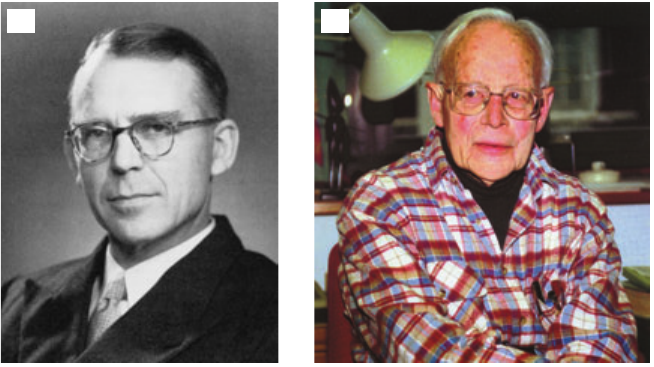
in the 1940s–1960s by the Danish botanist Johs. Iversen (1904–1971; Figure
2.10a), the Norwegian botanist Knut Fægri (1909–2001; Figure 2.10b), and others
(see, for example, Lang’s (1994) review). In terms of Holocene climate research,
one of the most important developments was Iversen’s (1944) use of Viscum album
(mistletoe), Hedera helix (ivy), and Ilex aquifolium (holly) as “indicator species” of
summer and winter temperatures. Iversen studied in detail the occurrence,
growth, flowering, and fruit production of these three shrubs at or near their
..
9781405159050_4_002.qxd 6/3/08 3:52 PM Page 23
..
24
|
H. John B. Birks
..
northern and/or eastern limits in Denmark in relation to the mean temperatures of
the warmest and coldest months. He delimited “thermal limits” for these species.
All three have distinctive pollen. From fossil pollen occurrences in Holocene sedi-
ments in southern Scandinavia, Iversen inferred that mid-Holocene summer tem-
peratures may have been 2–2.5°C warmer than today and that winter temperatures
may have been 0.5–1.5°C warmer than today, thereby building on Samuelsson’s
(1916) idea that both summer and winter temperatures may have changed in the
Holocene. Iversen’s (1944) brilliant analysis (see also Fægri 1950 and Hintikka
1963) of the climatic sensitivity of Ilex has been elegantly confirmed by Walther
et al. (2005), who show shifts in its northern margin in the past 50 years in response
to recent climate changes. These shifts are entirely predictable, given Iversen’s
thermal limit and recent climate changes.
In terms of direct relevance to Holocene climate research, the other major devel-
opment in pollen analysis in the 1940s–1960s was the demonstration of the impact
of prehistoric people on vegetation through forest clearance and agriculture. This
demonstration was a result of improved pollen identifications (e.g. cereals, agricul-
tural weeds), fine resolution analyses, identification and counting of charcoal par-
ticles, and research collaboration between pollen analysts and archaeologists (e.g.
Iversen 1973). Although the interpretation of the observed pollen-stratigraphic
changes in terms of human activity is not in doubt, recent concerns about the
changing extent of forest and cleared land during the Holocene and the role of
humans in Holocene climate change (Oldfield 2005, this volume) have stimulated
research into the relationship between landscape cover and pollen deposition (e.g.
Sugita et al. 1999). In general, pollen-analytic data underestimate the extent of
cleared land because of the huge differences in pollen representation between
forest trees and cleared-land herbs and shrubs (Sugita et al. 1999).
The paradigm of Holocene climate change based on pollen analysis and earlier
macrofossil and megafossil analysis at about 1950 was that proposed by von Post
(1946), namely long-term regional-scale or even global changes in temperature
(a)
Figure 2.10 (a) Johs. Iversen
(1904–1971), a Danish
botanist (left) and (b) Knut
Fægri (1909–2001), a
Norwegian botanist. Together
they made major advances in
pollen-analytic methodology
and interpretation. (The
picture of Iversen is from
Iversen (1973; copyright:
Geological Survey of
Denmark and Greenland).
The picture of Fægri was
taken by Jan Berge on the
occasion of Fægri’s 90th
birthday.)
(b)
9781405159050_4_002.qxd 6/3/08 3:52 PM Page 24
Holocene climate research
|
25
..
and precipitation at broad millennial scales and more local-scale shifts in moisture
and possibly in temperature at centennial scales. Changes in both summer and
winter temperature had occurred and there may have been periods of rapid climate
change in the late Holocene. There was also evidence for the effects of prehistoric
people on vegetation, and interest naturally centered on whether the extent of
human activity and resulting land-use change were related to climate change.
At that time there were no means of testing the implicit assumption that pollen-
stratigraphic changes and hence inferred climate changes were synchronous over
large areas. The next major stage in Holocene research dawned with the develop-
ment of radiocarbon dating and absolute chronologies.
Radiocarbon dating and absolute chronologies
The development of radiocarbon dating by Willard F. Libby (1908–1980) in the
early 1950s provided a means of deriving an absolute chronology (in theory at
least!) for events in the Holocene. Harry Godwin (1901–1985) was one of the first
Holocene paleoecologists, along with Eric Willis, Donald Walker, and others, to
take advantage of radiocarbon dating to provide an absolute chronology for pollen-
zone boundaries, peat-stratigraphic changes, and other events in the Holocene
(Godwin 1960) and to discuss the implications of radiocarbon dating for Holocene
climate research (Godwin 1966). A fascinating account of its early applications in
Holocene research is given by Godwin (1981). As a result of a concerted dating
program, Smith and Pilcher (1973) showed that major pollen-stratigraphic
changes and pollen-zone boundaries were not synchronous, even within an area as
small as the British Isles. A similar picture emerges at broader scales such as Europe
(Huntley and Birks 1983; Berglund et al. 1996) or eastern North America (Webb
1988), raising serious doubts about the assumed synchroneity implicit in the von
Post paradigm of Holocene climate history.
As more and more radiocarbon-dated pollen-stratigraphic data became
available in Europe and eastern North America, attempts were made to display the
spatial and temporal patterns of variation in the abundance of major pollen types,
along the lines pioneered by Szafer (1935) in Poland. By mapping pollen values at
selected time intervals from as many localities as possible, so-called iso-pollen
maps (Szafer 1935) could be constructed. Such maps have been compiled at a
range of spatial scales, ranging from the European continental scale (Huntley and
Birks 1983) to single countries (e.g. Ralska-Jasiewiczowa et al. 2004). An alterna-
tive mapping approach, so-called iso-chrone maps, has also been developed
(e.g. Moe 1970; Davis 1976; Birks 1989) to display the spatial patterns of the ages
at which different pollen types have their first consistent occurrence or expansion,
thereby illustrating the patterns of range expansion and contraction. Results from
these early studies and from more recent, more detailed syntheses (e.g. Giesecke
and Bennett 2004) suggest unexpectedly complex patterns of tree spreading, with
trees apparently spreading at amazingly fast rates from a range of presumed source
areas. The results raise many questions about the interpretation of pollen-analytic
..
9781405159050_4_002.qxd 6/3/08 3:52 PM Page 25
..
26
|
H. John B. Birks
..
data, about what factors may have caused major pollen-stratigraphic changes
(Giesecke 2005; Tinner and Lotter 2006), about how trees spread over large areas
so quickly (McLachlan et al. 2005), and whether tree assemblages existed in the
past that appear to have no modern analog today (Jackson and Williams 2004).
An important development in Holocene climate research involved a combina-
tion of pollen analysis and radiocarbon dating to study pollen-stratigraphic
changes in space and time. This development took advantage of natural climate
gradients and major vegetational ecotones (e.g. the prairie–forest ecotone, arctic
tundra–forest ecotone) to study Holocene palynologic and hence vegetational
changes in areas of potentially high sensitivity to climate change. A classic example
of such a study was McAndrews’ (1966) transect of sites near Itasca in north-west
Minnesota. The transect ran from mixed coniferous–deciduous forest in the east,
through deciduous forest and oak savanna, to prairie in the west and paralleled
a major climatic gradient in precipitation today. McAndrews (1966) was able to
show major changes in vegetation and infer major shifts in precipitation and
soil-moisture deficit during the mid-Holocene “prairie period” after major vegeta-
tional and temperature changes at the onset of the Holocene. This research design
of sites along major climate gradients has also been elegantly applied in studies in
northern Fennoscandia using not only pollen percentages but also pollen concen-
trations and accumulation rates to detect Holocene changes in the northern extent
of pine and birch, presumably in response to regional climate changes (Hyvärinen
1975; Seppä 1996).
By the early 1970s, Holocene researchers had accumulated large amounts
of pollen-stratigraphic and other biologic data, often with radiocarbon dates
providing an independent chronology. Climate reconstructions based on these
data were primarily qualitative and based on indicator species or a comparative
approach where modern and fossil assemblages were compared visually. Climate
reconstructions were often molded into the paradigms of Holocene climate change
derived from von Post (1946) or from the original Blytt and Sernander scheme.
The next major paradigm shift in Holocene climate research was the development
of transfer functions and the quantitative reconstruction of past climate.
Transfer functions and the quantitative reconstruction of
past climate
A major paradigm shift in Quaternary paleoclimate research occurred in the
early 1970s. John Imbrie (awarded the Vega Medal in 1999, 45 years after von Post)
and the late Nilva Kipp (1925–1989) revolutionized marine paleoceanography
by developing transfer functions to reconstruct quantitatively summer and
winter sea-surface temperatures and salinity from fossil foraminiferal assemblages
preserved in a deep-sea core covering several glacial and interglacial stages (Imbrie
and Kipp 1971). The idea of transfer or calibration functions was also developed by
Hal Fritts and colleagues for deriving quantitative estimates of past climate from
tree rings in the western USA (Fritts et al. 1971; Fritts 1976) and by Tom Webb,
9781405159050_4_002.qxd 6/3/08 3:52 PM Page 26
Holocene climate research
|
27
..
Reid Bryson, and associates for the quantitative reconstruction of past climate
from fossil pollen assemblages in the Great Lakes region of North America (Webb
and Bryson 1972).
The basic idea of transfer functions is very simple. If modern biologic assem-
blages (e.g. foraminifers in an ocean sediment core top) and modern environ-
mental (e.g. climate) data are available for a wide range of sites and environmental
conditions today, it is possible to model the relationship between the modern
assemblages and the contemporary environment by some form of regression or
calibration (inverse regression) procedure, to derive modern transfer functions.
These functions summarize mathematically the relationships between modern
biota and modern environment. If the assumption is made that the transfer func-
tions are invariant in space and time, they can be applied to fossil assemblages
to derive quantitative estimates of the past environment at the time the fossil
assemblages were deposited.
Although there are now many numerical procedures for deriving, applying, and
evaluating transfer functions (e.g. Birks 1995), the basic principles and assump-
tions presented by Imbrie and Kipp (1971) remain the same. Transfer functions
are now widely used in Holocene climate research to derive quantitative estimates
of several climatic variables (e.g. summer, winter, and annual temperatures, length
of growing season, annual precipitation, ratio of actual to potential evapotrans-
piration) and climate-related variables (e.g. lake-water temperature and salinity,
sea-surface temperatures and salinity, bog moisture) from a wide range of fossil
assemblages (e.g. pollen, cladocera, chironomids, diatoms, foraminifers, radio-
larians, dinoflagellate cysts, chrysophytes, coccolithophorids, testate amoebae).
Several of the chapters in Mackay et al. (2003) give examples of the application of
transfer functions in Holocene climate research.
Transfer functions played an important role in the CLIMAP Project Members
(1976) (Climate: Mapping, Analysis, and Prediction) project that attempted to
reconstruct the climate of the last ice-age Earth, primarily from paleoceanographic
data. This project also involved the compilation and synthesis of a range of bio-
logic and geologic paleoclimate data relating to 18 000 years ago and the first
attempts at using climate models to simulate an 18 000-year climate (e.g. Williams
et al. 1974; Gates 1976; Manabe and Hahn 1977).
Transfer functions and CLIMAP rapidly provided new paradigms for paleo-
climate research, namely transfer functions for quantitative reconstructions of past
climate and the use of climate models to simulate past climates for comparison
with geologic and biologic “proxy-climate” evidence. This new paradigm led
directly to COHMAP (Co-operative Holocene Mapping Project) and major develop-
ments in paleoclimate modeling.
COHMAP and paleoclimate modeling
The international COHMAP project represented a major paradigm shift in
Holocene climate research with its close integration of paleoclimate “proxy-data”
..
9781405159050_4_002.qxd 6/3/08 3:52 PM Page 27
..
28
|
H. John B. Birks
..
scientists with paleoclimate modelers. Although COHMAP started life in 1977 as
Climates of the Holocene – Mapping based on Pollen Data, it quickly became
global in its research area and in the climate proxies it considered. It changed its
name to Co-operative Holocene Mapping Project. It was masterminded by John
Kutzbach, Tom Webb, Herb Wright, and others (Wright et al. 1993). The basic
idea of COHMAP was to simulate past climates at 18 000, 15 000, 12 000, 9000,
6000, 3000, and 0 years ago using the Community Climate Model (CCM) and to
compare the model simulations with the available paleoclimate data, particularly
terrestrial pollen, lake-levels, and pack-rat midden data and marine plankton data
(COHMAP Members 1988; Wright et al. 1993).
Prior to COHMAP, paleoceanographic studies (Hays et al. 1976) had estab-
lished that orbitally induced variations in insolation as proposed by James Croll
(1821–1890) and Milutin Milankovitch are the pacemakers of the ice ages (Imbrie
and Imbrie 1979). Variations in insolation are the result of the 22 000-year preces-
sion cycle, the 40 000-year tilt cycle, and the 100 000-year eccentricity cycle in the
geometric relationships between the Earth and the Sun. COHMAP investigated in
detail the role of such orbital variations in insolation on Holocene climate history.
The 22 000-year precession cycle controls the time of year when the Earth–Sun
distance is at a maximum or minimum and hence determines seasonality. The
40 000-year tilt affects the latitudinal distribution of solar radiation (COHMAP
Members 1988).
Input to COHMAP CCM simulations of past climate at 3000-year time-slices
were external orbitally determined insolation conditions and internal surface
boundary conditions of mountain and ice-sheet orography, atmospheric trace-gas
concentrations, sea-surface temperatures, sea-ice limits, snow cover, albedo, and
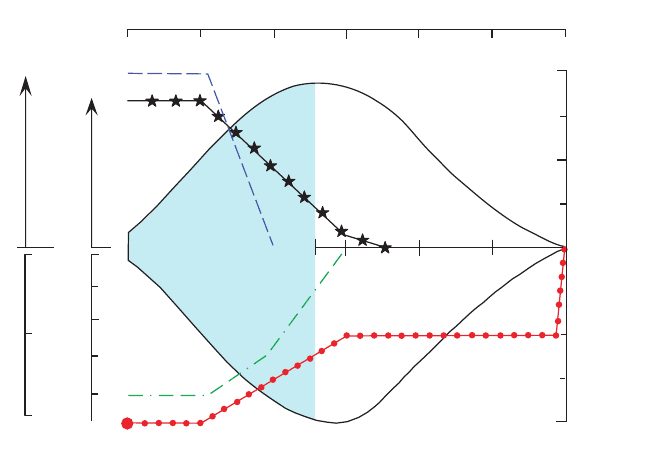
effective soil moisture (COHMAP Members 1988). The boundary conditions used
in the COHMAP simulations are summarized in Figure 2.11. These conditions
provided a major new paradigm for Holocene climate research at the global spatial
scale and at broad millennial temporal scales. The seasonal and latitudinal
distributions of solar radiation at 18 000 years ago, the time of the Last Glacial
Maximum, were similar to conditions today. The atmospheric conditions simu-
lated for glacial times must therefore largely be a result of the very different internal
surface boundary conditions (COHMAP Members 1988). Between 15 000 and
9000 years ago climate seasonality increased in the Northern Hemisphere and
decreased in the Southern Hemisphere due to the precession and tilt cycles. As
a result, continental ice sheets and sea-ice retreated and the oceans warmed.
By about 9000 years ago, solar radiation over the Northern Hemisphere was, on
average, 8 percent higher in July and 8 percent lower in January than today. After
9000 years ago, the extremes in solar radiation decreased towards modern values
(COHMAP Members 1988).
COHMAP’s model–data comparisons showed that orbitally induced changes
in insolation explain, in broad terms, the history of Holocene climate and land-
scape development. Clearly climatic events of short duration in the late-glacial or
Holocene were not considered in the modeling experiments or data syntheses
because COHMAP considered 3000-year time-slices only (Wright et al. 1993).
9781405159050_4_002.qxd 6/3/08 3:52 PM Page 28
Holocene climate research
|
29
..
COHMAP’s modeling experiment results showed how orbitally induced changes
in insolation and changes in surface boundary conditions affect regional climates
and hence the observed broad-scale changes in vegetation, marine plankton, and
hydrology (COHMAP Members 1988). Variations in insolation changed seasonal-
ity at low- and mid-latitudes. By enhancing the thermal contrast between oceans
and land, increased seasonality resulted in strong summer monsoons from 12 000
to 6000 years ago in the Northern Hemisphere tropics and sub-tropics and
warm and dry summers in the continental interiors of northern mid-latitudes
(COHMAP Members 1988). The model results also showed how internal surface
boundary conditions (land and sea-ice extent, sea-surface temperatures) could
have influenced atmospheric circulation patterns and thus patterns in tempera-
ture, precipitation, and wind. The climate of North America in the early Holocene
was unlike any today and this may have led to biotic assemblages without modern
analogs. The insolation maximum occurred before 9000 years ago and resulted
in high temperatures south-west of the Laurentide ice sheet, whereas in eastern
North America, the slow retreat of the ice sheet there delayed the summer thermal
maximum to 6000 years ago (COHMAP Members 1988).
COHMAP was a major turning point in Holocene climate research for several
reasons. First, it used what were then state-of-the-art climate models to simulate
paleoclimate under specified boundary conditions. Second, it resulted in detailed
compilations and syntheses of paleoclimate proxy data that were then used in
data–model comparisons. Third, it considered the global climate system as a whole
and revealed the strong regional interconnections between different components
of the Earth’s climate system. Fourth, it revealed the remarkable spatial and tem-
poral variation in circulation patterns and climate at 3000-year intervals during the
..
330
265
200
CO
2
(ppmv)
Aerosol
Land ice (%)
Ice
SST (K)
SST
50
100
0
0
–1
–2
–3
–4
CO
2
Aerosol
S
DJF
S
JJA
18 15
12 9
63
0
Northern Hemisphere solar radiation (%)
Thousand
years
8
4
0
–4
–8
Figure 2.11 Boundary
conditions for the COHMAP
simulations of past climate for
the past 18 000 years. External
forcing is shown for Northern
Hemisphere solar radiation in
June–August (S
JJA
) and
December–February (S
DJF
) as
percentage difference from
present-day radiation.
Internal boundary conditions
include land ice (Ice) as
percentage of ice-volume at
18 000 years ago, global mean
annual sea-surface
temperatures (SST) as
deviations from present-day
values (degrees K), excess
glacial-age aerosol (arbitrary
scale), and atmospheric CO
2
concentration (parts per
million by volume). In the
COHMAP simulations only
the 18 000-year model used a
lowered CO
2
concentration
(200 ppm). All the other
simulations used a CO
2
concentration of 330 ppm.
Aerosol loadings for the
18 000- and 15 000-year
simulations were not used.
The pre-Holocene part is
shaded in blue. (Modified
from COHMAP Members
(1988). Reprinted with
permission from AAAS.)
9781405159050_4_002.qxd 6/3/08 3:52 PM Page 29