
Bielajew A.F. Fundamentals of the Monte Carlo method for neutral and charged particle transport
Подождите немного. Документ загружается.

12.2. PHOTON TRANSPORT LOGIC 171
10
−3
10
−2
10
−1
10
0
10
1
Incident γ energy (MeV)
10
−3
10
−2
10
−1
10
0
fraction of total σ
Components of σ
γ
in C
Compton
photoelectric
Rayleigh
pair
triplet
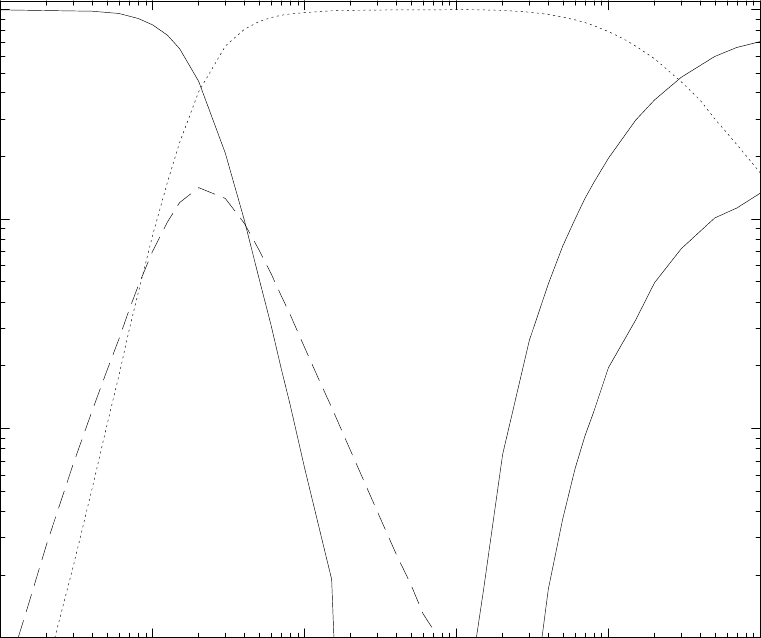
Figure 12.7: Components of the photon cross section in Carbon.
172 CHAPTER 12. PHOTON MONTE CARLO SIMULATION
10
−3
10
−2
10
−1
10
0
10
1
Incident γ energy (MeV)
10
−3
10
−2
10
−1
10
0
fraction of total σ
Components of σ
γ
in Pb
Compton
photoelectric
Rayleigh
pair
triplet
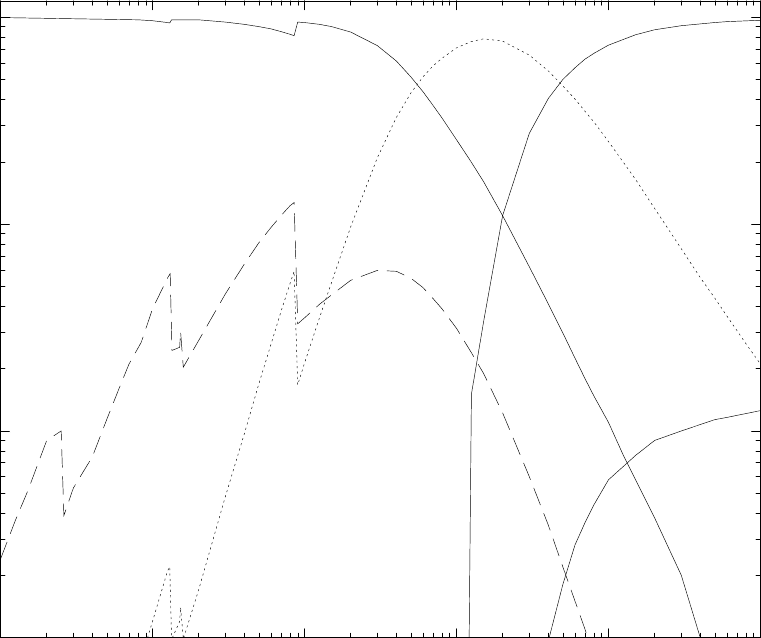
Figure 12.8: Components of the photon cross section in Lead.
12.2. PHOTON TRANSPORT LOGIC 173
10
−2
10
−1
10
0
10
1
Incident γ energy (MeV)
10
−2
10
−1
10
0
10
1
10
2
σ (cm
2
/g)
Total photon σ
vs
γ−energy
Hydrogen
Water
Lead
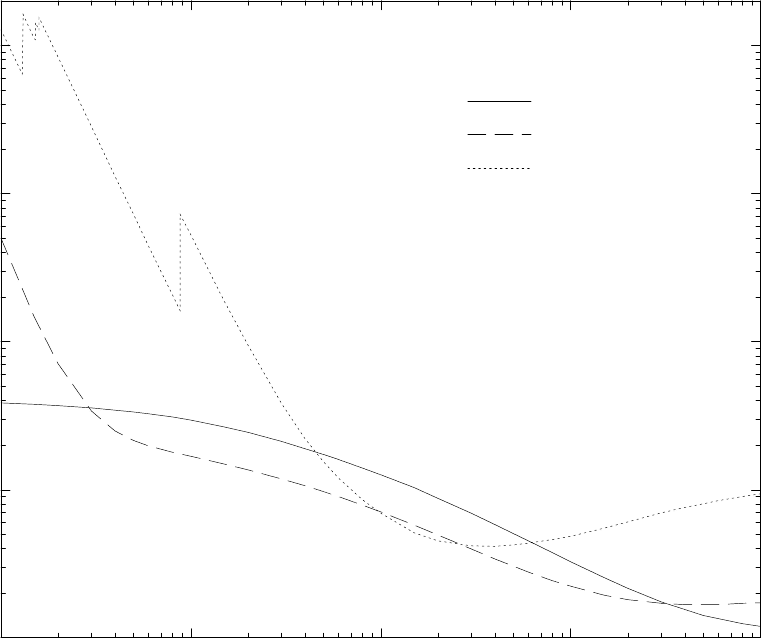
Figure 12.9: Total photon cross section vs. photon energy.

174 CHAPTER 12. PHOTON MONTE CARLO SIMULATION
transport cutoff defined. Photons that fall below this cutoff are absorbed “on the spot”.
We consider that they do not contribute significantly to any tallies of interest and can be
ignored. Physically, this step is not really necessary—it is only a time-saving manoeuvre.
In “real life” low-energy photons are absorbed by the photoelectric process and vanish. (We
will see that electrons are more complicated. Electrons are always more complicated.
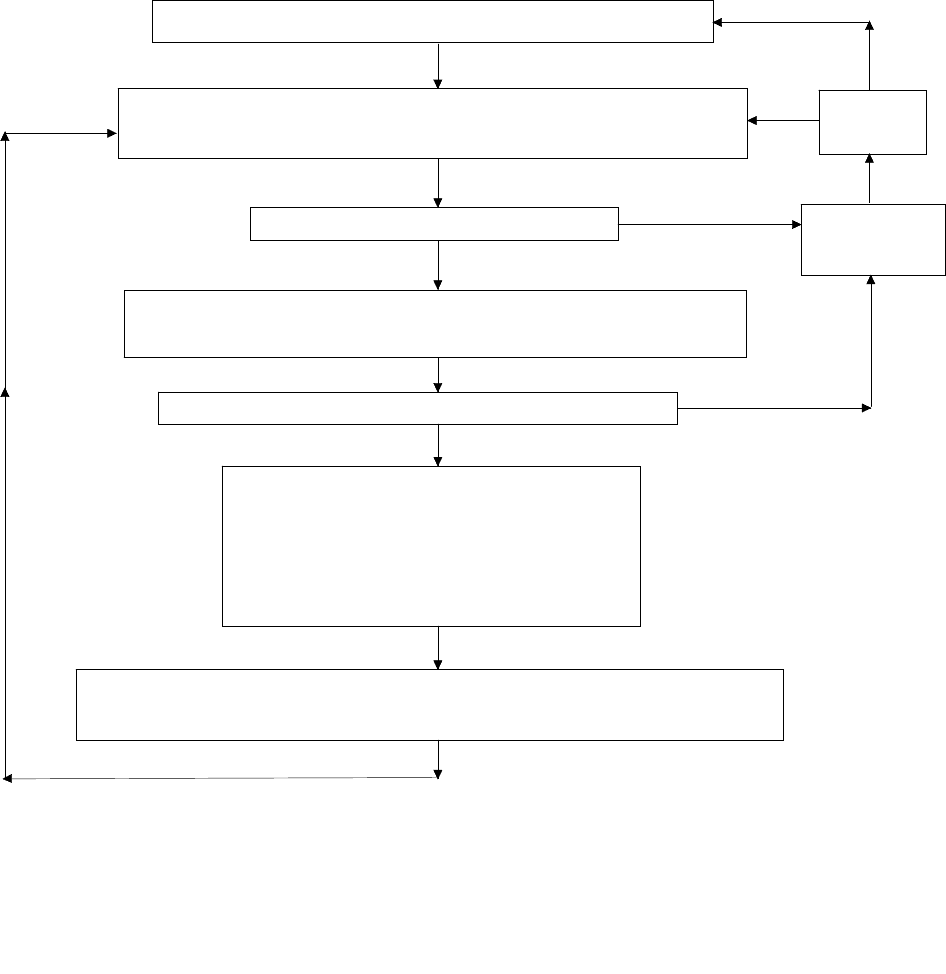
The logic flow of photon transport proceeds as follow. The initial characteristics of a photon
entering the transport routine and first tested to see if the energy is below the transport
cutoff. If it is below the cutoff, the history is terminated. If the STACK is empty then a
new particle history is started. If the energy is above the cutoff then the distance to the
next interaction site is chosen, following the discussion in Chapter 8, Transport in media,
interaction models. The photon is then transported, that is “stepped” to the point of in-
teraction. (If the geometry is more complicated than just one region, transport through
different elements of the geometry would be taken care of here.) If the photon, by virtue
of its transport, has left the volume defining the problem then it is discarded. Otherwise,
the branching distribution is sampled to see which interaction occurs. Having done this, the
surviving particles (new ones may be created, some disappear, the characteristics of the ini-
tial one will almost certainly change) have their energies, directions and other characteristics
chosen from the appropriate distributions. The surviving particles are put on the STACK.
Lowest energy ones should be put on the top of the STACK to keep the size of the STACK as
small as possible. Then the whole process takes place again until the STACK is empty and all
the incident particles are used up.
12.2. PHOTON TRANSPORT LOGIC 175
0.0 0.5 1.0
0.0
0.5
1.0
Photon Transport
Place initial photon’s parameters on stack
Pick up energy, position, direction, geometry of
current particle from top of stack
Is photon energy < cutoff?
Sample distance to next interaction
Transport photon taking geometry into account
Has photon left the volume of interest?
Sample the interaction channel:
Sample energies and directions of resultant particles
and store paramters on stack for future processing
- photoelectric
- Compton
- pair production
- Rayleigh
Is stack
empty?
Terminate
history
N
Y
Y
N
Y
N
Figure 12.10: “Bare-bones” photon transport logic.
176 CHAPTER 12. PHOTON MONTE CARLO SIMULATION
Bibliography
[Att86] F. H. Attix. Introduction to Radiological Physics and Radiation Dosimetry.
Wiley, New York, 1986.
[BHNR94] A. F. Bielajew, H. Hirayama, W. R. Nelson, and D. W. O. Rogers. His-
tory, overview and recent improvements of EGS4. National Research Council
of Canada Report PIRS-0436, 1994.
[BW91] A. F. Bielajew and P. E. Weibe. EGS-Windows - A Graphical Interface to EGS.
NRCC Report: PIRS-0274, 1991.
[CA35] A. H. Compton and S. K. Allison. X-rays in theory and experiment. (D. Van
Nostrand Co. Inc, New York), 1935.
[DBM54] H. Davies, H. A. Bethe, and L. C. Maximon. Theory of bremsstrahlung and pair
production. II. Integral cross sections for pair production. Phys. Rev., 93:788,
1954.
[Eva55] R. D. Evans. The Atomic Nucleus. McGraw-Hill, New York, 1955.
[HØ79] J. H. Hubbell and I. Øverbø. Relativistic atomic form factors and photon co-
herent scattering cross sections. J. Phys. Chem. Ref. Data, 9:69, 1979.
[JC83] H. E. Johns and J. R. Cunningham. The Physics of Radiology, Fourth Edition.
Charles C. Thomas, Springfield, Illinois, 1983.
[JY83] P. C. Johns and M. J. Yaffe. Coherent scatter in diagnostic radiology. Med.
Phys., 10:40, 1983.
[KN29] O. Klein and Y. Nishina. . Z. f¨ur Physik, 52:853, 1929.
[MOK69] J. W. Motz, H. A. Olsen, and H. W. Koch. Pair production by photons. Rev.
Mod. Phys., 41:581 – 639, 1969.
[NH91] Y. Namito and H. Hirayama. Improvement of low energy photon transport
calculation by EGS4 – electron bound effect in Compton scattering. Japan Atomic
Energy Society, Osaka, page 401, 1991.
177
178 BIBLIOGRAPHY
[NHR85] W. R. Nelson, H. Hirayama, and D. W. O. Rogers. The EGS4 Code System.
Report SLAC–265, Stanford Linear Accelerator Center, Stanford, Calif, 1985.
[Sau31] F. Sauter.
¨
Uber den atomaren Photoeffekt in der K-Schale nach der relativis-
tischen Wellenmechanik Diracs. Ann. Physik, 11:454 – 488, 1931.
[SF96] J. K. Shultis and R. E. Faw. Radiation Shielding . Prentice Hall, Upper Saddle
River, 1996.
[Tsa74] Y. S. Tsai. Pair Production and Bremsstrahlung of Charged Leptons. Rev. Mod.
Phys., 46:815, 1974.
Problems
1.
Chapter 13
Electron Monte Carlo Simulation
In this chapter we discuss the electron and positron interactions and discuss the approxima-
tions made in their implementation. We give a brief outline of the electron transport logic
used in Monte Carlo simulations.
The transport of electrons (and positrons) is considerably more complicated than for pho-
tons. Like photons, electrons are subject to violent interactions. The following are the
“catastrophic” interactions:
• large energy-loss Møller scattering (e
−
e
−
−→ e
−
e
−
),
• large energy-loss Bhabha scattering (e
+
e
−
−→ e
+
e
−
),
• hard bremsstrahlung emission (e
±
N −→ e
±
γN), and
• positron annihilation “in-flight” and at rest (e
+
e
−
−→ γγ).
It is possible to sample the above interactions discretely in a reasonable amount of computing
time for many practical problems. In addition to the catastrophic events, there are also “soft”
events. Detailed modeling of the soft events can usually be approximated by summing the
effects of many soft events into virtual “large-effect” events. These “soft” events are:
• low-energy Møller (Bhabha) scattering (modeled as part of the collision stopping
power),
• atomic excitation (e
±
N −→ e
±
N
∗
) (modeled as another part of the collision stopping
power),
• soft bremsstrahlung (modeled as radiative stopping power), and
• elastic electron (positron) multiple scattering from atoms, (e
±
N −→ e
±
N).
Strictly speaking, an elastic large angle scattering from a nucleus should really be considered
to be a “catastrophic” interaction but this is not the usual convention. (Perhaps it should
be.) For problems of the sort we consider, it is impractical to model all these interactions
179
180 CHAPTER 13. ELECTRON MONTE CARLO SIMULATION
discretely. Instead, well-established statistical theories are used to describe these “soft”
interactions by accounting for them in a cumulative sense including the effect of many such
interactions at the same time. These are the so-called “statistically grouped” interactions.
13.1 Catastrophic interactions
We have almost complete flexibility in defining the threshold between “catastrophic” and
“statistically grouped” interactions. The location of this threshold should be chosen by the
demands of the physics of the problem and by the accuracy required in the final result.
13.1.1 Hard bremsstrahlung production
As depicted by the Feynman diagram in fig. 13.1, bremsstrahlung production is the creation
of photons by electrons (or positrons) in the field of an atom. There are actually two
possibilities. The predominant mode is the interaction with the atomic nucleus. This effect
dominates by a factor of about Z over the three-body case where an atomic electron recoils
(e
±
N −→ e
±
e
−
γN
∗
). Bremsstrahlung is the quantum analogue of synchrotron radiation, the
radiation from accelerated charges predicted by Maxwell’s equations. The de-acceleration
and acceleration of an electron scattering from nuclei can be quite violent, resulting in very
high energy quanta, up to and including the total kinetic energy of the incoming charged
particle.
The two-body effect can be taken into account through the total cross section and angular
distribution kinematics. The three-body case is conventionally treated only by inclusion in
the total cross section of the two body-process. The two-body process can be modeled using
one of the Koch and Motz [KM59] formulae. The bremsstrahlung cross section scales with
Z(Z + ξ(Z)), where ξ(Z) is the factor accounting for three-body case where the interaction
is with an atomic electron. These factors comes are taken from the work of Tsai [Tsa74].
The total cross section depends approximately like 1/E
γ
.
13.1.2 Møller (Bhabha) scattering
Møller and Bhabha scattering are collisions of incident electrons or positrons with atomic
electrons. It is conventional to assume that these atomic electrons are “free” ignoring their
atomic binding energy. At first glance the Møller and Bhabha interactions appear to be
quite similar. Referring to fig. 13.2, we see very little difference between them. In reality,
however, they are, owing to the identity of the participant particles. The electrons in the
e
−
e
+
pair can annihilate and be recreated, contributing an extra interaction channel to the
cross section. The thresholds for these interactions are different as well. In the e
−
e
−
case,