
Chen C.J. Physics of Solar Energy
Подождите немного. Документ загружается.

i
i
“ChenSolarEnergy” — 2011/5/17 — 17:56 — page 12 — #39
i
i
i
i
i
i
12 Introduction
Combining Eqs. 1.20 and 1.21, we obtain an expression of the wind power P picked up
by the rotor,
P =
1
4
ρA(v
1
+ v
2
)
v
2
1
− v
2
2
. (1.22)
Rearranging Eq. 1.22, we can define the fraction C ofwindpowerpickedupbythe
rotor, or the rotor efficiency,as
P =
1
2
ρv
3
1
A
1
2
1+
v
2
v
1
1 −
v
2
2
v
2
1
= P
0
C. (1.23)
Hence,
C =
1
2
1+
v
2
v
1
1 −
v
2
2
v
2
1
. (1.24)
Let x = v
2
/v
1
be the ratio of the wind speed after the rotor and the wind speed before
the rotor. Then we have
C =
1
2
(1 + x)
1 − x
2
. (1.25)
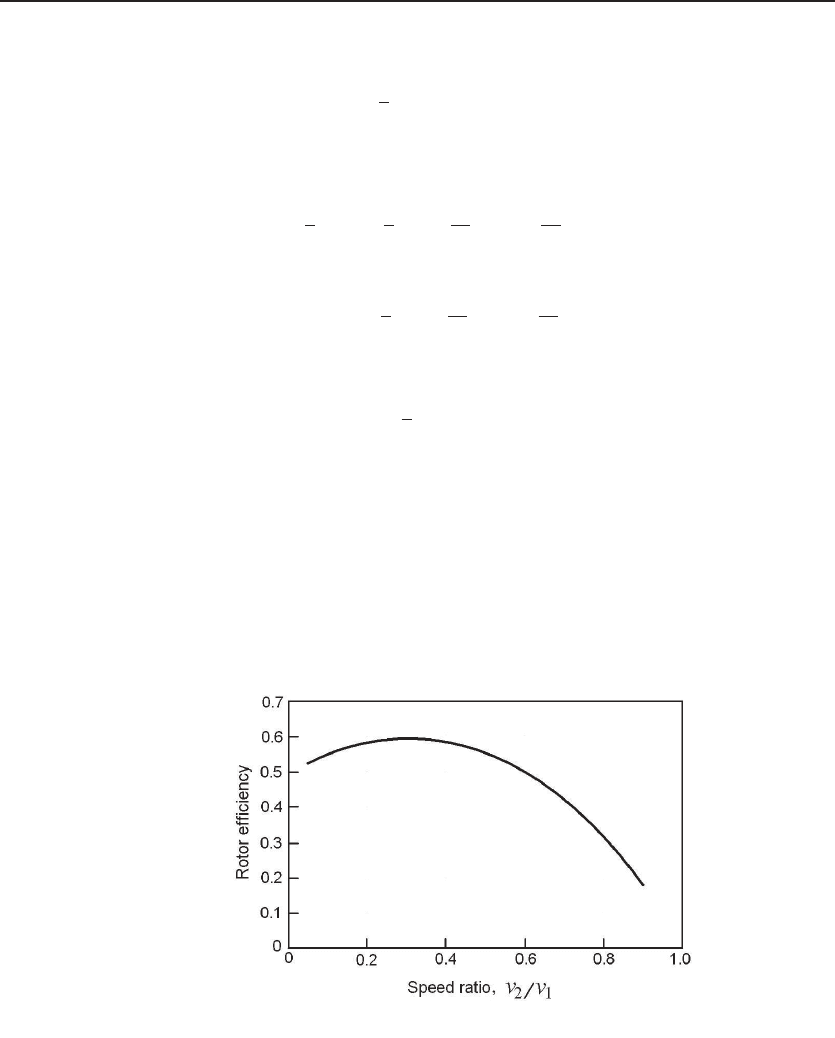
The dependence of rotor efficiency C with speed ratio x is shown in Fig. 1.11. It is
straightforward to show that the maximum occurs at x =1/3wherec =16/27 = 59.3%.
This result was first derived by Albert Betz in 1919 and is widely known as Betz’s
theorem or the Betz limit.
The estimate of worldwide available wind power varies. A conservative estimate
shows that the total available wind power, 75 TW, is more than five times the world’s
total energy consumption. In contrast to hydropower, currently, only a small fraction
of wind power has been utilized. However, it is growing very fast. From 2000 to 2009,
Figure 1.11 Efficiency of wind turbine. See Eq. 1.26. As shown, the maximum efficiency is
16/27, which occurs at a speed ratio of v
2
/v
1
= 1/3.

i
i
“ChenSolarEnergy” — 2011/5/17 — 17:56 — page 13 — #40
i
i
i
i
i
i
1.3 Other Renewable Energy Resources 13
Figure 1.12 Wind turbines in Copenhagen. A photo taken by the author in Copenhagen,
Denmark, 2006. The statue of the little mermaid, a national symbol of Denmark, is staring at a dense
array of wind turbines rather than the Prince.
total capacity grew nine fold to 158.5 GW. The Global Wind Energy Council expects
that by 2014, total wind power capacity will reach 409 GW.
Because of a shortage of conventional energy resources, in the late nineteenth cen-
tury, Denmark began to developed wind power and accelerated production after the
1970 energy crisis. Denmark is still the largest manufacturer of wind turbines, led by
Vestas Cooperation, and it has about 20% of wind power in its electricity blend. Fig-
ure 1.12 is a photo the author took in Copenhagen. The little mermaid is staring at a
dense array of wind turbines instead of the Prince.
However, Denmark’s success in wind energy could not be achieved without its neigh-
bors: Norway, Sweden, and Germany [45]. Because wind power is intermittent and
irregular, a stable supply of electricity must be accomplished with a fast-responding
power generation system with energy storage. Fortunately, almost 100% of the elec-
tricity in Norway is generated by hydropower, and the grids of the two countries share
a 1000-MW interconnection. In periods of heavy wind, the excess power generated in
Denmark is fed into the grid in Norway. By using the reversible turbine, the surplus
electrical energy is stored as potential energy of water in the reservoirs. In 2005, the
author visited the Tonstad Hydropower Station in Norway on a Sunday afternoon. I
asked a Norwegian engineer why the largest turbine was sitting idle. He explained that
one of the missions of that power station is to supply power to Denmark. On Monday
morning, when the Danes brew their coffee and start to work, that turbine would run
full speed.

i
i
“ChenSolarEnergy” — 2011/5/17 — 17:56 — page 14 — #41
i
i
i
i
i
i
14 Introduction
1.3.3 Biomass and Bioenergy
Over the many thousands of years of human history, until the industrial revolution
when fossil fuels began to be used, the direct use of biomass was the main source
of energy. Wood, straw, and animal waste were used for space heating and cooking.
Candle (made of whale fat) and vegetable oil were used for light. The mechanical
power of the horse was energized by feeding biomass. In less developed countries of the
world, this situation remains the norm. Even in well-developed countries, direct use of
biomass is still very common: for example, firewood for fireplaces and wood-burning
stoves.
Biomass is created by photosynthesis from sunlight. For details, see Section 10.1.
Although the efficiency of photosynthesis is only about 5% and land coverage by leaves
is only a few percent, the total energy currently stored in terrestrial biomass is estimated
to be 25,000 EJ, roughly equal to the energy content of the known fossil fuel reserve of
the world, see Table 1.1. The energy content of the annual production of land biomass
is about six times the total energy consumption of the world; see Table 1.4.
Currently there is a well-established industry to generate liquid fuel using biomass
for transportation. Two approaches are widely used: produce ethanol from sugar and
produce biodiesel from vegetable oil or animal oil.
Ethanol from Sugar Fermentation
The art of producing wine and liquor from sugar by fermentation has been known
for thousands of years. Under the action of the enzymes in certain yeasts, sugar is
converted into ethanol and CO
2
:
C
6
H
12
O
6
−→ 2(C
2
H
5
OH) + 2(CO
2
). (1.26)
At the end of the reaction, the concentration of ethanol can reach 10–15% in the
mixture, using specially cultured yeast, it can be up to 21%. Ethanol is then extracted
by distillation.
One of the most successful examples is the production of ethanol from sugarcane
in Brazil. An important number in the energy industry is energy balance,orEROI,
Table 1.4: Basic Data of Bioenergy
Item in EJ/year in TW
Rate of energy storage by land biomass 3000 EJ/year 95 TW
Total worldwide energy consumption 500 EJ/year 15 TW
Worldwide biomass consumption 56 EJ/year 1.6 TW
Worldwide food mass consumption 16 EJ/year 0.5 TW
Source: Ref. [14], page 107.
i
i
“ChenSolarEnergy” — 2011/5/17 — 17:56 — page 15 — #42
i
i
i
i
i
i
1.3 Other Renewable Energy Resources 15
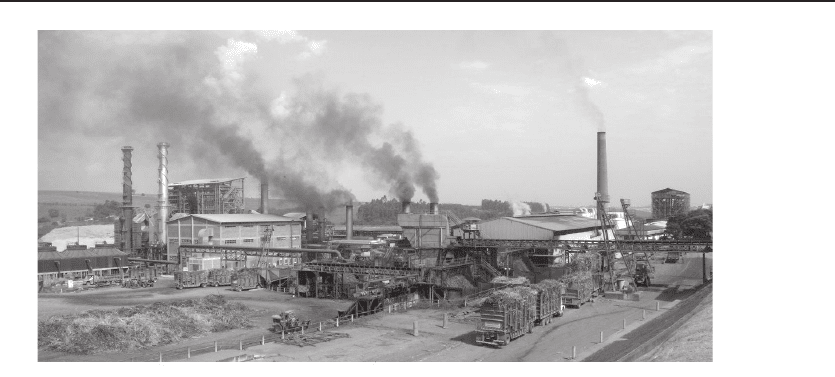
Figure 1.13 Costa Pinto Production Plant of sugar ethanol. The foreground shows the
receiving operation of the sugarcane harvest; on the right in the background is the distillation facility
where ethanol is produced. Courtesy of Mariordo.
the ratio of energy returned over energy invested; see Eq. 1.3. According to various
studies, the energy balance in Brazil for sugar ethanol is over 8, which means that, in
order to produce 1 J equivalent of ethanol, about 0.125 J of input energy is required.
Also, the cost to produce 1 gal of ethanol in Brazil is about $0.83, much less than the
cost of 1 gal of gasoline. This is at least partially due to the climate and topography
of S˜ao Paulo, the south-east state of Brazil, a flat subtropical region with plenty of
rainfall and sunshine. Since the advance of the flex-fuel automobiles in 2003 which can
efficiently use an mixture of gasoline and ethanol of any proportion, the consumption of
ethanol dramatically increased because of its low price. In 2008, as a world first, ethanol
overtook gasoline as Brazil’s most used motor fuel [49]. Figure 1.13 is a panoramic view
of the Costa Pinto Production Plant for producing ethanol located in Piracicaba, S˜ao
Paulo state. The foreground shows the receiving operation of the sugarcane harvest. On
the right side, in the background, is the distillation facility where ethanol is produced.
This plant produces all the electricity it needs from the bagasse of sugarcane left over
by the milling process, and it sells the surplus electricity to public utilities.
Although the Brazil government makes no direct subsidy for the use of ethanol, there
is continuous government-supported research to improve the efficiency of production
and mechanization of the process. It is an important factor for the success of the
Brazilian sugar-ethanol project. From 1975 to 2003, yield has grown from 2 to 6
m
3
/ha. Recently, in the state of S˜ao Paulo, it has reached 9 m
3
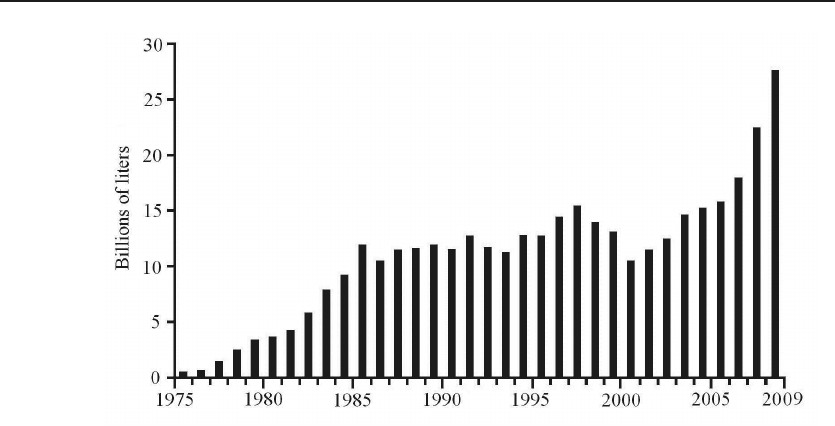
/ha. Figure 1.14 shows
the annual production of fuel-grade ethanol in Brazil from 1975 to 2010. Although
Brazil currently produces more than 50% of the fuel for domestic automobiles and
about 30% of the world’s traded ethanol, it only uses 1.5% of its arable land.
i
i
“ChenSolarEnergy” — 2011/5/17 — 17:56 — page 16 — #43
i
i
i
i
i
i
16 Introduction
Figure 1.14 Annual production of ethanol in Brazil. Source: Anu´ario Estat´ıstico da Agroen-
ergia 2009, Minist´erio da Agricultura, Pecu´aria e Abastecimento, Brazil.
Biodiesel from Vegetable Oil or Animal Fat
Another example of using biomass for liquid fuel is the production of biodiesel from
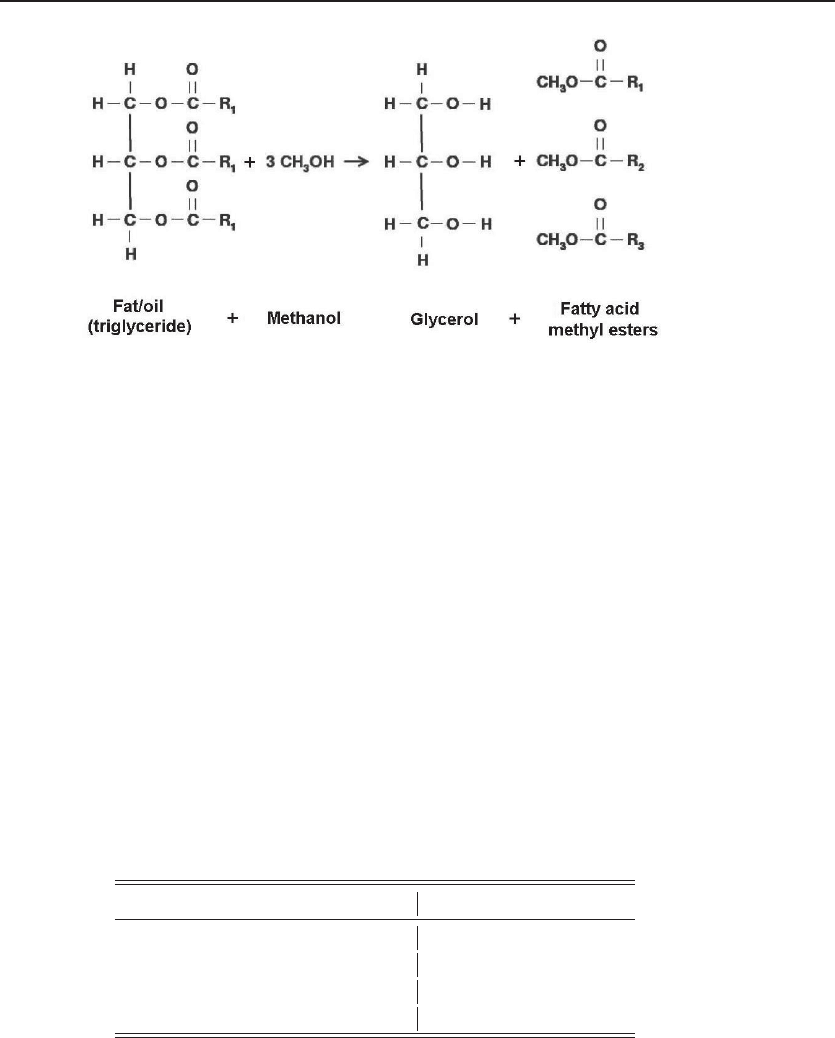
vegetable oil or animal fat. The chemical structures of vegetable oil and animal fat
molecules are identical: triglyceride formed from a single molecule of glycerol and three
molecules of fatty acid; see Fig. 1.15. A fatty acid is a carboxylic acid (characterized
by a —COOH group) with a long unbranched carbon hydride chain. With different
types of fatty acids, different types of triglycerides are formed. Although vegetable
oil can be used in diesel engines directly, the large molecule size and the resulting
high viscosity as well as the tendency of incomplete combustion could damage the
engine. Commercial biodiesel is made from reacting triglyceride with alcohol, typically
methanol or ethanol. Using sodium hydroxide or potassium hydroxide as catalyst, the
triglyceride is transesterified to form three small esters and a free glycerin; see Fig. 1.15.
The ester is immiscible with glycerin, and its specific gravity (typically 0.86–0.9 g/cm
3
)
is much lower than that of glycerin (1.15 g/cm
3
). Therefore, the biodiesel can be easily
separated from the mixture of glycerin and residuals.
The biodiesel thus produced has a much smaller molecule size than the triglyc-
erides, which provides better lubrication to the engine parts. It was reported that the
property of biodiesel is even better than petroleum-derived diesel oil in terms of lubri-
cating properties and cetane ratings, although the calorific value is about 9% lower.
Another advantage of biodiesel is the absence of sulfur, a severe environmental hazard
of petroleum-derived diesel oil.
The cost and productivity of biodiesel depend critically on the yield and cost of the
feedstock. Recycled grease, for example, used oil in making French fries and grease re-
i
i
“ChenSolarEnergy” — 2011/5/17 — 17:56 — page 17 — #44
i
i
i
i
i
i
1.3 Other Renewable Energy Resources 17
Figure 1.15 Production process of biodiesel. By mixing triglyceride with alcohol, using a
catalyst, the triglyceride is transesterified to form three esters and a free glycerin. The ester, or the
biodiesel, has a much smaller molecule size, which provides better lubrication to the engine parts.
covered from restaurant waste, is a primary source of the raw materials. Byproducts of
the food industry, such as lard and chicken fat, often considered unhealthy for humans,
are also frequently used. However, the availability of those handy resources is limited.
Virgin oil is thus the bulk of the feedstock of biodiesel. The yield and cost of virgin oil
vary considerably from crop to crop; see Table 1.5.
In Table 1.5, several crops for producing biofuels are listed, including those for pro-
ducing ethanol. Two of them are sugar-rich roots (sugar beet and sweet sorghum).
Harvesting these roots takes much more energy and is more labor intensive than har-
vesting sugarcane. Therefore, the energy balance (the ratio of energy produced versus
the energy required to produce it) is often around 2, much lower than the case of sug-
arcane, which is higher than 8. The energy balance of corn is also lower (around 2),
because the first step is to convert corn starch into sugar, which requires energy and
labor. Palm oil, originally from Africa, has the highest yield per unit area of land.
Table 1.5: Yield of Biofuel from Different Crops
For Ethanol m
3
/ha For Biodiesel m
3
/ha
Sugar beet (France) 6.67 Palm oil 4.75
Sugarcane (Brazil) 6.19
Coconut 2.15
Sweet sorghum (India) 3.50
Rapeseed 0.95
Corn (U.S.) 3.31
Peanut 0.84
Source: Ref. [14], Chapter 4.
i
i
“ChenSolarEnergy” — 2011/5/17 — 17:56 — page 18 — #45
i
i
i
i
i
i
18 Introduction
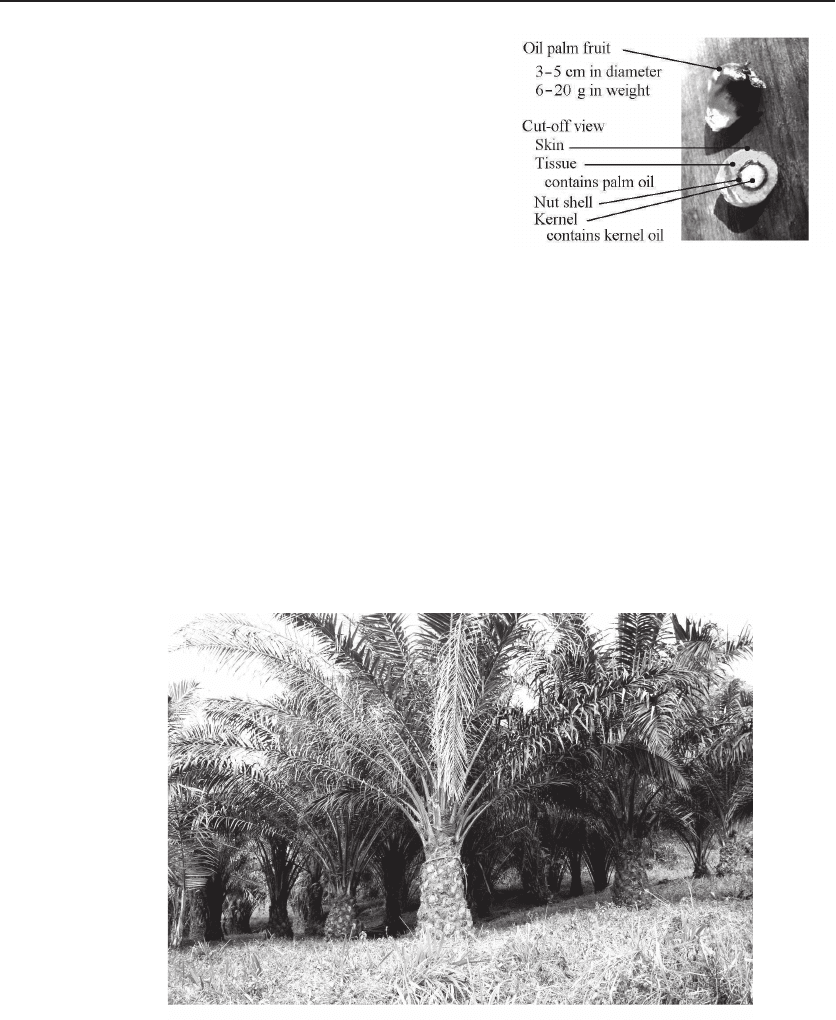
Figure 1.16 Oil palm fruit. The size
and structure of oil palm fruit are similar to
a peach or a plum. However, the soft tissue
of the fruit contains about 50% palm oil.
The yield of palm oil per unit plantation
area is much higher than any other source
of edible oil. The kernel is also rich in oil
but of a different type. The oil palm kernel
oil is a critical ingredient of soap.
A photograph of the oil palm fruit is shown in Fig. 1.16. The fruit is typically 3–5
cm in diameter. The soft tissue of the fruit contains about 50% palm oil. The kernel
contains another type of oil, the palm kernel oil, a critical ingredient for soap. Under
favorable conditions, the yield of palm oil could easily reach 5 tonnes per hectare per
year, far outstriping any other source of edible oil. Because it contains no cholesterol,
it is also a healthy food oil. Currently, palm oil is the number one vegetable oil on the
world market (48 million tonnes, or 30% of the world market share), with Malaysia
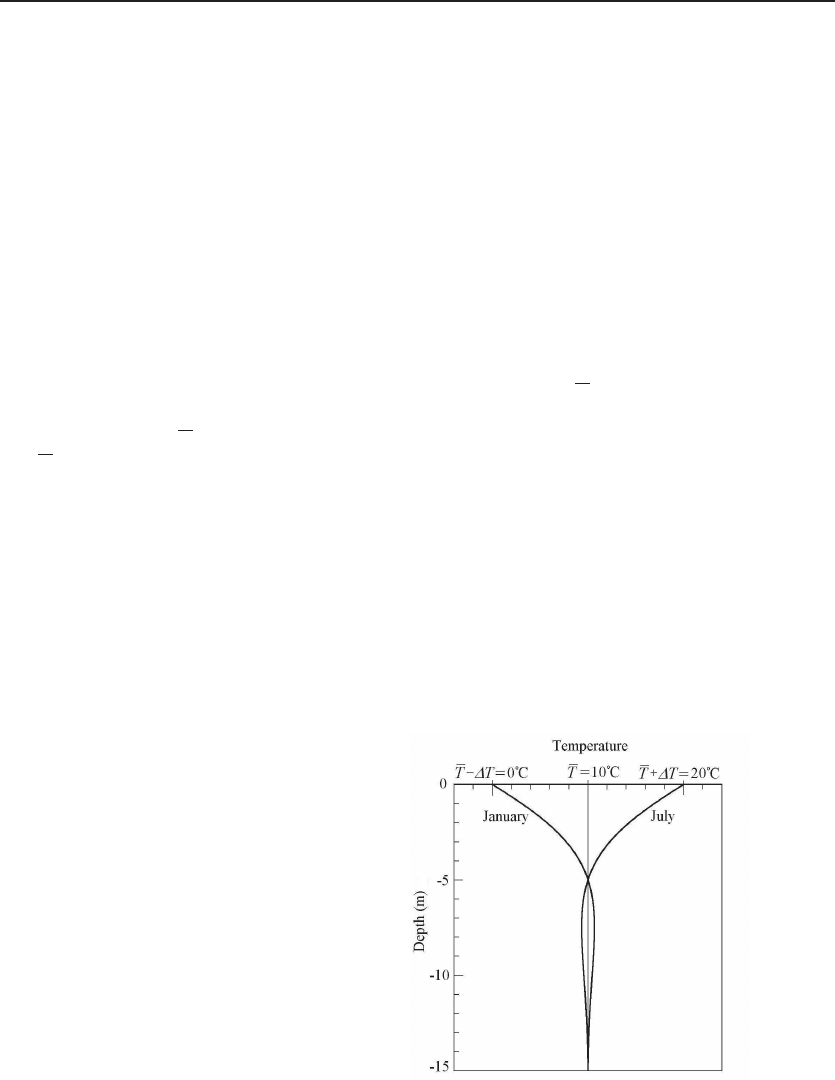
and Indonesia the largest producers. Unlike other types of oil-producing plants (such
as soybean and rapeseeds), which are annual, oil palms are huge trees; see Fig. 1.17.
Once planted, an oil palm can produce oil for several decades.
Figure 1.17 Wild oil palms in Africa. Oil palms are native trees in Africa which have supplied
palm oil for centuries. Shown is a photo of wild oil palms taken by Marco Schmidt on the slopes of
Mt. Cameroon, Cameroon, Africa.
i
i
“ChenSolarEnergy” — 2011/5/17 — 17:56 — page 19 — #46
i
i
i
i
i
i
1.3 Other Renewable Energy Resources 19
1.3.4 Shallow Geothermal Energy
By definition, geothermal energy is the extraction of energy stored in Earth. However,
there are two distinct types of geothermal energy depending on its origin: shallow and
deep geothermal energy. Shallow geothermal energy is the solar energy stored in Earth,
the origin of which will be described in Section 5.4. The temperature is typically some
10
◦
C off that of the surface. The major application of shallow geothermal energy is
to enhance the efficiency of the electrical heater and cooler (air conditioner) by using
a vapor compression heat pump or refrigerator. Deep geothermal energy is the heat
stored in the core and mantel of Earth. The temperature could be hundreds of degrees
Celsius. It can be used for generating electricity and large-scale space heating. In this
section, we will concentrate on shallow geothermal energy. Deep geothermal energy is
presented in the following section.
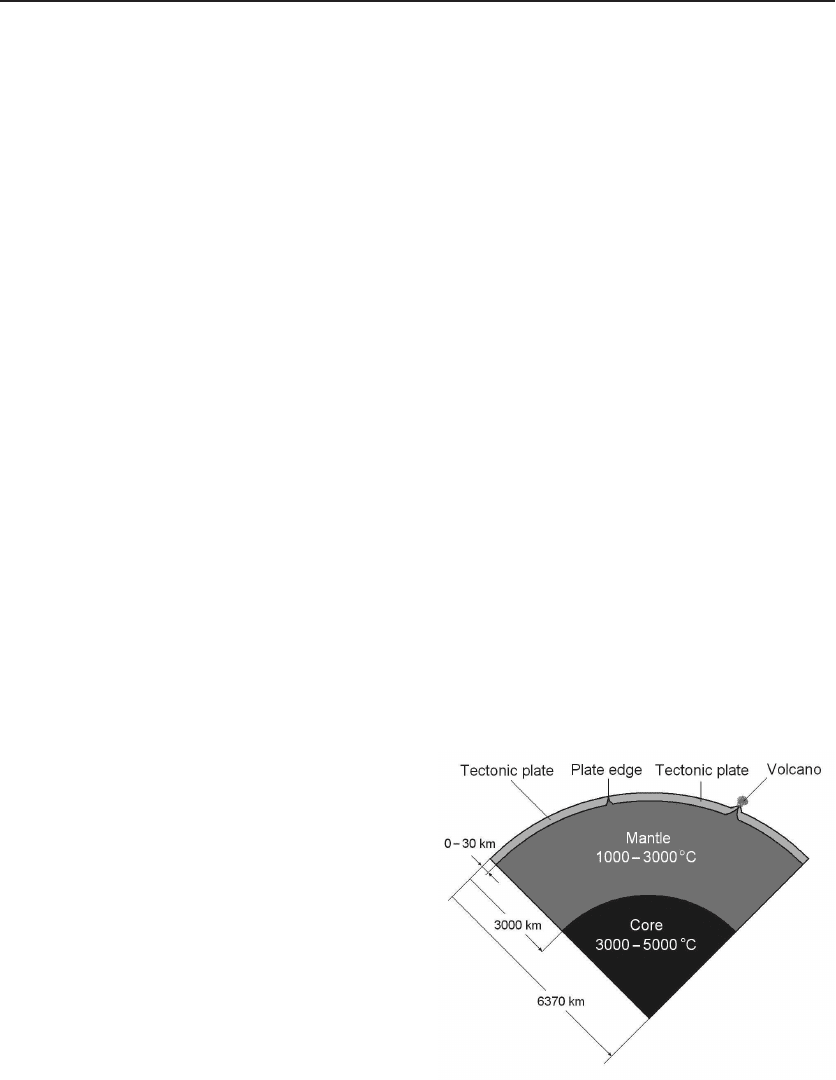
The general behavior of the underground temperature distribution is shown in
Fig. 1.18. At a great depth, for example, 20–30 m underground, the temperature
is the annual average temperature of the surface, for example,
T =10
◦
C. At the
surface, the temperature varies with the seasons. In January, the temperature is the
lowest, for example,
T −ΔT =0
◦
C. In July, the temperature is the highest, for exam-
ple,
T +ΔT =20
◦
C. There are diurnal variations, but the penetration depth is very
small. Because of the finite speed of heat conduction, at certain depth, typically −5
to −10 meters below the surface, the temperature profile is inverted. In other words,
in the summer, the temperature several meters underground is lower than the annual
average; and in the winter, the temperature several meters underground is higher than
the annual average.
The solar energy stored in Earth is universal and of very large quantity. In much of
the temperate zone, it can be used directly for space cooling. By placing heat exchange
structures underground and guiding the cool air through ducts to the living space, a
virtually free air-conditioning system can be built. In areas with average temperature
Figure 1.18 Shallow geothermal en-
ergy. Seasonal variation of underground
temperature. On the surface, the summer
temperature is much higher than the win-
ter temperature. Deeply underground, e.g.,
minus 20 m, the temperature is the annual
average temperature of the surface. In the
Summer, the temperature several meters un-
derground is lower than the annual average;
in the winter, the temperature several me-
ters underground is higher than the annual
average. The energy stored in Earth can be
used for space heating and cooling, to make
substantial energy savings.
i
i
“ChenSolarEnergy” — 2011/5/17 — 17:56 — page 20 — #47
i
i
i
i
i
i
20 Introduction
close to or slightly below 0
◦
C, underground caves can be used as refrigerators, also
virtually free of energy cost.
The major application of the shallow geothermal energy is the space heating and
cooling systems using vapor-compression heat pump or refrigerator, taking the under-
ground mass as a heat reservoir. Details will be presented in Chapter 6.
1.3.5 Deep Geothermal Energy
The various types of renewable energies presented in the previous sections are deriva-
tives of solar energy. Deep geothermal energy, on the other hand, is the only major
energy source not derived from solar energy. At the time Earth was formed from hot
gas, the heat and gravitational energy made the core of Earth red hot. After Earth
was formed, the radioactive elements continuously supplied energy to keep the core of
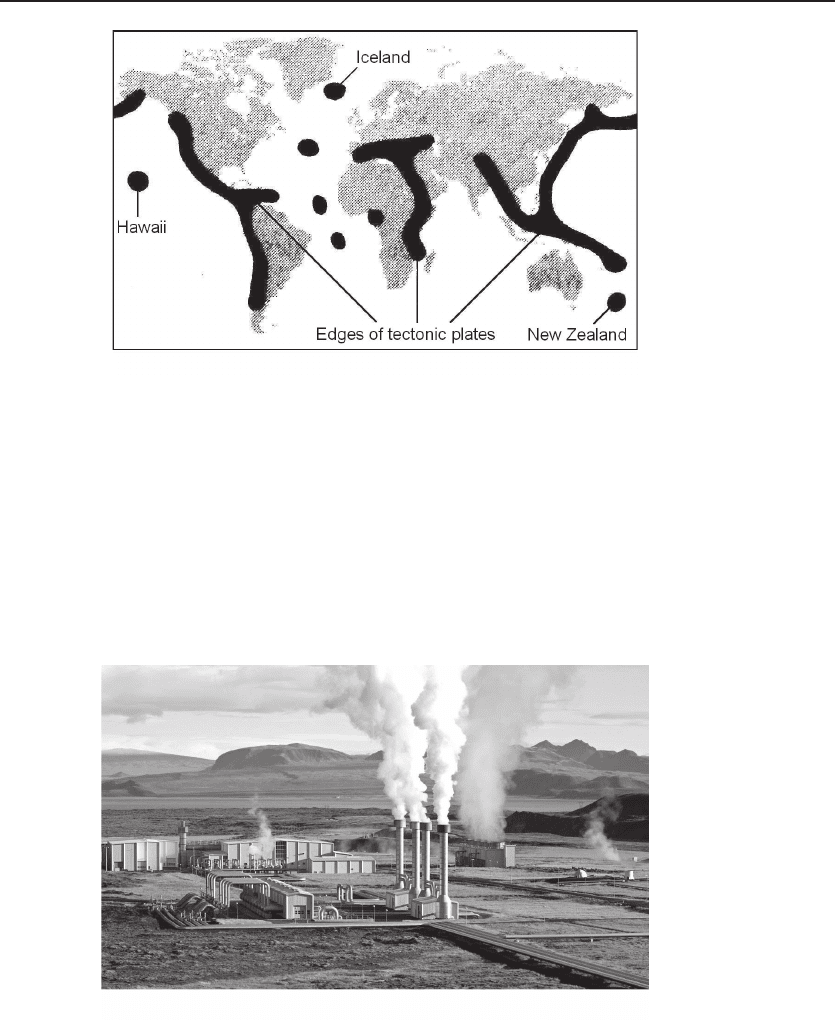
Earth hot. Figure 1.19 is a schematic cross section of Earth. The crest of Earth, a
relatively cold layer of rocks with a relatively low density (2–3 g/cm
3
), is divided into
several tectonic plates. The thickness varies from place to place, from 0 to some 30
km. Underneath the crest is the mantle, a relatively hot layer of partially molten rocks
with relatively high density (3–5.5 g/cm
3
). It is the reservoir of magna for volcanic
activities. From about 3000 km and down is the core of Earth, which is believed to be
molten iron and nickel, with the highest density (10–13 g/cm
3
).
The heat content of the mantle and the core is enormous. In principle, by drilling a
deep well to the hot part of Earth, injecting water, superheated steam can be produced
to drive turbines to generate electricity. In general, such operation is prohibitively
expensive and difficult.
Most current geothermal power stations are located either in the vicinity of edges
of tectonic plates or in regions with active volcanoes, where the thickness of Earth’s
crest is less than a few kilometers and drilling to hot rocks is practical. Figure 1.20
shows the regions on Earth where deep geothermal energy can be extracted.
Figure 1.19 Deep geother-
mal energy. The origin of deep
geothermal energy is the core of
Earth. First, during the forma-
tion of Earth, gravitational con-
traction generated heat. Then, nu-
clear reactions in Earth continu-
ously supplied energy. Because of
the thickness of the tectonic plates,
deep geothermal energy is econom-
ical only at the edges of the plate
or near the volcanoes.
i
i
“ChenSolarEnergy” — 2011/5/17 — 17:56 — page 21 — #48
i
i
i
i
i
i
1.3 Other Renewable Energy Resources 21
Figure 1.20 Regions for deep geothermal energy extraction. At the edges of tectonic plates
and regions with active volcanoes, deep geothermal energy can be extracted economically.
Being rich in active volcanoes, Iceland has an unusual advantage in the utilization of
deep geothermal energy. In 2008, about 24% of Iceland’s electricity was geothermal and
87% of the buildings were heated by geothermal energy. Figure 1.21 is a photograph of
the Nesjavellir Geothermal Power Station, the second largest in Iceland, with a capacity
of 120 MW.
Figure 1.21 Nesjavellir geothermal power station, Iceland. Due the high concentration of
volcanoes, Iceland has an unusual advantage of utilizing geothermal energy. Shown here is Nesjavellir
Geothermal Power Station with a capacity of 120 MW.