
Chen C.J. Physics of Solar Energy
Подождите немного. Документ загружается.

i
i
“ChenSolarEnergy” — 2011/5/17 — 17:56 — page 32 — #59
i
i
i
i
i
i
32 Introduction
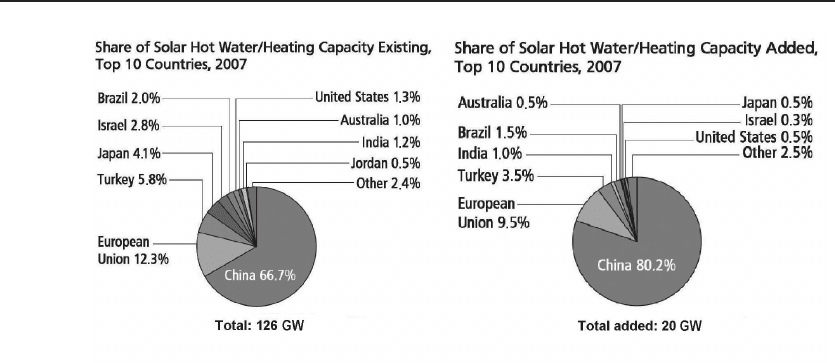
Figure 1.31 Global installations of solar water heater. Globally, solar water heater installation
is increasing rapidly. The most growth is in China. Source: Renewables Global Status Report, 2009
Update, (http://www.ren21.net).
hot water. Improvement in the standard of living has made hot water a necessity of
life. However, natural gas and heating oil are expensive and not generally available.
Electricity is very expensive. The cost of equipment for making hot water using fossil
fuel is comparable with that using sunlight. China represents perfect soil in which the
solar water heater industry can grow.
Advances in Technology and Economy of Scale
Until recently, most solar water heaters in the Western world used flat-plate heat collec-
tors similar to the Day-and-Night system (Fig 1.28) and the White House solar panels
(Fig 1.30). However, the structure is rather inconvenient for mass production. It uses a
lot of copper, a major factor of its demise during and after World War II. The heat loss
due to conduction through the glass window and the back plate is significant. A lot of
metal parts exposed to the elements limit its lifetime. The vacuum tube heat collector,
invented by American engineer William L. R. Emmet in 1911 (U.S. Patent 980,505)
has superb properties. However, for several decades, it was expensive and compli-
cated to produce. In early 1980s, vacuum tube solar heat collectors were improved.
An extremely simple and effective solar water heater was invented and perfected; see
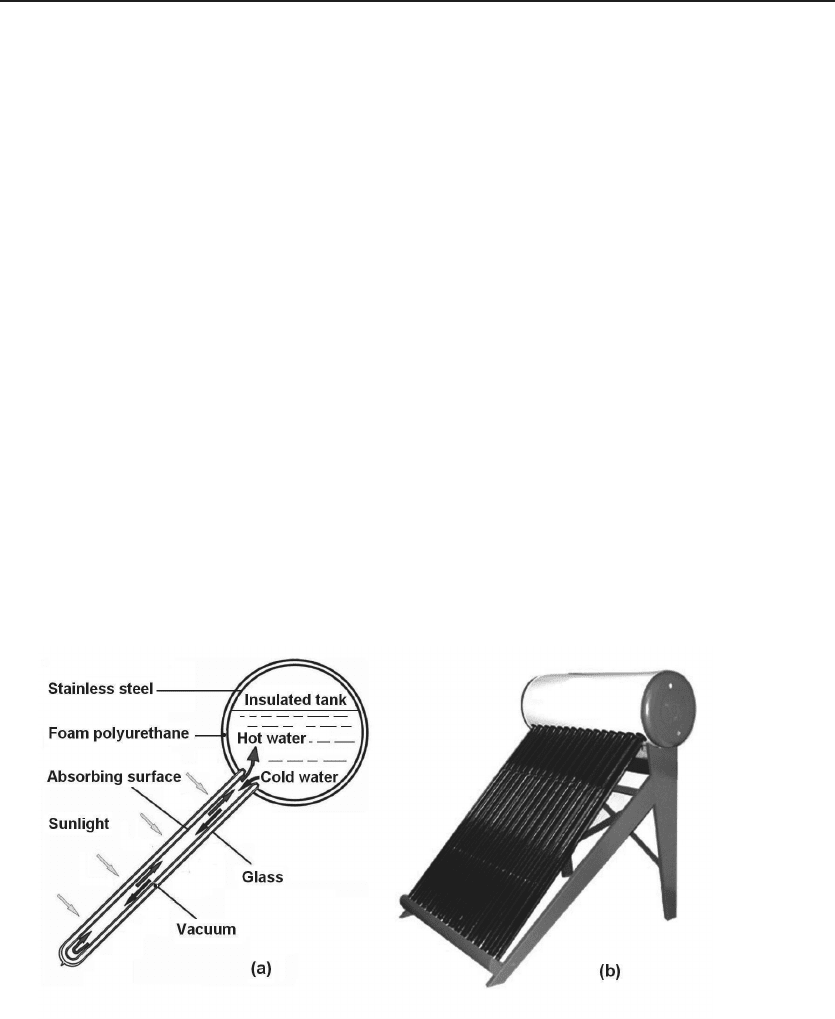
Fig 1.32.
Figure 1.32(a) shows the design of evacuated-tube solar water heater. Each heat
collector is a double-walled glass tube. The space between the outer tube and the
inner tube is evacuated to a high vacuum, similar to a Dewar flask. On the outer
surface of the inner tube, a selective absorption film is applied. For sunlight, which
is mostly visible and near infrared, the absorption coefficient is around 95%. For far-
infrared radiation from the hot water (80–100
◦
C), the emission coefficient is around
5%. The vacuum sleeve perfectly blocks thermal conduction. The entire system works
i
i
“ChenSolarEnergy” — 2011/5/17 — 17:56 — page 33 — #60
i
i
i
i
i
i
1.5 Above Physics 33
automatically under the principle of natural convection. The water heated by sunlight,
having a lower specific gravity, flows upward to the insulated tank. Similarly, the cold
water flows downward from the tank into the heat collector tubes. A photo is shown
in Fig 1.32(b). Typically, 10–40 evacuated tubes are used in one system. The water
tank is insulated by foam polyurethane. The temperature only drops a few degrees
overnight. Therefore, it can provide hot water day and night.
The design also facilitates shipping and storage. The tubes, the tank, and the parts
of the frame are shipped in three separate rectangular cardboard boxes. The system is
then assembled at the installation site.
Because the evacuated tubes are made of borosilicon glass (Pyrex), the selective ab-
sorption film is under high vacuum, and the tank is usually made of high-grade stainless
steel. Unless it is broken by brute force, the system could work for decades. In addition,
these parts are suitable for automatic mass-production. Currently, some 200 million
evacuated tubes and some 10 million insulated water tanks are being manufactured
every year.
The huge market enables cost advantages by the economies of scale. The producer’s
average cost per unit falls as scale is increased. Due to relentless effort of automation,
the manufacturing cost of evacuated tubes is reduced to a few dollars per piece, unimag-
inable a few decades ago. The reduced price of solar water heaters further increases the
size of the market. The expansion of the market further provides grounds to improve
the manufacturing process. As a result, the solar water heater business in China is
sustainable without government financial incentives.
Figure 1.32 Evacuated-tube solar water heater. (a) Schematic of evacuated-tube solar water
heater. Each heat collector is a double-walled glass tube. The system works automatically under the
principle of natural convection. (b) Photograph of system.
i
i
“ChenSolarEnergy” — 2011/5/17 — 17:56 — page 34 — #61
i
i
i
i
i
i
34 Introduction
Himin Model of Solar Energy Business
It is instructive to learn how the colossal solar water heater industry has been able
to grow over such a short period of time. For that purpose, I visited the world’s
largest manufacturer of solar water heaters, Himin Solar Energy Group, and met the
founder and CEO, Mr. Huang Ming in Beijing, when he attended the Plenary Meeting
of People’s Congress. A number of internal documents of this company were then
collected.
In 1978, when Huang Ming was a student at East China Petroleum Institute, he
learned that the crude oil reserve in the world would be depleted within 50 years.
China’s crude oil would be depleted even sooner. Several years after graduation, he
became a highly regarded research engineer specializing in oil well drilling. However,
his personal experience reinforced his pessimism about the future of petroleum.
In 1987, by chance, he found Duffie and Beckman’s book Solar Energy Thermal
Processes. Reading it from cover to cover and doing hands-on experiments using funds
from the sale of a patent, he became convinced that sunlight is the ultimate solution to
the energy problem. Solar energy became his lifetime passion. Since then, he spends
8 h at the Petroleum Institute, 8 h working at home on solar energy projects, and 8 h
sleeping and eating. He gave his hand-made solar water heater to friends and relatives
as gifts and installed a system at a children’s entertainment center.
In 1995, he quitted his job in petroleum industry, and started his own business. He
chose the Chinese name of the company, Huangming, as a homophone of his personal
name, to symbolize his dedication. Within ten years, his company has grown into one of
the largest solar water heater manufacturers on the world without government subsidy.
In 2009, Himin produced more than two million square meters of solar heat collectors,
equivalent to 2 GW of peak solar energy utilization. In May 2006, Huang Ming was
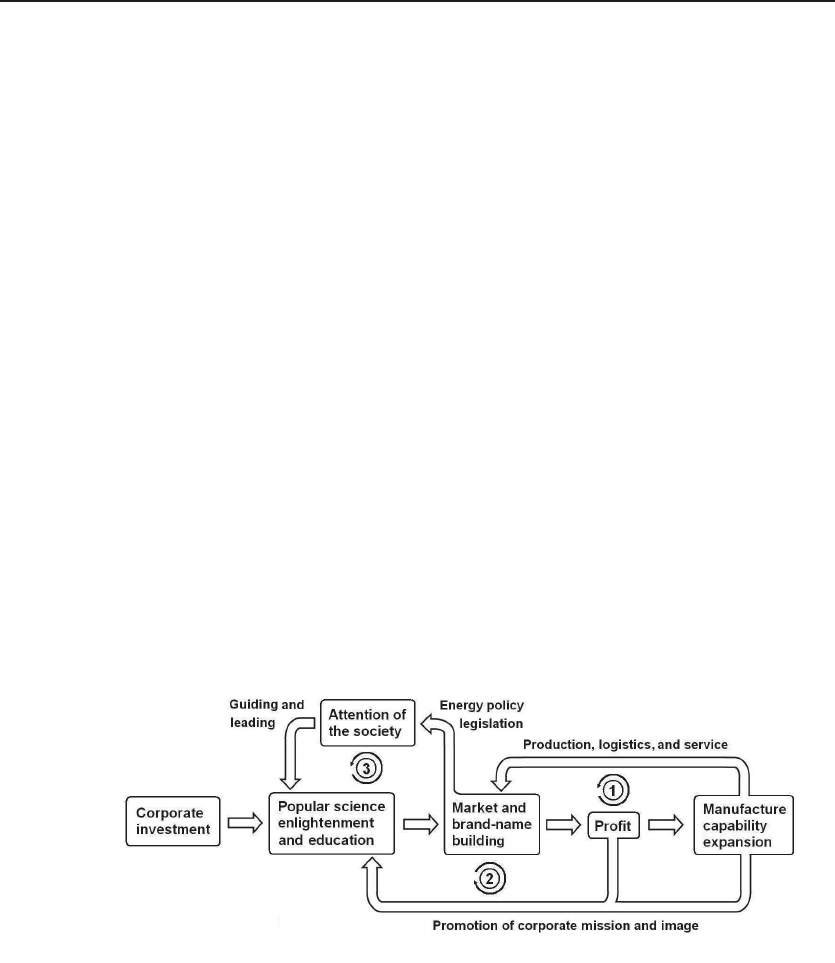
Figure 1.33 Himin model of solar energy business. The Himin model consists of three loops.
Loop 1 is similar to a conventional business cycle. Strict quality control and good after sale service
build up the brand name. Large-scale mass production reduces unit cost. Loop 2 is to invest heavily in
popular science education as the major marketing method. Loop 3 is to push energy policy legislation
to favor renewable energy and to promote public awareness. Source: Minutes of the 14th Conference
of United Nations Commission on Sustainable Development, New York, 2006.

i
i
“ChenSolarEnergy” — 2011/5/17 — 17:56 — page 35 — #62
i
i
i
i
i
i
1.5 Above Physics 35
invited by United Nations to present Himin’s business mode at the 14th Meeting of
United Nations Commission on Sustainable Development, 2006. It was later known as
the “Himin model of solar energy business”.
Figure 1.33 is a sketch of the Himin model. A central point is to create a new market
through popular science enlightenment and education. In 1996, right after the birth of
Himin, the weekly newsletter Popular Solar Energy was established. It became Himin’s
continuing marketing tool, with accumulated distribution of 300 million copies in 2010.
Himin organized numerous popular science tours, traveling 80 million kilometers over
China. Because for an average Chinese family a solar water heater is still a major
capital investment, the decision to purchase a set must be based on careful thinking.
Such educated people were the first customers and then became volunteer marketers
for the product. The Himin model is represented by three loops; see Fig. 1.33.
Loop 1 is the main production cycle. Himin’s strategy is to pursue the highest
standard of excellence. The retail price of their product is among the most expensive
on the market. However, because of their extensive research and quality control, the
products have less trouble and last a long time. The quality ensures their reputation
in the marketplace.
Loop 2 emphasizes the importance of popular science enlightenment and education.
In addition to corporate investment, a substantial portion of the profit is invested in
science education to ensure that customers understand how the system works and how
to choose a good product or part.
Loop 3 emphasizes the importance of pushing for energy policy legislation and
raising public attention to renewable energy. This is also a significant factor of its
success. In 2003, local city folks, especially Himin employees, elected Huang Ming to
become a member of the People’s Congress. He then mobilized 60 fellow congressmen
to propose a Renewable Energy Act, which was passed in the spring of 2005. The
legislation has motivated central and local governments to set up renewable-energy
projects and raises public support to solar energy technology and products.
In 2008, the International Solar Energy Society (ISES) chose Dezhou, the location of
Himin, to host the 2010 International Solar City Congress. Around that time, Huang
Ming was elected as the vice president of the ISES. The venue of the congress, the
Dezhou Apollo Temple, an 800,000-ft
2
museum, ballroom, and hotel with 65% of its
energy supplied by solar, was completed in 2009; see Plate 17.
1.5.4 Photovoltaics: Toward Grid Parity
Because water heaters consume less than 10% of total energy, the bulk of energy needed,
especially electricity, can only be supplied through photovoltaics or other means of solar
electricity generation. Compared with solar water heaters, the total power of solar PV
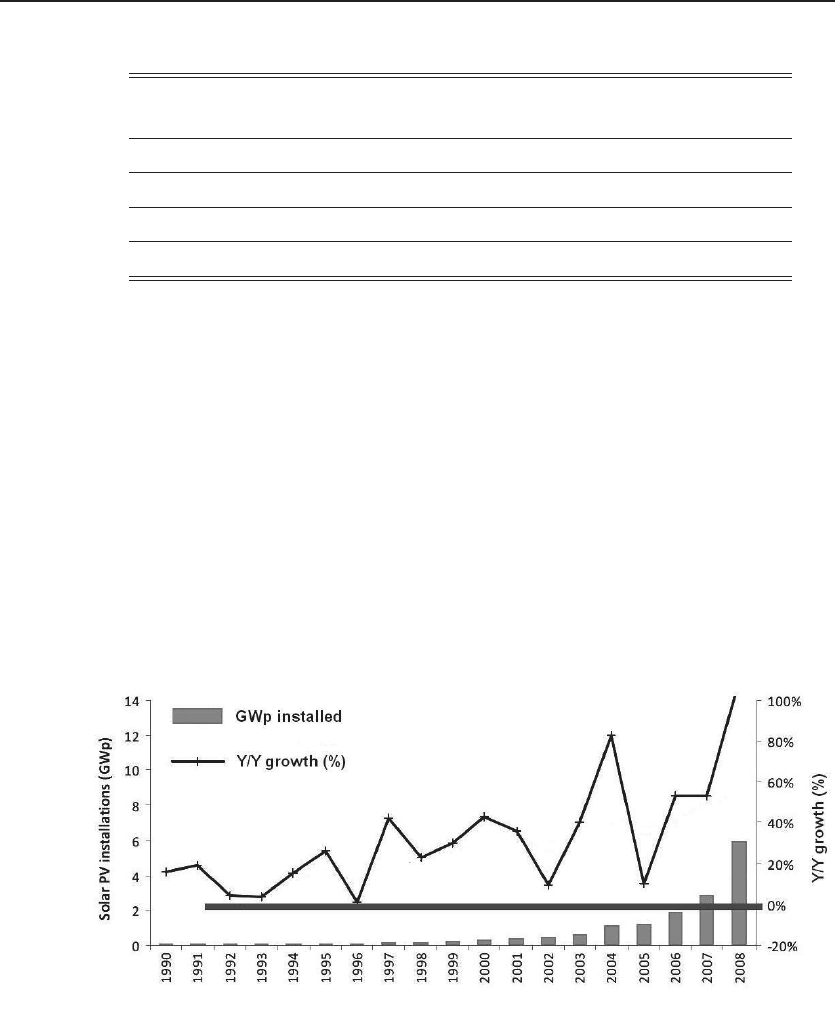
installed in the world is much smaller. In 2008, 6.08 GWp of PV was installed in the
world. The accumulative installation in 2008 is 15 GWp. Figure 1.34 shows the yearly
installation and growth rate of the entire world from 1990 to 2008.
As shown, the installation in terms of peak watts of PV is only about one tenth of
solar water heaters. The limiting factor is simply economics. As shown in Section 1.4.1,
i
i
“ChenSolarEnergy” — 2011/5/17 — 17:56 — page 36 — #63
i
i
i
i
i
i
36 Introduction
Table 1.7: Cost Per Kilowatt-Hour of Solar Electricity for Various Cases
Insolation By Cost of Installed PV per Peak Watt
kWh/m
2
/day $ 2 $ 4 $ 6 $ 8 $ 10
3 $ 0.073 $ 0.146 $ 0.219 $ 0.292 $ 0.365
4 $ 0.054 $ 0.109 $ 0.164 $ 0.219 $ 0.273
5 $ 0.043 $ 0.087 $ 0.131 $ 0.175 $ 0.219
6 $ 0.036 $ 0.073 $ 0.109 $ 0.146 $ 0.182
although practically usable solar cells were invented in 1954, the manufacturing cost
was very high. The major applications were space and military fields. In the late 1970s
and early 1980s, stimulated by the National Energy Act, dramatic improvement in
efficiency and reduction in cost were achieved; see Fig. 1.24. The gradual reduction in
the manufacturing cost of solar cells continues in the 1990s and early 2000s. In 2003, the
price of solar cell per peak watt has dropped to $6.50. However, solar electricity is still
much more expensive than the electricity generated by traditional energy resources,
especially by coal and hydropower, which is $0.05 to $0.10 per kWh. Including the
supporting structure, inverters and necessary instruments, the cost of installed solar
panels per peak watt in 2003 was about $10. Table 1.7 shows the cost of generating 1
kWh of electric energy by solar cells in regions with different insolation.
To jump start the utilization of solar energy, in the 1990s, many European countries
established the feed-in tariff (FIT) law, which guarantees a solar photovoltaic system
Figure 1.34 Installation of solar photovoltaics: 1990 to 2008. Bar graph: world annual
installation of solar photovoltaic panels. Solid curve: growth rate by year. Source: After Solar
Photovoltaic Industry, 2008 Global Outlook, Deutsch Bank.
i
i
“ChenSolarEnergy” — 2011/5/17 — 17:56 — page 37 — #64
i
i
i
i
i
i
1.5 Above Physics 37
access to the grid with the purchase price of thus generated electricity based on cost.
The purchase guarantees could be extended to 20 or 25 years, but the rate could
decline based on expected cost reductions. The law significantly expended the market
for solar photovoltaics. However, it also caused unexpected gyrations. For example,
in 2007, Spain raised the date for large PV systems from €0.18/kWp to €0.42/kWp.
Immediately, the installation surged from 61 mWp in 2006 to 591 mWp in 2007, then
to 2700 mWp in 2008. The Spanish government suddenly found that the rate was
not sustainable and reduced it to €0.32/kWp, to take effect in 2009. In 2009, the
installation is reduced to less than 200 MWp.
The dramatic increase of demand in 2007–2008 nevertheless gave a thrust to an
unprecedented boom in the solar cell industry, especially in the United States and Asia.
The economy of scale, in the form of vertical integration, again works. First Solar in
the Unites States is vertically integrated in a sense that it designs and manufactures
equipment for solar cell production by themselves, thus its production capability is
quickly expended. Yingli Solar in Baoding, China, and Renewable Energy Corporation
in Norway, both manufacturers of polycrystalline silicon solar cells, are so vertically
integrated that they start with producing pure silicon from silica mines and end up
with solar panel installation. In 2009, 49% of the world’s solar cells were produced in
China and Taiwan, mostly crystalline silicon solar cells with high efficiency. Figure 1.35
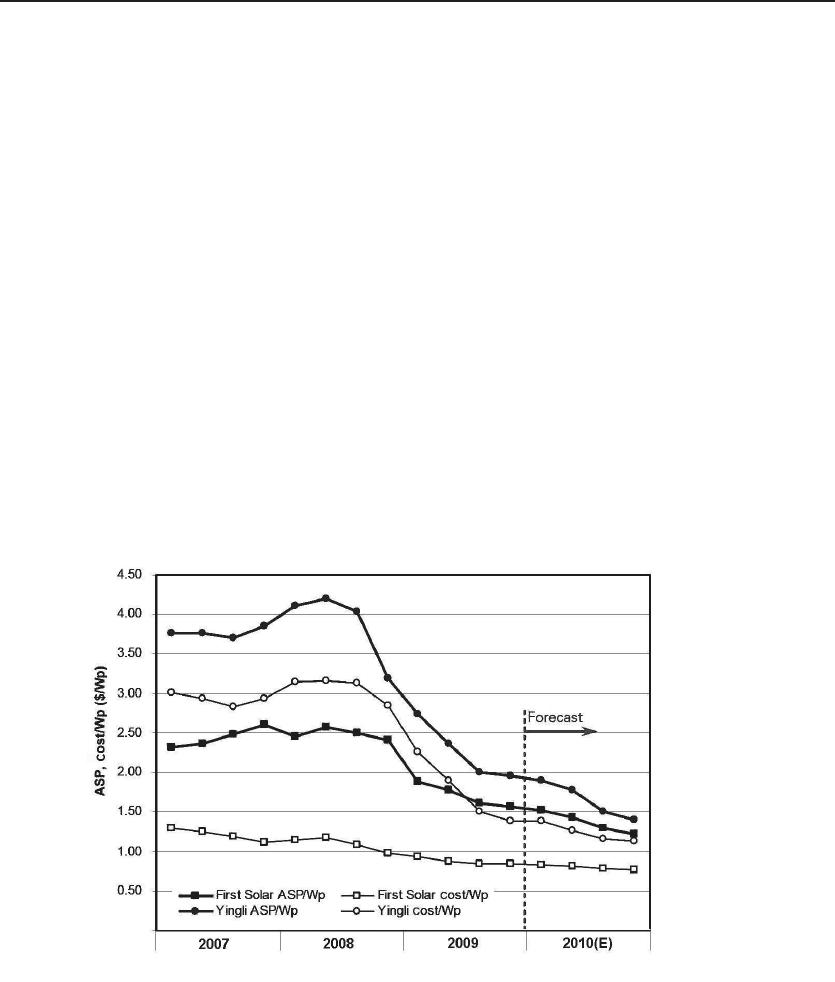
shows the statistics from two manufacturers. As shown, in 2009, the manufacturing
Figure 1.35 Price of solar cells from two major suppliers: 2007 to 2010. Existing data and
forecast for two representative solar cell manufacturers. First Solar is the world’s largest manufacturer
of CdTe-CdS thin film solar cells. Yingli is the world’s largest manufacturer of polycrystalline solar
cells, which is also one of the world’s most vertically integrated solar cell manufacturers. After Solar
Photovoltaic Industry, 2008 global outlook, Deutsch Bank.
i
i
“ChenSolarEnergy” — 2011/5/17 — 17:56 — page 38 — #65
i
i
i
i
i
i
38 Introduction
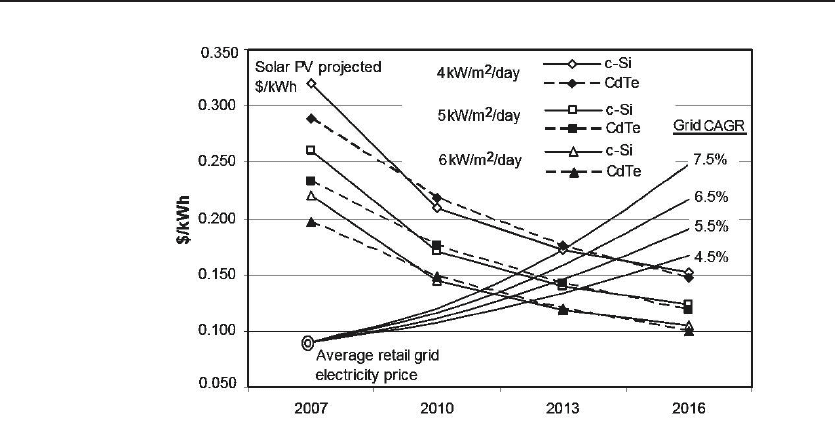
Figure 1.36 Prediction of grid parity. According to a forecast by the Deutsch Bank, the two
most promising solar cells, crystalline silicon solar cells and CdTe thin-film solar cells, will arrive at
grid parity around year 2013. Beyond 2013, the cost of solar electricity could be lower than that
of traditional sources of electricity for many places in the world. Source: After Solar Photovoltaic
Industry, 2008 Global Outlook, Deutsch Bank.
cost of First Solar’s CdTe thin-film solar cells dropped to $0.80 per peak watt, and the
retail price is $1.50 per peak watt. Yingli’s polycrystalline silicon solar cells, with an
efficiency close to 20%, is manufactured with $1.50 per peak watt, and a and the retail
price of $2 per peak watt. The cost and price is expected to decrease continuously in
the years to come. (Recently, Yingli announced a selling price of polycrystalline silicon
solar panels of less than $1 per peak watt.)
According to statistics and analysis by Deutsch Bank, because of the combined
effect of explosive expansion of solar cell production capability and the recession, in
2009, the price of solar cells on the international market dropped significantly. A brutal
shake-up of the industry, suppliers of both pure silicon and solar cells, took place. After
a brief period of oversupply, the price of solar cells will be reduced to a level where
the cost of solar electricity will be comparable to electricity generated by, for example,
coal-burning power stations, that is, will reaches grid parity; see Fig. 1.36. The pace
of grid parity depends on the local situation and thus varies from place to place. For
places with high electricity cost, such as Hawaii, Connecticut, California, and New
York, especially those places with high insolation, grid parity will take place earlier.
For areas with low electricity prices, for example, West Virginia and central-west China,
especially places with low insolation, grid parity will be reached later. However, the
trend that the cost of fossil fuel electricity will increase and the cost of solar electricity
will decrease is inevitable. Solar electricity will gradually replace fossil fuel electricity.
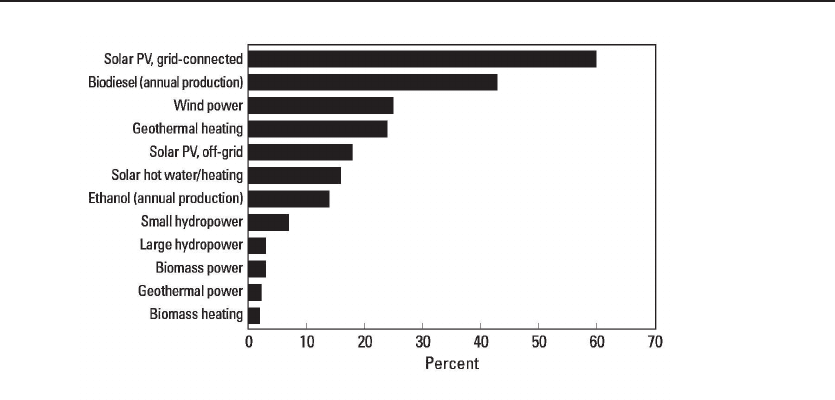
Figure 1.37 shows the average annual growth rates of renewables from 2002 to
i
i
“ChenSolarEnergy” — 2011/5/17 — 17:56 — page 39 — #66
i
i
i
i
i
i
1.5 Above Physics 39
Figure 1.37 Average annual growth rates of renewables: 2002–2006. The average growth
rate for grid-connected solar photovoltaics far exceeds other renewable energy capacities, even more
for traditional energy resources. If in the future the rate of growth of photovoltaics can maintain 40%,
in 20 years, or by 2030, solar photovoltaics will account for 50% of the energy supply and become the
dominant energy source. Source: After Renewables 2007 Global Status Report, REN21 [1].
2006, as reported by REN21 [1]. As shown, the average growth rate for grid-connected
solar photovoltaics, more than 60%, far exceeds other energy resources. In 2006, the
percentage of solar photovoltaics was only a miserable 0.07%. However, if in the future
the rate of growth of photovoltaics can maintain 40%, in 20 years, or by 2030, solar
photovoltaics will supply more than 50% of the energy consumption.

i
i
“ChenSolarEnergy” — 2011/5/17 — 17:56 — page 40 — #67
i
i
i
i
i
i
40 Introduction
Problems
1.1. In the United States, the British thermal unit (Btu) is defined as the energy to
raise the temperature of one pound water by one degree Fahrenheit. Show that to a
good approximation, 1 Btu equals 1 kJ.
1.2. Approximately (to ±5%), how much energy is in one billion barrels of petroleum
in gigajoules (GJ) and megawatt-hours (MWh)?
1.3. The area of New Mexico is 121,666 square miles. The average annual insolation
(hours of equivalent full sunlight on a horizontal surface) is 2200 h. If one-half of the
area of New Mexico is covered with solar panels of 10% efficiency, how much electricity
can be generated per year? What percentage of US energy needs can be satisfied? (The
total energy consumption of the United States in 2007 was 100 EJ).
1.4. The area of Tibet is 1,230,000 km
2
. The average annual insolation (hours of
equivalent full sunlight on a horizontal surface) is 3000 h. If one-half the area of Tibet
is covered with solar panels of 10% efficiency, how much electricity per year can be
generated? What percentage of the world’s energy needs can be satisfied? (The total
energy consumption of the world in 2007 was 500 EJ.)
1.5. A solar oven has a concentration mirror of 1 m
2
with a solar tracking mechanism.
If the efficiency is 75%, on a sunny day, how long will it take to melt one kg of ice at
0
◦
C at the same temperature? How long will it take to heat it to the boiling point?
How long will it take to evaporate it at 100
◦
C?
1.6. For wind speeds of 20, 30, 40, ..., up to 100 mph, calculate the wind power density
(in watts per square meter).
1.7. The distance from the equator to the North Pole along the surface of Earth is
1.00×10
7
m. If the average solar radiation power density on Earth is one sun, how
much energy is falling on Earth annually? If the annual energy consumption of the
entire world in 2040 is 800 EJ, what percentage of solar energy is required to supply
the world’s energy need in 2040? (Hint: One day equals 24×60×60=86,400 seconds.)
1.8. Using a solar photovoltaic field of 1 square mile (2.59 km
2
) with efficiency of
15%, how many kilowatt-hours will this field generate annually at locations of average
daily insolation (on flat ground) of 3 h (Alaska), 4 h (New York), 5 h (Georgia), and
6 h (Arizona)? An average household consumes 1000 kWh per month. How many
households can this field support in the four states, respectively?
i
i
“ChenSolarEnergy” — 2011/5/17 — 17:56 — page 41 — #68
i
i
i
i
i
i
Chapter 2
Nature of Solar Radiation
Solar energy comes to Earth in the form of radiation, or sunlight, with spectral compo-
nents mostly in the visible, near infrared, and near ultraviolet. To study the properties
of sunlight, we need to consider and understand it from two points of view: as an
electromagnetic wave and as a flow of photons. The first point of view is essential
for all solar thermal applications and the antireflection coatings for solar cells. The
second point of view is essential with regard to solar cells and solar photochemistry.
The unification of the two points of view is represented by quantum electrodynamics,
one of the most fruitful and matured fields in modern physics. Here, for simplicity, we
will present an elementary treatment of these two points of view separately.
2.1 Light as Electromagnetic Waves
Up to the middle of the nineteenth century, electromagnetic phenomena and light have
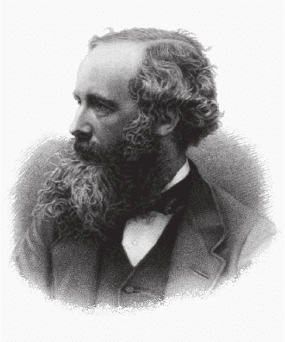
been considered as totally independent entities. In 1865, in a monumental paper ADy-
namic Theory of the Electromagnetic Field, James Clerk Maxwell (Fig 2.1) proposed
that light is an electromagnetic wave [58]. In that paper, he developed a complete set of
Figure 2.1 James Clerk Maxwell. Scot-
tish physicist (1831–1879), one of the most in-
fluential physicists along with Isaac Newton
and Albert Einstein. He developed a set of
equations describing electromagnetism, known
as the Maxwell’s equations. In 1865, based on
those equations, he predicted the existence of
electromagnetic waves and proposed that light
is an electromagnetic wave [58]. He also pio-
neered the kinetic theory of gases, and created
a science fiction character Maxwell’s demon.
Portrait courtesy of Smithsonian Museum.
41
Physics of Solar Energy C. Julian Chen
Copyright © 2011 John Wiley & Sons, Inc.