
Engelbrecht Andries P. Computational Intelligence: An Introduction
Подождите немного. Документ загружается.


128 8. Introduction to Evolutionary Computation
random events cause random changes to the child organism’s characteristics. If these
new characteristics are a benefit to the organism, then the chances of survival for that
organism are increased.
Evolutionary computation (EC) refers to computer-based problem solving systems
that use computational models of evolutionary processes, such as natural selection,
survival of the fittest and reproduction, as the fundamental components of such com-
putational systems.
This chapter gives an overview of the evolution processes modeled in EC. Section 8.1
presents a generic evolutionary algorithm (EA) and reviews the main components
of EAs. Section 8.2 discusses ways in which the computational individuals are repre-
sented, and Section 8.3 discusses aspects about the initial population. The importance
of fitness functions, and different types of fitness functions are discussed in Section 8.4.
Selection and reproduction operators are respectively discussed in Sections 8.5 and 8.6.
Algorithm stopping conditions are considered in Section 8.7. A short discussion on
the differences between EC and classical optimization is given in Section 8.8.
8.1 Generic Evolutionary Algorithm
Evolution via natural selection of a randomly chosen population of individuals can
be thought of as a search through the space of possible chromosome values. In that
sense, an evolutionary algorithm (EA) is a stochastic search for an optimal solution to
a given problem. The evolutionary search process is influenced by the following main
components of an EA:
• an encoding of solutions to the problem as a chromosome;
• a function to evaluate the fitness, or survival strength of individuals;
• initialization of the initial population;
• selection operators; and
• reproduction operators.
Algorithm 8.1 shows how these components are combined to form a generic EA.
Algorithm 8.1 Generic Evolutionary Algorithm
Let t = 0 be the generation counter;
Create and initialize an n
x
-dimensional population, C(0), to consist of n
s
individuals;
while stopping condition(s) not true do
Evaluate the fitness, f(x
i
(t)), of each individual, x
i
(t);
Perform reproduction to create offspring;
Select the new population, C(t +1);
Advance to the new generation, i.e. t = t +1;
end

8.2 Representation -- The Chromosome 129
The steps of an EA are applied iteratively until some stopping condition is satisfied
(refer to Section 8.7). Each iteration of an EA is referred to as a generation.
The different ways in which the EA components are implemented result in diffferent
EC paradigms:
• Genetic algorithms (GAs), which model genetic evolution.
• Genetic programming (GP), which is based on genetic algorithms, but indi-
viduals are programs (represented as trees).
• Evolutionary programming (EP), which is derived from the simulation of
adaptive behavior in evolution (i.e. phenotypic evolution).
• Evolution strategies (ESs), which are geared toward modeling the strategic
parameters that control variation in evolution, i.e. the evolution of evolution.
• Differential evolution (DE), which is similar to genetic algorithms, differing
in the reproduction mechanism used.
• Cultural evolution (CE), which models the evolution of culture of a popu-
lation and how the culture influences the genetic and phenotypic evolution of
individuals.
• Co-evolution (CoE), where initially “dumb” individuals evolve through cooper-
ation, or in competition with one another, acquiring the necessary characteristics
to survive.
These paradigms are discussed in detail in the chapters that follow in this part of the
book.
With reference to Algorithm 8.1, both parts of Darwin’s theory are encapsulated within
this algorithm:
• Natural selection occurs within the reproduction operation where the “best”
parents have a better chance of being selected to produce offspring, and to be
selected for the new population.
• Random changes are effected through the mutation operator.
8.2 Representation – The Chromosome
In nature, organisms have certain characteristics that influence their ability to survive
and to reproduce. These characteristics are represented by long strings of informa-
tion contained in the chromosomes of the organism. Chromosomes are structures of
compact intertwined molecules of DNA, found in the nucleus of organic cells. Each
chromosome contains a large number of genes, where a gene is the unit of heredity.
Genes determine many aspects of anatomy and physiology through control of protein
production. Each individual has a unique sequence of genes. An alternative form of a
gene is referred to as an allele.
In the context of EC, each individual represents a candidate solution to an optimization
problem. The characteristics of an individual is represented by a chromosome,also

130 8. Introduction to Evolutionary Computation
referred to as a genome. These characteristics refer to the variables of the optimization
problem, for which an optimal assignment is sought. Each variable that needs to be
optimized is referred to as a gene, the smallest unit of information. An assignment
of a value from the allowed domain of the corresponding variable is referred to as an
allele. Characteristics of an individual can be divided into two classes of evolutionary
information: genotypes and phenotypes. A genotype describes the genetic composition
of an individual, as inherited from its parents; it represents which allele the individual
possesses. A phenotype is the expressed behavioral traits of an individual in a specific
environment; it defines what an individual looks like. Complex relationships exist
between the genotype and phenotype [570]:
• pleiotropy, where random modification of genes causes unexpected variations in
the phenotypic traits, and
• polygeny, where several genes interact to produce a specific phenotypic trait.
An important step in the design of an EA is to find an appropriate representation of
candidate solutions (i.e. chromosomes). The efficiency and complexity of the search
algorithm greatly depends on the representation scheme. Different EAs from the
different paradigms use different representation schemes. Most EAs represent solutions
as vectors of a specific data type. An exception is genetic programming (GP) where
individuals are represented in a tree format.
The classical representation scheme for GAs is binary vectors of fixed length. In the
case of an n
x
-dimensional search space, each individual consists of n
x
variables with
each variable encoded as a bit string. If variables have binary values, the length of
each chromosome is n
x
bits. In the case of nominal-valued variables, each nominal
value can be encoded as an n
d
-dimensional bit vector where 2
n
d
is the total number
of discrete nominal values for that variable. To solve optimization problems with
continuous-valued variables, the continuous search space problem can be mapped into
a discrete programming problem. For this purpose mapping functions are needed to
convert the space {0, 1}
n
b
to the space R
n
x
. For such mapping, each continuous-valued
variable is mapped to an n
d
-dimensional bit vector, i.e.
φ : R → (0, 1)
n
d
(8.1)
The domain of the continuous space needs to be restricted to a finite range,
[x
min
, x
max
]. A standard binary encoding scheme can be used to transform the
individual x =(x
1
,...,x
j
,...,x
n
x
), with x
j
∈ R to the binary-valued individual,
b =(b
1
,...,b
j
,...,b
n
x
), where b
j
=(b
(j−1)n
d
+1
,...,b
jn
d
), with b
l
∈{0, 1} and
the total number of bits, n
b
= n
x
n
d
. Decoding each b
j
back to a floating-point rep-
resentation can be done using the function, Φ
j
: {0, 1}
n
d
→ [x
min,j
,x
max,j
], where
[39]
Φ
j
(b)=x
min,j
+
x
max,j
− x
min,j
2
n
d
− 1
n
d
−1
l=1
b
j(n
d
−l)
2
l
(8.2)
Holland [376] and De Jong [191] provided the first applications of genetic algorithms
to solve continuous-valued problems using such a mapping scheme. It should be noted
8.2 Representation -- The Chromosome 131
that if a bitstring representation is used, a grid search is done in a discrete search space.
The EA may therefore fail to obtain a precise optimum. In fact, for a conversion form
a floating-point value to a bitstring of n
d
bits, the maximum attainable accuracy is
x
max,j
− x
min,j
2
n
d
− 1
(8.3)
for each vector component, j =1,...,n
x
.
5
4
2
1
0
012 34
3
567
binary coding
Gray coding
Hamming distance
Numerical value
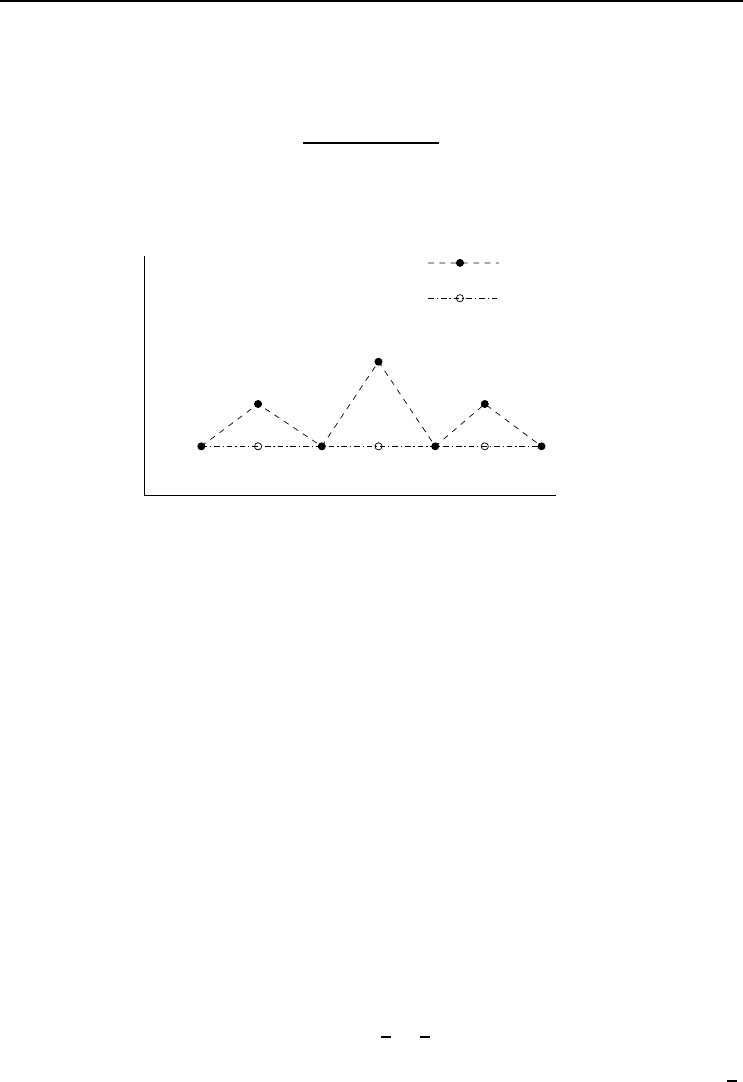
Figure 8.1 Hamming Distance for Binary and Gray Coding
While binary coding is frequently used, it has the disadvantage of introducing Ham-
ming cliffs as illustrated in Figure 8.1. A Hamming cliff is formed when two numerically
adjacent values have bit representations that are far apart. For example, consider the
decimal numbers 7 and 8. The corresponding binary representations are (using a 4-bit
representation) 7 = 0111 and 8 = 1000, with a Hamming distance of 4 (the Hamming
distance is the number of corresponding bits that differ). This presents a problem
when a small change in variables should result in a small change in fitness. If, for
example, 7 represents the optimal solution, and the current best solution has a fitness
of 8, many bits need to be changed to cause a small change in fitness value.
An alternative bit representation is to use Gray coding, where the Hamming distance
between the representation of successive numerical values is one (as illustrated in
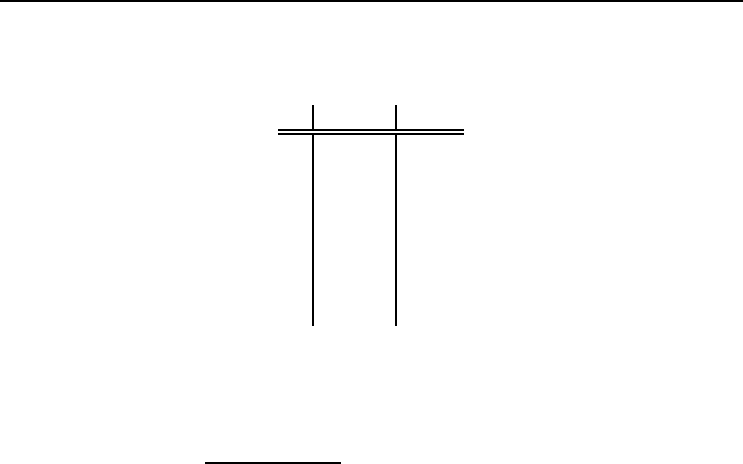
Figure 8.1). Table 8.1 compares binary and Gray coding for a 3-bit representation.
Binary numbers can easily be converted to Gray coding using the conversion
g
1
= b
1
g
l
= b
l−1
b
l
+ b
l−1
b
l
(8.4)
where b
l
is bit l of the binary number b
1
b
2
···b
n
b
,withb
1
the most significant bit; b
l
denotes not b
l
, + means logical OR, and multiplication implies logical AND.
A Gray code representation, b
j
can be converted to a floating-point representation
132 8. Introduction to Evolutionary Computation
Table 8.1 Binary and Gray Coding
Binary Gray
0 000 000
1
001 001
2
010 011
3
011 010
4
100 110
5
101 111
6
110 101
7
111 100
using
Φ
j
(b)=x
min,j
+
x
max,j
− x
min,j
2
n
d
− 1
n
d
−1
l=1
n
d
−l
q=1
b
(j−1)n
d
+q
mod 2
2
l
(8.5)
Real-valued representations have been used for a number of EAs, including GAs. Al-
though EP (refer to Chapter 11) was originally developed for finite-state machine
representations, it is now mostly applied to real-valued representations where each
vector component is a floating-point number, i.e. x
j
∈ R,j =1,...,n
x
.ESsand
DE, on the other hand, have been developed for floating-point representation (refer
to Chapters 12 and 13). Real-valued representations have also been used for GAs
[115, 178, 251, 411, 918]. Michalewicz [583] indicated that the original floating-point
representation outperforms an equivalent binary representation, leading to more ac-
curate, faster obtained solutions.
Other representation schemes that have been used include integer representations [778],
permutations [778, 829, 905, 906], finite-state representations [265, 275], tree represen-
tations (refer to Chapter 10), and mixed-integer representations [44].
8.3 Initial Population
Evolutionary algorithms are stochastic, population-based search algorithms. Each EA
therefore maintains a population of candidate solutions. The first step in applying
an EA to solve an optimization problem is to generate an initial population. The
standard way of generating an initial population is to assign a random value from the
allowed domain to each of the genes of each chromosome. The goal of random selection
is to ensure that the initial population is a uniform representation of the entire search
space. If regions of the search space are not covered by the initial population, chances
are that those parts will be neglected by the search process.

8.4 Fitness Function 133
The size of the initial population has consequences in terms of computational complex-
ity and exploration abilities. Large numbers of individuals increase diversity, thereby
improving the exploration abilities of the population. However, the more the individ-
uals, the higher the computational complexity per generation. While the execution
time per generation increases, it may be the case that fewer generations are needed to
locate an acceptable solution. A small population, on the other hand will represent a
small part of the search space. While the time complexity per generation is low, the
EA may need more generations to converge than for a large population.
In the case of a small population, the EA can be forced to explore more of the search
space by increasing the rate of mutation.
8.4 Fitness Function
In the Darwinian model of evolution, individuals with the best characteristics have
the best chance to survive and to reproduce. In order to determine the ability of
an individual of an EA to survive, a mathematical function is used to quantify how
good the solution represented by a chromosome is. The fitness function, f,mapsa
chromosome representation into a scalar value:
f :Γ
n
x
→ R (8.6)
where Γ represents the data type of the elements of an n
x
-dimensional chromosome.
The fitness function represents the objective function, Ψ, which describes the opti-
mization problem. It is not necessarily the case that the chromosome representation
corresponds to the representation expected by the objective function. In such cases,
a more detailed description of the fitness function is
f : S
C
Φ
→S
X
Ψ
→ R
Υ
→ R
+
(8.7)
where S
C
represents the search space of the objective function, and Φ, ΨandΥre-
spectively represent the chromosome decoding function, the objective function, and
the scaling function. The (optional) scaling function is used in proportional selection
to ensure positive fitness values (refer to Section 8.5). As an example,
f : {0, 1}
n
b
Φ
→ R
n
x
Ψ
→ R
Υ
→ R
+
(8.8)
where an n
b
-bitstring representation is converted to a floating-point representation
using either equation (8.2) or (8.5).
For the purposes of the remainder of this part on EC, it is assumed that S
C
= S
X
for
which f =Ψ.
Usually, the fitness function provides an absolute measure of fitness. That is, the
solution represented by a chromosome is directly evaluated using the objective func-
tion. For some applications, for example game learning (refer to Chapter 11) it is not
possible to find an absolute fitness function. Instead, a relative fitness measure is used

134 8. Introduction to Evolutionary Computation
to quantify the performance of an individual in relation to that of other individuals
in the population or a competing population. Relative fitness measures are used in
coevolutionary algorithms (refer to Chapter 15).
It is important to realize at this point that different types of optimization problems
exist (refer to Section A.3), which have an influence on the formulation of the fitness
function:
• Unconstrained optimization problems as defined in Definition A.4, where, as-
suming that S
C
= S
X
, the fitness function is simply the objective function.
• Constrained optimization problems as defined in Definition A.5. To solve con-
strained problems, some EAs change the fitness function to contain two objec-
tives: one is the original objective function, and the other is a constraint penalty
function (refer to Section A.6).
• Multi-objective optimization problems (MOP) as defined in Definition A.10.
MOPs can be solved by using a weighted aggregation approach (refer to Sec-
tion A.8), where the fitness function is a weighted sum of all the sub-objectives
(refer to equation (A.44)), or by using a Pareto-based optimization algorithm.
• Dynamic and noisy problems, where function values of solutions change over
time. Dynamic fitness functions are time-dependent whereas noisy functions
usually have an added Gaussian noise component. Dynamic problems are defined
in Definition A.16. Equation (A.58) gives a noisy function with an additive
Gaussian noise component.
As a final comment on the fitness function, it is important to emphasize its role in an
EA. The evolutionary operators, e.g. selection, crossover, mutation and elitism, usu-
ally make use of the fitness evaluation of chromosomes. For example, selection opera-
tors are inclined towards the most-fit individuals when selecting parents for crossover,
while mutation leans towards the least-fit individuals.
8.5 Selection
Selection is one of the main operators in EAs, and relates directly to the Darwinian
concept of survival of the fittest. The main objective of selection operators is to
emphasize better solutions. This is achieved in two of the main steps of an EA:
• Selection of the new population: A new population of candidate solutions
is selected at the end of each generation to serve as the population of the next
generation. The new population can be selected from only the offspring, or from
both the parents and the offspring. The selection operator should ensure that
good individuals do survive to next generations.
• Reproduction: Offspring are created through the application of crossover
and/or mutation operators. In terms of crossover, “superior” individuals should
have more opportunities to reproduce to ensure that offspring contain genetic
material of the best individuals. In the case of mutation, selection mechanisms

8.5 Selection 135
should focus on “weak” individuals. The hope is that mutation of weak individu-
als will result in introducing better traits to weak individuals, thereby increasing
their chances of survival.
Many selection operators have been developed. A summary of the most frequently
used operators is given in this section. Preceding this summary is a discussion of
selective pressure in Section 8.5.1.
8.5.1 Selective Pressure
Selection operators are characterized by their selective pressure, alsoreferredtoasthe
takeover time, which relates to the time it requires to produce a uniform population. It
is defined as the speed at which the best solution will occupy the entire population by
repeated application of the selection operator alone [38, 320]. An operator with a high
selective pressure decreases diversity in the population more rapidly than operators
with a low selective pressure, which may lead to premature convergence to suboptimal
solutions. A high selective pressure limits the exploration abilities of the population.
8.5.2 Random Selection
Random selection is the simplest selection operator, where each individual has the
same probability of
1
n
s
(where n
s
is the population size) to be selected. No fitness
information is used, which means that the best and the worst individuals have exactly
the same probability of surviving to the next generation. Random selection has the
lowest selective pressure among the selection operators discussed in this section.
8.5.3 Proportional Selection
Proportional selection, proposed by Holland [376], biases selection towards the most-
fit individuals. A probability distribution proportional to the fitness is created, and
individuals are selected by sampling the distribution,
ϕ
s
(x
i
(t)) =
f
Υ
(x
i
(t))
n
s
l=1
f
Υ
(x
l
(t))
(8.9)
where n
s
is the total number of individuals in the population, and ϕ
s
(x
i
)isthe
probability that x
i
will be selected. f
Υ
(x
i
) is the scaled fitness of x
i
, to produce a
positive floating-point value. For minimization problems, possible choices of scaling
function, Υ, are
• f
Υ
(x
i
(t)) = Υ(x
i
(t)) = f
max
− f
Ψ
(x
i
(t)) where f
Ψ
(x
i
(t)) = Ψ(x
i
(t)) is the
raw fitness value of x
i
(t). However, knowledge of f
max
(the maximum possible
fitness) is usually not available. An alternative is to use f
max
(t), which is the
maximum fitness observed up to time step t.
136 8. Introduction to Evolutionary Computation
• f
Υ
(x
i
(t)) = Υ(x
i
(t)) =
1
1+f
Ψ
(x
i
(t))−f
min
(t)
,wheref
min
(t) is the minimum ob-
served fitness up to time step t. Here, f
Υ
(x
i
(t)) ∈ (0, 1].
In the case of a maximization problem, the fitness values can be scaled to the range
(0,1] using
f
Υ
(x
i
(t)) = Υ(x
i
(t)) =
1
1+f
max
(t) − f(x
i
(t))
(8.10)
Two popular sampling methods used in proportional selection is roulette wheel sam-
pling and stochastic universal sampling.
Assuming maximization, and normalized fitness values, roulette wheel selection is
summarized in Algorithm 8.2. Roulette wheel selection is an example proportional
selection operator where fitness values are normalized (e.g. by dividing each fitness
by the maximum fitness value). The probability distribution can then be seen as a
roulette wheel, where the size of each slice is proportional to the normalized selection
probability of an individual. Selection can be likened to the spinning of a roulette
wheel and recording which slice ends up at the top; the corresponding individual is
then selected.
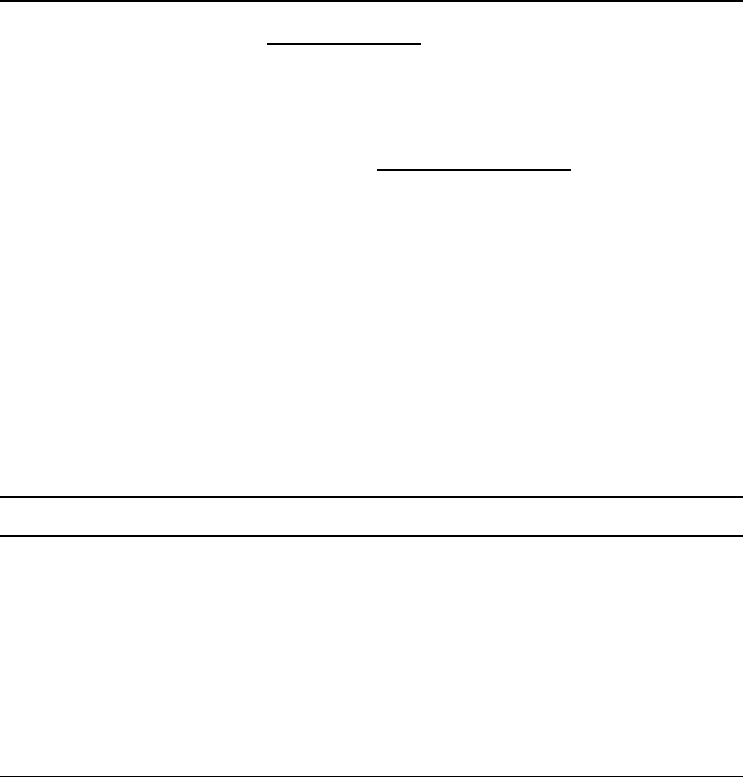
Algorithm 8.2 Roulette Wheel Selection
Let i =1,wherei denotes the chromosome index;
Calculate ϕ
s
(x
i
) using equation (8.9);
sum = ϕ
s
(x
i
);
Choose r ∼ U(0, 1);
while sum < r do
i = i + 1, i.e. advance to the next chromosome;
sum = sum + ϕ
s
(x
i
);
end
Return x
i
as the selected individual;
When roulette wheel selection is used to create offspring to replace the entire popula-
tion, n
s
independent calls are made to Algorithm 8.2. It was found that this results in
a high variance in the number of offspring created by each individual. It may happen
that the best individual is not selected to produce offspring during a given generation.
To prevent this problem, Baker [46] proposed stochastic universal sampling (refer to
Algorithm 8.3), used to determine for each individual the number of offspring, λ
i
,to
be produced by the individual with only one call to the algorithm.
Because selection is directly proportional to fitness, it is possible that strong individ-
uals may dominate in producing offspring, thereby limiting the diversity of the new
population. In other words, proportional selection has a high selective pressure.
8.5 Selection 137
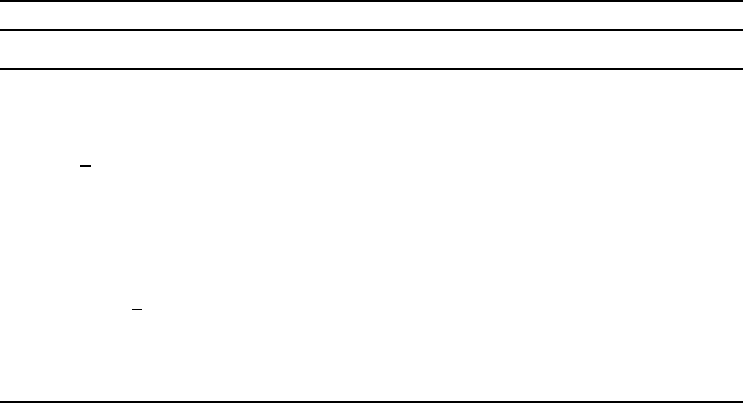
Algorithm 8.3 Stochastic Universal Sampling
for i =1,...,n
s
do
λ
i
(t)=0;
end
r ∼ U(0,
1
λ
), where λ is the total number of offspring;
sum =0.0;
for i =1,...,n
s
do
sum = sum + ϕ
s
(x
i
(t));
while r<sumdo
λ
i
++;
r = r +
1
λ
;
end
end
return λ =(λ
1
,...,λ
n
s
);
8.5.4 Tournament Selection
Tournament selection selects a group of n
ts
individuals randomly from the popula-
tion, where n
ts
<n
s
(n
s
is the total number of individuals in the population). The
performance of the selected n
ts
individuals is compared and the best individual from
this group is selected and returned by the operator. For crossover with two parents,
tournament selection is done twice, once for the selection of each parent.
Provided that the tournament size, n
ts
, is not too large, tournament selection prevents
the best individual from dominating, thus having a lower selection pressure. On the
other hand, if n
ts
is too small, the chances that bad individuals are selected increase.
Even though tournament selection uses fitness information to select the best individual
of a tournament, random selection of the individuals that make up the tournament
reduces selective pressure compared to proportional selection. However, note that the
selective pressure is directly related to n
ts
.Ifn
ts
= n
s
, the best individual will always
be selected, resulting in a very high selective pressure. On the other hand, if n
ts
=1,
random selection is obtained.
8.5.5 Rank-Based Selection
Rank-based selection uses the rank ordering of fitness values to determine the probabil-
ity of selection, and not the absolute fitness values. Selection is therefore independent
of actual fitness values, with the advantage that the best individual will not dominate
in the selection process.
Non-deterministic linear sampling selects an individual, x
i
, such that i ∼
U(0,U(0,n
s
−1)), where the individuals are sorted in decreasing order of fitness value.
It is also assumed that the rank of the best individual is 0, and that of the worst in-
dividual is n
s
− 1.