
He M., Petoukhov S. Mathematics of Bioinformatics: Theory, Methods and Applications
Подождите немного. Документ загружается.


3 Biological Sequences, Sequence
Alignment, and Statistics
Biological sequences comprise primarily DNA sequences (also called genetic
sequences or nucleotide sequences ) and amino acid sequences (also called
peptide sequences or protein sequences ). DNA sequences direct the formation
of amino acid sequences and determine the expression and regulation of genes.
They determine the main aspects of the life process. Amino acid sequences
determine the structures and functions of proteins. The abundant biological
sequence data provide us with the most important information regarding life.
Life is a manifestation of a combination of information, substance, and move-
ment. Obtaining the sequence data is an initial step toward an understanding
of these data. Biologists often produce biological sequence alignments in a
manual manner using knowledge of DNA and protein structure and evolution.
In bioinformatics, a sequence alignment is a way of arranging the primary
sequences of DNA, RNA, or protein to identify regions of similarity that may
be a consequence of a functional, structural, or evolutionary relationship
between sequences. A true alignment of biological sequences is one that
refl ects the evolutionary relationship between two or more sequences that
share a common ancestor.
In this chapter we defi ne biological sequences, mathematical sequences, and
binary sequences in theoretical computer science. We describe pairwise
sequence alignment, multiple sequence alignment, and optimal sequence
alignment. We discuss the scoring system used to rank alignments, the algo-
rithms used to fi nd optimal (or good) scoring alignments, and the statistical
methods used to evaluate the signifi cance of an alignment score.
3.1 INTRODUCTION
A DNA or genetic sequence is a succession of letters representing the primary
structure of a real or hypothetical DNA molecule or strand, with the capacity
to carry information. The possible letters are A, C, G, and T, representing the
Mathematics of Bioinformatics: Theory, Practice, and Applications, By Matthew He and
Sergey Petoukhov
Copyright © 2011 John Wiley & Sons, Inc.
63
64 BIOLOGICAL SEQUENCES, SEQUENCE ALIGNMENT, AND STATISTICS
four nucleotide subunits of a DNA strand: adenine, cytosine, guanine, and
thymine bases covalently linked to a phospho - backbone. In the typical case,
the sequences are printed abutting one another without gaps, as in the sequence
AAAGTCTGAC, going from 5 ′ to 3 ′ from left to right. A succession of any
number of nucleotides greater than four is liable to be called a sequence. With
regard to its biological function, which may depend on context, a sequence
may be sense or antisense , and either coding or noncoding. DNA sequences
may also contain “ junk DNA. ”
In some special cases, letters other than A, T, C, and G are present in a
sequence. These letters represent ambiguity. The rules of the International
Union of Pure and Applied Chemistry (IUPAC) are as follows:
A adenine=
C cytosine=
G guanine=
T thymine=
R GA purine=
()
Y TC pyrimidine=
()
K GT keto=
()
MACamino=
()
A peptide or amino acid sequence is the order in which amino acid residues,
connected by peptide bonds, lie in a chain in peptides and proteins. The
sequence is generally reported from the N - terminal end, which contains a free
amino group, to the C - terminal end, which contains a free carboxyl group. A
peptide sequence is often called a protein sequence if it represents the primary
structure of a protein. Amino acids are the basic structural building units of
proteins. They form short polymer chains called peptides or longer chains
called either polypeptides or proteins . The process of such formation from an
mRNA template, known as translation , is part of protein biosynthesis. Twenty
amino acids are encoded by the standard genetic code (Table 3.1 ). Proteins
are defi ned by their unique sequence of amino acid residues; this sequence is
the primary structure of the protein. Just as the letters of the alphabet can be
combined to form an almost endless variety of words, amino acids can be
linked in varying sequences to form a vast variety of proteins.
3.2 MATHEMATICAL SEQUENCES
In mathematics, a sequence is an ordered list of objects (or events). It contains
members (also called elements or terms ), and the number of members (possibly
S GC strong bonds=
()
W AT weak bonds=
()
B GTC all but A=
()
D GAT all but C=
()
H ACT all but G=
()
V GCA all but T=
()
NAGCTany=
()

MATHEMATICAL SEQUENCES 65
infi nite) is called the length of the sequence. Unlike a set, order matters, and
exactly the same elements can appear multiple times at different positions in
the sequence.
In the language of manoids, a fi nite set, called an alphabet is denoted by Σ .
For example, Σ = {0, 1} is an alphabet of binary numbers, and Σ = {A, C, G, T} is
an alphabet of DNA basis. Let I = {1, 2, 3, … , n } be a set of natural numbers. A
sequence I (also called a word or string ) of length n ( n ≥ 0) over the alphabet Σ
is a mapping a : I → Σ denoted by a = ( a
1
, a
2
, … , a
n
), where a
i
= a ( i ). If the
sequence length is n = 0, we call this sequence the empty sequence and denote it
by ∈ . The set of all sequences over the alphabet S sequence is denoted by S * . For
example, genetic or DNA sequences are sequences over the alphabet of nucleo-
tides, and amino acid sequences are sequences over the alphabet of amino acids.
An infi nite sequence over S is a mapping from I * = {1, 2, … } (the set of
natural numbers without 0) to S .
A subsequence of a given sequence is a sequence formed from the sequence
by deleting some of the elements without disturbing the relative positions of
the remaining elements.
If the terms of the sequence are a subset of an ordered set, a monotonically
increasing sequence is one for which each term is greater than or equal to the
term before it; if each term is strictly greater than the one preceding it, the
TABLE 3.1 Standard Amino Acid Abbreviations
a
Amino Acid Three - Letter Abbreviation One - Letter Abbreviation
Alanine Ala a
Arginine Arg r
Asparagine Asn n
Aspartic acid Asp d
Cysteine Cys c
Glutamic acid Glu e
Glutamine Gln q
Glycine Gly g
Histidine His h
Isoleucine Ile i
Leucine Leu l
Lysine Lys k
Methionine Met m
Phenylalanine Phe f
Proline Pro p
Serine Ser s
Threonine Thr t
Tryptophan Trp w
Tyrosine Tyr y
Valine Val v
a
See Appendix A for more information on amino acids .
66 BIOLOGICAL SEQUENCES, SEQUENCE ALIGNMENT, AND STATISTICS
sequence is called strictly monotonically increasing . A monotonically decreas-
ing sequence is defi ned similarly. Any sequence fulfi lling the monotonicity
property is called monotonic or monotone . This is a special case of the more
general notion of monotonic function.
The terms nondecreasing and nonincreasing are used to avoid any possible
confusion with strictly increasing and strictly decreasing , respectively. If the
terms of a sequence are integers, the sequence is an integer sequence . If
the terms of a sequence are polynomials, the sequence is a polynomial
sequence .
If S is endowed with a topology, it becomes possible to consider conver-
gence of an infi nite sequence in S . Such considerations involve the concept of
the limit of a sequence.
In theoretical computer science, infi nite sequences of digits (or characters)
drawn from a fi nite alphabet are of particular interest. They are often referred
to simply as sequences (as opposed to fi nite strings). Infi nite binary sequences,
for instance, are infi nite sequences of bits (characters drawn from the alphabet
{0, 1}). The set C = {0, 1}
∞
of all infi nite binary sequences is sometimes called
the Cantor space .
An infi nite binary sequence can represent a formal language (a set of
strings) by setting the n th bit of the sequence to 1 if and only if the n th string
is in the language. Therefore, the study of complexity classes, which are sets of
languages, may be regarded as the study of sets of infi nite sequences.
An infi nite sequence drawn from the alphabet {0, 1, … , b − 1} may also
represent a real number expressed in the base - b positional number system.
This equivalence is often used to bring the techniques of real analysis to bear
on complexity classes.
3.3 SEQUENCE ALIGNMENT
The foundation of sequence alignment and analysis is based on the fact that
biological sequences develop from preexisting sequences instead of being
invented by nature from the beginning. The sequence of a gene can be altered
in a number of ways. Three types of changes can occur at any given position
within a sequence. Gene mutations have varying effects on health, depending
on where they occur and whether they alter the function of essential proteins.
Structurally, mutations can be classifi ed as follows:
• Point mutations , often caused by chemicals or the malfunction of DNA
replication, involve the exchange of a single nucleotide for another. Most
common is the transition that exchanges a purine for a purine (A ↔ G )
or a pyrimidine for a pyrimidine (C ↔ T ) .
• Insertions add one or more extra nucleotides into the DNA. They are
usually caused by transposable elements or errors during replication of
SEQUENCE ALIGNMENT 67
repeating elements (e.g., AT repeats). Insertions in the coding region of
a gene may alter the splicing of the mRNA (splice site mutation) or cause
a shift in the reading frame (frame shift), both of which can signifi cantly
alter the gene product. Insertions can be reverted by excision of the
transposable element.
• Deletions remove one or more nucleotides from the DNA. Like inser-
tions, these mutations can alter the reading frame of the gene. Note that
a deletion is not the exact opposite of an insertion; the former is quite
random, whereas the latter consists of a specifi c sequence inserting at
locations that are not entirely random or even quite narrowly defi ned.
An alignment between two (or more) sequences is a pairwise (multiple)
comparison between the characters of each sequence. The basic sequence
analysis is to ask if two or more sequences are related. A true alignment of
biological sequences is one that refl ects the evolutionary relationship between
two or more homologies, which are sequences that share a common ancestor.
The key issues to sequence alignments are:
• What sorts of alignment should be considered
• The scoring system used to rank alignments
• The algorithm used to fi nd optimal (or good) scoring alignments
• The statistical methods used to evaluate the signifi cance of an alignment
score
Here we fi rst demonstrate the scope of alignments (the number of
alignments) to show that alignment is a diffi cult problem. Later we describe
major optimal methods of pairwise sequence alignment and multiple
sequence alignment. The alignment algorithms are given at the end of the
chapter.
Number of Alignments
Let a = a
1
a
2
…
a
m
and b = b
1
b
2
…
b
n
be two sequences over an alphabet Σ of
length n and m . An alignment of the sequences a and b is a pair of sequences
a*
** *
= aa a
m12
and
b*
** *
= bb b
m12
of equal length l, defi ned by inserting
blanks in the sequences a and b over the extended alphabet Σ * = Σ ∪ { · }. The
alignment of a * and b * is represented in tabular form:
aa a
L12
** *
bb b
L12
** *
where max{ m , n } ≤ L ≤ m + n . When L = m + n , the alignment is given by

68 BIOLOGICAL SEQUENCES, SEQUENCE ALIGNMENT, AND STATISTICS
aa a
L12
** *
−− −
−− −bb b
L12
** *
For example, two alignments of the sequences ACCGTT and AGCCCCT
are
A CCGTT−
AGCCCCT
and
ACCGTT−−
AGCCCC T−
A column that contains two identical characters is called a match , a column
that contains two different nonblank characters is called a mismatch , and a
column that contains a blank is called an indel (insertion/deletion). A common
question is to fi nd how many alignments are possible between the two
sequences a and b . To answer this question, we defi ne f ( i , j ) = number of all
possible alignments of one sequence of i characters with another sequence of
j characters. The idea is to focus on the end of alignment. Two sequences end
in exactly one of three ways:
Case 1 Case 2 Case 3
…
a
m
*
…
a
m
*
…
–
…
–
…
b
n
*
…
b
n
*
The fi rst end alignment corresponds to an indel of
a
m
*
. There exist f ( n − 1 ,
m ) alignments of the earlier part of the sequence. The second end alignment
corresponds to a match or mismatch. There exist f ( m − 1 , n − 1) alignments.
The last end alignment corresponds to an indel of
b
n
*
. There exists f ( m , n − 1 )
alignments of the earlier part of the sequence. Therefore, the total number of
alignments f ( m , n ) satisfi es the following recurrence relation:
fmn fm n fm n fmn,,,,
()
=−
()
+−−
()
+−
()
1111
This recurrence relation was derived by Waterman (1999) and it was dem-
onstrated that this number increases rapidly. For example, two sequences of
length 1000 have
f 1000 1000 10
767 4
,
.
()
≈
…
alignments.

SEQUENCE ALIGNMENT 69
Pairwise Sequence Alignment
Pairwise sequence alignment methods are used to fi nd the best - matching
piecewise (local) or global alignments of two query sequences. Pairwise align-
ments can only be used between two sequences at a time, but they are effi cient
to calculate and are often used for methods that do not require extreme preci-
sion (such as searching a database for sequences with high homology to a
query). The three primary methods of producing pairwise alignments are
global alignment, local alignment, and global – local alignment.
Global Alignment
Global alignments , which attempt to align every residue in every sequence, are
most useful when the sequences in a query set are similar and of roughly equal
size. It provides the common means to measure the degree of overall similarity
between two sequences. FASTA (FAST ALL) developed by Pearson and
Lipman (1988) is a heuristic algorithm for global sequence alignment. It is
used widely to align a query sequence against all sequences of a database.
We describe here a commonly used algorithm for optimal global alignment.
We point out that the optimal alignments depend on the input sequences and
the algorithm parameters. The algorithm parameters assigned to matches,
mismatches, and indels are determined by experience.
Optimal sequence alignment is closely related to the problem of fi nding the
optimal edit distance in binary code. This is an old problem in coding theory
introduced by Levenshtein (1966) . The theory of semigroups and manoids
provides the mathematical background for the manipulation of words over a
fi nite alphabet.
Let a = a
1
a
2
…
a
m
and b = b
1
b
2
…
b
n
be two sequences over the alphabet
Σ * of approximately the same length. We defi ne the similarity scores s ( a , b )
over the alphabet Σ * as follows:
1 . s ( a , a ) > 0 for all a
2 . s ( a , b ) < 0 for some ( a , b ) pairs
3 . s ( a , – ) = s ( – , a ) = − g ( a ) [ − g ( a ) is the indel penalty associated with a ]
The global pairwise similarity alignment problem is to fi nd the maximum
similarity between the two sequences:
Ssab
ii
i
L
ab, max (
*
,
*
)
()
=
=
∑
1
where the maximum is over all alignments. Here the individual score s ( x , y )
may be defi ned as
sxy
p
qq
xy
xy
,log
,
()
=
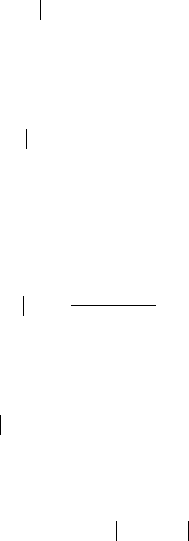
70 BIOLOGICAL SEQUENCES, SEQUENCE ALIGNMENT, AND STATISTICS
where p
x
,
y
is the probability that the characters x and y occur as an aligned
column pair in a pairwise alignment of the match model, defi ned as
PabM p
xy
,
,
()
=
∏
and q
x
is the relative frequency of the character x to occur in the sequences a
and b in the random model R , defi ned as
PabR q q
xy
,
()
=
∏∏
For both match and random models, we used the conditional probability
notation P ( A | B ). The conditional probability is the probability of some event
A , given the occurrence of some other event B , defi ned as follows:
PAB
PA B
PB
()
=
∩
()
()
Multiplying through, this becomes
PABPB PA B
()()
=∩
()
which can be generalized to
PA B C PAPBAPCA B∩∩
()
=
()( )
∩
()
In addition to similarity measures, we also mention the commonly used
distance measure that can be used as a score function for sequence alignment.
The distance measure can be defi ned for the global pairwise distance align-
ment. Let d ( a , b ) be the distance over the alphabet Σ * as follows:
1 . d ( a , a ) = 0 for all a
2 . d ( a , b ) = d ( b , a ), cost of a mutation of a into b
3 . d ( a , – ) = d ( – , a ) = g ( a ), positive cost of inserting or deleting of the char-
acter a
Defi ne
Ddab
i
i
i
L
ab,min(
*
,
*
)
()
=
=
∑
1
where the minimum is over all alignments of a with b . The main results on
global pairwise alignment are stated below.
SEQUENCE ALIGNMENT 71
Theorem 3.1 (Optimal Global Similarity Alignment) Let a = a
1
a
2
…
a
m
and
b = b
1
b
2
…
b
n
be two sequences over the alphabet Σ , defi ne
Sij Saa a bb b
ij
,,
()
=
()
12 12
and set
SSjsbSisa
k
k
j
k
k
i
00 0 0 0
11
,,, ,,, ,
()
=
()
=−
()()
=−
()
==
∑∑
Then
Sij Si j sa Si j sa b Sij s
iij
, max , , , , , , ,
()
=−
()
+−
()
−−
()
+
()
−
()
+−111 1,,b
j
()
{}
In particular,
Sab Smn,,
()
=
()
Similarly, we have
Theorem 3.2 (Optimal Global Distance Alignment) Let a = a
1
a
2
…
a
m
and
b = b
1
b
2
…
b
n
be two sequences over the alphabet Σ , defi ne
Di j Daa a bb b
ij
,,
()
=
()
12 12
and set
DDjdbDida
k
k
j
k
k
i
00 0 0 0
11
,,, ,,, ,
()
=
()
=−
()()
=−
()
==
∑∑
Then
Di j Di j da Di j da b Di j d
iij
,min , ,, , ,,,
()
=−
()
+−
()
−−
()
+
()
−
()
+−111 1,,b
j
()
{}
In particular,
Dab Dmn,,
()
=
()
We illustrate the similarity alignment by the following examples.
Example 3.1 Consider two sequences, UAUAAU and AUAUAUAU, and
score matches with a value of 2 and mismatches and indels with a value of − 1.
The matrix D i s

72 BIOLOGICAL SEQUENCES, SEQUENCE ALIGNMENT, AND STATISTICS
The optimal alignment score for these two sequences is D (6, 8) = 1 0 .
Local Alignment
Biological sequences often contain similar subsequences that are preserved
during the course of evolution. Local alignments are more useful for dissimilar
sequences that are suspected to contain regions of similarity or similar sequence
motifs within their larger sequence context. The problem of fi nding highly
related subsequences of two sequences is accomplished by local alignment.
The Smith – Waterman algorithm is a general local alignment method also
based on dynamic programming. With suffi ciently similar sequences, there is
no difference between local and global alignments. The BLAST (Basic Local
Alignment Sequence Tool) is a fast heuristic algorithm for local alignment
developed by Altschul et al. (1990) . BLAST fi nds regions of similarity. Here
we consider only the subsequences of consecutive elements. Any subsequence
of a sequence a
1
a
2
…
a
m
has the form a
i
a
i
+ 1
…
a
m
+
k
for some 1 ≤ i ≤ m and
k ≤ m − i . We present the optimal local alignment developed in the Smith –
Waterman algorithm (Smith and Waterman, 1981 ). Let a = a
1
a
2
…
a
m
and
b = b
1
b
2
…
b
n
be two sequences over the alphabet Σ . Defi ne
Sijkl Sa a b b
ijkl
,,
()
=
()
What is the maximum similarity between subsequences of a and b ? That is,
fi nd
Lab Sijkl Sa a b b i j m k l n
ijkl
, max , , ,
()
=
()
=
()
≤≤≤ ≤ ≤≤
{}
11
Theorem 3.3 (Optimal Local Alignment) Let a = a
1
a
2
…
a
m
and b = b
1
b
2
…
b
n
be two sequences over the alphabet Σ . Defi ne
Li i m,,00 0
()
=≤≤
Lj jn000,,
()
=≤≤
D
i
j
0
—
1
A
2
U
3
A
4
U
5
A
6
U
7
A
8
U
0 — 0
− 1 − 2 − 3 − 4 − 5 − 6 − 7 − 8
1 U
− 1 − 1
1 0
− 1 − 2 − 3 − 4 − 5
2 A
− 2
1 0 3 2 1 0
− 1 − 2
3 U
− 3
0 3 2 5 4 3 2 1
4 A
− 4 − 1
2 5 4 7 6 5 4
5 A
− 5 − 2
1 4 4 6 6 8 7
6 U
− 6 − 3
0 3 6 5 8 7 10