
Hogg S. Essential microbiology
Подождите немного. Документ загружается.


JWBK011-17 JWBK011-Hogg August 12, 2005 16:36 Char Count= 0
408 INDUSTRIAL AND FOOD MICROBIOLOGY
Table 17.1 Some applications of microorganisms
Food products
Alcoholic drinks
Dairy products
Bread
Vinegar
Pickled foods
Mushrooms
Single-cell protein
Products from microorganisms
Enzymes
Amino acids
Antibiotics
Citric acid
Mining industries
Metal extraction
Desulphurisation of coal
Agriculture
Microbial pesticides
Environment
Bioremediation
Wastewater treatment
Nitrogen fixation
Composting
Alcoholic fermentations
Red wine is made from
red (black) grapes only.
Both white and red
grapes may be used
in white wine, but red
grapes must first be
deskinned.
There is evidence that alcoholic drinks, including beer
and wine, were being produced thousands of years be-
fore the Christian era, making them among the earliest
known examples of the exploitation of microorganisms
by humans. Ethanol results from the fermentation pro-
cess, because the conversion of sugar to carbon dioxide
and water is incomplete:
C
6
H
12
O
6
−−−−−−−→ 2CH
3
CH
2
OH + 2CO
2
In dry wines, most of the
sugar is fermented to al-
cohol; in sweet varieties,
some sugar remains un-
fermented.
Although, in principle, wine can be made from almost
any fruit juice with a high sugar content, the vast major-
ity of commercially produced wines derive from the fer-
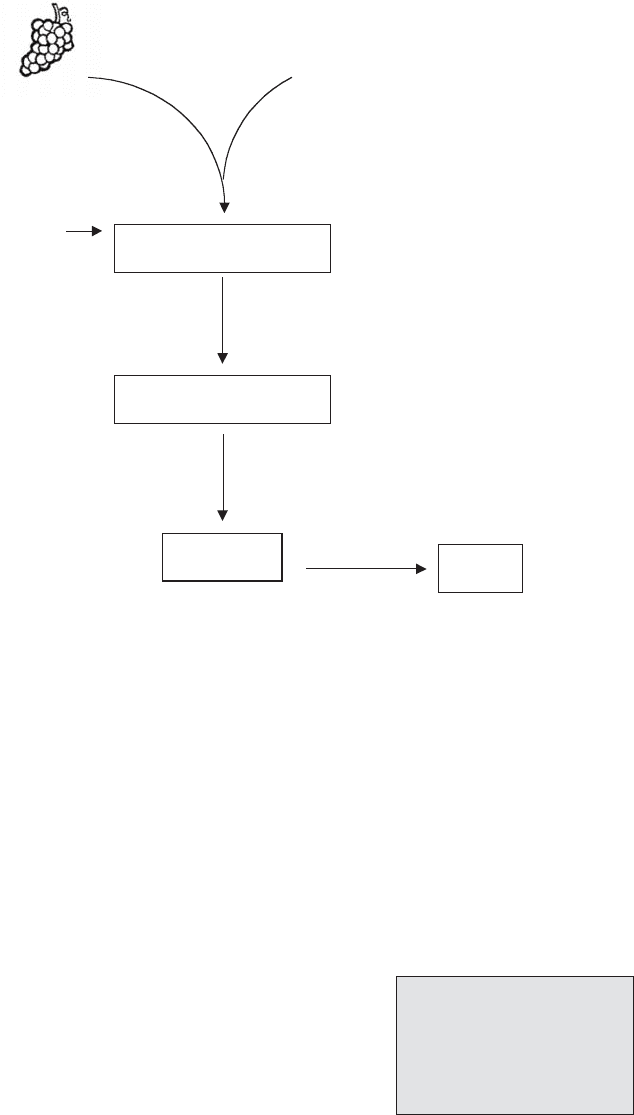
mentation of the sugar present in grapes (Figure 17.1).
Such fermentation reactions may be initiated by yeasts
naturally found on the grape skin; however the results
of such fermentations are erratic and may be unpalat-
able. In commercial winemaking the must (juice) resulting from the crushed grapes is
treated with sulphur dioxide to kill off the natural microflora, and then inoculated with
the yeast Saccharomyces cerevisiae, variety ellipsoideus. Specially developed strains are
JWBK011-17 JWBK011-Hogg August 12, 2005 16:36 Char Count= 0
MICROORGANISMS AND FOOD 409
Primary fermentation
Yeast
Secondary fermentation
Aging
Bottling
Clarifying,
filtration
Stemming,
crushing
Grapes
SO
2
treatment
Figure 17.1 Wine production. The production of red and white wines differ in certain
details, but share the main steps of crushing the grapes, fermenting their sugar content into
alcohol and ageing to allow flavour development
used, which produce a higher percentage of alcohol (ethanol) than naturally occurring
yeasts. Fermentation proceeds for a few days at a temperature of 22–27
◦
C for red
wines (lower for whites), after which the wine is separated from the skins by pressing.
This is followed by ageing in oak barrels, a process that may last several months, and
during which the flavour develops. Malolactic fermentation is a secondary fermentation
carried out on certain types of wine. Malic acid, which has a sharp taste, is converted
to the milder lactic acid, imparting smoothness to the wine.
COOH-H
2
OC-H
2
C-COOH −−−−−−−→ CH
3
-H
2
OC-OOH + CO
2
Malic acid Lactic acid
Most wines have an al-
cohol content of around
10−20 per cent. Fortified
wines have extra alcohol
added.
A secondary product of malolactic fermentation is di-
acetyl, which imparts a ‘buttery’ flavour to the wine. Spir-
its such as brandy and rum result from the products of a
fermentation process being concentrated by distillation.
This gives a much higher alcohol content than that of
wines.
JWBK011-17 JWBK011-Hogg August 12, 2005 16:36 Char Count= 0
410 INDUSTRIAL AND FOOD MICROBIOLOGY
Filtration
Filtration to
remove hops
SolidsWort
Drying,
grinding
Water
Barley
Hops
Yeast
Malting
Mashing
Water
Boiling
Fermentation
Resting
Casking
Bottling/
canning
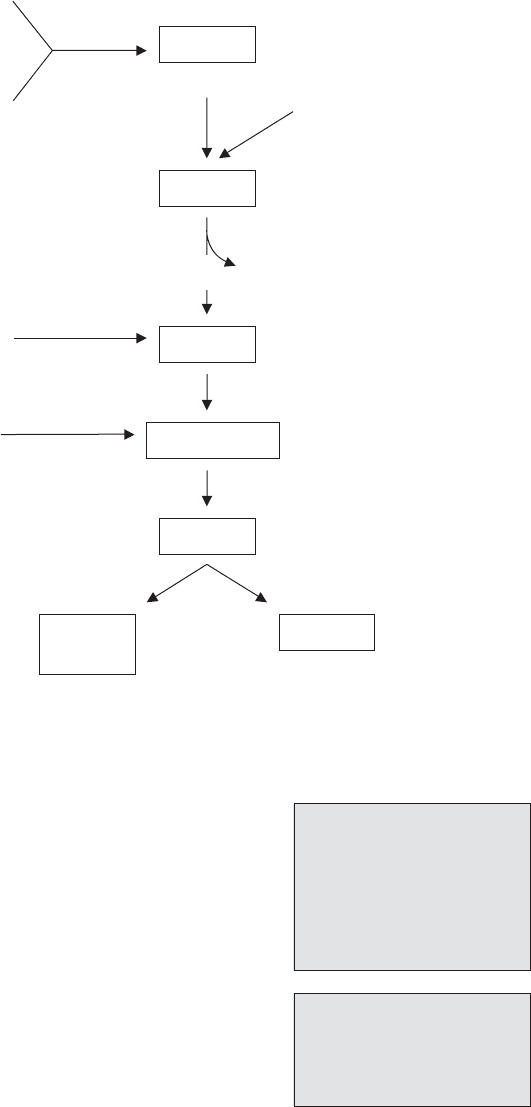
Figure 17.2 Beer production. The early stages serve to convert the carbohydrate present
in the grain into a form that can be fermented by the yeast. The details shown refer to the
production of a light, lager-type beer
Malting is the process
whereby grain is soaked
in water to initiate ger-
mination and activate
starch-digesting en-
zymes.
Beer is produced by the fermentation of barley grain.
The procedure varies according to the type of beer, but
follows a series of clearly defined steps (Figure 17.2).
Grain, unlike grapes, contains no sugar to serve as a sub-
strate for the yeast, so before fermentation can begin, it
is soaked in water and allowed to germinate. This stim-
ulates the production of the enzymes necessary for the
conversion of starch to maltose (‘malting’). An additional
Mashing releases soluble
material from the grain in
preparation for fermen-
tation.
source of starch may be introduced during the next stage,
mashing, in which the grains are ground up in warm wa-
ter, and further digestion takes place. The liquid phase
or wort is drained off and hops are added. They im-
part flavour and colour to the finished product and also

JWBK011-17 JWBK011-Hogg August 12, 2005 16:36 Char Count= 0
MICROORGANISMS AND FOOD 411
possess antimicrobial properties, thereby helping to prevent contamination. The mixture
is boiled, inactivating the enzymes, precipitating proteins and killing off any microor-
ganisms. In the next stage, the wort is filtered and transferred to the fermentation vessel
where yeast is introduced.
Hops are the dried flow-
ers of a type of vine. They
were originally added to
beer because of their
antimicrobial properties,
but were soon found to
improve the flavour too!
Hops are added to the
wort after boiling.
Two species of yeast are commonly used in the brewing
process, both belonging to the genus Saccharomyces. S.
cerevisiae is mainly used in the production of darker beers
such as traditional English ales and stouts, whereas S.
carlsbergensis (no prizes for guessing where this one was
developed!) gives lighter coloured, less cloudy, lager-type
beers. Cells of S. cerevisiae are carried to the surface of the
fermentation by carbon dioxide bubbles (top fermenters),
while S. carlsbergensis cells form a sediment at the bottom
(bottom fermenters). ‘Spent’ yeast may be dried, and used
as an animal food supplement.
Fermentation takes about a week to complete, at a temperature appropriate for each
type of yeast (S. carlsbergensis prefers somewhat lower temperatures than S. cerevisiae).
Following fermentation, the beer is allowed to age or ‘rest’ for some months in the cold.
Beers destined for canning or bottling are filtered to remove remaining microorganisms.
Beers typically have an alcohol content of around 4 per cent. Small amounts of other
secondary products such as amyl alcohol and acetic acid are also produced, and con-
tribute to the beer’s flavour. ‘Light’ or low-carbohydrate beers are produced by reducing
the levels of complex carbohydrates. The yeast do not possess the enzymes necessary to
cope with these branched molecules, so a supplement of debranching enzymes may be
added to aid their breakdown.
Dairy products
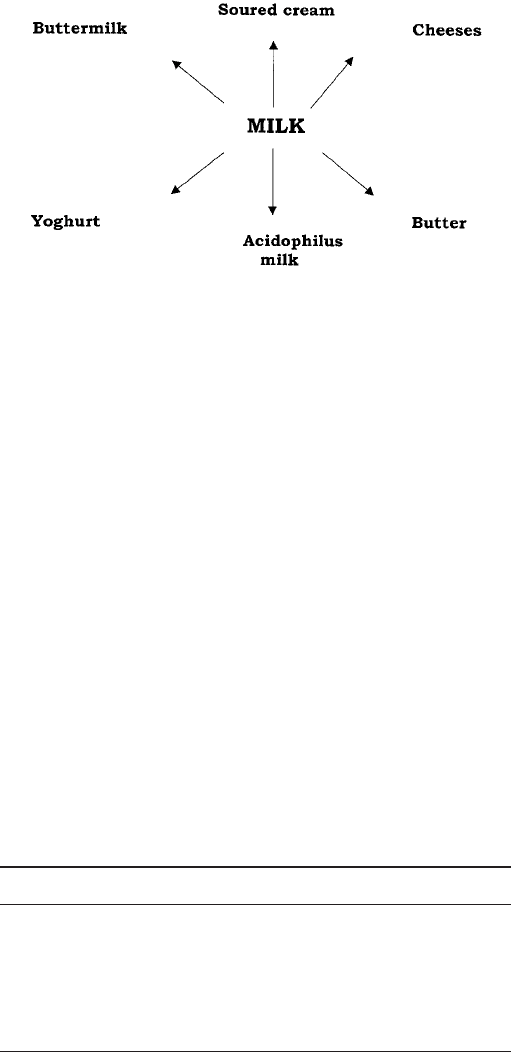
Milk can be fermented to produce a variety of products, including butter, yoghurt and
cheese (Figure 17.3). In each case, acid produced by the fermentation process causes
coagulation or curdling of the milk proteins.
Rennin is traditionally de-
rived from the stomachs
of calves, but nowadays
is more frequently the
product of genetically
engineered bacteria, al-
lowing its consumption
even by strict vegetari-
ans.
In cheese-making, this coagulation is effected by the
addition of the protease rennin, or by the action of lac-
tic acid bacteria (especially Streptococcus lactis and
S. cremoris). Coagulation allows the separation of the
semisolid curd from the liquid whey. The subsequent
steps in the cheese-making process depend on the spe-
cific type of cheese (Table 17.2). Following separation,
the curd of most cheeses is pressed and shaped, removing
excess liquid and firming the texture. During the ripening
process, salt is often added, and flavour develops due to
continuing microbial action on the protein and fat com-
ponents of the cheese. In some cases, a fresh inoculation of microorganisms is made at
this point, such as the addition of Penicillium spores to Camembert and Brie. The length
of the ripening period varies from a month to more than a year according to type, with
the harder cheeses requiring the longer periods.
JWBK011-17 JWBK011-Hogg August 12, 2005 16:36 Char Count= 0
412 INDUSTRIAL AND FOOD MICROBIOLOGY
Figure 17.3 Fermented dairy products. Fermentation is initiated by the inoculation of a
starter culture of lactic acid bacteria to convert lactose to lactic acid. Heterolactic fermenters
such as Leuconostoc are added when aromatic flavouring compounds such as diacetyl are
required
Yoghurt is another milk derivative. Thickened milk is exposed to the action of two
bacteria, Streptococcus thermophilus and Lactobacillus bulgaricus, both of which fer-
ment lactose present in milk into lactic acid. In addition, L. bulgaricus contributes
aromatics responsible for imparting flavour to the yoghurt.
Other dairy products, such as soured cream and buttermilk, are also produced by
means of the fermentative properties of species of streptococci and lactobacilli.
Bread
The biological agent responsible for bread production is yeast. In fact baker’s yeast and
brewer’s yeast are just different strains of the same species, Saccharomyces cerevisiae.In
breadmaking, aerobic, rather than anaerobic conditions are favoured, so sugar present
in the dough is converted all the way to carbon dioxide rather than to alcohol. It is this
Table 17.2 Types of cheese
Soft Semisoft Semihard Hard
Unripened Roquefort Cheddar Parmesan
Mozzarella Stilton Emmentaler Pecorino
Cottage
Ripened
Camembert
Brie
Cheeses are classified according to their texture. Unripened cheeses are
those that have not undergone the ageing or ripening process, during
which additional flavours develop.

JWBK011-17 JWBK011-Hogg August 12, 2005 16:36 Char Count= 0
MICROORGANISMS AS FOOD 413
Table 17.3 Fermented food products
Product Source Fermentative microorganisms
Sauerkraut Cabbage Leuconostoc brevis, Lactobacillus
plantarum
Olives Olives Leuconostoc brevis, Lactobacillus
plantarum, Lactobacillus brevis
Pepperoni Ground beef, pork Lactobacillus plantarum, Pediococcus
pentosaceus
Pickles Cucumber Leuconostoc brevis, Lactobacillus
plantarum, Pediococcus spp.
Soy sauce Soybean curd Aspergillus oryzae, Saccharomyces
rouxii, Pediococcus soyae
Tempeh* Soybean Rhizopus oligosporus
Kombucha Tea Gluconobacter, Saccharomyces, etc.
Sake Rice Aspergillus oryzae, Saccharomyces
cerevisiae
Vinegar Wine, cider Acetobacter, Gluconobacter
Cocoa, chocolate Cacao beans Saccharomyces cerevisiae, Candida
rugosa, Acetobacter, Geotrichum
* Tempeh is a solid fermented soya bean cake that forms an important part of the diet of many Indonesians.
that causes the bread to rise. Any small amount of ethanol that may be produced is
evaporated during the baking process.
Many other popular foodstuffs are the result of microbial fermentation processes (see
Table 17.3). These include vinegar, soy sauce and sauerkraut. Silage is animal fodder
made from the fermentation of grass and other plant material by the action of lactic
acid bacteria.
Microorganisms as food
As we have seen in the previous section, a number of microorganisms are involved in the
production of food products. Others, however, are foodstuffs! Perhaps the most obvious
of these are mushrooms, the stalked fruiting bodies of certain species of basidiomycete
(see Chapter 8), notably Agaricus bisporus. These are grown in the dark at favourable
temperatures, in order to stimulate the production of fruiting bodies. Another fungus,
Fusarium forms the basis of Quorn
TM
, a processed mycoprotein that has been used as a
meat substitute for some years in the UK. Whereas mushrooms are grown as agricultural
products, Quorn
TM
must be produced under highly regulated sterile conditions. Other
microbial food sources include certain algae (seaweed), which form an important part
of the diet in some parts of the world, and bacteria and yeast grown in bulk as single-cell
protein (SCP) for use as a protein-rich animal food supplement. The cyanobacterium
Spirulina has been collected from dried-up ponds in parts of central Africa for use as
a food supplement since time immemorial and is now available at health stores in the
West.
JWBK011-17 JWBK011-Hogg August 12, 2005 16:36 Char Count= 0
414 INDUSTRIAL AND FOOD MICROBIOLOGY
The microbial spoilage of food
We have described in previous chapters the nutritional versatility of microorganisms
and their role in the global recycling of carbon. Unfortunately for us, fresh foods such
as meats, fruit and vegetables provide a rich source of nutrients, which a wide range of
heterotrophic microorganisms find just as attractive as we do. Certain microbial types
are associated with particular foodstuffs, depending on their chemical composition and
physical factors such as pH and water content. Acidic foods such as fruits, for example,
tend to favour the growth of fungi rather than bacteria.
Often, spoilage organisms come from the same source as the food, for example
soil on vegetables, or meat exposed to intestinal contents following slaughter. Others
are introduced as contaminants during transport, storage or preparation. Among the
most commonly found spoilage organisms are a number of human pathogens, includ-
ing Pseudomonas, Salmonella, Campylobacter and Listeria. Thus, although microbial
spoilage may merely lead to foodstuffs being rendered unpalatable, it can also result
in serious and even fatal illness (‘food poisoning’). Whilst observable changes to food-
stuffs are only likely after the microbial population has reached a considerable size,
food poisoning can result from the presence of much smaller numbers of contaminants.
Some foodstuffs are more susceptible to spoilage than others: fresh items such as meat,
fish, dairy produce and fruit and vegetables are all highly perishable. Foods such as rice
and flour, on the other hand, are much more resistant, because having no water content
they do not provide suitable conditions for microbial growth. Drying is one of a number
of methods of food preservation, all designed to prevent growth of microorganisms
by making conditions unfavourable. Other methods include heating/canning, drying,
pickling, smoking and, in many countries, irradiation.
Microorganisms in the production of biochemicals
Many products of microbial metabolism find an application in the food and other in-
dustries. These include amino acids, steroids, enzymes and antibiotics (Table 17.4).
Microbial growth conditions are adjusted so that production of the metabolite in ques-
tion takes place at an optimal rate. Often an unnaturally high rate of production is
achieved by the use of a mutated or genetically engineered strain of microorganism, or
by manipulating culture conditions to favour excess metabolite production.
The development of a microbial means of producing acetone was vital to the allied
effort in the First World War. Acetone was a crucial precursor in explosives manufacture
and the demands of war soon outstripped supply by traditional methods. The problem
was solved when Chaim Weismann isolated a strain of Clostridium acetobutylicum that
could ferment molasses to acetone and butanol (another industrially useful product).
Nowadays, acetone is made more cheaply from petrochemicals.
Microbially produced amino acids are used in the food industry, in medicine and
as raw materials in the chemical industry. The one produced in the greatest quantities
by far is glutamic acid (in excess of half a billion tonnes per year), with most of it
ending up as the flavour enhancer monosodium glutamate. The amino acids aspartic
acid and phenylalanine are components of the artificial sweetener aspartame and are
also synthesised on a large scale.

JWBK011-17 JWBK011-Hogg August 12, 2005 16:36 Char Count= 0
MICROORGANISMS IN THE PRODUCTION OF BIOCHEMICALS 415
Table 17.4 Some industrial applications of microbially produced enzymes
Industry Enzyme Application
Food & drink Rennin Cheese manufacture
Lipase
Pectinase Fruit juice production
Coffee bean extraction
Amylase Improved bread dough quality
Haze removal in beer
Amylase Fructose syrup production
Glucoamylase
Glucose isomerase
Animal feed Amylase Improved digestibility
Cellulase
Protease
Detergent Protease Stain and grease removal
Lipase
Amylase
Cellulase Fabric softener
Paper Cellulase Pulp production
Textile Cellulase ‘Stone-washed’ jeans
Leather Protease Dehairing, softening, fat
Lipase removal
Molecular biology Taq polymerase Polymerase chain reaction
A number of organic acids are produced industrially by microbial means, most no-
tably citric acid, which has a wide range of applications in the food and pharmaceutical
industries. This is mostly produced as a secondary metabolite by the large-scale culture
of the mould Aspergillus niger.
Certain microorganisms serve as a ready source of vitamins. In many cases these
can be synthesised less expensively by chemical means; however, riboflavin (by the
mould Ashbya gossypii) and vitamin B
12
(by the bacteria Propionibacterium shermanii
and Pseudomonas denitrificans) are produced by large-scale microbial fermentation.
Microorganisms play a partial role in the production of ascorbic acid (vitamin C).
Initially, glucose is reduced chemically to sorbitol, which is then oxidised by a strain of
Acetobacter suboxydans to the hexose sorbose. Chemical modifications convert this to
ascorbic acid (Figure 17.4).
If you wear contact
lenses, you have prob-
ably used an enzyme
preparation to remove
protein deposits.
Enzymes of fungal and bacterial origin have been
utilised for many centuries in a variety of processes. It
is now possible to isolate and purify the enzymes needed
for a specific process and the worldwide market is cur-
rently worth around a billion pounds. The most useful
industrial enzymes include proteases, amylases, lipases

JWBK011-17 JWBK011-Hogg August 12, 2005 16:36 Char Count= 0
416 INDUSTRIAL AND FOOD MICROBIOLOGY
CH
2
OH CH
2
OH
CH
2
OH
CH
2
OH O C
HO CH
O
CH
Chemical Biological Chemical
HC
CH
HC O
D-Glucose D-Sorbitol L-Sorbitol L-Ascorbic Acid
HO
OH
HO
O
HO CH
CH
HC
CH
HO
OH
HO
CH
2
OH
C
CH
HC
CH
HO
OH
HO
OH
CH
2
OH
C
HC
CH
HO
OH
C
Figure 17.4 Ascorbic acid is produced by a combination of chemical and microbial reac-
tions Most steps in the synthesis of ascorbic acid are purely chemical, but the conversion
of sorbitol to sorbose is carried out by the sorbitol dehydrogenase enzyme of Acetobacter
suboxydans, with NAD
+
acting as an electron acceptor
and pectinase (Table17.4). Some applications of enzymes are listed in Table 17.5, and
two examples are briefly described below.
Syrups and modified starches are used in a wide range of foodstuffs, including soft
drinks, confectionery and ice cream, as well as having a wealth of other applications.
Different enzymes or combinations of enzymes are used to produce the desired consis-
tencies and physical properties. High fructose corn syrup (HFCS) is a sweetener used in
a multitude of food products. It is some 75 per cent sweeter than sucrose and has sev-
eral other advantages. HFCS is a mixture of fructose, dextrose (a form of glucose) and
disaccharides, and is produced by the action of a series of three enzymes on the starch
(amylose and amylopectin) of corn (maize). Alpha amylase hydrolyses the internal α-1,
4-glycosidic bonds of starch, but is not able to degrade ends of the chain. The resulting
di- and oligosaccharides are broken down to the monomer glucose by the action of
glucoamylase, then finally glucose isomerase converts some of the glucose to its isomer,
fructose.
Enzymes have been added to cleaning products such as washing powders, carpet
shampoos and stain removers since the 1960s, and this remains one of the principal
Table 17.5 Commercially useful products of microbial metabolism
Product Use
Amino acids:
Glutamic acid Flavour enhancer
Lysine Animal feed additive
Aspartic acid & phenylalanine Artificial sweetener (aspartame)
Citric acid Antioxidant, flavour enhancer, emulsifier
Enzymes Numerous – see Table 17.4
Antibiotics Treatment of infectious diseaases
Vitamins Dietary supplements
Steroids Anti-inflammatory drugs, oral
contraceptives
JWBK011-17 JWBK011-Hogg August 12, 2005 16:36 Char Count= 0
MICROORGANISMS IN THE PRODUCTION OF BIOCHEMICALS 417
industrial applications of enzymes. Proteases are the most widely used enzymes in this
context; working in combination with a surfactant, they hydrolyse protein-based stains
such as blood, sweat and various foods. Greasy and oily stains present a different
challenge, made all the more difficult by the move towards lower washing temperatures.
The inclusion of lipases aids the removal of stains such as butter, salad dressing and
lipstick, while amylases deal with starch-based stains such as cereal or custard. The
food and detergent industries between them account for around 80 per cent of all
enzyme usage.
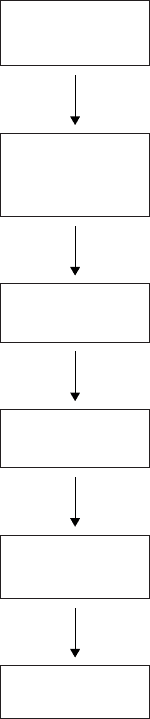
We have already seen in Chapter 14 that antibiotics are now produced on a huge scale
worldwide. Figure 17.5 outlines the stages in the isolation, development and production
of an antibiotic.
Isolating an antibiotic from a natural source is not all that difficult, but finding a new
one that is therapeutically useful is another matter. Initially, the antimicrobial properties
of a new isolate are assessed by streaking it across an agar plate, then inoculating a range
Isolation and
purification
Assessment of
antimicrobial
efficiency
Small-scale
production
Toxicity testing
Pilot-scale
production
Clinical trials
Figure 17.5 Stages in the isolation and development of an antibiotic. See the text for details