
Hogg S. Essential microbiology
Подождите немного. Документ загружается.


JWBK011-15 JWBK011-Hogg August 12, 2005 16:33 Char Count= 0
378 MICROBIAL ASSOCIATIONS
Table 15.1 Types of symbiotic association
Association Species A Species B
Mutualism ++
Protocooperation ++
Commensalism −+
Parasitism x +
Participants in symbiosis may derive benefit, harm or neither from the association. +
denotes benefit, x denotes harm and – denotes neither.
this, and would thus starve to death if the protozoans were not present. In return, they
are able to provide the anaerobic conditions required by the protozoans to ferment
the cellulose to acetate, carbon dioxide and hydrogen. The acetate is then utilised as a
carbon source by the termites themselves.
The total global amount
of methane production
by termites is compara-
ble to that generated by
ruminants.
In addition to the protozoans, anaerobic bacteria
resident in the hindgut also play an important role
in the metabolism of the termites. Acetogenic and
methanogenic species compete for the carbon dioxide
and hydrogen produced by the protozoans. The former
contribute more acetate for the termite to use, whilst
the latter produce significant amounts of methane. Some
methanogens exist as endosymbionts within the protozoans.
In other types of termite, no resident population of cellulose digesters is present.
Instead, the termite ingests a fungus, which provides the necessary cellulolytic enzymes.
Another example of a host’s staple diet being indigestible without the assistance of res-
ident microorganisms is provided by the brightly coloured African bird the honey guide.
The honey guide eats beeswax, and relies on a two-stage digestion process by bacteria
(Micrococcus cerolyticus) and yeast (Candida albicans) to render it in a usable form.
At the bottom of the deepest oceans, around geothermal vents, live enormous (two
metres or more) tube worms belonging to the genus Riftia. These lack any sort of diges-
tive system, but instead contain in their body cavity a tissue known as the trophosome.
This comprises vascular tissue plus cells packed with endosymbiotic bacteria. These are
able to generate ATP and NADPH by the oxidation of hydrogen sulphide generated by
Table 15.2 Microorganism–animal associations
Microorganism Animal Type of relationship
Anaerobic bacteria Ruminants Mutualism
Flagellated protozoans Termites Mutualism
Sulphur-oxidising bacteria Riftia (marine tube worm) Mutualism
Luminescent bacteria Fish, molluscs Mutualism
Bacteria, yeasts Honey guide (bird) Mutualism
Fungus Leaf cutter ants Protocooperation
Resident bacteria of skin,
large intestine, etc.
Humans Commensalism

JWBK011-15 JWBK011-Hogg August 12, 2005 16:33 Char Count= 0
MICROBIAL ASSOCIATIONS WITH PLANTS 379
Table 15.3 Microorganism–plant associations
Microorganism Plant Type of relationship
N
2
-fixing bacteria Legumes Mutualism
Mycorrhizal fungi Various Mutualism
Agrobacterium
tumefaciens
Various Parasitism (Crown gall
disease)
Acremonium
(fungus)
Grass Mutualism
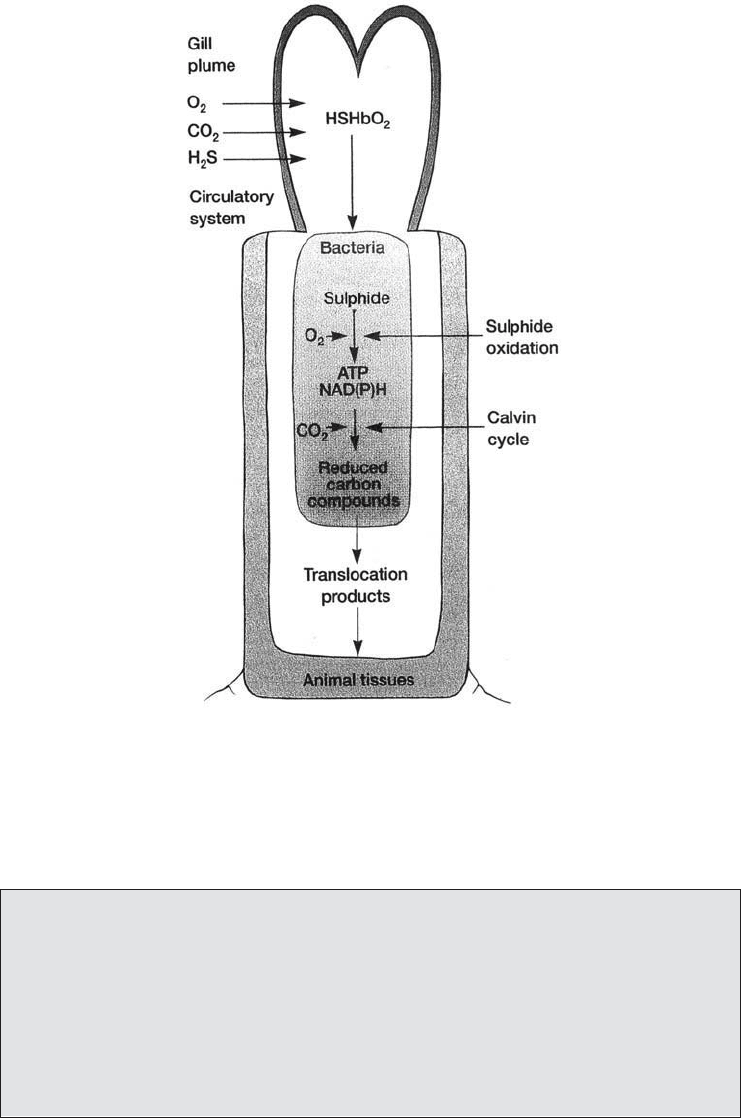
volcanic activity and fix carbon dioxide via the Calvin cycle, providing the worm with a
supply of organic nutrients. Hydrogen sulphide is transported to the trophosome from
the worm’s gill plume by a form of haemoglobin present in its blood (Figure 15.1).
Warm-blooded animals such as humans play host in their lower intestinal tract to
vast populations of bacteria. Although some of these are capable of producing useful
metabolites such as vitamin K, most live as commensals, neither benefiting nor harming
their host. It could be argued, however, that the very presence of the resident intestinal
microflora acts as an important defence against colonisation by pathogens, thus making
the association more one of mutualism.
A number of bacteria, viruses, fungi, protozoans and even algae act as pathogens in
animals, and cause millions of human deaths every year. A detailed description of these
falls outside of the scope of this introductory text, however examples of diseases caused
by each group are described in Chapters 7 to 10.
Microbial associations with plants
A mycorrhiza is a mu-
tually beneficial associa-
tion between plant roots
and a species of fungus.
The roots of almost all plants form mutualistic associ-
ations with fungi, known as mycorrhizae, which serve
to enhance the uptake of water and mineral nutrients,
especially phosphate, by the plants. The beneficial effect
of a mycorrhizal association is particularly noticeable
in soils with a poor phosphorus content. In return, the
The rhizosphere is the re-
gion around the surface
of a plant’s root system.
plant supplies reduced carbon in the form of carbohy-
drates to the fungi. Unlike other plant–microorganism
interactions that occur in the rhizosphere, mycor-
rhizal associations involve the formation of a distinct,
Table 15.4 Microorganism–microorganism associations
Microorganism Microorganism Type of relationship
Fungi Alga/blue green Mutualism (Lichen)
Amoeba,
flagellates
Methanogenic
archaea
Mutualism
JWBK011-15 JWBK011-Hogg August 12, 2005 16:33 Char Count= 0
380 MICROBIAL ASSOCIATIONS
Figure 15.1 Symbiosis in Riftia, the giant tube worm. Found in deep-sea hydrothermal
vents, Riftia acts as host to sulphur-oxidising bacteria. Energy and reducing power derived
from sulphide oxidation are used to fix CO
2
via the Calvin cycle and provide the worm
with organic carbon. From Prescott, LM, Harley, JP & Klein, DA: Microbiology 5th edn,
McGraw Hill, 2002. Reproduced by permission of the publishers
Box 15.1 Once bitten, twice shy
The fungus Acremonium derives reduced carbon compounds and shelter by living
within the tissues of the grass Stipa robusta, and in return deters animals from grazing
on it. It does this by producing various alkaloids which, ingested in sufficient amounts,
are powerful enough to send a horse to sleep for several days! The horse clearly does
not relish the experience, as it avoids the grass thereafter. The Acremonium passes to
future generations through the seeds, so the relationship between plant and fungus
is perpetuated. The nickname of ‘sleepy grass’ is self-explanatory!

JWBK011-15 JWBK011-Hogg August 12, 2005 16:33 Char Count= 0
MICROBIAL ASSOCIATIONS WITH PLANTS 381
Fungal hypha
Vesicle
Arbuscle
Figure 15.2 Endomycorrhizae. Section through a plant root colonised by an endomycor-
rhizal fungus. Note the spreading, ‘tree-like’ arbuscles
integrated structure comprising root cells and fungal hyphae. In ectomycorrhizae the
plant partner is always a tree; the fungus surrounds the root tip, and hyphae spread
between (but do not enter) root cells. In the case of the more common endomycor-
rhizae, the fungal hyphae actually penetrate the cells by releasing cellulolytic enzymes.
Arbuscular mycorrhizae are found in practically all plant types, including ‘lower’ plants
(mosses, ferns). They form highly branched arbuscules within the root cells that gradu-
ally lyse, releasing nutrients into the plant cells (Figure 15.2). In contrast to pathogenic
fungi, mycorrhizal fungi are often rather non-specific in their choice of ‘partner’ plant.
An interesting example of mutualistic association concerns the endophytic (=‘inside
plant’) fungus Acremonium (Box 15.1).
The ability of crop plants to thrive is frequently limited by the supply of available
nitrogen; although there is a lot of it in the atmosphere, plants are unable to utilise it,
and instead must rely on an inorganic supply (both naturally-occurring and in the form
of fertilisers). As we saw in Chapter 7, however, certain bacterial species are able to
‘fix’ atmospheric nitrogen into a usable form. Some of these, notably Rhizobium spp.
form a mutualistic relationship with leguminous plants such as peas, beans and clover,
converting nitrogen to ammonia, which the legume can incorporate into amino acids.
In return, the bacteria receive a supply of organic carbon, which they can use as an
energy source for the fixation of nitrogen.
Root nodules are
tumour-like growths on
the roots of legumes,
where nitrogen fixation
takes place.
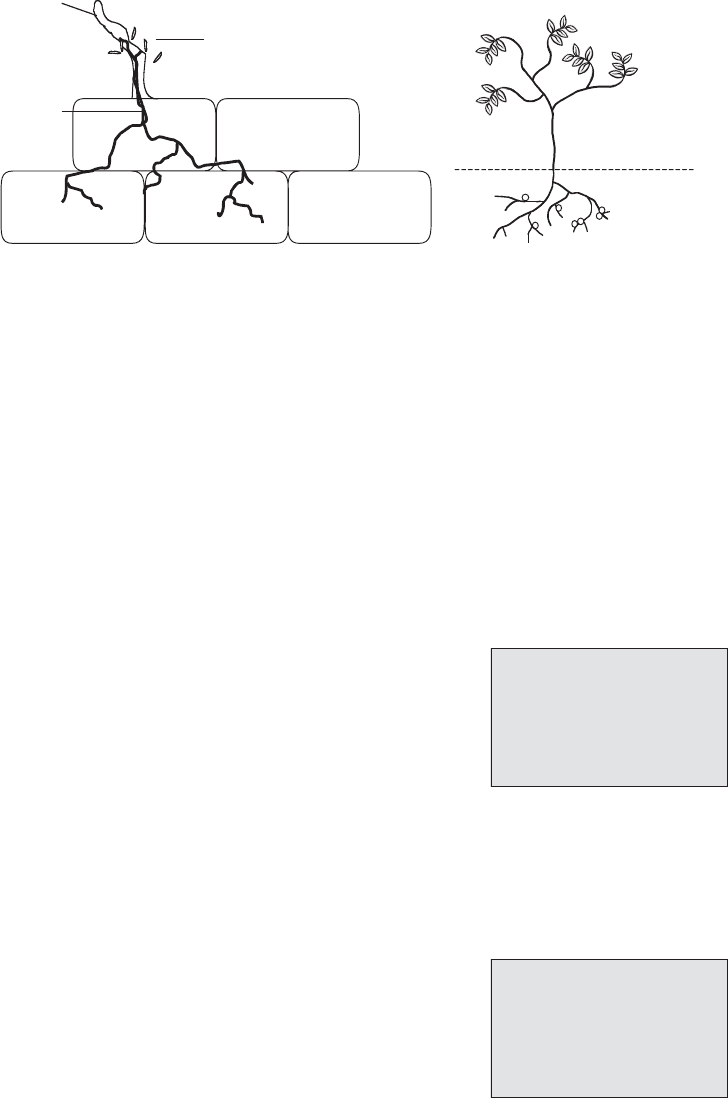
The free-living Rhizobium enters the plant via its root
hairs, forming an infection thread and infecting more
and more cells (Figure 15.3). Normally rod-shaped,
they proliferate as irregularly-shaped bacteroids, densely
packing the cells and causing them to swell, forming root
nodules.
Rhizobium requires oxygen as a terminal electron acceptor in oxidative phosphory-
lation, but as you may recall from Chapter 7, the nitrogenase enzyme, which fixes the
nitrogen, is sensitive to oxygen. The right microaerophilic conditions are maintained
JWBK011-15 JWBK011-Hogg August 12, 2005 16:33 Char Count= 0
382 MICROBIAL ASSOCIATIONS
b)
Root nodules
Root hair
Rhizobium cells
Infection
thread
a)
Figure 15.3 Nitrogen-fixing bacteria form root nodules in legumes. (a) Rhizobium cells
attach to root hairs and penetrate, forming an infection thread and spreading to other root
cells. (b) Root nodule formation.
by means of a unique oxygen-binding pigment, leghaemoglobin. This is only synthe-
sised by means of a collaboration between both partners. Nitrogen fixation requires
a considerable input of energy in the form of ATP (16 molecules for every molecule
of nitrogen), so when ammonia is in plentiful supply the synthesis of the nitrogenase
enzyme is repressed.
Farmers have long recognised the value of incorporating a legume into a crop rotation
system; the nodules left behind in the soil after harvesting the crop appreciably enhance
the nitrogen content of the soil.
Legumes are not the only plants able to benefit from the nitrogen-fixing capabilities of
bacteria. The water fern Azolla, which grows prolifically in the paddy fields of southeast
Unlike higher plants,
ferns do not possess true
roots, stems and leaves.
The structure equivalent
to a leaf is called a frond.
Asia, has its nitrogen supplied by the blue-green bac-
terium Anabaena. When the fern dies, it acts as a natu-
ral fertiliser for the rice crop. Anabaena does not form
root nodules, but takes up residence in small pores in the
Azolla fronds. Nitrogen fixation takes place in hetero-
cysts, specialised cells whose thick walls slow down the
rate at which oxygen can diffuse into the cell, providing
appropriate conditions for the oxygen-sensitive nitrogenase.
The alder tree (Alnus spp.) is able to grow in soils with poor nitrogen content due
to its association in root nodules with the nitrogen-fixing actinomycete Frankia. The
filamentous Frankia solves the problem of nitrogenase’s sensitivity to oxygen by com-
partmentalising it in thick-walled vesicles at the tips of its hyphae, which serve the same
function as the heterocysts of Anabaena.
Organisms that grow on
the surface of a plant
are called epiphytes.
They frequently live as
commensals.
Many microorganisms, particularly bacteria and
yeasts, are to be found living as harmless commensals
on the surface structures (leaves, stem, fruits) of plants.
Plant disease may be caused by viruses, bacteria, fungi
or protozoans. These frequently have an impact on hu-
mans, especially if the plant affected is a commercially
important crop. Occasionally the effect on a human

JWBK011-15 JWBK011-Hogg August 12, 2005 16:33 Char Count= 0
MICROBIAL ASSOCIATIONS WITH OTHER MICROORGANISMS 383
Table 15.5 Some microbial diseases of plants
Causative agent Type of microorganism Host Disease
Heterobasidion Fungus Pine trees Heart rot
Ceratocystis Fungus Elm trees Dutch elm disease
Puccinia graminis Fungus Wheat Wheat rust
Phytophthora infestans Water mould Potato Potato blight
Erwinia amylovera Bacterium Apple, pear tree Fire blight
Pseudomonas syringae Bacterium Various Chlorosis
Agrobacterium Bacterium Various Crown gall disease
Tobacco mosaic virus Virus Tobacco Tobacco mosaic disease
population can be catastrophic, as with the Irish famine of the 1840s brought about by
potato blight. A number of microbial diseases of plants are listed in Table 15.5.
We have already encountered the soil bacterium Agrobacterium tumefaciens in Chap-
ter 12, where we saw how it has been exploited as a means of genetically modifying
plants. A. tumefaciens is useful for introducing foreign DNA because it is a natural
pathogen of plants, entering wounds and causing crown gall disease, a condition char-
acterised by areas of uncontrolled growth, analogous to tumour formation in animals.
This proliferation is caused by the expression within the plant cell of genes that en-
code the sequence for enzymes involved in the synthesis of certain plant hormones. The
genes are carried on the T-DNA, part of an A. tumefaciens plasmid, which integrates
into a host chromosome. Also on the T-DNA are genes that code for amino acids called
opines. These are of no value to the plant, but are utilised by the A. tumefaciens as a
food source.
Microbial associations with other microorganisms
A lichen is a mutually
beneficial association
between a fungus and
an alga or cyanobac-
terium (blue-green).
The most familiar example of mutualism between mi-
croorganisms is that of lichens, which comprise a close
association between the cells of a fungus (usually be-
longing to the Ascomycota) and a photosynthetic alga or
cyanobacterium. Although many different fungal species
may take part in lichens, only a limited number of algae
or cyanobacteria do so. Lichens are typically found on
exposed hard surfaces such as rocks, tree bark and roofs, and grow very slowly at a
rate of a millimetre or two per year. They often occupy particularly harsh environments,
from the polar regions to the hottest deserts. The photosynthetic partner usually exists
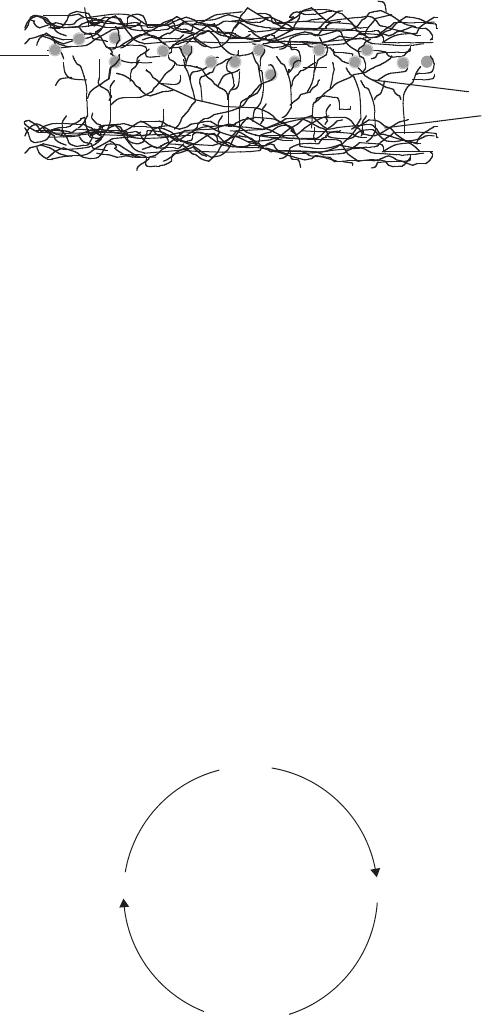
as a layer of cells scattered among fungal hyphae (Figure 15.4). Often unicellular, it fixes
carbon dioxide as organic matter, which the heterotrophic fungus absorbs and utilises.
The fungal member provides anchorage and supplies inorganic nutrients and water, as
well as protecting the alga from excessive exposure to sunlight.
Although lichens are tolerant of extremes of temperature and water loss, they have
a well-known sensitivity to atmospheric pollutants such as the oxides of nitrogen and
JWBK011-15 JWBK011-Hogg August 12, 2005 16:33 Char Count= 0
384 MICROBIAL ASSOCIATIONS
A
lgal
cell
Fungal
hyphae
Figure 15.4 Algae and fungi combine to form lichens. Algal cells are embedded in among
the fungal hyphae just below the surface, where light is able to penetrate. Organic carbon
and oxygen produced by photosynthesis are used by the fungus, whilst it provides water,
minerals and shelter for its algal partner
sulphur. Their presence in an urban setting is therefore a useful indicator of air quality.
Lichens were used for many years as a source of brightly coloured dyes for the textile
industry; they are also used in the perfume industry. The dye used in litmus paper is
derived from a lichen, belonging to the genus Roccella.
It should be stressed that lichens are not just a mixture of fungal and algal cells. They
are distinctive structures with properties not possessed by either of their component
species. Indeed, the relationship between the two partners of a lichen is so intimate
that the composite organisms are given taxonomic status. Many thousands of species
of lichen have been identified.
As noted in the definitions at the beginning of this chapter, a mutualistic relationship
need not always be as intimate and essential to both partners as it is in a lichen. The
sulphate-reducing bacteria Desulfovibrio, for example, can obtain the sulphate and
organic substrates it needs from the photosynthetic purple sulphur bacterium Chro-
matium, which in turn receives the carbon dioxide and hydrogen sulphide it requires
(Figure 15.5). This protocooperation is not essential to either bacterium, however, as
each can satisfy its requirements by alternative means. In another bacterial relationship,
CO
2
,
H
2
S
Chromatiu
m
SO
2
,
Organic C
Desulfovibrio
Figure 15.5 Protocooperation in bacteria. The sulphate-reducing Desulfovibrio and the
sulphur-oxidising Chromatium can supply each other with the raw materials required for
energy production. Neither is completely dependent on the association
JWBK011-15 JWBK011-Hogg August 12, 2005 16:33 Char Count= 0
MICROBIAL ASSOCIATIONS WITH OTHER MICROORGANISMS 385
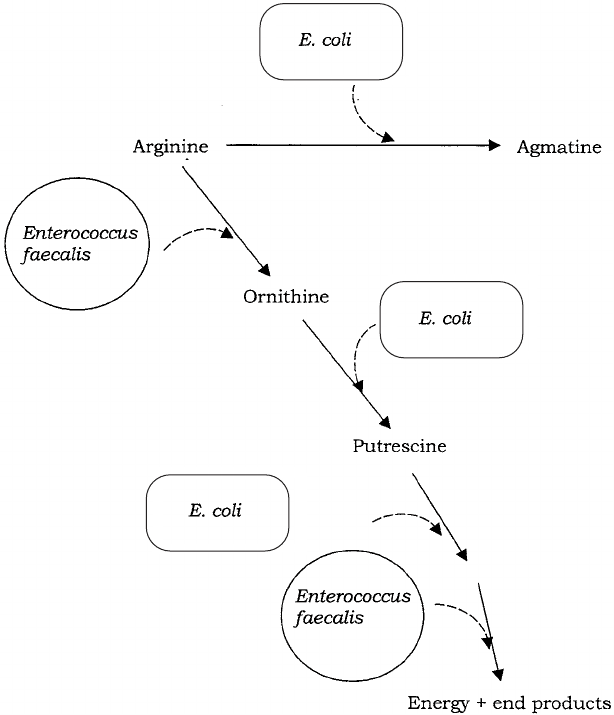
Figure 15.6 Protocooperation can make available an otherwise unutilisable substrate. In-
dividually, neither Enterococcus faecalis nor E. coli is able to utilise arginine; however,
working together they can convert it into putrescine, which can then be metabolised further
by either organism to produce energy
the gut bacteria E. coli and Enterococcus faecalis cooperate to utilise arginine. As shown
by Figure 15.6, neither can usefully metabolise this amino acid on its own; however,
neither is dependent on the reaction.
Commensal relationships, in which one partner benefits and neither suffer, are com-
mon among microorganisms; such associations are rarely obligatory. A common basis
for microbial commensalism is for one partner to benefit as a coincidental consequence
of the normal metabolic activities of the other. Thus, one may excrete vitamins or amino
acids that can be utilised by the other, or a facultative anaerobe may assist its obligate
anaerobe neighbour by removing oxygen from the atmosphere, thus providing the con-
ditions for the latter to grow.

JWBK011-15 JWBK011-Hogg August 12, 2005 16:33 Char Count= 0
386 MICROBIAL ASSOCIATIONS
The nature of a role played by an organism in a symbiotic relationship may alter
according to the prevailing conditions. In a soil already rich in nitrogen, for example,
the legume derives no benefit from the Rhizobium, which is then more accurately classed
as a parasite, as it continues to utilise organic carbon produced by the plant. In humans,
An endoparasite fully
enters its host and lives
inside it. An ectoparasite
attaches to the outside
of the host.
harmless gut symbionts such as E. coli can become
opportunistic pathogens, and cause infections if intro-
duced to an inappropriate site such as a wound or the
urinary tract.
A limited number of microorganisms exist by living
parasitically inside another. Viruses (Chapter 10) are all
obligate endoparasites that form an association with a
Bdellovibrio itself may
play be parasitised by
bacteriophages; this is
known as hyperparas-
itism!
specific host. This host may be microbial: bacteria,
fungi, protozoans and algae all act as hosts to their
own viruses. Viruses of bacteria are termed bacterio-
phages and are only able to replicate themselves inside an
actively metabolising bacterial cell (see Chapter 10 for
bacteriophage replication cycles). An unusual bacterium
belonging to the genus Bdellovibrio also parasitises bac-
teria, but as it does not properly enter the cell, is more properly thought of as an
ectoparasite or even a predator (see Chapter 7). Other non-viral parasitism involves
bacteria or fungi on protozoans, and fungi on algae and on other fungi.
Test yourself
1 A symbiotic association from which both participants derive benefit is called
. When the partners are not reliant on the association, it is termed
.
2 Flagellated
are required by termites to digest the com-
ponent of wood.
3 Bacteria in the trophosome of the tube worm Riftia generate energy by oxi-
dation of
.
4 Most of the resident bacteria in our gut live as
.
5
comprise an association between plant root cells and a fungus.
6 The area surrounding a plant’s roots is called the
.
7 The bacterium Rhizobium has the unusual ability to
.
8 In return for acting as host for Rhizobium, the cells of a legume’s roots receive
a supply of
.

JWBK011-15 JWBK011-Hogg August 12, 2005 16:33 Char Count= 0
TEST YOURSELF 387
9 Inside root cells, Rhizobium takes on an irregular, swollen form called a
.
10 In a Rhizobium-legume association, the pigment
maintains
at a low level, in order that the enzyme can function.
11 Microorganisms that live as commensals on the surface of plants are termed
.
12 Potato blight is caused by a fungus belonging to the genus
.
13 In a lichen, the fungal partner derives
from its photo-
synthetic partner.
14 The sensitivity of lichens to gases such as SO
2
makes them a good indicators
of
.
15 Escherichia coli and Enterococcus faecalis form a
partnership to
enable them to metabolise arginine.