
Holik H. (ed.) Handbook of Paper and Board
Подождите немного. Документ загружается.

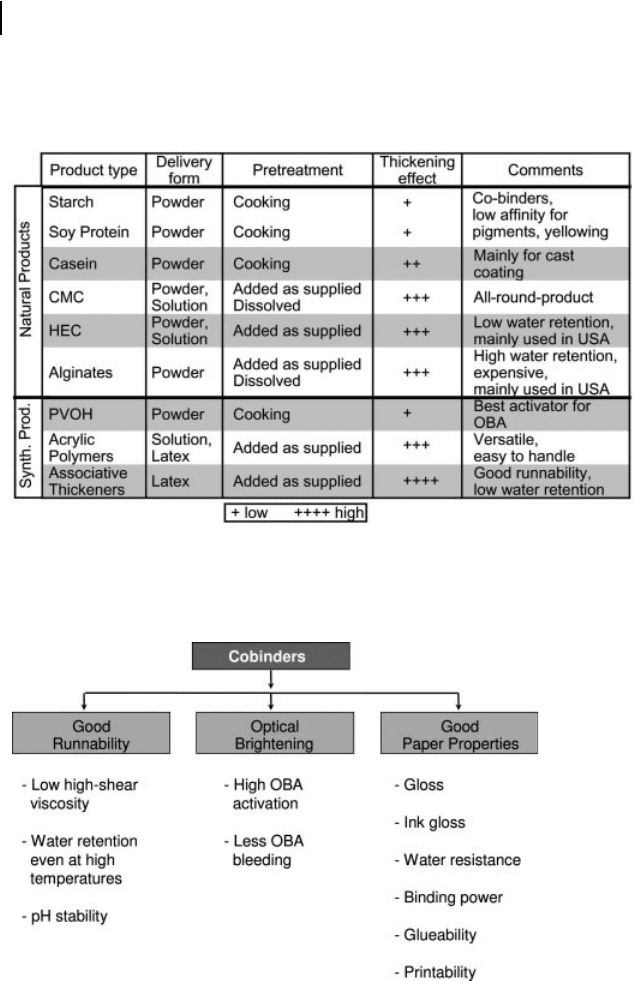
Table 3.3 Co-binders and thickeners in paper and board
coating (source: E. Lehtinen, Helsinki University of
Technology.
CMC = carboxy methyl cellulose, HEC = hydroxyethyl cellulose,
PVOH = polyvinyl alcohol, OBA = optical brightening agent.
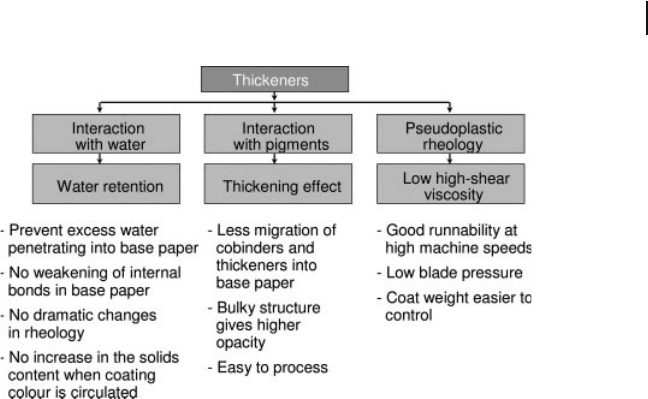
Table 3.4 Main requirements placed on co-binders (source:
BASF). OBA = optical brightening agent.
3 Chemical Additives
112

thetic binders. So natural products, principally starch and soy protein, are nowa-
days only used as co-binders. Casein is only used in cast coating because it has
some special features which make it difficult to replace with synthetic products.
Alginates and hydroxyethyl cellulose (HEC) are mainly used in the United States
and Japan, and have not been adopted to any significant extent in Europe.
Carboxymethyl cellulose (CMC) is a versatile product with an all-round range of
properties, and is popular in many regions. CMC improves the water retention
efficiently. By choosing the optimum grade, the water retention can be adjusted to
the individual needs, which are dependent on the coating conditions and the coat-
ing color formulations. In formulations with kaolin clay, the differences in water
retention between different CMC grades are much smaller than in colors based on
calcium carbonate. One reason for this is that CMC quickly builds up a network
structure with clay particles, which imparts extra water retention. With calcium
carbonate pigment, the water retention is more dependent on the viscosity of the
water phase. A higher molecular weight and higher viscosity type of CMC is
needed to give good water retention for coarse calcium carbonate-based precoat-
ings. Low molecular weight and low viscosity type CMC grades give good perform-
ance for fine clay-based coatings. Lower molecular weight and lower viscosity type
CMC grades are closer to Newtonian5 type behavior, while higher molecular
weight and higher viscosity type CMC grades are more pseudoplastic. CMC is
mechanically stable in high shear conditions and compatible with all common
types of coating raw materials.
Synthetic products comprise polyvinyl alcohol (PVOH), polyvinyl pyrrolidone
(PVP) in combination with PVOH, acrylic copolymers, and associative thickeners.
Due to the high degree of carboxylation of acrylate ester dispersions, they turn into
colloidal dispersions upon addition of alkali. Thus the laborious and energy con-
suming dissolving and cooking processes involved in the use of natural binders
are avoided. The binding power of PVOH exceeds that of all other binders used in
paper coating, nevertheless it has gained only limited acceptance. This is mainly
due to the fact that the application of large amounts of polyvinyl alcohol lead to
rheological problems on the coating machine during processing. PVOH is a solid
compound, which is composed of a hydrocarbon chain bearing hydroxy groups on
every second carbon. Depending on the extent of the polyvinyl acetate hydrolysis,
more or less acetyl groups remain attached to the chain. The stereochemical struc-
ture of polyvinyl alcohol, the direction in which the OH groups/acetyl groups
point, is already fixed during vinyl acetate polymerization. Like most free radical
induced reactions, the PVOH polymer shows an atactic structure. This means that
the functional groups are randomly oriented. Their molecular weight (MW) and
degree of hydrolysis primarily characterize polyvinyl alcohols. In practice, further
features such as tacticity, branching, average length, and distribution of residual
acetyl group sequences play a minor role only. Since PVOH is fully soluble in
water, its viscosity under defined conditions is taken as a proportional measure of
its molecular weight. Coating grades range from 3 mPa s (very low MW) to
6 mPa s (low MW). PVOHs with viscosities higher than approximately 6 mPa s
should not be used on coating machines. The degree of hydrolysis is based on the
3.6 Functional Chemicals 113

measurement of the ester value and indicates how much mole percent of the basic
polyvinyl acetate is “saponified” to PVOH. For coating purposes, a degree of hy-
drolysis is selected from a range of 88% (partially hydrolyzed) through 99 % (fully
hydrolyzed). At the same degree of hydrolysis, higher concentrations or lower tem-
peratures lead to an increase in viscosity. Given the same MW, fully hydrolyzed
grades display a higher viscosity than do partially hydrolyzed grades due to in-
creased hydrogen bonding. Going from about 97 to 100 mol% hydrolysis, the
crystallinity of the polymer increases considerably, which has an impact on the
solid state in particular. One apparent change is the reduction in cold water sol-
ubility of the PVOH.
The choice of other monomers for synthetic co-binders is not restricted to acrylic
acid, methacrylic acid, and esters such as methyl acrylate, ethyl acrylate, butyl
acrylate, methyl methacrylate, and ethyl methacrylate. Other functional monomers
such as acrylonitrile, acrylamide, and vinyl acetate can also be used, so there is a
great scope for varying the chemical composition of synthetic co-binders. The pro-
portion of carboxylic acids to the other monomers is usually lower, with the result
that synthetic co-binders are less anionic and they adsorb more readily on the
surfaces of clay pigments. Important differences of synthetic co-binders compared
to the thickeners (see below) are their shorter chain length and their low propor-
tion of acids. This explains the low thickening effect of synthetic co-binders and
hence they can be added to coating colors in larger quantities. They are usually
added at rates of 0.5–3 parts per 100 parts of pigment, expressed as solids. These
relatively high levels of addition and the presence of functional monomers can
have a substantial effect on the properties of the coating.
3.6.9.3.4.2 Thickeners
The main function of thickeners is to adjust the viscosity of the coating color to the
desired level and to impart the necessary degree of water retention (Table 3.5).
Thickeners must be able to interact strongly with water molecules if they are to
increase the water retention of coating colors. They also need to interact with other
ingredients of coating formulations, especially pigments, in order to display a
thickening effect. The nature and strength of these interactions depend on the
chemical composition of the polymer. Thickeners also need to display pronounced
pseudoplastic flow. High runnability depends on a combination of these features.
Most synthetic thickeners are supplied in the form of aqueous, acidic dispersions
(which are often erroneously referred to as “emulsions” in the literature) or alka-
line solutions of synthetic polymers. Some are supplied in the form of true water-
in-oil emulsions, but they are much less common.
The main products used as thickeners are CMC, PVOH (both already described
in Section 3.6.9.3.4.1), acrylic copolymers and associative thickeners. The acrylic
copolymers are nonionic monomers and acrylic acid or methacrylic acid. The non-
ionic monomers are mainly esters of acrylic acid (principally methyl acrylate and
ethyl acrylate) and methacrylic acid (principally methyl methacrylate), and acryla-
mide. The monomers that are selected need to be fairly hydrophilic and polar in
3 Chemical Additives114
order that the polymer is able to dissolve in aqueous coating colors and interact
with other polar coating ingredients such as pigments. Strongly hydrophobic mon-
omers such as styrene, butadiene, and ethylene are hardly ever used because they
interfere with the interaction between the polymer and water molecules. Poly-
acrylic acid can also be used as a thickener in its dissociated form, i.e., as the
sodium or ammonium salt, if its molar mass is high enough. Polymers have to be
able to dissolve before they can exert a thickening effect. Most natural products
have to be heated and converted to make them capable of being dissolved, whereas
acrylic copolymers are soluble on account of the alkali ions contained in the coat-
ing color. When addition of alkali increases the pH of the dispersion, the carboxyl
groups dissociate and donate a proton, which causes them to become anionic. The
formation of anionic charges along the polymer chain causes it to stretch owing to
mutual repulsion, and water molecules are attracted to the polymer chain and
become attached to it. The dispersed thickener particles then dissolve, which al-
lows them to unfold their effects. It only takes a few minutes to dissolve them
completely. Nevertheless, it is important to ensure that sufficient alkali is available
in the coating color because the thickener dispersion consumes alkali and the
stability and viscosity of the coating color can suffer if the pH is allowed to drop.
Another important point to be considered is the sensitivity of the dissolved poly-
mer to electrolytes. Polyvalent cations such as Ca
2+
, Mg
2+
, Al
3+
, and Fe
3+
can have
a detrimental effect on the performance of these products by occupying the sites of
anionic charge on the polymer.
The interaction between the polymer and water has a pronounced effect on the
viscosity of the aqueous phase as well as on the water retention of the coating color.
Like all hydrocolloids, synthetic thickeners bind a large number of water molecules
along their polymer chains, with the result that their diameter and volume in-
crease and they occupy a greater space in the aqueous phase (Fig. 3.14). Apart from
Table 3.5 Main requirements of thickeners (source: BASF).
3.6 Functional Chemicals
115
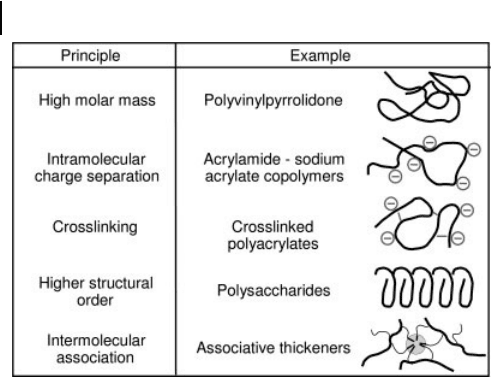
this hydrodynamic mechanism, there are a number of other mechanisms by
which the thickeners are able to restrict the mobility of the aqueous phase. The
high molar mass and the high degree of structural order cause a large increase in
the volume of the dissolved polymers under hydrodynamic forces. The anionic
charges along the length of the polymer also have the effect of stiffening the poly-
mer chain by causing it to unfurl and stretch out because the charges repel each
other. The mobility of the aqueous phase is lower because of the stiffness and
extension of individual polymer chains and the crosslinking between different
polymer chains. The maximum degree of internal crosslinking is obtained as the
result of the associative interaction between the hydrophobic side chains (see Sec-
tion 3.6.9.3.4.3). The common feature of all these effects is that the mobility of the
aqueous phase is reduced owing to intramolecular and intermolecular crosslink-
ing and the viscosity is increased due to the increase in the volume of the polymer.
The pronounced thickening effect of thickeners is the result of their interaction
with pigment particles. Acrylic and cellulosic thickeners have a high affinity for
pigments because the polar functional groups of the thickener molecule are at-
tracted by the polar surfaces of the pigment. The polymer chains are adsorbed on
the surface of the pigment particles and bind them together by means of a bridg-
ing mechanism, leading to a higher degree of crosslinking within the entire sys-
tem. The thickening effect, i.e., the increase in viscosity at low shear, is principally
the result of the thickener forming “bridges” by means of adsorption.
3.6.9.3.4.3 Associative Thickeners
These have a long history of use in paints. They consist of an essentially hydro-
philic, water-soluble polymer with strongly hydrophobic terminal groups or side
Fig. 3.14 Thickening mechanisms in the aqueous phase
(source: BASF).
3 Chemical Additives
116
chains. The hydrophobic terminal groups are aliphatic or aromatic hydrocarbons,
and they are completely insoluble in water. They are joined to the main polymer
backbone by means of a hydrophilic spacer, which ensures that they remain flexi-
ble. Their structure is similar to that of surfactants, and they also tend to join
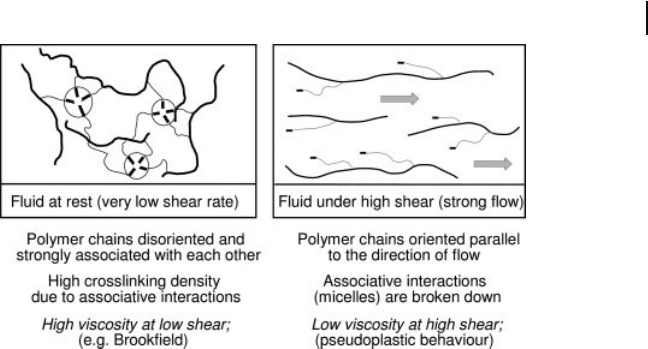
together in water to form micelles. This associative interaction between the hydro-
phobic side chains increases the degree of internal coordination of the whole sys-
tem, with the result that the coating color has a very high viscosity at low shear
(Fig. 3.15). The association between the hydrophobic groups is the result of van der
Waals’ forces, which are very weak and easily overcome. If the coating color is
subjected to shear, they quickly lose their attraction for each other and no longer
form a network. The micelles break down and the thickener molecules are ori-
ented in the direction of flow, which causes a reduction in the viscosity of the
coating color. However, because the hydrophobic constituents are no longer asso-
ciated with each other, a consequence of the low viscosity of the coating color
under high shear is that its water retention is much lower.
The associative thickeners can be divided into three different categories accord-
ing to the chemical composition of the hydrophilic polymer backbone (Table
3.6).
1. HEUR (Hydrophobic Ethoxylated Urethanes): These thickeners consist of rel-
atively short-chain, ethoxylated polyurethanes that have been terminated with hy-
drophobic substituents. The associative interaction between the hydrophobic chain
ends causes them to join together to form long chains, and the viscosity increases
accordingly. Another feature of these products is that they also interact with the
dispersed polymer binder particles. There are variants in which the main polymer
backbone consists of alternating hydrophilic and hydrophobic blocks. HEUR-type
associative thickeners have long been used in the paints industry but they have
been less successful in coating colors because of their lack of affinity for pig-
ments.
Fig. 3.15 Rheological behavior of coating colors influenced by
an associative thickener (source: BASF).
3.6 Functional Chemicals
117
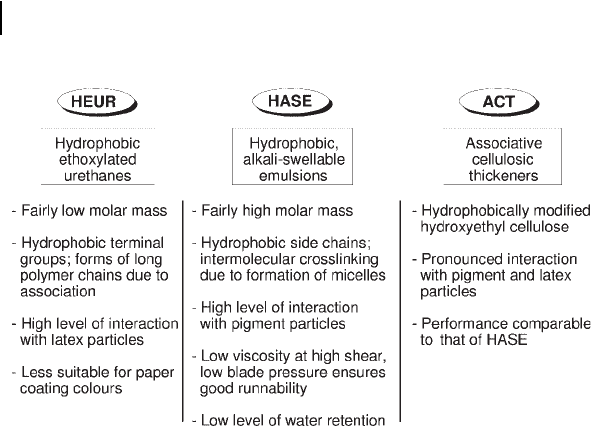
2. HASE (Hydrophobic Alkali-Swellable Emulsions): The hydrophilic polymer
backbone consists of an alkali-soluble polyacrylate, and they do not differ from the
other acrylic-based thickeners described above in this respect. The most commonly
used monomers are ethyl acrylate, acrylic acid, and methacrylic acid. The hydro-
phobic side chains are attached to the polymer backbone by means of a polyethyl-
ene oxide spacer. The associative thickening effect can be controlled by varying the
ratio of associative monomers to conventional monomers in the polymer back-
bone, the hydrophobicity of the polymer (i.e., the chain length of the aliphatic
hydrocarbons), and the number of ethylene oxide units in the spacer. The inter-
molecular association between the hydrophobic side chains themselves and be-
tween the side chains and the dispersed binder particles is responsible for the very
high viscosity that can be achieved. The relatively high molar mass of the acrylic
polymer backbone and its high affinity for pigments mean that these products can
be used in paper coating, but the water retention level is lower than with conven-
tional thickeners.
3. ACT (Associative Cellulosic Thickeners): Products in this category consist of
cellulose ethers with hydrophobic substituents. The most important product in
this group is hydrophobic modified hydroxyethyl cellulose (HMHEC) which also
has a high affinity for styrene-butadiene binders and clay pigments. The applica-
tions open to these products are comparable to those for HASE products. The low
water retention can be compensated for by the speed with which the filter cake
forms on the surface of the base paper. Associative thickeners bring about a very
high increase in viscosity, and so they only need to be added in very small
amounts. This is an economic advantage over conventional thickeners, but only if
the water retention of the coating color is unimportant. Other products need to be
added to boost the water retention of the coating color if, for instance, highly
absorbent paper is coated with a precoat or if coarse CaCO
3
is used as the pigment.
Table 3.6 Types and properties of associative thickeners used
for coating (source: BASF).
3 Chemical Additives
118
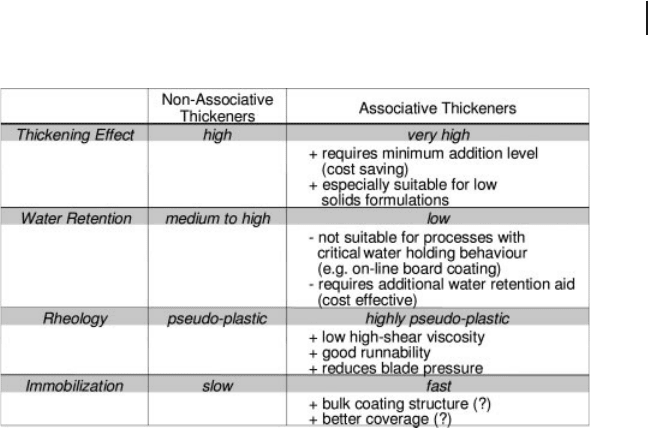
It has to be noted that the results obtained for water retention with static methods
do not correlate with the water retention in practice under dynamic conditions.
The great advantage of associative thickeners is that they are much more pseudo-
plastic than conventional products, and coating colors have a lower viscosity at
high shear (Table 3.7). This gives better runnability, and less blade pressure need
be applied in order to control the coat weight. Associative thickeners cause a large,
immediate increase in viscosity when the shear applied to the coating is released,
and this can lead to a more bulky coating being formed with a superior optical
appearance.
3.6.9.3.4.4 Lubricants
Lubricants are used in the coatings of paper and board for a number of reasons.
They improve the runnability of the coating color by reducing the friction between
the machine and the coating color, and also by reducing the friction between the
base paper and the coating unit. This can be seen for example as fewer scratches in
the coating and longer lifetime of coater blades. They enhance the plastic deforma-
tion of the dry coating in the supercalender by preventing the cracking of the
soluble binder film that leads to dusting. This also improves gloss. During cal-
endering, lubricants migrate from the coating onto the hot calender rolls forming
a monolayer on the rolls and thus preventing the sticking of the coating to the rolls
that causes build-ups. Different kaolins have different dusting tendencies, and
dusting can often be solved by using a lubricant. The most commonly used lu-
bricant is calcium stearate. It is produced by reacting stearic acid with calcium
hydroxide, followed by emulsification and processing to a 50% aqueous disper-
sion. The critical properties of the calcium stearate dispersion are mechanical im-
Table 3.7 Comparison of conventional and associative
thickeners (source: BASF).
3.6 Functional Chemicals
119

purities and free Ca
2+
, a good dispersion contains a minimum amount of both.
Particle size and shape are important for antidusting properties. The optimum size
is 5–10 mm and the shape should be platy. The platy shape enables the stearate to
gather on the pigment, plasticize the surface of the dry coating, and reduce the
dusting at calenders and printing machines. Wax emulsions are mostly emulsions
of paraffin waxes, microcrystalline waxes, or polyethylene waxes. These are the
oldest group of lubricants in paper and board coating. These emulsions give good
runnability but have less effect as antidusting agents than does stearate. Particle
size is small and the dry solids content of the emulsion is usually 20%-30 %. Soy
lecithin/oleic acid blends are a new group of substances used as lubricants. Poly-
ethylene and polypropylene glycols are used in blends with calcium stearate or alone
as a lubricant. These lubricants are claimed to have influence on the rheology and
flow properties of the coating color.
3.6.9.3.4.5 Defoamers/Deaerators
In the coating process, entrapped air or gas can give rise to production problems
and quality loss. The major part of the air seems to get mixed into the coating color
during the coating application and circulation. Such air is mostly dispersed as
small bubbles that, due to the high viscosity of some coating colors, may remain in
the color until drying. Higher coating speeds (2000–3000 m min
–1
) and total solid
content of coating formulations possibly contribute to more stable micro-foam.
Formation of foam is a topic in many industrial processes including the coating of
paper and board. Foam is formed through an interaction of mechanical forces and
physical chemical properties of the chemicals. From a physical chemical point of
view, foam can be defined as a dispersion of air or a certain gas in a liquid or fluid
medium. The formation of foam always involves a substantial increase in surface
area between the dispersed air or gas and the liquid. Foams in general are in-
herently unstable and are susceptible to decay with time. On the other hand, it is
well known that under certain circumstances foams can be quite stable and may
persist over long periods of time. Pure liquids and liquid mixtures, which do not
contain a surface-active ingredient, are not able to produce stable foams. Surface-
active ingredients or surfactants reduce the surface tension of the liquid and, in
consequence, the surface energy renders the system more stable than without
surfactants. Besides surface activity, other parameters like foam structure, lamel-
lae thickness, foam drainage, surface rheology, and elasticity contribute to the
stabilization or destabilization of foams. These parameters are dependent on time,
pH, the presence of surfactants, polymers, proteins, and/or salts as well as the
chemical composition and the physical properties of the liquid. Foam generation
can occur at different levels of mechanical energy input to the liquid system. Dif-
ferent foam volumes can be generated using the same liquid composition but with
different mechanics involved.
Foam reduction, defoaming or deaeration can be achieved by various means.
Apart from pressure reduction or mechanical influences (e.g., skimmer or separa-
tion grids), special chemical additives are mainly applied to control the foam. In
3 Chemical Additives120

general, it can be stated that there is a need for formulations of specific defoamers
for each specific foaming liquid system.
In those cases where surfactants are already a part of the chemical composition
of the liquid medium, high-foaming surfactants may be replaced by low-foaming
surfactants, e. g., methyl- or butyl-capped alkyl- or fatty alcohol ethoxylates or pro-
poxylate or polymeric materials like polyoxyethylene or polyoxypropylene or both
as block copolymers. In contrast to these water-soluble defoamers, usually insolu-
ble hydrophobic additives are widely used as very efficient defoamers. Among
these should be mentioned hydrocarbon/fatty acid/ester or wax blends, (poly)
siloxanes, fluorocarbons, dispersions of solid particles (hydrophobic silica, organic
microwaxes, etc.) in hydrocarbons or (poly)siloxanes. The chemical composition of
the defoamer and the particle size distribution of the dispersed additive in the
liquid medium determine the efficiency of these defoamers. In these defoamers,
the fluid component serves as a dispersal aid for the solid, crystal-like particles.
When added to the foam, the hydrophobic liquid component spreads out on one
side of the foam lamella surface, producing a nonzero contact angle to the sur-
rounding water phase. After further drainage of the foam lamella, the hydrophobic
drop finally bridges the lamella and causes lamella breakdown due to the high
contact angles and ongoing drainage. In this respect, the dispersed solid particles
enhance these processes and improve the efficiency of the defoamer system to a
great extent. Foam control agents are usually applied during coating preparation.
In systems where the pigments, binder(s) and the other additives are made up
simultaneously, the antifoam agent is added before the pigment and adhesive.
Normal dosages lie in the range 0.05 to 0.2% on dry coating solids. Defoamers are
sometimes added pre-diluted and should be properly mixed into the system to
ensure an even distribution throughout the volume. Spots in the finished coating
layer, commonly referred to as fisheyes and birdeyes, can have a variety of causes.
Such deficiencies can be related to the type of antifoam or to too high a dosage of
antifoam, where the foam control agent counteracts the complete spreading or
wetting of the paper surface at these positions.
3.6.9.3.5 Additives Influencing the Quality and Printability of the Paper Surface
3.6.9.3.5.1 Co-binders and Thickeners
The structure formed by the pigments plays an important part in determining the
physical properties of the coating and, because co-binders and thickeners have a
high affinity for pigments, they play an important part in influencing the structure
of the coating by controlling dewatering. The physical properties of the coating that
are affected most by the use of synthetic co-binders and thickeners are the smooth-
ness and porosity and the brightness of coatings that contain fluorescent whiten-
ing agents. Careful attention needs to be paid to all these factors when the paper or
board is to satisfy all the market demands made on its gloss and print gloss, ink
uptake and holdout, glueability, brightness and opacity, water resistance, and ab-
sence of mottling. Synthetic co-binders also help to bind pigments to each other.
3.6 Functional Chemicals 121