
Holik H. (ed.) Handbook of Paper and Board
Подождите немного. Документ загружается.

be used to measure particle size and volume of hydrophobic particles. Information
about the deposition tendency of hydrophobic particles, untreated and treated with
fixing agents, can be evaluated by the impinging jet method in which the filtrate of
a stock or white water sample is pumped at a certain speed through an impinging
jet cell. The deposition of the particles will be measured by the surface coverage on
the collector plate after a defined time period.
3.7.3
Additives for Pitch and Deposit Control
The very heterogeneous compounds of detrimental substances which can be pre-
sent in the papermaking process, are the reason why only a part of the pitch and
deposit problems can be solved by fixing agents. Besides the dissolved anionic
substances there is a variety of nondissolved, hydrophobic substances (particles)
coming from many different sources and determined by the raw materials used
e.g.:
• rosin and wood extractives from high yield chemical and mechanical pulps
(wood pitch)
• binders and coating additives from recycled coated broke (white pitch)
• adhesives and hot melts from recovered papers (stickys).
These substances affect paper machine runnability and paper quality. They can be
found on paper machine wires, felts, vacuum boxes, dryer cans, calender rolls and
in the finished paper. The consequences vary from early replacement of wire and
felts, to web breaks, dirt and even holes in the finished paper. In order to under-
stand the mechanism of fixation for particles within this size range, one has to
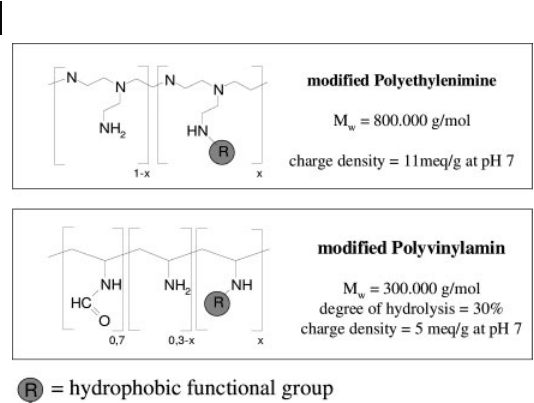
Fig. 3.19 Hydrophobic modification of polyethylenimine (PEI)
and polyvinylamine (PVAm) (source: BASF).
3 Chemical Additives
132
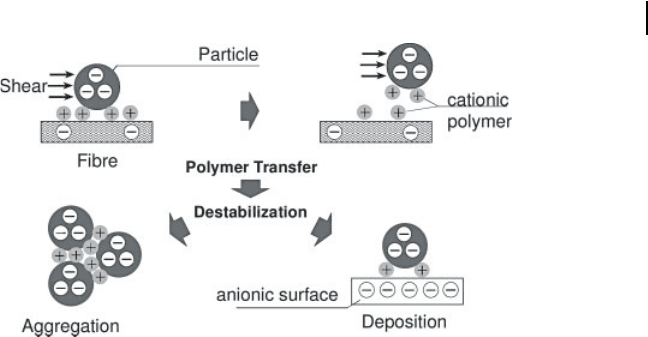
understand the role of shear forces acting on particles fixed to the fiber. When a
particle is fixed to a fiber, it can be detached by shear forces and pushed back into
the system. Whether the particle is detached or not depends on the balance be-
tween the strength of the fixing bond and the shear force. For a given strength of
fixing bond larger particles will be detached more easily then smaller particles.
Taking into account the collision probabilities of particles and fibers under prac-
tical conditions, one can imagine that tear off and fixation take place numerous
times before the particle finally gets fixed. For particles undergoing several succes-
sive fixation and tear-off cycles, a net transfer of cationic polymer from the fiber
surface onto the particle surface will take place (Fig. 3.20). When the amount of
transferred cationic polymer is high enough, this will lead to destabilisation. Even-
tually collisions between destabilised particles will occur and they will form even
larger aggregates. As a result, poor fixing performance is observed when particle
size increases. In practice large aggregates will be mechanically entrapped in the
fiber mat causing sheet defects and machine deposits. In order to avoid the forma-
tion of aggregates and the deposition of destabilised particles, one has to avoid
polymer transfer between fibers and hydrophobic particles. Therefore the bonding
strength between fibers and particles, as well as their colloidal stability, has to be
controlled by adapting the chemistry of the fixing agents to the chemical and
physicochemical characteristics of the white pitch particles.
The vast majority of disturbing particles, by number and by volume, can be
found in the critical size range between 0.2 and 5 mm, where mechanical separa-
tion techniques like pressure screens and cleaners are no longer effective. Chem-
ical additives have different working mechanisms, and it is not always possible to
predict which type of chemical is best suited to each case. Very often, it is worth-
while to carry out some laboratory tests before deciding to use a new chemical.
Anionic dispersants increase the colloidal stability by adsorption of anionic groups
onto the particle surfaces. At the same time, the pitch particle dimensions are
Fig. 3.20 Aggregation and deposition of hydrophobic particles
(source: BASF).
3.7 Process Chemicals
133

decreased and the possibility of building larger agglomerates decreases. Typical
dispersants are polynaphthalene sulfonates and lignosulfonates. It should be
noted that this mechanism is the opposite to the fixing of pitch onto the fibers.
One consequence of using anionic dispersants is that, if fixing agents are used in a
later stage, the amount of fixing agent to achieve the desired result has to be
increased.
The use of aluminum sulfate (alum) is a classical way to solve pitch problems on
paper machines. But only in an acid environment (pH 4.5–5.5) is alum a strongly
cationic product that effects coagulation and fixation of dissolved and colloidal
material onto the fiber. At higher pH (5.5–7), alum can be replaced by poly-alumi-
num chloride. Alum lowers the pH, hence, the use of alum in the presence of
calcium carbonate should be considered very carefully.
In addition to the fully synthetic fixatives (Section 3.7.2.), starch-based, semi-
synthetic strongly cationic polymers are available. Not only do these starch-based
fixing agents have a better biodegradability, but they are also capable of forming
hydrogen bonds from hydroxy groups in their anhydroglucose repeating units. In
paper production, the hydroxy groups can form hydrogen bonds, not only with
cellulose fibers but also with interfering low-molecular weight anionic carbohy-
drate compounds, thus decreasing the concentration of such substances in the
water circuit .
To control pitch and other hydrophobic substances in the stock-water-system,
adsorbents can also be used. These additives are pigments with a high specific
surface area in water, like bentonites, micro crystalline talc or mica. The surface of
the micro talc particles is hydrophobic and thus hydrophobic substances tend to
adhere to it. The size of the particles to be adsorbed, however, must be smaller than
that of the adsorbent used.
To prevent pitch or coating broke residues from adhering to felts, wires, or
cylinders, it is possible to use some special wire or cylinder protective agents. These
chemicals normally contain a cationic polymer and a surface active agent.
Use of the enzyme lipase has, in some cases, proved to be successful in the
control of deposits. Lipase hydrolyzes triglycerides into fatty acid and glycerine,
which are less hydrophobic and less inclined to build up tacky deposits. An addi-
tion of 3 ppm lipase calculated on pulp should be added to thick stock, e. g. ground-
wood, when about 70% of the triglycerides will be hydrolyzed. The resultant fatty
acids will be dispersed into the pulp and fixed onto the fibers with alum. Pitch
deposits on the machine chest wall – which are very often a problem – will almost
disappear and the amount of pitch deposits on wire, press, and dryer sections will
decrease by 30 to 50%.
Another possibility is to add a chemical for pitch removal in mechanical pulp
production. Polyethyleneoxide (PEO) has been used for this purpose. PEO builds
hydrogen bonds to pitch and has a natural affinity to pitch particles.
The first step of a pitch/deposit control program should be the evaluation of
different treatment procedures in the laboratory with the test methods described in
Section 3.7.2.
3 Chemical Additives134

3.7.4
Slimicides and Biocides
Microbial problems in paper and board mills have significantly increased with the
enclosure of white water systems to reduce the use of fresh water. Environmental
constraints have also contributed to the need for reducing the amount of effluents.
The recirculation of white waters has created serious slime problems because of
the growth of microbes in the systems. Increased paper recycling levels increase
the amount of nutrients in solid or dissolved form. It is noteworthy also that
additives used in the production process themselves represent an ideal nutrient
source (starch), or contain impurities with quite a lot of nutrient material (kaolin),
for microbes. The slurries of fillers and coating pigments can contain considerable
amounts of phosphorus and nitrogen, which along with the carbon source are the
principal nutrients for most microbes. The incoming raw water can also contain
considerable amounts of nutrients for microbes. The amount of nutrients present
varies to a marked extent according to the season of the year. Moreover, the tem-
perature in the process water circulation system has increased, thus providing a
more suitable environment for the microbes.
The growth of microbes can cause many problems in the mills either in the
paper product (spots, holes, spores, odor) or in the process (runnability, corrosion,
deposits). Thus the microbiological state of the whole paper production process
has to be under control. Problems caused by microbes can, to a large extent, be
avoided by maintaining machine cleanliness and by taking notice of the microbe-
favorable places in the local system as well as environmental factors. Equally im-
portant is the control of incoming raw materials and the purity of the chemicals
used, and monitoring slurry preparation at the mill properly. Storage chests for
coated broke require particular attention. The first steps to minimize microbial
growth should be good housekeeping, prevention of deposit formation and an
evaluation of the design and size of stock and water chests and pipes. The whole
volume of stock suspension in the stock preparation and storage plant should be as
small as possible and there should be no corner without flow.
Despite proper attention to the items described above, conditions recorded as
slime problems (caused by microbial growth together with organic and inorganic
contaminants) occur and are then offset by dosage with biocides. Biocides and
products called slimicides or microbicides are chemicals used to prevent the
growth of microbes. A number of biocides with different active ingredients are
available. The efficiency of some biocides is based on destroying the cell mem-
brane function, thereby inhibiting the metabolism and the growth of microbes.
Other types of biocides penetrate the membrane and react with essential cell com-
ponents (enzymes, proteins, etc.). The selection of the proper biocide for a partic-
ular use will depend on many factors, e. g., temperature, pH levels, and type and
properties of the actual microbial fauna present which can even change from time
to time. Typically, the major classes of biocides are organobromides, organosul-
furs, isothiatzolinones, thiocyanates, thiocarbamates, metallics (substances con-
taining copper and tin), chlorinated phenols, and phenates. Awareness of poten-
3.7 Process Chemicals 135

tially dangerous effects upon the environment is important, and slime control
programs must be planned accordingly. New types of biocides are being developed
continuously to meet changing regulatory demands in regard to reduction of, e.g.,
toxicity and environmental impact. The main problems to note under practical
conditions are environmental security, the manner of dosage (concentration,
points of input in the system), and efficiency under process conditions. No one
biocide will effectively kill all the bacteria present in the water system. This has led
to the development of wide spectrum biocides.
Strategies used in biocidal control of microbiological slime problems include
narrowing the spectrum of the bacterial population, thereby also reducing the
formation of biofilms. To preclude the development of resistant microbe popula-
tions, a biocide should be periodically substituted by another one functioning by a
different mechanism. The required dosage of biocides can be greatly reduced by
determination and selection of the correct biocides for the particular species of
microbes causing the problem. It should be kept in mind, however, that the re-
quired dosage can depend greatly upon pH. For example, thiocarbamates are effec-
tive in an acidic environment; however, as pH is raised toward neutral, the effect
falls off dramatically due to the shorter half-life (about 18 h at pH 6 but less than
2 h at pH 7).
Knowledge of the composition of slime deposits and the formation mechanisms
of biofilms has led to more selective slime control agents, in combination with the
use of chemicals that are capable of either penetrating the biofilms or dispersing
the deposits. So less toxic substances can be used in the system and keeping
machine surfaces is easier.
In slime control without application of biocides, chemicals are avoided as far as
possible. Some examples of elimination of slime without biocides are bacteriphage
application, enzyme application and removal of nutrients. Slime-decomposing en-
zyme systems and specific viruses that kill specific bacteria have been developed.
The Biochem method for example, uses modified lignosulfonate as a complex
former. It neutralizes metabolites by electrostatic discharge, thereby making the
nutrients nonusable by microbes. It also chelates essential trace elements present
in the circuit system. Another product group to reduce deposit build-up, primarily
microbiological slime, in the circuit system of a paper machine is the so-called
“biological dispersing agents” or biodispersants. Principally, they are combinations
of surfactants that have been optimized to dissolve pockets of slime, but they are
usually also capable of breaking up other (primarily hydrophobic) deposits. These
products, which are sometimes also used in combination with enzymes, are based
on natural terpenes (oil of oranges), paraffin, lignosulfanates, or various deter-
gents (tensides). Which product to use depends on the type of raw materials em-
ployed in the paper manufacturing process and the specific problem to be solved.
If numerous microorganisms are introduced into the process (e.g. through the use
of surface water), there is sometimes no alternative to the additional use of bio-
cides. Biodispersants are effective in three ways. First they infiltrate the deposit
(the so-called “creep effect”), then break it apart. Finally, they envelop the deposit in
a chemical coating (surface passivation). These processes can be observed by
3 Chemical Additives136

measuring the surface coating of piezoelectric crystals, for example, or on metallic
surfaces introduced into the paper machine as testing probes and examined using
an electron microscope.
Biocide research today has to consider the toxicological and environmental im-
pacts. The research therefore is focused on making biocides more effective at
lower concentrations as well as on developing nontoxic and environmentally
friendly products. In fact, many agents already known for years to be effective as
biocides or as disinfectant chemicals, but considered to be costly, have been put
into reuse. Examples are hydrogen peroxide, glutaraldehyde, ozone, and peracetic
acid.
To control the microbiological situation, sometimes a full count of microbe spe-
cies at different locations is required, rather than determination of the presence of
certain microbial groups like slime-forming species, fungi, yeasts, anaerobic bacte-
ria, etc. Conventional methods for identification of microbes include enumeration
and screening of individual species isolated from count plates on selective media.
Ready-made plates are available for the selection of different types of microbes.
Commercial identification systems for industry and medical purposes, based on
numerous biochemical tests or other characteristics, are available, including a da-
tabase that covers practically all groups of bacteria.
3.7.5
Defoamers and Deaerators
Foam arises from dispersed gas in a liquid in a ratio such that the bulk density of
the mixture approaches that of a gas rather than a liquid. When foam collects at the
air/liquid interface, it is called surface foam. When foam is mixed into the liquid
and is only slightly or not visible on the surface, it is usually called entrained air.
Along the production processes of pulp, paper and board more or less foam is built
up and gas is entrained. The violent motion of water during filtration and drainage
and in the white water system, especially at high paper machine speeds, produces
a stable foam, in the presence of surface active agents and colloidal surface active
film formers with a negative charge, such as hemicelluloses, proteins, and polysac-
charides. On the fiber surface there are always hydrophobic patches from wood
resins, and positively charged patches, e.g. from alum, where the air/gas bubbles
then accumulate (Fig. 3.21). The increased use of calcium carbonate as filler and
coating pigment may lead to a further significant source of gas/foam by the de-
composition of CaCO
3
to CO
2
High air/gas contents may be the source of severe problems in both paper man-
ufacturing and paper coating and should be kept below 0.1 to 1.0 %, depending on
the paper grade. Too high air/gas content in the headbox suspension has a negative
effect on the retention of fibers, fines and fillers as well as on the paper formation
and dewatering on the wire and press sections (Fig. 3.22). At high gas contents the
number of pinholes (with their negative effect e.g. in coating and printing) and the
average pore diameter of the paper sheet are increased, and also the surface rough-
ness. For all pumping and suction processes more energy will be consumed. Paper
3.7 Process Chemicals 137
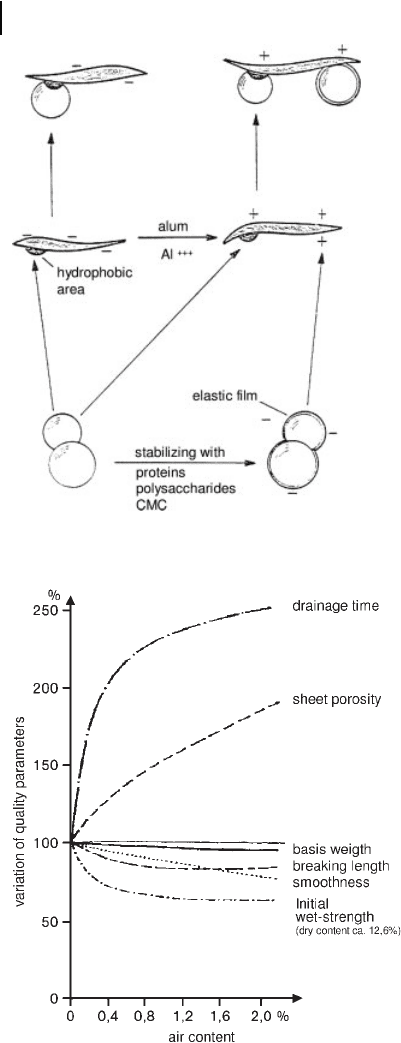
Fig. 3.21 Mechanism of gas bubble attachment to fibers.
CMC = carboxy methyl cellulose.
Fig. 3.22 Influence of air/gas content on stock properties and
paper quality (source: dissertation U. Kirchner, TU Darmstadt,
1961).
3 Chemical Additives
138
machine runnability, and consequently productivity, may be lowered. Also, some
process chemicals, such as reductive bleaching agents and retention aids, perform
significantly worse in the presence of entrained air and gas. In coating, high gas
contents of the color give rise to runnability problems and quality loss. Gas makes
coating color foam in the machine circulation loop and leads to tank overflow and
to an irregular pump/metering performance. The most evident negative phenome-
non is, however, the uncoated spots on the paper surface caused by the entrapped
air. Together with an insufficient amount of applied color, gas bubbles are the main
cause of such a coating defect called skipping. In paper coating, high gas contents
are closely linked with the color formulation, color preparation and circulation
system, the applicator system and the coater speed (see Sections 3.6.9.3.4.5 and
7.7.6). Problems of excessive gas contents also originate from the use of hydro-
phobic substances (talc) and stabilizer chemicals for synthetic binders as well as
from certain chemical reactions e.g. decomposition of calcium carbonate at re-
duced pH. Deaeration by thermomechanical means only does not provide the
desired persistency of gas-free stock.
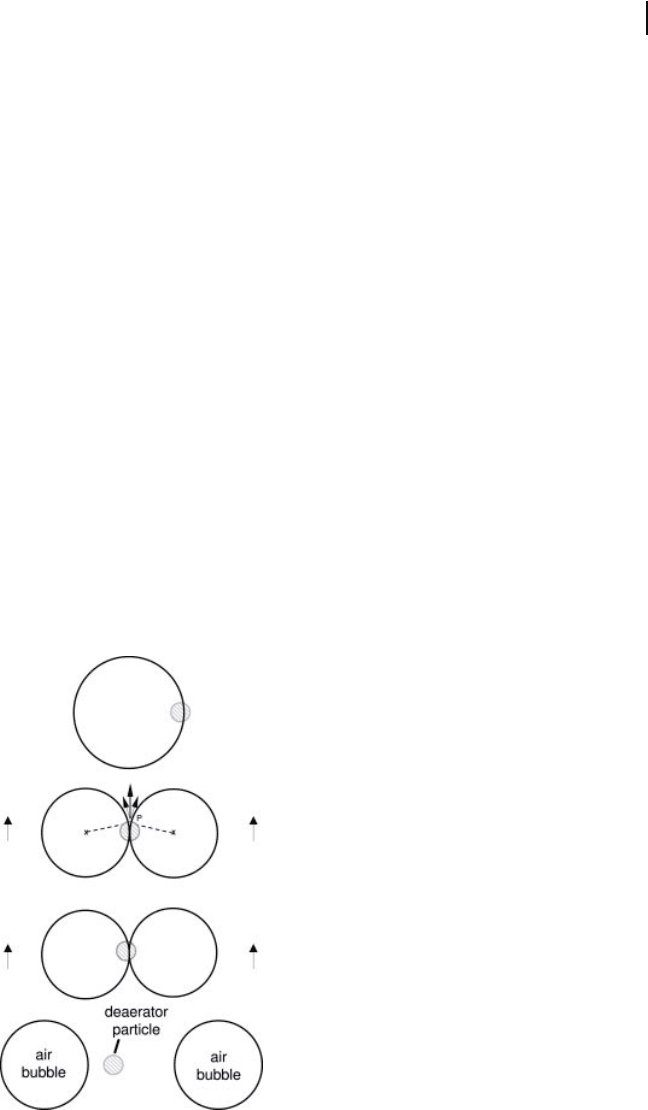
Chemical deaerators permit steady and prolonged deaeration by triggering bub-
ble coalescence. This is achieved by means of hydrophilic emulsion particles,
which penetrate the contaminated gas bubble surfaces, thereby facilitating their
coalescence (Fig. 3.23). The difference in mechanism between deaeration by both
thermomechanical and chemical means give the best results. The suitability of a
defoamer and deaerator for certain mill conditions depends first on the hydro-
phobicity or hydrophilicity of its components. This means that a very hydrophobic
product is a good “foam killer” and a more hydrophilic one is an efficient deaer-
ator.
Fig. 3.23 Accumulation, bursting and growth of air/
gas bubbles by deaerator application.
3.7 Process Chemicals
139

Defoamers and deaerators are derived from hydrocarbons that contain substi-
tuted polar groups. The active substances contained in products supplied in the
form of 25–30% aqueous emulsions are mainly higher fatty alcohols, fatty acids,
and fatty acid esters and their ethoxylates (Table 3.9). They may contain anionic or
nonionic emulsifiers. The active substances contained in so-called oil-type defoa-
mers are mainly fatty alcohol ethoxylates, fatty acid ethoxylates or mixtures of fatty
alcohols. They can also contain emulsifiers in order to aid dispersion. It is im-
portant to note that the term oil-type defoamer refers to the oily consistency of this
group of products, and has nothing to do with the use of mineral oil as an active
substance. Emulsion-type defoamers account for half of the worldwide consump-
tion of defoamers and deaerators, expressed as solids. Synthetic oils represent 40%
and mineral oils 10%. It seems that mineral oils are no longer in use in Europe.
Controlled deaeration of stock suspensions and coating colors requires regular
measurement of the air/gas content. The mainly used methods are based on the
compressibility of air/gas (e.g. Brecht-Kirchner equipment, EGT, Celleco). The
measurement measures the change in the gas volume by the change in the applied
pressure using a vacuum (expansion method) or using pressure (compression
method). A continuous in-line measurement based on ultrasonics is also possible.
In water dispersed little gas bubbles are excellent scatterers of sound. The on-line
apparatus measures the ultrasonic damping.
3.7.6
Cleaning Agents
Again, with increased usage of recovered paper, solid board and corrugated box
board, enclosure of mill water systems, and use of plastic wires and felts, many
new challenges have arisen for keeping the surfaces of chest walls, pipes, rolls,
filters and drying cylinders and different paper machine clothings clean for opti-
mum production. As is shown in Fig. 3.24 there are different necessities for clean-
ing. The major cleaning application, 41%, is so-called system cleaning e. g. boiling
out the whole stock and white water system which is directly connected to the wire
Table 3.9 Chemical composition of deaerators and defoamers.
Aqueous Emulsions
approx. 25% Higher Fatty Alcohols (< C
16
)
approx. 1–2% Emulsifiers
approx. 73% Water
Synthetic Oils
100% Alkylalkoxylate e.g.: R–O–(CH
2
–O)
n
–H
or
100% Acylalkoxylate e.g.: R–COO–(CH
2
–CH
2
–O)
n
–H
Mineral Oils
Blend of alipathic, cycloaliphatic and aromatic hydrocarbons
3 Chemical Additives140
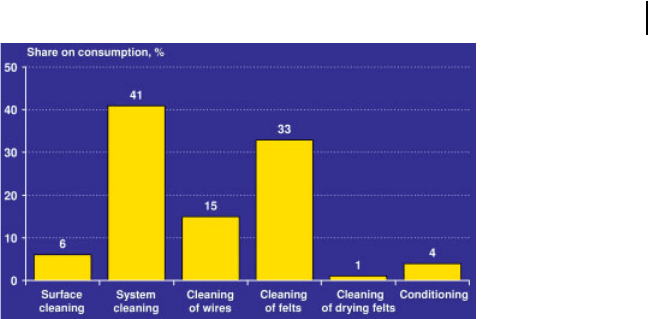
part of the paper machine. One third of the cleaner consumption is used for felt
cleaning and 15% for wire cleaning.
To prevent deposition or to remove deposits from wires and felts, so-called con-
ditioners are continuously applied. The following dirt and deposits occur:
• inorganic substances e.g. lime and calcium sulfate
• organic substances e.g. resin/pitch, adhesives
• residues of chemical additives e.g. dyes, coating binders, starches, wet strength
resins
• microbiological substances, fines from paper stock
• compounds of fresh process water e.g. humic acid, iron, manganese
Cleaning agents are characterised by a great number of commodities which can
differ considerably in their chemical composition as well as in their cleaning effi-
ciency. In principal, the cleaning agents belonging to the group of process chem-
icals can be subdivided into inorganic and organic products. As inorganic cleaning
agents, sodium hydroxide as an alkaline agent and hydrochloric, sulfuric and phos-
phoric acids as acid agents, are mostly used. The number of organic cleaning
agents available on the market is much higher. Simple formulations in most cases
consist of tensides and sodium hydroxide or inorganic acids respectively. In more
complex mixtures dispersing agents, chelating agents and solvents can be found.
Solvent cleaning agents mostly consist of aliphatic and aromatic hydrocarbons, in
certain cases as mixtures with tensides.
In the German paper industry in 1999, an average of 0.35 kg of cleaners per ton
of paper was consumed. The proportion of organic cleaning agents was around
60%. Cleaning agents are applied continuously and, more frequently, discontinu-
ously. Referring to the mass balances of discontinuous cleaning of paper machine
clothings with tenside containing acid and alkaline cleaning agents, the process
water load resulting from the application in the production of corrugating papers
bears no risk for anaerobic or for aerobic waste water treatment plants when the
Fig. 3.24 Application of cleaning agents (average of all paper
grades) (source: U. Hamm, PMV, TU Darmstadt).
3.7 Process Chemicals
141