
Kallen A. Understanding Biostatistics
Подождите немного. Документ загружается.


ON META-ANALYSIS AND PUBLICATION BIAS 79
3.9 On meta-analysis and publication bias
When a medical issue has been addressed by a number of independent trials it is often appro-
priate to do an overview of the knowledge obtained so far on the issue. Such overviews can be
made in different ways. One obvious way is to ask an expert to write down his interpretation
of the collective data, to carry out a systematic review of the literature, discussing the merits
of different trials and the consistency of the conclusions. Such reports are often referred to as
‘expert reports’. It is natural that if the author is biased, this will show itself in the report. An
alternative way to compile overall knowledge from a series of individual studies is to subject
them to a meta-analysis. It is not the purpose of this section to discuss the many controversial
aspects of meta-analysis, but the reason why we want them performed is related to the concept
of evidence-based medicine. This leads us to a discussion of a particular form of bias that
occurs when we perform an analysis on published data only.
The Cochrane Collaboration, an international non-profit
organization of academics, is considered by some to be one
of the more important institutional innovations that took
place late in the twentieth century. Its main task is to produce
meta-analyses of published and peer-reviewed literature on
health-care research. The logo of the Cochrane Collabora-
tion features a simplified graph of a particular meta-analysis.
This analysis looked at the usefulness of giving inexpensive
corticosteroids to mothers about to give birth prematurely
in order to reduce the risk of their babies dying from com-
plications due to immaturity. This medical issue had been
investigated in seven small trials in New Zealand in the pe-
riod 1972–1981. Two of them indicated some benefit from
the steroids, but the remaining five failed to do so. A meta-
analysis of these trials was then performed in 1989, from which the medical community de-
duced that there was compelling evidence that steroids did reduce the risk to the prematurely
born baby. Two years later seven more trials had been entered, strengthening the evidence even
further. In short, stories of this type are what defines evidence-based medicine and justifies
that the Cochrane Collaboration (and others) producing meta-analysis on an industrialized
scale. The argument is that tens of thousands of children had suffered and died, even when
there was enough information available to know what would save them, information that had
not been synthesized together.
However, systematic reviews of the literature with subsequent meta-analysis is an in-
dustry not without its problems. The basic problem is the same as the problem that meets
the researcher who wants to find out what effect a particular treatment may have on a spe-
cific biomarker, scans the literature and finds one publication from a small study with the
positive effect he was looking for. Encouraged, he then repeats the experiment and gets a
disappointing result. In a meta-analytic context, consider the two examples of treating acute
myocardial infarction with streptokinase (a protein produced by streptococcal bacteria) and
with intravenous magnesium, discussed in an editorial in the British Medical Journal.For
streptokinase the collective evidence from 15 trials was in 1977 considered sufficient for the
medical community to conduct two mega-trials (named GISSI-1 and ISIS-2), which subse-
quently confirmed the benefit of the drug. Today streptokinase is used as an effective and
80 STUDY DESIGN AND THE BIAS ISSUE
inexpensive clot-dissolving medication in some cases of myocardial infarction. The story
with magnesium is different. In this case a meta-analysis reported in 1993 found the collec-
tive evidence of seven trials strong enough to argue that magnesium treatment represented an
‘effective, safe, simple and inexpensive’ intervention that should be introduced into clinical
practice without further delay. When this was put to the test in a mega-trial (called ISIS-4),
magnesium appeared completely ineffective as a treatment for myocardial infarction.
The problem here is one faced by anyone scanning the literature for evidence: publication
bias. In order to understand what publication bias may mean, consider the following simple
situation. Suppose that a new intervention is developed, which is studied at a number of
different medical centers. Each of these wants to publish their result (the ultimate drive for
a researcher is after all to get as much published as possible), but only those will succeed
whose investigation shows that the new method is better than the old one. If you do not get
a statistically significant improvement, the journals do not accept you paper (so you may
not even bother to write it up), we assume. What will the world look like from a systematic
reviewer’s point of view? The answer should be obvious: he does not see the full distribution of
results, but only a conditional distribution, based on those studies in which the observed effect
size is large enough to produce a statistically significant result. It is left to those readers who
are sufficiently interested in mathematics to quantify the magnitude of the bias under different
assumptions. Such a calculation shows that when there is no effect, the bias is proportional to
1/
√
n and is therefore only slowly decreasing as we increase the size n of the trial.
Precision (No of patients)
Odds Ratio
10
–1
10
1
10
2
10
3
10
4
10
5
10
0
10
1
ISIS-4
ISIS-2
GISSI-1
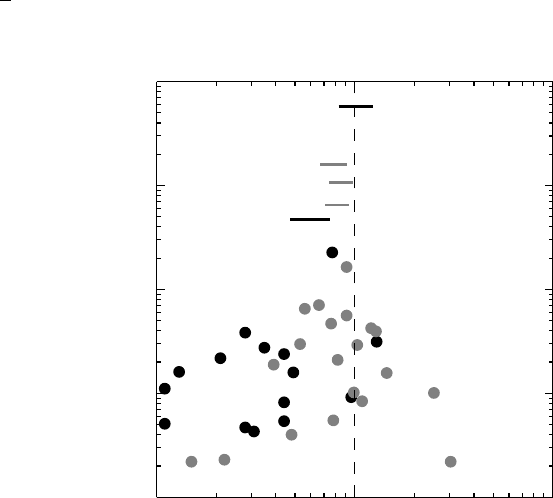
Figure 3.4 Funnel plots illustrating publication bias for two different treatments after my-
ocardial infarction. The black dots illustrate published studies on intravenous magnesium
and the gray dots studies on streptokinase. Also shown are the corresponding meta-analyses
(unlabeled lines) and the result of large, randomized studies (lines with study labels).
COMMENTS AND FURTHER READING 81
The lesson from all this is that small studies that get published have large treatment effects,
whereas large studies do not require effect sizes of similar magnitude. This observation allows
us a way to actually assess whether there is a serious risk of publication bias. In fact, if we
plot the effect size versus its precision (i.e., the inverse of the standard error, or, more simply,
the size of the trial) for each trial, we get something that is called a funnel plot. If there is
no publication bias this plot should resemble a symmetric funnel with the results of smaller
studies being more widely scattered than those of larger studies. Figure 3.4 shows the funnel
plots for the magnesium and streptokinase trials that appeared before the relevant mega-trials,
with the mega-trials added. The plot for streptokinase is reasonably symmetric, whereas this
is clearly not the case for magnesium. In fact, there is a gap indicating the absence of negative
small trials.
This illustrates the non-trivial nature of bias. Any one of the studies included in the
meta-analysis is, for all we know, unbiased. It is our sample from the population of unbiased
trials that produces the bias, since we rely on published data. The situation is different for
a pharmaceutical company that wants to perform a meta-analysis of its studies, since it will
not miss any. A meta-analysis of published data is therefore a non-trivial exercise, in which
a detailed description in a protocol is needed before the exercise, describing how the studies
selected for inclusion were looked for and handled.
3.10 Comments and further reading
This chapter is about issues of bias in clinical studies. Many of these issues are of particular
importance in epidemiological research, where they cannot really be avoided by design, but
must be explicitly addressed in a discussion about the results of a study. These bias issues
are therefore extensively discussed in most books on epidemiology. However, bias is not
a non-issue for experimental studies because of missing values and concerns about valid
measurements. In this chapter we have looked at the problem from the bird’s-eye perspective
of following a study population from start to end, to ensure that the game is fair not only at
the start, but all the way down to the analysis.
Berkson’s fallacy was a theoretical construction when it appeared in 1946, and not se-
riously considered by most epidemiologists until its real-life relevance was verified empiri-
cally (Roberts et al., 1978). Concerning randomization as a guarantee for valid inference from
clinical trials there is still some controversy, as discussed by Senn (1994, 2004). The history
of the introduction of randomization into clinical research was taken from an educational
overview (Doll, 1998) in an issue of the British Medical Journal which also reproduces the
original article (Medical Research Council Streptomycin in Turberculosis Trials Committee,
1948) on the streptomycin trial. The data in Box 3.2 were taken from Comstock (1999).
Missing data are a part of statistical everyday life. The whole subject of miss-
ing values is complex and is discussed in a number of different articles and books;
see Senn (2007,Chapter 11) for an overview of the key issues and further references. Our
discussion has focused on explaining why they are problematic, and also to explain what the
simplest remedy, the LOCF principle, really amounts to. This method is mainly advocated be-
cause of its simplicity but is not always appropriate, the classic example being when the effect
of a drug is to arrest a deterioration. A much advocated alternative (Mallinckrodt et al., 2008)
builds on analyzing longitudinal data in a multivariate way, using a mixed effects model for
82 STUDY DESIGN AND THE BIAS ISSUE
repeated data. There are also more sophisticated imputation methods (Schafer, 1997), which
take covariate information into account, all of which are outside the scope of this book.
Of particular interest in drug development are the different populations that are often
discussed in study reports from the pharmaceutical industry, the ITT and PP populations.
These are not the only populations that can be discussed in such a context (Gillings and Koch,
1991). It is common jargon to refer to these statistical approaches as the analysis of different
populations. This is wrong; there is only one population, the study population. What we have
are different approaches to the analysis of available data. It is often claimed that the ITT
and PP approaches answer different questions. The ITT is claimed to answer the real-life
question of what the total effect of the treatment is, allowing for inadequate compliance with
patients not taking the drug. This is also wrong; clinical trials are much more controlled than
the real-life situation when the drug is licensed and the results obtained this way have no
such relevance. The PP analysis, on the other hand, is claimed to answer the question about
the true effect of the drug with full compliance. Hopefully the main text has explained why
this is wrong: to justify the claim we must assume that compliance is totally independent of
effect. Which seldom seems to be reasonable. I beg the forgiveness of Kieler et al. (1997) for
using their study the way I do, but it serves my purpose much better than any other example I
know of.
The British Medical Journal editorial on meta-analysis is Egger and Smith (1995). Meta-
analyses are mentioned now and then in this book, but nowhere discussed in a holistic manner.
Usually the term is used when different studies are combined, but there is no essential differ-
ence between doing that and analyzing, for example, a multi-center study (randomized within
center). The statistical methods are similar (Senn, 2000), their differences lie in the ability to
get control of all the data. The particular problem of publication bias should not be used as
an argument for not performing systematic reviews, but it is important to discuss potential
consequences of it. It may also be possible to use available data to model the amount of
‘missing’ publications (Sutton et al., 2000). For an overview, with many references, of recent
developments in meta-analysis, see Sutton and Higgins (2008).
Finally, the Jadad score was introduced in Jadad et al. (1996) and Larry Gould’s suggestion
on how to handle missing data, mentioned on page 74, is found in Gould (1980).
References
Comstock, G.W. (1999) Snippets from the past: 70 years ago in the journal. American Journal of
Epidemiology, 150(2), 1263–1265.
Doll, R. (1998) Controlled trials: the 1948 watershed. British Medical Journal, 317, 1217–1220.
Egger, M. and Smith, G.D. (1995) Misleading meta-analysis. British Medical Journal, 310, 752–754.
Gillings, D. and Koch, G. (1991) The application of the principle of intention-to-treat to the analysis of
clinical trials. Drug Information Journal, 25, 411–424.
Gould, L. (1980) A new approach to the analysis of clinical drug trials with withdrawals. Biometrics,
36, 721–727.
Jadad, A.R., Moore, R.A., Carroll, D., Jenkinson, C., Reynolds, D.J., Gavaghan, D.J. and McQuay,
H.J. (1996) Assessing the quality of reports of randomized clinical trials: Is blinding necessary?.
Controlled Clinical Trials, 17(1), 1–12.
Kieler, H., Axelsson, O., Haglund, B., Nilsson, S. and Salvesen, K. (1997) Routine ultrasound screening
in pregnancy and the children’s subsequent handedness. Early Human Development, 50(2), 233–245.
REFERENCES 83
Mallinckrodt, C.H., Lane, P.W., Schnell, D., Peng, Y. and Mascuso, J.P. (2008) Recommendations for
the primary analysis of continuous endpoints in longitudinal clinical trials. Drug Information Journal,
42, 303–319.
Medical Research Council Streptomycin in Turberculosis Trials Committee (1948) Streptomycin treat-
ment of pulmonary tuberculosis. British Medical Journal, ii, 769–782.
Roberts, R.S., Spitzer, W.O., Delmore, T. and Sackett, D.L. (1978) An empirical demonstration of
Berkson’s bias. Journal of Chronic Diseases, 31, 119–128.
Schafer, J.L. (1997) Analysis of Incomplete Multivariate Data, vol. 72 of Monographs on Statistics and
Applied Probability. London: Chapman & Hall.
Senn, S. (1994) Fisher’s game with the devil. Statistics in Medicine, 13(3), 217–230.
Senn, S. (2000) The many modes of meta. Drug Information Journal, 34(2), 535–549.
Senn, S. (2004) Added values. Controversies concerning randomization and additivity in clinical trials.
Statistics in Medicine, 23, 3729–3753.
Senn, S. (2007) Statistical Issues in Drug Development. Chichester: John Wiley & Sons, Ltd.
Sutton, A.J. and Higgins, J.P.T. (2008) Recent developments in meta-analysis. Statistics in Medicine,
27(5), 625–650.
Sutton, A.J., Song, F., Gilbody, S.M. and Abrams, K.R. (2000) Modelling publication bias in meta-
analysis: a review. Statistical Methods in Medical Research, 9(5), 421–445.

4
The anatomy of a statistical test
4.1 Introduction
This chapter is an introduction to the nature of statistical tests, the tests that produce the
p-values discussed in Chapter 1. Statistical tests are not much different from other kinds of
tests, except that they involve numbers instead of, say, chemicals. In this chapter, in order to
take away some of the mysticism around them, we will first discuss how they are related to
tests that are not seen with similar skepticism, tests that are used in order to make a proper
medical diagnosis.
After having explored such analogies, we will take a closer look at how statistical tests
work. In this chapter we will consider special cases and defer a more general discussion
to the next chapter. There are two aspects of (inferential) statistics: hypothesis testing and
parameter estimation. We will discuss the former in an example and the latter in the simple
case of estimating a binomial parameter. In the latter case we also take the opportunity to
compare the two most important approaches to statistics, that of the frequentist and that of the
Bayesian. Recall that these approaches are in some way reflections of the two philosophical
approaches to science, falsification and induction, respectively.
Finally, we will introduce the best-known distribution in biostatistics, the Gaussian distri-
bution. We do this from a historical perspective, with the emphasis on trying to explain what
makes it so important: the central limit theorem in probability theory.
4.2 Statistical tests, medical diagnosis and Roman law
There is a rule in soccer called the offside rule. When such a situation arises in a game,
the referee has to decide whether what he saw was offside or not. The rule is clear enough
that in each situation the player is either offside or not, so there exists a factual state of
offside or not offside. However, the referee can only use his senses and assistants on the
lines to make a judgement as to whether it was offside or not. His conclusion from this
information is his observation, and this can be right or wrong. It can be wrong in two ways:
Understanding Biostatistics, First Edition. Anders K¨all´en.
© 2011 John Wiley & Sons, Ltd. Published 2011 by John Wiley & Sons, Ltd. ISBN: 978-0-470-66636-4

86 THE ANATOMY OF A STATISTICAL TEST
he can rule for offside when there was no offside, or he may fail to do so when in fact there
was an offside.
A similar problem arises whenever we make decisions based on information. This includes
the case where a physician has to decide on a diagnosis based on various signs and symptoms.
Whether the patient has a particular disease or not is one thing, whether the physician finds it
is another. The physician can make the same kind of errors as the referee above: he may miss
the disease or he may say that the patient has it when he does not.
Decision making based on statistical tests is subject to the same problems as decision
making in general: you may get it wrong. However, the fundamental and key aspect of statis-
tical testing, which is the reason why it is so important in medical research, is that statistics
tries to quantify the risk of such errors.
In this section we will explore the analogy between statistical testing and medical diag-
nostics, and also what these have in common with the judicial problem of finding someone
guilty of a crime. To simplify the description of the statistical test, we often assume that it
is used to compare a new drug to placebo, in order to prove efficacy of the former. There
is nothing restrictive about this case, any other particular test would do, but being specific
sometimes clarifies the discussion.
All these situations, statistical testing, medical diagnostics and courts of law, are part of
a more general problem, namely the signal detection problem: a signal is either present or
absent, and we want to determine which it is. The signals in our cases are as follows:
Medical diagnosis. A particular disease, which the patient may have or not have.
Justice system. The guilt of the person accused, which is absent if he is innocent.
Statistical hypothesis. The drug is effective (in general, the null hypothesis is false), or it
has no effect.
The test we employ for signal detection has built-in uncertainties, so we cannot with 100%
certainty say whether the signal was present or not from the test. The test therefore gives an
answer which may, or may not, be correct. We can summarize this in a 2 × 2 table:
Signal
Present Absent
Test
Yes Hit False alarm (Type I error)
No Miss (Type II error) Correct rejection
An alternative way of describing the cell entries is according to whether they are true or false,
and positive or negative. With such a description a hit corresponds to a true positive, a correct
rejection to true negative, whereas a Type I error is a false positive and a Type II error a false
negative outcome.
All test procedures start with the assumption that there is no signal, and gather evidence
of a signal. The final judgement call is to rule whether sufficient evidence has been collected
so that we can decide that there is a signal. The whole setup is such that the effort is directed
toward rejecting the assumption of no signal (you are innocent until proven guilty). The tests
in our three situations are as follows:

THE RISKS WITH MEDICAL DIAGNOSIS 87
Medical diagnosis. The physician carries out one or more examinations based on which a
conclusion is to be drawn about the patient’s condition. This can be as simple as a single
laboratory test, or it can be a subjective interpretation of a multitude of information from
symptoms, laboratory tests, CT scans, etc.
Justice system. The court (or a jury) weighs the information that has been presented by
the prosecutor and the defense.
Statistical hypothesis. A statistical test is performed by calculating the probability of an
observation as extreme as what we found, under the assumption that the null hypothesis
of no signal is true.
All of these tests need a standard of judgement, which corresponds to a cut-off point, which is
such that if our observation lies on one side of it, we consider the test to be positive, and if it
lies on the other side of it, we consider it to be negative. In complex medical diagnosis settings,
as well as for the courtroom, this standard of judgement may not be easily quantifiable, but
that does not really change the picture. The cut-off point determines the properties of the test
and the ultimate objective of its selection is to minimize the size of the Type I and Type II
errors:
Medical diagnosis. The Type I error is that the physician tells the patient that he has the
disease, when in fact he does not have it. The Type II error is that the physician declares
the patient healthy when he actually has the disease.
Justice system. The Type I error is that an innocent person is sentenced, whereas the Type
II error is that a guilty person is set free.
Statistical hypothesis. The Type I error is that we declare a drug effective when it is useless
(in general, that we reject the null hypothesis when it is true). The Type II error is that
we fail to show that the drug is effective, when in fact it is (in general, that we do not
reject the null hypothesis despite it being wrong).
1
However, we minimize one type of error at the expense of the other. For example, if we want to
make absolutely certain that an innocent person does not go to jail, we may need a standard of
judgement in the court such that a fair number of true criminals go free as well – the benefit of
the doubt. If we want to make certain that all criminals are convicted, we need to set standards
so low that some innocent people will also be put in jail.
4.3 The risks with medical diagnosis
4.3.1 Medical diagnosis based on a single test
To understand the risks associated with making a medical diagnosis from a patient’s signs
and symptoms, we use a test for alcoholism, much discussed in the 1980s. It uses a particular
enzyme, gamma-glutamyl transpeptidase (GT), which exhibits elevated activity in serum in
1
This is actually where the confusion between the Fisher and Neyman–Pearson approaches comes into play. In
the pure Neyman–Pearson setting one has a choice between a null hypothesis and an alternative hypothesis, and
should choose the one that the data point to. That means that if we fail to reject the null hypothesis, we should accept
it. However, that is a decision-theoretic construction, which is not necessarily relevant to science.
88 THE ANATOMY OF A STATISTICAL TEST
0
0.1
0.2
0.3
0.4
0.5
0.6
0.7
0.8
0.9
1
543210
S-GT µkat/L
n
o
n
-
a
l
c
o
h
o
l
i
c
s
a
l
c
o
h
o
l
i
c
s
0
0.5
1
Sensitivity
0.501
1-Specificity
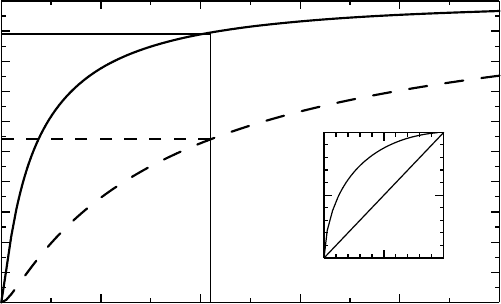
Figure 4.1 The main graph shows the CDFs for serum GT among alcoholics and non-
alcoholics, respectively (hypothetical data). The inserted graph shows the CDFs versus each
other, which defines the ROC curve (see text).
liver diseases. In fact, serum GT increases are mainly associated with certain types of drug
treatment and with excessive intake of alcohol. Before we proceed, let us recall that a laboratory
measurement is accompanied by a reference range. This range is assumed to be constructed so
that 95% of observations from healthy subjects are within its limits. A value within this range
may then be considered a normal value, whereas a value outside would indicate an unlikely
observation in a healthy subject. This defines a test for alcoholism, for which we have control
over the Type I error. If the reference range is 0–3.5 μkat/L, with this logic a value above
3.5 μkat/L would support a suspicion of alcoholism.
The serum GT reference limits correspond to a one-sided test (since negative measure-
ments are not possible); only high values matter. For other laboratory measurements the
reference limits allow for both small and large values to be abnormal. Such a range defines
a two-sided test. This difference between one-sided and two-sided tests is important in the
context of statistical tests.
Using the reference range as a test for alcoholism puts all focus on the Type I error. In order
to see if a better test can be constructed, we need an understanding of the distributions of serum
GT values among alcoholics and non-alcoholics, respectively. Tentative such distributions are
shown (not based on real data) in Figure 4.1 as CDFs (see page 42).
When we design a test for alcoholism based on the level of serum GT, we decide on a
cut-off limit (standard of judgement) such that if the value is above this limit, we diagnose
the subject as an alcoholic. If we choose the cut-off limit to be 2.1 μkat/L, Figure 4.1 shows
that 90% of the reference population has a serum GT value less than this value, whereas 45%
of the alcoholics have a serum GT value that is higher than this value. The test defined by
this cut-off limit therefore has specificity 0.90 and sensitivity 0.45 according to the following
definitions:
Specificity. This is the probability that the test is negative when there is no signal. Thus
1 minus specificity is the magnitude of the Type I error.
THE RISKS WITH MEDICAL DIAGNOSIS 89
Sensitivity. This is the probability that the test is positive when the signal is present. Thus
1 minus sensitivity is the magnitude of the Type II error.
We can compare this to the situation where we use the reference limits as our guide, using
the cut-off limit 3.5 μkat/L. It has specificity 0.95 (because of its construction) and sensitivity
0.33 (read off from the dashed curve). This test therefore misses quite a few alcoholics.
For a more general discussion, let F (x) denote the distribution function for the healthy
population and G(x) the distribution function for the population of alcoholics. If we define
our test by using the cut-off limit x, we have that F (x) is the specificity, and 1 − G(x)isthe
sensitivity. If we plot the sensitivity as a function of 1 minus specificity, F(x) versus G(x) for
different x, we get the curve shown in the inset graph of Figure 4.1, which is called the receiver
operating characteristic (ROC) curve of the test. (ROCs were developed during World War II
for the analysis of radar signals, which explains the name.) The choice of cut-off point for the
test is often better the closer the point it defines on the ROC curve is to the point (0, 1) (which
is the test with no uncertainties) and the graph illustrates the trade-off between sensitivity and
specificity that needs to be addressed for this decision. We see that in order to get as close
as possible to the optimal test we need to have both the sensitivity and the specificity around
0.7, which would correspond to a cut-off point of about 0.8 μkat/L. However, that does not
mean that this is the best test in any other sense, and it may not correspond to how we want to
weight the relative importance of specificity and sensitivity. Each decision is associated with
a cost, not only monetary (see Box 4.1), which depends on how useful it is to know that one
has the disease (can it be treated?).
It may be worth noting that because diagnostic methods are not error-free there is a
discrepancy between the true proportion P of subjects with a particular disease, and the
perceived proportion P
∗
from using a diagnostic test:
P
∗
= P ×sensitivity + (1 − P) × (1 − specificity).
If we actually know the sensitivity and specificity we can solve for P in this expression.
It is a widely held belief that the specificity and sensitivity are independent characteristics
of the test, and can be transferred unchanged from one application of the test to another. This
is not the case, since these concepts depend on two well-defined populations from which we
can derive them. In our case, we need a definition of who is an alcoholic in order to be able to
derive the CDFs in Figure 4.1. Such a definition will depend on the amount of alcohol intake
and various behaviors, but different definitions will produce different CDFs and therefore
different values of specificity and sensitivity. To take data from one context to another, where
the disease definitions differ, may therefore change the values of these test characteristics,
and different definitions imply different prevalences of the disease.
4.3.2 Bayes’ theorem and the use and misuse of screening tests
Medical screening is a strategy for early identification of diseases in a population. This allows
for earlier intervention and management, hopefully leading to a reduction in both mortality
and suffering. Several disorders, especially cancers, are the target of many national screening
programs, and numerous private clinics promote regular health check-ups – essentially a
battery of screening tests – claiming that these will help their clients to stay healthy. Well-
known examples of screening programs are the use of prostate-specific antigen for screening
for prostate cancer in men, and mammography for breast cancer in women. Although screening