
Kelly J.J. Graduate Mathematical Physics, With MATHEMATICA Supplements
Подождите немного. Документ загружается.

36 1 Analytic Functions
we obtain the Yukawa field
Φr
0
2
4Π
0r
r
(1.155)
that is central to the meson exchange model of the nucleon–nucleon interaction that binds
atomic nuclei together.
1.10.4 Derivatives of Analytic Functions
Let
f z
1
2Π
C
w
f w
w z
(1.156)
represent a function that is analytic in the domain D containing the simple closed con-
tour C. First we demonstrate that differentiation can be performed under the integral sign.
Using
f z $z f z
1
2Π
C
w
f w
w z $z
f w
w z
$z
2Π
C
w
f w
w zw z $z
(1.157)
we recognize that the left-hand side vanishes in the limit $z ! 0 because f z is continuous
and must demonstrate that the right-hand side shares this property. Recognizing that the
integrand is analytic everywhere within C except at z, we may reduce the contour to a
small circle of radius r around z.LetM max f w on the reduced contour, and use the
triangle inequalities to evaluate the maximum modulus of the integrand, such that
$z
C
w
f w
w zw z $z
$z
C
w
M
w zw z $z
2Πr
M$z
rr $z
(1.158)
vanishes in the limit $z ! 0 for finite r. Thus, we find that
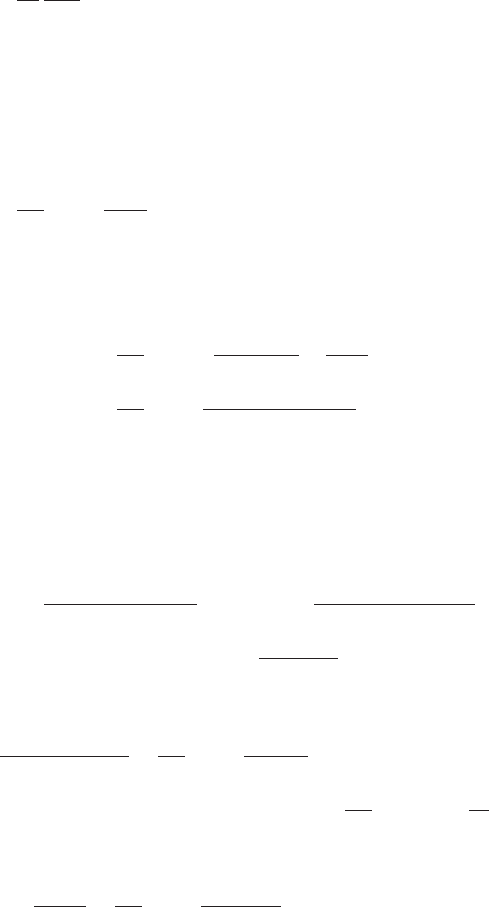
lim
$z!0
f z $z f z
$z
1
2Π
C
w
f w
w z
2
f
'
z
1
2Π
C
wfw
z
w z
1
(1.159)
is also analytic within D. Repeating this process, we obtain
f
n
z
n
f z
z
n
n!
2Π
C
w
f w
w z
n1
(1.160)
by induction. Therefore, we have demonstrated by construction the remarkably powerful
theorem that analytic functions have derivatives of all orders. This also requires all partial
derivatives of its component functions to be continuous in D. This theorem will soon be
used to derive series representations of analytic functions.

1.11 Complex Sequences and Series 37
Theorem 7. If a function f is analytic at a point, then derivatives of all orders exist and
are analytic at that point.
1.10.5 Morera’s Theorem
The converse of Cauchy–Goursat theorem is known as Morera’s theorem:
Theorem 8. Morera’s theorem: If a function f z is continuous in a simply connected
region R and
C
f zz 0 for every simple closed contour C within R, then f z is
analytic throughout R.
If every closed path integral vanishes, the path integral between two points in the
domain of analyticity D depends only upon the end points and is independent of the path,
provided that the path lies entirely within D. Hence, we define the function Fz by means
of the definite integral
Fz
2
Fz
1
z
2
z
1
f zz (1.161)
Clearly,
z
2
z
1
f z f z
1
z Fz
2
Fz
1
z
2
z
1
f z
1
(1.162)
such that the limit as z
2
! z
1
lim
z
2
!z
1
z
2
z
1
f z f z
1
z
z
2
z
1
lim
z
2
!z
1
Fz
2
Fz
1
z
2
z
1
f z
1
F
'
z
1
f z
1
(1.163)
compares F
'
z
1
with f z
1
. However, the integral vanishes in the limit of vanishing range
of integration because f z is continuous in D, such that
lim
z
2
!z
1
z
2
z
1
f z f z
1
z
z
2
z
1
0 F
'
z
1
f z
1
(1.164)
Thus, Fz is analytic in D with F
'
z f z. Therefore, because the derivative of an
analytic function is also analytic, we conclude that f z must also be analytic, proving
Morera’s theorem.
Morera’s theorem is sometimes useful for proving general properties for analytic func-
tions of various types, but is rarely of practical value to more detailed calculations.
1.11 Complex Sequences and Series
1.11.1 Convergence Tests
An infinite sequence of complex numbers z
n
,n 1, 2,... can be represented by com-
bining two sequences of real numbers x
n
,n 1, 2,... and y
n
,n 1, 2,... such that
38 1 Analytic Functions
z
n
x
n
y
n
. The sequence z
n
converges to z if for any small positive Ε there exists an inte-
ger N such that z
n
z < Ε for n>N. Convergence of a complex series z
n
to z xy then
requires convergence of both x
n
to x and y
n
to y. Many of the properties of real sequences
can be adapted to complex sequences with only minor and obvious changes. Therefore,
we state without proof the Cauchy convergence principle:
Theorem 9. The sequence z
n
converges if and only if for every small positive Ε there
exists an integer N
Ε
such that z
m
z
n
< Ε for any m, n > N
Ε
.
If z
n
and w
n
are two convergent sequences with limits z and w, then az
n
bw
n
and
z
n
w
n
are also convergent sequences with limits az bw and zw.
An infinite series of complex numbers z
k
converges if the sequence of partial sums
S
n
n
k1
z
k
(1.165)
converges to S, such that
lim
n!
S
n
S S
k1
z
k
(1.166)
If the sequence of partial sums does not converge, the corresponding series diverges.
Aseriesisabsolutely convergent if the series of moduli
n
k1
z
k
(1.167)
converges. An absolutely convergent series converges, but a convergent series need not
converge absolutely. A convergent series that is not absolutely convergent is described as
conditionally convergent. For example, the alternating harmonic series
k1
k
/k con-
verges conditionally but not absolutely because
k1
k
1
diverges. Term-by-term addition
of convergent series yields another convergent series, but convergence of a series formed
by termwise multiplication requires absolute convergence of the individual series.
If z
k
does not converge to zero, the corresponding series diverges because the sequence
of partial sums will not satisfy the Cauchy convergence condition. However, convergence
of the sequence of terms to zero does not ensure convergence of the series. The most gen-
eral analysis of a series separates its terms into real and imaginary parts and then applies
one of the many tests developed for series of real numbers to the real and imaginary sub-
series separately; the complex series then converges if both its real and imaginary subseries
converge. However, it is usually simpler and often sufficient to test for absolute conver-
gence instead. The following convergence tests familiar for real series can be generalized
to complex series.
Comparison test: If 0 z
k
a
k
for sufficiently large k and
k
a
k
converges, then
k
z
k
converges absolutely.

1.11 Complex Sequences and Series 39
Ratio test: If z
k1
/z
k
r for all k>N, then
k
z
k
converges absolutely if r<1. Alter-
natively, if r lim
k!
z
k1
/z
k
the series converges absolutely if r<1 but diverges if
r>1. This test is inconclusive if r 1.
Root test: If z
k
1/k
r for all k>N, then
k
z
k
converges absolutely if r<1. Alterna-
tively, if r lim
k!
z
k
1/k
the series converges absolutely if r<1 but diverges if r>1.
This test is also inconclusive if r 1.
Integral test: Suppose that f kz
k
where f x is defined for x 2 n 2 1. The series then
converges absolutely if the integral
n
f xx converges.
Note that the ratio test is indeterminate when lim
k!
z
k1
/z
k
1. For example, the har-
monic series z
k
k
1
diverges while the alternating harmonic series converges. A “sharp-
ened” version, established in the exercises, shows that a series converges absolutely if the
ratio of successive terms takes the form
a
n1
a
n
1
s
n
(1.168)
for large n with s>1.
Often the terms of a series will themselves be functions of a complex variable, z, such
that
f
n
z
n
k1
g
k
z (1.169)
represents a sequence f
n
z of partial sums. If such a sequence converges for all z in a
region R, such that
z R f zlim
n!
f
n
zlim
n!
n
k1
g
k
z (1.170)
then f
n
z is described as a series representation of the function f z valid within the con-
vergence region R. Often the convergence region takes the form of a disk, z z
0
R, with
center z
0
and radius of convergence R. If a series converges for all z within z z
0
<R
but diverges for some points on the circle z z
0
R, one still reports a radius of conver-
gence R. The problem then is to determine the radius of convergence.
Example
What is the radius of convergence for a geometric series,
k0
z
k
, extended to the complex
plane? According to the ratio test,
z
k1
z
k
z
k1
z
k
z (1.171)
this series converges absolutely for any z < 1 and diverges for z > 1. Thus, the radius of
convergence is 1. Notice that even though the ratio test is inconclusive for z1, this series
40 1 Analytic Functions
clearly diverges on the unit circle because the terms do not approach zero. Alternatively,
by the ratio test
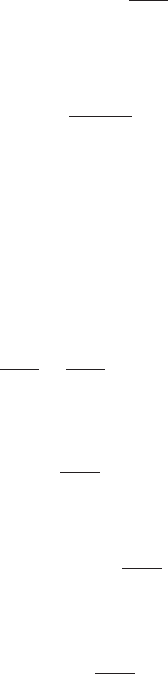
lim
k!
z
k
1/k
z (1.172)
one finds convergence for z > 1 and divergence for z21. Furthermore, one can demon-
strate that
z < 1 lim
n!
n
k0
z
k
1
1 z
(1.173)
within the radius of convergence. Let
f
n
z
n
k0
z
k
1 z
n1
1 z
(1.174)
represent a sequence of complex numbers, where the last step is verified by direct multi-
plication
1 z1 z z
2
... z
n
1 z z
2
... z
n
z z
2
... z
n1
1 z
n1
(1.175)
Then, separating the constant term (for fixed z) from the variable part of the sequence
f
n
z
1
1 z
z
n1
1 z
(1.176)
and recognizing
z < 1 lim
n!
z
n1
1 z
0 (1.177)
one finds that
z < 1 lim
n!
f
n
z
1
1 z
(1.178)
Therefore, the geometric series
z < 1
k0
z
k
1
1 z
(1.179)
converges to a simple analytic function within the unit circle, thereby extending a familiar
result from the real axis to the complex plane.
1.11.2 Uniform Convergence
A sequence of functions f
n
z is said to converge uniformly to the function f z in a
region R if there exists a fixed positive integer N
Ε
such that f
n
z f z < Ε for any z
1.12 Derivatives and Taylor Series for Analytic Functions 41
within R when n>N
Ε
. Consequently, a uniformly convergent series f
n
z
n
k1
g
k
z
provides an approximation to f z within R with controllable accuracy – there exists a
finite number of terms, even if large, that guarantees a specified degree of accuracy any-
where within the region of uniform convergence. The region of uniform convergence is
always a subset of the region of convergence. For example, although the geometric series
k0
z
k
converges uniformly to 1 z
1
within any disk zR<1 with less than unit
radius and is convergent within z < 1, one cannot properly claim uniform convergence
throughout the open region z < 1 because the convergence becomes so slow near the cir-
cle of convergence that there will always be points within that region that require more than
N terms to achieve the desired accuracy no matter how large N is chosen. Convergence at
z without uniform convergence within the region of interest is described as pointwise.
The most common test for uniform convergence is offered by the Weierstrass M-test:
The series
k
f
k
z is uniformly convergent in region R if there exists a series of positive
constants M
k
such that f
k
z M
k
for all z in R and
k
M
k
converges. The proof follows
directly from the comparison test. (For what it’s worth, M stands for majorant.)
The follow theorems for manipulation of uniformly convergent series can be estab-
lished by straightforward generalization of the corresponding results for real functions.
Continuity theorem: a uniformly convergent series of continuous functions is continuous.
Combination theorem: the sum or product of two uniformly convergent series is uni-
formly convergent within the overlap of their convergence regions.
Integrability theorem: the integral of a uniformly convergent series of continuous func-
tions is equal to the sum of the integrals of each term.
Differentiability theorem: the derivative of a uniformly convergent series of continuous
functions with continuous derivatives is uniformly convergent and is equal to the sum
of the derivatives of each term.
Furthermore, by combining these results one can obtain the more general Weierstrass the-
orem establishing uniformly convergent series as analytic functions within their conver-
gence regions. Thus, the property of uniform convergence is important because it makes
available all theorems in the theory of analytic functions.
Theorem 10. Weierstrass theorem: If the terms of a series
k
g
k
z are analytic throughout
a simply-connected region R and the series converges uniformly throughout R, then its sum
is an analytic function within R and the series may be integrated or differentiated termwise
any number of times.
1.12 Derivatives and Taylor Series for Analytic Functions
1.12.1 Taylor Series
It is now a simple matter to demonstrate the existence of power-series expansions for
analytic functions. Suppose that f is analytic within a disk z z
0
R centered upon z
0

42 1 Analytic Functions
and assume that
f z
n0
a
n
z z
0
n
(1.180)
Consider the integral
I
k
1
2Π
z
1
z z
0
k
(1.181)
evaluated on the circle z z
0
R.Usingz R
Θ
Θ, we find that
I
k
R
1k
2Π
2Π
0
1kΘ
Θ ∆
k,1
(1.182)
vanishes unless k 1. Therefore, the coefficients of the power series can be evaluated
according to
a
n
1
2Π
z
f z
z z
0
n1
f
n
z
0
n!
(1.183)
Although we performed this calculation using circular contours, the same results would be
obtained for arbitrary simple contours within the analytic region because the singularities
in the integrands are confined to a single point, which can be excised. A power series
centered upon the origin is sometimes called a Maclaurin series while a more general
power series about arbitrary z
0
is called a Taylor series.
Theorem 11. Taylor series: If a function f is analytic within a disk z z
0
R, then the
power series f z
n0
a
n
z z
0
n
with a
n
f
n
z
0
n!
converges to f z at all points within
the disk. Conversely, if a power series converges for z z
0
R, it represents an analytic
function within that disk.
It is instructive to demonstrate convergence of the power series directly. Expanding
s z
1
s z
0
1
1
z z
0
s z
0
1
s z
0
1
3
4
4
4
4
4
5
A
n
n
k0
z z
0
s z
0
k
6
7
7
7
7
7
8
(1.184)
where
A
n
z z
0
n1
s z
0
n
s z
(1.185)
the Cauchy integral formula becomes
f z
1
2Π
C
s
f s
s z
n
k0
a
k
z z
0
k
R
n
z z
0
n1
(1.186)
where
a
k
1
2Π
s
f s
s z
0
k1
f
k
z
0
k!
(1.187)

1.12 Derivatives and Taylor Series for Analytic Functions 43
as before and where the remainder takes the form
R
n
1
2Π
C
s
f s
s z
z z
0
n1
s z
0
n1
(1.188)
Identifying
z z
0
Ρ,M max f s, ∆mins z (1.189)
and choosing a circular contour with
s z
0
r>Ρ (1.190)
we find
R
n
Ρ
r
n1
r
∆
M lim
n!
R
n
0 (1.191)
Thus, this power series converges throughout the region of analyticity that surrounds z
0
.
Therefore, the radius of convergence is the distance to the nearest singularity in the com-
plex plane. With more careful analysis, one may find that a Taylor series converges at some
points on the circle of convergence also.
The Taylor series for f z about a point z
0
x
0
, 0 on the real axis has the same form as
the expansion of f x interpreted as a function of the real variable x. More importantly, this
extension of the Taylor theorem to the complex plane often provides the simplest method
for evaluating the radius of convergence of a power series. Consider the hyperbolic tangent
Tanhzz
1
3
z
3
2
15
z
5
17
315
z
7
62
2835
z
9
1382
155 925
z
11
21 844
6 081 075
z
13
... (1.192)
It is difficult to evaluate the general term and to deduce the radius of convergence from
the real-valued series, but from the function of a complex variable we know immediately
that the radius of convergence is Π/ 2 because the nearest roots of Coshz are found at
z Π/ 2.
Sometimes it is necessary to determine the radius of convergence directly from the
terms of the power series. Then one finds
R
lim
n!
a
n1
a
n
1
(1.193)
using the ratio test, or
R lim
n!
a
n
1/n
(1.194)
using the root test. For example, the Maclaurin series for Log1 z takes the form
Log1 z
n1
n1
z
n
n
(1.195)
and one obtains a convergence radius R 1 using the ratio test. In this case the conver-
gence radius is limited by the branch point at z 1. Notice that at z 1 this power series

44 1 Analytic Functions
reduces to the alternating harmonic series
n1
n1
n
Log2 (1.196)
and thus converges for at least one point on the convergence circle, while at z 1the
resulting harmonic series diverges. Applying the root test instead suggests a limit
lim
n!
n
1/n
1 (1.197)
that might not be obvious otherwise.
1.12.2 Cauchy Inequality
Let
Mrmax
zz
0
r
f z (1.198)
represent the maximum modulus of an analytic function on a circle of radius r surrounding
z
0
. We then find that
a
n
1
2Π
z
M
r
n1
Mr
n
a
n
r
n
Mr (1.199)
constrains the coefficients of the Taylor series.
Theorem 12. Cauchy inequality: If a function f z
n0
a
n
z z
0
n
is analytic and
bounded in D and f z Monacirclez z
0
r, then a
n
r
n
M.
1.12.3 Liouville’s Theorem
Theorem 13. Liouville’s theorem: If a function f z is analytic and bounded everywhere
in the complex plane, then f z is constant.
According to the Cauchy inequality, if f z <Mfor z <R, then a
n
R
n
<M.Ifthis
inequality applies in the limit R !, then we must require a
n
! 0forn>0. Therefore,
if f is not constant, it must have a singularity somewhere. The behavior of functions of a
complex variable is largely determined by the nature and locations of their singularities.
1.12.4 Fundamental Theorem of Algebra
Theorem 14. Fundamental theorem of algebra: Any polynomial P
n
z
n
k0
a
n
z
n
of
order n 2 1 must have at least one zero z
0
% P
n
z
0
0 in the finite complex plane.
Although it is difficult to prove the fundamental theorem of algebra using purely alge-
braic means, it is an almost trivial consequence of Liouville’s theorem. If P
n
z has no

1.12 Derivatives and Taylor Series for Analytic Functions 45
zeros, then the function f z1/P
n
z would be analytic throughout the entire complex
plane. Recognizing that
zR !P
n
z ! a
n
R
n
f z!
1
a
n
R
n
(1.200)
it is clear that f z is bounded. Thus, Liouville’s theorem requires f to be constant, but
f z vanishes in the limit R !, which contradicts the absence of zeros in P
n
. Therefore,
P
n
must have at least one zero. Factoring out this root, we write P
n
zz z
1
P
n1
z
and apply the theorem to P
n1
, concluding that it must also have a root if n>2. Repeating
this process, we determine that a polynomial of degree n must have n roots, although some
might be repeated.
1.12.5 Zeros of Analytic Functions
If a function fz is analytic at z
0
there exists a disk z z
0
<Rwherein the Taylor series
converges, such that
z z
0
<R f z
n0
a
n
z z
0
n
(1.201)
Suppose that z
0
was chosen to be a root of f z
0
0, such that a
0
0. If a
1
0, we
describe z
0
as a simple zero of f , but if all a
n
0 with n<mwhile a
m
0, we describe
z
0
as a zero of order m. It is then useful to express the Taylor series in the form
f zz z
0
m
Φz (1.202)
where the auxiliary function
Φz
n0
a
mn
z z
0
n
(1.203)
employing the coefficients a
n
with n 2 m has the nonzero value Φz
0
a
m
at z
0
. Clearly
Φ is continuous at z
0
and is analytic within the radius of convergence. Therefore, for any
small positive number there exists a corresponding radius ∆ such that
Φza
m
< whenever z z
0
< ∆ (1.204)
Suppose there were another point z
1
in a neighborhood of z
0
where Φz
1
0, such that
Φz
1
0 a
m
< whenever z
1
z
0
< ∆ (1.205)
can only be satisfied if a
m
0, contrary to our assumption that z
0
is a zero of order m.
Therefore, we conclude that if f is analytic and does not vanish identically, there must
exist a neighborhood around any root in which no other root is found; in other words, the
roots of analytic functions are isolated.
Theorem 15. Suppose that a function f z is analytic at z
0
and that f z
0
0. Then
there must exist a neighborhood of z
0
containing no other zeros of f unless f vanishes
identically.