
Krantz W.B. Scaling Analysis in Modeling Transport and Reaction Processes: A Systematic Approach to Model Building and the Art of Approximation
Подождите немного. Документ загружается.

DESIGN OF A MEMBRANE–LUNG OXYGENATOR 423
10 20 3040506070
1.6
1.4
1.2
1
Sh
v
Sh
= 12
Aw
U
wR
2
v
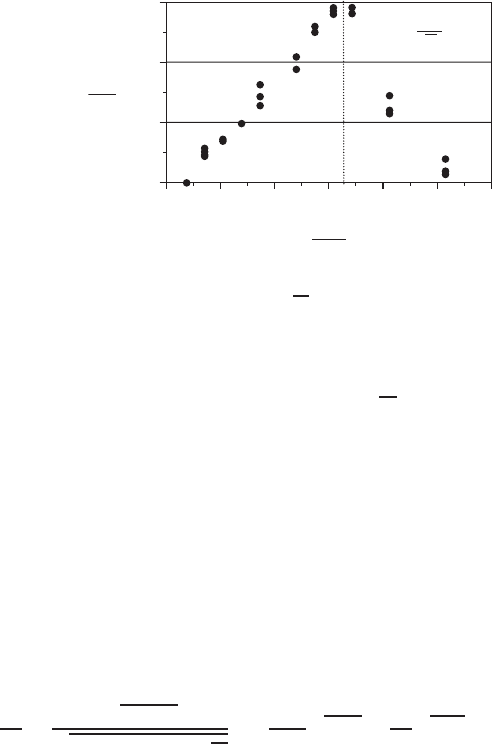
Figure 7.2-2 Effect of the dimensionless group ωR
2
1
ν on the ratio of the Sherwood num-
ber with and without axial vibrations for Aω
1
U = 12 and Gz = 25; maximum enhancement
occurs at ωR
2
1
ν
∼
=
43. Data are for oxygen mass transfer to water. [From W. B. Krantz,
R. R. Bilodeau, M. E. Voorhees, and R. J. Elgas, J. Membrane Sci., 124, 283–299 (1997).]
AplotofSh
v
/
Sh as a function of ωR
2
/
ν for Aω
/
U = 12 and Gz = 25 is shown
in Figure 7.2-2. One observes the dramatic “tuned” response that was anticipated
in Section 5.10; a maximum enhancement of approximately 1.6 is observed. Our
◦
(1) scaling analysis can provide considerable insight into the reason for this tuned
response and the maximum that occurs at ωR
2
1
ν
∼
=
43. Equation (7.2-30) indicates
that the momentum boundary-layer thickness decreases with an increase in the
oscillation frequency, whereas equation (7.2-32) indicates that the solutal boundary-
layer thickness increases with an increase in the oscillation frequency; for this
reason, the performance enhancement displays a maximum with respect to the
oscillation frequency. The fact that this maximum occurs at ωR
2
1
ν
∼
=
43 can be
explained by considering the ratio of the momentum to solutal boundary-layer
thickness for the conditions in Figure 7.2-2:
δ
m
δ
s
=
√
2πν/ω
ωR
2
D
AB
L/16πνU
= 8
ν
ωR
2
√
πGz =
8
43
√
25π = 1.65 (7.2-50)
That is, the maximum enhancement in the performance occurs at a frequency at
which the momentum and solutal boundary layers have the same thickness to within
the
◦
(1) accuracy of scaling analysis.
This example indicates that an
◦
(1) scaling analysis provides considerably more
information on a process than does simple dimensional analysis through either the
scaling approach or the Pi theorem. Indeed, the
◦
(1) scaling analysis indicated that
the Sherwood number ratio could be correlated in terms of the same four dimen-
sionless groups that we obtained from the simple scaling analysis approach to
dimensional analysis that was carried out in Section 5.10. Moreover,
◦
(1) scaling
analysis provided valuable insight into why the performance enhancement displays
a maximum with respect to the applied frequency. It also provided an explana-
tion for why this maximum occurred at ωR
2
1
ν
∼
=
43 for the process conditions
424 APPLICATIONS IN PROCESS DESIGN
in Figure 7.2-2. Indeed, equation (7.2-50) can serve as a guide to the design of
a membrane–lung oxygenator; that is, it indicates how the frequency required to
achieve optimum performance enhancement changes as a function of the Graetz
number, kinematic viscosity, and radius of the hollow-fiber membrane.
7.3 PULSED SINGLE-BED PRESSURE-SWING ADSORPTION
FOR PRODUCTION OF OXYGEN-ENRICHED AIR
Pressure swing adsorption (PSA) is a separations technology that is used to selec-
tively adsorb one or more components from a gas mixture in order to produce a
product stream enriched in the less strongly adsorbed component(s). In particular,
it is used to produce oxygen for both industrial as well as medical applications;
indeed, at the dawn of the twentieth-first century, 20% of the world’s oxygen pro-
duction was achieved by PSA. To facilitate selective adsorption and regeneration,
respectively, conventional PSA uses two parallel packed adsorbent beds that are
alternately subjected to pressurization and depressurization. However, conventional
PSA has several disadvantages: low separation efficiency per unit mass of adsor-
bent material; large capital investment for replacement of adsorbent material due
to attrition; and complexity of the apparatus. Moreover, since PSA is used for
critical life support for patients suffering from chronic obstructive pulmonary dis-
ease (COPD) and other respiratory problems, there is considerable motivation to
develop a compact portable oxygenator that would greatly improve their quality
of life. Hence, research in PSA has been directed toward improving the separation
efficiency by decreasing the size of the adsorbent particles, reducing the complexity
of the apparatus by using a single adsorption bed, and minimizing the impact of
the pressure drop by making the adsorption bed shorter. In 1981 the pulsed packed
single-bed PSA process was developed, which employed much smaller adsorbent
particles (20 to 120 mesh).
7
A more recently proposed innovation is the use of
a thin monolithic single-bed adsorbent composed of integrally bound micrometer-
scale crystals which avoids particle attrition problems and provides exceptionally
large surface area and high gas throughputs.
8
This novel technology offers the
promise of very efficient oxygen production through use of a device that is sig-
nificantly smaller than current oxygenators. A major problem in developing any
new process is to determine appropriate design parameters to carry out bench- or
pilot-scale testing. Scaling analysis was used in developing the pulsed single-bed
PSA process for a thin monolithic adsorbent in order to determine how to model it
as well as to specify principal design parameters such as the applied pressure and
pressurization time. In this section we illustrate how scaling analysis was applied
to design this process and to show how it differs from a pulsed packed single-bed
PSA that employs particulate adsorbents. We will also use the scaling approach
to dimensional analysis outlined in Chapter 2 to obtain the optimal dimensionless
groups for correlating experimental or numerical data for the PSA process.
7
R. L. Jones and G. E. Keller, Sep. Process Technol., 2, 17 (1981).
8
E. M. Kopaygorodsky, V. V. Guliants, and W. B. Krantz, A.I.Ch.E. Jl., 50(5), 953 (2004).
PULSED SINGLE-BED PRESSURE-SWING ADSORPTION 425
Compressed
feed
Exhaus
t
gas
Product
g
as
Packed or
monolithic
adsorbent
bed
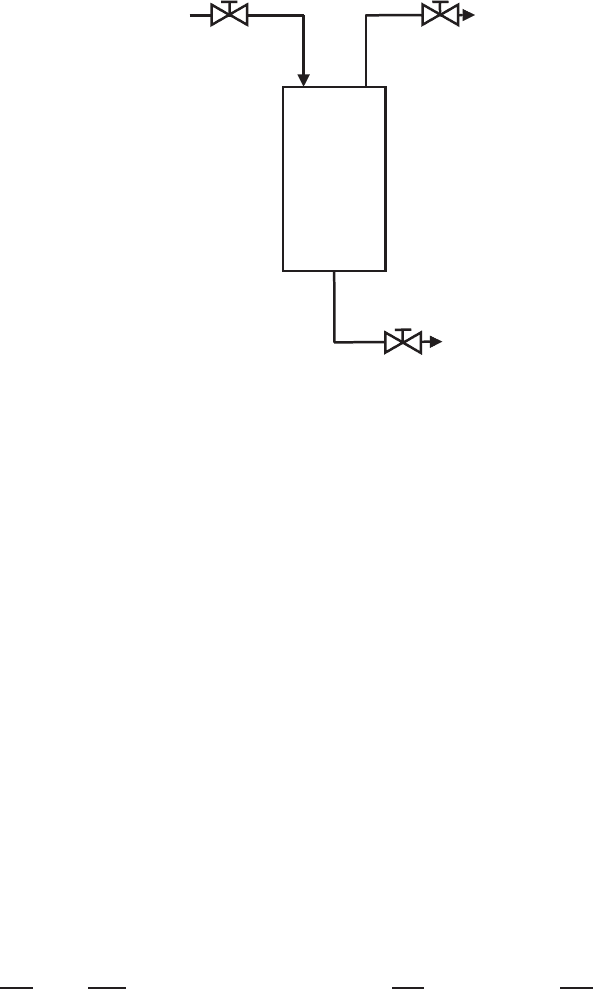
Figure 7.3-1 Pulsed single-bed pressure swing adsorption (PSA) process, which employs
cyclic pressurization and depressurization steps to selectively adsorb one or more components
from a gas mixture to produce a product stream enriched in the less strongly adsorbed
component(s).
A schematic of the pulsed single-bed PSA process is shown in Figure 7.3-1.
This process involves using either a packed bed or a monolith adsorbent with
a PSA cycle consisting of pressurization and depressurization steps. During the
pressurization step for air separation, a high pressure is applied to the surface of
the adsorbent bed for a short time. Since the product side of the bed is maintained
at atmospheric pressure, a pressure gradient is created to cause airflow through
the adsorbent bed. Nitrogen is preferentially retained in the adsorbent bed, and
oxygen-enriched gas is collected as a product. During the depressurization step,
the product flow outlet at the end of the bed is closed and the adsorbent bed is
exposed to a lower pressure (typically, atmospheric) at the feed end for a short
time in order to regenerate the adsorbent.
In writing the describing equations for the PSA process, we assume a binary gas
mixture consisting of components A and B, corresponding to nitrogen and oxy-
gen, respectively; constant physical properties; and plug flow through the porous
adsorbent bed. Since the pressurization and depressurization steps involve differ-
ent boundary and initial conditions, they are scaled differently. We focus on the
pressurization step here because it determines whether the desired enrichment of
the product gas can be achieved.
9
Species balances for each component over a differential volume of the adsorbent
bed are given in terms of the molar concentrations c
A
and c
B
by
ε
∂c
A
∂t
=−ε
∂N
A
∂z
− (1 − ε) ˙q
A
where N
A
=−D
L
∂c
A
∂z
+ c
A
ˆu
z
∼
=
−D
L
∂c
A
∂z
+ c
A
u
z
(7.3-1)
9
Scaling the depressurization step is considered in Practice Problem 7.P.9.

426 APPLICATIONS IN PROCESS DESIGN
ε
∂c
B
∂t
=−ε
∂N
B
∂z
− (1 − ε) ˙q
B
where N
B
=−D
L
∂c
B
∂z
+ c
B
ˆu
z
∼
=
−D
L
∂c
B
∂z
+ c
B
u
z
(7.3-2)
where ε is the porosity of the packed adsorbent column, D
L
is the effective axial
dispersion coefficient,
10
ˆu
z
and u
z
are the molar- and mass-average velocities, and
U is the superficial velocity through the adsorbent bed described by Darcy’s law:
εu
z
= U =−
k
p
μ
∂P
∂z
(7.3-3)
where k
p
is the permeability of the porous adsorbent bed and μ is the shear viscosity
of the gas. The molar adsorption rate of component i per unit volume of adsorbent,
˙q
i
,isgivenby
˙q
i
= k
i
(q
e
i
− q
i
) (7.3-4)
where k
i
is the mass-transfer coefficient for component i, q
i
the adsorbent concen-
tration (moles per unit volume of adsorbent) of component i,andq
e
i
the equilibrium
adsorbent concentration of component i given by
q
e
i
=
q
∞
i
l
i
p
i
1 + l
A
p
A
+ l
B
p
B
(7.3-5)
where q
∞
i
is the equilibrium adsorbent concentration of component i as p
i
→∞
and l
i
is the equilibrium adsorption distribution coefficient between the gas and
solid phases for component i. Note that the microscale–macroscale methodol-
ogy introduced in Chapter 6 to model mass transfer with chemical reaction is
being employed here; that is, the discrete nature of the adsorbent particles on the
microscale is incorporated into a homogeneous sink term on the macroscale. The
convective mass transfer with adsorption is described by a mass-transfer coefficient
analogous to the manner in which the microscale was handled for mass transfer
with chemical reaction. The appropriate form of the overall continuity equation is
obtained by adding equations (7.3-1) and (7.3-2) to obtain
ε
∂c
∂t
=−
∂(Uc)
∂z
− (1 − ε)( ˙q
A
+˙q
B
) (7.3-6)
where c is the molar density given by c = c
A
+ c
B
. Note that in arriving at
equation (7.3-6) we have used the definition of the molar-average velocity, ˆu
z
=
(N
A
+ N
B
)/c, and have made the assumption that u = εu
z
∼
= ε ˆu
z
, which is rea-
sonable for gases such as air for which the two components have nearly the same
molecular weight.
The operating pressure is usually sufficiently low to permit assuming that the
molar density and concentration can be described by the ideal gas law, given by
c =
P
RT
,c
i
=
p
i
RT
(7.3-7)
10
The effective dispersion coefficient incorporates the effects of both molecular diffusion within the
void volume and the dispersion due to the hydrodynamics of the flow through the porous media.

PULSED SINGLE-BED PRESSURE-SWING ADSORPTION 427
where P is the total pressure, p
i
the partial pressure of component i,andR the
gas constant. Hence, equations (7.3-1), (7.3-2), and (7.3-6), only two of which are
independent, can be expressed in terms of the partial and total pressures as follows:
ε
∂
p
A
∂t
+
∂(U
p
A
)
∂z
= εD
L
∂
2
p
A
∂z
2
− (1 − ε)RT ˙q
A
(7.3-8)
ε
∂
p
B
∂t
+
∂(U
p
B
)
∂z
= εD
L
∂
2
p
B
∂z
2
− (1 − ε)RT ˙q
B
(7.3-9)
ε
∂P
∂t
+
∂(UP)
∂z
−=(1 − ε)RT ( ˙q
A
+˙q
B
) (7.3-10)
Two spatial boundary conditions are required for both P and
p
A
. During pres-
surization one can operate PSA by controlling the upstream and downstream total
pressures, P
0
and P
L
, respectively, or by controlling the ßow rate U and one of the
pressures. We assume the former mode of operation. This implies that during pres-
surization the partial pressures of the components in the feed,
p
A0
and p
B0
, will
be known at the entrance to the adsorption column. However, if axial dispersion
cannot be neglected, there necessarily has to be a jump in the species concentration
at z = 0. Jump species balances for components A and B at z = 0 are given by
N
A
|
z=0
−
= εN
A
|
z=0
+
⇒ p
A
U|
z=0
−
=
− εD
L
∂p
A
∂z
+
p
A
U
z=0
+
(7.3-11)
N
B
|
z=0
−
= εN
B
|
z=0
+
⇒ p
B
U|
z=0
−
=
− εD
L
∂p
B
∂z
+
p
B
U
z=0
+
(7.3-12)
where the notation 0
−
and 0
+
denotes evaluation on the upstream and downstream
sides, respectively, of the plane at z = 0. The addition of equations (7.3-11) and
(7.3-12) gives the appropriate upstream boundary condition for the total pressure:
(N
A
+ N
B
)|
z=0
−
= ε(N
A
+ N
B
)|
z=0
+
⇒ UP|
z=0
−
= UP|
z=0
+
⇒ P = P
0
(7.3-13)
Adding up similar jump balances on components A and B at the downstream end of
the column yields the following downstream boundary condition for the total pressure:
ε(N
A
+ N
B
)|
z=L
−
= (N
A
+ N
B
)|
z=L
+
⇒ UP|
z=L
−
= UP|
z=L
+
⇒ P = P
L
(7.3-14)
where the notation L
−
and L
+
denotes evaluation on the upstream and downstream
sides, respectively, of the plane at z = L. Owing to the presence of the axial dis-
persion term in equation (7.3-8) or (7.3-9), a second boundary condition is required
for the partial pressure or its derivative. Frequently, it is assumed without justiÞ-
cation that the spatial derivative of the partial pressure is zero at the downstream
end of the adsorption bed. However, this implies that there is no further adsorption
at the end of the bed. This is not possible if there is an overall pressure drop
since the amount of species adsorbed will change in response to the total pres-
sure even if local adsorption equilibrium is achieved. Hence, we merely indicate

428 APPLICATIONS IN PROCESS DESIGN
this downstream boundary condition formally via an unspecified function of time.
However, we use the results of our scaling analysis later in this development to
suggest a downstream boundary condition that allows for a change in adsorption
at the downstream end of the bed. Hence, for the pressurization step the boundary
conditions for the describing equations are given by
U(y
A0
P
0
− p
A
) =−εD
L
∂p
A
∂z
at z = 0, 0 ≤ t ≤ t
p
(7.3-15)
P = P
0
at z = 00≤ t ≤ t
p
(7.3-16)
p
A
= f(t) at z = L, 0 ≤ t ≤ t
p
(7.3-17)
P = P
L
at z = L, 0 ≤ t ≤ t
p
(7.3-18)
where y
A0
is the mole fraction of component A in the feed. The initial conditions
are assumed to be the following:
P = P
L
at t = 0, 0 ≤ z ≤ L (7.3-19)
p
A
= y
A0
P
L
at t = 0, 0 ≤ z ≤ L (7.3-20)
These conditions imply that the depressurization step is done using the same gas
as the feed at a pressure equal to that maintained at the end of the bed dur-
ing the pressurization step. These are reasonable initial conditions for the use of
PSA to produce an oxygen-enriched product from air for oxygenator applications.
Equations (7.3-3) through (7.3-5), (7.3-8), and (7.3-10), along with the boundary
and initial conditions given by equations (7.3-15) through (7.3-20), constitute the
describing equations for the pressurization step in pulsed PSA (step 1).
Define the following dimensionless variables in terms of unspecified scale and
reference factors (steps 2, 3, and 4):
P
∗
≡
P − P
r
P
s
; p
∗
A
≡
p
A
− p
Ar
p
As
; U
∗
≡
U
U
s
; q
∗
A
≡
q
A
q
As
;
q
∗
B
≡
q
B
q
Bs
;˙q
∗
A
≡
˙q
A
˙q
As
;˙q
∗
B
≡
˙q
B
˙q
Bs
; t
∗
≡
t
t
s
; z
∗
≡
z
z
s
(7.3-21)
We have introduced reference factors for the dimensionless total pressure and partial
pressure since they are not naturally referenced to zero. Substitute these dimension-
less variables into the describing equations and divide through by the dimensional
coefficient of one term in each equation to obtain the following dimensionless
describing equations (steps 5 and 6):
εz
s
U
s
t
s
∂P
∗
∂t
∗
+
∂
&
U
∗
(P
∗
+ P
r
/P
s
)
'
∂z
∗
=−
(1 − ε)RT ˙q
As
z
s
U
s
P
s
˙q
∗
A
+
˙q
Bs
˙q
As
˙q
∗
B
(7.3-22)

PULSED SINGLE-BED PRESSURE-SWING ADSORPTION 429
εz
s
U
s
t
s
∂p
∗
A
∂t
∗
+
∂[U
∗
(p
∗
A
+ p
Ar
/p
As
)]
∂z
∗
=
εD
L
U
s
z
s
∂
2
p
∗
A
∂z
∗2
−
(1 − ε)RT ˙q
As
z
s
U
s
p
As
˙q
∗
A
(7.3-23)
U
∗
=−
k
p
P
s
μU
s
z
s
∂P
∗
∂z
∗
(7.3-24)
˙q
∗
A
=
k
A
q
As
˙q
As
(q
e∗
A
− q
∗
A
) (7.3-25)
˙q
∗
B
=
k
B
q
Bs
˙q
Bs
(q
e∗
B
− q
∗
B
) (7.3-26)
q
e∗
A
=
q
∞
A
l
A
p
As
q
As
×
p
∗
A
+ p
Ar
/p
As
1 + l
A
p
As
p
∗
A
+ p
Ar
/p
As
+ l
B
p
As
&
(P
s
/p
As
)P
∗
−
p
∗
A
+ p
Ar
/p
As
'
(7.3-27)
q
e∗
B
=
q
∞
B
l
B
p
As
q
Bs
×
(P
s
/p
As
)P
∗
−
p
∗
A
+ (p
Ar
/p
As
1 + l
A
p
As
p
∗
A
+ p
Ar
/p
As
+ l
B
p
As
&
(P
s
/p
As
)P
∗
− p
∗
A
− p
Ar
/p
As
'
(7.3-28)
P
∗
=
P
0
− P
r
P
s
at z
∗
= 0, 0 ≤ t
∗
≤
t
p
t
s
(7.3-29)
P
∗
=
P
L
− P
r
P
s
at z
∗
=
L
z
s
, 0 ≤ t
∗
≤
t
p
t
s
(7.3-30)
U
∗
y
A0
P
0
− p
Ar
p
As
− p
∗
A
=−
εD
L
U
s
z
s
∂p
∗
A
∂z
∗
at z
∗
= 0, 0 ≤ t
∗
≤
t
p
t
s
(7.3-31)
p
∗
A
= f(t
∗
) at z
∗
=
L
z
s
, 0 ≤ t
∗
≤
t
p
t
s
(7.3-32)
P
∗
=
P
L
− P
r
P
s
at t
∗
= 0, 0 ≤ z
∗
≤
L
z
s
(7.3-33)
p
∗
A
=
1
p
As
(y
A0
P
L
− p
Ar
) at t
∗
= 0, 0 ≤ z
∗
≤
L
z
s
(7.3-34)
We now set appropriate dimensionless groups equal to 1 or zero to ensure that
the dimensionless dependent and independent variables are bounded of
◦
(1) and

430 APPLICATIONS IN PROCESS DESIGN
thereby to determine the scale and reference factors (step 7). The scale and refer-
ence pressure come from setting the appropriate dimensionless groups in equations
(7.3-29) and (7.3-30) equal to 1 and zero, respectively, to obtain
P
r
− P
L
P
s
= 0 ⇒ P
r
= P
L
;
P
0
− P
r
P
s
= 1 ⇒ P
s
= P
0
− P
L
≡ P (7.3-35)
The absence of an explicit downstream boundary condition for
p
A
requires spe-
cial consideration in determining the reference partial pressure
p
Ar
. Clearly, the
minimum value of
p
A
occurs at the downstream end of the bed and is such that
0 ≤
p
A
|
z=L
≤ y
A0
P
L
; that is, the minimum value of the partial pressure of the
preferentially adsorbed component is bounded between the limits of total and neg-
ligible adsorption. Since we seek to bound
p
∗
A
to be
◦
(1), let us choose the smallest
possible value; that is,
p
Ar
= 0. The partial pressure scale is then determined by
setting the appropriate dimensionless group in equation (7.3-31) equal to 1. Hence,
we obtain
p
Ar
= 0; p
As
= y
A0
P
0
(7.3-36)
The scale factor for the time is obtained by setting the dimensionless group appear-
ing in equations (7.3-29) through (7.3-32) equal to 1:
t
p
t
s
= 1 ⇒ t
s
= t
p
(7.3-37)
The scale factor for the spatial coordinate can be obtained by setting the dimension-
less group appearing in equations (7.3-30) and (7.3-32) through (7.3-34) equal to 1:
L
z
s
= 1 ⇒ z
s
= L (7.3-38)
The scale for the velocity is obtained by setting the dimensionless group in equation
(7.3-24) equal to 1:
k
p
P
s
μU
s
z
s
=
k
p
P
μU
s
L
= 1 ⇒ U
s
=
k
p
P
μL
(7.3-39)
The scales for the equilibrium adsorption concentrations are obtained by setting
the dimensionless groups for the leading-order behavior in equations (7.3-27) and
(7.3-28) equal to 1:
q
∞
A
l
A
p
As
q
As
= 1 ⇒ q
As
= q
∞
A
l
A
y
A0
P
0
q
∞
B
l
B
p
As
q
Bs
= 1 ⇒ q
Bs
= q
∞
B
l
B
y
A0
P
0
(7.3-40)

PULSED SINGLE-BED PRESSURE-SWING ADSORPTION 431
The scales for the adsorption rates are obtained by setting the dimensionless groups
in equations (7.3-25) and (7.3-26) equal to 1:
k
A
q
As
˙q
As
= 1 ⇒˙q
As
= k
A
q
∞
A
l
A
y
A0
P
0
k
B
q
Bs
˙q
Bs
= 1 ⇒˙q
Bs
= k
B
q
∞
B
l
B
y
A0
P
0
(7.3-41)
This scaling identifies four relevant time scales for the pulsed single-bed PSA
process, which are defined as
t
c
=
L
U
s
=
μL
2
k
p
P
= characteristic contact time (7.3-42)
t
p
= pressurization time = total time available for adsorption (7.3-43)
t
d
≡
L
2
D
L
∼ characteristic axial dispersion time (7.3-44)
t
ad
=
1
(1 − ε)RT k
i
q
∞
i
l
i
= characteristic adsorption time for species i (7.3-45)
Substituting the scale and reference factors into equations (7.3-22) through
(7.3-34) results in the following dimensionless describing equations:
1
∂P
∗
∂t
∗
+
∂[U
∗
(P
∗
+
6
)
∂z
∗
=−
3
4
[(q
e∗
A
− q
∗
A
) +
5
(q
e∗
B
− q
∗
B
)] (7.3-46)
1
∂p
∗
A
∂t
∗
+
∂(U
∗
p
∗
A
)
∂z
∗
=
2
∂
2
p
∗
A
∂z
∗2
−
3
(q
e∗
A
− q
∗
A
) (7.3-47)
U
∗
=−
∂P
∗
∂z
∗
(7.3-48)
q
e∗
A
=
p
∗
A
1 +
4
7
p
∗
A
+
8
(P
∗
−
4
p
∗
A
)
(7.3-49)
q
e∗
B
=
(1/
4
)P
∗
− p
∗
A
1 +
4
7
p
∗
A
+
8
(P
∗
−
4
p
∗
A
)
(7.3-50)
P
∗
= 1atz
∗
= 0, 0 ≤ t
∗
≤ 1 (7.3-51)
P
∗
= 0atz
∗
= 1, 0 ≤ t
∗
≤ 1 (7.3-52)
U
∗
(1 − p
∗
A
) =−
2
∂p
∗
A
∂z
∗
at z
∗
= 0, 0 ≤ t
∗
≤ 1 (7.3-53)
p
∗
A
= f(t
∗
) at z
∗
= 1, 0 ≤ t
∗
≤ 1 (7.3-54)

432 APPLICATIONS IN PROCESS DESIGN
P
∗
= 0att
∗
= 0, 0 ≤ z
∗
≤ 1 (7.3-55)
p
∗
A
=
6
1 +
6
at t
∗
= 0, 0 ≤ z
∗
≤ 1 (7.3-56)
where we have substituted equations (7.3-25) and (7.3-26) for the adsorption rates
into the overall molar and species-balances given by equations (7.3-22) and
(7.3-23). The dimensionless groups introduced into equations (7.3-46) through (7.3-
56) are defined as
1
≡
εμL
2
k
p
P t
p
= ε
μL
2
/k
p
P
t
p
= ε
t
c
t
p
∝
contact time
pressurization time
(7.3-57)
2
≡
εμD
L
k
p
P
= ε
μL
2
/k
p
P
L
2
/D
L
= ε
t
c
t
d
∝
contact time
axial dispersion time
(7.3-58)
3
≡
(1 − ε)RT k
A
q
∞
A
l
A
μL
2
k
p
P
=
μL
2
/k
p
P
1/(1 − ε)RT k
A
q
∞
A
l
A
=
t
c
t
ad
∝
contact time
adsorption time
(7.3-59)
4
≡
y
A0
P
0
P
= dimensionless partial pressure in feed (7.3-60)
5
≡
k
B
q
∞
B
l
B
k
A
q
∞
A
l
A
=
1/(1 − ε)RT k
A
q
∞
A
l
A
1/(1 − ε)RT k
B
q
∞
B
l
B
∼
adsorption time for speciesA
adsorption time for speciesB
(7.3-61)
6
≡
P
L
P
∼ dimensionless reference pressure (7.3-62)
7
≡ l
A
P ∼ nonlinear adsorption effects forA (7.3-63)
8
≡ l
B
P ∼ nonlinear adsorption effects forB (7.3-64)
Now let us use our scaling analysis to design the pulsed PSA process for both the
packed and monolithic single-bed configurations (step 8). Table 7.3-1 summarizes
typical design parameters for the use of pulsed single-bed PSA employing both
a packed adsorption column and a monolithic adsorbent (zeolite 5
˚
A) to provide
an oxygen-enriched product from an air feed stream. The monolithic adsorbent
addresses the problems associated with using a packed adsorption column: namely,
the ablation of the particles and low product flow rates associated with a relatively
long adsorbent bed. Whereas the adsorbents used in pulsed packed bed PSA have
aradius(R
P
) on the order of hundreds of micrometers, the microcrystals consti-
tuting the adsorbent monolith have a characteristic pore size on the order of 1 μm.
Hence, the mass-transfer coefficient is much larger, whereas the permeability is
much smaller for the monolithic adsorbent. Note that the pressurization time is
unspecified for both the packed and monolithic bed processes in Table 7.3-1 since
this is a design parameter that we seek to determine from the scaling analysis.