
Lopes H.S., Cruz L.M. (eds.) Computational Biology and Applied Bioinformatics
Подождите немного. Документ загружается.


A Comparative Study of Machine Learning and Evolutionary Computation Approaches for Protein Secondary Structure Classification 19
Martin, B. (1995). Instance-based learning: Nearest neighbor with generalisation, Master’s thesis,
Department of Computer Science, University of Waikato, Waikato, New Zealand.
Matthews, B. (1975). Comparison of the predicted and observed secondary structure of T4
phage lysozyme, Biochimica et Biophysica Acta 405(2): 442–451.
Mitchell, T. M. (1997). Machine Learning, McGraw-Hill, New York, USA.
Nelson, D. & Cox, M. (2008). Lehninger Principles of Biochemistry,5
th
edn, W.H. Freeman, New
York, USA.
Nölting, B. (2006). Protein Folding Kinetics,2
nd
edn, Springer-Verlag, Berlin, Germany.
Ohkawa, T., Namihira, D., Komoda, N., Kidera, A. & Nakamura, H. (1996). Protein structure
classification by structural transformation, Proc. of IEEE International Joint Symposia on
Intelligence and Systems, IEEE Computer Society Press, Piscataway, USA, pp. 23–29.
Pauling, L., Corey, R. & Branson, H. (1951a). Configurations of polypeptide chains with
favored orientations of the polypeptide around single bonds: two pleated sheets,
Proceedings of the National Academy of Sciences of the USA 37(11): 729–740.
Pauling, L., Corey, R. & Branson, H. (1951b). The structure of proteins: two hydrogen-bonded
helicel configurations of the polypeptide chain, Proceedings of the National Academy of
Sciences of the USA 37: 205–211.
Platt, J. C. (1998). Fast training of support vector machines using sequential minimal
optimization, in C. B. B. Schoelkopf & A. Smola (eds), Advances in Kernel Methods,
MIT Press, Cambridge, USA.
Quinlan, J. (1993). C4.5: Programs for Machine Learning, San Francisco, USA.
Rabiner, L. (1989). A tutorial on hidden Markov models and selected applications in speech
recognition, 77(2): 257–286.
Scapin, M. & Lopes, H. (2007). A hybrid genetic algorithm for the protein folding problem
using the 2D-HP lattice model., in A. Yang, Y. Shan & L. Bui (eds), Success in
Evolutionary Computation,Vol.92ofStudies in Computational Intelligence,Springer,
Heidelberg, Germany, pp. 205–224.
Seymore, K., McCallum, A. & Rosenfeld, R. (1999). Learning hidden Markov model structure
for information extraction, AAAI 99 Workshop on Machine Learning for Information
Extraction, pp. 37–42.
Shmygelska, A. & Hoos, H. (2005). An ant colony optimisation algorithm for the 2D and 3D
hydrophobic polar protein folding problem, BMC Bioinformatics 6: 30.
Sing, T., Sander, O., Beerenwinke, N. & Lengauer, T. (2005). ROCR: visualizing classifier
performance in R, Bioinformatics 21: 3940–3941.
Sunde, M. & Blake, C. (1997). The structure of amyloid fibrils by electron microscopy and
X-ray diffraction, Advances in Protein Chemistry 50: 123–159.
Tavares, L., Lopes, H. & Lima, C. (2008). A comparative study of machine learning methods
for detecting promoters in bacterial DNA sequences, in D.-S.Huang,D.S.L.
Donald C. Wunsch II & K.-H. Jo (eds), Advanced Intelligent Computing Theories
and Applications, Vol. 5227 of Lecture Notes in Computer Science,Springer-Verlag,
Heidelberg, pp. 959–966.
The UniProt Consortium (2010). The universal protein resource (UniProt) in 2010, Nucleic
Acids Research 38: D142–D148.
Tsunoda, D. & Lopes, H. (2006). Automatic motif discovery in an enzyme database using a
genetic algorithm-based approach, Soft Computing 10: 325–330.
257
A Comparative Study of Machine Learning
and Evolutionary Computation Approaches for Protein Secondary Structure Classification

20 Will-be-set-by-IN-TECH
Tsunoda, D., Lopes, H. & Freitas, A. (2011). A genetic programming method for
protein motif discovery and protein classification, Soft Computing pp. 1–12. DOI
10.1007/s00500-010-0624-9.
Wang, T. L. J. & Ma, Q. (2000). Application of neural networks to biological data mining:
A case study in protein sequence classification, In Proc. of the Sixth ACM SIGKDD
International Conference on Knowledge Discovery and Data Mining, pp. 305–309.
Webb, G. I. (2000). Multiboosting: a technique for combining boosting and wagging,
40: 159–197.
Webb, G. I., Boughton, J. R. & Wang, Z. (2005). Not so naïve Bayes: aggregating
one-dependence estimators, Machine Learning .
Weinert, W. & Lopes, H. (2004). Neural networks for protein classification, Applied
Bioinformatics 3(1): 41–48.
Weinert, W. & Lopes, H. (2006). GEPCLASS: A classification rule discovery tool using
gene expression programming, in X.Li,O.R.Zaïane&Z.-H.Li(eds),Advanced
Data Mining and Applications, Vol. 4093 of Lecture Notes in Computer Science,
Springer-Verlag, Heidelberg, Germany, pp. 871–880.
Witten, I., Frank, E. & Hall, M. (2011). Data Mining: Practical Machine Learning Tools and
Techni ques,3
rd
edn, Morgan Kauffmann, San Francisco.
Wolstencroft, K., Lord, P., Tabernero, L., Brass, A. & Stevens, R. (2006). Protein classification
using ontology classification, Bioinformatics 22(14): e530–e538.
Wüthrich, K. (1986). NMR of Proteins and Nucleic Acids, John Wiley & Sons, New York, USA.
Yanikoglu, B. & Erman, B. (2002). Minimum energy configurations of the 2-dimensional
HP-model of proteins by self-organizing networks, Journal of Computational Biology
9(4): 613–620.
Zheng, Z. & Webb, G. I. (2000). Lazy learning of bayesian rules, Machine Learning 41: 53–87.
258
Computational Biology and Applied Bioinformatics

13
Functional Analysis of the Cervical
Carcinoma Transcriptome: Networks and
New Genes Associated to Cancer
Mauricio Salcedo et al.
*
Laboratorio de Oncología Genómica, Unidad de Investigación en Enfermedades
Oncológicas, Hospital de Oncología, CMN-SXXI, IMSS,
México DF
1. Introduction
Cancer is one of the most important public health problem in Mexico and worldwide,
especially for female population, breast and cervical cancer (CC) types are the most
frequent. Incidence rates of CC are higher in developing countries 40/100,000 women per
year vs. 10/100,000 in developed countries (1). In Mexico there are 12,000 new reports cases
every year (2). The absence of the screening programs or comparatively ineffective screening
programs lead to relatively late diagnosis of the disease and also in differences in the human
papillomavirus (HPV) infection (3). Several types of HPV are associated with CC worldwide
(4, 5), being the HPV16 the most frequent oncogenic type.
Epidemiological and experimental studies suggest that high risk HPV have an important
role in cervical carcinogenesis. Persistent viral infection, genetic background in combination
with constitutive expression of the viral oncogenes as E6 and E7, are decisive steps for
malignant transformation, because these oncoproteins interact with the tumour suppressor
proteins p53 and pRB, respectively for their degradation (6, 7). Finally, these interactions
could induce cellular proliferation and genetic instability for example, which could promote
the accumulation of mutations and aneuploidy (8). In conclusion, viral oncoproteins have a
general impact in global profile of expressed genes, which could be analyzed by high-
throughput methodologies. One of these techniques is DNA oligonucleotide-based
microarray technology, which allows a rapid and high-throughput detection of thousands of
transcripts simultaneously (9-11).
It has been published several studies about gene expression profiles in HPV infected cells.
Mainly these reports are based on gene expression levels altered by E6 and E7 HPV
oncoproteins (12-17). Regarding changes in gene expression profiles in cervical cancer
*
Sergio Juarez-Mendez
1
, Vanessa Villegas-Ruiz
1
, Hugo Arreola
1
, Oscar Perez
2
, Guillermo Gómez
3
,
Edgar Roman-Bassaure
4
, Pablo Romero
1
, Raúl Peralta
1
1 Laboratorio de Oncología Genómica, Unidad de Investigación en Enfermedades Oncológicas, Hospital de
Oncología, CMN-SXXI, IMSS, México DF
2 Laboratorio de Oncología Experimental, Instituto Nacional de Pediatría, SS, México
3 Centro Nacional de Clínica de Displasias, Unidad de Oncología, Hospital General de México, SS.
4 Servicio de Oncología, Hospital General de México, SS.

Computational Biology and Applied Bioinformatics
260
samples, there are a few papers comparing normal cervical expressed genes versus tumors
samples (12, 18), the major aim in those studies was to find potential tumor markers with
clinical value. At present the list of the potential markers is short (p16, survivin).
We have published some works about alterations in gene expression in CC (19, 20). In those
reports we observed that WNT pathway, calcium pathway and some cellular proteases
(MMP11, cathepsin F) could be involved in cervical carcinogenesis. Thus, these findings are
contributing to our knowledge about alterations in CC pathogenesis.
In the present work our microarray data obtained from microarray assay on CC samples
(20) were newly managed and analyzed by using new bioinformatics suite programs and
then, to get others genes altered in cervical cancer, as well as to define signaling pathways
probably implicated in this type of cancer.
2. Material and methods
Biological samples. Eight squamous CC tissues stage IIB (according of International
Federation of Obstetrics and Gynecology, FIGO) HPV16 positive were selected and two
healthy “normal” cervical samples were originally studied. The normal samples were
collected after hysterectomy by uterine myomatosis without HPV infection history. All
DNAs from healthy and cervical cancer samples were subjected to PCR by using general
oligonucleotides against to HPV; and to confirm the HPV type, the positive samples were
then sequenced (data not shown). An important point to eliminate negative false, only the
samples harboured at least 70% of tumour cells or normal epithelial cells were analyzed.
Total RNA was extracted from squamous CC and normal tissues using TRIzol reagent
(GIBCO, BRL, USA). RNA was synthesized and labeled with CodeLink Express Assay
Reagent Kit (Applied Microarrays, GE Healthcare, USA).
2.1 Microarray platform
CodeLink™ Human Whole Genome Microarrays offer comprehensive coverage of the
Human genome, this array have ~57,000 probes and consider transcripts and ESTs
(expression tagged sequences). In this system are included: 1,200 genes for oncogenesis
process, 1,400 for cell cycle, 1,000 for cell-signaling, 3,000 for metabolism, 1,400 for
developmental process, 2,700 of transcription and translation, 1,100 for immune and
inflammation response, 800 for protein phosphorylation, 600 for apoptosis, 1,150 for ion
transport, 400 for synaptic transmission, 200 for kinases, among other.
This array harbors 45,674 genes (based on unique UniGene IDs), 360 positive controls, 384
negative controls, 100 housekeeping genes, one specific and functionally validated probe
and the oligonucleotide probe length of 30-mer.
This platform has been applied in different biological models (21-23). CodeLink Bioarray are
recently introduced, single-color oligonucleotide microarrays, which differ from Affymetrix
GeneChips in the following aspects: 1) this Bioarray use a single pre-synthesized, pre-
validated 30-mer probe to detect each target transcript, whereas Gene-Chips use multiple in-
situ synthesized, 25-mer probes; and 2) the surface of CodeLink Bioarrays is made of 3-
dimensional aqueous gel matrix, whereas that of Affymetrix GeneChips is made of 2-
dimensional glass matrix. These characteristics could suggest that CodeLink Bioarrays
behave differently from GeneChips and may require different normalization strategies from
the ones optimized for GeneChips (24)(Figure 1).
Functional Analysis of the Cervical Carcinoma
Transcriptome: Networks and New Genes Associated to Cancer
261
Data set
Partek analysis and PCA
Clustering Analysis
Ingenuity Pathways Analysis (IPA)
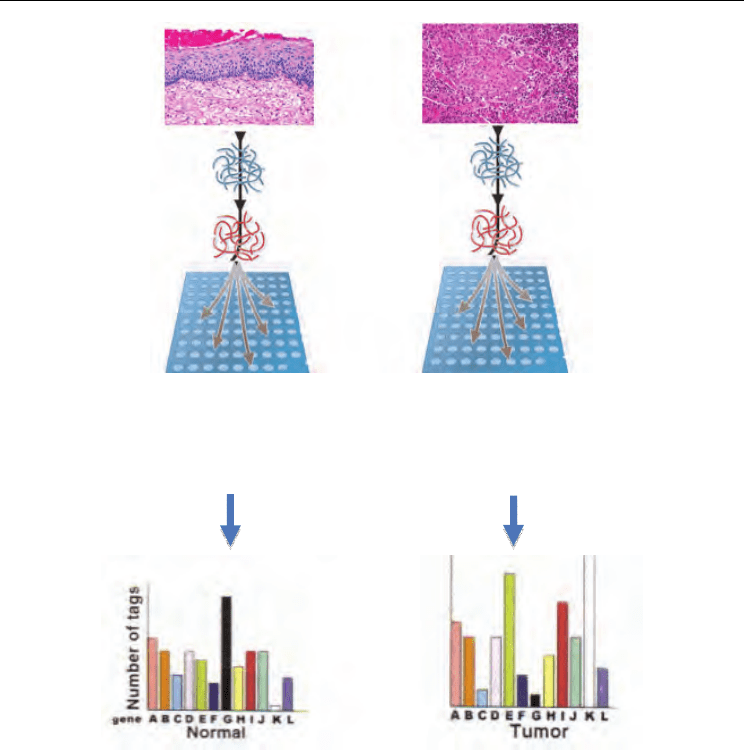
Fig. 1. General strategy of microarray analysis on cervical cancer samples. Originally RNA
samples from normal epithelial cells or CC lesions were subjected to hybridization reaction
on arrays. The data were analyzed by using different bioinformatics Tools to obtain
differentially expressed genes.
3. Analysis of the data
Partek
®
Genomics Suite
TM
is a comprehensive suite of advanced statistics and interactive
data visualization specifically designed to reliably extract biological signals from noisy data.
The commercial software is unique in supporting all microarray and next generation
sequencing technologies including gene expression and digital gene expression,
exon/alternative splicing, RNA-Seq, copy number and association, ChIP-chip, ChIP-seq,
and microRNAs in a single software package, allowing for analysis of multiple applications
in one complete solution.

Computational Biology and Applied Bioinformatics
262
This kind of analysis will provide results with minimal noises generated from the internal
controls. To perform this analysis is necessary to apply a software suite which is composed
by three different statistical tests: Probe Statistical algorithm (MAS5), Probe Logarithmic
Intensity Error (Plier) and Robust Multichip Analysis (RMA). The goal of these tests is to
establish differences and similarities between internal controls and to get the most real data.
In the present case, the normalized samples were analyzed RMA statistical tests eliminating
the tags harboring variations.
In the global gene expression is difficult understand what happen with all of genes in
different cellular process including the cancer, in this context a way of visualization data is a
Principal Component Analysis or PCA (25). This method is a mathematical technique to
reduction the effect of the gene expression sample in a small dimensional space, when there
is less changes in the global gene expression the dimensional is smaller. Next for
visualization of changes in gene expression in all samples we made a clustering analysis
(26), in this method we used a K-means algorithm and let to classify to determine similitude
and dissimilitude in all samples, to finish we applied methods of systems biology as
Ingenuity Pathway Analysis) and gene classification to determine new list of candidates for
subsequent lab verification and might help in the search for a cure for cancers.
3.1 Networks by Ingenuity Pathways Analysis (IPA)
This software (www.ingenuity.com) to help life science researchers explore, interpret, and
analyze complex biological Systems, and is used to help researchers analyze 'omics data and
model biological systems. This analysis was to identify Networks of interacting genes and
other functional groups. A cut-off ratio of 2 was used to define genes.
4. Results
The best and most accurate method for identifying disease-causing genes is monitoring gene
expression values in different samples using microarray technology. One of the
shortcomings of microarray data is that they provide a small quantity of samples with
respect to the number of genes. This problem reduces the classification accuracy of the
methods, so gene selection is essential to improve the predictive accuracy and to identify
potential marker genes for a disease. Among numerous existing methods for gene selection,
PARTEK has become one of the leading methods, but its performance can be reduced
because of the small sample size, noisy data and the fact that the methods remove
redundant genes.
The original cervical dataset was already published and available in a previous report (20).
This dataset was obtained by using CodeLink microarray platform and provides the
expression levels of 57,000 probes for 2 normal tissues and 8 cervical cancers HPV16
positive. The data were pre-processed by carrying out a base 10 logarithmic transformation
and normalized (see Figure 2). After first analysis of the data, using significance analysis of
microarrays 3,248 genes well annotated were identified.
After that, the data already normalized were managed and analyzed using Partek genomics
suite version 6.5 (Partek GS) obtaining a list of differentially expressed genes (Tumor versus
Normal). Specific and new procedures are actually performed in analysis of microarray
data. For instance, after internal control analysis, the raw data are normalized using the
common software available on line or some other like Partek GS. This suite provides
Functional Analysis of the Cervical Carcinoma
Transcriptome: Networks and New Genes Associated to Cancer
263
rigorous and easy-to-use statistical tests for differential expression of genes or exons, and a
flexible and powerful statistical test to detect alternative splicing based on a powerful mixed
model analysis of variance.
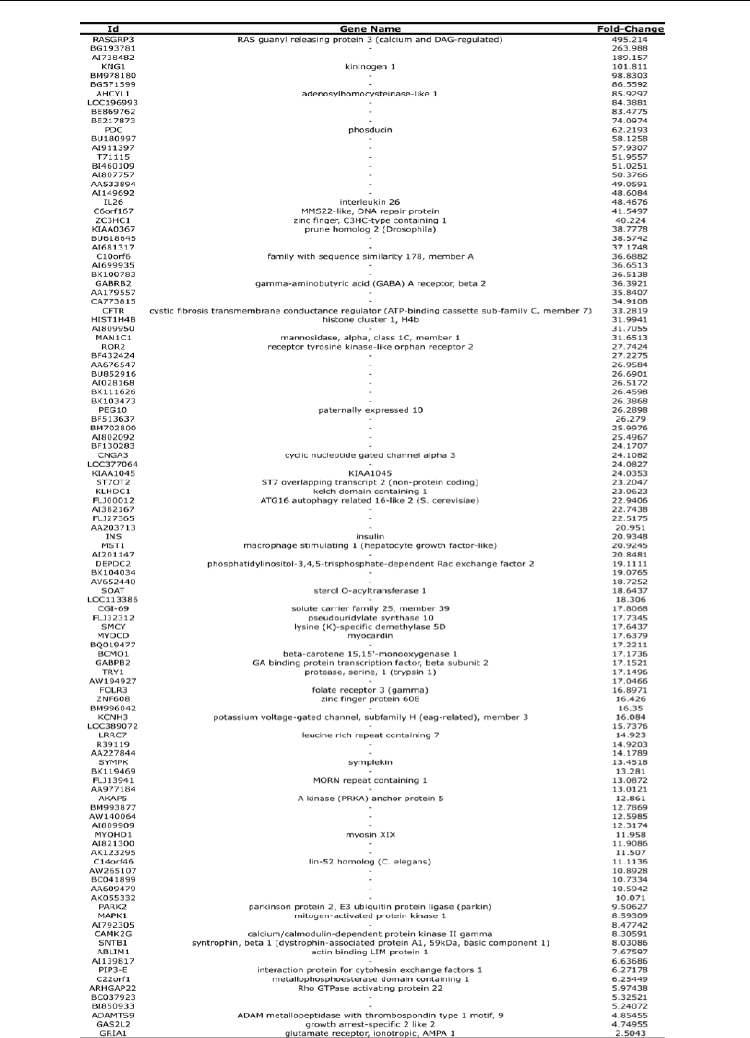
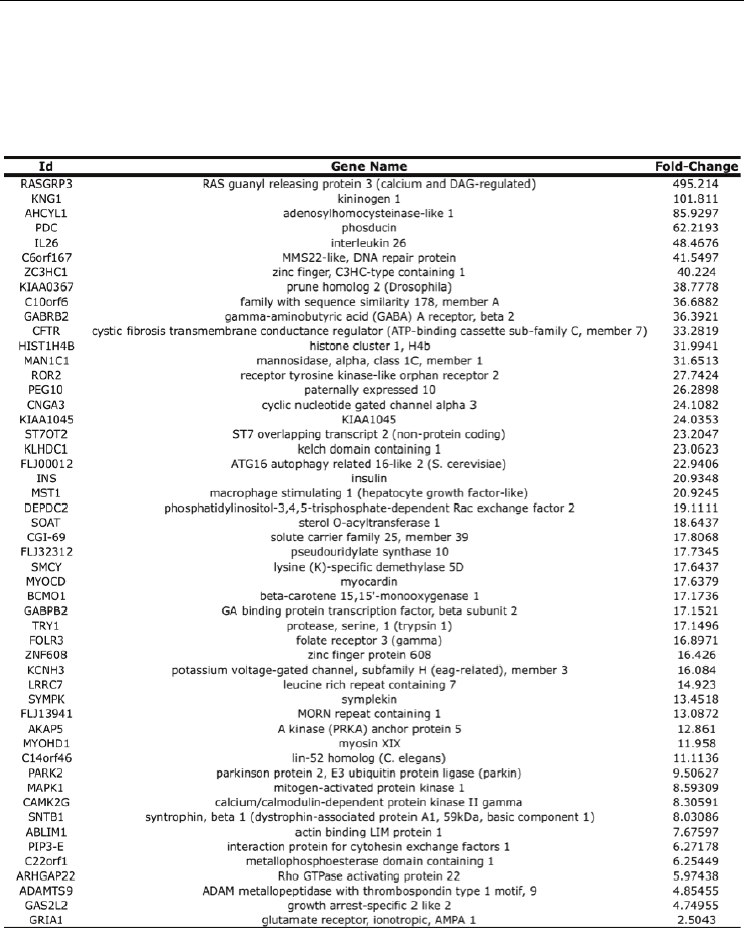
By one-side ANOVA statistical test a small group of 208 genes were selected with a false
discovery ratio < 10%, from these, 111 overexpressed genes with a fold change >2, and 97
downregulated genes with a fold change of <-2 genes were observed (Tables 1 and 2).
A)
B)
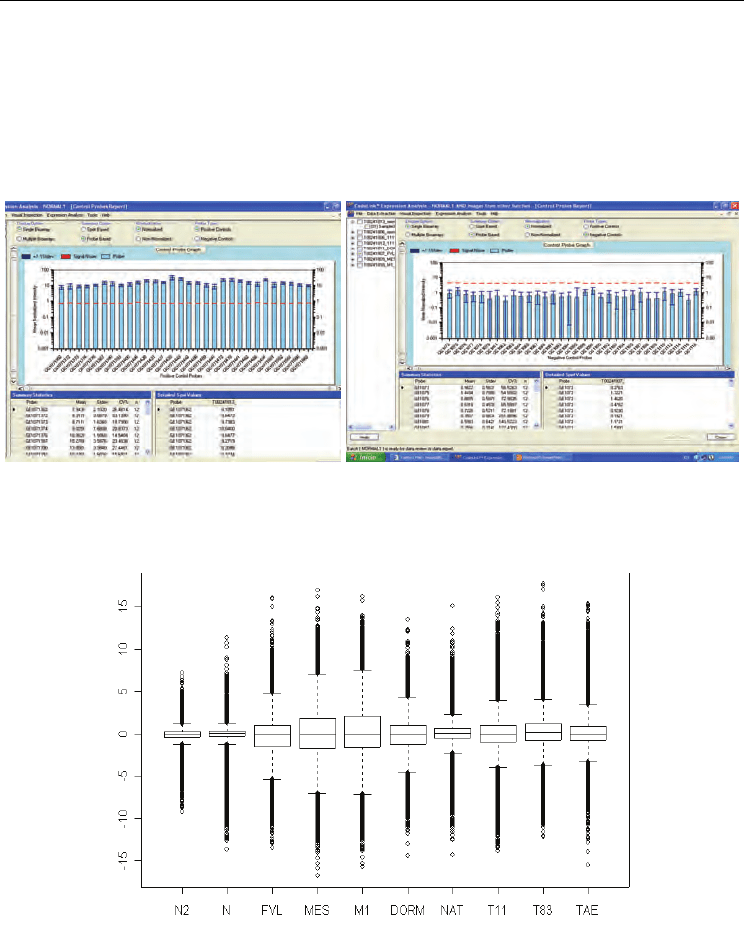
Fig. 2. Normalization data set. The values of gene expression were normalyzed by medians.
A) Left image is showing the normalization of positive internal controls harboured in the
bioarray. The right image is showing the normalization of negative internal controls of the
array. As example, these figures corresponds to a normal samples.
Computational Biology and Applied Bioinformatics
264
Table 1. List of genes and EST’s (without gene name) up-regulated
Functional Analysis of the Cervical Carcinoma
Transcriptome: Networks and New Genes Associated to Cancer
265
Table 1. List of genes up-regulated

Computational Biology and Applied Bioinformatics
266
Id Gene Name Fold-Change
SCGB1D2 secretoglobin, family 1D, member 2 -186.686
KRT4 keratin 4 -173.876
FOS FBJ murine osteosarcoma viral oncogene homolog -138.062
MAL mal, T-cell differentiation protein -133.173
WISP2 WNT1 inducible signaling pathway protein 2 -90.6242
UNQ698 suprabasin -88.3632
FLJ22655 RERG/RAS-like -88.2086
SPARCL1 SPARC-like 1 (hevin) -86.9887
MGC45780 scavenger receptor class A, member 5 (putative) -78.2205
RGS5 regulator of G-protein signaling 5 -73.238
MAMDC2 MAM domain containing 2 -69.9879
IGFBP6 insulin-like growth factor binding protein 6 -68.8765
C1orf10 cornulin -67.0584
FHL1 four and a half LIM domains 1 -64.6338
TNA C-type lectin domain family 3, member B -59.3405
W57655 - -57.5288
PLAC9 placenta-specific 9 -51.9896
DF complement factor D (adipsin) -50.8317
UNQ467 keratinocyte differentiation-associated protein -50.2533
PTGDS prostaglandin D2 synthase 21kDa (brain) -50.1348
SCGB2A2 secretoglobin, family 2A, member 2 -49.633
DPT dermatopontin -47.7048
CRISP3 cysteine-rich secretory protein 3 -46.6048
BNC2 basonuclin 2 -46.1538
OGN osteoglycin -44.5308
EDN3 endothelin 3 -42.5161
DPT dermatopontin -38.5712
FXYD1 FXYD domain containing ion transport regulator 1 -36.7655
PPP1R3C protein phosphatase 1, regulatory (inhibitor) subunit 3C -35.3073
OSR2 odd-skipped related 2 (Drosophila) -34.3512
ANKRD25 KN motif and ankyrin repeat domains 2 -32.6406
BF941677 - -30.9503
MITF microphthalmia-associated transcription factor -30.7002
BQ007074 - -30.1011
AL137566 - -29.833
FBLN5 fibulin 5 -29.4494
PGM5 phosphoglucomutase 5 -28.8192
CRYAB crystallin, alpha B -28.3094
MFAP4 microfibrillar-associated protein 4 -27.6357
AA101632 - -27.2784
COLEC12 collectin sub-family member 12 -26.3813
PCOLCE2 procollagen C-endopeptidase enhancer 2 -26.1851
COL14A1 collagen, type XIV, alpha 1 -25.1745
ARHGAP6 Rho GTPase activating protein 6 -24.9415
AEBP1 AE binding protein 1 -24.5738
TENC1 tensin like C1 domain containing phosphatase (tensin 2) -22.8413
ANGPTL2 angiopoietin-like 2 -22.7692
COL4A1 collagen, type IV, alpha 1 -22.2278
LMO3 LIM domain only 3 (rhombotin-like 2) -22.0822
NDRG2 NDRG family member 2 -21.5607
FLJ10970 transmembrane protein 100 -21.5054
CLCA4 chloride channel accessory 4 -21.3412
COX7A1 cytochrome c oxidase subunit VIIa polypeptide 1 (muscle) -20.3295
MITF microphthalmia-associated transcription factor -20.1976
GNG11 guanine nucleotide binding protein (G protein), gamma 11 -20.1211
TACC1 transform ing, acidic coiled-coil containing protein 1 -19.9851
ECG2 serine peptidase inhibitor, Kazal type 7 (putative) -19.9095
AI734212 - -19.527
AI765637 - -19.1416
EBF early B-cell factor 1 -18.9832
BAI3 brain-specific angiogenesis inhibitor 3 -18.8985
ARHGAP28 Rho GTPase activating protein 28 -18.5654
KCNAB1
t
assium voltage-gated channel, shaker-related subfamily, beta membe -18.2379
AA578982 - -18.1596
CECR6 cat eye syndrome chromosome region, candidate 6 -18.0476
AF321976 - -17.2499
EDN3 endothelin 3 -16.2896
MYLK myosin light chain kinase -16.0175
C7 complement component 7 -15.7473
Table 2. List of genes and EST’s (without gene name) down-regulated