
Lopes H.S., Cruz L.M. (eds.) Computational Biology and Applied Bioinformatics
Подождите немного. Документ загружается.


Prediction of Transcriptional Regulatory Networks for Retinal Development
367
Factor name Reference cited
Cabp5 (Kim et al., 2008a)
Chx10 (Hatakeyama et al., 2001)
CyclinD1 (Bessa et al., 2008; Heine et al., 2008)
Foxn4 (Shengguo Li, 2004)
Grk1 (Young and Young, 2007)
Grmb (Kim et al., 2008a)
Hes6 (Bae et al., 2000)
Mash3 (Hatakeyama et al., 2001; Satow et al., 2001)
Math5 (Lee et al., 2005)
Nestin (Rowan and Cepko, 2005)
NeuroD1 (Conte et al., 2010)
Nr2f1 (Inoue et al., 2010; Satoh et al., 2009)
Otx2 (Kim et al., 2008a; Young and Young, 2007)
Pax6 (Ferretti et al., 2006; Lee et al., 2005; Oliver et al., 1995)
Prep1 (Deflorian et al., 2004; Ferretti et al., 2006)
Rax (Heine et al., 2008; Martinez-de Luna et al., 2010)
Six3 (Oliver et al., 1995)
Six6 (Conte et al., 2010)
Table 5. A list of protein factors that interact with the 6 key trans-acting factors in a network
model
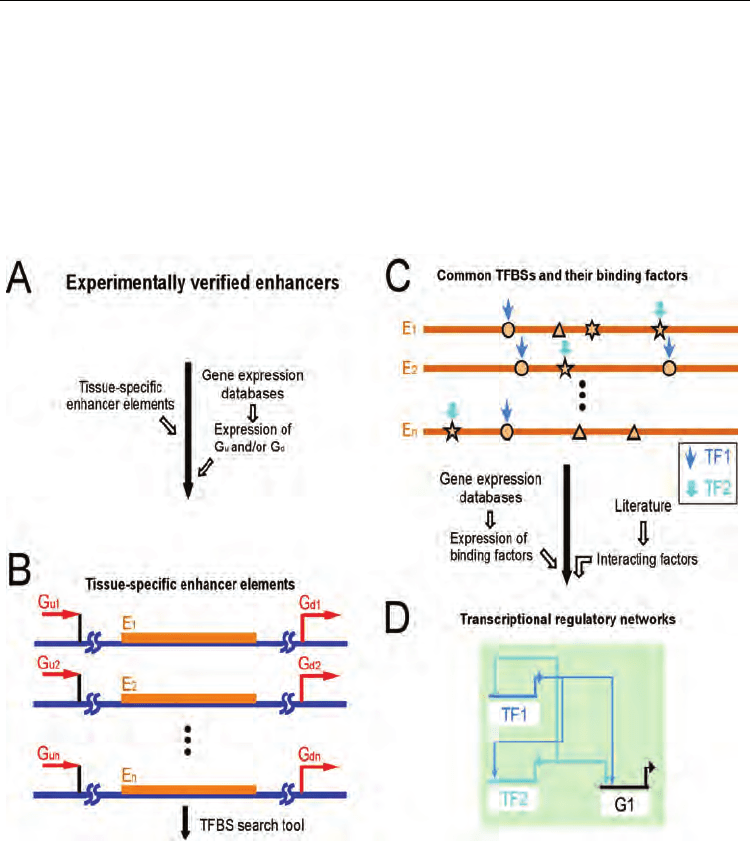
In summary, the computational method we developed in this study can be described as
following. First, experimentally verified enhancer elements can be selected from enhancer
databases, e.g., the Vista Enhancer Browser, based on tissue/cell-specific expression
patterns derived from the enhancer element and its flanking gene (Fig. 4A-B). These tissue-
specific enhancer elements can be located in the non-coding regions in inter- or intra-
genetic sequences. Then, the trans-acting factor binding sites (TFBS) of all tissue-specific
enhancer elements can be predicted using TFBS search tools such as TESS and MatInspector.
Common binding sites shared by all tissue-specific enhancer elements or subsets of elements
are later determined as shown in (Fig. 4C). Those common factors can be further analyzed
according to their expression pattern. Only the ones with spatio-temporal expression
patterns can be selected as key factors for constructing a tissue-specific transcriptional
regulatory network. In addition, factors that interact with these key factors can also be
found from the literature. Finally, these enhancers, genes, factors and interactions can be
pieced together to build the network (Fig. 4D).
Computational Biology and Applied Bioinformatics
368
Fig. 4. Computational analysis of TFBSs and transcriptional regulatory networks for
tissue/cell-specific gene expression. A. Selection of experimentally verified enhancer
elements from enhancer databases. B. Depiction of enhancer elements and their flanking

Prediction of Transcriptional Regulatory Networks for Retinal Development
369
genes. Orange boxes represent tissue-specific enhancer elements. Red bars represent
transcript start sites of downstream flanking genes. Black bars represent the end of the last
exon of upstream flanking genes. Enhancer elements in the intronic region of a gene were
not illustrated. C. Comparison of the trans-acting factor binding sites (TFBSs). Two examples
of common TFBS-TF pairs are illustrated by pairs of circle/azure arrows and
pentagon/cyan arrows. Other polygons on the enhancer elements (orange bars) represent
binding sites that are not common to all members. D. A simple example of a tissue-specific
transcriptional regulatory network generated with two key factors (TF1 and TF2) and their
interacting genes (G). The thick horizontal lines on top of factor and gene names (TF1, TF2
and G1) represent the cis-regulatory region of the corresponding genes. Arrows and bars
terminating on this line illustrate the input from other factors, promoters or repressors,
respectively. The arrow derived from the thick line represents the regulatory outputs.
Abbreviation: E, enhancer element; G, gene; Gd, downstream gene; Gu, upstream gene; TF,
trans-acting (e.g., transcription) factor; TFBS, transcription factor binding site.
3. Conclusion
In this study we have explored a new way of using existing TFBS-finding methods to
predict trans-acting factors and networks that regulate tissue-specific gene expression (Fig.
4). As a proof-of-principle study, using this method, we have identified experimentally
verified transcription factors (Pou3f2, Crx, Meis1, and Hes1) and their transcriptional
regulatory networks that are known to be important for mouse embryonic retinal
development. This not only provides a general idea about the development of the RPCs and
retinal cell differentiation, but also validates the effectiveness of our newly developed
method. Furthermore, we predicted that two other factors (Pbx2 and Tcf3, expressed in
retina) may have a novel functional role in embryonic retinal development, which generates
new hypotheses for future experimentation, i.e., to test the involvement of the two factors,
Pbx2 and Tcf3, in the development of RPCs. This method is based on the assumption that
non-coding DNA sequences contain signals regulating tissue-specific gene expression. The
feasibility of this method relies on the existing data of experimentally verified tissue-specific
enhancers (Visel et al., 2007) and available information of tissue-specific gene expression
(Finger et al., 2011; Richardson et al., 2010). The identification of retina-specific trans-acting
factors and networks indicates that our method is useful for the analysis of TFBSs and
transcriptional regulatory networks. Since our method utilizes the existing/known
information about tissue-specific enhancer elements and gene expression, we will not be
able to identify novel factors that are involved in the transcriptional regulatory networks. In
order to reconstruct a more sophisticated network in future studies, we will need to include
all of the retina-specific enhancer elements. Finally, this method can be applied to the
analysis of TFBSs and transcriptional regulatory networks in other tissue types.
4. Acknowledgement
This work is supported in part by grants (EY018738 and EY019094) from the National
Institute of Health, the New Jersey Commission on Spinal Cord Research (10A-003-SCR1
and 08-3074-SCR-E-0), and Busch Biomedical Research Awards (6-49121). The authors thank
the Cai lab members for helpful discussions and for proof-reading the manuscript.

Computational Biology and Applied Bioinformatics
370
5. References
Bae, S., Bessho, Y., Hojo, M., and Kageyama, R. (2000). The bHLH gene Hes6, an inhibitor of
Hes1, promotes neuronal differentiation. Development 127, 2933-2943.
Bailey, T.L., and Elkan, C. (1994). Fitting a mixture model by expectation maximization to
discover motifs in biopolymers. Proc Int Conf Intell Syst Mol Biol 2, 28-36.
Bessa, J., Tavares, M.J., Santos, J., Kikuta, H., Laplante, M., Becker, T.S., Gómez-Skarmeta,
J.L., and Casares, F. (2008). meis1 regulates cyclin D1 and c-myc expression, and
controls the proliferation of the multipotent cells in the early developing zebrafish
eye. Development 135, 799-803.
Cartharius, K., Frech, K., Grote, K., Klocke, B., Haltmeier, M., Klingenhoff, A., Frisch, M.,
Bayerlein, M., and Werner, T. (2005). MatInspector and beyond: promoter analysis
based on transcription factor binding sites. Bioinformatics 21, 2933-2942.
Catena, R., Tiveron, C., Ronchi, A., Porta, S., Ferri, A., Tatangelo, L., Cavallaro, M., Favaro,
R., Ottolenghi, S., Reinbold, R., et al. (2004). Conserved POU binding DNA sites in
the Sox2 upstream enhancer regulate gene expression in embryonic and neural
stem cells. J Biol Chem 279, 41846-41857.
Chang, C., Jacobs, Y., Nakamura, T., Jenkins, N., Copeland, N., and Cleary, M. (1997). Meis
proteins are major in vivo DNA binding partners for wild-type but not chimeric
Pbx proteins. Mol Cell Biol 17, 5679-5687.
Cheng, C.W., Chow, R.L., Lebel, M., Sakuma, R., Cheung, H.O.-L., Thanabalasingham, V.,
Zhang, X., Bruneau, B.G., Birch, D.G., Hui, C.-c., et al. (2005). The Iroquois
homeobox gene, Irx5, is required for retinal cone bipolar cell development.
Developmental Biology 287, 48-60.
Cohen, D.R., Cheng, C.W., Cheng, S.H., and Hui, C.-c. (2000). Expression of two novel
mouse Iroquois homeobox genes during neurogenesis. Mechanisms of Development
91, 317-321.
Conte, I., Marco-Ferreres, R., Beccari, L., Cisneros, E., Ruiz, J.M., Tabanera, N., and
Bovolenta, P. (2010). Proper differentiation of photoreceptors and amacrine cells
depends on a regulatory loop between NeuroD and Six6. Development 137, 2307-
2317.
Corbo, J.C., Lawrence, K.A., Karlstetter, M., Myers, C.A., Abdelaziz, M., Dirkes, W., Weigelt,
K., Seifert, M., Benes, V., Fritsche, L.G., et al. (2010). CRX ChIP-seq reveals the cis-
regulatory architecture of mouse photoreceptors. Genome Res 20, 1512-1525.
de Diego Otero, Y., Bakker, C., Raghoe, P., Severijnen, L.A., Hoogeveen, A., Oostra, B., and
Willemsen, R. (2000). Immunocytochemical characterization of FMRP, FXR1P and
FXR2P during embryonic development in the mouse. Gene Function & Disease 1, 28-
37.
Deflorian, G., Tiso, N., Ferretti, E., Meyer, D., Blasi, F., Bortolussi, M., and Argenton, F.
(2004). Prep1.1 has essential genetic functions in hindbrain development and
cranial neural crest cell differentiation. Development 131, 613-627.
Diez-Roux, G., Banfi, S., Sultan, M., Geffers, L., Anand, S., Rozado, D., Magen, A., Canidio,
E., Pagani, M., Peluso, I., et al. (2011). A high-resolution anatomical atlas of the
transcriptome in the mouse embryo. PLoS biology 9, e1000582.

Prediction of Transcriptional Regulatory Networks for Retinal Development
371
Ferretti, E., Villaescusa, J.C., Di Rosa, P., Fernandez-Diaz, L.C., Longobardi, E., Mazzieri,
R., Miccio, A., Micali, N., Selleri, L., Ferrari, G., et al. (2006). Hypomorphic
Mutation of the TALE Gene Prep1 (pKnox1) Causes a Major Reduction of Pbx
and Meis Proteins and a Pleiotropic Embryonic Phenotype. Mol Cell Biol 26, 5650-
5662.
Finger, J.H., Smith, C.M., Hayamizu, T.F., McCright, I.J., Eppig, J.T., Kadin, J.A., Richardson,
J.E., and Ringwald, M. (2011). The mouse Gene Expression Database (GXD): 2011
update. Nucleic Acids Research 39, D835-D841.
Frazer, K.A., Pachter, L., Poliakov, A., Rubin, E.M., and Dubchak, I. (2004). VISTA:
computational tools for comparative genomics. Nucleic Acids Research 32, W273-
W279.
French, C.R., Erickson, T., Callander, D., Berry, K.M., Koss, R., Hagey, D.W., Stout, J.,
Wuennenberg-Stapleton, K., Ngai, J., Moens, C.B., et al. (2007). Pbx homeodomain
proteins pattern both the zebrafish retina and tectum. BMC Dev Biol 7, 85.
Gray, P.A., Fu, H., Luo, P., Zhao, Q., Yu, J., Ferrari, A., Tenzen, T., Yuk, D.I., Tsung, E.F., Cai,
Z., et al. (2004). Mouse brain organization revealed through direct genome-scale TF
expression analysis. Science 306, 2255-2257.
Hatakeyama, J., Tomita, K., Inoue, T., and Kageyama, R. (2001). Roles of homeobox and
bHLH genes in specification of a retinal cell type. Development 128, 1313-1322.
Heine, P., Dohle, E., Bumsted-O'Brien, K., Engelkamp, D., and Schulte, D. (2008). Evidence
for an evolutionary conserved role of homothorax/Meis1/2 during vertebrate
retina development. Development 135, 805-811.
Hsiau, T.H., Diaconu, C., Myers, C.A., Lee, J., Cepko, C.L., and Corbo, J.C. (2007). The cis-
regulatory logic of the mammalian photoreceptor transcriptional network. PLoS
One 2, e643.
Hu, J., Wan, J., Hackler, L., Jr., Zack, D.J., and Qian, J. (2010). Computational analysis of
tissue-specific gene networks: application to murine retinal functional studies.
Bioinformatics 26, 2289-2297.
Inoue, M., Iida, A., Satoh, S., Kodama, T., and Watanabe, S. (2010). COUP-TFI and -TFII
nuclear receptors are expressed in amacrine cells and play roles in regulating
the differentiation of retinal progenitor cells. Experimental Eye Research 90, 49-
56.
Kent, W.J., Sugnet, C.W., Furey, T.S., Roskin, K.M., Pringle, T.H., Zahler, A.M.,
and Haussler, D. (2002). The human genome browser at UCSC. Genome Res 12, 996-
1006.
Kerschensteiner, D., Liu, H., Cheng, C.W., Demas, J., Cheng, S.H., Hui, C.-c., Chow, R.L.,
and Wong, R.O.L. (2008). Genetic Control of Circuit Function: Vsx1 and Irx5
Transcription Factors Regulate Contrast Adaptation in the Mouse Retina. J Neurosci
28, 2342-2352.
Kim, D.S., Matsuda, T., and Cepko, C.L. (2008a). A Core Paired-Type and POU
Homeodomain-Containing Transcription Factor Program Drives Retinal Bipolar
Cell Gene Expression. J Neurosci 28, 7748-7764.

Computational Biology and Applied Bioinformatics
372
Kim, D.S., Matsuda, T., and Cepko, C.L. (2008b). A core paired-type and POU
homeodomain-containing transcription factor program drives retinal bipolar cell
gene expression. J Neurosci 28, 7748-7764.
Knuppel, R., Dietze, P., Lehnberg, W., Frech, K., and Wingender, E. (1994). TRANSFAC
retrieval program: a network model database of eukaryotic transcription regulating
sequences and proteins. Journal of computational biology : a journal of computational
molecular cell biology 1, 191-198.
Kumar, J.P. (2009). The molecular circuitry governing retinal determination. Biochim Biophys
Acta 1789, 306-314.
Le, T.T., Wroblewski, E., Patel, S., Riesenberg, A.N., and Brown, N.L. (2006). Math5 is
required for both early retinal neuron differentiation and cell cycle progression.
Developmental Biology 295, 764-778.
Lee, H.Y., Wroblewski, E., Philips, G.T., Stair, C.N., Conley, K., Reedy, M., Mastick, G.S., and
Brown, N.L. (2005). Multiple requirements for Hes1 during early eye formation.
Developmental Biology 284, 464-478.
Leo M. Chalupa, R.W.W., ed. (2008). Eye, Retina, and Visual System of the Mouse (The MIT
Press).
Longabaugh, W.J.R., Davidson, E.H., and Bolouri, H. (2009). Visualization, documentation,
analysis, and communication of large-scale gene regulatory networks. Biochimica et
Biophysica Acta (BBA) - Gene Regulatory Mechanisms 1789, 363-374.
Martinez-de Luna, R.I., Moose, H.E., Kelly, L.E., Nekkalapudi, S., and El-Hodiri, H.M.
(2010). Regulation of retinal homeobox gene transcription by cooperative activity
among cis-elements. Gene 467, 13-24.
McEvilly, R.J., de Diaz, M.O., Schonemann, M.D., Hooshmand, F., and Rosenfeld, M.G.
(2002). Transcriptional regulation of cortical neuron migration by POU domain
factors. Science 295, 1528-1532.
Mummenhoff, J., Houweling, A.C., Peters, T., Christoffels, V.M., and Rüther, U. (2001).
Expression of Irx6 during mouse morphogenesis. Mechanisms of Development 103,
193-195.
Oliver, G., Mailhos, A., Wehr, R., Copeland, N.G., Jenkins, N.A., and Gruss, P. (1995). Six3, a
murine homologue of the sine oculis gene, demarcates the most anterior border of
the developing neural plate and is expressed during eye development. Development
121, 4045-4055.
Peng, G.-H., Ahmad, O., Ahmad, F., Liu, J., and Chen, S. (2005). The photoreceptor-
specific nuclear receptor Nr2e3 interacts with Crx and exerts opposing effects
on the transcription of rod versus cone genes. Human Molecular Genetics 14, 747-
764.
Portales-Casamar, E., Thongjuea, S., Kwon, A.T., Arenillas, D., Zhao, X., Valen, E., Yusuf, D.,
Lenhard, B., Wasserman, W.W., and Sandelin, A. (2010). JASPAR 2010: the greatly
expanded open-access database of transcription factor binding profiles. Nucleic
Acids Research 38, D105-110.
Richardson, L., Venkataraman, S., Stevenson, P., Yang, Y., Burton, N., Rao, J., Fisher, M.,
Baldock, R.A., Davidson, D.R., and Christiansen, J.H. (2010). EMAGE mouse

Prediction of Transcriptional Regulatory Networks for Retinal Development
373
embryo spatial gene expression database: 2010 update. Nucleic Acids Research 38,
D703-D709.
Rowan, S., and Cepko, C.L. (2005). A POU factor binding site upstream of the Chx10
homeobox gene is required for Chx10 expression in subsets of retinal progenitor
cells and bipolar cells. Developmental Biology 281, 240-255.
Sandelin, A., Alkema, W., Engstrom, P., Wasserman, W.W., and Lenhard, B. (2004). JASPAR:
an open-access database for eukaryotic transcription factor binding profiles. Nucleic
Acids Research 32, D91-94.
Satoh, S., Tang, K., Iida, A., Inoue, M., Kodama, T., Tsai, S.Y., Tsai, M.-J., Furuta, Y., and
Watanabe, S. (2009). The Spatial Patterning of Mouse Cone Opsin Expression Is
Regulated by Bone Morphogenetic Protein Signaling through Downstream Effector
COUP-TF Nuclear Receptors. J Neurosci 29, 12401-12411.
Satow, T., Bae, S.-K., Inoue, T., Inoue, C., Miyoshi, G., Tomita, K., Bessho, Y., Hashimoto, N.,
and Kageyama, R. (2001). The Basic Helix-Loop-Helix Gene hesr2 Promotes
Gliogenesis in Mouse Retina. J Neurosci 21, 1265-1273.
Schug, J. (2002). Using TESS to Predict Transcription Factor Binding Sites in DNA Sequence
(John Wiley & Sons, Inc.).
Shengguo Li, Z.M., Xuejie Yang, (2004). Foxn4 Controls the Genesis of Amacrine and
Horizontal Cells by Retinal Progenitors. Neuron 43, 795-807.
Sicinski, P., Donaher, J.L., Parker, S.B., Li, T., Fazeli, A., Gardner, H., Haslam,
S.Z., Bronson, R.T., Elledge, S.J., and Weinberg, R.A. (1995). Cyclin D1 provides a
link between development and oncogenesis in the retina and breast. Cell 82, 621-
630.
Sugitani, Y., Nakai, S., Minowa, O., Nishi, M., Jishage, K., Kawano, H., Mori, K., Ogawa, M.,
and Noda, T. (2002). Brn-1 and Brn-2 share crucial roles in the production and
positioning of mouse neocortical neurons. Genes Dev 16, 1760-1765.
Swaroop, A., Kim, D., and Forrest, D. (2010). Transcriptional regulation of photoreceptor
development and homeostasis in the mammalian retina. Nat Rev Neurosci 11, 563-
576.
Tang, K., Xie, X., Park, J.I., Jamrich, M., Tsai, S., and Tsai, M.J. (2010). COUP-TFs regulate eye
development by controlling factors essential for optic vesicle morphogenesis.
Development 137, 725-734.
Valouev, A., Johnson, D.S., Sundquist, A., Medina, C., Anton, E., Batzoglou, S., Myers, R.M.,
and Sidow, A. (2008). Genome-wide analysis of transcription factor binding sites
based on ChIP-Seq data. Nat Meth 5, 829-834.
Visel, A., Blow, M.J., Li, Z., Zhang, T., Akiyama, J.A., Holt, A., Plajzer-Frick, I., Shoukry, M.,
Wright, C., Chen, F., et al. (2009). ChIP-seq accurately predicts tissue-specific
activity of enhancers. Nature 457, 854-858.
Visel, A., Minovitsky, S., Dubchak, I., and Pennacchio, L.A. (2007). VISTA Enhancer
Browser—a database of tissue-specific human enhancers. Nucleic Acids Research 35,
D88-D92.
Wall, D.S., Mears, A.J., McNeill, B., Mazerolle, C., Thurig, S., Wang, Y., Kageyama, R., and
Wallace, V.A. (2009). Progenitor cell proliferation in the retina is dependent on
Notch-independent Sonic hedgehog/Hes1 activity. J Cell Biol 184, 101-112.

Computational Biology and Applied Bioinformatics
374
Young, J.E., Kasperek, E.M., Vogt, T.M., Lis, A., and Khani, S.C. (2007). Conserved
interactions of a compact highly active enhancer/promoter upstream of the
rhodopsin kinase (GRK1) gene. Genomics 90, 236-248.
20
The Use of Functional Genomics in
Synthetic Promoter Design
Michael L. Roberts
Synpromics Ltd
United Kingdom
1. Introduction
The scope of this chapter is to examine how advances in the field of Bioinformatics can be
applied in the development of improved therapeutic strategies. In particular, we focus on
how algorithms designed to unravel complex gene regulatory networks can then be used in
the design of synthetic gene promoters that can be subsequently incorporated in novel gene
transfer vectors to promote safer and more efficient expression of therapeutic genes for the
treatment of various pathological conditions.
2. Development of synthetic promoters: a historical perspective
A synthetic promoter is a sequence of DNA that does not exist in nature and which has been
designed to control gene expression of a target gene. Cis-regulatory sequences derived from
naturally-occurring promoter elements are used to construct these synthetic promoters
using a building block approach; which can either be carried out by rational design or by
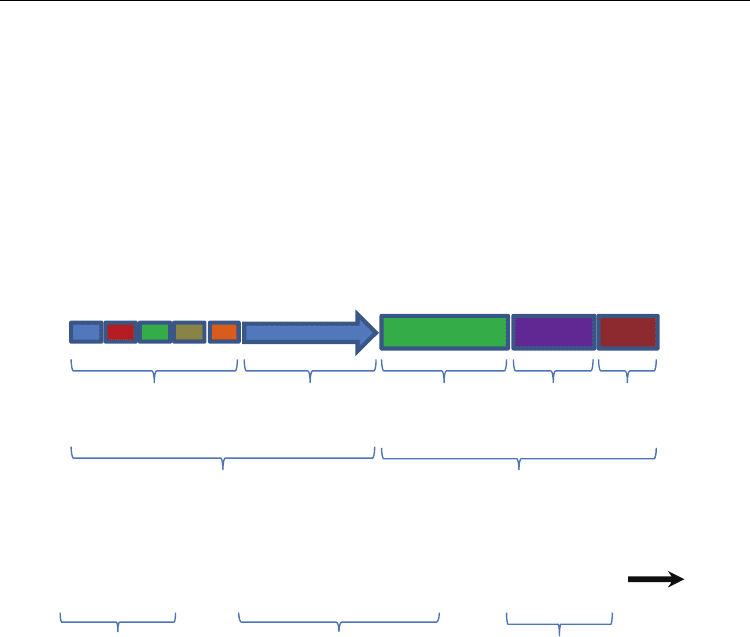
random ligation (illustrated in figure 1A). The result is a sequence of DNA composed of
several distinct cis-regulatory elements in a completely novel orientation that can act as a
promoter enhancer; typically to initiate RNA polymerase II-mediated transcription.
Construction of synthetic promoters is possible because of the modular nature of naturally-
occurring gene regulatory regions. This was cleverly demonstrated by a group that used
synthetic promoters to evaluate the role of the TATA box in the regulation of transcription
(Mogno et al., 2010). The authors looked at the role of the TATA box in dictating the
strength of gene expression. They found that the TATA box is a modular component in that
its strength of binding to the RNA polymerase II complex and the resultant strength of
transcription that it mediates is independent of the cis-regulatory element enhancers
upstream. Importantly, they also found that the TATA box does not add noise to
transcription, i.e. it acts as a simple amplifier without altering specificity of gene expression
dictated by the upstream enhancer elements. Thus implying that any combination of cis-
regulatory enhancers could be coupled to a TATA box and it would be the enhancers that
would mediate specificity without any interference from the TATA box. The implications
from this study suggest that it should be possible to construct any type of synthetic
promoter that is specifically engineered to display a highly restrictive pattern of gene
regulation.
Computational Biology and Applied Bioinformatics
376
Synthetic promoters have been used in the study of gene regulation for more than two
decades. In one of the first examples a synthetic promoter derived from the lipoprotein gene
in E. Coli was used to efficiently drive the expression of a number of tRNA genes (Masson et
al., 1986). In the years that followed a technique was developed that enabled the mutation of
prokaryotic sequences flanking the essential -10 and -35 promoter elements (illustrated in
figure 1B) and thus the efficient construction of synthetic promoters for use in bacteria
(Jacquet et al., 1986). This approach was successfully used to produce promoters with much
higher activity compared to naturally occurring sequences and it was immediately realised
that such an approach would have important applications in the biotech industry,
particularly in the enhanced production of biopharmaceuticals (Trumble et al., 1992).
A. Typical Mammalian Synthetic Promoter Layout
Minimal Promoter
Reporter Gene polyA
cisciscisciscis
Antibiotic
Resistance
Random or ordered assembly of cis-
regulatory regions obtained from
endogenous prom oters
Minimal promoter
sequence containing
the TATA box
Gene that allows the
identification of most
efficient promoters
Allows selection
of prom oter
sequences
Essential Post-
transcriptional
process signal
SYNTHETIC PROMOTER ELEMENT
SELECTION ELEMENT
B. Typical Prokaryotic Synthetic Promoter
NNNNNNNNNNN-TTGACA-NNNNNNNNNNNNNNNNNNN-TATAAT-NNNNNNNNNN-ATG
-35 -10
+1
Variable Region: Target for
random m utations
Variable Region: Target for
random mutations
Variable Region: Target for
random mutations
Fig. 1. Typical synthetic promoter layouts for prokaryotes and eukaryotes
Most of these studies were initially undertaken with a view to establish the important
structural features of prokaryotic or eukaryotic promoters so that essential elements could
be identified. In one example, the role of the Tat protein in the regulation of HIV gene
expression was studied using synthetic promoters (Kamine et al., 1991). In this study a series
of minimal promoters containing Sp1- binding sites and a TATA box were constructed and
analysed to see if the Tat protein from HIV could activate them. The results demonstrated
that Tat could only activate the synthetic promoters containing Sp1 sites and not promoters
with the TATA box alone. The observations enabled the authors to propose that in vivo the
Tat protein is brought to the promoter site by TAR RNA and then interacts with Sp1 to drive
gene expression. In recent years more sophisticated studies using synthetic promoters have
been undertaken to evaluate the important factors driving transcription factor binding to
their corresponding cis-regulatory elements (Gertz et al., 2009a) and to thermodynamically
model trans-factor and cis-element interactions (Gertz et al., 2009b).
As alluded to above, it was soon realised that synthetic promoter technology had direct
implications in the improvement of the efficiency of gene expression. Indeed, one of the
most widely used eukaryotic promoters employed for research purposes today is actually a