
Manning Ch. D., Raghavan P., Sch?tze H. Introduction to Information Retrieval - Введение в информационный поиск
Подождите немного. Документ загружается.

Online edition (c)2009 Cambridge UP
406 18 Matrix decompositions and latent semanti c indexing
18.1.1 Matrix decompositions
In this section we examine ways in which a square matrix can be factored
into the product of matrices derived from its eigenvectors; we refer to this
process as matrix decomposition. Matrix decompositions similar to the onesMATRIX
DECOMPOSITION
in this section will form the basis of our principal text-analysis technique
in Section
18.3, where we will look at decompositions of non-square term-
document matrices. The square decompositions in this section are simpler
and can be treated with sufficient mathematical rigor to help the reader un-
derstand how such decompositions work. The detailed mathematical deriva-
tion of the more complex decompositions in Section
18.2 are beyond the
scope of this book.
We begin by giving two theorems on the decomposition of a square ma-
trix into the product of three matrices of a special form. The first of these,
Theorem
18.1, gives the basic factorization of a square real-valued matrix
into three factors. The second, Theorem 18.2, applies to square symmetric
matrices and is the basis of the singular value decomposition described in
Theorem
18.3.
Theorem 18.1. (Matrix diagonalization theorem) Let S be a square real-valued
M × M matrix with M linearly independent eigenvectors. Then there exists an
eigen decompositionEIGEN DECOMPOSITION
S = UΛU
−1
,(18.5)
where the columns of U are the eigenvectors of S and Λ is a diagonal matrix whose
diagonal entries are the eigenvalues of S in decreasing order
λ
1
λ
2
···
λ
M
, λ
i
≥ λ
i+1
.
(18.6)
If the eigenvalues are distinct, then this decomposition is unique.
To understand how Theorem
18.1 works, we note that U has the eigenvec-
tors of S as columns
U =
(
~u
1
~u
2
··· ~u
M
)
.
(18.7)
Then we have
SU = S
(
~u
1
~u
2
··· ~u
M
)
=
(
λ
1
~u
1
λ
2
~u
2
···λ
M
~u
M
)
=
(
~u
1
~u
2
··· ~u
M
)
λ
1
λ
2
···
λ
M
.
Online edition (c)2009 Cambridge UP
18.2 Term-document matrices and si ngular value decompositions 407
Thus, we have SU = UΛ, or S = UΛU
−1
.
We next state a closely related decomposition of a symmetric square matrix
into the product of matrices derived from its eigenvectors. This will pave the
way for the development of our main tool for text analysis, the singular value
decomposition (Section
18.2).
Theorem 18.2. (Symmetric diagonalization theorem) Let S be a square, sym-
metric real-valued M × M matrix with M linearly independent eigenvectors. Then
there exists a symmetric diagonal decompositionSYMMETRIC DIAGONAL
DECOMPOSITION
S = QΛQ
T
,
(18.8)
where the columns of Q are the o rt hogonal and norma lized (unit length, real) eigen-
vectors of S, and Λ is the diagonal matrix whose entries are the eig env a lues of S.
Further, all entries of Q are real and we have Q
−1
= Q
T
.
We will build on this symmetric diagonal decomposition to build low-rank
approximations to term-document matrices.
?
Exercise 18.1
What is the rank of the 3 ×3 diagonal matrix below?
1 1 0
0 1 1
1 2 1
Exercise 18.2
Show that λ = 2 is an eigenvalue of
C =
6 −2
4 0
.
Find the corresponding eigenvector.
Exercise 18.3
Compute the unique eigen decomposition of the 2 ×2 matrix in (18.4).
18.2 Term-document matrices and singular value d ecompositions
The decompositions we have been studying thus far apply to square matri-
ces. However, the matrix we are interested in is the M × N term-document
matrix C where (barring a rare coincidence) M 6= N; furthermore, C is very
unlikely to be symmetric. To this end we first describe an extension of the
symmetric diagonal decomposition known as the singular value decomposi-SINGULAR VALUE
DECOMPOSITION
tion. We then show in Section
18.3 how this can be used to construct an ap-
proximate version of C. It is beyond the scope of this book to develop a full

Online edition (c)2009 Cambridge UP
408 18 Matrix decompositions and latent semanti c indexing
treatment of the mathematics underlying singular value decompositions; fol-
lowing the statement of Theorem
18.3 we relate the singular value decompo-
sition to the symmetric diagonal decompositions from Section 18.1.1. GivenSYMMETRIC DIAGONAL
DECOMPOSITION
C, let U be the M × M matrix whose columns are the orthogonal eigenvec-
tors of C C
T
, and V be the N × N matrix whose columns are the orthogonal
eigenvectors of C
T
C. Denote by C
T
the transpose of a matrix C.
Theorem 18.3. Let r be the rank of the M × N matrix C. Then, there is a singular-
value decomposition (SVD for short) of C of the formSVD
C = UΣV
T
,(18.9)
where
1. The eigenvalues λ
1
, . . . , λ
r
of CC
T
are the same as the eigenvalues of C
T
C;
2. For 1 ≤ i ≤ r, let σ
i
=
√
λ
i
, with λ
i
≥ λ
i+1
. Then the M × N matrix Σ is
composed by setting Σ
ii
= σ
i
for 1 ≤ i ≤ r, and zero otherwise.
The values σ
i
are referred to as the singular values of C. It is instructive to
examine the relationship of Theorem
18.3 to Theorem 18.2; we do this rather
than derive the general proof of Theorem 18.3, which is beyond the scope of
this book.
By multiplying Equation (
18.9) by its transposed version, we have
CC
T
= UΣV
T
VΣU
T
= UΣ
2
U
T
.(18.10)
Note now that in Equation (18.10), the left-hand side is a square symmetric
matrix real-valued matrix, and the right-hand side represents its symmetric
diagonal decomposition as in Theorem
18.2. What does the left-hand side
CC
T
represent? It is a square matrix with a row and a column correspond-
ing to each of the M terms. The entry (i, j) in the matrix is a measure of the
overlap between the ith and jth terms, based on their co-occurrence in docu-
ments. The precise mathematical meaning depends on the manner in which
C is constructed based on term weighting. Consider the case where C is the
term-document incidence matrix of page
3, illustrated in Figure 1.1. Then the
entry (i, j) in CC
T
is the number of documents in which both term i and term
j occur.
When writing down the numerical values of the SVD, it is conventional
to represent Σ as an r × r matrix with the singular values on the diagonals,
since all its entries outside this sub-matrix are zeros. Accordingly, it is con-
ventional to omit the rightmost M −r columns of U corresponding to these
omitted rows of Σ; likewise the rightmost N − r columns of V are omitted
since they correspond in V
T
to the rows that will be multiplied by the N −r
columns of zeros in Σ. This written form of the SVD is sometimes known
Online edition (c)2009 Cambridge UP
18.2 Term-document matrices and si ngular value decompositions 409
r
r
r
r
r
r
r
r
r
r
r
r
r
r
r
r
r
r
r
r
r
r
r
r
r
r
r
r
r
r
r
r
r
r
r
r
r
r
r
r
r
r
r
r
r
r
r
r
r
r
r
r
C = U Σ V
T
r
r
r
r
r
r
r
r
r
r
r
r
r
r
r
r
r
r
r
r
r
r
r
r
r
r
r
r
r
r
r
r
r
r
r
r
r
r
r
r
r
r
r
r
r
r
r
r
r
r
r
r
◮
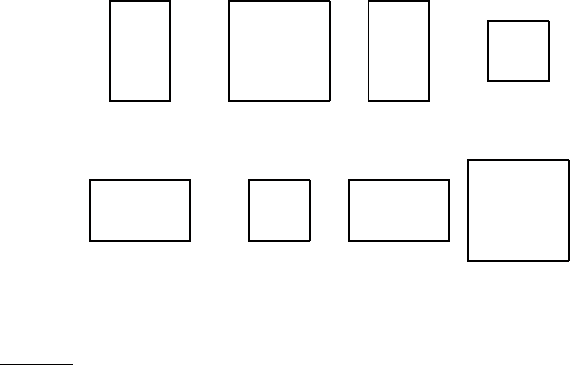
Figure 18.1 Illustration of the singular-value decomposition. In this schematic
illustration of (18.9), we see two cases illustrated. In the top half of the figure, we
have a matrix C for which M > N. The lower half illustrates the case M < N.
as the reduced SVD or truncated SVD and we will encounter it again in Ex-REDUCED SVD
TRUNCATED SVD
ercise
18.9. Henceforth, our numerical examples and exercises will use this
reduced form.
✎
Example 18.3: We now illustrate the singular-value decomposition of a 4 ×2 ma-
trix of rank 2; the singular values are Σ
11
= 2.236 and Σ
22
= 1.
C =
1 −1
0 1
1 0
−1 1
=
−0.632 0.000
0.316 −0.707
−0.316 −0.707
0.632 0.000
2.236 0.000
0.000 1.000
−0.707 0.707
−0.707 −0.707
.
(18.11)
As with the matrix decompositions defined in Section 18.1.1, the singu-
lar value decomposition of a matrix can be computed by a variety of algo-
rithms, many of which have been publicly available software implementa-
tions; pointers to these are given in Section
18.5.
?
Exercise 18.4
Let
C =
1 1
0 1
1 0
(18.12)
be the term-document incidence matrix for a collection. Compute the co-occurrence
matrix CC
T
. What is the interpretation of the diagonal entries of CC
T
when C is a
term-document incidence matrix?

Online edition (c)2009 Cambridge UP
410 18 Matrix decompositions and latent semanti c indexing
Exercise 18.5
Verify that the SVD of the matrix in Equation (18.12) is
U =
−0.816 0.000
−0.408 −0.707
−0.408 0.707
, Σ =
1.732 0.000
0.000 1.000
and V
T
=
−0.707 −0.707
0.707 −0.707
,
(18.13)
by verifying all of the properties in the statement of Theorem 18.3.
Exercise 18.6
Suppose that C is a binary term-document incidence matrix. What do the entries of
C
T
C represent?
Exercise 18.7
Let
C =
0 2 1
0 3 0
2 1 0
(18.14)
be a term-document matrix whose entries are term frequencies; thus term 1 occurs 2
times in document 2 and once in document 3. Compute CC
T
; observe that its entries
are largest where two terms have their most frequent occurrences together in the same
document.
18.3 Low-rank approximations
We next state a matrix approximation problem that at first seems to have
little to do with information retrieval. We describe a solution to this matrix
problem using singular-value decompositions, then develop its application
to information retrieval.
Given an M × N matrix C and a positive integer k, we wish to find an
M × N matrix C
k
of rank at most k, so as to minimize the Frobenius norm ofFROBENIUS NORM
the matrix difference X = C −C
k
, defined to be
kXk
F
=
v
u
u
t
M
∑
i=1
N
∑
j=1
X
2
ij
.
(18.15)
Thus, the Frobenius norm of X measures the discrepancy between C
k
and C;
our goal is to find a matrix C
k
that minimizes this discrepancy, while con-
straining C
k
to have rank at most k. If r is the rank of C, clearly C
r
= C
and the Frobenius norm of the discrepancy is zero in this case. When k is far
smaller than r, we refer to C
k
as a low-rank approximation.LOW-RANK
APPROXIMATION
The singular value decomposition can be used to solve the low-rank ma-
trix approximation problem. We then derive from it an application to ap-
proximating term-document matrices. We invoke the following three-step
procedure to this end:
Online edition (c)2009 Cambridge UP
18.3 Low-rank approximations 411
C
k
= U Σ
k
V
T
r
r
r
r
r
r
r
r
r
r
r
r
r
r
r
r
r
r
r
r
r
r
r
r
r
r
r
r
r
r
r
r
r
r
r
r
r
r
r
r
r
r
r
r
r
r
r
r
r
r
r
r
◮
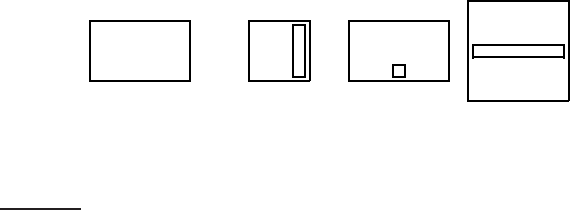
Figure 18.2 Illustration of low rank approximation using the singular-value de-
composition. The dashed boxes indicate the matrix entries affected by “zeroing out”
the smallest singular values.
1. Given C, construct its SVD in the form shown in (18.9); thus, C = UΣV
T
.
2. Derive from Σ the matrix Σ
k
formed by replacing by zeros the r −k small-
est singular values on the diagonal of Σ.
3. Compute and output C
k
= UΣ
k
V
T
as the rank-k approximation to C.
The rank of C
k
is at most k: this follows from the fact that Σ
k
has at most
k non-zero values. Next, we recall the intuition of Example 18.1: the effect
of small eigenvalues on matrix products is small. Thus, it seems plausible
that replacing these small eigenvalues by zero will not substantially alter the
product, leaving it “close” to C. The following theorem due to Eckart and
Young tells us that, in fact, this procedure yields the matrix of rank k with
the lowest possible Frobenius error.
Theorem 18.4.
min
Z| rank(Z)=k
kC − Zk
F
= kC − C
k
k
F
= σ
k+1
.(18.16)
Recalling that the singular values are in decreasing order σ
1
≥ σ
2
≥ ···,
we learn from Theorem 18.4 that C
k
is the best rank-k approximation to C,
incurring an error (measured by the Frobenius norm of C −C
k
) equal to σ
k+1
.
Thus the larger k is, the smaller this error (and in particular, for k = r, the
error is zero since Σ
r
= Σ; provided r < M, N, then σ
r+1
= 0 and thus
C
r
= C).
To derive further insight into why the process of truncating the smallest
r −k singular values in Σ helps generate a rank-k approximation of low error,
we examine the form of C
k
:
C
k
= UΣ
k
V
T
(18.17)
Online edition (c)2009 Cambridge UP
412 18 Matrix decompositions and latent semanti c indexing
= U
σ
1
0 0 0 0
0 ··· 0 0 0
0 0 σ
k
0 0
0 0 0 0 0
0 0 0 0 ···
V
T
(18.18)
=
k
∑
i=1
σ
i
~u
i
~v
T
i
,
(18.19)
where ~u
i
and ~v
i
are the ith columns of U and V, respectively. Thus, ~u
i
~v
T
i
is
a rank-1 matrix, so that we have just expressed C
k
as the sum of k rank-1
matrices each weighted by a singular value. As i increases, the contribution
of the rank-1 matrix ~u
i
~v
T
i
is weighted by a sequence of shrinking singular
values σ
i
.
?
Exercise 18.8
Compute a rank 1 approximation C
1
to the matrix C in Example 18.12, using the SVD
as in Exercise
18.13. What is the Frobenius norm of the error of this approximation?
Exercise 18.9
Consider now the computation in Exercise 18.8. Following the schematic in Fig-
ure
18.2, notice that for a rank 1 approximation we have σ
1
being a scalar. Denote
by U
1
the first column of U and by V
1
the first column of V. Show that the rank-1
approximation to C can then be written as U
1
σ
1
V
T
1
= σ
1
U
1
V
T
1
.
Exercise 18.10
Exercise 18.9 can be generalized to rank k approximations: we let U
′
k
and V
′
k
denote
the “reduced” matrices formed by retaining only the first k columns of U and V,
respectively. Thus U
′
k
is an M × k matrix while V
′
T
k
is a k × N matrix. Then, we have
C
k
= U
′
k
Σ
′
k
V
′
T
k
,
(18.20)
where Σ
′
k
is the square k × k submatrix of Σ
k
with the singular values σ
1
, . . . , σ
k
on
the diagonal. The primary advantage of using (
18.20) is to eliminate a lot of redun-
dant columns of zeros in U and V, thereby explicitly eliminating multiplication by
columns that do not affect the low-rank approximation; this version of the SVD is
sometimes known as the reduced SVD or truncated SVD and is a computationally
simpler representation from which to compute the low rank approximation.
For the matrix C in Example
18.3, write down both Σ
2
and Σ
′
2
.
18.4 Laten t semantic indexing
We now discuss the approximation of a term-document matrix C by one of
lower rank using the SVD. The low-rank approximation to C yields a new
representation for each document in the collection. We will cast queries
Online edition (c)2009 Cambridge UP
18.4 Latent semantic indexing 413
into this low-rank representation as well, enabling us to compute query-
document similarity scores in this low-rank representation. This process is
known as latent semantic indexing (generally abbreviated LSI).LATENT SEMANTIC
INDEXING
But first, we motivate such an approximation. Recall the vector space rep-
resentation of documents and queries introduced in Section
6.3 (page 120).
This vector space representation enjoys a number of advantages including
the uniform treatment of queries and documents as vectors, the induced
score computation based on cosine similarity, the ability to weight differ-
ent terms differently, and its extension beyond document retrieval to such
applications as clustering and classification. The vector space representa-
tion suffers, however, from its inability to cope with two classic problems
arising in natural languages: synonym y and polysemy. Synonymy refers to a
case where two different words (say car and automobile) have the same mean-
ing. Because the vector space representation fails to capture the relationship
between synonymous terms such as car and automobile – according each a
separate dimension in the vector space. Consequently the computed simi-
larity ~q ·
~
d between a query ~q (say, car) and a document
~
d containing both car
and automobile underestimates the true similarity that a user would perceive.
Polysemy on the other hand refers to the case where a term such as charge
has multiple meanings, so that the computed similarity ~q ·
~
d overestimates
the similarity that a user would perceive. Could we use the co-occurrences
of terms (whether, for instance, charge occurs in a document containing steed
versus in a document containing electron) to capture the latent semantic as-
sociations of terms and alleviate these problems?
Even for a collection of modest size, the term-document matrix C is likely
to have several tens of thousand of rows and columns, and a rank in the
tens of thousands as well. In latent semantic indexing (sometimes referred
to as latent semantic analysis (LSA)), we use the SVD to construct a low-rankLSA
approximation C
k
to the term-document matrix, for a value of k that is far
smaller than the original rank of C. In the experimental work cited later
in this section, k is generally chosen to be in the low hundreds. We thus
map each row/column (respectively corresponding to a term/document) to
a k-dimensional space; this space is defined by the k principal eigenvectors
(corresponding to the largest eigenvalues) of C C
T
and C
T
C. Note that the
matrix C
k
is itself still an M × N matrix, irrespective of k.
Next, we use the new k-dimensional LSI representation as we did the orig-
inal representation – to compute similarities between vectors. A query vector
~q is mapped into its representation in the LSI space by the transformation
~q
k
= Σ
−1
k
U
T
k
~q.
(18.21)
Now, we may use cosine similarities as in Section 6.3.1 (page 120) to com-
pute the similarity between a query and a document, between two docu-
Online edition (c)2009 Cambridge UP
414 18 Matrix decompositions and latent semanti c indexing
ments, or between two terms. Note especially that Equation (18.21) does not
in any way depend on ~q being a query; it is simply a vector in the space of
terms. This means that if we have an LSI representation of a collection of
documents, a new document not in the collection can be “folded in” to this
representation using Equation (
18.21). This allows us to incrementally add
documents to an LSI representation. Of course, such incremental addition
fails to capture the co-occurrences of the newly added documents (and even
ignores any new terms they contain). As such, the quality of the LSI rep-
resentation will degrade as more documents are added and will eventually
require a recomputation of the LSI representation.
The fidelity of the approximation of C
k
to C leads us to hope that the rel-
ative values of cosine similarities are preserved: if a query is close to a doc-
ument in the original space, it remains relatively close in the k-dimensional
space. But this in itself is not sufficiently interesting, especially given that
the sparse query vector ~q turns into a dense query vector ~q
k
in the low-
dimensional space. This has a significant computational cost, when com-
pared with the cost of processing ~q in its native form.
✎
Example 18.4: Consider the term-document matrix C =
d
1
d
2
d
3
d
4
d
5
d
6
ship 1 0 1 0 0 0
boat
0 1 0 0 0 0
ocean
1 1 0 0 0 0
voyage
1 0 0 1 1 0
trip
0 0 0 1 0 1
Its singular value decomposition is the product of three matrices as below. First we
have U which in this example is:
1 2 3 4 5
ship −0.44 −0.30 0.57 0.58 0.25
boat
−0.13 −0.33 −0.59 0.00 0.73
ocean
−0.48 −0.51 −0.37 0.00 −0.61
voyage
−0.70 0.35 0.15 −0.58 0.16
trip
−0.26 0.65 −0.41 0.58 −0.09
When applying the SVD to a term-document matrix, U is known as the SVD term
matrix. The singular values are Σ =
2.16 0.00 0.00 0.00 0.00
0.00 1.59 0.00 0.00 0.00
0.00 0.00 1.28 0.00 0.00
0.00 0.00 0.00 1.00 0.00
0.00 0.00 0.00 0.00 0.39
Finally we have V
T
, which in the context of a term-document matrix is known as
the SVD document matrix:
Online edition (c)2009 Cambridge UP
18.4 Latent semantic indexing 415
d
1
d
2
d
3
d
4
d
5
d
6
1 −0.75 −0.28 −0.20 −0.45 −0.33 −0.12
2
−0.29 −0.53 −0.19 0.63 0.22 0.41
3
0.28 −0.75 0.45 −0.20 0.12 −0.33
4
0.00 0.00 0.58 0.00 −0.58 0.58
5
−0.53 0.29 0.63 0.19 0.41 −0.22
By “zeroing out” all but the two largest singular values of Σ, we obtain Σ
2
=
2.16 0.00 0.00 0.00 0.00
0.00 1.59 0.00 0.00 0.00
0.00 0.00 0.00 0.00 0.00
0.00 0.00 0.00 0.00 0.00
0.00 0.00 0.00 0.00 0.00
From this, we compute C
2
=
d
1
d
2
d
3
d
4
d
5
d
6
1 −1.62 −0.60 −0.44 −0.97 −0.70 −0.26
2
−0.46 −0.84 −0.30 1.00 0.35 0.65
3
0.00 0.00 0.00 0.00 0.00 0.00
4
0.00 0.00 0.00 0.00 0.00 0.00
5
0.00 0.00 0.00 0.00 0.00 0.00
Notice that the low-rank approximation, unlike the original matrix C, can have
negative entries.
Examination of C
2
and Σ
2
in Example
18.4 shows that the last 3 rows of
each of these matrices are populated entirely by zeros. This suggests that
the SVD product UΣV
T
in Equation (
18.18) can be carried out with only two
rows in the representations of Σ
2
and V
T
; we may then replace these matrices
by their truncated versions Σ
′
2
and (V
′
)
T
. For instance, the truncated SVD
document matrix (V
′
)
T
in this example is:
d
1
d
2
d
3
d
4
d
5
d
6
1 −1.62 −0.60 −0.44 −0.97 −0.70 −0.26
2 −0.46 −0.84 −0.30 1.00 0.35 0.65
Figure 18.3 illustrates the documents in (V
′
)
T
in two dimensions. Note
also that C
2
is dense relative to C.
We may in general view the low-rank approximation of C by C
k
as a con-
strained optimization problem: subject to the constraint that C
k
have rank at
most k, we seek a representation of the terms and documents comprising C
with low Frobenius norm for the error C − C
k
. When forced to squeeze the
terms/documents down to a k-dimensional space, the SVD should bring to-
gether terms with similar co-occurrences. This intuition suggests, then, that
not only should retrieval quality not suffer too much from the dimension
reduction, but in fact may improve.