
Quinn J.J., Yi K.-S. Solid State Physics: Principles and Modern Applications
Подождите немного. Документ загружается.


Uncorrected Proof
BookID 160928 ChapID 05 Proof# 1 - 29/07/09
160 5 Use of Elementary Group Theory in Calculating Band Structure
Summary 562
In this chapter, we first reviewed elementary group theory and studied the 563
electronic band structure in terms of elementary concepts of the group the- 564
ory. We have shown that how group theory ideas can be used in obtaining 565
the band structure of a solid. Group representations and characters of two- 566
dimensional square lattice are discussed in depth and empty lattice bands of 567
the square lattice are illustrated. Concepts of irreducible representations and 568
compatibility relations are used in discussing the symmetry character of bands 569
connecting different symmetry points and the removal of band degeneracies. 570
We also discussed empty lattice bands of the cubic system and sketched the 571
band calculation of common semiconductors. 572
The starting point for many band structure calculations is the empty lat- 573
tice band structure. In the empty lattice band representation, each band is 574
labeled by =(l
1
,l
2
,l
3
) where the reciprocal lattice vectors are given by 575
K
=2π[l
1
b
1
+ l
2
b
2
+ l
3
b
3
]
where (l
1
,l
2
,l
3
)= are integers and b
i
are primitive translations of the 576
reciprocal lattice. Energy eigenvalues and eigenfunctions are written as 577
E
(k)=
¯h
2
2m
(k + K
l
)
2
and 578
Ψ
(k, r)=e
ik·r
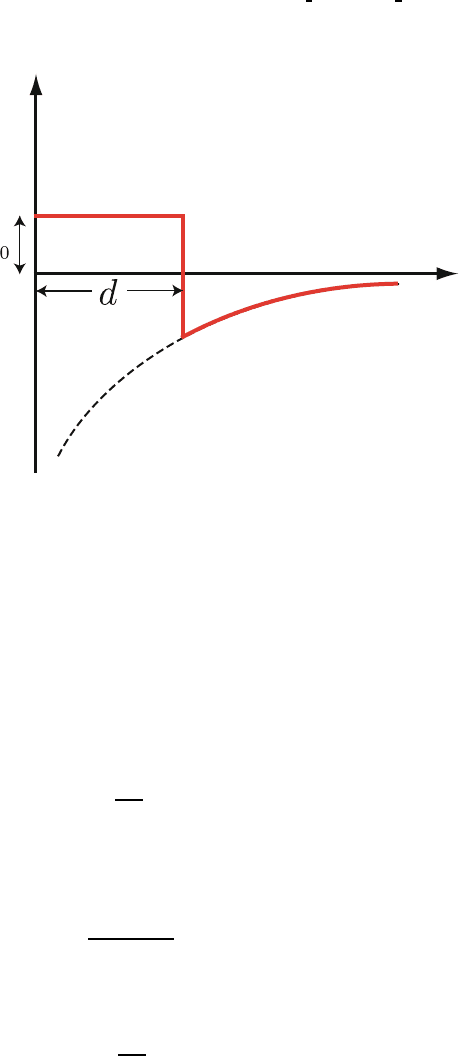
e
iK
·r
.
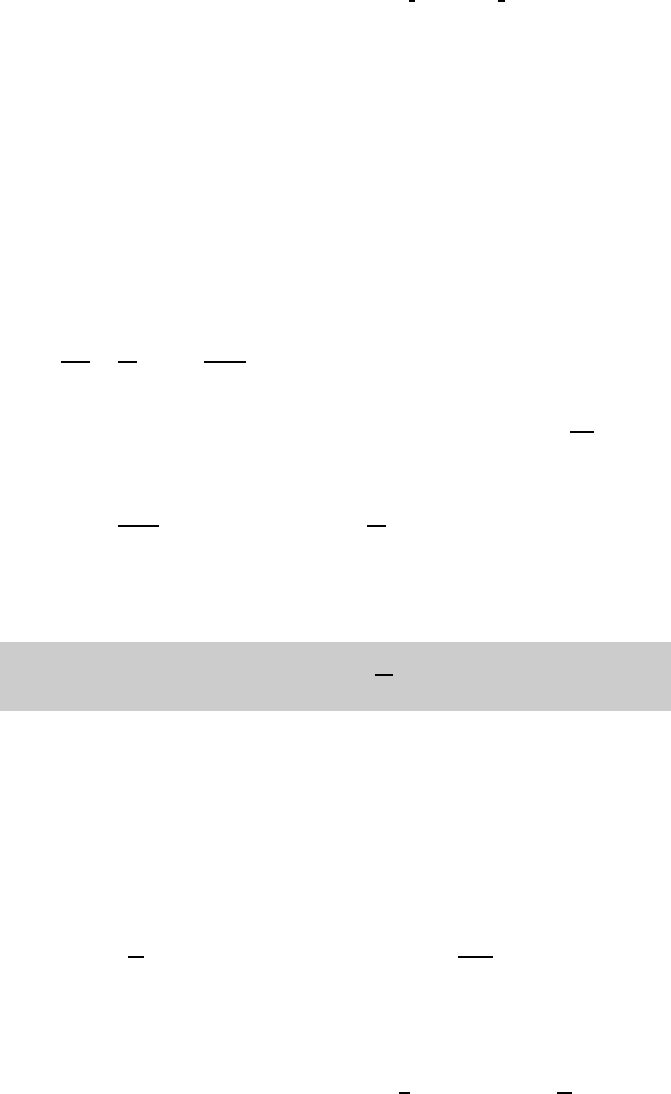
The Bloch wave vector k is restricted to the first Brillouin zone.
579
The vector space formed by the degenerate bands at E(k) is invariant 580
under the operations of the group of the wave vector k. That is, the space of 581
degenerate states at a point k in the Brillouin zone provides a representation 582
of the group of the wave vector k. We can decompose this representation into 583
its irreducible components and use the decomposition to label the states. 584
When we classify the degenerate statesaccordingtotheIRsofthegroup 585
of the wave vector, we are able to simplify the secular equation by virtue of a 586
fundamental theorem on matrix elements: 587
1. The matrix elements of V between different IRs vanish, so many off- 588
diagonal matrix elements are zero. This reduces the determinantal equation 589
to a block diagonal form. 590
2. The diagonal matrix elements Γ
j
n |V |Γ
j
n are, in general, different for 591
different IRs Γ
j
. This lifts the degeneracy at the symmetry points. 592
Many common semiconductors which crystallize in the cubic zincblende 593
structure have valence–conduction band structures that are quite similar in 594
gross features. This results from the fact that each atom has four electrons 595
outside a closed shell and there are two atoms per unit cell. 596

Uncorrected Proof
BookID 160928 ChapID 06 Proof# 1 - 29/07/09
6 1
More Band Theory and the Semiclassical 2
Approximation 3
6.1 Orthogonalized Plane Waves 4
So far, we have expanded the periodic part of the Bloch function u
(k, r)in 5
a plane wave basis, i.e., 6
u
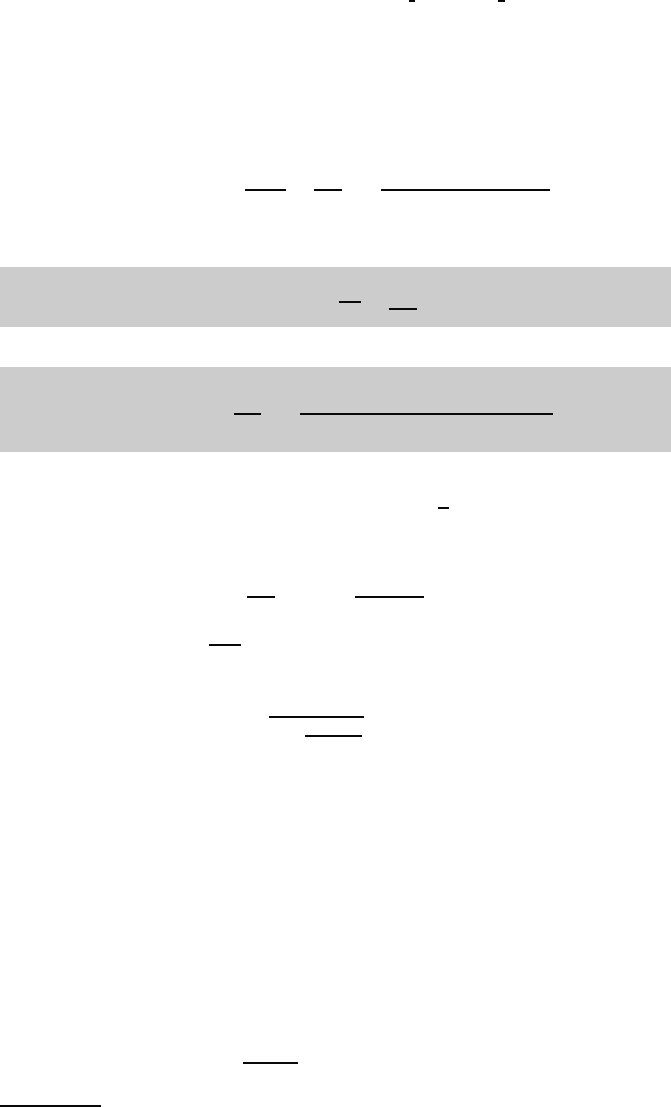
(k, r)=
K
C
(k)e
K
·r
(6.1)
It often occurs that the series for u
(k, r) converges very slowly so that many 7
different plane waves must be included in the expansion. The reason for this is 8
that plane wave is not a very good description of the valence and conduction 9
band states in the region of real space in which the core levels are of large 10
amplitude. What are the core levels? They are the tightly bound atomic states 11
associated with closed shell configurations. States outside the core are valence 12
states that are responsible for the binding energy of the solid. For example, 13
consider Table 6.1. 14
Let us define the eigenfunction 15
|cj =Ψ
c
j
(r − R
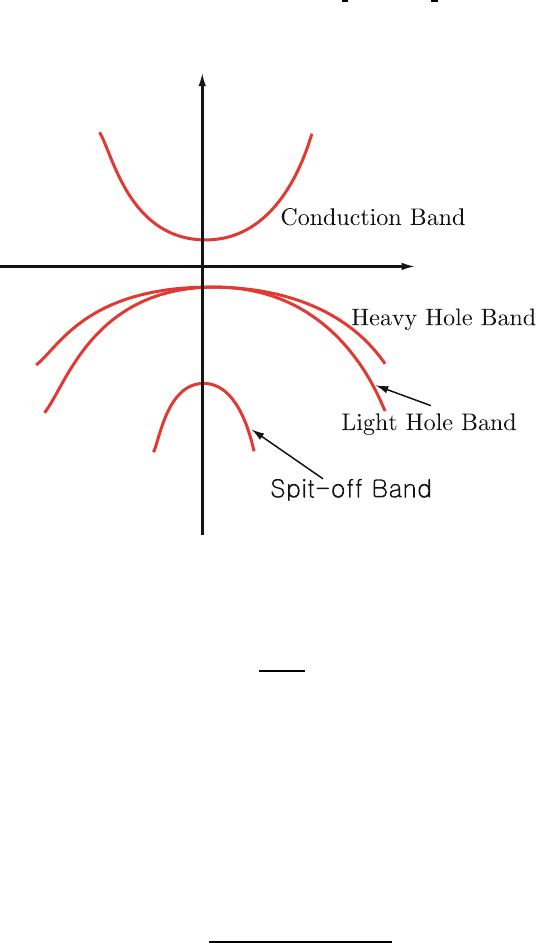
j
) (6.2)
to be the core level c (c =1s, 2s, 2p, 3s,...) of the atom located at position
16
R
j
. The valence and conduction band states that we are interested in must 17
be orthogonal to these core states. When we expand the periodic part of the 18
Bloch function in plane waves, it takes a very large number of plane waves 19
to give band wave functions with all the necessary wiggles needed to make 20
them orthogonal to core states. For this reason, the orthogonalized plane waves 21
(OPW) was introduced by Herring and Hill.
1
We define 22
|w
k
= |k−
c
,j
c
j
|k|c
j
. (6.3)
23
1
C. Herring, Phys. Rev. 57, 1169 (1940) and C. Herring, A.G. Hill, Phys. Rev. 58,
132 (1940).

Uncorrected Proof
BookID 160928 ChapID 06 Proof# 1 - 29/07/09
162 6 More Band Theory and the Semiclassical Approximation
t1.1 Tabl e 6.1. Electron configurations of core states and valence states of Na, Si, and
Cu atoms
t1.2 Atom Core states Valence states
t1.3 Na 1s
2
, 2s
2
, 2p
6
3s
1
and higher
t1.4 Si 1s
2
, 2s
2
, 2p
6
3s
2
, 3p
2
and higher
t1.5 Cu 1s
2
, 2s
2
, 2p
6
, 3s
2
, 3p
6
3d
10
, 4s
1
and higher
Here, |w
j
is an OPW, |k is a simple plane wave, and the sum is over 24
all core levels on all atoms in the crystal. The core levels are solutions of the 25
Schr¨odinger equation 26
−
¯h
2
∇
2
2m
+ V
j
(r) −E
c
Ψ
cj
=0 (6.4)
where V
j
(r) is the atomic potential for the atom located at r
j
. Because the 27
core levels are tightly bound, this potential is essentially identical to the value 28
of the periodic crystalline potential in the unit cell centered at r
j
. 29
It is clear from (6.3) that |w
j
is orthogonal to the core levels since 30
cj|w
k
= cj|k−
c
,j
c
j
|kcj|c
j
, (6.5)
but the core levels themselves satisfy
31
cj|c
j
= δ
cc
δ
jj
(6.6)
This gives cj|w
k
= 0. In an OPW calculation, the periodic part of the Bloch 32
function is expanded in OPW’s instead of in plane waves. This improves the 33
convergence. 34
6.2 Pseudopotential Method 35
We can think of the operator P defined by 36
P=
cj
|cjcj| (6.7)
37
as a projection operator. It gives the projection of any eigenfunction |φ onto 38
the core states. If we expand the wave function Ψ
k
in OPW’s we can write 39
|Ψ
k
=
K
a
K
|w
k+K
=(1− P)
K
a
K
|(k + K). (6.8)
40
Uncorrected Proof
BookID 160928 ChapID 06 Proof# 1 - 29/07/09
6.2 Pseudopotential Method 163
Let us define |φ
k
=
K
a
K
|k + K as the pseudo-wavefunction. Clearly, 41
we have 42
|Ψ
k
=(1− P) |φ
k
. (6.9)
We note that |φ
k
is the plane wave part of the OPW expansion. Both |cj 43
and |Ψ
k
are solutions of the Schr¨odinger equation 44
−
¯h
2
∇
2
2m
+ V (r)
Ψ=EΨ, (6.10)
with eigenvalues E
c
and E(k), respectively. Let us substitute |Ψ =(1−P) |φ 45
into (6.10). This gives 46
−
¯h
2
∇
2
2m
+ V (r) −E
(1 − P) |φ =0. (6.11)
Recall that
47
P |φ =
cj
|cjcj|φ. (6.12)
Therefore, we have
48
HP |φ =
cj
H |cjcj|φ
=
cj
E
c
j
|cjcj|φ. (6.13)
We use this in the Schr¨odinger equation to obtain
49
−
¯h
2
∇
2
2m
+ V (r) −E
|φ +
cj
(E − E
c
j
) |cjcj|φ =0. (6.14)
50
We define an effective potential or pseudopotential by 51
W (r)=V (r)+
cj
(E − E
c
j
) |cjcj|. (6.15)
52
The first term in the pseudopotential is just the usual periodic crystalline 53
potential. The second term is a nonlocal repulsive potential. 54
W (r)φ(r)=V (r)φ(r)+
cj
(E − E
c
j
)Ψ
cj
(r) cj|φ(r
)
=
d
3
r
[V (r
)δ(r − r
)+
cj
(E − E
c
j
)Ψ
cj
(r)Ψ
∗
cj
(r
)]φ(r
).
(6.16)
55
Uncorrected Proof
BookID 160928 ChapID 06 Proof# 1 - 29/07/09
164 6 More Band Theory and the Semiclassical Approximation
It is clear that W is nonlocal since only the first term involving the periodic 56
potential contains a δ-function. The second term 57
V
R
=
cj
(E − E
c
j
) |cjcj| (6.17)
is repulsive as opposed to an attractive potential like V (r). We can see this
58
by evaluating φ|V
R
|φ for any function φ. We find that 59
φ|V
R
|φ =
cj
(E − E
c
j
) |φ|cj|
2
. (6.18)
Because |φ|cj|
2
is positive and the valence–conduction band energies E are, 60
by definition, larger than core levels, 61
φ|V
R
|φ > 0. (6.19)
Therefore, V
R
cancels a portion of the attractive periodic potential V .The 62
diagram shown in Fig. 6.1 is a sketch of what the periodic potential V (r), 63
the repulsive part of the pseudopotential V
R
, and the full pseudopotential 64
look like. 65
A number of people have used model pseudopotentials in which the poten- 66
tial is replaced by the one shown in Fig. 6.2. The pseudopotential W (r)is 67
taken to be a local potential which has (1) a constant value V
0
inside a core 68
or radius d and (2) the actual potential V (r)forr>d.BothV
0
and d 69
are used as adjustable parameters to fit the energy bands to experimental 70
observation. 71
V
V
W(r)
V(r)
r
Fig. 6.1. A sketch of various potentials
Uncorrected Proof
BookID 160928 ChapID 06 Proof# 1 - 29/07/09
6.3 k · p Method and Effective Mass Theory 165
V
r
Fig. 6.2. A model pseudopotential
6.3 k · p Method and Effective Mass Theory 72
Often in discussing properties of semiconductors it is more important to have 73
a single analytic description of the band structure very close to a conduction 74
band minimum or valence band maximum than to have detailed numerical 75
calculations of E
n
(k)andΨ
nk
throughout the Brillouin zone. One approach 76
that has proven to be useful is called the k · p method. We know that Ψ
k
= 77
e
ik·r
u
k
(r) is a solution of the Schr¨odinger equation 78
p
2
2m
+ V (r) − E
k
Ψ
k
(r)=0. (6.20)
By substituting the Bloch wave form for Ψ
k
, it is easy to see that u
k
(r)satisfies 79
the Schr¨odinger equation 80
(p +¯hk)
2
2m
+ V (r) −E
k
u
k
(r)=0. (6.21)
For k = 0 (i.e., at the Γ-point) this equation can be written as
81
p
2
2m
+ V (r) −E
0
u
0
(r)=0. (6.22)
There are an infinite number of solutions u
(1)
0
, u
(2)
0
, u
(3)
0
, ..., u
(n)
0
, ... with 82
energies at the Γ-point E
(1)
0
,..., E
(n)
0
,.... Here, the superscript (n) is a band 83
Uncorrected Proof
BookID 160928 ChapID 06 Proof# 1 - 29/07/09
166 6 More Band Theory and the Semiclassical Approximation
index and the subscript 0 stands for k = 0. For any fixed value of k the set 84
of functions u
(n)
k
(r) form a complete orthonormal set in which any function 85
with the periodicity of the lattice can be expanded. Therefore, we can use the 86
set of function u
(n)
0
(r) as a basis set for a perturbation expansion of u
(m)
k
for 87
k = 0 and for any band m. By this, we mean that we can write 88
u
(m)
k
=
n
a
(m)
n
(k)u
(n)
0
. (6.23)
The Schr¨odinger equation for u
(m)
k
can be written as 89
p
2
2m
+
¯h
m
k ·p +
¯h
2
k
2
2m
+ V (r) −E
k
n
a
(m)
n
(k)u
(n)
0
(r)=0. (6.24)
We omit the band superscript (m) for simplicity. We know that
p
2
2m
+ V (r)
90
u
(n)
0
= E
(n)
0
u
(n)
0
; therefore, we can write 91
E
(n)
0
+
¯h
2
k
2
2m
− E
k
n
a
n
u
(n)
0
(r)+
¯h
m
k ·p
n
a
n
u
(n)
0
(r)=0. (6.25)
Take the scalar product with u
(m)
0
remembering that
u
(m)
0
|u
(n)
0
!
= δ
mn
.This 92
gives 93
E
(m)
0
+ ε
k
− E
k
a
m
+
n
/
u
(m)
0
¯h
m
k · p
u
(n)
0
0
a
n
=0. (6.26)
94
This is just a matrix equation of the form 95
⎛
⎜
⎜
⎜
⎜
⎜
⎜
⎜
⎝
E
(1)
0
+ ε
k
− E
k
u
(1)
0
|H
1
|u
(2)
0
!
···
u
(2)
0
|H
1
|u
(1)
0
!
E
(2)
0
+ ε
k
− E
k
···
u
(3)
0
|H
1
|u
(1)
0
!
u
(3)
0
|H
1
|u
(2)
0
!
···
.
.
.
.
.
.
.
.
.
⎞
⎟
⎟
⎟
⎟
⎟
⎟
⎟
⎠
⎛
⎜
⎜
⎜
⎝
a
1
a
2
a
3
.
.
.
⎞
⎟
⎟
⎟
⎠
= 0 (6.27)
Here, H
1
=
¯h
m
k · p,wherep = −i¯h∇, ε
k
=
¯h
2
k
2
2m
, and we have put 96
u
(n)
0
|p|u
(n)
0
!
= 0. This last result holds forcrystals with a center of sym-
97
metry because parity is a good quantum number and p is an operator that 98
changes parity. If this matrix element does not vanish it must be added 99
to ε
k
. 100
If we consider k to be small (compared to
π
a
), then if
u
(m)
0
¯h
m
k · p
u
(n)
0
!
101
does not vanish, it is usuallyquite small compared to
E
(n)
0
− E
(m)
0
.When
102
Uncorrected Proof
BookID 160928 ChapID 06 Proof# 1 - 29/07/09
6.3 k · p Method and Effective Mass Theory 167
the off-diagonal elements are treated by perturbation theory, the resulting 103
expression for E
(n)
k
is written as 104
E
(n)
k
= E
(n)
0
+
¯h
2
k
2
2m
+
¯h
2
m
2
l
k ·
u
(n)
0
|p|u
(l)
0
!
2
E
(n)
0
− E
(l)
0
. (6.28)
This can be rewritten as
105
E
(n)
k
= E
(n)
0
+
¯h
2
2
k · m
∗
−1
· k, (6.29)
106
where the inverse effective mass tensor (for the band n)isgivenby 107
m
∗
ij
−1
= m
−1
δ
ij
+
2
m
2
l
u
(n)
0
|p
i
|u
(l)
0
!
u
(l)
0
|p
j
|u
(n)
0
!
E
(n)
0
− E
(l)
0
. (6.30)
108
Because u
(n)
0
is a periodic function with period a, the lattice spacing, the 109
matrix element
u
(n)
0
|p
i
|u
(l)
0
!
is of the order of
¯h
a
if it does not vanish by 110
symmetry considerations. Thus for two coupled bands separated by an energy 111
gap ΔE 112
m
m
∗
1+2
¯h
2
/ma
2
ΔE
(6.31)
Since a 3 × 10
−8
cm,
¯h
2
ma
2
10 eV, but typical gaps in semiconductors can 113
be as small as 10
−1
eV. Thus, in small-gap semiconductors it is very possible 114
to have 115
m
∗
=
m
1+
¯h
2
/ma
2
ΔE
10
−2
m.
Effective masses of 0.1 −−0.01 m are not at all unusual in semiconductors.
116
The simple perturbation theory breaks down when there are a number 117
of almost degenerate bands at the point in k-space about which the k · p 118
expansion is being made. In that case, it is necessary to keep all the nearly 119
degenerate states in the matrix Schr¨odinger equation and refrain from using 120
second-order (nondegenerate) perturbation theory. One example of this is the 121
Kane Model
2
used frequently in zincblende semiconductors (like InSb, InAs, 122
GaSb, GaAs, etc.). In these materials, there are four bands that are rather 123
close together (see Fig. 6.3). If spin–orbit coupling is included (it can be impor- 124
tant in heavy atoms) one must add to the periodic potential V (r)theatomic 125
spin–orbit coupling 126
¯h
4m
2
0
c
2
(σ ×∇
r
V ) · p. (6.32)
2
E.O.Kane,J.Phys.Chem.Solids1, 82 (1956); ibid. 1, 249 (1957); Semiconductors
and Semimetals, Vol. 1, pp.75-100 (Academic, New York, 1966).
Uncorrected Proof
BookID 160928 ChapID 06 Proof# 1 - 29/07/09
168 6 More Band Theory and the Semiclassical Approximation
E
k
Fig. 6.3. Schematics of the band structure of zincblende semiconductors near the
Γ point. Nonparabolicity of the valence band is neglected here
Then the four bands become eight (including the spin splitting) and ¯hk ·p is 127
replaced by Π · p,whereΠ =¯hk +
¯h
4m
0
c
2
σ ×∇
r
V .The8× 8matrixmust 128
be diagonalized to obtain a good description of the conduction–valence band 129
structure near the Γ point. 130
6.4 Semiclassical Approximation for Bloch Electrons 131
When we discussed the Sommerfeld model of free electrons, we discussed the 132
motion of electrons in response to electric fields and temperature gradients 133
which introduced r-dependence into the equilibrium distribution function 134
f
0
(ε)=
1
exp
[ε−ζ(r)]/k
B
T (r)
+1
. (6.33)
The eigenfunctions of the Sommerfeld model were plane waves, so the prob-
135
ability that an electron was at a given position r was independent of r. 136
Therefore, the r-dependence in f
0
(ε) only made sense if we introduced the 137
idea of localized wave packets defined by 138
Ψ
k
(r,t)=
k
g(k − k
)e
i(k
·r−ω
k
t)
, (6.34)

Uncorrected Proof
BookID 160928 ChapID 06 Proof# 1 - 29/07/09
6.4 Semiclassical Approximation for Bloch Electrons 169
where g(k−k
) 0if|k − k
| is larger than some value Δk.BytheHeisenberg 139
principle 140
ΔkΔx
∼
> 1, (6.35)
so that the electron can be localized in a region Δx of the order of (Δk)
−1
. 141
We must have 142
1. Δx a, the atomic spacing. 143
2. Δx L the distance over which the potential φ(x)=eEx or the 144
temperature T (x) changes appreciably. 145
Thus, the semiclassical wave packet picture can be applied only to slowly 146
varying (in space) perturbations on the free electrons. 147
In the presence of a periodic potential, we have Bloch states (or Bloch 148
electrons) described by 149
Ψ
nk
(r)=e
ik
·r
u
nk
(r) (6.36)
and
150
E = ε
n
(k) (6.37)
Here, k is restricted to the first Brillouin zone, and there is a gap between
151
different energy bands at the same value of k, i.e., ε
n
(k) − ε
n
(k)=E
GAP
152
(k) =0. 153
The semiclassical wave packet picture can be used to describe the motion 154
of Bloch electrons in a given band in response to slowly varying perturbations 155
by taking 156
Ψ
nk
(r)=
k
g
n
(k − k
)Ψ
nk
(r) (6.38)
with g
n
(k − k
) 0if|k − k
| > Δk. Then, the standard expression for the 157
group velocity of a wave packet gives 158
v
n
(k)=
1
¯h
∇
k
ε
n
(k) (6.39)
as the velocity of a Bloch electron of wave vector k in the nth band. In the
159
presence of a force F, the work done in moving an electron wavepacket a 160
distance δx is written by 161
δW = F · δx = F · v
n
δt (6.40)
But this must equal the change in energy
162
δW = E
n
(k + δk) − E
n
(k)
= ∇
k
E
n
(k) · δk =¯hv
n
·
˙
kδt (6.41)
Equating (6.40) and (6.41) gives
163
˙
k =¯h
−1
F. (6.42)
164
165