
Quinn J.J., Yi K.-S. Solid State Physics: Principles and Modern Applications
Подождите немного. Документ загружается.

Uncorrected Proof
BookID 160928 ChapID 07 Proof# 1 - 29/07/09
180 7 Semiconductors
TT
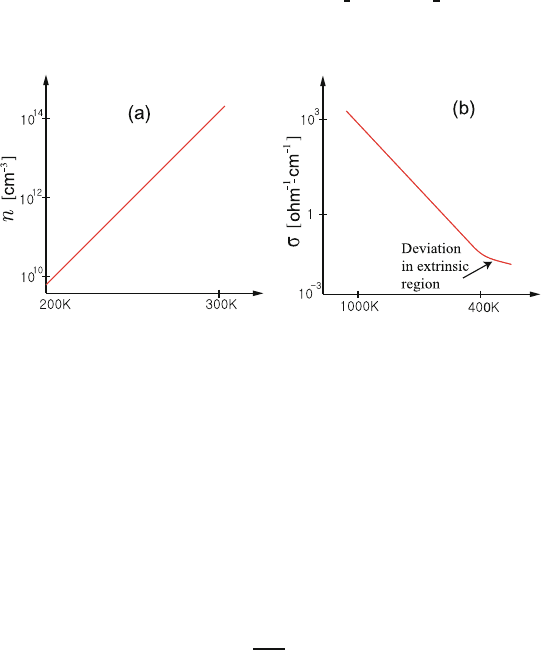
Fig. 7.1. Temperature dependence of carrier concentration (a) and electrical
conductivity (b) of a typical semiconductor
0.1 eV ≤ E
G
< 2.0 eV the carrier concentration satisfies 10
22
cm
−3
>n>25
10
13
cm
−3
. The relaxation time τ in the expression for the conductivity is 26
associated with scattering events that dissipate current. These are scattering 27
due to impurities, defects, and phonons. At room temperature, the relaxation 28
time τ of a very pure material will be dominated by phonon scattering. For 29
phonon scattering in this range of temperature τ ∝ T
−1
. Therefore, in a metal 30
the conductivity σ decreases as the temperature is increased. For a semicon- 31
ductor, τ behaves the same as in a metal for the same temperature range. 32
However, the carrier concentration n increases as the temperature increases. 33
Since n increases exponentially with
1
k
B
T
, this increase outweighs the decrease 34
in relaxation time, which is a power law, and σ increases with increasing T . 35
Intrinsic Electrical Conductivity 36
In a very pure sample, the conductivity of a semiconductor is due to the 37
excitation of electrons from the valence to the conduction band by ther- 38
mal fluctuations. For a semiconductor at room temperature the resistivity 39
is between 10
−2
Ω-cm and 10
9
Ω-cm depending on the band gap of the mate- 40
rial. In contrast, a typical metal has a resistivity of 10
−6
Ω-cm and a typical 41
insulator satisfies 10
14
Ω-cm ≤ ρ ≤ 10
22
Ω-cm. A plot of carrier concentration 42
versus temperature and a plot of conductivity versus temperature is shown in 43
Fig. 7.1 a and b. 44
7.2 Typical Semiconductors 45
Silicon and germanium are the prototypical covalently bonded semiconduc- 46
tors. In our discussions of energy bands we stated that their valence band 47
maxima were at the Γ-point. The valence band originates from atomic p-states 48
and is threefold degenerate at Γ. Group theory tells us that this degeneracy 49
gives rise to light hole and heavy hole bands, and that an additional splitting 50
Uncorrected Proof
BookID 160928 ChapID 07 Proof# 1 - 29/07/09
7.2 Typical Semiconductors 181
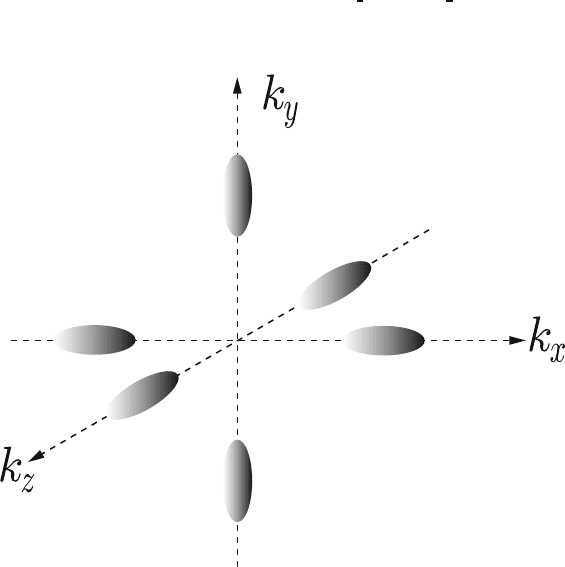
Fig. 7.2. Constant energy surfaces near the conduction band minima for Si
occurs if spin–orbit coupling is taken into account. The conduction band arises 51
from an atomic s-state, but the minimum does not occur at the Γ-point. In Si, 52
the conduction band minimum occurs along the line Δ, at about 90% of the 53
way to the zone boundary. This gives six conduction band minima or valleys. 54
(see Fig. 7.2). In the effective mass approximation, these valleys have a longi- 55
tudinal mass m
l
0.98 m
e
along the axis and a transverse mass m
t
0.19 m
e
56
perpendicular to it. Here, m
e
is the mass of a free electron. 57
For Ge, the conduction band minimum is located at the L-point. This gives 58
the Ge conduction band four minima (one half of each valley is at the zone 59
boundary in the 111 directions). In Ge, m
l
1.64 m
e
and m
t
=0.08 m
e
. 60
Silicon and germanium are called indirect gap semiconductors because the 61
valence band maximum and conduction band minimum are at different point 62
in k-space. Materials like InSb, InAs, InP, GaAs, and GaSb are direct gap 63
semiconductors because both conduction minimum and valence band maxi- 64
mum occur at the Γ-point. The band structures of many III–V compounds 65
are similar; the sizes of energy gaps, effective masses, and spin splittings differ 66
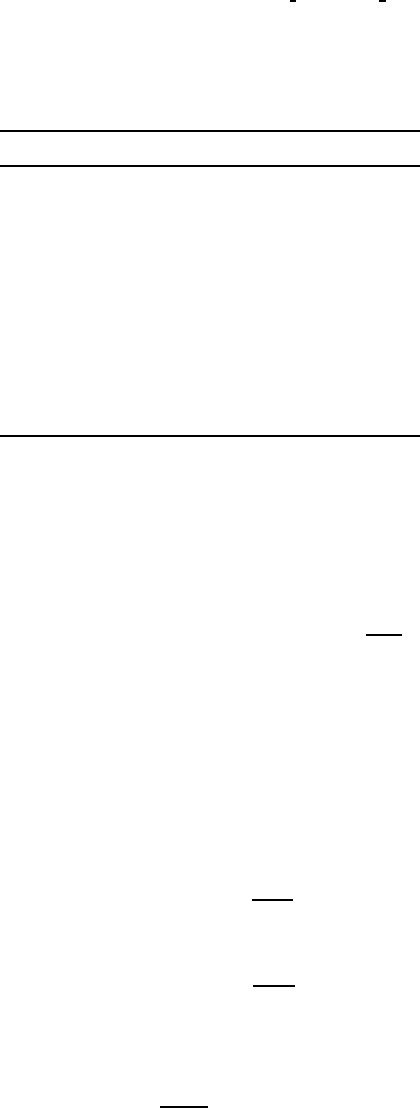
but the overall features are the same as those of Si and Ge (see Table 7.1). 67
The energy gap is usually determined either by optical absorption or by mea- 68
suring the temperature dependence of the conductivity. In optical absorption, 69
the initial and final state must have the same wave vector k if no phonons 70
Uncorrected Proof
BookID 160928 ChapID 07 Proof# 1 - 29/07/09
182 7 Semiconductors
t1.1 Tabl e 7.1. Comparison of energy gaps of Si, Ge, diamond, and various III–V
compound semiconductors
t1.2 Crystal Type of energy gap E
G
[eV] at
◦
K
t1.3 Si Indirect 1.2
t1.4 Ge Indirect 0.8
t1.5 InSb Direct 0.2
t1.6 InAs Direct 0.4
t1.7 InP Direct 1.3
t1.8 GaP Indirect 2.3
t1.9 GaAs Direct 1.5
t1.10 GaSb Direct 1.8
t1.11 AlAs Indirect 2.24
t1.12 GaN Direct 3.5
t1.13 ZnO Direct 3.4
t1.14 Diamond Indirect 5.48
are involved in the absorption process because the k
ph
vector of the photon 71
is essentially zero on the scale of electron k vectors. This leads to a sharp 72
increase in absorption at the energy gap of a direct band gap material. For 73
an indirect gap semiconductor, the absorption process is phonon-assisted. It 74
is less abrupt and shows a temperature dependence. The temperature depen- 75
dence of the conductivity varies, aswe shall show, as e
−
E
G
2k
B
T
where E
G
is the 76
minimum gap, the energy difference between the conduction band minimum 77
and the valence band maximum. 78
7.3 Temperature Dependence of the Carrier 79
Concentration 80
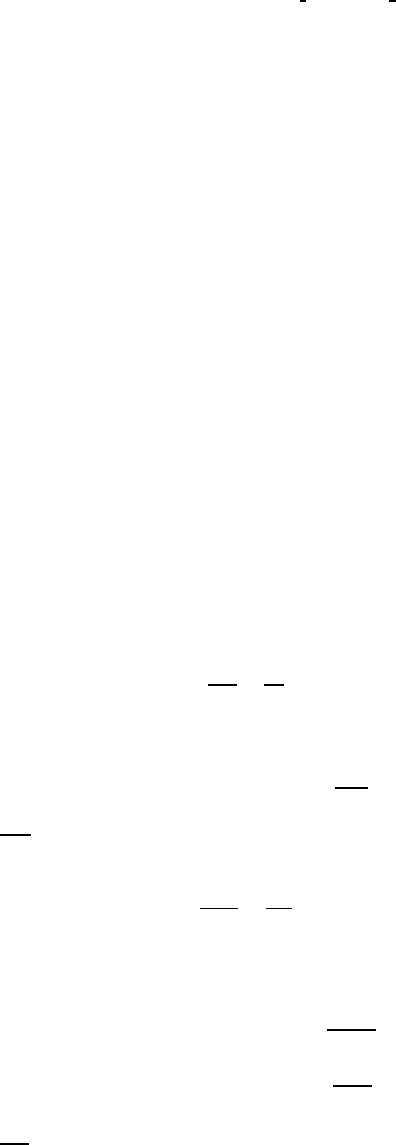
Let the conduction and valence band energies be given, respectively, by 81
ε
c
(k)=ε
c
+
¯h
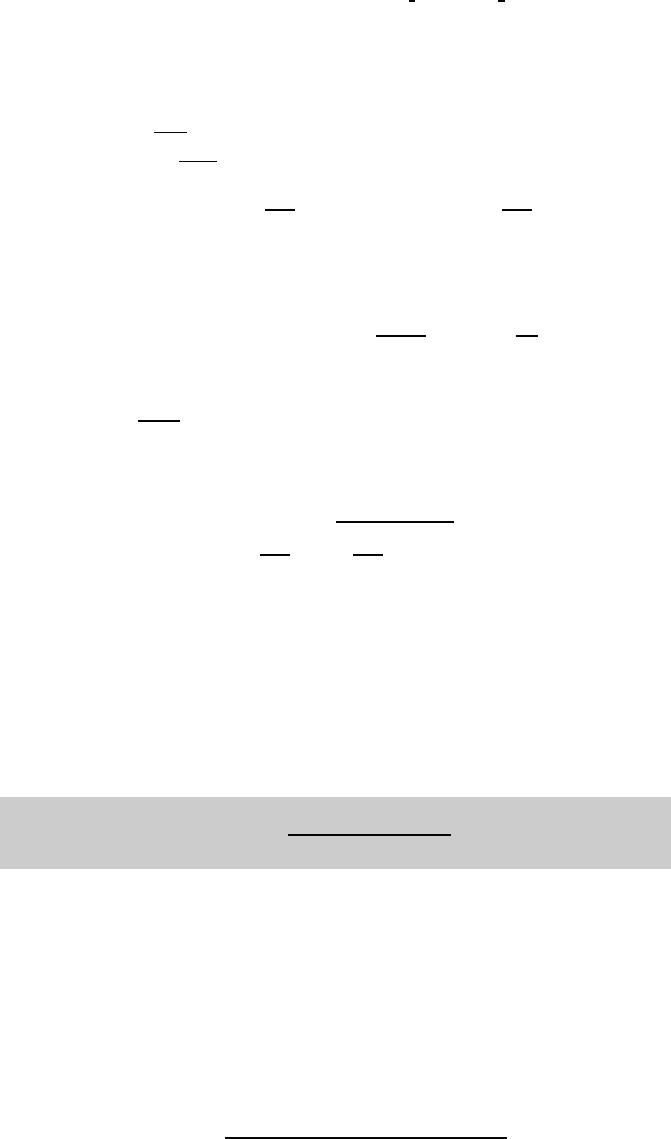
2
k
2
2m
c
(7.2)
and
82
ε
v
(k)=ε
v
−
¯h
2
k
2
2m
v
(7.3)
The minimum energy gap is E
G
= ε
c
− ε
v
. The density of states in the 83
conduction band is given by 84
g
c
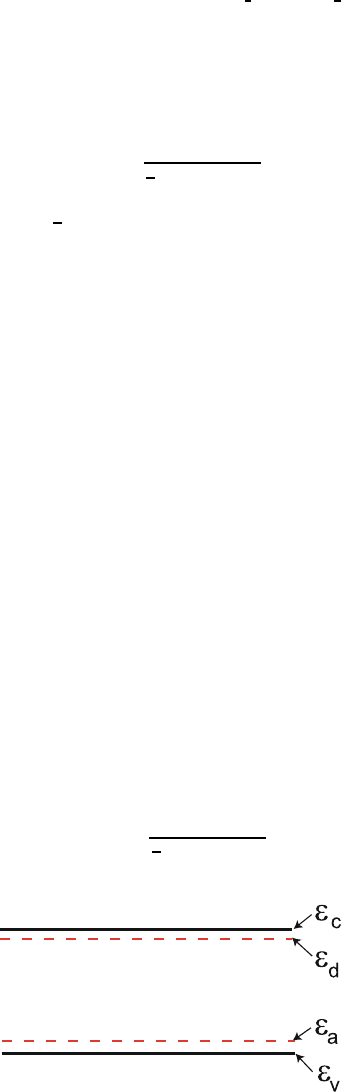
(ε)dε =
2
(2π)
3
ε<ε
c
(k)<ε+dε
d
3
k (7.4)
Uncorrected Proof
BookID 160928 ChapID 07 Proof# 1 - 29/07/09
7.3 Temperature Dependence of the Carrier Concentration 183
Since, ε
c
(k)isisotropicd
3
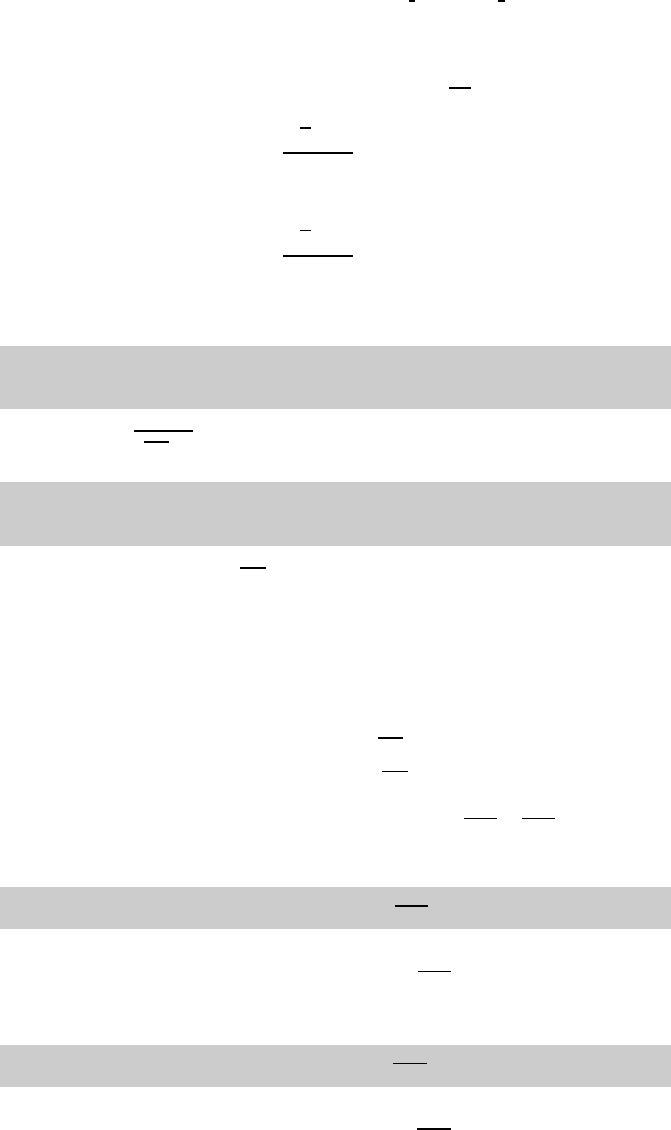
k =4πk
2
dk and dε =
¯h
2
m
c
kdk. Substituting into 85
(7.4) gives 86
g
c
(ε)=
√
2m
3/2
c
π
2
¯h
3
(ε − ε
c
)
1/2
. (7.5)
In a similar way, we have
87
g
v
(ε)=
√
2m
3/2
v
π
2
¯h
3
(ε
v
− ε)
1/2
. (7.6)
The number of electrons per unit volume in the conduction band is given by
88
89
n
c
(T )=
∞
ε
c
dεg
c
(ε)f
0
(ε), (7.7)
90
where f
0
(ε)=
1
e
ε−ζ
Θ
+1
is the Fermi distribution function. The concentration 91
of holes in the valence band is written by 92
p
v
(T )=
ε
v
−∞
dεg
v
(ε)[1− f
0
(ε)] . (7.8)
93
Note that 1 − f
0
(ε)=1/
e
ζ−ε
Θ
+1
. Clearly n
c
(T )andp
v
(T ) depend on the 94
value of the chemical potential ζ. We will make the simplifying assumption 95
that ε
c
−ζ Θandζ −ε
v
Θ, where Θ is, of course, k
B
T . This nondegen- 96
eracy assumption makes the calculation much simpler, and we will evaluate 97
ζ in the course of the calculation and check if the assumption is valid. With 98
this assumption, we can write 99
f
0
(ε) e
−
ε−ζ
Θ
,
1 − f
0
(ε) e
−
ζ−ε
Θ
(7.9)
Thefirstlineof(7.9)canberewrittenasf
0
(ε) e
−
ε−ε
c
Θ
e
−
ε
c
−ζ
Θ
. The second 100
factor is independent of ε and can be taken out of the integral in (7.7) to 101
obtain 102
n
c
(T )=N
c
(T )e
−
ε
c
−ζ
Θ
, (7.10)
103
where 104
N
c
(T )=
∞
ε
c
dεg
c
(ε)e
−
ε−ε
c
Θ
. (7.11)
In a similar manner, one can obtain
105
p
v
(T )=P
v
(T )e
−
ζ−ε
v
Θ
, (7.12)
106
and 107
P
v
(T )=
ε
v
∞
dεg
v
(ε)e
−
ε
v
−ε
Θ
. (7.13)

Uncorrected Proof
BookID 160928 ChapID 07 Proof# 1 - 29/07/09
184 7 Semiconductors
Because the density of states varies as g
c
∝ (ε − ε
c
)
1/2
and g
v
∝ (ε
v
− ε)
1/2
, 108
the integral for N
c
(T )andP
v
(T ) can be evaluated exactly by using the fact 109
that
"
∞
0
dx
√
xe
−x
=
1
2
√
π. The results are 110
N
c
(T )=
1
4
2m
c
Θ
π¯h
2
3/2
. (7.14)
The result for P
v
(T ) differs only in having m
v
replace m
c
. It is sometimes 111
convenient to use the practical expression 112
N
c
(T ) 2.5
m
c
m
3/2
T
300K
3/2
× 10
19
cm
−3
. (7.15)
Again for P
v
(T ) we need only replace m
c
by m
v
. Note the very important 113
fact that the product n
c
(T )p
v
(T ) is independent of ζ,sothat 114
n
c
(T )p
v
(T )=N
c
(T )P
v
(T )e
−E
G
/Θ
. (7.16)
115
7.3.1 Carrier Concentration: Intrinsic Case 116
In the absence of impurities, the only carriers are thermally excited electron– 117
hole pairs, so that n
c
(T )=p
v
(T ); this is defined as n
i
(T ), where i stands for 118
intrinsic. From (7.16), we have 119
n
i
(T )=[N
c
(T )P
v
(T )]
1/2
e
−E
G
/2Θ
. (7.17)
120
To obtain the value of ζ for this case (we will call it ζ
i
, i for the intrinsic case) 121
we note that n
i
(T )=n
c
(T ), or 122
[N
c
(T )P
v
(T )]
1/2
e
−E
G
/2Θ
= N
c
(T )e
−(ε
c
−ζ
i
)Θ
. (7.18)
This can be rewritten as
123
[P
v
(T )/N
c
(T )]
1/2
=e
ζ
i
−ε
c
+
1
2
E
G
Θ
. (7.19)
Solving for ζ
i
gives 124
ζ
i
= ε
c
−
1
2
E
G
+
3
4
Θln
m
v
m
c
. (7.20)
125
In writing (7.20) we have used [P
v
(T )/N
c
(T )] = (m
v
/m
c
)
3/2
.Intermsofε
v
126
we can express (7.20) as 127
ζ
i
= ε
v
+
1
2
E
G
+
3
4
Θln
m
v
m
c
. (7.21)
If m
v
= m
c
,thenζ
i
always sits in mid-gap. If m
v
= m
c
, ζ
i
sits at mid- 128
gap at Θ = 0, but moves away from the higher density of states band as
Uncorrected Proof
BookID 160928 ChapID 07 Proof# 1 - 29/07/09
7.4 Donor and Acceptor Impurities 185
Θ is increased. For E
G
1 eV, the separations ζ
i
− ε
v
and ε
c
− ζ
i
are 129
large compared to Θ for any reasonable temperature, so our assumption is 130
justified. 131
7.4 Donor and Acceptor Impurities 132
Si and Ge have four valence electrons. If a small concentration of a column V 133
element replaces some of the host atoms, then there is one electron more than 134
necessary for the formation of the covalent bonds. The extra electron must be 135
placed in the conduction band, and such atoms like As, Sb, and P are known 136
as donors. For column III elements (Al, Ga, In, etc.) there is a shortage of one 137
electron, thus, the valence band is not full and a hole exists for every acceptor 138
atom. 139
Let us consider the case of donors (for acceptors, the same picture applies if 140
electrons in the conduction band are replaced by holes in the valence band and, 141
as an example, As
+
ions are replaced by Al
−
ions). To a first approximation 142
the extra electron of the As atom will go into the conduction band of the host 143
material. This would give one conduction electron for each impurity from the 144
column V. However, these conduction electron leaves behind an As
+
ion, and 145
the As
+
ion acts as a center of attraction which can bind the conduction 146
electron similar to the binding of an electron by a proton to form a hydrogen 147
atom. 148
For a hydrogen atom, the Hamiltonian for an electron moving in the 149
presence of a proton located at r =0is 150
H =
p
2
2m
−
e
2
r
. (7.22)
The Schr¨odinger equation has, for its ground state eigenfunction and eigen-
151
value, 152
Ψ
0
= N
0
e
−r/a
B
and E
0
= −
e
2
2a
B
, (7.23)
where a
B
=
¯h
2
me
2
is the Bohr radius (a
B
∼ 0.5
˚
A). 153
For a conduction electron in the presence of a donor ion, we have 154
H =
p
2
2m
∗
c
−
e
2
s
r
. (7.24)
Here, m
∗
c
is the conduction band effective mass and
s
is the background 155
dielectric constant of the semiconductor. The ground state will have 156
Ψ
0
= N
0
e
−r/a
∗
B
and E
0
= −
e
2
2
s
a
∗
B
. (7.25)
TheeffectiveBohrradiusa
∗
B
is given by a
∗
B
=
¯h
2
s
m
∗
c
e
2
. For a typical semi- 157
conductor m
∗
c
0.1m and
s
10. This gives a
∗
B
≈ 10
2
a
B
50
˚
A and 158
E
0
≈−10
−3
e
2
2a
B
−13 meV. 159
Uncorrected Proof
BookID 160928 ChapID 07 Proof# 1 - 29/07/09
186 7 Semiconductors
When donors are present, the chemical potential ζ will move from its 160
intrinsic value ζ
i
to a value near the conduction band edge. We know that 161
n
c
(T )=N
c
(T )e
−
ε
c
−ζ
Θ
; we can define the intrinsic carrier concentration n
i
(T ) 162
by n
i
(T )=N
c
(T )e
−
ε
c
−ζ
i
Θ
. Then we can write for the general case 163
n
c
(T )=n
i
(T )e
ζ−ζ
i
Θ
and p
v
(T )=n
i
(T )e
−
ζ−ζ
i
Θ
. (7.26)
If ζ = ζ
i
, n
c
(T )=p
v
(T )=n
i
(T ). If ζ = ζ
i
,thenn
c
(T ) = p
v
(T )andwecan 164
write 165
Δn ≡ n
c
(T ) − p
v
(T )=2n
i
sinh
ζ − ζ
i
Θ
= n
c
−
n
2
i
n
c
. (7.27)
The product n
c
(T )p
v
(T ) is still independent of ζ so we can write n
c
(T )p
v
(T )= 166
n
2
i
.Usingp
v
=
n
2
i
n
c
(T )
, (7.27) gives a quadratic equation for n
c
167
n
2
c
− Δnn
c
− n
2
i
=0
whose solution is
168
n
c
=
Δn
2
+
1
Δn
2
2
+ n
2
i
. (7.28)
We take the positive(+) root because donor impurities must increase the
169
concentration n
c
(T ). 170
7.4.1 Population of Donor Levels 171
If the concentration of donors is sufficiently small (N
d
≤ 10
19
cm
−3
)thatinter- 172
actions between donor electrons can be neglected, then the average occupancy 173
of a single donor impurity state is given by 174
n
d
=
j
N
j
e
−β(E
j
−ζN
j
)
j
e
−β(E
j
−ζN
j
)
. (7.29)
175
Here, β =1/Θ and the possible values of N
j
are 176
1. N
j
= 0 when donor atom is empty. 177
2. N
j
= 1 when donor atom is occupied by an electron of spin σ. 178
3. N
j
= 1 when donor atom is occupied by an electron of spin −σ. 179
4. N
j
= 2 when donor atom is occupied by two electrons of spin σ and −σ. 180
There is actually a large repulsion (repulsive energy U) between the electrons 181
in case of N
j
=2,sothatcaseofN
j
= 2 does not actually occur. If we use 182
the cases listed above in (7.29), we obtain 183
n
d
=
0+2e
−β(ε
d
−ζ)
+2e
−β(2ε
d
+U−2ζ)
1+2e
−β(ε
d
−ζ)
+e
−β(2ε
d
+U−2ζ)
. (7.30)
Uncorrected Proof
BookID 160928 ChapID 07 Proof# 1 - 29/07/09
7.4 Donor and Acceptor Impurities 187
If U is much larger than the other energies, then the terms involving U can 184
be neglected; the following result is obtained: 185
n
d
=
1
1
2
e
β(ε
d
−ζ)
+1
. (7.31)
The numerical factor of
1
2
in this expression comes from the fact that either 186
spin up or spin down states can be occupied but not both. 187
7.4.2 Thermal Equilibrium in a Doped Semiconductor 188
Let us assume that we have N
d
donors and N
a
acceptors per unit volume, and 189
let us take N
d
N
a
. This material would be doped n-type since it has many 190
more donors than acceptors. The energies of interest are shown in Fig. 7.3. 191
At zero temperature, there must be 192
• n
c
= 0, no electrons in the conduction band 193
• p
v
= 0, no holes in the valence band 194
• p
a
= 0, no holes bound to acceptors and 195
• n
d
= N
d
− N
a
, electrons bound to donor atoms. 196
The (N
d
− N
a
) donors with electrons bound to them are neutral. The remain- 197
ing N
a
donors have lost their electrons to the N
a
acceptors. Thus we have N
a
198
positively charged donor ions and N
a
negatively charged acceptor ions per 199
unit volume. The chemical potential must clearly be at the donor level since 200
they are partially occupied, and only at the energy of ε = ζ can the Fermi 201
function have a value different from unity or zero at T =0. 202
At a finite temperature, we have 203
n
c
(T )=N
c
(T )e
−β(ε
c
−ζ)
, (7.32)
204
p
v
(T )=P
v
(T )e
−β(ζ−ε
v
)
, (7.33)
205
n
d
(T )=
N
d
1
2
e
β(ε
d
−ζ)
+1
, (7.34)
Fig. 7.3. Impurity levels in semiconductors doped with N
d
donors and N
a
acceptors
per unit volume

Uncorrected Proof
BookID 160928 ChapID 07 Proof# 1 - 29/07/09
188 7 Semiconductors
and 206
p
a
(T )=
N
a
1
2
e
β(ζ−ε
a
)
+1
. (7.35)
In addition to these four equations, we must have charge neutrality so that
207
n
c
+ n
d
= N
d
− N
a
+ p
v
+ p
a
(7.36)
208
Here, n
c
+n
d
is the number of electrons that are either in the conduction band 209
or bound to a donor. If we forget about holes, n
c
+ n
d
must equal N
d
− N
a
, 210
the excess number of electrons introduced by the impurities. For every hole, 211
either bound to an acceptor or in the valence band, we must have an addi- 212
tional electron contributing to n
c
+ n
d
. Equations (7.32)–(7.36) form a set of 213
five equations in five unknowns. We know β, N
d
, N
a
, ε
c
, ε
v
, ε
d
,andε
a
;the 214
unknowns are n
c
(T ), p
v
(T ), n
d
(T ), p
a
(T ), and ζ(T ). Although the equations 215
can easily be solved numerically, it is worth looking at the simple case where 216
ε
d
−ζ Θandζ −ε
a
Θ. This does not occur at T =0sinceζ = ε
d
in that 217
case; nor does it apparently occur at very high temperature. However, there is 218
a range of temperature where the assumption is valid. With this assumption 219
n
d
(T ) 2 N
d
e
−β(ε
d
−ζ)
N
d
, (7.37)
and
220
p
a
(T ) 2 N
a
e
−β(ζ−ε
a
)
N
a
. (7.38)
We know from (7.36)–(7.38) that
221
Δn ≡ n
c
− p
v
= N
d
− N
a
+ p
a
− n
d
≈ N
d
− N
a
. (7.39)
From (7.27) Δn =2n
i
sinhβ (ζ −ζ
i
), and for low concentrations of impuri- 222
ties at sufficiently high temperatures β (ζ −ζ
i
) must be small. We can then 223
approximate sin hx by x and obtain 224
Δn 2 n
i
β (ζ −ζ
i
) . (7.40)
We know that
225
n
c
(T )=n
i
(T )e
β(ζ−ζ
i
)
n
i
[1 + β (ζ − ζ
i
)] . (7.41)
Using (7.39)–(7.41) gives
226
n
c
n
i
+
1
2
(N
d
− N
a
) , (7.42)
and
227
p
v
n
i
−
1
2
(N
d
− N
a
) . (7.43)
For low concentrations of donors and acceptors at reasonably high temper-
228
atures Δn n
i
(T ), so that 2β (ζ − ζ
i
) 1andζ is relatively close to ζ
i
. 229
Because ε
d
− ζ
i
is an appreciable fraction of the band gap the assumptions 230
β (ε
d
− ζ) 1andβ (ζ −ε
a
) 1 are valid. 231

Uncorrected Proof
BookID 160928 ChapID 07 Proof# 1 - 29/07/09
7.5 p–n Junction 189
7.4.3 High-Impurity Concentration 232
For high donor concentration N
d
− N
a
n
i
;thenβ (ζ − ε
a
) 1sincethe 233
chemical potential moves from midgap closer to the conduction band edge. 234
Because 235
p
a
(T ) 2 N
a
e
−β(ζ−ε
a
)
, (7.44)
and
236
p
v
(T )=n
i
e
−β(ζ−ζ
i
)
= P
v
(T )e
−β(ζ−ε
v
)
, (7.45)
p
a
must be very small compared to N
a
and p
v
must be very small compared 237
to n
i
which is, in turn, small compared to N
d
− N
a
.Thatis,p
a
N
a
and 238
p
v
N
d
− N
a
. Equation (7.36) then gives 239
n
c
+ n
d
N
d
− N
a
. (7.46)
But n
d
(T )=
N
d
1
2
e
β(ε
d
−ζ)
+1
.Ifβ(ε
d
− ζ) 1, then n
d
N
d
, and we find 240
n
c
N
d
− N
a
, (7.47)
p
v
n
2
i
N
d
− N
a
≈ 0, (7.48)
p
a
2 N
a
e
−β(ζ−ε
a
)
≈ 0, (7.49)
n
d
2 N
d
e
−β(ε
d
−ζ)
≈ 0. (7.50)
7.5 p–n Junction 241
The p–n junction is of fundamental importance in understanding semicon- 242
ductor devices, so we will spend a little time discussing the physics of 243
p–n junctions. We consider a material with donor concentration N
d
(z)and 244
acceptor concentration N
a
(z)givenby 245
N
d
(z)=N
d
Θ(z)andN
a
(z)=N
a
[1 − Θ(z)] . (7.51)
We know that for z a,wherea is the atomic spacing the chemical potential
246
must lie close to the donor levels and for z −a it must lie close to the 247
acceptor levels. Since the chemical potential must be constant (independent 248
of z) for the equilibrium case, we expect a picture like that sketched in Fig. 7.4. 249
On the left we have a normal p-type material, and at low temperature, the 250
chemical potential must sit very close to the acceptor levels which are shown 251
by the dots at the chemical potential ζ. One the right, the chemical potential 252
must be close to the donor levels (shown as dots at ε = ζ) which are near the 253
conduction band edge. In between, there must be a region in which there is a 254
built-in potential φ(z) that results from the transfer of electrons from donors 255
on the right to acceptors on the left in a region close to z =0.Wewantto 256
calculate this potential φ(z). 257