
Quinn J.J., Yi K.-S. Solid State Physics: Principles and Modern Applications
Подождите немного. Документ загружается.

Uncorrected Proof
BookID 160928 ChapID 15 Proof# 1 - 29/07/09
456 15 Superconductivity
t1.1 Table 15.1. Transition temperatures of some selected superconducting elements
t1.2 Elements Al Sn Hg In FCC La HCP La Nb Pb
t1.3 T
c
(K) 1.2 3.7 4.2 3.4 6.6 4.9 9.3 7.2
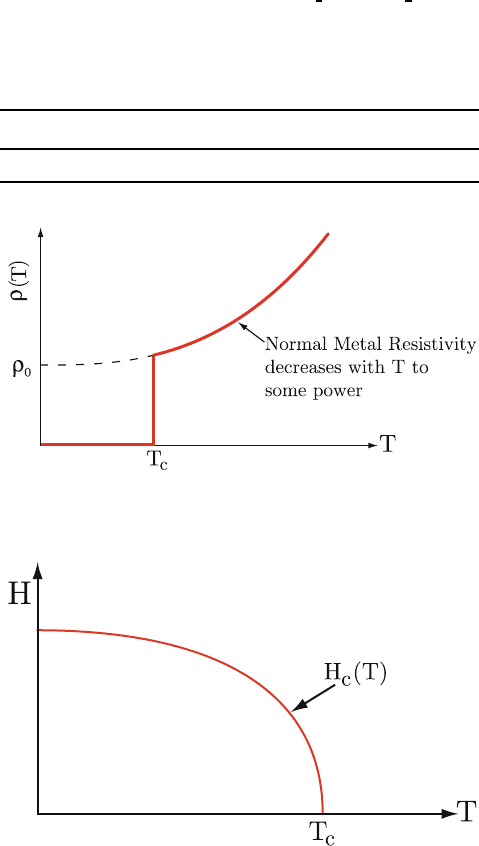
Fig. 15.1. Temperature dependence of the resistivity of typical superconducting
metals
NORMAL STATE
SUERCONDUCTING
STATE
Fig. 15.2. Temperature dependence of the critical magnetic field of a typical
superconducting material
Magnetic Properties 29
There is a critical magnetic field H
c
(T ), which depends on temperature. When 30
H is above H
c
(T ), the material is in the normal state; when H<H
c
(T )itis 31
superconducting. A plot of H
c
(T )versusT is sketched in Fig. 15.2. 32
In a type I superconductor, the magnetic induction B must vanish in the 33
bulk of the superconductor for H<H
c
(T ). But we have 34
B = H +4πM =0 for H<H
c
(T ), (15.1)
Uncorrected Proof
BookID 160928 ChapID 15 Proof# 1 - 29/07/09
15.1 Some Phenomenological Observations of Superconductors 457
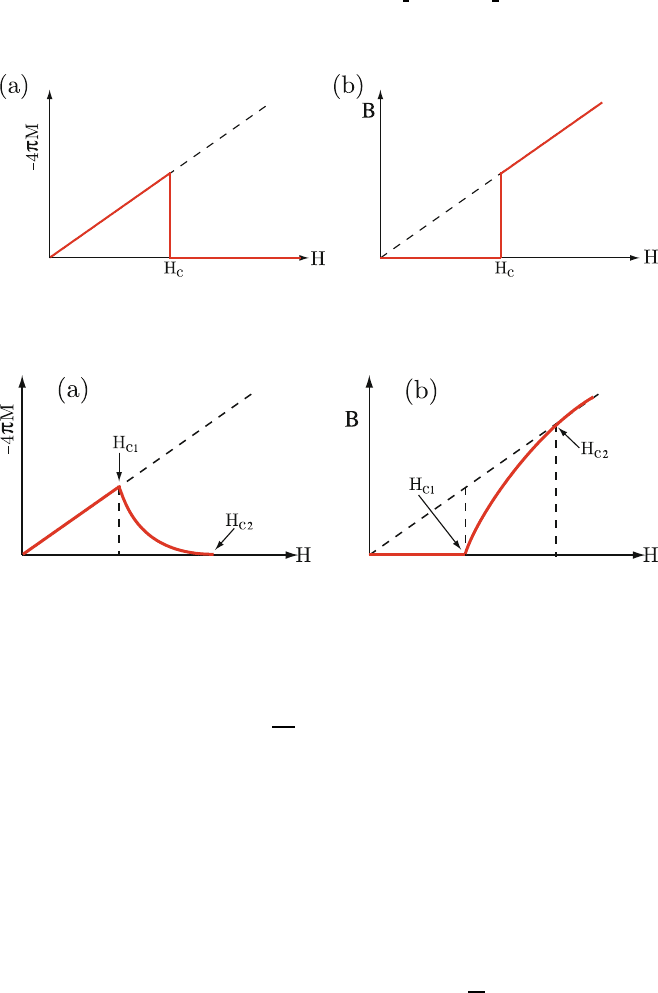
Fig. 15.3. Magnetic field dependence of the magnetization M and magnetic induc-
tion B of a type I superconducting material
Fig. 15.4. Magnetic field dependence of the magnetization M and magnetic induc-
tion B of a type II superconducting material
which implies that 35
M = −
H
4π
for H<H
c
(T ). (15.2)
This behavior is illustrated in Fig. 15.3.
36
In a type II superconductor, the magnetic field starts to penetrate the 37
sample at an applied field H
c1
lower than the H
c
. The Meissner effect is 38
incomplete yet until at H
c2
.TheB approaches H only at an upper critical 39
field H
c2
. Figure 15.4 shows the magnetic field dependence of the magneti- 40
zation, −4πM, and the magnetic induction B in a type II superconducting 41
material. Between H
c2
and H
c1
flux penetrates the superconductor giving a 42
mixed state consisting of superconductor penetrated by threads of the mate- 43
rial in its normal state or flux lines. Abrikosov showed that the mixed state 44
consists of vortices each carrying a single flux Φ =
hc
2e
. These vortices are 45
arranged in a regular two-dimensional array. 46
Specific Heat 47
The specific heat shows a jump at T
c
and decays exponentially with an energy 48
Δ of the order of k
B
T
c
as e
−Δ/k
B
T
c
below T
c
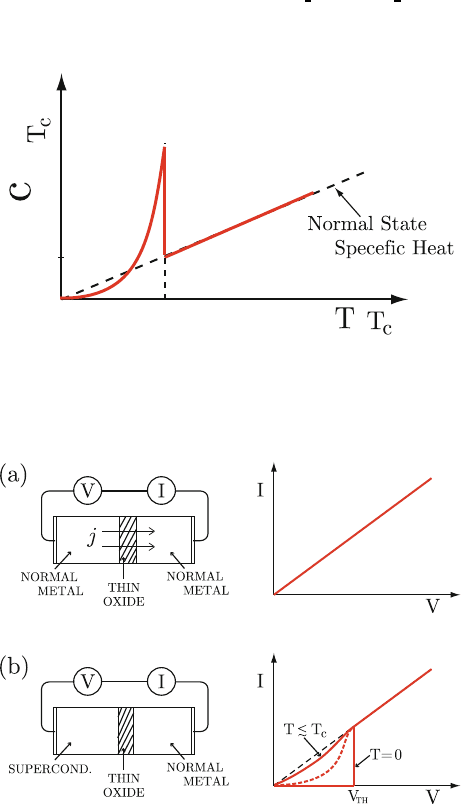
, as is shown in Fig. 15.5. There is 49
Uncorrected Proof
BookID 160928 ChapID 15 Proof# 1 - 29/07/09
458 15 Superconductivity
1
el
/
γ
/
1
Fig. 15.5. Temperature dependence of the specific heat of a typical superconducting
material
Fig. 15.6. Tunneling current behavior for (a) a normal metal–oxide–normal metal
structure and (b) a superconductor–oxide–normal metal structure
a second order phase transition (constant entropy, constant volume, no latent 50
heat) with discontinuity in the specific heat. 51
Tunneling Behavior 52
If one investigates tunneling through a thin oxide, in the case of two nor- 53
mal metals, one obtains a linear current–potential difference curve, as is 54
sketched in Fig. 15.6a. For a superconductor–oxide–normal metal structure, 55
a very different behavior of the tunneling current versus potential difference 56
is obtained. Fig. 15.6b shows the tunneling current–potential difference curve 57
of a superconductor–oxide–normal metal structure. 58
Uncorrected Proof
BookID 160928 ChapID 15 Proof# 1 - 29/07/09
15.2 London Theory 459
α
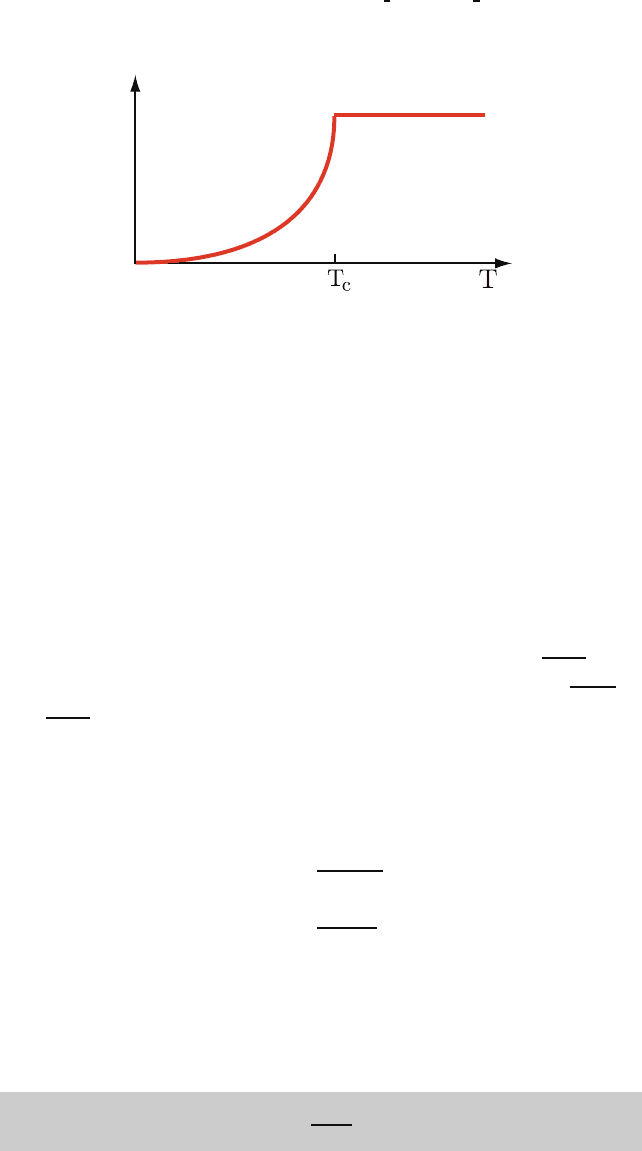
Fig. 15.7. Temperature dependence of the damping constant of low frequency sound
waves in a superconducting material
Acoustic Attenuation 59
For T<T
c
and ω<2Δ, there is no attenuation of sound due to electron 60
excitation. In Fig. 15.7, the damping constant α of low frequency sound waves 61
in a superconductor is sketched as a function of temperature. 62
15.2 London Theory 63
Knowing the experimental properties of superconductors, London introduced 64
a phenomenological theory that can be described as follows: 65
1. The superconducting material contains two fluids below T
c
.
n
S
(T )
n
is the 66
fraction of the electron fluid that is in the super fluid state.
n
N
(T )
n
= 67
1 −
n
S
(T )
n
is the fraction in the normal state. The total density of electrons
68
in the superconducting material is n = n
N
+ n
S
. 69
2. Both the normal fluid and super fluid respond to external fields, but the 70
superfluid is dissipationless while the normal fluid is not. We can write the 71
electrical conductivities for the normal and super fluids as follows: 72
σ
N
=
n
N
e
2
τ
N
m
,
σ
S
=
n
S
e
2
τ
S
m
,
(15.3)
but τ
S
→∞giving σ
S
→∞. 73
3.
n
S
(T ) → n as T → 0,
n
S
(T ) → 0asT → T
c
.
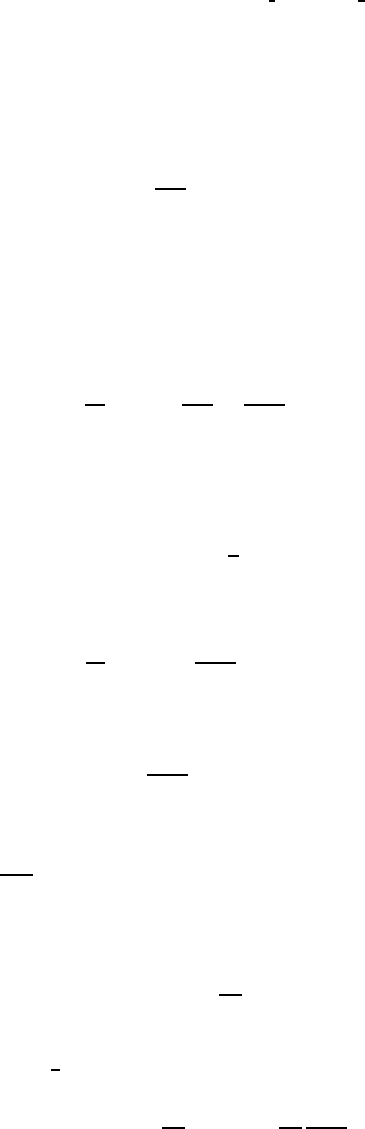
4. To explain the Meissner effect, London proposed the London equation
74
∇×j +
n
S
e
2
mc
B =0. (15.4)
75
Uncorrected Proof
BookID 160928 ChapID 15 Proof# 1 - 29/07/09
460 15 Superconductivity
How does the London equation arise? Let us consider the equation of motion 76
of a super fluid electron, which is dissipationless, in an electric field E that is 77
momentarily present in the superconductor: 78
m
dv
S
dt
= −eE
where v
S
is the mean velocity of the super fluid electron caused by the field 79
E. But the current density j is simply 80
j = −n
S
ev
S
. (15.5)
Notice that this gives the relation
81
dj
dt
= −n
S
e
dv
S
dt
=
n
S
e
2
m
E. (15.6)
Equation (15.6) describes the dynamics of collisionless electrons in a perfect
82
conductor, which cannot sustain an electric field in stationary conditions. 83
Now, from Faraday’s induction law, we have 84
∇×E = −
1
c
˙
B. (15.7)
Combining this with (15.6) gives us
85
d
dt
∇×j +
n
S
e
2
mc
B
=0. (15.8)
The solution of (15.8) is that
86
∇×j +
n
S
e
2
mc
B = constant.
Because in the bulk of a superconductor the magnetic induction B must be
87
zero, London proposed that for superconductors, the “constant” had to be 88
zero and j = −
n
s
e
2
mc
A [called the London gauge] giving (15.4). The London 89
equation implies that, in stationary conditions, a superconductor cannot sus- 90
tain a magnetic field in its interior, but only within a narrow surface layer. If 91
we use the relation 92
∇×B =
4π
c
j, (15.9)
(This is the Maxwell equation for ∇×B in stationary conditions without the
93
displacement current
1
c
˙
E.), we can obtain
94
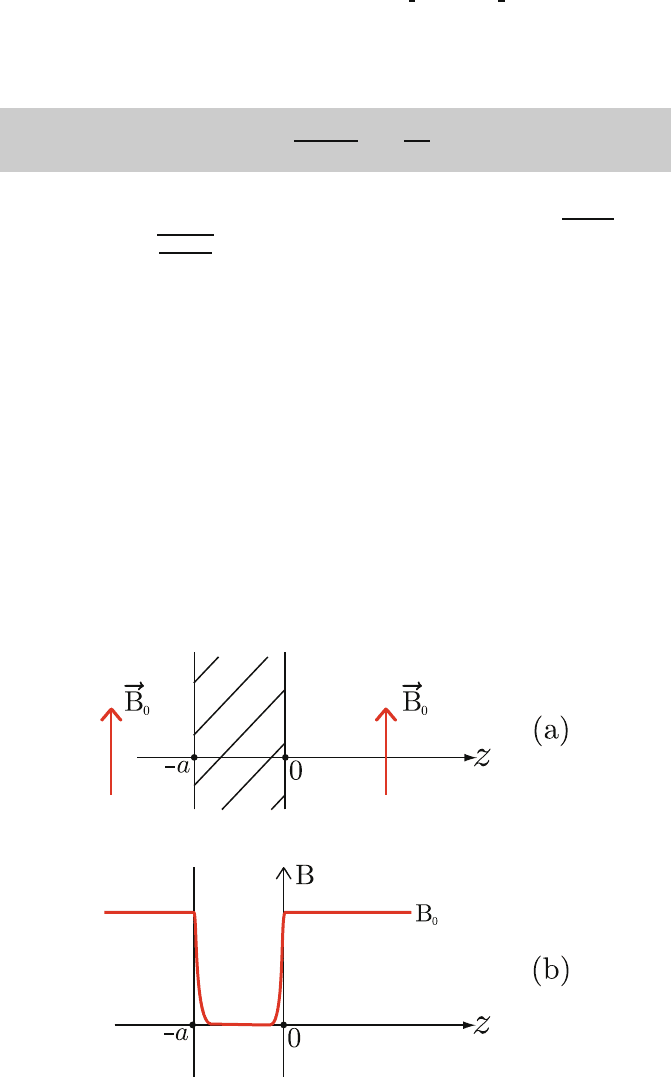
∇×(∇×B)=
4π
c
∇×j = −
4π
c
n
S
e
2
mc
B. (15.10)
Uncorrected Proof
BookID 160928 ChapID 15 Proof# 1 - 29/07/09
15.2 London Theory 461
But, ∇×(∇×B)=∇(∇·B) −∇
2
B giving 95
∇
2
B =
4πn
S
e
2
mc
2
B ≡
1
Λ
2
L
B. (15.11)
96
The solutions of (15.11) show a magnetic field decaying exponentially with a 97
characteristic length Λ. One can also obtain the relation ∇
2
˙
j =
4πn
S
e
2
mc
2
j.The 98
quantity Λ
L
=
2
mc
2
4πn
S
e
2
is called the London penetration depth.Fortypical 99
semiconducting materials, Λ
L
∼ 10 − 10
2
nm.Ifwehaveathinsupercon- 100
ducting film filling the space −a<z<0 as shown in Fig. 15.8a, then the 101
magnetic field B parallel to the superconductor surface has to fall off inside 102
the superconductor from B
0
, the value outside, as 103
B(z)=B
0
e
−|z|/Λ
L
near the surface z =0
and
104
B(z)=B
0
e
−|z+a|/Λ
L
near the surface z = −a.
Figure 15.8b shows the schematic of the flux penetration in the supercon-
105
ducting film. The flux penetrates only a distance Λ
L
≤ 10
2
nm. One can show 106
that it is impossible to have a magnetic field B normal to the superconductor 107
surface but homogeneous in the x − y plane. 108
Fig. 15.8. A superconducting thin film (a) and the magnetic field penetration (b)

Uncorrected Proof
BookID 160928 ChapID 15 Proof# 1 - 29/07/09
462 15 Superconductivity
15.3 Microscopic Theory–An Introduction 109
In the early 1950s Fr¨olich suggested that the attractive part of the electron– 110
phonon interaction was responsible for superconductivity predicting the iso- 111
topic effect. The isotope effect, the dependence of T
c
on the mass of the 112
elements making up the lattice was discovered experimentally independent 113
of Fr¨olich’s work, but it was in complete agreement with it. Both Fr¨olich, and 114
later Bardeen, attempted to describe superconductivity in terms of an elec- 115
tron self-energy associated with virtual exchange of phonons. Both attempts 116
failed. In 1957, Bardeen, Cooper, and Schrieffer (BCS) produced the first cor- 117
rect microscopic theory of superconductivity.
1
The critical idea turned out to 118
be the pair correlations that became manifest in a simple little paper by L.N. 119
Cooper.
2
120
Let us consider electrons in a simple metal described by the Hamiltonian 121
H = H
0
+ H
ep
,whereH
0
and H
ep
are, respectively the unperturbed 122
Hamiltonian for a Bravais lattice and the interaction Hamiltonian of the elec- 123
trons with the screened ions. Here we neglect the effect of the periodic part 124
of the stationary lattice to write H
0
by 125
H
0
=
k,σ
ε
k
c
†
kσ
c
kσ
+
q,s
¯hω
q,s
a
†
q,s
a
q,s
,
where σ and s denote, respectively, the spin of the electrons and the three
126
dimensional polarization vector of the phonons, and a
q,s
annihilates a phonon 127
of wave vector q and polarization s,andc
kσ
annihilates an electron of wave 128
vector k and spin σ. We will show the basic ideas leading to the microscopic 129
theory of superconductivity. 130
15.3.1 Electron–Phonon Interaction 131
The electron–phonon interaction can be expressed as 132
H
ep
=
k,q,σ
M
q
a
†
−q
+ a
q
c
†
k+qσ
c
kσ
, (15.12)
133
where M
q
is the electron–phonon matrix element defined, in a simple model 134
discussed earlier, by 135
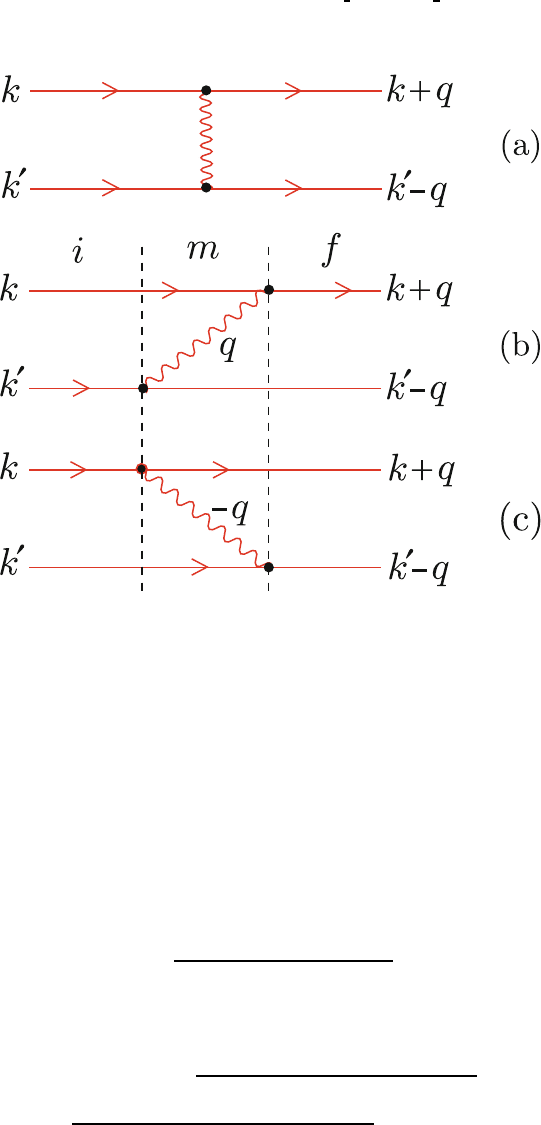
M
q
=i
1
N¯h
2Mω
q
| q | V
q
.
Here V
q
is the Fourier transform of the potential due to a single ion at the 136
origin, and the phonon spectrum is assumed isotropic for simplicity. (In this 137
case, only the longitudinal modes of s parallel to q give finite contribution 138
1
J. Bardeen, L.N. Cooper, J.R. Schrieffer, Phys. Rev. 108, 1175 (1957)
2
L.N. Cooper, Phys. Rev. 104, 1189 (1956).
Uncorrected Proof
BookID 160928 ChapID 15 Proof# 1 - 29/07/09
15.3 Microscopic Theory–An Introduction 463
Fig. 15.9. Electron–phonon interaction (a) Effective electron–electron interaction
through virtual exchange of phonons (b)and(c): Two possible intermediate states
in the effective electron–electron interaction
to H
ep
.) This H
ep
can give rise to an effective electron–electron interaction 139
associated with virtual exchange of phonons as denoted in Fig. 15.9a. The 140
figure shows that an electron polarizes the lattice and another electron inter- 141
acts with the polarized lattice. There are two possible intermediate states in 142
this process as shown in Fig. 15.9b and c. In Fig. 15.9b the initial energy is 143
E
i
= ε
k
+ ε
k
and the intermediate state energy is E
m
= ε
k
+ ε
k
−q
+¯hω
q
.In 144
Fig. 15.9c the initial energy is the same, but the intermediate state energy is 145
E
m
= ε
k+q
+ ε
k
+¯hω
q
. We can write this interaction in the second order as 146
m
f | H
ep
| mm | H
ep
| i
E
i
− E
m
. (15.13)
This gives us the interaction part of the Hamiltonian as follows:
147
H
=
kk
q
σσ
| M
q
|
2
#
f|c
†
k+qσ
c
kσ
a
q
|mm|c
†
k
−qσ
c
k
σ
a
†
q
|i
ε(k
)−[ε(k
−q)+¯hω
q
]
+
f|c
†
k
−qσ
c
k
σ
a
−q
|mm|c
†
k+qσ
c
kσ
a
†
−q
|i
ε(k)−[ε(k+q)+¯hω
q
]
$
.
(15.14)

Uncorrected Proof
BookID 160928 ChapID 15 Proof# 1 - 29/07/09
464 15 Superconductivity
One can take the Hamiltonian 148
H = H
0
+ H
=
kσ
ε
kσ
c
†
kσ
c
kσ
+
q
¯hω
q
a
†
q
a
q
+
k,q,σ
M
q
a
†
−q
+ a
q
c
†
k+qσ
c
kσ
(15.15)
and make a canonical transformation
149
H
S
=e
−S
He
S
(15.16)
where the operator S is defined by
150
S =
kqσ
M
q
αa
†
−q
+ βa
q
c
†
k+qσ
c
kσ
(15.17)
to eliminate the a
q
and a
†
−q
operators to lowest order. To do so, α and β in 151
(15.17) must be chosen, respectively, as 152
α =[ε(k) − ε(k + q) − ¯hω
q
]
−1
β =[ε(k) − ε(k + q)+¯hω
q
]
−1
.
(15.18)
Then, the transformed Hamiltonian is
153
H
S
=
kσ
ε
kσ
c
†
kσ
c
kσ
+
kσ,k
σ
,q
W (k, q)c
†
k+qσ
c
†
k
−qσ
c
k
σ
c
kσ
, (15.19)
154
where W
kq
is defined by 155
W
kq
=
| M
q
|
2
¯hω
q
[ε(k + q) − ε(k)]
2
− (¯hω
q
)
2
. (15.20)
156
Note that when ΔE = ε(k + q) − ε(k) is smaller than ¯hω
q
, W
kq
is negative. 157
This results in an effective electron–electron attraction. 158
15.3.2 Cooper Pair 159
Leon Cooper investigated the simple problem of a pair of electrons interact- 160
ing in the presence of a Fermi sea of “spectator electrons”. He took the pair 161
to have total momentum P =0andspinS = 0. The Hamiltonian is written as 162
H =
,σ
ε
c
†
σ
c
σ
−
1
2
V
σ
c
†
σ
c
†
−
¯σ
c
−¯σ
c
σ
, (15.21)
163
where ε
=
¯h
2
2
2m
, {c
σ
,c
†
σ
} = δ
δ
σσ
, and the strength of the interaction, V , 164
is taken as a constant for a small region of k-space close to the Fermi surface. 165
The interaction term allows for pairscattering from (σ, −¯σ)to(
σ, −
¯σ). 166

Uncorrected Proof
BookID 160928 ChapID 15 Proof# 1 - 29/07/09
15.3 Microscopic Theory–An Introduction 465
Cooper took a variational trial function 167
Ψ=
k
a
k
c
†
kσ
c
†
−k¯σ
| G>, (15.22)
where | G is the Fermi sea of spectator electrons, | G = Π
k<k
F
|k|
c
†
kσ
c
†
−k¯σ
| 0 >. 168
If we evaluate 169
Ψ | H | Ψ = E, (15.23)
we get
170
E =2
ε
a
∗
a
− V
a
∗
a
. (15.24)
The coefficient a
is determined by requiring E{a
} to be minimum subject 171
to the constraint
a
∗
a
= 1. This can be carried out using a Lagrange 172
multiplier λ as follows: 173
∂
∂a
∗
k
(
2
ε
a
∗
a
− V
a
∗
a
− λ
a
∗
a
'
=0. (15.25)
This gives
174
2ε
k
a
k
− V
a
− λa
k
=0. (15.26)
This can be written
175
a
k
=
V
a
2ε
k
− λ
. (15.27)
Define a constant C =
a
. Then, we have 176
a
k
=
VC
2ε
k
− λ
. (15.28)
Summing over k and using the fact C =
a
we have 177
C = VC
k
1
2ε
k
− λ
, (15.29)
or
178
f(λ)=
k
1
2ε
k
− λ
=
1
V
. (15.30)
The values of ε
k
form a closely spaced quasi continuum extending from the 179
energy E
F
to roughly E
F
+¯hω
D
where ω
D
is the Debye frequency. In Fig. 15.10 180