
Raven P.H., Johnson G.B., Mason K.A. Biology (Ninth Edition)
Подождите немного. Документ загружается.


Apago PDF Enhancer
• The difference in density between ice and liquid water. The fact that
ice oats is a simple, but important feature of water environments
since it allows living organisms to remain in a liquid environment
protected under a surface of ice. This possibility is especially
intriguing given recent evidence of ice-covered oceans on Europa, a
moon of the planet Jupiter.
CHAPTER 3
LEARNING OUTCOME QUESTIONS
3.1 Hydrolysis is the reverse reaction of dehydration. Dehydration is a synthetic
reaction involving the loss of water and hydrolysis is cleavage by addition of water.
3.2 Starch and glycogen are both energy storage molecules. Their highly
branched nature allows the formation of droplets, and the similarity in the bonds
holding adjacent glucoses together mean that the enzyme we have to break down
glycogen allow us to break down starch. The same enzymes do not allow us to
break down cellulose. The structure of cellulose leads to the formation of tough
bers.
3.3 The sequence of bases would be complementary. Wherever there is an A in
the DNA there would be a U in the RNA, wherever there is a G in the DNA there
would be a C in the RNA.
3.4 If an unknown protein has sequence similarity to a known protein, we can in-
fer its function is also similar. If an unknown protein has known functional domains
or motifs we can also use these to help predict function.
3.5 Phospholipids have a charged group replacing one of the fatty acids in a
triglyceride. This leads to an amphipathic molecule that has both hydrophobic and
hydrophilic regions. This will spontaneously form bilayer membranes in water.
UNDERSTAND
1. b 2. a 3. d 4. c 5. b 6. b 7. c 8. b
APPLY
1. c 2. d 3. b 4. d 5. b 6. b 7. d
SYNTHESIZE
1. The four biological macromolecules all have different structure and function.
In comparing carbohydrates, nucleic acids and proteins, we can think of these
as being polymers with different monomers. In the case of carbohydrates, the
polymers are all polymers of the simple sugar glucose. These are energy
storage molecules (with many C-H bonds) and structural molecules such as
cellulose that make tough bers.
Nucleic acids are formed of nucleotide monomers, each of which consists
of ribose, phosphate, and a nitrogenous base. These molecules are informa-
tional molecules that encode information in the sequence of bases. The bases
interact in speci c ways: A base pairs with T and G base pairs with C. This is
the basis for their informational storage.
Proteins are formed of amino acid polymers. There are 20 different
amino acids, and thus an incredible number of different proteins. These can
have an almost unlimited number of functions. These functions arise from
the amazing exibility in structure of protein chains.
2. Nucleic Acids—Hydrogen bonds are important for complementary base-pair-
ing between the two strands of nucleic acid that make up a molecule of DNA.
Complementary base-pairing can also occur within the single nucleic acid
strand of a RNA molecule.
Proteins—Hydrogen bonds are involved in both the secondary and
tertiary levels of protein structure. The α helices and β-pleated sheets of
secondary structure are stabilized by hydrogen bond formation between the
amino and carboxyl groups of the amino acid backbone. Hydrogen bond
formation between R-groups helps stabilize the three-dimensional folding of
the protein at the tertiary level of structure.
Carbohydrates—Hydrogen bonds are less important for carbohydrates;
however, these bonds are responsible for the formation of the bers of
cellulose that make up the cell walls of plants.
Lipids—Hydrogen bonds are not involved in the structure of lipid
molecules. The inability of fatty acids to form hydrogen bonds with water is
key to their hydrophobic nature.
3. We have enzymes that can break down glycogen. Glycogen is formed from
alpha-glucose subunits. Starch is also formed from alpha-glucose units, but
cellulose is formed from beta-glucose units. The enzymes that break the
alpha-glycosidic linkages cannot break the beta-glycosidic linkages. Thus we
can degrade glycogen and starch but not cellulose.
CHAPTER 4
LEARNING OUTCOME QUESTIONS
4.1 The statement about all cells coming from preexisting cells might need to be
modi ed. It would really depend on whether these Martian life forms were based
on a similar molecular/cellular basis as terrestrial life.
4.2 Bacteria and archaea both tend to be single cells that lack a
membrane-bounded nucleus, and extensive internal endomembrane systems. They
both have a cell wall, although the composition is different. They do not undergo
mitosis, although the proteins involved in DNA replication and cell division are
not similar.
4.3 Part of what gives different organs their unique identities are the specialized
cell types found in each. That does not mean that there will not be some cell types
common to all (epidermal cells for example) but that organs tend to have special-
ized cell types.
4.4 They don’t!
4.5 The nuclear genes that encode organellar proteins moved from the organelle
to the nucleus. There is evidence for a lot of “horizontal gene transfer” across
domains; this is an example of how that can occur.
4.6 It provides structure and support for larger cells, especially in animal cells
that lack a cell wall.
4.7 Microtubules and micro laments are both involved in cell motility, and
in movement of substance around cells. Intermediate laments do not have this
dynamic role, but are more structural.
4.8 Cell junctions help to put together cells into higher level structures that are
organized and joined in different ways. Different kinds of junctions can be used for
different functional purposes.
INQUIRY QUESTIONS
Page 64 Stretch, dent, convolute, fold, add more than one nuclei, anything
which would increase the amount of diffusion between the cytoplasm and the
external environment.
Page 75 Both the cristae of mitochondria and the thylakoids of chloroplasts,
where many of the reactions take place leading to the production of ATP, are
highly folded. The convolutions allow for a large surface area increasing the ef-
ciency of the mechanisms of oxidative phosphorylation.
Page 80 Ciliated cell in the trachea help to remove particulate matter from the
respiratory tact where it can be expelled or swallowed and processed in the diges-
tive tract.
UNDERSTAND
1. d 2. d 3. c 4. a 5. c 6. d 7. b
APPLY
1. c 2. b 3. b 4. b 5. c 6. b 7. a
SYNTHESIZE
1. Your diagram should start at the SER and then move to the RER, Golgi
apparatus, and nally to the plasma membrane. Small transport vesicles are
the mechanism that would carry a phospholipids molecule between two
membrane compartments. Transport vesicles are small “membrane bubbles”
composed of a phospholipid bilayer.
2. If these organelles were free-living bacteria, they would have the features
found in bacteria. Mitochondria and chloroplasts do both have DNA but no
nucleus, and they lack the complex organelles found in eukaryotes. At rst
glance, the cristae may seem to be an internal membrane system, but they are
actually infoldings of the inner membrane. If endosymbiosis occurred, this
would be the plasma membrane of the endosymbiont, and the outer
membrane would be the plasma membrane of the engul ng cell. Another test
would be to compare DNA in these organelles with current bacteria. This has
actually shown similarities that make us con dent of the identity of the
endosymbionts.
3. The prokaryotic and eukaryotic agella are examples of an analogous trait.
Both agella function to propel the cell through its environment by
converting chemical energy into mechanical force. The key difference is in
the structure of the agella. The bacterial agellum is composed of a single
protein emerging from a basal body anchored within the cell’s plasma
membrane and using the potential energy of a proton gradient to cause a
rotary movement. In contrast, the agellum of the eukaryote is composed of
A-2
appendix A
rav32223_appx_A1-A34.indd A-2rav32223_appx_A1-A34.indd A-2 11/30/09 6:35:59 PM11/30/09 6:35:59 PM

Apago PDF Enhancer
many different proteins assembled into a complex axoneme structure that
uses ATP energy to cause an undulating motion.
4. Eukaryotic cells are distinguished from prokaryotic cells by the presence of a
system of internal membrane compartments and membrane-bounded
organelles such as mitochondria and chloroplasts. As outlined in Figure 4.19,
the rst step in the evolution of the eukaryotic cell was the infolding of the
plasma membrane to create separate internal membranes such as the nuclear
envelope and the endoplasmic reticulum. The origins of mitochondria and
chloroplasts are hypothesized to be the result of a bit of cellular “indigestion”
where aerobic or photosynthetic prokaryotes were engulfed, but not digested
by the larger ancestor eukaryote. Given this information, there are two
possible scenarios for the origin of Giardia. In the rst scenario, the ancestor
of Giardia split off from the eukaryotic lineage after the evolution of the
nucleus, but before the acquisition of mitochondria. In the second scenario,
the ancestor of Giardia split off after the acquisition of mitochondria, and
subsequently lost the mitochondria. At present, neither of these two scenarios
can be rejected. The rst case was long thought to be the best explanation,
but recently it has been challenged by evidence for the second case.
CHAPTER 5
LEARNING OUTCOME QUESTIONS
5.1 Cells would not be able to control their contents. Nonpolar molecules would
be able to cross the membrane by diffusion, as would small polar molecules, but
without proteins to control the passage of speci c molecules, it would not function
as a semipermeable membrane.
5.2 No. The nonpolar interior of the bilayer would not be soluble in the solvent.
The molecules will organize with their nonpolar tails in the solvent, but the nega-
tive charge on the phosphates would repel other phosphates.
5.3 Transmembrane domains anchor protein in the membrane. They associate
with the hydrophobic interior, thus they must be hydrophobic as well. If they slide
out of the interior, they are repelled by water.
5.4 The concentration of the IV will be isotonic with your blood cell. If it were
hypotonic, your blood cells would take on water and burst; if it were hypertonic,
your blood cells would lose water and shrink.
5.5 Channel proteins are aqueous pores that allow facilitated diffusion.
They cannot actively transport ions. Carrier proteins bind to their substrates
and couple transport to some form of energy for active transport.
5.6 In all cases, there is recognition and speci c binding of a molecule by a pro-
tein. In each case this binding is necessary for biological function.
INQUIRY QUESTIONS
Page 94 As the name suggests for the uid mosaic model, cell membranes have
some degree of uidity. The degree of uidity varies with the composition of the
membrane, but in all membranes, phospholipids are able to move about within
the membrane. Also, due to the hydrophobic and hydrophilic opposite ends of
phospholipid molecules, phospholipid bilayers form spontaneously. Therefore, if
stressing forces happen to damage a membrane, adjacent phospholipids automati-
cally move to ll in the opening.
Page 95 Integral membrane proteins are those that are embedded within the
membrane structure and provide passageways across the membrane. Because
integral membrane proteins must pass through both polar and nonpolar regions of
the phospholipid bilayer, the protein portion held within the nonpolar fatty acid
interior of the membrane must also be nonpolar. The amino acid sequence of an
intregral protein would have polar amino acids at both ends, with nonpolar amino
acids comprising the middle portion of the protein.
UNDERSTAND
1. d 2. a 3. d 4. d 5. b 6. d 7. a
APPLY
1. c 2. b 3. d 4. c 5. d
SYNTHESIZE
1. Since the membrane proteins become intermixed in the absence of the
energy molecule, ATP, one can conclude that chemical energy is not required
for their movement. Since the proteins do not move and intermix when the
temperature is cold, one can also conclude that the movement is tempera-
ture-sensitive. The passive diffusion of molecules also depends on tempera-
ture and does not require chemical energy; therefore, it is possible to
conclude that membrane uidity occurs as a consequence of passive diffusion.
2. The inner half of the bilayer of the various endomembranes becomes the
outer half of the bilayer of the plasma membrane.
3. Lipids can be inserted into one lea et to produce asymmetry. When lipids
are synthesized in the SER, they can be assembled into asymmetric
membranes. There are also enzymes that can ip lipids from one lea et to
the other.
CHAPTER 6
LEARNING OUTCOME QUESTIONS
6.1 At the bottom of the ocean, light is not an option as it does not penetrate that
deep. However, there is a large source of energy in the form of reduced minerals,
such as sulfur compounds, that can be oxidized. These are abundant at hydrother-
mal vents found at the junctions of tectonic plates. This supports whole ecosystems
dependent on bacteria that oxidize reduced minerals available at the hydrothermal
vents.
6.2 In a word: No. Enzymes only alter the rate of a reaction; they do not change
the thermodynamics of the reaction. The action of an enzyme does not change the
ΔG for the reaction.
6.3 In the text, it stated that the average person turns over approximately their
body weight in ATP per day. This gives us enough information to determine
approximately the amount of energy released:
100 kg = 1.0 x 10⁵ g
(1.0 × 10⁵ g)/(507.18 g/mol)=197.2 mol
(197.2 mol)(7.3 kcal/mol)=1,439 kcal
6.4 This is a question that cannot be de nitely answered, but we can give some
reasonable conjectures. First, DNA’s location is in the nucleus and not the cyto-
plasm, where most enzymes are found. Second, the double stranded structure of
DNA is works well for information storage, but would not necessarily function well
as an enzyme. Each base interacts with a base on the opposite strand, which makes
for a very stable linear molecule, but does not encourage folding into the kind of
complex 3-D shape found in enzymes.
6.5 Feedback inhibition is common in pathways that synthesize metabolites.
In these anabolic pathways, when the end product builds up, it feeds back to
inhibit its own production. Catabolic pathways are involved in the degradation
of compounds. Feedback inhibition makes less biochemical sense in a pathway
that degrades compounds as these are usually involved in energy metabolism, or
recycling or removal of compounds. Thus the end product is destroyed or removed
and cannot feed back.
INQUIRY QUESTION
Page 113 If ATP hydrolysis supplies more energy than is needed to drive the
endergonic reaction, the overall process is exergonic. The reactions result in a net
release of energy, so the ΔG for the overall process is therefore negative.
UNDERSTAND
1. b 2. a 3. b 4. a 5. d 6. b 7. d
APPLY
1. b 2. c 3. d 4. c 5. c 6. c
SYNTHESIZE
1. a. At 40°C the enzyme is at it optimum. The rate of the reaction is at its
highest level.
b. Temperature is a factor that in uences enzyme function. This en-
zyme does not appear to function at either very cold or very hot
temperatures. The shape of the enzyme is affected by temperature, and
the enzyme’s structure is altered enough at extreme temperatures that it
no longer binds substrate. Alternatively, the enzyme may be denatured—
that is a complete loss of normal three-dimensional shape at extreme
temperatures. Think about frying an egg: What happens to the proteins
in the egg?
c. Everyone’s body is slightly different. If the temperature optimum was very
narrow, then the cells that make up a body would be vulnerable. Having a
broad range of temperature optimums keeps the enzyme functioning.
2. a. The reaction rate would be slow because of the low concentration of the
substrate ATP. The rate of reaction depends on substrate concentration.
appendix A
A-3
rav32223_appx_A1-A34.indd A-3rav32223_appx_A1-A34.indd A-3 11/30/09 6:35:59 PM11/30/09 6:35:59 PM

Apago PDF Enhancer
b. ATP acts like a noncompetitive, allosteric inhibitor when ATP levels are
very high. If ATP binds to the allosteric site, then the reaction should slow
down.
c. When ATP levels are high, the excess ATP molecules bind to the allo steric
site and inhibit the enzyme. The allosteric inhibitor functions by causing a
change in the shape of the active site in the enzyme. This reaction is an
example of feedback regulation because ATP is a nal product of the
overall series of reactions associated with glycolysis. The cell regulates
glycolysis by regulating this early step catalyzed by phosphofructokinase;
the allosteric inhibitor is the “product” of glycolysis (and later stages) ATP.
CHAPTER 7
LEARNING OUTCOME QUESTIONS
7.1 Cells require energy for a wide variety of functions. The reactions involved
in the oxidation of glucose are complex and linking these to the different metabolic
functions that require energy would be inef cient. Thus cells make and use ATP as
a reusable source of energy.
7.2 The location of glycolysis does not argue for or against the endosymbiotic
origin of mitochondria. If could have been located in the mitochondria previously
and moved to the cytoplasm, or could have always been located in the cytoplasm in
eukaryotes.
7.3 For an enzyme like pyruvate decarboxylase the complex reduces the distance
for the diffusion of substrates for the different stages of the reaction. If there are
any unwanted side reactions they are prevented. Finally the reactions occur within
a single unit and thus can be controlled in a coordinated fashion. The main disad-
vantage is that since the enzymes are all part of a complex their evolution is more
constrained than if they were independent.
7.4 At the end of the Krebs cycle, the electrons removed from glucose are all
carried by soluble electron carriers. Most of these are in NADH and a few are in
FADH
2
. All of these are all fed into the electron transport chain under aerobic
conditions where they are used to produce a proton gradient.
7.5 A hole in the outer membrane would allow protons in the intermembrane
space to leak out. This would destroy the proton gradient across the inner mem-
brane, stopping the phosphorylation of ADP by ATP synthase.
7.6 The inner membrane actually allows a small amount of leakage of protons
back into the matrix, reducing the yield per NADH. The proton gradient can also
be used to power other functions, such as the transport of pyruvate. The actual
yield is also affected by the relative concentrations ADP, Pi, and ATP as the equilib-
rium constant for this reaction depends on this.
7.7 Glycolysis, which is the starting point for respiration from sugars is regulated
at the enzyme phosphofructokinase. This enzyme is just before the 6-C skeleton
is split into two 3-C molecules. The allosteric effectors for this enzyme include
ATP and citrate. Thus the “end product” ATP, and an intermediate from the Krebs
cycle, both feedback to inhibit the rst part of this process.
7.8 The rst obvious point is that the most likely type of ecosystem would be one
where oxygen is nonexistent or limiting. This includes marine, aquatic, and soil en-
vironments. Any place where oxygen is in short supply is expected to be dominated
by anaerobic organisms and respiration produces more energy than fermentation.
7.9 The short answer is no. The reason is two-fold. First the oxidation of fatty
acids feeds acetyl units into the Krebs cycle. The primary output of the Krebs cycle
is electrons that are fed into the electron transport chain to eventually produce
ATP by chemiosmosis. The second reason is that the process of beta-oxidation
that produces the acetyl units is oxygen dependent as well. This is because beta-
oxidation uses FAD as a cofactor for an oxidation, and the FADH
2
is oxidized by
the electron transport chain.
7.10 The evidence for the origins of metabolism is indirect. The presence of O
2
in the atmosphere is the result of photosynthesis, so the record of when we went
from a reducing to an oxidizing atmosphere chronicles the rise of oxygenic pho-
tosynthesis. Glycolysis is a universal pathway that is found in virtually all types of
cells. This indicates that it is an ancient pathway that likely evolved prior to other
types of energy metabolism. Nitrogen xation probably evolved in the reducing
atmosphere that preceded oxygenic photosynthesis as it is poisoned by oxygen, and
aided by the reducing atmosphere.
INQUIRY QUESTION
Page 142 During the catabolism of fats, each round of 2-oxidation uses one
molecule of ATP and generates one molecule each of FADH
2
and NADH. For a
16-carbon fatty acid, seven rounds of 2-oxidation would convert the fatty acid into
eight molecules of acetyl-CoA. The oxidation of each acetyl-CoA in the Krebs
cycle produces 10 molecules of ATP. The overall ATP yield from a 16-carbon fatty
acid would be: a net gain of 21 ATP from 7 rounds of 2-oxidation [gain of 4 ATP
per round minus 1 per round to prime reactions] + 80 ATP from the oxidation of 8
acetyl-CoA s = 101 molecules of ATP.
UNDERSTAND
1. d 2. d 3. c 4. c 5. a 6. d 7. c
APPLY
1. b 2. b 3. d 4. b 5. a 6. b 7. b
SYNTHESIZE
1.
Molecules Glycolysis Cellular Respiration
Glucose Is the starting material
for the reaction
Does not directly use glucose; however, does
use pyruvate derived from glucose
Pyruvate The end product of gly-
colysis
The starting material for cellular
respiration
Oxygen Not required Required for aerobic respiration, but not for
anaerobic respiration
ATP Produced through
substrate-level
phosphorylation
Produced through oxidative phosphorylation.
More produced than in glycolysis
CO
2
Not produced Produced during pyruvate oxidation and
Krebs cycle
2. The electron transport chain of the inner membrane of the mitochondria
functions to create a hydrogen ion concentration gradient by pumping protons
into the intermembrane space. In a typical mitochondrion, the protons can only
diffuse back down their concentration gradient by moving through the ATP
synthase and generating ATP. If protons can move through another transport
protein then the potential energy of the hydrogen ion concentration gradient
would be “lost” as heat.
3. If brown fat persists in adults, then the uncoupling mechanism to generate heat
described above could result in weight loss under cold conditions. There is now
some evidence to indicate that this may be the case.
CHAPTER 8
LEARNING OUTCOME QUESTIONS
8.1 Both chloroplasts and mitochondria have an outer membrane and an inner
membrane. The inner membrane in both forms an elaborate structure. These inner
membrane systems have electron transport chains that move protons across the
membrane to allow for the synthesis of ATP by chemiosmosis. They also both have
a soluble compartment in which a variety of enzymes carry out reactions.
8.2 All of the carbon in your body comes from carbon xation by autotrophs.
Thus, all of the carbon in your body was once CO
2
in the atmosphere, before it was
xed by plants.
8.3 The action spectrum for photosynthesis refers to the most effective wave-
lengths. The absorption spectrum for an individual pigment shows how much light
is absorbed at different wavelengths.
8.4 Before the discovery of photosystems, we assumed that each chlorophyll
molecule absorbed photons resulting in excited electrons.
8.5 Without a proton gradient, synthesis of ATP by chemiosmosis would be im-
possible. However, NADPH could still be synthesized because electron transport
would still occur as long as photons were still being absorbed to begin the process.
8.6 A portion of the Calvin cycle is the reverse of glycolysis (the reduction
of 3-phosphoglycerate to glyceraldehyde-3-phosphate).
8.7 Both C
4
plants and CAM plants x carbon by incorporating CO
2
into the
4-carbon malate, then use this to produce high local levels of CO
2
for the Calvin
cycle. The main difference is that in C
4
plants, this occurs in different cells, and in
CAM plants this occurs at different times.
INQUIRY QUESTIONS
Page 150 Light energy is used in light-dependent reactions to reduce NADP
+
and to produce ATP. Molecules of chlorophyll absorb photons of light energy, but
only within narrow energy ranges (speci c wavelengths of light). When all chloro-
A-4
appendix A
rav32223_appx_A1-A34.indd A-4rav32223_appx_A1-A34.indd A-4 11/30/09 6:35:59 PM11/30/09 6:35:59 PM

Apago PDF Enhancer
phyll molecules are in use, no additional increase in light intensity will increase the
rate at which they can absorb light energy.
Page 154 Saturation levels should be higher when light intensity is greater, up
to a maximum level. If it were possible to minimize the size of photosystems by
reducing the number of chlorophyll molecules in each, then the saturation level
would also increase.
Page 157 You could conclude that the two photosystems do not function
sequentially.
UNDERSTAND
1. c 2. a 3. a 4. b 5. c 6. c 7. a 8. b
APPLY
1. d 2. b 3. c 4. c 5. d 6. b 7. a 8. a
SYNTHESIZE
1. In C
3
plants CO
2
reacts with ribulose 1,5-bisphosphate (RuBP) to yield 2
molecules of PGA. This reaction is catalyzed by the enzyme rubisco. Rubisco
also catalyzes the oxidation of RuBP. Which reaction predominates depends
on the relative concentrations of reactants. The reactions of the Calvin cycle
reduce the PGA to G3P, which can be used to make a variety of sugars
including RuBP. In C
4
and CAM plants, an initial xation reaction incorpo-
rates CO
2
into malate. The malate then can be decarboxylated to pyruvate
and CO
2
to produce locally high levels of CO
2
. The high levels of CO
2
get
around the oxidation of RuBP by rubisco. In C
4
plants malate is produced in
one cell, then shunted into an adjacent cell that lacks stomata to produce high
levels of CO
2
. CAM plants x carbon into malate at night when their stomata
are open, then use this during the day to fuel the Calvin cycle. Both are
evolutionary innovations that have arisen in hot dry climates that allow plants
to more ef ciently x carbon and prevent desiccation.
2. Figure 8.19 diagrams this relationship. The oxygen produced by photosyn-
thesis is used as a nal electron acceptor for electron transport in respiration.
The CO
2
that results from the oxidation of glucose (or fatty acids) is
incorporated into organic compounds via the Calvin cycle. Respiration also
produces water, while photosynthesis consumes water.
3. Yes. Plants use their chloroplasts to convert light energy into chemical
energy. During light reactions ATP and NADPH are created, but these
molecules are consumed during the Calvin cycle and are not available for the
cell’s general use. The G3P produced by the Calvin cycle stores the chemical
energy from the light reactions within its chemical bonds. Ultimately, this
energy is stored in glucose and retrieved by the cell through the process of
glycolysis and cellular respiration.
CHAPTER 9
LEARNING OUTCOME QUESTIONS
9.1 Ligands bind to receptors based on complementary shapes. This interac-
tion based on molecular recognition is similar to how enzymes interact with their
ligands.
9.2 Hydrophobic molecule can cross the membrane and are thus more likely to
have an internal receptor.
9.3 Intracellular receptors have direct effects on gene expression. This generally
leads to effects with longer duration.
9.4 Ras protein occupies a central role in signaling pathways involving growth
factors. A number of different kinds of growth factors act through Ras. So it is not
surprising that this is mutated in a number of different cancers.
9.5 GPCRs are a very ancient and exible receptor/signaling pathway. The genes
encoding these receptors have been duplicated and then have diversi ed over
evolutionary time so now there are many members of this gene family.
UNDERSTAND
1. b 2. b 3. c 4. d 5. b 6. d 7. c 8. a
APPLY
1. b 2. c 3. b 4. d 5. d 6. c
SYNTHESIZE
1. All signaling events start with a ligand binding to a receptor. The receptor
initiates a chain of events that ultimately leads to a change in cellular
behavior. In some cases the change is immediate—for example, the opening
of an ion channel. In other cases the change requires more time before it
occurs, such as when the MAP kinase pathway becomes activated multiple
different kinases become activated and deactivated. Some signals only affect a
cell for a short time (the channel example), but other signals can permanently
change the cell by changing gene expression, and therefore the number and
kind of proteins found in the cell.
2. a. This system involves both autocrine and paracrine signaling because
Netrin-1 can in uence the cells within the crypt that are responsible for its
production and the neighboring cells.
b. The binding of Netrtin-1 to its receptor produces the signal for cell
growth. This signal would be strongest in the regions of the tissue with the
greatest amount of Netrin-1—that is, in the crypts. A concentration
gradient of Netrin-1 exists such that the levels of this ligand are lowest at
the tips of the villi. Consequently, the greatest amount of cell death would
occur at the villi tips.
c. Tumors occur when cell growth goes on unregulated. In the absence of
Netrin-1, the Netrin-1 receptor can trigger cell death—controlling the
number of cells that make up the epithelial tissue. Without this mechanism
for controlling cell number, tumor formation is more likely.
CHAPTER 10
LEARNING OUTCOME QUESTIONS
10.1 The concerted replication and segregation of chromosomes works well with
one small chromosome, but would likely not work as well with many chromosomes.
10.2 No.
10.3 The rst irreversible step is the commitment to DNA replication.
10.4 Loss of cohesins would mean that the products of DNA replication would
not be kept together. This would make normal mitosis impossible, and thus lead to
aneuploid cells and probably be lethal.
10.5 The segregation of chromatids that lose cohesin would be random as they
could not longer be held at metaphase attached to opposite poles. This would
likely lead to gain and loss of this chromosome in daughter cells due to improper
partitioning.
10.6 Tumor suppressor genes are genetically recessive, while proto-oncogenes
are dominant. Loss of function for a tumor suppressor gene leads to cancer while
inappropriate expression or gain of function lead to cancer with proto-oncogenes.
UNDERSTAND
1. d 2. b 3. b 4. b 5. a 6. c 7. b
APPLY
1. d 2. a 3. c 4. b 5. d 6. c 7. d
SYNTHESIZE
1. If Wee-1 were absent then there would be no way for the cell to phosphory-
late Cdk. If Cdk is not phosphorylated, then it cannot be inhibited. If Cdk is
not inhibited, then it will remain active. If Cdk remains active, then it will
continue to signal the cell to move through the G
2
/M checkpoint, but now in
an unregulated manner. The cells would undergo multiple rounds of cell
division without the growth associated with G
2
. As a consequence, the
daughter cells will become smaller and smaller with each division—hence the
name of the protein!
2. Growth factor = ligand
1. Ligand binds to receptor (the growth factor will bind to a growth factor
receptor).
2. A signal is transduced (carried) into the cytoplasm.
3. A signal cascade is triggered. Multiple intermediate proteins or second
messengers will be affected.
4. A transcription factor will be activated to bind to a speci c site on
the DNA.
5. Transcription occurs and the mRNA enters the cytoplasm.
6. The mRNA is translated and a protein is formed.
7. The protein functions within the cytoplasm—possibly triggering S phase.
If you study Figure 10.22 you will see a similar pathway for the formation of
S phase proteins following receptor–ligand binding by a growth factor. In this
diagram various proteins in the signaling pathway become phosphorylated
appendix A
A-5
rav32223_appx_A1-A34.indd A-5rav32223_appx_A1-A34.indd A-5 11/30/09 6:35:59 PM11/30/09 6:35:59 PM
Apago PDF Enhancer
and then dephosphorylated. Ultimately, the Rb protein that regulated the
transcription factor E2F becomes phosphorylated. This releases the E2F and
allows it to bind to the gene for S phase proteins and cyclins.
3. Proto-oncogenes tend to encode proteins that function in signal transduc-
tion pathways that control cell division. When the regulation of these
proteins is aberrant, or they are stuck in the “on” state by mutation, it can
lead to cancer. Tumor suppressor genes, on the other hand, tend to be in
genes that encode proteins that suppress instead of activate cell division.
Thus loss of function for a tumor suppressor gene leads to cancer.
CHAPTER 11
LEARNING OUTCOME QUESTIONS
11.1 Stem cells divide by mitosis to produce one cell that can undergo meiosis,
and another stem cell.
11.2 No. Keeping sister chromatids together at the rst division is key to this is
reductive division. Homologues segregate at the rst division, reducing the number
of chromosomes by half.
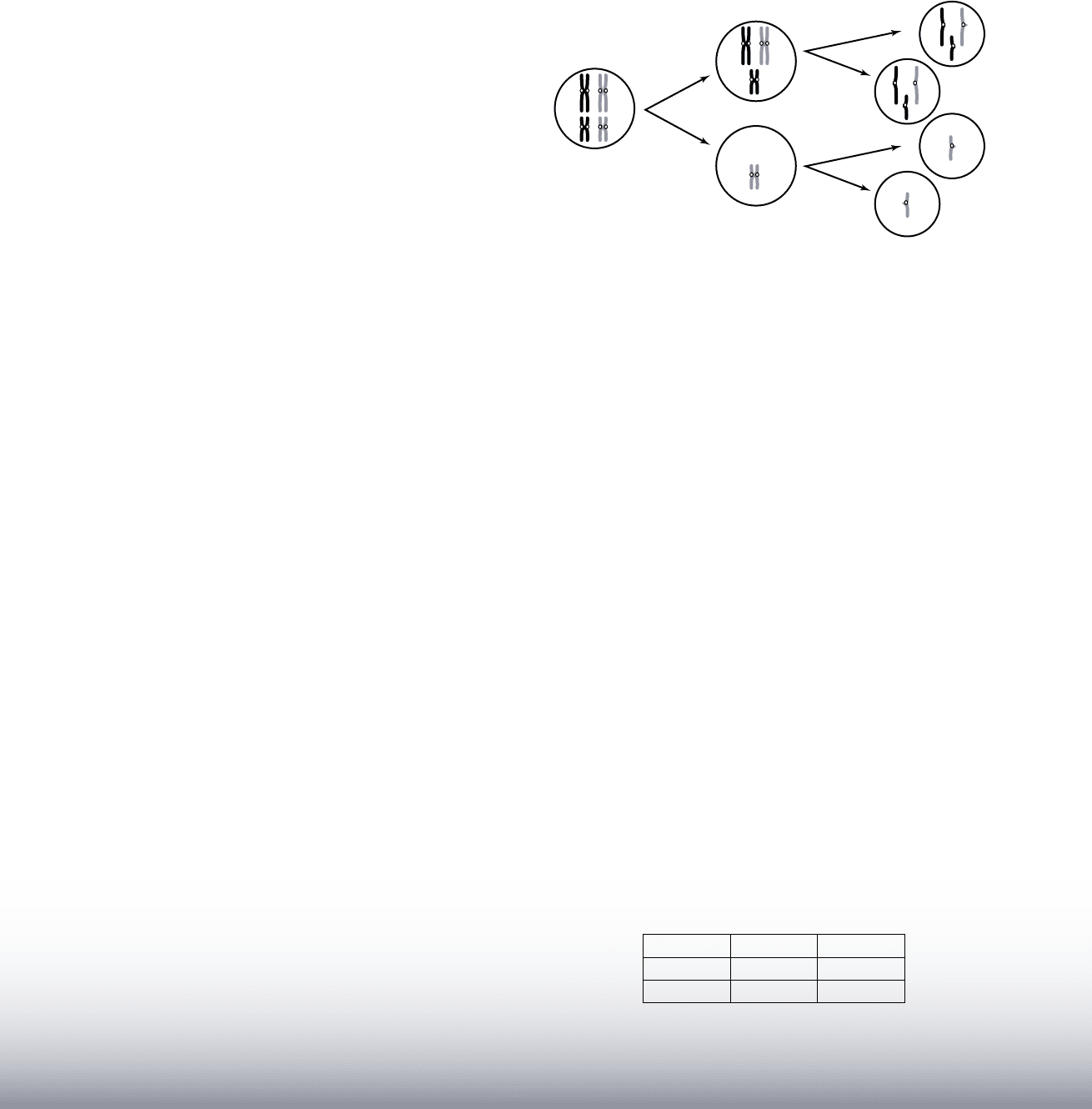
11.3 An improper disjunction at anaphase I would result in 4 aneuploid gametes:
2 with an extra chromosome and 2 that are missing a chromosome. Nondisjunction
at anaphase II would result in 2 normal gametes and 2 aneuploid gametes: 1 with
an extra chromosome and 1 missing a chromosome.
11.4 The independent alignment of homologous pairs at metaphase I and the
process of crossing over. The rst shuf es the genome at the level of entire chromo-
somes, and the second shuf es the genome at the level of individual chromosomes.
INQUIRY QUESTION
Page 217 No, at the conclusion of meiosis I each cell has a single copy of each
homologue. So, even if the attachment of sister chromatids were lost after a meiosis
I division, the results would not be the same as mitosis.
UNDERSTAND
1. c 2. d 3. a 4. b 5. b 6. a 7. b
APPLY
1. c 2. b 3. b 4. d 5. b 6. a
SYNTHESIZE
1. Compare your gure with Figure 11.8.
a. There would be three homologous pairs of chromosomes for an organism
with a diploid number of six.
b. For each pair of homologues, you should now have a maternal and
paternal pair.
c. Many possible arrangements are possible. The key to your image is that it
must show the homologues aligned pairwise—not single- le along the
metaphase plate. The maternal and paternal homologues do not have to
align on the same side of the cell. Independent assortment means that the
pairs can be mixed.
d. A diagram of metaphase II would not include the homologous pairs. The pairs
have separated during anaphase of meiosis I. Your picture should diagram the
haploid number of chromosomes, in this case three, aligned single- le along
the metaphase plate. Remember that meiosis II is similar to mitosis.
2. The diploid chromosome number of a mule is 63. The mule receives
32 chromosomes from its horse parent (diploid 64: haploid 32) and another
31 chromosomes from its donkey parent (diploid 61: haploid 31). 32 + 31 =
63. The haploid number for the mule would be one half the diploid number
63 ÷ 2 = 31.5. Can there be a 0.5 chromosome? Even if the horse and donkey
chromosomes can pair (no guarantee of that) there will be one chromosome
without a partner. This will lead to aneuploid gametes that are not viable.
3. Independent assortment involves the random distribution of maternal versus
paternal homologues into the daughter cells produced during meiosis I. The
number of possible gametes is equal to 2
n
, where n is the haploid number of
chromosomes. Crossing over involves the physical exchange of genetic
material between homologous chromosomes, creating new combinations of
genes on a single chromosome. Crossing over is a relatively rare event that
affects large blocks of genetic material, so independent assortment likely has
the greatest in uence on genetic diversity.
4. Aneuploid gametes are cells that contain the wrong number of chromosomes.
Aneuploidy occurs as a result of nondisjunction, or lack of separation of the
chromosomes during either phase of meiosis.
a. Nondisjunction occurs at the point when the chromosomes are being
pulled to opposite poles. This occurs during anaphase.
b. Use an image like Figure 11.8 and illustrate nondisjunction at anaphase I
versus anaphase II
Anaphase I nondisjunction:
Meiosis I Meiosis II
CHAPTER 12
LEARNING OUTCOME QUESTIONS
12.1 Both had an effect, but the approach is probably the most important. In
theory, his approach would have worked for any plant, or even animal he chose. In
practice, the ease of both cross and self-fertilization was helpful.
12.2 ⅓ of tall F
2
plants are true-breeding.
12.3 The events of meiosis I are much more important in explaining Mendel’s
laws. During anaphase I homologues separate and are thus segregated, and the
alignment of different homologous pairs at metaphase I is independent.
12.4 Assuming independent assortment of all three genes, the cross is Aa Bb Cc
× Aa Bb Cc and the prob(A_ B_ C_)=(¾) (¾) (¾)=27/64.
12.5 1:1:1:1 dom dom:dom rec:rec dom:rec rec.
12.6 6/16.
INQUIRY QUESTIONS
Page 223 The ability to control whether the plants self-fertilized or cross-
fertilized was of paramount importance in Mendel’s studies. Results due to cross-
fertilization would have had confounding in uences on the predicted number of
offspring with a particular phenotype.
Page 227 Each of the affected females in the study had one unaffected parent,
which means that each is heterozygous for the dominant trait. If each female mar-
ries an unaffected (recessive) male, each could produce unaffected offspring. The
chance of having unaffected offspring is 50% in each case.
Page 228 Genetic defects that remain hidden or dormant as heterzygotes in the
recessive state are more likely to be revealed in homozygous state among closely
related individuals.
Page 235 Almost certainly, differences in major phenotypic traits of twins would
be due to environmental factors such as diet.
UNDERSTAND
1. b 2. c 3. c 4. c 5. b 6. d
APPLY
1. b 2. c 3. b 4. a 5. c 6. d
SYNTHESIZE
1. The approach to solving this type of problem is to identify the possible
gametes. Separate the possible gamete combinations into the boxes along the
top and side. Fill in the Punnet square by combining alleles from each parent.
a. A monohybrid cross between individuals with the genotype Aa and Aa
Aa
AAAAa
aaAaa
Phenotypic ratio: 3 dominant to 1 recessive
A-6
appendix A
rav32223_appx_A1-A34.indd A-6rav32223_appx_A1-A34.indd A-6 12/7/09 4:57:17 PM12/7/09 4:57:17 PM

Apago PDF Enhancer
b. A dihybrid cross between two individuals with the genotype AaBb
AB Ab aB ab
AB AABB AABb AaBB AaBb
Ab AAbB AAbb AabB Aabb
aB aABB aABb aaBB aaBb
ab aAbB aAbb aabB aabb
Phenotypic ratio: 9 dominant dominant to 3 dominant recessive to 3
recessive dominant to 1 recessive recessive
Using Product Rule: Prob(A_ B_) = (¾)(¾) = 9/16
Prob(A_ bb) = (¾)(¼) = 3/16
Prob(aa B_) = (¼)(¾) = 3/16
Prob(aa bb) = (¼)(¼) = 1/16
c. A dihybrid cross between individuals with the genotype AaBb and aabb
AB Ab aB ab
ab aAbB aAbb aabB aabb
Using Product Rule: Prob(A_ B_) = (¼)(1) = 1/16
Prob(A_ bb) = (¼)(1) = 1/16
Prob(aa B_) = (¼)(1) = 1/16
Prob(aa bb) = (¼)(1) = 1/16
2. The segregation of different alleles for any gene occurs due to the pairing of
homologous chromosomes, and the subsequent separation of these
homologues during anaphase I. The independent assortment of traits, more
accurately the independent segregation of different allele pairs, is due to the
independent alignment of chromosomes during metaphase I of meiosis.
3. There seems to be the loss of a genotype as there are only 3 possible
outcomes (2 yellow and 1 black). If the yellow gene has a dominant effect on
coat color, but also causes lethality when homozygous, then this could
explain the observations. So, a yellow mouse is heterozygous and crossing
two yellow mice yields 1 homozygous yellow (dead):2 heterozygous (appears
yellow):1 black. You could test this by crossing the yellow to homozygous
black. You should get 1 yellow:1 black, and all black offspring should be true
breeding, and all yellow should behave as above.
4. There are two genes involved, one of which is epistatic to the other. At one
gene, there are two alleles: black and brown; at the other gene, there are two
alleles: albino and colored. The albino gene is epistatic to the brown gene so
when you are homozygous recessive for albino, you are albino regardless of
whether you are black or brown at the other locus. This leads to the 4 albino
in a Mendelian kind of crossing scheme.
CHAPTER 13
LEARNING OUTCOME QUESTIONS
13.1 Females would be all wild type; males would be all white eyed.
13.2 Yes, should be viable and appear female.
13.3 The mt-DNA could be degraded by a nuclease similar to how bacteria
deal with invading viruses. Alternatively, the mt-containing mitochondria could be
excluded from the zygote.
13.4 No, not by genetic crosses.
13.5 Yes. First division nondisjunction yields four aneuploid gametes while
second division yields only two aneuploid gametes.
INQUIRY QUESTIONS
Page 244 There would probably be very little if any recombination so the ex-
pected assortment ratios would have been skewed from the expected 9:3:3:1.
Page 247 About 10% of the progeny would have been recombinants, based
on the relationship of 1 cM (map unit or centimorgan) equals 1% recombination
frequency. When gene loci are separated by greater distances, the frequency of
recombination between them increases to the extent that the number of recombi-
nant gametes roughly equals the number of parental gametes. In that instance, the
genes would exhibit independent assortment. With a recombination frequency of
only 10%, it is doubtful that it would have led Mendel to the concept of indepen-
dent assortment.
Page 250 What has changed is the mother’s age. The older the woman, the
higher the risk she has of nondisjunction during meiosis. Thus, she also has a much
greater risk of producing a child with Down syndrome.
Page 251 XY egg is fertilized by an X sperm. A normal X egg is fertilized by an
XY sperm.
Page 253 Advanced maternal age, a previous child with birth defects, or a family
history of birth defects.
UNDERSTAND
1. c 2. d 3. d 4. a 5. c 6. c 7. c
APPLY
1. c 2. b 3. c 4. b 5. c 6. b
SYNTHESIZE
1. Theoretically, 25% of the children from this cross will be color blind. All of
the color blind children will be male and 50% of the males will be color
blind.
2. Parents of heterozygous plant were: green wrinkled X yellow round
Frequency of recombinants is 36+29/1300=0.05
Map distance = 5 cM
3. Male calico cats are very rare. The coloration that is associated with calico
cats is the product of X inactivation. X inactivation only occurs in females as a
response to dosage levels of the X-linked genes. The only way to get a male
calico is to be heterozygous for the color gene and to be the equivalent of a
Klinefelters male (XXY).
CHAPTER 14
LEARNING OUTCOME QUESTIONS
14.1 The 20 different amino acid building blocks offers chemical complexity.
This appears to offer informational complexity as well.
14.2 The proper tautomeric forms are necessary for proper base pairing, which is
critical to DNA structure.
14.3 Prior to replication in light N there would be only one band. After one
round of replication, there would be two bands with denatured DNA: one heavy
and one light.
14.4 The 5 to 3 activity is used to remove RNA primers. The 3 to 5 activity is
used to removed mispaired bases (proofreading).
14.5 A shortening of chromosome ends would eventually affect DNA that
encodes important functions.
14.6 No. The number of DNA damaging agents, in addition to replication
errors, would cause lethal damage (this has been tested in yeast).
INQUIRY QUESTIONS
Page 262 Because adenine always forms bonds with only thymine, and guanine
forms bonds with only cytosine, adenine and thymine will always have the same
proportions, and likewise with guanine and cytosine.
Page 265 The covalent bonds create a strong backbone for the molecule making
it dif cult to disrupt. Individual hydrogen bonds are more easily broken allowing
enzymes to separate the two strands without disrupting the inherent structure of
the molecule.
Page 269 DNA ligase is important in connecting Okazaki fragments during
DNA replication. Without it, the lagging strand would not be complete.
Page 273 The linear structure of chromosomes creates the end problem
discussed in the text. It is impossible to nish the ends of linear chromosomes
using unidirectional polymerases that require RNA primers. The size of eukary-
otic genomes also means that the time necessary to replicate the genome is much
greater than in prokaryotes with smaller genomes. Thus the use of multiple origins
of replication.
Page 275 Cells have a variety of DNA repair pathways that allow them to
restore damaged DNA to its normal constitution. If DNA repair pathways are
compromised, the cell will have a higher mutation rate. This can lead to higher
rates of cancer in a multicellular organism such as humans.
UNDERSTAND
1. d 2. a 3. c 4. a 5. c 6. b 7. b
appendix A
A-7
rav32223_appx_A1-A34.indd A-7rav32223_appx_A1-A34.indd A-7 11/30/09 6:35:59 PM11/30/09 6:35:59 PM

Apago PDF Enhancer
APPLY
1. c 2. b 3. c 4. c 5. a 6. b 7. d 8. c
SYNTHESIZE
1. a. If both bacteria are heat-killed, then the transfer of DNA will have no
effect since pathogenicity requires the production of proteins encoded by
the DNA. Protein synthesis will not occur in a dead cell.
b. The nonpathogenic cells will be transformed to pathogenic cells. Loss of
proteins will not alter DNA.
c. The nonpathogenic cells remain nonpathogenic. If the DNA is digested, it
will not be transferred and no transformation will occur.
2. The region could be an origin of replication. Origins of replication are adenine-
and thymine-rich regions since only these nucleotides form two hydrogen bonds
versus the three hydrogen bonds formed between guanine and cytosine, making
it easier to separate the two strands of DNA.
The RNA primer sequences would be 5-ACUAUUGCUUUAUAA-3.
The sequence is antiparallel to the DNA sequence (review Figure 14.16)
meaning that the 5 end of the RNA is matching up with the 3 end of the
DNA. It is also important to remember that in RNA the thymine nucleotide
is replaced by uracil (U). Therefore, the adenine in DNA will form a
complementary base-pair with uracil.
3. a. DNA gyrase functions to relieve torsional strain on the DNA. If DNA
gyrase were not functioning, the DNA molecule would undergo
supercoiling, causing the DNA to wind up on itself, preventing the
continued binding of the polymerases necessary for replication.
b. DNA polymerase III is the primary polymerase involved in the addition of
new nucleotides to the growing polymer and in the formation of the
phosphodiester bonds that make up the sugar–phosphate backbone. If this
enzyme were not functioning, then no new DNA strand would be
synthesized and there would be no replication.
c. DNA ligase is involved in the formation of phosphodiester bonds between
Okazaki fragments. If this enzyme was not functioning, then the fragments
would remain disconnected and would be more susceptible to digestion by
nucleases.
d. DNA polymerase I functions to remove and replace the RNA primers that
are required for DNA polymerase III function. If DNA polymerase I was
not available, then the RNA primers would remain and the replicated
DNA would become a mix of DNA and RNA.
CHAPTER 15
LEARNING OUTCOME QUESTIONS
15.1 There is no molecular basis for recognition between amino acids and
nucleotides. The tRNA is able to interact with nucleic acid by base pairing and an
enzyme can covalently attach amino acids to it.
15.2 There would be no speci city to the genetic code. Each codon must specify
a single amino acid, although amino acids can have more than one codon.
15.3 Transcription translation coupling cannot exist in eukaryotes where the two
processes are separated in both space and time.
15.4 No. This is a result of the evolutionary history of eukaryotes but is not
necessitated by genome complexity.
15.5 Alternative splicing offers exibility in coding information. One gene can
encode multiple proteins.
15.6 This tRNA would be able to “read” STOP codons. This could allow nonsense
mutations to be viable, but would cause problems making longer than normal pro-
teins. Most bacterial genes actually have more than one STOP at the end of the gene.
15.7 Attaching amino acids to tRNAs, bringing charged tRNAs to the ribosome,
and ribosome translocation all require energy.
15.8 No. It depends on where the breakpoints are that created the inversion, or
duplication. For duplications it also depends on the genes that are duplicated.
INQUIRY QUESTIONS
Page 281 One would expect higher amounts of error in transcription over DNA
replication. Proofreading is important in DNA replication because errors in DNA
replication will be passed on to offspring as mutations. However, RNA’s have very
short life spans in the cytoplasm therefore mistakes are not permanent.
Page 284 The very strong similarity among organisms indicates a common
ancestry of the code.
Page 285 The promoter acts a binding site for RNA polymerase. The structure
of the promoter provides information as to both where to bind, but also the direc-
tion of transcription. If the two sites were identical, the polymerase would need
some other cue for the direction of transcription.
Page 289 Splicing can produce multiple transcripts from the same gene.
Page 297 Wobble not only explains the number of tRNAs that are observed due
to the increased exibility in the 5 position, it also accounts for the degeneracy
that is observed in the Genetic Code. The degenerate base is the one in the wobble
position.
UNDERSTAND
1. d 2. c 3. d 4. b 5. c 6. b 7. c
APPLY
1. d 2. c 3. b 4. b 5. c 6. b 7. b
SYNTHESIZE
1. the predicted sequence of the mRNA for this gene
5–GCAAUGGGCUCGGCAUGCUAAUCC–3
the predicted amino acid sequence of the protein
5–GCA AUG GGC UCG GCA UGC UAA UCC–3
Met-Gly-Ser-Ala-Cys-STOP
2. A frameshift essentially turns the sequence of bases into a “random”
sequence. If you consider the genetic code, 3 of the 64 codons are STOP, so
the probability of hitting a STOP in a random sequence is 3/64 or about 1
every 20 codons.
3. a. mRNA = 5–GCA AUG GGC UCG GCA UUG CUA AUC C–3
The amino acid sequence would then be: Met-Gly-Ser-Ala-Leu-Leu-Iso-.
There is no stop codon. This is an example of a frameshift mutation. The
addition of a nucleotide alters the “reading frame,” resulting in a change in
the type and number of amino acids in this protein.
b. mRNA = 5–GCA AUG GGC UAG GCA UGC UAA UCC–3
The amino acid sequence would then be: Met-Gly-STOP.
This is an example of a nonsense mutation. A single nucleotide change has
resulted in the early termination of protein synthesis by altering the codon
for Ser into a stop codon.
c. mRNA = 5–GCA AUG GGC UCG GCA AGC UAA UCC –3
The amino acid sequence would then be: Met-Gly-Ser-Ala-Ser-STOP.
This base substitution has affected the codon that would normally encode
Cys (UGC) and resulted in the addition of Ser (AGC).
4. The split genes of eukaryotes offers the opportunity to control the splicing
process, which does not exist in prokaryotes. This is also true for poly
adenylation in eukaryotes. In prokaryotes, transcription/translation coupling
offers the opportunity for the process of translation to have an effect on
transcription.
CHAPTER 16
LEARNING OUTCOME QUESTIONS
16.1 The control of gene expression would be more like humans (fellow eukary-
ote) than E. coli.
16.2 The two helices both interact with DNA, so the spacing between the helices
is important for both to be able to bind to DNA.
16.3 The operon would be on all of the time (constitutive expression).
16.4 The loss of a general transcription factor would likely be lethal as it would
affect all transcription. The loss of a speci c factor would affect only those genes
controlled by the factor.
16.5 These genes are necessary for the ordinary functions of the cell. That is, the
role of these genes is in ordinary housekeeping and not in any special functions.
16.6 RNA interference offers a way to speci cally affect gene expression using
drugs made of siRNAs.
16.7 As there are many proteins in a cell doing a variety of functions, uncon-
trolled degradation of proteins would be devastating to the cell.
INQUIRY QUESTIONS
Page 308 The presence more than one gene in the operon allows for increased
control over the elements of the pathway and therefore the product. A single regu-
latory system can regulate several adjacent genes.
A-8
appendix A
rav32223_appx_A1-A34.indd A-8rav32223_appx_A1-A34.indd A-8 11/30/09 6:36:00 PM11/30/09 6:36:00 PM

Apago PDF Enhancer
Page 315 Regulation occurs when various genes have the same regulatory
sequences, which bind the same proteins.
Page 324 Ubiqitin is added to proteins that need to be removed because they
are nonfunctional or those that are degraded as part of a normal cellular cycle.
UNDERSTAND
1. c 2. d 3. a 4. c 5. b 6. c 7. b
APPLY
1. c 2. c 3. b 4. d 5. c 6. a 7. c
SYNTHESIZE
1. Mutations that affect binding sites for proteins on DNA will control the
expression of genes covalently linked to them. Introducing a wild type
binding site on a plasmid will not affect this. We call this being cis-dominant.
Mutations in proteins that bind to DNA would be recessive to a wild type
gene introduced on a plasmid.
2. Negative control of transcription occurs when the ability to initiate
transcription is reduced. Positive control occurs when the ability to initiate
transcription is enhanced. The lac operon is regulated by the presence or
absence of lactose. The proteins encoded within the operon are speci c to the
catabolism (breakdown) of lactose. For this reason, operon expression is only
required when there is lactose in the environment. Allolactose is formed when
lactose is present in the cell. The allolactose binds to a repressor protein,
altering its conformation and allowing RNA polymerase to bind. In addition
to the role of lactose, there is also a role for the activator protein CAP in
regulation of lac. When cAMP levels are high then CAP can bind to DNA and
make it easier for RNA polymerase to bind to the promoter. The lac operon is
an example of both positive and negative control.
The trp operon encodes protein manufacture of tryptophan in a cell. This
operon must be expressed when cellular levels of tryptophan are low.
Conversely, when tryptophan is available in the cell, there is no need to
transcribe the operon. The tryptophan repressor must bind tryptophan
before it can take on the right shape to bind to the operator. This is an
example of negative control.
3. Forms that control gene expression that are unique to eukaryotes include
alternative splicing, control of chromatin structure, control of transport of
mRNA from the nucleus to the cytoplasm, control of translation by small
RNAs, and control of protein levels by ubiquitin- directed destruction. Of
these, most are obviously part of the unique features of eukaryotic cells. The
only mechanisms that could work in prokaryotes would be translational
control by small RNAs and controlled destruction of proteins.
4. Mutation is a permanent change in the DNA. Regulation is a short-term
change controlled by the cell. Like mutations, regulation can alter the
number of proteins in a cell, change the size of a protein, or eliminate the
protein altogether. The key difference is that gene regulation can be reversed
in response to changes in the cell’s environment. Mutations do not allow for
this kind of rapid response.
CHAPTER 17
LEARNING OUTCOME QUESTIONS
17.1 EcoRI is a restriction enzyme that can be used to cut DNA at speci c places.
Ligase is used to “glue” together pieces of DNA that have been cut with the same
restriction enzyme. The two enzymes make it possible to add foreign DNA into an
E. coli plasmid.
17.2 A cDNA library is constructed from mRNA. Unlike the gene itself, cDNA
does not include the introns or regulatory elements.
17.3 Multiple rounds of DNA replication allow for an exponential increase in
copies of the DNA. A heat-stable DNA polymerase makes this possible.
17.4 The gene coding for a functional protein must be mutated. Recombination
allows for the “knockout” gene to be speci cally targeted.
17.5 The protein must be completely pure so that the patient does not have an
immune response to proteins from another organism.
It is important that the protein have exactly the same structure when it is
produced in a bacterial cell as in a human cell. Because post-translational modi ca-
tion is speci c to eukaryotes, the human DNA may need to be modi ed before it
is inserted in a bacterial genome to ensure the protein structure in identical to the
human protein.
The protein may not be produced in every cell in a human. It is dif cult to
target the manufactured protein to only the cells where it is produced or needed.
The protein could have unintended consequences in other cells in the patient’s
body.
17.6 The pollen from the plant with the recombinant gene might fertilize a
closely related wild plant. If the offspring are viable, the recombinant gene will be
introduced into the wild population.
INQUIRY QUESTIONS
Page 331 A bacterial arti cial chromosome or a yeast arti cial chromosome
would be the best way to go as a plasmid vector only can stably hold up to 10 kb.
Page 332 No, cDNA is created using mRNA as a template, therefore, intron
sequences would not be expressed.
Page 340 Yes, if you rst used reverse transcriptase to make cDNA to amplify.
This is called RT PCR.
UNDERSTAND
1. b 2. b 3. d 4. d 5. c 6. c 7. b 8. d 9. a
APPLY
1. d 2. c 3. d
SYNTHESIZE
1. Genes coding for each of the subunits would need to be inserted into
different plasmids that are integrated into different bacteria. The cultures
would need to be grown separately and the different protein subunits would
then need to be isolated and puri ed. If the subunits can self assemble in
vitro, then the protein could be functional. It could be dif cult to establish
just the right conditions for the assembly of the multiple subunits.
2. 5–CTGATAGTCAGCTG–3
CHAPTER 18
LEARNING OUTCOME QUESTIONS
18.1 Banding sites on karyotypes depend on dyes binding to the condensed
DNA that is wrapped around protein. The dyes bind to some regions, but not
all and are therefore not evenly spaced along the genome in the way that sequential
base-pairs are evenly spaced.
18.2 Sequencing is not a perfect process and a small number of errors would oc-
cur. Also, the number of base-pairs that can be sequenced in an individual sequenc-
ing reaction is limited. Multiple copies of the genome need to be cut in different
places and sequenced so that the overlapping pieces can be assembled into an over-
all genome sequence. If there were not multiple, overlapping sequences, it would
not be possible to determine the order of the smaller pieces that are sequenced.
18.3 One possibility is that transposable elements can move within the genome
and create new genetic variability, subject to natural selection.
18.4 From the transcriptome, it is possible to predict the proteins that may be
translated and available for use in part of an organism at a speci c time in develop-
ment.
18.5 Yes. Additional protein could enhance the nutritional value of the potato for
human consumption. One caveat would be that the increased level of protein not
change the texture or avor of potatoes that a consumer is expecting.
INQUIRY QUESTIONS
Page 354 Repetitive elements are one of the main obstacles to assembling the
DNA sequences in proper order. There is one copy of bcr (see with green probe)
and one copy of abl (seen with red probe).
The other bcr and abl genes are fused and the yellow color is the result of red
plus green uorescence combined).
Page 361 Repetitive elements are one of the main obstacles to assembling
the DNA sequences in proper order because it is dif cult to determine which
sequences are overlapping.
Page 366 Proteins exhibit post-translational modi cation and the formation of
protein complexes. Additionally a single gene can code for multiple proteins using
alternative splicing.
Page 367 A proteome is all the proteins coded for by the genome, and the tran-
scriptome is all the RNA present in a cell or tissue at a speci c time.
appendix A
A-9
rav32223_appx_A1-A34.indd A-9rav32223_appx_A1-A34.indd A-9 11/30/09 6:36:00 PM11/30/09 6:36:00 PM
Apago PDF Enhancer
Page 369 You may be able to take advantage of synteny between the rice and
corn genome (see Figure 18.14). Let’s assume that a drought-tolerance gene has
already been identi ed and mapped in rice. Using what is known about synteny
between the rice and corn genomes, you could nd the region of the corn genome
that corresponds to the rice drought-tolerance gene. This would narrow down the
region of the corn genome that you might want to sequence to nd your gene.
A subsequent step might be to modify the corn gene that corresponds to the rice
gene to see if you can increase drought tolerance.
UNDERSTAND
1. b 2. a 3. c 4. d 5. b 6. c 7. b 8. d
APPLY
1. b 2. a 3. d 4. b 5. c 6. d 7. d
SYNTHESIZE
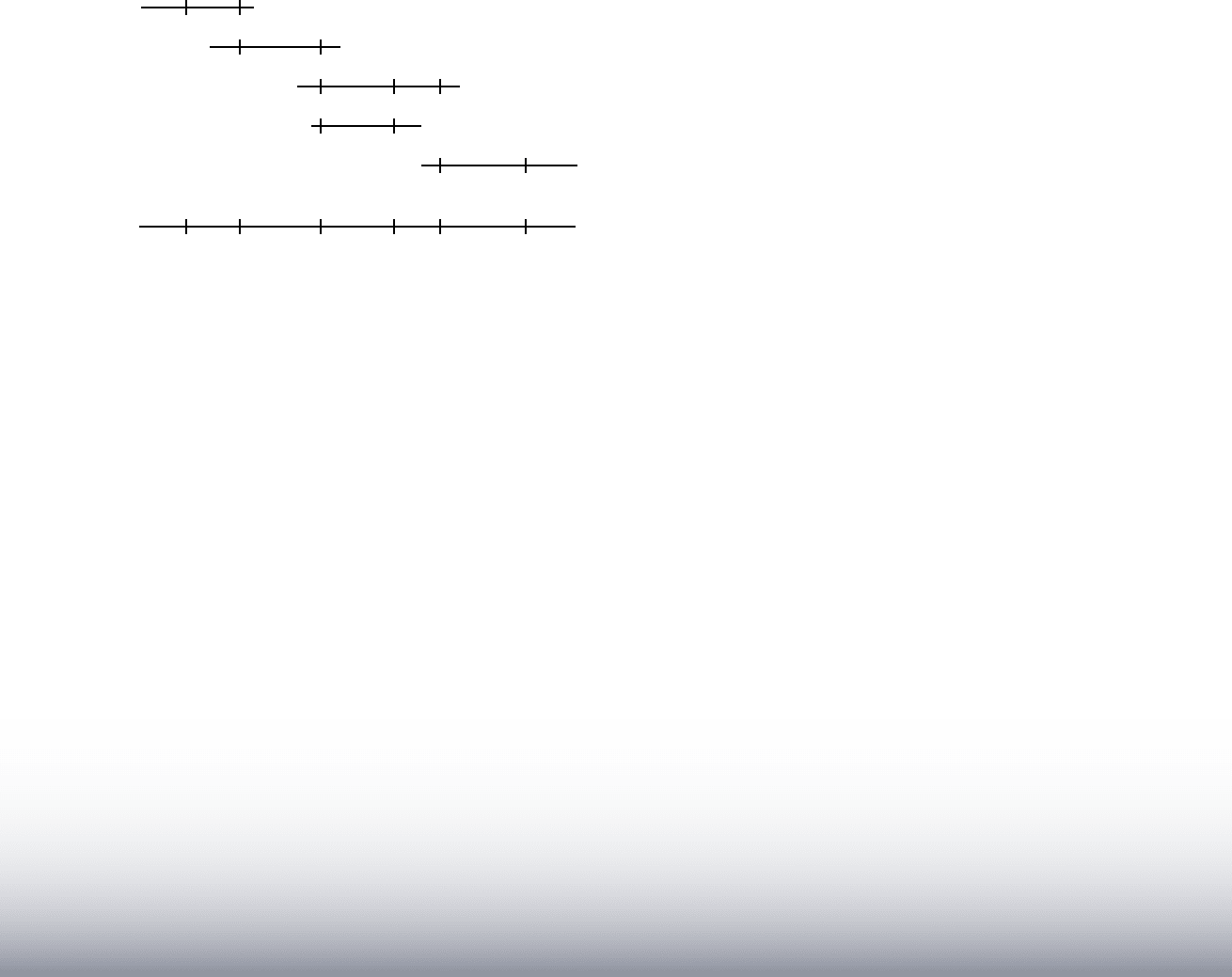
1. The STSs represent unique sequences in the genome. They can be used to
align the clones into one contiguous sequence of the genome based on the
presence or absence of an STS in a clone. The contig, with aligned clones,
would look like this:
Contig
Clone A
Clone B
CloneE
Clone D
Clone C
STS 1 STS 2
STS 2 STS 3
STS 3 STS 4 STS 5
STS 5 STS 6
STS 3
STS 1 STS 2 STS 5 STS 6STS 3
STS 4
STS 4
2. The anthrax genome has been sequenced. Investigators would look for
differences in the genome between existing natural strains and those collected
from a suspected outbreak. The genome of an infectious agent can be modi ed,
or “weaponized,” to make it more deadly. Also, single-nucleotide polymorphisms
could be used to identify the source of the anthrax. In the case of the Florida
anthrax outbreak it was determined that the source was a research laboratory.
CHAPTER 19
LEARNING OUTCOME QUESTIONS
19.2 The early cell divisions are very rapid and do not involve an increase in size
between divisions. Interphase is greatly reduced allowing very fast cell divisions.
19.3 This requires experimentation to isolate cell from contact, which would
prevent induction, or to follow a particular cells lineage.
19.4 The nucleus must be reprogrammed. What this means exactly on the mo-
lecular level is not clear, but probably involves changes in chromatin structure and
methylation patterns.
19.5 Homeotic genes seem to have arisen very early in the evolutionary history
of bilaterians. These have been duplicated and they have diversi ed with increasing
morphological complexity.
19.6 Cell death can be a patterning mechanism. Your ngers were sculpted from
a paddle-like structure by cell death.
INQUIRY QUESTION
Page 378 The macho-1 gene product is a transcription factor that can activate
the expression of several muscle-speci c genes. Whether or not the broblast
growth factor (FGF) signal is received from underlying endoderm precursor cells
in the embryo determines how macho-1 acts. If the FGF signal is present, it acti-
vates a Ras/MAP kinase pathway which, together with macho-1, either suppresses
muscle genes or activates the transcription of mesenchyme genes. Without the
FGF signal, macho-1 alone triggers the transcription of muscle genes.
UNDERSTAND
1. b 2. d 3. c 4. d 5. b 6. c 7. b
APPLY
1. d 2. a 3. b 4. a 5. c 6. c 7. c
SYNTHESIZE
1. The horizontal lines of the fate map represent cell divisions. Starting with the
egg, four cell divisions are required to establish a population of cells that will
become nervous tissue. It takes another eight to nine divisions to produce the
nal number of cells that will make up the nervous system of the worm. It
takes seven to eight rounds of cell division to generate the population of cells
that will become the gonads. Once established, another seven to eight cell
divisions are required to produce the actual gonad cells.
2. Not every cell in a developing embryo will survive. The process of apoptosis
is responsible for eliminating cells from the embryo. In C. elegans, the process
of apoptosis is regulated by three genes: ced-3, ced-4, and ced-9. Both ced-3 and
ced-4 encode proteases, enzymes that degrade proteins. Interestingly, the ced-3
protease functions to activate gene expression of the ced-4 protease. Together,
these proteases will destroy the cell from the inside-out. The ced-9 gene
functions to repress the activity of the protease-encoding genes, thereby
preventing apoptosis.
3. a. N-cadherin plays a speci c role in differentiating cells of the nervous
system from ectodermal cells. Ectodermal cells express E-cadherin, but
neural cells express N-cadherin. The difference in cell-surface cadherins
means that the neural cells lose their contact with the surrounding
ectodermal cells and establish new contacts with other neural cells. In the
absence of N-cadherin, the nervous system would not form. If you assume
that E-cadherin expression is also lost (as would occur normally in
development) then these cells would lose all cell–cell contacts and would
probably undergo apoptosis.
b. Integrins mediate the connection between a cell and its surrounding
environment, the extracellular matrix (ECM). The loss of integrins would
result in the loss of cell adhesion to the ECM. These cells would not be
able to move and therefore, gastrulation and other developmental
processes would be disrupted.
c. Integrins function by linking the cell’s cytoskeleton to the ECM. This
connection is critical for cell movement. The deletion of the cytoplasmic
domain of the integrin would not affect the ability of integrin to attach to
the ECM, but it would prevent the cytoskeleton from getting a “grip.”
This deletion would likely result in a disruption of development similar to
the complete loss of integrin.
4. Adult cells from the patient would be cultured with factors that reprogram
the nucleus into pluripotent cells. These cells would then be grown in culture
with factors necessary to induce differentiation into a speci c cell type that
could be transplanted into the patient. This would be easiest for tissue like a
liver that regenerates, but could in theory be used for a variety of cell types.
CHAPTER 20
LEARNING OUTCOME QUESTIONS
20.1 Natural selection occurs when some individuals are better suited to their
environment than others. These individuals live longer and reproduce more, leav-
ing more offspring with the traits that enabled their parents to thrive. In essence,
genetic variation within a population provides the raw material on which natural
selection can act.
20.2 To determine if a population is in Hardy Weinberg equilibrium, one would
rst need to determine the actual allele frequencies, which can be calculated based
on the actual genotype frequencies. After assigning variables p and q to the actual
allele frequencies, one would then use the Hardy Weinberg equation, p
2
+ 2pq +
q
2
= 1 in order to determine the expected genotype frequencies. If the actual and
expected genotype frequencies are the same (or, at least not signi cantly different)
then it is safe to say that the population is in Hardy Weinberg equilibrium.
20.3 There are ve mechanisms of evolution—natural selection, mutation, gene
ow (migration), genetic drift, and nonrandom mating. Any of these mechanisms
can alter allele frequencies within a population, although usually a change in allele
frequency results from more than one mechanism working in concert (for example,
mutation will introduce a bene cial new allele into the population, and natural se-
lection will select for that allele such that its frequency increases over the course of
two or more generations). Natural selection, the rst mechanism and probably the
most in uential in bringing about evolutionary change, is also the only mechanism
to produce adaptive change, that is, change that results in the population being bet-
ter adapted to its environment. Mutation is the only way in which new alleles can
A-10
appendix A
rav32223_appx_A1-A34.indd A-10rav32223_appx_A1-A34.indd A-10 12/7/09 4:56:21 PM12/7/09 4:56:21 PM

Apago PDF Enhancer
be introduced—it is the ultimate source of all variation. Because it is a relatively
rare event, mutation by itself is not a strong agent of allele frequency change; how-
ever, in concert with other mechanisms, especially natural selection, it can drasti-
cally change the allele frequencies in a population. Gene ow can introduce new al-
leles into a population from another population of the same species, thus changing
the allele frequency within both the recipient and donor populations. Genetic drift
is the random, chance factor of evolution—while the results of genetic drift can be
negligible in a large population, small populations can see drastic changes in allele
frequency due to this agent. Finally, nonrandom mating results in populations
varying from Hardy Weinberg equilibrium not by changing allele frequencies but
by changing genotype frequencies—nonrandom mating reduces the proportion of
heterozygotes in a population.
20.4 Reproductive success relative to other individuals within an organism’s
population is referred to as that organism’s tness. Its tness is determined by its
longevity, mating frequency, and the number of offspring it produces for each mat-
ing. None of these factors is always the most important in determining reproduc-
tive success—instead it is the cumulative effects of all three factors that determines
an individual’s reproductive success. For example, an individual that has a very long
life span but mates only infrequently might have lower tness than a conspeci c
that lives only half as long but mates more frequently and with greater success. As
seen with the water strider example in this section, traits that are favored for one
component of tness, say, for example, longevity, may be disadvantageous for other
components of tness, say, lifetime fecundity.
20.5 The dynamics among the different evolutionary mechanisms are very
intricate, and it is often dif cult, if not impossible, to discern which direction each
process is operating within a population—it is much easier to simply see the nal
cumulative effects of the various agents of evolutionary change. However, there
are cases in which more than one evolutionary process will operate in the same
direction, with the resulting population changing, or evolving, more rapidly than it
would have under only one evolutionary mechanism. For example, mutation may
introduce a bene cial allele into a population; gene ow could then spread the new
allele to other populations. Natural selection will favor this allele within each popu-
lation, resulting in relatively rapid evolutionary adaptation of a novel phenotype.
20.6 In a population wherein heterozygotes had the lowest tness, natural selec-
tion should favor both homozygous forms. This would result in disruptive selec-
tion, and a bimodal distribution of traits within the population. Over enough time,
it could lead to a speciation event.
20.7 Directional selection occurs when one phenotype has an adaptive advantage
over other phenotypes in the population, regardless of its relative frequency
within the population. Frequency-dependent selection, on the other hand, results
when either a common (positive frequency-dependent selection) or rare (nega-
tive frequency-dependent selection) has a selective advantage simply by virtue of
its commonality or rarity. In other words, if a mutation introduces a novel allele
into a population, directional selection may result in evolution because the allele is
advantageous, not because it is rare.
20.8 Wild guppies have to balance natural selection, which, in the presence of a
predator such as the pike cichlid, would tend to favor drab coloration, with sexual
selection, wherein females prefer brightly colored males. Thus, in low-predation
environments the male guppies tend to be brightly colored whereas in high-preda-
tion environments they are drably colored. Background color matching is a form of
camou age used by many species to avoid predation; again, however, in many cases
this example of natural selection runs counter to sexual selection—males want to
be inconspicuous to predators but attractive to potential mates. For example, to test
the effects of predation on background color matching in a species of butter y, one
might raise captive populations of butter ies with a normal variation in coloration.
After a few generations, add natural predators to half of the enclosures. After
several generations, one would expect the butter ies in the predatory environment
to have a high degree of background color matching in order to avoid predation,
while the non-predatory environment would have promoted brightly-colored
individuals where color would correlate with mating success.
20.9 Pleiotropic effects occur with many genes; in other words, a single gene
has multiple effects on the phenotype of the individual. Whereas natural selection
might favor a particular aspect of the pleiotropic gene, it might select against
another aspect of the same gene; thus, pleiotropy often limits the degree to which a
phenotype can be altered by natural selection. Epistasis occurs when the expression
of one gene is controlled or altered by the existence or expression of another gene.
Thus, the outcome of natural selection will depend not just on the genotype of one
gene, but the other genotype as well.
INQUIRY QUESTIONS
Page 399 In the example of Figure 20.3, the frequency of the recessive white
genotype is 0.16. The remaining 84 cats (out of 100) in the population are ho-
mozygous or heterozygous black. If the 16 white cats died, they will not contribute
recessive white genes to the next generation. Only heterozygous black cats will
produce white kittens in a 3:1 ratio of black to white. Homozygous × homozygous
black and homozygous × heterozygous black cats will have all black kittens. Since
there are 36 homozygous black cats and 48 heterozygous black cats, with a new
total of 84 cats, the new frequency of homozygous black cats is 36/84 or 43%, with
the heterozygous black cats now comprising 57% of the population. If p
2
= 0.43,
then p = 0.65 (approximately), then 1–p = q, and q = 0.35. The frequency of white
kittens in the next generation, q
2
, is 0.12 or 12%.
Page 405 Differential predation might favor brown toads over green toads,
green toads might be more susceptible to disease, or green toads might be less able
to tolerate variations in climate, among other possibilities.
Page 406 Since the intermediate-sized water strider has the highest level of t-
ness, it would be expected that the intermediate size would become more prevalent
in the population. If the number of eggs laid per day was not affected by body size,
the small water striders would be favored because of their tendency to live longer
than their larger counterparts.
Page 407 Yes. The frequency of copper tolerance will decrease as distance from
the mine increases.
Page 411 The proportion of ies moving toward light (positive phototropism)
would again begin to increase in successive generations.
Page 411 The distribution of birth weights in the human population would
expand somewhat to include more babies of higher and lower birth weights.
Page 413 Guppy predators evidently locate their prey using visual cues. The
more colorful the guppy, the more likely it is to be seen and thus the more likely it
will become prey.
Page 414 Thoroughbred horse breeders have been using selective breeding for
certain traits over many decades, effectively removing variation from the popula-
tion of thoroughbred horses. Unless mutation produces a faster horse, it remains
unlikely that winning speeds will improve.
UNDERSTAND
1. a 2. b 3. d 4. a 5. d 6. a 7. d
APPLY
1. d 2. d 3. a
SYNTHESIZE
1. The results depend on coloration of guppies increasing their conspicuousness
to predators such that an individual’s probability of survival is lower than if it
was a drab morph. In the laboratory it may be possible to conduct trials in
simulated environments; we would predict, based on the hypothesis of
predation, that the predator would capture more of the colorful morph than
the drab morph when given access to both. Design of the simulated
environment would obviously be critical, but results from such an experi-
ment, if successful, would be a powerful addition to the work already
accomplished.
2. On the large lava ows, where the background is almost entirely black, those
individuals with black coloration within a population will have a selective
advantage because they will be more cryptic to predators. On the other hand, on
small ows, which are disrupted by light sand and green plants, dark individuals
would be at an adaptive disadvantage for the same reason. You can read more
about this in chapter 21 (21.2); the black peppered moths had an advantage on
the trees lacking lichen, but a disadvantage on lichen-covered trees.
3. Ultimately, genetic variation is produced by the process of mutation.
However, compared with the speed at which natural selection can reduce
variation in traits that are closely related to tness, mutation alone cannot
account for the persistence of genetic variation in traits that are under strong
selection. Other processes can account for the observation that genetic
variation can persist under strong selection. They include gene ow.
Populations are often distributed along environmental gradients of some
type. To the extent that different environments favor slightly different
variants of phenotypes that have a genetic basis, gene ow among areas in the
habitat gradient can introduce new genetic variation or help maintain existing
variation. Similarly, just as populations frequently encounter different
selective environments across their range (think of the guppies living above
and below the waterfalls in Trinidad), a single population also encounters
variation in selective environments across time (oscillating selection). Traits
favored this year may not be the same as those favored next year, leading to a
switching of natural selection and the maintenance of genetic variation.
appendix A
A-11
rav32223_appx_A1-A34.indd A-11rav32223_appx_A1-A34.indd A-11 11/30/09 6:36:00 PM11/30/09 6:36:00 PM