
Raven P.H., Johnson G.B., Mason K.A. Biology (Ninth Edition)
Подождите немного. Документ загружается.

Apago PDF Enhancer
habitants might then find suitable climatic conditions are likely
to be developed, rather than being protected parks.
Similarly, as temperatures increase, many montane spe-
cies have shifted to higher altitudes to find their preferred habi-
tat. However, eventually they can shift no higher because they
reach the mountain’s peak. As the temperature continues to in-
crease, the species’ habitat disappears entirely. A number of
Costa Rican frog species are thought to have become extinct
for this reason. The same fate may befall many Arctic species as
their habitat melts away.
Global warming a ects human
populations as well
Global warming could affect human health and welfare in a
variety of ways. Some of these changes may be beneficial, but
even if they are detrimental, some countries—particularly the
wealthier ones—will be able to adjust. But poorer countries
may not be able to transform as quickly, and some changes will
require extremely costly countermeasures that even wealthy
countries will be hard-pressed to afford.
Rising sea levels
During the second half of the 20th century, sea level rose at 2 to
3 cm per decade. The U.S. Environmental Protection Agency
predicts that sea level is likely to rise two or three times faster
in the 21st century because of two effects of global warming:
(1) the melting of polar ice and glaciers, adding water to the
ocean, and (2) the increase of average ocean temperature, caus-
ing an increase in volume because water expands as it warms.
Such an increase would cause increased erosion and inundation
of low-lying land and coastal marshes, and other habitats would
also be imperiled. As many as 200 million people would be af-
fected by increased flooding. Should sea levels continue to rise,
coastal cities and some entire islands, such as the Maldives in the
Indian Ocean, would be in danger of becoming submerged.
Other climatic effects
Global warming is predicted to have a variety of effects besides
increased temperatures. In particular, the frequency or severity
of extreme meteorological events—such as heat waves, droughts,
severe storms, and hurricanes—is expected to increase, and El
Niño events, with their attendant climatic effects, may become
more common.
In addition, rainfall patterns are likely to shift, and those
geographic areas that are already water-stressed, which are cur-
rently home to nearly 2 billion people, will likely face even
graver water shortage problems in the years to come. Some evi-
dence suggests that these effects are already evident in the in-
crease in powerful storms, hurricanes, and the frequency of El
Niño events over the past few years.
Effects on agriculture
Global warming may have both positive and negative effects on
agriculture. On the positive side, warmer temperatures and in-
creased atmospheric carbon dioxide tend to increase growth of
some crops and thus may increase agricultural yields. Other
crops, however, may be negatively affected. Furthermore, most
Global warming—and cooling—have occurred in the
past, most recently during the ice ages and intervening warm
periods. Species often responded by shifting their geographic
ranges, tracking their environments. For example, a number of
cold-adapted North American tree species that are now found
only in the far north, or at high elevations, lived much farther
south or at substantially lower elevations 10,000–20,000 years
ago, when conditions were colder. Present-day global warming
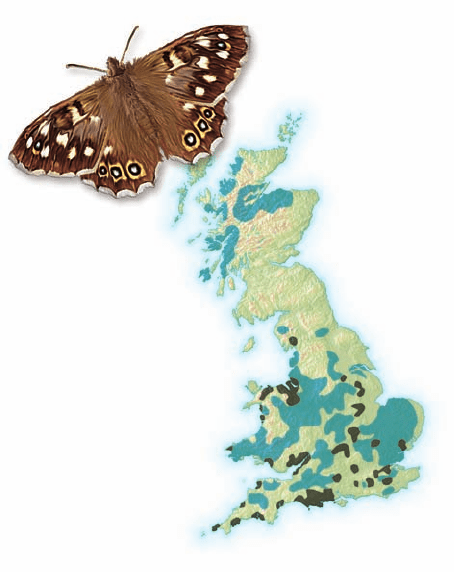
is having similar effects. For example, many butterfly and bird
species have shifted northward in recent decades (figure 59.30).
Many migratory birds arrive earlier at their summer
breeding grounds than they did decades ago. Many insects and
amphibians breed earlier in the year, and many plants flower
earlier. In Australia, recent research shows that wild fruit fly
populations have undergone changes in gene frequencies in the
past 20 years, such that populations in cool parts of the country
now genetically resemble ones in warm parts.
Reef-building corals seem to have narrow margins of
safety between the sea temperatures to which they are accus-
tomed and the maximum temperatures they can survive. Global
warming seems already to be threatening some corals by induc-
ing mass “bleaching,” a disruption of the normal and necessary
symbiosis between the cnidarians and algal cells.
There are reasons to think that the effects of global warm-
ing on natural ecosystems today may, overall, be more severe
than those of warming events in the distant past. One concern
is that the rate of warming today is rapid, and therefore evolu-
tionary adaptations would need to occur over relatively few
generations to aid the survival of species. Another concern is
that natural areas no longer cover the whole landscape but of-
ten take the form of parks that are completely surrounded by
cities or farms. The parks are at fixed geographic locations and
in general cannot be moved. If climatic conditions in a park
become unsuitable for its inhabitants, the park will cease to
perform its function. Moreover, the areas in which the park in-
Figure 59.30
Butter y
range shift. The distribution
of the speckled wood butter y,
Pararge aegeria, in Great Britain
in 1970–1997 (green) included
areas far to the north of the
distribution in 1915–1939 (black).
1252
part
VIII
Ecology and Behavior
rav32223_ch59_1230-1255.indd 1252rav32223_ch59_1230-1255.indd 1252 11/20/09 2:45:08 PM11/20/09 2:45:08 PM

Apago PDF Enhancer
crops will be affected by increased frequencies of droughts.
Moreover, although crops in north temperate regions may
flourish with higher temperatures, many tropical crops are al-
ready growing at their maximal temperatures, so increased
temperatures may lead to reduced crop yields.
Also on the negative side, changes in rainfall patterns,
temperature, pest distributions, and various other factors will
require many adjustments. Such changes may come relatively
easily for farmers in the developed world, but the associated
costs may be devastating for those in the developing countries.
Effects on human health
Increasingly frequent storms, flooding, and drought will have
adverse consequences on human health. Aside from their direct
effect, such events often disrupt the fragile infrastructure of de-
veloping countries, leading to the loss of safe drinking water
and other problems. As a result, epidemics of cholera and other
diseases may be expected to occur more often.
In addition, as temperatures rise, areas suitable for tropi-
cal organisms will expand northward. Of particular concern are
those organisms that cause human diseases. Many diseases cur-
rently limited to tropical areas may expand their range and be-
come problematic in nontropical countries. Diseases transmitted
by mosquitoes, such as malaria (see chapter 29), dengue fever,
and several types of encephalitis, are examples. The distribution
of mosquitoes is limited by cold; winter freezes kill many mos-
quitoes and their eggs. As a result, malaria only occurs in areas
where temperatures are usually above 16°C, and yellow fever
and dengue fever, transmitted by a different mosquito species
from malaria, occur in areas where temperatures are normally
above 10°C. Moreover, at higher temperatures, the malaria
pathogen matures more rapidly.
Malaria already kills 1 million people every year; some
projections suggest that the percentage of the human population
at risk for malaria may increase by 33% by the end of the 21st
century. Moreover, as predicted, malaria already appears to be on
the move. By 1980, malaria had been eradicated from all of the
United States except California, but in recent years it has ap-
peared in a variety of southern, and even a few northern, states.
Dengue fever (sometimes called “breakbone fever” be-
cause of the pain it causes) is also spreading. Previously a dis-
ease restricted to the tropics and subtropics, where it infects 50
to 100 million people a year , it now occurs in the United States,
southern South America, and northern Australia.
One of the most alarming aspects of these diseases is that
no vaccines are available. Drug treatment is available (for ma-
laria), but the parasites are rapidly evolving resistance and ren-
dering the drugs ineffective. There is no drug treatment for
dengue fever.
Solving the problem
The release of the IPCC’s fourth assessment in 2007 may
come to be seen as a turning point in humanity’s response to
climate change. Global warming is now recognized, even by
former skeptics, as an ongoing phenomenon caused in large
part by human actions. Even formerly recalcitrant govern-
ments now seem poised to take action, and corporations are
recognizing the opportunities provided by the need to re-
verse human impacts. The resulting “green” technologies and
practices are becoming increasingly common. With concert-
ed efforts from citizens, corporations, and governments, the
more serious consequences of global climate change hope-
fully can be averted, just as ozone depletion was reversed in
the last century.
Learning Outcomes Review 59.6
Carbon dioxide is a signifi cant greenhouse gas, meaning that it prevents
heat from escaping the Earth so that temperatures rise. Global warming
caused by changes in atmospheric composition—most notably CO
2
accumulation—may increase desertifi cation and cause some habitats and
species to disappear. Global warming may also melt ice caps and glaciers,
altering coastlines as water levels rise. Violent weather events, disruption
of water availability, and fl ooding of low-lying areas, as well as increased
incidence of tropical diseases, may also occur.
■ In what ways does global climate change pose different
questions from those posed by ozone depletion?
59.1 Ecosystem E ects of Sun, Wind, and Water
Solar energy and the Earth’s rotation a ect atmospheric circulation.
The amount of solar radiation reaching the Earth’s surface has a
great effect on climate. The seasons result from changes in the
Earth’s position relative to the Sun (see gure 59.1). Hot air with its
increased water content rises at the equator, then cools and loses its
moisture, creating the equatorial rain forests (see gure 59.3).
As the drier cool air of the upper atmosphere moves away from the
equator and then descends to Earth, it removes moisture from the
Earth’s surface and creates deserts on its way back to the equator.
Winds travel in curved paths relative to the Earth’s surface because
the Earth rotates on its axis (the Coriolis effect; see gure 59.3).
Global currents are largely driven by winds (see gure 59.4).
Four large circular gyres in ocean currents can be found, driven by
wind direction. These also are in uenced by the Coriolis effect.
Regional and local di erences a ect terrestrial ecosystems.
A rain shadow occurs when a range of mountains removes moisture
from air moving over it from the windward side, creating a drier
environment on the opposite side (see gure 59.5).
Chapter Review
chapter
59
The Biosphere
1253www.ravenbiology.com
rav32223_ch59_1230-1255.indd 1253rav32223_ch59_1230-1255.indd 1253 11/20/09 2:45:09 PM11/20/09 2:45:09 PM
Apago PDF Enhancer
For every 1000-m increase in elevation, temperature drops
approximately 6°C (see gure 59.6).
Microclimates are small-scale differences in conditions.
59.2 Earth’s Biomes
Temperature and moisture often determine biomes.
Average annual temperature and rainfall, as well as the range of
seasonal variation, determine different biomes. Eight major types
of biomes are recognized.
Tropical rain forests are highly productive equatorial systems.
Savannas are tropical grasslands with seasonal rainfall.
Deserts are regions with little rainfall.
Temperate grasslands have rich soils.
Temperate deciduous forests are adapted to seasonal change.
Temperate evergreen forests are coastal.
Taiga is the northern forest where winters are harsh.
Tundra is a largely frozen treeless area with a short growing season.
59.3 Freshwater Habitats
Life in freshwater habitats depends on oxygen availability.
Oxygen is not very soluble in water. Oxygen is constantly added by
photosynthesis of aquatic plants and removed by heterotrophs.
Lake and pond habitats change with water depth.
The photic zone, near the surface, is the zone of primary
productivity; its depth varies with water clarity (see gure 59.12).
In the summer, the warmer water (epilimnion) oats on top of the
colder water (hypolimnion). Freshwater lakes turn over twice a year
as the temperature at the surface and at depth become the same, and
the layers are set in motion by wind (see gure 59.13).
Lakes di er in oxygen and nutrient content.
Oligotrophic lakes have high oxygen and low nutrients, whereas
eutrophic lakes are the opposite.
59.4 Marine Habitats
The ocean is divided into several zones: intertidal, neritic, photic,
benthic, and pelagic zones (see gure 59.15).
Open oceans have low primary productivity.
Phytoplankton is the primary producer in open waters, and primary
production is low due to low nutrient levels.
Continental shelf ecosystems provide abundant resources.
Neritic waters are found over continental shelves and have higher
nutrient levels (see gure 59.15). Estuaries frequently contain rich
intertidal zones. Other ecosystems include productive banks on
continental shelves and symbiotic coral reef ecosystems.
Upwelling regions experience mixing of nutrients and oxygen.
In upwelling regions, local winds bring up nutrient-rich deep waters,
creating the highest rates of primary production. El Niño events
occur when Trade Winds weaken, restricting upwelling to surface
waters rather than to the deeper nutrient-rich waters.
The deep sea is a cold, dark place with some fascinating communities.
The deep sea is the single largest habitat. Hydrothermal vent
communities occur where tectonic plates are moving apart;
chemoautotrophs living there obtain energy from oxidation of sulfur.
59.5 Human Impacts on the Biosphere:
Pollution and Resource Depletion
Dangerous chemicals like DDT are biomagni ed as energy moves up
the food chain (see gure 59.20).
Freshwater habitats are threatened by pollution and resource depletion.
Point-source and diffuse pollution, acid precipitation, and overuse
threaten freshwater habitats (see gure 59.21).
Forest ecosystems are threatened in tropical and temperate regions.
Deforestation leads to loss of habitat, disruption of the water cycle,
and loss of nutrients. Acid rain has a major detrimental effect on
forests as well as on lakes and streams (see gure 59.23).
Marine habitats are being depleted of sh and other species.
Many sheries, such as the Georges Bank ecosystem, have collapsed
and have not recovered.
Stratospheric ozone depletion has led to an ozone “hole.”
Increased transmission of UV-B radiation is harmful to life. Global
regulation of CFCs seems to be reversing ozone depletion.
59.6 Human Impacts on the Biosphere:
Climate Change
Independent computer models predict global changes.
Carbon dioxide is a major greenhouse gas.
Carbon dioxide allows solar radiation to pass through the atmosphere
but prevents heat from leaving the Earth, creating warmer conditions.
Global temperature change has a ected ecosystems in the past and is
doing so now.
If temperatures change rapidly, natural selection cannot occur rapidly
enough to prevent many species from becoming extinct.
Global warming a ects human populations as well.
Changing sea levels, increased frequency of extreme climatic events,
direct and indirect effects on agriculture, and the expansion of tropical
diseases can all affect human life.
1254
part
VIII
Ecology and Behavior
rav32223_ch59_1230-1255.indd 1254rav32223_ch59_1230-1255.indd 1254 11/20/09 2:45:10 PM11/20/09 2:45:10 PM

Apago PDF Enhancer
UNDERSTAND
1. The Coriolis effect
a. drives the rotation of the Earth.
b. is responsible for the relative lack of seasonality at the equator.
c. drives global wind circulation patterns.
d. drives global wind and ocean circulation patterns.
2. What two factors are most important in biome distribution?
a. Temperature and latitude
b. Rainfall and temperature
c. Latitude and rainfall
d. Temperature and soil type
3. In a rain shadow, air is cooled as it rises and heated as it
descends, often producing a wet and dry side because the water-
holding capacity of the air
a. is directly related to air temperature.
b. is inversely related to air temperature.
c. is unaffected by air temperature.
d. produces changes in air temperature.
4. Thermal strati cation in a lake
a. is not modi ed by fall and spring overturn.
b. leads to higher oxygen in deep versus surface waters.
c. leads to higher oxygen in surface versus deep waters.
d. is reduced when ice forms on the surface of the lake.
5. Oligotrophic lakes have
a. low oxygen, and high nutrient availability.
b. high oxygen, and high nutrient availability.
c. high oxygen, and low nutrient availability.
d. low oxygen, and low nutrient availability.
6. Deep-sea hydrothermal vent communities
a. get their energy from photosynthesis in the photic zone
near the surface.
b. use bioluminescence to generate food.
c. are built on the energy produced by the activity
of chemoautotrophs that oxidize sulfur.
d. contain only bacteria and other microorganisms.
7. Biological magni cation occurs when
a. pollutants increase in concentration in tissues at higher
trophic levels.
b. the effect of a pollutant is magni ed by chemical
interactions within organisms.
c. an organism is placed under a dissecting scope.
d. a pollutant has a greater than expected effect once ingested
by an organism.
8. Which of the following is a point source of pollution?
a. Lawns
b. Smokestacks of coal- red power plants
c. Factory ef uent pipe draining into a river
d. Acid rain
APPLY
1. If the Earth were not tilted on its axis of rotation, the annual
cycle of seasons in the northern and southern hemispheres
a. would be reversed. c. would be reduced.
b. would stay the same. d. would not exist.
2. Oligotrophic lakes can be turned into eutrophic lakes as a result
of human activities such as
a. over shing of sensitive species, which disrupts sh
communities.
b. introducing nutrients into the water, which stimulates plant
and algal growth.
c. disrupting terrestrial vegetation near the shore, which
causes soil to run into the lake.
d. spraying pesticides into the water to control aquatic
insect populations.
3. If a pesticide is harmless at low concentrations (such as, DDT)
and used properly, how can it become a threat to nontarget
organisms?
a. Because after exposure to DDT, some species develop
allergic reactions even at low levels of exposure
b. Because DDT molecules can combine so that their
concentration increases through time
c. Because the concentration of chemicals such as DDT is
increasingly concentrated at higher trophic levels
d. Because global warming and exposure to UV-B radiation
renders molecules such as DDT increasingly potent
4. If there are many greenhouse gases, why is only carbon dioxide
considered a cause of global warming?
a. The other gases do not cause global warming.
b. Scientists are concerned about other causes; for example,
release of methane from melting permafrost could have
signi cant effects on global warming.
c. Other gases occur in such low quantities that they have
little effect on the climate.
d. Carbon dioxide is the only gas that absorbs long-
wavelength infrared radiation.
SYNTHESIZE
1. Discuss how gure 59.1 explains the pattern observed in
gure 59.2.
2. Why are most of the Earth’s deserts found at approximately
30° latitude?
3. If the world has experienced global warming many times in the
past, why should we be concerned about it happening again now?
Review Questions
ONLINE RESOURCE
www.ravenbiology.com
Understand, Apply, and Synthesize—enhance your study with
animations that bring concepts to life and practice tests to assess
your understanding. Your instructor may also recommend the
interactive eBook, individualized learning tools, and more.
chapter
59
The Biosphere
1255www.ravenbiology.com
rav32223_ch59_1230-1255.indd 1255rav32223_ch59_1230-1255.indd 1255 11/20/09 2:45:10 PM11/20/09 2:45:10 PM
Apago PDF Enhancer
A
Chapter
60
Conservation
Biology
Introduction
Among the greatest challenges facing the biosphere is the accelerating pace of species extinctions. Not since the end of
the Cretaceous period 65
MYA have so many species become extinct in so short a time span. This challenge has led to the
emergence of the discipline of conservation biology. Conservation biology is an applied science that seeks to learn how to
preserve species, communities, and ecosystems. It studies the causes of declines in species richness and attempts to develop
methods for preventing such declines. In this chapter, we first examine the biodiversity crisis and its importance. Then, using
case histories, we identify and study factors that have played key roles in many extinctions. We finish with a review of
recovery efforts at the species and community levels.
Chapter Outline
60.1 Overview of the Biodiversity Crisis
60.2 The Value of Biodiversity
60.3 Factors Responsible for Extinction
60.4 Approaches for Preserving Endangered
Species and Ecosystems
CHAPTER
rav32223_ch60_1256-1280.indd 1256rav32223_ch60_1256-1280.indd 1256 11/20/09 3:07:58 PM11/20/09 3:07:58 PM
Apago PDF Enhancer
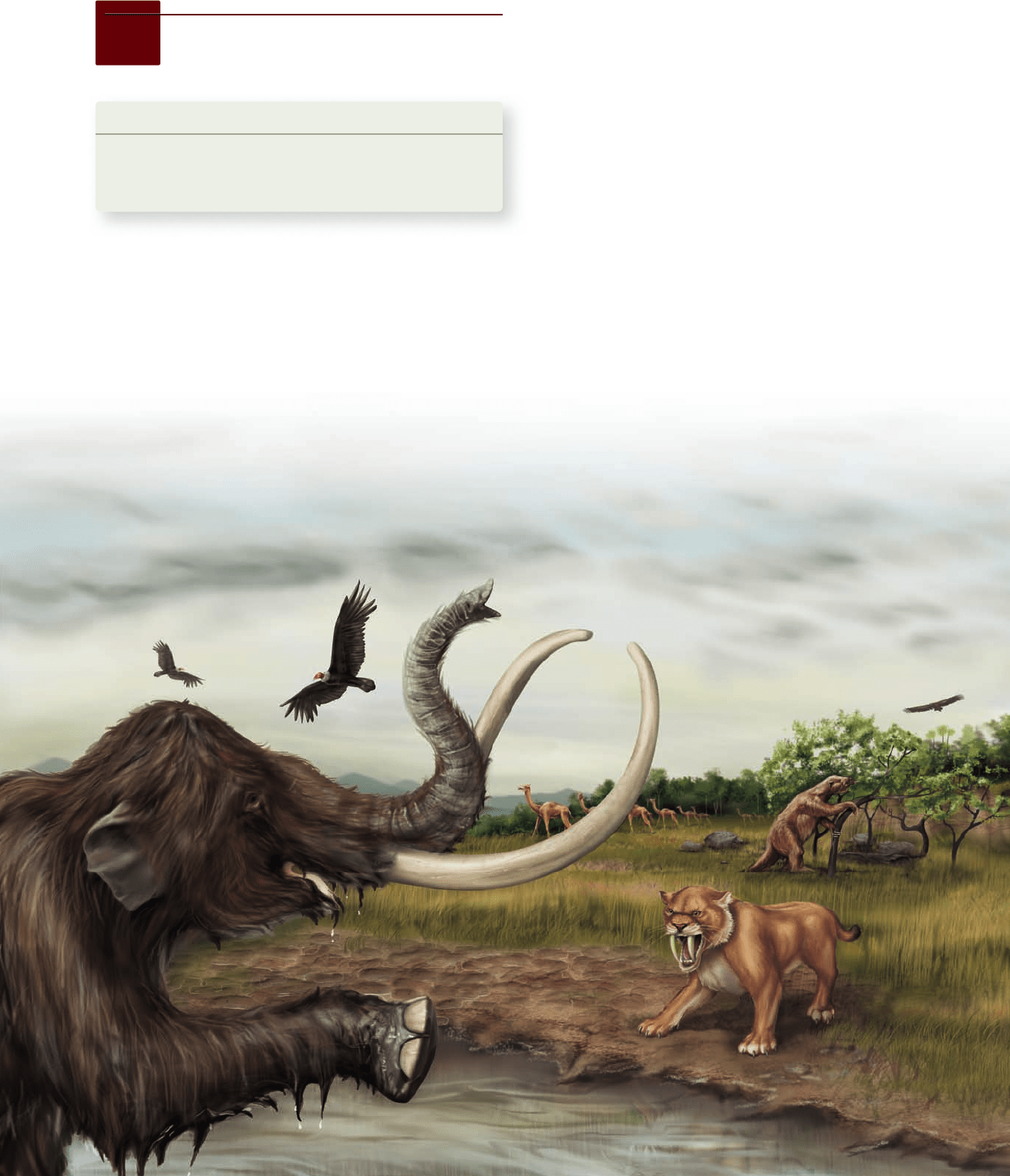
Figure 60.1
North America before
human inhabitants.
Animals found in
North America prior to the arrival of
humans included birds and large mammals,
such as the ancient North American camel,
saber-toothed cat, giant ground sloth, and
teratorn vulture.
60.1
Overview of the
Biodiversity Crisis
Learning Outcomes
Describe the history of extinction through time.1.
Explain the importance of hotspots to biodiversity 2.
conservation.
Extinction is a fact of life. Most species—probably all—become
extinct eventually. More than 99% of species known to science
(most from the fossil record) are now extinct. Current rates of
extinction are alarmingly high, however. Taking into account
the current rapid and accelerating loss of habitat, especially in
the tropics, it has been calculated that as much as 20% of the
world’s biodiversity may be lost by the middle of this century.
In addition, many of these species may be lost before we are
even aware of their existence. Scientists estimate that no more
than 15% of the world’s eukaryotic organisms have been dis-
covered and given scientific names, and this proportion is prob-
ably much lower for tropical species.
These losses will affect more than poorly known groups.
As many as 50,000 species of the world’s total of 250,000 spe-
cies of plants, 4000 of the world’s 20,000 species of butterflies,
and nearly 2000 of the world’s 8600 species of birds could be
lost during this period. Considering that the human species has
been in existence for less than 200,000 years of the world’s
4.5-billion-year history, and that our ancestors developed agri-
culture only about 10,000 years ago, this is an astonishing—and
dubious—accomplishment.
Prehistoric humans were responsible
for local extinctions
A great deal can be learned about current rates of extinction by
studying the past. In prehistoric times, members of Homo sapiens
wreaked havoc whenever they entered a new area. For example,
at the end of the last Ice Age, approximately 12,000 years ago,
the fauna of North America was composed of a diversity of large
mammals similar to those living in Africa today: mammoths and
mastodons, horses, camels, giant ground sloths, saber-toothed
cats, and lions, among others (figure 60.1) .
Shortly after humans arrived, 74% to 86% of the mega-
fauna (that is, animals weighing more than 100 lb) became ex-
tinct. These extinctions are thought to have been caused by
hunting and, indirectly, by burning and clearing of forests.
(Some scientists attribute these extinctions to climate change,
but that hypothesis doesn’t explain why the ends of earlier Ice
Ages were not associated with mass extinctions, nor does it ex-
plain why extinctions occurred primarily among larger animals,
with smaller species being relatively unaffected.)
Around the globe, similar results have followed the ar-
rival of humans. Forty thousand years ago, Australia was occu-
pied by a wide variety of large animals, including marsupials
rav32223_ch60_1256-1280.indd 1257rav32223_ch60_1256-1280.indd 1257 11/20/09 3:08:08 PM11/20/09 3:08:08 PM

Apago PDF Enhancer
Leucospermum cordifolium
TABLE 60.1
Recorded Extinctions Since 1600
RECORDED EXTINCTIONS
Approximate Number
of Species
Percent of Taxon
ExtinctTaxon Mainland Island Ocean Total
Mammals 30 51 4 85 4,000 2.1
Birds 21 92 0 113 8,600 1.3
Reptiles 1 20 0 21 6,300 0.3
Fish 22 1 0 23 24,000 0.1
Invertebrates
*
49 48 1 98 1,000,000+ 0.01
Flowering plants 245 139 0 384 250,000 0.2
*
Number of extinct invertebrates is probably greatly underestimated due to lack of knowledge for many species (other groups are probably underestimated to a lesser extent for the same reason).
the 85 species of mammals that have gone extinct in the last
400 years, 60% lived on islands. The particular vulnerability of
island species probably results from a number of factors: Such
species have often evolved in the absence of predators, and so
have lost their ability to escape both humans and introduced
predators such as rats and cats. In addition, humans have intro-
duced competitors and diseases; malaria, for example, has dev-
astated the bird fauna of the Hawaiian Islands. Finally, island
populations are often relatively small, and thus particularly vul-
nerable to extinction, as we shall see later in this chapter.
In recent years, the extinction crisis has moved from is-
lands to continents. Most species now threatened with extinc-
tion occur on continents, and these areas will bear the brunt of
the extinction crisis in this century.
Some people have argued that we should not be con-
cerned, because extinctions are a natural event and mass ex-
tinctions have occurred in the past. Indeed, mass extinctions
have taken place several times over the past half-billion years
(see figure 22.18). However, the current mass extinction event
is notable in several respects. First, it is the only such event
triggered by a single species (us!). Moreover, although species
diversity usually recovers after a few million years (as discussed
in chapter 22), this is a long time to deny our descendants the
benefits and joys of biodiversity.
In addition, it is not clear that biodiversity will rebound
this time. After previous mass extinctions, new species have
evolved to utilize resources newly available due to extinctions of
the species that previously used them. Today, however, such re-
sources are unlikely to be available, because humans are destroy-
ing the habitats and taking the resources for their own use.
Endemic species hotspots
are especially threatened
A species found naturally in only one geographic area and no
place else is said to be endemic to that area. The area over which
an endemic species is found may be very large. For example, the
black cherry tree (Prunus serotina) is endemic to all of temper-
ate North America. More typically, however, endemic species
occupy restricted ranges. The Komodo dragon (Varanus
similar in size and ecology to hippos and leopards, a kangaroo
9 ft tall, and a 20-ft-long monitor lizard. These all disappeared
at approximately the same time as humans arrived.
Smaller islands have also been devastated. Madagascar has
seen the extinction of at least 15 species of lemurs, including one
the size of a gorilla; a pygmy hippopotamus; and the flightless
elephant bird, Aepyornis, the largest bird to ever live (more than
3 m tall and weighing 450 kg). On New Zealand, 30 species of
birds went extinct, including all 13 species of moas, another
group of large, flightless birds. Interestingly, one continent that
seems to have been spared these megafaunal extinctions is Africa.
Scientists speculate that this lack of extinction in prehistoric Af-
rica may have resulted because much of human evolution oc-
curred in Africa. Consequently, African species had been
coevolving with humans for several million years and thus had
evolved counteradaptations to human predation.
Extinctions have continued in historical time
Historical extinction rates are best known for birds and mam-
mals because these species are conspicuous—that is, relatively
large and well studied. Estimates of extinction rates for other
species are much rougher. The data presented in table 60.1 ,
based on the best available evidence, show recorded extinctions
from 1600 to the present. These estimates indicate that about
85 species of mammals and 113 species of birds have become
extinct since the year 1600. That is about 2.1% of known mam-
mal species and 1.3% of known birds.
The majority of extinctions have occurred in the last 150
years: one species every year during the period from 1850 to 1950,
and four species per year between 1986 and 1990. This increase in
the rate of extinction is the heart of the biodiversity crisis.
Unfortunately, the situation is worsening. For example,
the number of bird species recognized as “critically endan-
gered” increased 8% from 1996 to 2000, and a recent report
suggested that as many as half of Earth’s plant species may be
threatened with extinction. Some researchers predict that
two-thirds of all vertebrate species could perish by the end of
this century.
The majority of historic extinctions—though by no
means all of them—have occurred on islands. For example, of
1258
part
VIII
Ecology and Behavior
rav32223_ch60_1256-1280.indd 1258rav32223_ch60_1256-1280.indd 1258 11/20/09 3:08:11 PM11/20/09 3:08:11 PM
Apago PDF Enhancer
Caribbean
Brazilian
Cerrado
Atlantic
Forest
Guinean
Forests of
West Africa
Succulent
Karoo
Cape Floristic
Province
Eastern Arc
Mountains
&
Coastal
Forests
Madagascar
& Indian Ocean
Islands
Western
Ghats &
Sri Lanka
Caucasus
Mountains of
South-Central
China
Indo-Burma
Philippines
New Caledonia
New Zealand
Southwest
Australia
Wallacea
Sundaland
Tropical Andes Philippines Cape Floristic ProvinceMadagascar
Tropical
Andes
Central
Chile
Chocó
Mesoamerica
California
Floristic
Province
Polynesia
& Micronesia
Polynesia
& Micronesia
Mediterranean
Basin
biodiversity
"hot spots"
Lemur catta Dillenia philippinensisFrailejones espeletia
Leucospermum cordifolium
Leucospermum cordifolium
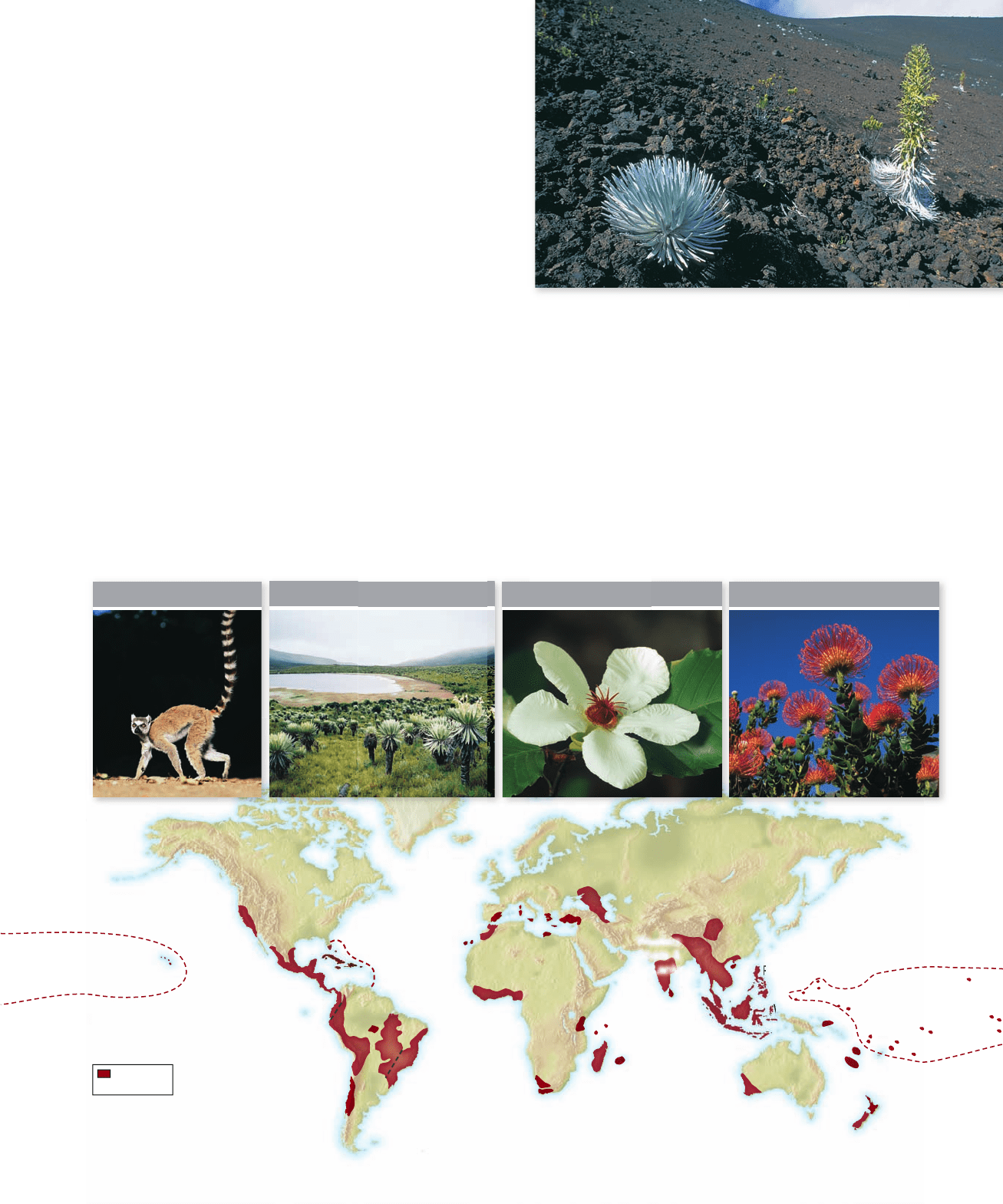
Figure 60.3
Hotspots of high endemism.
These areas are rich in endemic species under threat of imminent extinction.
Figure 60.2
Mauna Kea silversword (Argyroxiphium
sandwicense).
Many species of silverswords are endemic to very
small areas. This photo illustrates two stages in the plant’s life cycle.
which in total contain nearly half of all the terrestrial species
in the world.
Why these areas contain so many endemic species is a topic
of active scientific research. Some of these hotspots occur in ar-
eas of high species diversity; for these hotspots, the explanations
for high species diversity in general, such as high productivity,
probably apply (see chapter 58). In addition, some hotspots occur
komodoensis) lives only on a few small islands in the Indonesian
archipelago, and the Mauna Kea (Argyroxiphium sandwicense)
and Haleakala silverswords (A. s. macrocephalum) each lives in a
single volcano crater on the island of Hawaii (figure 60.2). Iso-
lated geographic areas, such as oceanic islands, lakes, and moun-
tain peaks, often have high percentages of endemic species,
many in significant danger of extinction.
The number of endemic plant species can vary greatly
from one place to another. In the United States, for example,
379 plant species are found in Texas and nowhere else, whereas
New York has only one endemic plant species. California, with
its varied array of habitats, including deserts, mountains, sea-
coast, old-growth forests, and grasslands, is home to more en-
demic plant species than any other state.
Species hotspots
Worldwide, notable concentrations of endemic species occur
in particular regions. Conservationists have recently identi-
fied areas, termed hotspots, that have high endemism and are
disappearing at a rapid rate. Such hotspots include Madagas-
car, a variety of tropical rain forests, the eastern Himalayas,
areas with Mediterranean climates such as California, South
Africa, and Australia, and several other areas (figure 60.3 and
table 60.2). Overall, 25 such hotspots have been identified,
chapter
60
Conservation Biology
1259www.ravenbiology.com
rav32223_ch60_1256-1280.indd 1259rav32223_ch60_1256-1280.indd 1259 11/20/09 3:08:15 PM11/20/09 3:08:15 PM
Apago PDF Enhancer
Western Ghats & Sri Lanka
Philippines
Caribbean
Sundaland
Mediterranean Basin
California Floristic Province
Guinean Forests of West Africa
Indo-Burma
Atlantic Forest Region
Caucasus
Polynesia & Micronesia
Mesoamerica
Wallacea
Eastern Arc Mountains & Coastal Forests
Chocó
Cape Floristic Province
Tropical Andes
Central Chile
Madagascar & Indian Ocean Islands
Mountains of South-Central China
Southwestern Australia
New Zealand
New Caledonia
Brazilian Cerrado
Succulent Karoo
Chocó
Tropical Andes
Madagascar
& Indian Ocean Islands
Guinean Forests of West Africa
Brazilian Cerrado
Mesoamerica
Eastern Arc Mountains
& Coastal Forests
Philippines
Sundaland
New Caledonia
Cape Floristic Province
Succulent Karoo
Wallacea
Atlantic Forest Region
Southwestern Australia
Indo-Burma
Mountains of South-Central China
Western Ghats
& Sri Lanka
Central Chile
Mediterranean Basin
Polynesia
& Micronesia
Caribbean
California Floristic Province
New Zealand
Caucasus
World
population
density:
42 people
per square
km.
World
popula-
tion
growth
rate:
1.2 %
per year
Population Density
(people per square km.)
0
100 200
300
Population Growth
(annual rate)
1%
2%
3%
4%
a.
b.
TABLE 60.2
Numbers of Endemic Species in Some Hotspot Areas
Region Mammals Reptiles Amphibians Plants
Atlantic coastal forest (Brazil) 160 60 253 6,000
South American Chocó 60 63 210 2,250
Philippines 115 159 65 5,832
Tropical Andes 68 218 604 20,000
Southwestern Australia 7 50 24 4,331
Madagascar 84 301 187 9,704
Cape region (South Africa) 9 19 19 5,682
California Floristic Province 30 16 17 2,125
New Caledonia 6 56 0 2,551
South-Central China 75 16 51 3,500
Figure 60.4
Human
populations
in hotspots.
a. Human
population density
and (b) population
growth rate in
biodiversity hotspots.
Inquiry
question
?
Why do
population
density and
growth rates
differ among
hotspots?
heritage. Or, to look at it another way, by protecting just 1.4%
of the world’s land surface, 44% of the world’s vascular plants
and 35% of its terrestrial vertebrates can be preserved.
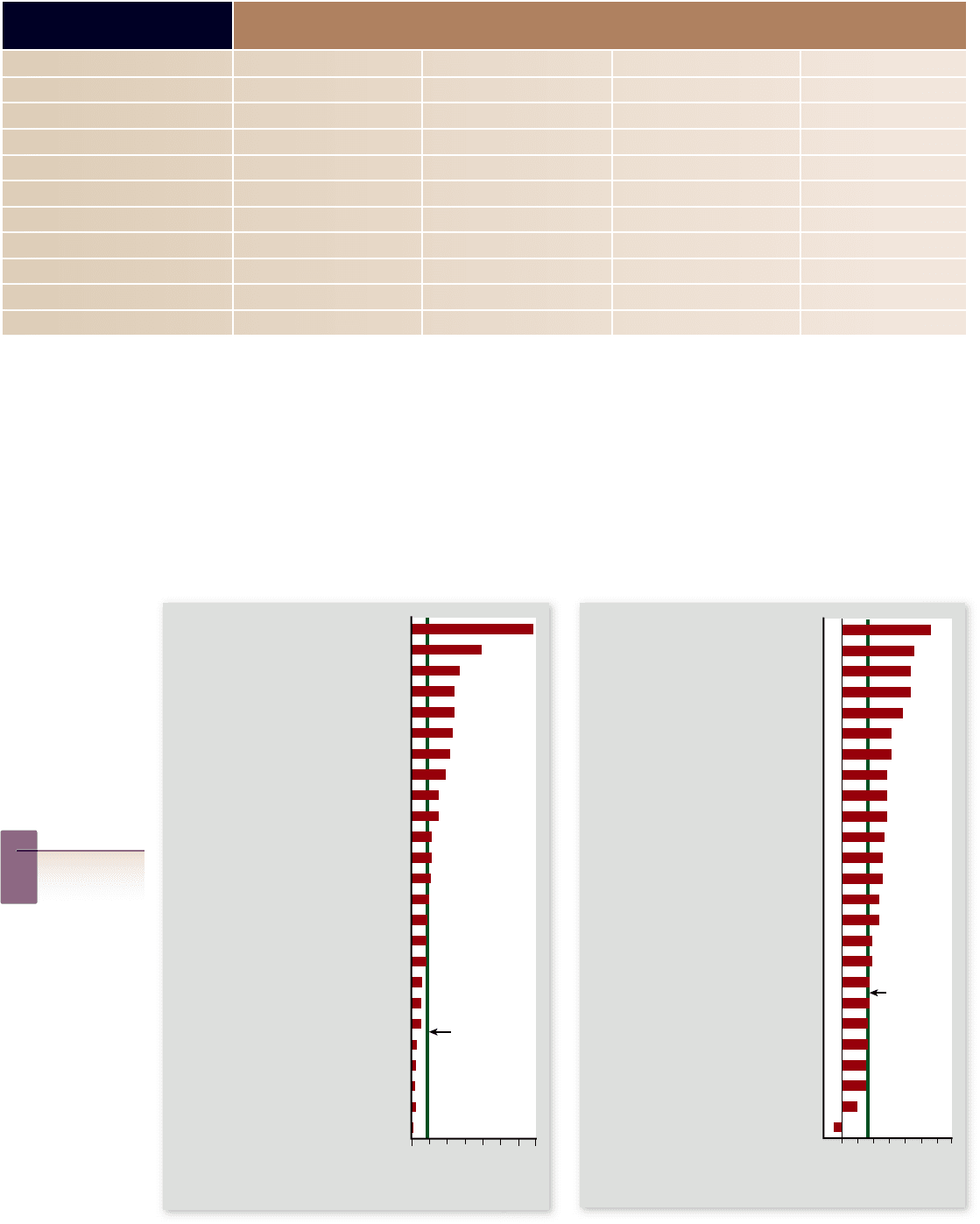
Unfortunately, hotspots contain not only many endem-
ic species, but also growing human populations. In 1995,
these areas contained 1.1 billion people—20% of the world’s
population—sometimes at high densities (figure 60.4a) . More
important, human populations were growing in all but one of
these hotspots both because birth rates are much higher than
on isolated islands, such as New Zealand, New Caledonia, and
the Hawaiian Islands, where evolutionary diversification over
long periods has resulted in rich biotas composed of plant and
animal species found nowhere else in the world.
Human population growth in hotspots
Because of the great number of endemic species that hotspots
contain, conserving their biological diversity must be an impor-
tant component of efforts to safeguard the world’s biological
1260
part
VIII
Ecology and Behavior
rav32223_ch60_1256-1280.indd 1260rav32223_ch60_1256-1280.indd 1260 11/20/09 3:08:19 PM11/20/09 3:08:19 PM
Apago PDF Enhancer
a.b.
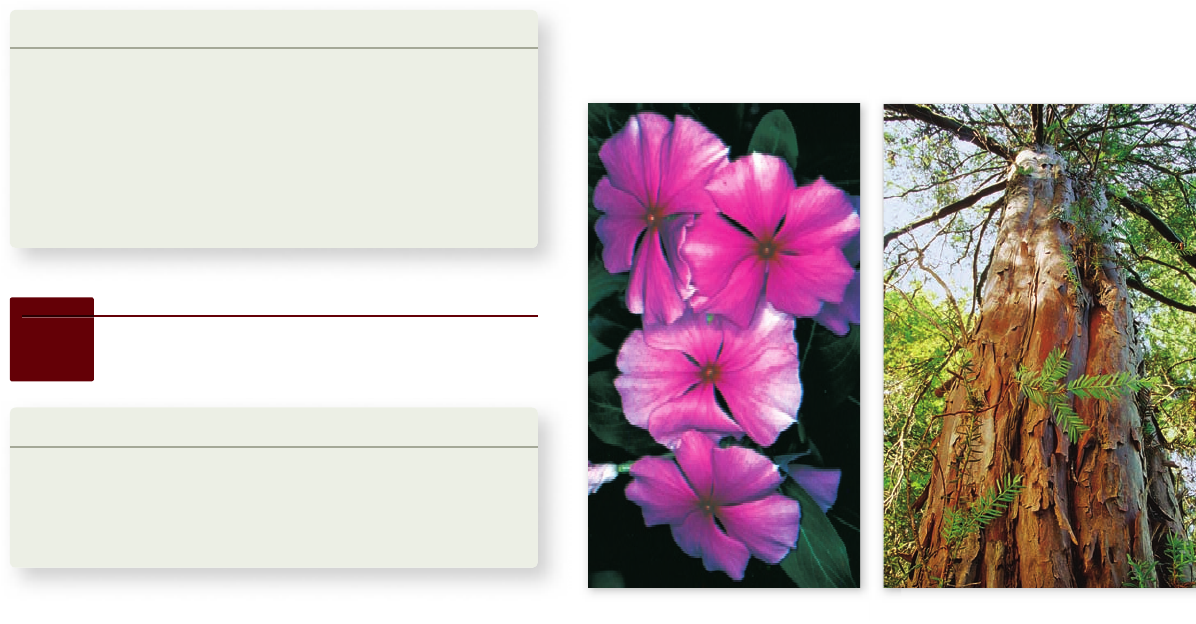
Figure 60.5
Plants of pharmaceutical importance.
a. Two drugs extracted from the rosy periwinkle (Catharanthus
roseus), vinblastine and vincristine, effectively treat common forms
of childhood leukemia, increasing chances of survival from 20% to
over 95%. b. Cancer- ghting drugs, such as taxol, have been
developed from the bark of the Paci c yew (Taxus brevifolia).
60.2
The Value of Biodiversity
Learning Outcomes
Distinguish between the direct and indirect economic 1.
value of biodiversity.
Explain what is meant by the aesthetic value 2.
of biodiversity.
Why should we worry about loss of biodiversity? The reason is
that biodiversity is valuable to us in a number of ways:
■ Direct economic value of products we obtain from species
of plants, animals, and other groups
■ Indirect economic value of benefits produced by species
without our consuming them
■ Ethical and aesthetic values
death rates and because rates of immigration into these areas
are often high. Overall, the rate of growth exceeded the glob-
al average in 19 hotspots (figure 60.4b). In some hotspots, the
rate of growth is nearly twice that of the rest of the world.
Not surprisingly, many of these areas are experiencing
high rates of habitat destruction as land is cleared for agricul-
ture, housing, and economic development. More than 70% of
the original area of each hotspot has already disappeared, and
in 14 hotspots, 15% or less of the original habitat remains. In
Madagascar, it is estimated that 90% of the original forest has
already been lost—this on an island where 85% of the species
are found nowhere else in the world. In the forests of the Atlan-
tic coast of Brazil, the extent of deforestation is even higher:
95% of the original forest is gone.
Population pressure is not the only cause of habitat de-
struction in hotspots. Commercial exploitation to meet the de-
mands of more affluent people in the developed world also plays
an important role. For example, large-scale logging of tropical
rain forests occurs in countries around the world to provide
lumber, most of which ends up in the United States, western
Europe, and Japan. Similarly, many forests in Central and South
America are cleared to make way for cattle ranches that produce
cheap meat for fast-food restaurants. Hotspots in more affluent
countries are often at risk because they occur in areas where
land has great value for real estate and commercial purposes,
such as in Florida and California in the United States.
Learning Outcomes Review 60.1
The most recent losses of biodiversity have resulted from human activities,
in both prehistoric and historical times. Endemic species are found in only
a single region on Earth; regions with a high number of endemic species,
known as hotspots, are particularly threatened by human encroachment
and their preservation is critical.
■ Why does so much resource exploitation occur in areas
that are biodiversity hotspots?
The direct economic value of biodiversity
includes resources for our survival
Many species have direct value as sources of food, medicine,
clothing, biomass (for energy and other purposes), and shelter.
Most of the world’s food crops, for example, are derived from a
small number of plants that were originally domesticated from
wild plants in tropical and semiarid regions. As a result, many of
our most important crops, such as corn, wheat, and rice, contain
relatively little genetic variation (equivalent to a founder effect;
see chapter 20), whereas their wild relatives have great diversity.
In the future, genetic variation from wild strains of these
species may be needed if we are to improve yields or find a way
to breed resistance to new pests. In fact, recent agricultural
breeding experiments have illustrated the value of conserving
wild relatives of common crops. For example, by breeding com-
mercial varieties of tomato with a small, oddly colored wild to-
mato species from the mountains of Peru, scientists were able
to increase crop yields by 50%, while increasing both nutri-
tional content and color.
About 70% of the world’s population depends directly on
wild plants as their source of medicine. In addition, about 40%
of the prescription and nonprescription drugs used today have
active ingredients extracted from plants or animals. Aspirin, the
world’s most widely used drug, was first extracted from the
leaves of the tropical willow, Salix alba. The rosy periwinkle
from Madagascar has yielded potent drugs for combating child-
hood leukemia (figure 60.5) , and drugs effective in treating
chapter
60
Conservation Biology
1261www.ravenbiology.com
rav32223_ch60_1256-1280.indd 1261rav32223_ch60_1256-1280.indd 1261 11/20/09 3:08:19 PM11/20/09 3:08:19 PM