
Raven P.H., Johnson G.B., Mason K.A. Biology (Ninth Edition)
Подождите немного. Документ загружается.

Apago PDF Enhancer
Economic Value
(US$ per hectare)
21,000
22,000
0
1,000
2,000
3,000
Plantation
Tropical Forest, Cameroon
0
20,000
Economic Value
(US$ per hectare)
40,000
60,000
80,000
Intact Shrimp Farming
Mangrove, Thailand
Small-scale
Farming
Reduced-impact
Logging
a.
b
.
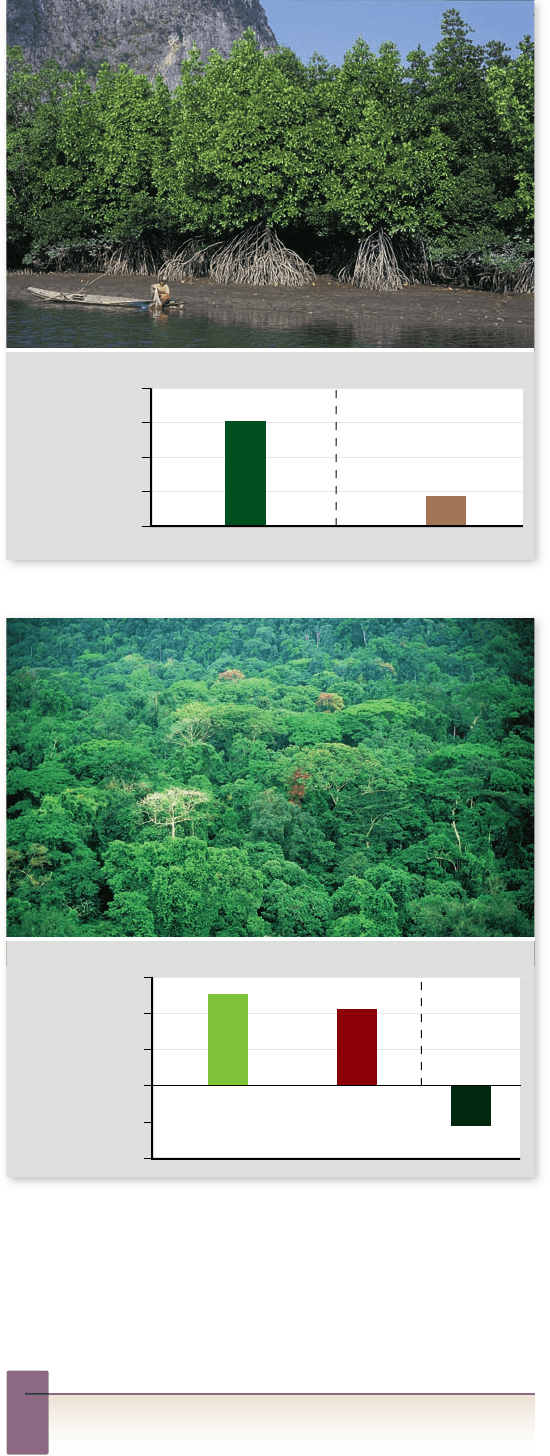
Figure 60.6
The economic value of maintaining
habitats.
a. Mangroves in Thailand are more valuable than
shrimp farms. b. Rain forests in Cameroon provide more economic
bene ts if they are left standing than if they are destroyed and the
land used for other purposes.
Inquiry question
?
If shrimp farms established on cleared mangrove habitats
make money, how can clearing mangroves not be an
economic plus?
several forms of cancer and other diseases have been produced
from the Pacific yew. Overall, 62% of cancer drugs were devel-
oped from products derived from plants and animals.
Only recently have biologists perfected the techniques
that make possible the transfer of genes from one species to
another. We are just beginning to use genes obtained from
other species to our advantage (see chapter 15). So-called
“gene prospecting” of the genomes of plants and animals for
useful genes has only begun. We have been able to examine
only a minute proportion of the world’s organisms to see
whether any of their genes have useful properties for humans.
By conserving biodiversity, we maintain the option of
finding useful benefits in the future. Unfortunately, many of
the most promising species occur in habitats, such as tropical
rain forests, that are being destroyed at an alarming rate.
Indirect economic value is derived
from ecosystem services
Diverse biological communities are of vital importance to
healthy ecosystems. They help maintain the chemical quality of
natural water, buffer ecosystems against storms and drought,
preserve soils and prevent loss of minerals and nutrients, mod-
erate local and regional climate, absorb pollution, and promote
the breakdown of organic wastes and the cycling of minerals.
In chapter 58, we discussed the evidence that the stability
and productivity of ecosystems is related to species richness. By
destroying biodiversity, we are creating conditions of instability
and lessened productivity and promoting desertification, water-
logging, mineralization, and many other undesirable outcomes
throughout the world.
The value of intact habitats
Economists have recently been able to compare the societal
value, in monetary terms, of intact habitats compared with the
value of destroying those habitats. Surprisingly, in most studies
conducted so far, intact ecosystems are more valuable than the
products derived by destroying them. In Thailand, as one ex-
ample, coastal mangrove habitats are commonly cleared so that
shrimp farms can be established. Although the shrimp produced
are valuable, their value is vastly outweighed by the benefits in
timber, charcoal production, offshore fisheries, and storm pro-
tection provided by the mangroves (figure 60.6a).
Similarly, intact tropical rain forest in Cameroon, West
Africa, provides fruit and other forest materials. Clearing the
forest for agriculture or palm plantations leads to stream-
polluting erosion as well as increased flooding. Combining all
the costs and benefits of the three options, maintaining intact
forests has the highest economic value (figure 60.6b).
Case study: New York City watersheds
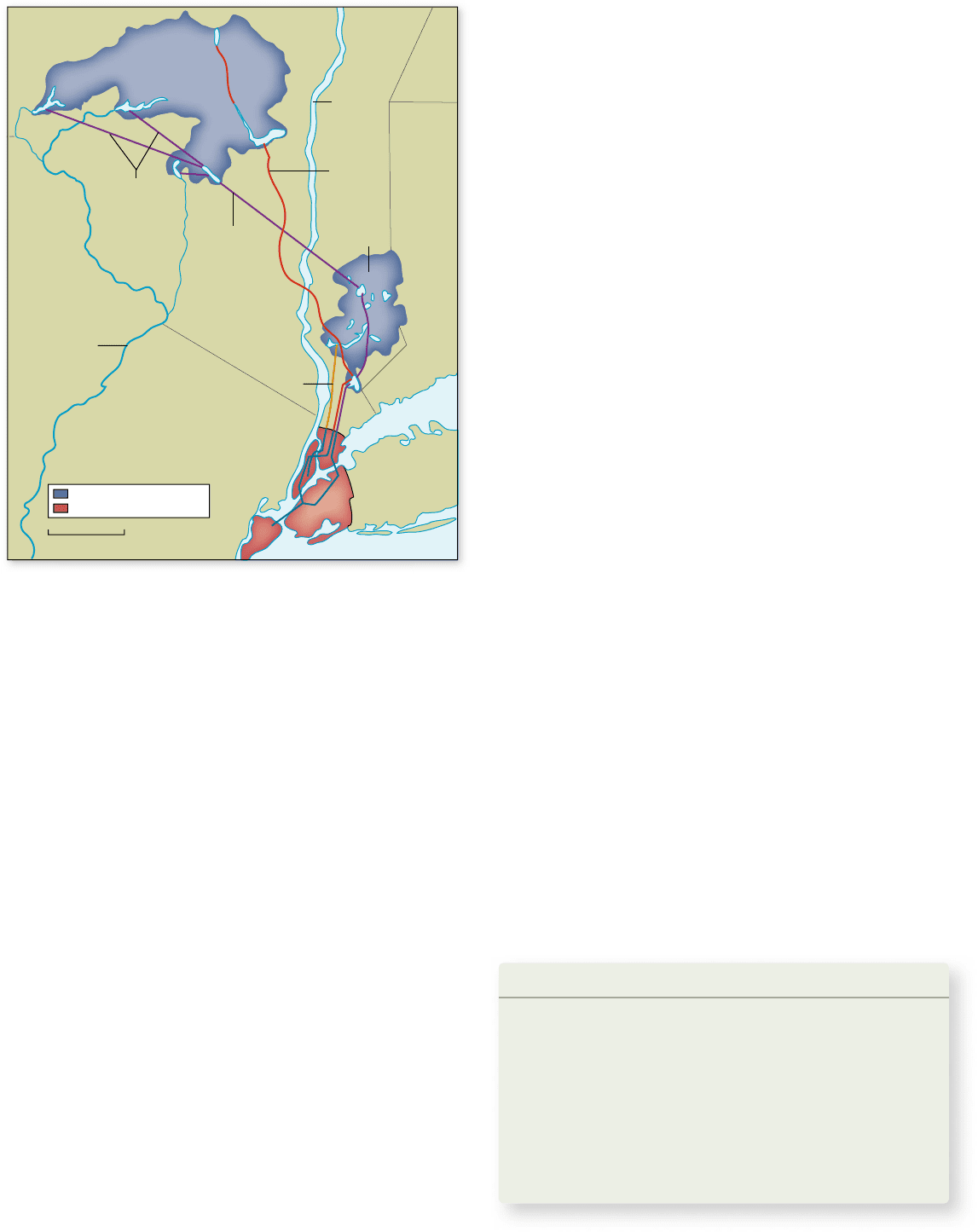
Probably the most famous example of the value of intact eco-
systems is provided by the watersheds of New York City. Ninety
percent of the water for the New York area’s 9 million residents
comes from the Catskill Mountains and the nearby headwaters
of the Delaware River (figure 60.7) . Water that runs off from
over 4000 km
2
of rural, mountainous areas is collected into res-
ervoirs and then transported by aqueduct more than 136.8 km
to New York City at a rate of 4.9 billion liters per day.
1262
part
VIII
Ecology and Behavior
rav32223_ch60_1256-1280.indd 1262rav32223_ch60_1256-1280.indd 1262 11/20/09 3:08:28 PM11/20/09 3:08:28 PM
Apago PDF Enhancer
rain catchments
NYC (9 million residents)
Hudson
River
Catskill Aqueduct
Croton
Watershed
Croton Aqueduct
Delaware
Aqueduct
Catskill/Delaware
Watersheds
Delaware
River
30 km
Atlantic Ocean
Long Island Sound
West
and
East
Delaware
Aqueducts
NJ
PA
NY
CT
MA
New York
City
Figure 60.7
New York City’s water source.
New York
gets its water from distant rain catchments. Preserving the
ecological integrity of these areas is cheaper than building new
water treatment plants.
The same argument can be made for preserving par-
ticular species within ecosystems. Given how little we know
about the biology of most species, particularly in the trop-
ics, it is impossible to predict all the consequences of re-
moving a species.
Imagine taking a parts list for an airplane and randomly
changing a digit in one of the part numbers. You might change
a seat cushion into a roll of toilet paper—or you might just as
easily change a key bolt holding up a wing into a pencil. By re-
moving biodiversity, we are gambling with the future of the
ecosystems on which we depend and whose functioning we un-
derstand very little.
In recent years, the field of ecological economics has de-
veloped to study how the societal benefits provided by species
and ecosystems can be appropriately valued. The problem is
twofold. First, until recently, we have not had a good estimate
of the monetary value of services provided by ecosystems, a
situation which, as you’ve just seen, is now changing.
The second problem, however, is that the people who
gain the benefits of environmental degradation are often not
the same as the people who pay the costs. For instance, in the
Thai mangrove example, the shrimp farmers reap the financial
rewards, while the local people bear the costs. The same is true
of factories that produce air or water pollution. Environmental
economists are devising ways to appropriately value and regu-
late the use of the environment in ways that maximize the ben-
efits relative to the costs to society as a whole.
Ethical and aesthetic values are based on our
conscience and our consciousness
Many people believe that preserving biodiversity is an ethical
issue because every species is of value in its own right, even if
humans are not able to exploit or benefit from it. These people
feel that along with the power to exploit and destroy other spe-
cies comes responsibility: As the only organisms capable of
eliminating large numbers of species and entire ecosystems,
and as the only organisms capable of reflecting on what we are
doing, humans should act as guardians or stewards for the di-
versity of life around us.
Almost no one would deny the aesthetic value of biodi-
versity—a wild mountain range, a beautiful flower, or a noble
elephant—but how do we place a value on beauty or on the
renewal many of us feel when we are in natural surroundings?
Perhaps the best we can do is to consider the deep sense of loss
we would feel if it no longer existed.
Learning Outcomes Review 60.2
The direct value of biodiversity includes resources for our survival, such as
natural products and medicines that enhance our lives and can be used in
a sustainable way. Indirect value includes economic benefi ts provided by
healthy ecosystems, such as availability of clean water and recreational
benefi ts. The aesthetic value of biodiversity refers to our sense of beauty
and peace when experiencing a natural environment.
■ What arguments could you use to convince shrimp
farmers to stop operations and remediate the area they
are using?
In the 1990s, New York City faced a dilemma. New fed-
eral water regulations were requiring ever cleaner water, even
as development and pollution in the source areas of the water
were threatening to compromise water quality. The city had
two choices: either work to protect the functioning ecosystem
so that it could produce clean water, or construct filtration
plants to clean it on arrival. Economic analysis made the choice
clear: Building the plants would cost $6 billion, with annual
operating costs of $300 million, whereas spending a billion dol-
lars over 10 years could preserve the ecosystem and maintain
water purity. The decision was easy.
Economic trade-offs
These examples provide some idea of the value of the ser-
vices that ecosystems provide. But maintaining ecosystems is
not always more valuable than converting them to other
uses. Certainly, when the United States was being settled
and land was plentiful, ecosystem conversion was beneficial.
Even today, habitat destruction sometimes is economically
desirable. Nonetheless, we still have only a rudimentary
knowledge of the many ways intact ecosystems provide ser-
vices. Often, it is not until they are lost that the value be-
comes clear, as unexpected negative effects, such as increased
flooding and pollution, decreased rainfall, or vulnerability to
hurricanes become apparent.
chapter
60
Conservation Biology
1263www.ravenbiology.com
rav32223_ch60_1256-1280.indd 1263rav32223_ch60_1256-1280.indd 1263 11/20/09 3:08:29 PM11/20/09 3:08:29 PM

Apago PDF Enhancer
TABLE 60.3
Causes of Extinctions
PERCENTAGE OF SPECIES INFLUENCED BY A GIVEN FACTOR
*
Group Habitat Loss Overexploitation Species Introduction Other Unknown
EXTINCTIONS
Mammals 19 23 20 2 36
Birds 20 11 22 2 45
Reptiles 5 32 42 0 21
Fish 35 4 30 4 48
THREATENED EXTINCTIONS
Mammals 68 54 6 20 —
Birds 58 30 28 2 —
Reptiles 53 63 17 9 —
Fish 78 12 28 2 —
*
Some species may be in uenced by more than one factor; thus, some rows may exceed 100%.
Figure 60.8
An extinct species.
A breeding assemblage of the
golden toad (Bufo periglenes) which was last seen in the wild in 1989.
Amphibians are on the decline: A case study
In 1963, herpetologist Jay Savage was hiking through pristine
cloud forest in Costa Rica. Reaching a windswept ridge, he
couldn’t believe his eyes. Before him was a huge aggregation of
breeding toads. What was so amazing was the color of the toads:
bright, eye-dazzling orange, unlike anything he had ever seen
before (figure 60.8) .
The color of the toads was so amazing and unexpected
that Savage briefly considered the possibility that his colleagues
had played a practical joke, getting to the clearing before him
and somehow coloring normal toads orange. Realizing that this
could not be, he went on to study the toads, eventually describ-
ing a species new to science, the golden toad, Bufo periglenes.
For the next 24 years, large numbers of toads were
seen during the breeding season each spring. Their home was
legally recognized as the Monteverde Cloud Forest Reserve,
a well- protected, intact, and functioning ecosystem, seemingly
60.3
Factors Responsible
for Extinction
Learning Outcomes
List the major causes of habitat destruction.1.
Explain how these causes can interact to bring 2.
about extinction.
A variety of causes, independently or in concert, are respon-
sible for extinctions (table 60.3). Historically, overexploita-
tion was the major cause of extinction; although it is still a
factor, habitat loss is the major problem for most groups
today, and introduced species rank second. Many other fac-
tors can contribute to species extinctions as well, including
disruption of ecosystem interactions, pollution, loss of ge-
netic variation, and catastrophic disturbances, either natural
or human-caused.
More than one of these factors may affect a species. In
fact, a chain reaction is possible in which the action of one fac-
tor predisposes a species to be more severely affected by an-
other factor. For example, habitat destruction may lead to
decreased birth rates and increased mortality rates. As a result,
populations become smaller and more fragmented, making
them more vulnerable to disasters such as floods or forest fires,
which may eliminate populations. Also, as the habitat becomes
more fragmented, populations become isolated, so that genetic
interchange ceases and areas devastated by disasters are not re-
colonized. Finally, as populations become very small, inbreed-
ing increases, and genetic variation is lost through genetic drift,
further decreasing population fitness. Which factor acts as the
final coup de grace may be irrelevant; many factors, and the
interactions between them, may have contributed to a species’
eventual extinction.
1264
part
VIII
Ecology and Behavior
rav32223_ch60_1256-1280.indd 1264rav32223_ch60_1256-1280.indd 1264 11/20/09 3:08:30 PM11/20/09 3:08:30 PM
Apago PDF Enhancer
threatened amphibian species
208
52
110
51
86
47
45
66
163
191
74
68
47
46
53
55
48
61
78
50
#
Dendrobates leucomelas Atelopus zeteki Mantella aurantiaca
Panama Madagascar Australia
Litoria caerulea
Venezuela
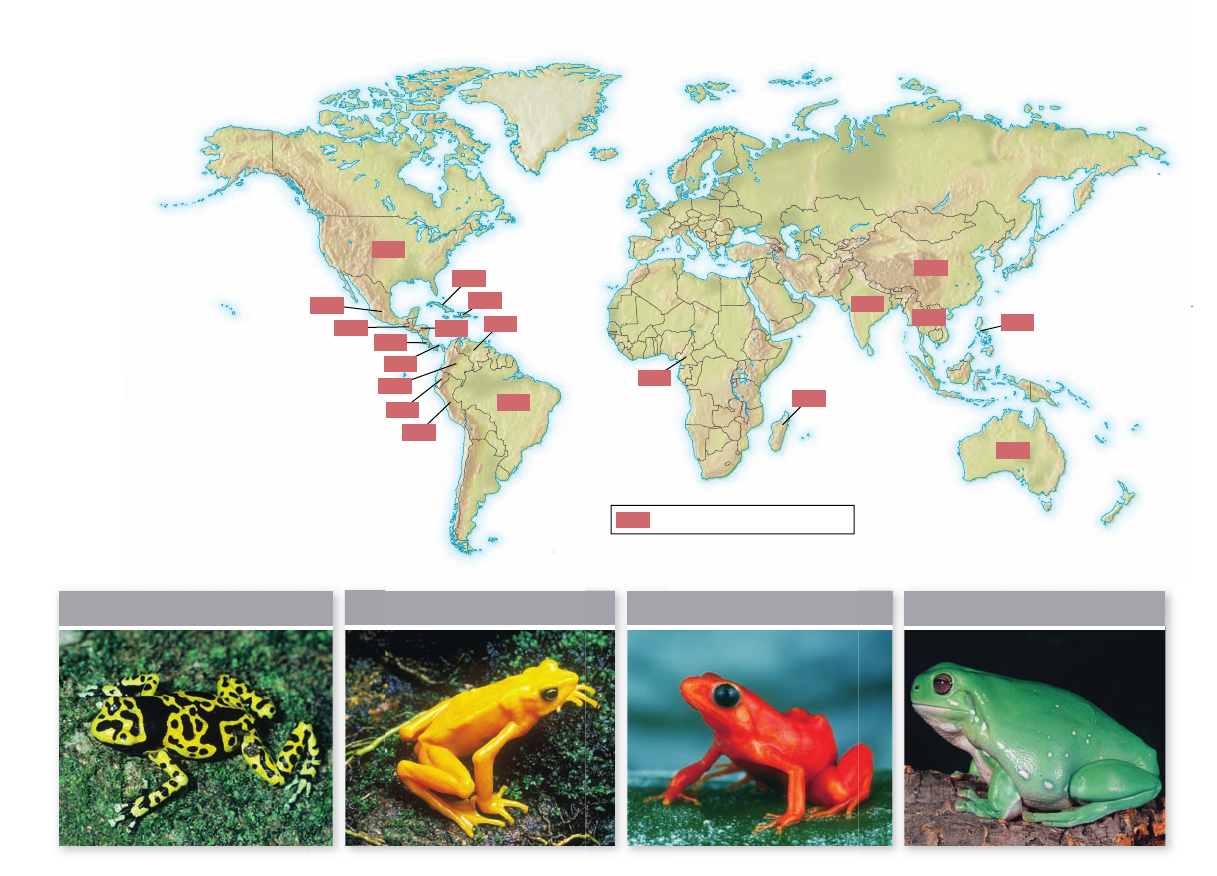
Figure 60.9
Amphibian extinction crisis.
Boxes indicate the number of threatened species around the world. These numbers are
rapidly being revised upward as scientists focus their attention on little-known species, many of which turn out to be in grave danger.
species have experienced decreases in population size, and one
third of all amphibian species are threatened with extinction in
countries as different as Ecuador, Venezuela, Australia, and the
United States (figure 60.9).
Moreover, these numbers are probably underestimates;
little information exists from many areas of the world, such as
Southeast Asia and central Africa. Indeed researchers think that
as many as 100 species from the island nation of Sri Lanka have
recently gone extinct, perhaps not surprisingly because 95% of
that nation’s rain forests have also disappeared in recent times.
Cause for concern
Amphibian declines are worrisome for several reasons. First,
many of the species—including the golden toad—have declined
in pristine, well-protected habitats. If species are becoming ex-
tinct in such areas, it brings into question our ability to preserve
global biological diversity.
Second, many amphibian species are particularly sensitive
to the state of the environment because of their moist skin,
which allows chemicals from the environment to pass into the
body, and their use of aquatic habitats for larval stages, which
requires unpolluted water. In other words, amphibians may be
analogous to the canaries formerly used in coal mines to detect
a successful model of conservation. Then, in 1988, few toads
were seen, and in 1989, only a single male was observed. Since
then, despite exhaustive efforts, no more golden toads have
been found.
Despite living in a well-protected ecosystem, with no ob-
vious threats from pollution, introduced species, overexploita-
tion, or any other factor, the species appears to have gone
extinct, right under the eyes of watchful scientists and conser-
vationists. How could this happen?
Frogs in trouble
At the first World Herpetological Congress in 1989 in Canter-
bury, England, frog experts from around the world met to dis-
cuss conservation issues relating to frogs and toads. At this
meeting, it became clear that the golden toad story was not
unique. Experts reported case after case of similar losses: Frog
populations that had once been abundant were now decreasing
or entirely gone.
Since then, scientists have devoted a great deal of time
and effort to determining whether frogs and other amphibian
species truly are in trouble and, if so, why. Unfortunately, the
situation appears to be even worse than originally suspected.
Amphibian experts recently reported that 43% of all amphibian
chapter
60
Conservation Biology
1265www.ravenbiology.com
rav32223_ch60_1256-1280.indd 1265rav32223_ch60_1256-1280.indd 1265 11/20/09 3:08:31 PM11/20/09 3:08:31 PM
Apago PDF Enhancer
Population Extinction Rate (per year)
0.5
0.4
0.3
0.2
0.1
0.0
10
−2
1
10
2
Area (km
2
)
Before human
colonization
1950
Africa
1985 2000
rain forest
cover
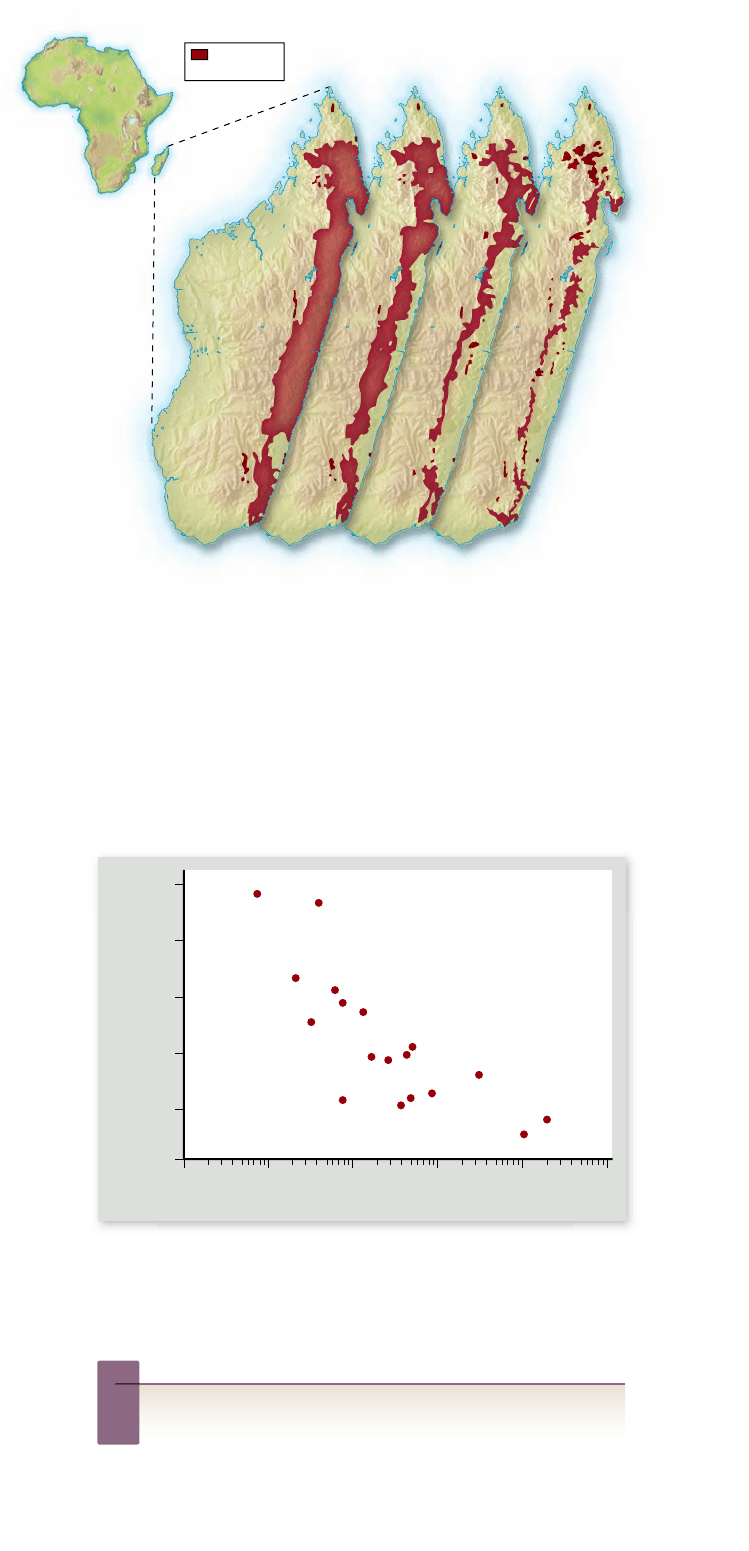
Figure 60.10
Extinction and habitat destruction.
The rain forest covering the eastern coast of Madagascar, an island
off the coast of East Africa, has been progressively destroyed and
fragmented as the island’s human population has grown. Ninety
percent of the eastern coast’s original forest cover is now gone.
Many species have become extinct, and many others are threatened,
including 16 of Madagascar’s 31 primate species.
Figure 60.11
Extinction and island area.
The data
present percent extinction rates for populations as a function of
habitat area for birds on a series of Finnish habitat islands. Smaller
islands experience far greater extinction rates.
Inquiry question
?
Why does extinction rate increase with decreasing island size?
problems with air quality: If the canaries keeled over, the
miners knew they had to get out.
Third, no single cause for amphibian declines is
apparent. Although a single cause would be of concern, it
would also suggest that a coordinated global effort could re-
verse the trend, as happened with chlorofluorocarbons and de-
creasing ozone levels (see chapter 59). However, different species
are afflicted by different problems, including habitat destruc-
tion, the effects of global warming, pollution, decreased strato-
spheric ozone levels, disease epidemics, and introduced species.
The implication is that the global environment is deterio-
rating in many different ways. Could amphibians be global “ca-
naries,” serving as indicators that the world’s environment is in
serious trouble?
Habitat loss devastates species richness
As table 60.3 indicates, habitat loss is the most important cause
of modern-day extinction. Given the tremendous amounts of
ongoing destruction of all types of habitat, from rain forest to
ocean floor, this should come as no surprise. Natural habitats
may be adversely affected by humans in four ways:
destruction,1.
pollution,2.
disruption, 3. and
habitat fragmentation.4.
In addition to these causes, global climate change, dis-
cussed in the previous chapter, is an insidious threat that com-
bines many of these factors. As climate changes, habitats will
change—or disappear entirely, as is the case for polar bears
(Thalarctos maritimus), which require ice floes on which to hunt
their seal prey. Some studies estimate that as many as 30% of all
species may be imperiled by global warming.
Destruction of habitat
A proportion of the habitat available to a particular species may
simply be destroyed. This destruction is a common occurrence
in the “clear-cut” harvesting of timber, in the burning of tropi-
cal forest to produce grazing land, and in urban and industrial
development. Deforestation has been, and continues to be, by
far the most pervasive form of habitat disruption (figure 60.10).
Many tropical forests are being cut or burned at a rate of 1% or
more per year.
To estimate the effect of reductions in habitat available
to a species, biologists often use the well-established observa-
tion that larger areas support more species (see figure 58.22).
Although this relationship varies according to geographic area,
type of organism, and type of area, in general a 10-fold in-
crease in area leads to approximately a doubling in the number
of species. This relationship suggests, conversely, that if the
area of a habitat is reduced by 90%, so that only 10% remains,
then half of all species will be lost. Evidence for this hypothesis
comes from a study in Finland of extinction rates of birds on
habitat islands (that is, islands of a particular type of habitat
surrounded by unsuitable habitat) where the population ex-
tinction rate was found to be inversely proportional to island
size (figure 60.11).
1266
part
VIII
Ecology and Behavior
rav32223_ch60_1256-1280.indd 1266rav32223_ch60_1256-1280.indd 1266 11/20/09 3:08:36 PM11/20/09 3:08:36 PM
Apago PDF Enhancer
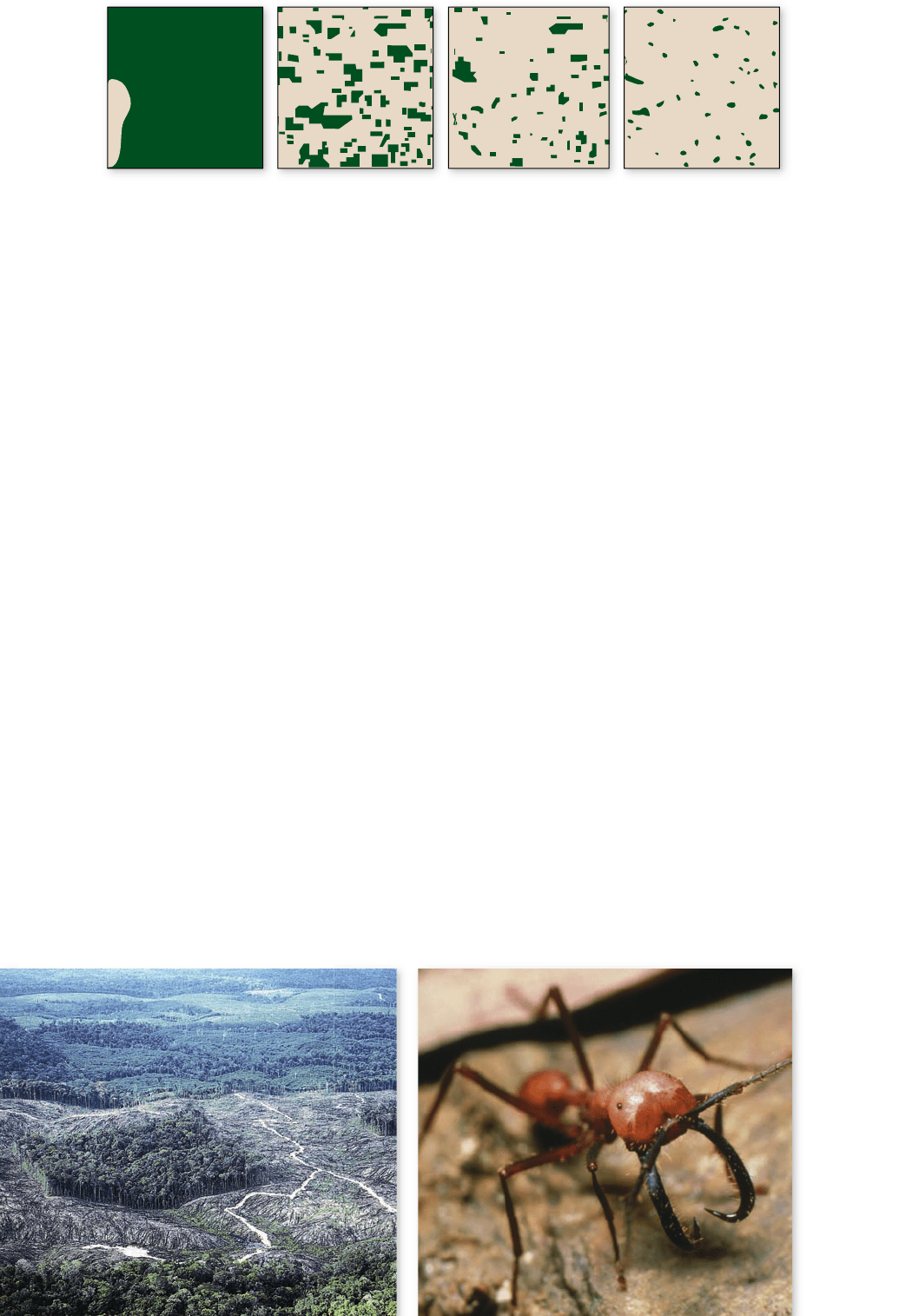
1831 1882 1902 1950
Figure 60.12
Fragmentation
of woodland habitat.
From the
time of settlement of Cadiz Township,
Wisconsin, the forest has been
progressively reduced from a nearly
continuous cover to isolated woodlots
covering less than 1% of the
original area.
Figure 60.13
A study of
habitat fragmentation.
Landowners in Manaus, Brazil,
agreed to preserve patches of rain
forest of different sizes to examine
the effect of patch size on species
extinction. Bio diversity was
monitored in the isolated patches
before and after logging.
Fragmentation led to signi cant
species loss within patches. Army
ants were one of the species that
disappeared from smaller patches.
are not available, fragmentation of wildlife habitat in developed
temperate areas is thought to be very substantial.
As habitats become fragmented and shrink in size, the
relative proportion of the habitat that occurs on the boundary,
or edge, increases. Edge effects can significantly degrade a
population’s chances of survival. Changes in microclimate (such
as temperature, wind, humidity) near the edge may reduce ap-
propriate habitat for many species more than the physical frag-
mentation suggests. In isolated fragments of rain forest, for
example, trees on the edge are exposed to direct sunlight. As a
result, these trees experience hotter and drier conditions than
those normally encountered in the cool, moist forest interior,
leading to negative effects on their survival and growth. In one
study, the biomass of trees within 100 m of the forest edge de-
creased by 36% in the first 17 years after fragment isolation.
Also, increasing habitat edges opens up opportunities for
some parasite and predator species that are more effective at
edges. As fragments decrease in size, the proportion of habitat
that is distant from any edge decreases, and consequently, more
and more of the habitat is within the range of these species.
Habitat fragmentation is blamed for local extinctions in a wide
range of species.
The impact of habitat fragmentation can be seen clearly
in a study conducted in Manaus, Brazil, where the rain forest
was commercially logged. Landowners agreed to preserve
patches of rain forest of various sizes, and censuses of these
patches were taken before the logging started, while they were
still part of a continuous forest. After logging, species began to
disappear from the now-isolated patches (figure 60.13) . First
to go were the monkeys, which have large home ranges. Birds
that prey on the insects flushed out by marching army ants
followed, disappearing from patches too small to maintain
enough army ant colonies to support them. As expected, the
Pollution
Habitat may be degraded by pollution to the extent that some
species can no longer survive there. Degradation occurs as a
result of many forms of pollution, from acid rain to pesticides.
Aquatic environments are particularly vulnerable; for example,
many northern lakes in both Europe and North America have
been essentially sterilized by acid rain (see chapter 59).
Disruption
Human activities may disrupt a habitat enough to make it un-
tenable for some species. For example, visitors to caves in Ala-
bama and Tennessee caused significant population declines in
bats over an 8-year period, some as great as 100%. When visits
were fewer than one per month, less than 20% of bats were lost,
but caves having more than four visits per month suffered pop-
ulation declines of 86% to 95%.
More generally, humans often alter the interactions that
occur among species, such as the predator–prey or symbiotic
relationships discussed in chapter 57 . These disruptions can
have far-ranging effects throughout an ecosystem. For example,
when pollinating insects are killed off by insecticides, many
plants do not reproduce, thus affecting all the animals that de-
pend on the plants and their seeds for food.
Habitat fragmentation
Loss of habitat by a species frequently results not only in low-
ered population numbers, but also in fragmentation of the pop-
ulation into unconnected patches (figure 60.12) . A habitat also
may become fragmented in nonobvious ways, as when roads and
habitation intrude into forest. The effect is to carve the popula-
tions living in the habitat into a series of smaller populations,
often with disastrous consequences because of the relationship
between range size and extinction rate. Although detailed data
chapter
60
Conservation Biology
1267
rav32223_ch60_1256-1280.indd 1267rav32223_ch60_1256-1280.indd 1267 11/20/09 3:08:41 PM11/20/09 3:08:41 PM
Apago PDF Enhancer
Stable Carbon Isotope Values Ratio
(
13
C:
12
C)
May 12 May 17 May 22 May 27 June 1
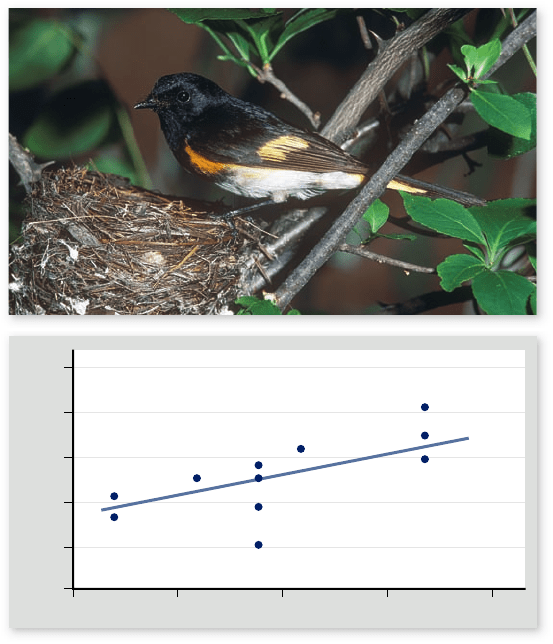
Figure 60.14
The American redstart (Setophaga
ruticilla) a migratory songbird.
The numbers of this species
are in serious decline. The graph presents data on the ratio of
13
C to
12
C in male redstarts arriving at summer breeding grounds. Early
arrivals, which have higher reproductive success, have lower
proportions of
13
C to
12
C, indicating they wintered in more
favorable mangrove–wetland forest habitats.
the substandard scrub leave later in the spring on the long flight
to northern breeding grounds, arrive later at their summer
homes, and have fewer young (figure 60.14).
The proportion of
13
C in birds arriving in New Hamp-
shire breeding grounds increases as spring wears on and scrub-
overwintering stragglers belatedly arrive. Thus, loss of
mangrove habitat in the neotropics is having a quantifiable
negative influence. As the best habitat disappears, overwinter-
ing birds fare poorly, and this leads to decreased reproduction
and population declines.
Unfortunately, the Caribbean lost about 10% of its man-
groves in the 1980s, and continues to lose about 1% per year.
This loss of key habitat appears to be a driving force in the
looming extinction of some songbirds.
Overexploitation wipes out species quickly
Species that are hunted or harvested by humans have histori-
cally been at grave risk of extinction, even when the species is
initially very abundant. A century ago, the skies of North Amer-
ica were darkened by huge flocks of passenger pigeons, but af-
ter being hunted as free and tasty food, they were driven to
extinction. The bison that used to migrate in enormous herds
extinction rate was negatively related to patch size, but even
the largest patches (100 hectares) lost half of their bird species
in less than 15 years.
Because some species, such as monkeys, require large
patches, large fragments are indispensable if we wish to pre-
serve high levels of biodiversity. The take-home lesson is that
preservation programs will need to provide suitably large habi-
tat fragments to avoid this effect.
Case study: Songbird declines
Every year since 1966, the U.S. Fish and Wildlife Service has
organized thousands of amateur ornithologists and birdwatch-
ers in an annual bird count called the Breeding Bird Survey. In
recent years, a shocking trend has emerged. While year-round
residents that prosper around humans, such as robins, starlings,
and blackbirds, have increased their numbers and distribution
over the last 30 years, forest songbirds have declined severely.
The decline has been greatest among long-distance migrants
such as thrushes, orioles, tanagers, vireos, buntings, and war-
blers. These birds nest in northern forests in the summer, but
spend their winters in South or Central America or the Carib-
bean Islands.
In many areas of the eastern United States, more than
three-quarters of the tropical migrant bird species have de-
clined significantly. Rock Creek Park in Washington, D.C., for
example, has lost 90% of its long-distance migrants in the past
20 years. Nationwide, American redstarts declined about 50%
in the single decade of the 1970s. Studies of radar images from
National Weather Service stations in Texas and Louisiana indi-
cate that only about half as many birds fly over the Gulf of
Mexico each spring as did in the 1960s. This suggests a total
loss of about half a billion birds.
The culprit responsible for this widespread decline ap-
pears to be habitat fragmentation and loss. Fragmentation of
breeding habitat and nesting failures in the summer nesting
grounds of the United States and Canada have had a major
negative effect on the breeding of woodland songbirds. Many
of the most threatened species are adapted to deep woods and
need an area of 25 acres or more per pair to breed and raise
their young. As woodlands are broken up by roads and develop-
ments, it is becoming increasingly difficult for them to find
enough contiguous woods to nest successfully.
A second and perhaps even more important factor is the
availability of critical winter habitat in Central and South
America. Studies of the American redstart clearly indicate that
birds with better winter habitat have a superior chance of suc-
cessfully migrating back to their breeding grounds in the spring.
In a recent study, scientists were able to determine the quality
of the habitat that particular birds used during the winter by
examining levels of the stable carbon isotope
13
C in their blood.
Plants growing in the best habitats in Jamaica and Honduras
(mangroves and wetland forests) have low levels of
13
C, and so
do the redstarts that feed on the insects that live in them. Of
these wet-forest birds, 65% maintained or gained weight over
the winter.
By contrast, plants growing in substandard dry scrub have
high levels of
13
C, and so do the redstarts that feed in those
habitats. Scrub-dwelling birds lost up to 11% of their body
mass over the winter. Now here’s the key: Birds that winter in
1268
part
VIII
Ecology and Behavior
rav32223_ch60_1256-1280.indd 1268rav32223_ch60_1256-1280.indd 1268 11/20/09 3:08:42 PM11/20/09 3:08:42 PM
Apago PDF Enhancer
1910 1920 1930 1940 1950 1960 1970 1980 1990
0
5
10
15
20
25
30
Number of Whales Caught (in thousands)
Year
blue
fin
humpback
sei
sperm
minke
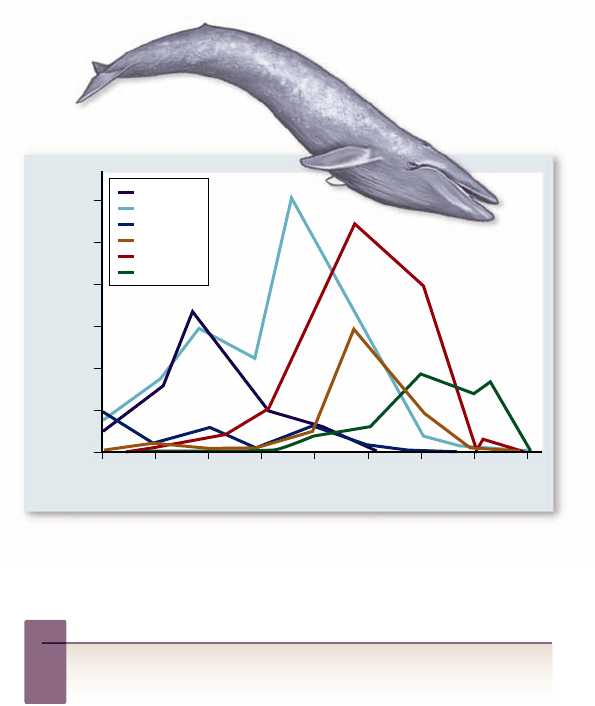
Figure 60.15
World catch of some whale species in the
20th century.
Each species is hunted in turn until its numbers
fall so low that hunting it becomes commercially unpro table.
Inquiry question
?
Why might whale populations fail to recover once hunting
is stopped?
Finally, in 1974, when the numbers of all but the small
minke whales had been driven down, the IWC banned hunting
of blue, gray, and humpback whales, and instituted partial bans
on other species. The rule was violated so often, however, that
the IWC in 1986 instituted a worldwide moratorium on all
commercial killing of whales. Although some commercial whal-
ing continues, often under the guise of harvesting for scientific
studies, annual whale harvests have dropped dramatically in the
last 20 years.
Some species appear to be recovering, but others are not.
Humpback numbers have more than doubled since the early
1960s, increasing nearly 10% annually, and Pacific gray whales
have fully recovered to their previous numbers of about 20,000
animals, after having been hunted to fewer than 1000. Right,
sperm, fin, and blue whales have not recovered, and no one
knows whether they ever will.
Introduced species threaten
native species and habitats
Colonization, a natural process by which a species expands its
geographic range, occurs in many ways: A flock of birds gets
blown off course, a bird eats a fruit and defecates its seed miles
away, or lowered sea levels connect two previously isolated land-
masses, allowing species to freely move back and forth. Such
events—particularly those leading to successful establishment
of a new population—probably occur rarely, but when they do,
the resulting change to natural communities can be large. The
reason is that colonization brings together species with no his-
tory of interaction. Consequently,
ecological interactions may
across the central plains of North America only narrowly es-
caped the same fate.
Commercial motivation for exploitation
The existence of a commercial market often leads to overex-
ploitation of a species. The international trade in furs, for ex-
ample, has severely reduced the numbers of chinchilla, vicuña,
otter, and many cat species. The harvesting of commercially
valuable trees provides another example: Almost all West Indies
mahogany trees (Swietenia mahogani) have been logged, and the
extensive cedar forests of Lebanon, once widespread at high
elevations, now survive in only a few isolated groves.
A particularly telling example of overexploitation is the
commercial harvesting of fish in the North Atlantic. During
the 1980s, fishing fleets continued to harvest large amounts of
cod off the coast of Newfoundland, even as the population
numbers declined precipitously. By 1992, the cod population
had dropped to less than 1% of its original numbers. The
American and Canadian governments have closed the fishery,
but no one can predict whether the fish populations will re-
cover. The Atlantic bluefin tuna has experienced a 90% popula-
tion decline in the past 10 years. The swordfish has declined
even further. In both cases, the drop has led to even more in-
tense fishing of the remaining populations.
Case study: Whales
Whales, the largest living animals that ever evolved, are rare in
the world’s oceans today, their numbers driven down by com-
mercial whaling. Before the advent of cheap, high-grade oils
manufactured from petroleum in the early 20th century, oil
made from whale blubber was an important commercial prod-
uct in the worldwide marketplace. In addition, the fine, lattice-
like structure termed “baleen” used by baleen whales to
filter-feed plankton from seawater was used in women’s under-
garments. Because a whale is such a large animal, each individ-
ual captured is of significant commercial value.
In the 18th century, right whales were the first to bear the
brunt of commercial whaling. They were called “right” whales
because they were slow, easy to capture, did not sink when killed
and provided up to 150 barrels of blubber oil and abundant
baleen, making them the right whale for a commercial whaler
to hunt.
As the right whale declined, whalers turned to the gray,
humpback, and bowhead whales. As their numbers declined,
whalers turned to the blue, the largest of all whales, and when
those were decimated, to the fin, then the Sei, and then
the sperm whales. As each species of whale became the focus of
commercial whaling, its numbers began a steep decline
(figure 60.15).
Hunting of right whales was made illegal in 1935. By
then, they had been driven to the brink of extinction, their
numbers less than 5% of what they had been. Although pro-
tected ever since, their numbers have not recovered in either
the North Atlantic or the North Pacific. By 1946, several other
whale species faced imminent extinction, and whaling nations
formed the International Whaling Commission (IWC) to reg-
ulate commercial whale hunting. Like a fox guarding the hen-
house, the IWC for decades did little to limit whale harvests,
and whale numbers continued to decline steeply.
chapter
60
Conservation Biology
1269www.ravenbiology.com
rav32223_ch60_1256-1280.indd 1269rav32223_ch60_1256-1280.indd 1269 11/20/09 3:08:43 PM11/20/09 3:08:43 PM
Apago PDF Enhancer
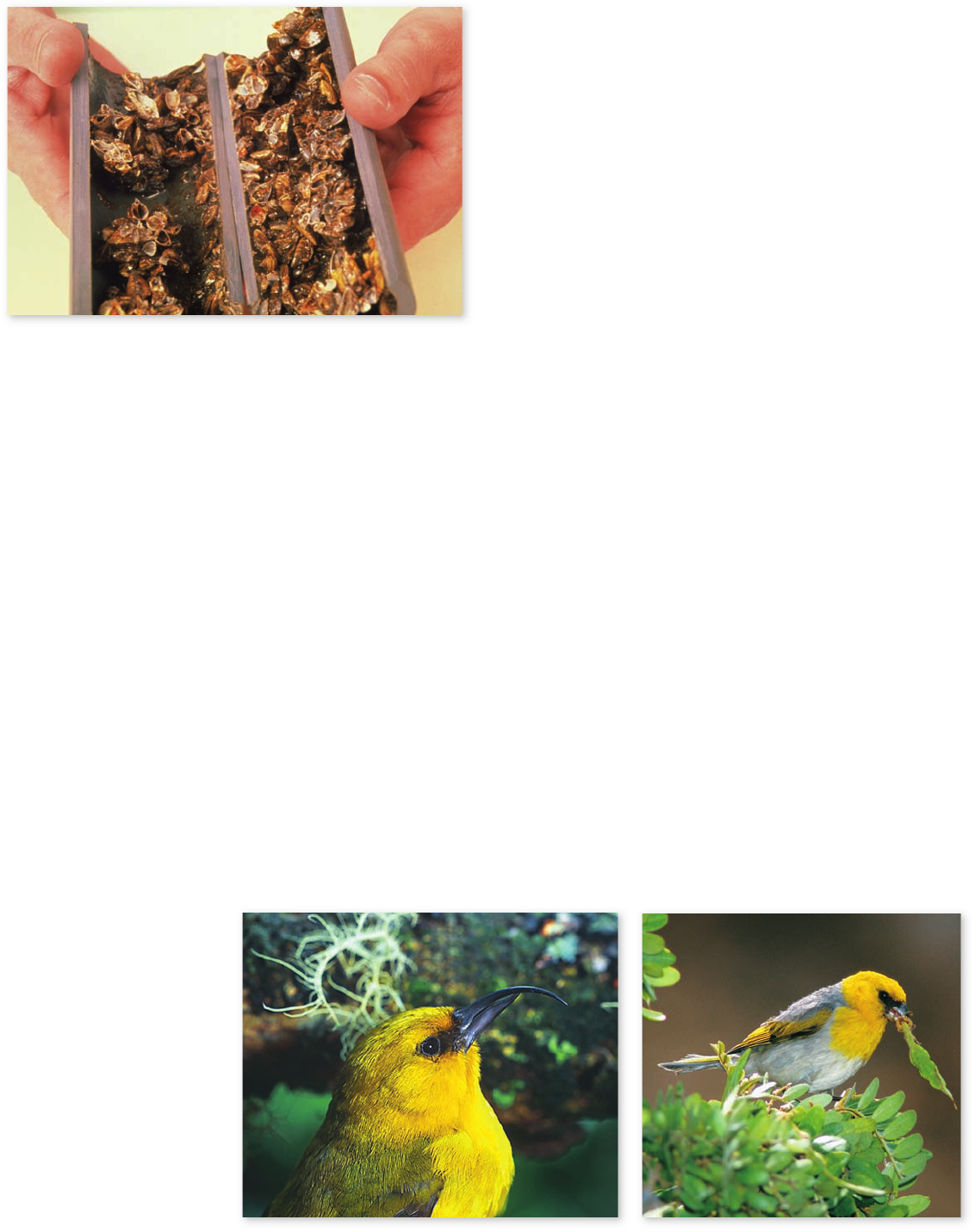
Figure 60.17
The
akiapolaau (Hemignathus
munroi) and the Palila
(Loxioides bailleui),
endangered Hawaiian
birds.
More than two-thirds
of Hawaii’s native bird species
are now extinct or have been
greatly reduced in population
size. Bird faunas on islands
around the world have
experienced similar declines
after human arrival.
Figure 60.16
Zebra mussels (Dreissena polymorpha)
clogging a pipe.
These mussels were introduced from Europe,
and are now a major problem in North American rivers.
The effects of introductions on humans have been enor-
mous. In the United States alone, nonnative species cost the
economy an estimated $140 billion per year. For example, doz-
ens of foreign weeds in Colorado have covered more than a
million acres. Just three of these species cost wheat farmers tens
of millions of dollars. At the same time, leafy spurge, a plant
from Europe, outcompetes native grasses, ruining rangeland
for cattle at a price tag of $144 million per year.
The zebra mussel, a mollusk native to the Black Sea re-
gion, is a huge problem throughout much of the eastern and
central United States, where it can attain densities as high as
700,000/m
2
, clogging pipes, including those for water and
power plants, and causing an estimated $3 to $5 billion dam-
age a year ( figure 60.16).
Introduced species can also affect human health. For ex-
ample, West Nile fever was probably introduced from Africa or
the Middle East to the United States in the late 1990s.
The effect of species introductions on native ecosystems is
equally dramatic. Islands have been particularly affected. For ex-
ample, as mentioned in chapter 57, a single lighthouse keeper’s
cat wiped out an entire species, the Stephens Island wren. Rats
had a devastating effect throughout the South Pacific where
bird species nested on the ground and had no defense against
the voracious predators to which they were evolutionarily naive.
More recently, the brown tree snake, introduced to the island of
Guam, essentially eliminated all species of forest birds.
In Hawaii, the problem has been slightly different: Intro-
duced mosquitoes brought with them malaria, to which the na-
tive species had evolved no resistance. The result is that more
than 100 species (>70% of the native fauna) either became ex-
tinct or are now restricted to higher and cooler elevations
where the mosquitoes don’t occur (figure 60.17).
The effects of introduced species are not always direct,
but instead may reverberate throughout an ecosystem. For ex-
ample, the Argentine ant has spread through much of the
southern United States, greatly reducing populations of most
native ant species with which it comes in contact. The extinc-
tion of these ant species has had a dramatic negative effect on
the coast horned lizard (Phrynosoma coronatum), which feeds on
the larger native species. In their absence, the lizards have shift-
ed to less-preferred prey species. In addition, the native ant
species consume seeds, and in the process, play an important
be particularly strong because the species have not evolved ways
of adjusting to the presence of one another, such as adaptations
to avoid predation or to minimize competitive effects.
The paleontological record documents many cases in
which geologic changes brought previously isolated species to-
gether, such as when the Isthmus of Panama emerged above the
sea approximately 3 mya, connecting the previously isolated
fauna and flora of North and South America. In some cases, the
result has been an increase in species diversity, but in other
cases, invading species have led to the extinction of natives.
Human influence on colonization
Unfortunately, what was naturally a rare process has become all
too common in recent years, thanks to the actions of humans.
Species introductions due to human activities occur in many
ways, sometimes intentionally, but usually not. Plants and ani-
mals can be transported in the ballast of large ocean vessels; in
nursery plants; as stowaways in boats, cars, and planes; as beetle
larvae within wood products—even as seeds or spores in the
mud stuck to the bottom of a shoe. Overall, some researchers
estimate that as many as 50,000 species have been introduced
into the United States.
1270
part
VIII
Ecology and Behavior
rav32223_ch60_1256-1280.indd 1270rav32223_ch60_1256-1280.indd 1270 11/20/09 3:08:43 PM11/20/09 3:08:43 PM
Apago PDF Enhancer
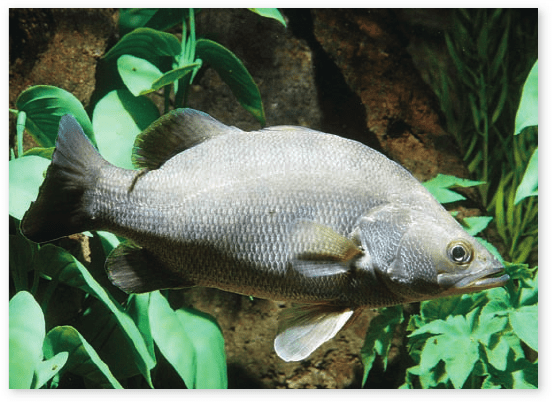
Figure 60.18
Nile perch (Lates niloticus).
This predatory
sh, which can reach a length of 2 m and a mass of 200 kg, was
introduced into Lake Victoria as a potential food source. It is
responsible for the virtual extinction of hundreds of species of
cichlid shes.
have risen in response to this increase in their food supply, but
unlike the conditions during similar algal blooms of the past, the
Nile perch was present to take advantage of the situation. With
a sudden increase in its food supply (cichlids), the numbers of
Nile perch exploded, and they simply ate all available cichlids.
Since 1990, the situation has been compounded by the
introduction into Lake Victoria of a floating water weed from
South America, the water hyacinth Eichhornia crassipes. Repro-
ducing quickly under eutrophic conditions, thick mats of water
hyacinth soon covered entire bays and inlets, choking off the
coastal habitats of non-open-water cichlids.
Disruption of ecosystems can cause
an extinction cascade
Species often become vulnerable to extinction when their web
of ecological interactions becomes seriously disrupted. Because
of the many relationships linking species in an ecosystem (see
chapter 58), human activities that affect one species can have
ramifications throughout an ecosystem, ultimately affecting
many other species.
A recent case in point involves the sea otters that live in
the cold waters off Alaska and the Aleutian Islands. Otter popu-
lations have declined sharply in recent years. In a 500-mile
stretch of coastline, otter numbers have dropped from 53,000
in the 1970s to an estimated 6000, a plunge of nearly 90%. In-
vestigating this catastrophic decline, marine ecologists uncov-
ered a chain of interactions among the species of the ocean and
kelp forest ecosystems, a falling-domino series of lethal effects
that illustrates the concepts of both top-down and bottom-up
trophic cascades discussed in chapter 58.
Case study: Alaskan near-shore habitat
The first in a series of events leading to the sea otter’s decline
seems to have been the heavy commercial harvesting of whales,
role in seed dispersal. Argentine ants, by contrast, do not eat
seeds. In South Africa, where the Argentine ant has also ap-
peared, at least one plant species has experienced decreased re-
productive success due to the loss of its dispersal agent.
The most dramatic effects of introduced species, however,
occur when entire ecosystems are transformed. Some plant
species can completely overrun a habitat, displacing all native
species and turning the area into a monoculture (that is, an area
occupied by a single species). In California, the yellow star this-
tle now covers 4 million hectares of what was once highly pro-
ductive grassland. In Hawaii, a small tree native to the Canary
Islands, Myrica faya, has spread widely. Because it is able to fix
nitrogen at high rates, it has caused a 90-fold increase in the
nitrogen content of the soil, thus allowing other, nitrogen-
requiring species to invade.
Efforts to combat introduced species
Once an introduced species becomes established, eradicating it
is often extremely difficult, expensive, and time-consuming.
Some efforts—such as the removal of goats and rabbits from
certain small islands—have been successful, but many other ef-
forts have failed. The best hope for stopping the ravages of in-
troduced species is to prevent them from being introduced in
the first place. Although easier said than done, government
agencies are now working strenuously to put into place proce-
dures that can intercept species in transit, before they have the
opportunity to become established.
Case study: Lake Victoria cichlids
Lake Victoria, an immense, shallow, freshwater sea about the
size of Switzerland in the heart of equatorial East Africa, used
to be home to an incredibly diverse collection of over 300 spe-
cies of cichlid fishes (see figure 22.15). These small, perchlike
fish range from 5 to 13 cm in length, with males having endless
varieties of color. Today, most of these cichlid species are threat-
ened, endangered, or extinct.
What happened to bring about the abrupt loss of so
many endemic cichlid species? In 1954, the Nile perch, a com-
mercial fish with a voracious appetite, was purposely intro-
duced on the Ugandan shore of Lake Victoria. Nile perch,
which grow to over a meter in length, were to form the basis
of a new fishing industry (figure 60.18) . For decades, these
perch did not seem to have a significant effect; over 30 years
later, in 1978, Nile perch still made up less than 2% of the fish
harvested from the lake.
Then something happened to cause the Nile perch popu-
lation to explode and to spread rapidly through the lake, eating
their way through the cichlids. By 1986, Nile perch constituted
nearly 80% of the total catch of fish from the lake and the en-
demic cichlid species were virtually gone. Over 70% of cichlid
species disappeared, including all open-water species.
So what happened to kick-start the mass extinction of the
cichlids? The trigger seems to have been eutrophication. Before
1978, Lake Victoria had high oxygen levels at all depths, down
to the bottom layers more than 60 m deep. However, by 1989
high inputs of nutrients from agricultural runoff and sewage
from towns and villages had led to algal blooms that severely
depleted oxygen levels in deeper parts of the lake. Cichlids feed
on algae, and initially their population numbers are thought to
chapter
60
Conservation Biology
1271www.ravenbiology.com
rav32223_ch60_1256-1280.indd 1271rav32223_ch60_1256-1280.indd 1271 11/20/09 3:08:47 PM11/20/09 3:08:47 PM