
Raven P.H., Johnson G.B., Mason K.A. Biology (Ninth Edition)
Подождите немного. Документ загружается.

Apago PDF Enhancer
Millions of years ago
0
10
20
30
40
50
Hominids
Chimpanzees
Gorillas
Orangutans
Gibbons
Old World
monkeys
New World
monkeys
Tarsiers
Lemurs and
lorises
Anthropoids
Prosimians
Hominoids
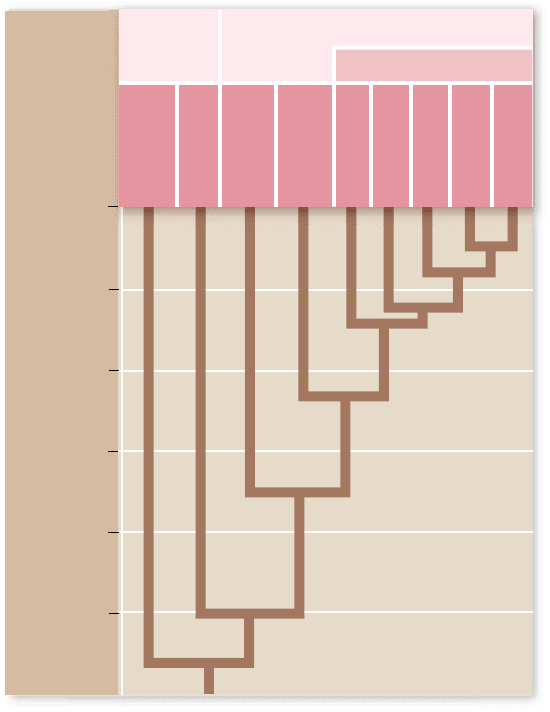
Figure 35.36
A primate evolutionary tree. Prosimians
diverged early in primate evolution, whereas hominids diverged
much more recently. Apes constitute a paraphyletic group because
some apes are more closely related to nonape species (hominids)
than they are to other apes.
Fossils of the earliest hominids (humans and their direct
ancestors), described later in this section, suggest that the com-
mon ancestor of the hominids was more like a chimpanzee than
a gorilla. Based on genetic differences, scientists estimate that
gorillas diverged from the line leading to chimpanzees and hu-
mans some 8 mya.
Soon after the gorilla lineage diverged, the common an-
cestor of all hominids split off from the chimpanzee line to be-
gin the evolutionary journey leading to humans. Because this
split was so recent, few genetic differences between humans
and chimpanzees have had time to evolve. For example, a hu-
man hemoglobin molecule differs from its chimpanzee coun-
terpart in only a single amino acid. In general, humans and
chimpanzees exhibit a level of genetic similarity normally found
between closely related species of the same genus!
Comparing apes with hominids
The common ancestor of apes and hominids is thought to have
been an arboreal climber. Much of the subsequent evolution of
the hominoids reflected different approaches to locomotion.
Hominids became bipedal, walking upright; in contrast, the
apes evolved knuckle-walking, supporting their weight on the
dorsal sides of their fingers. (Monkeys, by contrast, walk using
the palms of their hands.)
Humans depart from apes in several areas of anatomy re-
lated to bipedal locomotion. Because humans walk on two legs,
their vertebral column is more curved than an ape’s, and the
human spinal cord exits from the bottom rather than the back
of the skull. The human pelvis has become broader and more
bowl-shaped, with the bones curving forward to center the
weight of the body over the legs. The hip, knee, and foot have
all changed proportions.
Being bipedal, humans carry much of the body’s weight
on the lower limbs, which comprise 32 to 38% of the body’s
weight and are longer than the upper limbs; human upper limbs
do not bear the body’s weight and make up only 7 to 9% of hu-
man body weight. African apes walk on all fours, with the upper
and lower limbs both bearing the body’s weight; in gorillas, the
longer upper limbs account for 14 to 16% of body weight, the
somewhat shorter lower limbs for about 18%.
Australopithecines were early hominids
Five to 10 mya, the world’s climate began to get cooler, and the
great forests of Africa were largely replaced with savannas and
open woodland. In response to these changes, a new kind of
hominoid was evolving, one that was bipedal. These new homi-
noids are classified as hominids—that is, of the human line.
The major groups of hominids include three to seven
species of the genus Homo (depending how you count them),
seven species of the older, smaller-brained genus Australopithe-
cus, and several even older lineages (figure 35.37). In every case
where the fossils allow a determination to be made, the hom-
inids are bipedal, the hallmark of hominid evolution.
In recent years, anthropologists have found a remark-
able series of early hominid fossils extending as far back as 6
to 7 million years. Often displaying a mixture of primitive and
modern traits, these fossils have thrown the study of early
hominids into turmoil. Although the inclusion of these fossils
Hominoids
The hominoids include the apes and the hominids (humans
and their direct ancestors). The living apes consist of the gib-
bon (genus Hylobates), orangutan (Pongo), gorilla (Gorilla), and
chimpanzee (Pan). Apes have larger brains than monkeys, and
they lack tails. With the exception of the gibbon, which is
small, all living apes are larger than any monkey. Apes exhibit
the most adaptable behavior of any mammal except human be-
ings. Once widespread in Africa and Asia, apes are rare today,
living in relatively small areas. No apes ever occurred in North
or South America.
Studies of ape DNA have explained a great deal about how
the living apes evolved. The Asian apes evolved first. The line of
apes leading to gibbons diverged from other apes about 15 mya,
whereas orangutans split off about 10 mya (figure 35.36) . Neither
group is closely related to humans.
The African apes evolved more recently, between 6 and
10 mya. These apes are the closest living relatives to humans. The
taxonomic group “apes” is a paraphyletic group; some apes are
more closely related to hominids than they are to other apes. For
this reason, some taxonomists have advocated placing humans and
the African apes in the same zoological family, the Hominidae.
722
part
V
Diversity of Life on Earth
rav32223_ch35_693-728.indd 722rav32223_ch35_693-728.indd 722 11/16/09 1:46:32 PM11/16/09 1:46:32 PM
Apago PDF Enhancer
77.5 6.5 6 5.5 5 1.54.5 14 0.5 03.5 23 2.5
Millions of Years Ago (
MYA)
Homo sapiens sapiens
Homo floresiensis
Homo erectus
Homo habilis
Australopithecus africanus
Australopithecus afarensis
Australopithecus robustus
Ardipithecus ramidus
Australopithecus boisei
Australopithecus anamensis
Sahelanthropus tchadensis
Homo ergaster
Homo heidelbergensis
Homo neanderthalensis
Australopithecus
afarensis
Australopithecus
robustus
Homo habilis Homo floresiensis
Homo sapiens
sapiens
3.7-million-year-old volcanic ash. Importantly, the big toe is
not splayed out to the side as in a monkey or ape, indicating
that these footprints were clearly made by hominids.
Bipedalism
The evolution of bipedalism marks the beginning of hominids.
Bipedalism seems to have evolved as australopithecines left
dense forests for grasslands and open woodland.
Whether larger brains or bipedalism evolved first was a
matter of debate for some time. One school of thought pro-
posed that hominid brains enlarged first, and then hominids
became bipedal. Another school of thought saw bipedalism as a
precursor to larger brains, arguing that bipedalism freed the
forelimbs to manufacture and use tools, leading to the evolu-
tion of bigger brains. Recently, fossils unearthed in Africa have
settled the debate. These fossils demonstrate that bipedalism
extended back 4 million years; knee joint, pelvis, and leg bones
all exhibit the hallmarks of an upright stance. Substantial brain
expansion, on the other hand, did not appear until roughly
2 mya. In hominid evolution, upright walking clearly preceded
large brains.
The reason bipedalism evolved in hominids remains a
matter of controversy. No tools appeared until 2.5 mya, so tool-
making seems an unlikely cause. Alternative ideas suggest that
walking upright is faster and uses less energy than walking on
four legs; that an upright posture permits hominids to pick fruit
from trees and see over tall grass; that being upright reduces
among the hominids seems warranted, only a few specimens
have been discovered, and they do not provide enough infor-
mation to determine with certainty their relationships to aus-
tralopithecines and humans. The search for additional early
hominid fossils continues.
Early australopithecines
Our knowledge of australopithecines is based on hundreds of
fossils, all found in South and East Africa (except for one spec-
imen from Chad in West Africa). Australopithecines may have
lived over a much broader area of Africa, but rocks of the
proper age that might contain fossils are not exposed else-
where. The evolution of hominids seems to have begun with
an initial radiation of numerous species. The seven species
identified so far provide ample evidence that australopith-
ecines were a diverse group.
These early hominids weighed about 18 kg and were
about 1 m tall. Their dentition was distinctly hominid, but their
brains were no larger than those of apes, generally 500 cubic
centimeters (cm
3
) or less. Homo brains, by comparison, are usu-
ally larger than 600 cm
3
; modern H. sapiens brains average
1350 cm
3
.
The structure of australopithecine fossils clearly indicates
that they walked upright. Evidence of bipedalism includes a set
of some 69 hominid footprints found at Laetoli, East Africa.
Two individuals, one larger than the other, walked upright side-
by-side for 27 m, their footprints preserved in a layer of
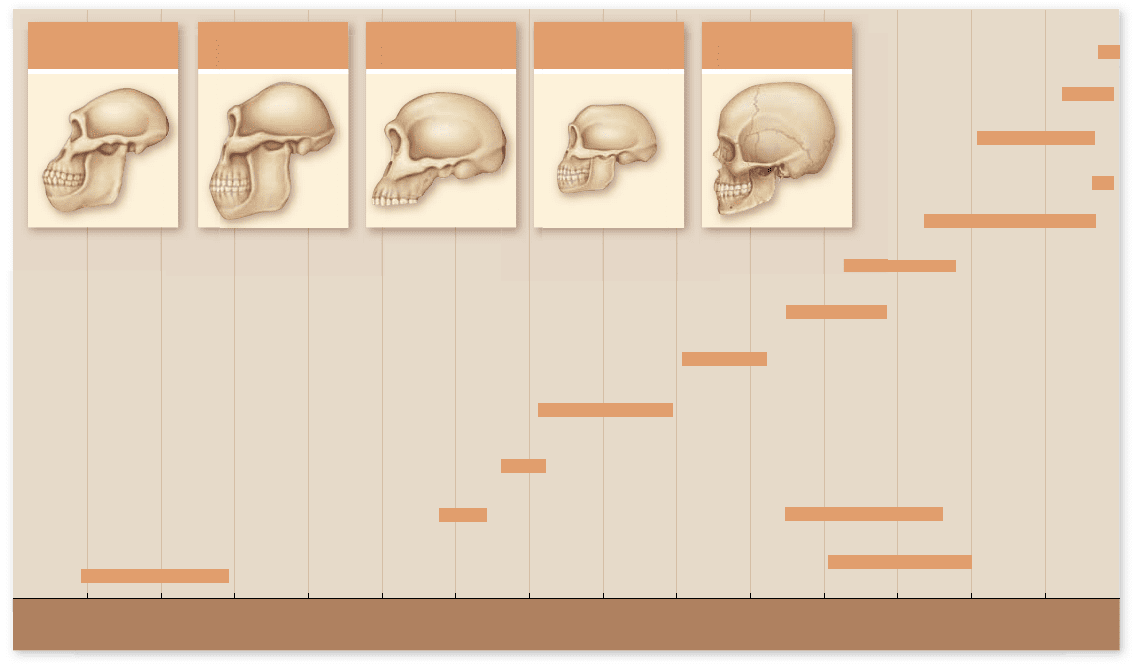
Figure 35.37
Hominid fossil history. Most, but not all, fossil hominoids are indicated here. New species are regularly being
discovered, though great debate sometimes exists about whether a particular specimen represents a new species.
chapter
35
Vertebrates
723www.ravenbiology.com
rav32223_ch35_693-728.indd 723rav32223_ch35_693-728.indd 723 11/16/09 1:46:32 PM11/16/09 1:46:32 PM
Apago PDF Enhancer
A new addition to the human family: Homo floresiensis
The world was stunned in 2004 with the announcement of the
discovery of fossils of a new human species from the tiny Indo-
nesian island of Flores (figure 35.38) . Homo floresiensis was no-
table for its diminutive stature; standing only a meter tall, and
with a brain size of just 380 cm
3
, the species was quickly nick-
named “the Hobbit” after the characters in J. R. R. Tolkien’s
Lord of the Rings trilogy. Just as surprising was the age of the
fossils, the youngest of which was only 15,000 years old.
Despite its recency, a number of skeletal features suggest
to most scientists that H. floresiensis is more closely related to
H. erectus than to H. sapiens. If correct (and not all scientists
agree), this result would indicate that the H. erectus lineage per-
sisted much longer than previously thought—almost to the
present day. It also would mean that until very recently, H. sapi-
ens was not the only species of human on the planet. We can
only speculate about how H. sapiens and H. floresiensis may have
interacted, and how these interactions may have been affected
by the great difference in body size.
Why H. floresiensis evolved such small size is unknown,
although a number of experts have pointed to the phenomenon
of “island dwarfism,” in which mammal species evolve to be
much smaller on islands. Indeed, H. floresiensis coexisted with
and preyed on a miniature species of elephant that also lived on
Flores, but which also has gone extinct. These findings have
rekindled interest in explaining why island dwarfism occurs.
the body surface exposed to the Sun’s rays; that an upright
stance aided the wading of semiaquatic hominids; and that bi-
pedalism frees the forelimbs of males to carry food back to fe-
males, encouraging pair-bonding. All of these suggestions have
their proponents, and none is universally accepted. The origin
of bipedalism, the key event in the evolution of hominids, re-
mains a mystery.
The genus Homo arose roughly 2 MYA
The first humans (genus Homo) evolved from australopithecine
ancestors about 2 mya. The exact ancestor has not been clearly
identified, but is commonly thought to be Australopithecus
afarensis. Only within the last 30 years have a significant num-
ber of fossils of early Homo been uncovered. An explosion of
interest has fueled intensive field exploration, and new finds are
announced regularly; every year, our picture of the base of the
human evolutionary tree grows clearer. The following histori-
cal account will undoubtedly be supplanted by future discover-
ies, but it provides a good example of science at work.
The first human: Homo habilis
In the early 1960s, stone tools were found scattered among
hominid bones close to the site where A. boisei had been un-
earthed. Although the fossils were badly crushed, painstaking
reconstruction of the many pieces suggested a skull with a brain
volume of about 680 cm
3
, larger than the australopithecine
range of 400 to 550 cm
3
. Because of its association with tools,
this early human was called Homo habilis, meaning “handy man.”
Partial skeletons discovered in 1986 indicate that H. habilis was
small in stature, with arms longer than its legs and a skeleton
much like that of Australopithecus. Because of its general simi-
larity to australopithecines, many researchers at first questioned
whether this fossil was human.
Out of Africa: Homo erectus
Our picture of what early Homo was like lacks detail because it
is based on only a few specimens. We have much more informa-
tion about the species that replaced it, Homo erectus and
H. ergaster, which are sometimes considered a single species.
These species were a lot larger than Homo habilis—about
1.5 m tall. They had a large brain, about 1000 cm
3
, and walked
erect. Their skull had prominent brow ridges and, like modern
humans, a rounded jaw. Most interesting of all, the shape of the
skull interior suggests that H. erectus was able to talk.
Far more successful than H. habilis, H. erectus quickly
became widespread and abundant in Africa, and within 1 mil-
lion years had migrated into Asia and Europe. A social spe-
cies, H. erectus lived in tribes of 20 to 50 people, often dwelling
in caves. They successfully hunted large animals, butchered
them using flint and bone tools, and cooked them over fires—
a site in China contains the remains of horses, bears, ele-
phants, and rhinoceroses.
Homo erectus survived for over a million years, longer than
any other species of human. These very adaptable humans only
disappeared in Africa about 500,000 years ago, as modern hu-
mans were emerging. Interestingly, they survived even longer
in Asia, until 250,000 years ago.
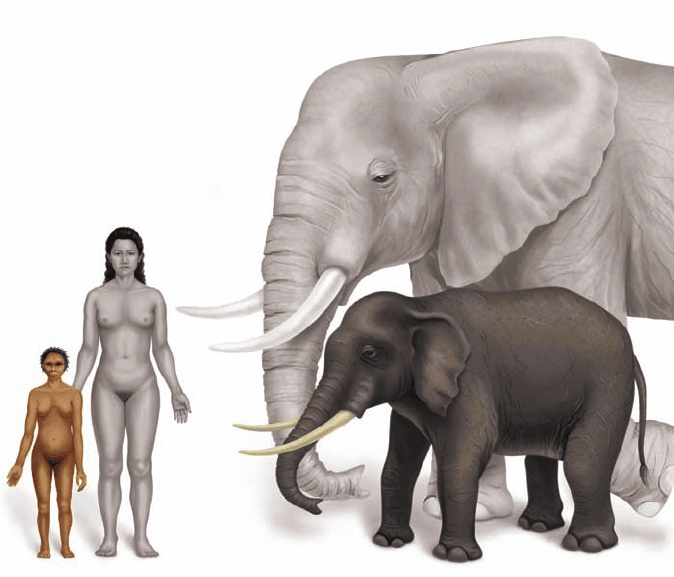
Figure 35.38
Homo oresiensis. This diminutive species
(compare the modern human female on the right with the female
H. oresiensis on the left) occurred on the small island of Flores in
what is now Indonesia. H. oresiensis preyed upon a dwarf species of
elephant, Stegodon sondaari, which also occurred on Flores (compare
with the larger African elephant, Loxodonta african, in gray).
724
part
V
Diversity of Life on Earth
rav32223_ch35_693-728.indd 724rav32223_ch35_693-728.indd 724 11/16/09 1:46:33 PM11/16/09 1:46:33 PM
Apago PDF Enhancer
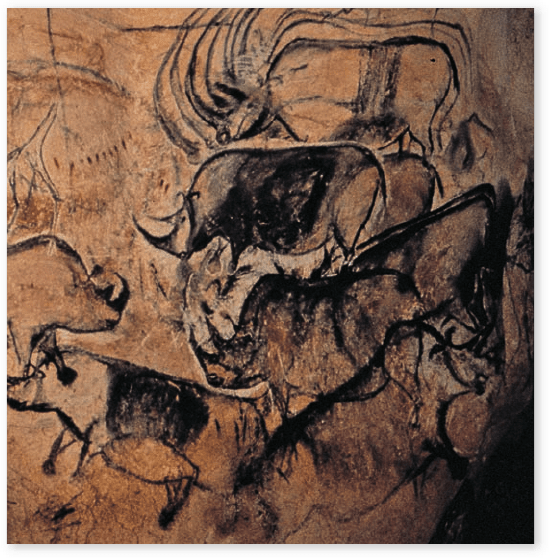
Figure 35.39
Cro-Magnon art. Rhinoceroses are among
the animals depicted in this remarkable cave painting found in 1995
near Vallon-Pont d’Arc, France.
years ago, after the ice had begun to retreat and a land bridge
still connected Siberia and Alaska. By 10,000 years ago, about
5 million people inhabited the entire world (compared with
more than 6 billion today).
Our own species: Homo sapiens
Homo sapiens is the only surviving species of the genus Homo,
and indeed the only surviving hominid. Some of the best fossils
of H. sapiens are 20 well-preserved skeletons with skulls found in
a cave near Nazareth in Israel. Modern dating techniques esti-
mate these humans to be between 90,000 and 100,000 years old.
The skulls are modern in appearance and size, with high, short
braincases, vertical foreheads with only slight brow ridges, and a
cranial capacity of roughly 1550 cm
3
. Our evolution has been
marked by a progressive increase in brain size, distinguishing us
from other animals in several ways. First, humans are able to
make and use tools more effectively than any other animal—a
capability that, more than any other factor, has been responsible
for our dominant position in the world. Second, although not
the only animal capable of conceptual thought, humans have
refined and extended this ability until it has become the hall-
mark of our species. Finally, we use symbolic language and can,
with words, shape concepts out of experience and transmit that
accumulated experience from one generation to another.
Humans have undergone what no other animal ever has:
extensive cultural evolution. Through culture, we have found
ways to change and mold our environment, rather than changing
evolutionarily in response to the environment’s demands. We
control our biological future in a way never before possible—an
exciting potential and a frightening responsibility.
Modern humans
The evolutionary journey entered its final phase when modern
humans first appeared in Africa about 600,000 years ago. Inves-
tigators who focus on human diversity denote three species of
modern humans: Homo heidelbergensis, H. neanderthalensis, and
H. sapiens. Other investigators lump the three species into one,
H. sapiens (“wise man”).
The oldest modern human, Homo heidelbergensis, is known
from a 600,000-year-old fossil from Ethiopia. Although it coex-
isted with H. erectus in Africa, H. heidelbergensis has more ad-
vanced anatomical features, including a bony keel running
along the midline of the skull, a thick ridge over the eye sockets,
and a large brain. Also, its forehead and nasal bones are very
much like those of H. sapiens.
As H. erectus was becoming rarer, about 130,000 years
ago, a new species of human arrived in Europe from Africa.
Homo neanderthalensis likely branched off the ancestral line
leading to modern humans as long as 500,000 years ago. Com-
pared with modern humans, Neanderthals were short, stocky,
and powerfully built; their skulls were massive, with protruding
faces, heavy, bony ridges over the brows, and larger braincases.
Cro-Magnons and Neanderthals
The Neanderthals (classified by many paleontologists as a sep-
arate species, Homo neanderthalensis) were named after the
Neander Valley of Germany where their fossils were first dis-
covered in 1856. Rare at first outside of Africa, they became
progressively more abundant in Europe and Asia, and by 70,000
years ago had become common.
The Neanderthals made diverse tools, including scrapers,
spearheads, and hand axes. They lived in huts or caves. Nean-
derthals took care of their injured and sick and commonly bur-
ied their dead, often placing food, weapons, and even flowers
with the bodies. Such attention to the dead strongly suggests
that they believed in a life after death. This is the first evidence
of the symbolic thinking characteristic of modern humans.
Fossils of H. neanderthalensis abruptly disappear from the
fossil record about 34,000 years ago and are replaced by fossils
of H. sapiens called the Cro-Magnons (named after the valley in
France where their fossils were first discovered). We can only
speculate why this sudden replacement occurred, but it was
complete all over Europe in a short period.
A variety of evidence indicates that Cro-Magnons came
from Africa—fossils of essentially modern aspect but as much
as 100,000 years old have been found there. Cro-Magnons
seem to have replaced the Neanderthals completely in the Mid-
dle East by 40,000 years ago, and then spread across Europe,
coexisting with the Neanderthals for several thousand years.
Recent analyses of Neanderthal DNA reveal it to be quite dis-
tinct from Cro-Magnon DNA, indicating the two species did
not interbreed, although not all scientists agree on this point.
Neanderthals are our cousins, not our ancestors. The Cro-
Magnons that replaced the Neanderthals had a complex social
organization and are thought to have had full language capa-
bilities. Elaborate and often beautiful cave paintings made by
Cro-Magnons can be seen throughout Europe (figure 35.39).
Humans of modern appearance eventually spread across
Siberia to North America, where they arrived at least 13,000
chapter
35
Vertebrates
725www.ravenbiology.com
rav32223_ch35_693-728.indd 725rav32223_ch35_693-728.indd 725 11/16/09 1:46:35 PM11/16/09 1:46:35 PM

Apago PDF Enhancer
a. b.
Genetic Similarity Skin Pigmentation
Figure 35.40
Patterns of genetic
variation in human populations di er
from patterns of skin color variation.
a. Genetic variation among Homo sapiens.
The more similar areas are in color, the more
similar they are genetically based on many
enzyme and blood group genetic loci.
b. Similarity among Homo sapiens based on
skin color. The color of an area represents
the skin pigmentation of the people native
to that region.
of people have constantly intermingled and interbred with one
another during the entire course of history. This constant gene
flow has prevented the human species from fragmenting into
highly differentiated subspecies. Those characteristics that are
differentiated among populations, such as skin color, represent
classic examples of the antagonism between gene flow and nat-
ural selection. As you saw in chapter 20, when selection is strong
enough, as it is for dark coloration in tropical regions, popula-
tions can differentiate even in the presence of gene flow. How-
ever, even in cases such as this, gene flow will still ensure that
populations are relatively homogeneous for genetic variation at
other loci.
For this reason, relatively little of the variation in the hu-
man species represents differences between the described races.
Indeed, one study calculated that only 8% of all genetic varia-
tion among humans could be accounted for as differences that
exist among racial groups; in other words, the human racial cat-
egories do a very poor job in describing the vast majority of
genetic variation that exists in humans. For this reason, most
modern biologists reject human racial classifications as reflect-
ing patterns of biological differentiation in the human species.
This is a sound biological basis for dealing with each human
being on his or her own merits and not as a member of a par-
ticular “race.”
Learning Outcomes Review 35.9
Primates include prosimians, monkeys, apes, and humans (hominids).
Primates have grasping fi ngers and toes and binocular vision. Hominids
diverged from other primates by developing bipedal locomotion that led
to a number of additional adaptations, including modifi cation of the spine,
pelvis, and limbs. Several species of Homo evolved in Africa, and some
migrated from there to Europe and Asia. Our own species, Homo sapiens,
is profi cient at conceptual thought and tool use and is the only animal
that uses symbolic language. Considerable variation occurs among human
populations, but the recognized races, which are based primarily on skin
color, do not refl ect signifi cant biological diff erences.
■ Which of these groups is monophyletic: prosimians,
monkeys, apes, hominids?
Human races
Human beings, like all other species, have differentiated in their
characteristics as they have spread throughout the world. Local
populations in one area often appear significantly different
from those that live elsewhere. For example, northern Europe-
ans often have blond hair, fair skin, and blue eyes, whereas Afri-
cans often have black hair, dark skin, and brown eyes. These
traits may play a role in adapting the particular populations to
their environments. Blood groups may be associated with im-
munity to diseases more common in certain geographical areas,
and dark skin shields the body from the damaging effects of
ultraviolet radiation, which is much stronger in the tropics than
in temperate regions.
All human beings are capable of mating with one another
and producing fertile offspring. The reasons that they do or do
not choose to associate with one another are purely psychologi-
cal and behavioral (cultural).
The number of groups into which the human species
might logically be divided has long been a point of contention.
Some contemporary anthropologists divide people into as many
as 30 “races,” others as few as three: Caucasoid, Negroid, and
Oriental. American Indians, Bushmen, and Aborigines are ex-
amples of particularly distinctive subunits that are sometimes
regarded as distinct groups.
The problem with classifying people or other organisms
into races in this fashion is that the characteristics used to de-
fine the races are usually not well correlated with one another,
and so the determination of race is always somewhat arbitrary.
Humans are visually oriented; consequently, we have relied on
visual cues—primarily skin color—to define races. However,
when other types of characteristics, such as blood groups, are
examined, patterns of variation correspond very poorly with vi-
sually determined racial classes. Indeed, if one were to break
the human species into subunits based on overall genetic simi-
larity, the groupings would be very different from those based
on skin color or other visual features (figure 35.40) .
In human beings, it is simply not possible to delimit
clearly defined races that reflect biologically differentiated and
well- defined groupings. The reason is simple: Different groups
726
part
V
Diversity of Life on Earth
rav32223_ch35_693-728.indd 726rav32223_ch35_693-728.indd 726 11/16/09 1:46:36 PM11/16/09 1:46:36 PM

Apago PDF Enhancer
35.6 Reptiles
Reptiles exhibit three key characteristics.
Reptiles posses a watertight amniotic egg; dry, watertight skin; and
thoracic breathing (see gure 35.17).
Modern reptiles practice internal fertilization and are ectothermic.
Reptiles dominated the Earth for 250 million years.
Synapsids gave rise to the therapsids that became the mammalian
line. Diapsids gave rise to modern reptiles and the birds.
Modern reptiles belong to four groups.
The four groups of reptiles are Chelonia (turtles and tortoises);
Rhynchocephalia (tuataras); Squamata (lizards and snakes); and
Crocodylia (crocodiles and alligators).
35.7 Birds
Key characteristics of birds are feathers and a lightweight skeleton.
The feather is a modi ed reptilian scale. Feathers provide lift in
gliding or ight and conserve heat (see figure 35.25).
The lightweight skeleton of birds is an adaptation to ight.
Birds arose about 150
MYA.
Birds evolved from theropod dinosaurs. Feathers probably rst arose
to provide insulation, only later being modi ed for ight.
Modern birds are diverse but share several characteristics.
In addition to the key characteristics, birds have ef cient respiration
and circulation and are endothermic.
35.8 Mammals
Mammals have hair, mammary glands, and other characteristics.
Mammals are distinguished by fur and by mammary glands, which
provide milk to feed the young. Mammals are also endothermic.
Mammals diverged about 220
MYA.
Mammals evolved from therapsids (synapsids) and reached maximum
diversity about 15 mya.
Modern mammals are placed into three groups.
The monotremes lay shelled eggs. In marsupials, an embryo
completes development in a pouch. Placental mammals produce a
placenta in the uterus to nourish the embryo.
35.9 Evolution of the Primates (see gure 35.36)
Primates share two innovations: grasping
ngers and toes,
and binocular vision.
The anthropoid lineage led to the earliest humans.
The earliest primates were the prosimians; anthropoids, which
include monkeys, apes, and humans, evolved later. Hominoids
include the apes and the hominids, or humans.
Austrolopithecines were early hominids.
The distinguishing characteristics of hominids are upright posture
and bipedal locomotion.
The genus Homo arose roughly 2
MYA.
Common features of early Homo species include a larger body and
brain size. Homo sapiens is the only extant species. Humans exhibit
conceptual thought, tool use, and symbolic language.
35.1 The Chordates
Chordates share four features at some time during development: a
single, hollow nerve cord; a exible rod, the notochord; pharyngeal
slits or pouches; and a postanal tail (see gure 35.1).
35.2 The Nonvertebrate Chordates
Tunicates have chordate larval forms.
Tunicates have a swimming larval form exhibiting all the features of a
chordate, but their adult form is sessile and baglike.
Lancelets are small marine chordates.
Lancelets have chordate features throughout life, but as adults they
lack bones and have no distinct head (see gure 35.3).
35.3 The Vertebrate Chordates
Vertebrates have vertebrae, a distinct head, and other features.
In vertebrates, a vertebral column encloses and protects the dorsal
nerve cord. The distinct and well-differentiated head carries sensory
organs. Vertebrates also have specialized internal organs and a bony
or cartilaginous endoskeleton.
Vertebrates evolved half a billion years ago: An overview.
In shes, evolution of a hinged jaw was a major advance. Other
changes allowed a move into the terrestrial environment, giving rise
to amphibians, reptiles, birds, and mammals (see figure 35.8).
35.4 Fishes
Fishes exhibit ve key characteristics.
The key characteristics of shes are a vertebral column of bone
or cartilage, jaws, paired appendages, internal gills, and a closed
circulatory system.
Sharks, with cartilaginous skeletons, became top predators.
Sharks, rays, and skates are cartilaginous shes. Sharks were
streamlined for fast swimming, and they evolved teeth that enabled
them to readily grab, kill, and devour prey.
The lateral line system of sharks and bony shes is a sensory system
that detects changes in pressure waves.
Bony shes dominate the waters.
Bony shes belong either to the ray- nned shes (Actinopterygii),
or the lobe- nned shes (Sarcopterygii). Ray- nned shes have ns
stiffened with bony parallel rays.
The evolutionary path to land ran through the lobe- nned shes.
The lobe- nned shes have muscular lobes with bones connected
by joints (see gure 35.13). These structures could evolve into limbs
capable of movement on land.
35.5 Amphibians
Living amphibians have ve distinguishing features.
Amphibian adaptations include legs, lungs, cutaneous respiration,
pulmonary veins, and a partially divided heart.
Amphibians overcame terrestrial challenges.
Terrestrial adaptations included being able to support large bodies
against gravity, to breathe out of water, and to avoid dessication.
Modern amphibians belong to three groups.
The Anura (frogs and toads) lack tails as adults; many have a larval
tadpole stage. The Caudata (salamanders) have tails as adults and
larvae similar to the adult form. The Apoda (caecilians) are legless.
Chapter Review
chapter
35
Vertebrates
727www.ravenbiology.com
rav32223_ch35_693-728.indd 727rav32223_ch35_693-728.indd 727 11/16/09 1:46:37 PM11/16/09 1:46:37 PM
Apago PDF Enhancer
A
B
7. All of the following are characteristics of reptiles, except
a. cutaneous respiration.
b. amniotic egg.
c. thoracic breathing.
d. dry, watertight skin.
8. Which of the following evolutionary adaptations allows
the birds to become ef cient at ying?
a. Structure of the feather
b. High metabolic temperatures
c. Increased respiratory ef ciency
d. All of the above
APPLY
1. The reason that birds and crocodilians both build nests might
be because they
a. are both warm-blooded.
b. both eat sh.
c. both inherited the trait from a common ancestor.
d. both lay eggs.
2. Which of the following is the closest relative of lung sh?
a. Hag sh c. Ray- nned sh
b. Sharks d. Mammals
3. The fact that monotremes lay eggs
a. indicates that they are more closely related to some reptiles
than they are to some mammals.
b. is a plesiomorphic trait.
c. demonstrates that the amniotic egg evolved multiple times.
d. is a result of ectothermy.
SYNTHESIZE
1. Some scientists believe the feathers did not evolve initially
for ight, but rather for insulation. What bene ts would this
have had for early ightless birds?
2. Some people state that the dinosaurs have not “gone extinct,”
they are with us today. What evidence can be used to support
this statement?
3. In what respect is the evolutionary diversi cation of hominids
similar to that of horses discussed in chapter 21?
UNDERSTAND
1. Which of the following statements regarding all species
of chordates is false?
a. Chordates are deuterostomes.
b. A notochord is present in the embryo.
c. The notochord is surrounded by bone or cartilage.
d. All possess a postanal tail during embryonic development.
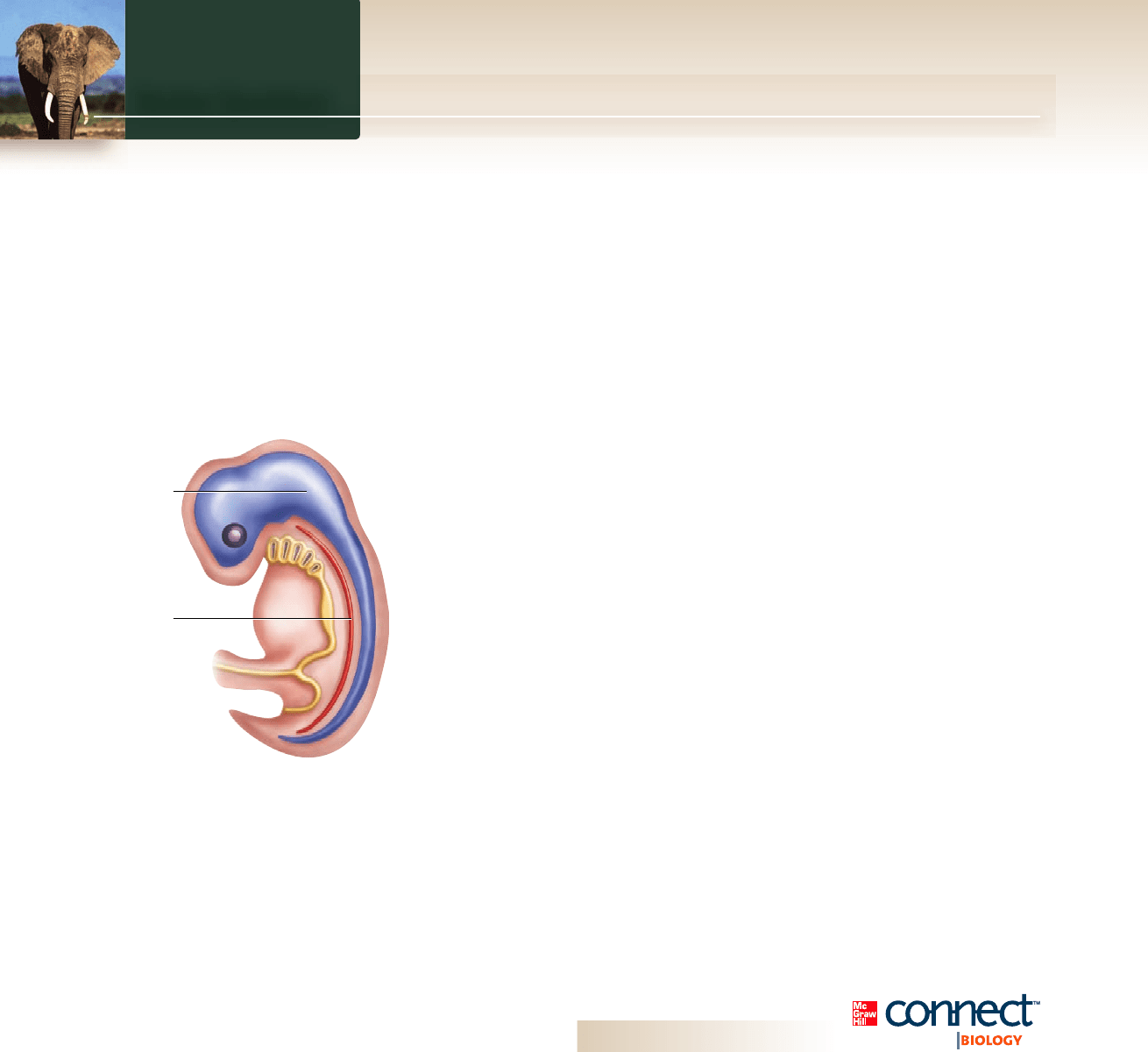
2. In the following gure, item A is the ______ and item B is the
_________.
a. complete digestive system; notochord
b. spinal cord; nerve cord
c. notochord; nerve cord
d. pharyngeal slits; notochord
3. During embryonic development, a neural crest would be found
in all of the following chordates, except
a. cephalochordates. c. birds.
b. reptiles. d. mammals.
4. The ________ of the bony sh evolved to counter the effects
of increased bone density.
a. gills c. swim bladder
b. jaws d. teeth
5. Why was the evolution of the pulmonary veins important
for amphibians?
a. To move oxygen to and from the lungs
b. To increase the metabolic rate
c. For increased blood circulation to the brain
d. None of the above
6. Which of the following groups lacks a four-chambered heart?
a. Birds c. Mammals
b. Crocodilians d. Amphibians
Review Questions
ONLINE RESOURCE
www.ravenbiology.com
Understand, Apply, and Synthesize—enhance your study with
animations that bring concepts to life and practice tests to assess
your understanding. Your instructor may also recommend the
interactive eBook, individualized learning tools, and more.
728
part
V
Diversity of Life on Earth
rav32223_ch35_693-728.indd 728rav32223_ch35_693-728.indd 728 11/16/09 1:46:38 PM11/16/09 1:46:38 PM

Apago PDF Enhancer
A
Part
VI
Plant Form and Function
Chapter
36
Plant Form
Chapter Outline
36.1 Organization of the Plant Body: An Overview
36.2 Plant Tissues
36.3 Roots: Anchoring and Absorption Structures
36.4 Stems: Support for Above-Ground Organs
36.5 Leaves: Photosynthetic Organs
Introduction
Although the similarities among a cactus, an orchid, and a hardwood tree might not be obvious at first sight, most plants
have a basic unity of structure. This unity is reflected in how the plants are constructed; in how they grow, manufacture, and
transport their food; and in how their development is regulated. This chapter addresses the question of how a vascular plant
is “built.” We will focus on the cells, tissues, and organs that compose the adult plant body. The roots and shoots that give
the adult plant its distinct above- and below-ground architecture are the final product of a basic body plan first established
during embryogenesis, a process we will explore in detail in this chapter.
CHAPTER
rav32223_ch36_729-752.indd 729rav32223_ch36_729-752.indd 729 11/16/09 11:40:32 AM11/16/09 11:40:32 AM

Apago PDF Enhancer
Shoot apex
Flower
Stipule
Axillary bud
Internode
Node
Vascular system
Primary root
Lateral root
Root apex
Root
Shoot
Petiole
Vein
Blade
Leaflet
Leaf
Tendril
Figure 36.1
Diagram of a plant body. Branching root and
shoot systems create the plant’s architecture. Each root and shoot
has an apex that extends growth. Leaves are initiated at the nodes of
the shoot, which also contain axillary buds that can remain
dormant, grow to form lateral branches, or make owers. A leaf
can be a simple blade or consist of multiple parts as shown here.
Roots, shoots, and leaves are all connected with vascular
(conducting) tissue.
Roots and shoots are composed
of three types of tissues
Roots, shoots, and leaves all contain three basic types of tissues:
dermal, ground, and vascular tissue. Because each of these tis-
sues extend through the root and shoot systems, they are called
tissue systems.
Plant cell types can be distinguished by the size of their
vacuoles, whether they are living or not at maturity, and by the
thickness of secretions found in their cellulose cell walls, a dis-
tinguishing feature of plant cells (see chapter 4 to review cell
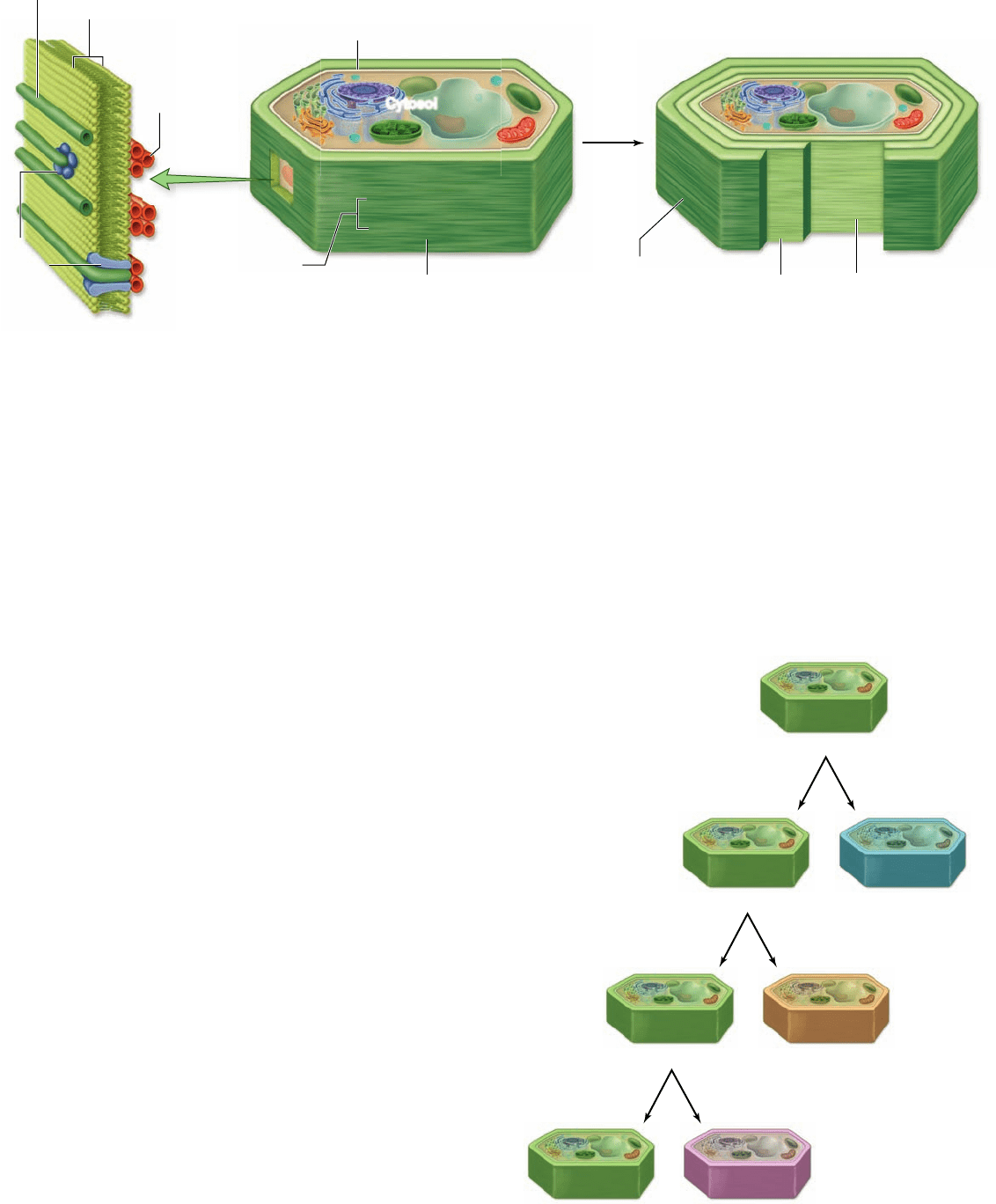
structure). Some cells have only a primary cell wall of cellulose,
synthesized by the protoplast near the cell membrane. Micro-
tubules align within the cell and determine the orientation of
the cellulose fibers (figure 36.2a) . Cells that support the plant
36.1
Organization of the Plant
Body: An Overview
Learning Outcomes
Distinguish between the functions of roots 1.
and shoots.
Name the three types of tissues in a plant.2.
Compare primary growth and secondary 3.
growth.
As you learned in chapter 30, the plant kingdom has great di-
versity, not only among its many phyla but even within species.
The earliest vascular plants, many of which are extinct, did not
have a clear differentiation of the plant body into specialized
organs such as roots and leaves.
Among modern vascular plants, the presence of these or-
gans reflects increasing specialization, particularly in relation
to the demands of a terrestrial existence. Obtaining water, for
example, is a major challenge, and roots are adapted for water
absorption from the soil. Leaves, roots, branches, and flowers
all exhibit variations in size and number from plant to plant.
Development of the form and structure of these parts may be
precisely controlled, but some aspects of leaf, stem, and root
development are quite flexible. This chapter emphasizes the
unifying aspects of plant form, using the flowering plants as
a model.
Vascular plants have roots and shoots
A vascular plant consists of a root system and a shoot system
(figure 36.1) . Roots and shoots grow at their tips, which are
called apices (singular, apex).
The root system anchors the plant and penetrates the
soil, from which it absorbs water and ions crucial for the plant’s
nutrition. Root systems are often extensive, and growing roots
can exert great force to move matter as they elongate and ex-
pand. Roots developed later than the shoot system as an adapta-
tion to living on land.
The shoot system consists of the stems and their
leaves. Stems serve as a scaffold for positioning the leaves,
the principal sites of photosynthesis. The arrangement, size,
and other features of the leaves are critically important in the
plant’s production of food. Flowers, other reproductive or-
gans, and ultimately, fruits and seeds are also formed on the
shoot (flower morphology and plant reproduction is covered
in chapter 42).
The iterative (repeating) unit of the vegetative shoot
consists of the internode, node, leaf, and axillary bud, but not
reproductive structures. An axillary bud is a lateral shoot
apex that allows the plant to branch or replace the main
shoot if it is eaten by an herbivore. A vegetative axillary bud
has the capacity to reiterate the development of the primary
shoot. When the plant has shifted to the reproductive phase
of development, these axillary buds may produce flowers or
floral shoots.
730
part
VI
Plant Form and Function
rav32223_ch36_729-752.indd 730rav32223_ch36_729-752.indd 730 11/16/09 11:40:39 AM11/16/09 11:40:39 AM
Apago PDF Enhancer
Meristem cell
Meristem cell
Differentiated cell
Differentiated cell
Cell division
Meristem cell
Cell division
Meristem cell Differentiated cell
Cell division
a. b.
Cellulose fiber
Cell membrane
Cytosol
Microtubule
Cellulose-
forming
rosettes
Cytosol
Cell membrane
Parallel
cellulose
fibers
Primary cell wall
Time
Primary cell wall
remains outside as inner
layers are laid down
Secondary
cell wall 1
Secondary
cell wall 2
Figure 36.2
Synthesis of a plant cell wall. a. Cellulose is a glucose polymer that is produced at the cellulose-forming rosettes in the
cell membrane to form the cell wall. Cellulose bers are laid down parallel to microtubules inside the cell membrane. Additional substances
that strengthen and waterproof the cell wall are added to the cell wall in some cell types. b. Some cells extrude additional layers of cellulose,
increasing the mechanical strength of the wall. Because new cellulose is produced at the cell, the oldest layers of cellulose are on the outside of
the cell wall. All cells have a primary cell wall. Additional layers of cellulose and lignin contribute to the secondary cell wall.
Figure 36.3
Meristem
cell division. Plant meristems
consist of cells that divide to
give rise to a differentiating
daughter cell and a cell that
persists as a meristem cell.
body have more heavily reinforced cell walls with multiple
layers of cellulose. Cellulose layers are laid down at angles to
adjacent layers like plywood; this enhances the strength of the
cell wall (figure 36.2b).
Plant cells contribute to three tissue systems. Dermal
tissue, primarily epidermis, is one cell layer thick in most
plants, and it forms an outer protective covering for the plant.
Ground tissue cells function in storage, photosynthesis, and
secretion, in addition to forming fibers that support and
protect plants. Vascular tissue conducts fluids and dissolved
substances throughout the plant body. Each of these tissues
and their many functions are described in more detail in
later sections.
Meristems elaborate the body
plan throughout the plant’s life
When a seed sprouts, only a tiny portion of the adult plant ex-
ists. Although embryo cells can undergo division and differen-
tiation to form many cell types, the fate of most adult cells is
more restricted. Further development of the plant body de-
pends on the activities of meristems, specialized cells found in
shoot and root apices, as well as other parts of the plant.
Overview of meristems
Meristems are clumps of small cells with dense cytoplasm and
proportionately large nuclei that act as stem cells do in ani-
mals. That is, one cell divides to give rise to two cells, of which
one remains meristematic, while the other undergoes differen-
tiation and contributes to the plant body (figure 36.3). In this
way, the population of meristem cells is continually renewed.
Molecular genetic evidence supports the hypothesis that ani-
mal stem cells and plant meristem cells may also share some
common pathways of gene expression. Extension of both root
and shoot takes place as a result of repeated cell divisions and
subsequent elongation of the cells produced by the apical
meristems. In some vascular plants, including shrubs and
most trees, lateral meristems produce an increase in root and
shoot diameter.
chapter
36
Plant Form
731www.ravenbiology.com
rav32223_ch36_729-752.indd 731rav32223_ch36_729-752.indd 731 11/16/09 11:40:41 AM11/16/09 11:40:41 AM