
Raven P.H., Johnson G.B., Mason K.A. Biology (Ninth Edition)
Подождите немного. Документ загружается.

Apago PDF Enhancer
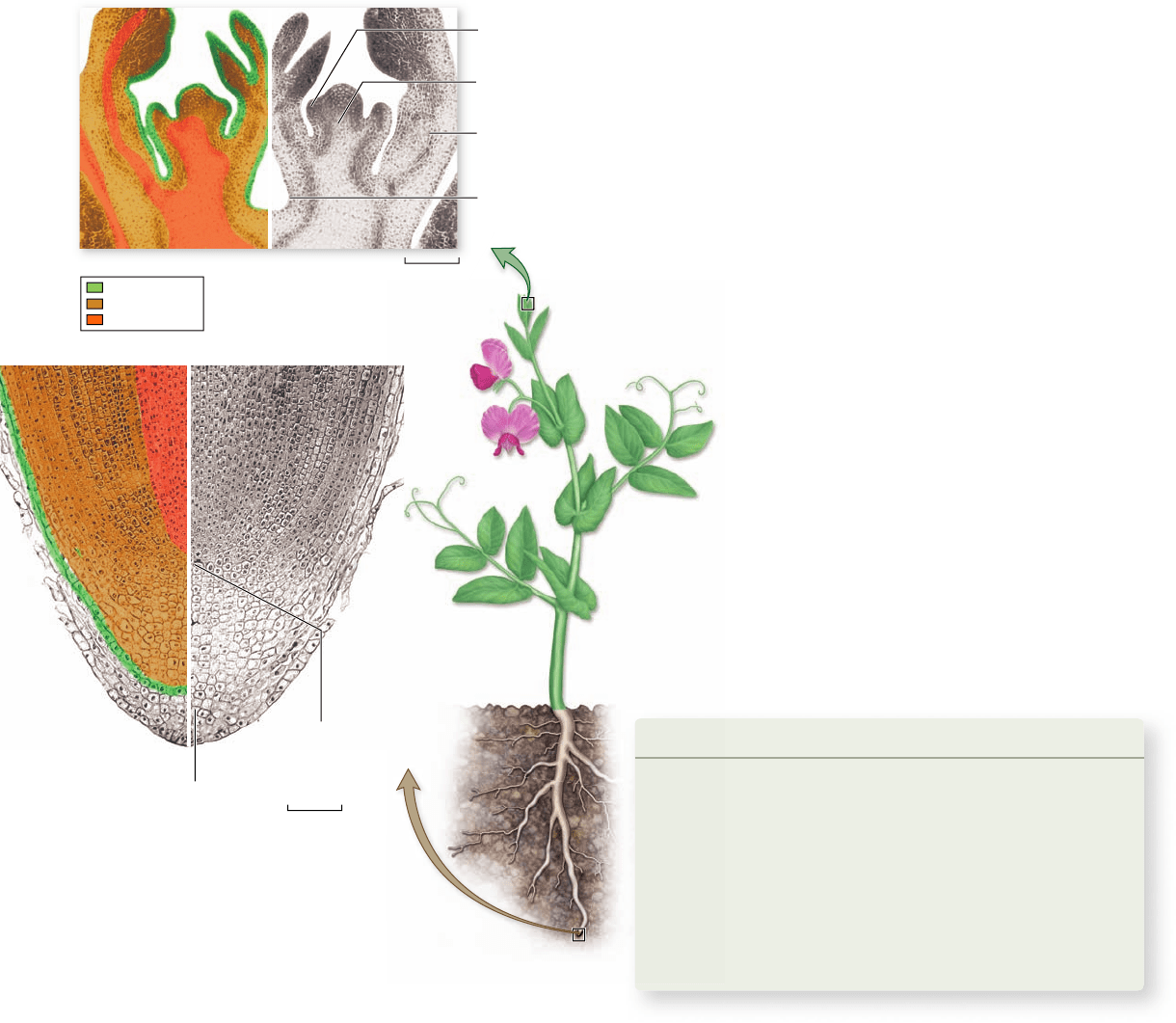
Young leaf
primordium
Shoot apical
meristem
Older leaf
primordium
Lateral bud
primordium
dermal tissue
ground tissue
vascular tissue
Root apical
meristem
Root cap
400 μm
100 μm
Figure 36.4
Apical
meristems. Shoot and root apical
meristems extend the plant body above
and below ground. Leaf primordia protect
the fragile shoot meristem, while the root
meristem produces a protective root cap in addition
to new root tissue.
moves through the soil. In contrast, leaf primordia shelter the
growing shoot apical meristem, which is particularly suscepti-
ble to desiccation because of its exposure to air and sun.
The apical meristem gives rise to the three tissue systems
by first initiating primary meristems. The three primary mer-
istems are the protoderm, which forms the epidermis; the
procambium, which produces primary vascular tissues (pri-
mary xylem for water transport and primary phloem for nutri-
ent transport); and the ground meristem, which differentiates
further into ground tissue. In some plants, such as horsetails
and corn, intercalary meristems arise in stem internodes
(spaces between leaf attachments), adding to the internode
lengths. If you walk through a cornfield on a quiet summer
night when the corn is about knee high, you may hear a soft
popping sound. This sound is caused by the rapid growth of the
intercalary meristems. The amount of stem elongation that oc-
curs in a very short time is quite surprising.
Lateral meristems
Many herbaceous plants (that is, plants with fleshy, not woody
stems) exhibit only primary growth, but others also exhibit
secondary growth, which may result in a substantial increase
of diameter. Secondary growth is accomplished by the lateral
meristems—peripheral cylinders of meristematic tissue within
the stems and roots that increase the girth (diameter) of gym-
nosperms and most angiosperms. Lateral meristems form from
ground tissue that is derived from apical meristems. Monocots
are the major exception (figure 36.5) .
Although secondary growth increases girth in many
nonwoody plants, its effects are most dramatic in woody
plants, which have two lateral meristems. Within the
bark of a woody stem is the cork cambium—a lat-
eral meristem that contributes to the outer bark
of the tree. Just beneath the bark is the vascular
cambium—a lateral meristem that produces
secondary vascular tissue. The vascular cambium
forms between the xylem and phloem in vascular
bundles, adding secondary vascular tissue to both
of its sides.
Secondary xylem is the main component of wood. Sec-
ondary phloem is very close to the outer surface of a woody
stem. Removing the bark of a tree damages the phloem and
may eventually kill the tree. Tissues formed from lateral mer-
istems, which comprise most of the trunk, branches, and older
roots of trees and shrubs, are known as secondary tissues and
are collectively called the secondary plant body.
Learning Outcomes Review 36.1
The root system anchors plants and absorbs water and nutrients, whereas
the shoot system, consisting of stems, leaves, and fl owers carries out
photosynthesis and sexual reproduction. The three general types of tissue
in both roots and shoots are dermal, ground, and vascular tissue. Primary
growth is produced by apical meristems at the tips of roots and shoots;
secondary growth is produced by lateral meristems that are peripheral and
increase girth.
■ Why are both primary and secondary growth necessary
in a woody plant?
Apical meristems
Apical meristems are located at the tips of stems and roots
(figure 36.4) . During periods of growth, the cells of apical mer-
istems divide and continually add more cells at the tips. Tissues
derived from apical meristems are called primary tissues, and
the extension of the root and stem forms what is known as the
primary plant body. The primary plant body comprises the
young, soft shoots and roots of a tree or shrub, or the entire
plant body in some plants.
Both root and shoot apical meristems are composed of
delicate cells that need protection (see figure 36.4). The root
apical meristem is protected by the root cap, the anatomy of
which is described later on. Root cap cells are produced by the
root meristem and are sloughed off and replaced as the root
732
part
VI
Plant Form and Function
rav32223_ch36_729-752.indd 732rav32223_ch36_729-752.indd 732 11/16/09 11:40:44 AM11/16/09 11:40:44 AM
Apago PDF Enhancer
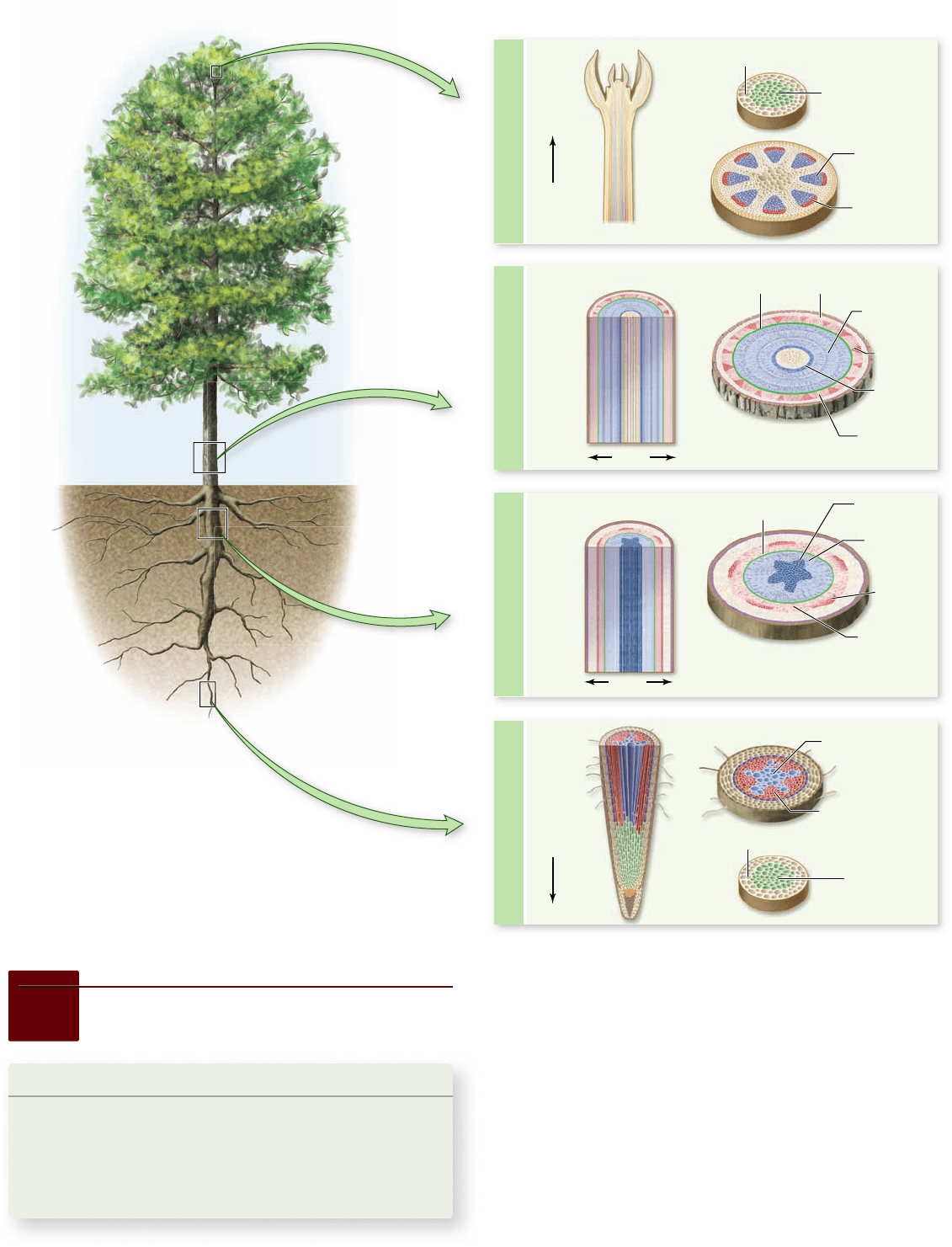
Primary Stem Secondary Stem Primary Root Secondary Root
Apical
growth
Ground meristem
Procambium
Primary
xylem
Primary
phloem
Lateral
growth
Secondary
xylem
Secondary
phloem
Primary
phloem
Primary
phloem
Primary
xylem
Primary
xylem
Vascular cambium Cork cambium
Lateral
growth
Vascular cambium
Secondary
xylem
Secondary
phloem
Apical
growth
Primary xylem
Primary phloem
Ground meristem
Procambium
Figure 36.5
Apical and lateral
meristems. Apical
meristems produce the primary
plant body. In some plants, the
lateral meristems produce an increase in
the girth of a plant. This type of growth is
secondary because the lateral meristems were not
directly produced by apical meristems. Woody plants have two
types of lateral meristems: a vascular cambium that produces xylem and
phloem tissues, and a cork cambium that contributes to the bark of a tree.
36.2
Plant Tissues
Learning Outcomes
Describe the functions of dermal, ground, and 1.
vascular tissues.
Name the three cell types found in ground tissue and 2.
their functions.
Distinguish between xylem and phloem. 3.
Three main categories of tissue can be distinguished in the
plant body. These are (1) dermal tissue on external sur faces that
serves a protective function; (2) ground tissue that forms several
different internal tissue types and that can participate in photo-
synthesis, serve a storage function, or provide structural sup-
port; and (3) vascular tissue that conducts water and nutrients.
Dermal tissue forms a protective interface
with the environment
Dermal tissue derived from an embryo or apical meristem
forms epidermis. This tissue is one cell layer thick in most
chapter
36
Plant Form
733www.ravenbiology.com
rav32223_ch36_729-752.indd 733rav32223_ch36_729-752.indd 733 11/16/09 11:40:50 AM11/16/09 11:40:50 AM
Apago PDF Enhancer
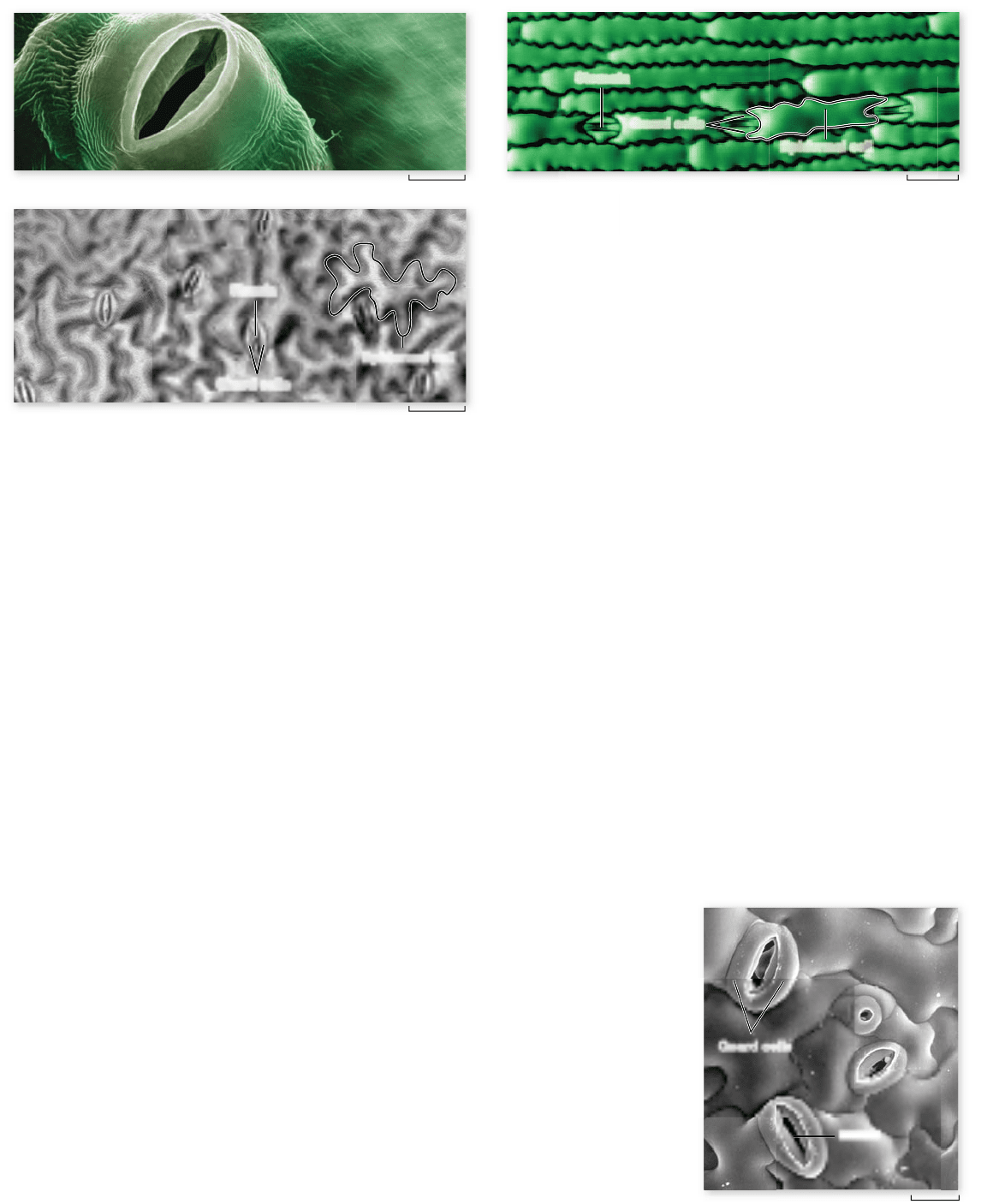
Guard cells
Stoma
272 µm
a.
b.
c.
Epidermal cell
Stoma
Epidermal cell
Stomata
Guard cells
Guard cells
200 µm
71 µm
4 µm
plants and forms the outer protective covering of the plant. In
young, exposed parts of the plant, the epidermis is covered with
a fatty cutin layer constituting the cuticle; in plants such as
desert succulents, several layers of wax may be added to the
cuticle to limit water loss and protect against ultraviolet dam-
age. In some cases, the dermal tissue forms the bark of trees.
Epidermal cells, which originate from the protoderm,
cover all parts of the primary plant body. A number of types of
specialized cells occur in the epidermis, including guard cells,
trichomes, and root hairs.
Guard cells
Guard cells are paired, sausage-shaped cells flanking a stoma
(plural, stomata), a mouth-shaped epidermal opening. Guard
cells, unlike other epidermal cells, contain chloroplasts.
Stomata occur in the epidermis of leaves (figure 36.6a)
and sometimes on other parts of the plant, such as stems or
fruits. The passage of oxygen and carbon dioxide, as well as the
diffusion of water in vapor form, takes place almost exclusively
through the stomata. There are from 1000 to more than
1 million stomata per square centimeter of leaf surface. In many
plants, stomata are more numerous on the lower epidermis of
the leaf than on the upper—a factor that helps minimize water
loss. Some plants have stomata only on the lower epidermis,
and a few, such as water lilies, have them only on the upper
epidermis to maximize gas exchange.
Guard cell formation is the result of an asymmetrical cell
division producing a guard cell and a subsidiary cell that aids in
the opening and closing of the stoma. The patterning of these
asymmetrical divisions that results in stomatal distribution has
intrigued developmental biologists (figure 36.6b, c).
Research on mutants that get “confused” about where to
position stomata is providing information on the timing of sto-
matal initiation and the kind of intercellular communication
that triggers guard cell formation. For example, the too many
mouths (tmm) mutation that occurs in Arabidopsis disrupts the
normal pattern of cell division that spatially separates stomata
Figure 36.6
Stomata. a. A stoma is the space between two
guard cells that regulate the size of the opening. Stomata are evenly
distributed within the epidermis of monocots and eudicots, but the
patterning is quite different. b. A pea (eudicot) leaf with a random
arrangement of stomata. c. A maize (corn, a monocot) leaf with
stomata evenly spaced in rows. These photomicrographs also show
the variety of cell shapes in plants. Some plant cells are boxlike, as
seen in maize (c), and others are irregularly shaped, as seen in the
jigsaw puzzle shapes of the pea epidermal cells, (b).
Figure 36.7
The
too many mouths
stomatal mutant. This
Arabidopsis mutant plant
lacks an essential signal
for spacing stomata.
Usually a differentiating
guard cell pair inhibits
differentiation of a
nearby cell into a
guard cell.
(figure 36.7) . Investigations of this and other stomatal pattern-
ing genes revealed a coordinated network of cell–cell commu-
nication (see chapter 9) that informs cells of their position
relative to other cells and determines cell fate. The TMM gene
encodes a membrane-bound receptor that is part of a signaling
pathway controlling asymmetrical cell division.
Trichomes
Trichomes are cellular or multicellular hairlike outgrowths of
the epidermis (figure 36.8) . They occur frequently on stems,
leaves, and reproductive organs. A “fuzzy” or “woolly” leaf is
covered with trichomes that can be seen clearly with a micro-
scope under low magnification. Trichomes keep leaf surfaces
cool and reduce evaporation by covering stomatal openings.
They also protect leaves from high light intensities and ultra-
violet radiation and can buffer against temperature fluctuations.
Trichomes can vary greatly in form; some consist of a single
cell; others are multicellular. Some are glandular, often secret-
ing sticky or toxic substances to deter herbivory.
734
part
VI
Plant Form and Function
rav32223_ch36_729-752.indd 734rav32223_ch36_729-752.indd 734 11/16/09 11:40:53 AM11/16/09 11:40:53 AM
Apago PDF Enhancer
34.62 µm
Trichome
Glandular
bulb of
tric
home
a.
3.5 mm
3.5 mm
b. c.
Trichome cell
Neighboring cell
Trichome
develops
Trichome will
not develop
1.
Trichome-
promoting
proteins,
including
GL3
Trichome-
inhibiting
proteins
Trichome initiation ON
Trichome initiation OFF
2.
3.
Inhibition
Activation
Trichome
Root hairs
1,667 µm
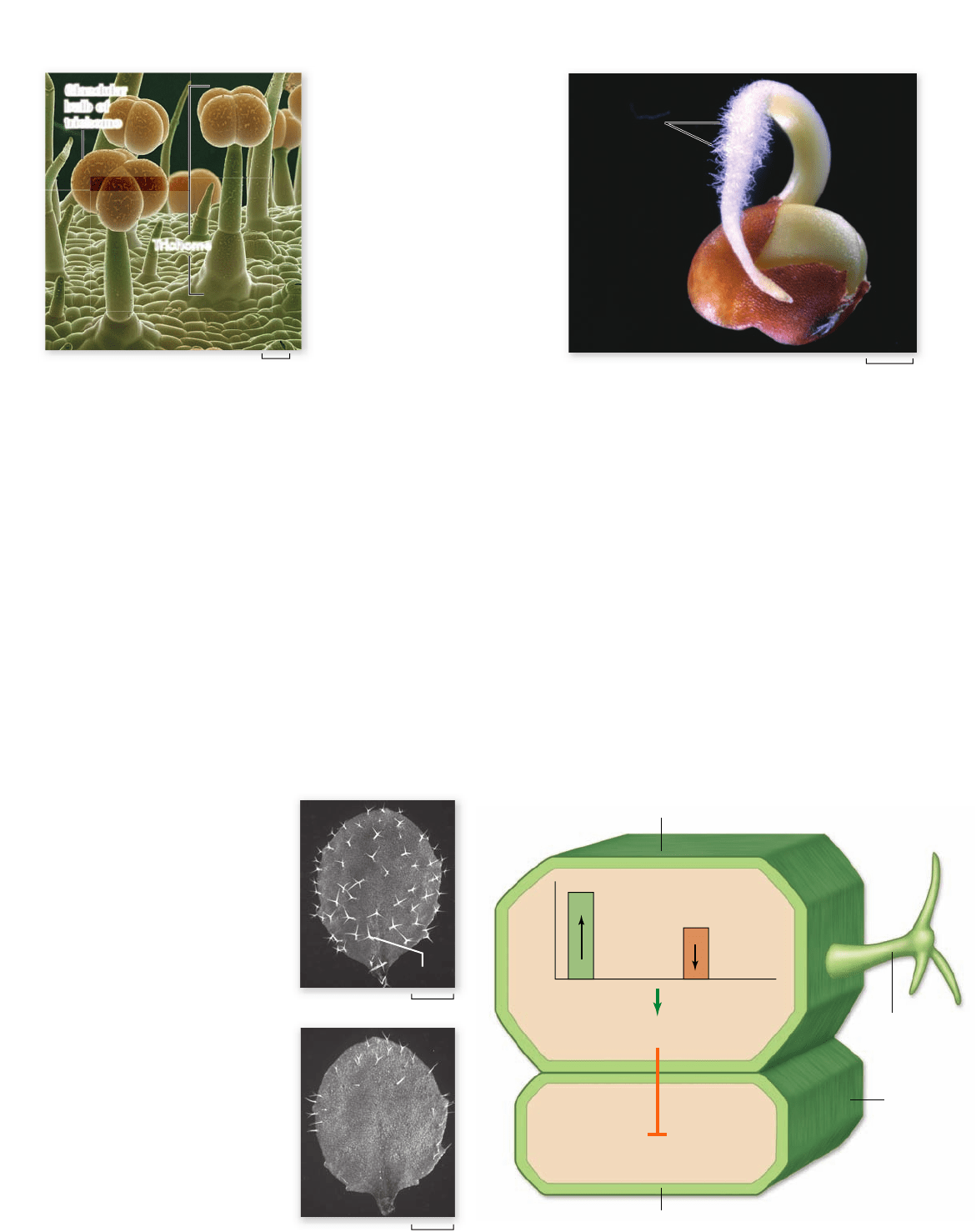
Figure 36.8
Trichomes. The
trichomes with tan,
bulbous tips on this
tomato plant are
glandular trichomes.
These trichomes secrete
substances that can
literally glue insects to
the trichome.
As a root grows, the extent of the root hair zone remains
roughly constant as root hairs at the older end slough off while new
ones are produced at the apex. Most of the absorption of water and
minerals occurs through root hairs, especially in herbaceous plants.
Root hairs should not be confused with lateral roots, which are
multicellular structures and originate deep within the root. Root
hairs are not found when the dermal tissue system is extended by
the cork cambium, which contributes to the peri derm (outer bark)
of a tree trunk or root. The epidermis gets stretched and broken
with the radial expansion of the axis by the vascular cambium
The first land plants lacked roots, which later evolved
from shoots. Given this common ancestry, it is not surprising
that some of the genes needed for trichome and stomatal
Genes that regulate trichome development have been
identified, including GLABROUS3 (GL3) (figure 36.9) . When
trichome-initiating proteins, like GL3, reach a threshold level
compared with trichome-inhibiting proteins, an epidermal cell
becomes a trichome. Signals from this trichome cell now pre-
vent neighbor cells from expressing trichome-promoting genes
(see figure 36.9).
Root hairs
Root hairs, which are tubular extensions of individual epider-
mal cells, occur in a zone just behind the tips of young, grow-
ing roots (figure 36.10 ). Because a root hair is simply an
extension of an epidermal cell and not a separate cell, no
cross-wall isolates the hair from the rest of the cell. Root hairs
keep the root in intimate contact with the surrounding soil
particles and greatly increase the root’s surface area and effi-
ciency of absorption.
Figure 36.9
Trichome
patterning. Mutants have
revealed genes involved in
regulating the spacing and
development of trichomes in
Arabidopsis. a. Wild type.
b. glaborous3 mutant, which fails to
initiate trichome development.
c. When there is suf cient GL3 in a
cell and the levels of trichome-
inhibiting proteins are suf ciently
low, that cell will develop a
trichome. Once a cell begins
trichome initiation, it signals
neighboring cells and inhibits their
ability to develop trichomes.
Figure 36.10
Root hairs. Root hair cells are a type of
epidermal cell that increase the surface area of the root to enhance
water and mineral uptake.
chapter
36
Plant Form
735www.ravenbiology.com
rav32223_ch36_729-752.indd 735rav32223_ch36_729-752.indd 735 11/17/09 12:16:44 PM11/17/09 12:16:44 PM
Apago PDF Enhancer
a.
b. c.
5.8 µm 120 µm 22 µm
Parenchyma cells have functional nuclei and are capable
of dividing, and they usually remain alive after they mature; in
some plants (for example, cacti), they may live to be over
100 years old. The majority of cells in fruits such as apples are
parenchyma. Some parenchyma contain chloroplasts, especially
in leaves and in the outer parts of herbaceous stems. Such
photo synthetic parenchyma tissue is called chlorenchyma.
Collenchyma
If celery “strings” have ever been caught between your teeth, you
are familiar with tough, flexible collenchyma cells. Like paren-
chyma cells, collenchyma cells have living protoplasts and may
live for many years. These cells, which are usually a little longer
than wide, have walls that vary in thickness (figure 36.11b).
Flexible collenchyma cells provide support for plant or-
gans, allowing them to bend without breaking. They often form
strands or continuous cylinders beneath the epidermis of stems
or leaf petioles (stalks) and along the veins in leaves. Strands of
collenchyma provide much of the support for stems in the pri-
mary plant body.
Sclerenchyma
Sclerenchyma cells have tough, thick walls. Unlike collenchyma
and parenchyma, they usually lack living protoplasts at matu-
rity. Their secondary cell walls are often impregnated with
lignin, a highly branched polymer that makes cell walls more
rigid; for example, lignin is an important component in wood.
Cell walls containing lignin are said to be lignified. Lignin is
common in the walls of plant cells that have a structural or
mechanical function. Some kinds of cells have lignin deposited
in primary as well as secondary cell walls.
Sclerenchyma is present in two general types: fibers and
sclereids. Fibers are long, slender cells that are usually grouped
differentiation in shoot epidermal cells also play a role in root
hair development.
Inquiry question
?
Identify three dermal tissue traits that are adaptive for
a terrestrial lifestyle and explain why these traits are
advantageous.
Ground tissue cells perform many
functions, including storage,
photosynthesis, and support
Ground tissue consists primarily of thin-walled parenchyma cells
that function in storage, photosynthesis, and secretion. Other
ground tissue, composed of collenchyma cells and sclerenchyma
cells, provide support and protection.
Parenchyma
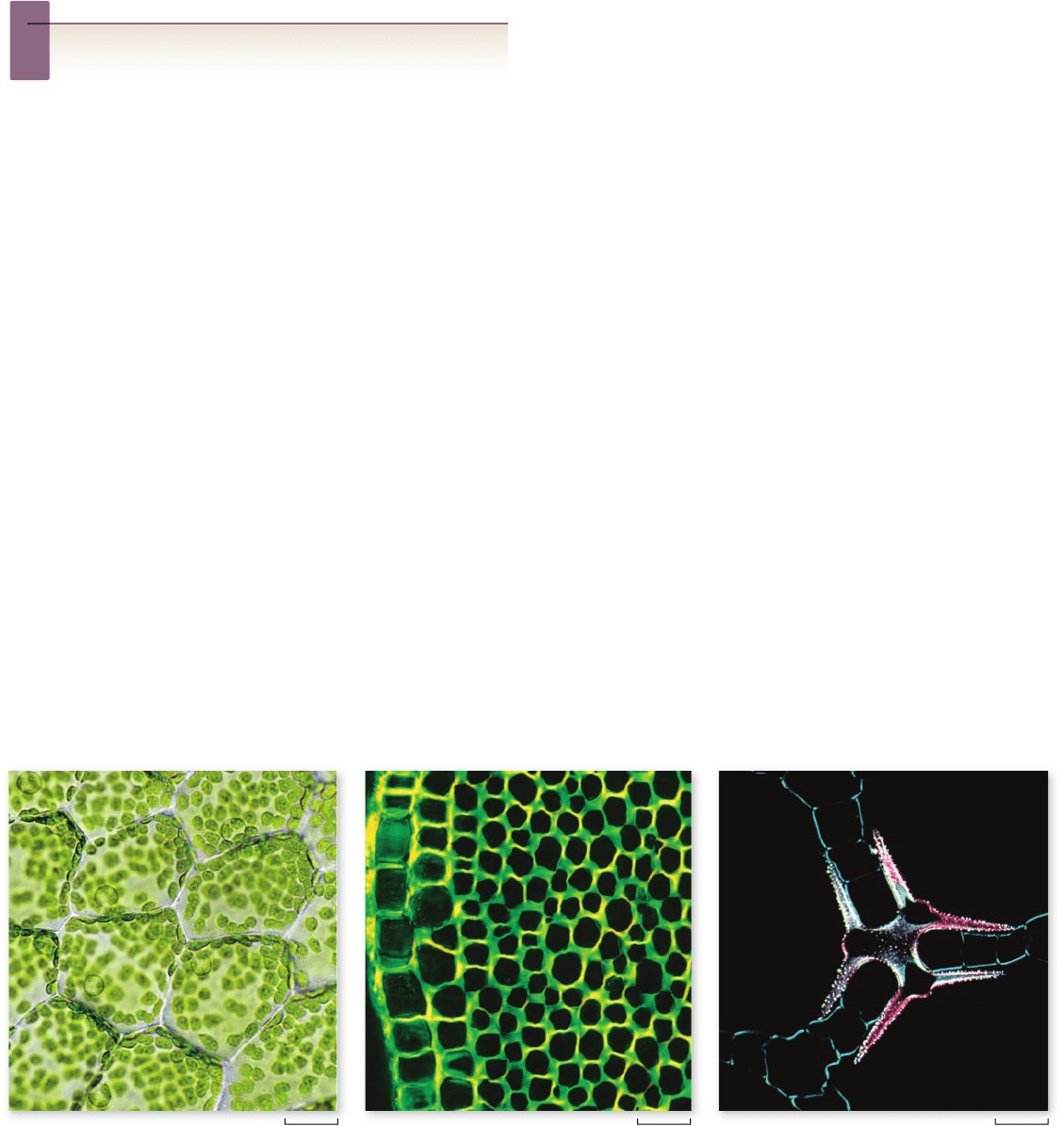
Parenchyma cells are the most common type of plant cell. They
have large vacuoles, thin walls, and are initially (but briefly) more
or less spherical. These cells, which have living protoplasts, push
up against each other shortly after they are produced, however,
and assume other shapes, often ending up with 11 to 17 sides.
Parenchyma cells may live for many years; they function in
storage of food and water, photosynthesis, and secretion. They
are the most abundant cells of primary tissues and may also oc-
cur, to a much lesser extent, in secondary tissues (figure 36.11a) .
Most parenchyma cells have only primary walls, which are walls
laid down while the cells are still maturing. Parenchyma are less
specialized than other plant cells, although many variations oc-
cur with special functions, such as nectar and resin secretion or
storage of latex, proteins, and metabolic wastes.
Figure 36.11
The three types of ground tissue. a. Parenchyma cells. Only primary cell walls are seen in this cross section of
parenchyma cells from grass. b. Collenchyma cells. Thickened side walls are seen in this cross section of collenchyma cells from a young
branch of elderberry (Sambucus). In other kinds of collenchyma cells, the thickened areas may occur at the corners of the cells or in other kinds
of strips. c. Sclereids. Clusters of sclereids (“stone cells”), stained red in this preparation. The surrounding thin-walled cells, stained green, are
parenchyma. Sclereids are one type of sclerenchyma tissue, which also contains bers.
736
part
VI
Plant Form and Function
rav32223_ch36_729-752.indd 736rav32223_ch36_729-752.indd 736 11/16/09 11:41:04 AM11/16/09 11:41:04 AM
Apago PDF Enhancer
100 µm
45 µm
Tracheid
V
essel
Pits
Water flow
Perforation plate
Vessel
member
Pits
broken stream through the xylem from the roots up through
the shoot and into the leaves. When the water reaches the
leaves, much of it diffuses in the form of water vapor into the
intercellular spaces and out of the leaves into the surrounding
air, mainly through the stomata. This diffusion of water vapor
from a plant is known as transpiration (see chapter 38). In ad-
dition to conducting water, dissolved minerals, and inorganic
ions such as nitrates and phosphates throughout the plant, xy-
lem supplies support for the plant body.
Vessel members tend to be shorter and wider than tra-
cheids. When viewed with a microscope, they resemble bever-
age cans with both ends removed. Both vessel members and
tra cheids have thick, lignified secondary walls and no living
protoplasts at maturity. Lignin is produced by the cell and se-
creted to strengthen the cellulose cell walls before the proto-
plast dies, leaving only the cell wall.
Tracheids contain pits, which are small, mostly rounded-to-
elliptical areas where no secondary wall material has been depos-
ited. The pits of adjacent cells occur opposite one another; the
continuous stream of water flows through these pits from tracheid
to tracheid. In contrast, vessel members, which are joined end to
end, may be almost completely open or may have bars or strips of
wall material across the open ends (see figure 36.12). Vessels ap-
pear to conduct water more efficiently than do the overlapping
strands of tracheids. We know this partly because vessel members
have evolved from tracheids independently in several groups of
plants, suggesting that they are favored by natural selection.
In addition to conducting cells, xylem typically includes
fibers and parenchyma cells (ground tissue cells). It is probable
that some types of fibers have evolved from tracheids, becom-
ing specialized for strengthening rather than conducting. The
parenchyma cells, which are usually produced in horizontal
together in strands. Linen, for example, is woven from strands of
sclerenchyma fibers that occur in the phloem of flax (Linum spp.)
plants. Sclereids are variable in shape but often branched. They
may occur singly or in groups; they are not elongated, but may
have many different forms, including that of a star. The gritty
texture of a pear is caused by groups of sclereids that occur
throughout the soft flesh of the fruit (figure 36.11c). Sclereids are
also found in hard seed coats. Both of these tough, thick-walled
cell types serve to strengthen the tissues in which they occur.
Vascular tissue conducts water and nutrients
throughout the plant
Vascular tissue, as mentioned earlier, includes two kinds of
conducting tissues: (1) xylem, which conducts water and dis-
solved minerals, and (2) phloem, which conducts a solution of
carbohydrates —mainly sucrose—used by plants for food. The
phloem also transports hormones, amino acids, and other sub-
stances that are necessary for plant growth. Xylem and phloem
differ in structure as well as in function.
Xylem
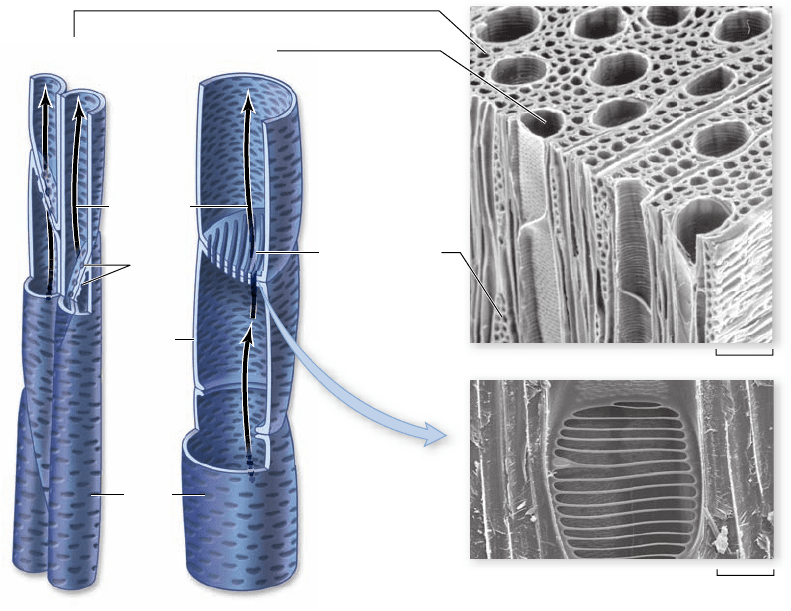
Xylem, the principal water-conducting tissue of plants, usually
contains a combination of vessels, which are continuous tubes
formed from dead, hollow, cylindrical cells arranged end-to-
end, and tracheids, which are dead cells that taper at the ends
and overlap one another (figure 36.12) . Primary xylem is de-
rived from the procambium produced by the apical meristem.
Secondary xylem is formed by the vascular cambium, a lateral
meristem. Wood consists of accumulated secondary xylem.
In some plants (but not flowering plants), tracheids are
the only water-conducting cells present; water passes in an un-
Figure 36.12
Comparison
between tracheids and vessel
members. In tracheids, the water
passes from cell to cell by means of
pits. In vessel members, water moves
by way of perforation plates (as seen in
the photomicrograph in this gure).
In gymnosperm wood, tracheids both
conduct water and provide support; in
most kinds of angiosperms, vessels are
present in addition to tracheids. These
two types of cells conduct water, and
bers provide additional support. The
wood of red maple, Acer rubrum,
contains both tracheids and vessels as
seen in the electron micrographs in
this gure.
chapter
36
Plant Form
737www.ravenbiology.com
rav32223_ch36_729-752.indd 737rav32223_ch36_729-752.indd 737 11/16/09 11:41:08 AM11/16/09 11:41:08 AM
Apago PDF Enhancer
2 µm
Sieve tube
Sieve-tube
member
Plasmodesma
Nucleus
Companion cell
Sieve plate
Water and
nutrient flow
Cell membrane
a
.
b.
are living, but most sieve cells and all sieve-tube members lack
a nucleus at maturity.
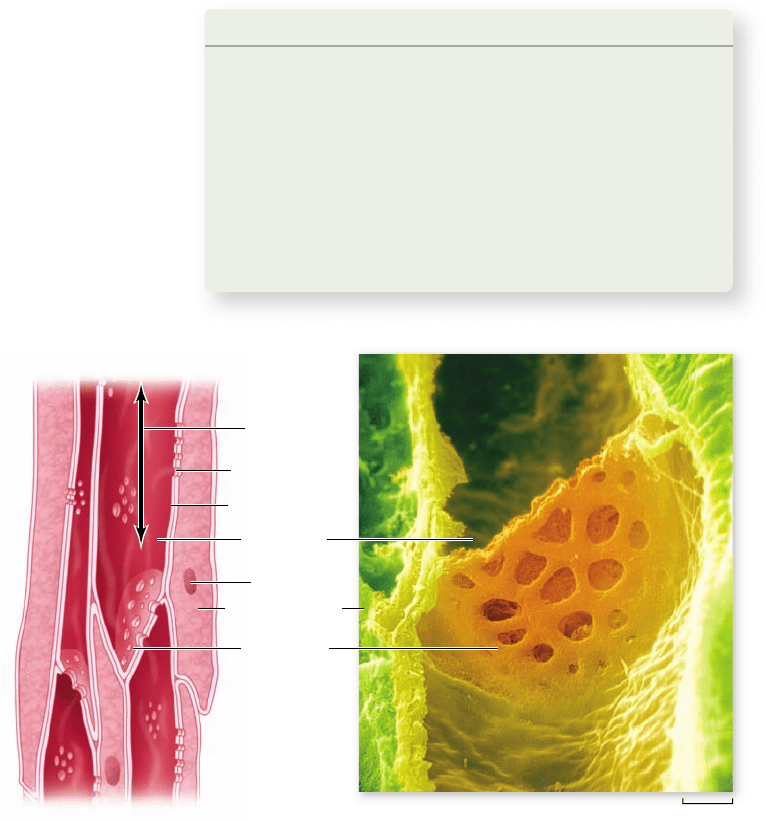
In sieve-tube members, some sieve areas have larger pores
and are called sieve plates (figure 36.13) . Sieve-tube members
occur end to end, forming longitudinal series called sieve tubes.
Sieve cells are less specialized than sieve-tube members, and
the pores in all of their sieve areas are roughly of the same di-
ameter. Sieve-tube members are more specialized, and presum-
ably, more efficient than sieve cells.
Each sieve-tube member is associated with an adjacent,
specialized parenchyma cell known as a companion cell. Com-
panion cells apparently carry out some of the metabolic func-
tions needed to maintain the associated sieve-tube member. In
angiosperms, a common initial cell divides asymmetrically to
produce a sieve-tube member cell and its companion cell. Com-
panion cells have all the components of normal parenchyma
cells, including nuclei, and numerous plasmodesmata (cytoplas-
mic connections between adjacent cells) connect their cyto-
plasm with that of the associated sieve-tube members.
Sieve cells in nonflowering plants have albuminous cells
that function as companion cells. Unlike a companion cell, an
albuminous cell is not necessarily derived from the same mother
cell as its associated sieve cell. Fibers and parenchyma cells are
often abundant in phloem.
Learning Outcomes Review 36.2
Dermal tissue protects a plant from its environment and contains specialized
cells such as guard cells, trichomes, and root hairs. Ground tissue serves
several functions, including storage (parenchyma cells), photosynthesis
(specialized parenchyma called chlorenchyma), and structural support
(collenchyma and sclerenchyma). Vascular tissue carries water through the
xylem (primarily vessels) and nutrients through the phloem (primarily sieve-
tube members).
■ Contrast the structure and function of mature vessels
and sieve-tube members.
rows called rays by special ray initials of the vascular cambium,
function in lateral conduction and food storage. (An initial is
another term for a meristematic cell. It divides to produce an-
other initial and a cell that differentiates.)
In cross sections of woody stems and roots, the rays can
be seen radiating out from the center of the xylem like the
spokes of a wheel. Fibers are abundant in some kinds of wood,
such as oak (Quercus spp.), and the wood is correspondingly
dense and heavy. The arrangements of these and other kinds of
cells in the xylem make it possible to identify most plant genera
and many species from their wood alone.
Over 2000 years ago paper as we recognize it today was
made in China by mashing herbaceous plants in water and sepa-
rating out a thin layer of phloem fibers on a screen. Not until
the third century of the common era did the secret of making
paper make its way out of China. Today the ever-growing de-
mand for paper is met by extracting xylem fibers from wood,
including spruce, that is relatively soft, having fewer ray fibers
than oak. The lignin-rich cell walls yield brown paper that is
often bleached. In addition, tissues from many other plants have
been developed as sources of paper, including kenaf and hemp.
United States paper currency is 75% cotton and 25% flax.
Phloem
Phloem, which is located toward the outer part of roots and
stems, is the principal food-conducting tissue in vascular plants.
If a plant is girdled (by removing a substantial strip of bark down
to the vascular cambium around the entire circumference), the
plant eventually dies from starvation of the roots.
Food conduction in phloem is carried out through two
kinds of elongated cells: sieve cells and sieve-tube members.
Gymnosperms, ferns, and horsetails have only sieve cells; most
angiosperms have sieve-tube members. Both types of cells have
clusters of pores known as sieve areas because the cell walls re-
semble sieves. Sieve areas are more abundant on the overlap-
ping ends of the cells and connect the protoplasts of adjoining
sieve cells and sieve-tube members. Both of these types of cells
Figure 36.13
A sieve-tube member.
a. Sieve-tube member cells are stacked, with
sieve plates forming the connection. The
narrow cell with the nucleus at the right of the
sieve-tube member is a companion cell. This
cell nourishes the sieve-tube members, which
have plasma membranes, but no nuclei.
b. Looking down into sieve plates in squash
phloem reveals the perforations through which
sucrose and hormones move.
© Dr. Richard Kessel & Dr. Gene Shih/Visuals Unlimited
738
part
VI
Plant Form and Function
rav32223_ch36_729-752.indd 738rav32223_ch36_729-752.indd 738 11/16/09 11:41:12 AM11/16/09 11:41:12 AM
Apago PDF Enhancer
Zone of
maturation
Zone of
elongation
Zone of
cell division
Epidermis
Ground
meristem
Procambium
Columella
cells
Protoderm
Endodermis
Ground
tissue
Vascular
tissue
Quiescent
center
Root in
cross-section
Apical
meristem
Root cap
dermal tissue
ground tissue
vascular tissue
Root hair
400 µm
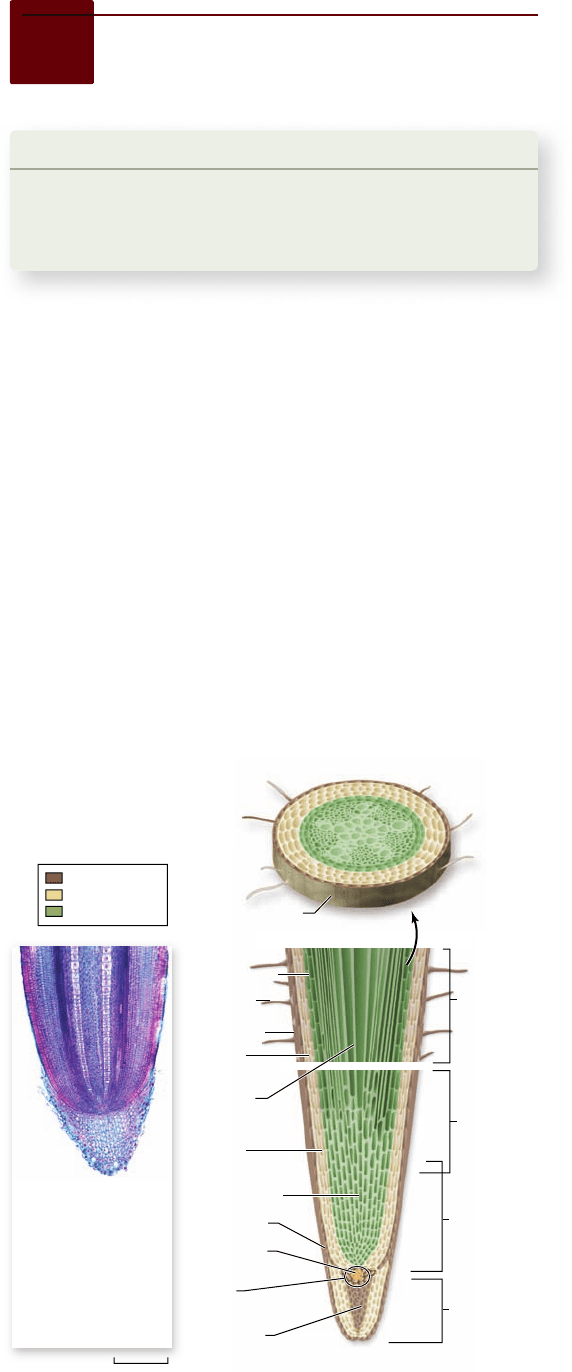
The root cap
The root cap has no equivalent in stems. It is composed of two
types of cells: the inner columella cells (they look like columns),
and the outer, lateral root cap cells, which are continuously re-
plenished by the root apical meristem. In some plants with
larger roots, the root cap is quite obvious. Its main function is
to protect the delicate tissues behind it as growth extends the
root through mostly abrasive soil particles.
Golgi bodies in the outer root cap cells secrete and re-
lease a slimy substance that passes through the cell walls to the
outside. The root cap cells, which have an average life of less
than a week, are constantly being replaced from the inside,
forming a mucilaginous lubricant that eases the root through
the soil. The slimy mass also provides a medium for the growth
of beneficial nitrogen-fixing bacteria in the roots of plants such
as legumes. A new root cap is produced when an existing one is
artificially or accidentally removed from a root.
The root cap also functions in the perception of gravity.
The columella cells are highly specialized, with the endoplas-
mic reticulum in the periphery and the nucleus located at either
the middle or the top of the cell. They contain no large vacu-
oles. Columella cells contain amyloplasts (plastids with starch
grains) that collect on the sides of cells facing the pull of gravity.
When a potted plant is placed on its side, the amyloplasts drift
or tumble down to the side nearest the source of gravity, and
the root bends in that direction.
Lasers have been used to ablate (kill) individual columella
cells in Arabidopsis. It turns out that only two columella cells are
sufficient for gravity sensing! The precise nature of the gravita-
tional response is unknown, but some evidence indicates that
calcium ions in the amyloplasts influence the distribution of
growth hormones (auxin in this case) in the cells. Multiple sig-
naling mechanisms may exist, because bending has been observed
in the absence of auxin. A current hypothesis is that an electrical
signal moves from the columella cell to cells in the elongation
zone (the region closest to the zone of cell division).
The zone of cell division
The apical meristem is located in the center of the root tip in
the area protected by the root cap. Most of the activity in this
zone of cell division takes place toward the edges of the meri-
stem, where the cells divide every 12 to 36 hours, often coordi-
nately, reaching a peak of division once or twice a day.
Most of the cells are essentially cuboidal, with small vacu-
oles and proportionately large, centrally located nuclei. These
rapidly dividing cells are daughter cells of the apical meristem.
A group of cells in the center of the root apical meristem,
termed the quiescent center, divide only very infrequently. The
presence of the quiescent center makes sense if you think about
a solid ball expanding—the outer surface would have to in-
crease far more rapidly than the very center.
The apical meristem daughter cells soon subdivide into the
three primary tissues previously discussed: protoderm, procambi-
um, and ground meristem. Genes have been identified in the rela-
tively simple root of Arabidopsis that regulate the patterning of these
tissue systems. The patterning of these cells begins in this zone, but
the anatomical and morphological expression of this patterning is
not fully revealed until the cells reach the zone of maturation.
36.3
Roots: Anchoring and
Absorption Structures
Learning Outcomes
Describe the four regions of a typical root.1.
Explain the function of root hairs.2.
Describe functions of modified roots.3.
Roots have a simpler pattern of organization and development
than stems, and we will consider them first. Keep in mind, how-
ever, that roots evolved after shoots and are a major innovation
for terrestrial living.
Roots are adapted for growing underground
and absorbing water and solutes
Four regions are commonly recognized in developing roots:
the root cap, the zone of cell division, the zone of elongation, and the
zone of maturation (figure 36.14 ). In these last three zones, the
boundaries are not clearly defined.
When apical initials divide, daughter cells that end up on
the tip end of the root become root cap cells. Cells that divide
in the opposite direction pass through the three other zones
before they finish differentiating. As you consider the different
zones, visualize the tip of the root moving deeper into the soil,
actively growing. This counters the static image of a root that
diagrams and photos convey.
Figure 36.14
Root structure. A root tip in corn, Zea mays.
chapter
36
Plant Form
739www.ravenbiology.com
rav32223_ch36_729-752.indd 739rav32223_ch36_729-752.indd 739 11/16/09 11:41:15 AM11/16/09 11:41:15 AM
Apago PDF Enhancer
Hair cell
(no WER)
Nonhair
cell (WER
expressed)
b. a.
WER (wild type) wer (mutant)
Root tip Epidermal cell
WER
No
WER
No
WER
No
WER
Nonhair
Hair will de
velop in
zone of maturation
Hair will develop in
zone of maturation
50 µm
SCR is expressed only
in endodermal cells
b.a.
SCR (wild type) scr (mutant)
Root tip
Endodermal
cell
SCR
Cell with
ground and
endodermal
traits
Asymmetrical
division
Ground
cell
Ground
meristem
cell
2 layers of cells
Root tip
Ground
meristem
cell
SCR
400 μm
Figure 36.16
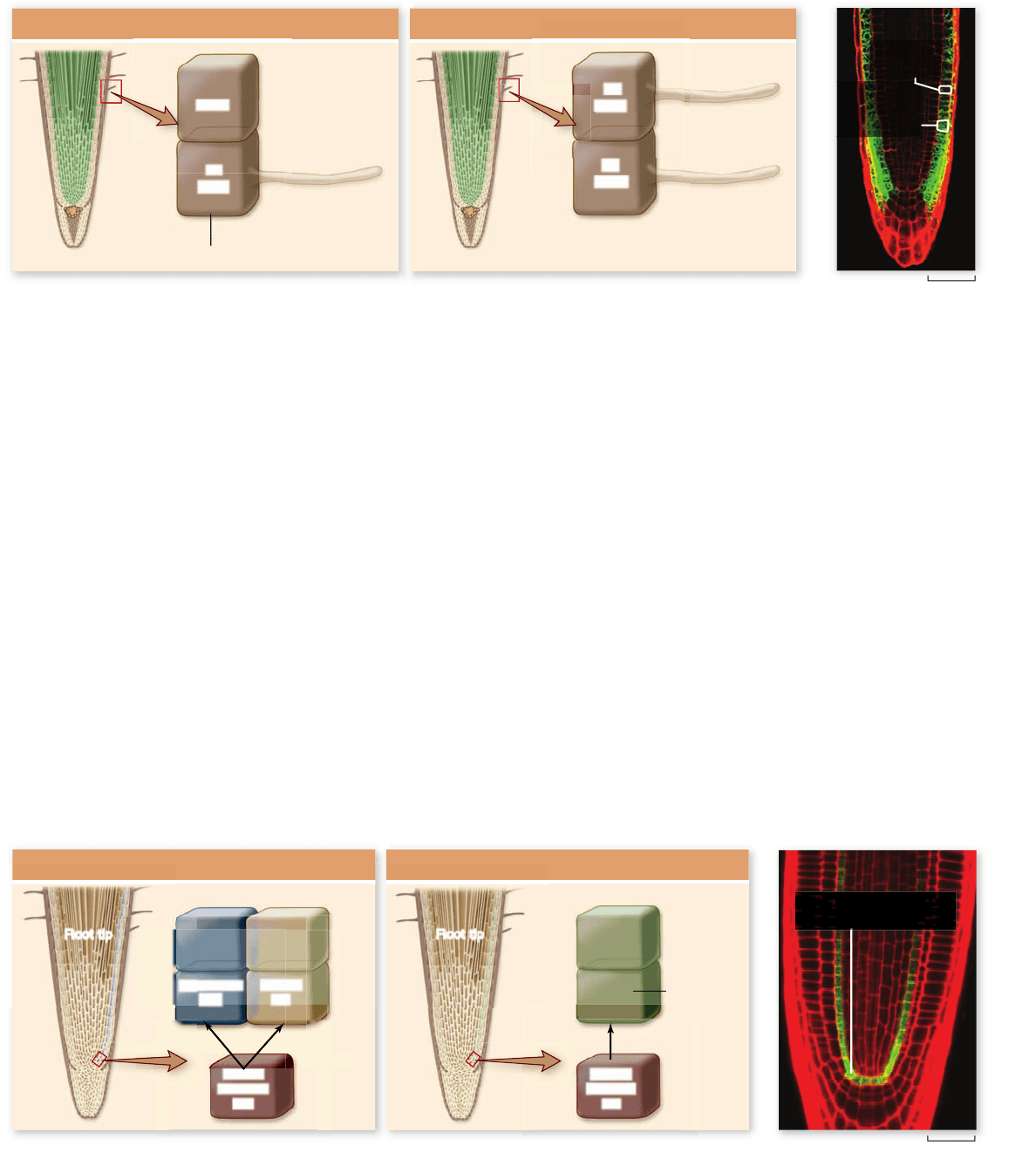
Scarecrow regulates asymmetrical cell division. a. SCR is needed for an asymmetrical cell division leading to the
differentiation of daughter cells into endodermal and ground cells. b. The SCR promoter was attached to a gene coding for a green uorescent
protein to nd out exactly where in the wild type root SCR is expressed. SCR is only expressed in the endodermal cells, not the ground cells.
Figure 36.15
Tissue-speci c gene expression. a. The WEREWOLF gene of Arabidopsis is expressed in some, but not all, epidermal
cells and suppresses root hair development. The wer mutant is covered with root hairs. b. The WER promoter was attached to a gene coding
for a green uorescent protein and used to make a transgenic plant. The green uorescence shows the nonhair epidermal cells where the gene
is expressed. The red visually indicates cell boundaries because cell walls auto uoresce.
The zone of elongation
In the zone of elongation, roots lengthen because the cells
produced by the primary meristems become several times lon-
ger than wide, and their width also increases slightly. The small
vacuoles present merge and grow until they occupy 90% or
more of the volume of each cell. No further increase in cell size
occurs above the zone of elongation. The mature parts of the
root, except for increasing in girth, remain stationary for the
life of the plant.
The zone of maturation
The cells that have elongated in the zone of elongation become
differentiated into specific cell types in the zone of maturation
(see figure 36.14). The cells of the root surface cylinder mature
into epidermal cells, which have a very thin cuticle, and include
both root hair and nonhair cells. Although the root hairs are not
visible until this stage of development, their fate was established
much earlier, as you saw with the expression patterns of WER
(see figure 36.15).
For example, the WEREWOLF (WER) gene is required for
the patterning of the two root epidermal cell types, those with
and those without root hairs (figure 36.15). Plants with the wer
mutation have an excess of root hairs because WER is needed to
prevent root hair development in nonhair epidermal cells. Simi-
larly, the SCARECROW (SCR) gene is necessary in ground cell
differentiation (figure 36.16). A ground meristem cell undergoes
an asymmetrical cell division that gives rise to two nested cylin-
ders of cells from one if SCR is present. The outer cell layer be-
comes ground tissue and serves a storage function. The inner cell
layer forms the endodermis, which regulates the intercellular
flow of water and solutes into the vascular core of the root (see
figure 36.5). The scr mutant, in contrast, forms a single layer of
cells that have both endodermal and ground cell traits.
SCR illustrates the importance of the orientation of cell
division. If a cell’s relative position changes because of a mistake
in cell division or the ablation of another cell, the cell develops
according to its new position. The fate of most plant cells is
determined by their position relative to other cells.
740
part
VI
Plant Form and Function
rav32223_ch36_729-752.indd 740rav32223_ch36_729-752.indd 740 11/16/09 11:41:17 AM11/16/09 11:41:17 AM
Apago PDF Enhancer
1250 µm
Epidermis
Cortex
Endodermis
Location of
Casparian strip
Pericycle
Primary phloem
Primary xylem
Pith
Monocot
Eudicot
Casparian strip
Endodermal cell
H
2
O
H
2
O
Endodermis
Cortex
Epidermis
Endodermis
Location of
Casparian strip
Primary xylem
Pericycle
Primary phloem
Xylem
Phloem
Cortex
Pericycle
48 µm
385 µm
8 µm
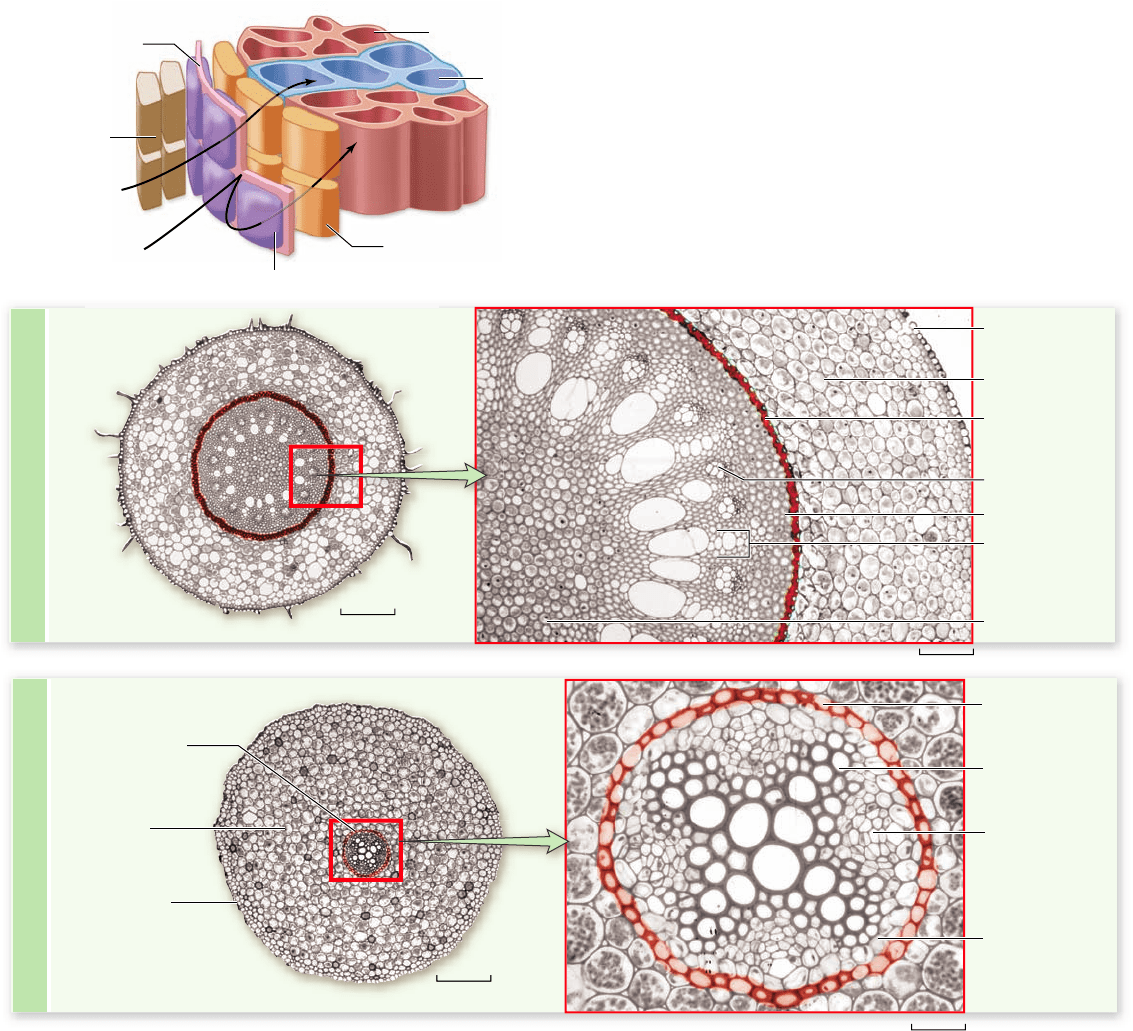
adjacent endodermal cell wall perpendicular to the root’s surface
(see figure 36.17). These strips block transport between cells.
The two surfaces that are parallel to the root surface are the only
way into the vascular tissue of the root, and the plasma mem-
branes control what passes through. Plants with a scr mutation
lack this waterproof Casparian strip.
All the tissues interior to the endodermis are collectively
referred to as the stele. Immediately adjacent and interior to the
endodermis is a cylinder of parenchyma cells known as the peri-
cycle. Pericycle cells divide, even after they mature. They can
give rise to lateral (branch) roots or, in eudicots, to the two lateral
meristems, the vascular cambium and the cork cambium.
The water-conducting cells of the primary xylem are dif-
ferentiated as a solid core in the center of young eudicot roots. In
a cross section of a eudicot root, the central core of primary xy-
lem often is somewhat star-shaped, having from two to several
radiating arms that point toward the pericycle (see figure 36.17).
In monocot (and a few eudicot) roots, the primary xylem is in
discrete vascular bundles arranged in a ring, which surrounds
Root hairs can number over 37,000 cm
2
of root surface
and many billions per plant; they greatly increase the surface
area and therefore the absorptive capacity of the root. Symbi-
otic bacteria that fix atmospheric nitrogen into a form usable by
legumes enter the plant via root hairs and “instruct” the plant
to create a nitrogen-fixing nodule around it (see chapter 39).
Parenchyma cells are produced by the ground meristem
immediately to the interior of the epidermis. This tissue, called
the cortex, may be many cell layers wide and functions in food
storage. As just described, the inner boundary of the cortex
differentiates into a single-layered cylinder of endodermis, after
an asymmetrical cell division regulated by SCR (see figures 36.16
and 36.17). Endodermal primary walls are impregnated with sub-
erin, a fatty substance that is impervious to water. The suberin is
produced in bands, called Casparian strips, that surround each
Figure 36.17
Cross sections of the zone of maturation
of roots. Both monocot and eudicot roots have a Casparian strip
as seen in the cross section of greenbriar (Smilax), a monocot, and
buttercup (Ranunculus), a eudicot. The Casparian strip is a water-
proo ng band that forces water and minerals to pass through the
plasma membranes, rather than through the spaces in the cell walls.
chapter
36
Plant Form
741www.ravenbiology.com
rav32223_ch36_729-752.indd 741rav32223_ch36_729-752.indd 741 11/16/09 11:41:20 AM11/16/09 11:41:20 AM