
Raven P.H., Johnson G.B., Mason K.A. Biology (Ninth Edition)
Подождите немного. Документ загружается.

Apago PDF Enhancer
Zygote Embryo
Shoot apical meristem
Root apical meristem
Cork cambium
Vascular cambium
Leaf primordia
Bud primordia
Shoot elongation
Outer bark
Phloem
Xylem
Inner bark
Wood
Bark
Bark
Leaves
Lateral shoots
Cork cambium
Vascular cambium
Pericycle
Phloem
Xylem
Lateral roots
Root elongation
Outer bark
Inner bark
Wood
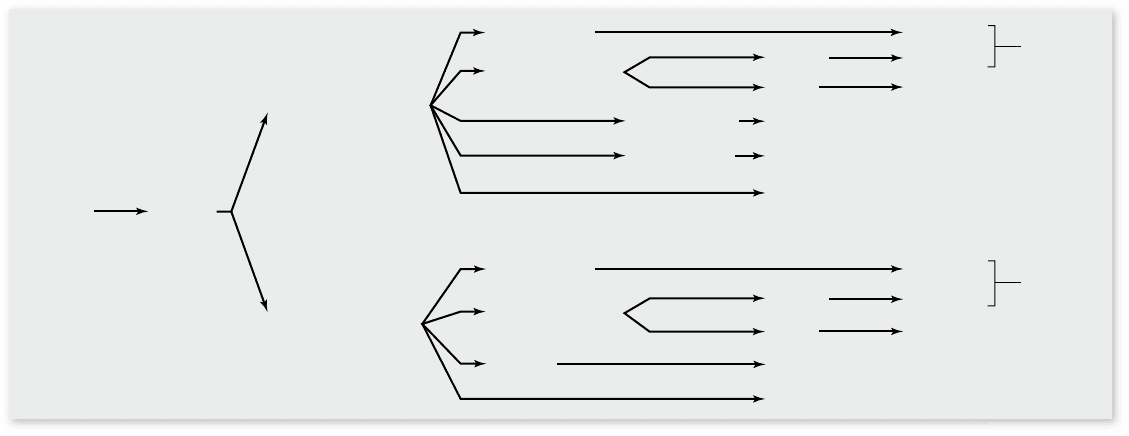
Figure 36.18
Stages in the di erentiation of plant tissues.
parenchyma cells, called pith, at the very center of the root (see
figure 36.17). Primary phloem, composed of cells involved in
food conduction, is differentiated in discrete groups of cells adja-
cent to the xylem in both eudicot and monocot roots.
In eudicots and other plants with secondary growth, part
of the pericycle and the parenchyma cells between the phloem
patches and the xylem become the root vascular cambium,
which starts producing secondary xylem to the inside and sec-
ondary phloem to the outside. Eventually, the secondary tissues
acquire the form of concentric cylinders. The primary phloem,
cortex, and epidermis become crushed and are sloughed off as
more secondary tissues are added.
In the pericycle of woody plants, the cork cambium con-
tributes to the outer bark, which will be discussed in more de-
tail when we look at stems. In the case of secondary growth in
eudicot roots, everything outside the stele is lost and replaced
with bark. Figure 36.18 summarizes the process of differentia-
tion that occurs in plant tissue.
Modi ed roots accomplish specialized functions
Most plants produce either a taproot system, characterized by a
single large root with smaller branch roots, or a fibrous root sys-
tem, composed of many smaller roots of similar diameter. Some
plants, however, have intriguing root modifications with specific
functions in addition to those of anchorage and absorption.
Not all roots are produced by preexisting roots. Any root
that arises along a stem or in some place other than the root of
the plant is called an adventitious root. For example, climbing
plants such as ivy produce roots from their stems; these can
anchor the stems to tree trunks or to a brick wall. Adventitious
root formation in ivy depends on the developmental stage of
the shoot. When the shoot enters the adult phase of develop-
ment, it is no longer capable of initiating these roots. Below we
investigate functions of modified roots.
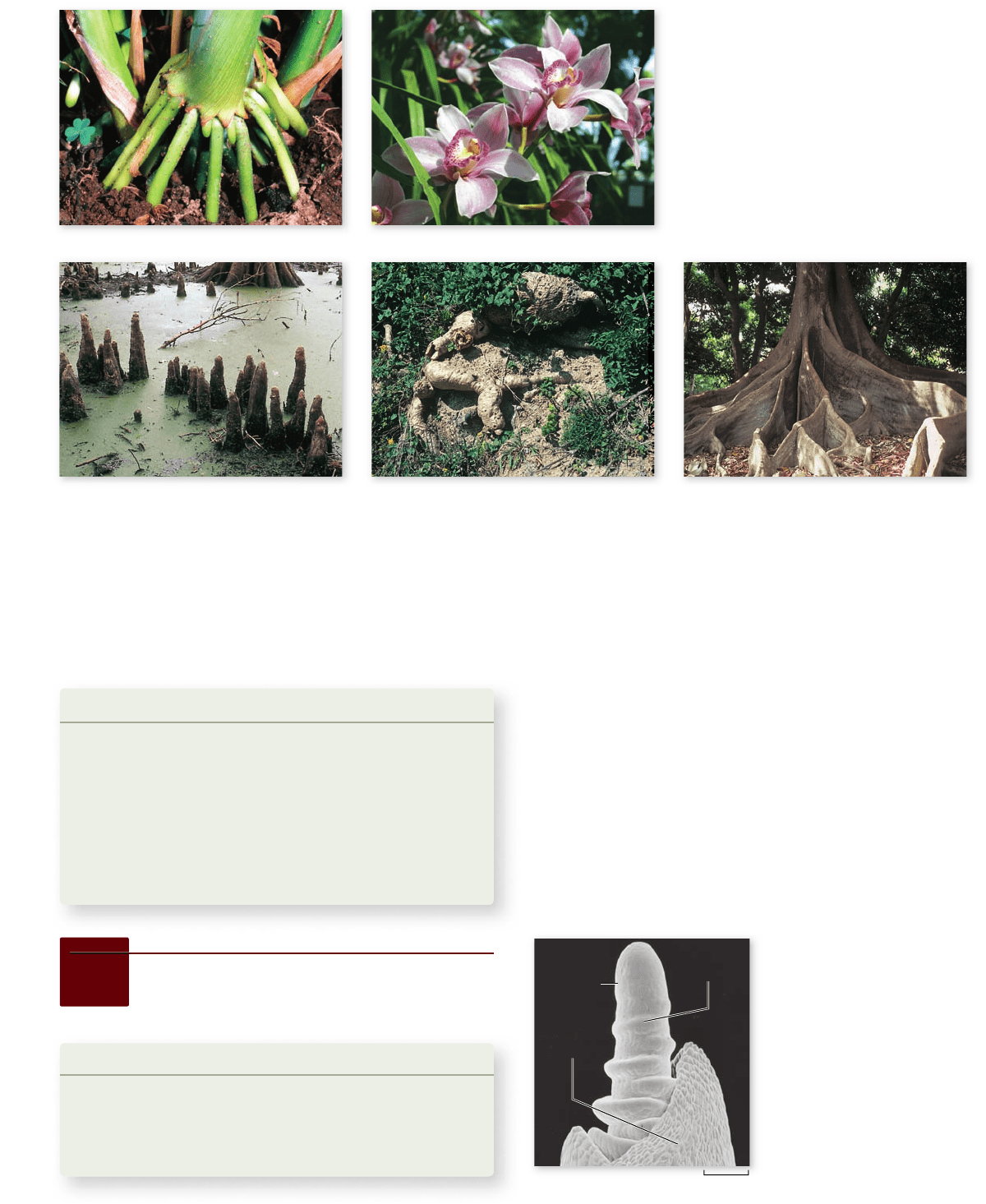
Prop roots. Some monocots, such as corn, produce thick
adventitious roots from the lower parts of the stem. These
so-called prop roots grow down to the ground and brace
the plants against wind ( gure 36.19a) . Adventious roots
are common in wetland plants, allowing them to tolerate
wet conditions.
Aerial roots. Plants such as epiphytic orchids, which are attached
to tree branches and grow unconnected to the ground (but
are not parasites), have roots that extend into the air
( gure 36.19b). Some aerial roots have an epidermis that is
several cell layers thick, an adaptation to reduce water loss.
These aerial roots may also be green and photosynthetic, as
in the vanilla orchid (Vanilla planifolia).
Pneumatophores. Some plants that grow in swamps and other
wet places may produce spongy outgrowths called
pneumatophores from their underwater roots
( gure 36.19c). The pneumatophores commonly extend
several centimeters above water, facilitating oxygen uptake
in the roots beneath ( gure 36.19c).
Contractile roots. The roots from the bulbs of lilies and
from several other plants, such as dandelions, contract
by spiraling to pull the plant a little deeper into the soil
each year, until they reach an area of relatively stable
temperature. The roots may contract to one-third their
original length as they spiral like a corkscrew due to
cellular thickening and constricting.
Parasitic roots. The stems of certain plants that lack
chlorophyll, such as dodder (Cuscuta spp.) , produce
peglike roots called haustoria that penetrate the host
plants around which they are twined. The haustoria
establish contact with the conducting tissues of the host
and effectively parasitize their host. Dodder not only
weakens plants but can also spread disease when it grows
and attaches to several plants.
Food storage roots. The xylem of branch roots of sweet
potatoes and similar plants produce at intervals many
extra parenchyma cells that store large quantities of
carbohydrates. Carrots, beets, parsnips, radishes, and
turnips have combinations of stem and root that also
function in food storage. Cross sections of these roots
reveal multiple rings of secondary growth.
742
part
VI
Plant Form and Function
rav32223_ch36_729-752.indd 742rav32223_ch36_729-752.indd 742 11/16/09 11:41:23 AM11/16/09 11:41:23 AM
Apago PDF Enhancer
a. b.
c. d. e.
Shoot
apical
meristem
Young leaf
primordium
Older leaf
primordium
67 µm
Figure 36.19
Five types of modi ed
roots. a. Maize (corn) prop roots originate
from the stem and keep the plant upright.
b. Epiphytic orchids attach to trees far above
the tropical soil. Their roots are adapted to
obtain water from the air rather than the soil.
c. Pneumatophores (foreground) are spongy
outgrowths from the roots below . d. A water
storage root weighing over 25 kg (60 pounds).
e. Buttress roots of a tropical g tree .
Water storage roots. Some members of the pumpkin family
(Cucurbitaceae), especially those that grow in arid
regions, may produce water storage roots weighing 50 kg
or more ( gure 36.19d).
Buttress roots. Certain species of g and other tropical trees
produce huge buttress roots toward the base of the trunk,
which provide considerable stability ( gure 36.19e).
Learning Outcomes Review 36.3
The root cap protects the root apical meristem and helps to sense gravity.
New cells formed in the zone of cell division grow in length in the zone of
elongation. Cells diff erentiate in the zone of maturation, and root hairs
appear here. Root hairs greatly increase the absorptive surface area of
roots. Modifi ed roots allow plants to carry out many additional functions,
including bracing, aeration, and storage of nutrients and water.
■ Why do you suppose root hairs are not formed in the
region of elongation?
36.4
Stems: Support for
Above-Ground Organs
Learning Outcomes
List the potential products of an axillary bud.1.
Differentiate between cross sections of a monocot stem 2.
and a eudicot stem.
Describe three functions of modified stems.3.
The supporting structure of a vascular plant’s shoot system is
the mass of stems that extend from the root system below
ground into the air, often reaching great height. Stiff stems ca-
pable of rising upward against gravity are an ancient adaptation
that allowed plants to move into terrestrial ecosystems.
Stems carry leaves and owers
and support the plant’s weight
Like roots, stems contain the three types of plant tissue. Stems
also undergo growth from cell division in apical and lateral
meristems. The stem may be thought of as an axis from which
other stems or organs grow. The shoot apical meristems are
capable of producing these new stems and organs.
External stem structure
The shoot apical meristem initiates stem tissue and intermit-
tently produces bulges (primordia ) that are capable of develop-
ing into leaves, other shoots, or even flowers (figure 36.20) .
Figure 36.20
A shoot
apex. Scanning electron
micrograph of the apical
meristem of wheat (Triticum).
chapter
36
Plant Form
743www.ravenbiology.com
rav32223_ch36_729-752.indd 743rav32223_ch36_729-752.indd 743 11/16/09 11:41:23 AM11/16/09 11:41:23 AM
Apago PDF Enhancer
Alternate:
Ivy
Opposite:
Periwinkle
Whorled:
Sweet woodruff
a.
b.
Bundle scar
Terminal bud
Leaf scar
Petiole
Blade
Node
Axillary bud
Terminal
bud scale
scars
Internode
Epidermis
(outer layer)
Pith
Vascular bundle
Xylem
Phloem
Cortex
Collenchyma
(layers below epidermis)
a.
b.
Xylem
Ground tissue
Phloem
Vascular bundle
1176 µm
2353 µm
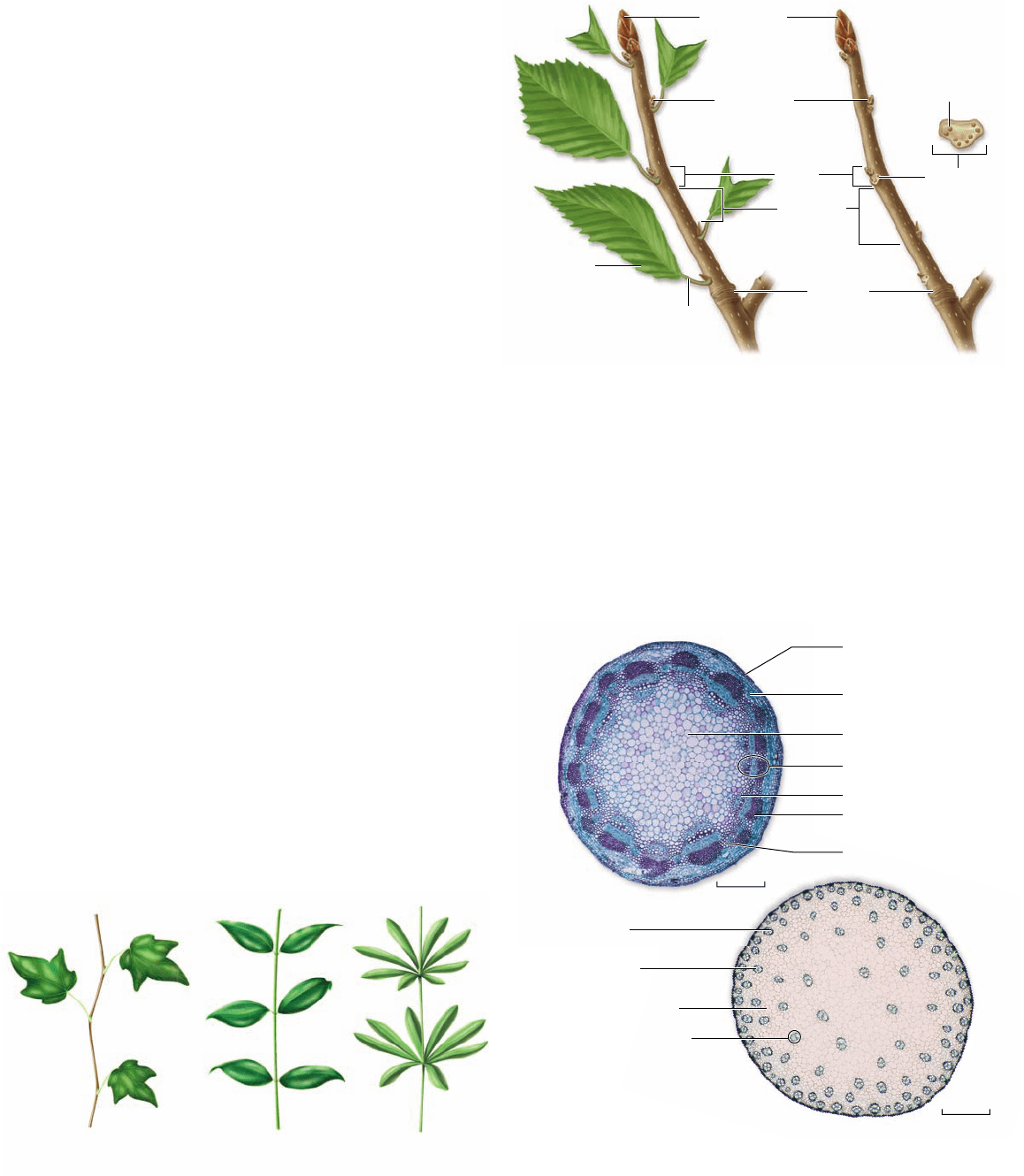
Figure 36.21
Types of leaf arrangements. The three
common types of leaf arrangements are alternate, opposite,
and whorled.
Figure 36.22
A woody twig. a. In summer. b. In winter.
Leaves may be arranged in a spiral around the stem, or they
may be in pairs opposite or alternate to one another; they also
may occur in whorls (circles) of three or more (figure 36.21).
The spiral arrangement is the most common, and for reasons
still not understood, sequential leaves tend to be placed 137.5°
apart. This angle relates to the golden mean, a mathematical
ratio found in nature. The angle of coiling in shells of some
gastropods is the same. The golden mean has been used in
classi cal architecture (the Greek Parthenon wall dimensions),
and even in modern art (for example, in paintings by
Mondrian). In plants, this pattern of leaf arrangement, called
phyllotaxy, may optimize the exposure of leaves to the sun.
The region or area of leaf attachment to the stem is called
a node; the area of stem between two nodes is called an inter-
node. A leaf usually has a flattened blade and sometimes a peti-
ole (stalk). The angle between a leaf’s petiole (or blade) and the
stem is called an axil. An axillary bud is produced in each axil.
This bud is a product of the primary shoot apical meristem, and
it is itself a shoot apical meristem. Axillary buds frequently de-
velop into branches with leaves or may form flowers.
Neither monocots nor herbaceous eudicot stems produce
a cork cambium. The stems in these plants are usually green
and photosynthetic, with at least the outer cells of the cortex
containing chloroplasts. Herbaceous stems commonly have
stomata, and may have various types of trichomes (hairs).
Woody stems can persist over a number of years and de-
velop distinctive markings in addition to the original organs
that form (figure 36.22). Terminal buds usually extend the
length of the shoot system during the growing season. Some
buds, such as those of geraniums, are unprotected, but most
buds of woody plants have protective winter bud scales that
drop off, leaving tiny bud scale scars as the buds expand.
Some twigs have tiny scars of a different origin. A pair of
butterfly-like appendages called stipules (part of the leaf) develop
at the base of some leaves. The stipules can fall off and leave
stipule scars. When the leaves of deciduous trees drop in the fall,
they leave leaf scars with tiny bundle scars, marking where vas-
cular connections were. The shapes, sizes, and other features of
leaf scars can be distinctive enough to identify deciduous plants
in winter, when they lack leaves (see figure 36.22).
Figure 36.23
Stems. Transverse sections of a young stem in
(a) a eudicot, the common sun ower (Helianthus annuus), in which
the vascular bundles are arranged around the outside of the stem;
and (b) a monocot, corn (Zea mays), with characteristically scattered
vascular bundles.
Internal stem structure
A major distinguishing feature between monocot and eudicot
stems is the organization of the vascular tissue system
(figure 36.23) . Most monocot vascular bundles are scattered
throughout the ground tissue system, whereas eudicot vascular
tissue is arranged in a ring with internal ground tissue (pith) and
external ground tissues (cortex). The arrangement of vascular
tissue is directly related to the ability of the stem to undergo
744
part
VI
Plant Form and Function
rav32223_ch36_729-752.indd 744rav32223_ch36_729-752.indd 744 11/16/09 11:41:33 AM11/16/09 11:41:33 AM
Apago PDF Enhancer
a.
b.
c.
Primary xylem
Secondary xylem
Primary phloem
Secondary phloem
Vascular cambium
(lateral meristem)
Vascular cambium
(lateral meristem)
Primary xylem
Secondary xylem
Primary phloem
Secondary phloem
Annual
growth layers
EpidermisPrimary xylem Primary phloem
Heartwood
Sapwood
Vascular cambium
Phloem
Outer bark
Cork cambium
Xylem
Cork
Cork
cambium
Phelloderm
Parenchyma
Periderm
52 µm
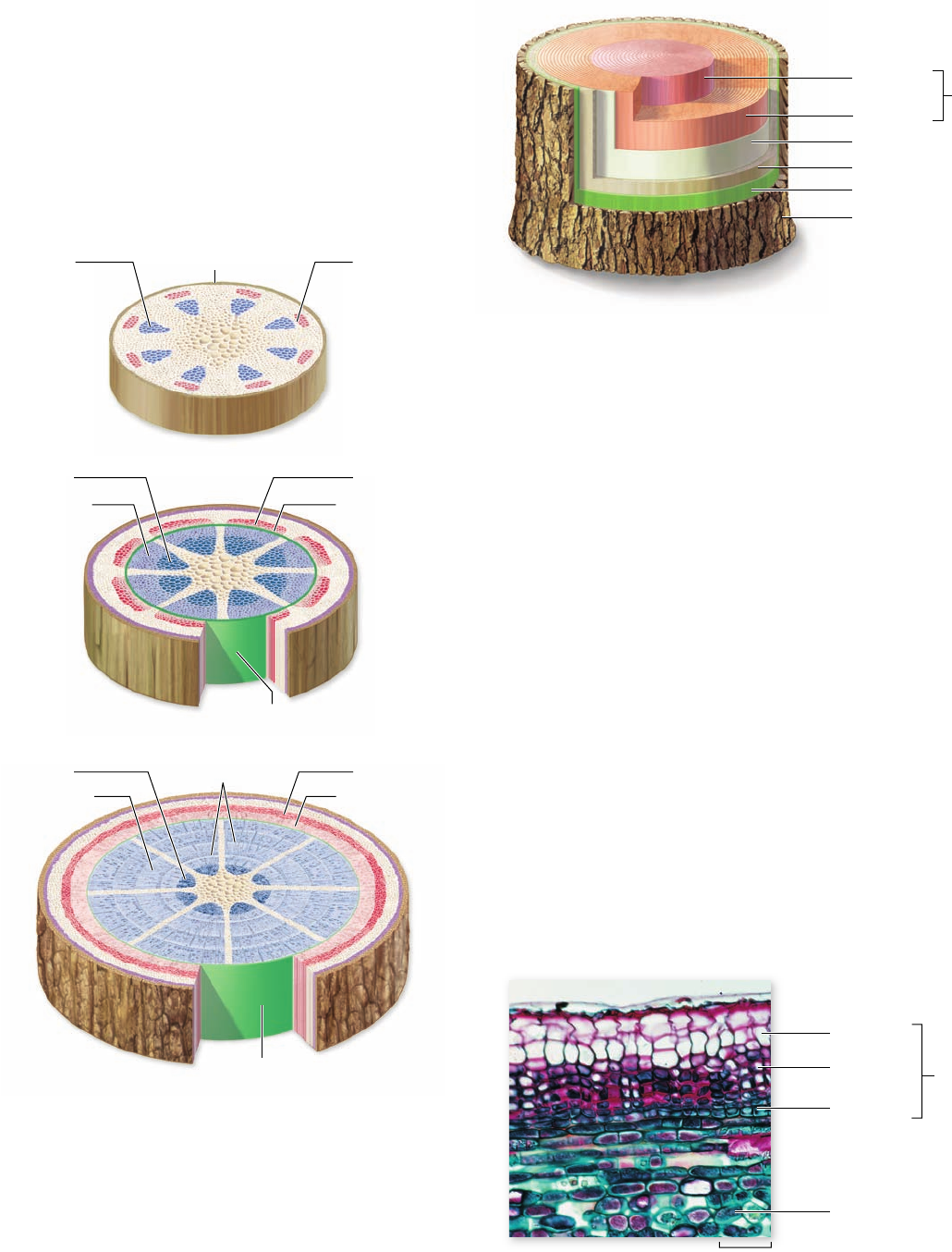
Figure 36.24
Secondary growth. a. Before secondary
growth begins in eudicot stems, primary tissues continue to
elongate as the apical meristems produce primary growth. b. As
secondary growth begins, the vascular cambium produces
secondary tissues, and the stem’s diameter increases. c. In this
four-year-old stem, the secondary tissues continue to widen, and
the trunk has become thick and woody. Note that the vascular
cambium forms a cylinder that runs axially (up and down) in the
roots and shoots that have them.
secondary growth. In eudicots, a vascular cambium may
develop between the primary xylem and primary phloem
(figure 36.24). In many ways, this is a connect-the-dots game in
which the vascular cambium connects the ring of primary vas-
cular bundles. There is no logical way to connect primary
monocot vascular tissue that would allow a uniform increase in
girth. Lacking a vascular cambium, therefore, monocots do not
have secondary growth.
Rings in the stump of a tree reveal annual patterns of vas-
cular cambium growth; cell size varies, depending on growth
conditions (figure 36.25). Large cells form under favorable
conditions such as abundant rainfalls. Rings of smaller cells
mark the seasons where growth is limited. In woody eudicots
and gymnosperms, a second cambium, the cork cambium, arises
in the outer cortex (occasionally in the epidermis or phloem); it
produces boxlike cork cells to the outside and also may produce
parenchyma -like phelloderm cells to the inside (figure 36.26).
The cork cambium, cork, and phelloderm are collectively
referred to as the periderm (see figure 36.26). Cork tissues,
the cells of which become impregnated with water-repellent
su ber in shortly after they are formed and which then die,
constitute the outer bark. The cork tissue cuts off water and
food to the epidermis, which dies and sloughs off. In young
stems, gas exchange between stem tissues and the air takes
place through stomata, but as the cork cambium produces
cork, it also produces patches of unsuberized cells beneath
the stomata. These unsuberized cells, which permit gas ex-
change to continue, are called lenticels (figure 36.27).
Modi ed stems carry out vegetative
propagation and store nutrients
Although most stems grow erect, some have modifications that
serve special purposes, including natural vegetative propagation.
In fact, the widespread artificial vegetative propagation of plants,
Figure 36.25
Tree stump. The vascular cambium produces
rings of xylem (sapwood and nonconducting heartwood) and
phloem, and the cork cambium produces the cork.
Figure 36.26
Section of periderm. An early stage in the
development of periderm in cottonwood, Populus sp.
chapter
36
Plant Form
745www.ravenbiology.com
rav32223_ch36_729-752.indd 745rav32223_ch36_729-752.indd 745 11/16/09 11:41:35 AM11/16/09 11:41:35 AM
Apago PDF Enhancer
a. b.
Lenticel
Periderm
Lenticel
Gas
e
xchange
833 µm
a. b. c.
d. e. f.
Fleshy
leaves
of bulb
Tuber (swollen
tip of stolon)
Tendril
Cladophyll
Leaves
Stolon
Knoblike
stem
Adventitious
roots
Adventitious roots
Runner
Photosynthetic
leaf
Rhizome
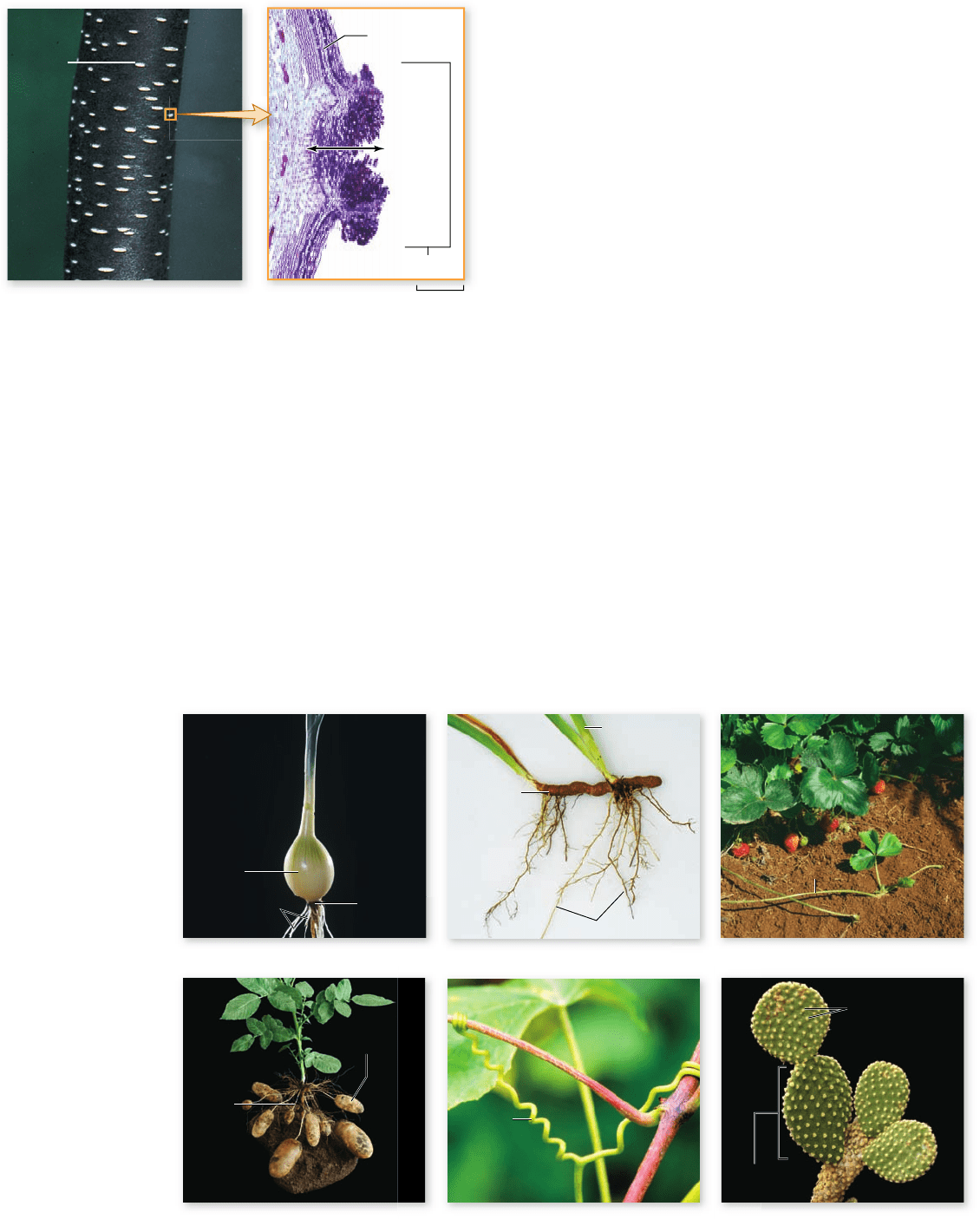
Figure 36.27
Lenticels. a. Lenticels, the numerous small,
pale, raised areas shown here on cherry tree bark (Prunus cerasifera),
allow gas exchange between the external atmosphere and the living
tissues immediately beneath the bark of woody plants. b. Transverse
section through a lenticel in a stem of elderberry, Sambucus canadensis.
next year’s foliage comes from the tip of the shoot apex,
protected by storage leaves from the previous year
Corms. Crocuses, gladioluses, and other popular garden plants
produce corms that super cially resemble bulbs. Cutting
a corm in half, however, reveals no eshy leaves. Instead,
almost all of a corm consists of stem, with a few papery,
brown nonfunctional leaves on the outside, and
adventitious roots below.
Rhizomes. Perennial grasses, ferns, bearded iris, and many
other plants produce rhizomes, which typically are
horizontal stems that grow underground, often close to
the surface ( gure 36.28b). Each node has an
inconspicuous scalelike leaf with an axillary bud; much
larger photosynthetic leaves may be produced at the
rhizome tip. Adventitious roots are produced throughout
the length of the rhizome, mainly on the lower surface.
Runners and stolons. Strawberry plants produce horizontal
stems with long internodes that unlike rhizomes, usually
grow along the surface of the ground. Several runners
may radiate out from a single plant ( gure 36.28c). Some
biologists use the term stolon synonymously with runner;
others reserve the term stolon for a stem with long
internodes (but no roots) that grows underground, as seen
in potato plants (Solanum sp.). A potato itself, however, is
another type of modi ed stem—a tuber.
Tubers. In potato plants, carbohydrates may accumulate at the
tips of rhizomes, which swell, becoming tubers; the
rhizomes die after the tubers mature ( gure 36.28d). The
“eyes” of a potato are axillary buds formed in the axils of
scalelike leaves. These leaves, which are present when the
potato is starting to form, soon drop off; the tiny ridge
adjacent to each “eye” of a mature potato is a leaf scar.
both commercial and private, frequently involves cutting modi-
fied stems into segments, which are then planted, producing
new plants. As you become acquainted with the following modi-
fied stems, keep in mind that stems have leaves at nodes, with
internodes between the nodes, and buds in the axils of the leaves,
whereas roots have no leaves, nodes, or axillary buds.
Bulbs. Onions, lilies, and tulips have swollen underground
stems that are really large buds with adventitious roots at
the base ( gure 36.28a) . Most of a bulb consists of eshy
leaves attached to a small, knoblike stem. For most bulbs,
Figure 36.28
Types of modi ed
stems. a. Bulb.
b. Adventitious roots.
c. Runner. d. Stolon.
e. Tendril.
f. Cladophyll.
746
part
VI
Plant Form and Function
rav32223_ch36_729-752.indd 746rav32223_ch36_729-752.indd 746 11/16/09 11:41:39 AM11/16/09 11:41:39 AM
Apago PDF Enhancer
Shoot apical meristem
Top of developing leaf
YAB
KAN
Activation
PHB and PHV
Bottom of
developing
leaf
kanadi Mutant
Wild-type
Inhibition
36.5
Leaves: Photosynthetic Organs
Learning Outcomes
Distinguish between a simple and a compound leaf.1.
Compare the mesophyll of a monocot leaf with that of a 2.
eudicot leaf.
Leaves, which are initiated as primordia by the apical meristems
(see figure 36.20), are vital to life as we know it because they are
the principal sites of photosynthesis on land, providing the base
of the food chain. Leaves expand by cell enlargement and cell
division. Like arms and legs in humans, they are determinate
structures, which means their growth stops at maturity. Because
leaves are crucial to a plant, features such as their arrangement,
form, size, and internal structure are highly significant and can
differ greatly. Different patterns have adaptive value in differ-
ent environments.
Leaves are an extension of the shoot apical meristem and
stem development. When they first emerge as primordia, they
are not committed to being leaves. Experiments in which very
young leaf primordia are isolated from fern and coleus plants
and grown in culture have demonstrated this feature: If the pri-
mordia are young enough, they will form an entire shoot rather
than a leaf. The positioning of leaf primordia and the initial cell
divisions occur before those cells are committed to the leaf de-
velopmental pathway.
External leaf structure re ects
vascular morphology
Leaves fall into two different morphological groups, which may
reflect differences in evolutionary origin. A microphyll is a leaf
with one vein branching from the vascular cylinder of the stem
and not extending the full length of the leaf; microphylls are
mostly small and are associated primarily with the phylum
Lycophyta (see chapter 30). Most plants have leaves called
megaphylls, which have several to many veins.
Most eudicot leaves have a flattened blade and a slender
stalk, the petiole . The flattening of the leaf blade reflects a shift
from radial symmetry to dorsal –ventral (top–bottom) symmetry.
Leaf flattening increases the photosynthetic surface. Plant biolo-
gists are just beginning to understand how this shift occurs by ana-
lyzing mutants lacking distinct tops and bottoms (figure 36.29).
In addition, leaves may have a pair of stipules , which are out-
growths at the base of the petiole. The stipules, which may be leaf-
like or modified as spines (as in the black locust, Robinia pseudo-acacia)
or glands (as in the purple-leaf plum tree Prunus cerasifera), vary
considerably in size from the microscopic to almost half the size of
the leaf blade. Grasses and other monocot leaves usually lack a peti-
ole; these leaves tend to sheathe the stem toward the base.
Veins (a term used for the vascular bundles in leaves)
consist of both xylem and phloem and are distributed
Crop potatoes are not grown from seeds produced
by potato owers, but propagated vegetatively from “seed
potatoes.” A tuber is cut up into pieces that contain at
least one eye, and these pieces are planted. The eye then
grows into a new potato plant.
Tendrils. Many climbing plants, such as grapes and English ivy,
produce modi ed stems known as tendrils that twine
around supports and aid in climbing ( gure 36.28e). Some
other tendrils, such as those of peas and pumpkins, are
actually modi ed leaves or lea ets.
Cladophylls. Cacti and several other plants produce attened,
photosynthetic stems called cladophylls that resemble
leaves ( gure 36.28f ). In cacti, the real leaves are
modi ed as spines (see the following section).
Learning Outcomes Review 36.4
Shoots grow from apical and lateral meristems. Auxilliary buds may
develop into branches, fl owers, or leaves. In monocots, vascular tissue is
evenly spaced throughout the stem ground tissue; in eudicots, vascular
tissue is arranged in a ring with inner and outer ground tissues. Some
plants produce modifi ed stems for support, vegetative reproduction, or
nutrient storage.
■ Why don’t stems produce the equivalent of root caps?
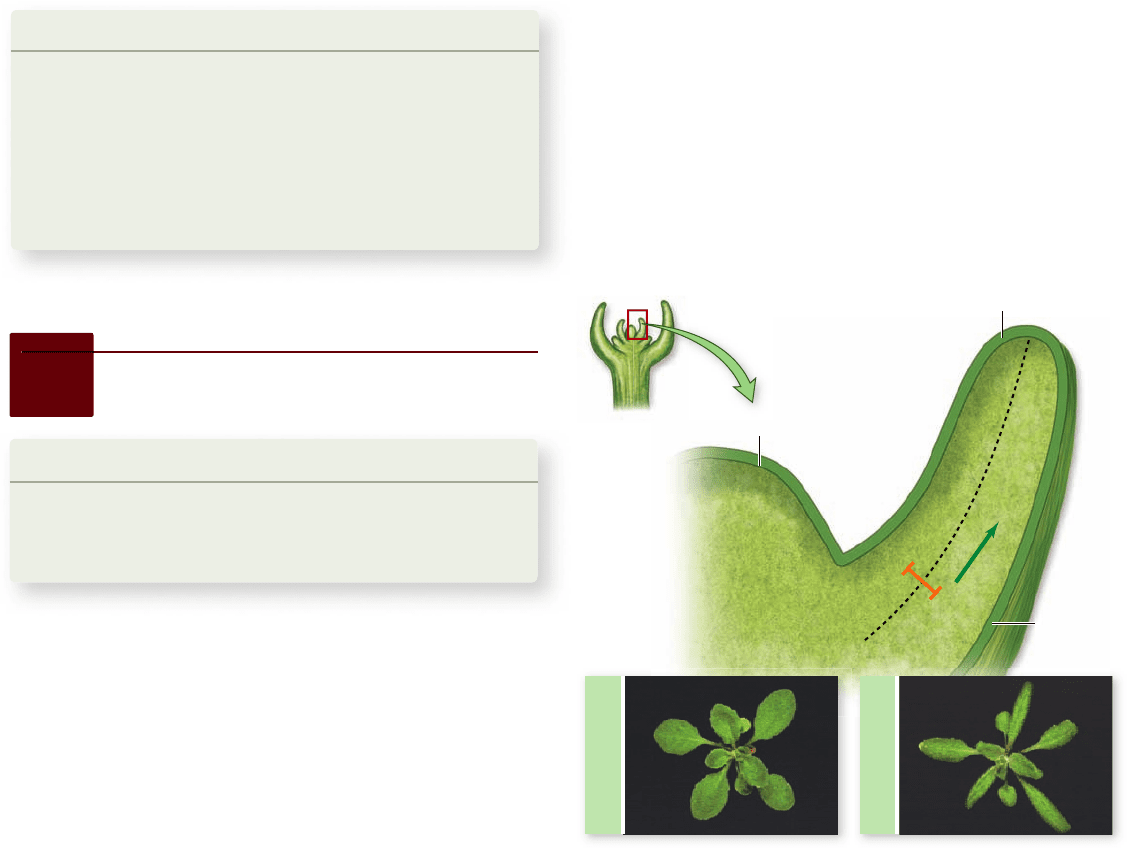
Figure 36.29
Establishing top and bottom in leaves.
Several genes, including PHABULOSA (PHB), PHAVOLUTA
(PHV), KANADI (KAN), and YABBY (YAB) make a attened
Arabidopsis leaf with a distinct upper and lower surface. PHB and
PHV RNAs are restricted to the top; KAN and YAB are expressed
in the bottom cells of a leaf. PHB and KAN have an antagonistic
relationship, restricting expression of each to separate leaf regions.
KAN leads to YABBY expression and lower leaf development.
Without KAN, both sides of the leaf develop like the top portion.
chapter
36
Plant Form
747www.ravenbiology.com
rav32223_ch36_729-752.indd 747rav32223_ch36_729-752.indd 747 11/16/09 11:41:53 AM11/16/09 11:41:53 AM
Apago PDF Enhancer
a.
b.
a. b.
Hypothesis: The gene UNIFOLIATA (UNI) is necessary for compound
leaf development in garden pea, Pisum sativum.
Prediction: Developing leaf primordia of a wild-type pea plant will
express the UNI gene while uni mutant plants will not express the gene.
Test: Cut thin sections of wild-type and mutant pea shoots and place
them on a microscope slide. Test for the presence of UNI RNA using a
color-labeled, single-stranded DNA probe that will hybridize (bind) only
the UNI RNA. View the labeled sections under a microscope.
Result: UNI RNA was found in the wild-type and also in mutant leaves,
but at lower levels.
Conclusion: The mutant uni gene is transcribed but at lower levels than
the wild-type gene. Thus the prediction was incorrect.
Further Experiments: Although the uni gene is expressed, compound
leaves do not develop. Refine the hypothesis and propose an experiment
to test the revised hypothesis.
SCIENTIFIC THINKING
m
u
t
an
t
p
l
an
t
s w
ill
no
t
express
th
e
g
ene.
Te
st
:
Cu
t
t
hem on
a
co
l
or-
l
a
be
th
e
UNI
R
N
Re
s
u
lt
:
U
bu
t
a
t
l
ow
Co
nc
lu
si
o
t
he wild-t
y
Further
E
e
ly
e
s,
h
an
p
g
gene is expressed, compound
e
t thin sections of wild-t
yp
e and mutant pea shoots and place
a
microsco
pe
slide. Test for the
p
resence o
f
U
NI
R
NA usi
ng
a
el
e
d
, sing
l
e-stran
d
e
d
DNA pro
b
e t
h
at wi
ll
h
yb
ri
d
ize (
b
in
d
) on
l
N
A. View t
h
e
l
a
b
e
l
e
d
sections un
d
er a microsco
pe
.
UN
I
RNA was
f
ound in the wild-type and also in mutant leav
e
w
er
l
ev
el
s
.
o
n
:
T
he
m
u
t
a
n
t
u
n
i
g
ene is transcribed but at lower levels t
h
yp
e
ge
ne. Thus the
p
rediction was incorrec
t.
E
x
p
eriments
:
Althou
g
h the uni
g
ene is ex
p
ressed
,
com
p
ou
n
ype and mutant pea shoots and place
Wild-type Shoot uni Mutant Shoot
SM
SM
P1
P1
P2
P3
P4
P5
P6
P2
P3
P4
P5
P6
SM shoot meristem
P1–P6 leaf primordia
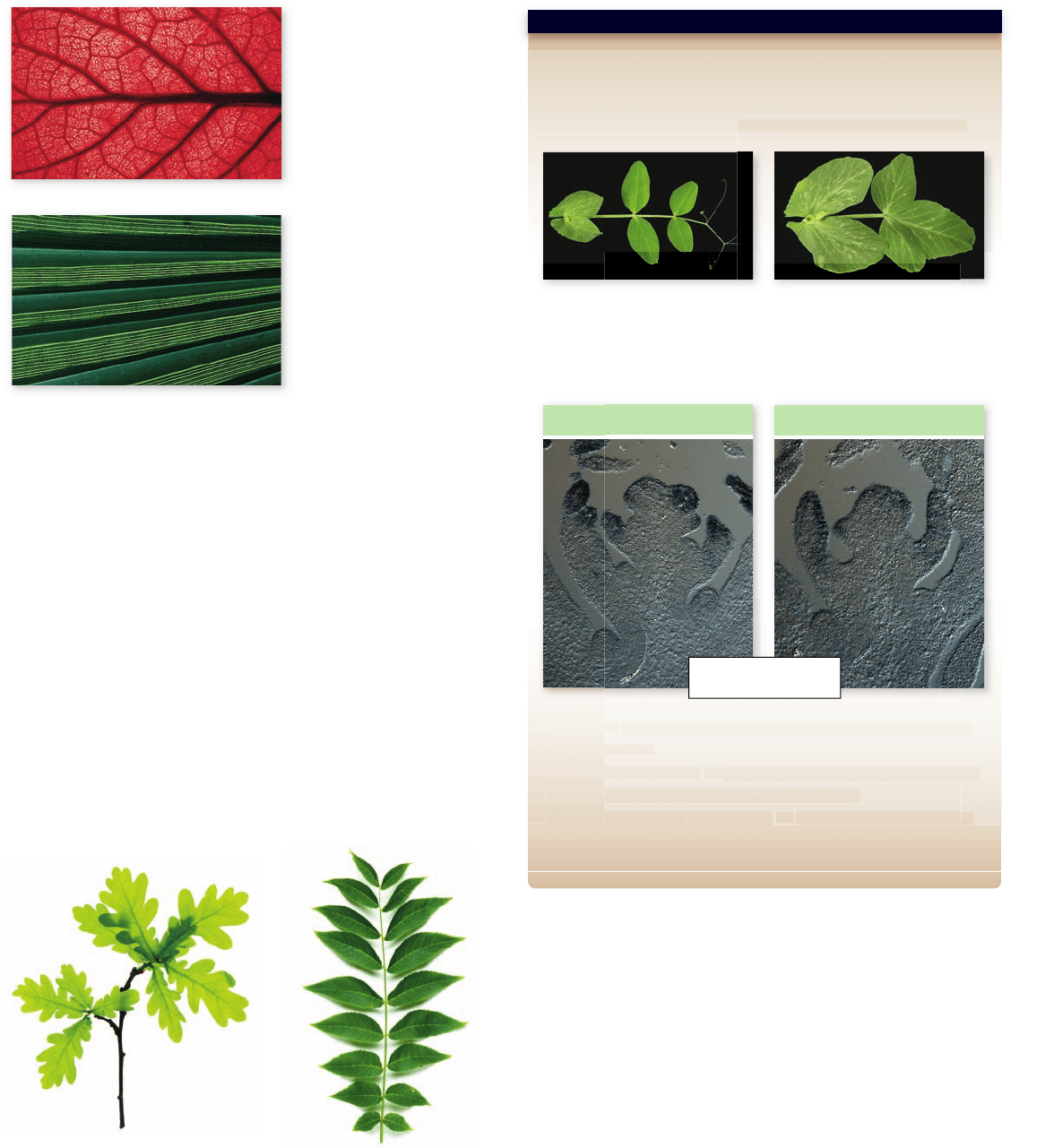
Figure 36.30
Eudicot and monocot
leaves. a. The leaves of
eudicots, such as this
African violet relative from
Sri Lanka, have netted, or
reticulate, veins. b. Those
of monocots, such as this
cabbage palmetto, have
parallel veins. The eudicot
leaf has been cleared with
chemicals and stained with
a red dye to make the veins
show more clearly.
throughout the leaf blades. The main veins are parallel in
most monocot leaves; the veins of eudicots, on the other
hand, form an often intricate network (figure 36.30) .
Leaf blades come in a variety of forms, from oval to deeply
lobed to having separate leaflets. In simple leaves (figure 36.31a),
such as those of lilacs or birch trees, the blades are undivided, but
simple leaves may have teeth, indentations, or lobes of various sizes,
as in the leaves of maples and oaks.
In compound leaves (figure 36.31b), such as those of
ashes, box elders, and walnuts, the blade is divided into leaflets.
The relationship between the development of compound and
simple leaves is an open question. Two explanations are being
debated: (1) A compound leaf is a highly lobed simple leaf, or
(2) a compound leaf utilizes a shoot development program, and
each leaflet was once a leaf. To address this question, research-
ers are using single mutations that are known to convert com-
pound leaves to simple leaves (figure 36.32).
Figure 36.31
Simple versus compound leaves.
a. A simple leaf, its margin deeply lobed, from the oak tree (Quercus
robur). b. A pinnately compound leaf, from a black walnut (Juglans
nigra). A compound leaf is associated with a single lateral bud,
located where the petiole is attached to the stem.
Figure 36.32
Genetic regulation of leaf development.
Internal leaf structure regulates gas
exchange and evaporation
The entire surface of a leaf is covered by a transparent epider-
mis, and most of these epidermal cells have no chloroplasts. As
described earlier, the epidermis has a waxy cuticle, and different
types of glands and trichomes may be present. Also, the lower
epidermis (and occasionally the upper epidermis) of most leaves
contains numerous slitlike or mouth-shaped stomata flanked by
guard cells (figure 36.33) .
The tissue between the upper and lower epidermis is
called mesophyll. Mesophyll is interspersed with veins of vari-
ous sizes.
748
part
VI
Plant Form and Function
rav32223_ch36_729-752.indd 748rav32223_ch36_729-752.indd 748 11/16/09 11:41:58 AM11/16/09 11:41:58 AM
Apago PDF Enhancer
Epidermal cell
Guard cell
Stoma
Thickened
inner wall of
guard cell
Stoma
Epidermal cell
Nucleus
Chloroplast
Guard cell
a. b.
Upper
epidermis
Palisade
mesophyll
Spongy
mesophyll
Lower
epidermis
Cuticle
Guard cell
Stoma
Guard cell
Stoma
Vein
Vein
Xylem
Phloem
200 µm
water loss, gas exchange, and transport of photosynthetic prod-
ucts to the rest of the plant.
Modi ed leaves are highly versatile organs
As plants colonized a wide variety of environments, from deserts
to lakes to tropical rain forests, plant organ modifications arose
that would adapt the plants to their specific habitats. Leaves, in
particular, have evolved some remarkable adaptations. A brief
discussion of a few of these modifications follows:
Floral leaves (bracts). Poinsettias and dogwoods have
relatively inconspicuous, small, greenish yellow owers.
However, both plants produce large modi ed leaves
called bracts (mostly colored red in poinsettias and white
or pink in dogwoods). These bracts surround the true
owers and perform the same function as showy petals.
In other plants, however, bracts can be quite small
and inconspicuous.
Spines. The leaves of many cacti and other plants are modi ed
as spines (see gure 36.28f ). In cacti, having less leaf
surface reduces water loss, and the sharp spines also may
deter predators. Spines should not be confused with
thorns, such as those on the honey locust (Gleditsia
triacanthos), which are modi ed stems, or with the prickles
on raspberries, which are simply outgrowths from the
epidermis or the cortex just beneath it.
Reproductive leaves. Several plants, notably Kalanchoë,
produce tiny but complete plantlets along their margins.
Each plantlet, when separated from the leaf, is capable of
growing independently into a full-sized plant. The
walking fern (Asplenium rhizophyllum) produces new
plantlets at the tips of its fronds. Although many species
can regenerate a whole plant from isolated leaf tissue, this
in vivo regeneration is found among just a few species.
Window leaves. Several genera of plants growing in arid
regions produce succulent, cone-shaped leaves with
transparent tips. The leaves often become mostly buried
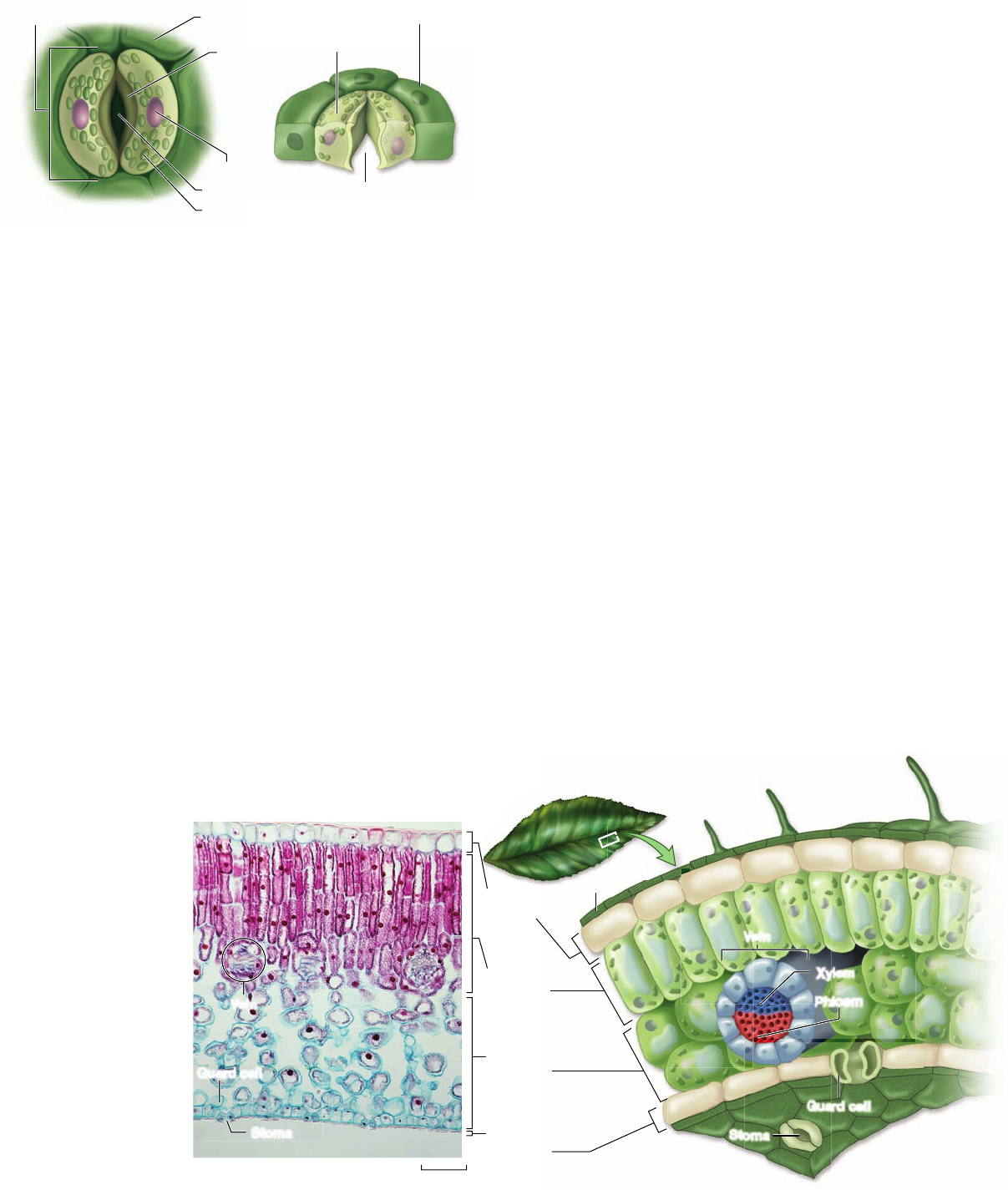
Figure 36.33
A stoma. a. Surface view. b. View in
cross section.
Most eudicot leaves have two distinct types of mesophyll.
Closest to the upper epidermis are one to several (usually two)
rows of tightly packed, barrel-shaped to cylindrical chloren-
chyma cells (parenchyma with chloroplasts) that constitute the
palisade mesophyll (figure 36.34) . Some plants, including spe-
cies of Eucalyptus, have leaves that hang down, rather than ex-
tend horizontally. They have palisade mesophyll on both sides
of the leaf.
Nearly all eudicot leaves have loosely arranged spongy
mesophyll cells between the palisade mesophyll and the lower
epidermis, with many air spaces throughout the tissue. The inter-
connected intercellular spaces, along with the stomata, function
in gas exchange and the passage of water vapor from the leaves.
The mesophyll of monocot leaves often is not differenti-
ated into palisade and spongy layers, and there is often little
distinction between the upper and lower epidermis. Instead,
cells surrounding the vascular tissue are distinctive and are the
site of carbon fixation. This anatomical difference often corre-
lates with a modified photosynthetic pathway, C
4
photosynthesis,
that maximizes the amount of CO
2
relative to O
2
to reduce
energy loss through photorespiration (see chapter 9). The anat-
omy of a leaf directly relates to its juggling act of balancing
Figure 36.34
A leaf in cross
section. Transection
of a leaf showing the
arrangement of palisade
and spongy mesophyll,
a vascular bundle or
vein, and the epidermis
with paired guard cells
anking the stoma.
chapter
36
Plant Form
749www.ravenbiology.com
rav32223_ch36_729-752.indd 749rav32223_ch36_729-752.indd 749 11/16/09 11:42:13 AM11/16/09 11:42:13 AM

Apago PDF Enhancer
glands that secrete sticky mucilage that traps insects,
which are then digested by enzymes.
The Venus ytrap (Dionaea muscipula) produces
leaves that look hinged at the midrib. When tiny trigger
hairs on the leaf blade are stimulated by a moving insect,
the two halves of the leaf snap shut, and digestive
enzymes break down the soft parts of the trapped insect
into nutrients that can be absorbed through the leaf
surface. Nitrogen is the most common nutrient needed.
Curiously, the Venus ytrap cannot survive in a
nitrogen-rich environment, perhaps as a result of a
biochemical trade-off during the intricate evolutionary
process that developed its ability to capture and
digest insects.
Learning Outcomes Review 36.5
Leaves come in a range of forms. A simple leaf is undivided, whereas a
compound leaf has a number of separate leafl ets. Pinnate leaves have a
central rib like a feather; palmate leaves have several ribs radiating from a
central point, like the palm of the hand. Monocots typically produce leaves
with parallel veins, while those of eudicots are netted. Mesophyll cells carry
out photosynthesis; in monocots, mesophyll is undiff erentiated, whereas
in eudicots it is divided into palisade and spongy mesophyll. Leaves may
be modifi ed for reproduction, protection, water conservation, uptake of
nutrients, and even as traps for insects.
■ Why would a plant with vertically oriented leaves
produce palisade, but not spongy mesophyll cells?
in sand blown by the wind, but the transparent tips, which
have a thick epidermis and cuticle, admit light to the
hollow interiors. This strategy allows photosynthesis to
take place beneath the surface of the ground.
Shade leaves. Leaves produced in the shade, where they
receive little sunlight, tend to be larger in surface area, but
thinner and with less mesophyll than leaves on the same
tree receiving more direct light. This plasticity in
development is remarkable. Environmental signals can
have a major effect on development.
Insectivorous leaves. Almost 200 species of owering plants
are known to have leaves that trap insects; some plants
digest the insects’ soft parts. Plants with insectivorous
leaves often grow in acid swamps that are de cient in
needed elements or contain elements in forms not
readily available to the plants; this inhibits the plants’
capacities to maintain metabolic processes needed for
their growth and reproduction. Their needs are met,
however, by the supplementary absorption of nutrients
from the animal kingdom.
Pitcher plants (for example, Sarracenia, Darlingtonia,
or Nepenthes spp.) have cone-shaped leaves in which
rainwater can accumulate. The insides of the leaves are
very smooth, but stiff, downward-pointing hairs line the
rim. An insect falling into such a leaf nds it very dif cult
to escape and eventually drowns. The leaf absorbs the
nutrients released when bacteria, and in most species the
plant’s own digestive enzymes, decompose the insect
bodies. Other plants, such as sundews (Drosera), have
Ground tissue cells perform many functions, including storage,
photosynthesis, and support.
Ground tissue is mainly composed of parenchyma cells, which function in
storage, photosynthesis, and secretion. Collenchyma cells provide exible
support, and sclerenchyma cells provide rigid support.
Vascular tissue conducts water and nutrients throughout the plant.
Xylem tissue conducts water through dead cells called tracheids and
vessel elements.
Phloem tissue conducts nutrients such as dissolved sucrose through
living cells called sieve-tube members and sieve cells.
36.3 Roots: Anchoring and Absorption Structures
Roots evolved after shoots and are a major innovation for
terrestrial living.
Roots are adapted for growing underground and absorbing water
and solutes.
Developing roots exhibit four regions: (1) the root cap, which
protects the root; (2) the zone of cell division, which contains the
apical meristem; (3) the zone of elongation, which extends the root
through the soil; and (4) the zone of maturation, in which cells
become differentiated.
36.1 Organization of the Plant Body: An Overview
Vascular plants have roots and shoots.
The root system is primarily below ground; roots anchor the plant
and take up water and minerals. The shoot system is above ground
and provides support for leaves and owers.
Roots and shoots are composed of three types of tissues.
The three types of tissues are dermal tissue, ground tissue, and
vascular tissue.
Meristems elaborate the body plan throughout the plant’s life.
Apical meristems are located on the tips of stems and near the tips of
roots. Lateral meristems are found in plants that exhibit secondary
growth. They add to the diameter of a stem or root.
36.2 Plant Tissues
Dermal tissue forms a protective interface with the environment.
Dermal tissue is primarily the epidermis, which is usually one cell
thick and is covered with a fatty or waxy cuticle to retard water loss.
Guard cells in the epidermis control water loss through stomata.
Root hairs are epidermal cell structures that help increase the
absorptive area of roots.
Chapter Review
750
part
VI
Plant Form and Function
rav32223_ch36_729-752.indd 750rav32223_ch36_729-752.indd 750 11/16/09 11:42:17 AM11/16/09 11:42:17 AM

Apago PDF Enhancer
Modied roots accomplish specialized functions.
Most plants produce either a taproot system containing a single large
root with smaller branch roots, or a brous root system composed of
many small roots.
Adventitious roots may be modied for support, stability, acquisition
of oxygen, storage of water and food, or parasitism of a host plant.
36.4 Stems: Support for Above-Ground Organs
Stems carry leaves and owers and support the plant’s weight.
Leaves are attached to stems at nodes. The axil is the area between
the leaf and stem, and an axillary bud develops in axils of eudicots.
The vascular bundles in stems of monocots are randomly scattered,
whereas in eudicots the bundles are arranged in a ring.
Vascular cambium develops between the inner xylem and the outer
phloem, allowing for secondary growth.
Modied stems carry out vegetative propagation and store nutrients.
Bulbs, corms, rhizomes, runners and stolons, tubers, tendrils, and
cladophylls are examples of modi ed stems. The tubers of potatoes
are both a food source and a means of propagating new plants.
36.5 Leaves: Photosynthetic Organs
Leaves are the principle sites of photosynthesis. Leaf features such
as their arrangement, form, size, and internal structure can be highly
variable across environments.
External leaf structure reects vascular morphology.
Vascular bundles are parallel in monocots, but form a network in
eudicots. The leaves of most eudicots have a attened blade and a
slender petiole; monocots usually do not have a petiole.
Leaf blades may be simple or compound (divided into leaets).
Leaves may also be pinnate (with a central rib, like a feather) or
palmate (with ribs radiating from a central point).
Internal leaf structure regulates gas exchange and evaporation.
The tissues of the leaf include the epidermis with guard cells,
vascular tissue, and mesophyll in which photosynthesis takes place.
In eudicot leaves with a horizontal orientation, the mesophyll is
partitioned into palisade cells near the upper surface and spongy cells
near the lower surface.
The mesophyll of monocot leaves is often not differentiated.
Modied leaves are highly versatile organs.
Leaves are highly variable in form and are adapted to serve many
different functions. Leaves may be modi ed for reproduction,
protection, storage, mineral uptake, or even as insect traps in
carnivorous plants.
8. Palisade and spongy parenchyma are typically found in the
mesophyll of
a. monocots. c. monocots and eudicots .
b. eudicots. d. neither monocots or eudicots
9. In vascular plants, one difference between root and shoot
systems is that:
a. root systems cannot undergo secondary growth.
b. root systems undergo secondary growth, but do not
form bark.
c. root systems contain pronounced zones of cell elongation,
whereas shoot systems do not.
d. root systems can store food reserves, whereas stem
structures do not.
10. Which of the following statements is not true of the stems
of vascular plants?
a. Stems are composed of repeating segments, including
nodes and internodes.
b. Primary growth only occurs at the shoot apical meristem.
c. Vascular tissues may be arranged on the outside of the stem
or scattered throughout the stem.
d. Stems can contain stomata.
11. Which of the following plant cell type is mismatched to
its function?
a. Xylem—conducts mineral nutrients
b. Phloem—serves as part of the bark
c. Trichomes—reduces evaporation
d. Collenchyma—performs photosynthesis
UNDERSTAND
1. Which cells lack living protoplasts at maturity?
a. Parenchyma c. Collenchyma
b. Companion d. Sclerenchyma
2. The food-conducting cells in an oak tree are called
a. tracheids. c. companion cells.
b. vessels. d. sieve-tube members.
3. Root hairs form in the zone of
a. cell division. c. maturation.
b. elongation. d. more than one of the above
4. Roots differ from stems because roots lack
a. vessel elements. c. an epidermis.
b. nodes. d. ground tissue.
5. A plant that produces two axillary buds at a node is said to have
what type of leaf arrangement?
a. Opposite c. Whorled
b. Alternate d. Palmate
6. Unlike eudicot stems, monocot stems lack
a. vascular bundles. c. pith.
b. parenchyma. d. epidermis.
7. The function of guard cells is to
a. allow carbon dioxide uptake.
b. repel insects and other herbivores.
c. support leaf tissue.
d. allow water uptake.
Review Questions
chapter
36
Plant Form
751www.ravenbiology.com
rav32223_ch36_729-752.indd 751rav32223_ch36_729-752.indd 751 11/16/09 11:42:18 AM11/16/09 11:42:18 AM