
Raven P.H., Johnson G.B., Mason K.A. Biology (Ninth Edition)
Подождите немного. Документ загружается.

Apago PDF Enhancer
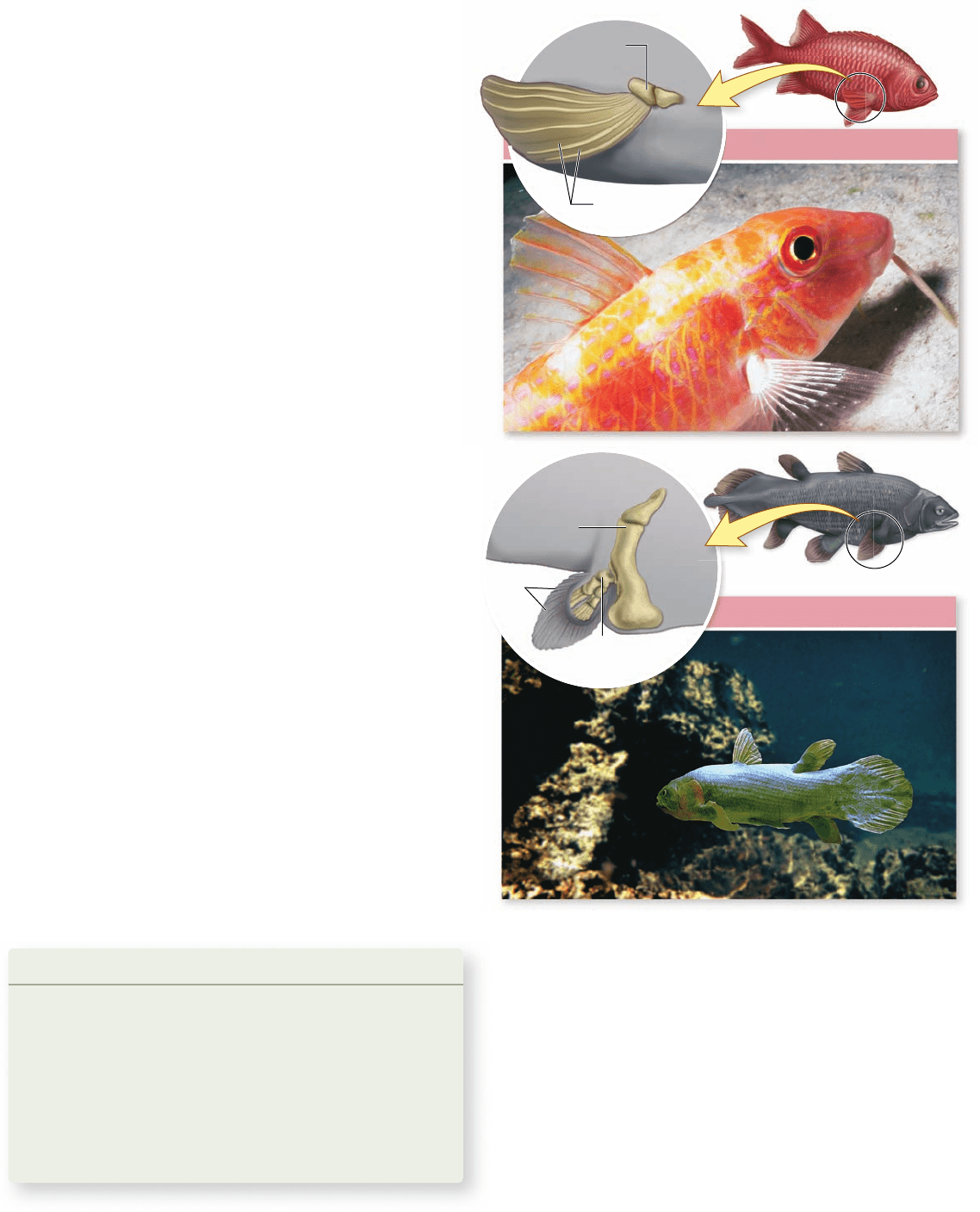
Ray-finned (class Actinopterygii)
Lobe-finned (class Sarcopterygii)
Rays
Shoulder
girdle
Shoulder
girdle
Rays
Central core of
bones in fleshy
lobe
a.
b.
How do bony fishes manage this remarkable trick? It
turns out that the gases are harvested from the blood by a
unique gland that discharges the gases into the bladder when
more buoyancy is required. To reduce buoyancy, gas is reab-
sorbed into the bloodstream through a structure called the oval
body. A variety of physiological factors control the exchange of
gases between the bloodstream and the swim bladder.
Gill cover
Most bony fishes have a hard plate called the operculum that
covers the gills on each side of the head. Flexing the operculum
permits bony fishes to pump water over their gills. The gills are
suspended in the pharyngeal slits that form a passageway be-
tween the pharynx and the outside of the fish’s body. When the
operculum is closed, it seals off the exit.
When the mouth is open, closing the operculum in-
creases the volume of the mouth cavity, so that water is drawn
into the mouth. When the mouth is closed, opening the oper-
culum decreases the volume of the mouth cavity, forcing wa-
ter past the gills to the outside. Using this very efficient
bellows, bony fishes can pass water over the gills while re-
maining stationary in the water. That is what a goldfish is do-
ing when it seems to be gulping in a fish tank.
The evolutionary path to land ran
through the lobe- nned shes
Two major groups of bony fish are the ray-finned fishes (class
Actinopterygii; figure 35.13a) and lobe-finned fishes (class Sar-
copterygii ). The groups differ in the structure of their fins
(figure 35.13b). In ray-finned fishes, the internal skeleton of the
fin is composed of parallel bony rays that support and stiffen
each fin. There are no muscles within the fins; rather, the fins
are moved by muscles within the body.
By contrast, lobe-finned fishes have paired fins that consist
of a long fleshy muscular lobe (hence their name), supported by
a central core of bones that form fully articulated joints with one
another. There are bony rays only at the tips of each lobed fin.
Muscles within each lobe can move the fin rays independently of
one another, a feat no ray-finned fish could match.
Lobe-finned fishes evolved 390 mya, shortly after the first
bony fishes appeared. Only eight species survive today, two spe-
cies of coelacanth (figure 35.13b) and six species of lungfish.
Although rare today, lobe-finned fishes played an important
part in the evolutionary story of vertebrates. Amphibians al-
most certainly evolved from the lobe-finned fishes.
Learning Outcomes Review 35.4
Fishes are generally characterized by the possession of a vertebral column,
jaws, paired appendages, a lateral line system, internal gills, and single-
loop circulation. Cartilaginous fi shes have lightweight skeletons and were
among the fi rst vertebrates to develop teeth. The very successful bony fi shes
have unique characteristics such as swim bladders and gill covers, as well as
ossifi ed skeletons. One type of bony fi sh, the lobe-fi nned fi sh, gave rise to
the ancestors of amphibians.
■ What advantages do lobed fins have over ray fins?
Figure 35.13
Ray- nned and lobe- nned shes.
a. The ray- nned shes, such as this Koi carp (Cyprinus carpio), are
characterized by ns of only parallel bony rays. b. By contrast, the
ns of lobe- nned sh have a central core of bones as well as rays.
The coelacanth, Latimeria chalumnae, a lobe- nned sh (class
Sarcopterygii), was discovered in the western Indian Ocean in 1938.
This coelacanth represents a group of shes thought to have been
extinct for about 70 million years. Scientists who studied living
individuals in their natural habitat at depths of 100–200 m observed
them drifting in the current and hunting other shes at night. Some
individuals are nearly 3 m long; they have a slender, fat- lled
swim bladder.
702
part
V
Diversity of Life on Earth
rav32223_ch35_693-728.indd 702rav32223_ch35_693-728.indd 702 11/16/09 1:45:09 PM11/16/09 1:45:09 PM
Apago PDF Enhancer
Cephalaspi-
domorphi
Mammalia
Chondrichthyes
Actinopterygii
Sarcopterygii
Amphibia
Testudines
Lepidosauria
Crocodilia
Aves
Mixini
lies make up the order Anura (“without a tail”); 500 species of
salamanders and newts in 9 families make up the order Caudata
(“visible tail”) ; and 170 species (6 families) of wormlike, nearly
blind organisms called caecilians that live in the tropics make
up the order Apoda (“without legs”). These amphibians have
several key characteristics in common:
Legs.1. Frogs and most salamanders have four legs and can
move about on land quite well. Legs were one of the key
adaptations to life on land. Caecilians have lost their legs
during the course of adapting to a burrowing existence.
Lungs.2. Most amphibians possess a pair of lungs, although
the internal surfaces have much less surface area than do
reptilian or mammalian lungs. Amphibians breathe by
lowering the oor of the mouth to suck in air, and then
raising it back to force the air down into the lungs (see
chapter 49).
Cutaneous respiration.3. Frogs, salamanders, and
caecilians all supplement the use of lungs by respiring
through their skin, which is kept moist and provides an
extensive surface area.
Pulmonary veins.4. After blood is pumped through the
lungs; two large veins called pulmonary veins return the
aerated blood to the heart for repumping. In this way
aerated blood is pumped to the tissues at a much higher
pressure.
Partially divided heart.5. A dividing wall helps prevent
aerated blood from the lungs from mixing with nonaerated
blood being returned to the heart from the rest of the body.
The blood circulation is thus divided into two separate
paths: pulmonary and systemic. The separation is
imperfect, however, because no dividing wall exists in one
chamber of the heart, the ventricle (see chapter 49).
Several other specialized characteristics are shared by all
present-day amphibians. In all three orders, there is a zone of
weakness between the base and the crown of the teeth. They
also have a peculiar type of sensory rod cell in the retina of the
eye called a “green rod.” The function of this rod is unknown.
35.5
Amphibians
Learning Outcomes
Describe the characteristics and major groups of 1.
amphibians.
Explain the challenges of moving from an aquatic to a 2.
terrestrial environment.
Frogs, salamanders, and caecilians, the damp-skinned verte-
brates, are direct descendants of fishes. They are the sole survi-
vors of a very successful group, the amphibians (class Amphibia) ,
the first vertebrates to walk on land. Most present-day amphib-
ians are small and live largely unnoticed by humans, but they
are among the most numerous of terrestrial vertebrates.
Throughout the world, amphibians play key roles in terrestrial
food chains.
Living amphibians have ve
distinguishing features
Biologists have classified living species of amphibians into three
orders (table 35.2) : 5000 species of frogs and toads in 22 fami-
TABLE 35.2
Orders of Amphibians
Order Typical Examples Key Characteristics
Approximate
Number of Living
Species
Anura Frogs, toads Compact, tailless body; large head fused to the trunk; rear limbs
specialized for jumping
5000
Caudata Salamanders, newts
Slender body; long tail and limbs set out at right angles to the body 500
Apoda Caecilians
Tropical group with a snakelike body; no limbs; little or no tail 170
chapter
35
Vertebrates
703www.ravenbiology.com
rav32223_ch35_693-728.indd 703rav32223_ch35_693-728.indd 703 11/16/09 1:45:12 PM11/16/09 1:45:12 PM
Apago PDF Enhancer
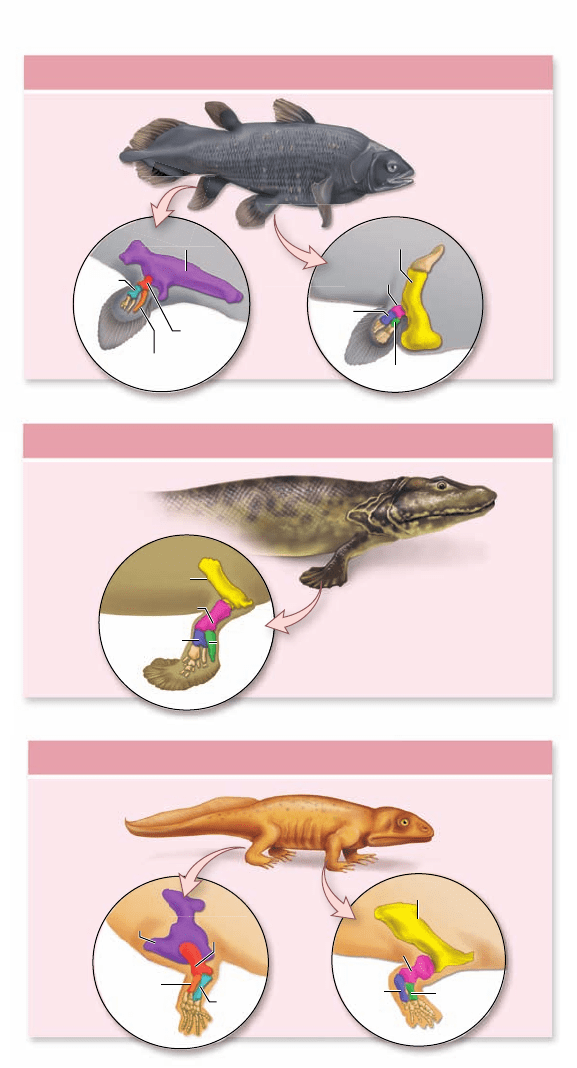
Lobe-finned Fish
Tiktaalik
Tibia
Femur
Pelvis
Fibula
Humerus
Shoulder
Radius
Ulna
Humerus
Shoulder
Radius
Ulna
b.
Early Amphibian
Tibia
Femur
Pelvis
Fibula
Humerus
Shoulder
Radius
Ulna
c.
a.
Figure 35.14
A comparison between the limbs of a
lobe- nned sh, Tiktaalik, and a primitive amphibian.
a. A lobe- nned sh. Some of these animals could probably move
on land. b. Tiktaalik. The shoulder and limb bones are like those of
an amphibian, but the ns are like those of a lobe- nned sh. The
fossil of Tiktaalik did not contain the hindlimbs. c. A primitive
amphibian. As illustrated by their skeletal structure, the legs of such
an animal clearly could function better than those of its ancestors
for movement on land.
In 2006, an important transitional fossil between fish and
Ichthyostega was discovered in northern Canada. Tiktaalik, which
lived 375 mya, had gills and scales like a fish, but a neck like an
amphibian. Particularly significant, however, was the form of its
forelimbs (see figure 35.14): its shoulder, forearm, and wrist
bones were like those of amphibians, but at the end of the limb
Amphibians overcame terrestrial challenges
The word amphibia means “double life,” and it nicely describes
the essential quality of modern-day amphibians, reflecting their
ability to live in two worlds—the aquatic world of their fish
ancestors and the terrestrial world they first invaded. Here, we
review the checkered history of this group, almost all of whose
members have been extinct for the last 200 million years. Then
we examine in more detail what the few kinds of surviving am-
phibians are like.
The successful invasion of land by vertebrates posed a
number of major challenges:
■ Because amphibian ancestors had relatively large bodies,
supporting the body’s weight on land as well as enabling
movement from place to place was a challenge
(figure 35.14 ). Legs evolved to meet this need.
■ Even though far more oxygen is available to gills in air
than in water, the delicate structure of fish gills requires
the buoyancy of water to support them, and they will not
function in air. Therefore, other methods of obtaining
oxygen were required.
■ Delivering great amounts of oxygen to the larger muscles
needed for movement on land required modifications to
the heart and circulatory system.
■ Reproduction still had to be carried out in water so that
eggs would not dry out.
■ Most importantly, the body itself had to be prevented
from drying out.
The first amphibian
Amphibians solved these problems only partially, but their so-
lutions worked well enough that amphibians have survived for
350 million years. Evolution does not insist on perfect solu-
tions, only workable ones.
Paleontologists agree that amphibians evolved from lobe-
finned fish. Ichthyostega, one of the earliest amphibian fossils
(figure 35.15) , was found in a 370-million-year-old rock in
Greenland. At that time, Greenland was part of what is now the
North American continent and lay near the equator. All am-
phibian fossils from the next 100 million years are found in
North America. Only when Asia and the southern continents
merged with North America to form the supercontinent Pan-
gaea did amphibians spread throughout the world.
Ichthyostega was a strongly built animal, with sturdy
forelegs well supported by shoulder bones. Unlike the bone
structure of fish, the shoulder bones were no longer attached
to the skull, so the limbs could support the animal’s weight.
Because the hindlimbs were flipper-shaped, Ichthyostega prob-
ably moved like a seal, with the forelimbs providing the pro-
pulsive force for locomotion and the hindlimbs being dragged
along with the rest of the body. To strengthen the backbone
further, long, broad ribs that overlap each other formed a
solid cage for the lungs and heart. The rib cage was so solid
that it probably couldn’t expand and contract for breathing.
Instead, Ichthyostega probably obtained oxygen as many am-
phibians do today, by lowering the floor of the mouth to draw
air in, and then raising it to push air down the windpipe into
the lungs.
704
part
V
Diversity of Life on Earth
rav32223_ch35_693-728.indd 704rav32223_ch35_693-728.indd 704 11/16/09 1:45:13 PM11/16/09 1:45:13 PM
Apago PDF Enhancer
Order Anura Order Caudata Order Apoda
b.
a.
c.
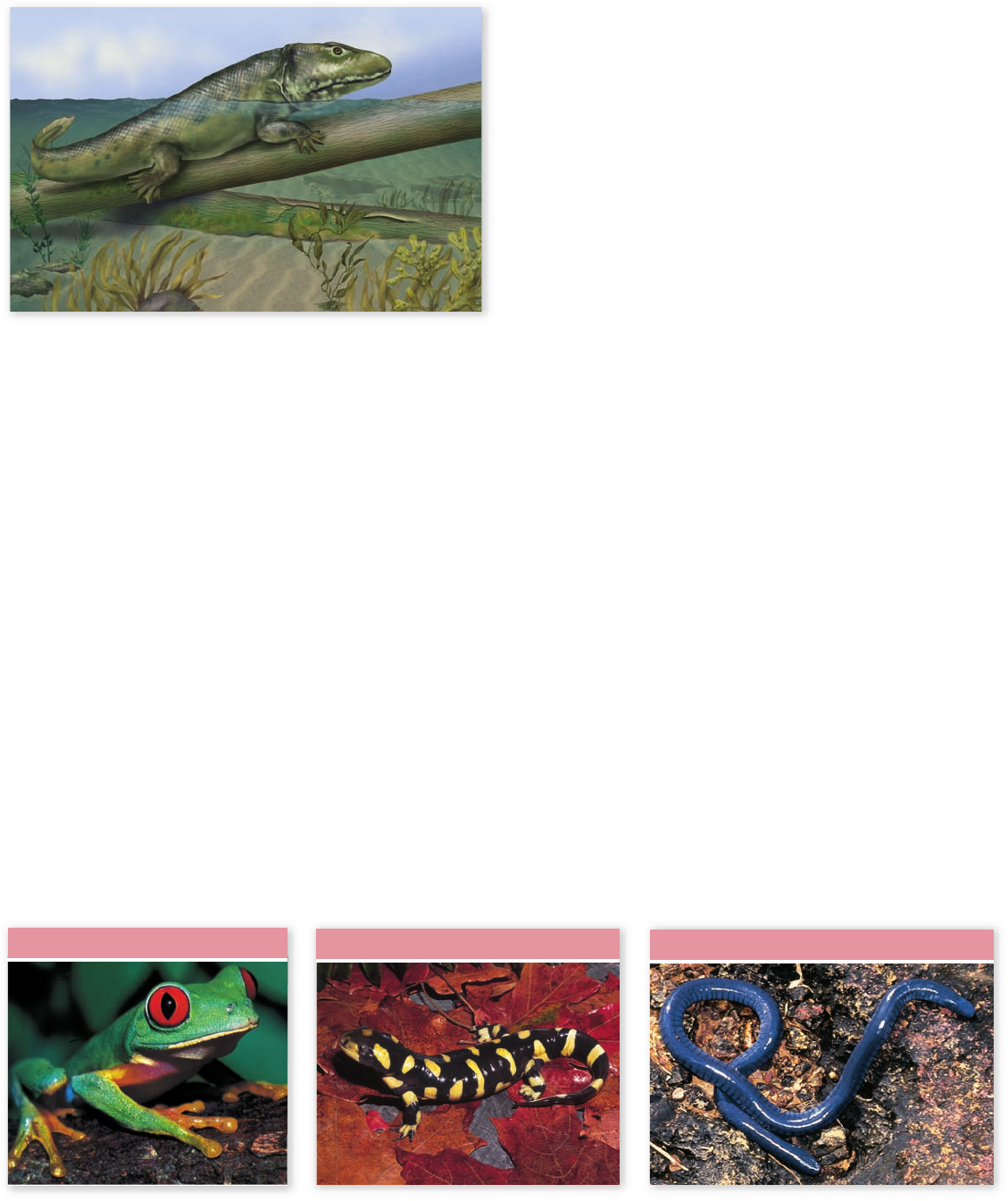
Figure 35.15
Amphibians were the rst vertebrates to
walk on land. Ichthyostega, one of the rst amphibians, had
ef cient limbs for crawling on land, an improved olfactory sense
associated with a lengthened snout and a relatively advanced ear
structure for picking up airborne sounds. Despite these features,
Ichthyostega, which lived about 350 mya, was still quite shlike in
overall appearance and may have spent much of its life in water.
Figure 35.16
Class Amphibia. a. Red-eyed tree frog, Agalychnis callidryas (order Anura). b. An adult tiger salamander, Ambystoma
tigrinum (order Caudata). c. A caecilian, Caecilia tentaculata (order Apoda).
In the early Permian period that followed (280 to
248 mya), a remarkable change occurred among amphibians—
they began to leave the marshes for dry uplands. Many of these
terrestrial amphibians had bony plates and armor covering their
bodies and grew to be very large, some as big as a pony. Both
their large size and the complete covering of their bodies indi-
cate that these amphibians did not use the skin respiratory sys-
tem of present-day amphibians, but rather had an impermeable
leathery skin to prevent water loss. Consequently, they must
have relied entirely on their lungs for respiration. By the mid-
Permian period, there were 40 families of amphibians. Only
25% of them were still semiaquatic like Ichthyostega; 60% of the
amphibians were fully terrestrial, and 15% were semiterrestrial.
This was the peak of amphibian success, sometimes called the
Age of Amphibians.
By the end of the Permian period, reptiles had evolved
from amphibians. One group, therapsids, had become common
and ousted the amphibians from their newly acquired niche on
land. Following the mass extinction event at the end of the
Permian, therapsids were the dominant land vertebrate, and
most amphibians were aquatic. This trend continued in the fol-
lowing Triassic period (248 to 213 mya), which saw the virtual
extinction of amphibians from land.
Modern amphibians belong
to three groups
All of today’s amphibians descended from the three families of
amphibians that survived the Age of the Dinosaurs. During the
Tertiary period (65 to 2 mya), these moist-skinned amphibians
accomplished a highly successful invasion of wet habitats all
over the world, and today there are over 5600 species of am-
phibians in 37 different families, comprising the orders Anura,
Caudata, and Apoda.
Order Anura: Frogs and toads
Frogs and toads, amphibians without tails, live in a variety of
environments, from deserts and mountains to ponds and pud-
dles (figure 35.16a) . Frogs have smooth, moist skin, a broad
body, and long hind legs that make them excellent jumpers.
was a lobed fin, rather than the toes of an amphibian. Ecologi-
cally, the 3-m long Tiktaalik was probably also intermediate
between fish and amphibians, spending most of its time in the
water, but capable of hauling itself out onto land to capture
food or escape predators.
The rise and fall of amphibians
By moving onto land, amphibians were able to utilize many re-
sources and to access many habitats. Amphibians first became
common during the Carboniferous period (360 to 280 mya).
Fourteen families of amphibians are known from the early Car-
boniferous, nearly all of them aquatic or semiaquatic, like Ichthy-
ostega (see figure 35.15). By the late Carboniferous, much of
North America was covered by low-lying tropical swamplands,
and 34 families of amphibians thrived in this wet terrestrial envi-
ronment, sharing it with pelycosaurs and other early reptiles.
chapter
35
Vertebrates
705www.ravenbiology.com
rav32223_ch35_693-728.indd 705rav32223_ch35_693-728.indd 705 11/16/09 1:45:14 PM11/16/09 1:45:14 PM

Apago PDF Enhancer
Cephalaspi-
domorphi
Mammalia
Chondrichthyes
Actinopterygii
Sarcopterygii
Amphibia
Testudines
Lepidosauria
Crocodilia
Aves
Mixini
Most frogs live in or near water and go through an aquatic
tadpole stage before metamorphosing into frogs; however,
some tropical species that don’t live near water bypass this
stage and hatch out as little froglets.
Unlike frogs, toads have a dry, bumpy skin and short legs,
and are well adapted to dry environments. Toads do not form a
monophyletic group; that is, all toads are not more closely re-
lated to each other than they are to some other frogs. Rather,
the term toad is applied to those anurans that have adapted to
dry environments by evolving a suite of adaptive characteris-
tics; this convergent evolution has occurred many times among
distantly related anurans.
Most frogs and toads return to water to reproduce, lay-
ing their eggs directly in water. Their eggs lack watertight
external membranes and would dry out quickly on land. Eggs
are fertilized externally and hatch into swimming larval forms
called tadpoles. Tadpoles live in the water, where they gener-
ally feed on algae. After considerable growth, the body of the
tadpole gradually undergoes metamorphosis into that of an
adult frog.
Order Caudata: Salamanders
Salamanders have elongated bodies, long tails, and smooth,
moist skin (figure 35.16b). They typically range in length from
a few inches to a foot, although giant Asiatic salamanders of the
genus Andrias are as much as 1.5 m long and weigh up to 33 kg.
Most salamanders live in moist places, such as under stones or
logs, or among the leaves of tropical plants. Some salamanders
live entirely in water.
Salamanders lay their eggs in water or in moist places.
Most species practice a type of internal fertilization in which
the female picks up sperm packets deposited by the male. Like
anurans, many salamanders go through a larval stage before
metamorphosing into adults. However, unlike anurans, in
which the tadpole is strikingly different from the adult frog,
larval salamanders are quite similar to adults, although most
live in water and have external gills and gill slits that disappear
at metamorphosis.
Order Apoda: Caecilians
Caecilians, members of the order Apoda (also called Gymno-
phiona), are a highly specialized group of tropical burrowing
amphibians (figure 35.16c). These legless, wormlike creatures
average about 30 cm long, but can be up to 1.3 m long. They
have very small eyes and are often blind. They resemble worms
but have jaws with teeth. They eat worms and other soil inver-
tebrates. Fertilization is internal.
Learning Outcomes Review 35.5
Amphibians, which includes frogs and toads, salamanders, and caecilians,
are generally characterized by legs, lungs, cutaneous respiration, and
a more complex and divided circulatory system. All of these developed
as adaptations to life on land. Most species rely on a water habitat for
reproduction. Although some early forms reached the size of a pony, modern
amphibians are generally quite small.
■ What challenges did amphibians overcome to make the
transition to living on land?
35.6
Reptiles
Learning Outcomes
Describe the characteristics and major groups of reptiles.1.
Distinguish between synapsids and diapsids.2.
Explain the significance of the evolution of the 3.
amniotic egg.
If we think of amphibians as a first draft of a manuscript about
survival on land, then reptiles are the finished book. For each of
the five key challenges of living on land, reptiles improved on
the innovations of amphibians. The arrangement of legs evolved
to support the body’s weight more effectively, allowing reptile
bodies to be bigger and to run. Lungs and heart became more
efficient. The skin was covered with dry plates or scales to min-
imize water loss, and watertight coverings evolved for eggs.
Over 7000 species of reptiles (class Reptilia) now live on
Earth (table 35.3) . They are a highly successful group in today’s
world; there are more living species of snakes and lizards than
there are of mammals.
Reptiles exhibit three key characteristics
All living reptiles share certain fundamental characteristics, features
they retain from the time when they replaced amphibians as the
dominant terrestrial vertebrates. Among the most important are:
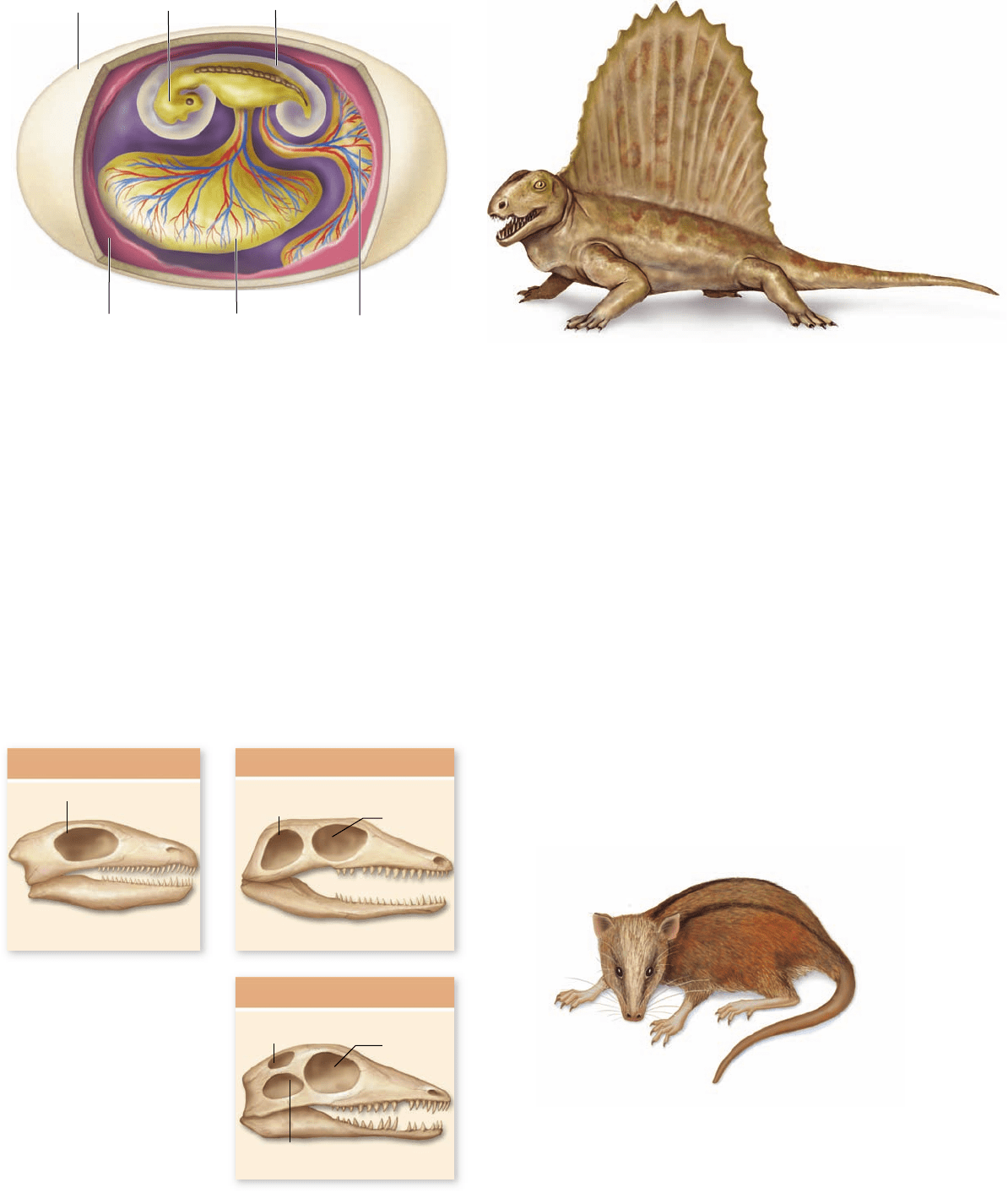
Amniotic eggs.1. Amphibians’ eggs must be laid in water
or a moist setting to avoid drying out. Most reptiles lay
watertight eggs that contain a food source (the yolk) and a
series of four membranes: the yolk sac, the amnion, the
allantois, and the chorion ( gure 35.17). Each membrane
plays a role in making the egg an independent life-
support system. All modern reptiles, as well as birds and
mammals, show exactly this same p attern of membranes
within the egg. These three classes are called amniotes.
The outermost membrane of the egg is the
chorion, which lies just beneath the porous shell. It
allows exchange of respiratory gases but retains water.
The amnion encases the developing embryo within a
fluid-filled cavity. The yolk sac provides food from the
yolk for the embryo via blood vessels connecting to the
embryo’s gut. The allantois surrounds a cavity into which
waste products from the embryo are excreted.
706
part
V
Diversity of Life on Earth
rav32223_ch35_693-728.indd 706rav32223_ch35_693-728.indd 706 11/16/09 1:45:20 PM11/16/09 1:45:20 PM
Apago PDF Enhancer
Dry skin.2. Most living amphibians have moist skin and
must remain in moist places to avoid drying out.
Reptiles have dry, watertight skin. A layer of scales
covers their bodies, preventing water loss. These
scales develop as surface cells ll with keratin, the
same protein that forms claws, ngernails, hair, and
bird feathers.
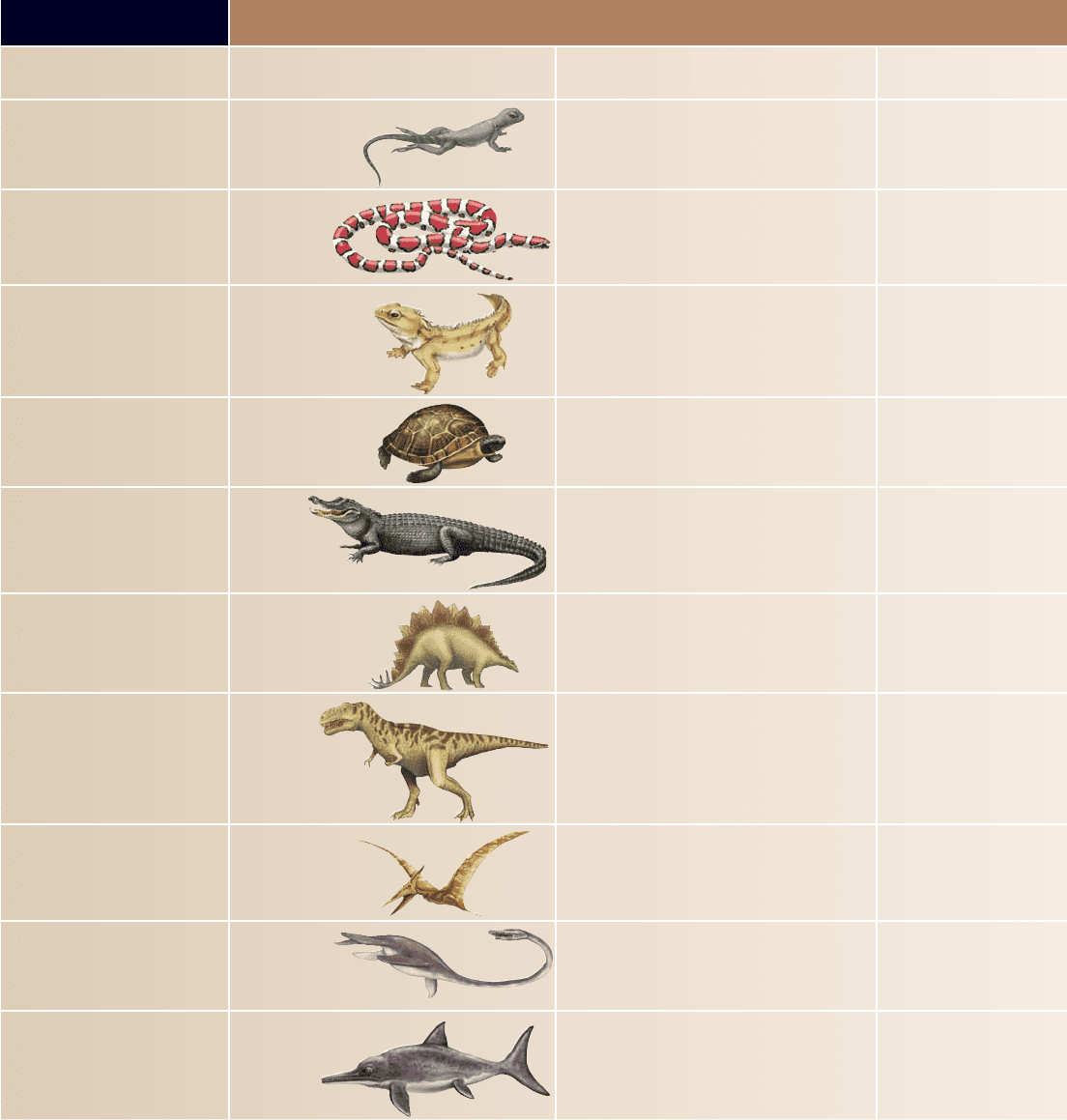
TABLE 35.3
Major Orders of Reptiles
Order Typical Examples Key Characteristics
Approximate Number
of Living Species
Squamata, suborder Sauria Lizards Limbs set at right angles to body; anus is in transverse
(sideways) slit; most are terrestrial
3800
Squamata, suborder Serpentes Snakes
No legs; move by slithering; scaly skin is shed
periodically; most are terrestrial
3000
Rhynchocephalia Tuataras
Sole survivors of a once successful group that largely
disappeared before dinosaurs; fused, wedgelike,
socketless teeth; primitive third eye under skin
of forehead
2
Chelonia Turtles,
tortoises,
sea turtles
Armored reptiles with shell of bony plates to which
vertebrae and ribs are fused; sharp, horny beak
without teeth
250
Crocodylia Crocodiles,
alligators
Advanced reptiles with four-chambered heart and
socketed teeth; anus is a longitudinal (lengthwise)
slit; closest living relatives to birds
25
Ornithischia Stegosaur
Dinosaurs with two pelvic bones facing backward,
like a bird’s pelvis; herbivores; legs under body
Extinct
Saurischia Tyrannosaur
Dinosaurs with one pelvic bone facing forward, the
other back, like a lizard’s pelvis; both plant- and
esh-eaters; legs under body; birds evolved from
Saurischian dinosaurs.
Extinct
Pterosauria Pterosaur
Flying reptiles; wings were made of skin stretched
between fourth ngers and body; wingspans of early
forms typically 60 cm, later forms nearly 8 m
Extinct
Plesiosaura Plesiosaur
Barrel-shaped marine reptiles with sharp teeth and
large, paddle-shaped ns; some had snakelike necks
twice as long as their bodies
Extinct
Ichthyosauria Ichthyosaur
Streamlined marine reptiles with many body
similarities to sharks and modern shes
Extinct
Thoracic breathing.3. Amphibians breathe by squeezing
their throat to pump air into their lungs; this limits their
breathing capacity to the volume of their mouths. Reptiles
developed pulmonary breathing, expanding and
contracting the rib cage to suck air into the lungs and
then force it out. The capacity of this system is limited
only by the volume of the lungs.
chapter
35
Vertebrates
707www.ravenbiology.com
rav32223_ch35_693-728.indd 707rav32223_ch35_693-728.indd 707 11/16/09 1:45:21 PM11/16/09 1:45:21 PM
Apago PDF Enhancer
Anapsid Skull Synapsid Skull
Diapsid Skull
Orbit
Orbit
Orbit
Lateral temporal
opening
Lateral temporal
opening
Dorsal temporal
opening
Embryo
Leathery shell
Chorion
Allantois
Yolk sac
Amnion
Figure 35.18
Skulls of
reptile groups. Reptile
groups are distinguished by the
number of holes on the side of
the skull behind the eye orbit:
0 (anapsids), 1 (synapsids), or 2
(diapsids). Turtles are the only
living anapsids, although
several extinct groups also had
this condition.
Figure 35.19
A pelycosaur. Dimetrodon, a carnivorous
pelycosaur, had a dorsal sail that is thought to have been used to
regulate body temperature by dissipating body heat or gaining it
by basking.
Figure 35.20
A therapsid. This small, weasel-like cynodont
therapsid, Megazostrodon, may have had fur. Living in the late
Triassic period, this therapsid is so similar to modern mammals that
some paleontologists consider it the rst mammal.
Reptiles dominated the Earth
for 250 million years
During the 250 million years that reptiles were the dominant
large terrestrial vertebrates, a series of different reptile groups
appeared and then disappeared.
Synapsids
An important feature of reptile classification is the presence
and number of openings behind the eyes (figure 35.18 ). Rep-
tiles’ jaw muscles were anchored to these holes, which allowed
them to bite more powerfully. The first group to rise to domi-
nance were the synapsids, whose skulls had a pair of temporal
holes behind the openings for the eyes.
Figure 35.17
The watertight egg. The a mniotic egg is
perhaps the most important feature that allows reptiles to live in a
wide variety of terrestrial habitats.
Pelycosaurs, an important group of early synapsids, were
dominant for 50 million years and made up 70% of all land
vertebrates; some species weighed as much as 200 kg. With
long, sharp, “steak knife” teeth, these pelycosaurs were the first
land vertebrates to kill beasts their own size (figure 35.19 ).
About 250 mya, pelycosaurs were replaced by another
type of synapsid, the therapsids (figure 35.20). Some evidence
indicates that they may have been endotherms, able to produce
heat internally, and perhaps even possessed hair. This would
have permitted therapsids to be far more active than other ver-
tebrates of that time, when winters were cold and long.
For 20 million years, therapsids (also called “mammal-like
reptiles”) were the dominant land vertebrate, until they were
largely replaced 230 mya by another group of reptiles, the di-
apsids. Most therapsids became extinct 170 mya, but one group
survived and has living descendants today—the mammals.
708
part
V
Diversity of Life on Earth
rav32223_ch35_693-728.indd 708rav32223_ch35_693-728.indd 708 11/16/09 1:45:24 PM11/16/09 1:45:24 PM
Apago PDF Enhancer
a.
Lung capillaries Gill capillaries
Right atrium
Other capillaries
Ventricle
Atrium
Other capillaries
b.
Most Reptiles Fish
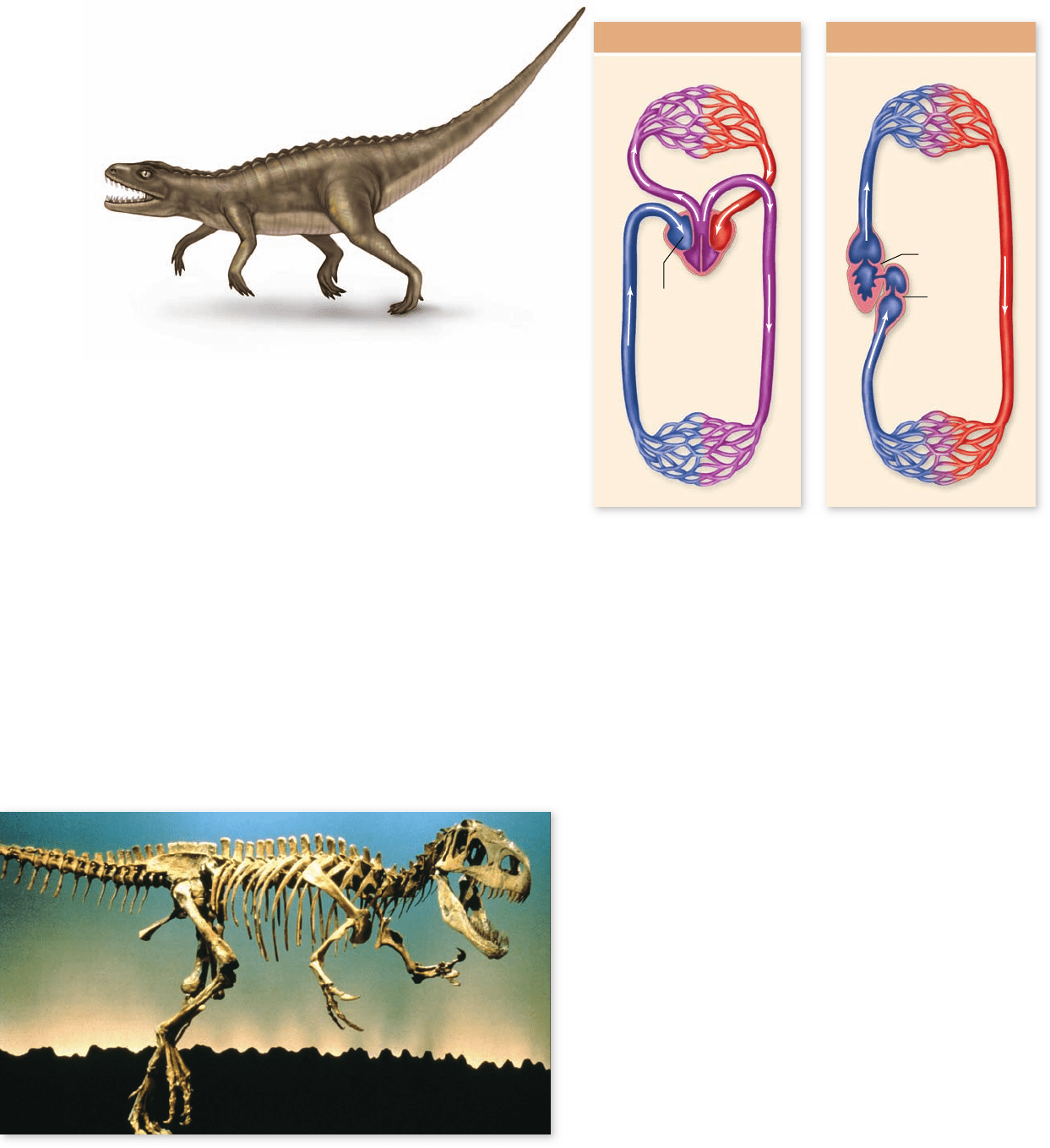
Figure 35.21
An early archosaur. Euparkeria had rows of
bony plates along the sides of the backbone, as seen in modern
crocodiles and alligators.
Figure 35.22
Mounted skeleton of Afrovenator. This
bipedal carnivore was about 30 feet long and lived in Africa about
130 mya.
Figure 35.23
A comparison of reptile and sh
circulation. a. In most reptiles, oxygenated blood (red) is
repumped after leaving the lungs, and circulation to the rest of the
body remains vigorous. b. The blood in shes ows from the gills
directly to the rest of the body, resulting in slower circulation.
posture to support their massive weight. Other types—the
therapods—became the most fearsome predators the earth has
ever seen, and one theropod line evolved to become birds. Di-
nosaurs went on to become the most successful of all land ver-
tebrates, dominating for more than 150 million years. All
dinosaurs, except their bird descendants, became extinct rather
abruptly 65 mya, apparently as a result of an asteroid’s impact.
Important characteristics of modern reptiles
As you might imagine from the structure of the amniotic egg,
reptiles and other amniotes do not practice external fertiliza-
tion as most amphibians do. Sperm would be unable to pene-
trate the membrane barriers protecting the egg. Instead, the
male places sperm inside the female, where sperm fertilizes the
egg before the protective membranes are formed. This is called
internal fertilization.
The circulatory system of reptiles is an improvement
over that of fish and amphibians, providing oxygen to the body
more efficiently (figure 35.23 ; see chapter 50 ). The improve-
ment is achieved by extending the septum within the heart
from the atrium partway across the ventricle. This septum cre-
ates a partial wall that tends to lessen mixing of oxygen-poor
blood with oxygen-rich blood within the ventricle. In croco-
diles, the septum completely divides the ventricle, creating a
four-chambered heart, just as it does in birds and mammals
(and probably did in dinosaurs).
Archosaurs
Diapsids have skulls with two pairs of temporal holes, and like
amphibians and early reptiles, they were ectotherms. A variety
of different diapsids occurred in the Triassic period (213 to
248 mya), but one group, the archosaurs, were of particular
evolutionary significance because they gave rise to crocodiles,
pterosaurs, dinosaurs, and birds (figure 35.21 ).
Among the early archosaurs were the largest animals the
world had seen, up to that point, and the first land vertebrates
to be bipedal—to stand and walk on two feet. By the end of the
Triassic period, however, one archosaur group rose to promi-
nence: the dinosaurs.
Dinosaurs evolved about 220 mya. Unlike previous bi-
pedal diapsids, their legs were positioned directly underneath
their bodies (figure 35.22) . This design placed the weight of the
body directly over the legs, which allowed dinosaurs to run
with great speed and agility. Subsequently, a number of types of
dinosaur evolved enormous size and reverted to a four-legged
chapter
35
Vertebrates
709www.ravenbiology.com
rav32223_ch35_693-728.indd 709rav32223_ch35_693-728.indd 709 11/16/09 1:45:26 PM11/16/09 1:45:26 PM
Apago PDF Enhancer
Order Chelonia Order Rhynchocephalia
a.
b.
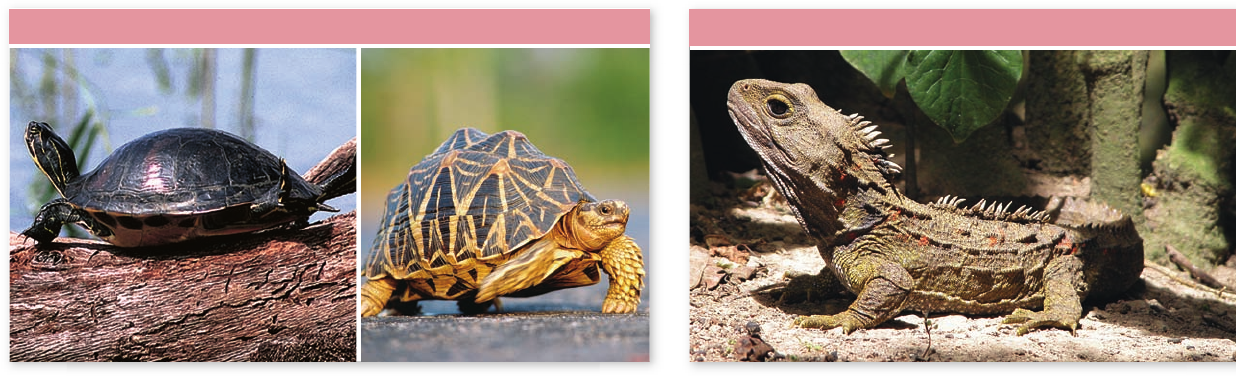
Figure 35.24
Living orders of reptiles . a. Chelonia. The red-bellied turtle, Pseudemys rubriventris (left) is shown basking, an
effective means by which many ectotherms can precisely regulate their body temperature. The domed shells of tortoises, such as this Sri
Lankan star tortoise, Geochelone elegans, provide protection against predators for these entirely terrestrial chelonians. b. Tuat a r a (Sphenodon
punctatus). The sole living members of the ancient group Rhynchocephalia. Although they look like lizards, the common ancestor of
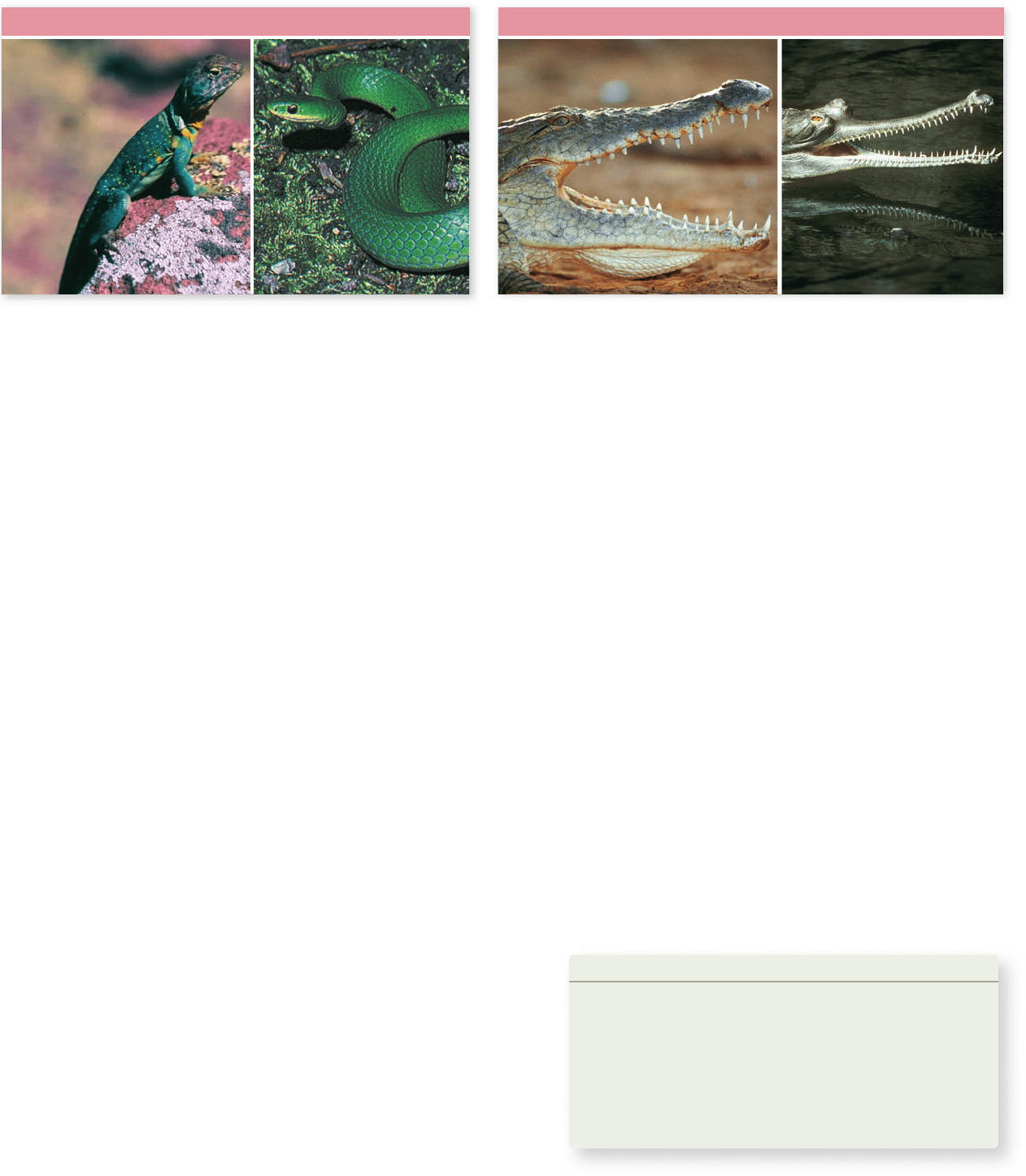
rhynchocephalians and lizards diverged more than 250 mya. c. Squamata. A collared lizard, Crotaphytus collaris, is shown left, and a smooth
green snake, Liochlorophis vernalis, on the right. d. Crocodylia. Most crocodilians, such as the crocodile, Crocodylus acutus, and the gharial,
Gavialis gangeticus (right), resemble birds and mammals in having four-chambered hearts; all other living reptiles have three-chambered
hearts. Like birds, crocodiles are more closely related to dinosaurs than to any of the other living reptiles.
Whereas most tortoises have a dome-shaped shell into
which they can retract their head and limbs, water-dwelling
turtles have a streamlined, disc-shaped shell that permits rapid
turning in water. Freshwater turtles have webbed toes; in ma-
rine turtles, the forelimbs have evolved into flippers.
Although marine turtles spend their lives at sea, they must
return to land to lay their eggs. Many species migrate long dis-
tances to do this. Atlantic green turtles (Chelonia mydas) migrate
from their feeding grounds off the coast of Brazil to Ascension
Island in the middle of the South Atlantic—a distance of more
than 2000 km—to lay their eggs on the same beaches where
they themselves hatched.
Order Rhynchocephalia: Tuataras
Today, the order Rhynchocephalia contains only two species of
tuataras, large, lizard-like animals about half a meter long
(figure 35.24b). The only place in the world where these endan-
gered species are found is a cluster of small islands off the coast
of New Zealand. The limited diversity of modern rhynchocepha-
lians belies their rich evolutionary past: In the Triassic period,
rhynchocephalians experienced a great adaptive radiation, pro-
ducing many species that differed greatly in size and habitat.
An unusual feature of the tuatara (and some lizards) is the
inconspicuous “third eye” on the top of its head, called a parietal
eye. Concealed under a thin layer of scales, the eye has a lens and
a retina and is connected by nerves to the brain. Why have an
eye, if it is covered up? The parietal eye may function to alert the
tuatara when it has been exposed to too much sunlight, protect-
ing it against overheating. Unlike most reptiles, tuataras are most
active at low temperatures. They burrow during the day and feed
at night on insects, worms, and other small animals.
Rhynchocephalians are the closest relatives of snakes and
lizards, with whom they form the group Lepidosauria.
All living reptiles are ectothermic, obtaining their heat
from external sources. In contrast, endothermic animals are
able to generate their heat internally (see chapter 43). Although
they are ectothermic, that does not mean that reptiles cannot
control their body temperature. Many species are able to pre-
cisely regulate their temperature by moving in and out of sun-
light. In this way, some desert lizards can keep their bodies at a
constant temperature throughout the course of an entire day.
Of course, on cloudy days, or for species that live in shaded
habitats, such thermoregulation is not possible, and in these
cases, body temperature is the same as the temperature of the
surrounding environment.
Modern reptiles belong to four groups
The four surviving orders of reptiles contain about 7000 species.
Reptiles occur worldwide except in the coldest regions, where it
is impossible for ectotherms to survive. Reptiles are among the
most numerous and diverse of terrestrial vertebrates.
Order Chelonia: Turtles and tortoises
The order Chelonia (figure 35.24a) consists of about 250 species
of turtles (most of which are aquatic) and tortoises (which are ter-
restrial). Turtles and tortoises lack teeth but have sharp beaks.
They differ from all other reptiles because their bodies are encased
within a protective shell. Many of them can pull their head and
legs into the shell as well, for total protection from predators.
The shell consists of two basic parts. The carapace is the
dorsal covering, and the plastron is the ventral portion. In a
fundamental commitment to this shell architecture, the verte-
brae and ribs of most turtle and tortoise species are fused to the
inside of the carapace. All of the support for muscle attachment
comes from the shell.
710
part
V
Diversity of Life on Earth
rav32223_ch35_693-728.indd 710rav32223_ch35_693-728.indd 710 11/16/09 1:45:28 PM11/16/09 1:45:28 PM
Apago PDF Enhancer
Order Squamata Order Crocodylia
c.
d.
Crocodiles are largely nocturnal animals that live in or
near water in tropical or subtropical regions of Africa, Asia, and
the Americas. The American crocodile (Crocodylus acutus) is
found in southern Florida, Cuba, and throughout tropical Cen-
tral America. Nile crocodiles (Crocodylus niloticus) and estuarine
crocodiles (Crocodylus porosus) can grow to enormous size and
are responsible for many human fatalities each year.
There are only two species of alligators: one living in the
southern United States (Alligator mississippiensis) and the other a
rare endangered species living in China (Alligator sinensis). Cai-
mans, which resemble alligators, are native to Central America.
Gharials, or gavials, are a group of fish-eating crocodilians with
long, slender snouts that live only in India and Burma.
All crocodilians are carnivores. They generally hunt by
stealth, waiting in ambush for prey, and then attacking fero-
ciously. Their bodies are well adapted for this form of hunting
with eyes on top of their heads and their nostrils on top of their
snouts, so they can see and breathe while lying quietly sub-
merged in water. They have enormous mouths, studded with
sharp teeth, and very strong necks. A valve in the back of the
mouth prevents water from entering the air passage when a
crocodilian feeds underwater.
In many ways, crocodiles resemble birds far more than they
do other living reptiles. For example, crocodiles build nests and
care for their young (traits they share with at least some dinosaurs),
and they have a four-chambered heart, as birds do. Why are croco-
diles more similar to birds than to other living reptiles? Most bi-
ologists agree that birds are in fact the direct descendants of
dinosaurs. Both crocodiles and birds are more closely related to
dinosaurs, and to each other, than they are to lizards and snakes.
Learning Outcomes Review 35.6
Reptiles have a hard, scaly skin that minimizes water loss, thoracic
breathing, and an enclosed, amniotic egg that does not need to be laid in
water. Synapsids had a single hole in the skull behind the eyes, and included
ancestors of mammals; diapsids had two holes and are ancestors of modern
reptiles and birds. The four living orders of reptiles include the turtles and
tortoises, tuataras, lizards and snakes, and crocodiles.
■ How do reptile eggs differ from those of amphibians?
Order Squamata: Lizards and snakes
The order Squamata (figure 35.24c) includes 3800 species of
lizards and about 3000 species of snakes. A distinguishing char-
acteristic of this order is the presence of paired copulatory or-
gans in the male. In addition, changes to the morphology of the
head and jaws allow greater strength and mobility. Most lizards
and snakes are carnivores, preying on insects and small animals,
and these improvements in jaw design have made a major con-
tribution to their evolutionary success.
Snakes, which evolved from a lizard ancestor, are character-
ized by the lack of limbs, movable eyelids, and external ears, as well
as a great number of vertebrae (sometimes more than 300). Limb-
lessness has actually evolved more than a dozen times in lizards;
snakes are simply the most extreme case of this evolutionary trend.
Common lizards include iguanas, chameleons, geckos,
and anoles. Most are small, measuring less than a foot in length.
The largest lizards belong to the monitor family. The largest of
all monitor lizards is the Komodo dragon of Indonesia, which
reaches 3 m in length and can weigh more than 100 kg. Snakes
also vary in length from only a few inches to more than 10 m.
Many lizards and snakes rely on agility and speed to catch
prey and elude predators. Only two species of lizard are venom-
ous, the Gila monster of the southwestern United States and
the beaded lizard of western Mexico. Similarly, most species of
snakes are nonvenomous. Of the 13 families of snakes, only 4
contain venomous species: the elapids (cobras, kraits, and coral
snakes); the sea snakes; the vipers (adders, bushmasters, rattle-
snakes, water moccasins, and copperheads); and some colubrids
(African boomslang and twig snake).
Many lizards, including anoles, skinks, and geckos, have
the ability to lose their tails and then regenerate a new one.
This ability allows these lizards to escape from predators.
Order Crocodylia: Crocodiles and alligators
The order Crocodylia is composed of 25 species of large, pri-
marily aquatic reptiles (figure 35.24d). In addition to crocodiles
and alligators, the order includes two less familiar animals: the
caimans and the gavials. Although all crocodilians are fairly
similar in appearance today, much greater diversity existed in
the past, including species that were entirely terrestrial and
others that achieved a total length in excess of 50 feet.
chapter
35
Vertebrates
711www.ravenbiology.com
rav32223_ch35_693-728.indd 711rav32223_ch35_693-728.indd 711 11/16/09 1:45:37 PM11/16/09 1:45:37 PM