
Raven P.H., Johnson G.B., Mason K.A. Biology (Ninth Edition)
Подождите немного. Документ загружается.

Apago PDF Enhancer
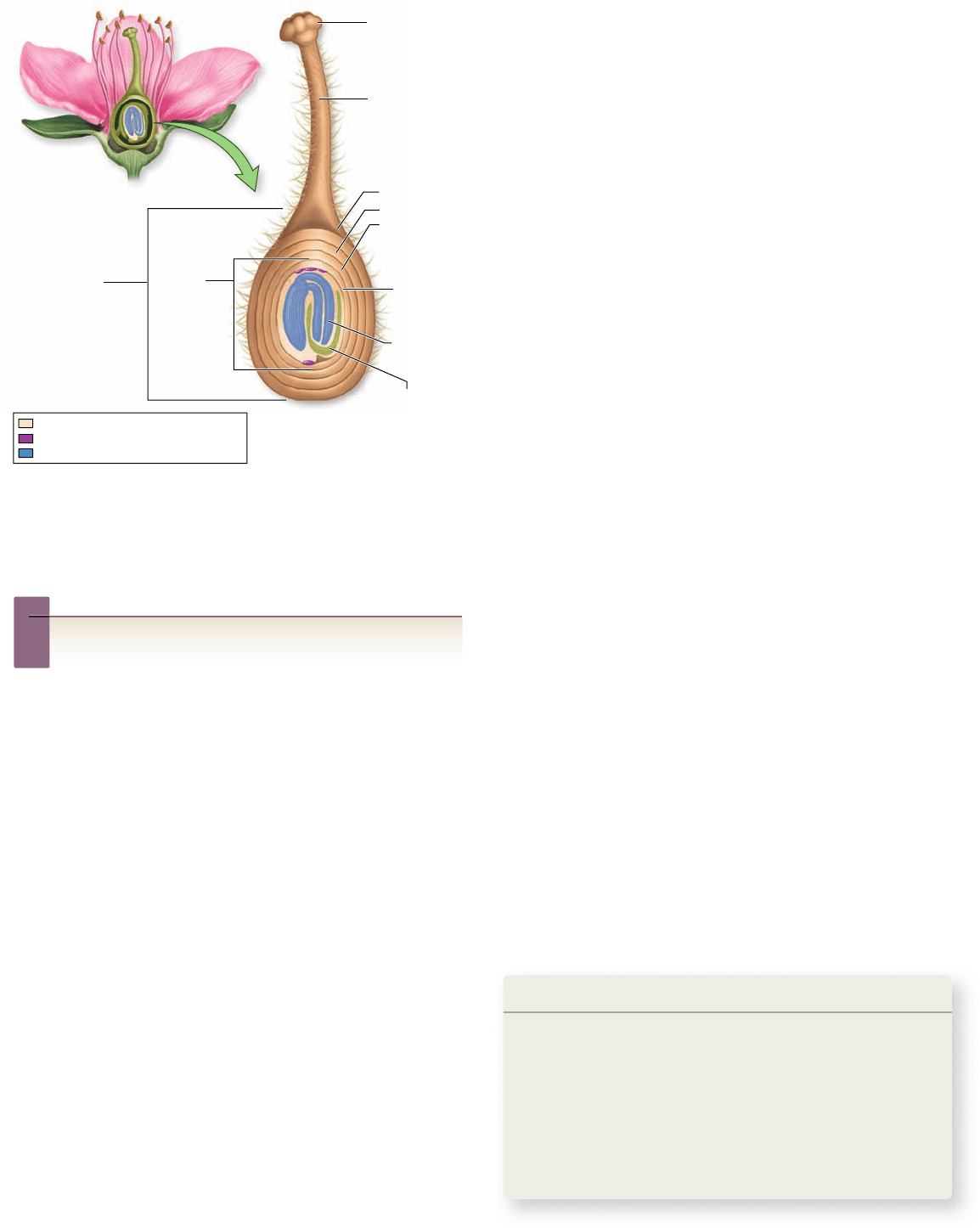
Stigma
Style
Part of
ovary
developing
into seed
Ovary
Carpel
(developing
fruit)
Pericarp
(ovary wall)
Exocarp
Mesocarp
Endocarp
Developing
seed coat
Embryo
Endosperm (3n)
prior sporophyte generation
degenerating gametophyte generation
next sporophyte generation
Figure 37.14
Fruit development. The carpel (speci cally
the ovary) wall is composed of three layers: the exocarp, mesocarp,
and endocarp. One, some, or all of these layers develops to
contribute to the recognized fruit in different species. The seed
matures within this developing fruit.
Inquiry question
?
Three generations are represented in this diagram. Label
the ploidy levels of the tissues of different generations
shown here.
the flower ovary begins to develop into fruit (figure 37.14) .
In some cases, pollen landing on the stigma can initiate
fruit development, but more frequently the coordination of
fruit, seed coat, embryo, and endosperm development fol-
low fertilization.
It is possible for fruits to develop without seed develop-
ment. Commercial bananas for example have aborted seed de-
velopment, but do produce mature, edible ovaries. Bananas are
propagated asexually since no embryo develops.
Fruits are adapted for dispersal
Fruits form in many ways and exhibit a wide array of adapta-
tions for dispersal. Three layers of ovary wall, also called the
pericarp, can have distinct fates, which account for the diversity
of fruit types from fleshy to dry and hard. The differences
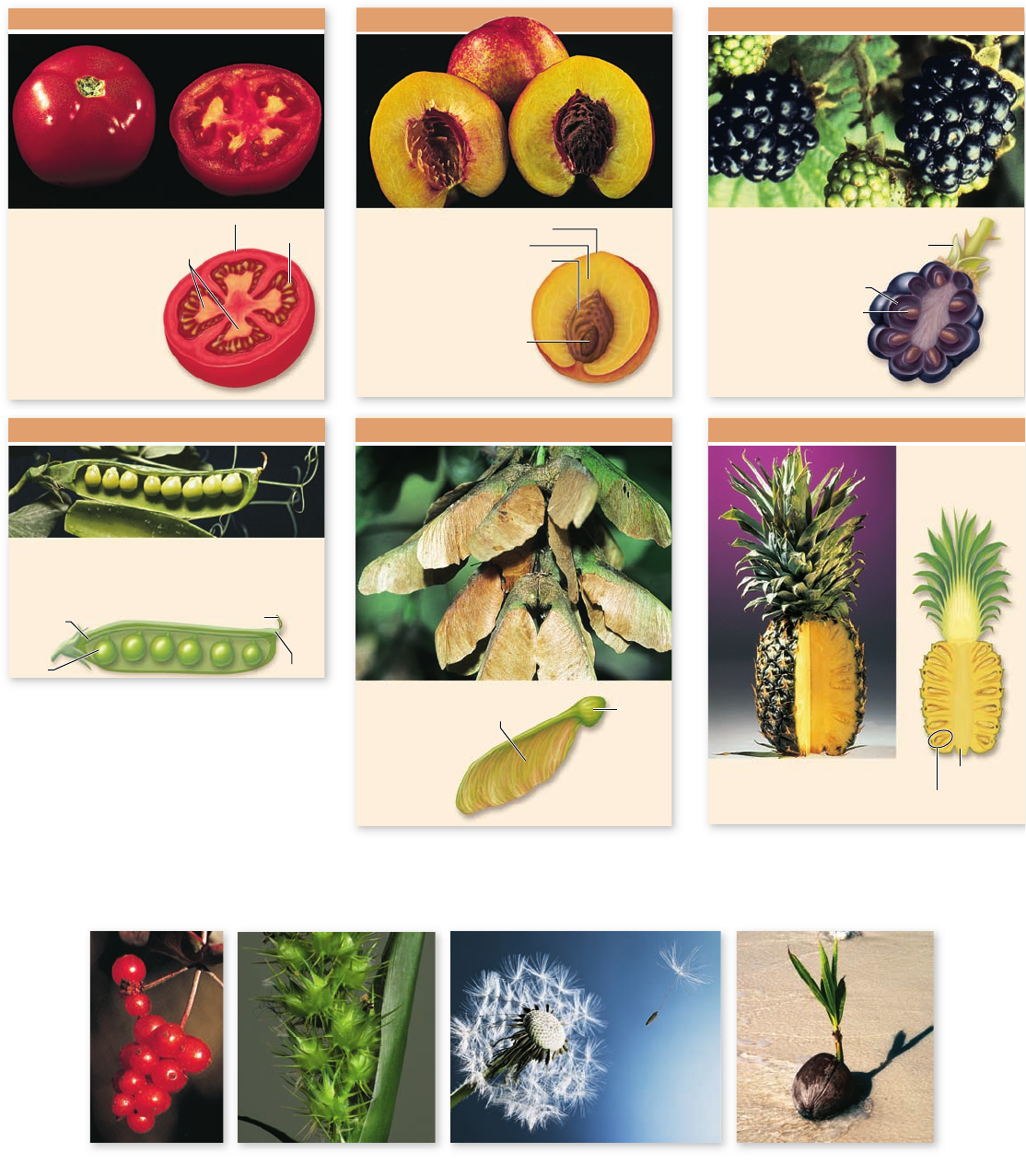
among some of the fruit types are shown in figure 37.15 .
Developmentally, fruits are fascinating organs that con-
tain three genotypes in one package. The fruit and seed coat are
from the prior sporophyte generation. Remnants of the game-
tophyte generation that produced the egg are found in the de-
veloping seed, and the embryo represents the next sporophyte
generation (see figure 37.14) .
Fruits allow angiosperms
to colonize large areas
Aside from the many ways fruits can form, they also exhibit a
wide array of specialized dispersal methods. Fruits with fleshy
coverings, often shiny black or bright blue or red, normally are
dispersed by birds or other vertebrates (figure 37.16a ). Like red
flowers, red fruits signal an abundant food supply. By feeding
on these fruits, birds and other animals may carry seeds from
place to place and thus transfer plants from one suitable habitat
to another. Such seeds require a hard seed coat to resist stom-
ach acids and digestive enzymes.
Fruits with hooked spines, such as those of burrs
(figure 37.16b), are typical of several genera of plants that oc-
cur in the northern deciduous forests. Such fruits are often
disseminated by mammals, including humans, when they hitch
a ride on fur or clothing. Squirrels and similar mammals dis-
perse and bury fruits such as acorns and other nuts. Some of
these sprout when conditions become favorable, such as after
the spring thaw.
Other fruits, including those of maples, elms, and ashes,
have wings that aid in their distribution by the wind. Orchids
have minute, dustlike seeds, which are likewise blown away by
the wind. The dandelion provides another familiar example of
a fruit type that is wind-dispersed (figure 37.16c), and the dis-
persal of seeds from plants such as milkweeds, willows, and
cotton woods is similar. Water dispersal adaptations include air-
filled chambers surrounded by impermeable membranes to
prevent the entrance of H
2
O.
Coconuts and other plants that characteristically occur
on or near beaches are regularly spread throughout a region by
floating in water (figure 37.16d). This sort of dispersal is espe-
cially important in the colonization of distant island groups,
such as the Hawaiian Islands.
It has been calculated that the seeds of about 175 angio-
sperms, nearly one-third from North America, must have
reached Hawaii to have evolved into the roughly 970 species
found there today. Some of these seeds blew through the air,
others were transported on the feathers or in the guts of birds,
and still others floated across the Pacific. Although the dis-
tances are rarely as great as the distance between Hawaii and
the mainland, dispersal is just as important for mainland plant
species that have discontinuous habitats, such as mountaintops,
marshes, or north-facing cliffs.
Learning Outcomes Review 37.3
As a seed develops, the pericarp layers of the ovary wall develop into the
fruit. A berry has a fl eshy pericarp; a legume has a dry pericarp that opens to
release seeds; the outer layers of a drupe pericarp are fl eshy; and a samara
is a dry structure with a wing. Animals often distribute the seeds of fl eshy
fruits and fruits with spines or hooks. Wind disperses lightweight seeds and
samara forms.
■ What features of fruits might encourage animals to
eat them?
762
part
VI
Plant Form and Function
rav32223_ch37_753-768.indd 762rav32223_ch37_753-768.indd 762 11/16/09 12:01:49 PM11/16/09 12:01:49 PM
Apago PDF Enhancer
Split along two carpel edges (sutures) with seeds
attached to edges; peas, beans. Unlike fleshy fruits,
the three tissue layers of the ovary do not thicken
extensively. The entire pericarp is dry at maturity.
The entire pericarp is
fleshy, although there
may be a thin skin.
Berries have multiple
seeds in either one or
more ovaries. The
tomato flower had four
carpels that fused.
Each carpel contains
multiple ovules that
develop into seeds.
Legumes
True Berries
Pericarp
Stigma
StyleSeed
Outer pericarp
SeedFused
carpels
Not split and
with a wing
formed from the
outer tissues;
maples, elms,
ashes.
Single seed
enclosed
in a hard pit;
peaches, plums,
cherries. Each
layer of the
pericarp has
a different structure
and function, with
the endocarp
forming the pit.
Derived from many
ovaries of a single
flower; strawberries,
blackberries.
Unlike tomato,
these ovaries
are not fused
and covered
by a continuous
pericarp.
Individual flowers form fruits
around a single stem. The fruits
fuse as seen with pineapple.
Drupes
Samaras
Aggregate Fruits
Multiple Fruits
Pericarp
Exocarp (skin)
Mesocarp
Endocarp (pit)
Seed
Seed
Pericarp
Sepals of a
single flower
Seed
Ovary
Pericarp of
individual flower
Main stem
a. b. c. d.
Figure 37.15
Examples of some kinds
of fruits. Legumes and samaras are examples
of dry fruits. Legumes open to release their
seeds, while samara do not. Drupes and true
berries are simple eshy fruits; they develop
from a ower with a single pistil composed of
one or more carpels. Aggregate and multiple
fruits are compound eshy fruits; they develop
from owers with more than one pistil or from
more than one ower.
Figure 37.16
Animal-dispersed fruits. a. The bright red berries of this honeysuckle, Lonicera hispidula, are highly attractive to birds.
After eating the fruits, birds may carry the seeds they contain for great distances either internally or, because of their sticky pulp, stuck to their
feet or other body parts. b. You will know if you have ever stepped on the fruits of Cenchrus incertus; their spines adhere readily to any passing
animal. c. False dandelion, Pyrrhopappus carolinianus, has “parachutes” that widely disperse the fruits in the wind, much to the gardener’s despair.
d. This fruit of the coconut palm, Cocos nucifera, is sprouting on a sandy beach. Coconuts, one of the most useful fruits for humans in the
tropics, have become established on other islands by drifting there on the waves.
chapter
37
Vegetative Plant Development
763www.ravenbiology.com
rav32223_ch37_753-768.indd 763rav32223_ch37_753-768.indd 763 11/16/09 12:01:50 PM11/16/09 12:01:50 PM
Apago PDF Enhancer
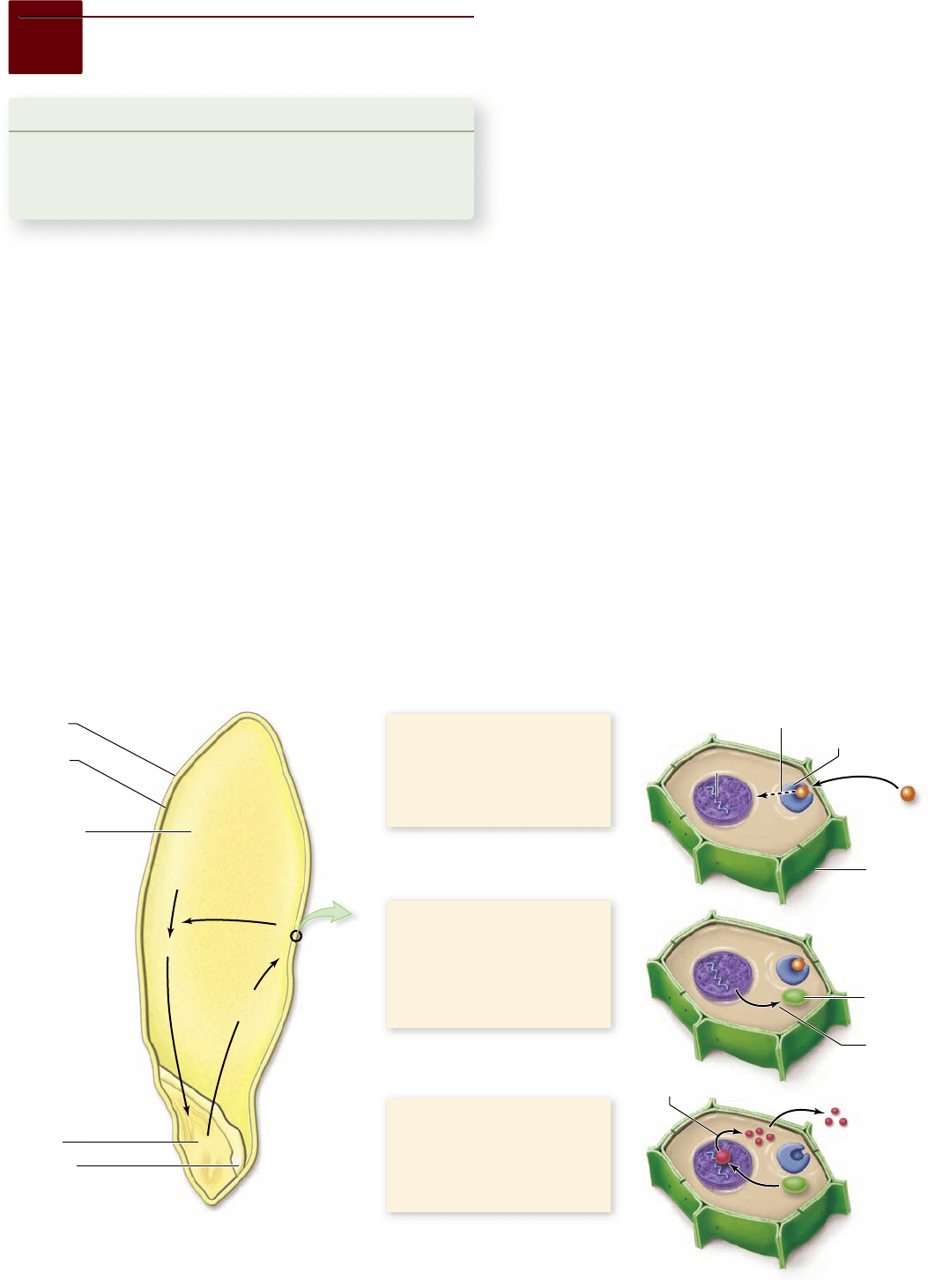
1. Gibberellic acid (GA) binds
to cell membrane receptors
on the cells of the aleurone
layer. This triggers a signal
transduction pathway.
2. The signaling pathway
leads to the transcription of
a Myb gene in the nucleus
and translation of the Myb
RNA into Myb protein in
the cytoplasm.
3. The Myb protein then
enters the nucleus and
activates the promoter for
the a-amylase gene,
resulting in the production
and release of a-amylase.
Pericarp
Aleurone
Endosperm
Scutellum
(cotyledon)
Embryo
Starch
Sugars
Gibberellic
acid
a-amylase
Aleurone cell
Signaling pathway
GA receptor
GA
DNA
Myb protein
Transcription
and translation
a-amylase
Transcription and translation
37.4
Germination
Learning Outcomes
Describe the events that occur during seed germination.1.
Contrast the pattern of shoot emergence in bean (dicot) 2.
with that in maize (monocot).
When conditions are satisfactory, the embryo emerges from its
previously desiccated state, utilizes food reserves, and resumes
growth. Although germination is a process characterized by
several stages, it is often defined as the emergence of the
radicle (first root) through the seed coat.
External signals and conditions
trigger germination
Germination begins when a seed absorbs water and its metabo-
lism resumes. The amount of water a seed can absorb is phe-
nomenal, and osmotic pressure creates a force strong enough to
break the seed coat. At this point, it is important that oxygen be
available to the developing embryo because plants, like animals,
require oxygen for cellular respiration. Few plants produce
seeds that germinate successfully under water, although some,
such as rice, have evolved a tolerance to anaerobic conditions.
Even though a dormant seed may have imbibed a full
supply of water and may be respiring, synthesizing proteins and
RNA, and apparently carrying on normal metabolism, it may
fail to germinate without an additional signal from the environ-
Figure 37.17
Hormonal regulation of seedling growth.
ment. This signal may be light of the correct wavelength and
intensity, a series of cold days, or simply the passage of time at
temperatures appropriate for germination. The seeds of many
plants will not germinate unless they have been stratified—
held for periods of time at low temperatures. This phenomenon
prevents the seeds of plants that grow in seasonally cold areas
from germinating until they have passed the winter, thus pro-
tecting their tender seedlings from harsh, cold conditions.
Germination can occur over a wide temperature range
(5° to 30°C), although certain species may have relatively narrow
optimum ranges. Some seeds will not germinate even under the
best conditions. In some species, a significant fraction of a sea-
son’s seeds remain dormant for an indeterminate length of time,
providing a gene pool of great evolutionary significance to the
future plant population. The presence of ungerminated seeds in
the soil of an area is referred to as the seed bank.
Nutrient reserves sustain the growing seedling
Germination occurs when all internal and external require-
ments are met. Germination and early seedling growth require
the utilization of metabolic reserves stored as starch in amylo-
plasts (colorless plastids) and protein bodies. Fats and oils, also
stored, in some kinds of seeds, can readily be digested during
germination to produce glycerol and fatty acids, which yield
energy through cellular respiration. They can also be converted
to glucose. Depending on the kind of plant, any of these re-
serves may be stored in the embryo or in the endosperm.
In the kernels of cereal grains, the single cotyledon is mod-
ified into a relatively massive structure called the scutellum
(figure 37.17) . The abundant food stored in the scutellum is
used up first during germination. Later, while the seedling is
764
part
VI
Plant Form and Function
rav32223_ch37_753-768.indd 764rav32223_ch37_753-768.indd 764 11/16/09 12:02:05 PM11/16/09 12:02:05 PM
Apago PDF Enhancer
a.
b.
Hypocotyl
Secondary roots Primary roots
Seed coat
Cotyledon
Withered
cotyledons
Hypocotyl
Bent hypocotyl
Plumule
Scutellum
Primary root
Adventitious
root
Radicle
Coleorhiza
First leaf
Coleoptile
Epicotyl
First leaves
becoming established, the scutellum serves as a nutrient conduit
from the endosperm to the rest of the embryo.
The utilization of stored starch by germinating plants is
one of the best examples of how hormones modulate plant devel-
opment (see figure 37.17). The embryo produces gibberellic acid,
a hormone, that signals the outer layer of the endosperm, called
the aleurone, to produce α-amylase. This enzyme is responsible
for breaking down the endosperm’s starch, primarily amylose,
into sugars that are passed by the scutellum to the embryo. Absci-
sic acid, another plant hormone, which is important in establish-
ing dormancy, can inhibit starch breakdown. Abscisic acid levels
may be reduced when a seed beginning to germinate absorbs
water. (The action of plant hormones is covered in chapter 41.)
The seedling becomes oriented in the
environment, and photosynthesis begins
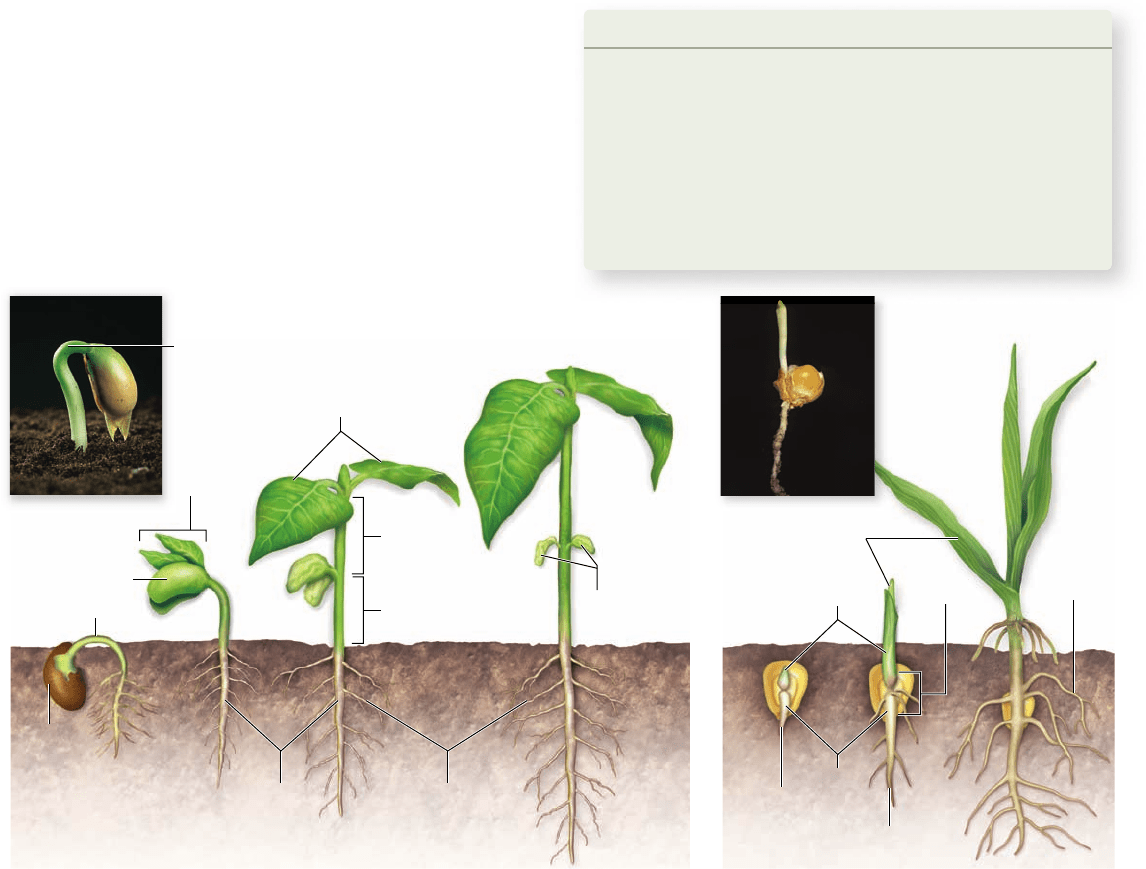
As the sporophyte pushes through the seed coat, it orients with
the environment so that the root grows down and the shoot
grows up. New growth comes from delicate meristems that are
protected from environmental rigors. The shoot becomes pho-
tosynthetic, and the postembryonic phase of growth and devel-
opment is under way. Figure 37.18 shows the process of
germination and subsequent development of the plant body in
eudicots and monocots.
The emerging shoot and root tips are protected by addi-
tional tissue layers in the monocots—the coleoptile surrounding
the shoot, and the coleorhiza surrounding the radicle. Other
protective strategies include having a bent shoot emerge so tis-
sues with more rugged cell walls push through the soil.
The emergence of the embryonic root and shoot from
the seed during germination varies widely from species to spe-
cies. In most plants, the root emerges before the shoot appears
and anchors the young seedling in the soil (see figure 37.18). In
plants such as peas, the cotyledons may be held below ground;
in other plants, such as beans, radishes, and onions, the cotyle-
dons are held above ground. The cotyledons may become green
and contribute to the nutrition of the seedling as it becomes
established, or they may shrivel relatively quickly. The period
from the germination of the seed to the establishment of the
young plant is critical for the plant’s survival; the seedling is
unusually susceptible to disease and drought during this period.
Soil composition and pH can also affect the survival of a newly
germinated plant (figure 37.19) .
Learning Outcomes Review 37.4
During germination, the seed and embryo take up water, increase
respiration, and synthesize protein and RNA. Metabolic reserves in seeds
include starch, fats, and oils. During seedling emergence, the cotyledons
and seed coat may be pulled out of the ground and become photosynthetic,
as they do in dicots such as beans. Alternatively, the cotyledon and seed coat
may remain in the ground, as they do in monocots such as maize.
■ What might be an advantage of retaining a seed in the
ground during seedling emergence?
Figure 37.18
Germination. The stages shown are for (a) a eudicot, the common bean (Phaseolus vulgaris), and (b) a monocot, maize
(Zea mays). Note that the bending of the hypocotyl (region below the cotyledons) protects the delicate bean shoot apex as it emerges through
the soil. Maize radicles are protected by a protective layer of tissue called the coleorhiza, in addition to the root cap found in both bean and
maize. A sheath of cells called the coleoptile, rather than a hypocotyl tissue, protects the emerging maize shoot tip.
chapter
37
Vegetative Plant Development
765www.ravenbiology.com
rav32223_ch37_753-768.indd 765rav32223_ch37_753-768.indd 765 11/17/09 12:08:41 PM11/17/09 12:08:41 PM
Apago PDF Enhancer
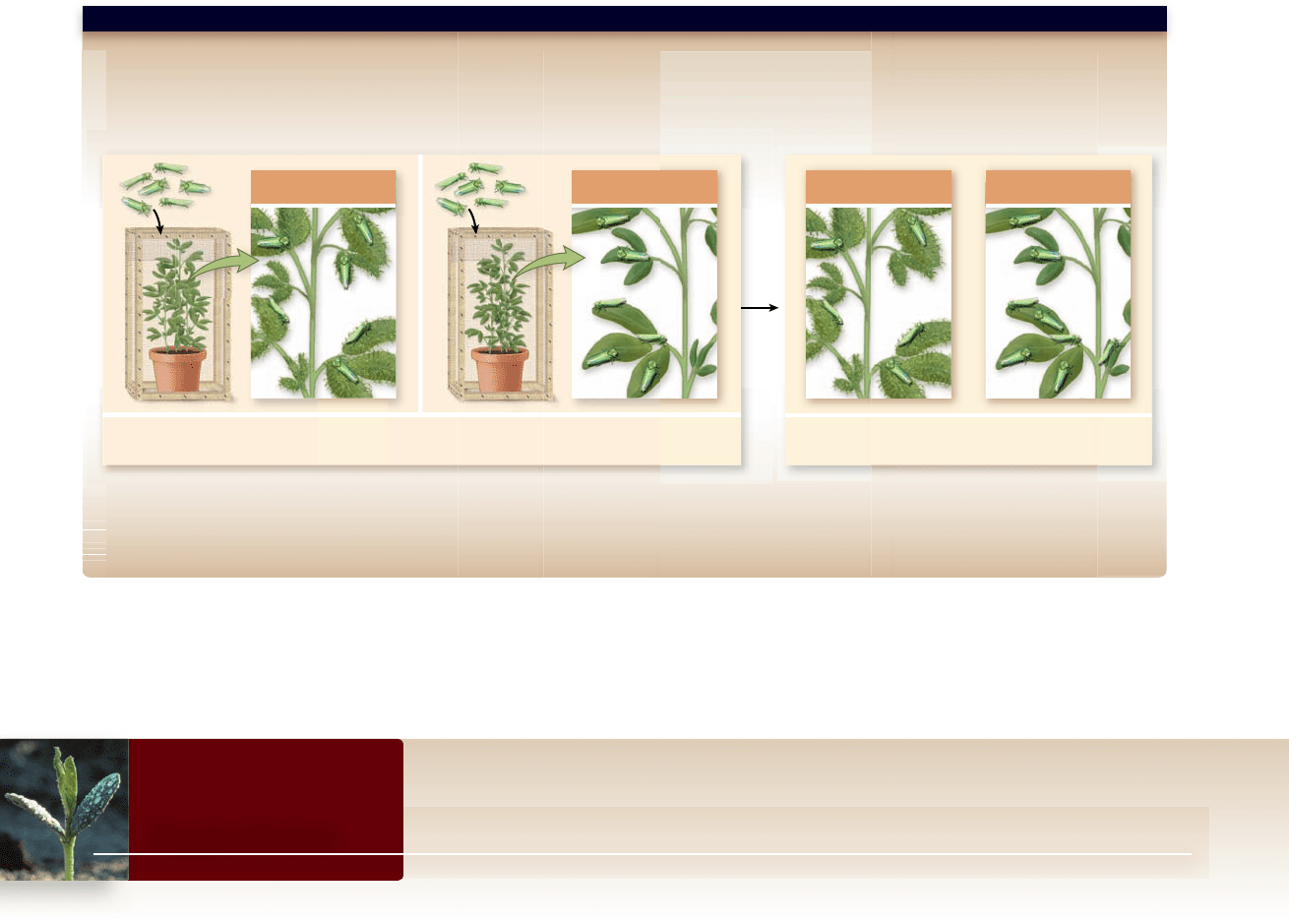
The same number of leafhoppers are placed in each cage with alfalfa plants.
TrichomesTrichomes No TrichomesNo Trichomes
After a period of time, more leafhoppers are
present on the alfalfa plants that lack trichomes.
Hypothesis: Glandular trichomes prevent leafhoppers from feeding and reproducing on alfalfa plants.
Prediction: Rates of leafhopper survival and reproduction will be lower on plants with glandular trichomes than on those without glandular trichomes.
Test: Place alfalfa variety that produces glandular trichomes in a cage and a variety that lacks glandular trichomes in another cage. Place the same number
of leafhoppers in each cage. Return after a period of time and count the number of live leafhoppers in each cage.
Result: There are fewer live leafhoppers in the cage with the trichome-bearing plant.
Conclusion: The hypothesis is supported. The survival and reproduction rate of leafhoppers on plants with trichomes was lower than that on plants lacking trichomes.
Further Experiments: Design an experiment to determine if trichomes in general or just glandular trichomes can deter leafhoppers.
SCI ENT I FI C THINKING
37.1 Embryo Development
A single cell divides to produce a three-dimensional body plan.
An angiosperm zygote divides to produce an embryo surrounded by
endosperm (see gure 37.1). In early divisions, the root-shoot axis
and radial axis become established.
Developmental mutants in model plants reveal what can go wrong,
allowing inferences about how development proceeds under
normal conditions.
A simple body plan emerges during embryogenesis.
Shoot and root apical meristems develop, and protoderm, ground
meristem, and procambium differentiate; these will become the three
types of tissue in an adult plant.
Morphogenesis creates a three-dimensional embryo that includes one
or two cotyledons.
Food reserves form during embryogenesis.
While the embryo is being formed, a food supply is being
established for the embryo. In angiosperms, this consists of the
endosperm produced by double fertilization; in gymnosperms, the
megagametophyte is the food source. In addition, a seed coat forms,
and the fruit develops.
37.2 Seeds (see gure 37.12)
Seeds protect the embryo.
Seeds help to ensure the survival of the next generation by
maintaining dormancy during unfavorable conditions,
protecting the
embryo, providing food for the embryo, and providing a means
for dispersal.
Specialized seed adaptations improve survival.
Before a seed germinates, its seed coat must become permeable
so that water and oxygen can reach the embryo. Adaptations have
evolved to ensure germination under appropriate survival conditions.
In certain gymnosperms, seeds may be released from cones after
a re. Alternatively, seeds may require passage through a digestive
tract, freeze–thaw cycles, or abundant moisture.
37.3 Fruits (see gure 37.14)
Fruits are adapted for dispersal.
In angiosperms,
a fruit is a mature ovary. Fruit development is
coordinated with embryo, endosperm, and seed coat development.
Angiosperms produce many types of fruit, which vary depending on
the fate of the pericarp (carpel wall). Fruits can be dry or eshy, and
Chapter Review
Figure 37.19
Glandular trichomes can protect plants from insects.
766
part
VI
Plant Form and Function
rav32223_ch37_753-768.indd 766rav32223_ch37_753-768.indd 766 11/16/09 12:02:08 PM11/16/09 12:02:08 PM

Apago PDF Enhancer
they can be simple (single carpel), aggregate (multiple carpels), or
multiple (multiple owers).
A fruit is genetically unique because it contains tissues from the parent
sporophyte (the seed coat and fruit tissue), the gametophyte (remnants
in the developing seed) and the offspring sporophyte (the embryo).
Fruits allow angiosperms to colonize large areas.
Fruits exhibit a wide array of dispersal mechanisms. They may be
ingested and transported by animals, buried in caches by herbivores,
carried away by birds and mammals, blown by the wind, or oat away
on water.
37.4 Germination
Seed germination is de ned as the emergence of the radical through
the seed coat.
External signals and conditions trigger germination.
A seed must imbibe water in order to germinate. Abundant oxygen is
necessary to support the high metabolic rate of a germinating seed.
Environmental signals are often needed for germination. Examples
include light of a certain wavelength, an appropriate temperature,
and stratication (a period of chilling).
Nutrient reserves sustain the growing seedling.
Germination is a high-energy process, requiring stored nutrients
such as starch, fats, and oils.
The endosperm acts as a starch reserve. Utilization of stored starch
begins when the embryo produces the plant hormone gibberellic
acid, which in turn stimulates production of an amylase to break
down amylose. Starch metabolism can be inhibited by abscisic acid, a
plant hormone that has a role in dormancy.
The seedling becomes oriented in the environment, and
photosynthesis begins.
In most plants, the root emerges before the shoot appears, anchoring
the young seedling.
In many eudicots, the shoot is bent as it emerges from the soil,
protecting the growing tip (see gure 37.18). Monocots produce
additional tissues to protect emerging shoots and roots.
During seedling emergence in dicots such as beans, the cotyledons
are often pulled up with the growing shoot. In monocots such as
corn, the cotyledon remains underground.
A seedling enters the postembryonic phase of growth and
development when the emerging shoot becomes photosynthetic.
U N DERS TAN D
1. After the rst mitotic division of the zygote, the larger of the
two cells becomes the
a. embryo. c. suspensor.
b. endosperm. d. micropyle.
2. Endosperm is produced by the union of
a. a central cell with a sperm cell.
b. a sperm cell with a synergid cell.
c. an egg cell with a sperm cell.
d. a suspensor with an egg cell.
3. During the globular stage of embryo development, apical
meristems establish the
a. embryo–suspensor axis.
b. inner–outer axis.
c. embryo–endosperm axis.
d. root–shoot axis.
4. Which of the following is not a primary meristem?
a. Cork cambium c. Procambium
b. Ground meristem d. Protoderm
5. The integuments of an ovule will develop into the
a. embryo. c. fruit.
b. endosperm. d. seed coat.
6. An example of a drupe is a
a. strawberry. c. bean.
b. plum. d. pineapple.
7. The pericarp is the
a. ovary wall. c. ovary.
b. developing seed coat. d. mature endosperm.
8. During seed germination, this hormone produces the signal for
the aleurone to begin starch breakdown.
a. Abscisic acid c. Gibberellic acid
b. Ethylene d. Auxin
9. The shoot tip of an emerging maize seedling is protected by
a. hypocotyl. c. coleoptile.
b. epicotyl. d. plumule.
APPLY
1. A plant lacking the WOODEN LEG gene will likely
a. be incapable of transporting water to its leaves.
b. lack xylem and phloem.
c. be incapable of transporting photosynthate.
d. all of the above
2. Explore how plant development changes if the functions of the
genes SHOOTMERISTEMLESS (STM) and MONOPTEROUS
(MP) were reversed?
a. The embryo–suspensor axis would be reversed.
b. The embryo–suspensor axis would be duplicated.
c. The root–shoot axis would be reversed.
d. The root–shoot axis would be duplicated.
3. How would a loss-of-function mutation in the α-amylase gene
affect seed germination?
a. The seed could not imbibe water.
b. The embryo would starve.
c. The seed coat would not rupture.
d. The seed would germinate prematurely.
Review Questions
chapter
37
Vegetative Plant Development
767www.ravenbiology.com
rav32223_ch37_753-768.indd 767rav32223_ch37_753-768.indd 767 11/16/09 12:02:10 PM11/16/09 12:02:10 PM

Apago PDF Enhancer
O N LIN E RES OURCE
www.ravenbiology.com
Understand, Apply, and Synthesize—enhance your study with
animations that bring concepts to life and practice tests to assess
your understanding. Your instructor may also recommend the
interactive eBook, individualized learning tools, and more.
4. Fruits are complex organs that are specialized for dispersal
of seeds. Which of the following plant tissues does not
contribute to mature fruit?
a. Sporophytic tissue from the previous generation
b. Gametophytic tissue from the previous generation
c. Sporophytic tissue from the next generation
d. Gametophytic tissue from the next generation
5. Loss-of-function mutations in the suspensor gene in Arabidopsis
lead to the development of two embryos in a seed. After
analyzing the expression of this gene in early wild-type
embryos, you nd high levels of mRNA transcribed from the
suspensor gene in the developing suspensor cells. What is the
likely function of the suspensor protein?
a. Suspensor protein likely stimulates development
of the embryonic tissue.
b. Suspensor protein likely stimulates development
of the suspensor tissue.
c. Suspensor protein likely inhibits embryonic development
in the suspensor.
d. Suspensor protein likely inhibits suspensor development in
the embryo.
S Y N THES IZE
1. Design an experiment to determine whether light or gravity is
more important in determining the orientation of the rhizoid
during zygote development in Fucus.
2. In gymnosperms, the nutritive tissue in the seed is
megagametophyte tissue. It is a product of meiosis. A major
evolutionary advance in the angiosperms is that the nutritive
tissue is endosperm, a triploid product of fertilization. Why do
you suppose endosperm is a richer source of nutrition than
megagametophyte tissue?
3. As you are eating an apple one day, you decide that you’d like to
save the seeds and plant them. You do so, but they fail to
germinate. Discuss all possible reasons that the seeds did not
germinate and strategies you could try to improve your chances
of success.
768
part
VI
Plant Form and Function
rav32223_ch37_753-768.indd 768rav32223_ch37_753-768.indd 768 11/16/09 12:02:10 PM11/16/09 12:02:10 PM
Apago PDF Enhancer
T
Chapter Outline
38.1 Transport Mechanisms
38.2 Water and Mineral Absorption
38.3 Xylem Transport
38.4 The Rate of Transpiration
38.5 Water-Stress Responses
38.6 Phloem Transport
Chapter
38
Transport in Plants
Introduction
Terrestrial plants face two major challenges: maintaining water and nutrient balance, and providing sufficient structural
support for upright growth. The vascular system transports water, minerals, and organic molecules over great distances.
Whereas the secondary growth of vascular tissue allows trees to achieve great heights, water balance alone keeps
herbaceous plants upright. Think of a plant cell as a water balloon pressing against the insides of a soft-sided box, with many
other balloon/box cells stacked on top. If the balloon springs a leak, the support is gone, and the box can collapse. How
water, minerals, and organic molecules move between the roots and shoots of small and tall plants is the topic of
this chapter.
CHAPTER
rav32223_ch38_769-785.indd 769rav32223_ch38_769-785.indd 769 11/16/09 12:19:37 PM11/16/09 12:19:37 PM
Apago PDF Enhancer
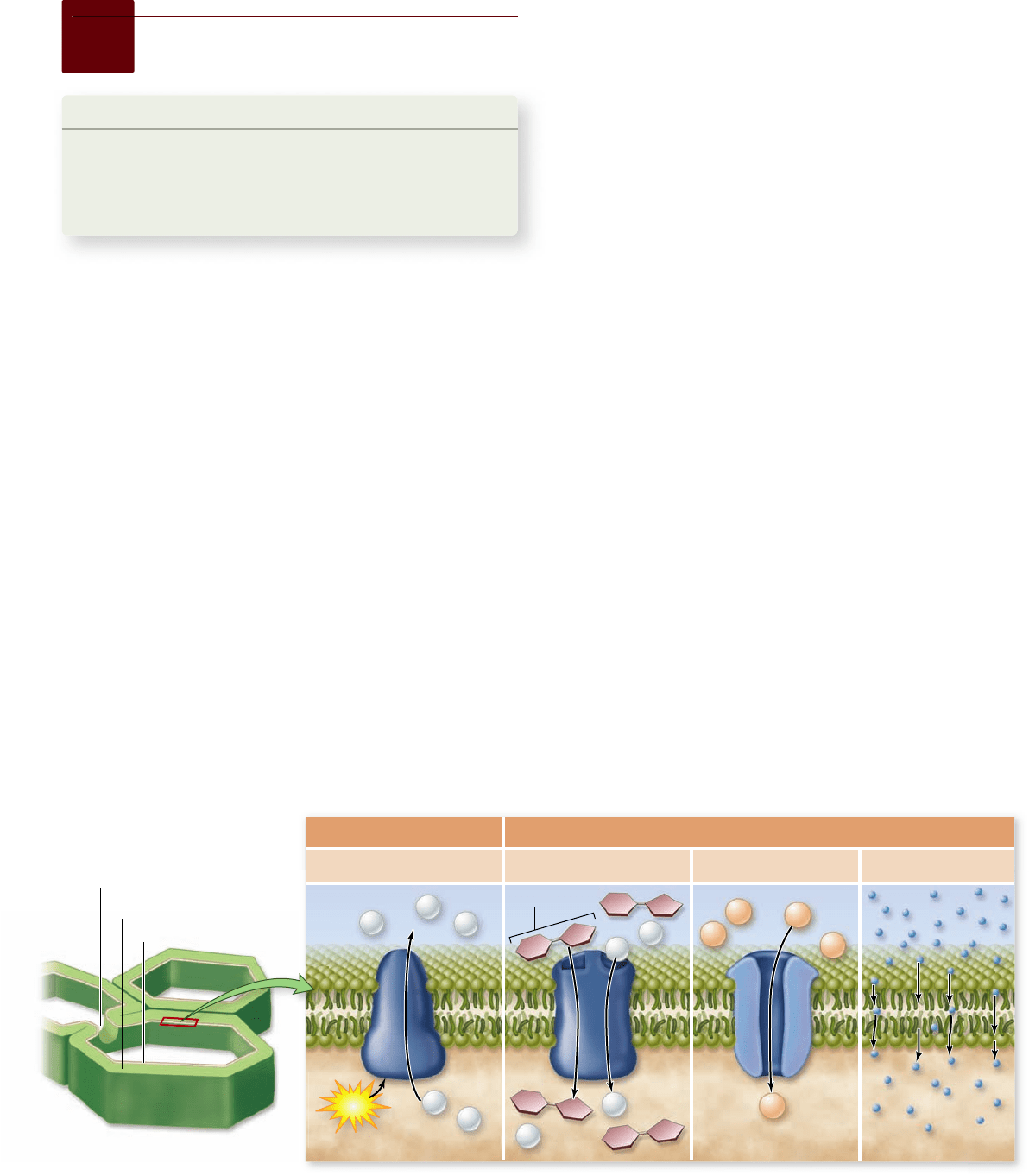
Active Passive
Proton Pump Symport Ion Channel Osmosis or Diffusion
Outside cell
Inside cell
Plasmodesma
Cell wall
Plasma membrane
K
;
K
;
K
;
K
;
K
;
ATP
H
;
H
;
Sucrose
H
;
H
;
H
;
H
;
H
;
H
;
H
;
Figure 38.1
Transport between cells. Water, minerals, and organic molecules can diffuse across membranes, be actively or passively
transported by membrane-bound transporters, or move through plasmodesmata. Details of membrane transport are found in chapter 5.
hesion). The result is an unusually stable column of liquid
reaching great heights.
The movement of water at the cellular level plays a
significant role in bulk water transport in the plant as well,
although over much shorter distances. Although water can
diffuse through plasma membranes, charged ions and organic
compounds, including sucrose, depend on protein transport-
ers to cross membranes through facilitated diffusion or
active transport (see figure 38.1 and chapter 5). ATP-
dependent hydrogen ion pumps often fuel active transport.
They create a hydrogen ion gradient across a membrane.
This hydrogen ion gradient can be used in a variety of ways,
including transporting sucrose (see figure 38.1). Unequal
concentrations of solutes (for example, ions and organic
molecules), drive osmosis as you saw in chapter 5. Using a
quantitative approach to osmosis you can predict which way
water will move.
Water potential regulates movement
of water through the plant
Plant biologists explain the forces that act on water within a
plant in terms of potentials. Potentials are a way of representing
free energy (the potential to do work; see chapter 5). Water
potential, abbreviated by the Greek letter psi with a subscript
W (Ψ
w
), is used to predict which way water will move. The key
is to remember that water will move from a cell or solution
with higher water potential to a cell or solution with lower wa-
ter potential. Water potential is measured in units of pressure
called megapascals (MPa). If you turn on your kitchen or
bathroom faucet full blast, the water pressure should be be-
tween 0.2 and 0.3 MPa (30 to 45 psi).
Movement of water by osmosis
If a single plant cell is placed into water, then the concentra-
tion of solutes inside the cell is greater than that of the external
38.1
Transport Mechanisms
Learning Outcomes
Define transpiration.1.
Explain how to predict the direction of movement of 2.
water based on water potential.
Explain the driving force for transpiration.3.
How does water get from the roots to the top of a 10-story-
high tree? Throughout human existence, curious people have
wondered about this question. Plants lack muscle tissue or a
circulatory system like animals have to pump fluid throughout
a plant’s body. Nevertheless, water moves through the cell wall
spaces between the protoplasts of cells, through plasmodesmata
(connections between cells), through plasma membranes, and
through the interconnected, conducting elements extending
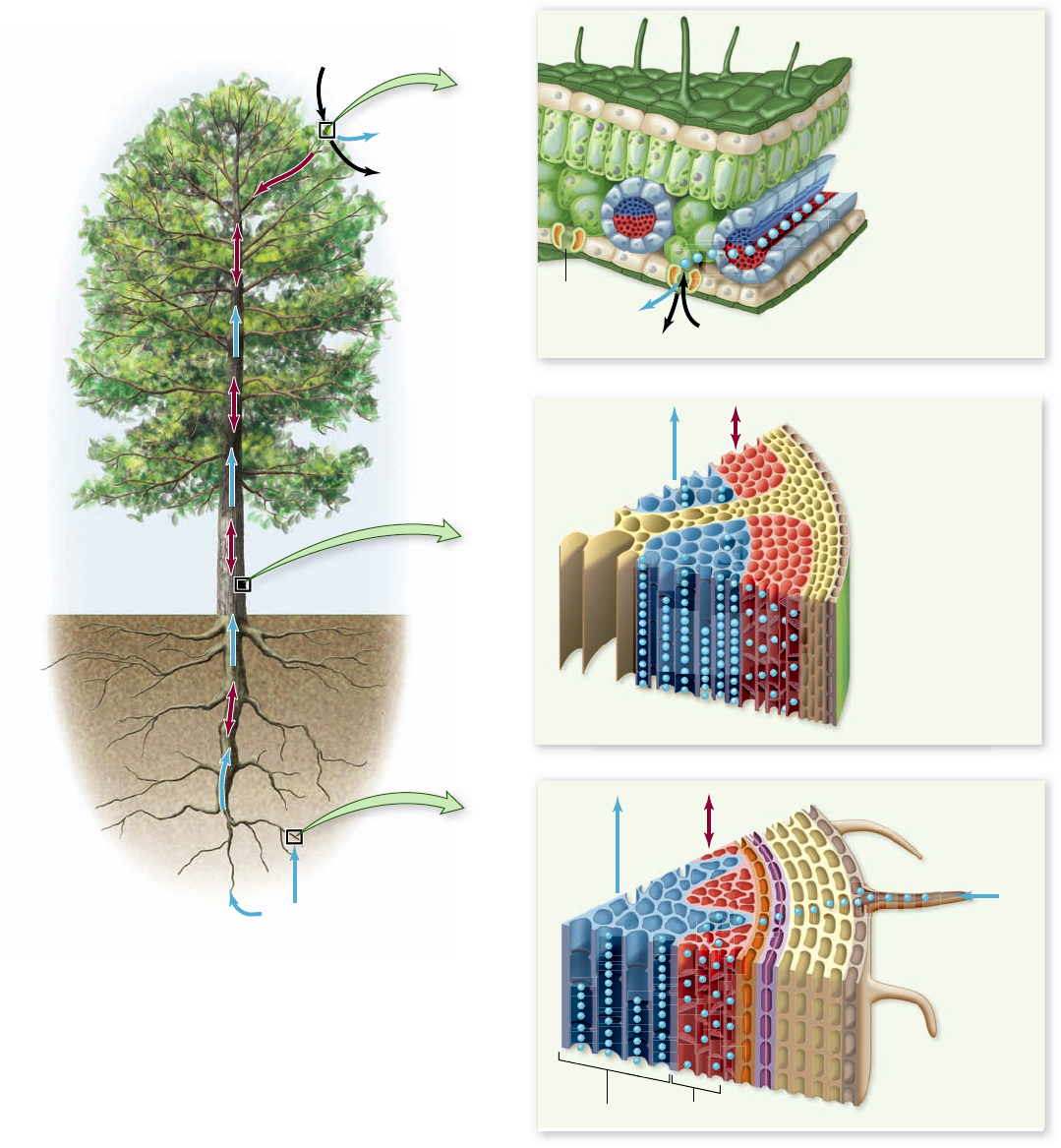
throughout a plant (figure 38.1) . Water first enters the roots
and then moves to the xylem, the innermost vascular tissue of
plants. Water rises through the xylem because of a combination
of factors, and most of that water exits through the stomata in
the leaves (figure 38.2) .
Local changes result in long-distance
movement of materials
The greatest distances traveled by water molecules and dis-
solved minerals are in the xylem. Once water enters the xylem
of a redwood, for example, it can move upward as much as
100 m. Most of the force is “pulling” caused by transpiration —
evaporation from thin films of water in the stomata. This pull-
ing occurs because water molecules stick to each other
(cohesion) and to the walls of the tracheid or xylem vessel (ad-
770
part
VI
Plant Form and Function
rav32223_ch38_769-785.indd 770rav32223_ch38_769-785.indd 770 11/16/09 12:19:42 PM11/16/09 12:19:42 PM
Apago PDF Enhancer
CO
2
and light
H
2
O
O
2
H
2
O and
minerals
Stoma
H
2
O
O
2
CO
2
• Water exits
through stomata
• Photosynthesis
produces
carbohydrates,
which travel in
phloem
Carbohydrates
• Water goes up
xylem
• Carbohydrates
and water go up
and down
phloem
• Water and
minerals enter
through roots
H
2
O and
minerals
Carbohydrates
Xylem Phloem
H
2
O
H
2
O
Figure 38.2
Water and mineral movement through a
plant. This diagram illustrates the path of water and inorganic
materials as they move into, through, and out of the plant body.
process is called plasmolysis, and if the cell loses too much
water it will die. Even a tiny change in cell volume causes large
changes in turgor pressure. When the turgor pressure falls to
zero, most plants will wilt.
Calculation of water potential
A change in turgor pressure can be predicted more accurately by
calculating the water potential of the cell and the surrounding
solution, and water moves into the cell by the process of
osmosis, which you may recall from the discussion of mem-
branes in chapter 5. The cell expands and presses against the
cell wall, making it turgid, or swollen, because of the cell’s in-
creased turgor pressure. By contrast, if the cell is placed into a
solution with a very high concentration of sucrose, water leaves
the cell and turgor pressure drops. The cell membrane pulls
away from the cell wall as the volume of the cell shrinks. This
chapter
38
Transport in Plants
771www.ravenbiology.com
rav32223_ch38_769-785.indd 771rav32223_ch38_769-785.indd 771 11/16/09 12:19:44 PM11/16/09 12:19:44 PM