
Raven P.H., Johnson G.B., Mason K.A. Biology (Ninth Edition)
Подождите немного. Документ загружается.


Apago PDF Enhancer
500 µm
39.3
Special Nutritional Strategies
L e a r n i n g O u t c o m e s
Explain the significance of nitrogen-fixing bacteria for 1.
plant nutrition.
Explain how mycorrhizal fungi benefit plants.2.
Describe the benefit gained by carnivorous plants when 3.
they capture insects.
In some species, scarce nutrients have been obtained through
the evolution of mutualistic associations with other organisms,
parasitism, or even predation. One example is the requirement
for nitrogen: Plants need ammonia (NH
3
) or nitrate (NO
3
–
) to
build amino acids, but most of the nitrogen in the atmosphere
is in the form of gaseous nitrogen (N
2
). Plants lack the bio-
Food security is related to crop
productivity and nutrient levels
Nutrient levels and crop productivity are a significant hu-
man concern. Food security, avoiding starvation, is a global
issue. Increasing the nutritional value of crop species, espe-
cially in developing countries, could have tremendous hu-
man health benefits.
Food fortification is an active area of research focused on
ways to increase plants’ uptake of minerals and the storage of
minerals in roots and shoots for later human consumption.
Phosphate uptake can be increased, for example, if it is more
soluble in the soil. Some plants have been genetically modified
to secrete citrate, an organic acid that solubilizes phosphate. As
an added benefit, the citrate binds to aluminum, which can be
toxic to plants and animals, and thus limits the uptake of alumi-
num into plants.
For other nutrients, such as iron, manganese, and zinc,
plasma membrane transport is a limiting factor. Genes coding
for these plasma membrane transporters have been cloned in
other species and are being incorporated into crop plants.
Eventually, breakfast cereals may be fortified with additional
nutrients while the grains are growing in the field, as opposed
to when they are processed in the factory.
Learning Outcomes Review 39.2
Plants require nine macronutrients in relatively large amounts and seven
micronutrients in trace amounts. Plants are grown in controlled hydroponic
solutions to determine which nutrients are required for growth. Scientists
are studying ways to enhance the nutritional composition of food crops
through enhancing nutrient uptake and storage. These methods of food
fortifi cation may enhance food security, the avoidance of human starvation.
■ Why would a lack of magnesium in the soil limit
food production?
Figure 39.9
Nitrogen-
xing nodule. A root hair of
alfalfa hosts Rhizobium, a bacterium that
xes nitrogen in exchange for carbohydrates.
chemical pathways (including the enzyme nitrogenase) neces-
sary to convert gaseous nitrogen to ammonia, but some bacteria
have this capacity.
Bacteria living in close association
with roots can provide nitrogen
Symbiotic relationships have evolved between some plant groups
and bacteria that can convert gaseous nitrogen. Some of these
bacteria live in close association with the roots of plants. Others
end up being housed in tissues the plant grows especially for this
purpose, called nodules (figure 39.9) . Legumes and a few other
plants can form root nodules. Hosting these bacteria costs the
plant energy, but is well worth it when the soil lacks nitrogen
compounds. To conserve energy, legume root hairs do not re-
spond to bacterial signals when nitrogen levels are high.
Nitrogen fixation is the most energetically expensive re-
action known to occur in any cell. Why should it be so difficult
to add H
2
to N
2
? The answer lies in the strength of the triple
bond in N
2
. Nitrogenase requires 16 ATPs to make two mole-
cules of NH
3
. Making NH
3
without nitrogenase requires a
contained system maintained at 450°C and 500 atm pressure—
far beyond the maximums under which plants can survive.
Rhizobium bacteria require oxygen and carbohydrates to
support their energetically expensive lifestyle as nitrogen fixers.
Carbohydrates are supplied through the vascular tissue of the
plant, and leghemoglobin, which is structurally similar to ani-
mal hemoglobin, is produced by the plant to regulate oxygen
availability to the bacteria. Without oxygen, the bacteria die;
within the bacteria, however, nitrogenase has to be isolated
from oxygen, which inhibits its activity. Leghemoglobin binds
oxygen and controls its availability within the nodule to opti-
mize both nitrogenase activity and cellular respiration.
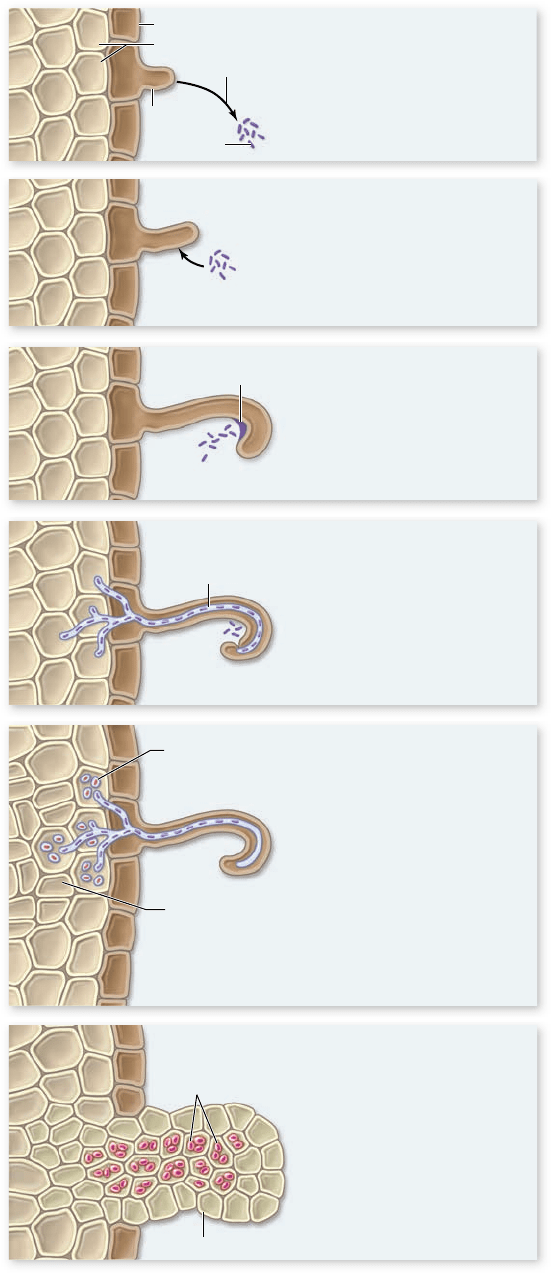
Just how do legumes and nitrogen-fixing Rhizobium bac-
teria get together (figure 39.10) ? Extensive signaling between
the bacterium and the legume not only lets each organism know
the other is present, but also checks whether the bacterium is
the correct species for the specific legume. These highly evolved
symbiotic relationships depend on exact species matches. Soy-
bean and garden peas are both legumes, but each requires its
own species of symbiotic Rhizobium.
792
part
VI
Plant Form and Function
rav32223_ch39_786-801.indd 792rav32223_ch39_786-801.indd 792 11/16/09 1:17:26 PM11/16/09 1:17:26 PM
Apago PDF Enhancer
1. Pea roots produce flavonoids
(a group of molecules used for
plant defense and for making
reddish pigment, among
numerous other functions).
The flavonoids are transported
into the rhizobial cells.
2. Flavonoids signal rhizobia
to produce sugar-containing
compounds called Nod
(nodulation) factors.
3. Nod factors are perceived by
the surface of root hairs and
signal the root hair to grow so
that it curls around the rhizobia.
4. Rhizobia make an infection
thread that grows in the root
hair and moves into the cortex
of the root. The rhizobia take
control of cell division in the
cortex and pericycle cells of
the root (see chapter 35).
5. Rhizobia change shape and
are now called bacteroids.
Bacteroids produce an
O
2
-binding heme group that
combines with a globin group
from the pea to make
leghemoglobin. Leghemoglobin
gives a pinkish tinge to the
nodule, and its function is
much like that of hemoglobin,
bringing O
2
to the rapidly
respiring bacteroids, but
isolating O
2
from nitrogenase.
6. Bacteroids produce
nitrogenase and begin fixing
atmospheric nitrogen for the
plant’s use. In return, the plant
provides organic compounds.
Epidermal cell
Root hair
Flavonoids
Rhizobium
Cortex cells
Nod factors secreted
by Rhizobium
Nod factors
Infection thread
Cell division
starts making
nodule
Vesicles with
differentiating
bacteroids
Differentiated
bacteroids
fixing nitrogen
Mature nodule
Figure 39.10
Rhizobium induced nodule formation.
Mycorrhizae aid a large portion
of terrestrial plants
Nitrogen is not the only nutrient that is difficult for plants
to obtain without assistance. Whereas symbiotic relation-
ships with nitrogen-fixing bacteria are generally limited to
some legume species, symbiotic associations with mycor-
rhizal fungi, described in chapter 31, are found in about 90%
of vascular plants. Mycorrhizae play a significant role in en-
hancing phosphorus transfer to the plant, and the uptake of
some of the micronutrients is also facilitated. Functionally,
the mycorrhizae extend the surface area available for nutri-
ent uptake substantially.
Fungi most likely aided early rootless plants in colonizing
land. Evidence now indicates that the signaling pathways that
lead to plant symbiosis with some mycorrhizae may have been
exploited to bring about the Rhizobium–legume symbiosis.
Carnivorous plants trap and digest animals
to extract additional nutrients
Some plants are able to obtain nitrogen directly from other
organisms, just as animals do. These carnivorous plants often
grow in acidic soils, such as bogs, that lack organic nitrogen.
By capturing and digesting small animals, primarily insects, di-
rectly, such plants obtain adequate nitrogen supplies and are
able to grow in these seemingly unfavorable environments.
Carnivorous plants have modified leaves adapted for luring
and trapping prey. The plants often digest their prey with en-
zymes secreted from specialized types of glands.
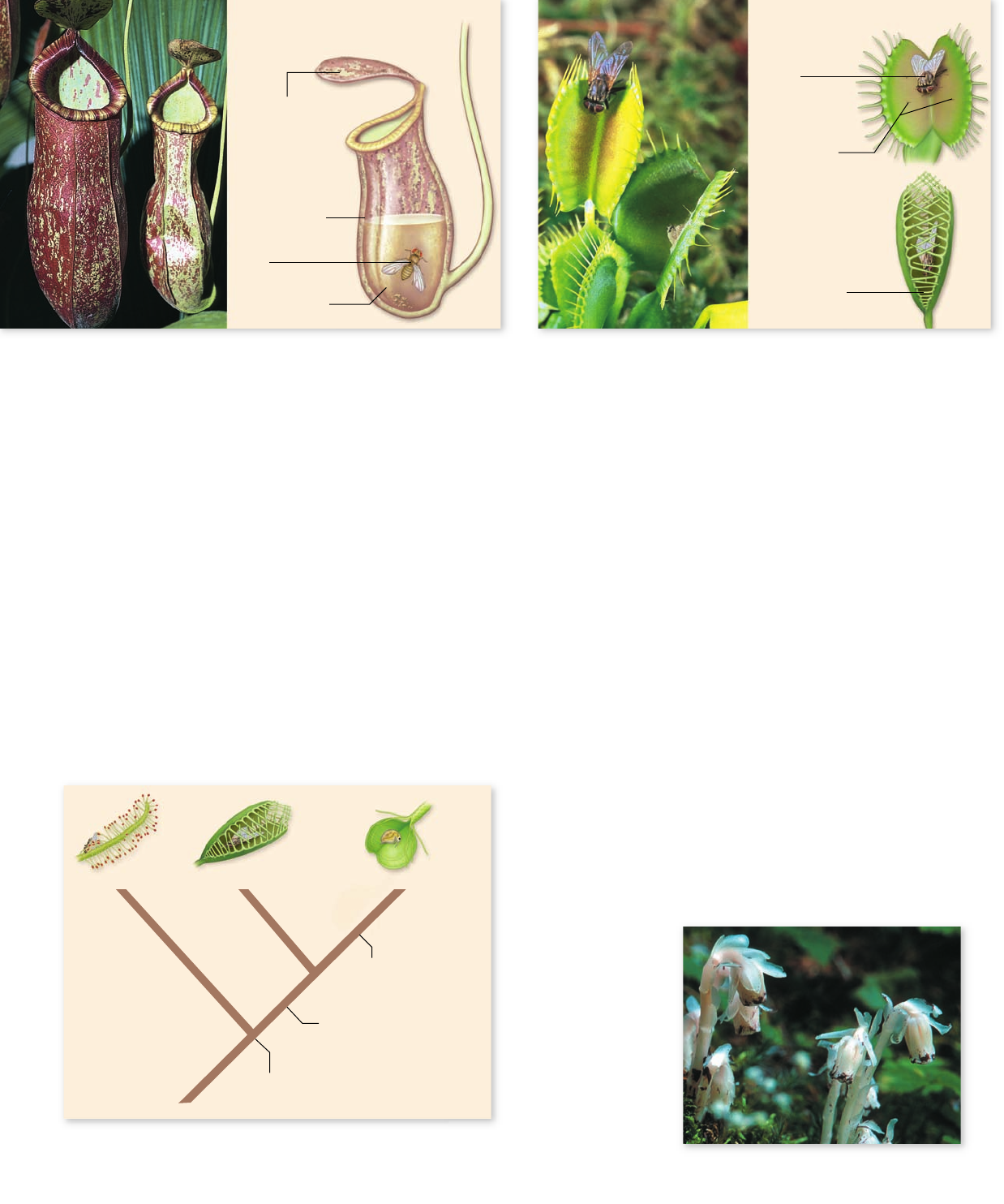
Pitcher plants (Nepenthes spp.) attract insects by the
bright, flowerlike colors within their pitcher-shaped leaves, by
scents, and perhaps also by sugar-rich secretions (figure 39.11a) .
Once inside the pitcher, insects slide down into the cavity of
the leaf, which is filled with water and digestive enzymes. This
passive mechanism provides pitcher plants with a steady sup-
ply of nitrogen.
The Venus flytrap (Dionaea muscipula) grows in the bogs
of coastal North and South Carolina. Three sensitive hairs on
a leaf that, when touched, trigger the two halves of the leaf to
snap together in about 100 ms (figure 39.11b). The speed of
trap closing has puzzled biologists as far back as Darwin. Tur-
gor pressure changes can account for the movement; the speed,
however, depends on the curved geometry of the leaf, which
can snap between convex and concave shapes.
Once the Venus flytrap enfolds prey within a leaf, en-
zymes secreted from the leaf surfaces digest the prey. These
flytraps use a growth mechanism to close, not just a decrease in
turgor pressure. The cells on the outer leaf surface irreversibly
increase in size each time the trap shuts. As a result, they can
only open and close a limited number of times.
In the sundews (Drosera spp.), another carnivorous
group, glandular trichomes secrete both sticky mucilage,
which traps small animals, and digestive enzymes; they do not
close rapidly (figure 39.11c). Venus flytraps and the sundews
share a common ancestor that lacked the snap-trap mecha-
nism characteristic of the flytrap lineage (figure 39.12).
chapter
39
Plant Nutrition and Soils
793www.ravenbiology.com
rav32223_ch39_786-801.indd 793rav32223_ch39_786-801.indd 793 11/16/09 1:17:29 PM11/16/09 1:17:29 PM
Apago PDF Enhancer
Canopy protects
pitcher from
being flooded
by rainwater
Slippery or hairy
sides prevent
escape of prey
Digestive liquid
Prey
Prey
After two
trichomes are
touched, leaf
trap closes
Digestive juices
are secreted
a. b.
Sundew Venus flytrap Aquatic waterwheel
Return to aquatic
environment,
loss of roots
Snap-trap mechanism
Sundew-like carnivorous
ancestor without snap-trap
Figure 39.11
Nutritional adaptations. a. Asian pitcher plant, Nepenthes. Insects enter this carnivorous plant and are trapped and
digested. Complex communities of invertebrate animals and protists inhabit the pitchers. b. Venus ytrap, Dionaea. If this y touches two of
the trichomes (hairs) on this modi ed leaf in a short time span, the trap will close. The plant will secrete digestive enzymes that release
nitrogen compounds from the y, which will then be absorbed by the ytrap. c. Sundew, Drosera, traps insects with sticky secretions and then
excretes digestive enzymes to obtain nutrients from the insect’s body. d. Aquatic waterwheel, Aldrovanda. This close relative of the Venus
ytrap snaps shut to capture and digest small aquatic animals. This aquatic plant’s ancestor was a land dweller.
into their bladderlike leaves by the rapid action of a springlike
trapdoor; then the leaves digest these animals.
Parasitic plants exploit resources
of other plants
Parasitic plants come in photosynthetic and nonphotosynthetic
varieties. In total, at least 3000 types of plants are known to tap
into the nutrient resources of other plants. Adaptations include
structures that are inserted into the vascular tissue of the host
plant so that nutrients can be siphoned into the parasite. One
example is dodder (Cuscuta spp.), which looks like brown twine
wrapped around its host. Dodder lacks chlorophyll and relies
totally on its host for all its nutritional needs.
Indian pipe, Hypopitys uniflora, also lacks chlorophyll. This
parasitic plant hooks into host trees through the fungal hyphae
of the host’s mycorrhizae (figure 39.13) . The above-ground
portion of the plant consists of flowering stems.
Aldrovanda vesicular, the aquatic waterwheel, is a closer rela-
tive of the flytraps. The waterwheel is a rootless plant that uses
trigger hairs and a snap-trap mechanism like that of the Venus fly-
trap to capture and digest small animals (figure 39.11d). Molecular
phylogenetic studies indicate that Venus flytraps are sister species
with sundews, forming a sister clade. It appears that the snap-trap
mechanism evolved only once in descendants of a sundew ancestor.
Therefore, the waterwheel’s common ancestor must have been a
terrestrial plant that made its way back into the water.
Bladderworts (Utricularia) are aquatic, but appear to have
different origins from the waterwheel, as well as a different
mechanism for trapping organisms. Small animals are swept
Figure 39.13
Indian pipe,
Hypopitys uni ora.
This plant lacks
chlorophyll and
depends completely
on nutrient transfer
through the invasion
of mycorrhizae and
associated roots of
other plants. Indian
pipes are frequently
found in
northeastern United
States forests.
Figure 39.12
Phylogenetic relationships among
carnivorous plants. The snap-trap mechanism was acquired by a
common ancestor of the Venus ytrap and the aquatic waterwheel.
Pitcher plants are not related to this clade.
794
part
VI
Plant Form and Function
rav32223_ch39_786-801.indd 794rav32223_ch39_786-801.indd 794 11/16/09 1:17:31 PM11/16/09 1:17:31 PM

Apago PDF Enhancer
c. d.
Prey
Sticky mucilage
secreted
Prey held
by several
trichomes
as it is
digested
Prey
attracted
to droplet
Glucose and other sugars
Ribulose 1,5-bisphosphate
Photorespiration (no sugars)
CO
2
CO
2
Calvin
Cycle
Rubisco
O
2
Rubisco
CO
2
39.4
Carbon–Nitrogen Balance
and Global Change
Learning Outcomes
Describe the predicted effect of increased atmospheric 1.
carbon dioxide on the rate of photosynthesis in C
3
plants.
Explain the main effect on herbivores of a higher 2.
carbon:nitrogen ratio in plants.
Discuss why respiration rates increase with warmer 3.
temperatures.
The Intergovernmental Panel on Climate Change (IPCC), es-
tablished by the United Nations and the World Meteorological
Organization, has concluded that CO
2
is probably at its highest
concentration in the atmosphere in at least 20 million years. In
only the last 250 years, atmospheric CO
2
has increased 31%,
which correlates with increases in many human activities, in-
cluding the burning of fossil fuels.
The long-term effects of elevated CO
2
are complex and
are not fully understood, but are associated with increased tem-
peratures. The IPCC predicts the average global surface tem-
peratures will continue to increase to between 1.4°C and 5.8°C
above 1990 levels, by 2100. Chapter 59 explores the causal link
between elevated CO
2
and global warming. Here, we consider
how increased CO
2
may alter nutrient balance within plants,
specifically the carbon and nitrogen balance.
The ratio of carbon to nitrogen in a plant is important
for both plant health and the health of herbivores. Altering
this ratio could alter plant–pest interactions as well as affect
human nutrition.
Elevated CO
2
levels can alter photosynthesis
and carbon levels in plants
First, we investigate the relationship between photosynthesis and
the relative concentration of atmospheric CO
2
. The two ques-
tions to be addressed in this section are (1) Does elevated CO
2
increase the rate of photosynthesis? and (2) Will elevated levels of
CO
2
change the ratio of carbohydrates and proteins in plants?
The rate of photosynthesis
The Calvin cycle of photosynthesis fixes atmospheric CO
2
into sugar (see chapter 8). The first step of the Calvin cycle
stars the most abundant protein on Earth, ribulose 1,5-
bisphosphate carboxylase/oxygenase (rubisco) . The active site
of this enzyme can bind either CO
2
or O
2
, and it catalyzes the
addition of either molecule to a five-carbon molecule, ribu-
lose 1,5-bisphosphate (RuBP) (figure 39.14 ). CO
2
is used to
Learning Outcomes Review 39.3
Certain types of plants, such as legumes, produce root nodules in which
nitrogen-fi xing bacteria grow. These bacteria provide nitrogen compounds
that the plant can use for growth. Mycorrhizal fungi live in association with
plant roots and are important for phosphorus uptake. Carnivorous plants
typically live in low-nitrogen soils and obtain nitrogen from the insects they
capture and digest.
■ Why is nitrogen a critical macronutrient for plant
growth and reproduction?
Figure 39.14
Photorespiration.
CO
2
and O
2
compete for the
same site on the
enzyme that
catalyzes the rst step
in the Calvin cycle. If CO
2
binds, a three-carbon sugar is
produced that can make
glucose and sucrose. If O
2
binds,
photorespiration occurs, and
energy is used to break down a
ve-carbon molecule without
yielding any useful product. As the
ratio of CO
2
to O
2
increases, the
Calvin cycle can produce more sugar.
chapter
39
Plant Nutrition and Soils
795www.ravenbiology.com
rav32223_ch39_786-801.indd 795rav32223_ch39_786-801.indd 795 11/16/09 1:17:38 PM11/16/09 1:17:38 PM
Apago PDF Enhancer
a. C
3
leaf
b. C
4
leaf (Kranz anatomy)
Sucrose (in phloem)
Bundle sheath
Vascular tissue
Vascular tissue
C
4
pathway
Calvin
Cycle
Mesophyll
cell
CO
2
RuBP
3PG
(C
3
)
Mesophyll
cell
Bundle
sheath
cell
CO
2
CO
2
Glucose
Sucrose (in phloem)
Calvin
Cycle
Glucose
Ring of towers emitting CO
2
a. b.
Towers emitting CO
2
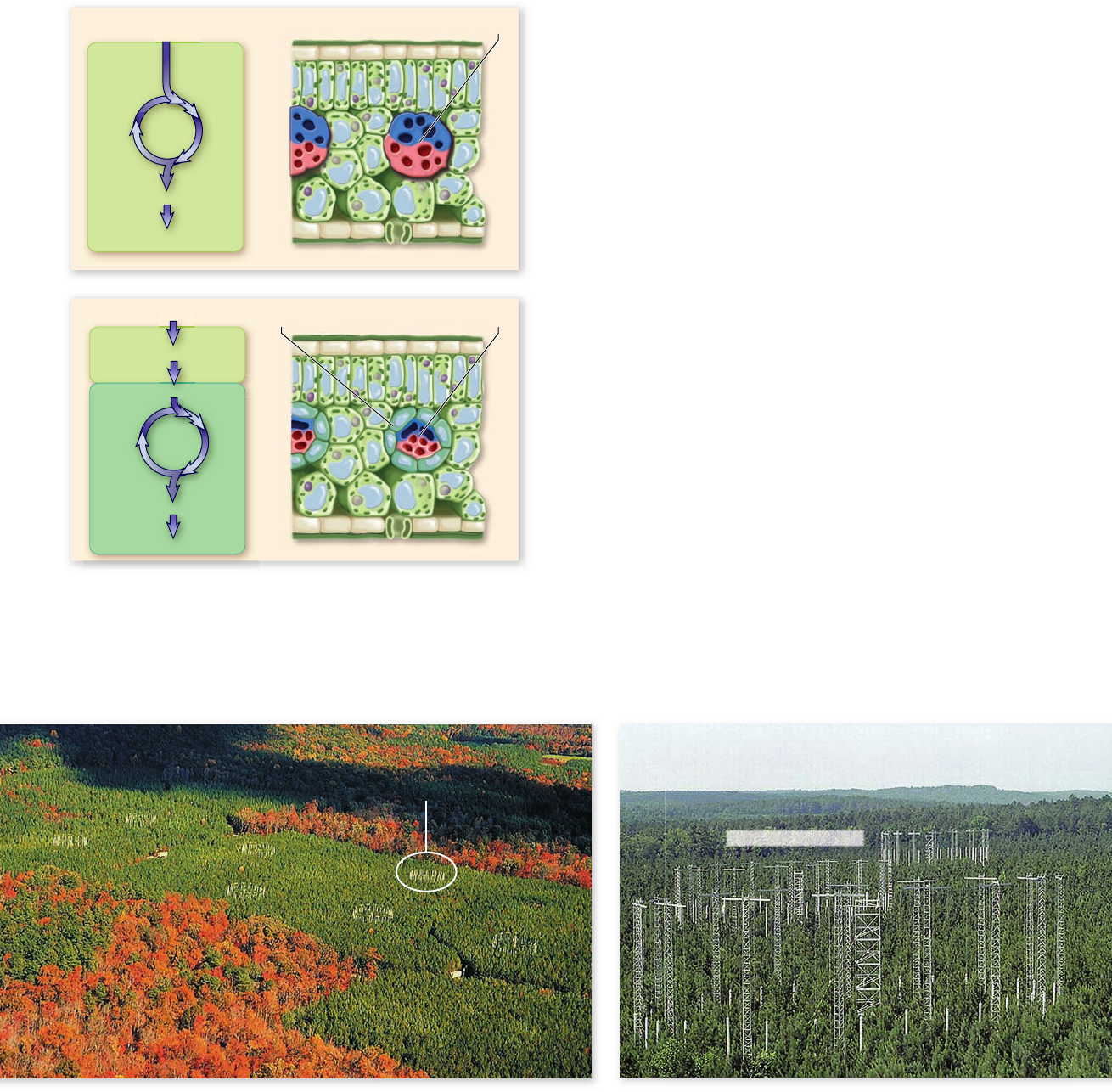
Figure 39.15
C
4
plants reduce photorespiration by limiting
the Calvin cycle to cells surrounding the vascular tissue, where O
2
levels are reduced. a. C
3
photosynthesis occurs in the mesophyll
cells. b. C
4
photosynthesis uses an extra biochemical pathway to
shuttle carbon deep within the leaf.
produce a three-carbon sugar that can in turn be used to syn-
thesize glucose and sucrose; in contrast, O
2
is used in photo-
respiration, which results in neither nutrient nor energy
storage. Photorespiration is a wasteful process.
You may recall that C
4
plants have evolved a novel ana-
tomical and biochemical strategy to reduce photorespiration
(figure 39.15) . CO
2
does not enter the Calvin cycle until it has been
transported via another pathway to cells surrounding the vascular
tissue. Here the level of CO
2
is increased relative to O
2
levels, and
thus CO
2
has less competition for rubisco’s binding site.
In C
3
plants, as the relative amount of CO
2
increases, the
Calvin cycle becomes more efficient. Thus, it is reasonable to
hypothesize that the global increase in CO
2
should lead to in-
creased photosynthesis and increased plant growth. Assuming
that nutrient availability in the soil remains the same, the more
rapidly growing plants should have lower levels of nitrogen-
containing compounds, such as proteins, and also lower levels
of minerals obtained from the soil. The ratio of carbon to nitro-
gen should increase. Long-term studies of plants grown under
elevated CO
2
confirm this prediction.
The optimal way to determine how CO
2
concentrations
affect plant nutrition is to grow plants in an environment in
which CO
2
levels can be precisely controlled. Experiments
with potted plants in growth chambers are one approach, but
far more information can be obtained in natural areas en-
riched with CO
2
, called Free Air CO
2
Enrichment (FACE)
studies. For example, the Duke Experimental Forest has rings
of towers that release CO
2
toward the center of the ring
(figure 39.16). These rings are 30 m in diameter and allow
studies to be conducted at the ecosystem level. Such facilities
allow for long-term studies of the effects of altered atmo-
spheric conditions on ecosystems.
Figure 39.16
Experimentally elevating CO
2
. CO
2
rings in the Duke Experimental Forest FACE site provide ecosystem-level
comparisons of plants grown in ambient and elevated CO
2
environments. a. Each ring is 30 m in diameter. b. Towers surrounding the rings
blow CO
2
inward under closely monitored conditions.
796
part
VI
Plant Form and Function
rav32223_ch39_786-801.indd 796rav32223_ch39_786-801.indd 796 11/16/09 1:17:40 PM11/16/09 1:17:40 PM

Apago PDF Enhancer
One possible outcome of increased CO
2
in atmosphere:
CO
2
Photosynthesis
Plant growth
Relative levels of
protein and
minerals
in plant tissue
Herbivory
Human
nutrition
Extensive studies have yielded complex results. Potatoes
grown in a European facility had a 40% higher photosynthetic
rate when the concentration of CO
2
was approximately dou-
bled. Potted plants often show an initial increase in photosyn-
thesis, followed by a decrease over time that is associated with
lower levels of rubisco production. Different species of plants
in a Florida oak-shrub system showed different responses to
elevated CO
2
levels, while over three years in the Duke Experi-
mental Forest, plants achieved more biomass in the CO
2
enclo-
sures than outside the enclosures, if the soil contained sufficient
nitrogen availability to support enhanced growth. C
3
plants
show a greater increase in biomass than C
4
plants, and nitrogen
fixing legumes, especially soybean, had larger increases in bio-
mass than plants depending on nitrogen from the soil. In gen-
eral, increased CO
2
corresponds to some increase in biomass,
but also to an increase in the carbon:nitrogen ratio.
The ratio of proteins and carbohydrates
You learned earlier in this chapter that nitrogen availability
limits plant growth. As CO
2
levels increase, relatively less nitro-
gen and other macronutrients are found in leaves. Legumes,
because of their nitrogen-fixing ability, have less of a decrease
in nitrogen under elevated CO
2
conditions. In that event, her-
bivores need to eat more biomass to obtain adequate nutrients,
particularly protein. This situation would be of significant con-
cern in agriculture, and it could affect human health. Insect in-
festations could be more devastating if each herbivore consumed
more biomass. Protein deficiencies in human diets could result
from decreased nitrogen in crops.
The relative decreases in nitrogen in some plants is greater
than would be predicted by an increase in CO
2
fixation alone.
The additional decrease in nitrogen incorporation into proteins
has been accounted for by a decrease in photorespiration in
plants using NO
3
–
as their primary nitrogen source, but not in
plants using ammonia. It is possible that energy-wasting photo-
respiration may actually be necessary for nitrogen to be incorpo-
rated into proteins in some plants.
This example illustrates how interdependent the biochem-
ical pathways are that regulate carbon and nitrogen levels. Al-
though global change is an ecosystem-level problem, predictions
about long-term effects hinge on understanding the physiologi-
cal complexities of plant nutrition—an area of active research.
Elevated temperature can a ect respiration
and carbon levels in plants
As much as half of all the carbohydrates produced from photosyn-
thesis each day can be used in plant respiration that same day. The
amount of carbohydrate available for respiration may be affected
by atmospheric CO
2
and photosynthesis, as just discussed. Further-
more, the anticipated rise in temperature over the next century may
affect the rate of respiration in other ways. Altered respiration rates
can affect overall nutrient balance and plant growth.
Inquiry question
?
Why is plant respiration affected by both short-term and
long-term temperature changes?
Biologists have known for a long time that respiration rates
are temperature-sensitive in a broad range of plant species. Why
does respiration rate change with temperature? One important fac-
tor is the effect of temperature on enzyme activity (see chapter 3).
This effect is particularly important at very low temperatures and
also very high temperatures that lead to protein denaturation.
Many responses of respiration rate to temperature change
may be short-term, rather than long-term. Growing evidence
indicates that respiration rate acclimates to a temperature in-
crease over time, especially in leaves and roots that develop af-
ter the temperature shift. Over a long period at an elevated
temperature, a plant could end up respiring at the same rate at
which it had previously respired at a lower temperature.
Learning Outcomes Review 39.4
As atmospheric carbon dioxide increases, the rate of photosynthesis and the
carbon:nitrogen ratio in plants are expected to increase as long as available
soil nutrients do not change. A higher than normal carbon:nitrogen ratio
would require herbivores to eat more biomass to meet their protein needs,
which could, in turn, aff ect human health. As temperature increases,
enzyme activity increases, accelerating the rate of respiration and
breakdown of carbohydrates.
■ What strategies could help keep the carbon:nitrogen
ratio in crop plants lower?
39.5
Phytoremediation
Learning Outcomes
Define phytoremediation.1.
Explain how poplar trees have been used for 2.
phytoremediation.
Describe an advantage and a disadvantage of 3.
phytoremediation.
Some root cell membrane channels and transporters lack abso-
lute specificity and can take up heavy metals like aluminum and
other toxins. Although in most cases uptake of toxins is lethal or
growth-limiting, some plants have evolved the ability to se-
quester or release these compounds into the atmosphere. These
plants have potential for phytoremediation, the use of plants
to concentrate or breakdown pollutants (figure 39.17) .
Phytoremediation can work in a number of ways with both
aquatic and soil pollutants. Plants may secrete a substance from
chapter
39
Plant Nutrition and Soils
797www.ravenbiology.com
rav32223_ch39_786-801.indd 797rav32223_ch39_786-801.indd 797 11/16/09 1:17:44 PM11/16/09 1:17:44 PM
Apago PDF Enhancer
Phytodegradation
Phytovolatilization
Phytoaccumulation
a.
b.
TCE
CO
2
Lead
Not degraded
their roots that breaks down the contaminant. More often, the
harmful chemical enters the roots and is preferably transported to
the shoot system, making it easier to remove the chemical from the
site. Some substances are simply stored by the plant; later, the plant
material is harvested, dried, and removed to a storage site.
For example, after the nuclear reactor disaster at Cher-
nobyl in northern Ukraine, sunflowers effectively removed ra-
dioactive cesium from nearby lakes. The plants were floated in
foam supports on the surface of the lakes and later collected.
Because up to 85% of the weight of herbaceous plants can be
water, drying down phytoremediators can restrict toxins like
radioactive cesium to a small area.
In this section, we will explore several examples of soil
phytoremediation.
Trichloroethylene may be
removed by poplar trees
Trichloroethylene (TCE) is a volatile solvent that has been
widely used as spot remover in the dry-cleaning industry, for
degreasing engine turbines, as an ingredient in paints and cos-
metics, and even as an anesthetic in human and veterinary med-
icine. Unfortunately, TCE is also a confirmed carcinogen, and
chronic exposure can damage the liver.
In 1980, the Environmental Protection Agency (EPA) es-
tablished a Superfund to clean up contamination in the United
States. Forty percent of all sites funded by the Superfund in-
Figure 39.18
Phytoremediation for
TCE. The U.S. Air Force is
testing phytoremediation
technology to clean up TCE
at a former Air Force base in
Fort Worth, Texas.
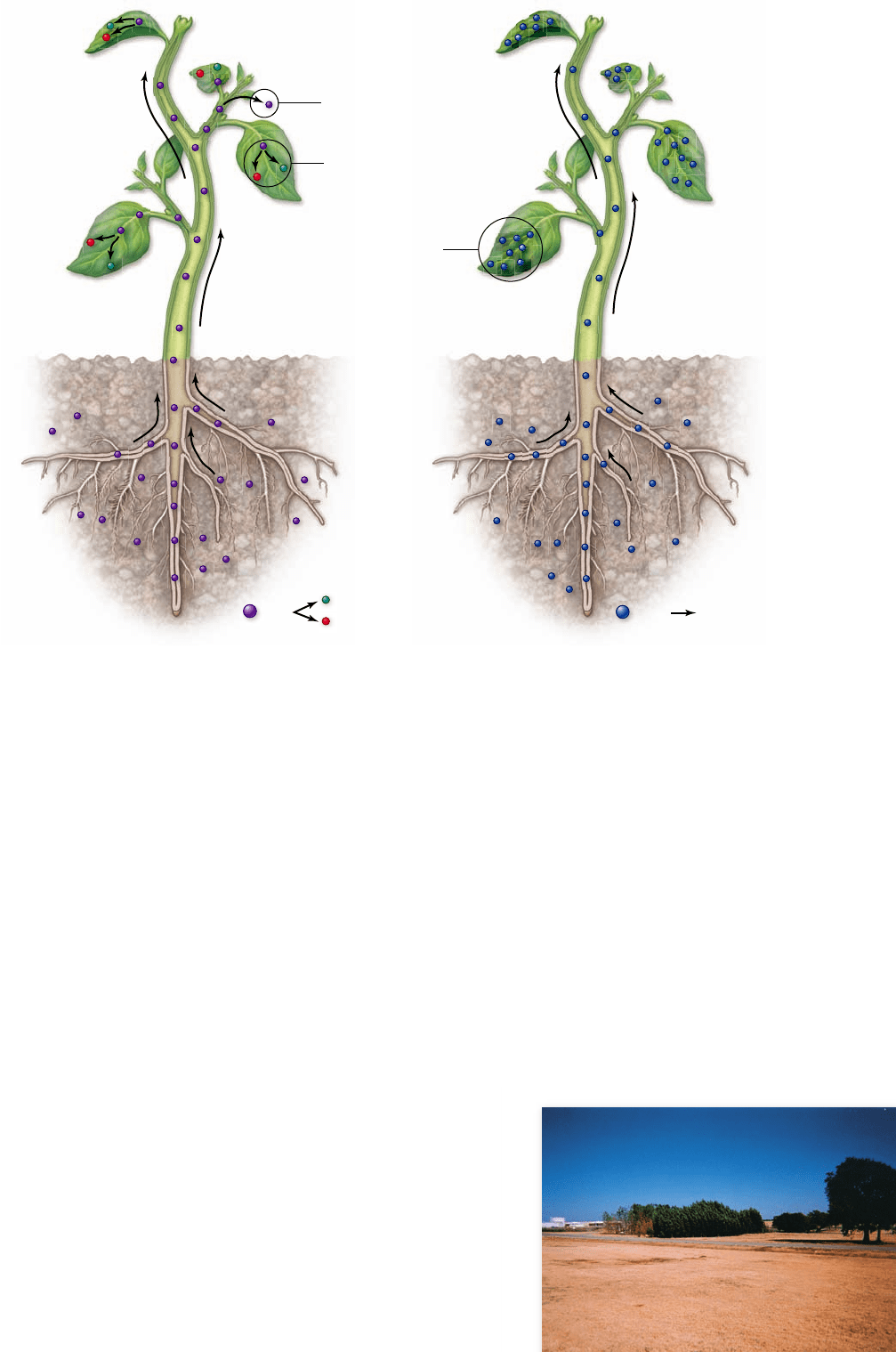
Figure 39.17
Phytoremediation.
Plants can use the same
mechanisms to remove both
nutrients and toxins from
the soil. a. TCE
(trichloroethylene) can be
taken up by plants and
degraded into CO
2
and
chlorine before being
released into the
atmosphere. This process is
called phytodegradation.
Some of the TCE moves so
rapidly through the xylem
that it is not degraded before
it is released through the
stomata as a gas in a process
called phytovolatilization.
b. Other toxins, including
heavy metals such as lead,
can be taken up by plants,
but not degraded. Such
phytoaccumulation is
particularly effective in
removing toxins if they are
stored in the shoot, where
they can more easily be
harvested.
clude TCE contamination. How can we clean up 1900 hectares
of soil in a Marine Corps Air Station in Orange County, Cali-
fornia, that contain TCE once used to clean fighter jets? Land-
fills can isolate, but not eliminate, this volatile substance.
Burning eliminates it from the site, but may release harmful
substances into the atmosphere. A promising approach is to use
plants to remove TCE from the soil.
Plants may take up a toxin from soil, allowing the toxin to
be removed and concentrated elsewhere; but an even more suc-
cessful strategy is for the plant to break down the contaminant
into nontoxic by-products. Poplar trees (genus Populus) may
provide just such a solution for TCE-contaminated sites
(figure 39.18) . Poplars naturally take up TCE from the soil and
metabolize it into CO
2
and chlorine.
Other plant species can break down TCE as well, but
poplars have the advantage of size and rapid transpiration. A
five-year-old poplar can move between 100 and 200 L of water
from its roots out through its leaves in a day. A plant that tran-
spires less would not be able to remove as much TCE in a day.
798
part
VI
Plant Form and Function
rav32223_ch39_786-801.indd 798rav32223_ch39_786-801.indd 798 11/16/09 1:17:46 PM11/16/09 1:17:46 PM
Apago PDF Enhancer
a.
b.
c.
into the xylem. Citrate, mentioned earlier, can increase the rate
of metal transport in xylem. The metals are sequestered inside
vacuoles in the leaves. Trichomes, which are modified leaf epi-
dermal cells, can sequester both lead and cadmium.
These hyperaccumulating plants are not a panacea for
metal-contaminated soil because of concern that animals might
move into the site and graze on lead- or cadmium-enriched
plants. Harvesting and consolidating dried plant material is not
a simple matter, but still phytoremediation is a promising tech-
nique. Estimated costs for phytoremediation are 50 to 80%
lower than cleanup strategies that involve digging and dumping
the contaminated soil elsewhere.
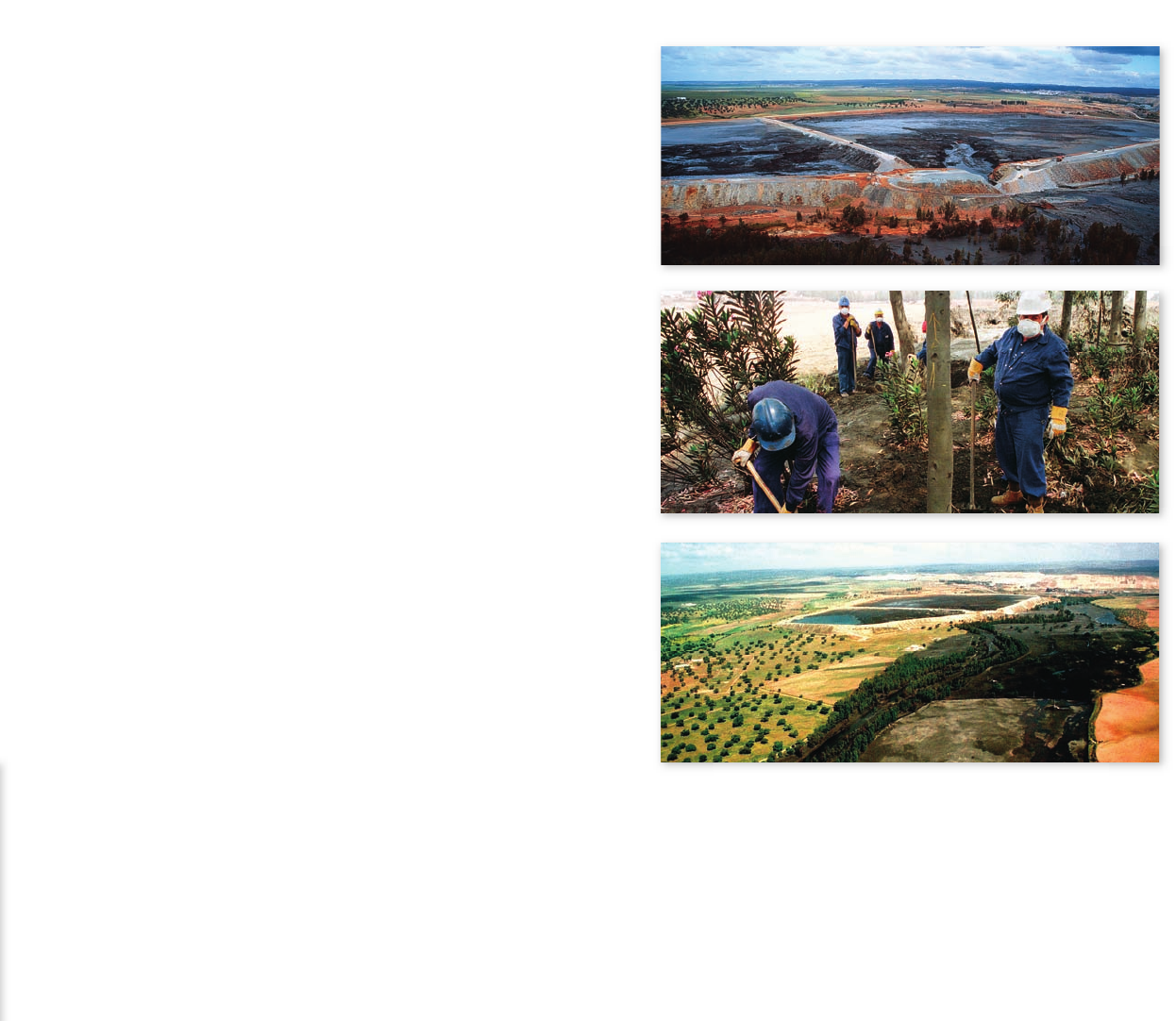
Phytoremediation may be a solution to the contamina-
tion resulting from a 1998 accident at the Aznalcóllar mine in
Spain. A dam that contained the sludge from the mining opera-
tion broke, releasing 5 million cubic meters of sludge, com-
posed of arsenic, cadmium, lead, and zinc, over 4300 hectares of
land (figure 39.19) . Much of the sludge was physically removed
Although removing TCE with poplar trees sounds like
the perfect solution, this method has some limitations. Not all
the TCE is metabolized, and given the rapid rate of transpira-
tion in the poplar, some of the TCE enters the atmosphere via
the leaves. Once in the air, TCE has a half-life of 9 hours (half
of it will break down into smaller molecules every 9 hours).
Clearly, more risk assessment is needed before poplars are
planted on every TCE-containing Superfund site.
The TCE that remains in the plant is metabolized quick-
ly, and it is possible that the wood could be used after remedia-
tion is complete. It has been suggested that any remaining TCE
would be eliminated if the wood were processed to make paper.
Genetically modified poplars have been shown to metabolize
about four times as much TCE as nonmodified poplars, so per-
haps greater metabolic rates can be obtained.
As with any phytoremediation plan, it is critically necessary
to estimate how much of a contaminant can be removed from a
site by plants, and arriving at this estimate can be difficult. Possi-
ble risks, particularly when genetic modification is involved, must
be weighed against the dangers posed by the contaminant.
Trinitrotoluene can be removed
in limited amounts
In addition to volatile chemicals such as TCE, phytoreme-
diation also holds promise for dealing with other environ-
mental contaminants, including the explosive trinitrotoluene
(TNT) and heavy metals. TNT is a solid, yellow material
that was used widely in grenades and bombs until 1980.
Contamination is found around factories that made TNT.
In some places, there is enough TNT in the soil to deto-
nate, and thus incineration is not a viable option for removing
TNT from most sites. Another issue is that TNT can seep into
the groundwater; this is a matter of concern because TNT is
carcinogenic and associated with liver disease.
TNT tends to stay near the top of the soil and to wash
away quickly. Bean (Phaseolus vulgaris), poplar, and the aquatic
parrot feather (Myriophyllum spicatum) can take up and degrade
low levels of TNT, but at higher concentrations, TNT is toxic
to these plants.
Heavy metals can be successfully
removed at lower cost
Heavy metals, including arsenic, cadmium, and lead, persist in
soils and are toxic to animals in even small quantities. Many
plants are also susceptible to heavy-metal toxicity, but species
near mines have evolved strategies to partition certain heavy
metals from the rest of the plant (see figure 39.17b).
Four hundred species of plants have been identified that
have the ability to hyperaccumulate toxic metals from the soil.
For example, Brassica juncea (a relative of broccoli and mustard
plants) is especially effective at hyperaccumulating lead in the
shoots of the plant. Unfortunately, B. juncea is a small, slow-
growing plant, and eventually it becomes saturated with lead.
How would lead or cadmium travel from the soil into the
leaves of a plant? There are some hints that root cell membranes
may contain metal transporters that load the metal in the soil
Figure 39.19
Aznalcóllar mine spill. a. When the dike of a
holding lagoon for mine waste broke, 5 million cubic meters of
black sludge containing heavy metals was released into a national
park and the Guadiamar River. b. Large amounts of sludge were
removed mechanically. c. Phytoremediation appears to be a
promising solution for treating the remaining heavy metals.
chapter
39
Plant Nutrition and Soils
799www.ravenbiology.com
rav32223_ch39_786-801.indd 799rav32223_ch39_786-801.indd 799 11/16/09 1:17:50 PM11/16/09 1:17:50 PM

Apago PDF Enhancer
and dumped into an open mine pit. Phytoremediation solutions
are being sought for the remaining contaminated soil.
Since the original spill, three plant species with the po-
tential to hyperaccumulate some of the metals have begun
growing in the area. These plants are fairly large and can ac-
cumulate a substantial amount of metal. They offer the advan-
tage of being native species, thus reducing the dangers associated
with introducing a nonnative, potentially invasive species to
clean up the spill.
39.1 Soils: The Substrates on Which Plants Depend
Soil is composed of minerals, organic matter, water, air, and organisms.
Topsoil is a mixture of mineral particles, living organisms, and
humus, which is partially decayed organic material. Microorganisms
in the soil are important for nutrient recycling.
Water and mineral availability is determined by soil characteristics.
Minerals and organic soil particles are typically negatively charged
so they draw positively charged ions away from the roots. Therefore,
active transport of positively charged ions into the roots is required.
Proton pumps in roots pump out H
+
, creating an electrochemical
gradient that draws mineral ions into the roots.
Approximately one-half the soil volume is made up of pores lled
with air or water. Water added to the soil may drain through or be
held in the pores, where it is available for root uptake.
Cultivation can result in soil loss and nutrient depletion.
Loss of topsoil through soil erosion results in reduced water-holding
capacity and nutrient availability. Cultivation practices have been
developed to reduce soil erosion.
Overuse of fertilizers, pesticides, and herbicides causes water pollution.
pH and salinity a ect water and mineral availability.
Acidic soils release minerals, such as aluminum, at levels that are
toxic to plants.
Saline soils alter water potential, leading to a loss of water and turgor
in plants. Saline soils are common where irrigation is practiced.
39.2 Plant Nutrients
Plants require nine macronutrients and seven micronutrients.
The nine macronutrients required by plants are carbon, oxygen,
hydrogen, nitrogen, potassium, calcium, magnesium, phosphorus, and
sulfur. The eight micronutrients are chlorine, iron, manganese, zinc,
boron, copper, molybdenum, and nickel.
Food security is related to crop productivity and nutrient levels.
Plant breeding efforts to increase nutrient levels in food crops aim to
provide health benets and improve food security.
39.3 Special Nutritional Strategies
Bacteria living in close association with roots can provide nitrogen.
Some plants, such as legumes, have a symbiotic relationship with
nitrogen- xing bacteria to obtain the nitrogen needed for protein
synthesis. In exchange, the plants provide carbohydrates to the bacteria.
Mycorrhizae aid a large portion of terrestrial plants.
More than 90% of plants live in symbiotic association with
mycorrhizal fungi. By extending the surface area of the root system,
these fungi facilitate the uptake of phosphorus and micronutrients.
Carnivorous plants trap and digest animals to extract
additional nutrients.
Some plants that live in acidic, nitrogen-poor environments obtain
mineral nutrients by capturing and digesting small animals such
as insects.
Parasitic plants exploit resources of other plants.
Some parasitic plants produce chlorophyll, while others do not. They
tap into host plants to obtain nutrients, including carbohydrates.
39.4 Carbon–Nitrogen Balance and Global Change
Elevated CO
2
levels can alter photosynthesis and carbon levels
in plants.
As CO
2
concentrations increase, the rate of photosynthesis increases
and consequently biomass increases; however, the plant tissue that is
produced is high in carbon relative to nitrogen, with a shift toward
more carbohydrate and less protein.
As nutritional value decreases, more plant matter must be consumed
to obtain the same amount of nutrients; the result is greater plant
loss by herbivory.
Elevated temperature can a ect respiration and carbon levels
in plants.
The rate of enzyme reactions increases with ambient temperatures,
increasing respiration. Because respiration breaks down
carbohydrates, higher temperatures could cause additional changes in
plant nutrient balance.
39.5 Phytoremediation
Phytoremediation utilizes plants to remove toxic contaminants from
soil or water.
Trichloroethylene may be removed by poplar trees.
Poplar trees have been used to remove trichloroethylene from
the soil and convert it to nontoxic carbon dioxide and chlorine
compounds.
Trinitrotoluene can be removed in limited amounts.
Some plants can take up low levels of trinitrotoluene (TNT) in the
soil and degrade it. However, high levels are toxic to the plants.
Chapter Review
Learning Outcomes Review 39.5
Phytoremediation is the use of plants to concentrate or break down
pollutants. Poplar trees can take up the soil contaminant trichloroethylene
and break it down into nontoxic by-products. Compared with the alternative
of removing contaminated soil, phytoremediation is less costly. A
disadvantage is that animals could be harmed if they graze in an area where
plants have taken up high levels of toxic compounds.
■ How could animals be protected from ingesting plants
used for phytoremediation?
800
part
VI
Plant Form and Function
rav32223_ch39_786-801.indd 800rav32223_ch39_786-801.indd 800 11/16/09 1:17:57 PM11/16/09 1:17:57 PM

Apago PDF Enhancer
Heavy metals can be successfully removed at lower cost.
Plants may accumulate high levels of contaminants in their shoots
and store them there. The plants can be harvested and removed. If
animals feed on these plants, however, they may be exposed to high
concentrations of toxic compounds.
Phytoremediation is less expensive than removing contaminated soils.
UNDERSTAND
1. Which of the following is not found in topsoil?
a. Humus c. Bacteria
b. Bedrock d. Air
2. Mineral soil particles are typically
a. negatively charged.
b. positively charged.
c. neutral.
3. What proportion of the soil volume is occupied by air and water?
a. 10% d. 75%
b. 25% e. 90%
c. 50%
4. Which of the following is a micronutrient?
a. Nitrogen c. Phosphorus
b. Calcium d. Iron
5. The nodules of legume roots contain nitrogen- xing
a. bacteria. c. algae.
b. fungi. d. plants.
6. Photorespiration occurs when
a. glucose interacts with carbon dioxide.
b. rubisco binds with oxygen.
c. RuBP is converted to a sugar.
d. the Sun provides energy for the breakdown of sugar.
7. In a C
4
plant, the Calvin cycle occurs in
a. the epidermis. c. bundle sheath cells.
b. vascular tissue. d. mesophyll cells.
8. One potential problem with using poplars to remove TCE from
soils is that
a. some TCE enters the atmosphere via the transpiration
stream.
b. poplar trees grow slowly.
c. most TCE will wash away from the soil before it
is removed.
d. TCE interferes with chlorophyll production.
APPLY
1. You are performing an experiment to determine the nutrient
requirements for a newly discovered plant and nd that for
some reason your plants die if you leave boron out of the
growth medium but do ne with as low as 5 ppm in solution.
This suggests that boron is
a. an essential macronutrient.
b. a nonessential micronutrient.
c. an essential micronutrient.
d. a nonessential macronutrient.
2. If you wanted to conduct an experiment to determine the
effects of varying levels of macronutrients on plant growth and
did so in your small greenhouse at home, which of the following
macronutrients would be the most dif cult to regulate?
a. Carbon c. Potassium
b. Nitrogen d. Phosphorus
3. Which of the following would decrease nitrogen availability
for a pea plant?
a. Inability of the plant to produce avonoids
b. Formation of Nod factors
c. Presence of oxygen in the soil
d. Production of leghemoglobin
4. Which of the following might you do to increase nutrient
uptake by crop plants?
a. Decrease the solubility of nutrients
b. Create nutrients as positive ions
c. Frequently plow the soil
d. Genetically modify plants to increase the density of plasma
membrane transporters in root cells
5. If you were to eat one ton (1000 kg) of potatoes, calculate
approximately how much of the following minerals would you eat?
a. Copper between 4–30 ppm
b. Zinc between 15–100 ppm
c. Potassium between 0.5 and 6%
d. Iron between 25–300 ppm
SYNTHESIZE
1. A common farming practice involves fumigating the soil to kill
harmful fungi. Fumigants may not be selective, though, so they
may kill most microorganisms in the soil. What short-term and
long-term effects might fumigation have on the soil?
2. Describe an experiment to determine the amount of boron
needed for the normal growth of tomato seedlings.
3. Growers of commercial crops in greenhouses often use
supplemental carbon dioxide to enhance plant growth. What
other inputs do you suppose they must provide to maximize
plant growth?
Review Questions
ONLINE RESOURCE
www.ravenbiology.com
Understand, Apply, and Synthesize—enhance your study with
animations that bring concepts to life and practice tests to assess
your understanding. Your instructor may also recommend the
interactive eBook, individualized learning tools, and more.
chapter
39
Plant Nutrition and Soils
801www.ravenbiology.com
rav32223_ch39_786-801.indd 801rav32223_ch39_786-801.indd 801 12/4/09 10:53:43 AM12/4/09 10:53:43 AM