
Scheffler Immo E. Mitochondria
Подождите немного. Документ загружается.

THE ELECTRON TRANSPORT CHAIN 181
in Figure 5.7 . Indeed, in 1975 each complex could be presented only as a box,
or a by some other more or less rounded, asymmetrical shape. For the bio-
chemist, structural biochemist, and biophysicist the challenge was to (a) deter-
mine the interaction of the various subunits within each complex and (b)
orient these peptides relative to the inner and outer surface of the inner mito-
chondrial membrane. The fi nal goal was to determine the crystal structure of
each complex and to understand (1) electron transport through the complex,
(2) proton translocation across the inner membrane which is coupled to elec-
tron transport, (3) the site and mechanism of action of specifi c inhibitors,
and (4) most recently, the effect of specifi c missense mutations associated
with human mitochondrial diseases (Chapter 7 ). The inner mitochondrial
membrane, although exceptionally protein - rich, is nevertheless still a fl uid
membrane (22, 23) , and the assumption of each complex being distinct but
connected functionally (for electron transport) to the next via mobile carriers
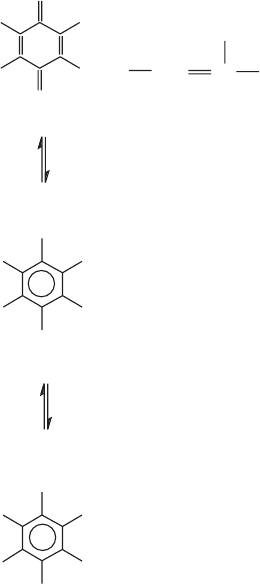
Figure 5.6 Structure of ubiquinone (coenzyme Q) in the oxidized, partly reduced
(free radical) and fully reduced form. The number of isoprenoid units in the long
hydrophobic tail may vary slightly in different organisms.
O
O
CH
3
O
CH
3
O
CH
2
CH C
CH
3
CH
2
()
n
H
CH
3
CH
3
O
CH
3
O
CH
3
O
OH
R
R
OH
OH
CH
3
CH
3
O
CH
3
O
H
H
.
.
.
182 MITOCHONDRIAL ELECTRON TRANSFER
(ubiquinone or cytochrome c) was assumed for a long time. It appears that in
bovine heart mitochondria each complex is present in a stoichiometric ratio
to the other complexes: Original estimates (1 : 2 : 3 : 6) have been reported by
Hatefi , but no such precise quantitative determinations have been made for
other tissues. Furthermore, as discussed in Chapter 3 , there is probably a
developmentally regulated and tissue - specifi c expression of the genes encod-
ing the electron transport chain, which adapts the capacity of the mitochon-
drial oxidative phosphorylation system to the requirements of specifi c tissues
and cells. If complexes were to function completely in isolation, connected by
mobile carriers, there would a priori be no compelling reason to maintain
precise stoichimetric ratios. On the other hand, based on results from novel
technologies, there has been a radical rethinking in the fi eld.
5.2.2.2 Supercomplexes The invention of Blue - Native gel electrophoresis
by Schagger and colleagues (24 – 27) has had a profound impact on the study
of the complexes of the ETC. In principle, the method achieves in one gel the
fractionation of all fi ve complexes in their native form. They can be visualized
by staining, by histochemical reactions, or by conventional Western blotting.
For example, the entire complex I of molecular mass > 950 kDa can be sepa-
rated cleanly from isolated mitochondria after solubilization in a suitable
detergent; for details on the methodology the reader is referred to the special-
ized literature (26) . Thus, the method is particularly suitable for the study of
the biogenesis of the individual complexes, for the determination of assembly
intermediates under normal conditions, or for the case where mutations in one
subunit cause assembly defects. Only a few examples of a voluminous litera-
ture can be cited here (28 – 31) .
The use of BN gels also revealed a novel property: In addition to their
expected positions in the gel (the “ monomers ” ) there were also bands at posi-
tions corresponding to higher aggregates. Those of complex V (ATP synthase)
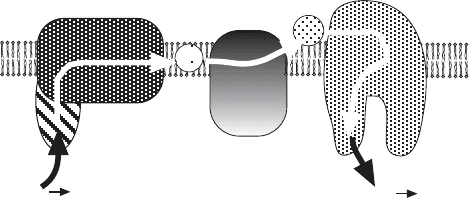
Figure 5.7 Schematic representation of the electron transport chain from NADH to
oxygen. Complexes I, III, and IV are shown, as well as the mobile carriers, Q and
cytochrome c.
Q
c
Complex I Complex III Complex IV
NADH NAD
+
4H
+
2H OO
22
e
-
e
-
+
THE ELECTRON TRANSPORT CHAIN 183
will be discussed briefl y in a later section. Complexes I, III, and IV in particular
were found to be associated into super - or supracomplexes of an apparently
fi xed stoichiometry (24) . In yeast, with no complex I, complexes III and IV
exist as a larger complex of ∼ 1000 kDa (32) . These recent fi ndings appear
contradictory to the earlier studies of Hackenbrock (22, 23) , suggesting that
the inner mitochondrial membrane acts as a fl uid mosaic in which complexes
diffuse freely and the mobile carriers shuttle electrons between the complexes.
In the revised and more “ solid - state ” model for the ETC complex I is found
to be fi rmly associated with a dimer of complex III, and a variable number of
complexes IV are added to form a structure named a “ respirasome. ” The for-
mation of such a respirasome can be rationalized in a number of ways, but
fi rm experimental support for some of these ideas is just beginning to emerge.
One simple proposal is that (1) substrate channeling of quinones can occur to
speed up the electron transfer reaction and (2) the reactive, intermediate
semiquinones can be trapped to avoid side reactions. Experimental evidence
for this interpretation is still missing (33) . Another very plausible possibility
is that individual complexes are stabilized by supermolecular assembly. A
fi nding that supports the second possibility comes from the investigation of
respirasome formation in human patients with a primary genetic defect causing
a reduced complex III assembly. In such patients ’ mitochondria the level of
complex I was also reduced, interpreted by the authors as due to a failure to
stabilize complex I in a supercomplex (24) . In contrast, studies in the Scheffl er
laboratory have found that the absence of complex I in Chinese hamster
mitochondria does not lead to any reduction in complex III levels (Potluri
et al., unpublished).
What are other physiological consequences of supercomplex formation? A
stringent test would require a comparison of normal mitochondria with mito-
chondria in which the individual complexes are present at normal amounts,
but not aggregated into supercomplexes. Only a limited number of experimen-
tal systems exist for such a comparison. Zhang et al. (34) noted that the forma-
tion of (CIII)
2
(CIV)
2
supercomplexes in yeast mitochondria was dependent
on cardiolipin. Measurements of NADH oxidation in wild - type cells were
“ consistent with single functional unit kinetics of the respiratory chain, ” while
cardiolipin - defi cient mitochondria exhibited perturbed kinetics. Other authors
(35) concluded that cardiolipin was not absolutely required for supercomplex
formation in yeast, but greatly promoted their stability.
No studies are available on the infl uence of supercomplex formation by
complexes I, III, and IV on the morphology of mitochondrial cristae, but the
intriguing observation has been reported that dimer or higher aggregate for-
mation by complex V is required for normal cristae morphology in yeast (36) .
From a different perspective, Bornhovd and colleagues reported that the
mitochondrial membrane potential is altered when aggregate formation by
complex V is prevented (37) . It becomes apparent that the problem of super-
complex formation may have signifi cance far beyond the kinetic aspects of
the fl uid versus the solid - state model of the ETC, or the stabilization of the
184 MITOCHONDRIAL ELECTRON TRANSFER
individual complexes. A rigorous formulation of the relationship between
cristae morphology and the performance of the electron transport chain will
remain a challenge for the future.
5.2.3 Introduction to Bioenergetics
From a thermodynamic and electrochemical perspective, each step in the
electron transport chain is associated with a free energy change, and each
component undergoes a cycle of oxidation and reduction reactions; that is, it
represents a redox couple. The properties of such a redox couple are conve-
niently described by the standard reduction potential, a quantity that can be
easily related to an associated free energy change. For example, for the mobile
cytochrome c the following describes the half - reaction and the corresponding
standard reduction potential:
cytochrome c (Fe cytochrome c (Fe V
3+ 2+ 0
)).+→ =+
−
′
eE0 235
A complete reaction consists of the sum of two half - reactions:
(1)
succinate 2 H fumarate V
+0−− −
′
→+ + =−eE2 0 031.
(2)
ubiquinone 2 H ubiquinol V
0
++ → =+
−+
′
eE2 0 045.
(1) + (2)
succinate ubiquinone fumarate ubiquinol V
0
+→+ =+
′
ΔE 0 014.
One can calculate the free energy change for this oxidation reduction reaction
from the relationship
ΔΔGnFE=−
where F is the faraday (1 F = 96,494 calories/mol). The standard reduction
potentials are defi ned relative to the hydrogen half - reaction under standard
conditions (pH = 0, 25 ° C, H
2
(g) at 1 atm), and the prime superscript in the
above symbols indicates that the values are for biological systems operating
at pH 7.
It is informative and instructive to consider the electron transport chain
from the point of view of an electron fi nding itself at a high potential (in
NADH), dropping through a series of intermediate stages to its fi nal destina-
tion, oxygen. This reaction, with reference to the various half - reactions and
their associated standard reduction potential is shown in Figure 5.8 . It is appar-
ent from such a representation that there is not a very large drop between
succinate and ubiquinone, and the free energy change may be too small for
proton pumping (see below). The most substantial change in potential occurs
in (a) the oxidation of NADH by ubiquinone and (b) the last step, reduction
of oxygen to water. These steps are therefore virtually irreversible.
In the following, each complex will be discussed in turn, with an emphasis
on composition, structure, and function. Some comparative data will also be
THE ELECTRON TRANSPORT CHAIN 185
introduced to emphasize similarities and differences of these complexes in
mitochondria of organisms from a broader phylogenetic range. A discussion
of complex V will be deferred until after the section on the chemiosmotic
hypothesis.
5.2.4 Complex I
Complex I is properly referred to as NADH - ubiquinone oxidoreductase with
the inclusion of the substrates in the name. The overall reaction catalyzed by
this complex can be described as follows:
NADH Q H NAD QH 4H
++
2
++ → + +
+
5
io
Q and QH
2
refer to the oxidized and reduced form of ubiquinone, respectively.
Of great signifi cance is the number and subscript designation of the protons
on either side of the equation, which will be made fully apparent in the section
to follow. Here it suffi ces to state that the reaction is accompanied by the net
transfer of four protons from the matrix side to the intermembrane space.
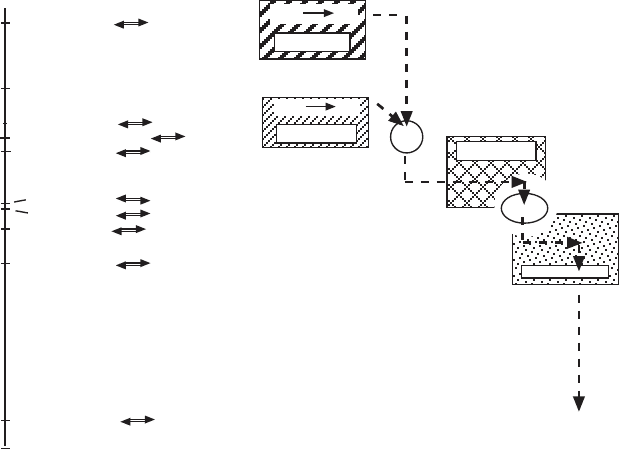
Figure 5.8 Half - reactions, standard reduction potentials, and the electron transport
chain. The parameters were obtained from Table 15 - 4 in D. Voet and J. G. Voet,
Biochemistry , 2nd ed., John Wiley & Sons, New York, 1995.
+0.900
0.000
NAD + H + NADH
+
+
2e
-
-0.315
-0.219
+0.077
+0.815
cyto b (Fe ) + e cyt b (Fe )
-
3+
2+
cyto c (Fe ) + e cyt c (Fe )
-
3+
2+
cyto a (Fe ) + e cyt a (Fe )
-
3+
2+
33
2
FAD + 2H +
2e
-
FADH
+
O+ 2H
+
1
2
-
2
+
H O
2
2e
-
-
3+
2+
cyto a (Fe ) + e cyt a (Fe )
cyto c (Fe ) + e cyt c (Fe )
-
3+
2+
11
VOLTS
Ubiquinone + 2H + 2e ubiquinol
+
_
+0.290
+0.385
(in flavoproteins)
UQ
O
2
NADH NAD
SUCC FUM
COMPLEX I
COMPLEX II
COMPLEX IV
COMPLEX III
cyt c
186 MITOCHONDRIAL ELECTRON TRANSFER
This apparently simple reaction requires a complex with 45 subunits
( > 900 kDa) in mammalian mitochondria. A similar complex in the membrane
of prokaryotes has an estimated molecular mass of ∼ 520 kDa, with only 14
subunits. They are homologous (orthologous?) to 14 subunits in the mamma-
lian complex. Seven of these “ core ” subunits (designated as subunits ND1,
ND2, ND3, ND4, ND4L, ND5, and ND6) are encoded by the mitochondrial
genome in mammals and other organisms. The remaining 31 mammalian
subunits have been referred to as “ supernumerary, ” “ accessory, ” or “ ancillary. ”
Nuclear mutations abolishing the activity of the mammalian complex I have
been isolated in cells in tissue culture (38) . Null mutations in two X - linked
genes ( NDUFA1 and NDUFB11 ) encoding the accessory proteins MWFE and
ESSS, respectively, have been characterized. The cDNAs encoding these small
accessory peptides have been shown to complement the defect in these
complex I - defi cient Chinese hamster cells (28, 39 – 42) . Thus, at least these two
supernumerary subunits are absolutely essential for assembly of a functional
complex I. All the nuclear encoded subunits of the bovine complex were
originally cloned and sequenced as cDNAs, primarily in the laboratory of J. E.
Walker (18, 19, 43, 44) . Curiously, common yeasts such as budding and fi ssion
yeast use a completely different enzyme for electron transfer from NADH to
ubiquinone, which does not pump protons out of the matrix. Therefore, molec-
ular genetic studies in yeast and the customary homology cloning approaches
were not possible. Another microorganism, Neurospora crassa , has been used
as a model system for the study of this complex in preference to a mammalian
source (beef heart), particularly when genetic studies and the use of mutants
became powerful tools in the analysis (45 – 47) . More recently, the genetic and
biochemical analysis of complex I has made great strides in the yeast Yarrowia
lipolytica (48 – 50) . Complex I mutants have also been characterized from
Chlamydomonas (51 – 53) , and the subunit composition has been determined
in several higher plants (54 – 56) . The cloning and characterization of a large
number of complex I genes and related genes from diverse organisms includ-
ing prokaryotes has led to the construction of a detailed phylogenetic tree and
very stimulating speculations about the evolution of this mitochondrial
complex (56) . The recent interest in human diseases resulting from complex I
defi ciency (57 – 61) has prompted the cloning of many of the corresponding
human cDNAs or genes, and their mapping on various chromosomes (for a
recent summary see (56, 61) ). Both nuclear mutations and mitochondrial
mutations have been found in human patients (see Chapter 7 for further
discussion). A website dedicated to complex I will facilitate for the reader
an entry into the voluminous and growing literature ( http://www.scripps.
edu/mem/biochem/CI/ ).
It is believed that all eukaryotic complexes have similar structure, and
therefore there will be no distinction in the following discussion, unless specifi c
differences are emphasized. The proton - pumping NADH:ubiquinone oxido-
reductase in prokaryotes has fewer peptides (62) , and it is thought that the 14
peptides found in E. coli represent the minimal number necessary for function.
THE ELECTRON TRANSPORT CHAIN 187
Finel (63) and Friedrich (64 – 67) have published stimulating discussions of the
organization and evolution of structural elements within complex I. These
authors expand on hypotheses that complex I evolved by the combination of
modules of preexisting domains of ancestral prokaryotic enzymes. However,
these ideas addressed only the prokaryotic or “ core ” subunits. The additional
peptides in higher eukaryotes may represent scaffolding and assembly factors
not directly involved in electron transfer and proton transfer, or they may have
a regulatory role. Several of them have by now been shown to be essential
(see above), but on the whole their precise function remains a puzzle. Some
of the accessory proteins found in mammals do not have counterparts in other
organisms, and vice versa. It is noteworthy, however, that the total number of
subunits jumps dramatically from ∼ 14 in the prokaryotes to > 40 in all eukary-
otic systems examined so far. An exhaustive discussion of these and related
issues can be found in the publication by Gabaldon et al. (56) .
A few of the subunits have been found to have an independent function,
or they have been implicated in apparently unrelated activities. For example,
an acyl carrier protein was fi rst identifi ed in the bovine complex (68) , and it
has been proposed to play a role in lipoic acid metabolism (69) . Another
gene/protein, GRIM - 19, was fi rst found as a cell - death - regulatory gene induced
by the interferon - beta and retinoic acid combination, and subsequently shown
to be a subunit of complex I (70) . Defi nite proof of its essential function in
complex I assembly and activity was provided by Huang et al. (71) , who dem-
onstrated that homozygous deletion of GRIM - 19 in mice was embryonic lethal
due to the failure of assembly of complex I.
A comparison of peptide compositions in different organisms including E.
coli is presented in Table 5.1 . It is adapted from a recent comprehensive review
of the complex I (56) .
The overall, low - resolution structure of the complex has been derived from
cryo - electron microscopy (72 – 74) ; it can be represented by a boot or L - shape,
with the long arm integrated into the inner membrane and the short arm
extending into the matrix (Figure 5.9 ). The short arm of the L functions as an
NADH dehydrogenase, and it contains the FMN cofactor as well as seven to
nine Fe – S clusters, not all of which can be resolved and characterized by EPR
spectroscopy. The binding site for the substrate NADH is found on this sub-
complex exposed to the mitochondrial matrix. This arm can also be referred
to as the peripheral arm. The long, membrane - embedded arm plays a central
role in proton translocation. The seven hydrophobic subunits encoded by
mtDNA are part of the long arm. How electron transport in the peripheral
complex and proton pumping are coupled remains a fundamental question.
The suggestion has been made that two protons are pumped by a redox - driven,
Q - cycle - related mechanism, while two others are transported by conforma-
tional transitions (65, 75) .
Attempts to disrupt and solubilize portions of the complex I have made use
of the chaotropic ion perchlorate or the detergent lauryl - dimethylamine oxide.
With the use of perchlorate, three fractions have been obtained, referred to as

188 MITOCHONDRIAL ELECTRON TRANSFER
TABLE 5.1 Subunit Composition of Complex I
Name/Gene Protein B. taurus D. melanogaster
Yarrowia
lipolytica
Neurospora
crassa Arabidopsis thaliana Bacteria
mtDNA - Encoded Genes
ND1 ++ + ++ ++ ++ NuoH
ND2 ++ + ++ ++ + NuoN
ND3 ++ + ++ ++ + NuoA
ND4 ++ + ++ ++ + NuoM
ND4L ++ + ++ ++ ++ NuoK
ND5 ++ + ++ ++ ++ NuoL
ND6 ++ + ++ ++ + NuoJ
Nuclear Genes
NDUFS1/NUAM 75 kDa ++ + ++ ++ ++ NuoG
NDUFV1/NUBM 51 kDa ++ + ++ ++ ++ NuoF
NUCM/NDUFS2 49 kDa ++ + ++ ++ ++ NuoC
NDUFS3/NUGM 30 kDa ++ + ++ ++ ++ NuoD
NDUFV2/NUHM 24 kDa ++ + ++ ++ ++ NuoE
NDUFS7/NUKM PSST ++ + ++ ++ ++ NuoB
NDUFS8/NUIM TYKY ++ + ++ ++ ++ NuoI
NDUFA10/NUDM 42 kDa ++ +
NDUFA9/NUEM 39 kDa ++ + ++ ++
NDUFS4/NUYM 18 kDa ++ + ++ ++ ++
NDUFS5/NIPM 15 kDa ++ + ++ + ++
NDUFS6/NUMM 13 kDa ++ + + + +
NDUFV3/NUOM 10 kDa ++ +
NDUFB2/NIGM AGGG ++ +
NDUFB8/NIAM ASHI ++ + ++ +

THE ELECTRON TRANSPORT CHAIN 189
Name/Gene Protein B. taurus D. melanogaster
Yarrowia
lipolytica
Neurospora
crassa Arabidopsis thaliana Bacteria
NDUFS11/NESM ESSS ++ + ++ + +
NDUFC1/NIKM KFYI ++ +
NDUFA4/NUML MLRQ ++ +
NDUFB1/NINM MNLL ++ +
NDUFA1/NIMM MWFE ++ + + ++
NDUFB10/NIDM PDSW ++ + + ++ ++
NDUFA8/NUPM PGIV ++ + ++ ++ +
NDUFAB1/ACPM SDAP ++ + ++ ++ +
NDUFB5/NISM SGDH ++ +
NDUFB9/NI2M B22 ++ + + +
NDUFB7/NB8M B18 ++ + + ++
NDUFB6/NB7M B17.2 ++ +
. . . . . . . . . . . . /NB6M B16.6 ++ + ++ ++
NDUFB4/NB5M B15 ++ + ++
B14.7 ++ +
NDUFA7/N4AM B14.5a ++ +
NDUFC2/N4BM B14.5b ++ +
NDUFA6/NB4M B14 ++ + ++
NDUFA5/NUFM B13 ++ +
NDUFB3/NB2M B12 ++ + ++ +
NDUFA3/NI9M B9 ++ + ++
NDUFA2/NI8M B8 ++ +
NUXM ++ ++ ++
NUZM ++ ++
NURM ++
+ 7 other genes
Source : Reference 56 .
190 MITOCHONDRIAL ELECTRON TRANSFER
the fl avoprotein (Fp), the iron – sulfur protein (Ip), and a hydrophobic complex.
The Fp complex consists of three peptides, (51, 24, and 9 kDa, respectively),
and further analyses have confi rmed the largest peptide to bind NADH and to
contain the FMN and the [4Fe – 4S] cluster. A second Fe – S cluster [2Fe – 2S] is
found in the 24 - kDa peptide, while the 9 - kDa peptide has no features or iden-
tifi able functions. Other detergent and salt combinations split the complex
differently, yielding subcomplexes I α and I β , and I α can be subdivided further
into I γ and I λ (19, 43) . The I α subcomplex appears to retain the capacity for
transferring electrons from NADH to ubiquinone, while subcomplex I β is an
inactive portion of the membrane complex. However, this oxidation of NADH
is insensitive to rotenone, and the ubiquinone acts as an artifi cial electron
acceptor from an abnormal site on the subcomplex. Most of the individual
peptides, either nuclear encoded or mitochondrial, have been assigned to one
or the other of these subcomplexes, but in view of the multitude of peptides a
fi nal picture of the arrangement of each of these peptides within the complex
will require the crystal structure. The quest for crystals of the whole or portions
of complex I from bacteria or eukaryotes has been a preoccupation of several
of the prominent laboratories in this fi eld for some time.
A major breakthrough has now been reported by Sazanov and Hinchcliffe
(76) , who succeeded in solving the structure of the hydrophilic (peripheral)
subcomplex of complex I from Thermus thermophilus (Figure 5.10 ). It contains
seven known hydrophilic subunits and a novel subunit that may be unique for
this organism. The FMN moiety and nine Fe – S centers were localized precisely,
defi ning a path (FMN – N3 – N1b – N4 – N5 – N6a – N6b – N2) for electrons from
FMN to the last Fe – S cluster N2, from which electrons are passed to ubiquinone.
One cluster (N7) is too distant from the path to be directly involved. Another
cluster (N1a) was proposed to be a temporary holding site for one of two elec-
trons from reduced FMNH
2
, thus shortening the half - life of the fl avosemiqui-
none and preventing the formation of reactive oxygen species (superoxide) by
electron transfer to oxygen. The reader is referred to this publication for many
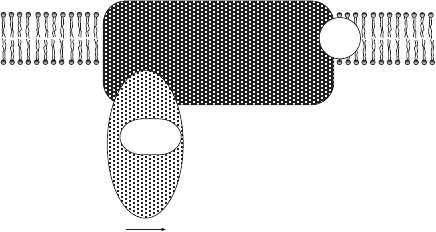
Figure 5.9 Highly simplifi ed representation of complex I, the NADH – ubiquinone
oxidoreductase. The entire mammalian complex has 45 polypeptides. The number of
iron – sulfur centers is ∼ 8 (depending on species).
NADH NAD
+
FMN
Q
8[Fe-S]