
Smith R., Minton R. Calculus
Подождите немного. Документ загружается.

P1: OSO/OVY P2: OSO/OVY QC: OSO/OVY T1: OSO
MHDQ256-Ch03 MHDQ256-Smith-v1.cls December 10, 2010 20:20
LT (Late Transcendental)
CONFIRMING PAGES
3-51 SECTION 3.6
..
Optimization 223
constants A and B. Graph the functions
x
2
4 + x
2
,
2x
2
1 + x
2
,
x
2
9 + x
2
and
3x
2
1 + x
2
for x > 0. Based on these graphs, discuss
why
B[N(t)]
2
A
2
+ [N (t)]
2
is a plausible model for the death rate by
predation. What role do the constants A and B play? The pos-
sible stable population levels for the spruce budworms are de-
termined by intersections of the graphs of y = r(1 − x/k) and
y =
x
1 + x
2
. Here, x = N/A, r is proportional to the birthrate
of the budworms and k is determined by the amount of food
available to the budworms. Note that y = r(1 − x/k) is a line
with y-intercept r and x-intercept k. How many solutions are
thereto the equationr(1 − x/k) =
x
1 + x
2
?(Hint: The answer
depends on the values of r and k.) One current theory is that
outbreaks are caused in situations where there are three so-
lutions and the population of budworms jumps from a small
population to a large population.
2. Suppose that f is a function with two derivatives and
that f (a) = f
(a) = 0but f
(a) = 0 for some number a.
Show that f (x) has a local extremum at x = a. Next, sup-
pose that f is a function with three derivatives and that
f (a) = f
(a) = f
(a) = 0but f
(a) = 0 for some number
a. Show that f (x) does not have a local extremum at x = a.
Generalize your work to the case where f
(k)
(a) = 0 for
k = 0, 1,...,n − 1, but f
(n)
(a) = 0, keeping in mind that
there are different conclusions depending on whether n is odd
or even. Use this result to determine whether f (x) = x sin x
2
or g(x) = x
2
sin(x
2
) has a local extremum at x = 0.
3.6 OPTIMIZATION
Everywhere in business and industry today, we see people struggling to minimize waste
and maximize productivity. In this section, we bring the power of the calculus to bear on
a number of applied problems involving finding a maximum or a minimum. We start by
giving a few general guidelines.
r
If there’s a picture to draw, draw it! Don’t try to visualize how things look in your
head. Put a picture down on paper and label it.
r
Determine what the variables are and how they are related.
r
Decide what quantity needs to be maximized or minimized.
r
Write an expression for the quantity to be maximized or minimized in terms of only
one variable. To do this, you may need to solve for any other variables in terms of this
one variable.
r
Determine the minimum and maximum allowable values (if any) of the variable
you’re using.
r
Solve the problem and be sure to answer the question that is asked.
We begin with a simple example where the goal is to accomplish what businesses face
every day: getting the most from limited resources.
EXAMPLE 6.1 Constructing a Rectangular Garden
of Maximum Area
You have 40 (linear) feet of fencing with which to enclose a rectangular space for a
garden. Find the largest area that can be enclosed with this much fencing and the
dimensions of the corresponding garden.
OR
FIGURE 3.68
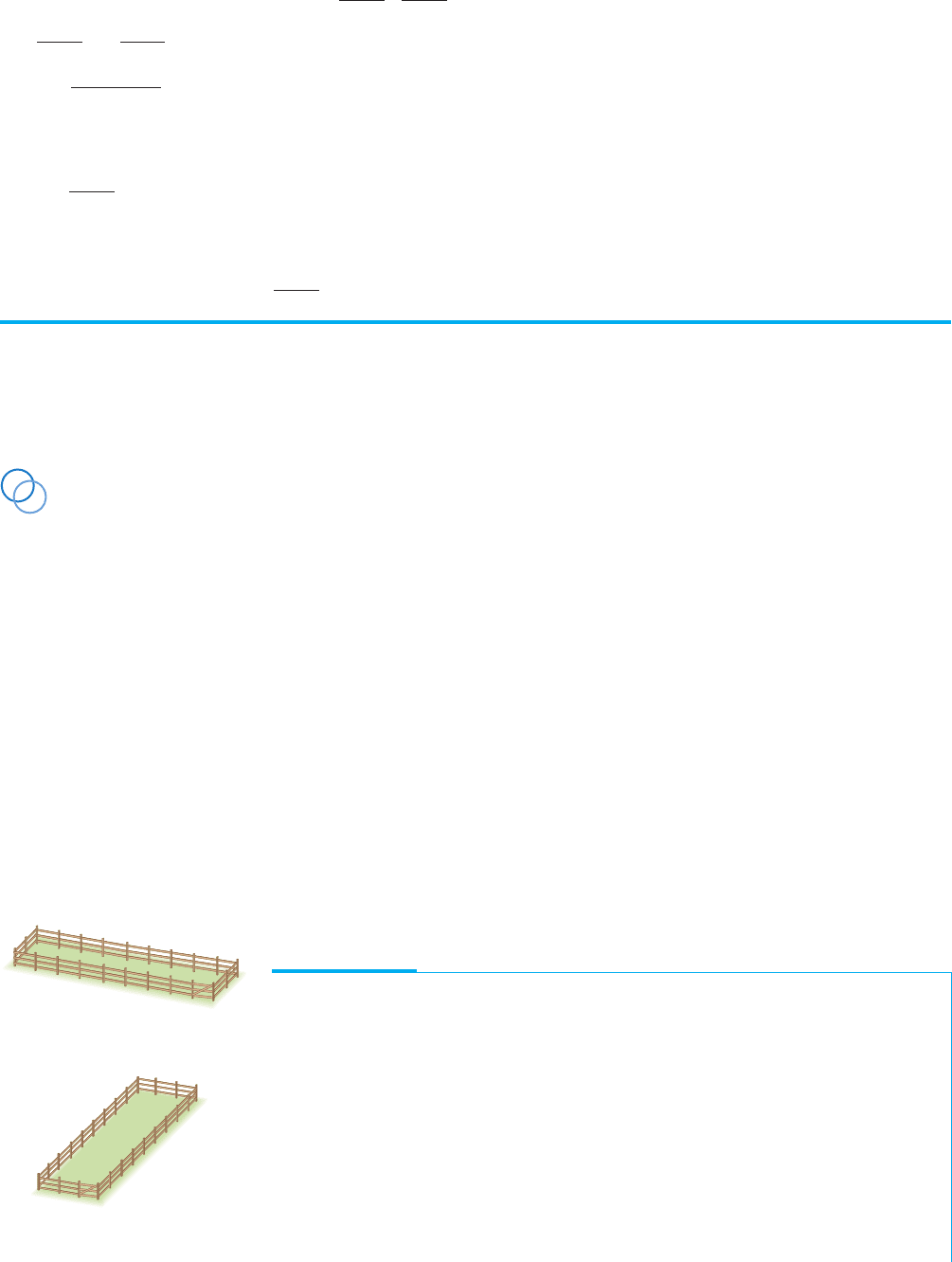
Possible plots
Solution First, note that there are lots of possibilities. We could enclose a plot that
is very long but narrow, or one that is very wide but not very long. (See Figure 3.68.)
We first draw a picture and label the length and width x and y, respectively. (See
Figure 3.69 on the following page.)
We want to maximize the area,
A = xy.
P1: OSO/OVY P2: OSO/OVY QC: OSO/OVY T1: OSO
MHDQ256-Ch03 MHDQ256-Smith-v1.cls December 10, 2010 20:20
LT (Late Transcendental)
CONFIRMING PAGES
224 CHAPTER 3
..
Applications of Differentiation 3-52
However, this function has two variables and so, cannot be dealt with via the means
we have available. Notice that if we want the maximum area, then all of the fencing
must be used. This says that the perimeter of the resulting fence must be 40
and
hence,
40 = perimeter = 2x + 2y. (6.1)
Notice that we can use (6.1) to solve for one variable (either one) in terms of the other.
We have
2y = 40 − 2x or y = 20 − x.
x
y
FIGURE 3.69
Rectangular plot
Substituting for y, we get that
A = xy = x(20 − x).
So, our job is to find the maximum value of the function
A(x) = x(20 − x).
Before we maximize A(x), we need to determine if there is an interval in which x
must lie. Since x is a distance, we must have 0 ≤ x. Further, since the perimeter is 40
,
we must have x ≤ 20. (Why don’t we have x ≤ 40?) So, we want to find the maximum
value of A(x) on the closed interval [0, 20]. As a check on what a reasonable answer
should be, we draw a graph of y = A(x) on the interval [0, 20]. (See Figure 3.70.) The
maximum value appears to occur around x = 10. Now, let’s analyze the problem
carefully. We have
A
(x) = 1(20 − x) + x(−1)
= 20 −2x
= 2(10 − x).
y
x
20
40
60
80
100
2015105
FIGURE 3.70
y = x(20 − x)
So, the only critical number is x = 10 and this is in the interval under consideration.
Recall that the maximum and minimum values of a continuous function on a closed and
bounded interval must occur at either the endpoints or a critical number. So, we need
only compare
A(0) = 0, A(20) = 0 and A(10) = 100.
Thus, the maximum area that can be enclosed with 40
of fencing is 100 ft
2
. The
dimensions of the plot are given by x = 10 and
y = 20 − x = 10.
That is, the rectangle of perimeter 40
with maximum area is a square 10
on a side.
More generally, you can show that (given a fixed perimeter) the rectangle of max-
imum area is a square. This is virtually identical to example 6.1 and is left as an
exercise.
Manufacturingcompaniesroutinelymustdeterminehowtomosteconomicallypackage
products for shipping. Example 6.2 provides a simple illustration of this.
EXAMPLE 6.2 Constructing a Box of Maximum Volume
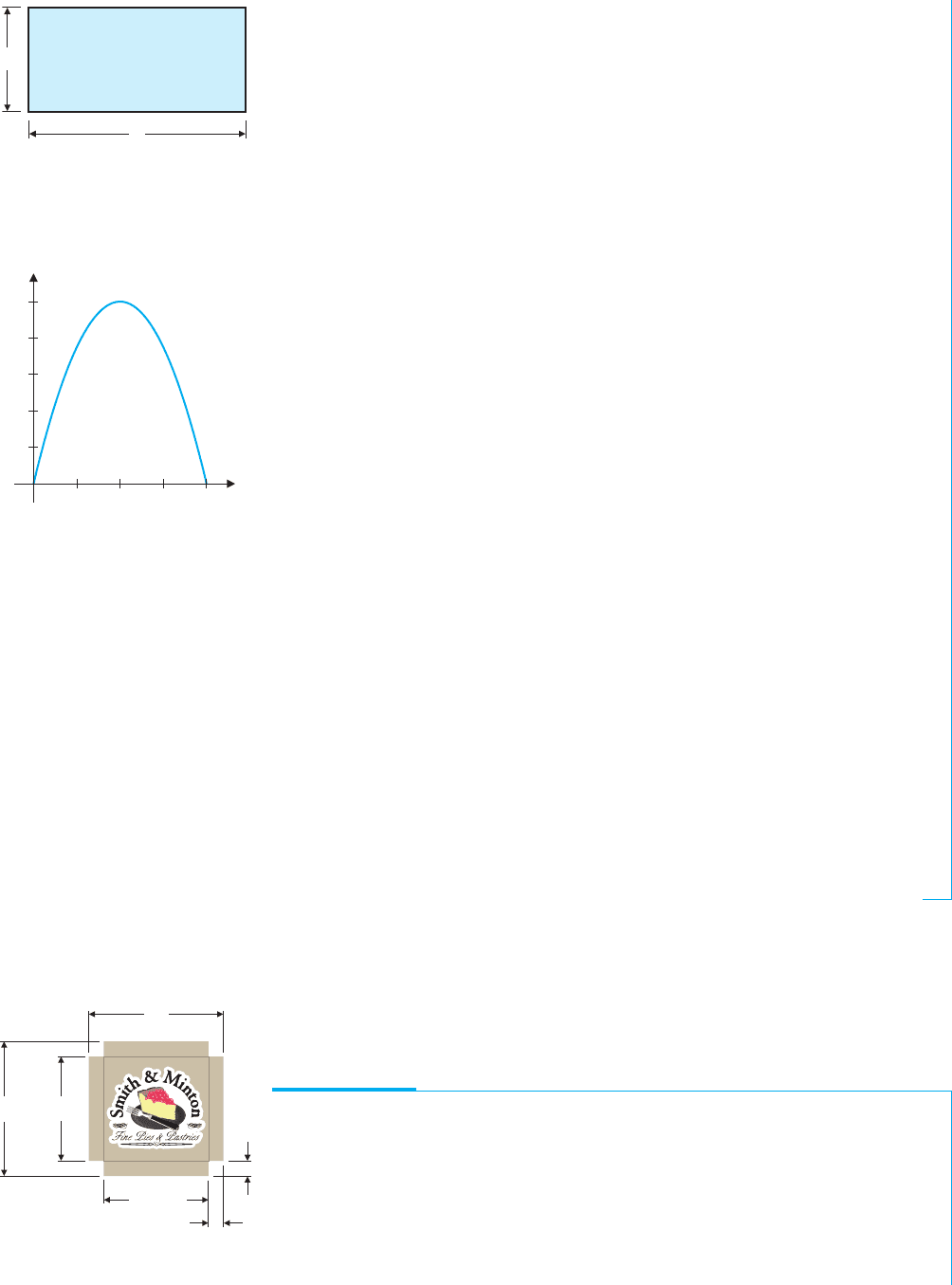
A square sheet of cardboard 18
on a side is made into an open box (i.e., there’s no top),
by cutting squares of equal size out of each corner (see Figure 3.71a) and folding up the
sides along the dotted lines. (See Figure 3.71b.) Find the dimensions of the box with the
maximum volume.
x
x
18 18 2x
18
18 2x
FIGURE 3.71a
A sheet of cardboard
Solution Recall that the volume of a rectangular parallelepiped (a box) is given by
V = l × w ×h.
P1: OSO/OVY P2: OSO/OVY QC: OSO/OVY T1: OSO
MHDQ256-Ch03 MHDQ256-Smith-v1.cls December 10, 2010 20:20
LT (Late Transcendental)
CONFIRMING PAGES
3-53 SECTION 3.6
..
Optimization 225
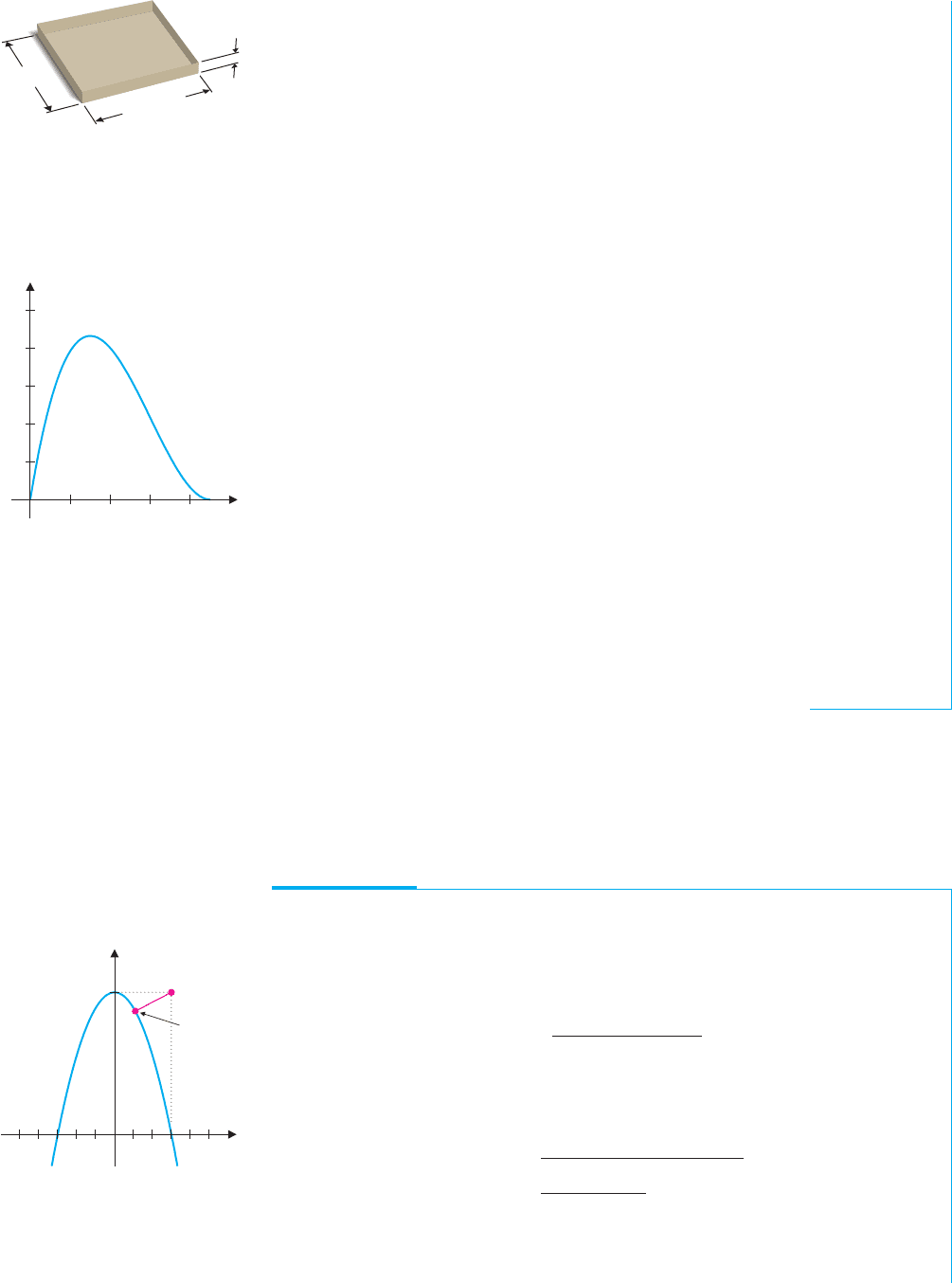
From Figure 3.71b, we can see that the height is h = x, while the length and width are
l = w = 18 −2x. Thus, we can write the volume in terms of the one variable x as
V = V (x) = (18 −2x)
2
(x) = 4x(9 − x)
2
.
Notice that since x is a distance, we have x ≥ 0. Further, we have x ≤ 9, since cutting
squares of side 9 out of each corner will cut up the entire sheet of cardboard. Thus, we
are faced with finding the absolute maximum of the continuous function
V (x) = 4x(9 − x)
2
on the closed interval 0 ≤ x ≤ 9.
18 2x
18 2x
x
FIGURE 3.71b
Rectangular box
The graph of y = V(x) on the interval [0, 9] is seen in Figure 3.72. From the graph,
the maximum volume seems to be somewhat over 400 and seems to occur around
x = 3. Now, we solve the problem precisely. We have
V
(x) = 4(9 − x)
2
+ 4x(2)(9 − x)(−1) Product rule and chain rule.
= 4(9 − x)[(9 − x) −2x] Factor out 4(9 − x).
= 4(9 − x)(9 −3x).
y
x
100
200
300
400
500
2864
FIGURE 3.72
y = 4x(9 − x)
2
So, V has two critical numbers, 3 and 9, and these are both in the interval under
consideration. We now need only compare the value of the function at the endpoints and
the critical numbers. We have
V (0) = 0, V (9) = 0 and V (3) = 432.
Obviously, the maximum possible volume is 432 cubic inches, which we achieve if we
cut squares of side 3
out of each corner. You should note that this corresponds with
what we expected from the graph of y = V (x) in Figure 3.72. Finally, observe that the
dimensions of this optimal box are 12
long by 12
wide by 3
deep.
When a new building is built, it must be connected to existing telephone, power, water
andsewerlines.If these lines bend, then it may not beobvioushowto make the shortest (i.e.,
least expensive) connection possible. In examples 6.3 and 6.4, we consider the common
problem of finding the shortest distance from a point to a curve.
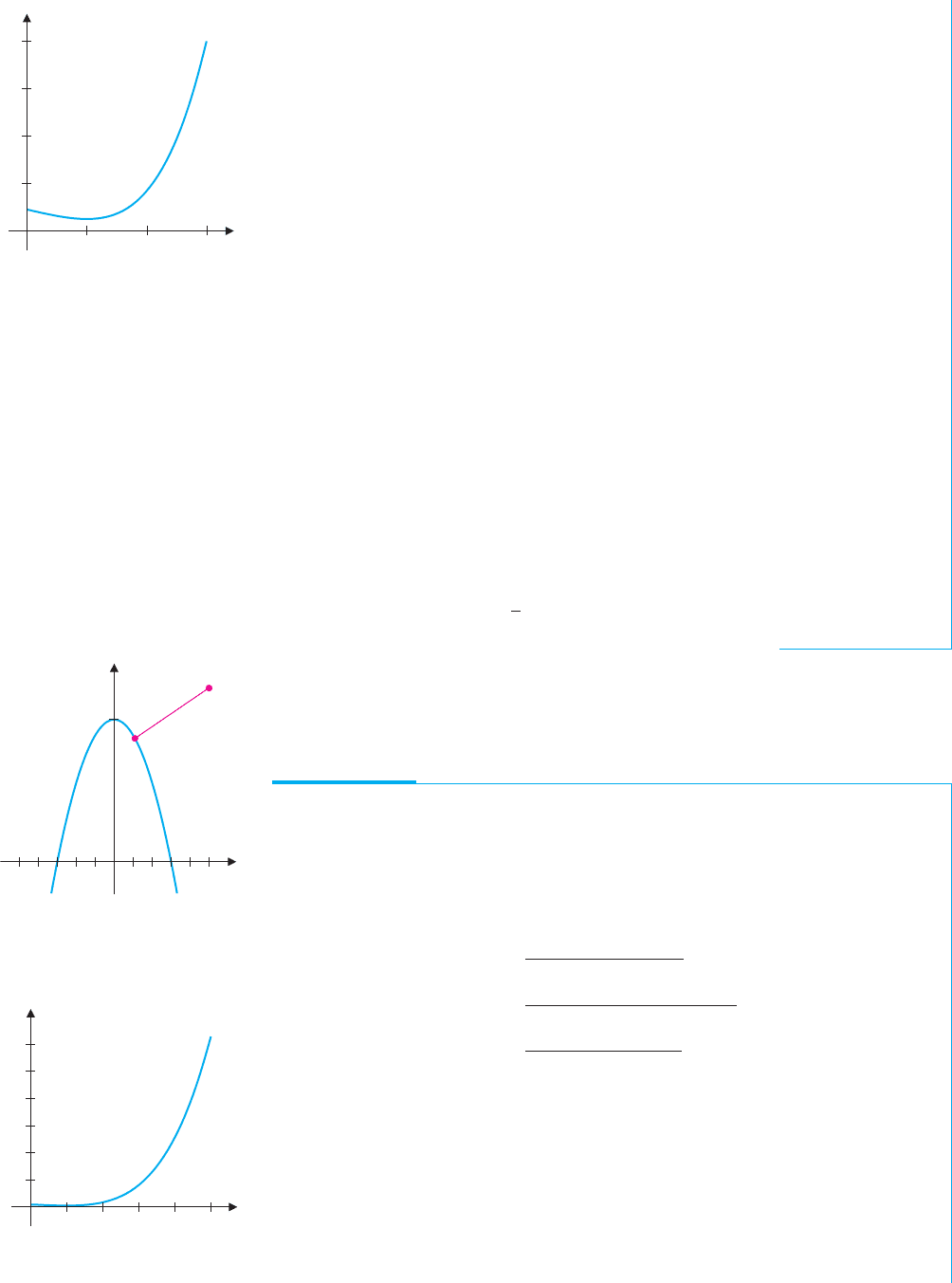
EXAMPLE 6.3 Finding the Closest Point on a Parabola
Find the point on the parabola y = 9 − x
2
closest to the point (3, 9). (See Figure 3.73.)
y
x
9
y 9 x
2
(3, 9)
44
(x, y)
FIGURE 3.73
y = 9 − x
2
Solution From the usual distance formula, the distance between the point (3, 9) and
any point (x, y)is
d =
(x − 3)
2
+ (y − 9)
2
.
If the point (x, y) is on the parabola, then its coordinates satisfy the equation y = 9 − x
2
and so, we can write the distance in terms of the single variable x as follows
d(x) =
(x − 3)
2
+ [(9 − x
2
) − 9]
2
=
(x − 3)
2
+ x
4
.
Although we can certainly solve the problem in its present form, we can simplify our
work by observing that d(x) is minimized if and only if the quantity under the square
P1: OSO/OVY P2: OSO/OVY QC: OSO/OVY T1: OSO
MHDQ256-Ch03 MHDQ256-Smith-v1.cls December 10, 2010 20:20
LT (Late Transcendental)
CONFIRMING PAGES
226 CHAPTER 3
..
Applications of Differentiation 3-54
root is minimized. (We leave it as an exercise to show why this is true.) So, instead of
minimizing d(x) directly, we minimize the square of d(x):
f (x) = [d(x)]
2
= (x − 3)
2
+ x
4
instead. Notice from Figure 3.73 that any point on the parabola to the left of the y-axis
is farther away from (3, 9) than is the point (0, 9). Likewise, any point on the parabola
below the x-axis is farther from (3, 9) than is the point (3, 0). So, it suffices to look for
the closest point with 0 ≤ x ≤ 3. See Figure 3.74 for a graph of y = f (x) over this
interval. Observe that the minimum value of f (the square of the distance) seems to be
around 5 and seems to occur near x = 1. We have
f
(x) = 2(x −3)
1
+ 4x
3
= 4x
3
+ 2x − 6.
Notice that f
(x) factors. [One way to see this is to recognize that x = 1 is a zero of
f
(x), which makes (x −1) a factor.] We have
f
(x) = 2(x −1)(2x
2
+ 2x + 3).
So, x = 1 is a critical number. In fact, it’s the only critical number, since (2x
2
+ 2x + 3)
has no zeros. (Why not?) We now need only compare the value of f at the endpoints
and the critical number. We have
f (0) = 9, f (3) = 81 and f (1) = 5.
Thus, the minimum value of f (x) is 5. This says that the minimum distance from the
point (3, 9) to the parabola is
√
5 and the closest point on the parabola is (1, 8), which
corresponds with what we expected from the graph of y = f (x).
Example 6.4 is very similar to example 6.3, except that we need to use approximate
methods to find the critical number.
y
x
20
40
60
80
132
FIGURE 3.74
y = (x − 3)
2
+ x
4
y
x
9
y 9 x
2
44
(5, 11)
(x, y)
FIGURE 3.75
y = 9 − x
2
y
x
12345
200
400
600
FIGURE 3.76
y = f (x) = [d(x)]
2
EXAMPLE 6.4 Finding Minimum Distance Approximately
Find the point on the parabola y = 9 − x
2
closest to the point (5, 11). (See Figure 3.75.)
Solution As in example 6.3, we want to minimize the distance from a fixed point [in
this case, the point (5, 11)] to a point (x, y) on the parabola. Using the distance formula,
the distance from any point (x, y) on the parabola to the point (5, 11) is
d =
(x − 5)
2
+ (y − 11)
2
=
(x − 5)
2
+ [(9 − x
2
) − 11]
2
=
(x − 5)
2
+ (x
2
+ 2)
2
.
Again, it is equivalent (and simpler) to minimize the quantity under the square root:
f (x) = [d(x)]
2
= (x − 5)
2
+ (x
2
+ 2)
2
.
As in example 6.3, we can see from Figure 3.75 that any point on the parabola to the left
of the y-axis is farther from (5, 11) than is (0, 9). Likewise, any point on the parabola to
the right of x = 5 is farther from (5, 11) than is (5, −16). Thus, we minimize f (x) for
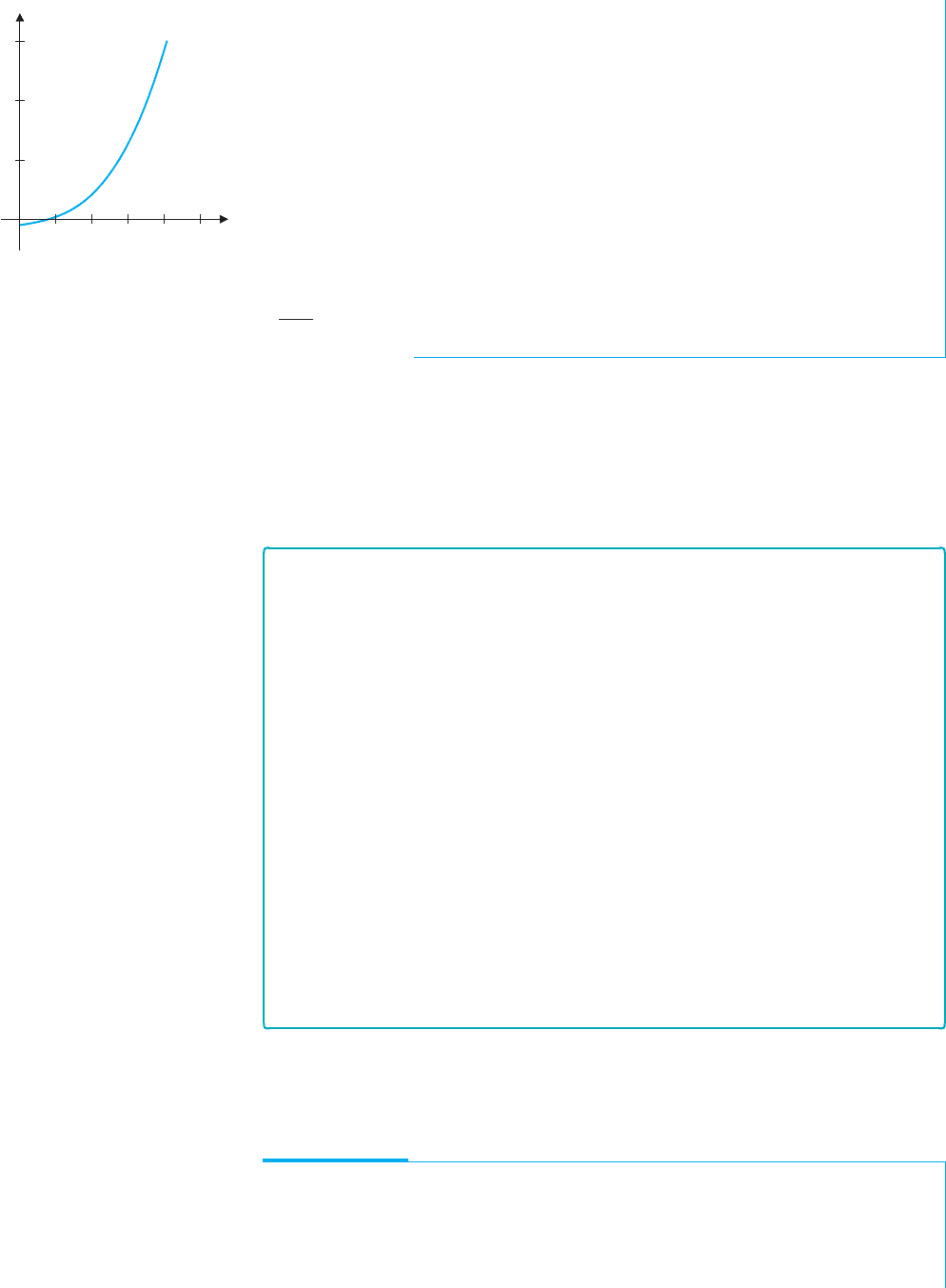
0 ≤ x ≤ 5. From the graph of y = f (x) given in Figure 3.76, the minimum value of f
P1: OSO/OVY P2: OSO/OVY QC: OSO/OVY T1: OSO
MHDQ256-Ch03 MHDQ256-Smith-v1.cls December 10, 2010 20:20
LT (Late Transcendental)
CONFIRMING PAGES
3-55 SECTION 3.6
..
Optimization 227
seems to occur around x = 1. Next, note that
f
(x) = 2(x −5) +2(x
2
+ 2)(2x)
= 4x
3
+ 10x − 10.
y
x
100
200
300
12345
FIGURE 3.77
y = f
(x)
Unlike in example 6.3, the expression for f
(x) has no obvious factorization. Our only
choice then is to find zeros of f
approximately. From the graph of y = f
(x) given in
Figure 3.77, the only zero appears to be slightly less than 1. Using x
0
= 1 as an initial
guess in Newton’s method (applied to f
(x) = 0) or using your calculator’s solver, you
should get the approximate root x
c
≈ 0.79728. We now compare function values:
f (0) = 29, f (5) = 729 and f (x
c
) ≈ 24.6.
Thus, the minimum distance from (5, 11) to the parabola is approximately
√
24.6 ≈ 4.96 and the closest point on the parabola is located at approximately
(0.79728, 8.364).
Notice that in both Figures 3.73 and 3.75, the shortest path appears to be perpendicular
to the tangent line to the curve at the point where the path intersects the curve. We leave it
as an exercise to prove that this is, in fact, true. This observation is an important geometric
principle that applies to many problems of this type.
REMARK 6.1
At this point you might be tempted to forgo the comparison of function values at the
endpoints and at the critical numbers. After all, in all of the examples we have seen so
far, the desired maximizer or minimizer (i.e., the point at which the maximum or
minimum occurred) was the only critical number in the interval under consideration.
You might just suspect that if there is only one critical number, it will correspond to
the maximizer or minimizer for which you are searching. Unfortunately, this is not
always the case. In 1945, two prominent aeronautical engineers derived a function to
model the range of an aircraft, intending to maximize the range. They found a critical
number of this function (corresponding to distributing virtually all of the plane’s
weight in the wings) and reasoned that it gave the maximum range. The result was the
famous “Flying Wing” aircraft. Some years later, it was argued that the critical
number they found corresponded to a local minimum of the range function. In the
engineers’ defense, they did not have easy, accurate computational power at their
fingertips, as we do today. Remarkably, this design strongly resembles the modern
B-2 Stealth bomber. This story came out as controversy brewed over the production
of the B-2. (See Science, 244, pp. 650–651, May 12, 1989; also see the Monthly of the
Mathematical Association of America, October, 1993, pp. 737–738.) The moral
should be crystal clear: check the function values at the critical numbers and at the
endpoints. Do not simply assume (even by virtue of having only one critical number)
that a given critical number corresponds to the extremum you are seeking.
Next,we consider anoptimizationproblemthatcannotberestrictedtoaclosedinterval.
We will use the fact that for a continuous function, a single local extremum must be an
absolute extremum. (Think about why this is true.)
EXAMPLE 6.5 Designing a Soda Can Using a Minimum
Amount of Material
A soda can is to hold 12 fluid ounces. Find the dimensions that will minimize the
amount of material used in its construction, assuming that the thickness of the material
is uniform (i.e., the thickness of the aluminum is the same everywhere in the can).
P1: OSO/OVY P2: OSO/OVY QC: OSO/OVY T1: OSO
MHDQ256-Ch03 MHDQ256-Smith-v1.cls December 10, 2010 20:20
LT (Late Transcendental)
CONFIRMING PAGES
228 CHAPTER 3
..
Applications of Differentiation 3-56
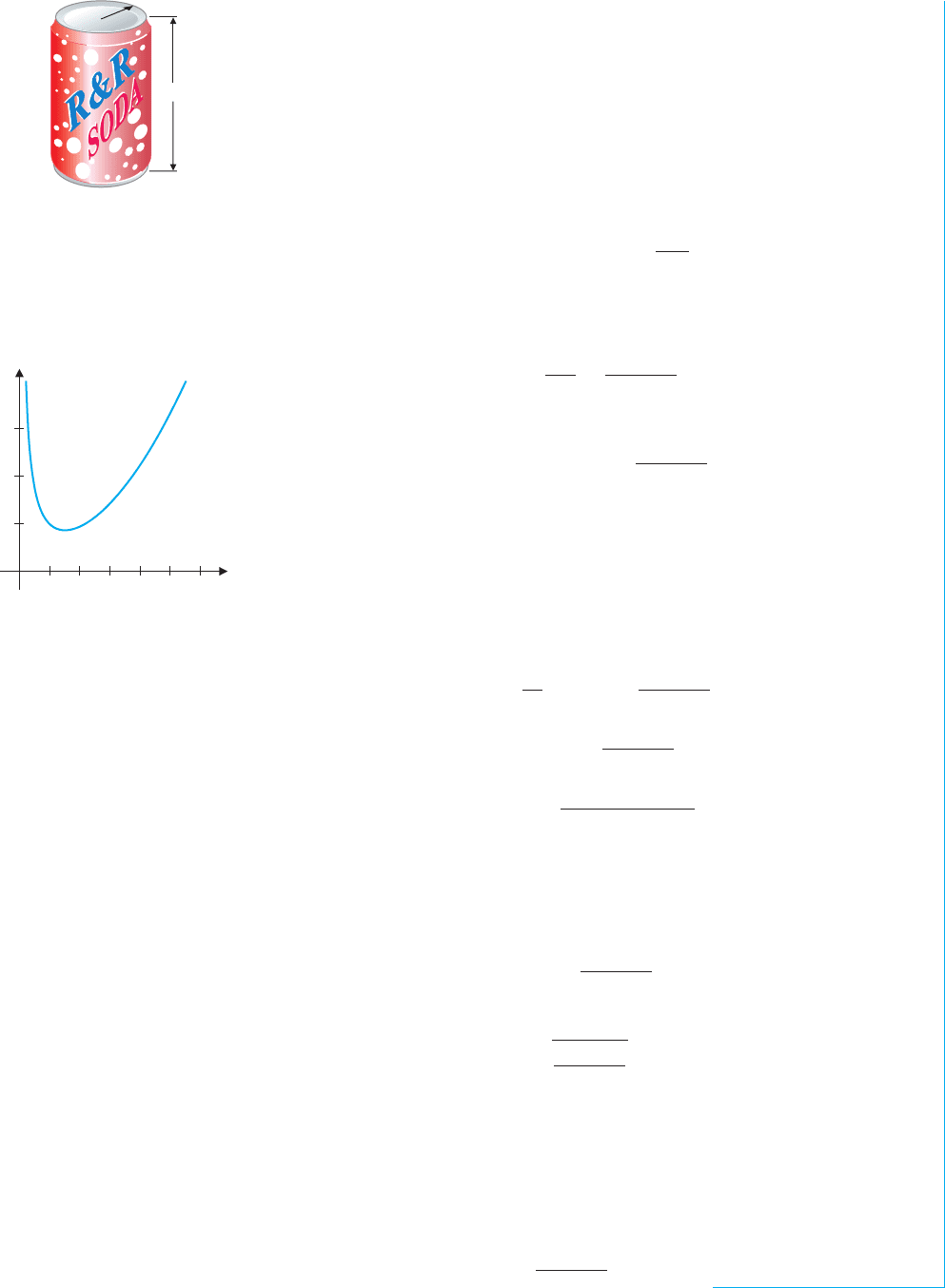
Solution First, we draw and label a picture of a typical soda can. (See Figure 3.78.)
Here we are assuming that the can is a right circular cylinder of height h and radius r.
Assuming uniform thickness of the aluminum, notice that we minimize the amount of
material by minimizing the surface area of the can. We have
area = area of top + area of bottom + curved surface area
= 2πr
2
+ 2πrh. (6.2)
h
r
FIGURE 3.78
Soda can
We can eliminate one of the variables by using the fact that the volume (using 1 fluid
ounce ≈ 1.80469 in.
3
) must be
12 fluid ounces ≈ 12floz×1.80469
in.
3
floz
= 21.65628 in.
3
.
Further, the volume of a right circular cylinder is
vol = πr
2
h
and so,
h =
vol
πr
2
≈
21.65628
πr
2
. (6.3)
Thus, from (6.2) and (6.3), the surface area is approximately
A(r) = 2πr
2
+ 2πr
21.65628
πr
2
.
So, our job is to minimize A(r), but here, there is no closed and bounded interval of
allowable values. In fact, all we can say is that r > 0. We can have r as large or small as
you can imagine, simply by taking h to be correspondingly small or large, respectively.
That is, we must find the absolute minimum of A(r) on the open and unbounded
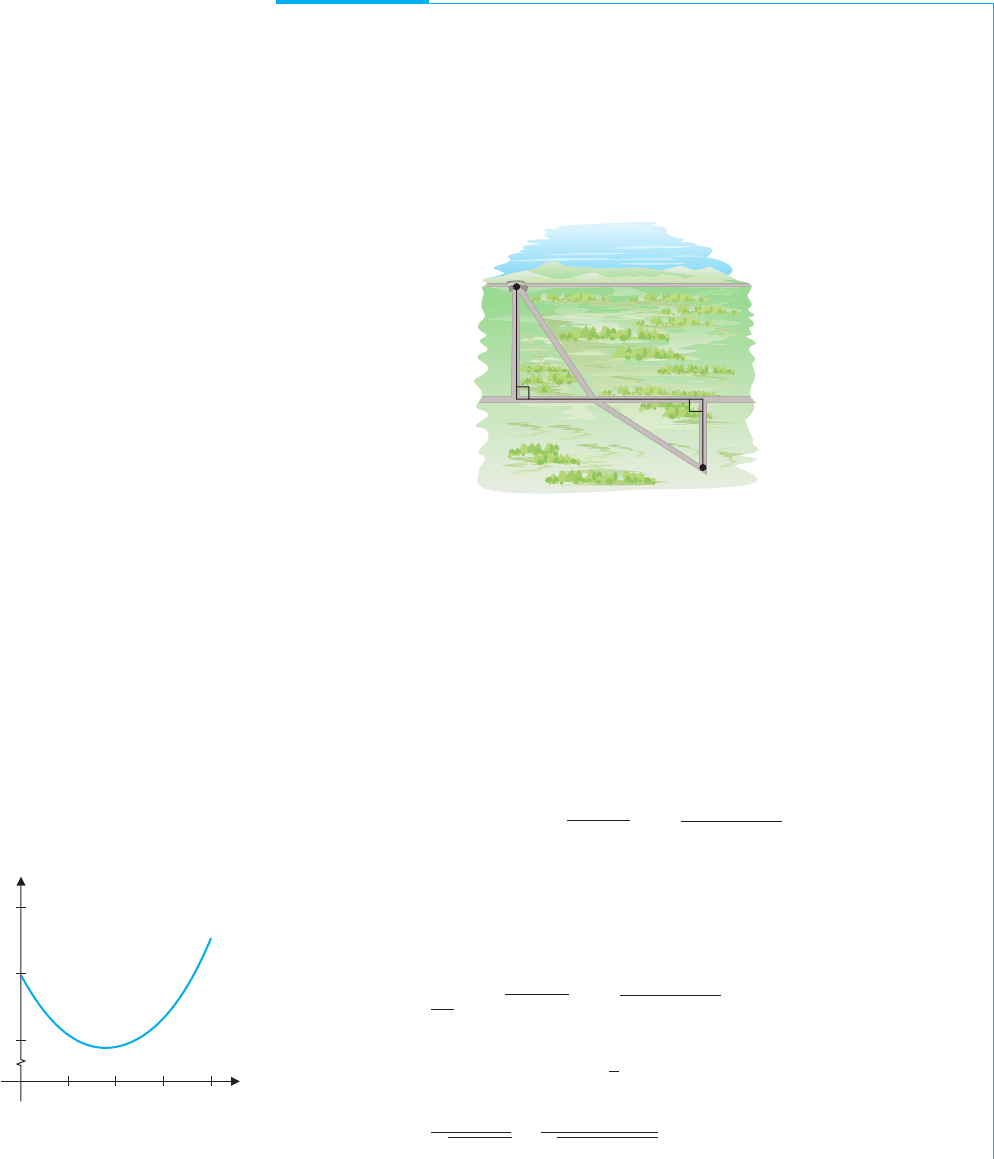
interval (0, ∞). To get an idea of what a plausible answer might be, we graph y = A(r).
(See Figure 3.79.) There appears to be a local minimum (slightly less than 50) located
between r = 1 and r = 2. Next, we compute
A
(r) =
d
dr
2π
r
2
+
21.65628
πr
= 2π
2r −
21.65628
πr
2
= 2π
2πr
3
− 21.65628
πr
2
.
y
x
100
50
150
123456
FIGURE 3.79
y = A(r)
Notice that the only critical numbers are those for which the numerator of the fraction is
zero:
0 = 2πr
3
− 21.65628.
This occurs if and only if
r
3
=
21.65628
2π
and hence, the only critical number is
r = r
c
=
3
21.65628
2π
≈ 1.510548.
Further, notice that for 0 < r < r
c
, A
(r) < 0 and for r
c
< r, A
(r) > 0. That is, A(r)is
decreasing on the interval (0, r
c
) and increasing on the interval (r
c
, ∞). Thus, A(r)
has not only a local minimum, but also an absolute minimum at r = r
c
. Notice, too,
that this corresponds with what we expected from the graph of y = A(r) in Figure 3.79.
This says that the can that uses a minimum of material has radius r
c
≈ 1.510548 and
height
h =
21.65628
πr
2
c
≈ 3.0211.
P1: OSO/OVY P2: OSO/OVY QC: OSO/OVY T1: OSO
MHDQ256-Ch03 MHDQ256-Smith-v1.cls December 10, 2010 20:20
LT (Late Transcendental)
CONFIRMING PAGES
3-57 SECTION 3.6
..
Optimization 229
Note that the optimal can from example 6.5 is “square,” in the sense that the height (h)
equals the diameter (2r). Also, we should observe that example 6.5 is not completely
realistic. A standard 12-ounce soda can has a radius of about 1.156
. You should review
example6.5tofindanyunrealisticassumptionswemade.Westudytheproblemofdesigning
a soda can further in the exercises.
In our final example, we consider a problem where most of the work must be done
numerically and graphically.
EXAMPLE 6.6 Minimizing the Cost of Highway Construction
The state wants to build a new stretch of highway to link an existing bridge with a
turnpike interchange, located 8 miles to the east and 8 miles to the south of the bridge.
There is a 5-mile-wide stretch of marshland adjacent to the bridge that must be crossed.
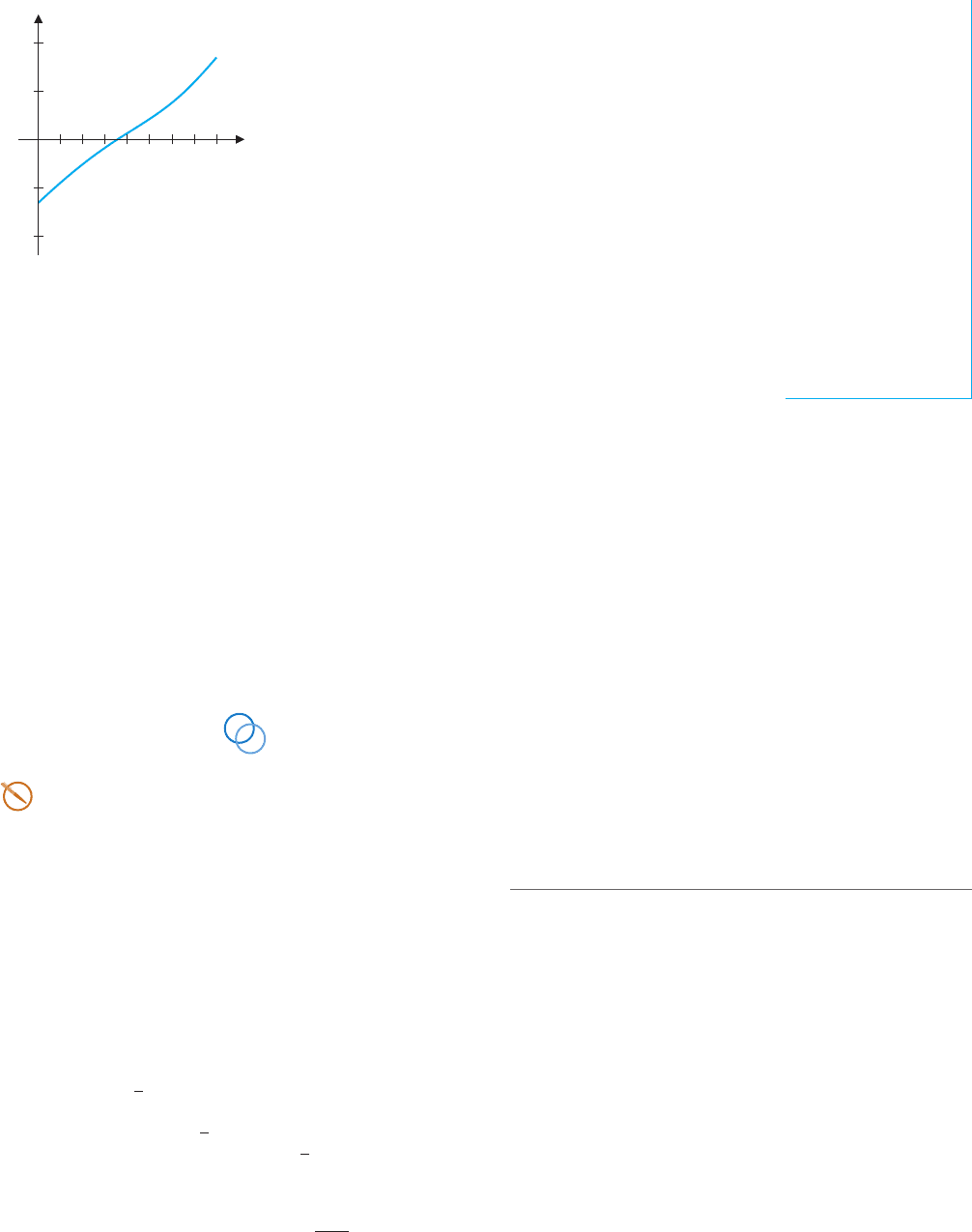
(See Figure 3.80.) Given that the highway costs $10 million per mile to build over the
marsh and only $7 million per mile to build over dry land, how far to the east of the
bridge should the highway be when it crosses out of the marsh?
Bridge
Marsh
Interchange
8 x
5
3
x
FIGURE 3.80
A new highway
Solution You might guess that the highway should cut directly across the marsh, so as
to minimize the amount built over marshland, but this is not correct. We let x represent
the distance in question. (See Figure 3.80.) Then, the interchange lies (8 − x) miles to
the east of the point where the highway leaves the marsh. Thus, the total cost (in
millions of dollars) is
cost = 10(distance across marsh) +7(distance across dry land).
Using the Pythagorean Theorem on the two right triangles seen in Figure 3.80, we get
the cost function
C(x) = 10
x
2
+ 25 +7
(8 − x)
2
+ 9.
x
2468
100
110
120
y
FIGURE 3.81
y = C(x)
Observe from Figure 3.80 that we must have 0 ≤ x ≤ 8. So, we must minimize the
continuous function C(x) over the closed and bounded interval [0, 8]. From the graph of
y = C(x) shown in Figure 3.81, the minimum appears to be slightly less than 100 and
occurs around x = 4. We have
C
(x) =
d
dx
10
x
2
+ 25 +7
(8 − x)
2
+ 9
= 5(x
2
+ 25)
−1/2
(2x) +
7
2
[(8 − x)
2
+ 9]
−1/2
(2)(8 − x)
1
(−1)
=
10x
√
x
2
+ 25
−
7(8 − x)
(8 − x)
2
+ 9
.
P1: OSO/OVY P2: OSO/OVY QC: OSO/OVY T1: OSO
MHDQ256-Ch03 MHDQ256-Smith-v1.cls December 10, 2010 20:20
LT (Late Transcendental)
CONFIRMING PAGES
230 CHAPTER 3
..
Applications of Differentiation 3-58
First, note that the only critical numbers are where C
(x) = 0. (Why?) The only way to
find these is to approximate them. From the graph of y = C
(x) seen in Figure 3.82, the
only zero of C
(x) on the interval [0, 8] appears to be between x = 3 and x = 4. We
approximate this zero numerically (e.g., with bisections or your calculator’s solver), to
obtain the approximate critical number
x
c
≈ 3.560052.
Now, we need only compare the value of C(x) at the endpoints and at this one critical
number:
C(0) ≈ $109.8 million,
C(8) ≈ $115.3 million
and
C(x
c
) ≈ $98.9 million.
So, by using a little calculus, we can save the taxpayers more than $10 million over
cutting directly across the marsh and more than $16 million over cutting diagonally
across the marsh (not a bad reward for a few minutes of work).
y
x
10
5
10
5
4268
FIGURE 3.82
y = C
(x)
The examples that we’ve presented in this section together with the exercises should
give you the basis for solving a wide range of applied optimization problems. When solving
theseproblems, be careful to drawgood pictures, as well asgraphsofthefunctionsinvolved.
Make sure that the answer you obtain computationally is consistent with what you expect
from the graphs. If not, further analysis is required to see what you havemissed. Also, make
sure that the solution makes physical sense, when appropriate. All of these multiple checks
on your work will reduce the likelihood of error.
EXERCISES 3.6
WRITING EXERCISES
1. Supposesomefriendscomplain to youthattheycan’twork any
ofthe problems in this section. When you ask to see theirwork,
theysay that they couldn’t even get started. In the text, we have
emphasized sketching a picture and defining variables. Part of
the benefit of this is to help you get started writing something
(anything) down. Do you think this advice helps?What do you
think is the most difficult aspect of these problems? Give your
friends the best advice you can.
2. We have neglected one important aspect of optimization prob-
lems, an aspect that might be called “common sense.” For ex-
ample, suppose you are finding the optimal dimensions for a
fence and the mathematical solution is to build a square fence
of length 10
√
5 feet on each side. At the meeting with the car-
penter who is going to build the fence, what length fence do
you order? Why is 10
√
5 probably not the best way to express
the length? We can approximate 10
√
5 ≈ 22.36. Under what
circumstancesshouldyou truncate to22
4
insteadofrounding
up to 22
5
?
3. In example 6.3, we stated that d(x) =
√
f (x) is minimized by
exactly the same x-value(s) that minimize f (x). Explain why
f (x) andsin( f (x))would not necessarily be minimized bythe
same x-values. Would f (x) and e
f (x)
?
4. Supposethat f (x)isacontinuousfunctionwitha singlecritical
number and f (x) has a local minimum at that critical number.
Explain why f (x) also has an absoluteminimum at the critical
number.
1. A three-sided fence is to be built next to a straight section of
river, which forms the fourth side of a rectangular region. The
enclosed area is to equal 1800 ft
2
. Find the minimum perimeter
and the dimensions of the corresponding enclosure.
2. A three-sided fence is to be built next to a straight section of
river,whichformsthefourthsideofarectangularregion.There
is96feetoffencingavailable.Findthemaximumenclosedarea
and the dimensions of the corresponding enclosure.
3. A two-pen corral is to be built. The outline of the corral forms
two identical adjoining rectangles. If there is 120 ft of fenc-
ing available, what dimensions of the corral will maximize the
enclosed area?
4. A showroom for a department store is to be rectangular with
walls on threesides, 6-ft door openingson the two facing sides
and a 10-ft door opening on the remaining wall. The show-
room is to have 800 ft
2
of floor space. What dimensions will
minimize the length of wall used?
P1: OSO/OVY P2: OSO/OVY QC: OSO/OVY T1: OSO
MHDQ256-Ch03 MHDQ256-Smith-v1.cls December 10, 2010 20:20
LT (Late Transcendental)
CONFIRMING PAGES
3-59 SECTION 3.6
..
Optimization 231
5. Showthat the rectangle of maximum area for a given perimeter
P is always a square.
6. Showthat the rectangle of minimum perimeter for a given area
A is always a square.
7. A box with no top is to be built by taking a 6
-by-10
sheet
of cardboard and cutting x-in. squares out of each corner and
folding up the sides. Find the value of x that maximizes the
volume of the box.
8. A box with no top is to be built by taking a 12
-by-16
sheet
of cardboard and cutting x-in. squares out of each corner and
folding up the sides. Find the value of x that maximizes the
volume of the box.
9. (a) A box with no top is built by taking a 6
-by-6
piece of
cardboard, cutting x-in. squares out of each corner and folding
up the sides. The four x-in. squares are then taped together to
form a second box (with no top or bottom). Find the value of x
thatmaximizes the sumof thevolumesofthe boxes. (b) Repeat
the problem starting with a 4
-by-6
piece of cardboard.
10. Find the values of d such that when the boxes of exercise 9 are
built from a d
-by-6
piece of cardboard, the maximum vol-
ume results from two boxes. (See Catherine Miller and Doug
Shaw’s article in the March 2007 Mathematics Teacher.)
11. Find the point on the curve y = x
2
closest to the point (0, 1).
12. Find the point on the curve y = x
2
closest to the point (3, 4).
13. Find the point on the curve y = cos x closest to the point (0, 0).
14. Find the point on the curve y = cos x closest to the point (1, 1).
15. In exercises 11 and 12, find the slope of the line through the
given point and the closest point on the given curve. Show that
in each case, this line is perpendicular to the tangent line to the
curve at the given point.
16. Repeat exercise 15 for examples 6.3 and 6.4.
17. A soda can is to hold 12 fluid ounces. Suppose that the bottom
and top are twice as thick as the sides. Find the dimensions
of the can that minimize the amount of material used. (Hint:
Instead of minimizing surface area, minimize the cost, which
is proportional to the product of the thickness and the area.)
18. Following example 6.5, we mentioned that real soda canshave
a radius of about 1.156
. Show that this radius minimizes the
cost if the top and bottom are 2.23 times as thick as the sides.
19. A water line runs east-west. A town wants to connect two new
housing developments to the line by running lines from a sin-
gle point on the existing line to the two developments. One
development is 3 miles south of the existing line; the other de-
velopment is 4 miles south of the existing line and 5 miles east
of the first development. Find the place on the existing line to
make the connection to minimize the total length of new line.
20. A company needs to run an oil pipeline from an oil rig 25 miles
out to sea to a storage tank that is 5miles inland.The shoreline
runs east-west and the tank is 8 miles east of the rig. Assume it
costs $50 thousand per mile to construct the pipeline under
water and $20 thousand per mile to construct the pipeline on
land. The pipeline will be built in a straight line from the rig to
a selected point on the shoreline, then in a straight line to the
storage tank. What point on the shoreline should be selectedto
minimize the total cost of the pipeline?
21. A city wants to build a new section of highway to link an ex-
isting bridge with an existing highway interchange, which lies
8 miles to the east and 10 miles to the south of the bridge. The
first 4 miles south of the bridge is marshland. Assume that the
highway costs $5 million per mile over marsh and $2 million
per mile over dry land. The highway will be built in a straight
line from the bridge to the edge of the marsh, then in a straight
line to the existing interchange. (a) At what point should the
highway emerge from the marsh in order to minimize the total
cost of the new highway? (b) How much is saved over build-
ing the new highway in a straight line from the bridge to the
interchange?
22. (a) After construction has begun on the highway in exercise
21, the cost per mile over marshland is reestimated at
$6 million. Find the point on the marsh/dry land bound-
ary that would minimize the total cost of the highway with
the new cost function. If the construction is too far along
to change paths, how much extra cost is there in using the
path from exercise 21?
(b) After construction has begun on the highway in exer-
cise 21, the cost per mile over dry land is reestimated at
$3 million. Find the point on the marsh/dry land bound-
ary that would minimize the total cost of the highway with
the new cost function. If the construction is too far along
to change paths, how much extra cost is there in using the
path from exercise 21?
APPLICATIONS
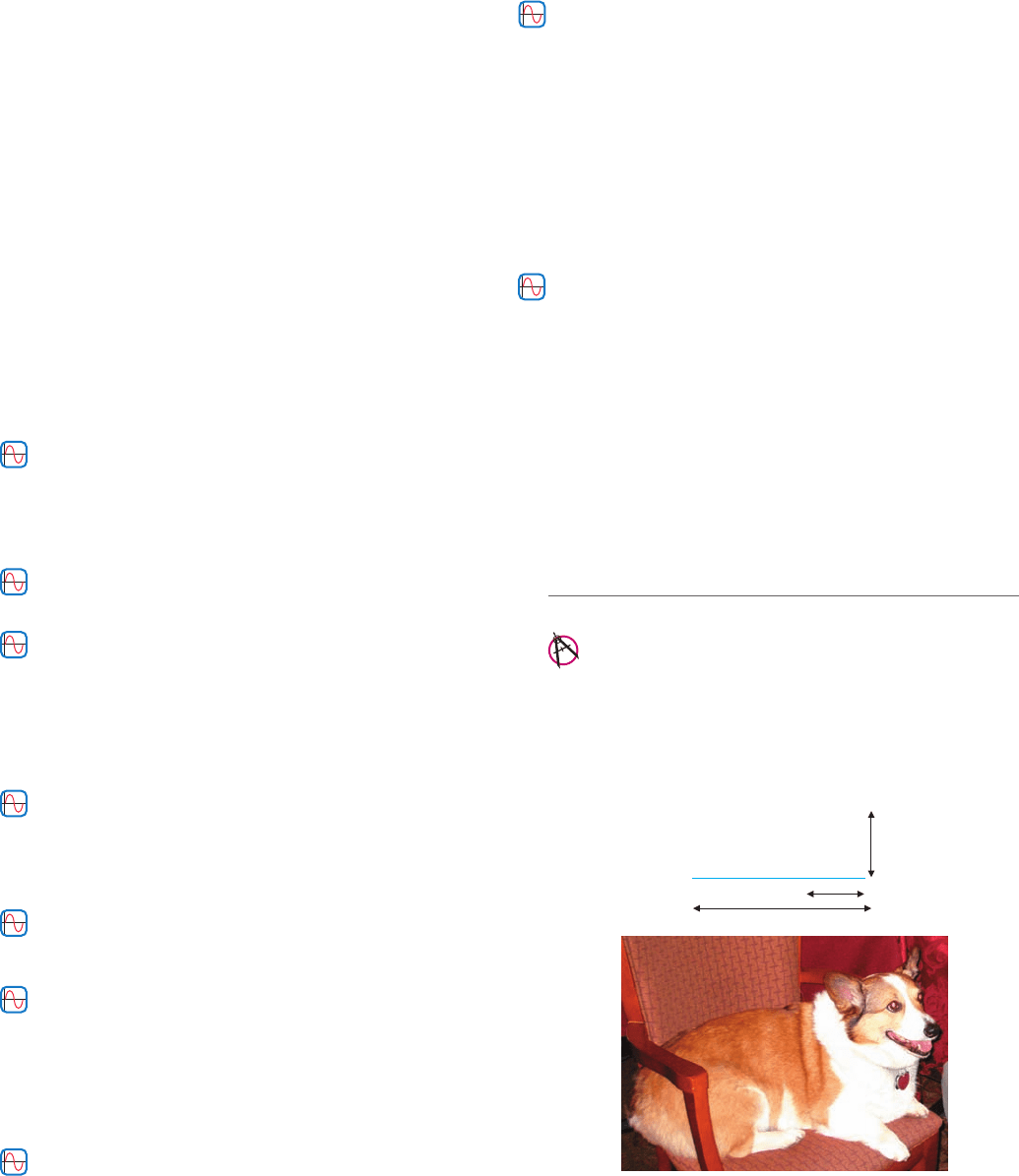
23. Elvis the dog stands on a shoreline while a ball is thrown x = 4
meters into the water and z = 8 meters downshore. If he runs
6.4 m/s and swims 0.9 m/s, find the position y at which he
should enter the water to minimize the time to reach the ball.
Show that you get the same y-value for any z > 1.
y
z
A
C
B
x
24. In the problem of exercise 23, show that for any x the optimal
entry point is at approximately y = 0.144x. (See Tim Pen-
nings’ May 2003 article in The College Mathematics Journal.
His dog Elvis uses entry points very close to the optimal!)
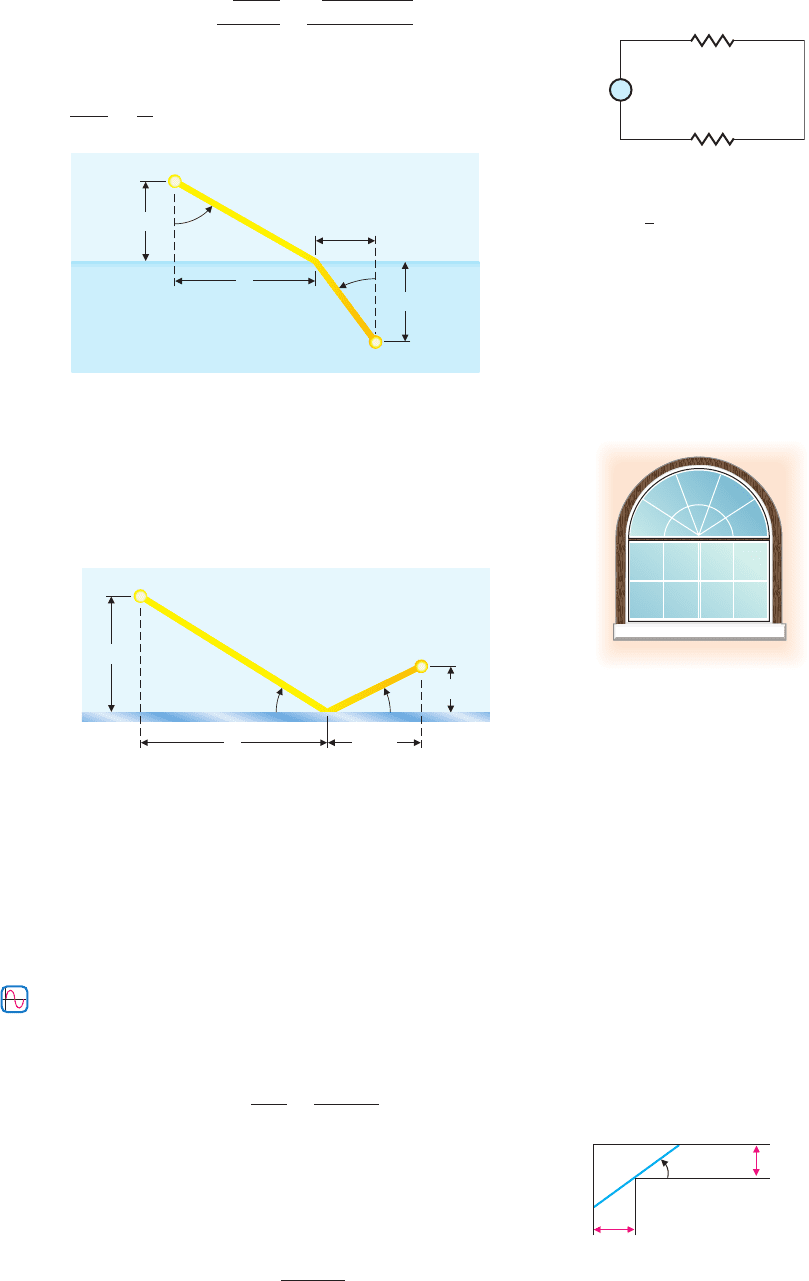
25. Suppose that light travels from point A to point B as shown
in the figure. (Recall that light always follows the path that
minimizes time.) Assume that the velocity of light above the
P1: OSO/OVY P2: OSO/OVY QC: OSO/OVY T1: OSO
MHDQ256-Ch03 MHDQ256-Smith-v1.cls December 10, 2010 20:20
LT (Late Transcendental)
CONFIRMING PAGES
232 CHAPTER 3
..
Applications of Differentiation 3-60
boundarylineisv
1
andthevelocityoflightbelowthe boundary
is v
2
. Show that the total time to get from point A to point B is
T (x) =
√
1 + x
2
v
1
+
1 + (2 − x)
2
v
2
.
Write out the equation T
(x) = 0, replace the square roots us-
ing the sines of the angles in the figure and derive Snell’s Law
sinθ
1
sinθ
2
=
v
1
v
2
.
u
1
u
2
A
x
2 x
B
1
1
Exercise 25
26. Suppose that light reflects off a mirror to get from point A to
point B as indicated in the figure. Assuming a constant veloc-
ity of light, we can minimize time by minimizing the distance
traveled. Find the point on the mirror that minimizes the dis-
tance traveled. Show that the angles in the figure are equal (the
angle of incidence equals the angle of reflection).
A
B
2
1
x
4 x
u
1
u
2
Exercise 26
27. The human cough is intended to increase the flow of air to the
lungs, by dislodging any particles blocking the windpipe and
changing the radius of the pipe. Suppose a windpipe under no
pressure has radius r
0
. The velocity of air through the wind-
pipe at radius r is approximately V (r) = cr
2
(r
0
−r) for some
constant c. Find the radius that maximizes the velocity of air
through the windpipe. Does this mean the windpipe expands
or contracts?
28. To supply blood to all parts of the body, the human artery
system must branch repeatedly. Suppose an artery of radius r
branches off from an artery of radius R (R > r) at an angle θ.
The energy lost due to friction is approximately
E(θ) =
cscθ
r
4
+
1 − cot θ
R
4
.
Find the value of θ that minimizes the energy loss.
29. In an electronic device, individual circuits may serve many
purposes. In some cases, the flow of electricity must be con-
trolled by reducing the power instead of amplifying it. The
power absorbed by the circuit is
p(x) =
V
2
x
(R + x)
2
,
for a voltage V and resistance R. Find the value of x that max-
imizes the power absorbed.
R
V
x
30. In an AC circuit with voltage V (t) = v sin(2πft), a volt-
meter actually shows the average (root-mean-square) voltage
of v/
√
2. If the frequency is f = 60 (Hz) and the meter regis-
ters 115 volts, find the maximum voltage reached.
31. A Norman window has the outline of a semicircle on top of
a rectangle. Suppose there is 8 + π feet of wood trim avail-
able. Discuss why a window designer might want to maximize
the area of the window. Find the dimensions of the rectangle
(and, hence, the semicircle) that will maximize the area of the
window.
32. Suppose a wire 2 ft long is to be cut into two pieces, each of
which will be formed into a square. Find the size of each piece
to maximize the total area of the two squares.
33. An advertisement consists of a rectangular printed region plus
1-in. margins on the sides and 2-in. margins at top and bottom.
If the area of the printed region is to be 92 in.
2
, find the di-
mensions of the printed region and overall advertisement that
minimize the total area.
34. An advertisement consists of a rectangular printed region plus
1-in. margins on the sides and 1.5-in. margins at top and bot-
tom.If the total area of the advertisementis to be 120 in.
2
,what
dimensions should the advertisement be to maximize the area
of the printed region?
35. A hallway of width a = 5 ft meets a hallway of width b = 4ft
at a right angle. (a) Find the length of the longest ladder that
could be carried around the corner. (Hint: Express the length
of the ladder as a function of the angle θ in the figure.)
u
a
b
(b) Show that the maximum ladder length for general a and b
equals (a
2/3
+ b
2/3
)
3/2
. (c) Suppose that a = 5 and the ladder