
Tsoulos George (ред.) MIMO System Technology for Wireless Communications
Подождите немного. Документ загружается.


224 MIMO System Technology for Wireless Communications
density for the mth data stream. We note that with receive antennas and
the Rake receiver there it holds that
(8.10)
where depends on the diversity gain and is around 0 dB in case of
multipath diversity. In contrast to diversity MIMO, depends only on the
number of receive antennas because each transmit antenna applies a different
scrambling code. Without CSI in the transmitter data, rates in different trans-
mit antenna branches are equal, and Equation 8.9 becomes
(8.11)
Equation 8.11 indicates that the base station receiver sees the usage of
information MIMO as an increased number of SISO users. This additional
load can be effectively reduced by applying PIC, which removes part of the
own cell interference in the detection process. Let us denote the PIC efficiency
by G, 0 f G f 1. Then the load of a single user can be written as
Since PIC is not able to remove the intercell interference, the total wideband
power seen by the base station receiver is of the form
(8.12)
and the corresponding cell load is given by
(8.13)
In case of PIC diversity, MIMO operates in a similar manner as in case of
SISO. For a single user load we have
(8.14)
Furthermore, for information MIMO the single user load is given by
M
r
EEM
n
I
Mn r
r
= I /,
I
M
r
I
M
r
M
P
P
n
I
t
nn
I
nn
I
M
E
E
=
+
.
1
MG
P
P
n
nn
nn
E
E
=
+
.()1
1
IIIP IP
NNtotal own other own
= ++= ++() ( )11GGS
MGSM= +
=
¨
().1
1n
N
n
own
MG
P
P
n
D
nn
D
nn
D
E
E
=
+
.()1
1
4190_book.fm Page 224 Tuesday, February 21, 2006 9:14 AM

Multiuser MIMO for UTRA FDD 225
(8.15)
8.4.3 Performance Comparisons
In the following, we show performance results for UTRA FDD uplink and
discuss the connection between the results and the load equations. Simula-
tions use full 3GPP link level modeling with inner and outer loop power
control and realistic channel and interference estimation algorithms. The
radio channel is modeled according to ITU models in Table 8.1. Our system
model follows accurately the present UTRA FDD specifications and simula-
tions are done following strictly the recommendations given in [21].
Let us consider two systems where the number of users is the same and
all users employ the same service. Assume that the number of receive anten-
nas is the same in both systems, but the first system applies the diversity
MIMO while the second one employs SIMO. In both systems, the base station
applies the Rake receiver. Then, according to Equation 8.8, the ratio between
cell loads is given by
(8.16)
where E refers to the received energy per bit in SISO system, and S
1
and S
2
denote intercell interference ratios in systems 1 and 2. Since and
are around 0 dB, we can approximate
(8.17)
Thus, there is no noticeable capacity gain from additional transmit anten-
nas in an isolated cell where S
1
= S
2
= 0. Assume that we know the intercell
to intracell interference ratio S
1
and the original load . Then we can
compute the capacity gain, provided that the ratio S
2
/S
1
can be deduced. We
have
(8.18)
where the latter equality holds because the number of own cell users is the
same in both systems and power control drives SIR (Equation 8.4) to the
same target value. Hence, S
2
/S
1
depends only on the ratio between other
cell interferences that are proportional to the average mobile transmission
MG
P
P
n
I
m
M
nm nm
I
nm nm
I
t
E
E
=
+
.
=
,,
,,
¨
()1
1
1
M
M
IPI
I
sys
sys
//
2
1
1
1
=
+
,,
,
Mr MMr
MM
rtr
tr
EM EM
E
()
///MEM
rMr
r
()
,
1
1
1
1
2
1
+
+
+
,
PI
S
S
I
MM
tr
,
I
1,M
r
M
S
S
M
sys sys
21
1
1
2
1
~
+
+
.
M
sys
1
S
S
2
1
1
2
2
1
2
= =
,
,
,
,
,
I
I
I
I
I
own
own
other
other
other
II
other,1
,
4190_book.fm Page 225 Tuesday, February 21, 2006 9:14 AM

226 MIMO System Technology for Wireless Communications
power. After computing the mean transmit powers in diversity MIMO and
SIMO systems it is found that [23–25]
(8.19)
This equality holds in flat fading. Table 8.2 shows the relative reduction
of the cell load for diversity MIMO when the reference
system applies SIMO. The results show that the gain from diversity MIMO
can be noticeable especially when the initial intercell interference ratio S
1
is
large.
While the gain of diversity MIMO strongly depends on the intercell inter-
ference level, the gain from additional receive antennas is remarkable also in
isolated cells. Applying Equation 8.8, the required energy per data bit and
noise spectral density is approximately inversely proportional to the number
of receive antennas M
r
. Another measure for the cell coverage is the power
per data bit that is required to compensate the path loss and multiuser
interference. Assume that all users apply the same service. Then by Equation
8.4, Equation 8.5, and Equation 8.10 we have in isolated cells
(8.20)
where E is the energy per data bit and noise spectral density for SISO. We
note that although Equation 8.10 is given for MIMO system, it is applicable
also in the case of SIMO. Equation 8.20 shows that required transmit power,
which is directly proportional to the received power, does not depend only
on the number of receive antennas, but it also depends on the number of
users. It is found that the range gain from additional receive antennas
increases with the load while the absolute cell radius is decreasing when the
load is growing.
In the following, we study the system performance also by simulations.
The main simulation parameters and assumptions are shown in Table 8.3.
TABLE 8.2
Gain of Diversity MIMO Relative
to SIMO in Terms of Reduced
Cell Load
MM
MM
= 0.75 M
r
= 2 M
r
= 4
S
1
=0.5, M
t
=2 11.1% 4.8%
S
1
=0.5, M
t
=4 14.3% 6.7%
S
1
=2.0, M
t
=2 22.2% 9.5%
S
1
=2.0, M
t
=4 28.6% 13.3%
SS
21
1
1
1=
>.
MM
MM
M
tr
tr
r
()
,
()MMM
sys sys sys
12 1
/
P
P
E
MN E
N
M
rM
r
r
rx
own
=
IP
IP()
,
1
4190_book.fm Page 226 Tuesday, February 21, 2006 9:14 AM
Multiuser MIMO for UTRA FDD 227
Full 3GPP link level modeling was used with inner and outer loop power
control and realistic channel and interference estimation algorithms. For
more details, see [26].
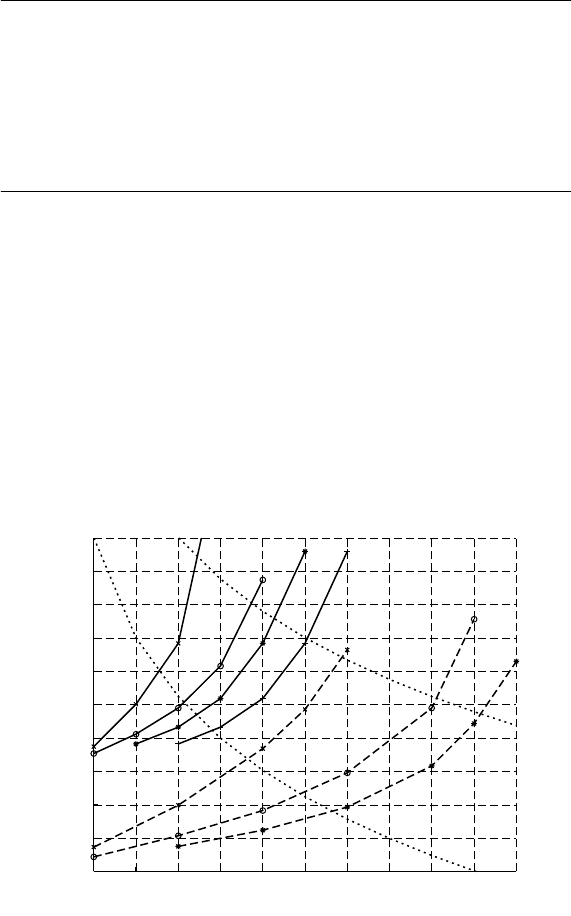
Figure 8.5 depicts the received power per bit and antenna for SIMO in
terms of the number of 0.96 Mbps users assuming isolated cell and Pedes-
trian B channel with 3 km/h mobile speed. The results in Figure 8.5 were
obtained through multiuser simulations, but they are well in line with Equa-
tion 8.20. It is found that the range gain from two additional receive antennas
is of the order of 3 dB in the single user case, but the gain grows rapidly
with additional users. If, however, noise rise is fixed, the range gain from
additional antennas is inversely proportional to M
r
. This is seen by studying
the intersection points between power and noise rise curves.
TABLE 8.3
Simulation Parameters
Carrier frequency 1940 MHz
Chip rate 3.840 Mchips
Sampling rate 1 sample/chip
Power control ON, both inner and outer loops
BLER target (QoS) 10%
Rake finger allocation Known delays
Maximum number of allocated Rake fingers Five per receive antenna
Channel estimation Estimated (DPCCH)
Signal-to-interference estimation Estimated (DPCCH)
FIGURE 8.5
Received power per bit and antenna as a function of 0.96 Mbps users assuming two (solid
curves) and four (dashed curves) receive antennas in Pedestrian B channel with 3 km/h mobile
speed. Receivers are Rake (x), conventional PIC (o), coded turbo PIC with one iteration (*), and
coded turbo PIC with three iterations (+). Dotted curves show the 3 dB and 6 dB noise rise levels.
1 2 3 4 5 6 7 8 9 10 11
−4
−3
−2
−1
0
1
2
3
4
5
6
Number of 0.96 Mb
p
s user
Received power per bit and antenna
(
dB)
4190_book.fm Page 227 Tuesday, February 21, 2006 9:14 AM
228 MIMO System Technology for Wireless Communications
Cell capacity also can be estimated from the results in Figure 8.5. We recall
that the load control of the network drives the noise rise to a predefined
target value that is usually between 3 dB and 6 dB, depending on the network
configuration. Intersection with 6 dB level curve shows that two-antenna
and four-antenna Rake receivers reap around 3.3 Mbps and 6.5 Mbps cell
capacities, respectively. In addition to Rake curves, Figure 8.5 shows perfor-
mance results for conventional PIC and coded turbo PIC. Although the
largest gains are obtained by increasing the number of receive antennas, PIC
provides an efficient way to improve cell coverage and capacity when the
number of receive antennas is fixed. In two-antenna case coded turbo PIC
with three iterations results in cell throughput up to 5.8 Mbps and the range
gain against Rake is around 2.5 dB for 6 dB noise rise. Assuming four receive
antennas and coded PIC with single iteration allows almost 10 Mbps
throughputs for 6 dB noise rise.
We recall from Equation 8.14 and Equation 8.15 that the effect of PIC can
be modeled through the efficiency G. This parameter is not constant but
depends on cell conditions such as the number of users and channel model.
According to simulations the efficiency for uncoded PIC is around 0.4 at
maximum while coded PIC with turbo receiver can provide maximum effi-
ciency of around 0.7.
Figure 8.5 shows the performance for SIMO configuration. However, the
performance for information MIMO can be deduced from the same figure
by setting the data rate to M
t
× 0.96 Mbps and scaling the number of users
accordingly. In the analysis, this equivalence is seen in Equation 8.11. Thus,
there is no throughput gain at the cell level from information MIMO for low
user data rates. Instead, the performance may suffer, because the user’s pilot
power is divided between multiple transmit antennas, which deteriorates
channel estimation in the receiver.
The benefits of information MIMO become visible with high user data
rates. The main reason for the superiority of information MIMO to SIMO
and diversity MIMO is that in information MIMO high data rates can be
obtained without heavy code puncturing because independent data streams
are transmitted from separate antennas. Both SIMO and diversity MIMO
face serious performance degradation when effective code rate increases due
to puncturing. We note that adaptive modulation and coding in uplink is
not supported in UTRA FDD specification, and therefore code puncturing
cannot be avoided when SIMO and diversity MIMO are used on high data
rates.
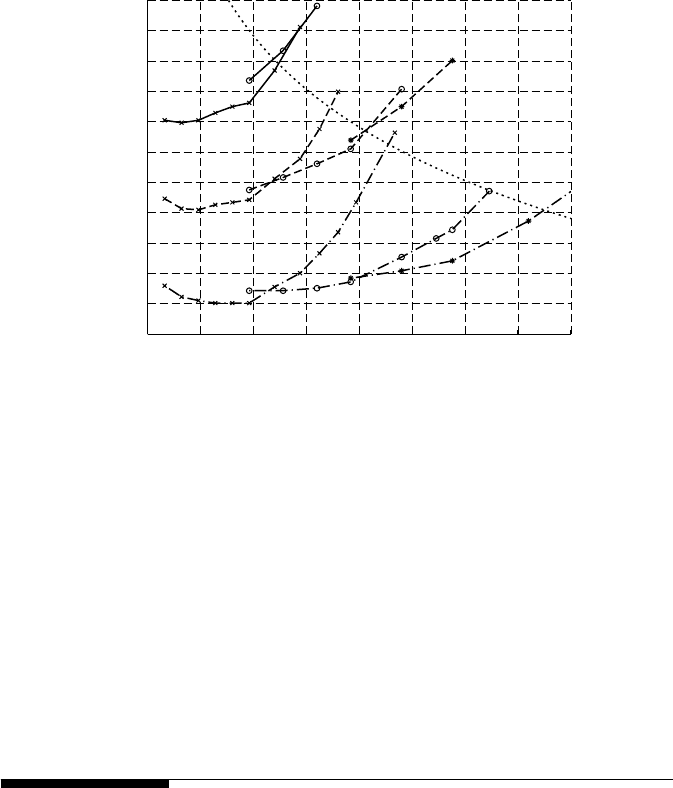
Figure 8.6 shows the received power per bit and antenna in Vehicular A
channel with 30 km/h mobile speed assuming information MIMO and Rake
receiver. Six multicodes of spreading factor 4 were applied for data rates
higher than 2 Mbps. Data rates higher than M
t
× 2 Mbps were generated by
using the code puncturing. It is found that additional transmit antennas
provide a remarkable performance gain when the base station has four or
eight receive antennas. Especially in the case of eight receive antennas, the
gain from the second and the third data stream is large, and data rates up
4190_book.fm Page 228 Tuesday, February 21, 2006 9:14 AM
Multiuser MIMO for UTRA FDD 229
to 7.5 Mbps are obtained with 3 dB noise rise. On the other hand, with two
receive antennas, channel estimation errors slightly degrade the system per-
formance when the second data stream is added. For low data rates, this
phenomenon is also visible when M
r
> 2. Besides the channel estimation
errors, the poor orthogonality properties of different scrambling codes also
have a negative impact to the system performance. Figure 8.6 also shows the
negative effect of code puncturing. Especially in SIMO curves, rapid degra-
dation in performance is clearly noticeable when the data rate exceeds 2 Mbps.
8.5 MIMO in UTRA FDD Downlink
In the previous section, we showed that in UTRA FDD uplink, spectral
efficiency is not the main issue because the uplink is not code limited but
interference limited. However, UTRA FDD downlink is code limited, and
therefore it is necessary to pursue spectrally efficient MIMO transceiver
solutions.
In this section, we first review basic MIMO algorithms whose derivatives
have been presented within 3GPP standardization [10]. Many good research
papers and tutorials on MIMO exist (see, e.g., [27]), and we only recall the
fundamental results in order to illustrate potential benefits of MIMO. Then
we will discuss the 3GPP requirements for MIMO performance [10] and
FIGURE 8.6
Received power per bit and antenna as a function of data rate assuming Rake with two (solid
curves), four (dashed curves), and eight (dashed and dotted curves) receive antennas in Vehic-
ular A channel with 30 km/h mobile speed. Numbers of transmit antennas are one (x), two (o),
and three (*). Dotted curve shows the 3 dB noise rise level.
0 1 2 3 4 5 6 7 8
−7
−6
−5
−4
−3
−2
−1
0
1
2
3
4
Data rate (Mb
p
s)
Received power per bit and antenna
(
dB)
4190_book.fm Page 229 Tuesday, February 21, 2006 9:14 AM

230 MIMO System Technology for Wireless Communications
explain their impact to algorithm design. At the end of the section we present
an alternative scheme that increases cell throughput by utilizing the existing
CSI signaling structure without additional complexity in UE.
8.5.1 Theoretical Background
8.5.1.1 Single-User MIMO
For simplicity, we present the capacity expressions in single path channels
to avoid the notational complexity of capacities in multipath channels.
Capacities in multipath (wideband) channels can be expressed by dividing
the channel into several narrowband channels and integrating over the fre-
quency band to obtain the sum capacity.
Let H be a M
r
× M
t
matrix that consists of normalized complex channel
coefficients h
m,n
. The bound for the information rate of a memoryless diver-
sity MIMO system in additive white Gaussian noise (AWGN) channel is
given by
(8.21)
where W is the average SNR, which is divided by M
t
because the total transmit
power is equally divided between the M
t
transmit antennas. Ergodic capacity
in fading channels is then obtained by averaging the capacity (Equation 8.21)
over all possible channel states.
For the information MIMO the bound for the information rate is of the form
(8.22)
where is an eigenvalue of . We note that Equation 8.21 and Equation
8.22 apply when the transmitter has no CSI and the total transmit power is
fixed. Ergodic capacities in fading channels are obtained from Equation 8.21
and Equation 8.22 by averaging over channel states.
Wireless channels are often slow fading and coding over all channel states
is not possible within the transmission of a data packet. Thus, it is important
to evaluate the performance of suboptimal transceivers that can be imple-
mented in practice. In vertical encoding (also referred to as V-BLAST [1]),
the input data stream is demultiplexed into as many streams as there are
transmit antennas. Each substream undergoes independent encoding, inter-
leaving, and symbol mapping before it is transmitted from its designated
antenna. This simplifies the receiver design, because the substreams can be
decoded independently. However, when the substreams make up a composite
data packet, the capacity is limited by C = , where
C
M
h
t
m
M
n
M
mn
r
t
=+
©
«
ª
ª
¹
»
º
º
==
,
¨¨
log
2
11
2
1
W
bits/s/HHz,
C
M
LMM
l
L
t
lrt
=+
©
«
ª
¹
»
º
=,
=
¨
1
2
1log ; min{ },
W
Q
Q
l
HH
†
M
tM
t
log min( )
21
1+,,
()
MM
4190_book.fm Page 230 Tuesday, February 21, 2006 9:14 AM

Multiuser MIMO for UTRA FDD 231
M
i
refers to the received SINR in independently coded stream i, because the
composite packet is decoded correctly only if the stream with the worst SINR
is decoded correctly.
The performance of V-BLAST can be improved if CQI feedback for each
substream is made available in the transmitter. Then the ergodic open-loop
capacity can be obtained by transmitting independent data streams from
different antennas with equal power but with different rates [28,29] and
using the MMSE receiver and SIC. This is useful, because the complexity of
the MMSE-SIC receiver is smaller than that of maximum-likelihood decod-
ing. The capacity becomes
where the channel matrix H
(i)
is obtained by removing data streams 1, …,
i – 1. Thus, the receiver first demodulates and deinterleaves the substream
from transmit antenna 1, decodes the data, subtracts its contribution from
the received signal, and proceeds to substream 2, etc. The rates that each
substream can support are different, and therefore, these rates must be sig-
naled to the transmitter. In practice, the MMSE-SIC suffers from error prop-
agation, because if one substream is incorrectly decoded, all subsequent
substreams are affected. Therefore, decoding should start from the stream
with the largest received SINR.
Instead of using CQI feedback, the open-loop capacity with MMSE-SIC
receiver can be achieved by coding across transmit antennas referred to as
diagonal encoding or D-BLAST [1]. In diagonal encoding, the composite data
packet undergoes horizontal encoding after which the codewords are split
into blocks. The blocks of any one codeword pass through a stream rotator,
which rotates the blocks in a round-robin fashion so the mapping from the
substreams to the antennas is periodically altered. Thus, each codeword
spans multiple antennas, but the symbols sent simultaneously from different
transmit antennas belong to different codewords and substreams. Demodu-
lation and decoding are similar to those of V-BLAST and MMSE-SIC. With
V-BLAST the decoding is performed for codewords that are transmitted from
one antenna only, but now decoding is performed over a codeword consist-
ing of M
t
blocks, where each block is transmitted from a different antenna.
The capacity of any one substream in D-BLAST is the mean of the capacities
of the blocks transmitted from different antennas,
C
M
M
M
t
i
M
t
i
t
t
=+
©
«
ª
¹
»
º
=+
=
¨
log det
log
†
2
1
2
1
IHH
h
W
W
††
()
†
©
«
ª
ª
ª
¹
»
º
º
º
©
«
ª
ª
ª
ª
¹
»
º
º
º
+
1
IHHh
M
t
ii
t
M
W
(i)
ºº
=
=
¨
i
M
i
t
C
1
4190_book.fm Page 231 Tuesday, February 21, 2006 9:14 AM

232 MIMO System Technology for Wireless Communications
and when there are M
t
such streams in parallel the total channel capacity in
Equation 8.22 follows.
D-BLAST requires a more complicated transceiver algorithm than V-
BLAST because of the diagonal encoding and decoding. It also suffers from
a rate loss, because in the initial phase, transmission from some of the
antennas has to be suspended in order to facilitate the initialization of the
MMSE-SIC receiver. On the other hand, D-BLAST does not use any CSI in
the transmitter, and in theory, system design is simple, because no feedback
channel is required.
The capacity can be further improved if the transmitter knows the eigen-
modes of the channel. This does not increase the degrees of freedom of the
channel, but the power efficiency is improved because the transmitter may
pour power to different eigenmodes instead of allocating power to different
transmit antennas. This is the celebrated waterfilling principle. Moreover,
receiver design is highly simplified, because SIC is not needed. Instead, a
matched filter, matched to the singular vectors of the MIMO channel, is able
to orthogonalize received substreams. When the number of transmit and
receive antennas is equal, the gap between the capacities with and without
CSI shrinks as a function of SNR [30], but when the number of transmit
antennas exceeds the number of receive antennas, the differences may be
large. Unfortunately, waterfilling requires full CSI in the transmitter, which
is not realistic in FDD systems. Therefore, suboptimal solutions, which com-
municate only partial CSI to the transmitter, have been extensively studied.
Antenna selection requires relatively small amount of CSI and different
selection algorithms for MIMO have been developed (see, e.g., [31]). When
the number of available transmit antennas is larger than the number of
substreams to be transmitted, the transmitter may choose a subset of anten-
nas for transmission according to CSI feedback. Thus, the signaling of eigen-
vectors is avoided by using a fixed set of basis vectors, e.g., the transmit
antennas, and CSI feedback consists of the indices of the basis vectors.
Antenna selection improves the quality of the received signal but requires
CSI in the transmitter, although signaling overhead is much less than the
overhead required to signal the singular vectors of MIMO channel. Another
way to improve the robustness of the link is to add spatial redundancy to the
transmitted substreams. Diversity MIMO (Equation 8.21) uses all degrees of
freedom in the MIMO channel for this redundancy. Information MIMO
achieves higher data rates (Equation 8.22) and has no spatial redundancy
between the substreams, but with practical receivers pure information
MIMO approach leads to poor link-level performance at low SNR. This
motivates the search for schemes that achieve a tradeoff between data rate
and diversity [32]. One such 2 × 2 MIMO scheme is presented in [33], which
C
M
C
stream
t
i
M
i
t
=
=
¨
1
1
,
4190_book.fm Page 232 Tuesday, February 21, 2006 9:14 AM
Multiuser MIMO for UTRA FDD 233
transmits two STTD-coded substreams and rotates the other substream to
avoid pathological error events for some combinations of transmitted sym-
bols. In [34] two STTD-coded substreams are transmitted within a 4 × 2 setup,
which is referred to as double STTD within 3GPP standardization [35].
8.5.1.2 Multiuser MIMO
The capacity expressions above assume a point-to-point MIMO link where
the interference consists of AWGN. However, cellular systems supporting
high data rates are subject to non-Gaussian MAI, which should be taken into
account in the design of MIMO transceivers. The downlink channel is a
point-to-multipoint channel, which is referred to as broadcast channel in
information theory. Characteristic of the problem is that the transmitter is
able to coordinate its transmissions to different users, but receivers are not
able to cooperate. Moreover, transmit power resources are shared among the
users.
The capacity region for MIMO broadcast channels has been studied in
[36,37,38], and it has been shown that the sum-rate capacity is achieved by
dirty-paper coding (DPC) [39]. DPC allows the base station to efficiently
transmit data to multiple users simultaneously and avoid the impact of MAI
by jointly encoding the transmitted signals. This is possible when the base
station knows the MIMO channels of the users so that it is able to control
the multiuser interference caused by the simultaneous transmissions. Even
though the DPC achievable region is the largest known achievable region
for the multiple-antenna broadcast channel, it is difficult to implement in
practical systems. Different techniques have been investigated to achieve the
gains promised by DPC [40,41], but these techniques are still in the develop-
ment stage. Another nonlinear technique is to use decision feedback equal-
ization in the transmitter, i.e., Tomlinson-Harashima precoding for MIMO
channels [42].
Instead of non-linear precoding, multiuser beamforming (MUB) tech-
niques can serve multiple users simultaneously with reduced complexity.
With multiuser beamforming, each user stream is coded independently and
multiplied by a beamforming weight vector for transmission through mul-
tiple antennas. In block diagonalization [43], the multiuser MIMO channel
is effectively converted into multiple point-to-point MIMO channels.
Allowing the scheduler to select the served user among a pool of users
brings another dimension to the problem. When the number of users is large,
the base station can schedule its transmission to those users with good
channel conditions to achieve higher date rates. This form of selection diver-
sity is referred to as multiuser diversity, and it can be exploited to increase
the system throughput in delay tolerant data applications [44,45]. The authors
of [46] indirectly show that the combination of beamforming and multiuser
diversity asymptotically achieves the optimal sum-rate of DPC when the
number of users is large. However, finding the optimal beamforming weight
4190_book.fm Page 233 Tuesday, February 21, 2006 9:14 AM