
Velten K. Mathematical Modeling and Simulation: Introduction for Scientists and Engineers
Подождите немного. Документ загружается.


2.6 Design of Experiments 105
of these locations. But then, the location itself may affect the hardness reading.
Referring to the metal test coupon ‘‘A’’ in Figure 2.15, for example, the hardness
measurements using tips 2 and 3 may be somewhat influenced by the fact that their
measurement positions are more close to the ends of the metal coupon compared
to the measurement positions of tips 1 and 4.
If the hardness measurement really depends on the number of measurements
that have been previously performed on the same metal test coupon, or if the
measurement depends on the measurement location on the metal test coupon, a
designsuchastheoneshowninFigure2.15–whereoneofthetipsisusedmore
than once in one particular position of the measurement order (such as tip 4) – is
obviously an unsuitable design. Based on such a design, differences between the
hardness readings produced by the tips may be observed which are caused by
the particular position of the measurement order where the tips are used (rather
than by the tips itself). Obviously, a better experimental design should randomly
distribute the factor levels on each of the metal test coupons in a way such that any
factor level appears only once in one particular position on the metal test coupons.
A design of this kind is known as a Latin square design.
In R, a Latin square design for the above example can be computed using the
following code (see
LSD.r in the book software):
1: library(agricolae)
2: levels=c("Tip 1", "Tip 2", "Tip 3", "Tip 4")
3: out=design.lsd(levels,number=1)
5: print(out)
(2.80)
This code may yield the following result (may: see the discussion of code (2.6.1)
in Section 2.6.1):
plots row col levels plots row col levels
1 111Tip1 9 931Tip4
2 212Tip2 10 1032Tip1
3 313Tip3 11 1133Tip2
4 414Tip4 12 1234Tip3
5 521Tip3 13 1341Tip2
6 622Tip4 14 1442Tip3
7 723Tip1 15 1543Tip4
8 824Tip2 16 1644Tip1
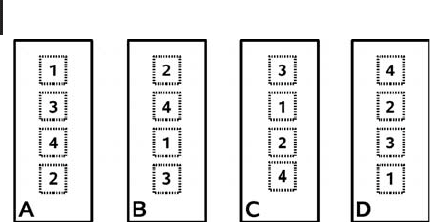
Figure 2.16 visualizes this result similar to Figure 2.15 above. As can be seen,
every tip occurs only once in each single row and column of this experimental
design as required.
The design discussed so far can be generalized in various ways. While the Latin
square can be used to treat situations with two sources of extraneous variability
(in the above example, the metal test coupon and the position of a tip in the test
sequence), the Graeco–Latin square design can treat a similar situation with three
106 2 Phenomenological Models
Fig. 2.16 Latin square design computed using design.lsd
in R (hardness testing example): metal test coupons A–D,
and numbers indicating the randomly chosen sequences of
the tips 1–4.
sources of variability. In R’s agricolae package, Graeco–Latin square designs
can be used based on the
design.graeco command in a similar way as the
corresponding commands that were discussed above. In some cases, a RCBD may
be too demanding in terms of time and resources, that is, we may be unable to
test every factor level in each block of the design. Then, a randomized balanced
incomplete block design can be used, which can be obtained using the
design.bib
function of R’s agricolae package.
2.6.4
Factorial Designs
All experimental designs considered so far involved one factor only. If an experiment
involves two factors or more, factorial designs or response surface designs are applied
[73]. Factorial designs are preferentially used in situations where each factor is
varied on two levels only, a lower level which is typically designated as ‘‘−’’,
and an upper level designated as ‘‘+’’. Designs of this type are called two-level
factorial designs. Response surface methods, on the other hand, focus on situations
where the factors are varied on more than two levels. They provide procedures
that can be used to decide about an optimal choice of the factor levels, based
on an approximation of the response of the system (y) depending on the factors
(x
1
, x
2
, ...) e.g. using polynomials. We will confine ourselves here to the basics of
factorial designs (see [72, 73] for more on response surface methods).
A factorial design involving n ∈ N factors on m ∈ N levels is usually denoted as a
‘‘m
n
design’’. Hybrid factorial designs such as a 2 × 3
2
design are also used, which
involves one factor that is varied on two levels and two factors that are varied on three
levels in this case. As was already mentioned, the most frequently used factorial de-
signs are 2
n
designs, that is, designs involving n factors that are varied on two levels.
As a simple example, consider a chemical reactor which is used to produce some
product, and which is affected by two factors: the amount of a catalyst that is used
and the temperature. Let us denote the catalyst with A and the temperature with B,
and let us assume that an experiment is performed where both factors are varied
at a low and a high level, respectively, which we denote as ‘‘−’’ and ‘‘+’’. Table 2.2

2.6 Design of Experiments 107
Table 2.2
Example of a 2
2
factorial design.
No. A B Yield
1 −− 50
2 +− 54
3 −+ 64
4 ++ 90
shows a possible result of such an experiment (the yield of the product is given
in appropriate units which we do not need to discuss here). In the terminology
introduced above, this is a 2
2
design as it involves two factors being varied on two
levels. Experimental designs that involve all possible combinations of the factor
levels, such as the design in Table 2.2, are also called full factorial designs.
Full factorial designs such as the design in Table 2.2 can be generated very easily
using R’s
expand.grid command as follows:
1: levels=c("-", "”)+
2: expand.grid(A=levels,B=levels)
(2.81)
which yields the design that was used in Table 2.2:
AB AB
1-- 3-+
2+- 4++
For the same reasons that were explained in Section 2.6.2 above, the exper-
imenter may decide to use a randomized block design in a factorial experiment.
In R,suchadesigncanberealizede.g.usingthe
design.ab command of R’s
agricolae package. The package contains an example experiment that involves
the ‘‘perricholi’’, ‘‘canchan’’, and ‘‘tomasa’’ potato varieties which are cultivated
using three nitrogen levels. A full factorial 3
2
design involving five replications of
each experiment is used, and the replications are organized in randomized blocks.
To compute such a design, the following code can be used in R (see
FacBlock.r
in the book software):
1: library(agricolae)
2: variety=c("perricholi", "canchan", "tomasa")
3: nitrogen=c(40,80,120)
4: out=design.ab(variety, nitrogen, 5, number=1)
5: print(out)
(2.82)
This code works very similar to the codes discussed in the previous section. Since
we use a 3
2
design here which involves five replications, you can easily anticipate

108 2 Phenomenological Models
that this code will result in a total of 3
2
· 5 = 45 experimental runs. The first part of
theoutputlookslikethis:
plots block variety nitrogen plots block variety nitrogen
1 1 1 tomasa 80 10 10 2 canchan 80
2 2 1 perricholi 120 11 11 2 canchan 40
3 3 1 canchan 120 12 12 2 perricholi 120
4 4 1 perricholi 80 13 13 2 tomasa 80
5 5 1 canchan 80 14 14 2 perricholi 40
6 6 1 perricholi 40 15 15 2 canchan 120
7 7 1 tomasa 40 16 16 2 perricholi 80
8 8 1 canchan 40 17 17 2 tomasa 40
9 9 1 tomasa 120 18 18 2 tomasa 120 ...
As can be seen, the code produces a complete 3
2
design involving all possible
combinations of the potato varieties and nitrogen levels (randomly ordered) in each
of the blocks.
Of course, time and resources restrictions may prevent us from performing full
factorial experiments involving 45 different experimental runs, and similar to the
‘‘randomized balanced incomplete block design’’ discussed in Section 2.6.3 above,
the experimenter will be interested in clever ways to reduce the overall number
of experimental runs in a way that does not affect the significance of his results.
Factorial designs that do not consider all possible combinations of the factor levels
are called fractional factorial designs. Simple fractional factorial designs are usually
denoted as ‘‘m
n−k
designs’’, where m (the number of factor levels) and n (the
number of factors) have the same meaning as before, and k expresses the fact
that the total number of experimental runs has been reduced by a factor of 1/2
k
.
Example: While a full factorial 2
5
design would require 2
5
= 32 runs, a fractional
2
5−2
design needs only 2
3
= 8 runs. To generate such fractional factorial designs,
one can use R’s
ffDesMatrix command (a part of the BHH2 contributed package).
See [72, 73] for more theoretical background on factorial and fractional factorial
designs.
2.6.5
Optimal Sample Size
An important issue in experimental design is the proper selection of sample size,
that is, of the number of repetitions of a particular experiment that are necessary to
achieve the desired results. This is very well supported by a number of R functions
such as
power.t.test, power.anova.test, power.prop.test,etc.,whichare
apartof R’s standard distribution. We will confine ourselves here to a simple
example that demonstrates the way in which these functions can be used. Suppose
the yield of crop variety A is suspected to be higher than the yield of crop variety
B, and suppose you want to show this using a one-sided t test with α = 0.1and

2.7 Other Phenomenological Modeling Approaches 109
β = 0.9 (see Section 2.1.3 for details on the testing procedure). Then, the following
R command can be used to compute an optimal sample size:
power.t.test(sig.level=0.1,power=0.9,delta=2,sd=1
,alternative="one.sided")
This yields an optimal sample size of n ≈ 3.9inR, which means that n = 4
replications should be used for each of the crop varieties. The
delta argument is
the ‘‘true difference in means’’, that is, μ
1
− μ
2
(see Section 2.1.3). Of course, you do
not know this true difference in means a priori in a practical situation, so it should
be set to a difference that you want to be detected by the experiment. For example,
a difference in the yields of the varieties A and B may be practically important only
if it is larger than 2 kg m
−2
, so in this situation you would set delta=2 as above.
Of course, it is more difficult to get a significant test result if
delta is small, which
is reflected by the fact that n increases as
delta decreases (for example, n = 14 if
delta=1 is used in the above command). Hence delta should be chosen as large
as possible such that it still satisfies the above requirement. The
sd argument of
power.t.test is the standard deviation of the random variables that generate the
data, which is assumed to be constant here across the crop varieties. Again, this is
not known a priori, and in a practical situation you would set
sd according to the
experience made in similar prior experiments (if available), or you would have to
guess an appropriate order of magnitude based on your knowledge of the system
and the measurement procedure.
2.7
Other Phenomenological Modeling Approaches
You should note that there is a great number of phenomenological modeling ap-
proaches beyond the ones introduced above. Only a few of these topics can be briefly
addressed in the following sections: soft computing approaches in Section 2.7.1,
discrete event simulation in Section 2.7.2, and signal processing in Section 2.7.3.
2.7.1
Soft Computing
Soft computing is used as a label for relatively new computational techniques such
as artificialneuralnetworks(ANNs), fuzzy logic, evolutionary algorithms,butalsofor
recent developments in fields such as rough sets and probabilistic networks [74, 75]. As
it is explained in [75], a common feature of these techniques is that, unlike conven-
tional algorithms, they are tolerant of imprecision, uncertainty, and partial truth.
Artificial neural networks have already been introduced in Section 2.5. The
above discussion was restricted to neural networks used as a tool for nonlinear
regression. As mentioned there, there is a great number of applications in various

110 2 Phenomenological Models
other fields such as time series prediction, classification and pattern recognition,
or data processing. An important feature of neural networks is their ability to
‘‘learn’’ from data. We have seen in Section 2.5 that a neural network is able to
‘‘learn’’ the nonlinear shape of a function from a dataset, that is, there is no need
to specify this nonlinear shape as a mathematical function as it is required in the
classical nonlinear regression approach. This kind of adaptivity, that is, the ability
of a model to adapt to a changing problem environment, is a characteristic feature
of soft computing approaches in general [75].
As explained above, artificial neural networks were originally inspired by an
analogy with biological neural networks (Note 2.5.2). In a similar way, evolutionary
algorithms encompass a class of stochastic optimization algorithms that were
originally inspired by an analogy with the biological ideas of genetic inheritance
and the Darwinian law of the ‘‘survival of the fittest’’. In genetic algorithms –the
most widely used type of evolutionary algorithms – individuals are represented
as arrays of binary digits that can take on the values 0 or 1. Basically, these
arrays can be thought of as representing the genes of the individuals. After a
random initial population has been generated, an iterative process starts where
new generations of the population are generated from the previous population
by applying a certain number of stochastic operators to the previous population,
which basically can be thought of as reflecting the Darwinian law of the ‘‘survival
of the fittest’’. Similar to neural networks, this bio-inspired approach turned
out to be extremely fruitful in the applications. Evolutionary algorithms have
been applied in bio–informatics, phylogenetics, computer science, engineering,
economics, chemistry, manufacturing, mathematics, physics, and other fields. See
the examples in [76–78], and [75] for a detailed case study involving a financial
application (portfolio optimization). Note that evolutionary algorithms are a part
of the larger field of evolutionary computation which includes other techniques
such as swarm intelligence, which describe the collective behavior of decentralized,
self-organized systems [79]. Evolutionary computation itself is usually classified as
asubfieldof artifical intelligence, a discipline of computer science.
As regards software for soft computing applications, we have already used
R’s
nnet package in Section 2.5 above to do neural network-based nonlinear
regression. The same package can also be used to solve classification problems,
see [45]. R’s contributed package
genalg (R Based Genetic Algorithm) can be used
to implement genetic algorithms. While
nnet comesasastandardpartoftheR
distribution,
genalg can be obtained from R’s internet site (www.r-project.org). R
may also serve as a platform for the implementation of fuzzy models (there are a
number of fuzzy-based contributed packages, see the list on www.r-project.org).
2.7.1.1 Fuzzy Model of a Washing Machine
We end this section on soft computing with an example of a fuzzy model. Based
on the ideas developed in [80], fuzzy models use logical variables that can take on
any value between 0 and 1. In this sense, these models allow for ‘‘uncertainty’’,
as opposed to the usual concept where logical variables can take on the values 0
and 1 only. This is of interest in many technological applications where a system

2.7 Other Phenomenological Modeling Approaches 111
needs to be controlled in a smooth way, that is, not based on conventional ‘‘on/off’’
switches, but rather based on a kind of control that allows a smooth transition
between the various states of a system.
An example of a washing machine controlled by a fuzzy model is discussed in
[81]. In that example, the amount of detergent that is used by the machine must
be determined based on the dirtiness of the load (as measured by the opacity of
the washing water using an optical sensor system), and based on the weight of the
laundry (as measured by a pressure sensor system). Using practical experiences, a
set of control rules can be established which determines the amount of detergent
that should be used as the dirtiness varies between the classes of a so-called fuzzy
subset:
Almost_Clean, Dirty, Soiled, Filthy
and as the weight of the laundry varies between the classes of another fuzzy subset:
Very_Light, Light, Heavy, Very_Heavy
Now practical experience may tell us that the amount of detergent should be
increased by a certain amount in a situation where the weight of the laundry is
in the class
Light while the dirtiness increases from Soiled to Filthy. Then, a
fuzzy model will define a smooth transition of the amount of detergent that is used
as the dirtiness changes its class from
Soiled to Filthy. Basically, it will allow a
classification of dirtiness partially between the classes
Soiled and Filthy,thatis,
it will allow for uncertainty as explained above, and the amount of detergent that
is used will reflect this uncertainty in the sense that it will be an average amount
between the amounts that are defined in the rules for the classes
Soiled and
Filthy. Control strategies of this kind often produce better results compared to
classical ‘‘on/off’’ strategies. See [75, 81] for a number of other examples such as
vacuum cleaners, antilock brakes, and so on.
Fuzzy models can be described as an approach that leaves the realms of
conventional mathematics to some extent. Beyond fuzzy models, there is a great
variety of other modeling approaches that are located somewhere in a transition
zone between quantitative (i.e. mathematical model based) and qualitative modeling
approaches. See [82] for examples of qualitative approaches used in the social
sciences (such as narrative analysis, action research, critical ethnography, etc.),
and [83, 84] for a case study approach that uses both quantitative and qualitative
methods.
2.7.2
Discrete Event Simulation
In this book, you have already seen (and will continue to see) that there is a great
number of different approaches in mathematical modeling and simulation. With
this in mind, you may be surprised to know that books such as the ‘‘Handbook

112 2 Phenomenological Models
of Simulation’’ by J. Banks (ed.) [6] or ‘‘Modern Simulation and Modeling’’ by
Rubinstein and Melamed [85] both are devoted to one of these approaches only:
discrete event simulation. Two things can be derived from this: (i) These discrete
event simulation people have a very substantial self-esteem and self-confidence,
and they know that what they do is an important part of the overall effort in
modeling and simulation. (ii) You should know what they are doing!
Discrete event simulation can be defined as follows [10]:
Definition 2.7.1 (Discrete event simulation) Discrete event simulation con-
cerns the modeling of a system as it evolves over time by a representation in
which the state variables changes instantaneously at a (countable number of)
separate points in time. These points in time are the ones at which an event
occurs, where event is defined as an instantaneous occurrence that may change
the state of a system.
To understand the way in which discrete event simulation is used in practice,
consider the following example which we cite here (almost unchanged) from [86]:
Suppose that a single server (such as a clerk, a machine, or a computer) services
randomly arriving customers (people, parts, or jobs). The order of service is first
in, first out. The time between successive arrivals has the stationary distribution F,
and the service time distribution is G.Attime0,thesystemisempty.
We may simulate this system as follows. First, generate a random number A
1
using the distribution F,andthenarandomnumberB
1
using G. See Section 2.1.2.3
for details on distributions, the discussion of
RNumbers.r in Sections 2.1.2.3 and
2.1.2.5 for an example of random number generation using R, and [86] for the
theoretical background of random number generation. Customer 1 enters the
system at time A
1
(which is an event in the sense of the definition above) and leaves
at time A
1
+ B
1
(another event). Next, generate two more random numbers A
2
and
B
2
. Customer 2 arrives at A
1
+ A
2
.IfA
1
+ A
2
≥ A
1
+ B
1
, he starts service right
away and finishes at A
1
+ B
1
+ B
2
. And so on. A simulation of this kind can be
used to estimate the number of customers that are served up to a given time, their
average waiting time, and so on.
In a similar way, discrete event simulations can be used to simulate a great
number of systems in various fields. They are used for example, to optimize
and increase the efficiency of systems in manufacturing and material handling,
logistics and transportation, and healthcare, see [6, 10]. Discrete event simulations
are supported on a number of commercial and open source software platforms
such as:
•
simcol, open source, contributed package of R,see
www.r-project.org and [87]
•
OpenModelica,opensource,see
www.ida.liu.se/labs/pelab/modelica/OpenModelica.html and [7]
•
jemula, open source, see jemula.origo.ethz.ch/
•
eM-Plant, commercial, see www.ugsplm.com

2.7 Other Phenomenological Modeling Approaches 113
•
SIMPROCESS, commercial, see www.caci.com
•
simul8, commercial, see www.simul8.com/
See Section 4.11.2 for an application of R’s
simcol package.
2.7.3
Signal Processing
As it will become clear in the following chapters on differential equations, many
mathematical models involve rates of changes of quantities of interest (see Note
3.1.1). Hence, it is a natural task to compute rates of changes from experimental
data. As an example, let us reconsider the dataset
spring.csv that was already
analyzed in Section 1.5.6 above. Table 2.3 shows the x and y data of this dataset,
and let us assume that we are interested in the rate of change of y with respect to
x, that is, in the derivative y
(x). Now the question is how y
(x) can be derived from
discrete data of the general form (x
1
, y
1
), (x
2
, y
2
), ...,(x
n
, y
n
). In a naive approach,
we could use the approximation
y
(x
i
) ≈
y
i
x
i
=
y
i
− y
i−1
x
i
− x
i−1
(2.83)
for i = 2, ..., n, which is based on the definition of the derivative as
y
(x) = lim
h→0
y(x + h) − y(x )
h
(2.84)
Using this approximation in spring.csv yields the values labeled as ‘‘y/x’’
in Table 2.3. As can be seen, these values scatter substantially in an interval
between 0.1 and 0.6, that is, it seems that there are substantial changes of y
(x)asx
is increased. Looking at the plot of the data in Figure 1.9 (Section 1.5.6), however,
it seems more likely here that the scattering of the y/x-data computed from the
naive approach is caused by measurement errors only, which make the data swing
a little bit around the regression line in Figure 1.9b that represents the ‘‘true’’
relation between x and y. Thus, we see that the naive approach is very sensitive
to measurement errors, which makes this approach unusable for what is called
the numerical differentiation of data, that is, for the determination of approximate
derivatives from discrete datasets.
A better approach is already suggested by our analysis of
spring.csv in Section
1.5.6 above, where we used the regression line in Figure 1.9b as a mathematical
Table 2.3 Naively computed rates of change in the dataset spring.csv.
x 10 20 30 40 50
y 3 5 11 12 16
y/x 0.2 0.6 0.1 0.4

114 2 Phenomenological Models
model of the data, which was expressed as
˜
y(x) = 0.33x − 0.5 (2.85)
As explained there, this equation expresses the general (linear) tendency of
the data, but it ‘‘damps out’’ the oscillations in the data that are e.g. induced by
measurement errors. Equation 2.85 tells us that the rate of change of y with respect
to x is constant:
˜
y
(x) = 0.33 (2.86)
This contradicts the conclusion that was drawn above from the naive approach,
but a constant rate of change of y with respect to x obviously is in much better
coincidence with the data that we see in Figure 1.9. The idea of differentiating
regression functions is used quite generally as one of the standard procedures for
the numerical differentiation of data. In the general case, the data may of course
be nonlinear, which means that one will have to use, for example, polynomials as
regression functions instead of the regression line that was used above. To obtain
an approximation of y(x
i
), one will typically fit a polynomial to a few datapoints
around x
i
only. This procedure can be viewed as an implementation of certain low
pass filters, termed variously as Savitzky–Golay smoothing filters, least squares filters,
or DISPO (digital smoothing polynomial) filters [88–90]. See [91] for an example
application of this method to an analysis of the resin transfer molding (RTM)
process, a process that is used in the manufacturing of fiber-reinforced composite
materials.
There are many other approaches that can be used to ‘‘damp out’’ measurement
error-induced oscillations of data, such as the moving average approach where a
particular measurement value y
i
basically is replaced by the average of a certain
number of neighboring measurement values, see [92]. These methods are a
part of the large field of signal processing, which is concerned with the analysis,
interpretation, and manipulation of signals, preferentially signals in the form of
sounds, images, biological signals such as the electrocardiogram (ECG), radar
signals, and so on, but its methods are also used for the analysis of general
experimental datasets [93]. Anyone who has used a MP3 player knows about the
power of modern signal processing methods. Signal processing covers approaches
such as the famous Fourier analysis, which allows a decomposition of a function
in terms of sinusoidal functions, and which is used e.g. to remove unwanted
frequencies or artifacts from audio or video recordings, or the recently developed
wavelet transforms, which can be roughly described as a further development of
the general idea of the Fourier transform and which have a similarly broad range
of application (they are particularly well known for their use in data compression
applications).
The open source software R provides a number of signal processing–related
packages. Examples are the
decompose package that can be used for the decompo-
sition of a time series dataset into seasonal, trend, and irregular components using