
Baker K.R. Optimization Modeling with Spreadsheets
Подождите немного. Документ загружается.

limits on particulate emissions. For each product, Lovejoy’s sales potentials (demand
levels that Lovejoy can capture) are expected to remain relatively flat for at least the
next five years. Relevant data for each product are as follows. (Note: T denotes tons.)
Sales
potential Variable costs Revenues
Particulate
emissions
Product (T/ year) ($/T) ($/T) (T/T produced)
A 2000 700 1000 0.0010
B 1600 600 800 0.0025
C 1000 1000 1500 0.0300
D 1000 1600 2000 0.0400
E 600 1300 1700 0.0250
Your production facility rotates through the product line, because it is capable of produ-
cing only one product at a time. The production rates differ for the various products due to
processing needs. It takes 0.3 hours to make one ton of A, 0.5 hours for B, and one hour
each to make a ton of C, D, or E. The facility can be operated up to 4000 hours each year.
The EPA has proposed a “bubble policy” for your industry. In this form of regu-
lation, an imaginary bubble encloses the manufacturing facility and only total particulates
that escape the bubble are regulated. This sort of policy replaces historical attempts by the
EPA to micromanage emissions within a firm, and it allows Lovejoy to make any changes
it wishes, provided the total particulate emissions from its facility are kept below certain
limits. The current proposal is to phase-in strict particulate emissions limits over the next
five years. These limits on total particulate emissions are shown in the table below.
Year 1 2 3 4 5
Allowable emissions
(T/year)
Unlimited 80 60 40 20
One strategy for satisfying these regulations is to adjust the product mix, cutting back
on production of some products if necessary. Lovejoy wishes to explore this strategy
before contemplating the addition of new equipment.
(a) Determine the maximum profit Lovejoy can achieve from its product line in the
coming year (Year 1). For each future year (Years 2–5), as emissions limits are
imposed and tightened, what will Lovejoy’s profits be?
(b) Describe the qualitative pattern in the solution.
(c) Suppose the EPA were to issue transferable emissions rights to firms in the industry.
Use the pattern in (b) to determine how much Lovejoy would be willing to pay in
Year 4 to be allowed to emit one extra ton of particulates above the proposed limit.
4.11. Oil Distribution Texxon Oil Distributors, Inc., has three active oil wells in a west Texas
oil field. Well 1 has a capacity of 93 thousand barrels per day (TBD), Well 2 can produce
88 TBD and Well 3 can produce 95 TBD. The company has five refineries along the Gulf
Coast, all of which have been operating at stable demand levels. In addition, three pump
stations have been built to move the oil along the pipelines from the wells to the refineries.
Oil can flow from any one of the wells to any of the pump stations, and from any one of
166 Chapter 4 Sensitivity Analysis in Linear Programs
the pump stations to any of the refineries, and Texxon is looking for a minimum-cost
schedule. The refineries’ requirements are as follows.
Refinery R1 R2 R3 R4 R5
Requirement
(TBD)
30 57 48 91 48
The company’s cost accounting system recognizes charges by the segment of pipeline that
is used. These daily costs are given in the tables below, in dollars per thousand barrels.
To Pump A Pump B Pump C
Well 1 1.52 1.60 1.40
From Well 2 1.70 1.63 1.55
Well 3 1.45 1.57 1.30
To R1 R2 R3 R4 R5
Pump A 5.15 5.69 6.13 5.63 5.80
From Pump B 5.12 5.47 6.05 6.12 5.71
Pump C 5.32 6.16 6.25 6.17 5.87
(a) Determine the least costly way of supplying oil from the wells to the refineries.
(b) Describe the qualitative pattern in the solution.
(c) Use the pattern in (b) to trace the effects of increasing the demands at R1 and R2 by
the same quantity simultaneously. How will the shipping schedule change? How will
the total cost change?
(d) For how much of a change in demand will the pattern in (b) persist?
4.12. Selecting a Portfolio A portfolio manager has developed a list of six investment
alternatives for a multiyear horizon. These are: Treasury bills, Common stock,
Corporate bonds, Real estate, Growth funds, and Savings & Loans. These investments
and their various financial factors are described below. In the table, the length represents
the estimated number of years required for the annual rate of return to be realized. The
annual rate of return is the expected rate over the multiyear horizon. The risk coefficient
is a subjective estimate representing the manager’s appraisal of the relative safety of each
alternative, on a scale of 10. The growth potential is also a subjective estimate of the
potential increase in value over the horizon.
Portfolio data
Alternative TB CS CB RE GF SL
Length 4 7 8 6 10 5
Annual return (%) 6 15 12 24 18 9
Risk coefficient 1 5 4 8 6 3
Growth potential (%) 0 18 10 32 20 7
Exercises
167
The manager wishes to maximize the annual rate of return on a $3 million portfolio,
subject to the following restrictions.
The weighted average length should not exceed 7 years.
The weighted average risk coefficient should not exceed 5.
The weighted average growth potential should be at least 10 percent.
The investment in real estate should be no more than twice the investment in stocks
and bonds (i.e., in CS, CB, and GF) combined.
(a) What is the optimal return (as a percentage) and the optimal allocation of investment
funds?
(b) What is the marginal rate of return, as indicated by the shadow price information in
the Sensitivity Report? Confirm this marginal rate by raising the investment amount
slightly and re-solving the linear program.
4.13. Coffee Blending and Sales Hill-O-Beans Coffee Company blends four component
beans into three final blends of coffee: One is sold to luxury hotels, another to restaurants,
and the third to supermarkets for store-label brands. The company has four reliable bean
supplies: Argentine Abundo, Peruvian Colmado, Brazilian Maximo, and Chilean Saboro.
The table below summarizes the very precise recipes for the final coffee blends, the cost
and availability information for the four components, and the wholesale price per pound
of the final blends. The percentages indicate the fraction of each component to be used in
each blend.
Cost per Max weekly
Component (lb) Hotel Rest Market pound availability
Abundo 20% 35% 10% $0.60 40,000
Colmado 40% 15% 35% $0.80 25,000
Maximo 15% 20% 40% $0.55 20,000
Saboro 25% 30% 15% $0.70 45,000
Wholesale price
Per pound $1.25 $1.50 $1.40
The processor’s plant can handle no more than 100,000 pounds per week, and Hill-
O-Beans would like to operate at capacity. There is no problem in selling the final blends,
although the Marketing Department requires minimum production levels of 10,000,
25,000, and 30,000 pounds, respectively, for the hotel, restaurant, and market blends.
(a) In order to maximize weekly profit, how many pounds of each component should be
purchased?
(b) What is the shadow price (from the Sensitivity Report) on the availability of Maximo
beans?
(c) How much (per pound) should Hill-O-Beans be willing to pay for additional pounds
of Maximo beans in order to raise total profit?
4.14. Production Planning for Components Rummel Electronics produces two PC cards,
a modem and a network adapter. Demand for these two products exceeds the amount
that the firm can make, but there are no plans to increase production capacity in the
short run. Instead, the firm plans to use subcontracting.
168 Chapter 4 Sensitivity Analysis in Linear Programs
The two main stages of production are fabrication and assembly, and either step can
be subcontracted for either type of card. However, the company policy is not to subcon-
tract both steps for either product. (That is, if modem cards are fabricated by a subcontrac-
tor, then they must be assembled in-house.) Components made by subcontractors must
pass through the shipping and receiving departments, just like components made intern-
ally. At present, the firm has 5200 hours available in fabrication, 3600 in assembly and
3200 in shipping/inspection. The production requirements, in hours per unit, are given
in the following table:
Product/mode Fab. Asy. Ship.
Modem, made entirely
in-house
0.35 0.16 0.08
Network, made entirely
in-house
0.47 0.15 0.12
Modem, fabricated by sub – 0.18 0.10
Network, fabricated by sub – 0.16 0.15
Modem, assembled by sub 0.35 – 0.09
Network, assembled by sub 0.47 – 0.14
The direct material costs for the modem cards are $3.25 for manufacturing and $0.50
for assembly; for network cards, the costs are $6.10 and $0.50. Subcontracting the
manufacturing operation costs $5.35 for modem cards and $8.50 for network cards.
Subcontracting the assembly operation costs $1.50 for either product. Modem cards
sell for $20, and network cards sell for $28. The firm’s policy, for each product, is that
at most 40 percent of the units produced can have subcontracted fabrication, and at
most 70 percent of the units can have subcontracted assembly.
(a) Determine the production and subcontracting schedule that will maximize profits.
How many units of each product should be sold, in the optimal plan? What
volume should the subcontractor handle?
(b) If 100 hours of overtime could be scheduled, which department(s) should be allo-
cated the overtime. (Use the Sensitivity Report to justify your answer.)
4.15. Make/Buy Planning The CammTex Fabric Mill is in the process of deciding on a pro-
duction schedule. It wishes to know how to weave the various fabrics it will produce
during the coming quarter. The sales department has confirmed orders for each of the
15 fabrics that are produced by CammTex. These quarterly demands are given in the
table below. Also tabulated is the variable cost for each fabric. The mill operates continu-
ously during the quarter: 13 weeks, 7 days a week, and 24 hours a day.
There are two types of looms: dobbie and regular. Dobbie looms can make all fab-
rics, and they are the only looms that can weave certain fabrics such as plaids. The pro-
duction rate for each fabric on each type of loom is also given in the table. (If the
production rate is zero, the fabric cannot be woven on that type of loom.) CammTex
has 90 regular looms and 15 dobbie looms.
Fabrics woven at CammTex proceed to the finishing department in the mill and then
are sold. Any fabrics that are not woven in the mill because of limited capacity will be
subcontracted to an outside producer and sold at the selling price. The cost of purchasing
from the subcontractor is also given in the table.
Exercises
169

Demand Dobbie Regular Mill cost Sub. cost
Fabric (Yd) (Yd/Hr) (Yd/Hr) ($/Yd) ($/Yd)
1 16,500 4.653 0.00 0.6573 0.80
2 52,000 4.653 0.00 0.555 0.70
3 45,000 4.653 0.00 0.655 0.85
4 22,000 4.653 0.00 0.5542 0.70
5 76,500 5.194 5.313 0.6097 0.75
6 110,000 3.767 3.809 0.6153 0.75
7 122,000 4.055 4.185 0.6477 0.80
8 62,000 5.208 5.232 0.488 0.60
9 7500 5.208 5.232 0.5029 0.70
10 69,000 5.208 5.232 0.4351 0.60
11 70,000 3.652 3.733 0.6417 0.80
12 82,000 4.007 4.185 0.5675 0.75
13 10,000 4.291 4.439 0.4952 0.65
14 380,000 5.208 5.232 0.3128 0.45
15 62,000 4.004 4.185 0.5029 0.70
(a) What is minimum total cost of production and purchasing for CammTex?
(b) Construct a table showing how the optimal total cost varies with the number of
Dobbie looms available, in the range 10 – 18.
(c) Describe the qualitative pattern in the solution of part (a).
(d) Use the pattern in (c) to trace the effect on the optimal cost of increasing demand for
fabric 6 by 100 yards.
(e) Repeat (d) for fabric 5.
(f) Repeat (d) for fabric 4.
4.16. Cash Planning A startup investment project needs money to cover its cash flow
needs. The cash income and expenditures for the period January through April are as
follows.
Jan Feb Mar Apr Total
Cash flow ($000) –150 – 450 500 250 150
At the beginning of May all excess cash will be paid out to investors. There are two
ways to finance the project. One is the possibility of taking out a long-term loan at
the beginning of January. The interest on this loan is 1 percent per month, payable on
the first of the month for the next three months. This loan can be as large as $400,000;
the principal is due April 1; and no prepayment is permitted. The alternative is a short-
term loan that can be taken out at the beginning of each month. This loan must be paid
back at the beginning of the following month with 1.2 percent interest. A maximum of
$300,000 may be used for this short-term loan in any month. In addition, there is the
possibility of investing in a money-market fund at the start of each month. This fund
will pay 0.7 percent interest at the beginning of the following month.
170 Chapter 4 Sensitivity Analysis in Linear Programs

Assume the following about the timing of cash flows.
†
For months in which there is a net cash deficit, there must be sufficient funds on
hand at the start of the month to cover the net outflow.
†
For months in which there is a net cash surplus, the net inflow cannot be used until
the end of the month (i.e., the start of the next month).
(a) What is the maximum amount that can be returned to investors?
(b) Describe the pattern in the optimal solution.
(c) Use the pattern in (b) to derive the cost of funds for each month in the planning
period. That is, if there is a $1000 change in the cash flows for any month, what
would be the dollar change in the amount returned to investors?
(d) Show how the shadow prices in the Sensitivity Report can be used to confirm the
answers in (c).
Case: Cox Cable and Wire Company
Meredith Ceh breathed a sigh of relief. Finally, all the necessary figures seemed to be correctly in
place, and her spreadsheet looked complete. She was confident that she could analyze the situ-
ation that John Cox had described, but she wondered if there were other concerns she should be
addressing in her response.
Mr Cox, president of Cox Cable and Wire Company, and grandson of the company’s foun-
der, had asked Meredith to come up with plans to support the preliminary contract he had
worked out with Midwest Telephone Company. The contract called for delivery of 340 reels
of cable during the summer. He was leaving the next day to negotiate a final contract with
Midwest and wanted to be sure he understood all of the implications.
According to Mr Cox, he had been looking for a chance to become a supplier to a large
company like Midwest, and this seemed to be the right opportunity. Demand from some of
Cox Cable’s traditional customers had slackened, and as a result there was excess capacity
during the summer. Nevertheless, he wanted to be sure that, from the start, his dealings with
Midwest would be profitable, and he had told Meredith that he was looking for a profitability
target of at least 25 percent. He also wanted her to confirm that there was sufficient capacity
to meet the terms of the contract. He had quickly mentioned a number of other items, but
those were secondary to profitability and capacity.
Background
The Cox Cable and Wire Company sold a variety of products for the telecommunications indus-
try. At its Indianapolis plant, the company purchased uncoated wire in standard gauges,
assembled it into multiwire cables, and then applied various coatings according to customer spe-
cification. The plant essentially made products in two basic families—standard plastic and high
quality Teflon. The two coatings came in a variety of colors, but these were changed easily by
introducing different dyes into the basic coating liquid.
The production facilities at Indianapolis consisted of two independent process trains (semi-
automated production lines), referred to as the General and National trains, after the companies
that manufactured them. Both plastic-coated and the Teflon-coated cable could be produced on
either process train; however, Teflon coating was a faster process due to curing requirements.
Planning at Cox Cable was usually done on an annual and then a quarterly basis. The labor
force was determined by analyzing forecast demand for the coming year, although revisions
Case: Cox Cable and Wire Company
171
were possible as the year developed. Then, on a quarterly basis, more specific machine schedules
were made up. Each quarter the process trains were usually shut down for planned maintenance,
but the maintenance schedules were determined at the last minute, after production plans were in
place, and they were often postponed when the schedule was tight.
Due to recent expansions, there was not much storage space in the plant. Cable could tem-
porarily be stored in the shipping area for the purposes of loading trucks, but there was no space
for cable to be stored for future deliveries. Additional inventory space was available at a nearby
public warehouse.
Meredith had become familiar with all of this information during her first week as a
summer intern. At the end of the week, she had met with Mr Cox and he had outlined the
Midwest contract negotiation.
The Contract
The preliminary contract was straightforward. Midwest had asked for the delivery quantities out-
lined in Exhibit 4.1. Prices had also been agreed on, although Mr. Cox had said he wouldn’t be
surprised to find Midwest seeking to raise the Teflon delivery requirements during the final
negotiation.
Meredith had gone first to the Production Manager, Jeff Knight, for information about
capacity. Jeff had provided her with data on production times (Exhibit 4.2), which he said
were pretty reliable, given the company’s extensive experience with the two process trains.
He also gave her the existing production commitments for the summer months, showing the
available capacity given in Exhibit 4.3. Not all of these figures were fixed, he said.
Apparently, there was a design for a mechanism that could speed up the General process
train. Engineers at Cox Cable planned to install this mechanism in September, adding 80
hours per month to capacity. “We could move up our plans, so that the additional 80 hours
would be available to the shop in August,” he remarked. “But that would probably run about
$900 in overtime expenses, and I’m not sure if it would be worthwhile.”
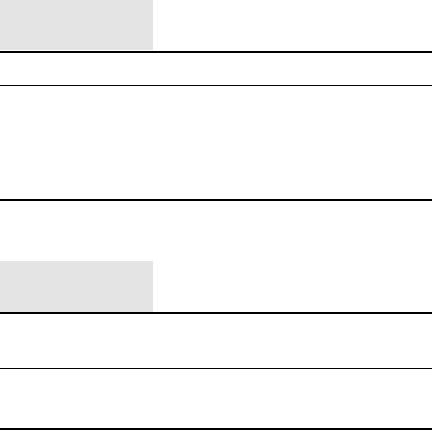
EXHIBIT 4.1
Contract Delivery Schedule
and Prices
Month Plastic Teflon
June 50 30
July 100 60
August 50 50
Price $360 $400
EXHIBIT 4.2
Production Capabilities, in
Hours per Reel
Process
train Plastic Teflon
General 2.0 1.5
National 2.5 2.0
172 Chapter 4 Sensitivity Analysis in Linear Programs
After putting some of this information into her spreadsheet, Meredith spoke with the
plant’s Controller, Donna Malone, who had access to most of the necessary cost data.
Meredith learned that the material in the cables cost $160 per reel for the plastic-coated
cable, and $200 for the Teflon-coated cable. Packaging costs were $40 for either type of
cable, and the inventory costs at the public warehouse came to $10 per reel for each month
stored. “That’s if you can get the space,” Donna commented. “It’s a good idea to make reser-
vations a few weeks in advance, otherwise we might find they’re temporarily out of space.”
Donna also provided standard accounting data on production costs (Exhibit 4.4). According
to Donna, about half of the production overhead consisted of costs that usually varied with
labor charges, while the rest was depreciation for equipment other than the two process
trains. The machine depreciation charges were broken out separately, as determined at the
time the machinery was purchased. For example, the General process train originally cost
$500,000 and, for tax purposes, had an expected life of five years, or about 10,000 hours;
hence its depreciation rate of $50 per hour.
The Analysis
Meredith was able to consolidate all of the information she collected into a spreadsheet (Exhibit
4.5).
3
Making what she felt were reasonable assumptions about relevant cost factors, she was
able to optimize the production plan, and she determined that it should be possible to meet
the 25 percent profitability target. Nevertheless, there seemed to be several factors in it that
were subject to change—things that had come up in her various conversations, such as mainten-
ance, warehousing, and the possibility of modifying the contract. She expected that Mr Cox
would quiz her about all of these factors, and she knew it would be important for her to be pre-
pared for his questions.
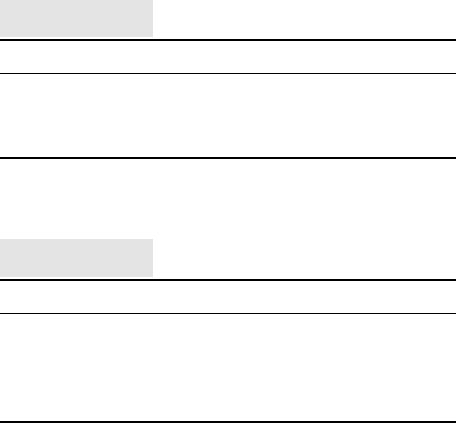
EXHIBIT 4.4 Accounting Data for Production
Cost category General National
Machine Depr. $50.00/hr $40.00/hr
Direct labor 16.00 16.00
Supervisor 8.00 8.00
Production Ohd 12.00 12.00
EXHIBIT 4.3 Unscheduled Production Hours
Month General National
June 140 250
July 60 80
August 150 100
3
The spreadsheet can be found at the book’s website: www.mba.tuck.dartmouth.edu/opt/.
Case: Cox Cable and Wire Company 173

Chapter 5
Linear Programming:
Data Envelopment Analysis
Chapters 2 and 3 examined the basic types of structures that appear in formulations of
linear programs—allocation, covering, blending, and network models. Not every
application of linear programming can be classified as one of those four types, but
most applications resemble one or more of them. In this chapter, we look at a type
of linear program that has a special application and a special kind of interpretation.
This type is associated with Data Envelopment Analysis, or DEA. For classification
purposes, the DEA model is essentially an allocation model, but its unique appli-
cations make it an important type of model to study in its own right.
As the examples in Chapters 2 and 3 indicated, linear programming is typically
used as an ex ante tool in planning, that is, as an aid in choosing among alternative
possible courses of action. In DEA, linear programming is used as an ex post tool,
to evaluate performance that has already been observed. Compared to other linear pro-
gramming applications, DEA is a relative newcomer. The first articles on the method-
ology began appearing in the mid-1970s, and researchers have been elaborating the
theory ever since. As recognition of DEA has spread, the technique has been applied
in a variety of settings, such as public schools, courts of law, hospitals, oil and gas pro-
duction, vehicle maintenance, and banking.
The primary elements in a DEA study are a set of decision-making units
(DMUs), along with their measured inputs and outputs. The DMUs may be different
branches of the same large bank, or different hospitals in the same region or different
offices of the same insurance company, but they should be reasonably homogeneous
and separately managed. In the ideal case, the DMUs have a well defined set of
common inputs and outputs.
The purpose of DEA is to determine which of the DMUs make efficient use of
their inputs and which do not. For the inefficient units, the analysis can actually quan-
tify what levels of improved performance should be attainable. In addition, the analy-
sis indicates where an inefficient DMU might look for benchmarking help as it
searches for ways to improve.
Optimization Modeling with Spreadsheets, Second Edition. Kenneth R. Baker
# 2011 John Wiley & Sons, Inc. Published 2011 by John Wiley & Sons, Inc.
175