
Boults Е. Illustrated history of landscape design
Подождите немного. Документ загружается.

17th CENTURY
107
F
rom a European perspective, the 17th century is often described as the beginning of the Age of Reason,
a period when advances in scientifi c knowledge challenged beliefs in religious doctrine and Renaissance
order. Nature was shaped according to human will, and typically by royal privilege.
Massive colonization of the Americas took place in the 1600s. Jamestown, Virginia, was founded by the Eng-
lish in 1607; Quebec was settled by the French in 1608; Sante Fe was developed by the Spanish in 1609; and
New Amsterdam was claimed by the Dutch in 1624. As settlements expanded, native populations suffered
and ancient lifeways all but disappeared.
The idea of extension applied not only to geopolitical infl uence: gardens merged into the landscape with
vistas to endless horizons. Large-scale views were part of the drama and idea of mobility that characterized
Baroque styles. The earth was no longer the static center of the universe but part of a system in motion
around the sun. Politically and culturally, emphasis shifted to France, where the garden became a venue for
spectacle, employed as a symbol of the absolutism of the Sun King.
Some of the world’s most illustrious gardens, such as the Taj Mahal, Katsura Imperial Villa, and Versailles,
were created in the 17th century, and are discussed in this chapter.
108
17th CENTURY / A BRIEF CHRONOLOGY
1600 1620
1610
1660
1670
1650
VIRGINIA SLIMS
GREAT FIRE OF LONDON
STARRY MESSENGER
HYDRAULIC WIZARDRY
STRADIVARIUS
BAROQUE EMBRACE
1603
1666 1669
1656–1667
1610
1615
109
1630 1640
1680
1690
1700
GOING BANANAS
COGITO ERGO SUM
GREEN COUNTY TOWNE
LAW OF UNIVERSAL
GRAVITATION
LANDSCAPE PAINTING
YUAN YEH
HALLEY’S COMET
THE NIGHT WATCH
1633
1677
1682
1687
1648
1634
1682
1642
17th CENTURY / A BRIEF CHRONOLOGY

110
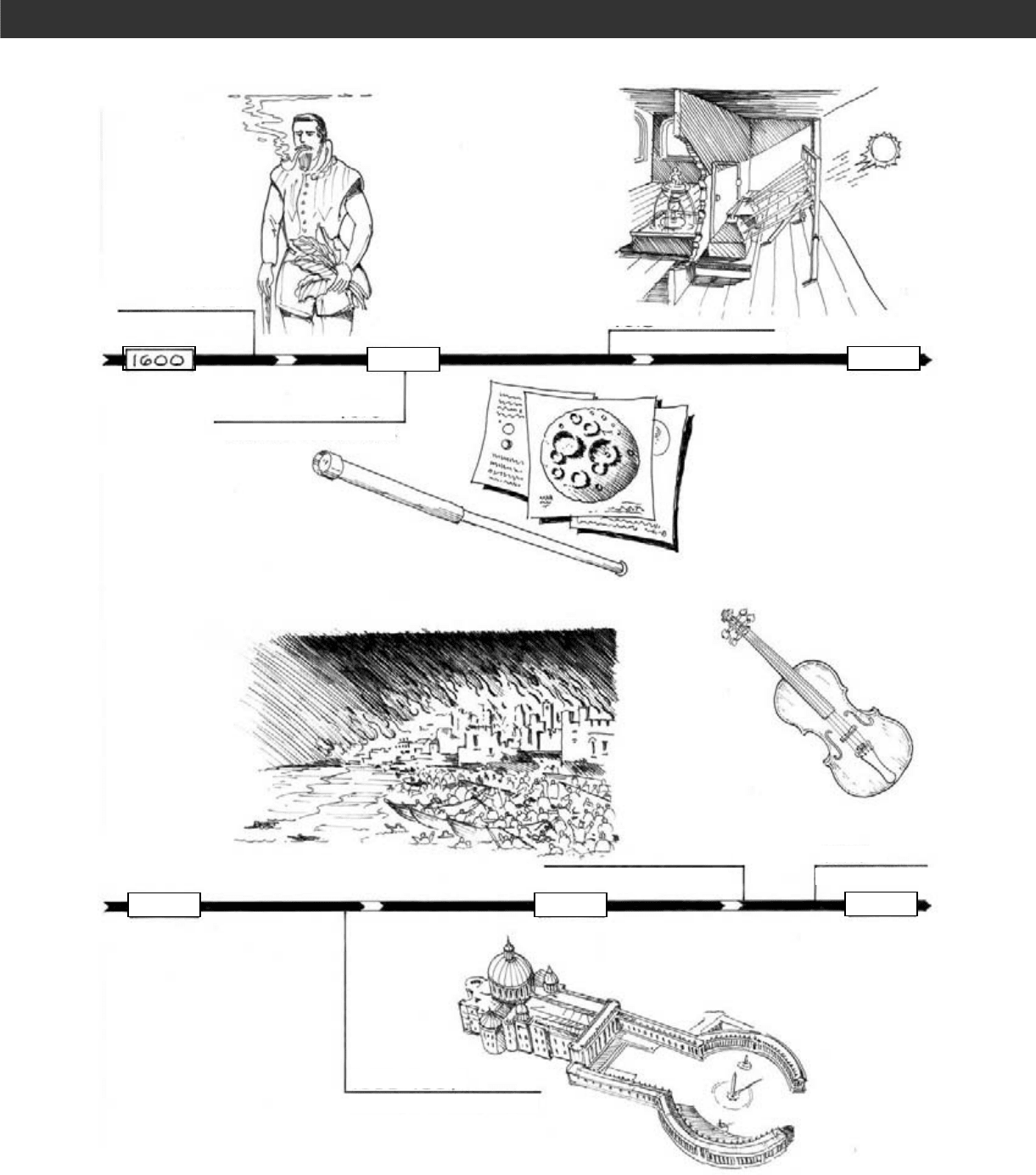
1603 VIRGINIA SLIMS
Sir Walter Raleigh’s initial attempts to
colonize Roanoke Island failed several
times. He eventually settled the fi rst
English colony, Virginia, in 1603. Raleigh
returned to England with the Nicotinia
plant; by 1617, tobacco smoking was a
popular fad at the royal court.
1610 STARRY MESSENGER
Galileo published Sidereus Nuncius, the
fi rst treatise based on observations
made through a telescope. He was tried
for heresy because of his theories of a
heliocentric universe.
1615 HYDRAULIC WIZARDRY
French engineer and architect Salo-
mon de Caus published a treatise on
waterworks, Les Raisons des Forces
Mouvantes. He and his brother Isaac
studied Italian garden design and were
infl uential in introducing Mannerist and
Baroque styles to northern Europe and
England. Besides his numerous automa-
ta, de Caus’s greatest built landscape,
the Hortus Palatinus in Heidelberg, was
called the eighth wonder of the world; it
was destroyed in the Thirty Years’ War.
1
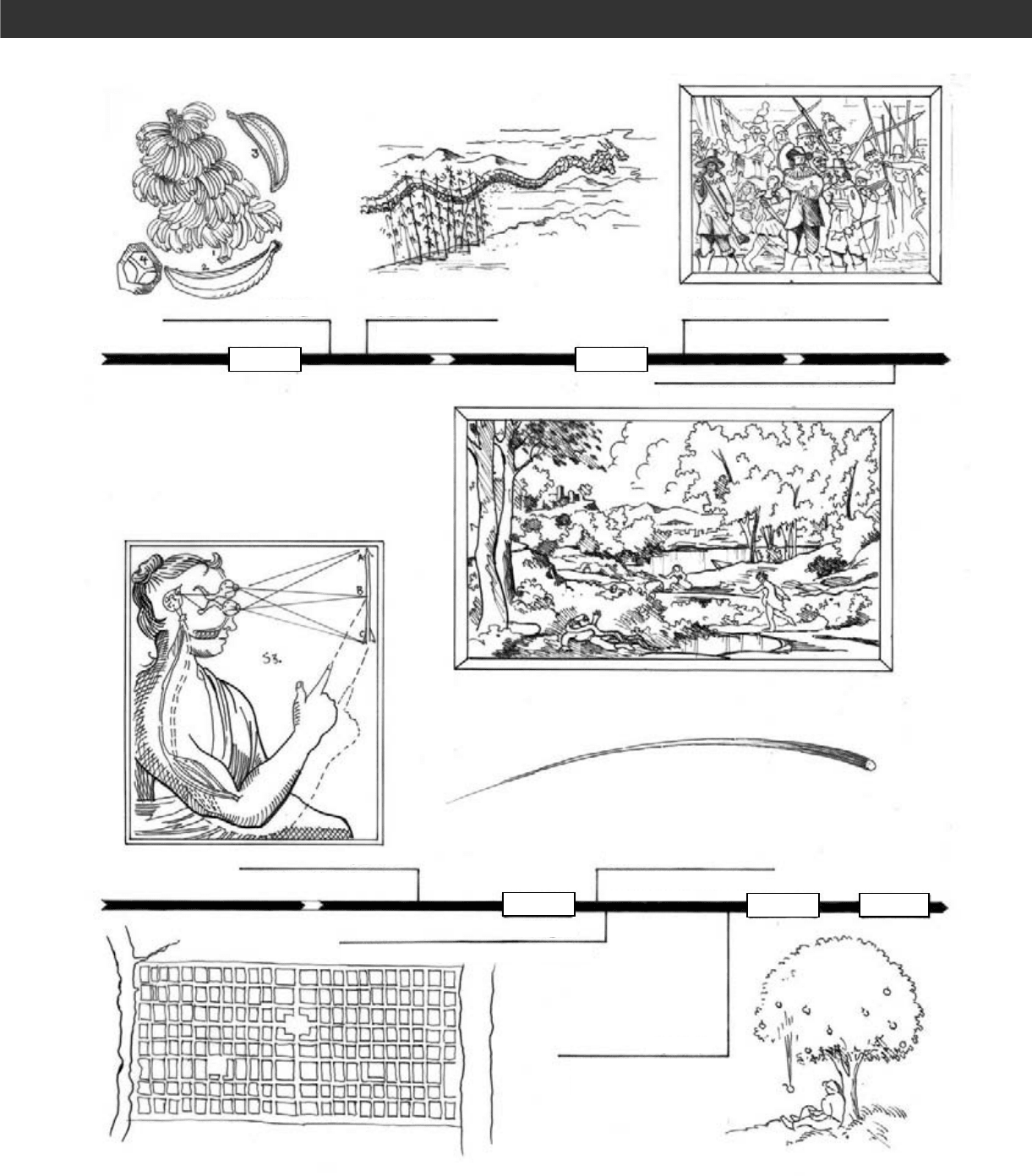
1633 GOING BANANAS
The fi rst bunch of bananas imported
from Bermuda and ripened in England
was displayed in the window of London
apothecary and botanist, Thomas
Johnson.
2
1634 YUAN YEH
The Ming-period painter and landscape
designer Ji Cheng published a garden-
ing manual, the Yuan Yeh, in 1634. His
main advice for gardeners was that
there are “no defi nite rules for planning
the garden.”
3
Ji Cheng suggested that
gardens should elicit an emotional re-
sponse and a deep spiritual reverie. His
three volumes provided a sort of visual
compendium of particular garden ele-
ments. But rather than outline specifi c
construction techniques, he gave poetic
descriptions of desired effects—for
example, rocks should be placed so that
they “welcome the clouds and moon.”
4
1642 THE NIGHT WATCH
Dutch painter Rembrandt van Rijn was
an acute observer of life. His manipula-
tion of light and shadow created dra-
matic narratives in his paintings.
1648 LANDSCAPE PAINTING
French painter Nicolas Poussin painted
idealized views of ancient ruins in the
Roman campagna. The juxtaposition of
classical forms in a landscape setting
created a romantic view of nature that
became extremely infl uential in the devel-
opment of the English landscape garden
in the 18th century.
1656–1667 BAROQUE EMBRACE
Gian Lorenzo Bernini was commissioned
by Pope Alexander VII to design a new
piazza for St. Peter’s Cathedral in Rome.
The narrowing trapezoidal piazza that
leads from the basilica into the large
oval piazza is defi ned by an elegant ellip-
tical colonnade. The work is the consum-
mate expression of Baroque space and
urban drama.
1666 GREAT FIRE OF LONDON
Fire destroyed the medieval city within
the old Roman walls. Commissioners to
King Charles rebuilt London with wider
streets and grand squares; property
owners reconstructed wood buildings
with stone and brick. Christopher Wren’s
rebuilding of St. Paul’s Cathedral exem-
plifi ed the new style that changed the
look of the city.
1669 STRADIVARIUS
Antonio Stradivari refi ned the shape
and proportions of the violin and began
crafting string instruments under his
own label. The secret to their sweet
tones supposedly lies in his (now lost)
recipe for varnish.
1677 COGITO ERGO SUM
French philosopher, mathematician, and
scientist Rene Descartes saw the uni-
verse as a mathematical construction.
His book La Geometrie formed the basis
of analytical geometry and outlined how
coordinates can defi ne a position in
space. His work on optics was equally
infl uential.
1682 HALLEY’S COMET
Edmond Halley used Newton’s gravi-
tational theories to correctly predict
that the comet then visible in the sky
had an elliptical orbit and would reap-
pear in 1758.
1682 GREEN COUNTRY TOWNE
William Penn received a charter from
King Charles II to establish a Quaker
colony in North America. Penn’s grid
plan allowed for a central public open
space and public greens within each
quadrant, and required that houses
be placed in the middle of lots as a
precaution against fi re.
1687 LAW OF UNIVERSAL GRAVITATION
Sir Isaac Newton discovered that the
same force governed both the motion of
the moon and a falling apple, and proved
it mathematically.
17th CENTURY / A BRIEF CHRONOLOGY
111
17th CENTURY
/ JAPAN
After Hideyoshi died, another of No-
bunaga’s generals, Tokugawa Ieyasu
(1543–1616), established a new
warrior dynasty that lasted until the
19th century. He moved the shogu-
nate to Edo (now Tokyo) and issued a
series of strict edicts to control all
aspects of society. Except for a small
Dutch trading colony near Nagasaki,
Japan was closed to all foreign-
ers. The Christian missionaries were
expelled, and practicing Christians
persecuted. Ieyasu endorsed a neo-
Confucian philosophy that blended
aspects of Buddhism and Daoism;
its emphasis on morality and loyalty
contributed to his ideal of a strong
central government.
5
SOCIAL ORDER
AND CULTURAL
ISOLATION
The long period of peace and prosperity
came at the expense of civil liberties.
Society was strictly ordered according
to a hierarchical class system where
power rested with the shogun, then the
daimyos, samurai, farmers, artists,
and, lastly, merchants. To limit the
potential threat from rival clans in the
provinces, Ieyasu required “alternate
attendance” of the daimyos—obliging
the daimyos to reside in the capital
every other year. While they were ab-
sent from Tokyo, their families were to
remain.
Ieyasu’s edicts also prohibited the
imperial court’s involvement in govern-
ment and politics, limiting the emperor’s
activities to aesthetic pursuits only, as
was done in the Heian period. The two
captive populations, the hostage daimy-
os in Tokyo and the alienated imperial
court at Kyoto, occupied themselves
by building large estate gardens. The
model for these new gardens was the
tea garden, whose function as a place of
passage was realized on a much grander
scale. These gardens became known as
“stroll gardens.”
Stroll gardens were designed to recall
the natural scenery of Japan. Since
travel within the country was restrict-
ed by the shogun, the publication of
books illustrating the “famous sights”
of Japan became popular.
6
The books
contained colorful woodblock prints of
scenes such as Mt. Fuji, maple-cov-
ered hillsides, and the “eight-bridges”
river system. The stroll gardens of the
Edo period referenced these famous
landscapes.
EDO PERIOD (1603–1867)
FOCUS ON THE
ARTS
The city of Tokyo expanded dramatical-
ly. Trade was now facilitated by a money
economy rather than a barter system.
Despite their low status, merchants
accumulated great wealth and became
patrons of new art forms—the Kabuki
theater, haiku, and woodblock prints.
The merchant class was forbidden to
display their wealth. They could not pub-
licly appear in expensive clothing or build
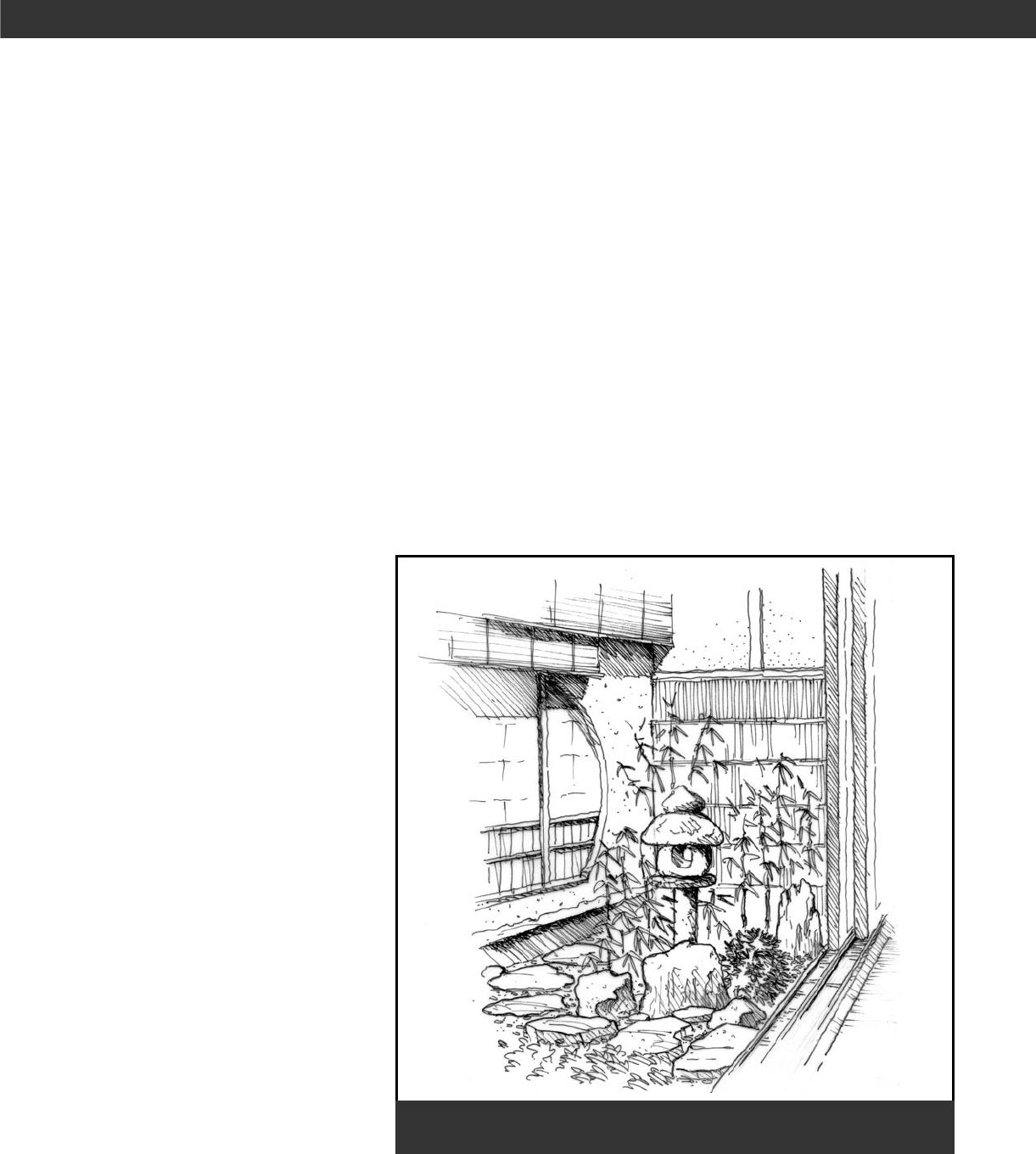
large estates. Instead, they built small
courtyard gardens, or tsuboniwa, in the
open spaces between the rooms of their
urban houses.
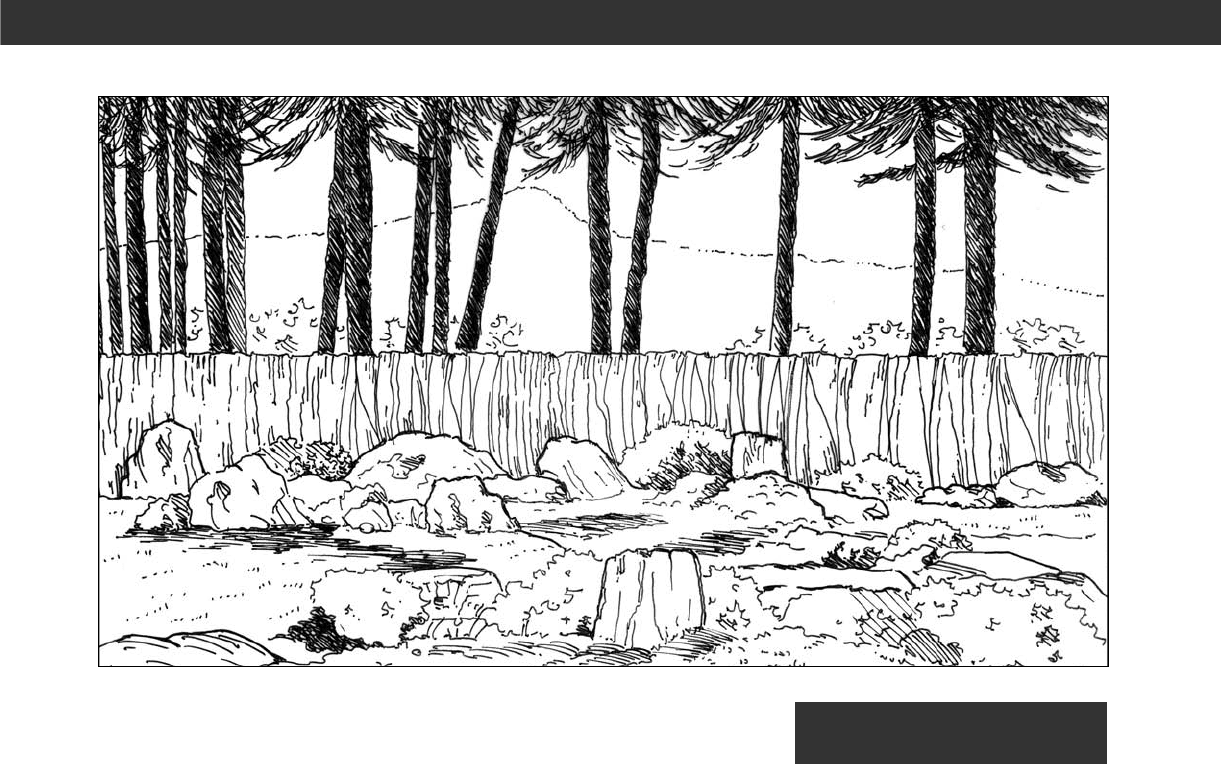
TSUBONIWA: Interior courtyard gardens contained evocative elements, as did
stroll gardens and tea gardens, but were meant only for viewing, not occupation.
112
In 17th-century Japan, gardening was
a booming business. Nurserymen, rock
merchants, and professional garden
designers benefi ted from the thriving
economy. Garden design had become a
respected, secular profession. Aristo-
cratic gardens no longer alluded to liter-
ary or religious themes, but were built
on a romantic conception of nature,
expressed through individual creativity.
7
The activities of the elite may have been
curtailed, but their imaginations were
free to soar.
The appreciation of the country-
side as a place of leisure, rather
than toil, and the value of a pasto-
ral vista, were new ways of thinking
about the landscape for the elite in
17th-century Japan.
8
Urban dwellers
romanticized the distant view: the far
landscape represented the appeal of
the experience of rustic nature, much
like the tea garden did. Stroll gardens
surrounded a lake, and often incor-
porated views of distant landscape
features. The route was not hierarchi-
cally structured, but designed as a
series of independent scenic events
that came as a revelation to the
viewer. Stroll gardens often contained
tea houses, pavilions, sculptural
lanterns, and pagodas. Lakes had
deeply recessed bays; large rocks
emphasized the shorelines. As the
visitor moved along the path, views
of particular elements both near and
far suddenly appeared, set within
the garden like scenic tableaux. The
principle of hide-and-reveal (mie-
gakure) added an element of anticipa-
tion and surprise to the experience.
In Edo stroll gardens, views were
mainly to Mt. Fuji and the harbor; the
surrounding landscape was not as
picturesque as the environs of Kyoto.
Stroll gardens focused attention
both on internal features and outward
views. The practice of borrowed scen-
ery, shakkei, involved more than just a
visual appreciation of the landscape.
Nature was reinterpreted; the picture
held a message. Space was composed
pictorially according to principles of
foreground, midground, and back-
ground, extending the limits of the
garden visually and conceptually.
17th CENTURY / JAPAN / EDO PERIOD
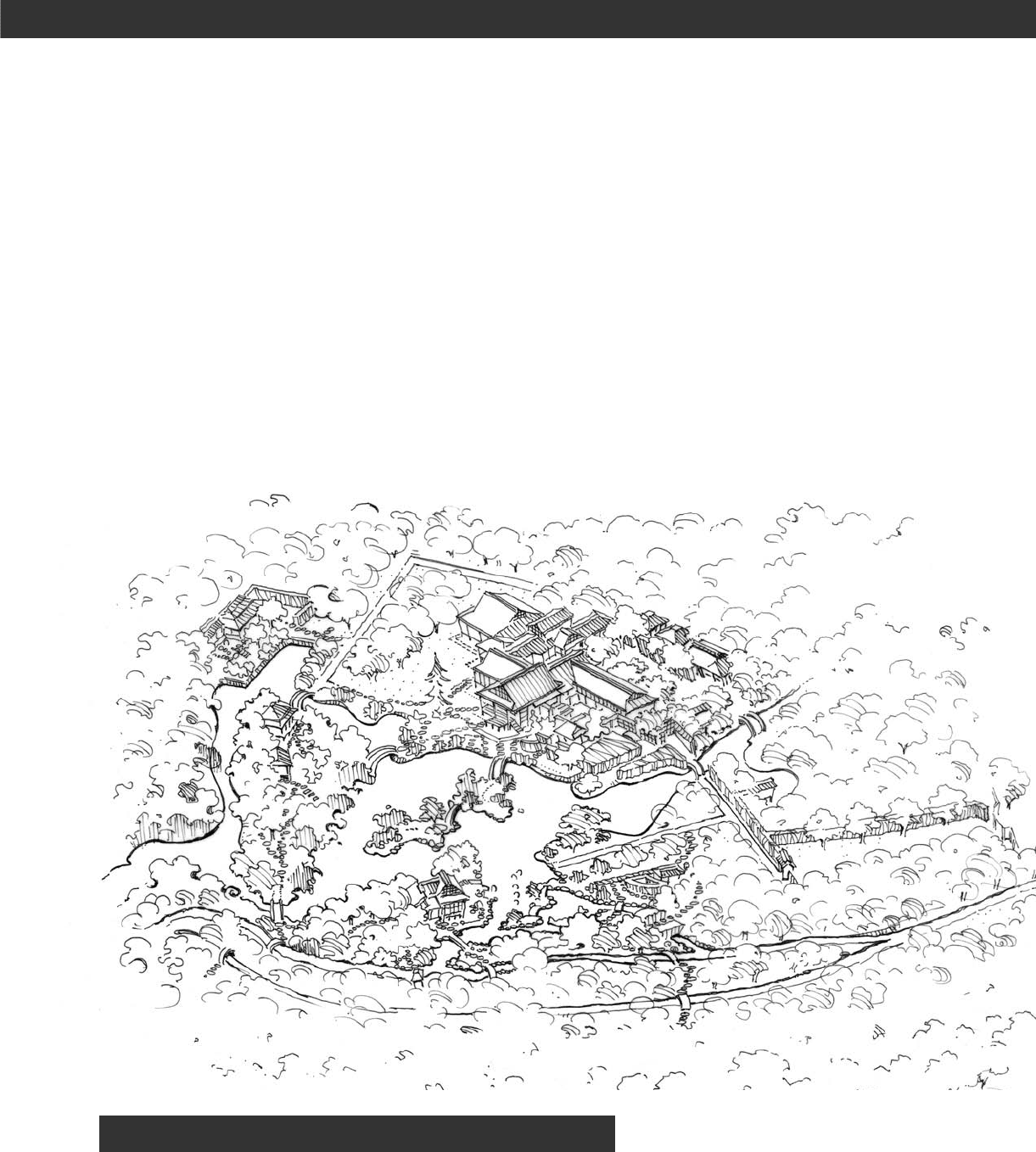
SHAKKEI: A view of Mt. Hiei is incor-
porated into the garden at Entsu-ji.
CHARACTERISTICS
OF EARLY STROLL
GARDENS
113
17th CENTURY / JAPAN / EDO PERIOD
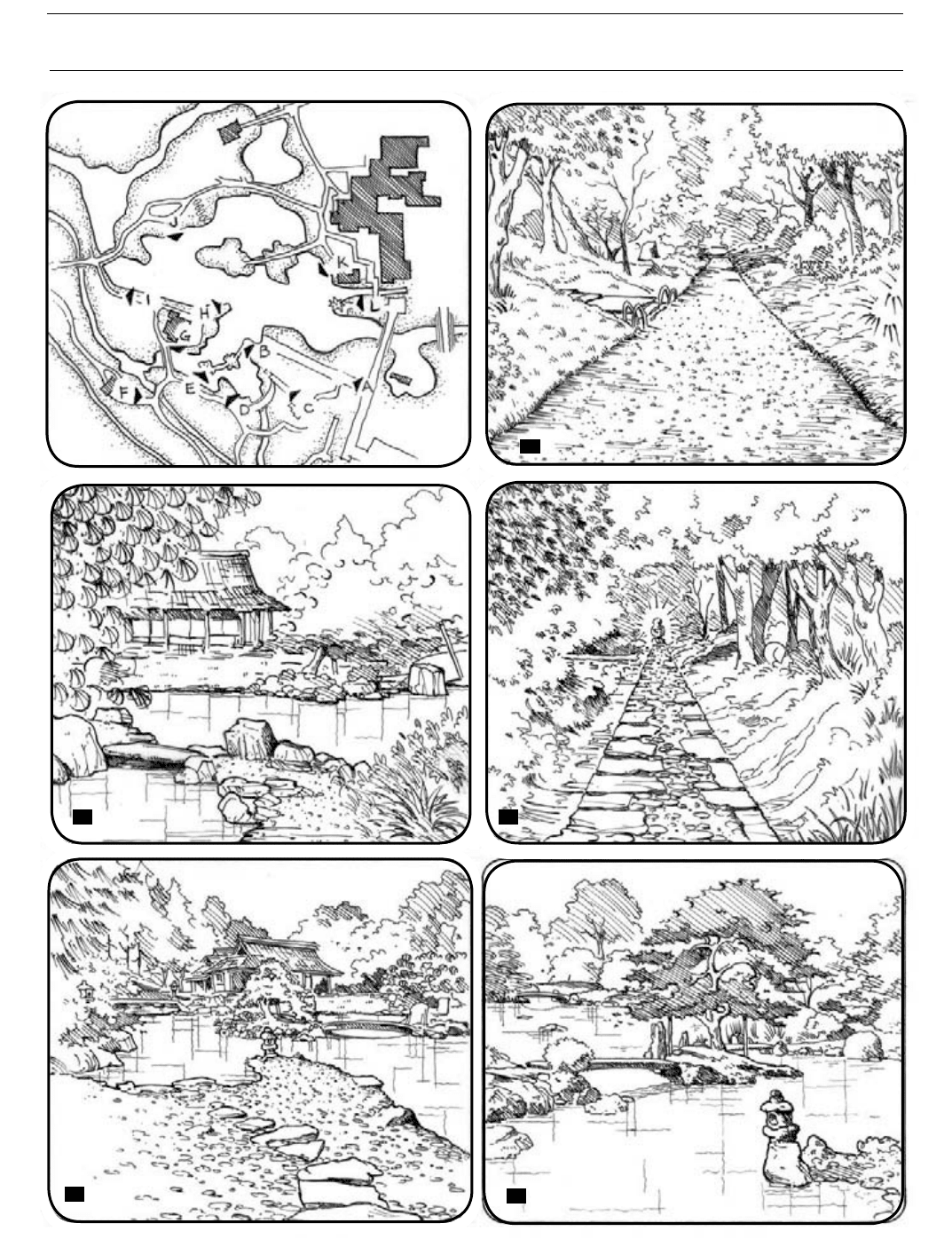
KATSURA-RIKYU: The densely planted 12-acre garden is adjacent to a river.
IMPERIAL
ESTATES IN KYOTO
To placate the imperial family, the shogun
gave them land and fi nanced the con-
struction of their villas and retirement
estates. These amounted to large land-
holdings; imperial stroll gardens were on
average 10 times larger than the court-
yard gardens of their Heian predeces-
sors.
9
Examples of imperial villas include
Katsura-Rikyu, Shugaku-in, and Sento
Gosho.
KATSURA-RIKYU
Katsura Villa was planned as a coun-
tryside retreat in 1620 by Prince Toshi-
hito (1570–1629), the adopted son of
Hideyoshi, and fi nished decades later
by his son, Toshitada. The tea master
and garden design expert, Kobori Enshu
(1579–1649), is often cited as having
a hand in its design.
10
Toshihito was
inspired by the golden age of Heian
culture, and sought to blend in his villa
the elegance of that era with the rustic
simplicity of tea culture.
11
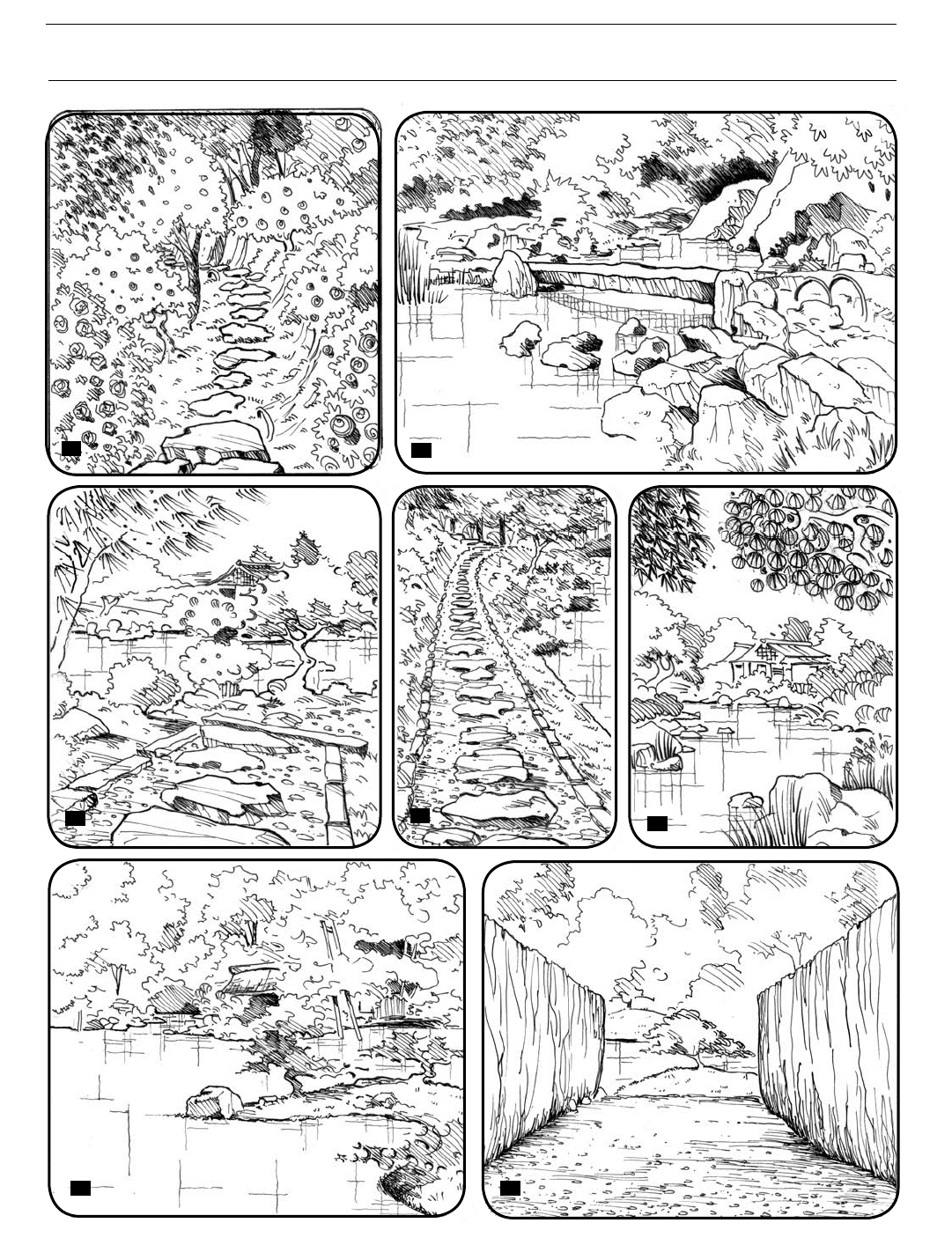
Katsura Villa has become the defi nitive
example of the stroll garden as a poetic
experience. The path system is carefully
contrived around a large lake with an
intricate shoreline. Sight lines unfold as
the visitor moves clockwise around the
lake.Features include a turtle island,
a re-creation of the famous land spit
Amanohashidate, a monolithic stone
bridge, and stone lanterns. A series of
tea houses are set within the garden.
The three pavilions of the rustic,
shoin-style “palace” are staggered on
a diagonal, visually integrated into the
landscape. The orthogonal geometry
of the architecture plays against the
natural forms of the garden.
12
Each
room opens onto the garden. The
structure is elevated above the ground
plane to avoid fl ooding from the nearby
river, and contains a platform for
moon viewing.
114
Katsura Imperial Villa
CASE STUDY:
A
B
D
E
C
115
Katsura Imperial Villa
CASE STUDY:
F
G
H
I
J
K L
116
17th CENTURY / JAPAN / EDO PERIOD
SHUGAKU-IN RIKYU
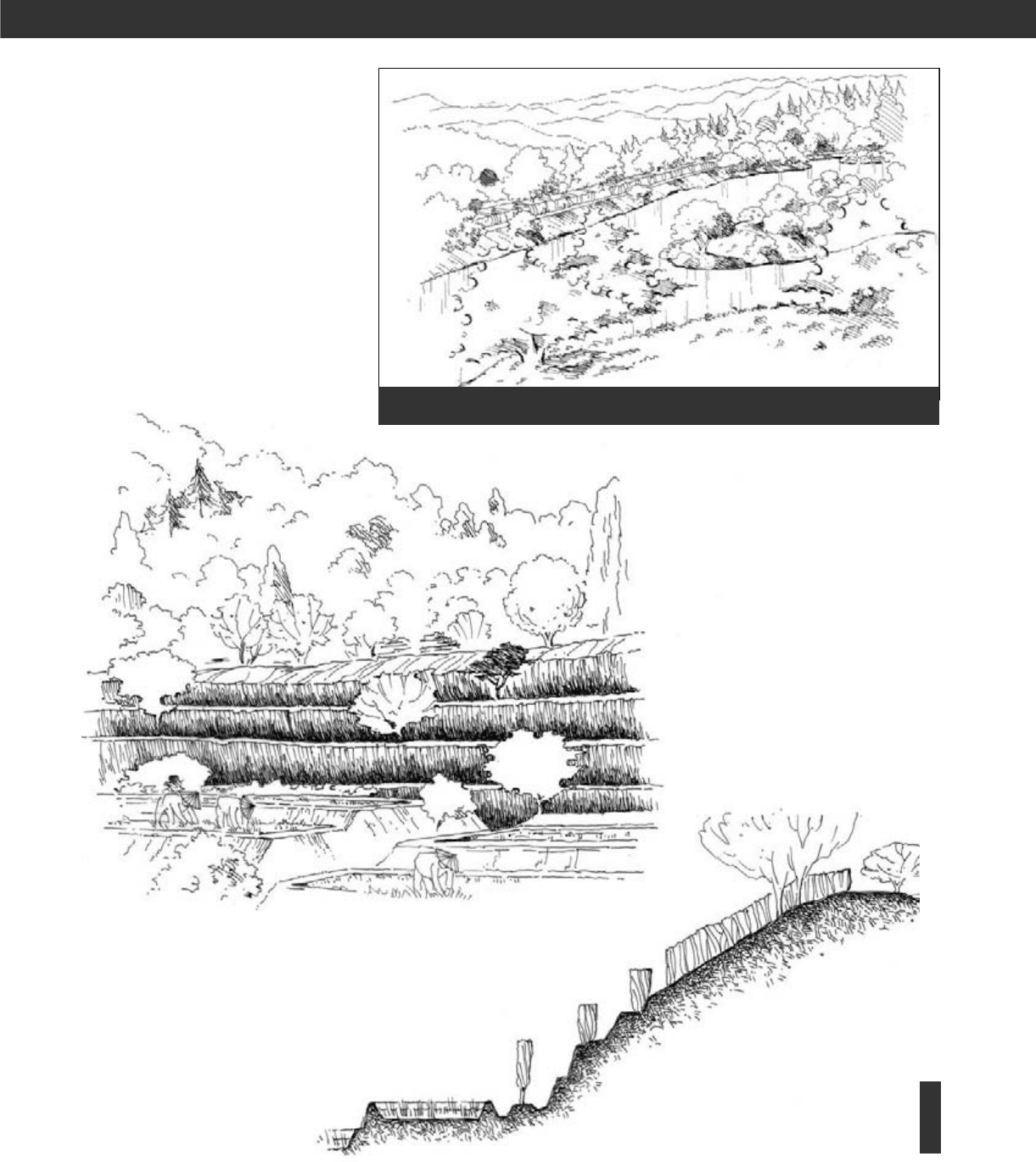
In 1655, a countryside villa was built
by the shoguns for Prince Toshi-
tada’s uncle, Emperor Gomizuno-o,
who was married to Ieyasu’s grand-
daughter. The estate consists of
three villas on different levels set
amid woodlands and rice fields.
The lower villas contain small shin-
den-style gardens and tea houses.
Gomizuno-o built an earthen dam to
create a sizable lake with a convoluted
shoreline. The upper garden is known for
its superb application of shakkei, where
-
t-
SHUGAKU-IN: The garden is known for its astonishing incorporation of borrowed views.
an entire sequence of space is manipu-
lated to create a dramatic experience.
The visitor enters the upper garden
via a stone stair confi ned by clipped
hedges, ascending to the Pavilion in the
Clouds (Rinun-tei) with his or her back
to the view. Turning about, spectacular
views of Kyoto emerge over the lake, the
contours of which echo the shape of the
surrounding mountains.