
Caballero B. (ed.) Encyclopaedia of Food Science, Food Technology and Nutrition. Ten-Volume Set
Подождите немного. Документ загружается.


Dietary Diversification
0037 Dietary diversification, including vitamin A-rich
foods, is the most effective long-term sustainable
solution. Since animal foods containing preformed
vitamin A are expensive, attention is focused on
plant sources of provitamin A carotenoids. Green
leafy vegetables, yellow/orange vegetables and fruits
like papaya and mango are common sources of vita-
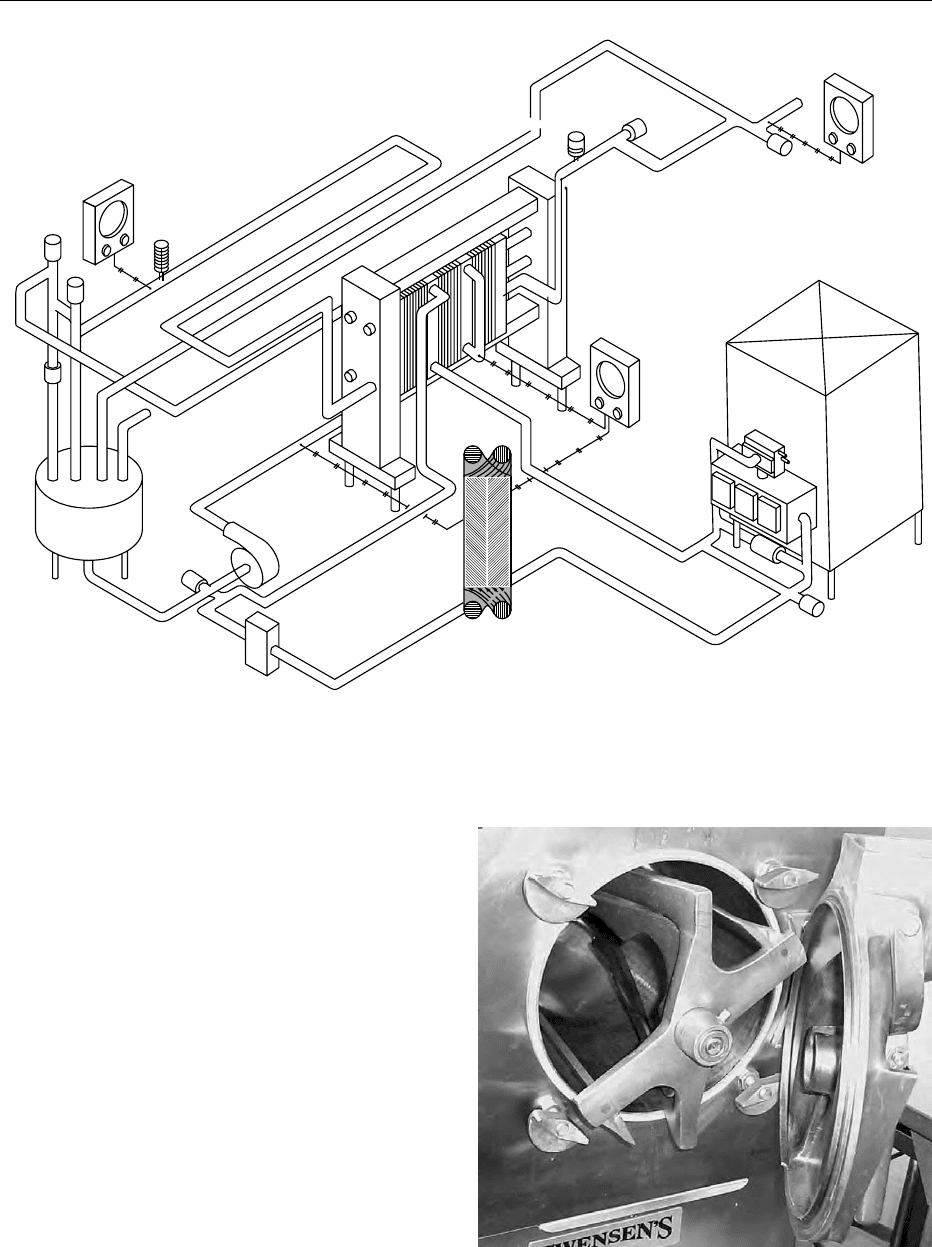
min A. Green leafy vegetables are abundant in most
countries where VAD exists, but their consumption is
low due to lack of knowledge. Dietary intake can be
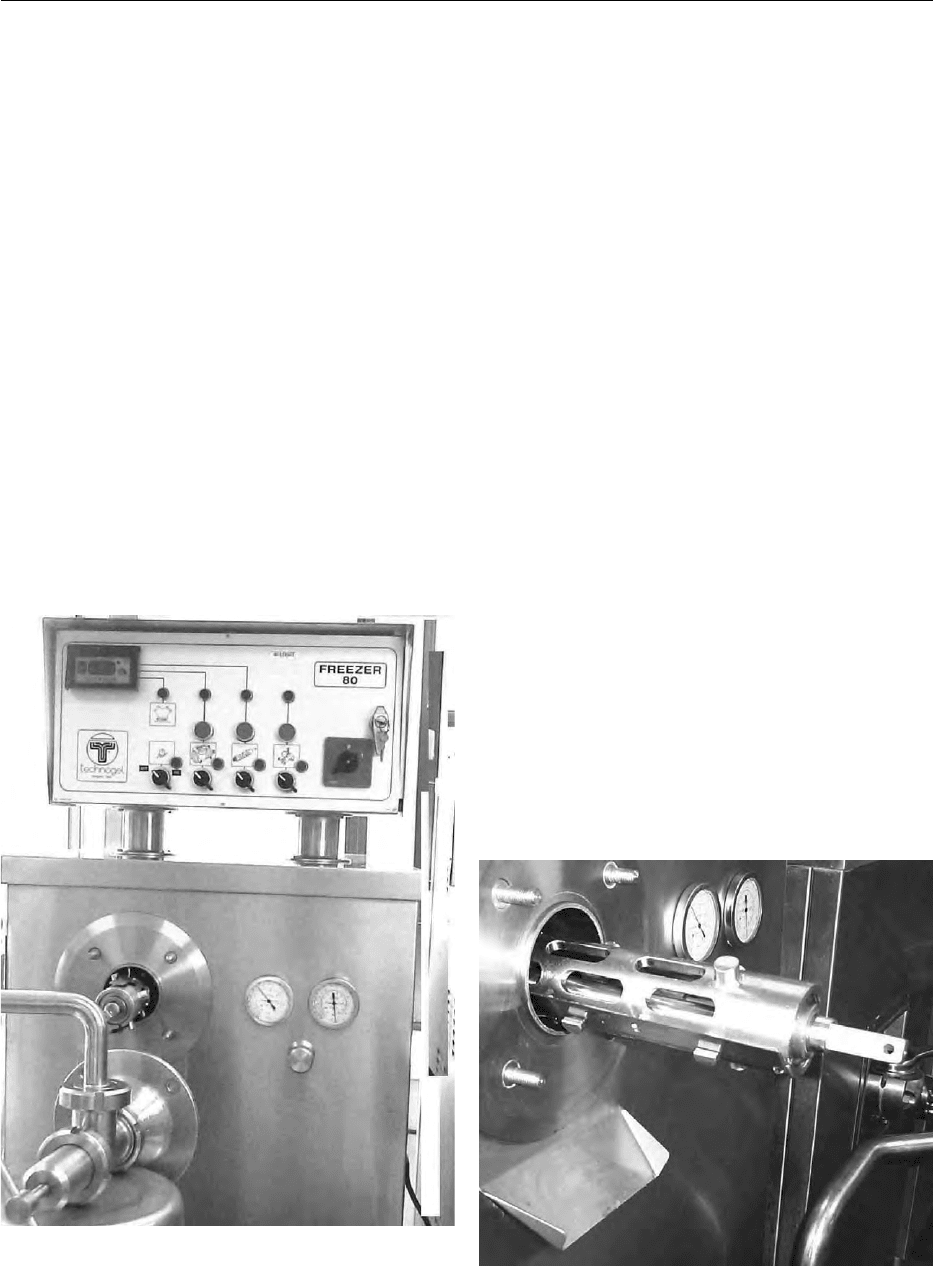
improved through nutrition education and social
marketing strategies. In areas with limited availabil-
ity, horticulture programs should be undertaken
to increase the production of vegetables and fruits.
Large-scale home gardening programs have been
successfully implemented in some countries like
Bangladesh and Thailand. Evaluation studies have
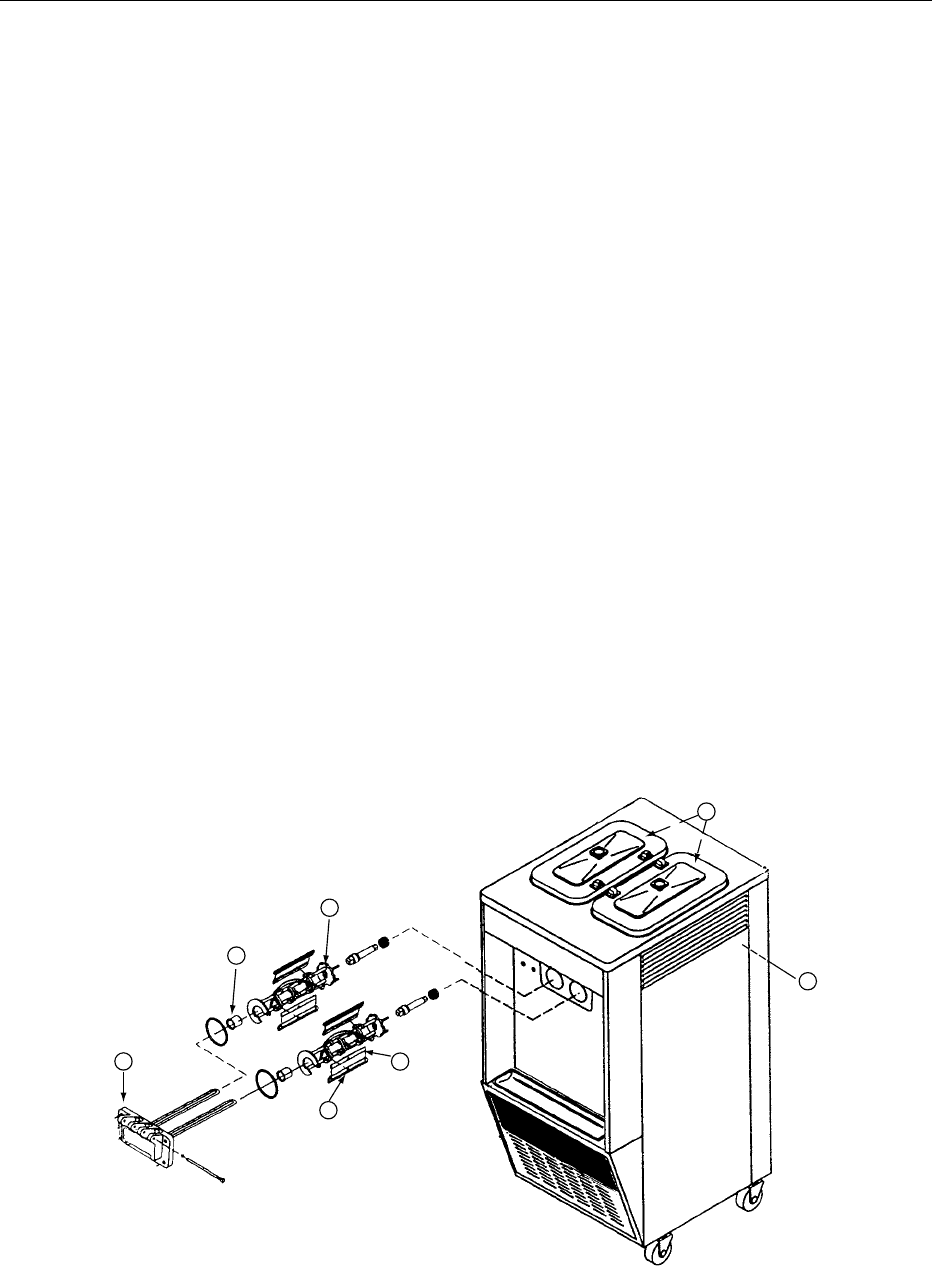
shown that the consumption of vegetables was higher
in families with home gardens.
0038 Bioavailability of plant carotenoids is relatively
low and it is difficult to meet vitamin A requirements
of young children through vegetable foods alone.
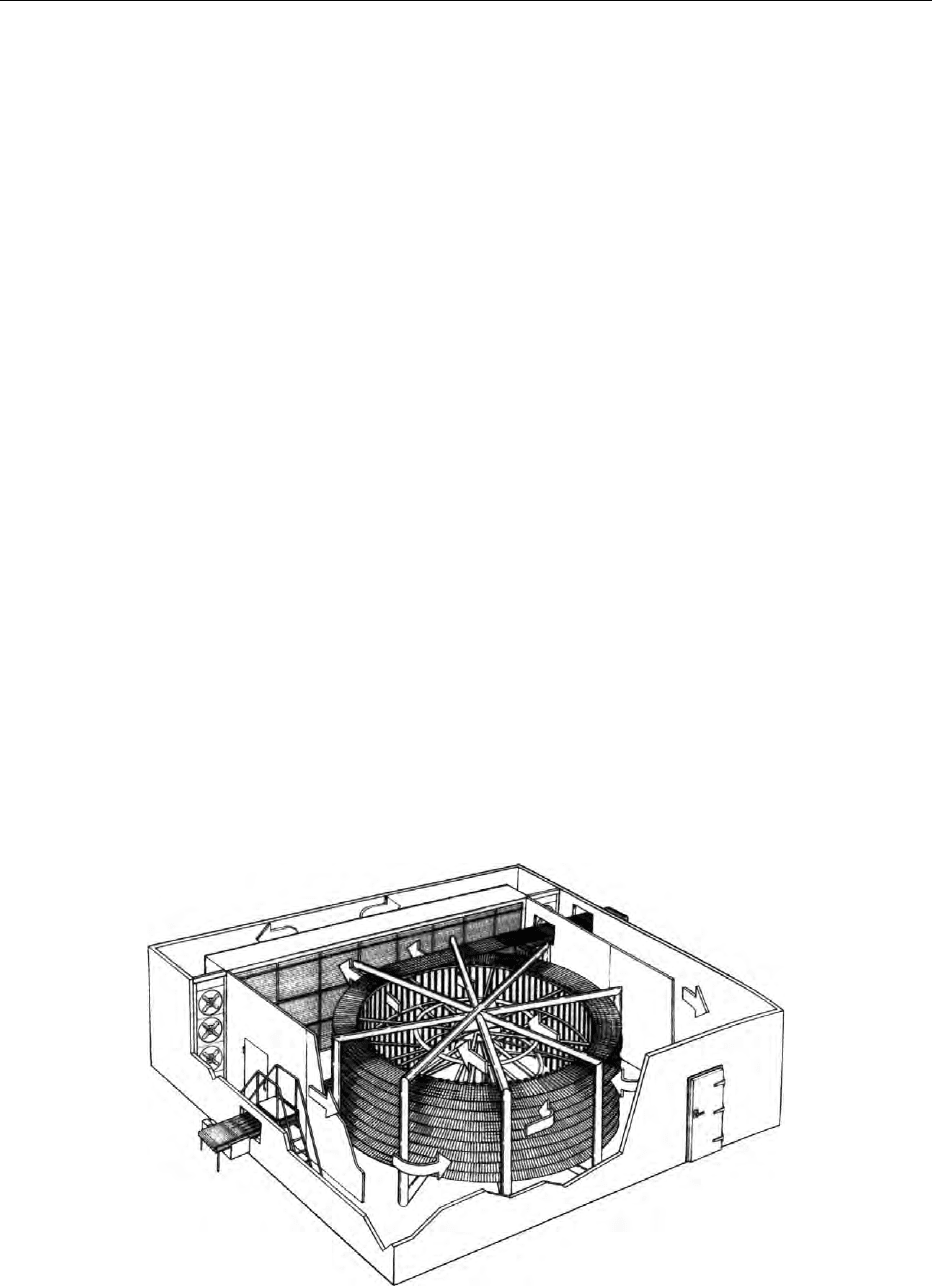
Programs to improve vitamin A status must
encourage consumption of a variety of foods, includ-
ing animal foods like milk and eggs, at least in small
amounts to improve the quality of diet. Bioavailabilty
varies not only with the food source but also the way
it is prepared. Intervention programs should focus on
high-carotene varieties of vegetables and promote
appropriate methods of processing/cooking to min-
imize carotene losses. Fat content of diet should be
increased to promote carotene absorption. However,
effective dietary changes require a thorough under-
standing of the local sociocultural and behavioral
factors that predispose to hypovitaminosis A.
0039 Apart from dietary interventions, improvement in
environmental conditions and control of parasitic
infection are important to improve the vitamin A
status of the population. VAD must be seen in the
broader context of malnutrition that afflicts the poor.
Greater emphasis should be laid on integrated
multisectoral comprehensive strategies, taking into
account the community’s overall needs.
See also: Carotenoids: Occurrence, Properties, and
Determination; Physiology; Food Fortification; HIV
Disease and Nutrition; Malnutrition: Malnutrition in
Developed Countries
Further Reading
ACC/SCN Consultative Group (1994) Controlling Vitamin
A Deficiency. ACC/SCN State-of-the-art series, nutrition
policy discussion paper no. 14. Geneva: United Nations.
Beaton GH, Martorell R, Aronson KJ et al. (1993) Effect-
iveness of vitamin A supplementation in the control of
young child mortality in developing countries. ACC/
SCN State of the art series, nutrition policy discussion
paper no. 13. Geneva: United Nations.
FAO/WHO Expert Consultation (1998) Requirements of
Vitamin A, Iron, Folate and Vitamin B
12
, pp. 16–31.
Rome: FAO.
McLaren DS and Frigg M (1997) Sight and Life Manual on
Vitamin A Deficiency Disorders. Basel, Switzerland:
Sight and Life.
Reddy V (1986) Vitamin A deficiency control in India. In:
Bauernfeind JC (ed.) Vitamin A Deficiency and its Con-
trol, pp. 389–404. Orlando, FL: Academic Press.
Reddy V (1994) Strategies to control vitamin A deficiency –
Indian experience. In: Puri RK (ed.) Current Concepts in
Pediatrics, pp. 211–216. New Delhi, India: Jaybee
Brothers.
Sommer A and West KP (1996) Vitamin A Deficiency,
Health, Survival and Vision. New York: Oxford Univer-
sity Press.
Villamor E and Fawzi WW (2000) Vitamin A supplemen-
tation: implications for morbidity and mortality in
children. Journal of Infectious Diseases 182(suppl. 1):
S122–S123.
West CE (2000) Meeting requirements for vitamin A.
Nutrition Reviews 58: 341–345.
WHO (1995) Global Prevalence of Vitamin A Deficiency.
Micronutrient Deficiency Information System. Working
Paper #2. WHO/NUT/95.3. Geneva: WHO.
WHO (1996) Indicators for Assessing Vitamin A Defi-
ciency and Their Application in Monitoring and
Evaluating Intervention Programmes. Micronutrient
series, WHO/NUT/96. 10. Geneva: WHO.
WHO (1997) Vitamin A Supplements: A Guide to their Use
in the Treatment and Prevention of Vitamin A Defi-
ciency and Xeropthalmia, 2nd edn. WHO/UNICEF/
IVACG Task Force. Geneva: WHO.
WHO/CHD Immunization-linked Vitamin A Supple-
mentation Group (1998) Randomized trial to assess
benefits and safety of vitamin A supplementation
linked to immunization in early infancy. Lancet 352:
1257–1263.
HYPOVITAMINOSIS A 3219

I
ICE CREAM
Contents
Methods of Manufacture
Properties and Analysis
Dietary Importance
Microbiology
Methods of Manufacture
R T Marshall, University of Missouri, Columbia, MO,
USA
Copyright 2003, Elsevier Science Ltd. All Rights Reserved.
Introduction
0001 Ice cream is a frozen emulsion. The continuous phase
consists of unfrozen syrup containing the dissolved sub-
stances, mostly sugars and minerals. The disperse phase
consists of air cells, globules of milk fat (and in some
countries other sources of fat), ice crystals, and insoluble
substances including proteins and hydrocolloids.
0002 Steps in the manufacture of ice cream are as
follows: decide on composition; determine the avail-
ability and characteristics of ingredients needed to
make the mix; calculate amounts of each ingredient
needed; combine the ingredients of the mix; process
the mix; store the mix cold until certain components
have hydrated; add liquid flavorings; freeze the mix to
a soft consistency while stirring and introducing air;
to the soft-frozen product add desired syrups or solid
types of flavorings; package; and harden and store the
packaged product.
0003 A product called Dippin Dots
TM
is made from ice
cream mix but is not stirred while being frozen. In-
stead, droplets of ice cream mix are caused to fall into
a bath of liquid nitrogen where they are frozen rapidly
into small spheres. The frozen bead-like particles are
removed, packaged, and stored at a very low tempera-
ture to prevent them sticking together. The beads can
be dipped into containers for serving. These beads
contain little or no air, and the ice crystals within
them are very small compared with those in ice cream.
Deciding on Mix Composition
0004Ice cream is composed of milk fat, nonfat milk solids,
sweetener, flavoring, stabilizer, and emulsifier. In a
simple formulation cream provides the milk fat and
some nonfat milk solids, the remainder of which is
supplied by concentrated or dried skim milk. Sugar
and corn syrup are the major sweeteners, vegetable
gums are the stabilizer and mono- and diacylglycerols
are the emulsifiers. There are many other sources
of these basic ingredients (See Ice Cream: Properties
and Analysis). Costs, availability, quality, stability
and ease of handling are considered in deciding
which ingredients to use. Once the ingredients have
been chosen, amounts of each component must be
calculated.
Calculating Ice Cream Mixes
0005As long as the sources of the major components of ice
cream are few, mix calculation is relatively easy.
However, multiple sources of components make the
process complex. The illustration provided below is
for a simple mix.
0006Let us assume a mix composition of 12% milk fat,
10% nonfat milk solids, 15% sugar, 0.2% stabilizer,
and 0.1% emulsifier. Further assume that ingredients
used are cream containing 30% fat and 6.3% nonfat
solids, nonfat dry milk containing 96% solids (4%
moisture), sugar, gum stabilizer and mono- and di-
acylglycerol emulsifier. To make 100 units of the mix
we need 40 units of cream (12/0.3) and it provides
2.52 units of nonfat milk solids (40 0.063). We
subtract 2.52 from the 10 units of nonfat milk solids
needed and find we need to add 7.79 units of nonfat
dry milk [(10 2.52)/0.96] to supply the remainder

of the nonfat milk solids. We add 15 units of sugar,
0.2 unit of stabilizer, and 0.1 unit of emulsifier. The
latter two contain insignificant amounts of moisture.
On addition (40 þ 7.79 þ 15 þ 0.2 þ 0.1) we find we
have only 63.09 units of mix. Therefore, we make
up to 100 units with 36.91 units of water. Had the
combination of cream of lower fat content and
concentrated skim milk been used, little or no water
would have been required.
Compounding the Ice Cream Mix
0007 In making the mix, liquid ingredients are combined in
a vessel and solid ingredients are added while stirring.
Because gums are in the form of particles that adsorb
water but do not dissolve, they tend to clump when
added to mix in the dry form. To overcome this they
can be suspended in sugar syrup by blending for a
short time. The suspension is then stirred into the mix
and particles of stabilizer disperse well. Similarly,
nonfat dry milk tends to form lumps when added in
large amounts to a liquid. Instantizing of nonfat dry
milk overcomes this problem, making it a desirable
form of concentrated nonfat milk solids for use in the
home. However, the cost of instantization and the
high bulk of the product, compared to regular nonfat
dry milk, restrict its use in industry. Instead, a device
called a powder funnel delivers the dried milk into a
rapidly flowing stream of water or of liquid ingredi-
ents of the mix where it disperses well and dissolves
quickly. In the home or small industry, nonfat dry
milk or stabilizers can be mixed with sugar before
adding them to the liquid portion of the mix. When
dry ingredients that tend to lump are added slowly to
liquid that is being rapidly agitated, they usually dis-
perse adequately. Therefore, some processors use this
approach to combining the dry ingredients. Usually
the mix is being heated as the ingredients are being
combined.
Processing the Mix
0008 Two processes are normally used in preparing the mix
for freezing, namely, pasteurization and homogeniza-
tion. Pasteurization destroys undesirable bacteria and
enzymes while homogenization reduces the sizes of
fat globules and particles of stabilizer, thus improving
smoothness of the finished product. These processes
necessitate heating and cooling. The minimal tem-
perature for pasteurization depends on the amount
of time the mix is to be held at pasteurization
temperature.
0009 When the process is done by the ‘batch’ method,
the entire mix is heated in a vessel to at least 69
C
(155
F) and held at that temperature for 30 min.
Following this treatment, the mix is pumped through
a homogenizer, then to a cooling device to lower the
temperature to 4
C or lower. Small batches of mix
often do not receive the homogenization treatment.
0010The most common method of pasteurization in-
volves pumping the mix through a high-temperature,
short-time (HTST) pasteurizer (Figure 1). This device,
called a platetype heat exchanger, employs hot and
cold water to heat and cool the mix, respectively. In
addition, a section of plates called the ‘regenerator’ is
used to transfer heat from the outgoing pasteurized
mix flowing on one side of thin stainless-steel plates
to the incoming cooler mix flowing in an opposite
direction on the opposite side of the same plates. This
device can save up to 90% of the heat and refrigerant
that would otherwise be needed. Minimal time and
temperature requirements for this process are 25 s at
80
C (175
F). Higher temperatures with shorter
times are also permitted in many countries.
0011Mixes must be heated before homogenization
because fat must be in the melted rather than the
crystalline state to be broken into smaller globules.
Diameters of the fat globules of cows’ milk range
from about 1 to 10 mm. Homogenization reduces
diameters to 2 mm and less. One globule 10 mmin
diameter yields eight new globules 5 mm in diameter,
and they have a combined surface area twice that of
the original globule. Thus, homogenization increases
the creaminess attribute of the product. The process is
accomplished by pumping the mix through exceed-
ingly small space (the homogenizer valve) at pressures
of about 14 MPa.
Storing the Mix
0012The purpose of cooling the mix to lower than 5
C
and holding it for a few hours is to permit the added
hydrocolloids, the gum-type stabilizers, to become
hydrated and to permit some crystallization of the
fat so it will partially churn in the freezer. The min-
imal time for this treatment is usually 2 h. Cooling at
this stage of production decreases the amount of heat
that will need to be removed in the freezer, thus
increasing the capacity of the freezer by permitting a
shorter time to reach the desired exit temperature.
Freezing the Mix
The Batch Process
0013Batch freezing involves introducing ice cream mix,
often by gravity, into a cylinder containing a ‘dasher’
with scraper blades (Figure 2). The cylinder is open to
the atmosphere and is surrounded by refrigerant. The
dasher is caused to rotate within the cylinder so that
3222 ICE CREAM/Methods of Manufacture
air will be incorporated into the mix, fat globules will
be partially churned, and ice crystals that form on the
inside wall of the cylinder will be scraped off by the
sharp edges of the dasher blades. As the water is
frozen into ice, the viscosity of the mix increases.
Air bubbles are trapped in the viscous mix, increasing
its volume and producing overrun. The maximal
overrun permitted in ice cream is about 100%, but
that amount of overrun is difficult to obtain in the
batch-freezing process.
0014 Capacities of batch freezers vary from less than 1 l
(home freezers) to about 40 l (commercial oper-
ations). Those freezer buckets that are refrigerated
with ice and salt, mostly home freezers, must be
completely closed to avoid entry of the salt brine
into the ice cream. Therefore, any additives such as
fruit must be placed in the mix prior to freezing or
must be mixed into the soft-frozen product postfreez-
ing. Batch freezers that are cooled with liquid refriger-
ant, such as the freons, usually have openings above
the cylinder through which flavorings, such as fruits,
nuts, and bakery products, can be added near the
Recorder
controller
Flow
diversion
valve
Sight
glass
Raw
product in
Balance tank
Booster pump
Bypass valve
Homogenizer
Differential
pressure
controller
Vacuum breaker
Modulating
valve
Bypass
valve
Pasteurized
product out
Cold product
recorder
80 ⬚C
4 ⬚C
72 ⬚C
12 ⬚C
4 ⬚C
Check valve
Bypass cycle
Timing pump
Thermometer
Recycle
Holding tube
Plate heat exchanger
Heat
Reg.
Cool
fig0001 Figure 1 System for high-temperature, short-time pasteurization and homogenization of ice cream mix. The rippled surface of the
heat exchanger plates is shown in the lower center. Temperatures (
C) appear near critical locations.
fig0002Figure 2 Batch-type ice cream freezer barrel containing beater
and blades. The door has an opening through which particulate-
type flavorings can be added near the end of the freezing cycle.
Frozen product exits through a hatch in the door.
ICE CREAM/Methods of Manufacture 3223
end of the freezing process. This allows the particles
of additives to maintain their shape and reduces the
adverse effect on incorporation of air bubbles. The
refrigeration units are mostly contained within
the freezer cabinet. These units pump liquid refriger-
ant into a chamber surrounding the freezing cylinder
where a drop in pressure and migration of heat into
the refrigerant change it to a gas. The gas is then
mechanically compressed and cooled. On cooling,
the refrigerant changes back to a liquid and begins
another cycle through the freezer.
The Continuous Process
0015 Most of the ice cream produced commercially is
frozen in continuous freezers (Figure 3). They range
in capacities from about 100 to 3000 l h
1
per freezer
barrel. These freezers, except for small ones, are com-
monly refrigerated with ammonia supplied from a
remote compressor unit. The refrigeration cycle starts
with liquid ammonia being released into the barrel
surrounding the freezing cylinder that contains the
mix. The mix, being warmer than the ammonia,
gives up heat to the liquid ammonia, transforming it
into a gas. This gaseous ammonia is pulled into a
compressor that compresses it and forces it through
condensing coils where sufficient heat is removed to
change the gas into a liquid. This liquid is then ready
to be circulated into the freezer to take on more heat
from the ice cream mix. At atmospheric pressure
ammonia boils at a temperature of 15.6
C. Redu-
cing the pressure enables it to boil at much lower
temperatures. Ice cream is frozen to 5to7
Cin
the continuous freezer. The internal structure of the
ice cream never improves after the ice cream leaves
the freezer. All of the air cells and ice crystals that can
be formed are formed within the freezing cylinder.
Subsequent treatments only reduce the numbers of
these inclusions by forcing air cells to collapse or
merge and ice crystals to grow in size while being
reduced in number.
0016The design of the dasher of the continuous freezer
affects the throughput and physical properties of the
ice cream. Dashers with a solid core on to which
scraper blades are attached may displace as much as
80% of the freezer cylinder volume. Rates of rotation
of these dashers tend to be high. They churn the fat
quickly, producing stiff ice cream that melts slowly
and is favored by producers of extruded novelty prod-
ucts. However, the small annular space between the
dasher and freezer cylinder limits the amount of mix
that can be contained and increases the probability of
freeze-up within the cylinder. Open dashers (Figure 4)
that displace 15–50% of the freezer volume are com-
monly placed into freezing cylinders of comparatively
large diameter. The large volume of mix within the
fig0003 Figure 3 (see color plate 97) Continuous-type freezer with front
removed revealing the freezing cylinder and dasher. To regulate
the flow of mix and the extent of freezing, pressure is exerted on
the freezing chamber by turning the handle located at the outlet
for the frozen product in the cylinder cover.
fig0004Figure 4 (see color plate 98) Open-type dasher with sharp
scraper blades. The dasher is partially inserted into the freezing
cylinder of the continuous freezer.
3224 ICE CREAM/Methods of Manufacture
chamber limits the effects of variations in refrigerant
supply. Output is more uniform in temperature and
overrun than the output from cylinders that have
solid dashers, but the ice cream tends to appear wet
and to melt rapidly. To prevent freeze-up of cylinders,
most modern freezers provide for hot refrigerant gas
to be turned into the space surrounding the freezing
cylinder when current flow through an ammeter to
the dasher motor gets excessively high, indicating
very high mix viscosity. This procedure can also be
done manually.
0017 Quality of the finished ice cream can be improved
by decreasing the sizes while increasing the numbers
of ice crystals and air cells during freezing. Two ap-
proaches are taken to achieve these conditions. The
first method is to use two freezing cylinders. The first
is essentially the same as the usual chamber while the
second cylinder has a dasher designed to agitate the
mix vigorously and to cool it to about 3
C lower than
does a conventional freezer. Pressure within the freez-
ing chamber is kept 4–6 times higher than in a con-
ventional cylinder. The second method is to preaerate
the mix by passing it through an emulsifier prior to
entry into the freezing cylinder. The device adds air
and breaks it into fine bubbles.
0018 All continuous freezers have a variable-speed pump
that supplies mix to the freezer chamber. Some also
have a pump that operates at a higher speed to
remove frozen mix from the freezer. A single pump
must force the mix all the way to the filler, whereas
placement of a pump at the outlet of the cylinder
permits the mix pump to work against only the pres-
sure in the cylinder. The outlet pump then works
against the pressure within the cylinder and the
downstream line pressures.
0019Programmable freezers are in wide use. Sensors
feed data to the microprocessor that controls the
system. Air input is set in proportion to the amount
of mix entering the chamber. Some programmable
freezers can be linked to filler machines so they
sense the appropriate flow rate of the mix into the
freezer.
0020Compared with batch freezers, the advantages of
continuous freezers are: (1) volume frozen per freezer
is much higher; (2) the product is usually much
smoother in texture; (3) overrun can be more closely
controlled and higher; (4) ingredient feeders and
variegating equipment can be placed downstream
from the freezer to introduce additives; and (5) ice
cream can be more easily formed into special shapes
and packaged with multiple flavors per package.
Some continuous freezers have multiple cylinders,
making it possible to extrude two or more flavors
simultaneously (Figure 5).
Packaging the Ice Cream
0021Once the ice cream exits the freezer it can be eaten in
the soft-frozen form or packaged and hardened. In
the USA about 75% of frozen desserts are consumed
4
3
6
5
2
1
7
fig0005 Figure 5 Twin-barrel ice cream freezer: 1, hoppers for mixes; 2, dasher (beater) assembly; 3, front bearing; 4, front cover with two
outlet valves; 5, one of four scraper blades; 6, clip to attach scraper blade; 7, cabinet containing refrigeration unit. Adapted from Taylor
drawing of Model H84.
ICE CREAM/Methods of Manufacture 3225
in the hard-frozen form. It is imperative that pack-
aging be done immediately after freezing to prevent
melting of the frozen product and that the packages
be transferred to the hardening facility quickly.
0022 Container sizes vary from 90 ml to 11.36 l (3 to 384
fl. oz.), with most packages of the 1–2-l capacity
(more than 80% of the ice cream sold in retail stores
in the USA is of the 1.89-l (1/2 US gallon) capacity).
Rectangular containers dominate the market. How-
ever, higher-priced premium and superpremium
frozen desserts are commonly packaged in straight-
wall cylindrical or nested cylindrical containers,
because these containers connote high quality. A
relatively new package is a tapered rectangle with
rounded corners. The most popular packaging mater-
ial is paperboard coated with plastic, but all-plastic
containers hold a share of the market.
0023 The package should be convenient to use; attract-
ive; appropriately labeled, including the lot number;
and capable of protecting the product from
tampering, contamination, and chemical changes,
especially oxidation.
0024 Filling is done by volume, but weight per unit
volume is controlled to prevent fraud. In the USA
the minimal weight is 540 g l
1
(4.5 lb gal
1
) for
regular ice cream, whereas ice creams with lowered
fat content (reduced-fat, light, low-fat, and nonfat)
may weigh as little as 480 g l
1
(4.0 lb gal
1
). Volume
usually varies as little as 1% within a filling oper-
ation. In most commercial operations the container
is formed on the premises from preprinted stock.
Small operations may receive and fill preformed
nested containers.
Hardening Frozen Desserts
0025It is essential to reduce the temperature of packaged ice
cream to not more than 18
C(0
F) within a few
hours of packaging. Otherwise, ice crystals grow
excessively in size and the product becomes coarse in
texture. Lower temperatures of approximately 30
C
(22
F) are needed if the product is to be held for
more than a few days. To achieve the optimal rate of
hardening, the environmental temperature is 40
C
(40
F) or lower. Speed of hardening depends on the
environmental temperature, rate of heat conductivity,
distance the heat must travel, and speed of removal of
heat from the surface of the container. Therefore, large
volumes cool slowly because heat must travel far to get
to surfaces and there is a low surface area per unit
volume with large packages. Rate of removal of heat
can be increased by placing packages in contact with
cold surfaces. This is done effectively with rectangular
packages that are placed between cold steel plates.
Another way to remove heat quickly from package
surfaces is to force cold air over the surfaces rapidly.
This is best done with conical-shaped packages that
allow passage of air between stacked packages.
Stacking of packages reduces air movement, especially
when package surfaces fit well together and when mul-
tiple packages are overwrapped with films to facilitate
handling. Therefore, stacking and overwrapping
should await completion of the hardening process. To
maximize heat transfer in minimal space, manufactur-
ers use hardening chambers through which packages
are conveyed on trays, shelves, or belts as cold air is
blown on to them (Figure 6). Since the environment of a
fig0006 Figure 6 Hardening freezer equipped with a belt-type conveyor that spirals upward toward the storage freezer. Courtesy of
Frigoscandia, Northfield, MN.
3226 ICE CREAM/Methods of Manufacture

hardening facility is unfavorable to humans, it is desir-
able that the frozen product be unloaded mechanically
so it can be stacked either mechanically or by hand on
to pallets for transfer to the storage facility.
Storage of Frozen Desserts
0026 The temperature of the storage facility need not be as
low as that of the hardening facility, but the longer the
product is to be held, the lower the temperature needs
to be. Usually, 30
C(22
F) is satisfactory. Since
the environment within a storage facility is unfavor-
able to humans, storage retrieval systems have been
developed that allow workers to move product in and
out of storage using computer-controlled mechanical
devices. The system keeps a current inventory of
numbers and locations of each flavor, package size,
lot number, and time of production. Proper quality
control and risk management procedures make it
necessary that records be kept of ingredients and
their sources, results of tests of composition and
bacterial counts, and the net weight per unit volume.
Temperatures of the storage facility should be moni-
tored continuously, and alarm should be sounded
when the temperature exceeds a specified maximum.
See also: Freezing: Operations; Storage of Frozen Foods;
Ice Cream: Properties and Analysis; Dietary Importance;
Microbiology
Further Reading
Andreasen TG and Nielsen H, revised by Christensen ES
(1998) Ice cream and aerated desserts. In: Early R (ed.)
The Technology of Dairy Products, 2nd edn, pp. 301–
324. Gaithersburg, MD: Aspen Publishers.
International Dairy Federation (1998) Ice cream. In:
Buchheim W (ed.) Proceedings of the International
Symposium, Athens, Greece, Sep. 18–19, 1997. Brussels:
International Dairy Federation.
Koxholt MMR, Eisenmann B and Hinrichs J (2001) Effect
of fat globule size on the meltdown of ice cream. Journal
of Dairy Science 84: 31–37.
Li Z, Marshall RT, Heymann H and Fernando L (1997)
Effect of milk fat on flavor perception of vanilla ice
cream. Journal of Dairy Science 80: 3133–3141.
Marshall RT (1998) Ice cream and frozen yogurt. In: Marth
EH, Steele JL (eds) Applied Dairy Microbiology, pp.
81–108. New York: Marcel Dekker.
Marshall RT and Arbuckle WS (1996) Ice Cream, 5th edn.
Gaithersburg, MD: Aspen Publishers.
Pappas CP (1988) Comparative laws and regulations on
compositional requirements for ice-cream in the EEC.
British Food Journal 90: 250–254.
Prindiville EA, Marshall RT and Heymann H (1999) Effect
of milk fat on the sensory properties of chocolate ice
cream. Journal of Dairy Science 82: 1425–1432.
Properties and Analysis
R T Marshall, University of Missouri, Columbia, MO,
USA
Copyright 2003, Elsevier Science Ltd. All Rights Reserved.
Introduction
0001Ice cream (glaces a
`
la cre
`
me in French; Eiskrem
in German; helado in Spanish; morozhenoe in
Russian; roomijs in Dutch; flødeis in Danish) is a
frozen emulsion. The continuous phase consists of
unfrozen syrup containing the dissolved substances,
mostly sugars and minerals. The disperse phase con-
sists of air cells, globules of milk fat (and in some
countries, other sources of fat), ice crystals, and
insoluble substances, including proteins and hydro-
colloids.
0002This article discusses the unique chemical, nutri-
tional, physical, microbiological, and sensory proper-
ties of frozen desserts. Both objective and subjective
methods are used to measure these properties.
Definition of Ice Cream
0003According to the US standard for frozen desserts,
plain ice cream must contain at least 10% milk fat
and 20% total milk solids. Manufacturers are permit-
ted to substitute up to 25% of the nonfat milk solids
content by the solids of cheese whey. Furthermore,
milk fat may be substituted for nonfat milk solids in
1% increments up to 14% milk fat. For example, a
product containing 12% fat need contain only 8%
nonfat milk solids and 2% of this amount may be
whey solids. Ice cream must weigh at least 540 g l
1
(4.5 lb gal
1
) and contain at least 192 g l
1
of food
solids (1.6 lb gal
1
). This limits the maximum amount
of air that can be whipped into the mix during freez-
ing to approximately 100% or the same volume as
the volume of the mix that goes into the package.
Standards for ice cream having lowered fat content,
namely reduced fat, light, lowfat and nonfat ice
creams, permit the weight to be as low as 480 g l
1
(4.0 lb gal
1
).
0004The following are the US Food and Drug Adminis-
tration requirements for labeling of foods with a
lower fat content:
.
0005Reduced fat: at least 25% less fat than the reference
product.
.
0006Light: 50% reduction in total fat from the reference
product, or one-third reduction in calories if less
than 50% of the calories are from fat.
.
0007Lowfat: not more than 3 g of total fat per serving.
.
0008Nonfat or fat free: less than 0.5 g of fat per serving.
ICE CREAM/Properties and Analysis 3227

0009 When large amounts of flavoring ingredients, such
as chocolate, nuts, and fruits, are added to plain ice
cream mix, the requirements for percentages of milk
fat and total milk solids are reduced in proportion to
the weight of the ‘bulky flavoring.’ In no case, how-
ever, may there be less than 8% milk fat or 16% total
milk solids.
0010 Canadian standards differ somewhat from those of
the USA. Whereas plain ice cream must contain at
least 10% milk fat, Canada has no minimum for
total milk solids. The minimum amount of solids
permitted is essentially the same in the two countries.
Canada requires a minimum of 36% of total solids in
the ice cream and a solids weight of 180 g l
1
in the
finished product. The US standard calls for minimal
foods solids of 1.6 lb gal
1
(192 g l
1
). As in the USA,
Canada permits cocoa or chocolate, fruit, nuts, and
confections to displace up to 2% of the milk fat.
0011 Canadian standards permit sales of light ice cream
with 5–7.5% milk fat and ice milk with 3–5% milk
fat. Total solids in each must be at least 33% and
comprise at least 160 g l
1
. The maximal fat permit-
ted when bulky flavors are added to light ice cream is
6%. No reduction is permitted in fat content when
bulky flavors are added to ice milk.
0012 Although countries in the European Union (EU) are
attempting to agree on common compositional stand-
ards, the current minimum fat content of ice cream
ranges from 5% in the UK to 10% in Germany. Italy,
where ice cream is called gelato, has no requirement.
Most EU countries permit the sale of milk ice (ice
milk) containing, variously, at least 2.5–5% fat.
Some countries permit vegetable fat to replace milk
fat, provided disclosure is by obvious labeling. How-
ever, products labeled with dairy or milk as part of the
name must contain milk fat only. Most of the EU
countries have a minimum total solids (dry-matter)
requirement of 29 or 30% for ice cream. European
standards generally do not specify minimum weights
per unit of volume. Most do specify which nondairy
ingredients are permitted, including fruits, nuts, fla-
vorings, sweeteners, color additives, stabilizers, and
emulsifiers.
0013 In India, ice cream can be made from cows’ or
buffalo milk. The minima for content of fat, protein,
and total solids are 10%, 3.5%, and 36%, respect-
ively. Fat content may be reduced in proportion to the
amount of bulky flavorings added but not below 8%.
The limit for added stabilizers and emulsifiers is 0.5%
and for added starch is 5%.
Chemical Properties
0014 Since ice cream is composed primarily of cream, non-
fat milk solids, sweeteners, and flavorings, the major
components are milk fat, lactose, milk protein, sugar,
and corn syrup solids. Minor ingredients are vege-
table gums and mono- and diacylglycerols. Tests com-
monly used to determine the chemical composition of
ice cream and to determine whether it meets regula-
tory standards include ether extraction for fat and the
hot air oven for total solids.
0015The fat content of ice cream is measured by ex-
tracting the lipids from a weighed sample with or-
ganic solvents, evaporating the solvents, weighing the
extracted fat, and calculating the percentage. Protein
is measured with the Kjeldahl test, involving digestion
of the sample with strong sulfuric acid, a catalyst, and
heating then distilling and measuring the nitrogen in
the sample. Nitrogen content is then multiplied by a
factor of 6.38 to calculate the protein value. Calories
are assayed by burning a sample in a bomb calorim-
eter to determine how much heat is produced per unit
sample. Minerals are quantified using flame photom-
etry or atomic adsorption spectroscopy. Biometric
or spectrophotometric assays are used for several
vitamins.
0016To analyze for total solids, about 3 g of melted
ice cream is weighed into a dried and weighed pan.
Moisture is evaporated on a steam bath and then in
an oven at 100
C for 3.5 h. On cooling, the pan with
its dry contents is weighed and the percentage of total
solids is calculated.
0017Tests for total milk solids are not performed
by regulatory agencies because of the complexity of
ice cream formulae. Rather, control agencies have
the option to check records of production and
of dairy ingredient utilization to ascertain whether,
on a general basis, a firm has met the ice cream
standard.
Nutritional Properties
0018Ice cream products vary widely in nutrient content,
primarily because of the differences in content of
water, fat, nonfat milk solids, and air per unit of
serving. Water content varies from about 70% in
soft-serve low-fat or light ice creams to 57% in super-
premium ice creams. Fat content varies from 0.5 to
16%, and air displaces ice cream mix on a volume
basis from 10% in some superpremium ice creams to
over 50% in fat-free ice creams. Based on nutrition
labels, a serving of 120 ml (4 fl. oz. and a minimum of
about 70 g) of vanilla ice cream varies in caloric con-
tent from 90 in the nonfat to 240 in the premium full-
fat type.
0019Ice cream mix contains 3–4.5% protein so that a
70-g serving furnishes 2–3 g. Ranges of other com-
ponents per 120-ml serving of nonfat through pre-
mium plain ice creams, excluding the sugar-free types,
3228 ICE CREAM/Properties and Analysis

are: carbohydrate 13–19 g; sugar 13–15 g; fat 0–10 g;
and calcium 58–135 mg. Because milk fat is a good
source of vitamin A, manufacturers are required to
add this nutrient to lowfat and nonfat ice creams.
Additionally, a serving of ice cream provides about
10% of the daily value of riboflavin plus significant
amounts of thiamin, pyridoxine, and pantothenic
acid. (See Vitamins: Overview.)
0020 A serving of regular ice cream contains about 3.5 g
of lactose, enough to cause intestinal discomfort in
some persons who digest lactose poorly. Such persons
produce insufficient lactase (b-galactosidase) in the
small intestine. Lactose can be removed from nonfat
milk by ultrafiltration and diafiltration or can be
hydrolyzed to glucose and galactose by the addition
of lactase enzyme. By using a combination of the two
treatments, the freezing point of a mix can be main-
tained while reducing the amount of lactose below
biologically significant levels.
0021 Analyses for lactose in milk can be done by both
chemical and instrumental methods. However, the
presence of significant amounts of other sugars in
ice cream precludes using the polarimetric method
for it. In milk and milk products to be used in ice
cream the concentration of lactose can be determined
by removing the fat and protein by precipitation and
filtration followed by measuring the degree of rota-
tion of polarized light, which is proportional to the
concentration of lactose. The 9.610-nm wavelength
of infrared light is highly absorbed by the hydrogen
bonds that are abundant in lactose, and this is the
principle of a widely used instrumental method of
analyzing for lactose in milk. For ice cream itself,
high-pressure liquid chromatography is the method
of choice for determining the concentration of
lactose. (See Lactose.)
Physical Properties
0022 The major physical characteristic of frozen desserts
that concerns regulatory agencies is weight per unit
volume of product, and this is affected by the overrun
developed in the product. When enough air is
whipped into a mix during freezing to cause doubling
of the volume, 100% overrun has been obtained.
Thus, a mix weighing 1.1 kg l
1
would produce 2 l
of ice cream weighing 0.55 kg each. Ice creams are
classified by industry as superpremium, premium,
regular or trade-brand, and economy. The overrun
of superpremium ice creams may be as low as 20%,
whereas that of economy ice creams is usually at the
maximum limit.
0023 Overrun can be calculated for individual contain-
ers by determining the portion of mix displaced by air
in the specific package as follows:
%Package overrun ¼½ðmix weight
product weightÞ=product weight100
‘Plant overrun’ is an expression of the increase in
volume of an entire lot of ice cream mix. For example,
if 5000 l of mix is frozen into 9000 l of ice cream, the
overrun is 80%.
%Plant overrun ¼½ðvolume of product
volume of mixÞ = volume mix100
0024Hardness of the product at the temperature at
which it has the optimum consistency for dipping is
an important consideration. Hardness is affected by
several factors: principally, melting point, total solids,
overrun, and amount and type of stabilizer. When
an ice cream store keeps several containers of product
in a single cabinet from which each is to be dipped or
scooped, only one temperature setting is available.
Therefore, it is desirable to have the melting points
and overruns of all flavors of ice cream nearly the
same. This is not easy to accomplish, because formu-
lae involve several variables that affect the concen-
tration of dissolved substances and, therefore, the
melting point. The higher the concentration of
water-soluble substances, the lower the freezing and
melting points. The ice cream formulator must care-
fully choose amounts of monosaccharide sweeteners,
such as glucose, to use. On an equal-weight basis,
glucose lowers the freezing point twice as much as
does the disaccharide sucrose while providing only
three-fourths as much sweetness.
0025Choice of the amount and type of stabilizer depends
on factors other than hardness, and especially on the
need to bind water to increase shelf-life. Hardness can
be determined with a puncture probe placed on a
texture analyzer. The resistance to penetration of the
probe is measured repeatedly in ice cream that is
adjusted to a precise temperature. Comparisons to a
reference curve enable decisions to be made regarding
needs for changes in formulation.
0026When fat globules are very large, the melting rate
of ice cream becomes quite slow because of excess
churning of the fat during freezing. The critical mean
fat globule diameter is slightly more than 1 mm.
Single-stage homogenization at a pressure of 10
MPa is sufficient to produce a favorable size
distribution.
0027Characteristics of the emulsified components of
ice cream are not easily determined in tests. Sizes of
ice crystals, air cells, and fat globules can be measured
by examining a thin film of product using a light
microscope equipped with a ‘cold stage.’ Application
of image analysis enables large data sets to be ana-
lyzed, thus increasing accuracy in determinations of
sizes of emulsified components. Electron microscopy
ICE CREAM/Properties and Analysis 3229