
Canete J.F. System Engineering and Automation: An Interactive Educational Approach
Подождите немного. Документ загружается.

148 5 Introduction to Control Systems
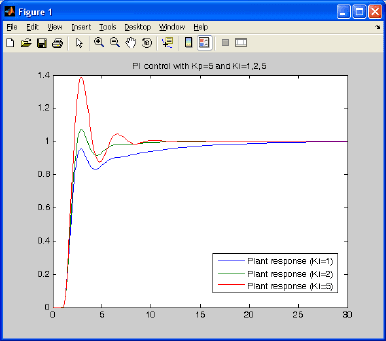
Fig. 5.12 The PI Control. Notice that increasing the integral parameter the output achieves
the steady state faster but at the expense of a high overshoot.
Therefore, the pros of a integral controller are:
- It largely enhances the accuracy, totally eliminating the error at the
steady state.
-
It slightly speeds up the response of the plant and reduces the settling
time.
The cons of a integral controller:
-
It increases the overshoot and oscillations of the output.
5.3.3 Derivative Control
Finally, the third component of the PID controller comes into scene to reduce
response oscillations. The two other components have demonstrated their ability
to produce a fast and precise response, but at the expense of causing oscillations
and high overshoots. This is because in both cases the controller has no
information about the change of the error, but only its instant value and its integral
along the time. The derivative of the error provides valuable information about
how the error value is going and acts to establish it on a constant value. The
derivative control will act firmly when there are strong changes in the error,
typically during the slopes of the error.
Example 5.4
Repeat the previous example including a derivative action with parameters K
p
=5,
K
i
=5 and K
d
=1. Try different values for Kd and observe the effects on the system
output.
5.3 PID Controller 149
Solution
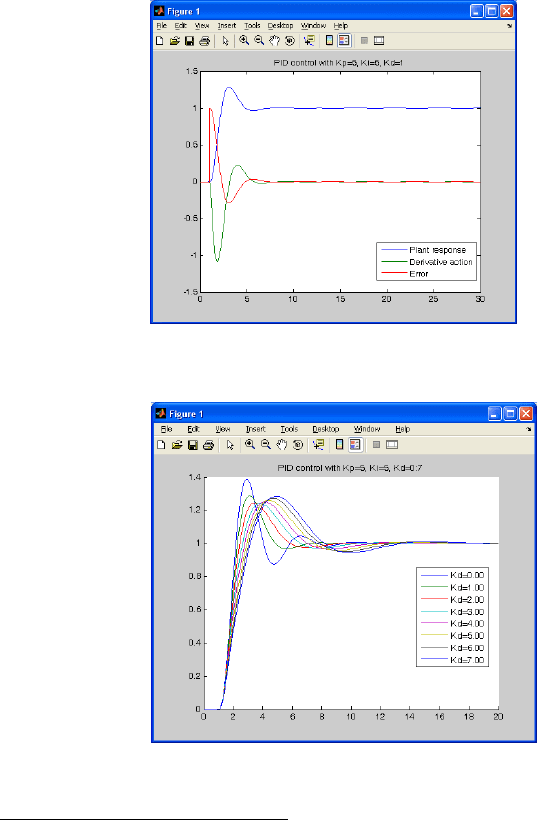
Fig. 5.13 depicts the system output for the example considered in the previous
section with K
p
=5 and K
i
=5 (the situation illustrated by the red line of the
fig. 5.12.) adding a derivative action with K
d
=1. Notice that including a derivative
control, an additional control action opposes the impulsive action of the
proportional and integrative components. This occurs when the derivative of the
error is negative, which coincides with the overshoot.
Fig. 5.13 The PID control. Adding a derivative control the response is smoothed, reducing
the overshoot and oscillations
3
.
Fig. 5.14 The PID control. The derivative control strives for reducing the overshoot, however,
high values of the parameter K
d
may cause the opposed effect, even make the system unstable.
3
To produce this plot, the derivative action has been limited to be properly shown since
when the step is raised, the derivative of the error tends to -∞.

150 5 Introduction to Control Systems
Varying the value of K
d
will cause a slower and smoother response, where the
response oscillations are flattened. See fig. 5.14 for values of K
d
up to 3 (the cyan
line). However note that higher values for this parameter will have the opposed
effect, it causes an increment in the overshoot. This is because as long as the
parameter increases, the control action is stronger and stronger, producing an
excessive reaction to the controlled variable, i.e. the derivative of the error.
Thus, the pros of a derivative controller are:
-
It reduces the overshoot and oscillations in the plant response.
The cons of a PI:
-
It slows down the output.
5.3.4 PID Summary
As stated in the previous sections, each component of the PID control exhibits
valuable advantages but, also has undesirable disadvantages. Table shown in
fig. 5.15 summarizes the contribution of the different parameters of a PID. Note
that the effects are sometimes conflictive since for instance, trying to reduce the
rise time by increasing the value of K
p
, will lead to an increment in the overshoot,
which could be solved by modifying the value of K
d
, that in turn, could modify the
rise time. That is, the selection of the parameters of a PID controller is a tradeoff
between the response characteristics and it is responsibility of the designer, based
on his experience, to tune it accordingly.
Rise Time Overshoot Setting time Error
K
p
Diminishes Increases Slight Change Diminishes
K
i
Diminishes Increases Diminishes Disappears
K
d
Slight Change Diminishes Diminishes Slight Change
Fig. 5.15 Contribution of each component of the PID to the system response.
5.4 Design of Controllers: Ziegler-Nichols Techniques
In this section we focus on the design of PID controllers, that is, on the tuning of
the parameters K
p
, K
d
, and K
i
to meet given requirements. Although different
mechanisms for designing PID controllers can be found in the literature, most of
them are based on experimental and specific techniques. In this book we will only
focus on the Ziegler-Nichols techniques.
Ziegler and Nichols described in 1942 two simple recipes for helping engineers
to properly tune PID controllers. These methods are completely experimental and
do not require to model exactly the system, albeit, some assumptions about them
5.4 Design of Controllers: Ziegler-Nichols Techniques 151
have to be done. They broadly involve considering the system as a black box that
yields a certain output when it is excited with a given input. By analyzing such
outputs, the Ziegler-Nichols techniques advise the gain values for the proportional,
integrative and derivative components of the PID. It is important to highlight that
the methods described in the following are intended to be general enough to be
applied to a variety and diversity of systems and thus the results are not always as
good as the desired ones. Thus, the solutions provided by the Ziegler-Nichols
should be taken as a starting point in the tricky chore of PID tuning, which should
be properly tuned by hand to achieve the required output characteristics.
5.4.1 Ziegler-Nichols Technique in Open Loop
The Ziegler-Nichols technique in open loop, also known as first method of
Ziegler-Nichols, can be applied when the output of a system, when unit step is
considered has a ‘S’ shape. That is, it is applicable when the system response
resembles a first order output with, probably, a small delay. Systems containing
integrators or dominant complex poles will not exhibit this behavior and thus, this
recipe is not applicable for them.
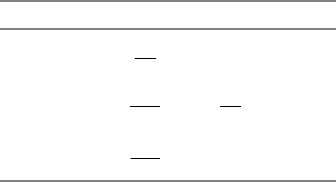
The steps to tune a PID controller following this method are:
1.
Consider the system in open loop and excite it with a step input of
amplitude A (typically A=1)
2.
Approximate the response to the typical first-order system output,
identifying the time constant, τ, the response delay L, and the system
gain K.
3.
Use these values to calculate the gains for each controller component
through the following table.
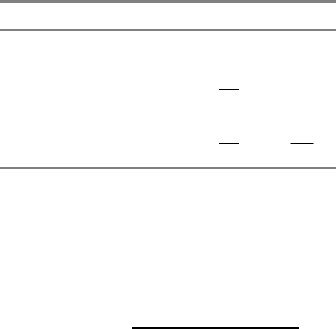
Table 5.1 PID gains provided by the first method of Ziegler-Nichols
Controller Kp Ti Td
P
- -
PI
-
PID
Example 5.5
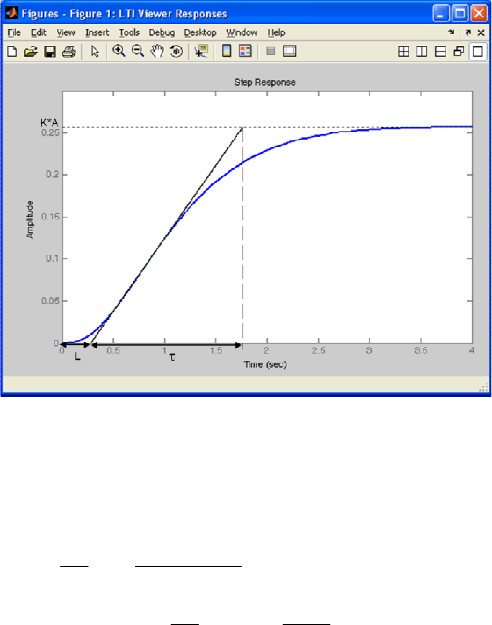
Design a PID controller for a plant whose step response in open-loop is as shown
in fig. 5.16.
KL
τ
0.9
KL
τ
0.3
L
1.2
KL
τ
2L
0.5L
152
Solution
Note that the system re
s
method. We consider a
fi
constant τ. These parame
t
at the inflection point. C
r
required parameters. Not
e
order system. Since we
a
would be more precise to
moment in which the out
p
Fig. 5.16 Obtaining the para
m
In this example, L=
0
values, a PID controller t
u
1.2 1
20.558,
0.5 0.1
3
i
d
KL
TL
TL
τ
==
==
==
p
K
5 Introduction to Control Syste
m
s
ponse exhibits the ‘S’ shape needed for applying t
h
fi
rst-order system modeled by a time delay L and a ti
m
t
ers can be calculated by tracing the tangent to the outp
u
r
ossings with the x-axis and the final value determine t
h
e
that this computation of τ is only valid for pure fir
s
a
re assuming an arbitrary system as a firs
t
-order one,
rely on the formal definition of the time constant, as t
h
p
ut achieves 63.3% of the final value.
m
eters for the open-loop Zigler-Nichols Method.
0
.2754, τ=1.7605-L=1.4851, and K=0.26. With the
s
u
ned through this method will be:
{}
1.4851
.2
0.26*0.2754
20.74
0.558
3
77, 20.74 0.1377
p
i
i
dpd
K
K
T
KKT
=
⎧⎫
= ⇒ ==
⎨⎬
⎩⎭
= ⇒ =⋅ =
i
d
20.74
K 37.1693
K 2.856
m
s
h
is
m
e
u
t
h
e
st
-
it
h
e
s
e
5.4 Design of Controllers: Ziegler-Nichols Techniques 153
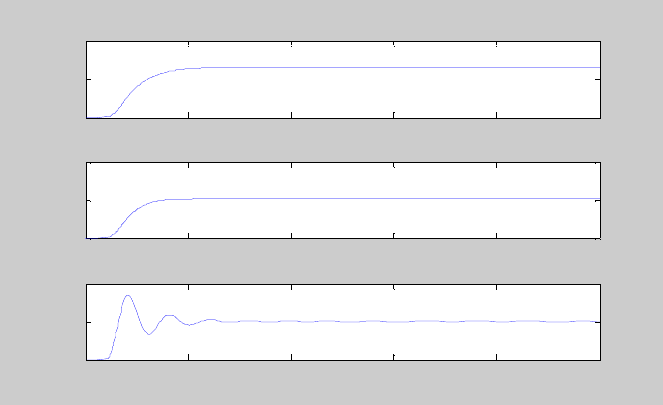
Fig. 5.17 System responses. Up) Open-loop output, used for obtaining the parameters L and
τ. Middle) Closed-loop without controller, i.e. a proportional controller with K
p
=1. Bottom)
PID controlled response. Note that the output, achieves the reference, although it exhibits a
remarkable overshoot.
Fig. 5.17 illustrates the benefits of using the tuned PID. While the non-
controlled system presents a very slow response with a significant error at the
steady state, when the obtained PID controller is considered, the output eliminates
such an error (what is normal because of the integral component), at the expense
of some oscillations and a maximum overshoot over 50%. Although the use of the
tuned PID controller enhances the system response, it may be desirable to improve
it even more. For that, and starting with the values obtained through the Ziegler-
Nichols method, a manual tuning should be necessary. Please refer to the end of
the next section where some considerations when manually adjusting PID
controllers are outlined.
A final consideration should be taking into account when using this method.
The prerequisite of approximating the system response to a first-order response
with a delay makes us to calculate the time constant τ through its geometrical
definition, i.e. tracing the tangent line at the inflexion point. However it is only
valid for (real) first-order systems. In order to eliminate this problem, it is
recommendable to consider that τ is defined as the moment where the output
achieves the 0.63% of its final value by simple inspection of the response.
5.4.2 Ziegler-Nichols Technique in Close Loop
The second recipe for tuning PID controllers, known as the close-loop technique
can be only applied to systems which can be turned into unstable under
0 5 10 15 20 25
0
0.2
0.4
System Response in Open-Loop configuration
0 5 10 15 20 25
0
0.2
0.4
System Response in Closed-Loop configuration without controller
0 5 10 15 20 25
0
1
2
System Response in Closed-Loop configuration with the tunned PID controller
154 5 Introduction to Control Systems
proportional control. This method was designed to obtain a diminishing overshoot
between the first and the second oscillation in a 25%. Obviously such a result may
not be assumable in most of the cases, especially when the maximum oscillation is
excessive, and thus this method is normally used as a preliminary step to a manual
tune.
The steps to be followed in this second method of Ziegler-Nichols are:
1.
Consider only proportional control, as shown in fig. 5.18, and provide
a unitary step as reference.
2.
Increase K
p
upto a certain value, the so-called critical value K
cr
, for
which the controlled output oscillates at the limit of the stability.
3.
Analyze the system output to assess the period of the oscillation, P
cr
,
when considering the critical proportional gain K
cr
.
4.
Use the values of P
cr
and K
cr
, to calculate the gains for each controller
component through the following table.
Table 5.2 PID gains provided by the second method of Ziegler-Nichols
Controller Kp Ti Td
P
- -
PI
-
PID
Example 5.6
Consider a plant modeled by the following transfer function:
Design a PID controller according to the second method of Ziegler-Nichols.
Solution
Notice that, for applying the recipe for this method it is not mandatory to have this
information about the plant, but it has been considered here for clarity sake.
0.5
cr
K
0.45
cr
K
1.2
cr
P
0.6
cr
K
2
cr
P
8
cr
P
32
40
()
2108210
PLANT
Gs
sss
=
+++
5.4 Design of Controllers: Ziegler-Nichols Techniques 155
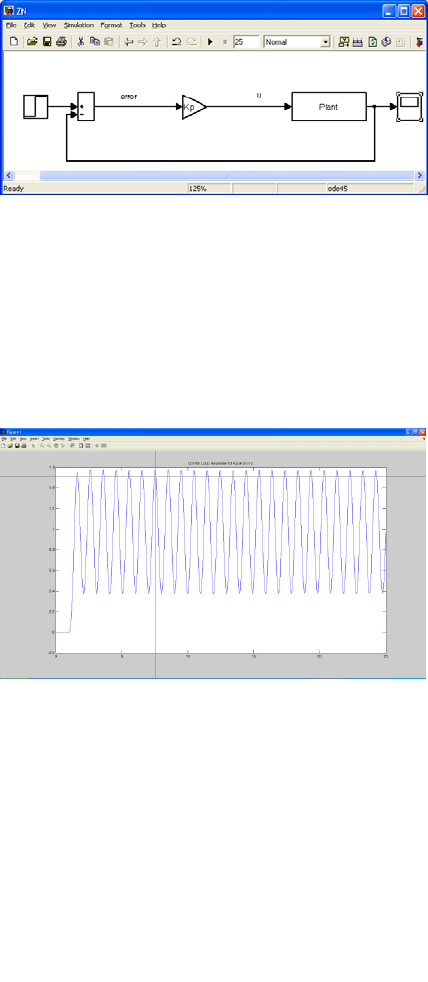
Fig. 5.18 Simulink diagram of the configuration for applying the second method of the
Ziegler-Nichols tuning technique.
Steps 1) and 2) are carried out by considering a proportional control of the
considered plant (see fig. 5.18), for which, the value of Kp is being increased
experimentally until reaching a oscillatory but stable output. This is achieved
in our example for a value K
p
=K
cr
=10, for which the output is depicted in
fig. 5.19.
Fig. 5.19 Maintained oscillations caused by setting a proportional control that leads the
system to the stability limit.
The step 3) requires the calculation of the period of the output oscillations.
Such a period can be manually measured through the Matlab plot through the
command ginput.
The above command permits us to click over the figure twice, yielding the exact
clicked position (x, y). We can obtain the critical period P
cr
by clicking on two
consecutive maximums of the oscillation and subtract the x values to obtain a
positive period. In this case, P
cr
= 7.5605-6.5524=1.0081 s.
>> [x,y]=ginput(2)
x =
6.5524
7.5605
y =
1.5669
1.5784

156 5 Introduction to Control Systems
Having, K
cr
and P
cr
, the parameters needed for this recipe, the step 4) can be
performed to obtain the K
p
, K
i
and K
d
gains for a PID controller:
The application of the closed-loop technique of Ziegler-Nichols has been
illustrated in an experimental fashion, which is the usual case when no
information about the plant is at our disposal. However, in certain situations we
can also calculate the K
cr
and P
cr
parameters mathematically. The reasons are
obvious; exact solutions without the need of acting on the system (which may be
dangerous when trying to achieve an oscillatory response). On the contrary, as
commented previously, this option is not always feasible since it requires the exact
model of the plant (or at least a good approximation). Next, having the transfer
function of the plant, the mathematics behind this example is outlined.
The characteristic equation for the closed loop when a proportional control is
considered is:
The evaluation of this equation at point yields the value of the critical
proportional gain, K
p
=K
cr
, that moves the poles of the system to the axis,
causing, thus, a maintained oscillation at angular speed .
32
0
32
32
2
3
210821040 0
2( ) 10( ) 82 10 40 0
2 10821040 0
10 10 40 0 (1)
2820(2)
p
sj
p
p
p
sss K
jjj K
jjK
K
jj
ω
ωωω
ωω ω
ω
ωω
=±
++++ =
++++=
−−+ ++ =
−++ =
−+ =
From (2) we can find the value of
ω:
{}
0.6 0.6 10
16
0.5,
22 0.5
1
0.125, 6 0.125
88
cr
p
cr
ii
i
cr
ddpd
K
K
P
TK
T
P
TKKT
==⋅=
⎧⎫
=== = ⇒ ==
⎨⎬
⎩⎭
=== = ⇒ =⋅ =
6
12
0.75
p
i
d
K
K
K
32
210821040 0
p
sss K++++ =
0sj
ω
=±
j
ω
ω
()
2
2
2820
0,
82
41
2
ωω
ω
ω
−+=⇒
=
−
==
−
(1)
(2)
5.4 Design of Controllers: Ziegler-Nichols Techniques 157
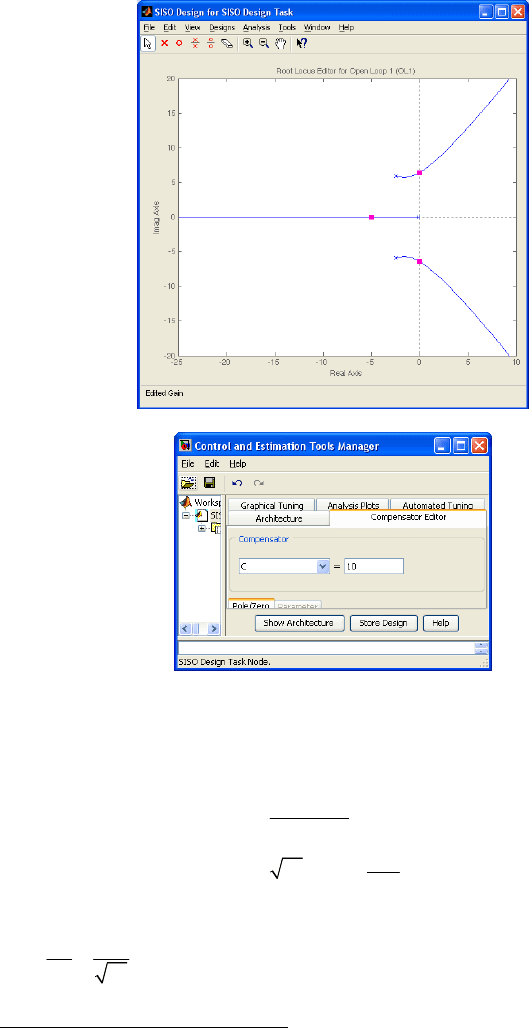
Fig. 5.20 Root-locus of the plant. Observe that the value for Kp=10 (called compensator in
rltool) moves two of the poles to jω axis, i.e. to the limit of the stability.
From (1) and using the results
4
of (2) the value of K
p
is found:
That is, K
cr
=10, and the critical period P
cr
is calculated as
which reveals our manual precision when using the
ginput command.
4
Note that ω =0 has not been used since the proportional gain is defined for our purposes
in the range [0..∞].
2
10 10
40
400
( 41) 10
40
p
p
K
K
ω
ω
−
= ⇒
= ⇒ =
22
0.9813
41
cr
P
ππ
ω
== =