
Carson Ph., Mumford C. Hazardous Chemicals Handbook (Справочник по опасным химическим веществам)
Подождите немного. Документ загружается.


(b) Halo-acetylenes and acetylides
Lithium bromoacetylide
Dibromoacetylene
Lithium chloroacetylide
Sodium chloroacetylide
Dichloroacetylene
Bromoacetylene
Chloroacetylene
Fluoroacetylene
Diiodoacetylene
Silver trifluoromethylacetylide
Chlorocyanoacetylene
Lithium trifluoromethylacetylide
3,3,3-Trifluoropropyne
1-Bromo-2-propyne
1-Chloro-2-propyne
1-lodo-1,3-butadiyne
1,4-Dichloro-2-butyne
1-lodo-3-penten-1-yne
1,6-Dichloro-2,4-hexadiyne
2,4-Hexadiynylene bischlorosulphite
Tetra (chloroethynyl) silane
2,4-Hexadiynylene bischloroformate
1-lodo-3-Phenyl-2-propyne
1-Bromo-1,2-cyclotridecadien-4,8,10-triyne
(c) Metal acetylides
Disilver acetylide
Silver acetylide-silver nitrate
Digold(I) acetylide
Barium acetylide
Calcium acetylide (carbide)
Dicaesium acetylide
Copper(II) acetylide
Dicopper(I) acetylide
Silver acetylide
Caesium acetylide
Potassium acetylide
Lithium acetylide
Sodium acetylide
Rubidium acetylide
Lithium acetylide-ammonia
Dipotassium acetylide
Dilithium acetylide
Disodium acetylide
Dirubidium acetylide
Strontium acetylide
Silver trifluoromethylacetylide
Sodium methoxyacetylide
Sodium ethoxyacetylide
1,3-Pentadiyn-1-ysilver
1,3-Pentadiyn-1-ylcopper
Dimethyl-1-propynylthallium
Triethynylaluminium
Triethynylantimony
Bis(Dimethylthallium) acetylide
Tetraethynylgermanium
Tetraethynyltin
Sodium phenylacetylide
3-Buten-1-ynyldiethylaluminium
Dimethyl-phenylethynylthallium
3-Buten-1-ynyltriethyllead
3-Methyl-3-buten-1-ynyltriethyllead
3-Buten-1-ynyldiisobutylaluminium
Bis(Triethyltin) acetylene
(d) Metal azides
Aluminium triazide
Barium diazide
Boron triazide
Cadmium diazide
Calcium diazide
Chromyl azide
Copper(I) azide
Copper(II) azide
Lead(II) azide
Lead(IV) azide
Lithium azide
Lithium boroazide
Mercury(I) azide
Mercury(II) azide
Potassium azide
Silicon tetraazide
Silver azide
(e) Metal azide halides
Chromyl azide chloride
Molybdenum azide pentachloride
Molybdenum azide tetrachloride
Silver azide chloride
Tin azide trichloride
Titanium azide trichloride
Tungsten azide pentabromide
Uranium azide pentachloride
Vanadium azide dichloride
Vanadyl azide tetrachloride
(f) Diazo compounds
1,1 Benzoylphenyldiazomethane
2 Butan-1-yl diazoacetate
t-Butyl diazoacetate
t-Butyl-2-diazoacetoacetate
Diazoacetonitrile
2-Diazocyclohexanone
Diazocyclopentadiene
1-Diazoindine
Diazomethane (The precursor of this compound
(N-Methyl-N-nitriso-toluene-4-sulphonamide)
is available commercially)
Diazomethyllithium
Diazomethylsodium
Dicyanodiazomethane
Dinitrodiazomethane
Isodiazomethane
Methyl diazoacetate
(g) Metal fulminates
Cadmium fulminate
EXPLOSIVE CHEMICALS 239
Table 7.9 Cont’d

240 REACTIVE CHEMICALS
Table 7.9 Cont’d
Copper fulminate
Dimethylthallium fulminate
Diphenylthallium fulminate
Mercury(II) methylnitrolate
Mercury(II) formhydroxamate
Mercury(II) fulminate
Silver fulminate
Sodium fulminate
Thallium fulminate
(h) Nitro compounds
(i)
C-Nitro compounds
4-Chloro-2,6,-dinitroaniline
2-Chloro-3,5-dinitropyridine
Chloronitromethane
1-Chloro-2,4,6-trinitrobenzene (picryl chloride)
Dinitroacetonitrile
2,4-Dinitroaniline
Dinitroazomethane
1,2-Dinitrobenzene
1,3-Dinitrobenzene
1,4-Dinitrobenzene
2,4-Dinitrobenzenesulphenyl chloride
3,5-Dinitrobenzoic acid
3,5-Dinitrobenzoyl chloride
2,6-Dinitrobenzyl bromide
1,1-Dinitro-3-butene
2,3-Dinitro-2-butene
3,5-Dinitrochlorobenzene
2,4-Dinitro-1-fluorobenzene
2,6-Dinitro-4-perchlorylphenol
2,5-Dinitrophenol
2,4-Dinitrophenylacetyl chloride
2,4-Dinotrophenylhydrazine
2,4-Dinitrophenylhydrazinium perchlorate
2,7-Dinitro-9-phenylphenanthridine
2,4-Dinitrotoluene
1-Fluoro-2,4-dinitrobenzene
4-Hydroxy-3,5-dinitrobenzene arsonic acid
1-Nitrobutane
2-Nitrobutane
1-Nitro-3-butene
Nitrocellulose
1-Nitro-3 (2,4-dinitrophenyl) urea
Nitroethane
2-Nitroethanol
Nitroglycerine
Nitromethane
1-Nitropropane
2-Nitropropane
5-Nitrotetrazole
Picric acid (2,4,6-trinitrophenol)
Potassium-4,6-dinitrobenzofuroxan hydroxide
complex
Potassium-3,5-dinitro-2(1-tetrazenyl) phenolate
Potassium trinitromethanide (‘Nitroform’ salt)
Sodium 5-dinitromethyltetrazolide
Tetranitromethane
Trichloronitromethane (chloropicrin)
2,2,4-Trimethyldecahydroquinoline picrate
Trinitroacetonitrile
1,3,5-Trinitrobenzene
2,4,6-Trinitrobenzenesulphonic acid
(picryl sulphonic acid)
Trinitrobenzoic acid
2,2,2-Trinitroethanol
Trinitromethane
2,4,6-Trinitrophenol (picric acid)
2,4,6-Trinitroresorcinol
2,4,6-Trinitrotoluene (TNT)
2,4,6-Trinitro-
m
-xylene
(ii)
N-Nitro compounds
1-Amino-3-nitroguanidine
Azo-N-nitroformamidine
1,2-Bis(difluoroamino)N-nitroethylamine
N,N’ Diacetyl-N,N’-dinitro-1,2-diaminoethane
N,N’ Dinitro-1,2-diaminoethane
N,N’ Dinitro-N-methyl-1,2-diaminoethane
1-methyl-3-nitro-1-nitrosoguanidine
Nitric amide (nitramide)
1-Nitro-3(2,4-dinitrophenyl) urea
Nitroguanidine
N-Nitromethylamine
Nitrourea
N,2,4,6-Tetranitro-N-methylaniline (tetryl)
1,3,5,7-Tetranitroperhydro-1,3,5,7-tetrazocine
(iii)
Ammonium nitrate
(i) Reactive vinyl monomers
Acrylic acid
Acrylonitrile
n-
Butyl acrylate
n-
Butyl methacrylate
4-Chlorostyrene
Divinyl benzene
Dodecyl methacrylate
Ethyl acrylate
Ethylene dimethacrylate
2-Hydroxypropyl methacrylate
Methyl acrylate
Methyl methacrylate
α-Methyl styrene
Methyl vinyl ether
Styrene
Vinyl acetate
Vinyl bromide
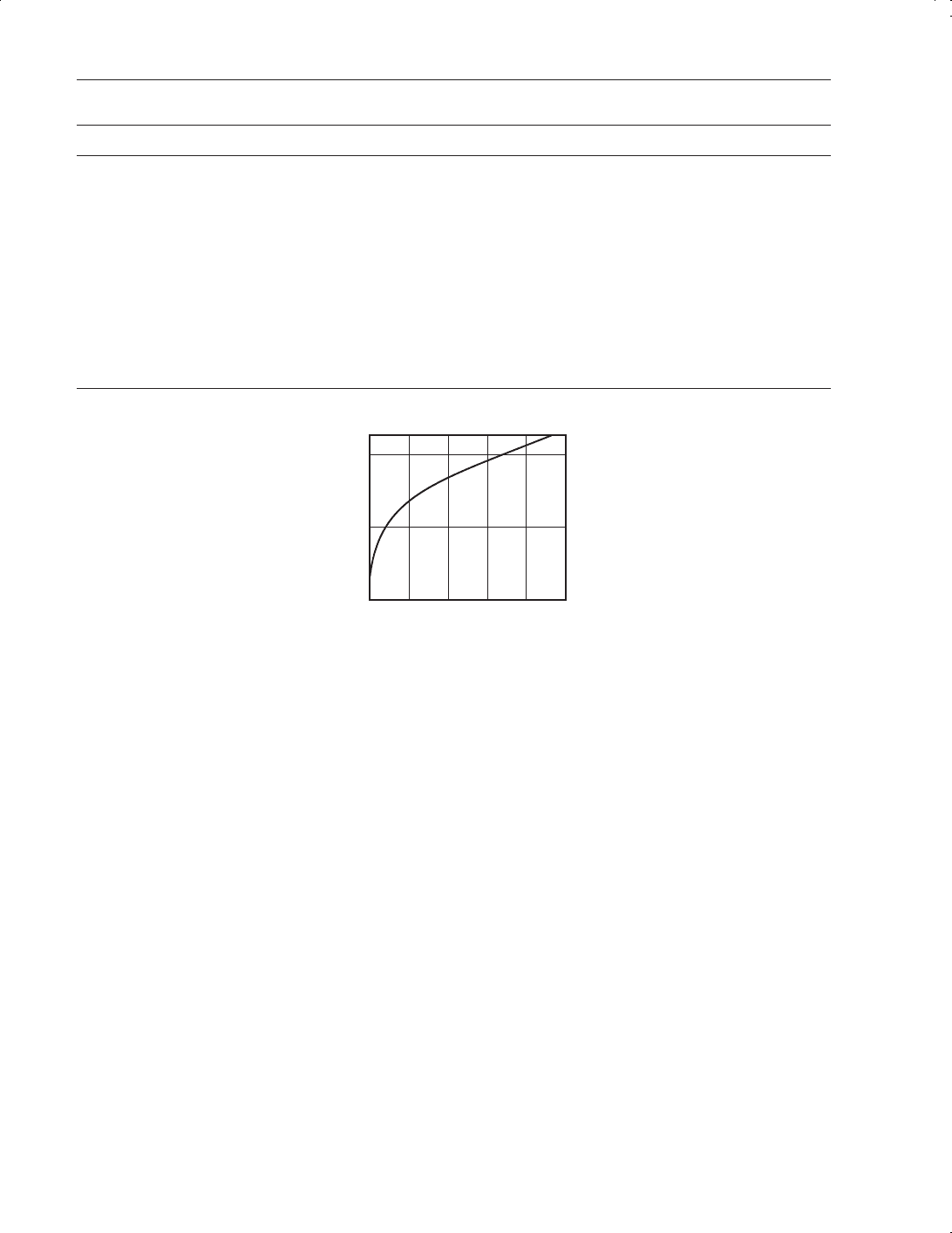
0 5 10 15 20 25
Quantity of explosive (kg)
10
5
0
Fireball diameter (metres)
Table 7.10 Explosive effects of small quantities of high explosive in a 6 m × 6 m room
Quantity of explosive Effect
1 g Serious injury to a person holding the explosive
10 g Very serious injury to a person close to the explosive
1% of persons at a distance of 1.5 m are also liable to ear-drum rupture
100 g 50% of windows in room likely to be blown out
1% ear-drum rupture at 3.5 m
50% ear-drum rupture at 1.5 m
Almost certain death of persons in very close proximity (e.g. holding the explosive)
500 g Complete structural collapse of brick-built building probable
Probable survival of steel of concrete-framed building
Almost certain death of persons very close to blast
Persons close to blast seriously injured by lung and hearing damage, fragmentation effects,
and from being thrown bodily
Ear-drum rupture of almost all persons within the room
Figure 7.2
Diameter of fireball versus quantity of explosive
selection of the appropriate safety precautions. Propellant hazards are akin to those for pyrotechnics
except that confinement can lead to detonation.
Precautions
Expert advice is required before handling any of these materials, many of which are governed by
legislation regulating, e.g., licensing of premises, use, storage, transportation, import/export, sale,
labelling, disposal. Some general considerations are given in Table 7.12. Table 7.13 summarizes
basic precautions for work on a laboratory scale.
Disposal of explosive waste and the repair or dismantling of contaminated plant need extreme
care. Table 7.14 provides guidance on techniques for disposal of the more commonly encountered
explosives by experts at proper disposal sites. Collection of the waste should be in well labelled,
distinctive, specially designed containers. Cleaning and decontamination of plant comprises removal
of gross contamination under wet or solvent conditions using tools made of soft material, final
cleaning with solvent or chemical reagent, and finally ‘proving’ of the equipment by heating to
temperatures exceeding those for decomposition of the contaminant. Repair work should be the
subject of a permit-to-work system (Chapter 13); it should be assumed that explosives may have
penetrated threads, joints and other crevices and bolts, flanges etc. These should be thoroughly
decontaminated prior to dismantling. Operatives should be suitably trained and protected.
EXPLOSIVE CHEMICALS 241

242 REACTIVE CHEMICALS
Table 7.11 Classification of pyrotechnics
Composition Behaviour Artefacts Characteristics
Group 1
Chlorate and metal Burn very Flash shells (maroons) Mass explosion risk
perchlorate report or violently Casings containing flash
whistling compositions compositions
Dry non-gelatinized Sealed hail-preventing
cellulose nitrates rockets
Barium peroxide/zirconium
compositions
Group 2
Nitrate/metal/sulphur Burn violently Large firework shells Accelerating
compositions Fuse unprotected signal single-item
Compositions with >65% flares explosions
chlorate Non-pressed report bullets
Black powder (bird scarers)
Nitrate/boron compositions Report cartridges
(unpacked)
Black matches (uncovered)
Group 3
Nitrate/metal compositions Burn fast Large firework shells Burn very
without sulphur Fuse protected signal flares violently with
Compositions with <35–65% Pressed report cartridges in single-item
chlorate primary packagings explosions
Compositions with black Quickmatches in transport
powder packagings
Lead oxide/silicon with >60% Waterfalls; Silver wheels;
lead oxides Volcanoes
Perchlorate/metal Black powder delays
compositions other than
report
Group 4
Coloured smoke compositions Low/medium Large firework shells Single-item
White smoke compositions speed burning without flash ignitions/explosions
(except those in Group 5) compositions in transport
Compositions with <35% packagings
chlorate Signal ammunition without
Thermite compositions flash compositions,
Aluminium/phosphorus ≤40 g of composition
pesticide compositions Small fireworks, fuse
protected (except
volcanoes and silver
wheels)
Group 5
Slow burning/heating Burn slowly Small fireworks in primary Slow single-item
compositions packagings ignitions/explosions
White smoke compositions Signal ammunition in
based on hexachloroethane transport packaging
with zinc, zinc oxide and Delays without black
<5% aluminium or <10% powder
calcium silicon Coloured smoke devices
Sealed table bombs
White smoke devices
unpacked (see Group 5
composition)

Table 7.12 General considerations for work with explosive chemicals
Consult with experts on the hazards and on technical, administrative and legal requirements.
The chance of accidental initiation is related to the energy imparted to the substance and the sensitivity of the compound.
Hence the sensitivity of compounds should be established (e.g. Table 7.15) before devising appropriate control measures.
(Many sensitive explosives have ignition energies of 1–45 mJ, while some very sensitive materials have ignition energies
<1 mJ.)
Depending on scale, specially designed facilities may be required, remote from other buildings, accessways or populated
areas. Remote handling procedures may be required (Figure 7.3), possibly with closed-circuit TV monitoring utilizing
concrete outbuildings or bunkers.
Consider fire protection, detection and suppression requirements (Chapter 6), and means of escape, alarms, etc.
Minimize stocks and segregate from other chemicals and work areas. Where appropriate, keep samples dilute or damp and
avoid formation of large crystals when practicable. Add stabilizers if possible, e.g. to vinyl monomers. Store in specially-
designed, well-labelled containers in ‘No Smoking’ areas, preferably in several small containers rather than one large
container. Where relevant, store in dark and under chilled conditions, except where this causes pure material to separate
from stabilizer (e.g. acrylic acid).
Do not decant in store.
Consider need for high/low temperature alarms for refrigerated storage; these should be inspected and tested regularly.
Consider need for mitigatory measures (fire, blast, fragment-resistant barricades/screens), electrical and electrostatic safeguards,
personal protection, disposal etc.
Stores and work areas should be designated ‘No Smoking’ areas and access controlled. Depending upon scale, explosion-
proof electrics and static elimination may be required.
Deal with spillages immediately and make provisions for first aid.
All staff should be adequately trained, and written procedures provided.
Table 7.15 gives selected methods for testing explosives.
There is also a range of chemicals, sometimes termed ‘blowing agents’ (e.g. hydrazides) which
decompose at low temperature producing large volumes of gas such as nitrogen and steam.
Examples are listed in Table 7.16. Equipment for such products requires special design and a
knowledge is required of activators, decomposition rates and temperatures.
General principles for storage
The general principles for storage of chemicals, which follow from previous summaries, are listed
in Table 7.17. Those for compressed gases are given in Chapter 9.
Hazards arising in chemicals processing
Some factors contributing to chemical process hazards are summarized in Chapter 6: the roles of
individual chemicals can be assessed from the preceding part of this chapter.
Chemical reaction hazards
Examples of hazardous reactions are given in Table 7.18. Table 7.19 gives basic precautions in
monomer storage; Table 7.20 lists properties of common monomers.
Reaction characteristics
• Reaction in gas, liquid (neat or in solution suspension/emulsion) or solid phase.
• Catalytic or non-catalytic.
HAZARDS ARISING IN CHEMICALS PROCESSING 243
244 REACTIVE CHEMICALS
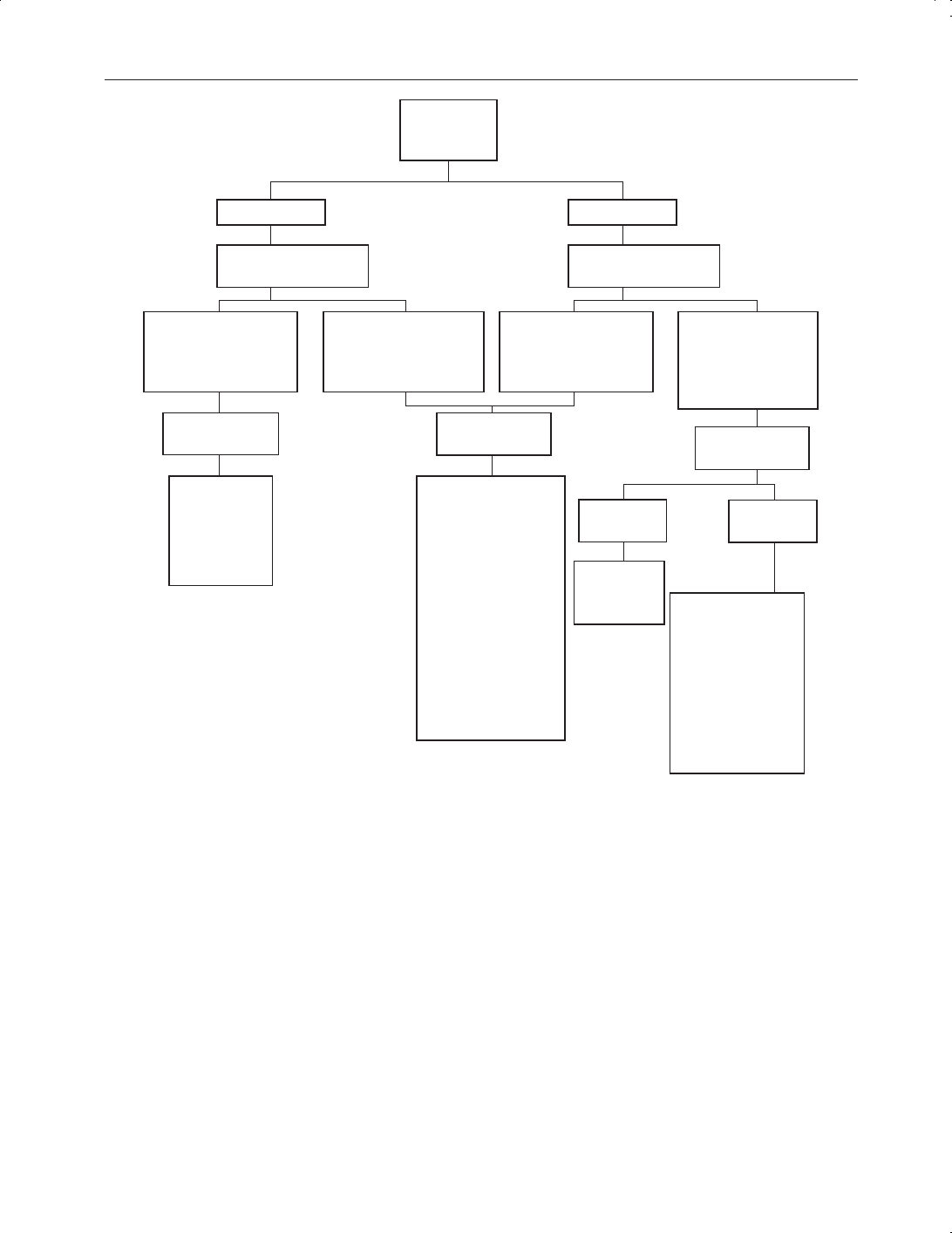
What is the
likelihood of
initiation?
Negligible/low High
High
e.g. slurry and
emulsion explosives
manufacturing
Negligible/low
e.g. handling small
quantities of insensitive
explosives
What is the potential
for harm to operators?
Negligible/low
e.g. pyrotechnic
compositions in
small quantities
High
e.g. NG blasting,
explosives
manufacture and
propellant pressing
Non-remote
manufacturing
Provide:
Safe design
Safe system
of work
Supervision
Monitoring
Non-remote
manufacturing
Provide:
Safe system
of work
Safeguards (eye
protection as
minimum)
Against explosion:
Hand/wrist protection
Heat protection
Safety screens
Against fireball:
Fire-protective
gloves/clothing
Head/face protection
Safety screens
Remote
manufacturing
Process
not running
Process
running
Prevent
access to
process area
Provide:
Protective
clothing (if
appropriate)
for access to
process area
e.g. while loading
‘carpet rolls’ of
propellant into
presses
What is the potential
for harm to operators?
Figure 7.3
Remote versus non-remote manufacturing requirements and fire/explosion safeguards
• Exothermic, endothermic, or negligible heat loss/gain.
• Reversible or irreversible.
• First or second order or complex kinetics.
Reactors may be operated batchwise or continuously, e.g. in tubular, tubes in shell (with or
without internal catalyst beds), continuous stirred tank or fluidized bed reactors. Continuous
reactors generally offer the advantage of low materials inventory and reduced variation of operating
parameters. Recycle of reactants, products or of diluent is often used with continuous reactors,
possibly in conjunction with an external heat exchanger.
Adequate heat removal facilities are generally important when controlling the progress of
exothermic chemical reactions. Common causes of thermal runaway in reactors or storage tanks
are shown in Figure 7.4. A runaway reaction is most likely to occur if all the reactants are initially
mixed together with any catalyst in a batch reactor where heat is supplied to start the reaction.

Chemical engineering operations
Many chemical engineering unit operations may be linked together in chemical processing. The
commonest are:
Fluid mechanics
Pumping of liquids. Compression of gases
Mixing (solids, liquids, gases; possibly multiphase)
Atomization, dispersion
Table 7.13 Precautions for handling explosives in the laboratory
Storage
The quantities of potentially explosive materials in store and in use should be strictly limited.
Stores should be specially designed, constructed of non-combustible material, and located away from other hazards (e.g.
brick ‘coal bunkers’ are suitable for small samples, but purpose-built constructions with explosion-proof lights etc. are
required for larger quantities). They should be designated ‘No Smoking’ areas and be well labelled.
Stores should be used exclusively for these materials. Other combustible material such as fabric, paper, organic solvents
should not be stored there.
Generally the substances in this class are unstable when heated or exposed to light; they should be stored cool and in the
dark. However, for liquids with added stabilizer cooling may cause separation of the material from the stabilizer.
Similarly, precipitation of a potentially explosive compound from a diluent may occur on cooling. In both cases this can
represent a hazardous situation.
Stores should be ventilated and sound, e.g. no cracks in floors, no rusty window frames, no water seepages, etc.
Stores should be clean, tidy and locked. Contamination must be avoided and a high standard of housekeeping maintained.
Heat sources should not be permitted nearby.
Material should be purchased in several small containers rather than one large container and always stored in original
containers. Integrity of the labels should be checked.
Use
Use must be restricted to experienced workers, aware of the hazards and the necessary precautions.
Records of usage should be kept and stock rotated. Old material should be disposed of.
Work should be on a scale of <0.5 g for novel but potentially explosive material until the hazards have been fully evaluated
and <5 g for established, commercially available, substances such as peroxide free-radical initiators.
For the above scales, eye protection should be worn and work should be undertaken in a standard fume-cupboard behind
a well-anchored polycarbonate screen. It is advisable to wear a protective apron and hand protection; whether leather
gauntlets or tongs should be used will be dictated by circumstances. Such measures are recommended but it should be
ensured that they do not precipitate a hazard as a result of loss of tactile sensitivity (e.g. dropping a flask, overtightening
clamps, exerting excessive pressure when assembling apparatus). The material of gloves needs consideration. (PVC but
not
rubber is suitable for tert-butyl peroxide.)
For large-scale work, armour-plated fume cupboards are likely to be required.
Skin contact, inhalation and ingestion must be avoided. Splashes in eyes or on skin should be washed away immediately with
copious quantities of water. Medical attention should be sought. If material is swallowed, medical aid is required
immediately.
Glass apparatus should be pickled (e.g. in nitric acid) and thoroughly rinsed after use.
Sources of ignition such as hot surfaces, naked flames etc. must be avoided and smoking prohibited where explosives are
used. Accidental application of mechanical energy should be avoided (e.g. material should not be trapped in ground-glass
joints): seized stoppers, taps etc. must not be freed by the application of force. To minimize risk of static electricity,
laboratory coats of natural fibre rather than synthetic fabrics are preferred. It is important to neutralize any spillage on the
coat immediately, since delay could result in the impregnated garment becoming a fire hazard.
To prevent glass fragments from flying in the event of an explosion, use should be made of metal gauzes to screen reaction
flasks etc., or cages, e.g. for desiccators. Vessels of awkward size/shape may be covered with cling film.
Whenever possible a stabilizer or diluent should be used and separation of the pure material should be avoided.
Any waste material (and contaminated cloths, tissues, clothing etc.) must be rendered safe by chemical means or by
controlled incineration of dilute solution where practical prior to disposal.
In the event of fire, the area should be evacuated, the alarm raised and the fire brigade summoned. Only if it is clearly safe
to do so should the fire be tackled with an
appropriate
extinguisher.
HAZARDS ARISING IN CHEMICALS PROCESSING 245

246 REACTIVE CHEMICALS
Table 7.14 Suggested methods of disposal for commonly encountered explosives
Burn Detone Dissolve Chemical Drowning
NG-based blasting explosive yes yes no no yes
ANFO yes yes yes no yes
Pyrotechnic compositions yes no yes no yes
Black powder yes no yes no yes
Detonators yes yes no no no
Detonating cord yes yes no no no
Nitroglycerine yes no no yes no
Slurry explosive yes yes yes no yes
Contaminated paper waste yes no no no no
Fireworks (finished) yes no no no no
Initiatory explosives no yes no yes no
Propellants yes no no no no
Non-NG-based
blasting explosives yes yes no no yes
Shotgun cartridges yes no no no no
Sporting/small arms ammunition yes no no no no
Table 7.15 Methods for testing explosives
Flame test A few crystals (or drop of solution) are heated in the non-luminous flame of a Bunsen burner.
Melting with quiet burning is at one end of the spectrum; cracking, flashing-off or flaring
are considered hazardous.
Impact Impact sensitivity can be gauged by striking a few crystals of the compound on a metal last
with the ball of a ball-pein hammer. Ignition, smoking, cracking or other sign of decomposition
are considered hazardous.
Differential If the decomposition reaction follows the general rate law, the activation energy,
scanning heat of decomposition, rate constant and half-life for any given temperature can
calorimetry be obtained on a few milligrams using the ASTM method. Hazard indicators
Differential thermal include heats of decomposition in excess of 0.3 kcal/g, short half-lives, low
analysis activation energies and low exotherm onset temperatures, especially if heat of
Hot stage decomposition is considerable.
microscope The DTA or hot-stage microscope can be used under ignition conditions to obtain an
ignition temperature. The nature of the decomposition can also be observed at a range of
temperatures. Observations such as decomposition with evolution of gases prior to ignition
are regarded as potentially hazardous.
Bomb calorimetry Use of oxygen and an inert gas enables the heat of combustion and the heat of decomposition
to be evaluated respectively.
Deflagration A melting point test has been described for diazo compounds. The first 1 mm of a melting-
point tube filled with c. 10 mg of test compound is inserted in a melting-point apparatus
heated at 270°C. Once decomposition starts, the tube is removed. The decomposition
rapidly propagates through the entire mass for unstable diazo compounds; no such propagation
is reported for stable versions.
Heat transfer
Convective heat exchange, natural or forced
Radiant heat transfer, e.g. furnaces
Evaporation, e.g. in evaporators
Condensation, e.g. in shell and tube heat exchanges
Heat transfer to boiling liquids, e.g. in vaporizers, boilers, re-boilers

Mass transfer operations (in which a material is transferred across a
phase boundary or interface)
Distillation, either batchwise or continuous
Liquid–liquid extraction (solvent extraction)
Solid–liquid extraction (leaching)
Gas absorption, scrubbing; desorption, stripping
Humidification and water cooling
Dehumidification and air conditioning
Drying of solids, solutions/slurries
Adsorption (in which a gas or liquid is taken up on a solid, e.g. activated charcoal, molecular
sieves)
Crystallization
Less common means of separation, e.g. dialysis, ion-exchange, osmosis, chromatography,
electrophoresis.
Non-mass transfer operations
Filtration of suspensions, e.g. in filter presses, rotary vacuum filters
Sedimentation, gravity settling
Centrifugation, for immiscible liquid or solid separation and recovery
Classification by sieving, screening
Size reduction, e.g. milling, crushing, grinding
Table 7.16 Substances with a high rate of decomposition
These substances decompose rapidly to produce large volumes of gas. They are substances not classified as deflagrating or
detonating explosives but exhibit violent decomposition when subject to heat.
Material Trauzel lead Combustion properties
block value
(cm
3
/g)
1:8, Bis (dinitrophenoxy)4,5-dinitro anthraquinone 18.5
100% Dinitrosopentamethylene tetramine 18.5
2,4-Dinitroaniline 17.5
2-Amino-3,5-dinitrothiophene 13–17.5
1:5 Bis (dinitrophenoxyl) 4:8-dinitro anthraquinone 10.5 Combustion propagates fully and
2-formylamino-3,5-dinitrothiophene 8 fast with flame
2-acetyl-amino-3,5-dinitrothiophene 7
2-anisidine nitrate 6
80% DNPT 2.5
6-nitro-1-diazo-2-naphthol-sulphonic acid 5 Combustion propagates fully and
fast by smouldering
Ammonium nitrate 23
2-bromo-4,6-dinitroaniline 17.5 Local decomposition – no
6-bromo-2,4-dinitroaniline 17 propagation of the
2-chloro-4,6-dinitroaniline 16.5 decomposition
This substance exhibits a high rate of decomposition without combustion when exposed to heat and certain initiators.
Material Decomposition Property
temperature
P,P’-oxybis (benzenesulphonyl hydrazide) 150°C Decomposes and propagates
HAZARDS ARISING IN CHEMICALS PROCESSING 247

248 REACTIVE CHEMICALS
Table 7.17 General principles for chemical storage
• Store minimum quantities
• Control stock, i.e. first-in/first-out, move redundant stock
• Segregate chemicals, e.g. from water, air, incompatible chemicals, sources of heat, ignition sources
• Segregate ‘empties’, e.g. cylinders, sacks, drums, bottles
• Monitor stock, e.g. temperature, pressure, reaction, inhibitor content, degradation of substance, deterioration of packaging
or containers/corrosion, leakages, condition of label, expiry date, undesirable by-products (e.g. peroxides in ethers)
• Spillage control; bund, spray, blanket, containment. Drain to collection pit
• Decontamination and first-aid provisions, e.g. neutralize/destroy, fire-fighting
• Contain/vent pressure generated to a safe area
• Store in ‘safest’ form, e.g. as pre-polymers, as chemical for generation of requirements (e.g. hypochlorites for chlorine) in
dilute form
• Handle solids as prills or pellets rather than powders to minimize the possibility of dust formation
• Split-up stocks into manageable lots, e.g. with reference to fire loading/spillage control. Limit stack heights; generally
chemicals should be stored off the ground (e.g. to facilitate cleaning, to keep above any ingress of water in the event of
flooding)
• Select correct materials of construction; allow for reduction in resistance due to dilution/concentration, presence of
impurities, catalytic effects
• Transport infrequently to minimize stocks for both safety and to reduce costs and environmental hazards arising from the
need to dispose of surplus or expired material
• Ensure appropriate levels of security, hazard warning notices, fences, patrols. Control access including vehicles
• Segregate/seal drains
• Appropriate gas/vapour/fume/pressure venting, e.g. flame arrestors, scrubbers, absorbers, stacks
• Ensure adequate natural or forced general ventilation of the storage area
• Provide adequate, safe lighting
• Label (name and number); identify loading/unloading/transfer couplings
• Facilitate sampling (for quality assurance and stock monitoring)
• Provide appropriate fire protection (sprinkler, dry powder, gas)
• Consider spacings from buildings, road, fence
• Ensure adequate access for both normal and emergency purposes with alternative routes
• Protect from vehicle impact, e.g. by bollards
• Assign responsibility for administration, maintenance, cleaning and general housekeeping
Gas cleaning by filtration, demisting, electrostatic precipitation, wet collection of particulates,
cyclonic separation.
Dependent upon the chemicals in-process, each of these may introduce a range of hazards, e.g.
chemical, flammable or mechanical. These must be checked in every case. Safety features which
may be required are summarized in Table 7.21.
Common reaction rate v. temperature characteristics for reactions are illustrated in Figure 7.5.
To avoid runaway conditions (Fig. 7.5a) or an explosion (Figure 7.5c), control may involve:
• Use of dilute solutions, emulsions, or suspensions.
• Feeding one reactant in at a controlled rate depending upon reactant’s temperature.
• Refluxing of solvent from a condenser.
• Imposing a limit on reactor size, to ensure adequate heat transfer area per unit volume.
• Careful selection of reactant and coolant temperature.
• Provision of efficient agitation.
Mitigation of a runaway reaction may involve:
• Emergency cooling.
• Dumping of reactants into an empty vessel or one containing a compatible quenching liquid.