
Carson Ph., Mumford C. Hazardous Chemicals Handbook (Справочник по опасным химическим веществам)
Подождите немного. Документ загружается.


Table 16.16 Typical consent conditions for the discharge of industrial effluent to rivers and streams (UK)
Maximum allowed
Fishing streams
BOD (5 days at 20°) 20 mg/l
Suspended solids 30 mg/l
pH 5–9
Sulphide, as S 1 mg/l
Cyanide, as CN 0.1 mg/l
Arsenic, cadmium, chromium, copper, lead, nickel, zinc,
individually or in total 1 mg/l
Free chlorine 0,5 mg/l
Oils and grease 10 mg/l
Temperature 30°C
Non-fishing streams
BOD (5 days at 20°C) 40 mg/l
Suspended solids 40 mg/l
pH 5–9
Transparency of settled sample ≥100 mm
Sulphide, as S 1 mg/l
Cyanide, as CN 0.2 mg/l
Oils and grease 10 mg/l
Formaldehyde 1 mg/l
Phenols (as cresols) 1 mg/l
Free chlorine 1 mg/l
Tar none
Toxic metals, individually or in total 1 mg/l
Soluble solids 7500 mg/l
Temperature 32.5°C
Insecticides or radioactive material none
Sources
When classified in terms of handling and disposal methods, ‘solid wastes’ may comprise:
• liquids, e.g. in drums, slurries, sludges, thioxtropic solids, solids, as
• inert or ‘hazardous’ waste.
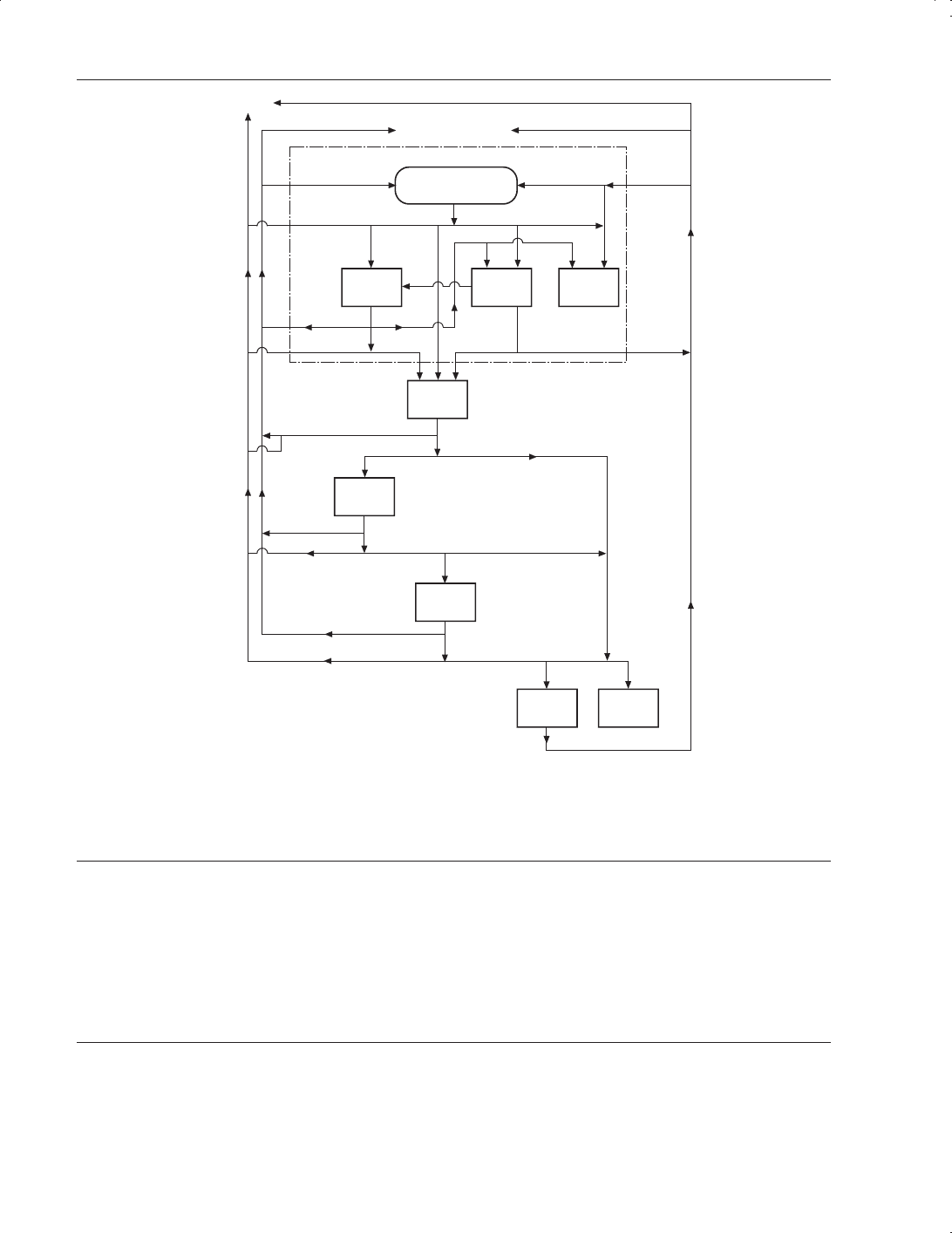
(The sources of solid wastes per se are summarized in Tables 16.1 and 16.4.) However, dealing
with any of them will involve some combination of the activities shown in Figure 16.2, i.e.
collection, segregation and identification, processing, recycling, transport and final disposal.
Effects
The effects from solid waste treatment and disposal depend upon the specific waste and the
methods employed. The major disposal methods, depending upon the quantity and nature of the
waste, are:
• disposal on land by landfill or land-raising;
• incineration, which requires air pollution control measures (Table 17.9) and a procedure for
ash disposal; energy recovery may be practised;
SOLID WASTES 509

510 CHEMICALS AND THE ENVIRONMENT: SOURCES AND IMPACT
Table 16.17 Guidelines for classification of contaminated soils: suggested range of values (ppm) on air dried soils
Parameter Typical Slight Contaminated Heavy Unusually
values for contamination contamination heavy
uncontaminated contamination
soils
pH (acid) 6–7 5–6 4–5 2–4 (<2)
pH (alkaline) 7–8 8–9 9–10 10–12 12
Antimony 0–30 30–50 50–100 100–500 500
Arsenic 0–30 30–50 50–100 100–500 500
Cadmium 0–1 1–3 3–10 10–50 50
Chromium 0–100 100–200 200–500 500–2500 2500
Copper (available) 0–100 100–200 200–500 500–2500 2500
Lead 0–500 500–1000 1000–2000 2000–1.0% 1.0%
Lead (available) 0–200 200–500 500–1000 1000–5000 5000
Mercury 0–1 1–3 3–10 10–50 50
Nickel (available) 0–20 20–50 50–200 200–1000 1000
Zinc (available) 0–250 250–500 500–1000 1000–5000 5000
Zinc (equivalent) 0–250 250–500 500–2000 2000–1.0% 1.0%
Boron (available) 0–2 2–5 5–50 50–250 250
Selenium 0–1 1–3 3–10 10–50 50
Barium 0–500 500–1000 1000–2000 2000–1.0% 1.0%
Beryllium 0–5 5–10 10–20 20–50 50
Manganese 0–500 500–1000 1000–2000 2000–1.0% 1.0%
Vanadium 0–100 100–200 200–500 500–2500 2500
Magnesium 0–500 500–1000 1000–2000 2000–1.0% 1.0%
Sulphate 0–2000 2000–5000 5000–1.0% 1.0–5.0% 5.0%
Sulphur (free) 0–100 100–500 500–1000 1000–5000 5000
Sulphide 0–10 10–20 20–100 100–500 500
Cyanide (free) 0–1 1–5 5–50 50–100 100
Cyanide 0–5 5–25 25–250 250–500 500
Ferricyanide 0–100 100–500 500–1000 1000–5000 5000
Thiocyanide 0–10 10–50 50–100 100–500 2500
Coal tar 0–500 500–1000 1000–2000 2000–1.0% 1.0%
Phenol 0–2 2–5 5–50 50–250 250
Toluene extract 0–5000 5000–1.0% 1.0–5.0% 5.0–25.0% 25.0%
Cyclohexane extract 0–2000 2000–5000 5000–2.0% 2.0–10% 10.0%
• recycling, a procedure now promoted – either by primary or secondary routes;
• pyrolysis – yielding useful by-products.
Any hazard which land deposition may create requires assessment with regard to the risk of injury
or impairment of health to persons or animals, damage to vegetation, pollution of controlled
waters including aquifers – either directly or because of water run-off, and of long-term accumulation,
e.g. of heavy metals or persistent chemicals.
Landfill disposal of certain categories of solid waste may result in gas generation, mainly
methane, and a highly polluted leachate. The methane may be drawn off, to avoid a flammable
hazard on- or off-site. The leachate is pumped off for treatment.
A summary of the potential hazards associated with toxic waste deposition on land is given in
Table 16.18.
Reuse
Secondary recycle
Primary
recycle
Primary
recycle
Waste producer
Treat
on-site
Store
on-site
Dispose
on-site
Site boundary
Convey
Treat
off-site
Convey
Store
off-site
Dispose
off-site
Figure 16.2
Three basic techniques – treatment, storage, conveyance – to effect recycle or disposal of ‘solid’ waste either
on- or off-site.
Table 16.18 Potential hazards from toxic waste deposition
Air pollution Dust, effluvia, smoke and fume, odour
Toxic or flammable gas generation
Land pollution Gross amenity damage
Undermining of site stability
Sterilization of surrounding land due to heavy metals
pH changes etc.
Permanent ‘land contamination’
Water pollution Deposited material or percolate escapes either by surface run-off or by underground
movement, threatening streams, rivers, aquifers or the sea
Direct ‘poisoning’ or eutrophication
SOLID WASTES 511

17
Chemicals and the environment:
monitoring and protection
Legislative control
Comprehensive pollution control legislation exists in most developed countries and there is increasing
conformity within the EC.
The Environmental Protection Act (EPA) 1990
In the UK the Environmental Protection Act 1990 established an interlocking framework for
pollution control. Integrated Pollution Control (IPC) introduced a new approach with waste
minimization at its centre and a commitment to higher environmental standards. The latter is
based upon selection of the Best Practical Environmental Option (BPEO), i.e.:
the option which in the context of releases from a prescribed process, provides the most
benefit or least damage to the environment as a whole, at acceptable cost, in the long term
as well as the short term.
The reform of waste disposal aims to minimize waste generation and maximize recycling.
Under Part 1 of EPA 90, an IPC system controls emissions to air, land and water for the most
polluting industrial and similar processes. All operators of prescribed processes, e.g. fuel and
power, minerals, waste disposal and chemical, require prior authorization. They are required to
use BATNEEC, the Best Available Technology Not Entailing Excessive Cost:
• for preventing the release of substances prescribed for any environmental medium, or where
that is not practicable by such means;
• for reducing the release of such substances to a minimum and for rendering harmless any such
substances which are released;
• for rendering harmless any other substances which might cause harm if released into any
environmental medium.
Any authorization may contain specific conditions with details on how BATNEEC is to be
achieved, e.g.:
the mode of operation of the plant; the pollution abatement technology to be used; and,
explicit limits on the amount and concentration of substances which may be discharged.

Some aspects of the process may not be covered explicitly by conditions, but there remains a
residual duty on the operator to prevent or minimize the release of prescribed substances by the
use of BATNEEC.
Local authority control of air pollution covers a second tier of less-polluting processes. Incinerators
for waste chemicals, or waste plastic arising from their manufacture, and other waste incinerators
dependent upon size are, however, subject to both the BATNEEC and BPEO requirements under
the IPC regime.
Any IPC application will include, in addition to details of the operator:
• A description of the prescribed process.
• A list of prescribed substances, and other substances which are potentially environmentally
harmful, used in or resulting from the process. The quantities that might be released with
control technologies in place.
• Details of any proposed release of prescribed substances and an assessment of the environmental
consequences of emissions. (For local authorities air pollution controlled processes this applies
only to atmospheric emissions.)
• Information to show that BATNEEC is to be applied; a description of techniques for preventing,
minimizing and rendering harmless the emissions. How these techniques will be monitored.
• Proposals for monitoring the release of such substances and the environmental consequences.
It must include an assessment to demonstrate that the process represents the BPEO.
Part II of EPA 90 deals with waste disposal, handling and management. The provisions impose
duties on the producers of waste to ensure the safe disposal. There are strong licensing powers for
local authorities, with continuing responsibilities for licensees to monitor and maintain sites after
closure.
The Clean Air Act 1993 provides a comprehensive control mechanism for the protection of the
environment from smoke, dust and fumes. The 1993 Act consolidates the previous provisions of
the 1956 and 1968 Clean Air Acts.
Section 1 of the Act prohibits:
dark smoke emissions from a chimney of any building
dark smoke emissions from a chimney serving the furnace of a fixed boiler or industrial
plant.
The Dark Smoke (Permitted Periods) Regulations, give details on circumstances and time limits
when dark smoke is allowed.
Section 2 of this Act prohibits dark smoke from any industrial or trade premises (there is no
requirement under Section 2 for the dark smoke to be emitted from a chimney).
The Water Industry Act 1991 and Water Resources Act 1991
The disposal of aqueous-based wastes, i.e. liquid effluents, is regulated in part by the Water
Industry Act 1991 and the Water Resources Act 1991.
The discharge of any trade effluent into a public sewer requires a specific consent from the
sewerage undertaker. If granted, conditions are attached to the consent relating to which sewer,
flowrates and composition (see Table 16.15), metering of flowrate, and possibly automatic monitoring.
For Special Category Effluents, e.g. mercury, pesticides, chlorinated organics, as listed in Schedule
1 of the Trade Effluents (Prescribed Processes and Substances) Regulations 1989 (Table 17.1),
agreement must also be obtained from the Environment Agency.
LEGISLATIVE CONTROL 513

514 CHEMICALS AND THE ENVIRONMENT
Discharge to ‘controlled waters’ is controlled under the Water Resources Act 1991. These
waters are defined and generally include territorial waters, coastal waters, inland waters and
ground water. If the discharge is from a prescribed process, and of a prescribed substance under
the Environmental Protection Act 1990, consent for discharge is required under an IPC authorization.
All other discharges require consent from the Environment Agency under the Water Resources
Act. Such consent is subject to conditions as to composition, flowrate, measures to minimize
pollution, etc. A specimen consent form is given in Figure 17.1. Schedule 5 of the regulations
details the prescribed substances (Red List). Where a discharge contains more than the stated
amount of a prescribed substance (Table 17.2) it cannot be released to water without an authorization
from the Environment Agency.
NATIONAL RIVERS AUTHORITY
WATER RESOURCES ACT 1991 – CONSENT TO DISCHARGE
Reference number ........................................................................................................................................................
The National Rivers Authority, in pursuance of its powers under the above mentioned Act, HEREBY GIVES
CONSENT to the discharge described hereunder subject to the terms and conditions set out below.
Name and Address of Applicant: ................................................................................................................................
Date of Application: ................................................................................................................................
Date of Consent: ................................................................................................................................
Description of discharge: ................................................................................................................................
Type: ................................................................................................................................
From: ................................................................................................................................
To: ................................................................................................................................
National Grid Reference of
Discharge Point: ................................................................................................................................
This consent shall not be taken as providing a statutory defence against a charge of pollution in respect of any
poisonous, noxious or polluting constituents not specified herein.
......................................................................................................................................................................................
Conditions
1. General
2. As to Outlet
3. As to Volume Discharged to watercourse
4. As to Discharge composition
NRA Region: ................................................................................................................................
................................................................................................................................
................................................................................................................................
NRA Authorized Signature: ................................................................................................................................
Figure 17.1
Typical consent form

Whereas the Red List was produced by the UK government in 1989, and includes the most
harmful and polluting substances, the EC in Directive 76/464/EEC introduced Black and Grey
Lists, referred to in the Directive as Lists 1 and 2, respectively. National governments are required
to eliminate pollution by the substances blacklisted and to reduce pollution by those in the Grey
List. The 129 substances in the Black List were selected mainly on the basis of their toxicity,
persistence and accumulation in living organisms and in sediment. They are generally considered
to be more dangerous than those on the Grey List and are to be controlled by authorization in
Table 17.1 Prescribed substances
Aldrin, dieldrin, endrin and isodrin
Arsenic
Atrazine
Azinphos-ethyl
Azinphos-methyl
Boron
Cadmium and its compounds
Carbon tetrachloride
Chloroform
Chromium
Copper
Cyanide
Cyfluthrin
DDT
1,2-Dichloroethane
Dichlorvos
Dioxins
Endosulfan
Fenitrothion
Fenthion
Flucofuron
Hexachlorobenzene (HCB)
Hexachlorobutadiene (HCBD)
Hexachlorocyclohexane (Lindane and related compounds)
Iron
Lead
Malathion
Mercury and its compounds
Nickel
Parathion
Parathion-methyl
PCSDs
Pentachlorophenol (PCP)
Perchloroethylene
Permethrin
pH outside the range 5.5 to 9.0
Polychlorinated biphenyls
Simazine
Sulcofuron
Tetrachloroethylene
Tributyltin compounds
Trichlorobenzene
Trichloroethane
Trichloroethylene
Trifluralin
Triphenyltin compounds
Vanadium
Zinc
LEGISLATIVE CONTROL 515

516 CHEMICALS AND THE ENVIRONMENT
accordance with European Community limit values or quality objectives to be set in daughter
Directives on specific substances. They can be divided into the families shown in Table 17.3. The
Grey List comprises the families of materials shown in Table 17.4. The contents of the Grey List
may be added to the Black List in due course, and may thus be subject to the same tight controls.
Pesticides are also one of the main sources of inland water pollution and the EC has set limits
for pesticide levels in surface waters. Most pesticides in surface waters come from diffuse losses
soon after spraying. High levels of other specific pesticides often result from farmyard spillages.
Any person using a pesticide must take all reasonable precautions to protect the health of human
beings, creatures and plants, to safeguard the environment, and in particular to avoid pollution of
water. They should be given instruction, training and guidance in the safe, efficient and humane
use of pesticides and be competent in the duties they are called upon to perform. They are not
permitted to combine or mix two or more pesticides nor use a pesticide in conjunction with an
Table 17.2 The Red List maximum discharge levels above which prior authorization is required
Prescribed substances Amount released above
background in any 12 month
period (grams)
Mercury and its compounds 200 (expressed as metal)
Cadmium and its compounds 1000 (expressed as metal)
All isomers of hexachlorocyclohexane 20
All isomers of DDT 5
Pentachlorophenol and its compounds 350 (expressed as PCP)
Hexachlorobenzene 5
Hexachlorobutadiene 20
Aldrin 2
Dieldrin 2
Endrin 1
Polychlorinated biphenyls (PCBs) 1
Dichlorvos 0.2
1,2-Dichloroethane 2000
All isomers of trichlorobenzene 75
Atrazine* 350
Simazine* 350
Tributyltin compounds 4 (expressed as TBT)
Triphenyltin compounds 4 (expressed as TPT)
Trifluralin 20
Fenitrothion 2
Azinphos-methyl 2
Malathion 2
Endosulfan 0.5
* Where both atrazine and simazine are released, the figure in aggregate is 350 grams.
Table 17.3 The Black List substances prohibited from discharge to ground water
Organohalogenated compounds and substances which may form such compounds in the aquatic environment
Organophosphorus compounds
Organotin compounds
Substances which possess carcinogenic properties
Mercury and its compounds
Cadmium and its compounds
Persistent mineral oils and hydrocarbons of petroleum origin
Persistent synthetic substances which may float, remain in suspension or sink and interfere with any use of the waters

adjuvant except under authorized circumstances. A list of pesticides and pesticide residues as
defined by EC Directive 90/642/EEC as amended by 94/30/EC is given in Table 17.5. Limits are
to be set by subsequent Directives in due course.
Waste management
Under the EPA 90 a person shall not:
• deposit ‘controlled waste’, or knowingly cause or permit its deposit;
• treat, keep or dispose of controlled waste or permit it, etc.;
except under, and in accordance with, a waste management licence. Controlled waste is household,
industrial, commercial or any such waste.
Extra duties are imposed on the producers of ‘Special Waste’, i.e. a waste that is on the
European Hazardous Waste list reproduced in Table 17.6 and if it has one or more of the hazardous
properties listed in Table 17.7 (reproduced from Part 2 of Schedule 2 of the Special Waste
Regulations, 1996). Also Special Waste is any Controlled Waste which has one of the listed
properties. Extra requirements are detailed for the safe transfer and management of such waste.
Section 34 of EPA 90 imposes a ‘cradle to grave’ philosophy for waste management. This
places a duty of care upon anyone who has ‘control’ of controlled waste, i.e. importers, producers,
Table 17.4 The Grey List substances for which authorization is required prior to discharge
Biocides and their derivatives not appearing in the black list
Substances which have a deleterious effect on the taste and/or smell of the products for human consumption derived from
the aquatic environment
Toxic or persistent organic compounds of silicon
Inorganic compounds of phosphorus and elemental phosphorus
Non-persistent mineral oils and hydrocarbons of petroleum origin
Cyanides, fluorides
Substances which have an adverse effect on the oxygen balance, particularly ammonia, nitrates
The following metalloids and metals and their compounds:
Antimony
Arsenic
Barium
Beryllium
Boron
Chromium
Cobalt
Copper
Lead
Molybdenum
Nickel
Selenium
Silver
Tellurium
Thallium
Tin
Titanium
Uranium
Vanadium
Zinc
WASTE MANAGEMENT 517

518 CHEMICALS AND THE ENVIRONMENT
Table 17.5 Pesticides and pesticide residues
Pesticide Residue
Aldrin and dieldrin singly or combined, expressed as dieldrin (HEOD)
2-Aminobutane 2-aminobutane
Aminotriazole aminotriazole
Azinphos-methyl sum of azinphos-methyl and azinphos-ethyl
Bitertanol bitertanol
Captafol captafol
Captan sum of captan and folpet
Carbaryl carbaryl
Carbendazim carbendazim (from use of benomyl, thiophanate-methyl and carbendazim)
Carbon disulphide carbon disulphide
Carbon tetrachloride carbon tetrachloride
Carbophenothion sum of carbophenothion, its sulphoxide and its sulphone, expressed as carbophenothion
Chlordane (1) for products of animal origin: sum of cis- and trans-isomers and oxychlordane
expressed as chlordane;
(2) for cereals, fruit and vegetables: sum of cis- and trans-isomers expressed as
chlordane
Chlorfenvinphos sum of E- and Z-isomers of chlorfenvinphos
Chlorpyrifos-methyl chlorpyrifos-methyl
DDT sum of pp’-DDT, op’-DDT, pp’-TDE and pp’-DDE expressed as DDT
Diazinon diazinon
1,2-Dibromoethane 1,2-dibromoethane
Dichlofluanid dichlofluanid
Dichlorvos dichlorvos
Dicofol Dicofol
Diflubenzuron diflubenzuron
Dimethipin dimethipin
Dimethoate dimethoate
Dithiocarbamates alkylenbisdithiocarbamates and alkylthiuramdisulphides and
dialkyldithiocarbamates determined and expressed as carbon disulphide (CS
2
)
Endosulfan sum of alpha- and beta-isomers and of endosulfan sulphate, expressed as endosulfan
Endrin endrin
Ethion ethion
Etrimfos sum of etrimfos, its oxygen analogue and
6-ethoxy-2-ethyl-4-hydroxypyrimidine
Fenitrothion fenitrothion
Fluazifop fluazifop and esters (including conjugates) of haloxyfop, expressed as free acid
Fluorochloridone fluorochloridone
Haloxyfop haloxyfop and esters (including conjugates) of haloxyfop, expressed as free acid
Hexachlorobenzene hexachlorobenzene
(HCB)
Hexachlorocyclohexane hexachlorocyclohexane
(HCH) alpha-isomer
beta-isomer
gamma-isomer
Heptachlor sum of heptachlor and heptachlor epoxide, expressed as heptachlor
Hydrogen cyanide cyanides expressed as hydrogen cyanide
Hydrogen phosphide phosphides expressed as hydrogen phosphide
Imazalil imazalil
Inorganic bromide determined and expressed as total bromine from all sources
Ioxynil ioxynil
Iprodione sum of iprodione and all metabolites containing 3,5-dichloroaniline moiety, expressed
as iprodione
Malathion sum of malathion and malaoxon, expressed as malathion
Mercury compounds determined as total mercury and expressed as mercury
Methacrifos methacrifos
Methyl bromide bromomethane
Mevinphos sum of cis- and trans-mevinphos