
Ермакова О.П., Земская Е А. и др. Современный русский язык. Активные процессы на рубеже XXв
Подождите немного. Документ загружается.


р
Активные процессы в языке русского зарубежья
мира, вроде: Вот моя деревня, вот мой дом родной; вот качусь я в санках по
горе крутой...шк Однажды в студеную зимнюю пору... или Скучная карти-
на! Тучи без конца, дождик так и льется, лужи у крыльца... или Пахнет се-
ном над лугами! Песней душу веселя, бабы с граблями рядами ходят, сено
шевеля. Учебники запечатляли в памяти юного читателя частности, которые,
оторванные от реального опыта, становились пародийными пережитками ка-
кого-то бутафорного культурного багажа; словно открыли перед вами чердач-
ный люк и вы увидели груду изломанных вещей, пылью покрытых, из кото-
рых вы мучительно пытаетесь склеить что-то пригодное для повседневной
жизни. И не зная как применить эти обломки, вы начинаете придумывать,
воображать, постепенно обитать в своем изобретаемом языковом хронотопе,
где царят странные законы определяющего без определяемого. Красная пло-
щадь в Москве. Посредине памятник Минину и Пожарскому, налево Верхние
и Средние торговые ряды, вдали церковь Василия Блаженного, а направо
Спасские ворота Кремля, при входе в которые снимают шапки; на башне
ворот часы с музыкой, читаем мы в тридцатом издании учебника Сергея
Меча «Россия. Учебник отечественной географии» 1914 года. И только сей-
час, осмысляя прожитое, понимаю одну поразившую меня зимой 1988 года
деталь поездки нашей семьи в СССР. Мама, посетившая впервые за 80 лет
жизни российскую столицу, говорит у Спасских ворот внуку Алеше: «Внучек,
шапку сними!».
Комментарий
Повторю еще раз список тех слов, которые Н. Б. считает показательными
Для русской диаспоры Финляндии: «Специфика лексики языка русского зару-
бежья Финляндии заключалась в наименованиях предметов уходящего мира, в
особенности моды, как, например: пенсне - гамаши - гетры - жабо -
фишю - лшезка -ридикюль - боа - колье - вставка - освежать - ком-
стрячить - „о-гретьхен - а-ля-гретьхен - бонвакс».
Для читателя необходимы пояснения к некоторым из этих слов:
Лизёзка - от фр. liseuse. Le petit Robert дает как третье значение этого сло-
ва' «3 (xvin Petit vetement de femme, veste chaude et legere d'mteneur (pour
lire au lit etc Ho 1101). Наш современник этого слова не знает. Я проводила
й опоос В современных толковых словарях русского языка это
слово етс^ствует. Я его встречала у Набокова. Моя мать в этом значении упот-
реблялТслГо ночная кофточка (о нижней одежде, легкой и теплой, которую
напрвяпм лля чтения в постели перед сном),
надевали для ч ^
Круже
вная косынка» (Уш.). В Le petit Robert находим:
Фишю W .
piece
d'etoffe dont les femmes se couvrent la tete, la gorge et
«fichu (1695 prooauw
les epaules» (p- 78)-
к KC — средство для натирки пола, род мастики.

Часть V
Вставка Вставкой (или: вставочкой) называли не только в эмиграции, но и
России часть женской одежды (платья или блузки) без рукавов, которая при-
стегивалась с внутренней стороны кнопками и придавала нарядный вид щщ.
тыо или блузке. Ее обычно шили из хорошей ткани. Вставку можно было ку-
пить и в магазине.
Освежать. Украсить старую, немодную одежду цветком, бантиком, свежим
воротничком, манжетами.
Комстрячить. По-видимому, семейное выражение: изготовить что-нибудь
из одежды на скорую руку (шляпку, галстучек, шарфик и т. п.).
По-гретьхен, а 1а гретьхен — уложить косы вокруг головы венчиком.
Н. Б. дает пояснения еще некоторым чисто семейным выражениям: Чик! —
говорилось при приветствии или прощании.
Santa Limonade! — выражение удивления или восхищения.
О речи детей Н. Башмаковой
У Н. Б. двое детей: старший сын Алексей, младшая дочь Юлия. Алексей
получил высшее образование в Париже (архитектор, строитель). Дочь кончает
французский лицей в Хельсинки, училась одно время в Париже и Брюсселе.
Играет на флейте. Дети кроме финского, русского и шведского знают француз-
ский и английский. Дочь занимается итальянским, сын знает корейский, так
как по окончании учения во Франции работал некоторое время в Корее.
В отличие от большинства эмигрантов 1-й волны, получивших образование
не на русском языке, дети Наталии Башмаковой пишут письма родным по-рус-
ски. Несколько таких писем процитировано и проанализировано мною в
[Земская 2001а]. Несомненно, что это достижение семьи — в первую очередь
мамы и бабушки. В семье регулярно читали детям вслух русские книги. Дети
православные, с малых лет пели в церковном хоре.
Приведу для иллюстрации копию одного Юлиного письма матери:
Дорогая Мамушка!
Спосибо за календарь, скоро буду его открывать.
У нас скоро начнутся эгзамены, а после них у нас одна неделя без школы
пока учителя проверяют наши работы.
•И сегодня осталась дома потому что у меня горло так болит, что почти не
могу говорить.
Леник веть спрашивал что подорить к рождеству: ну вот былабы хорошо
получить немношко денег на виолончел (korjauhseen, joka on taalla paljon
halvemp; ja saia sellon soimaan paremmin), или на смычек. Я все работаю в пер-
вый суйте.
Активные процессы в языке русского зарубежья
669
Целую крепко-крепко
погладь шафу и кешу
1
за меня и привет всем
Юлька
Семья Наталии Башмаковой — редкий пример такой заботы о русском язы-
ке который позволяет его сохранить в четвертом поколении. Но — добавлю —
это семья не единственная. Такие семьи я видела и в других странах: Италии,
франции, Германии, США.
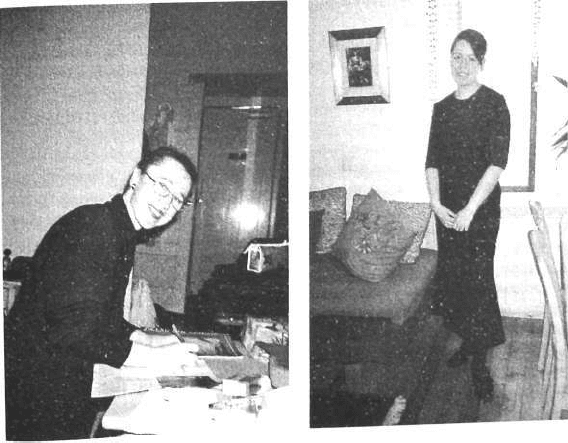
Наталья Баи/макова и ее дочь Юлия
г^^Т^шй».
кот
°р
ые жили в доме
-
я
ЗАКЛЮЧЕНИЕ
Л. П. Крысий
Одно-два десятилетия в жизни языка — срок небольшой. Едва ли за это
время в языке, его структуре могут произойти значительные изменения. И это
понятно: как хорошо известно, язык развивается медленно, он по самой своей
природе консервативен.
И все-таки даже столь короткий временной отрезок, который был в центре
исследовательского внимания авторов этой книги, дает нам свидетельства оп-
ределенных «точек роста», характерных для развития и функционирования
русского языка на рубеже столетий.
В одних случаях такие точки роста указывают на изменения в использова-
нии языка говорящими, то есть в их речевой практике. И многие из этих изме-
нений видны, что называется, невооруженным глазом. Таковы, например, про-
цессы активизации заимствования иноязычной лексики, жаргонизации литера-
турной речи и связанный с этим сдвиг (в сторону либерализации) оценок носи-
телями литературного языка допустимости «низкого» — жаргонного, просто-
речного — в их речевой практике.
Одним из результатов взаимодействия литературного языка с некодифици-
рованными подсистемами является формирование так называемого общего
сленга — промежуточного образования на границе литературного языка и со-
циальных жаргонов.
И активизация процесса заимствования, и жаргонизация литературной речи,
и формирование общего сленга имеют непосредственное отражение почти во
всех сферах общения, включая общение публичное и язык средств массовой
информации: насыщенность публичных выступлений, газетных текстов, ра-
дио- и телеэфира жаргонными словами и оборотами и американизмами давно
стала притчей во языцех. Сфера публичной речевой коммуникации отмечена и
иного рода точками роста: нарождением и интенсивным развитием новых ре-
чевых жанров, что в значительной мере обусловлено внеязыковыми причина-
ми — техническим прогрессом (ср. развитие и распространение Интернета),
политическим и социальным переустройством общества: так, либерализация
политической системы и связанная с этим бблыпая, чем раньше свобода воле-

Заключение
671
изъявления и социально значимых действий привели к раскрепощению рече-
вого поведения человека в таких жанрах публичного общения, как интервью
тепе- и радиобеседа, к появлению новых для русского общества видов публич-
ного общения — разного рода ток-шоу, теледебатов, телемостов и т. п.
В ряде случаев «точки роста» свидетельствуют о начале более глубоких
процессов в русском языке, процессов, затрагивающих отношения между язы-
ковыми единицами, ведущих к перестройке определенных участков языковой
структуры. Примером этого могут служить изменения в системе падежного и
предложного управления, имеющие тенденцию к вытеснению одних — пре-
имущественно беспредложных — форм управления другими, предложными
(что находится в рамках более общего процесса — роста аналитизма в языке),
к экспансии некоторых конструкций с предлогами и архаизации синонимич-
ных им конструкций, имеющих длительную традицию существования в лите-
ратурном языке.
Изменения в течении фонетических процессов, в просодических свойствах
слова и высказывания — еще один пример достаточно глубоких внутренних
перемен в функционировании и развитии современного русского языка.
Сложны и при этом обусловлены разными — собственно лингвистически-
ми, коммуникативными, социальными — причинами семантические измене-
ния в лексике. Они свидетельствуют об изменениях в синонимических, анто-
нимических и иных парадигматических отношениях между словами — члена-
ми тех или иных тематических групп, о формировании новых семантически
соотносительных лексических пар и рядов, что уже само по себе указывает на
определенную внутреннюю перестройку отношений между единицами слова-
ря, а кроме того отражает процессы переосмысления и переоценки говорящи-
ми определенных главным образом, коммуникативно актуальных — разря-
дов лексики.
Надо отметить и еще один вид «точек роста»: изменения в отношении об-
щества к языку. Общество, образованные и социально активные его слои стали
более внимательно, чем раньше, присматриваться и прислушиваться к тому,
что происходит с русским языком, и давать свои оценки происходящему. Об
этом свидетельствует не только бурная реакция прессы, электронных средств
массовой информации, писателей, политиков, представителей других социаль-
ных слоев и групп на предложенные учеными-лингвистами изменения в ор-
фографии но и разного рода публичные — в радио- и телеэфире, на страницах
печати в Интернете — обсуждения проблем русского языка: его оскудения и
omvfi ' ия засорения ненужными иноязычными заимствованиями, жаргонной
лексикой, ненормативными выражениями и т. п.
Особый интерес представляют активные процессы в русском языке на тер-
витопиях его исконного распространения — в сравнении с тем, каково сейчас,

Ш 1
,_. Заключение
672 -— •
в наши дни состояние русского языка в русской диаспоре за границей, каким
изменениям подвергается он в иноязычном окружении (этому посвящена пятая
часть нашей книги). Для языка «метрополии» и языка эмиграции характерны
разные проблемы. Так, например, для русского языка за рубежом остро стоит
вопрос о его сохранности у среднего и в особенности у младшего поколения
эмигрантов, что для русского языка «метрополии» если и актуально, то в не-
сколько ином плане (защита от чрезмерного насыщения языка заимствованной
лексикой, от массового вторжения в литературную речь средств из некодифи-
цированных подсистем, языковая политика, направленная на поддержание ста-
туса русского языка как языка государственного, и т. п.).
Материалы проведенного исследования показывают, что степень сохран-
ности русского языка у представителей русской эмиграции зависит от целого
комплекса культурных, социальных, психологических и иных факторов, от
степени внимания к родному языку при общении в семье, от среды, в которой
живут эмигранты, от их жизненных установок и ценностей и многого другого.
Русский язык за рубежом живет, не умирает — это главный вывод из сделан-
ных наблюдений.
В данной монографии рассмотрены, естественно, далеко не все активные
процессы, происходящие в русском языке на рубеже столетий. Но мы продол-
жаем свои исследования и надеемся, что их результаты лягут в основу дальней-
ших публикаций.
SUMMARY
Compared to the length of language life, one or two decades are a very short span,
nne can hardly expect any significant changes in the language structure to take place
vrithin this period. The reason why is evident: it is well-known that language is
developing slowly, as it is conservative by nature.
Yet even such a short period of time, which was the focus of attention of Ле
authors of this book, supplies evidence of the existence of certain «growth poui s»
Zacteristic of the development and functioning of the Russum language at the
intersection of the 20
th
and the 21
st
centuries,
"re 1 instances when these growth points indicate the conges m how Ш
language is used by the speakers, i.e. in %^%^£££££
changes can be noticed without any specia effort. This isttuаоош mp
avowing offorei^
language speakers towards more liberal attitude го шс
substandard speech in their everyday usage language and non-
Among the results of the *E£Z£££E,J*L***
standard subsystems one can see the °^
n
md sooia
i jargons.
is a phenomenon in-between the ^dlang g ^
rf standard spe
e
C
h,
The processes of activizabon ot borrow s^ ^
аЦ commun
i
ca
tion domains,
as well as general slang emergence, can ^ ^^
The saturation 0
f public
public communication and mass media sp with jargon words and phrases,
speeches, newspaper articles, radio and i P *
Alonggide
^
л
^ ш the
as well as americanisms,
has
.
bee
"
S
'
anno
ti
ce
growth points of some other land,
domain of public communication.one carв' «
speech genres
.
T
he causes
such as the emergence and mtens rye> devap ^^
technicaJ progr
e
S
s (e.g.
the emergence and develop«
ent0
e
Ration
of fte
political system an Hhe
restructure of the society. Thuи* U
socially
significant action have
freedom of showing one ft. «J^l ^
SU
ch genres as mtemewte^and
resulted in the emancipate*^ofspee
ce of
^
es 0
f public communication whcha«
radiodiscussion, and m^e emerge ^ ^ ^ ^
teledeb
ates, telebr.dges,
new for the Russian society,
etc. „ when «growth points» indicate the start of more profound
There are J-^Ji£. i.e. me processes affecting the relations between
processes in the *
Summary
the language unite and resulting in the restructuring of certain areas of the language
!v!tem This point can be illustrated by the changes in the case system and
nrlositional government, resulting in a tendency for replacing non-prepositional
constructions with the prepositional ones. This tendency is part of the general process
of analytical features development alongside with the spread of some prepositional
constructions while some other synonymic constructions that have existed in the
Russian language for quite a long time are becoming archaic. Another example of
profound inner changes in the functioning and development of Modern Russian are
changes in the course of phonetic processes and in the prosodic characteristics of
both words and utterances.
Rather complicated and caused by various factors, linguistic, as well as
communicative and social, are semantic changes in the lexicon. They are indicative
of changes in the synonymic, antonymic and other types of paradigmatic relations
between words that enter lexical classes and form new lexical pairs and sets, which
is symptomatic of forming new relations between vocabulary units and, besides,
reflects the processes of reconsidering and reevaluation of certain communicatively
relevant lexical classes by the speakers.
It is worth mentioning one more type of «growth points», namely the shifts in the
society's attitude to language. The society, in particular its most educated and socially
active groups, have begun to look more closely at what is happening with the Russian
language and to give its evaluations of it. The evidence of this is not only a violent
reaction of press, electronic mass media, writers, politicians, and representatives of
other social groups to the suggestions of changes in orthography made by linguists,
but also various public discussions that take place on the radio, TV, in press, and in
the Internet, of the problems of modern Russian, its impoverishment, coarsening,
clogging with unnecessary loanwords, jargon, substandard phrases, etc.
Of special interest is the comparison between the active processes in the Russian
language on the territories of its traditional long-standing existence and the situation
of the Russian language in the Russian diaspora abroad and its changes in foreign
surrounding. The problems of the language of the mother country and. of the
emigration are of different nature. Thus, for the Russian language abroad it is relevant
whether it is going to be preserved by the middle and, especially, the young generation
of emigrants. The same is irrelevant for the Russian language of the mother country,
or relevant in a different way (the protection of the language against unnecessary
intensive borrowing, from the invasion of nonstandard language means language
policy directed at the support of the Russian language as the state language etc ).
The data obtained in the process of the research hint that the degree of Russian
language preservation by Russian emigrants depends on a number of cultural social
psychological and other factors, on how much attention is paid to the mother tongue'
in the process of communication within the family, on ambitions and val л
on
Summary 675
many other things. The main conclusion the research suggests is that the Russian
language abroad lives and is not going to die.
It is self-evident that this book has not addressed all active processes that can be
observed in the Russian language at the intersection of the two centuries. However,
have been continuing our research and hope to be able to present its results in the
publications to come.
I
СПИСОК СОКРАЩЕНИЙ
АВ — акцентное выделение
АГ — Академическая грамматика
АДД — автореферат докторской диссертации
АиФ — «Аргументы и факты» (газета)
АКД — автореферат кандидатской диссертации
АРСАС—Англо-русский словарь американского сленга / Пер.
и сост. Т. Ротенберг и В. Иванова. М., 1994
БАС — Словарь современного русского литературного языка. Т. 1—17
М.; Л., 1949—1965. (Большой Академический Словарь)
БАС-2 — Словарь современного русского литературного языка. 2-е изд.
Т. 1—6. М., 1991—1996. (Большой Академический Словарь)
БТС — Большой толковый словарь русского языка /
Гл. ред. С. А. Кузнецов. СПб., 1999
БУД — будущее время глагола
Вед. — «Ведомости» (газета)
ВИН, вин. п. — винительный падеж'
ВМ — «Вечерняя Москва» (газета)
Вопр. языкознания — «Вопросы языкознания» (журнал)
Вр. нов. — «Время новостей» (газета)
Газ. — «Газета» (название газеты)
ДАТ, дат. п. — дательный падеж
БД, ед. ч.— единственное число
жарг. — жаргонное слово или значение
ЖЕН, ж. р. — женский род
Зн. — «Знамя» (журнал)
Изв. — «Известия» (газета)
Изв. РАН. Сер. лит. и яз. — «Известия Российской академии наук
Серия литературы и языка» (журнал)
ИМ, им. п. — именительный падеж
КЖ — «Круг жизни» (газета)
КЛЯ — кодифицированный литературный язык
' В список включены и варианты сокращений, встречающиеся в