
Francoise J.-P., Naber G.L., Tsun T.S. (editors) Encyclopedia of Mathematical Physics
Подождите немного. Документ загружается.


Note that this theorem is parallel to the result by
Kesten et al. (1975) on asymptotic normality when
>2 (see the section ‘‘Limit distribu tions’’). The
moment assumptions in Theo rem 5 are more
restrictive, but they can be relaxed. On the other
hand, Theorem 5 does not impose the nonarithme tic
condition on the distribution of the environment
(cf. Theorem 3). More importantly, the environment
method proves to be quite efficient in more general
situations, including non-i.i.d. environments a nd
higher dimensions (at least in some cases, e.g., for
random bonds RWRE and balanced RWRE dis-
cussed subsequently).
Diode Model
In the preceding sections (except in the section
‘‘Limi t distri butions ,’’ wher e howev er we were
limited to a nonarithmetic case) , we assumed that
0 < p
x
< 1 and therefore excluded the situation
where there are sites through which motion is
permitted in one direction only. Allowing for such
a possibility leads to the ‘‘diode model’’ (Solomon
1975). Specifically, suppose that
Pfp
x
¼ g¼; Pfp
x
¼ 1g¼1 ½32
with 0 <<1, 0 <<1, so that with probability
a point x 2 Z is a usual two-way sit e and with
probability 1 it is a repelling barrier (‘‘diode’’),
through which passage is only possible from left to
right. This is an interesting example of statistically
inhomogeneous medium, where the particle motion
is strongly irreversible due to the presence of special
semipenetrable nodes. The principal mathematical
advantage of such a model is that the random walk
can be decomposed into independent excursions
from one diode to the next.
Due to diodes, the RWRE will eventually drift to
þ1.If>1=2, then on average it moves faster
than in a nonrandom environment with p
x
. The
situation where 1=2 is potentially more inter-
esting, as then there is a competition between the
local drift of the walk to the left (in ordinary sites)
and the presence of repelling diodes on its way.
Note that E
0
= , where := (1 )=, so the
condition E
0
< 1 amounts to >=(1 þ ). In this
case (which includes >1=2), formula [14] for the
asymptotic velocity applies.
As explain ed in the section ‘‘C ritical expon ent,
excurs ions, an d traps ,’’ the quen ched mean durati on
w of the left excursion has Laplace transform given
by eqn [23], which now reads
ðsÞ¼e
2s
f1 þ ðsÞg
This equation is easily solved by iterat ions:
ðsÞ¼ð1 Þ
X
1
k¼0
k
e
st
k
t
k
:¼2
X
k
j¼0
j
½33
hence the distribution of w is given by
Pfw ¼ t
k
g¼ð1 Þ
k
; k ¼ 0; 1; ...
This result has a transparent probabilistic meaning.
In fact, the factor (1)
k
is the probability that
the nearest diode on the left of the starting point
occurs at distance k þ 1, wher eas t
k
is the corre-
sponding mean excursion time. Note that formula
[33] for t
k
easily follows from the recursion t
k
= 2 þ
t
k 1
(cf. eqn [22]) with the boundary condition
t
0
= 2.
A self-similar hierarchy of timescales [33] indi-
cates that the process will exhibit temporal oscilla-
tions. Indeed, for > 1 the average waiting time
until passing through a valley of ordinary sites of
length k is asymptotically proportional to t
k
2
k
,
so one may expect the annealed mean displacement
E
0
X
n
to have a local min imum at n t
k
. Passing to
logarithms, we note that ln t
kþ1
ln t
k
ln , which
suggests the occurrence of persistent osci llations on
the logarithmic timescale, with period ln (see
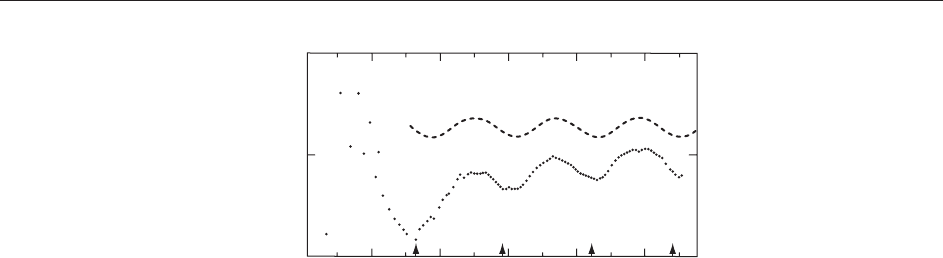
Figure 2). This was confirmed by Bernasconi and
Schneider (1985) who showed that for > 1
E
0
X
n
n
Fðln nÞ; n !1 ½34
where = ln = ln <1 is the solution of eqn [20]
and the function F is periodic with period ln (see
Figure 2).
In contrast, for = 1 one has
E
0
X
n
n ln
2lnn
; n !1
and there are no oscillations of the above kind.
These results illuminate the earlier analysis of the
diode model by Solomon (1975), which in the main
has revealed the following. If = 1, then X
n
satisfies the strong LLN:
lim
n!1
X
n
n= ln n
¼
ln
2
; P
0
-a.s.
while in the case > 1 the asymptotic behavior of
X
n
is quite complicated and unusual: if n
i
!1 is a
sequence of integers such that { ln n
i
} ! (here
{a} = a [a] denotes the fractional part of a), then
the distribution of n
i
X
n
i
under P
0
converges to a
nondegenerate distribution which depends on .
Thus, the very existence of the limiting distribution
362 Random Walks in Random Environments
of X
n
and the limit itself heavily depend on the
subsequence n
i
chosen to approach infinity.
This should be compared with a more ‘‘regular’’
result Theorem 3. Note that almost all the condi-
tions of this theorem are satisfied in the diode
model, except that here the distribution of ln
0
is
arithmetic (recall that the value ln
0
= 1 is
permissible), so it is the discreteness of the env iron-
ment distribution that does not provide enough
‘‘mixing’’ and hence leads to such peculiar features
of the asymptotics.
Some Generalizations and Variations
Most of the results discussed above in the simplest
context of RWRE with nearest-neighbor jumps in an
i.i.d. random environment have been extended to
some other cases. One natural generalization is to
relax the i.i.d. assumption, for example, by con-
sidering stationary ergodic environments (see details
in Zeitouni (2004)). In this context, one relies on an
ergodic theorem instead of the usual strong LLN.
For instance, this way one readily obtains an
extension of Solomon’s criterion of transience versus
recurrence (see Theorem 1). Other examples include
an LLN (along with a formula for the asymptotic
velocity, cf. Theo rem 2), a CLT and stable laws for
the asymptotic distribution of X
n
(cf. Theorem 3),
and Sinai’s localization result for the recurrent
RWRE (cf. Theorem 4). Usually, however, ergodic
theorems cannot be applied directly (like, e.g., to
X
n
, as the sequence X
n
X
n1
is not stationary). In
this case, one rather uses the hitting times which
possess the desired stationarity (cf. the sections
‘‘Asym ptotic veloc ity’’ and ‘‘Critical expon ent,
excurs ions, and traps’’). In some situ ations, in
addition to stationarity, one needs suitable mixing
conditions in order to ensure enough decoupling
(e.g., in Sinai’s problem). The method of envir on-
ment viewed from the particle (discussed earlier) is
also suited very well to dealing with stationarity.
In the remainder of this section, we describe some
other generalizations including RWRE with
bounded jumps, RWRE where randomness is
attached to bonds rather than sites, and continuous-
time (symmetric) RWRE driven by the randomized
master equation.
RWRE with Bounded Jumps
The previous discussion was restricted to the case of
RWRE with nearest-neighbor jumps. A natural
extension is RWRE with bounded jumps. Let L, R
be fixed natural numbers, and suppose that from
each site x 2Z jumps are only possible to the sites
x þ i, i = L, ..., R, with (random) probabilities
p
x
ðiÞ0;
X
R
i¼L
p
x
ðiÞ¼1 ½35
We assume that the random vectors p
x
() determin-
ing the environment are i.i.d. for different x 2Z
(although many results can be extended to the
stationary ergodic case).
The study of asymptotic properties of such a
model is essentially more complex, as it involves
products of certain random matrices and hence must
use extensively the theory of Lyapunov exponents
(see details and further references in Bre´mont
(2004)). Lyapunov exponents, being natural analogs
of logarithms of eigenvalues, characterize the
asymptotic action of the product of random matrices
along (random) principal directions, as described by
Oseledec’s multiplicative ergodic theorem. In most
situations, however, the Lyapunov spectrum can
42 68100
0.2
0.1
ln n
ln(n
–½
E
0
X
n
)
Figure 2 Temporal oscillations for the diode model, eqn [32]. Here = 0.3 and = 1=0.09, so that > 1 and = 1=2. The dots
represent an average of Monte Carlo simulations over 10 000 samples of the environment with a random walk of 200 000 steps in
each realization. The broken curve refers to the exact asymptotic solution [34]. The arrows indicate the simulated locations of the
minima t
k
, the asymptotic spacing of which is predicted to be ln 241. Reproduced from Bernasconi J and Schneider WR (1982).
Diffusion on a one-dimensional lattice with random asymmetric transition rates. Journal of Physics A: Mathematical and General 15:
L729–L734, by permission of IOP Publishing Ltd.
Random Walks in Random Environments 363

only be accessed implicitly, which makes the
analysis rather hard.
To explain how random matrices arise here, let us first
consider a particular case R = 1, L 1. Assume that
p
x
(L), p
x
(1) >0forallx 2Z (ellipticity condi-
tion, cf. eqn [5]), and consider the hitting probabilities
u
n
: = P
!
n
{T
0
<1 }, where T
0
:= min { t 0: X
t
0}
(c f. t he s ect ion ‘‘Tr ansie nc e and r ecurr ence’’). B y
decomposing with respect to the first step, for n 1
we obtain the difference equation
u
n
¼ p
n
ð1Þu
nþ1
þ
X
L
i¼0
p
n
ðiÞu
ni
½36
with the boundary conditions u
0
= = u
Lþ1
= 1.
Using that 1 = p
n
(1) þ
P
L
i = 0
p
n
(i), we can rewrite
eqn [36] as
p
n
ð1Þ u
n
u
nþ1
ðÞ¼
X
L
i¼1
p
n
ðiÞ u
ni
u
n
ðÞ
or, equivalently,
v
n
¼
X
L
i¼1
b
n
ðiÞv
ni
½37
where v
i
:= u
i
u
iþ1
and
b
n
ðiÞ:¼
p
n
ðiÞþþp
n
ðLÞ
p
n
ð1Þ
½38
Recursion [37] can be written in a matrix form,
V
n
= M
n
V
n 1
, where V
n
:= (v
n
, ..., v
n Lþ1
)
>
,
M
n
:¼
b
n
ð1Þ b
n
ðLÞ
1 ... 00
.
.
.
.
.
.
.
.
.
.
.
.
0 10
0
B
B
@
1
C
C
A
½39
and by iterations we get (cf. eqn [10])
V
n
¼ M
n
M
1
V
0
; V
0
¼ð1 u
1
; 0; ...; 0Þ
>
Note that M
n
depends only on the transition
probability vector p
n
(), and hence M
n
M
1
is the
product of i.i.d. random (non-negative) matrices. By
Furstenberg–Kesten’s theorem, the limiting behavior
of such a product, as n !1, is controlled by the
largest Lyapunov exponent
1
:¼ lim
n!1
n
1
ln kM
n
...M
1
k½40
(by Kingman’s subadditive ergodic theorem, the limit
exists P-a.s. and is nonrandom). It follows that, P
0
-a.s.,
the RWRE X
n
is transient if and only if
1
6¼0, and
moreover, lim
n!1
X
n
¼þ1( 1)when
1
< 0(> 0),
whereas lim
n!1
X
n
= 1, lim
n!1
X
n
= þ1 when
1
= 0.
For orientation, note that if p
n
(i) = p(i) are
nonrandom constants, then
1
= ln
1
, where
1
> 0
is the largest eigenvalue of M
0
, and so
1
< 0 if and
only if
1
< 1. The latter means that the character-
istic polynomial ’():= det (M
0
I) satisfies the
condition (1)
L
’(1) > 0. To evaluate det (M
0
I),
replace the first column by the sum of all columns
and expand to get ’(1) = (1)
L1
(b
1
þþb
L
).
Substituting expressions [38] it is easy to see that
the above condition amounts to p(1)
P
L
i = 1
ip
(i) > 0, that is, the mean drift of the random
walk is positive and hence X
n
!þ1a.s.
In the general case, L 1, R 1, similar con-
siderations lead to the following matrices of order
d := L þ R 1 (cf. eqn [39]):
M
n
¼
a
n
ðR 1Þa
n
ð1Þ b
n
ð1Þb
n
ðLÞ
10 0
010 0
.
.
.
.
.
.
.
.
.
.
.
.
.
.
.
.
.
.
.
.
.
.
.
.
.
.
.
.
.
.
.
.
.
.
.
.
0 010
0
B
B
B
B
B
B
B
B
B
B
B
B
@
1
C
C
C
C
C
C
C
C
C
C
C
C
A
where b
n
(i) are given by eqn [38] and
a
n
ðiÞ:¼
p
n
ðiÞþþp
n
ðRÞ
p
n
ðRÞ
Suppose that the ellipticity condition is satisfied in
the form p
n
(i) >0, i 6¼0, L i R, and let
1
2
d
be the (nonrandom) Lyapunov
exponents of {M
n
}. The largest expo nent
1
is again
given by eqn [40], while other exponents are
determined recursively from the equalities
1
þþ
k
¼ lim
n!1
n
1
ln k^
k
ðM
n
M
1
Þk
(1 k d). Here ^ denotes the external (antisym-
metric) product: x ^ y = y ^ x (x, y 2R
d
), and
^
k
M acts on the external product space ^
k
R
d
,
generated by the canonical basis {e
i
1
^^e
i
k
,1
i
1
< < i
k
d}, as follows:
^
k
Mðx
1
^^x
k
Þ:¼Mðx
1
Þ^^Mðx
k
Þ
One can show that all exponents except
R
are
sign-definite:
R 1
> 0 >
Rþ1
. Moreover, it is the
sign of
R
that determines whether the RWRE is
transient or recurrent, the dichotomy being the same
as in the case R = 1 above (with
1
replaced by
R
).
Let us also mention that an LLN and CLT can be
proved here (see Bre´mont (2004)).
In conclusion, let us point out an alternative
approach due to Bolthausen and Goldsheid (2000)
364 Random Walks in Random Environments
whostudiedamoregeneralRWREonastrip
Z {0, 1, ..., m 1}. The link between these two
models is given by the representation X
n
= mY
n
þ Z
n
,
where m := max{L,R}, Y
n
2Z, Z
n
2{0, ..., m 1}.
Random matrices arising here are constructed in-
directly using an auxiliary stationary sequence.
Even though these matrices are nonindependent,
thanks to their positivity the criterion of transience
can be given in terms of the sign of the largest
Lyapunov exponent, which is usually much easier to
deal with. An additional attractive feature of this
approach is that the condition p
x
(R) > 0(P-a.s.),
which was essential for the previous technique, can
be replaced with a more natural condition
P{p
x
(R) > 0} > 0.
Random Bonds RWRE
Instead of having random probabilities of jumps
at each site, one could assign random weights
to bonds between the sites. For instance, the
transition probabilities p
x
= p(x, x þ 1, !)canbe
defined by
p
x
¼
c
x; xþ1
c
x1; x
þ c
x; xþ1
½41
where c
x, xþ1
> 0 are i.i.d. random variables on the
environment space .
The difference between the two models may not
seem very prominent, but the behavior of the walk
in the modified model [41] appears to be quite
differe nt. Indeed, worki ng as in the section ‘‘Tran-
sience and recurrence ,’’ we note that
x
¼
q
x
p
x
¼
c
x1;x
c
x;xþ1
hence, exploiting formulas [11] and [41], we obtain,
P-a.s.,
1
1 u
1
¼
X
n1
x¼0
c
01
c
x;xþ1
c
01
n Ec
1
01
!1 ½42
since Ec
1
01
> 0. Therefore, f
00
= 1, that is, the
random walk is recurrent (P
0
-a.s.).
The method of environment viewed from the
particle can also be applied here (see Sznitman
(2004 )). Similarly to the section ‘‘Environm ent
viewed from the particl e,’’ we defin e a new prob-
ability measure Q = f (!) P using the density
f ð!Þ¼Z
1
c
1;0
ð!Þþc
01
ð!Þ
where Z = 2Ec
01
is the normali zing constant (we
assume that Ec
01
< 1). One can check that Q is
invariant with respect to the transition kernel
eqn [41], and by similar arguments as in that
section, we obtain that lim
n !1
X
n
=n exists
(P
!
0
-a.s.) and is given by
Z
dð0;!Þ Qðd!Þ¼Z
1
E c
01
c
1;0
¼ 0
so the asymptotic velocity vanishes.
Furthermore, under suitable technical conditions
on the environment (e.g., c
01
being bounded away
from 0 and 1, cf. eqn [5]), one can prove the
following CLT:
lim
n!1
P
0
X
n
ffiffiffiffiffiffiffiffi
n
2
p
x
¼ ðxÞ½43
where
2
= (Ec
01
Ec
1
01
)
1
. Note that
2
1 (with a
strict inequality if c
01
is not reduced to a constant),
which indicates some slowdown in the spatial
spread of the random bonds RWRE, as compared
to the ordinary symmetric random walk.
Thus, there is a dramatic distinc tion between the
random bonds RWRE, which is recurrent and
diffusive, and the random sites RWRE, with a
much more complex asymptotics including both
transient and recurrent scenarios, slowdown effects,
and subdiffusive behavior. Thi s can be explained
heuristically by noting that the random bonds
RWRE is reversible, that is, m(x)p(x, y) = m(y)
p(y, x) for all x, y 2Z, with m(x):= c
x 1, x
þ c
x, xþ1
(this property also easily extends to multidimen-
sional version s). Hence, it appears impossible to
create extended traps which would retain the
particle for a very long time. Instead, the mechanism
of the diffusive slowdown in a reversible case is
associated with the natural variability of the
environment resulting in the occasional occurrence
of isolated ‘‘screening’’ bonds with an anomalously
small weight c
x, xþ1
.
Let us point out that the RWRE determined by
eqn [41] can be interpreted in terms of the random
conductivity model (see Hughes (1996)). Suppose
that each random vari able c
x, xþ1
attached to the
bond (x, x þ 1) has the meaning of the conductance
of this bond (the reciprocal, c
1
x, xþ1
, being its
resistance). If a voltage drop V is applied across
the system of N successive bonds, say from 0
to N, then the same current I flows in each
of the conductors and by Ohm’s law we have
I = c
x, xþ1
V
x, xþ1
, where V
x, xþ1
is the voltage drop
across the corresponding bond. Hence
V ¼
X
N
x¼0
V
x;xþ1
¼ I
X
N
x¼0
c
1
x;xþ1
which amounts to saying that the total resistance of
the system of consecutive elements is given by the
sum of the individual resistances. The effective
Random Walks in Random Environments 365

conductivity of the finite system,
c
N
, is defined as
the average conductance per bond, so that
c
1
N
¼
1
N
X
N
x¼0
c
1
x;xþ1
and by the strong LLN,
c
1
N
!Ec
1
01
as N !1(P-a.s.).
Therefore, the effective conductivity of the infinite
system is given by
c = (Ec
1
01
)
1
, and we note that
c < Ec
01
if the random medium is nondegenerate.
Returning to the random bonds RWRE, eqn [41],
it is easy to see that a site j is recurrent if and only if
the conductance c
j, 1
between x and 1 equals zero.
Using again Ohm’s law, we have (cf. eqn [42])
c
1
j; þ1
¼
X
1
x¼j
c
1
x;xþ1
¼ 0; P-a.s.
and we recover the result about recurrence.
Continuous-Time RWRE
As in the discrete-time case, a random walk on Z with
continuous time is a homogeneous Markov chain
X
t
, t 2[0, 1), with state space Z and nearest-neighbor
(or at least bounded) jumps. The term ‘‘Markov’’ as
usual refers to the ‘‘lack of memory’’ property, which
amounts to saying that from the entire history of the
process development up to a given time, only the
current position of the walk is important for the future
evolution while all other information is irrelevant.
Since there is no smallest time unit as in the discrete-
time case, it is convenient to describe transitions of X
t
in terms of transition rates characterizing the
likelihood of various jumps during a very short time.
More precisely, if p
xy
(t):= P{X
t
= y jX
0
= x} are the
transition probabilities over time t,thenforh !0
p
xy
ðhÞ¼c
xy
h þ oðhÞðx 6¼yÞ
p
xx
ðhÞ¼1 h
X
y 6¼x
c
xy
þ oðhÞ
½44
Equations for the functions p
xy
(t) can then be
derived by adapting the method of decomposition
commonly used for discrete-time Markov chains
(cf. the section ‘‘Trans ience and recurrence ’’). Here
it is more convenient to decompose with respect to
the ‘‘last’’ step, that is, by considering all possible
transitions during a small increment of time at the
end of the time interval [0, t þ h]. Using Markov
property and eqn [44] we can write
p
0x
ðt þ hÞ¼h
X
y 6¼x
p
0y
ðtÞc
yx
þ p
0x
ðtÞ 1 h
X
y 6¼x
c
xy
!
þ oðhÞ
which in the limit h !0 yields the master equation
(or Chapman–Kolmogorov’s forward equation)
d
dt
p
0x
ðtÞ¼
X
y 6¼x
c
yx
p
0y
ðtÞc
xy
p
0x
ðtÞ
p
0x
ð0Þ¼
0
ðxÞ
½45
where
0
(x) is the Kronecker symbol.
Continuous-time RWRE are therefore naturally
described via the randomized master equation, that
is, with random transition rates. The canonical
example, originally motivated by Dyson’s study of
the chain of harmonic oscillators with random
couplings, is a symmetric nearest-neighbor RWRE,
where the random transition rates c
xy
are nonzero
only for y = x 1 and satisfy the condition
c
x, xþ1
= c
xþ1, x
, otherwise being i.i.d. (see Alexander
et al. (1981)). In this case, the problem [45] can be
formally solved using the Laplace transform, leading
to the equations
s þ G
þ
0
þ G
0
¼½
^
p
0
ðsÞ
1
½46
s þ G
x
þ G
þ
x
¼ 0 ðx 6¼0Þ½47
where G
x
, G
þ
x
are defined as
G
x
:¼c
x;x1
^
p
0x
ðsÞ
^
p
0;x1
ðsÞ
^
p
0x
ðsÞ
½48
and
^
p
0x
(s):=
R
1
0
p
0x
(t)e
st
dt. From eqns [47] and
[48] one obtains the recursion
G
x
¼
1
c
x;x1
þ
1
s þ G
þ
x1
1
x ¼ 0; 1; 2; ...
½49
The quantities G
0
are therefore expressed as infinite
continued fractions depending on s and the random
variables c
x, x1
, c
x, x2
, .... The function
^
p
00
(s) can
then be found from eqn [46].
In its genera lity, the problem is far too hard, and
we shall only comment on how one can evaluate the
annealed mean
E
^
p
00
ðsÞ¼E s þ G
þ
0
þ G
0
1
According to eqn [49], the random variables
G
þ
0
, G
0
are determined by the same algebraic
formula, but involve the rate coefficients from
different sides of site x, and hence are i.i.d.
Furthermore, eqn [49] implies that the random
variables G
þ
0
, G
þ
1
have the same distribution and,
moreover, G
þ
1
and c
01
are independent. Therefore,
eqn [49] may be used as an integral equation for the
unknown density function of G
þ
0
. It can be proved
that the suitable solution exists and is unique, and
366 Random Walks in Random Environments

although an explicit solution is not available, one
can obtain the asymptotics of small values of s,
thereby rendering information about the behavior of
p
00
(t) for large t. More specifically, one can show
that if c
:= (Ec
1
01
)
1
> 0, then
E
^
p
00
ðsÞð4c
sÞ
1=2
; s !0
and so by a Tauberian theorem
Ep
00
ðtÞð4c
tÞ
1=2
; t !1 ½50
Note that asymptotics [50] appears to be the same
as for an ordinary symmetric random wal k with
constant transition rates c
x, xþ1
= c
xþ1, x
= c
, suggest-
ing that the latter provides an EMA for the RWRE
considered above.
This is further confirmed by the asymptotic
calculation of the annealed mean squ are displace-
ment, E
0
X
2
t
2c
t as t !1(Alexander et al. 1981).
Moreover, Kawazu and Kesten (1984) proved that
X
t
is asymptotically normal:
lim
t!1
P
0
X
t
ffiffiffiffiffiffiffiffiffi
2c
t
p
x
¼ ðxÞ½51
Therefore, if c
> 0, then the RWRE has the same
diffusive behavior as the corresponding ordered
system, with a well -defined diffusion constant
D = c
.
In the case where c
= 0 (i.e., Ec
1
01
= 1), one may
expect that the RWRE exhibits subdiffusive beha-
vior. For example, if the density function of the
transition rates is modeled by
f
a
ðuÞ¼ð1 Þ u
1
f0<u<1g
ð0 <<1Þ
then, as shown by Alexander et al. (1981),
Ep
00
ðtÞC
t
ð1Þ=ð2Þ
E
0
X
2
t
C
0
t
2ð1Þ=ð2Þ
In fact, Kawazu and Kesten (1984) proved that in
this case t
=(1þ)
X
t
has a (non-Gaussian) limit
distribution as t !1.
To conclude the discussion of the continuous-
time case, let us point out that some useful
information about recurrence of X
t
can be obtained
by considering an imbedded (discrete-time) random
walk
~
X
n
, defined as the position of X
t
after n jumps.
Note that continuous-t ime Markov chains admit an
alternative description of their evolution in terms of
sojourn times and the distribution of transitions at a
jump. Namely, if the environment ! is fixed, then
the random sojourn time of X
t
in each state x is
exponentially distributed with mean 1=c
x
, where
c
x
:=
P
y 6¼x
c
xy
, while the distribution of transitions
from x is given by the probabilities p
xy
= c
xy
=c
x
.
For the symmetric neares t-neighbor RWRE con-
sidered above, the transition probabilities of the
imbedded random walk are given by
p
x
:¼p
x;xþ1
¼
c
x;xþ1
c
x1;x
þ c
x;xþ1
q
x
:¼p
x;x1
¼ 1 p
x
and we recognize here the transition law of a
random walk in the random bonds environme nt
considered in the previous subsection (cf. eqn [41]).
Recurrence and zero asymptotic velocity established
there are consistent with the results discussed in the
present section (e.g., note that the CLT for both X
n
,
eqn [43], and X
t
, eqn [51], does not involve any
centering). Let us point out, however, that a ‘‘naive’’
discretization of time using the mean sojourn time
appears to be incorrect, as this would lead to the
scaling t = n
1
with
1
:= E(c
1, 0
þ c
01
)
1
, while
from comparing the limit theorems in these two
cases, one can conclude that the true value of the
effective discretization step is given by
:= (2c
)
1
= (1=2)Ec
1
01
. In fact, by the arith-
metic–harmonic mean inequality we have
>
1
,
which is a manifestation of the RWRE’s diffusive
slowdown.
RWRE in Higher Dimensions
Multidimensional RWRE with nearest-neighbor
jumps are defined in a similar fashion: from site
x 2Z
d
the rando m walk can jump to one of the 2d
adjacent sites x þ e 2Z
d
(such that jej= 1), with
probabilities p
x
(e) 0,
P
jej= 1
p
x
(e) = 1, where the
random vectors p
x
() are assumed to be i.i.d. for
different x 2Z
d
. As usual, we will also impose the
condition of uniform ellipticity:
p
x
ðeÞ>0; P-a.s.
jej¼1; x 2Z
d
½52
In contrast to the one -dimensional case, theory of
RWRE in higher dimensions is far from maturity.
Possible asymptotic behaviors of the RWRE for d 2
are not understood well enough, and many basic
questions remain open. For instance, no definitive
classification of the RWRE is available regarding
transience and recurrence. Similarly, LLN and CLT
have been proved only for a limited number of
specific models, while no general sharp results have
been obtained. On a more positive note, there has
been considerable progress in recent years in the so-
called ballistic case, where powerful techniques have
been developed (see Sznitman (2002, 2004) and
Zeitouni (2003, 2004)). Unfortunately, not much is
Random Walks in Random Environments 367

known for nonballistic RWRE, apart from special
cases of balanced RWRE in d 2(Lawler 1982),
small isotropic perturbations of ordinary symmetric
random walks in d 3(Bricmont and Kupiainen
1991), and some examples based on combining
components of ordinary random walks and RWRE
in d 7(Bolthausen et al. 2003). In particular, there
are no examples of subdiffusive behavior in any
dimension d 2, and in fact it is largely believed that
a CLT is always true in any uniformly elliptic, i.i.d.
random environment in dimensions d 3, with
somewhat less certainty about d = 2. A heuristic
explanation for such a striking difference with the
case d = 1 is that due to a less restricted topology of
space in higher dimensions, it is much harder to force
the random walk to visit traps, and hence the
slowdown is not so pronounced.
In what follows, we give a brief account of some
of the known results and methods in this fast-
developing area (for further information and specific
references, see an extensive review by Zeitouni
(2004)).
Zero–One Laws and LLNs
A natural first step in a multidimensional context is
to explore the behavior of the random walk X
n
as
projected on various one-dimensional straight lines.
Let us fix a test unit vector ‘ 2R
d
, and consider the
process Z
‘
n
:= X
n
‘. Then for the events
A
‘
:= { lim
n !1
Z
‘
n
= 1} one can sho w that
P
0
ðA
‘
[ A
‘
Þ2f0; 1g½53
That is to say, for each ‘ the probability that the
random walk escapes to infinity in the direction ‘ is
either 0 or 1.
Let us s ketch the proof. We say that is ‘‘record
time’’ if jZ
‘
t
j > jZ
‘
k
j for all k < t, and ‘‘regeneration
time’’ if in addition jZ
‘
jjZ
‘
n
j for all n .Note
that by the ellipticity condition [52],
lim
n !1
jZ
‘
n
j=
1 (P
0
-a.s.), hence there is an infinite sequence of
record times 0 =
0
<
1
<
2
< .IfP
0
(A
‘
[
A
‘
)> 0, we can pick a subsequence of record
times
0
i
, each o f which has a positive P
0
-
probability to be a regeneration time (because
otherwise jZ
‘
n
j would persistently backtrack
towards the origin and the event A
‘
[ A
‘
could
not occur). Since the t rials for different record
times are independent, it follows that a regenera-
tion time
occurs P
0
-a.s. Repeating this argu-
ment, we conclude that there exists an infinite
sequence of regeneration times
i
, which implies
that jZ
‘
n
j!1 (P
0
-a.s.), that is, P(A
‘
[ A
‘
) = 1.
Regeneration structure introduced by the
sequence {
i
} plays a key role in further analysis
of the RWRE and is particularly useful for
proving an LLN and a CLT, due to the fact
that pieces of the random walk between con-
secutive regeneration times (and fragm ents of the
random environment involved thereby) are inde-
pendent and identically distributed (at least
starting from
1
). In this vein, one c an prove a
‘‘directional’’ version of the LLN, stating that for
each ‘ there exist deterministic v
‘
, v
‘
(possibly
zero) s uch that
lim
n!1
Z
‘
n
n
¼ v
‘
1
A
‘
þ v
‘
1
A
‘
; P
0
-a:s: ½54
Note that if P
0
(A
‘
) 2{0, 1}, then eqn [54] in
conjunction with eqn [53] would readily imply
lim
n!1
Z
‘
n
n
¼ v
‘
; P
0
-a:s: ½55
Moreover, if P
0
(A
‘
) 2{0, 1} for any ‘, then there
exists a deterministic v (possibly zero) such that
lim
n!1
X
n
n
¼ v; P
0
-a:s: ½56
Therefore, it is natural to ask if a zero–one law [53]
can be enhanced to that for the individual prob-
abilities P
0
(A
‘
). It is known that the answer is
affirmative for i.i.d. environments in d = 2, where
indeed P(A
‘
) 2{0, 1} for any ‘, with counterexamples
in certain stationary ergodic (but not uniformly
elliptic) environments. However, in the case d 3
this is an open problem.
Kalikow’s Condition and Sznitman’s Condition (T
0
)
An RWRE is called ‘‘ballistic’’ (ballistic in direction ‘)
if v 6¼0(v
‘
6¼0), see eqns [55] and [56].Inthis
section, we describe conditions on the random
environment which ensure that the RWRE is ballistic.
Let U be a connected strict subset of Z
d
contain-
ing the origin. For x 2U, denote by
gðx;!Þ:¼E
!
0
X
T
U
n¼0
1
fX
n
¼xg
the quenched mean number of visits to x prior to the
exit time T
U
:= min {n 0:X
n
=2U}. Consider an
auxiliary Markov chain
b
X
n
, which starts from 0,
makes nearest-neighbor jumps while in U, with
(nonrandom) probabilities
b
p
x
ðeÞ¼
E gðx;!Þp
x
ðeÞ½
E gðx;!Þ½
; x 2U ½57
and is absorbed as soon as it first leaves U. Note
that the expectations in eqn [57] are finite; indeed, if
x
is the probability to return to x before leaving U,
368 Random Walks in Random Environments

then, by the Markov property, the mean number of
returns is given by
X
1
k¼1
k
k
x
ð1
x
Þ¼
x
1
x
< 1
since, due to ellipticity,
x
< 1.
An important property, highlighting the usefulness
of
b
X
n
,isthatif
b
X
n
leaves U with probability 1, then the
same is true for the original RWRE X
n
(under
the annealed law P
0
), and moreover, the
exit points
b
X
^
T
U
and X
T
U
have the same distribution
laws.
Let ‘ 2R
d
, j‘j= 1. One says that Kalikow’s condi-
tion with respect to ‘ holds if the local drift of
b
X
n
in
the direction ‘ is uniformly bounded away from zero:
inf
U
inf
x 2U
X
jej¼1
ðe ‘Þ
b
p
x
ðeÞ > 0 ½58
A sufficient condition for [58] is, for example, that
for some >0
E ðdð0;!Þ‘Þ
þ
E ðdð0;!Þ‘Þ
where d(0, !) = E
!
0
X
1
and u
:= max {u, 0}.
A natural implication of Kalikow’s condition [58]
is that P
0
(A
‘
) = 1andv
‘
> 0 (see eqn [55]). More-
over, noting that eqn [58] also holds for all ‘
0
in a
vicinity of ‘ and applying the above result with d
noncollinear vectors from that vicinity, we conclude
that under Kalikow’s condition there exists a
deterministic v 6¼0 such that X
n
=n !v as n !1
(P
0
-a.s.). Furthermore, it can be proved that
(X
n
nv)=
ffiffiffi
n
p
converges in law to a Gaussian
distribution (see Sznitman (2004)).
It is not hard to check that in dimension d = 1
Kalikow’s condition is equivalent to v 6¼0and
therefore characterizes completely all ballistic
walks. For d 2, the situ ation is less clear; for
instance, it is not known if there exist RWRE with
P(A
‘
) > 0andv
‘
= 0 (of course, such RWRE cannot
satisfy Kalikow’s condition).
Sznitman (2004) has proposed a more compli-
cated transience condition (T
0
) involving certain
regeneration times
i
similar to those described in
the previous subsection. An RWRE is said to satisfy
Sznitman’s condition (T
0
) relative to direction ‘ if
P
0
(A
‘
) = 1 and for some c > 0 and all 0 <<1
E
0
exp
c sup
n
1
jX
n
j
<1½59
This condition provides a powerful control over
1
for d 2 and in particular ensures that
1
has finite
moments of any order. This is in sharp contrast with
the one-dimensional case, and should be viewed as a
reflection of much weaker traps in dimensions d 2.
Condition [59] can also be reformulated in terms of
the exit distribution of the RWRE from infinite thick
slabs ‘‘orthonormal’’ to directions ‘
0
sufficiently close
to ‘. As it stands, the latter reformulation is difficult
to check, but Sznitman (2004) has developed a
remarkable ‘‘effective’’ criterion reducing the job to
a similar condition in finite boxes, which is much
more tractable and can be checked in a number of
cases.
In fact, condition (T
0
) follows from Kalikow’s
condition, but not the other way around. In the one-
dimensional case, condition (T
0
) (applied to ‘ = 1and
‘ = 1) proves to be equivalent to the transient
behavior of the RWRE, which, as we have seen in
Theorem 2, may happen with v = 0, that is, in a
nonballistic scenario. The situation in d 2 is quite
different, as condition (T
0
) implies that the RWRE is
ballistic in the direction ‘ (with v
‘
> 0) and satisfies a
CLT (under P
0
). It is not known whether the ballistic
behavior for d 2 is completely characterized by
condition (T
0
), although this is expected to be true.
Balanced RWRE
In this section we discu ss a particular case of
nonballistic RWRE, for which LLN and CLT can
be proved. Following Lawler (1982), we say that an
RWRE is ‘‘balanced’’ if p
x
(e) = p
x
(e) for all
x 2Z
d
, jej= 1(P-a.s.). In this case, the local drift
vanishes, d(x, !) = 0, hence the coordinate processes
X
i
n
(i = 1, ..., d) are martingales with respect to the
natural filtration F
n
= {X
0
, ..., X
n
}. The quenched
covariance matrix of the increments X
i
n
:=
X
i
nþ1
X
i
n
(i = 1, ..., d) is given by
E
!
0
X
i
n
X
j
n
jF
n
¼ 2
ij
p
X
n
ðe
i
Þ½60
Since the right-hand side of eqn [60] is uniformly
bounded, it follows that X
n
=n !0(P
0
-a.s.). Further,
it can be proved that there exist deterministic positive
constants a
1
, ..., a
d
such that for i ¼ 1, ..., d
lim
n!1
1
n
X
n1
k¼0
p
X
k
ðe
i
Þ¼
a
i
2
; P
0
-a.s. ½61
Once this is proved, a multidimensional CLT for
martingale differences yields that X
n
=
ffiffiffi
n
p
converges
in law to a Gaussia n distribution with zero mean
and the covariances b
ij
=
ij
a
i
.
The proof of [61] employs the method of environ-
ment viewed from the particle. Namely, define a
Markov chain !
n
:=
X
n
! with the transition kernel
Tð!; d!
0
Þ¼
X
d
i¼1
p
0
ðe
i
Þ
!
ðd!
0
Þ½
þp
0
ðe
i
Þ
1
!
ðd!
0
Þ
Random Walks in Random Environments 369

(cf. eqn [27]). The next step is to find a probability
measure Q on invariant under T and absolutely
continuous with respect to P. Unlike the one-
dimensional case, however, an explicit form of Q is
not available, and Q is constructed indirectly as the
limit of invariant measures of certain periodic
modifications of the RWRE. Birkhoff’s ergodic
theorem then yields, P
0
-a.s.,
1
n
X
n1
k¼0
p
X
k
ðe
i
;!Þ¼
1
n
X
n1
k¼0
p
0
ðe
i
;!
k
Þ
!
Z
p
0
ðe
i
;!Þ Qðd!Þ
by the ellipticity condition [52], and eqn [61]
follows.
With regard to transience, balanced RWREs
admit a complete and simple classification. Namely,
it has been proved (see Zeitouni (2004)) that any
balanced RWRE is transient for d 3 and recurrent
for d = 2(P
0
-a.s.). It is interesting to note, however,
that these answers may be false for certain balanced
random walks in a fixed environment (P-probability
of such environments being zero, of course). Indeed,
examples can be constructed of balanced random
walks in Z
2
and in Z
d
with d 3, which are
transient and recurrent, respectively (Zeitouni
2004).
RWRE Based on Modification of Ordinary
Random Walks
A number of partial results are known for RWRE
constructed on the basis of ordinary random walks
via certain randomization of the environment. A
natural model is obtained by a small pertur bation of
a simple symmetric random walk. To be more
precise, suppose that: (1) jp
x
(e) 1=2dj <" for all
x 2Z
d
and any jej= 1, where ">0 is small enough;
(2) Ep
x
(e) = 1=2d; (3) vectors p
x
() are i.i.d. for
different x 2Z
d
; and (4) the distribution of the
vector p
x
() is isotropic, that is, invariant with
respect to permutations of its coordinates. Then for
d 3 Bricmont and Kupiainen (1991) have proved
an LLN (with zero asymptotic velocity) and a
quenched CLT (with nondegenerate covariance
matrix). The proof is based on the renormalization
group method, which involves decimation in time
combined with a suitable spatial–temporal scaling.
This transformation replaces an RWRE by another
RWRE with weaker randomness, and it can be
shown that iterations converge to a Gaussian fixed
point.
Another class of examples is also built using small
perturbations of simple symmetric random walks, but
is anisotropic and exhibits ballistic behavior, providing
that the annealed local drift in some direction is strong
enough (see Sznitman (2004)). More precisely, sup-
pose that d 3and 2(0, 1). Then there exists
"
0
= "
0
(d , ) > 0suchthatifjp
x
(e) 1=2dj <
" (x 2Z
d
, jej= 1) with 0 <"<"
0
, and for some e
0
one has E [d(x, !) e
0
] "
2.5
(d = 3) or "
3
(d 4), then Sznitman’s condition (T
0
)issatisfied
with respect to e
0
and therefore the RWRE is ballistic
in the direction e
0
(cf. the s ubsection ‘‘Kalikow’s
condition an d Sznitman’s c on ditio n (T
0
)’’).
Examples of a different type are constructed in
dimensions d 6 by letting the first d
1
5 coordi-
nates of the RWRE X
n
behave according to an
ordinary random walk, while the remaining
d
2
= d d
1
coordinates are exposed to a random
environment (see Bolthausen et al. (2003)). One can
show that there exists a deterministic v (possibly
zero) such that X
n
=n !v (P
0
-a.s.). Moreover, if
d
1
13, then (X
n
nv)=
ffiffiffi
n
p
satisfies both quenched
and annealed CLT. Incidentally, such models can be
used to demonstrate the surprising features of the
multidimensional RWRE. For instance, for d 7
one can construct an RWRE X
n
such that the
annealed local drift does not vanish, E d(x, !) 6¼0,
but the asymptotic velocity is zero, X
n
=n !0
(P
0
- a.s.), and furthermore, if d 15, then in this
example X
n
=
ffiffiffi
n
p
satisfies a quenched CLT. (In fact,
one can construct such RWRE as small perturba-
tions of a simple symmetric walk.) On the other
hand, there exist examples (in high enough dimen-
sions) where the walk is ballistic with a velocity
which has an opposite direction to the annealed drift
Ed(x, !) 6¼0. These striking examples provide
‘‘experimental’’ evidence of many unusual properties
of the multidimensional RWRE, which, no doubt,
will be discovered in the years to come.
See also: Averaging Methods; Growth Processes in
Random Matrix Theory; Lagrangian Dispersion (Passive
Scalar); Random Dynamical Systems; Random Matrix
Theory in Physics; Stochastic Differential Equations;
Stochastic Loewner Evolutions.
Further Reading
Alexander S, Bernasconi J, Schneider WR, and Orbach R (1981)
Excitation dynamics in random one-dimensional systems.
Reviews of Modern Physics 53: 175–198.
Bernasconi J and Schneider WR (1985) Random walks in one-dimen-
sional random media. Helvetica Physica Acta 58: 597–621.
Bolthausen E and Goldsheid I (2000) Recurrence and transience
of random walks in random environments on a strip.
Communications in Mathematical Physics 214: 429–447.
Bolthausen E, Sznitman A-S, and Zeitouni O (2003) Cut points
and dif fusive random walks in random environments.
Annales de l’Institut Hen ri Poincare´. Probabilite´s et Statis-
tiques 39: 527–555.
370 Random Walks in Random Environments

Bouchaud J-P and Georges A (1990) Anomalous diffusion in
disordered media: statistical mechanisms, models and physical
applications. Physical Reports 195: 127–293.
Bre´mont J (2004) Random walks in random medium on Z and
Lyapunov spectrum. Annales de l’Institut Henri Poincare´.
Probabilite´s et Statistiques 40: 309–336.
Bricmont J and Kupiainen A (1991) Random walks in asymmetric
random environments. Communications in Mathematical
Physics 142: 345–420.
Hughes BD (1995) Random Walks and Random Environments.
Volume 1: Random Walks. Oxford: Clarendon.
Hughes BD (1996) Random Walks and Random Environments.
Volume 2: Random Environments. Oxford: Clarendon.
Kawazu K and Kesten H (1984) On birth and death processes in
symmetric random environment. Journal of Statistical Physics
37: 561–576.
Kesten H, Kozlov MV, and Spitzer F (1975) A limit law for
random walk in a random environment. Compositio Mathe-
matica 30: 145–168.
Kozlov SM and Molchanov SA (1984) On conditions for
applicability of the central limit theorem to random walks
on a lattice. Soviet Mathematics Doklady 30: 410–413.
Lawler GF (1982) Weak convergence of a random walk in a
random environment. Communications in Mathematical Phy-
sics 87: 81–87.
Molchanov SA (1994) Lectures on random media. In: Bernard P
(ed.) Lectures on Probability Theory, Ecole d’Ete´de
Probabilite´s de Saint-Flour XXII-1992, Lecture Notes in
Mathematics, vol. 1581, pp. 242–411. Berlin: Springer.
Re´ve´sz P (1990) Random Walk in Random and Non-Random
Environments. Singapore: World Scientific.
Sinai YaG (1982) The limiting behavior of a one-dimensional
random walk in a random medium. Theory of Probability and
Its Applications 27: 256–268.
Solomon F (1975) Random walks in a random environment. The
Annals of Probability 3: 1–31.
Sznitman A-S (2002) Lectures on random motions in random
media. In: Bolthausen E and Sznitman A-S. Ten Lectures on
Random Media, DMV Seminar, vol. 32. Basel: Birkha¨ user.
Sznitman A-S (2004) Topics in random walks in random
environment. In: Lawler GF (ed.) School and Conference on
Probability Theory (Trieste, 2002), ICTP Lecture Notes Series,
vol. XVII, pp. 203–266 (Available at http://www.ictp.trieste.it/
~pub_off/lectures/vol17.html).
Zeitouni O (2003) Random walks in random environments. In:
Tatsien Li (ed.) Proceedings of the International Congress of
Mathematicians (Beijing, 2002), vol. III, pp. 117–127. Beijing:
Higher Education Press.
Zeitouni O (2004) Random walks in random environment. In:
Picard J (ed.) Lectures on Probability Theory and Statistics,
Ecole d’Ete´ de Probabilite´s de Saint-Flour XXXI-2001,
Lecture Notes in Mathematics, vol. 1837, pp. 189–312.
New York: Springer.
Recursion Operators in Classical Mechanics
F Magri, Universita
`
di Milano Bicocca, Milan, Italy
M Pedroni, Universita
`
di Bergamo, Dalmine (BG), Italy
ª 2006 Elsevier Ltd. All rights reserved.
Introduction
One of the tasks of classical mechanics has always
been to identify those Hamiltonian systems which,
by their peculiar properties, are considered solvable.
The integrable systems of Liouville and the separ-
able systems of Jacobi can serve as representative
examples here. The bi-Hamiltonian geometry, a
branch of Poiss on geometry dealing with a special
kind of deformation of Poisson bracket, suggests
two further classes of Hamiltonian systems – the
bi-Hamiltonian systems and the cyclic systems of
Levi-Civita. The purpose of this article is to
investigate the second class of systems mentioned
above, and to explain why they are relevant for
classical mechanics. (see Bi-Hamiltonian Methods in
Soliton Theory and Multi-Hamiltonian Systems for
further details).
To define a c yclic system of Levi-Civita, one
must consider a symplectic manifold (S, !) endowed
with a ten sor f ield of type (1, 1), seen as an
endomorphism N : TS ! TS that obeys two
conditions. The first c ondition is that the vector-
valued 2-form
T
N
ðX; YÞ¼½NX; NYN ½NX; YN½X; NY
þ N
2
½X; Y
(called the Nijenhuis torsion of N) vanishes identi-
cally. In this case N is termed a ‘‘recursion
operator.’’ The second condition is that
!
0
ðX; YÞ¼!ðNX; YÞ
is a closed 2-form. The manifolds where these
conditions are fulfilled are called !N manifolds.
On these manifolds, each Hamiltonian vector field
X
h
is embedded into the distribution
D
h
¼hX
h
; NX
h
; N
2
X
h
; ...i
which is the minimal invariant distribution con-
taining X
h
. This can be called the Levi-Civita
distribution generated by X
h
. Experience has
shown that D
h
is seldom integrable. The cyclic
systems of Levi-Civita are, by definition, the
generators of the integrable Levi-Civita distribu-
tions. Even though this notion is new in classical
mechanics, many interesting classical systems dis-
play this property.
Theaimofthisarticleistoshowthatthecyclic
systems of Levi-Civita are closely related to
Recursion Operators in Classical Mechanics 371