
Francoise J.-P., Naber G.L., Tsun T.S. (editors) Encyclopedia of Mathematical Physics
Подождите немного. Документ загружается.

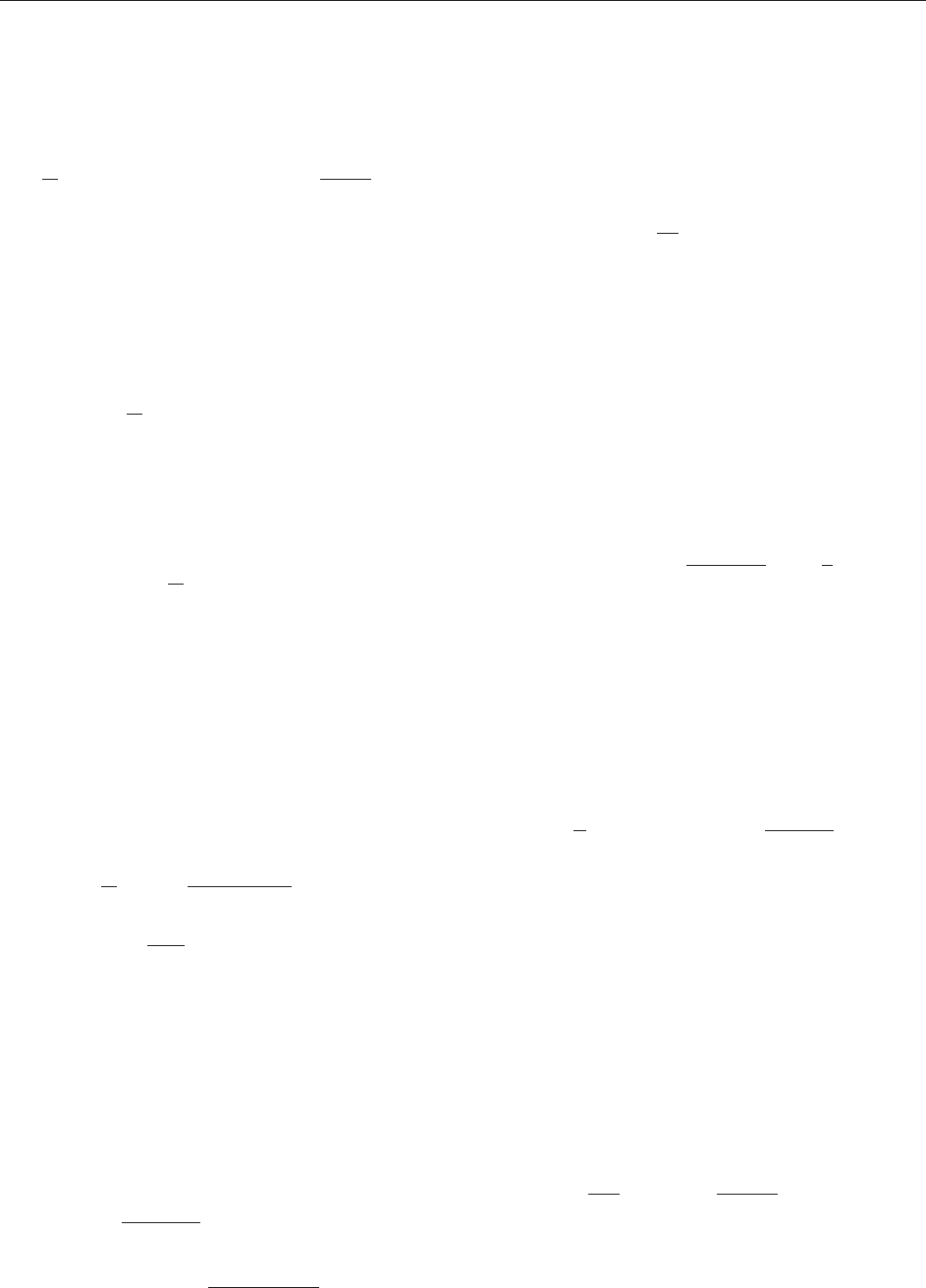
Bogomolny (1997)) suggest that the X
j
are asymp-
totically Poisson distributed:
Conjecture 1 For any bounded function g : Z
0
!C
we have
1
X
Z
2X
X
g Nðx; LÞðÞdx !
X
1
k¼0
gðkÞ
L
k
e
L
k!
½14
as T !1.
One may also consider larger intervals, where
L !1 as X !1. In this case, the assumption on
the independence of the X
j
predicts a central-limit
theorem. Weyl’s law [3] implies that the expectation
value is asymptotically, for T !1,
1
X
Z
2X
X
Nðx; LÞdx L ½15
This asymptotics holds for any sequence of L
bounded away from zero (e.g., L constant, or
L !1).
Define the variance by
2
ðX; LÞ¼
1
X
Z
2X
X
Nðx; LÞLðÞ
2
dx ½16
In view of the above conjecture, one expects
2
(X, L) L in the limit X !1, L=
ffiffiffiffi
X
p
!0 (the
variance exhibits a less universal behavior in the
range L
ffiffiffiffi
X
p
(the notation A B means there is a
constant c > 0 such that A cB), cf. Sarnak (1995),
and a central-limit theorem for the fluctuations
around the mean:
Conjecture 2 For any bounded function g : R !C
we have
1
X
Z
2X
X
g
Nðx; LÞL
ffiffiffiffiffiffiffiffiffiffiffiffiffiffiffiffiffiffi
2
ðx; LÞ
p
!
dx
!
1
ffiffiffiffiffiffi
2
p
Z
1
1
gðtÞe
ð1=2Þt
2
dt ½17
as X, L !1, L X.
The main tool in the attempts to prove the above
conjectures has been the Selberg trace formula. It
relates sums over eigenvalues of the Laplacians to
sums over lengths of closed geodesics on the
hyperbolic surface. The trace formula is in its
simplest form in the case of compact hyperbolic
surfaces; we have
X
1
j¼0
hð
j
Þ¼
AreaðMÞ
4
Z
1
1
hðÞtanhðÞ d
þ
X
2H
X
1
n¼1
‘
gðn‘
Þ
2 sinhðn‘
=2Þ
½18
where H
is the set of all primitive oriented closed
geodesics ,and‘
their lengths. The quantity
j
is
related to the eigenvalue
j
by the equation
j
=
2
j
þ
1=4. The trace formula [18] holds for a large class of
even test functions h. For example, it is sufficient to
assume that h is infinitely differentiable, and that the
Fourier transform of h,
gðtÞ¼
1
2
Z
R
hðÞe
it
d ½19
has compact support. The trace form ula for non-
compact surfaces has additional terms from the
parabolic elements in the corresponding group, and
includes also sums over the resonances of the
continuous part of the spectrum. The noncompact
modular surface behaves in many ways like a
compact surface. In particular, Selberg showed that
the number of eigenvalues embe dded in the con-
tinuous spectrum satisfies the same Weyl law as in
the compact case (Sarnak 2003).
Setting
hðÞ¼
½X;XþL
AreaðMÞ
4
2
þ
1
4
½20
where
[X, XþL]
is the characteristic function of the
interval [X, X þ L], we may thus view N(X, L)as
the left-hand side of the trace formula. The above
test function h is, however, not admissible, and
requires appropriate smoothing. Luo and Sarnak (cf.
Sarnak (2003)) developed an argument of this type
to obtain a lower bound on the average number
variance,
1
L
Z
L
0
2
ðX; L
0
ÞdL
0
ffiffiffiffi
X
p
ðlog XÞ
2
½21
in the regime
ffiffiffiffi
X
p
= log X L
ffiffiffiffi
X
p
, which is
consistent with the Poisson conjecture
2
(X, L) L.
Bogomolny, Levyraz, and Schmit suggested a remark-
able limiting formula for the two-point correlation
function for the modular surface (cf. Bogomolny
et al. (1997) and Bogomolny (2006)), based on an
analysis of the correlations between multiplicities of
lengths of closed geodesics. A rigorous analysis of the
fluctuations of multiplicities is given by Peter (cf.
Bogomolny (2006)). Rudnick (2005) has recently
established a smoothed version of Conjecture 2 in the
regime
ffiffiffiffi
X
p
L
!1;
ffiffiffiffi
X
p
L log X
!0 ½22
where the charac teristic function in [20] is replaced
by a certain class of smooth test functions.
All of the above approaches use the Selberg trace
formula, exploiting the particular properties of the
Arithmetic Quantum Chaos 215

distribution of lengths of closed geodesics in
arithmetic hyperbolic surfaces. These will be dis-
cussed in more detail in the next section, following
the work of Bogomolny, Georgeot, Giannoni and
Schmit, Bolte, and Luo and Sarnak (see Bogomolny
et al. (1997) and Sarnak (1995) for references).
Distribution of Lengths of Closed
Geodesics
The classical prime geodesic theorem asserts that the
number N(‘) of primitive closed geodesics of length
less than ‘ is asymptotically
Nð‘Þ
e
‘
‘
½23
One of the significant geometrical characteristics of
arithmetic hyperbolic surfaces is that the number of
closed geodesics with the same length ‘ grows
exponentially with ‘. This phenomenon is most
easily explained in the case of the modular surface,
where the set of lengths ‘ appearing in the lengths
spectrum is characterized by the condition
2 coshð‘=2Þ¼jtr j½24
where runs over all elements in SL(2, Z) with
jtrj >2. It is not hard to see that any integer n > 2
appears in the set {jtr j: 2 SL(2, Z)}, and hence
the set of distinct lengths of closed geodesics is
L¼f2 arcoshðn=2Þ: n ¼ 3; 4; 5; ...g½25
Therefore, the number of distinct lengths less than ‘
is asymptotically (for large ‘)
N
0
ð‘Þ¼#ðL \ ½0;‘Þ e
‘=2
½26
Equations [26] and [23] say that on average the
number of geodesics with the same lengths is at least
}
e
‘=2
=‘.
The prime geodesic theorem [23] holds equally for
all hyperbolic surfaces with finite area, while [26] is
specific to the modular surface. For general arith-
metic surfaces, we have the upper bound
N
0
ð‘Þce
‘=2
½27
for some constant c > 0 that may depend on the
surface. Although one expects N
0
(‘) to be asympto-
tic to (1=2)N(‘) for generic surfaces (since most
geodesics have a time-reversal partner which thus
has the same length, and otherwise all lengths are
distinct), there are examples of nonarithmetic Hecke
triangles where numerical and heuristic arguments
suggest N
0
(‘) c
1
e
c
2
‘
=‘ for suitable constants c
1
> 0
and 0 < c
2
< 1=2 (cf. Bogomolny (2006)). Hence
exponential degeneracy in the length spectrum seems
to occur in a weaker form also for nonarithmetic
surfaces.
A further useful property of the length spectrum
of arithmetic surfaces is the bounded clustering
property: there is a constant C (again surface
dependent) such that
#ðL \ ½‘; ‘ þ 1Þ C ½28
for all ‘. This fact is evident in the case of the
modular surface; the general case is proved by Luo
and Sarnak (cf. Sarnak (1995)).
Quantum Unique Ergodicity
The unit tangent bundle of a hyperbolic surface nH
describes the physical phase space on which the
classical dynamics takes place. A convenient para-
metrization of the unit tangent bundle is given by
the quotie nt nPSL(2, R – this may be seen be means
of the Iwasawa decomposition for an element
g 2 PSL(2, R),
g ¼
1 x
01
!
y
1=2
0
0 y
1=2
!
cos =2 sin =2
sin =2 cos =2
!
½29
where x þ iy 2 H represents the position of the
particle in nH in half-plane coordinates, and 2
[0, 2) the direction of its velocity. Multiplying the
matrix [29] from the left by
ab
cd
and writing the
result again in the Iwasawa form [29], one obtains
the action
ðz;Þ7!
az þ b
cz þ d
; 2 argðcz þ dÞ
½30
which represents precisely the geome tric action of
isometries on the unit tangent bundle.
The geodesic flow
t
on nPSL(2, R) is repre-
sented by the right translation
t
:g 7!g
e
t=2
0
0e
t=2
½31
The Haar measure on PSL(2, R) is thus trivially
invariant under the geodesic flow. It is well known
that is not the only invariant measure, that is,
t
is
not uniquely ergodic, and that there is in fact an
abundance of invariant measures. The simplest
examples are those with uniform mass on one, or a
countable collection of, clos ed geodesics.
To test the distribution of an eigenfunction
’
j
in phase space, one associates with a function
216 Arithmetic Quantum Chaos
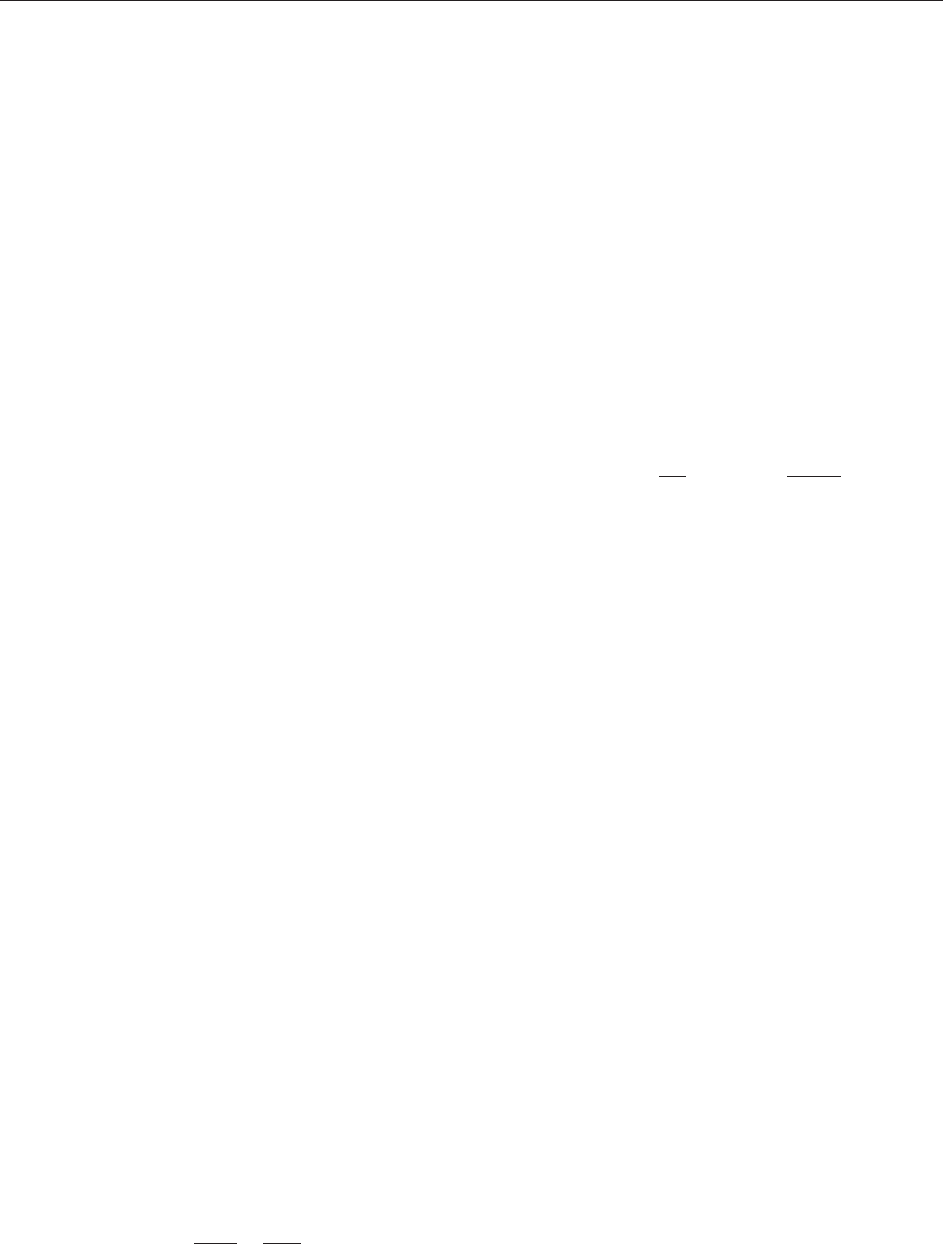
a 2 C
1
(nPSL(2, R)) the quantum observable
Op(a), a zeroth order pseudodifferential operator
with principal symbol a. Using semiclassical tech-
niques based on Friedrich’s symmetrization, one
can show that the matrix element
j
ðaÞ¼hOpðaÞ’
j
;’
j
i½32
is asymptotic (as j !1) to a positive functional
that defines a probability measure on
nPSL(2, R). Therefore, if M is compact, any
weak limit of
j
represents a probability measure
on nPSL(2, R). Egoro v’s theorem (see Quantum
Ergodicity and Mixing of Eigenfunctions) in turn
implies that any such limit must be invariant
under the geodesic flow, and the main challenge
in proving QUE is to rule out all invariant
measures apart from Haar.
Conjecture 3 (Rudnick and Sarnak (1994); see
Sarnak (1995, 2003)). For every compact hyperbolic
surface nH, the sequence
j
converges weakly to .
Lindenstrauss has proved this conjecture for
compact arithmetic hyperbolic surfaces of congru-
ence type (such as the second example in the section
‘‘Hyperbolic surfaces’’) for special bases of eigen-
functions, using ergodic-theoretic methods. These
will be disc ussed in more detail in the next section.
His results extend to the noncompact case, that is, to
the modular surface where =PSL(2, Z). Here he
shows that any weak limit of subseque nces of
j
is
of the form c, where c is a constant with values in
[0, 1]. One believes that c = 1, but with present
techniques it cannot be ruled out that a proportion
of the mass of the eigenfunction escapes into the
noncompact cusp of the surface. For the modular
surface, c = 1 can be proved under the assumption of
the genera lized Riemann hypothesis (see the section
‘‘Eigenfunctions and L-functions’’ and Sarnak
(2003)). QUE also holds for the continuous part of
the spectrum, which is furnished by the Eisenstein
series E(z, s), where s = 1=2 þ ir is the spectral
parameter. Note that the measures associated with
the matrix elements
r
ðaÞ¼hOpðaÞEð; 1=2 þ irÞ; Eð; 1=2 þ irÞi ½33
are not probability measures but only Radon
measures, since E(z, s) is not square-integrable. Luo
and Sarnak, and Jakobson have shown that
lim
r !1
r
ðaÞ
r
ðbÞ
¼
ðaÞ
ðbÞ
½34
for suitable test functions a, b 2 C
1
(nPSL(2, R))
(cf. Sarnak (2003)).
Hecke Operators, Entropy
and Measure Rigidity
For compact surfaces, the sequence of probability
measures approaching the matrix elements
j
is
relatively compact. That is, every infinite sequence
contains a convergent subsequence. Lindenstrauss’
central idea in the proof of QUE is to exploit the
presence of Hecke operators to understand the
invariance properties of possible quantum limits.
We will sketch his argument in the case of the
modular surface (ignoring issues related to the non-
compactness of the surface), where it is most
transparent.
For every positive integer n, the Hecke operator
T
n
acting on continuous functions on nH with
=SL(2, Z) is defined by
T
n
f ðzÞ¼
1
ffiffiffi
n
p
X
n
a;d¼1
ad¼n
X
d1
b¼0
f
az þ b
d
½35
The set M
n
of matrices with integer coefficients and
determinant n can be expressed as the disjoint union
M
n
¼
[
n
a;d¼1
ad¼n
[
d1
b¼0
ab
0 d
½36
and hence the sum in [35] can be viewed as a sum
over the cosets in this decomposition. We note the
product formula
T
m
T
n
¼
X
djgcdðm;nÞ
T
mn=d
2
½37
The Hecke operators are normal, form a com-
muting family, and in addition they commute with
the Laplacian . In the following, we consider an
orthonormal basis of eigenfunctions ’
j
of that
are simultaneously eigenfunctions of all Hecke
operators. We will refer to such eigenfunctions as
Hecke eigenfunctions. The above assumption is
automatically satisfied, if the spectrum of is
simple (i.e., no eigenvalues coincide), a property
conjectured by Cartier and supported by numerical
computations. Lindenstrauss’ work is based on the
following two observations. Firstly, all quantum
limits of Hecke eigenfunctions are geodesic-flow
invariant measures of positive entropy, and sec-
ondly, the only s uch m easure of positive entropy
that is recurrent under Hecke correspondences is
the Lebesgue measure.
The first property is proved by Bourgain and
Lindenstrauss (2003) and refines arguments of
Rudnick and Sarnak (1994) and Wolpert (2001) on
the distribution of Hecke points (see Sarnak (2003) for
Arithmetic Quantum Chaos 217

references to these papers). For a given point z 2 H
the set of Hecke points is defined as
T
n
ðzÞ :¼ M
n
z ½38
For most primes, the set T
p
k
(z) comprises (p þ 1)
p
k1
distinct points on nH. For each z, the Hecke
operator T
n
may now be interpreted as the
adjacency matrix for a finite graph embedded in
nH, whose vertices are the Hecke points T
n
(z).
Hecke eigenfunctions ’
j
with
T
n
’
j
¼
j
ðnÞ’
j
½39
give rise to eigenfunctions of the adjacency matrix.
Exploiting this fact, Bourgain and Lindenstrauss
show that for a large set of integers n
j’
j
ðzÞj
2
X
w2T
n
ðzÞ
j’
j
ðwÞj
2
½40
that is, pointwise values of j’
j
j
2
cannot be substan-
tially larger than its sum over Hecke points. This,
and the observation that Hecke points for a large set
of integers n are sufficiently uniformly distributed
on nH as n !1, yields the estimate of positive
entropy with a quantitative lower bound.
Lindenstrauss’ proof of the second property,
which shows that Lebesgue measure is the only
quantum limit of Hecke eigenfunctions, is a result of
a currently very active branch of ergodic theory:
measure rigidity. Invariance under the geodesic flow
alone is not sufficient to rule out other possible limit
measures. In fact, there are uncountably many
measures with this property. As limits of Hecke
eigenfunctions, all quantum limits possess an addi-
tional property, namely recurrence under Hecke
correspondences. Since the explanation of these is
rather involved, let us recall an analogous result in a
simpler setup. The map 2:x 7!2x mod 1 defines a
hyperbolic dynamical system on the unit circle with
a wea lth of invariant measures, similar to the case of
the geodesic flow on a surface of negative curvature.
Furstenberg conjectured that, up to trivial invariant
measures that are localized on finitely many rational
points, Lebesgue measure is the only 2-invariant
measure that is also invariant unde r action of
3:x 7!3x mod 1. This fundamental problem is
still unsolved and one of the central conjectures in
measure rigidity. Rudolph, however, showed that
Furstenberg’s conjecture is true if one restricts the
statement to 2-invariant measures of positive
entropy (cf. Lindenstrauss (to appear)). In Linden-
strauss’ work, 2 plays the role of the geodesic
flow, and 3 the role of the Hecke correspondences.
Although here it might also be interesting to ask
whether an analog of Furstenberg’s conjecture
holds, it is ines sential for the proof of QUE due to
the positive entropy of quantum limits discussed in
the previous paragraph.
Eigenfunctions and L-Functions
An even eigen function ’
j
(z) for =SL(2, Z) has the
Fourier expansion
’
j
ðzÞ¼
X
1
n¼1
a
j
ðnÞy
1=2
K
i
j
ð2nyÞcosð2nxÞ½41
We associate with ’
j
(z) the Dirichlet series
Lðs;’
j
Þ¼
X
1
n¼1
a
j
ðnÞn
s
½42
which converges for Re s large enough. These series
have an analytic continuation to the entire complex
plane C and satisfy a functional equation,
ðs;’
j
Þ¼ð1 s;’
j
Þ½43
where
ðs;’
j
Þ¼
s
s þ i
j
2
s i
j
2
Lðs;’
j
Þ½44
If ’
j
(z) is in addition an eigenfunction of all Hecke
operators, then the Fourier coefficients in fact
coincide (up to a normalization constant) with the
eigenvalues of the Hecke operators
a
j
ðmÞ¼
j
ðmÞa
j
ð1Þ½45
If we normalize a
j
(1) = 1, the Hecke relations [37]
result in an Euler product formula for the
L-function,
Lðs;’
j
Þ¼
Y
p prime
1 a
j
ðpÞp
s
þ p
12s
1
½46
These L-functions behave in many other ways like
the Riemann zeta or classical Dirichlet L-functions.
In particular, they are expected to satisfy a Riemann
hypothesis, that is, all nontrivial zeros are con-
strained to the critical line Ims = 1=2.
Questions on the distribution of Hecke eigenfunc-
tions, such as QUE or value distribution properties,
can now be translated to analytic properties of
L-functions. We will discuss two examples.
The asymptotics in [6] can be esta blished
by proving [6] for the choices g = ’
k
, k = 1, 2, ...,
that is,
Z
M
j’
j
j
2
’
k
dA !0 ½ 47
218 Arithmetic Quantum Chaos
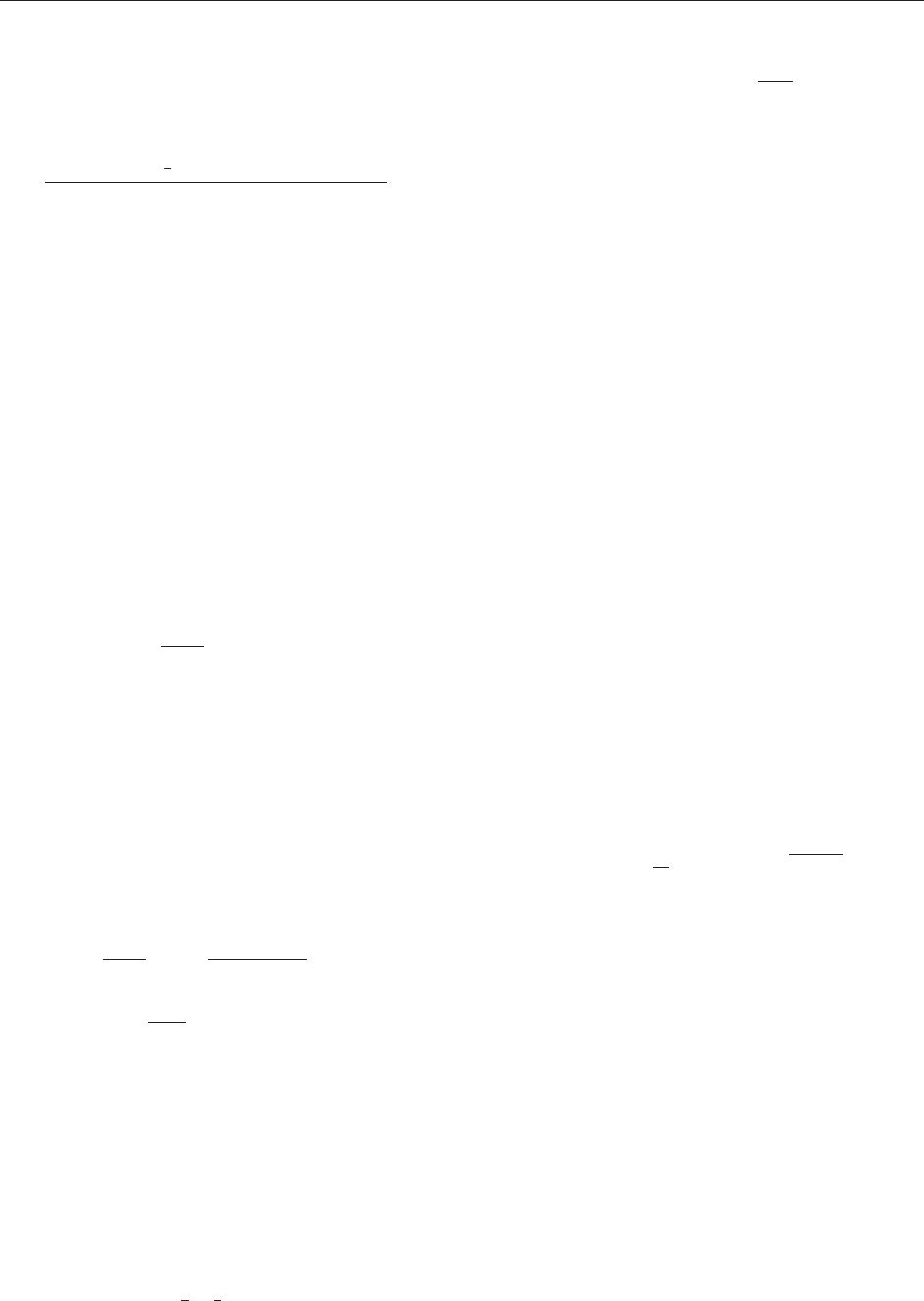
Watson discovered the remarkable relation (Sarnak
2003)
Z
M
’
j
1
’
j
2
’
j
3
dA
2
¼
4
ð
1
2
;’
j
1
’
j
2
’
j
3
Þ
ð1; sym
2
’
j
1
Þð1; sym
2
’
j
2
Þð1; sym
2
’
j
3
Þ
½48
The L-functions (s, g) in Watson’s formula are
more advanced cousins of those introduced earlier
(see Sarnak (2003) for details). The Riemann
hypothesis for such L-functions then implies, via
[48], a preci se rate of convergence to QUE for the
modular surface,
Z
M
j’
j
j
2
g dA ¼
Z
M
g dA þ Oð
1=4þ
j
Þ½49
for any >0, where the implied constant depends
on and g.
A second example on the connection between
statistical properties of the matrix elements
j
(a) = hOp(a)’
j
, ’
j
i (for fixed a and ran dom j) and
values L-functions has appeared in the work of Luo
and Sarnak (cf. Sarnak (2003)). Define the variance
V
ðaÞ¼
1
NðÞ
X
j
j
ðaÞðaÞ
2
½50
with N() =#{j:
j
}; cf. [3]. Following a conjec-
ture by Feingold–Peres and Eckhardt et al. (see Sarnak
(2003) for references) for ‘‘generic’’ quantum chaotic
systems, one expects a central-limit theorem for the
statistical fluctuations of the
j
(a), where the normal-
ized variance N()
1=2
V
(a) is asymptotic to the
classical autocorrelation function C(a), see eqn [54].
Conjecture 4 For any bounded function g : R !C
we have
1
NðÞ
X
j
g
j
ðaÞðaÞ
ffiffiffiffiffiffiffiffiffiffiffiffi
V
ðaÞ
p
!
!
1
ffiffiffiffiffiffi
2
p
Z
1
1
gðtÞe
ð1=2Þt
2
dt ½51
as !1.
Luo and Sarnak prove that in the case of the
modular surface the variance ha s the asymptotics
lim
!1
NðÞ
1=2
V
ðaÞ¼hBa; ai½52
where B is a non-negative self-adjoint operator
which commutes with the Laplacian and all
Hecke operators T
n
. In particular, we have
B’
j
¼
1
2
L
1
2
;’
j
Cð’
j
Þ’
j
½53
where
CðaÞ:¼
Z
R
Z
nPSLð2;RÞ
a
t
ðgÞðÞaðgÞdðgÞdt ½54
is the classical autocor relation function for the
geodesic flow with respect to the observable a
(Sarnak 2003). Up to the arithmetic factor
(1=2)L(1=2, ’
j
), eqn [53] is consistent with the
Feingold–Peres prediction for the variance of generic
chaotic systems. Furthermore, recent estimates of
moments by Rudnick and Soundararajan (2005)
indicate that Conjecture 4 is not valid in the case of
the modular surface.
Quantum Eigenstates of Cat Maps
Cat maps are probably the simplest area-preserving
maps on a compact surface that are highly chaotic.
They are defined as linear automorphisms on the
torus T
2
= R
2
=Z
2
,
A
: T
2
!T
2
½55
where a point 2 R
2
(mod Z
2
) is mapped to
A(mod Z
2
); A is a fixed matrix in GL(2, Z) with
eigenvalues off the unit circle (this guarantees
hyperbolicity). We view the torus T
2
as a symplectic
manifold, the phase space of the dynamical system.
Since T
2
is compact, the Hilbert space of quantum
states is an N-dimensional vector space H
N
, N
integer. The semiclassical limit, or limit of small
wavelengths, corresponds here to N !1.
It is convenient to identify H
N
with L
2
(Z=NZ),
with the inner product
h
1
;
2
i¼
1
N
X
Q mod N
1
ðQÞ
2
ðQÞ½56
For any smooth function f 2 C
1
(T
2
), define a
quantum observable
Op
N
ðf Þ¼
X
n2Z
2
b
f ðnÞT
N
ðnÞ
where
b
f (n) are the Fourier coefficients of f, and
T
N
(n) are translation operators
T
N
ðnÞ¼e
in
1
n
2
=N
t
n
2
2
t
n
1
1
½57
½t
1
ðQÞ¼ ðQ þ 1Þ
½t
2
ðQÞ¼e
2iQ=N
ðQÞ
½58
The operators Op
N
(a) are the analogs of the
pseudodifferential operators discussed in the section
‘‘Quantum unique ergodicity.’’
Arithmetic Quantum Chaos 219

A quantization of
A
is a unitary operator U
N
(A)
on L
2
(Z=NZ) satisfying the equation
U
N
ðAÞ
1
Op
N
ðf ÞU
N
ðAÞ¼Op
N
ðf
A
Þ½59
for all f 2 C
1
(T
2
). There are explicit formulas for
U
N
(A) when A is in the group
¼
ab
cd
2 SLð2; ZÞ: ab cd 0 mod 2
½60
These may be viewed as analogs of the Shale–Weil
or metaplectic representation for SL(2). for example,
the quantization of
A ¼
21
32
½61
yields
U
N
ðAÞ ðQÞ¼N
1=2
X
Q
0
mod N
exp
2i
N
ðQ
2
QQ
0
þ Q
0
2
Þ
ðQ
0
Þ½62
In analogy with [1], we are interested in the
statistical features of the eigenvalues and eigenfunc-
tions of U
N
(A), that is, the solutions to
U
N
ðAÞ’ ¼ ’; k’k
L
2
ðZ=NZÞ
¼ 1 ½63
Unlike typical quantum-chaotic maps, the statistics
of the N eigenvalues
N1
;
N2
; ...;
NN
2 S
1
½64
do not follow the distributions of unitary random
matrices in the limit N !1, but are rather singular
(Keating 1991). In analogy with the Selberg trace
formula for hyperbolic surfaces [18], there is an
exact trace form ula relating sums over eigenvalues
of U
N
(A) with sums over fixed points of the classical
map (Keating 1991).
As in the case of arithmetic surfaces, the eigenfunc-
tions of cat maps appear to behave more generically.
The analog of the Schnirelman–Zelditch–Colin de
Verdie` re theorem states that, for any orthonormal
basis of eigenfunctions {’
Nj
}
N
j = 1
we have, for all
f 2 C
1
(T
2
),
hOpðf Þ’
Nj
;’
Nj
i!
Z
T
2
f ðÞd ½65
as N !1, for all j in an index set J
N
of full density,
that is, #J
N
N. Kurlberg and Rudnick (see
Rudnick (2001)) have characterized special bases of
eigenfunctions {’
Nj
}
N
j = 1
(termed Hecke eigenbases,
in analogy with arithmetic surfaces) for which QUE
holds, generalizing earlier work of Degli Esposti,
Graffi, and Isola (1995). That is, [65] holds for all
j = 1, ..., N. Rudnick and Kurlberg, and more
recently Gurevich and Hadani, have established
results on the rate of convergence analogous to
[49]. These results are unconditional. Gurevich and
Hadani use methods from algebraic geometry based
on those developed by Deligne in his proof of the
Weil conjectures (an analog of the Riemann hypoth-
esis for finite fields).
In the case of quantum-cat maps, there are values
of N for whi ch the number of coinciding eigenvalues
can be large, a major difference to what is expected
for the modular surface. Linear combinations of
eigenstates with the same eigenvalue are as well
eigenstates, and may lead to different quantum
limits. Indeed, Faure, Nonnenmacher, and De Bie` vre
(see De Bie` vre (to appear)) have shown that there
are subsequences of values of N, so that, for all
f 2 C
1
(T
2
),
hOpðf Þ’
Nj
;’
Nj
i!
1
2
Z
T
2
f ðÞd þ
1
2
f ð0Þ½66
that is, half of the mass of the quantum limit
localizes on the hyperbolic fixed point of the map.
This is the first, and to date the only, rigorous result
concerning the existence of scarred eigenfunctions in
systems with chaotic classical limit.
Acknowledgment
The author is supported by an EPSRC Advanced
Research Fellowship.
See also: Quantum Ergodicity and Mixing of
Eigenfunctions; Random Matrix Theory in Physics.
Further Reading
Aurich R and Steiner F (1993) Statistical properties of highly
excited quantum eigenstates of a strongly chaotic system.
Physica D 64(1–3): 185–214.
Berry MV and Keating JP (1999) The Riemann zeros and
eigenvalue asymptotics. SIAM Review 41(2): 236–266.
Bogomolny EB (2006) Quantum and arithmetical chaos. In:
Cartier PE, Julia B, Moussa P, and Vanhove P (eds.) Frontiers
in Number Theory, Physics and Geometry on Random
Matrices, Zeta Functions, and Dynamical Systems, Springer
Lecture Notes. Les Houches.
Bogomolny EB, Georgeot B, Giannoni M-J, and Schmit C (1997)
Arithmetical chaos. Physics Reports 291(5–6): 219–324.
De Bie` vre S Recent Results on Quantum Map Eigenstates,
Proceedings of QMATH9, Giens 2004 (to appear).
Hejhal DA and Rackner BN (1992) On the topography of Maass
waveforms for PSL(2, Z). Experiment. Math. 1(4): 275–305.
Keating JP (1991) The cat maps: quantum mechanics and classical
motion. Nonlinearity 4(2): 309–341.
220 Arithmetic Quantum Chaos
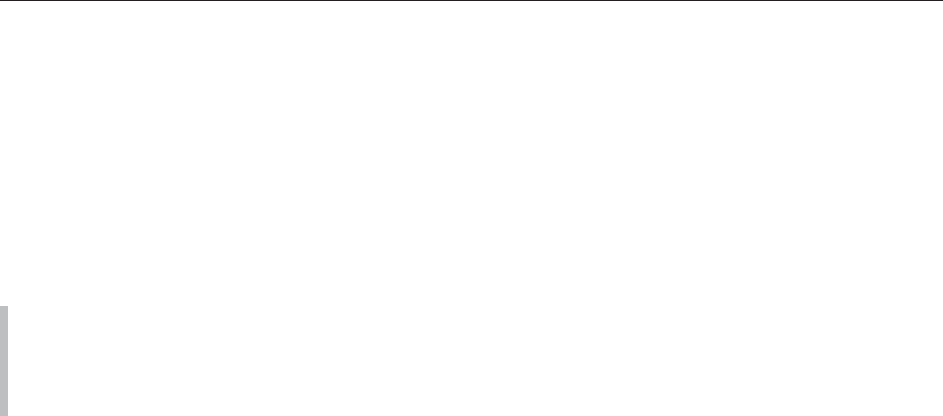
Lindenstrauss E Rigidity of multi-parameter actions. Israel
Journal of Mathematics (Furstenberg Special Volume) (to
appear).
Marklof J (2006) Energy level statistics, lattice point problems and
almost modular functions. In: Cartier PE, Julia B, Moussa P,
and Vanhove P (eds.) Frontiers in Number Theory, Physics and
Geometry on Random Matrices, Zeta Functions, and Dynami-
cal Systems, Springer Lecture Notes. Les Houches.
Rudnick Z (2001) On quantum unique ergodicity for linear maps
of the torus. In: European Congress of Mathematics,
(Barcelona, 2000), Progr. Math., vol. 202, pp. 429–437.
Basel: Birkha¨user.
Rudnick Z (2005) A central limit theorem for the spectrum of the
modular group, Park city lectures. Annales Henri Poincare´ 6:
863–883.
Sarnak P Arithmetic quantum chaos. The Schur lectures (1992)
(Tel Aviv), Israel Math. Conf. Proc., 8, pp. 183–236. Bar-Ilan
Univ., Ramat Gan, 1995.
Sarnak P (2003) Spectra of hyperbolic surfaces. Bulletin of the
American Mathematical Society (N.S.) 40(4): 441–478.
Asymptotic Structure and Conformal Infinity
J Frauendiener, Universita
¨
tTu
¨
bingen, Tu
¨
bingen,
Germany
ª 2006 Elsevier Ltd. All rights reserved.
Introduction
A major motivation for studying the asymptotic
structure of spacetimes has been the need for a
rigorous description of what should be understood by
an ‘‘isolated system’’ in Einstein’s theory of gravity.
As an example, consider a gravitating system some-
where in our universe (e.g., a galaxy, a cluster of
galaxies, a binary system, or a star) evolving accord-
ing to its own gravitational interaction, and possibly
reacting to gravitational radiation impinging on it
from the outside. Thereby it will emit gravitational
radiation. We are interested in describing these waves
because they provide us with important information
about the physics governing the system.
To adequately describe this situation, we need to
idealize the real situation in an appropriate way, since
it is hopeless to try to analyze the behavior of the
system in its interaction with the rest of the universe.
We are mainly interested in the behavior of the
system, an d not so much in other processes taking
place at large distances from the system. Since we
would like to ignore those regions, we need a way to
isolate the system from their influence.
The notion of an isolated system allows us to
select individual subsystems of the universe and
describe their properties regardless of the rest of the
universe so that we can assign to each subsystem
such physical attributes as its energy–momentum,
angular momentum, or its emitted radiation field.
Without this notion, we would always have to take
into account the interaction of the system with its
environment in full detail.
In general relativity (GR) it turns out to be a rather
difficult task to describe an isolated system and the
reason is – as always in Einstein’s theory – the fact
that the metric acts both as the physical field and as
the background. In other theories, like electrody-
namics, the physical field, such as the Maxwell field,
is very different from the background field, the flat
metric of Minkowski space. The fact that the metric
in GR plays a dual role makes it difficult to extract
physical meaning from the metric because there is no
nondynamical reference point.
Imagine a system alone in the universe. As we
recede from the system we would expect its influence
to decrease. So we expect that the spacetime which
models this situation mathematically will resemble
the flat Minkowski spacetime and it will approximate
it even better the farther away we go. This implies
that one needs to impose fall-off conditions for the
curvature and that the manifold will be asymptoti-
cally flat in an appropriate sense. However, there is
the problem that fall-off conditions necessarily imply
the use of coordinates and it is awkward to decide
which coordinates should be ‘‘good ones.’’ Thus, it is
not clear whether the notion of an asymptotically flat
spacetime is an invariant concept.
What is needed, therefore, is an invariant defini-
tion of asymptotically flat spacetimes. The key
observation in this context is that ‘‘infinity’’ is far
away with respect to the spacetime metric. This
means that geodesics heading away from the system
should be able to ‘‘run forever,’’ that is, be defined
for arbitrary values of their affine parameter s.
‘‘Infinity’’ will be reached for s !1. However,
suppose we do not use the spacetime metric g but a
metric
^
g which is scaled down with respe ct to g, that
is, in such a way that
^
g =
2
g for some function .
Then it might be possible to arrange in such a way
that geodesics for the metric
^
g cover the same events
(strictly speaking, this holds only for null geodesics,
but this is irrelevant for the present plausibility
argument) as those for the metric g yet that their
affine parameter
^
s (which is also scaled down with
respect to s) approaches a finite value
^
s
0
for s !1.
Then we could attach a boundary to the spacetime
manifold consisting of all the limit points corre-
sponding to the events with
^
s =
^
s
0
on the
^
g-geodesics.
Asymptotic Structure and Conformal Infinity 221
This boundary would have to be interpreted as
‘‘infinity’’ for the spacetime because it takes infinitely
long for the g-geodesics to get there.
We arrived at this idea of attaching a boundary by
considering the metric structure only ‘‘up to arbi-
trary scaling,’’ that is, by looking at metrics which
differ only by a factor. This is the conformal
structure of the spacetime manifold in question. By
considering the spacetime only from the point of
view of its conformal structure we obtain a picture
of the spacetime which is essentially finite but which
leaves its causal properties unchanged, and hence in
particular the properties of wave propagation. This
is exactly what is needed for a rigorous treatment of
radiation emitted by the system.
Infinity for Minkowski Spacetime
The above discussion suggests that we should consider
the spacetime metric only up to scale, that is,
to focus on the conformal structure of the spacetime
in question. Since we are interested in systems which
approach Minkowski spacetime at large distances
from the source, it is illuminating to study Minkowski
spacetime as a preliminary example. So consider the
manifold M = R
4
equipped with the flat metric
g ¼ dt
2
dr
2
r
2
d
2
½1
where r is the standar d radial coordinate defined by
r
2
= x
2
þ y
2
þ z
2
and
d
2
¼ d
2
þ sin
2
d
2
is the standard metric on the unit sphere S
2
. We now
introduce retarded and advanced time coordinates,
which are adapted to the null cone and hence to the
conformal structure of g by the definition
u ¼ t r; v ¼ t þ r
and obtain the metric in the form
g ¼ du dv
1
4
ðv uÞ
2
d
2
The coordinates u and v both take arbitrary real values
but they are restricted by the relation v u = 2r 0.
In order to see what happens ‘‘at infinity,’’ we introduce
the coordinates U and V by the relations
u ¼ tan U; v ¼ tan V
Then U and V both take values in the open interval
(=2, =2) with V U and the metric is trans-
formed to
g ¼
1
4 cos
2
U cos
2
V
4dU dV sin
2
ðV UÞd
2
½2
Clearly, the metric is undefined at events with
cos U = 0orcosV = 0. These would correspond to
events with u = 1 or v = 1 which do not lie in
M. However, by defining the function
¼ 2 cos U cos V
we find that the metric
^
g =
2
g with
^
g ¼ 4dU dV sin
2
ðV UÞd
2
½3
is conformally equivalent to g and is regular for all
values of U and V (keeping V U). In fact, by
defining the coordinates
T ¼ V þ U; R ¼ V U
this metric takes the form
^
g ¼ dT
2
dR
2
sin
2
R d
2
½4
the metric of the static Einstein universe E. Thus, we
may regard the Minkowski spacetime as the part of
the Einstein cylinder defined by restricting the
coordinates T and R to the region j TjþR < as
illustrated in Figure 1. Although M can be considered
as being diffeomorphic to the shaded part in Figure 1,
these two manifolds are not isometric. This is obvious
from considering the properties of the events lying on
i
+
i
0
I
+
I
–
i
–
Figure 1 The embedding of Minkowski spacetime into the
Einstein cylinder.
222 Asymptotic Structure and Conformal Infinity

the boundary @M of M in E. Fix a point P inside M
and follow a null geodesic with respect to the metric
^
g
from P toward the future. It will intersect @M after a
finite amount of its affine parameter has elapsed.
When we follow a null geodesic with respect to g
from P in the same direction, we find that it does not
reach @M for any value of its affine parameter. Thus,
the boundary is at infinity for the metric g but at a
finite location with respect to the metric
^
g. When we
consider all possible kinds of geodesics for the metric g
we find that @M consists of five qualitatively different
pieces. The future pointing timelike geodesics all
approach the point i
þ
given by (T, R) = (, 0), while
the past-pointing geodesics approach i
with coordi-
nates (, 0). All spacelike geodesics come arbitrarily
close to a point i
0
with coordinates (0, )(locatedon
the front of the cylinder in Figure 1). Null geodesics,
however, are different. For any point (T, jTj)with
T 6¼ 0, on @M there are g-null-geodesics which
come arbitrarily close.
In this sense, we may regard @M as consisting of
limit points obtained by tracing-geodesics for infi-
nite values of their affine parameters. According to
the causal character of the geodesics the set of their
respective limit points is called future/past timelike
infinity i
, spacelike infinity i
0
or future/past null-
infinity, denoted by I
. These two parts of null-
infinity are three-dimensional regular submanifolds
of the embedding manifold E, while the points i
, i
0
are regular points in E in the sense that the metric
^
g
is regular there. This is not automatic, considering
the fact that infinitely many geodesics converge to a
single point. However, the flatness of Minkowski
spacetime guarantees that the geodesics approach at
just the appropriate rate for the limit points to be
regular.
This example shows that the structure of the
boundary is determined entirely by the metric g of
Minkowski spacet ime. If we had chosen a different
function
0
= ! with !>0 then we would not
have obtained the Einstein cylinder but some
different Lorentzian manifold (M
0
, g
0
). Yet, the
boundary of M in M
0
would have had the same
properties.
Asymptotically Flat Spacetimes
The physical idea of an isolated system is captured
mathematically by an asymptotically flat space-
time. Since such a spacetime M is expected to
approach Minkowski space time asymptotically,
the asymptotic structure of M is also expected to
be similar to t hat of M. This expectation is
expressed in
Definition 1 A spacetime (M, g
ab
) is called ‘‘asymp-
totically simple’’ if there exists a manifold-with-
boundary
c
M with metric
^
g
ab
and scalar field on
c
M and boundary I = @M such that the following
conditions hold:
1. M is the interior of
c
M: M= int
c
M;
2.
^
g
ab
=
2
g
ab
on M;
3. and
^
g
ab
are smooth on all of
M;
4. > 0onM ; =0, r
a
6¼ 0onI ; and
5. each null geodesic acquires both future and past
endpoints on I .
This definition formalizes the construction which
was explicitly performed above, by which one
attaches a regular (nonempty) boundary to a sp ace-
time after suitably rescaling its metric. Asymptoti-
cally simple spacetimes are exactly those for which
this process of conformal compactification is possi-
ble. The purpose of condition 5 is to exclude
pathological cases. There are spacetimes which do
not satisfy this condition (e.g., the Schwarzschild
spacetime, where some of the null geodesics enter
the event horizon and cannot escape to infinity).
Yet, one would like to include them as being
asymptotically simple in a sense, because they
clearly describe isolated systems. For these cases,
there exists the notion of weakly asymptotically
simple spacetimes.
In order to arrive at asymptotically flat space-
times, one needs to make certain assumptions about
the behavior of the curvature near the boundary,
thus:
Definition 2 An asymptotically simple spacetime is
called ‘‘asymptotically flat’’ if its Ricci tensor Ric[g]
vanishes in a neighborhood of I .
Note that this definition imposes a rather strong
restriction on the Ricci curvature; less restrictive
assumptions are possible. This condition applies
only near I . Thus, it is possible to consider
spacetimes which contain matter fields as long as
these fields do not extend to infinity.
Other asymptotically simple spacetimes which are
not asymptotically flat are the de Sit ter and anti-de
Sitter spacetimes which are solutions of the Einstein
equations with nonvanishing cosmological constant .
It is a simple consequence of the definition that
the boundary I is a regular three-dimensional
hypersurface of the embedding spacetime
c
M which
is timelike, spacelike, or null depending on the sign
of . In particular, for the Minkowski spacetime
( = 0) the boundary is necessarily a null hypersur-
face, as noted above.
The requirement that the vacuum Einstein
equations hold near I has several important
Asymptotic Structure and Conformal Infinity 223

consequences. First, I is a null hypersurface with
the special property of being shear-free. This means
that any cross section of a bundle of its null
generators does not suffer any distortions when
moved along the generators. Only exp ansion or
contraction can occur. The global structure of I
is the same as the one from the example above.
Null infinity consists of two connected components,
I
, each of which is diffeomorphic to S
2
R. Thus,
topologically, I
are cylinders. The cone-like
appearance as seen in Figure 1 is artificial. It
depends on the particular conformal factor chosen
for the conformal compactification. Furthermore, it
is only in very exceptional cases that the metric
^
g is
regular at i
0
or i
.
The most important consequence, however, con-
cerns the conformal Weyl tensor C
a
bcd
. This is the
part of the full Riemann curvature tensor R
a
bcd
which
is trace-free. It is invariant under conformal rescal-
ings of the metric. Thus, on M, C
a
bcd
=
^
C
a
bcd
.When
the vanishing of the Ricci tensor near I is assumed
then it turns out that the Weyl tensor necessarily
vanishes on I . This is the ultimate justification for
calling such manifolds asymptotically flat because the
entire curvature vanishes on I .
Some Consequences
There are several consequences of the existence of
the conformal boundary I . They all can be traced
back to the fact that this boundary can be used to
separate the geometric fields into a universal back-
ground field and dynamical fields which propagate
on it. The background is given by the boundary
points attached to an asymptotically flat spacetime
which always form a three-dimensional null hyper-
surface I with two connected components (in the
sequel, we restrict our attention to I
þ
only; I
is
treated similarly), each with the topology of a
cylinder. And in each case, I is shear-free.
The BMS Group
Since the structure of null-infinity is universal over
all asymptotically flat spacetimes, it is obvious that
its symmetry group should also possess a universal
meaning. This group, the so-called Bondi–Metzner–
Sachs (BMS) group is in many respects similar to the
Poincare´ group, the symmetry group of M.Itisthe
semidirect product of the Lorentz group with an
abelian group which, however, is not the four-
dimensional translat ion group but an infinite-dimen-
sional group of supertranslations. This group is a
normal subgroup, so the factor group is isomorphic
to the Lorentz group.
In physical terms, the supertranslations arise
because there are infinitely many directions from
which observers at infinity (whose world lines coincide
with the null generators of I in a certain limit) can
observe the system and because each observer is free to
choose its own origin of proper time u. The observers
surrounding the system are not synchronized, because
under the assumptions made there is no natural way to
fix a unique common origin. Hence, a supertranslation
is a shift of the parameter along each null generator of
I
þ
corresponding to a change of origin for each
individual observer. It can be given as a map S
2
! R.
A choice of origin on each null generator of I
þ
is
referred to as a ‘‘cut’’ of I
þ
. It is a two-dimensional
surface of spherical topology which intersects each null
generator exactly once. It is an open question whether
one can always synchronize the observers by imposing
canonical conditions at i
0
or i
, thereby reducing the
BMS group to the smaller Poincare´group.
The supertranslations contain a unique four-
dimensional normal subgroup. In M these special
supertranslations are the ones which are induced by
the translations of Minkowski spacetime in the
following way. Take the future light cone of some
event P and follow it out to I
þ
, where its intersection
defines an origin for each observer located there.
Now consider the light cone of another event Q
obtained from P by a translation in a spatial
direction. Then the light emitted from Q will arrive
at I
þ
earlier than that from P for observers in the
direction of the translation, while it will be delayed
for observers in the opposite direction. This change
in arrival time defines a specific supertranslation.
Similarly, for a translation in a temporal direction,
the light from Q will arrive later than that from P
for all observers. Thus, every translation in M
defines a particular supertranslation on I
þ
.These
can be characterized in a different way, which is
intrinsic to I
þ
and which can be used in the general
case even though there will be no Killing vectors
present in a general asymptotically flat spacetime. In
an appropriate coordinate system, the asymptotic
translations are given as linear combinations of the
first four spherical harmonics Y
00
, Y
10
, Y
11
.The
space of asymptotic translations T is in a natural
way isometric to M.
The Peeling Property
Now consider the Weyl tensor C
a
bcd
on
c
M. Since it
vanishes on I where =0 we may form the
quotient
K
a
bcd
¼
1
C
a
bcd
224 Asymptotic Structure and Conformal Infinity