
Griffiths D.F., Higham D.J. Numerical Methods for Ordinary Differential Equations: Initial Value Problems
Подождите немного. Документ загружается.


216 15. Geometric Integration Part II—Hamiltonian Dynamics
As its name suggests, the method is symplectic. To confirm this property
we first compute partial derivatives to obtain
∂p
n+1
∂p
n
= 1 − hH
pq
(p
n+1
, q
n
)
∂p
n+1
∂p
n
,
∂p
n+1
∂q
n
= −hH
qq
(p
n+1
, q
n
) − hH
pq
(p
n+1
, q
n
)
∂p
n+1
∂q
n
,
∂q
n+1
∂p
n
= hH
pp
(p
n+1
, q
n
)
∂p
n+1
∂p
n
,
∂q
n+1
∂q
n
= 1 + hH
qp
(p
n+1
, q
n
) + hH
pp
(p
n+1
, q
n
)
∂p
n+1
∂q
n
.
Collecting these together, we have
1 + hH
pq
(p
n+1
, q
n
) 0
−hH
pp
(p
n+1
, q
n
) 1
∂p
n+1
∂p
n
∂p
n+1
∂q
n
∂q
n+1
∂p
n
∂q
n+1
∂q
n
=
1 −hH
qq
(p
n+1
, q
n
)
0 1 + hH
qp
(p
n+1
, q
n
)
.
We may solve to obtain the Jacobian e xplicitly, and verify that (15.5) holds.
Alternatively, taking determinants directly in this expression leads to the equiv-
alent condition
det
∂p
n+1
∂p
n
∂p
n+1
∂q
n
∂q
n+1
∂p
n
∂q
n+1
∂q
n
= 1.
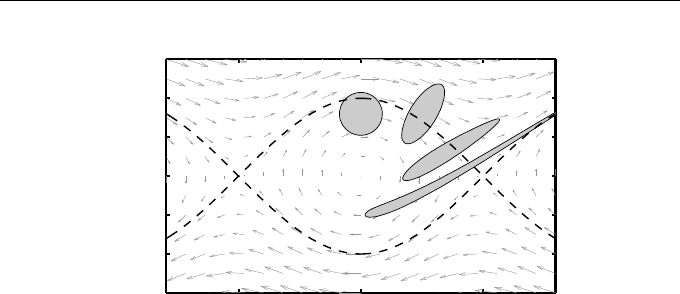
Figure 15.7 shows how the results in Figure 15.6 change when the symplectic
Euler method is used. Comparing the regions in Figure 15.7 with those in
Figure 15.5 for the exact time t flow map, we see that the symplectic Euler
method is not producing highly accurate approximations—this is to be expected
with a relatively large stepsize of h = 1. However, the method gives a much
better qualitative feel for the behaviour of this ODE than the non-symplectic
explicit or implicit Euler methods. In Section 15.4 we will briefly lo ok at the
question of how to quantify the benefits of symplecticness.
An important practical point is that the symplectic Euler method (15.11)
is explicit on the pendulum ODE (15.6). Given p
n
and q
n
, we may compute
p
n+1
= p
n
− h sin q
n
and then q
n+1
= q
n
+ hp
n+1
. Hence this method, which
is first-order accurate, is just as cheap to compute with as the basic Euler
method. This explicit nature carries through more generally when the Hamil-
tonian function H(p, q) has the separable form
H(p, q) = T (p) + V (q), (15.12)
15.4 Modified Equations 217
−3
−2
−1
0
1
2
3
q
p
−π
π
Fig. 15.7 Area evolution for the symplectic Euler method applied to the
pendulum ODE (15.6)
which often arises in mechanics, with T and V representing the kinetic and
potential energies, respectively. In this case, symplectic Euler takes the form
p
n+1
= p
n
− hV
0
(q
n
),
q
n+1
= q
n
+ hT
0
(p
n+1
).
(15.13)
15.4 Modified Equations
We will now analyse the map (15.13) arising when the symplectic Euler method
(15.11) is applied to the separable Hamiltonian problem
p
0
(t) = −V
0
(q),
q
0
(t) = T
0
(p),
(15.14)
corresponding to (15.12), in the spirit of Chapter 13 and Section 14.4. Special
cases of these equations were studied in examples given in these earlier chapters.
We look for a modified equation of the form
u
0
(t) = −V
0
(v) + hA(u, v),
v
0
(t) = T
0
(u) + hB(u, v).
(15.15)
We would like one step of the symplectic Euler method applied to the
original problem to match this new problem even more closely. In other words,
we would like the map (15.13) to match the time h flow map of the modified
problem (15.15) more closely than it matches the original problem (15.14).

218 15. Geometric Integration Part II—Hamiltonian Dynamics
We therefore Taylor expand the modified problem over one step and choose
the functions A and B to match the Taylor expansion of the numerical method
as closely as possible.
To expand u, we need an expression for the second derivative. We have
d
2
u
dt
2
=
d
dt
u
0
=
d
dt
(−V
0
(v) + hA(u, v))
=
∂
∂u
(−V
0
(v) + hA(u, v))
d
dt
u +
∂
∂v
(−V
0
(v) + hA(u, v))
d
dt
v
= O(h) − (V
00
(v) + O(h)) (T
0
(u) + O(h))
= −V
00
(v)T
0
(u) + O(h).
Hence, a Taylor expansion may be written
u(t
n
+ h) = u(t
n
) + hu
0
(t
n
) +
1
2
h
2
u
00
(t
n
) + O(h
3
)
= u(t
n
) − hV
0
(v(t
n
))
+ h
2
A(u(t
n
), v(t
n
)) −
1
2
V
00
(v(t
n
))T
0
(u(t
n
))
+ O(h
3
).
So, to match the map (15.13) up to O(h
3
) we require
A(p, q) =
1
2
V
00
(q)T
0
(p). (15.16)
Similarly,
d
2
v
dt
2
=
d
dt
v
0
=
d
dt
(T
0
(u) + hB(u, v))
=
∂
∂u
(T
0
(u) + hB(u, v))
d
dt
u +
∂
∂v
(T
0
(u) + hB(u, v))
d
dt
v
= −T
00
(u)V
0
(v) + O(h).
So a Taylor expansion for v is
v(t
n
+ h) = v(t
n
) + hv
0
(t
n
) +
1
2
h
2
v
00
(t
n
) + O(h
3
)
= v(t
n
) + hT
0
(u(t
n
))
+ h
2
B(u(t
n
), v(t
n
)) −
1
2
T
00
(u(t
n
))V
0
(v(t
n
))
+ O(h
3
).
(15.17)

15.4 Modified Equations 219
Now, because the second component of the map (15.13) involves p
n+1
, we must
expand to obtain
q
n+1
= q
n
+ hT
0
(p
n+1
)
= q
n
+ hT
0
(p
n
− hV
0
(q
n
))
= q
n
+ h
T
0
(p
n
) − T
00
(p
n
)hV
0
(q
n
) + O(h
2
)
. (15.18)
Matching this expansion with (15.17) up to O(h
3
) requires
h
2
B(p, q) −
1
2
h
2
T
00
(p)V
0
(q) = −h
2
T
00
(p)V
0
(q),
which rearranges to
B(p, q) = −
1
2
T
00
(p)V
0
(q). (15.19)
Inserting our expressions (15.16) and (15.19) into (15.15), we obtain the mod-
ified equation
u
0
= −V
0
(v) +
1
2
hV
00
(v)T
0
(u),
v
0
= T
0
(u) −
1
2
hT
00
(u)V
0
(v).
(15.20)
It is straightforward to check that this has the form (15.8) of a Hamiltonian
problem, with
H(p, q) = T (p) + V (q) −
1
2
hT
0
(p)V
0
(q). (15.21)
So the symplectic Euler method may be accurately approximated by a modified
equation that shares the Hamiltonian structure of the underlying ODE.
In Figure 15.8 we combine the information from Figure 15.5 concerning the
exact flow map (dark shading) and Figure 15.7 concerning the h map of the
symplectic Euler method (light shading). Between these two sets of regions, we
have inserted in medium shading with a dashed white border the regions arising
from the time t = 1 flow map of the modified equation (15.20) We see that,
even for this relatively large value of h, the modified equation does a visibly
better job than the original ODE of describing the numerical approximation.
Applying the Euler method to the separable problem (15.14) produces the
map
p
n+1
= p
n
− hV
0
(q
n
),
q
n+1
= q
n
+ hT
0
(p
n
).
This differs from the symplectic Euler method (15.13) in that p
n
, rather than
p
n+1
, appears on the right-hand side of the second equation. It follows that if
we repeat the procedure above and look for a modified problem of the form
(15.15), then the same A(p, q) arises, but, because the −h
2
T
00
(u)V
0
(v) term is
missing from the right-hand side of (15.18), we obtain
B(p, q) =
1
2
T
00
(p)V
0
(q).

220 15. Geometric Integration Part II—Hamiltonian Dynamics
The resulting modified problem for Euler’s method is
u
0
= −V
0
(v) +
1
2
hV
00
(v)T
0
(u),
v
0
= T
0
(u) +
1
2
hT
00
(u)V
0
(v).
(15.22)
This is not of the Hamiltonian form (15.8).
In summary, the symplectic Euler method has produced a modified equation
of Hamiltonian form, and the regular, nonsymplectic, Euler method has not.
We may move on to the next level of modified equation for the symplectic
Euler method, by looking for functions C(u, v) and D(u, v) in
u
0
= −V
0
(v) +
1
2
hV
00
(v)T
0
(u) + h
2
C(u, v),
v
0
= T
0
(u) −
1
2
hT
00
(u)V
0
(v) + h
2
D(u, v),
(15.23)
such that the relevant expansions match to O(h
4
). After some effort (see Ex-
ercise 15.14) we find that this modified equation is also of Hamiltonian form,
with
H(p, q) = T (p) + V (q) −
1
2
hT
0
(p)V
0
(q)
+
1
12
h
2
V
00
(q)T
0
(p)
2
+ T
00
(p)V
0
(q)
2
. (15.24)
This example illustrates a phenomenon that holds true in great generality:
numerical methods that give symplectic maps on Hamiltonian ODEs give rise
to modified equations of any desired order that are themselves Hamiltonian.
So these methods are extremely well described by problems that are (a) close
to the original ODE and (b) have the same structure as the original ODE. By
contrast, nonsymplectic m ethods, such as the Euler method that we examined
on the pendulum problem, do not have this desirable property.
−3
−2
−1
0
1
2
3
q
p
−π
π
Fig. 15.8 Area evolution: Light shading for symplectic Euler method applied
to the pendulum system (15.6), medium shading with white dashed border for
the modified equation (15.20), dark shading for the exact flow map

15.5 Discussion 221
15.5 Discussion
In 1988 three researchers, Lasagni, Sanz-Serna, and Suris, independently pub-
lished a condition that characterizes symplectiness for Runge–Kutta methods.
This turned out to be the same as the condition (14.25) that characterizes
preservation of quadratic invariants. Many other authors have looked at de-
signing and analysing numerical methods for general Hamiltonian ODEs or for
specific clas ses arising in particular applications. The modified equation view-
point appears to offer the best set of analytical tools for quantifying the benefit
of symplecticness, and many interesting issues can be lo oked at. For example,
the Kepler problem (14.15) is not only of Hamiltonian form with a quadratic
invariant, but also has a property known as reversibility. Which combination
of these three properties is it possible, or desirable, for a numerical method
to match? In addition to symplecticness, there are many other closely related
problems involving Lie group structures, and these ideas also extend readily
beyond ODEs into the realms of partial and stochastic differential equations.
Overall, there are many open questions in the field of geometric integration,
and the area remains very active.
EXERCISES
15.1.
??
The product Jv corresponds to a clockwise rotation of v through
a right angle. Deduce from the formula for the scalar product of two
vectors that u
T
Jv = kukkvksin θ, where θ is the angle between u
and v and kuk = (u
T
u)
1/2
. Hence prove that the oriented area is
given by the expression (15.1).
15.2.
?
Let A(α) denote the rotation matrix in Exercise 7.8. Show that
area
o
(A(α)u, A(α)v) = area
o
(u, v) for any two vectors u, v ∈ R
2
and any angle α. This proves that the oriented area is unaffected
when both vectors are rotated through equal angles.
15.3.
?
Show that the oriented area function (15.1) is linear, in the sense
that area
o
(x + z, y) = area
o
(x, y) + area
o
(z, y). Draw a picture to
illustrate this result. (Hint: from Exercise 15.2 it is OK to assume
that y is parallel with the vertical axis.)
15.4.
?
Let
B =
a c
b d
∈ R
2×2
.
Show that the vertices of the parallelogram in Figure 15.1 arise when
B is applied to the vertices of the unit square. Also, show that the

222 15. Geometric Integration Part II—Hamiltonian Dynamics
oriented area has the form det (B).
15.5.
?
For A ∈ R
2×2
, show that the left-hand side of (15.2) is equivalent
to the matrix
0 det(A)
−det(A) 0
.
This confirms that the condition (15.2) is equivalent to det(A) = 1.
15.6.
?
Show that the Cremona map [30]
x
1
x
2
7→
x
1
cos λ − (x
2
− x
2
1
) sin λ
x
1
sin λ + (x
2
− x
2
1
) cos λ
,
where λ is constant, is symplectic.
15.7.
??
The backward Euler method applied to the pendulum ODE (15.6)
corresponds to the implicit relations
p
n+1
q
n+1
=
p
n
− h sin q
n+1
q
n
+ hp
n+1
. (15.25)
Taking partial derivatives, using the chain rule, show that
1 h cos q
n+1
−h 1
∂p
n+1
∂p
n
∂p
n+1
∂q
n
∂q
n+1
∂p
n
∂q
n+1
∂q
n
=
1 0
0 1
.
Deduce that
det
∂p
n+1
∂p
n
∂p
n+1
∂q
n
∂q
n+1
∂p
n
∂q
n+1
∂q
n
=
1
1 + h
2
cos q
n+1
.
This shows that the backward Euler m ethod does not produce a
symplectic map on this problem for any step size h > 0.
15.8.
?
With H(p, q) defined by (15.7), show that the separatrices H(p, q) =
1 (shown as dashed lines in Figure 15.4) are given by p = ±2 cos(q/2).
15.9.
???
The “adjoint” of the symplectic Euler method (15.11) has the
form
2
p
n+1
= p
n
− h
∂H
∂q
(p
n
, q
n+1
),
q
n+1
= q
n
+ h
∂H
∂p
(p
n
, q
n+1
).
(15.26)
2
Some authors refer to (15.26) as the symplectic Euler method, in which case
(15.11) becomes the adjoint.

Exercises 223
Show that this method is also symplectic. Can it be implemented as
an explicit method on separable problems of the form (15.12)?
15.10.
???
Show that the implicit mid-point rule (14.13) is symplectic.
15.11.
?
Show that the symplectic Euler method (15.13) reduces to the
method used in Example 13.4 when V (q) =
1
2
q
2
and T (p) =
1
2
p
2
.
Verify also that the Hamiltonian (15.21) reduces to a multiple of
(13.20).
15.12.
???
(Based on Sanz-Serna and Calvo [61, Example 10.1] and Beyn [3].)
The time t flow map of a constant coefficient linear system x
0
(t) =
Ax(t), where A ∈ R
m×m
, may be written
ψ
t
(x
0
) = exp (At) x
0
.
Here, exp denotes the matrix exponential, which may be defined by
extending the usual scalar power series to the matrix analogue:
exp(X) = I + X +
1
2!
X
2
+
1
3!
X
3
+ ··· .
Show that the time h flow map of the m = 2 system (which depends
on h)
u
0
(t)
v
0
(t)
=
h
−1
log
1 −h
h 1 − h
2
u(t)
v(t)
corresponds to one step of the symplectic Euler method (15.11) on
the Hamiltonian ODE with H(p, q) = (p
2
+ q
2
)/2. Here, log denotes
the matrix logarithm [37], for which exp(log(A)) = A. This is one
of the rare cases where we are able to find an exact modified equa-
tion, rather than truncate at some point in an h-expansion. Find an
equivalent exact modified equation for the adjoint method (15.26)
applied to the same Hamiltonian problem.
15.13.
???
By following the derivation of (15.20), construct a modified equa-
tion for the adjoint of the symplectic Euler method, defined in
(15.26), when applied to a separable problem of the form (15.14).
Also, show that this modified equation is Hamiltonian.
15.14.
???
By matching expansions up to O(h
4
), derive a modified equation
of the form (15.23) for the s ymplectic Euler method (15.13) applied
to the separable Hamiltonian problem (15.14), and show that the
result is a Hamiltonian problem with H(p, q) as in (15.24).
16
Stochastic Differential Equations
16.1 Introduction
Many mathematical modelling scenarios involve an inherent level of uncer-
tainty. For example, rate constants in a chemical reaction model might be
obtained experimentally, in which case they are subject to me asureme nt er-
rors. Or the simulation of an epidemic might require an educated guess for the
initial number of infected individuals. More fundamentally, there may be mi-
croscopic effects that (a) we are not able or willing to account for directly, but
(b) can be approximated stochastically. For example, the dynamics of a coin
toss could, in principle, be simulated to high precision if we were prepared to
measure initial conditions sufficiently accurately and take account of environ-
mental effects, such as wind speed and air pressure. However, for most practical
purp ose s it is perfectly adequate, and much more straightforward, to model the
outcome of the coin toss using a random variable that is equally likely to take
the value heads or tails. Stochastic models may also be used in an attempt to
deal with ignorance. For example, in mathematical finance, there appears to
be no universal “law of motion” for the movement of stock prices, but random
models seem to fit well to real data.
There are many ways to incorporate randomness into quantitative modelling
and simulation. We focus here, very briefly, on a specific approach that is
mathematically elegant and is becoming increasingly popular. The underlying
theory is relatively new in comparison with Newton’s calculus—the classic work
by Ito was done in the 1940s, and the design and study of numerical methods is
Springer Undergraduate Mathematics Series, DOI 10.1007/978-0-85729-148-6_16,
© Springer-Verlag London Limited 2010
D.F. Griffiths, D.J. Higham, Numerical Methods for Ordinary Differential Equations,