
Griffiths D.F., Higham D.J. Numerical Methods for Ordinary Differential Equations: Initial Value Problems
Подождите немного. Документ загружается.


B
Taylor Series
B.1 Expansions
The idea behind Taylor series expansions is to approximate a smooth function
g : R → R locally by a polynomial. We suppose here that all derivatives of g
are bounded. The approximating polynomial will be chosen to match as many
derivatives of g as possible at a certain point, say a. Fixing a, we have, from
the definition of a derivative,
g(a + h) − g(a)
h
≈ g
0
(a), (B.1)
for small h. This rearranges to
g(a + h) ≈ g(a) + hg
0
(a). (B.2)
As h varies, the right-hand side in (B.2) defines the tangent line to the function
g based on the point x = a. This is a first order polynomial approximation,
or Taylor series expansion with two terms—it is clos e to the function g for
sufficiently small h. Differentiating with respect to h and setting h = 0 we
see that the polynomial g(a) + hg
0
(a) in (B.2) matches the zeroth and first
derivatives of g. We may improve the accuracy of the approximation by adding
a second order term of the form h
2
g
00
(a)/2; so
g(a + h) ≈ g(a) + hg
0
(a) +
h
2
2
g
00
(a). (B.3)

248 B. Taylor Series
The right-hand side now matches a further derivative of g at h = 0. Generally,
a Taylor series expansion for g about the point a with p + 1 terms has the form
g(a + h) ≈ g(a) + hg
0
(a) +
h
2
2
g
00
(a) + ··· +
h
p
p!
g
(p)
(a), (B.4)
where g
(p)
denotes the pth derivative. This pth-degree polynomial matches
derivatives of g at the point a from order z ero to p.
It is sometimes more convenient to rewrite these expansions with a + h
as a single independent variable, say x. The expansions (B.2) and (B.3) then
become
g(x) ≈ g(a) + (x − a)g
0
(a)
and
g(x) ≈ g(a) + (x − a)g
0
(a) +
(x − a)
2
2
g
00
(a)
respectively, and x is required to be close to a for the approximations to be
close to g. For the general Taylor expansion (B.4) we then have
g(x) ≈ g(a) + (x − a)g
0
(a) +
(x − a)
2
2
g
00
(a) + ··· +
(x − a)
p
p!
g
(p)
(a). (B.5)
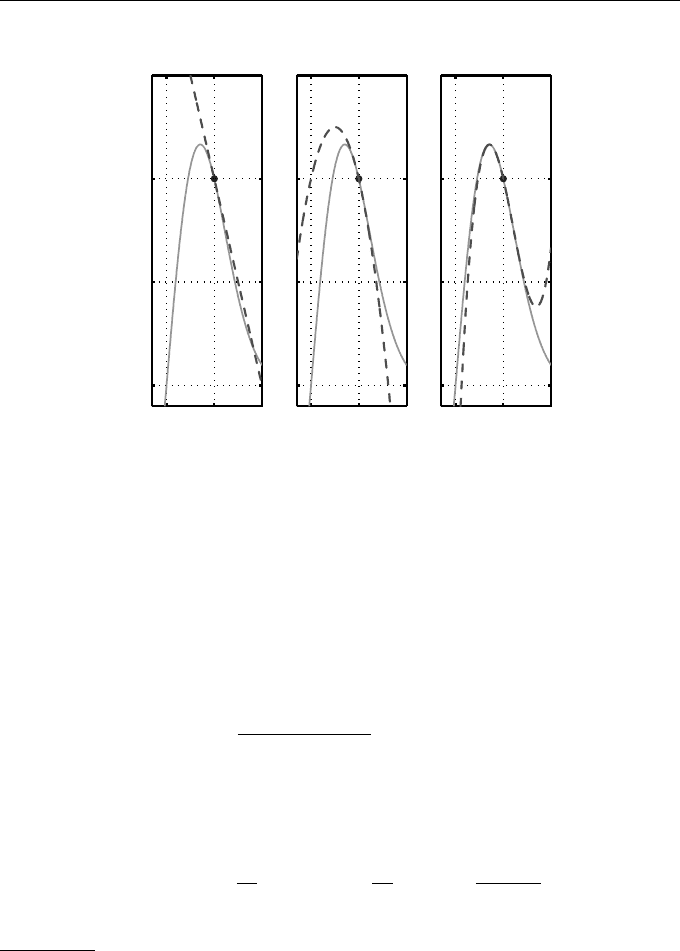
Figure B.1 illustrates the case of p = 1, 2, 3 when g(x) = x e
1−x
2
and a = 1.
The expansions developed in this chapter are extended in Appendix C to
functions of two variables. When the point of expansion is the origin, Taylor
series are often referred to as Maclaurin series.
B.2 Accuracy
Increasing the order of our Taylor series expansion by one involves adding a
term with an extra power of h. The next term that we would include in the
right-hand side of (B.4) to improve the accuracy would be proportional h
p+1
.
Using the asymptotic order notation, as introduced in Section 2.2, we may
write
g(a + h) = g(a) + hg
0
(a) +
h
2
2
g
00
(a) + ··· +
h
p
p!
g
(p)
(a) + O(h
p+1
),
as h → 0, to quantify the accuracy in (B.4). For the version in (B.5), this
becomes
g(x) = g(a)+(x−a)g
0
(a)+
(x − a)
2
2
g
00
(a)+···+
(x − a)
p
p!
g
(p)
(a)+O((x−a)
p+1
),
as x → a.
B.2 Accuracy 249
0 1 2
0
0.5
1
1.5
Two terms
x
0 1 2
0
0.5
1
1.5
Th ree term s
x
0 1 2
0
0.5
1
1.5
Four terms
x
Fig. B.1 In each picture, the function g(x) = x e
1−x
2
is shown as a solid
curve. On the left, the Taylor series with two terms (linear) about the point
x = 1 is shown as a dashed curve. The middle and right pictures show the
Taylor series with three terms (quadratic) and four terms (cubic) respectively
The error introduced by the Taylor series can be expressed succinctly, albeit
slightly mysteriously. Returning to (B.1), the Mean Value Theorem tells us that
the secant approximation (g(a + h) − g(a))/h must match the first derivative
of g for at least one point,
1
say c, between a and a + h; that is,
g(a + h) − g(a)
h
= g
0
(c).
This shows that
g(a + h) = g(a) + hg
0
(c). (B.6)
This idea extends to a general Taylor series expansion. For (B.4), we have
g(a+ h) = g(a)+ hg
0
(a)+
h
2
2
g
00
(a)+ ···+
h
p
p!
g
(p)
(a)+
h
p+1
(p + 1)!
g
(p+1)
(c), (B.7)
where c is a point between a and a + h. We emphasize that
1
For a concrete example, suppose that a car is driven at an average speed of 100
miles per hour over a stretch of road. This average speed is computed as the ratio of
total distance to total time, corresponding to the secant curve on the left hand side
of (B.1). It is intuitively reasonable that this car cannot always have been travelling
more slowly than 100 miles per hour over this period, and similarly it cannot always
have been travelling more quickly than 100 miles pe r hour. So at some point in time
over that period, it must have been travelling at exactly 100 miles per hour. (Of
course more than one such time may exist.)

250 B. Taylor Series
– although we know that at least one such c exists in that interval, its exact
location is unknown;
– c may be different for each choice of h.
For (B.5), we may write
g(x) = g(a) + (x − a)g
0
(a) +
(x − a)
2
2
g
00
(a)+
··· +
(x − a)
p
p!
g
(p)
(a) +
(x − a)
p+1
(p + 1)!
g
(p+1)
(c), (B.8)
where c is a point between a and x.
We refer to (B.7) and (B.8) as Taylor series expansions with remainder.
EXERCISES
B.1.
?
Show that the first four terms in the Taylor series of g(x) = x e
1−x
2
about the point a = 1 are
g(x) ≈ 1 − (x − 1) − (x − 1)
2
+
5
3
(x − 1)
3
.
B.2.
?
Determine the first three terms in the Maclaurin expansion of e
−x
.
Hence, or otherwise, show that the first three non-zero terms in the
Maclaurin expansion of g(x) = x e
1−x
2
are given by
g(x) ≈ e
x − x
3
+
1
2
x
5
.

C
Jacobians and Variational Equations
The Taylor series expansion of a function of more than one variable was used in
the process of linearization in Chapter 12 and, in Section 15.1, it was applied to
discrete m aps with two components. To see how such expansions can be derived
from the scalar version developed in Appendix B, we consider a general map
g : R
2
→ R
2
, which we write more explicitly as
g(x) =
g
1
(x
1
, x
2
)
g
2
(x
1
, x
2
)
.
Extension to the general case of g : R
m
→ R
m
is straightforward. Now, if we
make a small perturbation to the argument x, what happens to the value of
g? Introducing a small quantity ε ∈ R
2
with components ε
1
and ε
2
, we may
expand in the first argument—using a two-term Taylor series as described in
Appendix B—to obtain
g
1
(x
1
+ ε
1
, x
2
+ ε
2
) ≈ g
1
(x
1
, x
2
+ ε
2
) +
∂g
1
∂x
1
(x
1
, x
2
+ ε
2
)ε
1
.
Then expanding g
1
(x
1
, x
2
+ ε
2
) in the second argument gives
g
1
(x
1
+ ε
1
, x
2
+ ε
2
) ≈ g
1
(x
1
, x
2
) +
∂g
1
∂x
2
(x
1
, x
2
)ε
2
+
∂g
1
∂x
1
(x
1
, x
2
+ ε
2
)ε
1
.
The final term on the right-hand side could be expanded as ∂g
1
/∂x
1
(x
1
, x
2
)ε
1
plus second order terms in ε
1
and ε
2
. So we arrive at the expansion
g
1
(x
1
+ ε
1
, x
2
+ ε
2
) ≈ g
1
(x
1
, x
2
) +
∂g
1
∂x
1
(x
1
, x
2
)ε
1
+
∂g
1
∂x
2
(x
1
, x
2
)ε
2
. (C.1)

252 C. Jacobians and Variational Equations
Analogously,
g
2
(x
1
+ ε
1
, x
2
+ ε
2
) ≈ g
2
(x
1
, x
2
) +
∂g
2
∂x
1
(x
1
, x
2
)ε
1
+
∂g
2
∂x
2
(x
1
, x
2
)ε
2
. (C.2)
The expansions (C.1) and (C.2) can be put toge ther in matrix-vector form as
g(x + ε) ≈ g(x) +
∂g
∂x
(x) ε, (C.3)
where ∂g/∂x denotes the Jacobian of g:
∂g
∂x
=
∂g
1
∂x
1
∂g
1
∂x
2
∂g
2
∂x
1
∂g
2
∂x
2
. (C.4)
In Chapter 15 we also looked at the derivatives of an ODE solution with
respect to the initial conditions. Here, we briefly explain how the relevant varia-
tional equations can be derived. We will restrict ourselves to the case of two au-
tonomous ODEs, x
0
(t) = f (x(t)), for x ∈ R
2
, with initial conditions x
1
(0) = a
and x
2
(0) = b. We write this more explicitly as
x
0
1
x
0
2
=
f
1
(x
1
, x
2
)
f
2
(x
1
, x
2
)
, x
1
(0) = a, x
2
(0) = b. (C.5)
Our aim is to derive an ODE for the collection of partial derivatives ∂x
1
/∂a,
∂x
1
/∂b, ∂x
2
/∂a and ∂x
2
/∂b. Differentiating ∂x
1
/∂a with respect to time, in-
terchanging the order of the derivatives, and using the chain rule, we find that
d
dt
∂x
1
∂a
=
∂
∂a
dx
1
dt
=
∂
∂a
(f
1
(x
1
, x
2
)) =
∂f
1
∂x
1
∂x
1
∂a
+
∂f
1
∂x
2
∂x
2
∂a
.
Analogously, we have
d
dt
∂x
1
∂b
=
∂f
1
∂x
1
∂x
1
∂b
+
∂f
1
∂x
2
∂x
2
∂b
,
d
dt
∂x
2
∂a
=
∂f
2
∂x
1
∂x
1
∂a
+
∂f
2
∂x
2
∂x
2
∂a
,
d
dt
∂x
2
∂b
=
∂f
2
∂x
1
∂x
1
∂b
+
∂f
2
∂x
2
∂x
2
∂b
.
Putting the four partial derivatives into a matrix, these relations may be written
d
dt
∂x
1
∂a
∂x
1
∂b
∂x
2
∂a
∂x
2
∂b
=
∂f
1
∂x
1
∂f
1
∂x
2
∂f
2
∂x
1
∂f
2
∂x
2
∂x
1
∂a
∂x
1
∂b
∂x
2
∂a
∂x
2
∂b
. (C.6)

C. Jacobians and Variational Equations 253
Here, the matrix
∂f
1
∂x
1
∂f
1
∂x
2
∂f
2
∂x
1
∂f
2
∂x
2
, (C.7)
which is known as the Jacobian of the ODE system, is to be evaluated along
the solution x
1
(t), x
2
(t) of (C.5).
D
Constant-Coefficient Difference Equations
We will describe here means of solving simple linear constant-coefficient differ-
ence equations (4Es for short). For a more in-depth introduction we recom-
mend the books by Dahlquist and Bj¨ork [17, Section 3.3.5] or Elaydi [18].
A kth order difference is a relationship between k + 1 consecutive terms of a
sequence x
0
, x
1
, . . . , x
n
, . . . . In a kth-order linear constant-coefficient 4E this
relationship is of the form
a
k
x
n+k
+ a
k−1
x
n+k−1
+ ··· + a
0
x
n
= f
n
(D.1)
in which the coefficients are a
k
, a
k−1
, . . . , a
0
, and f
n
is a given sequence of
numbers. We shall assume throughout that n runs consecutively through the
non-negative integers: n = 0, 1, . . . . We shall also assume that neither a
0
nor
a
k
is zero, for otherwise this could be written as a 4E of order lower than k.
Our objective is: given k > 0, a set of coefficients and the sequence f
n
to
obtain a formula for the nth term of the s equence satisfying (D.1). We shall
focus mainly on first (k = 1) and second-order (k = 2) 4Es and also consider
only the cases when either f
n
≡ 0 for all n (called the homogeneous case) or
when the forcing term f
n
has a particularly simple form.
As for linear c onstant-coeffi cient ODEs, the general solution of 4Es of the
form (D.1) may be composed of the sum of a complementary function (CF—the
general solution of the homogeneous 4E) and a particular solution (PS—any
solution of the given 4E). The arbitrary constants in a general solution may be
fixed by specifying the appropriate number (k) of starting conditions: x
j
= η
j
,
for j = 0 : k − 1.