
Heidersbach R. Metallurgy and Corrosion Control in Oil and Gas Production
Подождите немного. Документ загружается.

CORROSION CONTROL 149
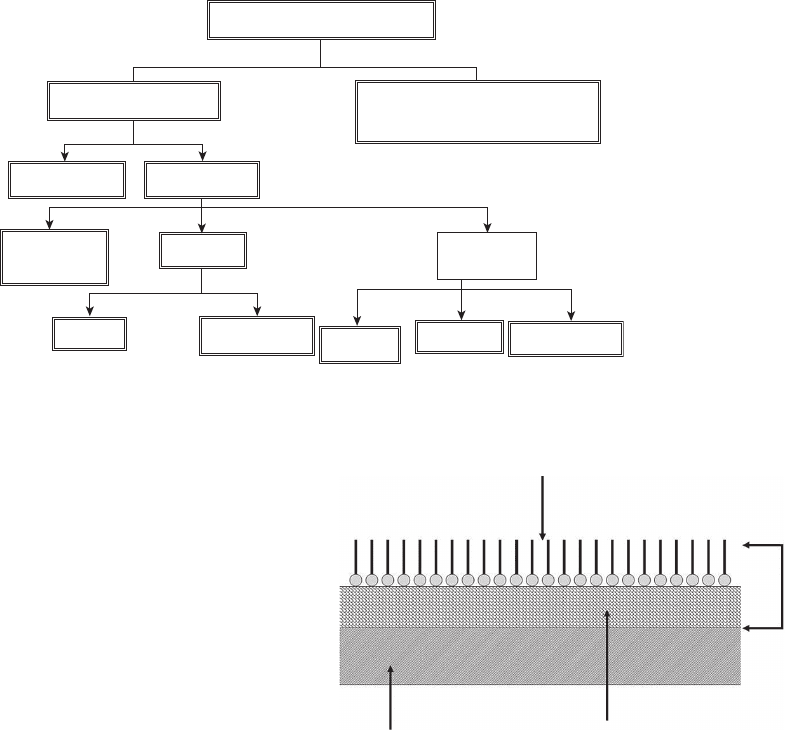
Figure 6.58 Corrosion inhibitor classifi cations.
58
Classification of Inhibitors
Interface Inhibitors
Vapor Phase
Liquid Phase
Cathodic
Anodic
(Passivator)
Poison
Precipitators
Physical
Chemical Film Forming
Mixed
(Adsorption)
Environmental Conditioners
(Scavengers)
Figure 6.59 Adsorbing corrosion inhibitor with hydrophilic
molecular tails away from the metal surface.
Corrosion Product
Metal
Inhibitor Layer
Interphase
proprietary adsorbing inhibitors on the market. They
typically have hydrocarbon chains of C12 - C18 with
amine groups on the hydrophobic end and some other
group on the opposite end.
59
These thin fi lms do not form new compounds on the
surface and are considered to be chemisorbed or
physisorbed — attached to the surface by relatively weak
bonds having less energy than would be associated with
chemical compound formation. These inhibitors work
because one end of the relatively long - chain organic
molecule is attracted to electrically conductive surfaces
such as bare metals. The other end of the same molecule
is either hydrophobic — it repels water or oleophilic — it
attracts oil. This means that the adsorbed inhibitor
repels water and avoids water wetting of the metal
surface. This is shown schematically in Figure 6.59 .
Halides, present in most oilfi eld waters, tend to
increase the effi ciency of these inhibitors by increasing
adsorption of the slightly positive nitrogen groups
present on the hydrophobic ends of these molecules.
57
Oxygen is an enemy of organic inhibitor fi lms, and can
both penetrate fi lms and interfere with fi lm formation.
For this reason, oxygen is generally removed (or pre-
vented from entering) from oilfi eld waters that require
inhibition with organic adsorbing inhibitors. Most types
will not perform well in the presence of more than
0.5 ppm O
2
, or in some cases, as little as a few parts per
billion. This is the reason for using them in conjunction
with oxygen scavengers in most topside corrosion inhib-
itor packages and is the reason why effective downhole
corrosion inhibition must be supplemented for topside
piping and processes, where oxygen entry is more likely.
Adsorbed inhibitor fi lms are very thin and can be
removed by mechanical shear forces if the fl uid trans-
port past the surface is too fast. The nature of these
fi lming organic inhibitors is such that they will attach to
most solid surfaces, and this means that fl uid streams
with sand or other solid particles will have reduced
inhibitor effi ciencies, because the inhibitor will also
attach to sand and other particulate matter in the fl uid
stream.
60
Adsorbed inhibitors will also attach to any
scale or corrosion products on the surface, and this also
diminishes the corrosion - inhibiting effect.
61
In older
systems that have already corroded, it is essential to
clean the surface, mechanically or chemically, before
applying inhibitors. If rust or mineral scales are present,
acid cleaning may be required.
Adsorbed corrosion inhibitors usually cover both
anodes and cathodes. Because these inhibitors are based
on organic chemicals, they normally cannot be used at
elevated temperatures. The upper limit of their use
depends on the chemical involved, but 200 ° C ( ∼ 400 ° F)
is a common upper limit for the higher - temperature
c06.indd 149c06.indd 149 10/29/2010 10:35:53 AM10/29/2010 10:35:53 AM
150 METALLURGY AND CORROSION CONTROL IN OIL AND GAS PRODUCTION
inhibitors, and most fi lming inhibitors lose effectiveness
at much lower temperatures. These inhibitors, which
rely on intimate contact with metallic surfaces, cannot
be used in combination with oxidizing inhibitors, which
form thick metal oxides on the surface.
57
There are many proprietary adsorption corrosion
inhibitors based on the following base chemistries:
•
Amines (R - NH
2
)
•
Carboxyls (R - COOH)
•
Thiourea (NH
2
CSNH
2
)
•
Phosphonates (R - PO
3
H
2
)
•
Benzonate (C
6
H
5
COO
−
)
•
Antimony trichloride (SbCl
3
)
Precipitating inhibitors are fi lm - forming compounds
that form precipitates and cover the metal surface with
mineral fi lms that prevent water from reaching the
metal surface. Silicates, phosphates, and molybdates fall
into this category. They are used in process water and
fi nd limited use in oilfi eld fl uids and production streams.
Silicate inhibitors have the unusual property of being
effective in already - corroded systems where most other
corrosion inhibitors lose their effectiveness.
57
Other pre-
cipitating inhibitors include calcium salts (calcium car-
bonate and calcium phosphate) and zinc salts (zinc
hydroxide and zinc phosphate). Calcium compounds
are widely used in potable water systems to maintain
the pH of water at a high level (typically around pH
8 – 9) and with a slight oversaturation of calcium in the
water so that any exposed surfaces will be covered with
thin carbonate scales. This has been standard potable
water treatment practice since the 1920s.
1,3,58
Passivating inhibitors that oxidize metal surfaces are
commonly used in steam and water systems, but they
are seldom used before effective hydrocarbon - water
separation has occurred. They also tend to be ineffective
in high - chloride waters like the majority of produced
water systems.
Chromates are the most effective passivating inhibi-
tors, but environmental concerns have limited their use,
especially for any application where water discharge is
possible. Alternatives to chromates are not as effective,
although research continues on their development. At
present, most non - chromate oxidizing inhibitors are
based on nitrites, which are considered to have fewer
environmental problems than either chromates or phos-
phates. Bacterial decomposition of nitrites limits their
use in open recirculating water systems. Molybdates and
tungstates are also available. None of these oxidizers
work in the presence of H
2
S.
57
Indirect passivators are alkaline chemicals that
increase pH by reacting with hydrogen ions and remov-
ing them from the surface so that oxygen can adsorb
onto the surface and react with the metal. Unlike the
direct passivators, these corrosion inhibitors will not
work in the absence of dissolved oxygen. Inorganic
direct passivators include NaOH, NaOH, Na
3
PO
4
,
Na
2
HPO
4
, Na
2
SiO
3
, and Na
2
B
4
O
7
(borax). Organic indi-
rect passivators include sodium benzoate and sodium
cinnamate. These organic passivators have the advan-
tage of not causing pitting corrosion if the chloride ion
becomes too concentrated, but the general weight loss
corrosion rate does increase.
57
Most proprietary oxidizing (passivating) inhibitor
packages have a combination of several active ingre-
dients.
57
Oxygen and H
2
S scavengers remove aggressive gases
from water and lower corrosion rates. pH control is used
to maintain water pH levels at controlled levels — high
enough to limit corrosion but low enough to avoid
unwanted scale deposits.
Oxygen scavengers do not work in acids and have no
effect on pH. For this reason, they are often used in
conjunction with some form of pH adjustment, which is
also necessary for both corrosion and scale deposition
control. Sodium sulfi te, ammonium bisulfi te, and sulfur
dioxide are examples of commercial oxygen scavengers,
but others are also available.
53
Nitrites are often used
for H
2
S scavenging, which limits corrosion and also
inhibits sulfate - reducing bacteria problems.
53
While oxygen scavengers are often combined with
mechanical deaeration for large systems, the use of
chemicals alone is sometimes justifi ed for smaller
systems.
53
At one time, the boiler industry used hydrazine
(N
2
H
4
) as the primary oxygen scavenger for boiler water
feedwater. Hydrazine had several advantages, including
the fact that the by - products of its use were nitrogen gas
and water. Unfortunately, hydrazine is carcinogenic, and
the use of hydrazine has diminished in recent years.
Seawater and other water injection systems fre-
quently use oxygen scavengers to control corrosion and,
equally important, to minimize the possibility of micro-
bial fouling of subsurface formations.
Most scavengers used in the oil fi eld are based on
sulfi tes, bisulfi tes, or nitrites, but they are usually sold as
proprietary chemical packages, with minimal identifi ca-
tion of their chemistries, as either oxygen or H
2
S scaven-
gers. The H
2
S scavengers will often raise the pH of water
and, if calcium carbonate scaling is a potential problem,
they must be used in conjunction with scale inhibitors.
Batch processing of scavengers is possible, for
example, for drilling fl uids, but continuous injection is
more common.
Various chemicals are used to neutralize and buffer
the pH of liquids. If an acid condenses from a liquid, for
c06.indd 150c06.indd 150 10/29/2010 10:35:54 AM10/29/2010 10:35:54 AM
CORROSION CONTROL 151
example, gas condensate in wells or pipelines, the neu-
tralizer must condense at the same temperature and
pressure. This pH control is often necessary to prevent
corrosion at low pHs and to prevent scale deposition,
which can also lead to microbial corrosion, at higher pHs.
In boiler water systems, it is common to use morpho-
line, an organic compound O(CH
2
CH
2
)
2
NH, at parts per
million concentrations for pH adjustment. Morpholine
is used for this purpose because its volatility is similar
to water, and once it is added to water the morpholine
concentration becomes relatively evenly distributed in
both the liquid and vapor phases. Hydrazine or ammonia
oxygen scavengers are often used in conjunction with
morpholine treatment.
57
It is important to note that oxygen scavengers and
oxidizing or passivating treatments work on opposite
principles, and the chemicals for these two purposes
should not be used concurrently in the same system.
57
Other environmental conditioning normally involves
keeping the pH in an acceptable range. Low pHs
promote corrosion and high pHs lead to scaling.
Most vapor - phase corrosion inhibitors are low -
molecular - weight amines that condense and form
adsorbed fi lms on metal surfaces. While some of these
inhibitors have nitrites, which work as oxygen scaven-
gers, most are merely amines. One example would be
diethylamine which, when used in sour gas, produces iron
sulfi de fi lms on the surface which are protective in low -
temperature relatively dry gaseous environments.
57
Most commercial corrosion inhibitor packages are
complex blends of many different chemicals, only a
portion of which are the nitrogen - containing materials
considered to be the primary fi lm - forming chemicals.
These other chemicals can be damaging to elastomeric
seals and similar polymeric components of the system.
NACE has issued a report on this problem, but testing
to insure that the problem does not exist is often
necessary.
62
Other compatibility problems are related to the use
of hydrate inhibitors and other chemicals added to the
system. It is common to test mixtures of these proposed
chemicals to determine if one or the other chemical
package will interfere with the performance of the other
chemicals.
Inhibitor breakdown, for example, at unforeseen
elevated temperatures, can also lead to additional cor-
rosion problems.
63
Application Methods Inhibitors are injected continu-
ously (the preferred method) or in batch treatments,
which may be necessary for some systems.
65
Most inhibi-
tor injection systems are manufactured from 316L stain-
less steel, although some lines of PTFE or nylon are
used if the pressures and temperatures are low.
Continuous injection is almost universally used
except for downhole and pipeline applications where
injection sites are diffi cult to establish and maintain. It
is recommended that the corrosion rates be determined
upstream of the inhibitor injection location so that the
effectiveness of the inhibitor can be determined.
65
Inhibitor injection rates are then adjusted so that accept-
able corrosion rates are obtained at the end of the line.
If corrosion rates are unacceptably high, then the injec-
tion rate can be changed.
64
These changes are likely as
a fi eld ages and the corrosivity of produced fl uids change.
The initial corrosion inhibitor dosage will usually be
very high to satisfy inhibitor demand for the exposed
metal and to insure complete fi lming. Once this initial
fi lming has been accomplished, the dosage rate is
dropped to a minimum level necessary to maintain the
fi lm under operating conditions.
Corrosion inhibitor batch treatments are used for
downhole tubing and for subsea pipelines. They must
have low solubility in the system fl uids. Batch treat-
ments are characterized by short periods of high inhibi-
tor dosages followed by long periods where the inhibitor
level is relatively low. This affects the way these chemi-
cals react with seals and other polymeric materials in
the system.
64
Batch treatments involve a relatively short period of
inhibitor feeding followed by a long period on nonfeed-
ing, where one of the following systems operates:
•
The inhibitor fi lms is persistent and lasts for a rela-
tively long time.
•
A reservoir of inhibitor slowly feeds into the system
needing corrosion control.
Batch treatments will last from 1 week to several months
between treatments.
Tubing displacement batch treatments are used in
wells where a batch of corrosion inhibitor is pushed
down into the tubing to the bottom of the well. The well
is shut in for several hours and then returned to produc-
tion. This technique is used in wells with packers and
with gas - lift wells.
Squeeze treatments are similar to tubing displace-
ments except the inhibitor is displaced beyond the
bottom of the tubing and into the geological formation.
During this displacement, the system seals are subjected
to high concentrations of inhibitor. Once the well is
returned to production, the inhibitor concentration
slowly lowers as inhibitor is washed from the formation
by the produced fl uids. Squeeze treatments are usually
done monthly or semiannually.
Batch treatments are also common in pipelines, espe-
cially subsea pipelines where access is limited. Pigs force
inhibitor into the pipeline and this coats the pipe wall.
c06.indd 151c06.indd 151 10/29/2010 10:35:54 AM10/29/2010 10:35:54 AM
152 METALLURGY AND CORROSION CONTROL IN OIL AND GAS PRODUCTION
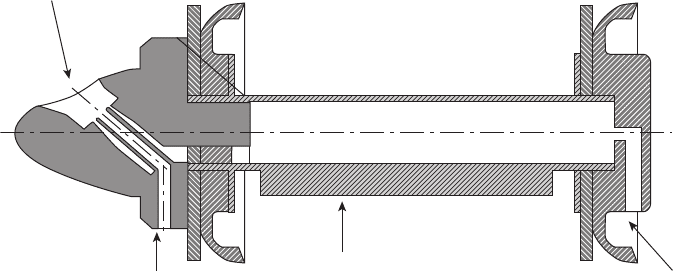
This can be done with spiral foam pigs, gel pigs, or
special pigs designed to spray inhibitor onto the top of
the pipeline interior (Figure 6.60 ). A typical pig run in
a subsea pipeline is intended to provide corrosion inhib-
itor that will last for a month.
Testing and Monitoring Laboratory and fi eld testing
are commonly used to determine which of many pos-
sible corrosion inhibitor systems should be used in any
given application. Testing in the laboratory can reduce
the number of inhibitor packages under consideration
by quickly eliminating those deemed to be unsuitable.
Important parameters to be tested include shear
testing — the ability of the inhibitor to “ stick ” to the
metal surface when liquids are moving parallel to the
surface at high velocities — which helps determine
the inhibitor persistency.
67
Other tests are intended to
measure shear testing at higher fl ow rates, partitioning
of inhibitors between water and hydrocarbon phases,
and so on.
67 – 70
It is best if the tests are conducted using
the actual fl uids from the fi eld, because the presence of
minor variables, for example, organic acid contents, in
crude oil will affect the ranking of prospective corrosion
inhibitors.
While a variety of standardized laboratory tests are
available, no consensus exists on their relevance to
actual fi eld performance.
71,72
The lack of confi rmation of
results between different laboratories conducting sup-
posedly comparable tests means that laboratory screen-
ing tests cannot be relied upon to produce defi nitive
answers on the best corrosion inhibitors for any given
fi eld. This must be determined by fi eld tests.
Once preliminary laboratory tests have narrowed the
possibilities, prospective inhibitor packages can be com-
pared by fi eld testing. In the past, this has been done by
using exposure coupons. Unfortunately, this is a very
expensive and time - consuming process. Recent reports
indicate that the total time to conduct laboratory and
fi eld testing can be substantially reduced using enhanced
electrical resistance (ER) probes to produce data on
corrosion inhibitor performance in approximately 96 h
for each inhibitor tested in contrast to the 36 days previ-
ously required. Much of the reduction in time for fi eld
testing is due to the introduction of modern, quick -
response ER probes that can indicate changes in corro-
sion rates due to upsets, in a matter of hours instead of
days.
73
It is important to note that all of these tests, both
laboratory and fi eld, require the use of replicate samples
and testing at various inhibitor dosage levels, for
example, steps at 15, 30, and 50 ppm of inhibitor. An
inhibitor that works well at one dosage might not be
demonstrably better at a higher dosage.
Corrosion inhibitor performance monitoring is nec-
essary to confi rm that the corrosion inhibitors and
dosage rates that have been selected are appropriate for
the fi eld in question. Corrosion coupons pulled every 90
days have become the standard method of insuring
that adequate corrosion control has been established.
Unfortunately, these coupons cannot identify when in
the 90 days most of the corrosion has occurred. ER
probes should be used to supplement the coupon data,
and it is recommended that two access fi ttings, one for
fl ush - mounted coupons and one for fl ush - mounted ER
probes should be mounted, normally at the 6 o ’ clock
position, for each monitoring station.
64
It is very important that coupons be located in loca-
tions where maximum corrosion rates can be expected.
Figure 6.60 Venturi pig for spraying corrosion inhibitor onto the top of a pipeline interior
to control top - of - the - line corrosion.
66
Projection nozzle
Liquid inlet
Steel block (to prevent
rotation of the pig)
Gas inlet
c06.indd 152c06.indd 152 10/29/2010 10:35:54 AM10/29/2010 10:35:54 AM
CORROSION CONTROL 153
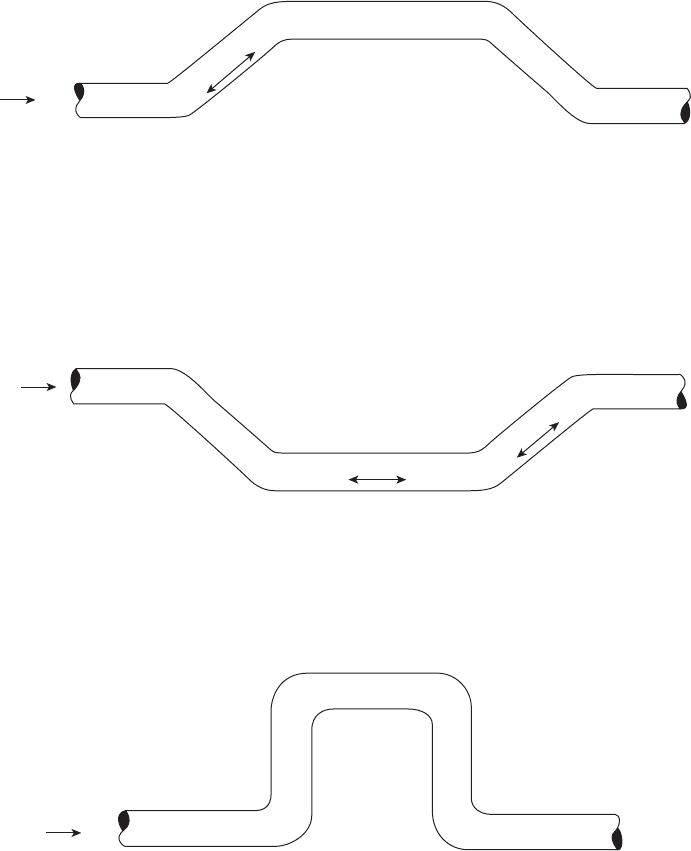
Suggested locations for coupon locations along a wet
gas piping system are shown in Figure 6.61 . The ideas
represented in this fi gure should be considered in
placing corrosion coupons, ER probes, and other moni-
toring devices — they should be placed at locations
where water accumulation and accelerated corrosion
are most likely. For gas pipelines, the possibility of top -
of - the - line corrosion must also be considered.
Unfortunately, the exact locations where corrosion
rates are likely to be the highest are hard to predict. The
most aggressive locations will change, especially for
multiphase systems, as temperatures and pressures
change and fi elds age, altering the composition and pro-
duction rates of produced fl uids. Monitoring with
coupons and ER probes is no substitute for inspection —
the two techniques are complementary, and one cannot
Figure 6.61 Locations for coupon installation in a wet gas piping system.
74
Corrosion most severe at B and C.
High Flow Rates
Corrosion most severe at A.
b: Low Flow Rate
c: Vertical Rleer in Gas Line Carrying Small Volume of Water
A In high-velocity flow, water impinges on Points A and B, accelerating corrosion.
B At low velocity, water accumulates in upstream leg of loop, cascades down in
downstream loop, Impinging at Point A.
B
A
Flow
Flow
AB
C
A
a: With Low Flow Rate (Below Limiting Velocity)*
*Limiting Velocity—velocity above which erosion damage can be expected.
A Water oscillates—corrosion accelerated.
B Corrosion not accelerated.
C Water impinges at C—corrosion accelerated with higher flow rate
(above limiting velocity).*
Corrosion most severe at impingements.
Direction
of Flow
B
C
c06.indd 153c06.indd 153 10/29/2010 10:35:54 AM10/29/2010 10:35:54 AM
154 METALLURGY AND CORROSION CONTROL IN OIL AND GAS PRODUCTION
substitute for the other. NACE provides suggestions on
the corrosion rates to be expected, as shown in Table
6.13 .
74
Unfortunately, too many organizations spend so
much time collecting coupons and reporting weight loss
data, that they forget to question whether the data have
been collected at the correct locations and what it
means. Organizations with thousands of coupons
showing that corrosion is under control have still had
unfortunate leaks due to corrosion at locations where
corrosion could have been predicted and inspections
could have identifi ed the problems. This is especially
true as fi elds age and production rates decline, leading
to more corrosive conditions, especially at locations like
those shown in Figure 6.61 . The practice of having the
same organization that applies corrosion inhibitors also
conduct monitoring on the effectiveness of the inhibitor
program can lead to unnecessary diffi culties.
CATHODIC PROTECTION
Cathodic protection is an electrical means of corrosion
control where the structure to be protected is made
the cathode in an electrochemical cell. Oxidation of the
electrochemical cell is shifted to anodes leaving the
structure to be protected as a cathode with a net reduc-
tion reaction which suppresses the corrosion rate. While
many oilfi eld structures are cathodically protected, this
discussion will emphasize pipelines, the most common
cathodically protected structures in oil and gas produc-
tion. The principles discussed here for pipelines apply
to any cathodically protected structure.
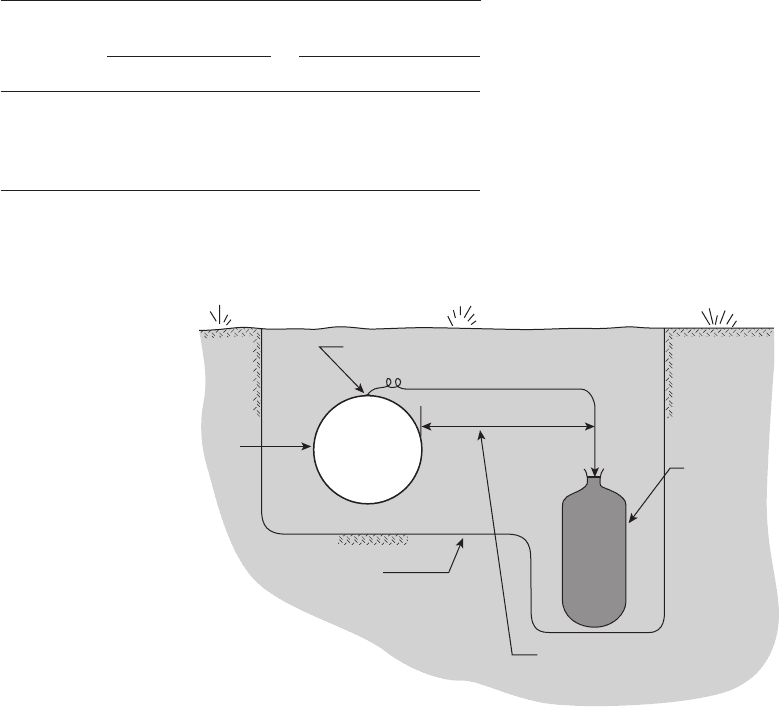
Figure 6.62 shows a simple cathodic protection
system for a buried pipeline. The pipeline is connected
by a lead wire to a buried magnesium anode which cor-
rodes at an accelerated rate thereby providing protec-
tive cathodic current to the pipeline.
The combination of protective coatings as the primary
means of corrosion control and cathodic protection as
a supplemental secondary means of corrosion has
proven most economical for most pipelines and simi-
larly buried or submerged structures. The electrical
current demands of the cathodic protection system are
determined by the effectiveness of the protective
coating, and they increase as the protective coating ages
and degrades.
Cathodic protection allows carbon steel structures,
which have limited natural corrosion resistance in many
oilfi eld environments, to perform with little or no cor-
rosion, provided the cathodic protection system is
designed, installed, and maintained correctly. It was dis-
covered in the nineteenth century and used on British
TABLE 6.13 Qualitative Characterization of Carbon Steel
Corrosion Rates for Oil Production Systems
75
Average
Corrosion Rate
Maximum
Pitting Rate
mm/y
a
mpy
b
mm/y mpy
Low
< 0.025 < 1.0 < 0.13 < 5.0
Moderate 0.025 – 0.12 1.0 – 4.9 0.13 – 0.20 5.0 – 7.9
High 0.13 – 0.25 5.0 – 10 0.21 – 0.38 8.0 – 15
Severe
> 0.25 > 10 > 0.38 > 15
a
mm/y, millimeters per year.
b
mpy, mils per year.
Figure 6.62 A single packaged anode buried in soil to protect a buried pipeline.
76
Hole dug for
leak repair or
distributed anodes
Pipe
5′ minimum
Packaged anode
with attached
insulated lead
Exothermic weld connection,
(coated)
c06.indd 154c06.indd 154 10/29/2010 10:35:54 AM10/29/2010 10:35:54 AM

CORROSION CONTROL 155
naval vessels. Its use on pipelines dates to the early
1900s work of R. Kuhn and coworkers, who used
cathodic protection to lower the corrosion rates of
buried onshore pipelines in Louisiana.
76,77
The corrosion (oxidation) reaction on a buried steel
structure is:
Fe Fe e→+
+−2
2
(Eq. 6.1)
The buried anode undergoes a similar reaction:
Mg Mg e→+
+−2
2
(Eq. 6.2)
Reduction reactions depend on the pH of the water in
the environment, but are usually:
In acids:
22
2
HeH
+−
+→
(Eq. 6.3)
Or
OHe HO
22
442++→
+−
(Eq. 6.4)
In neutral or basic solutions:
OHOe OH
22
244++→
−−
(Eq. 6.5)
Except in strong acids (pH < ∼ 3), the concentration of
oxygen is most likely to predominate, and most of the
reduction reaction on a cathode will be oxygen
reduction.
In order for cathodic protection to work all compo-
nents of an electrochemical cell, anode, cathode, elec-
trolyte, and return circuit must be present. The absence
of any one of these will prevent successful cathodic
protection. Sometimes people forget this, for example,
with attempts to protect high - temperature pipelines
where the environment is so hot that water evaporates
and no electrolyte is present to transmit electric current.
How Cathodic Protection Works
The effectiveness of cathodic protection can be
expressed in many ways. The fi rst arguments for its use
on pipelines and other oilfi eld structures emphasized
the reduction in leaks due to external corrosion. This
type of data was used by R. Kuhn, who presented data
in the 1930s showing a major reduction in leaks on
natural gas pipelines due to the use of cathodic
protection.
76 – 79
While cathodic protection had been
described in the 1800s and used to protect nails holding
copper sheathing to the bottom of British ship hulls, Mr.
Kuhn is generally recognized as the fi rst engineer to use
cathodic protection in the United States, where he
applied it to controlling corrosion of cast iron natural
gas pipelines starting in 1913.
79
Figure 6.63 shows the reduction in leaks on a major
pipeline system due to the application of cathodic pro-
tection.
80
This fi gure shows data from the 1940s and
later, when the idea of cathodic protection started to
gain widespread attention along the Gulf Coast of the
United States. Discussions among Gulf Coast pipeline
operators led to the formation in 1945 of the organiza-
tion that has become NACE International, the largest
organization devoted to corrosion control.
79
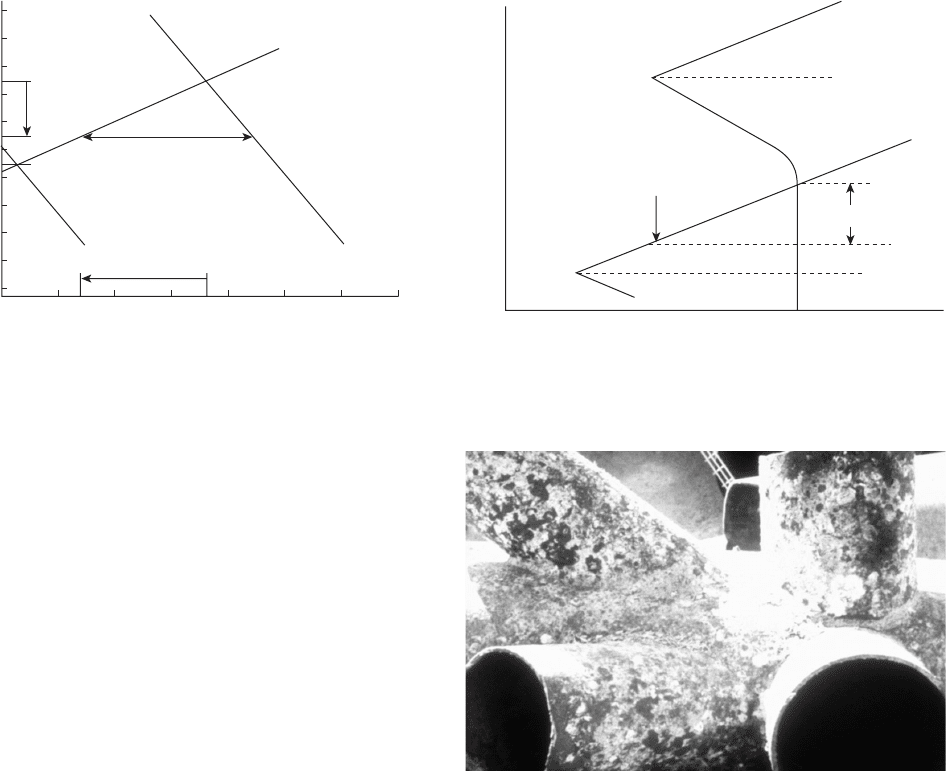
The Evans diagrams (potential vs. log current) in
Figures 6.64 and 6.65 illustrate the principles of cathodic
protection. The corrosion (oxidation) reaction is shown
by the line which goes up and to the right in Figure
6.64 . The intersection of this oxidation reaction with
the reduction reaction for dissolved oxygen in the elec-
trolyte determines the corrosion rate. In Figure 6.64 ,
the corrosion rate is reduced by over two orders of
magnitude by the application of cathodic protection.
Note that the potential of the cathodically protected
iron, shown at − 0.85 V (Cu/CuSO4), is above the equi-
librium potential and that the corrosion rate, while
reduced by more than two orders of magnitude, is
not zero.
Figure 6.63 Effectiveness of cathodic protection in stopping the development of pipeline leaks.
80
Years
1930
Cumulative leaks
150
140
130
120
110
100
90
80
70
60
50
40
30
20
10
1935 1940 1945 1950 1955 1960 1965
Cathodic protection
completed
c06.indd 155c06.indd 155 10/29/2010 10:35:54 AM10/29/2010 10:35:54 AM
156 METALLURGY AND CORROSION CONTROL IN OIL AND GAS PRODUCTION
Figure 6.64 Evans diagram showing the principles of cathodic
protection.
81
Log Current Density (μA/cm
2
)
0.001
0.4
0.5
0.6
0.7
0.8
0.9
1.0
1.1
1.2
1.3
1.4
0.01 0.1
E
corr
E
cp
i
cp
i
corr
E
equil
i
applied
Fe → Fe
2+
+ 2e
–
Fe
2+
+ 2e
–
→ Fe
O
2
+2H
2
O+4e
–
→ 4OH
–
1 10 100 1000 10,000
Potential, V (Cu/CuSO
4
)
Figure 6.65 Evans diagram showing cathodic protection with
the reduction reaction limited by oxygen diffusion control.
Log i →
E
0 corr with CP
i
0 corr with CP
E
0 corr
i
0 corr
E
0 O
2
/O
–2
i
0 O
2
/O
–2
E
0 Fe/Fe
+2
i
0 Fe/Fe
+2
≥ 50 mV
Potential →
Figure 6.64 is used in a standard reference work on
pipeline corrosion to explain how cathodic protection
works. The same idea has been published previously.
79
It is deliberately simplistic and slightly unrealistic,
because the corrosion rate of most buried or submerged
steel is controlled by the diffusion of oxygen to the
metal surface and not by hydrogen ion reduction. This
means that the reduction reaction, shown as a slanting
straight line in Figure 6.64 , is more likely to be a vertical
line indicating that the reaction is under oxygen diffu-
sion control (concentration polarization) as shown in
Figure 6.65 .
Both fi gures make the same points:
•
Cathodic protection substantially reduces the oxi-
dation current (corrosion) of the structure being
protected.
•
Cathodic protection does not stop corrosion — it
reduces the corrosion rate, hopefully to a negligible,
or at least an acceptable, rate.
Note that neither diagram suggests that the potential
after cathodic protection is below the equilibrium
potential where the current for oxidation of iron is
equaled by the current for reduction of iron ions.
While Evans diagrams, like those shown above, are
used to explain cathodic protection, they were not used
by the people who developed these techniques in the
early - mid - twentieth century.
In the oil fi eld, cathodic protection is applied to pipe-
lines in soil and water environments, to offshore struc-
tures, and to process and storage vessels.
Cathodic protection is usually used in conjunction
with protective organic coatings. The protective coating
is considered the primary means of corrosion control,
and the cathodic protection system is sized to provide
corrosion control at defects in the coating. As the coating
ages and becomes less protective, the demands for
electrical current from the cathodic protection system
increase. This combination of protective coatings and
cathodic protection has become standard on most oil-
fi eld equipment. The exceptions are most offshore struc-
tures and some process equipment, which are often used
in the uncoated state. Cathodic protection causes a pH
shift, shown in Equations 6.3 through 6.5, to higher pHs,
where most minerals are less soluble. The pH shift pro-
duces precipitates of calcareous deposits, usually calcite
but sometimes other minerals, on the protected surface.
These mineral deposits reduce the exposed metal
surface and act as protective coatings on offshore struc-
tures.
82,83
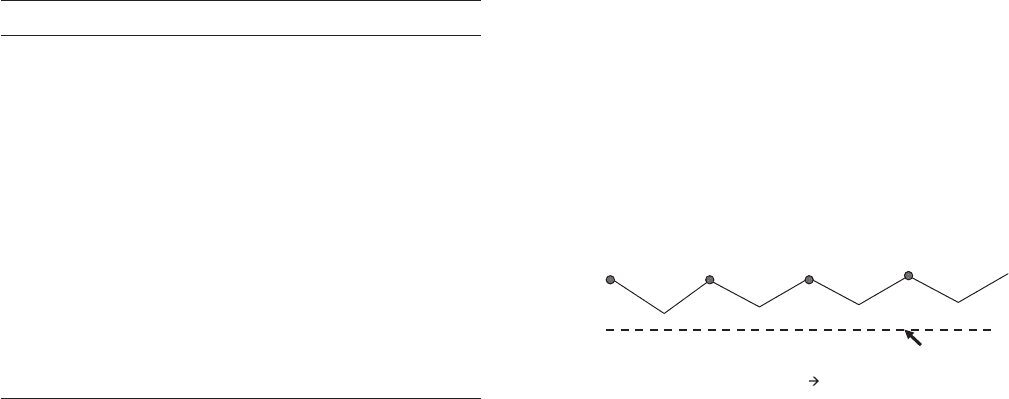
Figure 6.66 shows calcareous deposits caused
by cathodic protection on the node of an offshore plat-
Figure 6.66 Calcareous deposits formed by cathodic protec-
tion on an offshore platform node. Photo courtesy of J. Smart.
c06.indd 156c06.indd 156 10/29/2010 10:35:54 AM10/29/2010 10:35:54 AM
CORROSION CONTROL 157
form in a warm shallow sea. Whitish deposits cover most
of the surface, but even the darker areas are covered
with scale so hard that it is diffi cult to remove it with a
hammer and chisel.
The oxidation at anodes in cathodic protection
systems alters the potential of the protected structure
and shifts it in a cathodic direction. While several reduc-
tion reactions are possible on cathodically protected
surfaces, the most common reaction is the reduction of
dissolved oxygen or, if the pH is low or the negative
potential is large, the evolution of hydrogen gas.
Note the logarithmic slope of the oxidation (corro-
sion) rates in Figures 6.64 and 6.65 . Neither of these
fi gures implied the total elimination of corrosion. Small
shifts of potential produce drastic reductions in corro-
sion rates, and it has been reported that a cathodic
potential shift of − 70 mV to − 100 mV will reduce the
corrosion rate to 10% of the original corrosion rate.
84
Cathodic protection reduces but does not eliminate cor-
rosion. “ A major activity of a CP engineer is to deter-
mine the actual level of CP required to reduce the
corrosion rate to an acceptable level. ”
81
Types of Cathodic Protection
There are two types of cathodic protection, galvanic - , or
sacrifi cial - anode, cathodic protection and impressed
current cathodic protection (ICCP).
Galvanic Anode Cathodic Protection Figure 6.61
showed a simple galvanic cell using a buried magnesium
anode to protect a buried steel pipeline. Table 6.14
shows the potentials of selected metals in soil. Carbon
steel and cast iron are naturally cathodic to most other
structural metals. They are, however, cathodic to mag-
nesium, aluminum, and zinc — the metals used for gal-
vanic anodes.
Figure 6.61 showed a simple single anode attached to
a pipeline. The anode, which corrodes to protect the
structure, is located at a “ remote ” location, as far away
from the pipeline as is practical. The purpose of this
remote location is to insure that the current from the
anode is distributed to “ ground, ” so that current is not
wasted near the anode – wire – lead connection location.
Current then comes from “ ground ” to the holidays in
the protective coating on the pipeline instead of being
concentrated near the anode – wire – lead connection to
the pipeline.
Galvanic anodes are typically supplied with approxi-
mately 3 – 5 m (10 – 15 ft) of lead wire, which is suffi cient
to locate the anodes at “ remote earth ” in most
environments.
Galvanic anodes are often installed in “ distributed
anode ” confi gurations. One anode protects a given
length of pipe and, where the IR drop down the pipeline
is too much and inadequate protection is available,
another anode is located. The critical location is midway
between the two anodes. This is shown in Figure 6.66 .
Note that the potential varies from approximately 1 V
to somewhat more than 0.85 V. Since all voltages are
negative relative to copper/copper sulfate electrodes,
the potentials are plotted with larger negative numbers
on top. This is in accordance with convention for cathodic
protection, but seems backward compared to conven-
tional engineering practice. As long as the potential
remains more negative than the protection potential
(above the dotted line in Figure 6.67 ), corrosion on the
pipeline will be minimized and the structure will be
cathodically protected.
The potential profi le in Figure 6.67 shows that the
pipeline is more protected than necessary near the
anodes and that the potential decays as the distance
from the anode increases. The spacing between anodes
is determined by the IR drop down the pipeline and by
TABLE 6.14 Galvanic Series of Metals in Soil
85
Material Potential (volts CSE)
a
Carbon, graphite, coke
+ 0.3
Platinum
0 to − 0.1
Mill scale on steel
− 0.2
High - silicon cast iron
− 0.2
Copper, brass, bronze
− 0.2
Mild steel in concrete
− 0.2
Lead
− 0.5
Cast iron (not graphitized)
− 0.5
Mild steel (rusted)
− 0.2 to − 0.5
Mild steel (clean and shiny)
− 0.5 to − 0.8
Commercially pure aluminum
− 0.8
Aluminum alloy (5% zinc)
− 1.05
Zinc
− 1.1
Magnesium alloy (6% Al, 3%
Zn, 0.15% Mn)
− 1.6
Commercially pure magnesium
− 1.75
a
Typical potential normally observed in neutral soils and water, mea-
sured with respect to copper sulfate reference electrode.
Figure 6.67 Potential plot along a pipeline with galvanic
anode cathodic protection.
Distance
1.0
0.9
0.8
P/S Potential (CSE)
Protection potential
c06.indd 157c06.indd 157 10/29/2010 10:35:55 AM10/29/2010 10:35:55 AM

158 METALLURGY AND CORROSION CONTROL IN OIL AND GAS PRODUCTION
TABLE 6.15 Advantages and Limitations of Galvanic
Anode Cathode Protection Systems
Advantages and Limitations of Galvanic Anode
Cathodic Protection Systems
Advantages Limitations
No external power required Limited driving potential
Easy to install Lower/limited current
output per anode
Simple — can be installed and
maintained with minimally
trained personnel
May not work in high -
resistivity environments
Minimum maintenance High cost per ampere year
of current generated
Installation can be
inexpensive if installed
during construction
Installation can be
expensive on long
pipelines — requires
many installations
Relatively uniform
distribution of current
Not a source of stray current
Cannot be turned off — always
active until anodes
consumed
TABLE 6.16 Primary Uses of Galvanic Anodes in Oilfi eld
Applications
Magnesium
Onshore buried structures
Process equipment
Zinc
Marine pipelines
Process equipment
Freshwater ballast tanks
Ship hulls
Aluminum
Offshore structures
Limited use in process equipment
TABLE 6.17 Electrochemical Properties of Magnesium
86
A - h/lb theoretical 1000
Current effi ciency (based on ∼ 30 mA/ft
2
)
50%
A - h/lb actual 500
Consumption rate, lb - A - yr 17.4
OCP V to Cu/CuSO
4
AZ - 63 (H - 1) alloy
− 1.50 to − 1.55 V
High - potential alloy
− 1.75 to − 1.77 V
the current demand on the pipeline exterior. A typical
spacing between anodes is of the order of hundreds of
meters (yards), but there are wide variations depending
on protective coating quality, diameter of the pipeline,
and corrosivity of the environment.
Because the voltage of galvanic anodes is limited, the
spacing between anodes is often the design - limiting
parameter. This leads to increased construction costs on
long - distance pipelines, and galvanic anodes are seldom
used onshore for long - distance pipelines. They are used
on small structures, in low - resistivity environments —
where they can be relied upon to work, and for protect-
ing “ hot spots ” where corrosion is intensifi ed.
80
Table 6.15 lists some advantages and limitations of
galvanic anode systems. The typical design life of onshore
galvanic anodes is 5 – 10 years, although some anodes
perform for much longer. Potential surveys, described
below, are necessary to determine when the anodes have
neared or reached the end of their useful life.
Three different metals are commonly used for gal-
vanic anodes — magnesium, zinc, and aluminum. Carbon
steel is sometimes used for cathodic protection on
process equipment fabricated with CRAs, but carbon
steel anodes are not commercially available from most
suppliers. Table 6.16 shows typical applications for each
of the common galvanic anode metals.
While it is common to refer to these materials by
their primary constituent, all these anode materials are
alloyed to insure that they will reliably corrode and
produce the necessary current for cathodic protection.
There are two commonly used magnesium anode
alloys. The high - potential alloys have a native potential
in soil of approximately − 1.80 V relative to copper/
copper sulfate, and the H1 or AZ - 63 anodes have a
potential of − 1.55 V. Table 6.17 lists important properties
of these alloys.
86
Most of the cost of galvanic anode installation is
labor and excavation. Thus, the onshore installation
costs for galvanic anodes are essentially the same for all
anode sizes. The 17 - lb (7.7 kg) anode is the most com-
monly used size in North America.
Most applications use the high - potential magnesium -
manganese alloy developed by Dow Chemical Company
in the 1950s.
86
Quality control problems with magnesium anodes
have occurred in recent years, and many anode suppli-
ers have been forced to conduct quality control testing
on magnesium anodes.
86,87
Anode effi ciency for magnesium anodes is 50%
under normal conditions. This means that half of the
electrical current produced by the corrosion of the
anodes will be available for cathodic protection.
The effi ciency is less at low pHs.
Magnesium anodes are the most reliable of all
galvanic anode materials — they will corrode in almost
any wet environment. Nonetheless, they are normally
c06.indd 158c06.indd 158 10/29/2010 10:35:55 AM10/29/2010 10:35:55 AM